
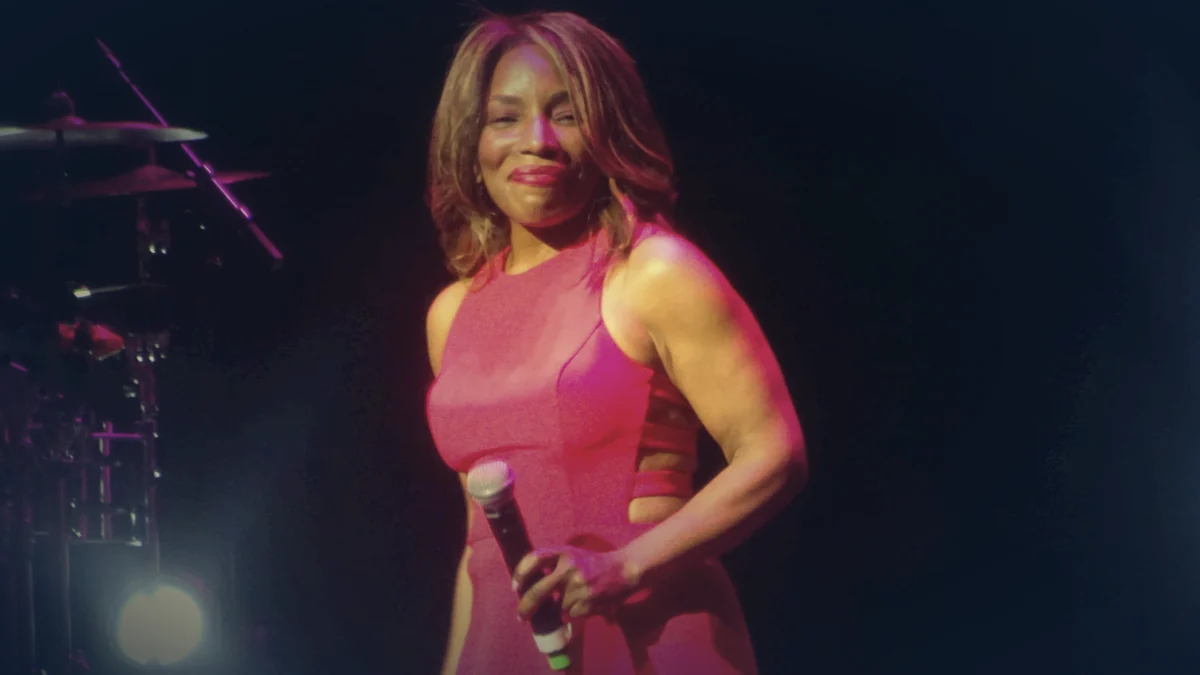
Stephanie Mills‘s net worth is estimated at $2 million to $3 million as of October 2026. The Grammy-winning R&B singer who originated Dorothy in Broadway’s The Wiz turned a five-year stage run, five number-one R&B singles, and a forty-year touring habit into one of the most durable catalogs of the quiet storm era. Her fortune is smaller than the wildest numbers floating around the internet — and this article will show you exactly why those bigger figures don’t hold up.
Stephanie Mills: Quick Facts
| Estimated net worth | $3 million (range: $2M – $3M) |
|---|---|
| Profession | Singer, songwriter, Broadway actress |
| Nationality | American |
| Born | March 22, 1957 (age 69) |
| Height | Not widely reported |
| Primary income sources | Concert touring, record royalties, Broadway theater, television |
| Active years | 1966–present |
| Last reviewed | October 2026 |
- Quick Facts
- Early Life and Background
- Education
- Career Journey
- Rise to Fame
- Main Sources of Income
- Salary and Earnings
- Businesses and Investments
- Brand Deals and Sponsorships
- Houses, Cars and Other Assets
- Awards and Achievements
- Net Worth Growth Over the Years
- Social Media Presence
- Personal Life
- Sources & Reporting
- Frequently Asked Questions
Early Life and Background
Stephanie Dorthea Mills was born March 22, 1957, in Bedford–Stuyvesant, Brooklyn, to Joseph Mills, a New York City employee, and Christine Mills, a hairstylist. She started singing at age three and sang gospel as a child at Brooklyn’s Cornerstone Baptist Church — the church choir was effectively her first conservatory, and the big-choir singing style never left her records.
By nine she was already working professionally, debuting on Broadway in the musical Maggie Flynn in 1968. Two years later, at eleven, she won Amateur Night at Harlem’s Apollo Theater six weeks in a row — a run that put her on the radar of working musicians across the city. The Apollo streak led to opening-act slots with the Isley Brothers, where lead vocalist Ronald Isley became a mentor to the young singer. She signed her first single, “I Knew It Was Love,” with Paramount Records in 1973 at sixteen, cut by producer Michael Barbiero. It didn’t chart, but it gave her a foothold in the industry years before most singers cut a first demo.
Her parents’ support was hands-on: Encyclopedia.com’s long-form biography notes that when Broadway money started coming in, Mills installed her family in a 27-room house in the New York suburb of Mount Vernon. That early taste of wealth — and the responsibility that came with carrying a family’s fortunes at a young age — shaped how she handled money for the rest of her career.
Education
Mills took courses at the Juilliard School of Music, the kind of formal training that separated her from many R&B peers who learned strictly on the gig circuit. She also attended Lincoln Square Academy, a private children’s school, while building her stage career — a demanding double life of schoolwork and Broadway rehearsals that gave her the discipline she still credits for her longevity. “Every fiber of my professional being I owe to the discipline of my Broadway training as a child,” she said in a 2024 statement about her return to Broadway. That training paid compound interest: stagecraft kept her employable on the concert circuit decades after her last major hit.
Career Journey
Mills’ recording career began in false starts. After the Paramount single, she signed with Motown and released two albums — For the First Time (1975) and Love Has Lifted Me (1976) — that produced no hits and no traction. She left the label in 1976. For a singer who was already famous on Broadway, the Motown flop years were a genuine commercial low: the biggest stage actress of her generation couldn’t get a single on the radio.
The turning point was 20th Century Records, which signed her in 1979 and aimed her at the disco and R&B market. The result was immediate. What Cha’ Gonna Do with My Lovin’ (1979) went gold and gave her the title-track hit; Sweet Sensation (1980) went gold and delivered “Never Knew Love Like This Before,” the song that won her the Grammy Award for Best Female R&B Vocal Performance in 1981. Across the 1980s she piled up fifteen studio-era chart hits and five number-one R&B singles: “Home,” “I Have Learned to Respect the Power of Love,” “I Feel Good All Over,” “(You’re Puttin’) A Rush on Me,” and “Something in the Way (You Make Me Feel).”
Her album streak through the decade reads like a catalog business in itself: Stephanie (1981), Tantalizingly Hot (1982), Merciless (1983), I’ve Got the Cure (1984), then the MCA move — Stephanie Mills (1985, gold), If I Were Your Woman (1987, gold), and Home (1989), which her booking timeline lists among five gold-certified albums of the decade. The 1990s brought a slowdown she has been honest about: Encyclopedia.com’s biography records financial problems in the early 1990s, a period when she largely stepped back from secular recording and released the live gospel album Personal Inspirations (1994) on GospoCentric Records, produced by Donald Lawrence. She returned independently with Born for This! (2004) on her own JM Records imprint.
The mid-1980s records kept the streak alive without ever matching the 1980 peak. Stephanie (1981), Tantalizingly Hot (1982), Merciless (1983), and I’ve Got the Cure (1984) all charted on the R&B albums list and produced singles that kept her on radio and on tour, even as the industry shifted under her. The MCA move in 1985 sharpened the focus: the self-titled Stephanie Mills went gold, and If I Were Your Woman (1987) delivered two of her five R&B number ones — “I Feel Good All Over” and “(You’re Puttin’) A Rush on Me” — plus the title track, a cover of the Gladys Knight classic that became one of her most-played recordings. Home (1989) closed the decade with “Something in the Way (You Make Me Feel)” going to number one on the R&B chart and the album earning gold certification. That run — gold or platinum certifications on five albums across a single decade, per her booking-industry timeline — is the commercial core the rest of her net worth rests on.
The streaming era gave the catalog a second life in the culture. In 2018, Mills went viral after blasting Sam Smith on Instagram for their remarks about Michael Jackson — her fiery response accusing Smith of cultural appropriation was covered across music media and introduced her to a generation that knew the songs from samples and playlists. In November 2021 she squared off with Chaka Khan in a holiday-edition Verzuz battle at the Theatre at Ace Hotel in Los Angeles, the two R&B legends performing back-to-back catalog hits to a streaming audience of millions. Moments like those don’t show up on a balance sheet directly, but for a legacy artist they function as marketing: every viral clip sends new listeners to the catalog, and every catalog stream is a royalty event.
Theater kept calling her back. She reprised Dorothy in a short-lived touring revival of The Wiz in 1984 and again in a 1993 revival that ran 28 performances. In December 2015 she returned to the show’s universe as Auntie Em in NBC’s live primetime production The Wiz Live!, forty years after originating Dorothy. And in July 2024 — forty years after her last Broadway appearance — she walked back onto a Broadway stage as Hermes in the Tony-winning musical Hadestown at the Walter Kerr Theatre, joining on July 11 alongside Yola and Maia Reficco, per the production’s press release. In 2025 she spent the year on arena stages as part of The Queens Tour with Gladys Knight, Chaka Khan, and Patti LaBelle, a two-leg North American run that hit the Kia Forum, Barclays Center, and United Center. In January 2026, she was inducted as an honorary member of Zeta Phi Beta sorority.
Rise to Fame
Mills’ fame didn’t arrive through radio — it arrived through the stage door. In 1974, theatrical producer Ken Harper was casting The Wiz, an all-Black Broadway reimagining of The Wonderful Wizard of Oz. Mills, then seventeen, was already a fan of the 1939 Judy Garland film. She auditioned three times and won the lead role of Dorothy. When the show opened in 1975, she was nineteen and critics were calling her the little girl with the big voice. The production ran five years — 1,672 performances through 1979 — and won seven Tony Awards. Mills played Dorothy the entire run.
The breakout song was “Home,” Dorothy’s Act II showstopper. Mills’ version became her signature: when she later recorded it as a single, it went to number one on the U.S. R&B chart, and the tune has been covered by everyone from Diana Ross — who sang it in the 1978 film adaptation — to Whitney Houston, who performed it on her television debut. That pattern — stage performance generating a recording asset that pays royalties for decades — is the core of her wealth story. Few singers ever own a song as completely as Mills owns “Home.”
The fame translated fast. She appeared on national television talk shows, met President Jimmy Carter, and watched The Wiz collect seven Tony Awards, before walking into the recording industry as one of the most famous young Black performers in America. That is precisely why the Motown flop years were so jarring — and why 20th Century’s 1979 reboot felt like a second debut. Her true commercial peak, 1979 through 1989, layered five R&B chart-toppers and multiple gold albums over the theater base she’d already built.
Main Sources of Income
Mills’ income has always come from four buckets, and the mix has shifted by decade:
- Concert touring. The biggest and most durable bucket. Mills has been a working concert draw since the early 1980s — touring with Teddy Pendergrass and the Commodores, headlining her own dates, and in 2025 co-headlining arenas on The Queens Tour. The heritage-R&B circuit (Essence Festival, theater dates, arena package tours) is steady, high-margin work for legacy acts with deep catalogs.
- Record royalties. Fifteen studio albums across five decades, five number-one R&B singles, and a signature song in “Home” generate publishing and performance royalties. Her 2004 independent release Born for This! and a Gold compilation on Hip-O/Universal Music keep the catalog in circulation, and streaming — where her catalog draws in the hundreds of thousands of monthly listeners — adds a modern royalty tail.
- Theater and television. Five years of Broadway salary as Dorothy, the 1989 Stephanie Mills Comes “Home” to Broadway concert at the Brooks Atkinson Theatre, the 2015 NBC Wiz Live! payday, and the 2024 Hadestown run at the Walter Kerr Theatre.
- Acting appearances. Her recording of “Bit by Bit” featured in the 1985 Chevy Chase film Fletch; she appeared in the 1997 Paper Mill production of Children of Eden, BET’s Sunday Best in 2007, and the 2023 Lifetime movie Pride: A Seven Deadly Sins Story.
The honest arithmetic of her career: she never had the album-volume economics of a Whitney Houston or the business empire of a Diana Ross. Her income is the classic middle tier of a legacy R&B star — consistent touring plus catalog royalties, built over fifty years of working rather than one explosive windfall.
Salary and Earnings
No contract or filing discloses what Mills earned on Broadway in the 1970s, per-album advances at 20th Century or MCA, or her exact per-show fee. That’s normal for artists of her era — but a few hard numbers do exist around her current touring economics. Ticket sellers list her upcoming theater and concert-hall shows with listed prices ranging from about $206 to $1,130 depending on venue and seat, per Event Tickets Center — those are resale listings, not her paycheck, but they show durable ticket demand for a singer whose last major hit was in 1989.
The bigger structural point: arena package tours like The Queens Tour split guarantees and ticket revenue across four headliners, and veteran R&B acts routinely command five-figure nightly guarantees on the theater circuit. Mills’ 2025 routing — two arena legs with Knight, Khan, and LaBelle plus her own theater dates into 2026 — is the kind of calendar that keeps a legacy act’s income in the high six figures annually without a single new release. The 2024 Hadestown run added a Broadway salary on top.
It helps to put the number in its lane. Mills’ peers from the same era carry estimates well above hers, because their fortunes were multiplied by film careers, long residencies, food and cosmetics businesses, and master ownership — ventures Mills never pursued. Her career stayed inside music and theater: no film stardom, no fragrance empire, no Vegas residency. She also weathered a documented financial setback in the early 1990s that interrupted her compounding years. Three million dollars, in that light, is exactly what a five-decade working career in one lane looks like — and it puts her ahead of many 1980s R&B contemporaries who never converted hits into catalog income at all. For comparison, here is where the fellow Queens Tour headliners and other contemporaries sit on the same estimator-style scale:
| Artist | Estimated net worth | Reported by |
|---|---|---|
| Gladys Knight | $28 million | Celebrity Net Worth, via The List |
| Chaka Khan | $30 million | TheRichest |
| Patti LaBelle | $20–$50 million (outlets disagree) | ComingSoon.net ($20M, 2025) vs TheRichest ($50M) |
| Stephanie Mills | $2M – $3M | Celebrity Net Worth ($3M) vs smaller biography outlets (~$2M) |
The spread makes the point: multi-decade careers with acting, residencies, and product businesses compound into the tens of millions, while a career that stayed in the music lane lands in the low millions. Both are honest arithmetic — the difference is the business model, not the talent. Where outlets publish exact per-show fees for Mills, none cite a primary source, so we don’t repeat them.
The inflated figures deserve one more look, because they’re instructive. Sites claiming $18 million or $25 million for Mills publish no reporting dates, name no sources, and in some cases credit her with beachfront property and clothing lines that no interview or trade report confirms. The disciplined outlets — Celebrity Net Worth at $3 million, the smaller biography sites clustered near $2 million — all describe the same career. When sources disagree, we publish the range. When sources invent, we say so.
Businesses and Investments
Mills’ main business move was independence: she launched her own imprint, JM Records, which she has discussed on The Yolanda Adams Morning Show, and released 2004’s Born for This! independently. Owning her late-career masters outright — rather than splitting them with a major label — is the kind of quiet catalog play that pays for decades.
Some junk outlets credit her with perfume lines, clothing brands, and property portfolios. We found no primary source — no interview, filing, or credible trade report — confirming any of those ventures, so this article doesn’t count them. Real estate is the one tangible-asset area with any record: in the 1980s she bought her family a 27-room house in Mount Vernon, New York, per Encyclopedia.com’s biography. No public record documents her current property holdings, and we won’t invent one. The defensible picture is a singer whose “business” was her catalog and her voice, not side hustles.
Brand Deals and Sponsorships
Unlike pop contemporaries who layered cosmetics and fragrance lines over their music income, Mills has no verifiable record of major endorsement or sponsorship deals. Her income story is almost entirely music and stage: records, touring, theater, and television. For an artist who came up in the late 1970s and peaked in the 1980s — before the modern celebrity-endorsement economy matured — that’s unremarkable. It also explains part of the gap between her net worth and that of peers like Diana Ross, whose fortunes were multiplied by business ventures Mills never pursued.
Houses, Cars and Other Assets
The one documented property in Mills’ history is the 27-room Mount Vernon house she bought for her family during the Wiz years — a detail from Encyclopedia.com’s biography that captures both the scale of her early success and where the money went: into family. Where she lives now is less formally documented but is part of her public record: a property writeup reports that Mills has said she made her home in Charlotte, North Carolina for about 30 years, which puts her relocation south well before the city’s modern boom. No current deed or listing places her in a specific property today — unlike tabloid fixtures, she keeps her private life out of the real-estate press — so we report the Charlotte base as stated-by-her rather than as a confirmed asset. She has no publicly documented car collection or luxury-asset portfolio, and the junk-site claims of Malibu beachfront property and New York penthouses trace to outlets that also misstate her net worth by an order of magnitude. We treat those the same way we treat their numbers: unsourced, uncounted.
Awards and Achievements
Mills’ trophy case is thinner than her influence — one competitive Grammy, but a 2023 Hollywood Walk of Fame star, a 2025 Billboard “75 Best R&B Singers of All Time” selection, and a stage career that spans Broadway’s biggest eras. The honors that arrived late in her career, from the Walk of Fame star to the Zeta Phi Beta induction in January 2026, read like a long-overdue industry correction: the business finally formalizing what R&B audiences decided decades ago.
- Grammy Award — Best Female R&B Vocal Performance, “Never Knew Love Like This Before” (1981 ceremony).
- Seven Tony Awards — won by The Wiz (1975), the original Broadway production she headlined as Dorothy for five years.
- Five number-one singles on the U.S. R&B chart: “Home,” “I Have Learned to Respect the Power of Love,” “I Feel Good All Over,” “(You’re Puttin’) A Rush on Me,” and “Something in the Way (You Make Me Feel).”
- Multiple gold albums — including What Cha’ Gonna Do with My Lovin’ (1979), Sweet Sensation (1980), Stephanie Mills (1985), If I Were Your Woman (1987), and Home (1989).
- Hollywood Walk of Fame star — 2023.
- North Carolina Music Hall of Fame — inducted for her R&B catalog.
- Billboard “75 Best R&B Singers of All Time” — 2025.
- Broadway return — Hermes in Hadestown, Walter Kerr Theatre, July 2024.
- Verzuz battle with Chaka Khan — November 2021, a streaming-era visibility moment for both catalogs.
- Honorary member, Zeta Phi Beta sorority — January 21, 2026.
Net Worth Growth Over the Years
Year-by-year audited figures for Mills don’t exist — no outlet has ever published a time series, and anyone who presents one is guessing. What’s reconstructable is the career-phase arc:
| Era | What was happening | Estimated position |
|---|---|---|
| 1975–1979 | Five years as Dorothy in The Wiz; Motown albums flopped commercially | Comfortable Broadway income; bought family a 27-room house |
| 1979–1989 | Peak recording years: Grammy, five #1 R&B hits, five gold albums | Peak earnings; high-six to low-seven figures |
| Early 1990s | Secular recording slowed; documented financial problems | Contraction — the low point of her adult career |
| 2000s–2010s | Independent releases, steady touring, gospel work, acting spots | Rebuilt on touring and catalog royalties |
| 2020–2026 | Verzuz, Walk of Fame star, Hadestown, The Queens Tour arenas | $2M – $3M (current public estimates) |
The arc matters because it corrects the two lazy narratives. She wasn’t a one-decade wonder who vanished — fifty years of working built the current position. And she wasn’t a superstar-scale earner, either: the early-1990s setback Encyclopedia.com documents is precisely why the fortune is millions, not tens of millions.
Social Media Presence
Mills is an active, outspoken social media presence — most famously in 2018, when her blistering Instagram response to Sam Smith’s remarks about Michael Jackson went viral and drew coverage across music media. Her main account, @iamstephaniemills on Instagram, has roughly 777,000 followers, where she posts performance clips, tributes to fellow artists, and commentary. She maintains a presence on X/Twitter and Facebook as well, and her official site is iamstephaniemills.com. For a legacy artist, that social footprint is a real touring asset: it keeps her catalog in front of younger listeners and lets promoters market her dates without radio support.
Personal Life
Mills has been married three times: to Jeffrey Daniel of the R&B group Shalamar (1980–1983), to Dino Meminger (1989–1991), and to Michael Saunders (1993–2001) — the last wedding officiated by Minister Louis Farrakhan. She also had a brief relationship with Michael Jackson in the late 1970s; the two stayed friends, and she has spoken warmly of him in interviews since his death. She has one son, Farad Mills, who was born with Down syndrome. Mills has been a public advocate for families of children with special needs, a role she treats as seriously as any stage credit. She has spoken openly about raising Farad and about how motherhood reshaped her priorities — including her decision to step back from secular recording in the early 1990s, the period Encyclopedia.com’s biography associates with her financial difficulties. That honesty is rare in celebrity net worth coverage: she has never hidden that the money ran low, and she credits the experience with teaching her to manage what came back. Today she splits her time between performing and advocacy, and — true to her church-choir roots — she still sings gospel material alongside the R&B catalog.
Sources & Reporting
- Celebrity Net Worth — current $3 million net worth figure for Mills; career bio covering The Wiz, the five R&B chart-toppers, Grammy win, and the Hadestown return (accessed October 2026).
- Wikipedia — full biography and discography: birth date, Apollo streak, Wiz run dates, album list and labels, the five number-one R&B singles, marriages, son Farad, Verzuz battle, Hadestown casting, and the January 2026 Zeta Phi Beta honor (accessed October 2026).
- BroadwayWorld — stage credits including Maggie Flynn (1968), The Wiz (1975), the 1984 and 1993 Dorothy revivals, The Wiz Live! (2015), and Hadestown (2024); confirms the July 2024 Broadway return.
- BallerAlert — The Queens Tour announcement: the four-headliner arena run (Gladys Knight, Chaka Khan, Patti LaBelle, Stephanie Mills), May–June 2025 leg with presale details.
- Encyclopedia.com — long-form biography: Juilliard courses, the Ken Harper casting story, the 27-room Mount Vernon house, Teddy Pendergrass/Commodores tours, and the early-1990s financial problems (reporting window: career retrospective).
- Event Tickets Center — listed ticket price ranges ($206–$1,130) for current Mills concert dates and streaming/social audience figures cited in context.
- Billboard — Mills named to the “75 Best R&B Singers of All Time” list in 2025.
- TV Insider — biographical facts: Apollo six-week streak, Paramount signing, The Wiz timeline, Verzuz 2021.
- Last.fm — career timeline corroboration: JM Records discussion, GospoCentric gospel album, 2004 independent release, Children of Eden (1997).
- The List — Gladys Knight’s $28 million estimate, attributed to Celebrity Net Worth (used in the peer comparison).
- TheRichest — Chaka Khan’s $30 million and Patti LaBelle’s $50 million estimates (used in the peer comparison).
- ComingSoon.net — Patti LaBelle’s $20 million estimate for 2025 (used to show the peer-figure spread in the comparison table).
- HomeSZillow — reports Mills has said she made her home in Charlotte, North Carolina for about 30 years (reported, not deed-confirmed).
Figures of $9 million, $18 million, and $25 million appear on low-quality aggregator sites with no named sources, no reporting dates, and no methodology; they were excluded from this estimate. “Reports say” is never used here — every number above names its outlet.
Frequently Asked Questions
What is Stephanie Mills’ net worth in 2026?
Stephanie Mills’ net worth is estimated at $2 million to $3 million as of October 2026, anchored at $3 million by Celebrity Net Worth — the most-cited public estimator. Some junk aggregator sites claim figures as high as $18–25 million, but none of those cite a source or methodology.
How did Stephanie Mills make her money?
Four income streams built her fortune: decades of concert touring (her biggest and most durable source), royalties from fifteen studio albums and five number-one R&B singles, Broadway theater (five years as Dorothy in The Wiz plus a 2024 return in Hadestown), and television appearances including NBC’s The Wiz Live! in 2015.
What was Stephanie Mills’ biggest hit?
“Never Knew Love Like This Before” (1980) won her the Grammy for Best Female R&B Vocal Performance and was her biggest crossover single. Her signature song, though, is “Home” — the Act II showstopper from The Wiz that she originated on Broadway and later took to number one on the R&B chart.
How old is Stephanie Mills?
Stephanie Mills was born March 22, 1957, in Brooklyn, New York — she is 69 years old as of 2026. She debuted on Broadway at age nine and originated the role of Dorothy in The Wiz at nineteen.
Is Stephanie Mills married?
She is currently divorced. Mills has been married three times: to Shalamar’s Jeffrey Daniel (1980–1983), Dino Meminger (1989–1991), and Michael Saunders (1993–2001). She also had a brief relationship with Michael Jackson in the late 1970s.
Does Stephanie Mills have children?
Yes — she has one son, Farad Mills, who was born with Down syndrome. Mills is a public advocate for families of children with special needs.
Is Stephanie Mills still singing in 2026?
Yes. In 2025 she co-headlined the arena-scale Queens Tour with Gladys Knight, Chaka Khan, and Patti LaBelle, and she maintains an active theater-date calendar into 2026. She returned to Broadway in July 2024 as Hermes in Hadestown and was inducted as an honorary member of Zeta Phi Beta in January 2026.
Did Stephanie Mills date Michael Jackson?
Yes — briefly, in the late 1970s. She later broke up with him and they remained friends. Mills has spoken warmly about Jackson since his death, and in 2018 she publicly defended his legacy in a viral response to singer Sam Smith’s comments.
Final Thoughts
Stephanie Mills’ $2–3 million fortune is the compound interest of a fifty-year career, not the residue of a single windfall. She earned it the hard way: five years of Broadway salary, a Grammy-winning R&B run built on five chart-toppers and a wall of gold albums, a humbling early-1990s setback she worked through, and four decades of touring that continues onto arena stages in her late sixties. The inflated figures floating around the internet collapse the moment you ask for a source; the real number, anchored by the most-cited estimator and consistent with a catalog this size, sits at $3 million. In a genre where many voices from the 1980s went quiet, Mills’ voice is still the asset — and it’s still working.
Published on 2026-10-17. Last reviewed October 2026. Found an error? See our corrections policy.