
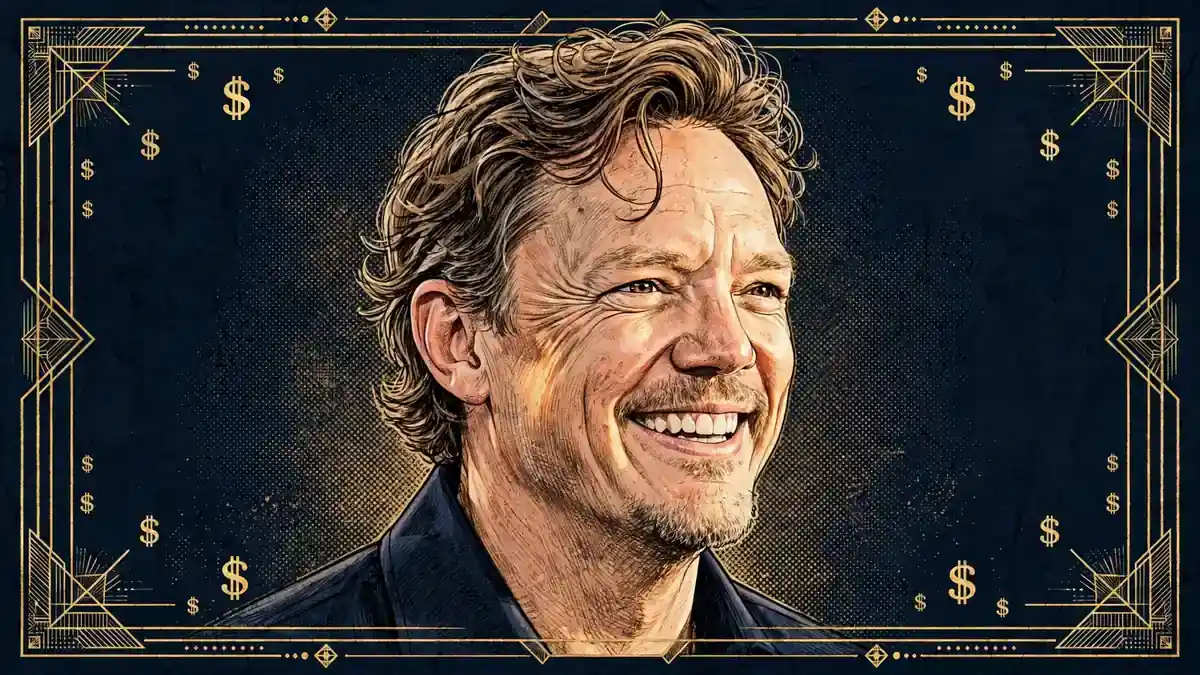
Matthew Lillard‘s net worth is estimated at $2–4 million as of October 2026. The Scream star who banked the biggest paycheck of his career on 2004’s Scooby-Doo 2 later told Variety he had to sell his house and cars when the work dried up — and then clawed back with a villain turn in a $291 million horror hit, a cult spirits brand, and a return to the franchise that started it all.
Matthew Lillard: Quick Facts
| Estimated net worth | ≈$2 million (range: $2–4 million) |
|---|---|
| Profession | Actor, voice artist, director, producer, entrepreneur |
| Nationality | American |
| Born | January 24, 1970 (age 56) |
| Height | 6 ft 3 in (1.91 m) |
| Primary income sources | Film and television acting, Shaggy voice work, directing, D&D and spirits businesses |
| Active years | 1990–present |
| Last reviewed | October 2026 |
- Early Life and Background
- Education
- Career Journey
- Rise to Fame
- Main Sources of Income
- Salary and Earnings
- Businesses and Investments
- Brand Deals and Sponsorships
- Houses, Cars and Other Assets
- Awards and Achievements
- Net Worth Growth Over the Years
- Social Media Presence
- Personal Life
- Sources & Reporting
- Frequently Asked Questions
Early Life and Background
Matthew Lyn Lillard was born on January 24, 1970, in Lansing, Michigan, the son of Paula and Jeffrey Lillard. The family moved to Tustin, California when he was in first grade, and he grew up in Orange County with his younger sister Amy. Tustin in the late seventies and eighties was suburban, middle-class, and close enough to Los Angeles for show business to feel reachable — but far enough that it stayed a dream for most kids.
Lillard’s first brush with performing came as a teenager, when he co-hosted SK8-TV, a short-lived Nickelodeon program built around skateboarding interviews. It was a goofy gig, but it taught him how to work a camera and an audience before he had any formal training. With a friend he started the Mean Street Ensemble, a small theater company that operated until 1991. The two early experiments — television hosting and stage production — ended up predicting his whole career: acting, voice work, directing, and eventually running companies of his own.
Education
Lillard attended Foothill High School in North Tustin, then Fullerton College, before enrolling at the American Academy of Dramatic Arts in Pasadena — where one of his classmates was a young Paul Rudd. The two Pasadena alumni ended up orbiting each other for years; Rudd’s path went through comedies like Clueless while Lillard’s went through horror, but they shared teachers, training, and eventually the same late-night D&D table.
After Pasadena, Lillard moved to New York to study at the Circle in the Square Theatre School. He also launched a second stage outfit, The Summoners. His manager Bill Treusch got him auditions for John Waters’s Serial Mom (1994), and he landed the part of Chip Sutphin — the memorably unhinged teenage son. One audition, one Waters movie, and he was in the business for real.
Career Journey
The Serial Mom credit put Lillard on casting directors’ radar, and 1995 turned into a five-film year: the standouts were Hackers, the cyberpunk cult picture about a group of high-school kids who thwart a multimillion-dollar corporate extortion scheme, and a run of smaller roles that kept him visible. Then came 1996 and the call from Wes Craven: Stu Macher in Scream.
Scream made about $173 million worldwide against a reported $15 million production budget, and Lillard’s unhinged, motor-mouthed Stu — half of the original Ghostface duo alongside Skeet Ulrich’s Billy Loomis — was the breakout character. The role made him instantly recognizable but, like many horror breakouts, it also typecast him. He spent the next few years ping-ponging between indie credibility (SLC Punk!, 1998, still his most quoted performance) and studio work (She’s All That, Thirteen Ghosts, Without a Paddle).
The pivot that changed everything financially arrived in 2002. Warner Bros. cast him as Norville “Shaggy” Rogers in the live-action Scooby-Doo movie opposite Freddie Prinze Jr., Sarah Michelle Gellar, and Linda Cardellini. The film earned roughly $275 million worldwide. Two years later, Scooby-Doo 2: Monsters Unleashed followed with about $181 million. Then, when Casey Kasem — who had voiced Shaggy since the character’s 1969 debut — retired in 2009 for health reasons, Warner Bros. chose Lillard as his official replacement. Starting with 2010’s Scooby-Doo! Abracadabra-Doo, he became the voice of Shaggy across three animated series (Mystery Incorporated, Be Cool, Scooby-Doo!, Scooby-Doo and Guess Who?) and dozens of direct-to-video films. He has called it his constant job — “If it wasn’t for Scooby-Doo, I wouldn’t still be in California acting.” The one exception stung: the 2020 animated reboot Scoob! recast Shaggy with SNL alumnus Will Forte, and Lillard publicly admitted he was disappointed not to be asked.
The 2010s were Lillard’s character-actor years. He guest-starred on House (2011), directed and produced his first feature, co-starred in the Oscar-winning The Descendants (2011), joined David Lynch’s Twin Peaks: The Return (2017), and anchored NBC’s Good Girls (2018–2021) as Dean Boland across 34 episodes. The 2020s brought the resurgence: William Afton in 2023’s Five Nights at Freddy’s — a $20 million Blumhouse picture that grossed nearly $291 million worldwide — plus Billions, The Life of Chuck (2025), Disney+’s Daredevil: Born Again (2026), the Carrie miniseries (2026), and a return to the Scream universe in Scream 7 (2026). The FNAF sequel followed on December 5, 2025 with a roughly $63 million opening weekend, and Scream 7 — released February 27, 2026 — was reported at about $214 million worldwide on a $45 million budget, solid franchise economics that keep him booked across all three of his defining universes at once.
Rise to Fame
Lillard’s rise happened in two distinct waves. The first, 1996–2002, was the scream-king era: Stu Macher made him famous, and Scream turned into a franchise machine that kept his name in the conversation for decades. Fans never let the “Is Stu still alive?” theory die — director Kevin Williamson eventually acknowledged on Esquire that the filmmakers shot a secret coda for Scream 7 and scrapped it because “the audience wanted him dead.”
The second wave was Shaggy. It paid better than anything before it — and, per Lillard’s own October 2026 interview for Variety‘s “Know Their Lines” series, it also cost him the most. He expected the first Scooby-Doo to make him a movie star; instead, he says his career “took a real nosedive for a long time” after the sequel underperformed. For years he resented the franchise, blamed it for killing his indie credibility (“you ‘sold your soul’ to be in this huge blockbuster,” he told the A.V. Club), and watched the lean years stretch. The honest version of his story — the one he now tells freely — is that the third wave, the Five Nights at Freddy’s era, is where the money came back. “This is a really lovely little comeback moment for me,” he told The Hollywood Reporter in 2023. It was also the moment the franchises finally paid him back.
The “Is Stu alive?” obsession wasn’t invented by internet fans. Horror lore enthusiasts have long noted that Lillard was originally contracted to return as an imprisoned cult leader in Scream 3 — a storyline scrapped when real-world events forced the studio to pivot away from high-school violence. The 2026 solution was pure modern Hollywood: rather than resurrect Stu in the flesh, Scream 7‘s killers used deepfake-style AI to “resurrect” him digitally and manipulate Sidney Prescott. Williamson told Esquire the filmmakers shot a secret end-credits coda as a hedge but dropped it because “the audience wanted him dead.” Either way, the Stu question has now driven three decades of engagement — and every anniversary panel, podcast episode, and convention appearance it spawns is another revenue line in Lillard’s diversified 2026 portfolio.
Main Sources of Income
Lillard’s money comes from five streams, and their order of importance has flipped twice in his career.
Studio film acting was the biggest stream early on. His largest single paychecks came from the two live-action Scooby-Doo pictures — Lillard told Variety in October 2026 that the Scooby-Doo 2 salary was the biggest payday of his career — and from franchise horror in the 2020s. When those checks stopped, everything changed.
Shaggy voice work became the steady stream. Starting in 2010, the animated series, direct-to-video movies, and video games made Shaggy Rogers his “constant job,” as he told Looper — the gig that kept him in California when studio live-action work dried up. Voice contracts pay less per job than studio leads, but the volume is enormous: 52 episodes of Scooby-Doo and Guess Who? alone, plus specials, shorts, and games.
Television acting was the bridge. Good Girls ran 34 episodes over three seasons; Cine Net Worth reports his per-episode salary at roughly $100,000, which would put the series at around $3.4 million total before taxes and commissions — treat that figure as reported by one outlet, not confirmed. Earlier recurring work on The Bridge, Twin Peaks, and Bosch added smaller but steady checks.
Directing and producing includes his debut feature Fat Kid Rules the World — which won the 2012 SXSW Audience Award — plus television directing on shows like Criminal Minds and Gotham, and the short-lived Midnite Movie Club web3 film studio he launched with Bill Whirity.
Entrepreneurship is the stream he’s still building: Beadle & Grimm’s, the premium D&D company he co-founded with four acting-school friends, and Find Familiar Spirits, his fandom-first spirits brand launched in 2022. Quest’s End whiskey sold out in two weeks with a 25,000-person waiting list, per his Bloody Disgusting interview.

Salary and Earnings
Hard salary data for Lillard is scarce — he has never had a publicized $20-million payday — but he has said more about his money than most actors at his level.
The number he volunteers most often is the smallest one. In a 2012 Reddit AMA, when asked about his net worth directly, Lillard answered that he had three kids and a moderate-size house, loved his life — “but I’m not rich by any stretch of the imagination.” In the same thread he disclosed earning $1,600 for one week of work on The Descendants, the Alexander Payne drama that went on to win an Academy Award for its screenplay. It remains the most concrete per-job figure he has ever attached to his own filmography, and it punctures the assumption that every recognizable face in a hit movie banks a fortune.
On the other end of the scale, the Scooby-Doo 2 payday stands alone. Lillard told Variety in October 2026 it was the biggest salary of his career at that point, and that the money sustained his family through the lean years that followed. He never named the number. But the context is revealing: Warner Bros. paid its leads franchise money in the early 2000s, and $181 million worldwide gross gave the sequel real studio confidence. The paycheck didn’t make him wealthy permanently, though. “A large film payment could not guarantee a stable income over the years that followed,” as the reporting summarized — the actor’s own words painted a downturn long enough that he and his wife Heather Helm sold their house and cars, downsized everything, and she went back to work as the family’s main earner.
Between those two poles sit the unglamorous middle. The $100,000-per-episode Good Girls figure reported by Cine Net Worth is unverified by any trade outlet, but if accurate it puts his 34-episode run near $3.4 million before representation cuts and taxes. Voice-over rates for animated series and direct-to-video films pay working-actor money — thousands per session, not hundreds of thousands — multiplied across an enormous volume of Shaggy material over fifteen years. His Five Nights at Freddy’s salary has never been reported, but Blumhouse’s $20 million production budgets typically reserve single-digit millions for the entire cast; Lillard’s piece of a movie that grossed nearly $291 million was almost certainly mid-six figures with possible backend, not leading-man money.
Businesses and Investments
This is the part of Lillard’s balance sheet most competitors ignore — and where his future wealth likely lives.
Beadle & Grimm’s is the D&D company he co-founded with four friends from acting school. They had been playing Dungeons & Dragons together since they were 21; the company ships high-end licensed D&D and Magic: The Gathering products — deluxe boxed sets, miniature sets, themed gear — directly to customers. The company has grown from a single product to more than 200 SKUs inside a $2.2 billion tabletop-game industry. Lillard told Bloody Disgusting the origin story plainly: “we started this company that delivers high-end D&D products right to your door.” It is a real operating business with real revenue, not a celebrity vanity brand.
Find Familiar Spirits, founded in 2022 with screenwriter Justin Ware and spirits veteran Tim Sparapani, builds fandom-first alcohol brands. Its first release, Quest’s End whiskey — a D&D-themed series of collectible bourbon expressions with original fantasy fiction written for each bottle — sold out in two weeks and generated a waiting list of 25,000 people. The line has expanded into Macabre Spirits, a horror-themed tequila line developed with author Mike Flanagan attached to a novella, and franchise-adjacent releases that trade on Lillard’s genre following. Lillard isn’t dabbling; he describes the company as a storytelling business where “each bottle is a different chapter of an ongoing story.” Private-company revenues aren’t disclosed, so we don’t model them into the net-worth range — but this is the only income stream he controls outright, and it’s the one with the most growth potential.
Midnite Movie Club, the web3 “decentralized movie studio” he launched with Bill Whirity in 2022 via 5,555 NFTs priced around $250–275 each, was an attempt to let fans vote on greenlit films. It has produced little visible output since, and we treat it as a failed experiment rather than an asset.
Lillard has also worked as an acting teacher — USC’s School of Dramatic Arts hosted him for a 2024 Spotlight conversation — and he co-hosted the Hindsight podcast with fellow actor Jonah Ray starting in 2018. Neither is a major income line, but both kept his name and network active during years when film work was thin.
Brand Deals and Sponsorships
Unlike many actors of his generation, Lillard has never been a traditional endorsement guy. There is no watch contract, no fragrance line, no car campaign in his portfolio — and the infamous MediaMass hoax that credited him with CoverGirl deals and a vodka empire was flagged as false by the site itself (more on that below). His commercial value lives inside his characters: Shaggy Rogers merchandise and licensing deals pay the voice-of-record for usage across games, toys, and advertising, a stream that runs quietly in the background of every Warner Bros. consumer-products cycle.
The closest thing to a sponsorship machine is his own spirits shelf. Find Familiar Spirits functions as both product and endorsement: Lillard markets the bottles to the same fandoms that follow his acting, and convention appearances double as retail events. It’s a smarter version of the celebrity-endorsement playbook — he owns the inventory instead of renting his face to someone else’s.
Houses, Cars and Other Assets
Lillard’s real-estate history is unusually well documented — because he talked about losing it. In the October 2026 Variety interview, he described selling his family’s house and cars during the post-Scooby-Doo 2 downturn and downsizing to bring household expenses under control. The family had bought their Los Angeles-area home around 2006; the forced sale is the single clearest signal that his studio-era wealth was thinner than the franchise résumé suggested.
The Lillards rebuilt. They still live in Los Angeles — Pasadena-adjacent territory, where his wife Heather Helm works as a real-estate professional with Compass and has built a design-and-staging niche in the luxury market. Public records on the current property aren’t available, so we don’t speculate on its value. The family’s cars, lifestyle spending, and day-to-day assets are deliberately modest by Hollywood standards; Lillard’s own 2012 self-portrait — three kids, a moderate house, no illusions about being rich — has been consistent with his 2026 interviews.
Awards and Achievements
Lillard has never been an awards-season fixture, but his shelf isn’t empty. His directorial debut, Fat Kid Rules the World (2012), won the Narrative Spotlight Audience Award at SXSW — a genuine festival prize for a first-time director working with a microbudget. The live-action Scooby-Doo (2002) won the Kids’ Choice Award for Favorite Movie, the kind of populist trophy that reflects exactly why Warner Bros. kept calling him back. And in 2023, The Hollywood Reporter credited his Five Nights at Freddy’s casting as part of a mainstream comeback, noting the role cemented him as a “scream king” across three generations of horror fans. The cultural achievement that matters most is tenure: replacing Casey Kasem as the official voice of Shaggy Rogers is a pop-culture custodianship no other actor holds.
Net Worth Growth Over the Years
Lillard’s fortune didn’t climb in a straight line — it spiked, sagged, and is climbing again. The table below is our reconstruction from reporting milestones, not audited data.
| Period | Estimated net worth | What drove it |
|---|---|---|
| 1996–2001 | $500K–$1M | Post-Scream steady work; indie and studio supporting roles |
| 2002–2005 | $2–3M | Peak: Scooby-Doo ($275M gross) and Scooby-Doo 2 — his biggest payday |
| 2006–2012 | $1.5–2M | Downturn: sold house and cars; voice work and The Descendants kept income flowing |
| 2013–2020 | $1.5–2.5M | Shaggy voice volume, Good Girls run, directing debut; Beadle & Grimm’s founded |
| 2021–2023 | $2–3M | Five Nights at Freddy’s ($291M) resurgence; Find Familiar Spirits launched 2022 |
| 2024–2026 | $2–4M | FNAF 2, Scream 7, Tubi’s Shaggy anime series; spirits business scaling |
How does Lillard’s fortune compare to the co-stars who shared his biggest films? The gap is instructive — it shows what leading-man billing buys versus supporting-player billing.
| Actor | Franchise overlap | Commonly cited net worth |
|---|---|---|
| Freddie Prinze Jr. | Scooby-Doo (Fred) | ~$30 million |
| Sarah Michelle Gellar | Scooby-Doo (Daphne) | ~$30 million |
| Josh Hutcherson | Five Nights at Freddy’s (Mike) | ~$20 million |
| Neve Campbell | Scream (Sidney) | ~$10 million |
| Skeet Ulrich | Scream (Billy) | ~$3–4 million |
| Matthew Lillard | Scream, Scooby-Doo, FNAF | $2–4 million |
Peer figures are the widely cited estimates published by Celebrity Net Worth, included here for scale, not precision. The pattern is consistent across all six names: the actors with the highest billing on the posters — Prinze Jr., Gellar, Hutcherson — carry the largest estimates, while the scene-stealers in supporting slots sit lower regardless of how famous the characters are. Lillard’s position at the bottom of this table isn’t a reflection of his fame; it’s the arithmetic of being the funniest person in a room where someone else’s name is above the title.
Note the honest shape of that curve: the 2004 peak is real, the dip is documented by Lillard himself, and the current range reflects a working actor with a diversified-but-unverified business portfolio — not a mogul. The junk-aggregator figures floating around online ($40 million on scam clones, $245 million on the debunked MediaMass hoax) deserve no place in a serious estimate.
Social Media Presence
Lillard is a genuinely active social presence — not a managed feed. On Instagram he runs a mix of convention photos, D&D content, Find Familiar Spirits drops, and long, earnest captions that read like they were written by him at 1 a.m. His announcement of the Scream 7 return was a cryptic post quoting Stu’s iconic “My mom and dad are going to be so mad at me” line. On TikTok and X he posts similar behind-the-scenes material, and he has used late-night Q&A panels — like the September 2026 Scream 30th-anniversary event where he publicly expressed regret about the Scream 7 return amid the franchise’s casting turmoil — as direct lines to his fanbase. For a net-worth angle, the social feed matters mostly as marketing infrastructure: every bottle launch and convention appearance gets a free audience of hundreds of thousands.
Personal Life
Lillard married Heather Helm on August 26, 2000. Helm, a former Disney marketing professional turned Compass real-estate agent, is by multiple accounts the family’s financial anchor — during the post-Scooby-Doo 2 downturn she returned to full-time work and became the main breadwinner while they rebuilt. The couple has three children and lives in Los Angeles, where Helm also does charity work with organizations like the Pasadena Children’s Guild.
Helm’s own net worth is estimated around $600,000–$1 million from her real-estate career, per the Explosion biography — a separate figure from Lillard’s, but relevant context for the household’s stability. Lillard’s D&D life is the stuff of legend among tabletop fans: he’s played with the Critical Role cast, appeared on Dice, Camera, Action, and built both of his companies around the game he started playing at 21. His sister Amy and parents Paula and Jeffrey have stayed out of the public eye.
Sources & Reporting
Variety — October 2026 “Know Their Lines” interview: Scooby-Doo 2 was his biggest career payday; the film’s underperformance sent his career into a nosedive; he and Heather sold their house and cars; she returned to work as the family breadwinner. Reporting window: October 2026.
The Hollywood Reporter — 2023 Five Nights at Freddy’s success interview (“comeback moment” quotes; noted his return to mainstream pop culture); $80M opening weekend / $220M global figures at the time of reporting.
Celebrity Net Worth — the ~$2 million baseline figure cited across entertainment outlets including Soap Central.
Soap Central — May 2012 Reddit AMA coverage: “$1,600 for one week” on The Descendants; “not rich by any stretch of the imagination” quote; Scream $173M gross vs $15M budget; December 2025 Five Nights at Freddy’s 2 $63M opening weekend reporting. Reporting window: 2024–2026.
Bloody Disgusting — 2024 interview on Find Familiar Spirits: founded 2022, Quest’s End whiskey sold out in two weeks with a 25,000-person waiting list; Macabre Spirits tequila line; Beadle & Grimm’s origin with four acting-school friends.
Reddit — Lillard’s own May 2012 r/IAmA session, primary source for his self-reported financial self-portrait.
Box Office Mojo — worldwide grosses cited via ScreenRant’s coverage (Five Nights at Freddy’s near $292M).
The A.V. Club — Random Roles interviews: Fat Kid Rules the World SXSW Audience Award (2012); “sold your soul to be in this huge blockbuster” Scooby-Doo credibility quote.
Esquire — Kevin Williamson interview on Scream 7‘s AI-hallucination Stu and the scrapped end-credits coda (“the audience wanted him dead”).
GeekTyrant — Scream 7 director’s shutdown of the Stu-survival theory for Scream 8; February 2026 release coverage.
USC School of Dramatic Arts — 2024 Spotlight conversation confirming the SXSW 2012 Audience Award, the Beadle & Grimm’s business, and the D&D company growth.
The Film Stage — 2012 interview on the directorial debut’s distribution struggles and career longevity.
Netflix Junkie — October 2026 coverage of Lillard voicing Shaggy in Tubi’s Yokoso Scooby-Doo! anime series with Frank Welker.
WhatsAfterTheMovie — career box-office aggregation: 89 film credits, $1.4B cumulative across films with reported figures; Five Nights at Freddy’s as his top-grossing film.
Cine Net Worth — weak-source claim of ~$100,000 per episode on Good Girls; included only as attributed reporting, not verified.
Explosion — Heather Helm biography: personal net worth $600K–$1M, Compass real-estate career, charitable work.
IMDb — biographical cross-checks (SK8-TV, Mean Street Ensemble, Circle in the Square).
Wikipedia — filmography and chronology cross-checks (active 1990–present; Good Girls 34 episodes; Daredevil: Born Again, Carrie 2026 credits).
Outlets we deliberately did not trust: MediaMass/People With Money (the “$245 million / highest-paid actor” story, flagged as false on its own page) and aggregator clones publishing $40 million figures with no sourcing.
Frequently Asked Questions
What is Matthew Lillard’s net worth in 2026?
Matthew Lillard’s net worth is estimated at $2–4 million as of October 2026, with about $2 million the most widely cited figure (via Celebrity Net Worth). He has personally said he is “not rich by any stretch of the imagination,” and his October 2026 Variety interview confirmed he once had to sell his house and cars during a career downturn. Estimates of $40 million or more come from unsourced aggregator sites and are not credible.
What was Matthew Lillard’s biggest payday?
Lillard told Variety in October 2026 that Scooby-Doo 2: Monsters Unleashed (2004) paid him the biggest salary of his career. The film grossed about $181 million worldwide, but its underperformance relative to the original stalled his career — he described it as the start of a long professional nosedive.
How much did Matthew Lillard make for The Descendants?
During a 2012 Reddit AMA, Lillard disclosed that he earned $1,600 for one week of work on The Descendants (2011), the Alexander Payne film that later won the Academy Award for Best Adapted Screenplay. He offered it as proof that even Oscar-adjacent roles pay working-actor rates.
Why isn’t Matthew Lillard’s net worth higher?
Three reasons. First, he was a supporting player and franchise voice actor rather than a leading man — the studios kept the backend on his biggest films. Second, his career went cold for years after Scooby-Doo 2, forcing him to sell his house and cars. Third, he has said he never chased luxury: “I have three kids and a moderate size house,” as he put it in 2012, and he prioritized family and creative projects over wealth accumulation.
Is Matthew Lillard in Scream 7?
Yes. Lillard returned as Stu Macher in Scream 7, released in February 2026 and directed by Kevin Williamson. His Stu appears as an AI-generated hallucination used to torment Sidney Prescott — director Williamson told Esquire that a real, living Stu was deemed “a big stretch.” In September 2026 Lillard publicly said he felt “ashamed” and “embarrassed” about taking the role given the franchise’s firing of Melissa Barrera.
What businesses does Matthew Lillard own?
He co-founded Beadle & Grimm’s, a premium Dungeons & Dragons products company with more than 200 product lines, and Find Familiar Spirits (launched 2022), whose Quest’s End whiskey sold out in two weeks with a 25,000-person waiting list. The company has since added Macabre Spirits, a horror-themed tequila line. Private revenues aren’t disclosed.
Is Matthew Lillard still the voice of Shaggy?
Yes, with one exception. After replacing Casey Kasem in 2009, Lillard has voiced Shaggy in every animated series (Mystery Incorporated, Be Cool Scooby-Doo!, Scooby-Doo and Guess Who?) and direct-to-video film since 2010. The 2020 animated reboot Scoob! recast the role with Will Forte, a decision Lillard said disappointed him. He returned to the character for Tubi’s 2026 anime series Yokoso Scooby-Doo!
How old is Matthew Lillard, and is he married?
Matthew Lillard was born January 24, 1970, in Lansing, Michigan — he is 56 as of October 2026. He has been married to Heather Helm since August 26, 2000, and they have three children. Helm, a former Disney marketing professional, works as a Compass real-estate agent and became the family’s main earner during his career downturn.
Final Thoughts
Matthew Lillard’s money story is the rare Hollywood finance tale with a confessional at its center. Most actors at his level let the aggregator sites inflate them into $40-million fantasies. Lillard did the opposite: he told Reddit he wasn’t rich, told Variety he sold his house and cars, and named the exact paycheck — $1,600 for a week on an Oscar winner — that explains why. That honesty is why our estimate sits at $2–4 million instead of the junk-web numbers: the biggest payday of his career arrived in 2004, the work dried up for a decade, and the rebuild is still in progress.
What makes the current chapter interesting is where the upside sits. Studio acting, voice work, and directing pay his bills; Find Familiar Spirits is the only asset he controls outright, and a sellout whiskey with a 25,000-person waiting list is a real business in a way that 5,555 web3 NFTs never were. If the spirits line scales — or if Five Nights at Freddy’s 3 turns William Afton into a recurring franchise role — the high end of our range starts to look conservative. Either way, the lesson of the Lillard ledger holds: in Hollywood, fame compounds only if you own something. For fifteen years he owned Shaggy’s voice; now he’s trying to own the bottle.
Published on 2026-10-17. Last reviewed October 2026. Found an error? See our corrections policy.