
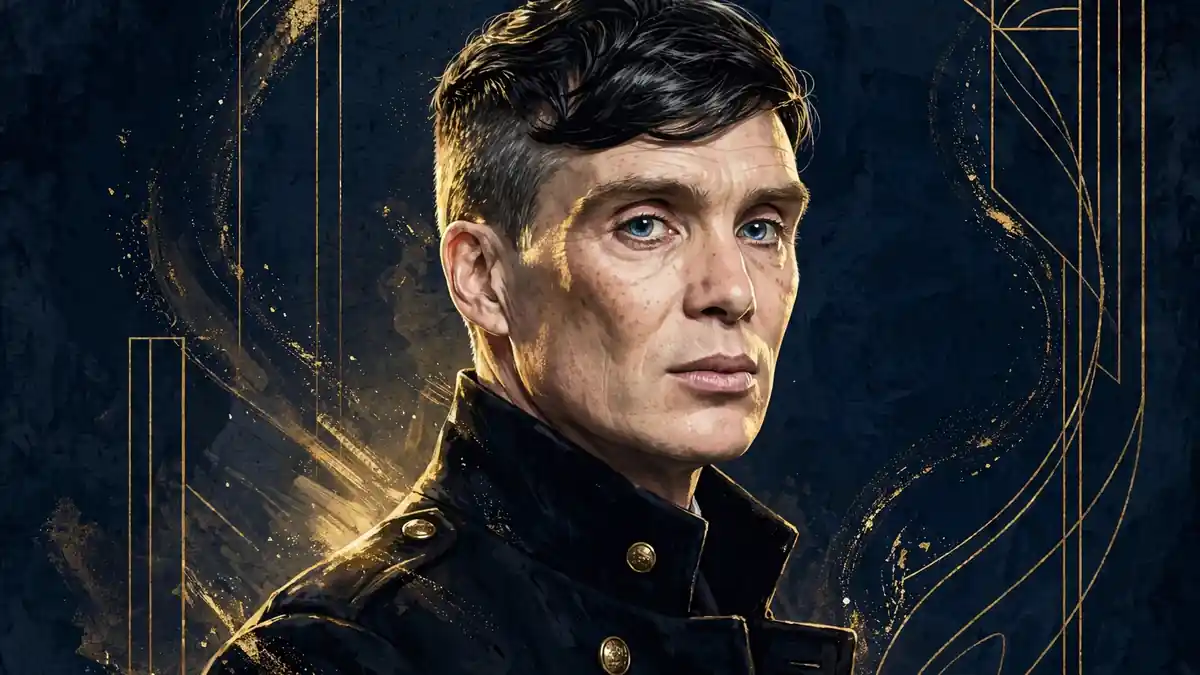
Cillian Murphy‘s net worth is estimated at $20–$30 million as of October 2026. The anchor figure — $20 million, per Celebrity Net Worth — is the number most outlets still cite, but post-Oscar reporting keeps nudging the ceiling higher: a reported $10 million payday for Oppenheimer, six seasons as Tommy Shelby that carried his per-episode pay from a reported $100,000 to over $2 million, his first luxury ambassadorships at Versace and Montblanc — and a 2026 film pipeline (the Peaky Blinders movie and a 28 Days Later return) that gives the higher estimates their argument.
Cillian Murphy: Quick Facts
| Estimated net worth | $20 million (range: $20–$30 million) |
|---|---|
| Profession | Actor and producer |
| Nationality | Irish |
| Born | May 25, 1976 (age 50) |
| Height | 5 ft 9 in (175 cm) |
| Primary income sources | Film and television acting, producing through Big Things Films, brand campaigns (Versace, Montblanc) |
| Active years | 1996–present |
| Last reviewed | October 2026 |
- Early Life and Background
- Education
- Career Journey
- Rise to Fame
- Main Sources of Income
- Salary and Earnings
- Businesses and Investments
- Brand Deals and Sponsorships
- Houses, Cars and Other Assets
- Awards and Achievements
- Net Worth Growth Over the Years
- Social Media Presence
- Personal Life
- Sources & Reporting
- Frequently Asked Questions
Early Life and Background
Cillian Murphy was born on May 25, 1976, in Douglas, County Cork, Ireland, the eldest of four children. His father worked for the Irish Department of Education; his mother was a French teacher. The house was academic, Catholic, and musical — but not theatrical. Murphy has said he never set foot in a drama school, and for most of his teens he assumed his future was in music, not acting.
That assumption nearly became a contract. As a teenager he sang, played guitar and wrote songs in bands with his brother Páidi, the most serious of them a Frank Zappa-inspired outfit called The Sons of Mr. Green Genes — named for a Zappa song. The band specialized, by Murphy’s own later description, in “wacky lyrics and endless guitar solos,” and they were good enough that Acid Jazz Records offered them a five-album deal. The duo turned it down: Páidi was still in school, the money on offer was derisory, and the label wanted the rights to Murphy’s compositions. “I’m very glad in retrospect that we didn’t sign,” he told the Irish Times years later, “because you kind of sign away your life to a label.”
August 1996 then compressed four life decisions into one month: the record deal offer arrived, he failed his first-year law exams, he landed a part in Enda Walsh’s play Disco Pigs — and he met the woman who would become his wife. Murphy later called that month the hinge his whole career swung on.
Education
Murphy attended Presentation Brothers College, a fee-paying Catholic school in Cork, where he did well academically and occasionally got suspended — he later decided in his fourth year that misbehaving wasn’t worth the hassle. Artistic pursuits were thin on the ground at a school built around sports, though a drama module run by Corcadorca Theatre Company director Pat Kiernan gave him what he later described as a “huge high,” a “fully alive” feeling he spent years chasing. His English teacher, the novelist William Wall, encouraged him to pursue acting; Murphy, set on becoming a rock star, ignored the advice for the better part of a decade.
In 1996 he enrolled to study law at University College Cork. It was, by his own account to the Irish Times, “an unqualified disaster.” He failed his first-year exams — “I had no ambitions to do it,” he said — and dropped out after about a year. The pivot came when he saw Corcadorca’s stage production of A Clockwork Orange, directed by Kiernan. He joined the UCC Drama Society, played the lead in its amateur production of Observe the Sons of Ulster Marching Towards the Somme (alongside a young Des Bishop) and headlined Little Shop of Horrors at the Cork Opera House. He later admitted his motivation at the time was as much social as professional. It didn’t matter. The stage had him.
Career Journey
Murphy’s professional debut came in 1996 when he was cast in Enda Walsh’s Disco Pigs for the Corcadorca Theatre Company. A three-week run in Cork became an 18-month international tour across Europe, Canada and Australia. He reprised the role in the 2001 film adaptation, then stacked indie credits — On the Edge (2001), shorts, stage work — while building a reputation for intensity that outweighed his screen time.
The international breakthrough was Danny Boyle’s 28 Days Later (2002), where Murphy played Jim, a bicycle courier who wakes from a coma into a plague-emptied London. Made for roughly $8 million, the film grossed over $80 million worldwide — a tenfold return that announced both a new kind of horror and a new kind of leading man. What followed was not a sprint toward franchise stardom. Murphy chose the psychological thriller Red Eye (2005), the gender-bending Breakfast on Pluto (2005) — which earned him a Golden Globe nomination — and Ken Loach’s Palme d’Or-winning The Wind That Shakes the Barley (2006). Each role added craft. None added tabloid heat. The early Cillian Murphy net worth accumulated slowly, through consistent work rather than headline paydays.
The stage never left him, either — and it never paid like film. Murphy returned to the theatre repeatedly between screen roles, most notably in Enda Walsh’s one-man show Misterman (2011), for which he won a Drama Desk Award for Outstanding Solo Performance and an Irish Times Theatre Award for Best Actor. Stage work is the least lucrative line in any actor’s accounts, and Murphy kept doing it anyway: another data point in the long pattern of choosing the work over the money.
Rise to Fame
Then came Christopher Nolan. Murphy auditioned for Bruce Wayne in 2005’s Batman Begins and didn’t get the part — but Nolan was so struck by the screen test that he cast him as Dr. Jonathan Crane, the Scarecrow, instead. That near-miss launched a collaboration spanning six films over eighteen years: the full Dark Knight trilogy, Inception (2010), Dunkirk (2017) and, finally, Oppenheimer. Financially, the first five of those were supporting-player engagements — steady, well-paid, but a fraction of what a Nolan lead commands. Even inside the Nolan universe, Murphy stayed a supporting player for years — the face in the corner of the frame you felt more than analyzed. The loyalty compounded anyway: when Nolan finally needed a lead who could carry three hours of moral collapse, he didn’t audition anyone else.
Peaky Blinders changed the economics of his career more than any Nolan film. Cast as Thomas Shelby, the cold, brilliant, traumatized patriarch of a Birmingham crime family, Murphy anchored the BBC drama across six seasons and 36 episodes from 2013 to 2022. Distributed internationally by Netflix, the show became a global phenomenon; the flat cap, the tailored suits and the Birmingham accent became cultural shorthand. It also transformed his pay: the BBC gig that started him at a reported $100,000 an episode ended with him among the best-paid actors in British television.
Between the Nolan tentpoles, Murphy stacked ensemble paydays that kept his quote climbing without ever making him the marketing face: Inception ($839 million worldwide), Dunkirk ($527 million), and A Quiet Place Part II (nearly $300 million worldwide), where his Emmett earned him a Critics Choice Super Award nomination. None of these made him rich individually. Together, they built the two-decade résumé of reliability that let him walk into Oppenheimer as the only choice for the lead — and walk out of it as an Oscar winner.
The capstone was Oppenheimer (2023). Nolan finally gave Murphy the lead — J. Robert Oppenheimer, the theoretical physicist who ran the Manhattan Project — and Murphy answered with the performance of his career, losing significant weight and studying quantum physics terminology for months. The film grossed $952 million worldwide and won seven Academy Awards, including Best Picture. At the 96th Oscars in March 2024, Murphy won Best Actor — his first nomination — becoming the first Irish-born performer to win the award. The BAFTA, the Golden Globe for Best Actor in a Motion Picture Drama, and the Screen Actors Guild Award followed the same season.
Main Sources of Income
Murphy’s fortune is almost entirely acting-derived, which makes him unusual among stars at his level. The income streams break down as follows:
Film salaries. The backbone. Oppenheimer delivered the largest single paycheck of his career (see Salary and Earnings), and his post-Oscar asking price is estimated at $3–$5 million per project by Social Life Magazine, with WearMagazines putting his per-role range at $5–$10 million for major productions. Steady Nolan-adjacent and prestige work — Inception, Dunkirk, A Quiet Place Part II — kept him employed at rising rates for two decades.
Television. Peaky Blinders was the single most reliable earner of his career: six seasons of escalating per-episode fees plus streaming residuals from the show’s long Netflix afterlife. Industry estimates of his total take from the series range from $3.6 million to $12 million depending on whose episode math you trust — the honest range is wide because neither the BBC nor Netflix ever confirmed a figure. The residuals matter more than most viewers realize: Peaky Blinders has remained one of Netflix’s most rewatched catalog dramas for years, and every rewatch generates downstream payments to principal cast. Long after the final season aired in 2022, Tommy Shelby kept paying Cillian Murphy.
Producing. Since co-founding Big Things Films in 2024, Murphy earns on both sides of the camera — actor fees plus producer participation on Small Things Like These (2024) and Steve (2025), with Netflix backing his development slate, per Inbella’s reporting.
Brand campaigns. A late but lucrative addition: Versace named him its first male ambassador in April 2024, and Montblanc made him a “Mark Maker” for its UltraBlack collection. Both are campaign-fee arrangements, not equity deals.
What he doesn’t do. This is the telling part. Murphy has no social media to monetize, no merchandise empire, no restaurant chain, no spirits brand, no fashion label of his own. The satirical “business empires” some joke sites attribute to him — burger chains, vodka labels — are fiction. His only real company is Big Things Films, and his only real property investment outside his home is a century-old cinema in County Kerry. The Cillian Murphy net worth story is, in large part, the story of money left on the table.

Salary and Earnings
The Oppenheimer payday. Reports put Murphy’s upfront salary for Oppenheimer at $10 million — Comingsoon.net and Koimoi both reported the figure, calling it the largest single paycheck of his career and noting it topped what several co-stars received. One outlet, Sportskeeda (via Clutchpoints), put the number lower at $5 million. WearMagazines estimated $8–$10 million including backend bonuses. The honest range: $5–$10 million, with the weight of reporting at the $10 million end. One further claim — DailyWikiBio’s assertion that profit participation pushed his total past $15 million — comes from a single weak source and should be treated as unverified.
Peaky Blinders, season by season. The per-episode numbers climbed with the show’s profile. Clutchpoints and Financial News put the early BBC seasons at roughly $100,000 an episode — $3.6 million across 36 episodes on that math. By the final season, Inbella, Social Life Magazine and A Little Delightful all reported figures north of $2 million per episode ($2.2–$2.3 million in A Little Delightful’s accounting), which would put the full-series total between $10 million and $12 million. A third account (Helpzone Blog) has him starting near $60,000 and peaking at $200,000–$300,000. The spread is enormous because the contracts were never public — but every version agrees on the trajectory: the show multiplied his television value several times over.
The Oscar premium. Before Oppenheimer, Murphy was a respected $1–$3 million-a-film actor. After the Oscar, Social Life Magazine estimated his asking price at $3–$5 million per project. One vivid measure of the leap: Koimoi calculated that his Oppenheimer paycheck worked out to roughly $88,300 per minute of screen time — matching Bradley Cooper’s per-minute rate on Maestro despite the longer runtime. The 2026 pipeline — Peaky Blinders: The Immortal Man (theatrical March 6, 2026, then Netflix March 20, per Social Life Magazine) and 28 Years Later: The Bone Temple (due January 2026, with Murphy reprising Jim, per Inbella and CelebrityTalk) — will be the first real test of that new price.
How he compares to his co-stars. Murphy’s $20 million fortune sits below some Peaky Blinders castmates — a function of his refusal to chase franchise paydays:
| Actor | Peaky Blinders role | Estimated net worth |
|---|---|---|
| Tom Hardy | Alfie Solomons | ~$55 million |
| Helen McCrory | Polly Gray (at her passing) | ~$25 million |
| Cillian Murphy | Tommy Shelby | $20 million |
| Sam Claflin | Oswald Mosley | ~$6 million |
Hardy’s higher figure reflects decades of franchise work — Venom, Mad Max: Fury Road — the exact kind of output Murphy has spent his career declining.
Businesses and Investments
Big Things Films. In 2024 Murphy co-founded the production company Big Things Films with producer Alan Moloney. Its first production, Small Things Like These (2024) — adapted from Claire Keegan’s novel, with Murphy starring — opened the 74th Berlin International Film Festival, a prestige launch that announced the company’s taste. Steve (2025) followed, with Murphy as star and producer on both. Inbella reports that Netflix is backing his development slate through the company, and that Murphy executive-produced both 28 Years Later sequels. This is the infrastructure play: at 50, Murphy is building the producing apparatus that lets him develop the small Irish stories he gravitates toward, with a streamer paying for the privilege. Producer fees and backend participation on these titles add a second income layer on top of his acting salaries — the first time in his career he has earned from both sides of a production.
The Phoenix Cinema, Dingle. In November 2024, Murphy and his wife Yvonne McGuinness bought the century-old Phoenix Cinema in Dingle, County Kerry — a venue serving the community since 1919 that had closed during the pandemic and faced possible commercial redevelopment. The purchase is personal as much as financial: Murphy has said he has been going to films there since he was a boy on family holidays in west Kerry, and attended a screening of his own Perrier’s Bounty there in 2010. The couple plan to restore it as a multi-disciplinary arts centre — cinema, performance space, exhibition and rehearsal areas, café, bar, restaurant and artist studios. Kerry County Council granted planning permission in February 2026; after third-party appeals, An Coimisiún Pleanála upheld the approval in 2026, and the project has secured €933,000 from the Government’s Rural Regeneration Fund. No net-worth competitor covers this asset — it’s a cultural investment, not a flip, and it says more about where Murphy puts money than any stock portfolio would.
What he turned down. The Acid Jazz five-album deal in 1996. Franchise-leading-man money for years. A move to Los Angeles. Each refusal cost him money; each built the reputation that now commands the premium. When Murphy told The Guardian he feels actors are overpaid compared to doctors and nurses — that he doesn’t feel he deserves the money — the audience believed him, because the career backs it up.
Brand Deals and Sponsorships
For most of his career, Murphy’s endorsement ledger was nearly blank — a deliberate choice consistent with his low-profile approach to celebrity. The Oscar changed the inbound interest, and he has said yes exactly twice, to houses that fit his aesthetic.
Versace. In April 2024, weeks after the Oscar ceremony, Versace announced Murphy as the debut men’s talent for its Icons collection campaign — its first male ambassador — alongside Anne Hathaway as the women’s face. Photographers Mert Alas and Marcus Piggott shot the campaign, built around tailored suits, elevated denim and leather. The Irish Insider noted the milestone: the brand had never put a man at the center of Icons before.
Montblanc. Earlier, Montblanc named Murphy a “Mark Maker” — its term for brand ambassadors — for the UltraBlack collection and the “What Moves You, Makes You” campaign, alongside DJ Peggy Gou. The campaign’s own materials quote his working philosophy: “Emotion of the story is the thing that is key for me.”
Both deals are campaign-fee arrangements; neither has been reported to include equity. And both remain the exception: Murphy still does a fraction of the endorsement volume his fame could support. The scarcity is the point — and, commercially, it works in his favor. A celebrity who says yes to everything dilutes the signal; a celebrity who says yes twice in thirty years makes each yes newsworthy, which is exactly what a luxury house is buying. His reported asking price for campaigns has never been published, but the timing — both deals landing within the Oscar halo — suggests he negotiated from maximum bargaining power.
Houses, Cars and Other Assets
The Dublin house. In 2015 Murphy moved his family from London back to Dublin — to Monkstown, a quiet coastal suburb of south Dublin — and told the Irish Times it was “the best thing we did.” The family purchased a 3,444-square-foot home there for approximately $2 million (about €1.7 million, per Financial News). It sits in a residential neighborhood, not a gated celebrity enclave. Neighbors describe a man who rides the bus, buys milk at the local shop, and walks the dog — the domestic routine, he has said, is what makes the performances possible, not a performance of normalcy.
Other property. Inbella and Social Life Magazine both mention a reported property in the South of France; no outlet has published a purchase price or address, so treat it as an unverified report rather than a confirmed asset.
Cars and lifestyle. There is no verified supercar collection, no yacht, no private jet on the record. Murphy once joked that “the only extravagant thing about my lifestyle is my stereo system, buying music and going to gigs” — and two decades later, the evidence still supports the joke. He has hosted Cillian Murphy’s Limited Edition on BBC Radio 6 Music since 2020 (three seasons, 28 episodes as of 2024, per Wikipedia), drawing from his personal record collection — the musician he didn’t become, still present in the life of the actor he did.
Awards and Achievements
- Academy Award, Best Actor — Oppenheimer (96th Oscars, March 2024); first Irish-born performer to win Best Actor, on his first nomination
- BAFTA, Best Actor in a Leading Role — Oppenheimer (2024)
- Golden Globe, Best Actor – Motion Picture Drama — Oppenheimer (2024); earlier nomination for Breakfast on Pluto (2005)
- Screen Actors Guild Award, Outstanding Performance by a Male Actor in a Leading Role — Oppenheimer (2024)
- Drama Desk Award, Outstanding Solo Performance, and Irish Times Theatre Award, Best Actor — Misterman (2011)
- BAFTA TV Award nomination — Peaky Blinders (2023)
- Six-film collaboration with Christopher Nolan across eighteen years (Batman Begins through Oppenheimer), plus the career-making partnership with Danny Boyle on 28 Days Later
Net Worth Growth Over the Years
The figures below are estimates — no auditor has ever seen Murphy’s accounts, and neither has any outlet that publishes a number. They trace the shape of the trajectory, not a ledger:
| Year | Estimated net worth | What moved it |
|---|---|---|
| 2013 | ≈ $3 million | Peaky Blinders debuts on BBC Two; steady Nolan supporting work |
| 2016 | ≈ $8 million | Dunkirk era; Peaky Blinders renewed through season 4 |
| 2020 | ≈ $12 million | A Quiet Place Part II; Peaky Blinders season 5 complete; per-episode fees rising |
| 2023 | ≈ $15 million | Oppenheimer payday; $952 million global box office |
| 2024 | ≈ $18 million | Oscar win; Versace ambassadorship; Big Things Films founded |
| 2026 | $20–$30 million | Producing income; The Immortal Man and The Bone Temple pipeline; Dingle cinema redevelopment approved |
The pattern is unusually linear for a star fortune: no lottery-ticket franchise, no nine-figure backend, just twenty-five years of escalating fees compounding. The jump from 2024 onward is the Oscar premium finally pricing in.
Behind the table sits one more number: the money Murphy declined. A franchise-leading-man career in the 2000s would have paid multiples of his indie-film fees; a Los Angeles base would have multiplied his endorsement income; a social media presence would have added sponsored-content revenue his peers bank every year. Conservative math suggests those refusals cost him tens of millions in lifetime earnings. They also built the scarcity that makes his current price possible — the believability that has directors from Nolan to Boyle casting him as the man who means exactly what he says. The $20–$30 million figure is not a small fortune that happened to an actor. It is the precise size of a fortune built on refusal.
Social Media Presence
Murphy has no public social media accounts — no Instagram, no X, no TikTok. As Inbella put it, “social media does not exist in his world.” Events happen without him unless a contract requires attendance; interviews are rare and usually tied to a specific project. In an industry where a personal brand can be worth eight figures a year in sponsored content, the absence is a financial decision as much as a personal one: a star of his stature would likely command six figures per sponsored post, and he has never shown the slightest interest in collecting it. It is also why his net worth trails peers who monetize their fame more aggressively.
Personal Life
Murphy married Irish visual artist Yvonne McGuinness in 2004 at her father’s vineyard in France; they met in 1996. McGuinness works across film, performance, sculpture, textiles and sound, and holds a master’s degree from the Royal College of Art in London. Their sons Malachy and Aran were born in 2005 and 2007. Murphy regularly credits his wife with making his career possible — he told GQ in 2019 he couldn’t do what he does without her support.
The family lived in London for years before the 2015 return to Dublin. Murphy has never shown interest in relocating to Los Angeles. He was vegetarian for around 15 years — he has said the original reason was worry about mad cow disease rather than ethics — and began eating meat again to bulk up for Peaky Blinders. He doesn’t drink, runs for fitness, and guards his family’s privacy with a consistency that borders on doctrine: his wife and children almost never appear in media coverage.
Sources & Reporting
- Celebrity Net Worth — the $20 million anchor figure, the most consistently cited estimate across the net-worth press.
- Financial News — $20 million (2025) profile; $10 million Oppenheimer figure; $100K early Peaky Blinders episode rate; Monkstown home at €1.7M; Phoenix Cinema Dingle purchase.
- Comingsoon.net — reported the $10 million Oppenheimer paycheck (via A Little Delightful’s salary breakdown).
- Koimoi — independently reported the $10 million Oppenheimer figure in its Oscar-paychecks analysis.
- The Irish Times — 2023 interview: the rejected Acid Jazz record deal, dropping out of law at UCC (“an unqualified disaster”), the BBC Radio 6 Music show’s origins, and the Dublin move as “the best thing we did.”
- The Guardian — the widely cited interview in which Murphy said actors are overpaid compared to doctors and nurses.
- Wikipedia — career chronology; Cillian Murphy’s Limited Edition (3 seasons, 28 episodes as of 2024); first Irish-born Best Actor winner.
- The Irish Insider — Murphy as Versace’s first male ambassador for the Icons collection with Anne Hathaway.
- The Fashion Vibes — Versace ambassador announcement coverage, April 2024.
- C.W. Sellors / Options, The Edge / WorldTempus — Montblanc “Mark Maker” and UltraBlack collection campaign details.
- Newsy Today, Archynewsy, Irish Examiner (via News-USA) — Phoenix Cinema Dingle purchase (November 2024), planning permission timeline, €933,000 Rural Regeneration Fund grant.
- Social Life Magazine — $30–$35 million 2026 projections; $3–$5 million post-Oscar asking price; Peaky Blinders: The Immortal Man release dates (theatrical March 6, 2026; Netflix March 20, 2026).
- Inbella — $2M+ late-season Peaky Blinders episode rate; $10–$12 million series total; Big Things Films/Netflix slate; 28 Years Later sequel executive-producer role and The Bone Temple return.
- A Little Delightful — $20 million baseline with full salary breakdown; $2.2–$2.3M final-season episode figure; Monkstown home details (3,444 sq ft, ~$2M, 2015).
- Trendcelebs — $30 million (2026) estimate; $350K early / up to $2M late Peaky Blinders episode figures; 96th Oscars timeline.
- Buhave — $25 million (2026) estimate.
- The CA Knowledge — $18–$22 million (2026) estimate; family background details.
- Clutchpoints / Sportskeeda — $5 million Oppenheimer figure (the low outlier); $100K × 36 episodes = $3.6 million Peaky Blinders total.
- Far Out Magazine / Irish Examiner USA / Emanuel Levy — The Sons of Mr. Green Genes history, the five-album Acid Jazz offer, and the UCC law dropout.
- DailyWikiBio — $35 million high-outlier estimate; unverified $15M+ Oppenheimer total with profit participation (single source — flagged as such above).
Reporting window: career coverage 1996–2024; net-worth and salary estimates compiled from outlets publishing between 2024 and October 2026. Figures reviewed October 2026.
Frequently Asked Questions
What is Cillian Murphy’s net worth in 2026?
Cillian Murphy’s net worth is estimated at $20 million as of October 2026, per Celebrity Net Worth — the figure most outlets still cite. Other estimates run higher: Buhave puts it at $25 million, Trendcelebs at $30 million, and Social Life Magazine projects $30–$35 million for 2026 once post-Oscar earnings and the 2026 film pipeline are factored in. Our assessed range is $20–$30 million.
How much did Cillian Murphy make for Oppenheimer?
Murphy reportedly earned $10 million for playing J. Robert Oppenheimer, according to Comingsoon.net and Koimoi — the largest single paycheck of his career. One outlet, Sportskeeda, reported a lower $5 million figure, so the honest range is $5–$10 million, with the weight of reporting at $10 million. A single-source claim that profit participation pushed his total past $15 million is unverified.
How much did Cillian Murphy earn per episode of Peaky Blinders?
His per-episode pay rose with the show’s profile: roughly $100,000 in the early BBC seasons, climbing to a reported $2 million-plus by the final season. Estimates of his total across all 36 episodes range from $3.6 million to $10–$12 million depending on the source, because the contracts were never public.
Is Cillian Murphy married?
Yes. Murphy has been married to Irish visual artist Yvonne McGuinness since 2004; they met in 1996. The couple have two sons, Malachy (born 2005) and Aran (born 2007), and live in Monkstown, south Dublin.
Where does Cillian Murphy live?
Murphy lives in Monkstown, a coastal suburb of south Dublin, Ireland. He moved his family back from London in 2015, calling it “the best thing we did” in an Irish Times interview. He has shown no interest in relocating to Los Angeles.
Does Cillian Murphy own a production company?
Yes. He co-founded Big Things Films in 2024 with producer Alan Moloney. The company has produced Small Things Like These (2024) and Steve (2025), both starring Murphy, and Netflix is backing his development slate. He also executive-produced the 28 Years Later sequels.
Did Cillian Murphy win an Oscar?
Yes. Murphy won the Academy Award for Best Actor at the 96th Oscars in March 2024 for Oppenheimer — his first nomination — becoming the first Irish-born performer to win the award. He also won the BAFTA, the Golden Globe for Best Actor in a Motion Picture Drama, and the Screen Actors Guild Award for the role.
Is Cillian Murphy the richest actor from Peaky Blinders?
No. Tom Hardy, who played Alfie Solomons, has an estimated net worth of around $55 million — reflecting decades of franchise work like Venom and Mad Max: Fury Road. Helen McCrory’s estate was estimated at about $25 million. Murphy’s $20 million puts him third among the show’s main cast, a direct consequence of his refusal to chase franchise paydays.
Final Thoughts
Cillian Murphy’s $20–$30 million fortune is the slowest-built fortune in modern Hollywood — and arguably the most instructive. No franchise backend, no nine-figure streaming deal, no product empire: just twenty-five years of escalating fees, a television phenomenon that multiplied his value, and one $10 million Oscar-winning payday that finally priced in what directors had known for decades.
The 2026 ledger will tell the next chapter. Peaky Blinders: The Immortal Man arrives in theaters in March, 28 Years Later: The Bone Temple follows, Big Things Films is developing with Netflix’s backing, and the Dingle cinema redevelopment — approved, funded, and deeply personal — shows where his money goes when it isn’t working: back into Irish culture, not into display. If the higher $30–$35 million projections prove right, it will be because the Oscar premium finally compounded. Either way, Murphy will likely still be riding the bus in Monkstown.
Published on 2026-10-21. Last reviewed October 2026. Found an error? See our corrections policy.