
Andre Ware‘s net worth is estimated at $1.5 million to $2 million as of November 2026. The first Black quarterback to win the Heisman Trophy built his wealth on a four-year Detroit Lions rookie contract worth roughly $1.2 million a season, a decade of professional football in the NFL, the CFL and NFL Europe, and then a second career that has now lasted longer than his playing days: more than twenty years in the broadcast booth for ESPN and the Houston Texans.
Andre Ware: Quick Facts
| Estimated net worth | $1.5 million to $2 million (range: $1.5–$2 million) |
|---|---|
| Profession | Former NFL and CFL quarterback; ESPN college football analyst; Houston Texans radio color analyst |
| Nationality | American |
| Born | July 31, 1968 (age 58) |
| Height | 6 ft 2 in (1.88 m) |
| Primary income sources | NFL rookie contract, CFL and NFL Europe contracts, ESPN broadcasting, Houston Texans radio |
| Active years | 1987–1999 (playing); 2002–present (broadcasting) |
| Last reviewed | November 2026 |
- Early Life and Background
- Education
- Career Journey
- Rise to Fame
- Main Sources of Income
- Salary and Earnings
- Businesses and Investments
- Brand Deals and Sponsorships
- Houses, Cars and Other Assets
- Awards and Achievements
- Net Worth Growth Over the Years
- Social Media Presence
- Personal Life
- Sources & Reporting
- Frequently Asked Questions
- Final Thoughts
Early Life and Background
Andre Trevor Ware was born on July 31, 1968, in Galveston, Texas, the son of Robert Ware, a schoolteacher, and Joyce Ware. He grew up in the Galveston area, a stretch of the Gulf Coast that has produced a long line of Texas football talent, and he went to Dickinson High School in Dickinson, Texas, just up the road from Galveston. The Encyclopedia.com profile of Ware records his parents by name and his Galveston birthplace, and it is one of the few sources that fills in the family background at all: Ware has kept his parents and siblings out of the public eye for his whole adult life, and no reliable reporting names any brothers or sisters.
The first thing to understand about Ware’s path is that the school he dreamed of did not want him the way he wanted to be used. Growing up in the Houston area, he hoped to play football for the University of Texas. Texas had other ideas about what a Black quarterback could be in the late 1980s, and the interest never turned into the offer Ware wanted. That rejection shaped everything that followed. He spent one season at Alvin Community College, a junior college south of Houston, before the University of Houston gave him the chance Texas would not: a starting quarterback job in an offense built to throw the ball forty and fifty times a game.
Houston’s pitch came with a twist. Head coach Bill Yeoman had recruited Ware to run the veer, the triple-option attack Yeoman invented in the 1960s. Ware arrived in 1987, the same year Yeoman retired and Jack Pardee took over as head coach, bringing offensive coordinator John Jenkins and the run-and-shoot offense with him. Ware had been recruited to run one system and wound up running another — a pass-happy, four-receiver scheme that had already made Hall of Fame quarterback Jim Kelly a USFL MVP with the Houston Gamblers three years earlier. The accident of that coaching change is the hinge of Ware’s whole story. In the veer, his arm would have been a secondary weapon. In the run-and-shoot, it became the center of the sport.
Ware’s first year in the new system was rough. ESPN’s retrospective on the 25th anniversary of the 1989 season quotes Houston running back Chuck Weatherspoon recalling that Ware looked nervous early on, aiming the ball, afraid to make a mistake. The Cougars went 4-6-1 in 1987. Nothing in that first season suggested what was coming. But the offense demanded repetition — fifty throws a game, every week — and by his sophomore year Ware had the timing and the confidence the scheme needed. The 1988 season, a 9-3 record and a trip to the Aloha Bowl, was the warning. The 1989 season was the explosion.
Education
Ware attended Dickinson High School in Dickinson, Texas, where he played quarterback and first drew college attention. From there he spent a season at Alvin Community College before enrolling at the University of Houston, where he played from 1987 to 1989. He left Houston after his junior year to enter the 1990 NFL draft, forgoing his senior season — a decision that made sense the moment his name was called seventh overall, but one that left his degree unfinished at the time.
He finished the job later. The National Football Foundation’s Hall of Fame profile records that Ware returned to Houston after his playing career and earned his bachelor’s degree in marketing. That detail matters to the money story in two ways. First, it closed the loop on the education he had interrupted for the draft, which is more than many early-entry players manage. Second, the marketing degree fits the second half of his working life: a broadcaster whose job is communication, and a man who biographical profiles describe as a partner in a Houston computer-services firm, N3 Consulting. The degree did not make him rich. It did give him a credential for the decades after football, when the paychecks from throwing a ball had stopped and the paychecks from talking about throwing a ball had started.
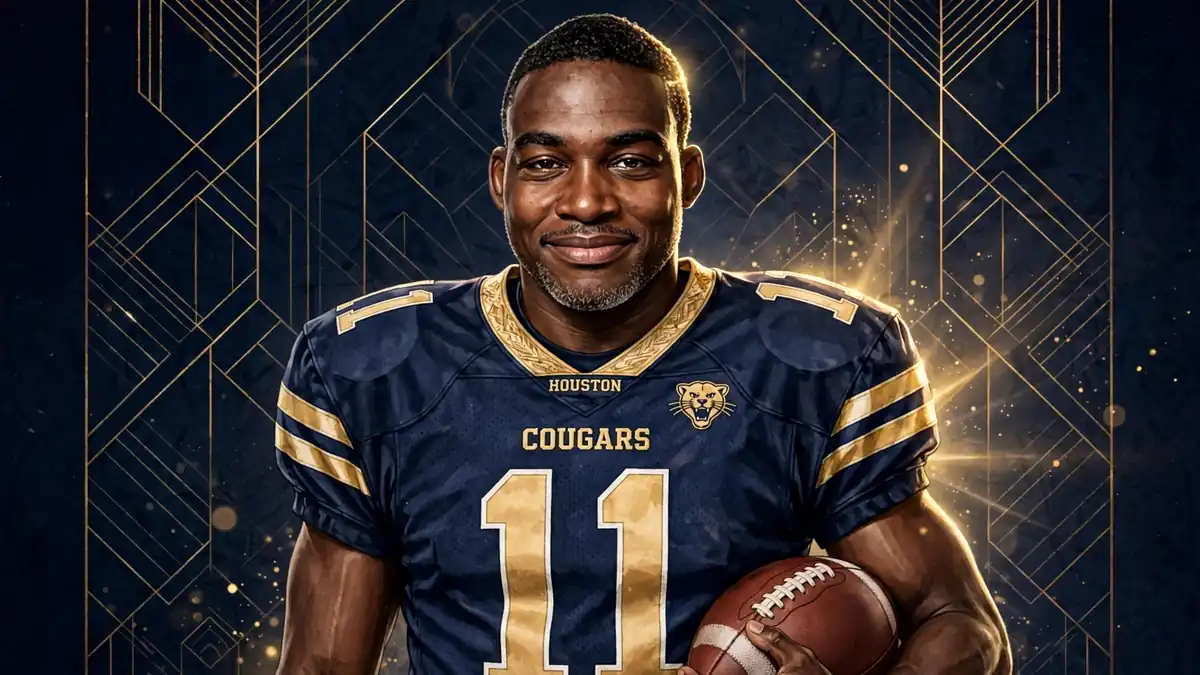
Houston retired Ware’s number 11 jersey, and the university’s connection to him runs deeper than a single trophy. He later worked as the color commentator for Houston Cougars broadcasts, the first broadcasting job of his second career, before the Texans and ESPN came calling. The school that gave him his chance when Texas passed became the first employer of his post-playing life.
Career Journey
Ware’s career breaks into three clean acts, and only the middle one — the four years in Detroit — disappointed anyone. Act one was the Houston explosion. Act two was the NFL struggle. Act three, the longest of the three by far, is the broadcast booth, where he has now worked for more than two decades.
The Houston act began slowly. In 1987, Pardee’s first year, Ware learned the run-and-shoot on the job and Houston stumbled to 4-6-1. In 1988 the system clicked: Ware threw for 2,507 yards and 25 touchdowns, Houston went 9-3, and the Cougars earned a trip to the Aloha Bowl. The numbers were strong for the era but nothing historic. Then came 1989, a season that still sits in the record books nearly four decades later.
The Detroit act started with a holdout. Ware was the seventh overall pick of the 1990 NFL draft, the first quarterback taken that year, and head coach Wayne Fontes overrode his own scouting director to make the pick — the scouting director resigned the next day, according to Wikipedia’s account of the draft. Ware held out through training camp and signed on August 28, 1990, a four-year contract worth an estimated $1.2 million per year, as reported at the time by the Toledo Blade. That contract, worth roughly $4.8 million across its four years, was the single biggest payday of his playing career, and it arrived before he had taken a single NFL snap.
What followed was four seasons of waiting. Pro Football Reference logs Ware’s Detroit career as 14 games and 6 starts from 1990 to 1993, with 83 completions on 161 attempts for 1,112 yards, 5 touchdowns and 8 interceptions, a 63.5 passer rating, and 217 rushing yards. His best year was 1992, when he started three games and threw for most of his career yardage. He sat behind Rodney Peete and Erik Kramer on a Lions depth chart that never opened a real lane for him, and the run-and-shoot offense he had mastered in college never became the Lions’ identity the way Fontes had imagined when he made the pick. Ware was released after the 1993 season, and his NFL career as a player was effectively over at 25.
The third act of his playing career was a tour of the football map. In 1994 the Minnesota Vikings signed him and released him before the season started; he spent time on the Los Angeles Raiders’ roster that year without being activated. In 1995 the expansion Jacksonville Jaguars signed him, and he also played for the Ottawa Rough Riders of the Canadian Football League. In 1996 he played for the BC Lions. In 1997 he backed up fellow Heisman winner Doug Flutie with the Toronto Argonauts and won a Grey Cup championship, the one team title of his professional career. In 1999 he played five games for the Berlin Thunder of NFL Europe and spent time with the Oakland Raiders. He was 31 when the playing career ended for good.
The broadcasting act began almost as soon as the playing ended. Ware worked as the color commentator for Houston Cougars games, then in 2002 — the Houston Texans’ first season — he joined Marc Vandermeer as the color analyst on the Texans’ radio broadcasts. The pair have called every Texans regular-season and playoff game together since, a run now in its 25th season. In 2003 ESPN hired him as a college football analyst, and he has worked ESPN and SEC Network games ever since, most recently on Friday primetime crews alongside play-by-play voices Anish Shroff and Jason Benetti with reporter Paul Carcaterra. He also hosts “The Andre Ware Show,” a weekly segment on Houston’s SportsRadio 610. The booth gave him what Detroit never did: a long, stable, public-facing career in football.
Rise to Fame
Ware’s rise was not gradual. It was one season, eleven games, and a pile of numbers so large that they changed how college football thought about passing. The 1989 Houston Cougars went 9-2, finished ranked 14th in the Associated Press poll, and averaged 624.9 total yards per game — a figure that still stands as number one in FBS history, according to ESPN’s retrospective. They set nearly 100 NCAA, Southwest Conference and school records in a single season. They were the first FBS team ever to have a 4,000-yard passer, a 1,000-yard rusher and a 1,000-yard receiver in the same season: Ware with 4,699 passing yards, Chuck Weatherspoon with 1,146 rushing yards at 9.6 yards per carry, and Manny Hazard with 142 receptions for 1,689 yards and 22 touchdowns. Hazard’s 142 catches set an NCAA single-season record of their own.
Ware’s own line for 1989 reads like a misprint: 365 completions on 578 attempts (63.1 percent) for 4,699 yards and 46 touchdowns, with 15 interceptions, across 11 games — and he sat out the fourth quarter of seven of them. He led the nation in completions, passing yards and touchdowns. He tied or broke 27 NCAA records, per ESPN and Wikipedia; the National Football Foundation counts 26 NCAA records and 15 Southwest Conference records from that season, a small difference in counting that changes nothing about the scale of it. The individual game lines were just as absurd: 503 passing yards against Arizona State, seven touchdown passes and 413 yards against Temple, 514 yards and six scores in a 66-10 win over Baylor.
The signature game came on October 21, 1989, against SMU. Ware threw for 517 yards and six touchdowns in a single half — 340 yards and five touchdowns in the first quarter alone — and he played only about twelve minutes of the game before sitting down. Houston won 95-21. The 517 yards in a half still stands as an NCAA record. The 95 points Houston scored that day remain a marker of how far the run-and-shoot, at full throttle, could separate from the rest of the sport.
The Heisman vote that December carried its own history. Ware won the trophy by 70 points over Indiana running back Anthony Thompson, at the time the fourth-closest vote in the award’s history. He became the first Black quarterback to win the Heisman in the award’s 54-year history — and he did it despite 246 of the 743 returned ballots leaving his name off entirely, a detail reported by The Undefeated that says as much about the era as about the player. He also became the only quarterback ever to win the Heisman while his team was on NCAA probation: Houston was barred from a bowl game and from television in 1989, which meant most of the country had never seen Ware play live before the Heisman ceremony. The Los Angeles Times headline the next morning read, “Invisible Ware Gets Hardware.” He won the Davey O’Brien Award as the nation’s best quarterback the same season and was named a consensus All-American and Southwest Conference Offensive Player of the Year.
The fame arrived with a catch that followed him for years. Because Houston was on probation and off television, Ware’s season existed mostly as box scores and newspaper stories outside Texas. The Heisman made him a national figure overnight, and the NFL draft made him the seventh overall pick four months later — but the visibility gap meant the legend grew faster than the scouting report. When the Detroit years went sideways, the 1989 season became both his credential and his burden: proof of what he could do, and the standard every later performance was measured against.
Main Sources of Income
Ware’s money came from three sources across his working life, and the order of their importance has flipped twice. During his playing years, the NFL rookie contract was the main source by a wide margin. During the CFL and NFL Europe years, modest playing contracts kept him in the game. Since 2002, broadcasting has been the main source — two paychecks, from ESPN and from the Houston Texans’ radio network, that have run without interruption for more than twenty years.
The first source was the Detroit contract. Four years at an estimated $1.2 million per year, signed in August 1990, put roughly $4.8 million of contract value on the table before Ware’s 22nd birthday. The word “value” matters here: the Toledo Blade’s report called the deal “worth an estimated $1.2 million per year,” and the contract’s actual cash depended on roster bonuses, playing-time triggers and how much of the deal was guaranteed — details that were never published. Ware played all four seasons of the deal in Detroit, which suggests he collected most of it, but the exact cash figure is not in the public record, and this article does not guess at it.
The second source was the journeyman years. CFL contracts in the mid-1990s paid far less than NFL deals — the league’s top quarterbacks earned in the low six figures — and NFL Europe paid less still. Ware’s stops in Ottawa, British Columbia, Toronto and Berlin kept a paycheck coming between 1995 and 1999, but none of them moved his net worth in a meaningful way. The Grey Cup title with Toronto in 1997 was worth more to his biography than to his bank balance: a championship ring and a line on the resume that still gets mentioned in his Hall of Fame citations.
The third source, broadcasting, is where the money story becomes a longevity story. Ware has been on ESPN’s college football roster since 2003 and on the Texans’ radio broadcasts since 2002. ESPN does not publish analyst pay, and neither does the Texans’ radio network, so no verified annual figure exists for either job. One biographical site, PlayersWiki, put his annual salary near $400,000 in 2019, a figure no major outlet has confirmed and this article treats as unconfirmed. What can be said with confidence is that two broadcasting contracts running in parallel for 23 and 24 years respectively, on top of a weekly radio segment, add up to the steadiest income of his life — and that steady income is the reason the $1.5 million net worth figure from 2017 looks low in 2026.
There is a fourth, smaller source that biographical profiles mention: business. Profiles describe Ware as a partner in N3 Consulting, a Houston computer-services company. No revenue, ownership percentage or valuation for that business appears in any public source, so it is listed here as a reported interest rather than a counted asset. It is the only business affiliation attached to Ware’s name in the public record, and it fits the marketing degree he earned after football.
| Income source | Period | What is known |
|---|---|---|
| Detroit Lions rookie contract | 1990–1993 | Four years, estimated $1.2 million per year (Toledo Blade, 1990) |
| CFL / NFL Europe contracts | 1995–1999 | Ottawa, BC, Toronto, Berlin; modest by NFL standards, exact figures unpublished |
| ESPN college football analyst | 2003–present | Annual pay not publicly disclosed |
| Houston Texans radio analyst | 2002–present | Annual pay not publicly disclosed; every Texans game since 2002 |
| N3 Consulting partnership | Reported | Reported by biographical profiles; no public financial details |
Salary and Earnings
The honest answer about Andre Ware’s salary is that only one of his contracts was ever reported in public, and it was reported as an estimate. Everything else — the CFL years, the ESPN years, the Texans radio years — has no published number attached to it. That is normal for a player of his era and for a broadcaster of his tier, and this section says what is known rather than filling the gaps with invented figures.
The known number is the Detroit deal. Ware held out of training camp after the 1990 draft and signed on August 28, 1990, a four-year contract worth an estimated $1.2 million per year, according to the Toledo Blade’s report from the day of the signing. At the time, that was serious money for a rookie quarterback: the 1990 NFL salary cap did not exist yet — the cap arrived in 1994 — and top draft picks were negotiating in a market with no rookie scale and no ceiling. Ware was the seventh overall pick and the first quarterback taken, which put him near the top of that year’s pay scale. The deal’s total value, roughly $4.8 million over four years, is the largest single contract figure attached to Ware’s name anywhere in the public record.
What the deal was actually worth in cash is a different question, and it is one the record does not answer. Rookie contracts of that era were built from base salary, signing bonus, roster bonuses and incentives, and the split between guaranteed money and money that depended on making the team was rarely reported in full. Ware spent all four seasons of the deal in Detroit, appearing in 14 games and starting 6, which points toward him collecting the bulk of the base salary. But the bonus structure, the guarantee and the final cash total were never published, and no database — not Spotrac, not Over The Cap, which cover the modern cap era — carries a career-earnings figure for a player whose NFL career ended in 1993. Any site that prints a precise “career earnings” total for Ware is inventing it.
The CFL and NFL Europe years paid less, and the gap was large. In the mid-1990s, CFL starting quarterbacks earned in the low-to-mid six figures in Canadian dollars, and NFL Europe salaries were lower still. Doug Flutie, the CFL’s biggest star of that era and Ware’s teammate in Toronto in 1997, was the league’s highest-paid player at about $1 million a year with the Calgary Stampeders — and Ware, as Flutie’s backup in Toronto, earned a fraction of that. The four seasons from 1995 to 1999 kept Ware employed as a professional quarterback, but they did not add wealth at anything like the Detroit rate. The honest way to describe those years is that they extended his playing career, gave him a Grey Cup ring, and paid a working wage.
Broadcasting is where the earnings picture gets both steadier and less transparent. Ware has drawn two media paychecks since the early 2000s: ESPN, where he has worked college football since 2003, and the Houston Texans radio network, where he has been the color analyst alongside Marc Vandermeer since the franchise’s first season in 2002. Neither employer discloses analyst pay. Industry reporting on college football analysts puts established ESPN game analysts in the mid-to-high six figures, but that is an industry range, not Ware’s number, and this article does not present it as his salary. The one specific figure in circulation — PlayersWiki’s claim of a $400,000 annual salary as of 2019 — comes from a single biographical site with no sourcing, and no major outlet has confirmed it. Treat it as an unconfirmed claim, not a fact.
What the timeline does prove is duration. Twenty-four seasons on Texans radio and twenty-three on ESPN, without a break, is a long run of steady professional income. Ware was 34 when he started with the Texans and 58 when this article was written. The broadcasting career has now lasted roughly three times as long as the playing career. That duration is the strongest argument for the top half of our $1.5–$2 million range: the 2017 estimate of $1.5 million predates nine additional years of that income, and a man who has worked two broadcasting jobs without interruption since 2002 does not stand still financially.
The comparison with his peers makes the same point from the other side. Doug Flutie, Ware’s Toronto teammate and a fellow Heisman winner, is listed by Celebrity Net Worth at $10 million, built on a far longer playing career and the USFL contract that made him the highest-paid player in pro football in 1985. Warren Moon, the Houston Oilers quarterback who took the run-and-shoot to the NFL, is listed by Celebrity Net Worth at $16 million after earning around $37 million in NFL salary alone. Ware’s numbers sit far below both, and the reason is simple: his NFL career lasted four seasons and 14 games, not seventeen, and his biggest contract was a rookie deal, not a veteran’s second and third contracts. The Heisman was the same trophy. The paychecks after it were not.
| Player | Heisman year | NFL career | Estimated net worth (Celebrity Net Worth) |
|---|---|---|---|
| Andre Ware | 1989 | 14 games, 1990–1993 | $1.5 million |
| Doug Flutie | 1984 | 12 NFL seasons plus CFL and USFL | $10 million |
| Warren Moon | — (Washington, 1978) | 17 NFL seasons, 1984–2000 | $16 million |
The table’s lesson is that a Heisman Trophy is a career launcher, not a fortune. Moon and Flutie turned theirs into long professional careers with multiple large contracts. Ware’s professional career was short, and his fortune is correspondingly modest — which is also why the broadcasting second act matters so much to his bottom line. Without it, the story would be a $1.5 million figure frozen in 2017. With it, the figure has room to move.
Businesses and Investments
There is no public record of Andre Ware running a business empire, holding a property portfolio or making headline investments, and this section does not pretend otherwise. The net worth sites that cover Ware agree on the shape of his money: playing contracts first, broadcasting second, and nothing else large enough to document. That is itself a finding. A player whose NFL career ended at 25 and whose fame rests on a college season does not accumulate the business portfolio of a modern quarterback with a $200 million contract, and the reporting reflects that.
The one business affiliation attached to Ware’s name is N3 Consulting, a Houston computer-services firm that biographical profiles describe him as a partner in. The profiles that mention it — Celebrity Birthdays among them — give no detail: no ownership stake, no revenue, no date for when the partnership began, and no valuation. The National Football Foundation notes that Ware returned to the University of Houston after football to earn a bachelor’s degree in marketing, which fits a man involved in a services business, but the degree and the partnership are separate facts, and no source connects them directly. Treat N3 Consulting as a real but unquantified interest: it exists in the reporting, and it contributes nothing measurable to the estimate.
No investment portfolio, stock holding, startup stake or real estate venture is documented for Ware in any reliable source. No SEC filing, business registry entry or interview mentions one. That absence is worth stating plainly, because net worth articles routinely pad this section with generic claims about “smart investments” and “business ventures.” Ware’s file contains none of that. His wealth, such as it is, is salary wealth: a rookie contract, journeyman contracts, and two decades of broadcasting pay. The estimate in this article is built on those three streams and nothing else.
That is also why the range is narrow. A $1.5–$2 million estimate for a man with no documented investments and no public salary since 1990 is an estimate of accumulated salary minus a lifetime of living costs, with a modest allowance for the broadcasting years that postdate the last published figure. A wider range would imply knowledge about assets that the public record does not contain. The narrow range is the honest one.
Brand Deals and Sponsorships
No major endorsement deal is documented for Andre Ware, and the reason is timing as much as anything else. The modern endorsement economy — the shoe deals, the car commercials, the social media partnerships that now make up a large share of a star quarterback’s income — did not exist for college players in 1989. The NCAA’s amateurism rules barred Ware from profiting off his name, image and likeness while he was at Houston, and the NIL era that now pays college stars arrived more than thirty years too late for him. His Heisman season was worth a fortune in attention. It was worth nothing in endorsements at the time, because the rules said so.
His professional years offered little more. Endorsement money follows playing time and visibility, and Ware’s four seasons in Detroit produced 14 appearances and 6 starts. The Lions’ marketable stars of that era were Barry Sanders and, later, Herman Moore — players who were on the field every week. Ware was a backup quarterback on a team that already had one of the most marketable players in the sport. No shoe company, car brand or national advertiser is recorded as having signed him, and no interview or profile mentions a deal.
The broadcasting years changed the shape of his commercial value without creating a public endorsement portfolio. Ware’s name carries weight in Houston — Heisman winner, Texans radio voice since day one, ESPN analyst — and that local standing supports the weekly radio segment that bears his name, “The Andre Ware Show” on SportsRadio 610, which has carried sponsorship from ImageNet Consulting. That is a sponsored radio segment, not a personal endorsement deal, and it is the closest thing to a brand association in his file. His Houston Sports Hall of Fame induction in 2025, as a member of the class of 2025, put his name back in front of Houston audiences and local sponsors, but no endorsement tied to the induction has been reported.
For readers comparing Ware with today’s college stars, the contrast is the story. A quarterback who threw for 4,699 yards and won the Heisman in 2025 would sign NIL deals worth seven figures before the season ended. Ware threw for the same yardage in 1989 and got a trophy, a draft slot and a rookie contract. The money that the modern game pays its stars at the college level simply did not exist in his era, and his net worth carries that absence in it.
Houses, Cars and Other Assets
Ware lives in Houston, where he has lived for most of his adult life, and that is about as specific as the public record gets about his home. Biographical profiles agree that he still lives in Houston with his wife, Donya, and no profile, property record or interview gives an address, a purchase price or a description of the house. No property record for Ware appears in the public reporting that this article reviewed, and no real estate purchase or sale has been covered by Houston media. This article does not guess at a home value, and the net worth estimate does not include a property figure beyond the ordinary assumption that a man who has lived and worked in one city for thirty years owns a home there.
The same restraint applies to cars. No car collection, luxury vehicle purchase or vehicle endorsement is documented for Ware. Heisman winners of later eras have been photographed with fleets and sponsorship deals; Ware’s file contains none of that. His public image since 2002 has been a man in a broadcast booth, not a man posing with a car.
What he does own that can be named is the memorabilia of a historic career: the 1989 Heisman Trophy itself, the Davey O’Brien Award, a Grey Cup championship ring from the 1997 Toronto Argonauts, a College Football Hall of Fame plaque from his 2004 induction, and the Houston Sports Hall of Fame honor from the class of 2025. The Heisman Trophy has a market — trophies have sold at auction for six figures — but Ware has never put his up for sale, and this article assigns it no dollar value. Its worth to him is as a credential, the object that still opens doors in Houston and in the ESPN booth thirty-seven years after he won it.
The honest summary of this section is short: a Houston home of unknown value, no documented car collection, and a set of trophies and a championship ring that are priceless to their owner and unpriced by any market. Any net worth article that prints a property value or a car list for Ware is filling a gap in the record with invention. This one leaves the gap visible.
Awards and Achievements
Ware’s trophy case is the strongest part of his file, and it is worth listing in full, because the gap between the honors and the money is the whole story of his career. He won the highest individual honor in college football and then never won a starting job in the NFL. The honors are real. The money that usually follows them never arrived.
- Heisman Trophy, 1989 — the first Black quarterback to win the award, and the only quarterback to win it while his team was on NCAA probation. Won by 70 points over Indiana’s Anthony Thompson.
- Davey O’Brien Award, 1989 — given to the nation’s best college quarterback.
- Consensus All-American, 1989 — named to the first team by the major selectors.
- Southwest Conference Offensive Player of the Year, 1989 — the conference’s top offensive honor in his record season.
- First-team All-Southwest Conference, 1989, and second-team All-SWC in 1988.
- 27 NCAA records tied or broken in 1989, per ESPN and Wikipedia, including 4,699 passing yards, 46 touchdowns, and the still-standing record of 517 passing yards in a single half. The National Football Foundation counts 26 NCAA records and 15 Southwest Conference records from the same season.
- Grey Cup champion, 1997 — with the Toronto Argonauts, backing up Doug Flutie.
- College Football Hall of Fame, inducted 2004 — fifteen years after the Heisman season.
- Houston Cougars number 11 retired — his jersey number is retired by the university.
- Houston Sports Hall of Fame, class of 2025 — inducted by the Houston Sports Authority Foundation, whose citation calls his 1989 season one of the record books’ great quarterback years.
Two of those honors deserve a second look. The College Football Hall of Fame induction in 2004 came fast by the Hall’s standards — fifteen years after his last college game — and it settled the question of whether Ware’s one great season was enough. It was. The Houston Sports Hall of Fame induction in 2025, thirty-six years after the Heisman, shows the other side of his longevity: Houston still claims him, still puts him on stage, and still treats the 1989 season as a civic event rather than a sports memory. A man who had faded from public life would not be inducted into his city’s hall of fame in his late fifties. Ware was, because he never left — he has been on Houston radio and television, in one booth or another, for most of the time since.
The Pro Football Hall of Fame is the one honor he does not have and will not get. Pro Football Reference’s own FAQ answers the question directly: Ware has not been elected to the Hall of Fame, and his 14-game NFL career gives the voters nothing to work with. The College Football Hall of Fame is his hall, and the 1989 season is the reason. That distinction matters to the money story too: the College Hall of Fame does not come with the pension, the appearance fees or the commercial afterlife that a Pro Football Hall of Fame career brings. Ware’s honors are college honors, and college honors pay in reputation, not in cash.
Net Worth Growth Over the Years
The table below traces the shape of Ware’s wealth rather than a precise balance at each date, because precise balances do not exist in the public record. The figures are labeled for what they are: a contract value in 1990, a published estimate in 2017, and a range for 2026. The years between them are described, not numbered, because numbering them would be invention.
| Year | Milestone | Estimated net worth |
|---|---|---|
| 1989 | Heisman Trophy; still a college junior, no professional income | Negligible — amateur athlete |
| 1990 | Drafted seventh overall; four-year Lions deal, estimated $1.2 million per year | Contract value roughly $4.8 million over four years |
| 1993 | Released by Detroit after four seasons, 14 games, 6 starts | Peak playing wealth; no published figure |
| 1997 | Grey Cup champion with Toronto; CFL journeyman years | Declining — modest CFL pay, no published figure |
| 2002–2003 | Texans radio (2002) and ESPN (2003) broadcasting begin | Rebuilding on two media salaries; no published figure |
| 2017 | Celebrity Net Worth publishes its $1.5 million estimate | $1.5 million (published estimate) |
| 2026 | 24th season on Texans radio; 23rd on ESPN; Houston Sports Hall of Fame, class of 2025 | $1.5–$2 million (NetWorthCraft estimate) |
The arc is a hill, not a staircase. Wealth rose fast in 1990 on the rookie deal, flattened and probably fell during the journeyman years, when a CFL salary replaced an NFL salary, and then rebuilt slowly across two decades of broadcasting. The 2017 figure of $1.5 million is the only published checkpoint on that arc, and it has been repeated without change by every net worth site since — NetWorthPost, MarriedBiography, PlayersWiki and Celebrity Birthdays all print the same $1.5 million, most of them tracing it to the same Celebrity Net Worth page. When every source agrees to the dollar, that is usually a sign that one source is being copied, not that five sources independently verified the number.
The 2026 range of $1.5–$2 million reflects what has changed since 2017: nine more years of ESPN and Texans income, a Houston Sports Hall of Fame induction that keeps his name current in the city’s media market, and a weekly radio segment. The top of the range stays modest because nothing in the record supports more — no second contract, no business sale, no property record, no endorsement portfolio. The bottom of the range is the published figure itself, which no source has revised downward. A reader who wants a single number can use $1.5 million and cite Celebrity Net Worth for it. A reader who wants the honest picture should use the range: the 2017 figure, plus nine years of steady work, minus the costs of living for nine years, with no windfall anywhere in between.
Social Media Presence
Ware keeps a low profile off the air, and his public presence runs through his employers rather than through personal accounts. His work is visible every week of the football season: ESPN college football broadcasts on Friday nights and Saturdays, Texans radio broadcasts on game days alongside Marc Vandermeer, and “The Andre Ware Show,” his weekly segment on Houston’s SportsRadio 610. That is where fans hear him, and it is where his name stays current.
No verified personal social media account for Ware was confirmed in the research for this article, and no follower count is published for one. That is unusual for a public figure in 2026 and it is consistent with everything else in his file: a man who has worked in local and national broadcasting for twenty-plus years, who lives in the city he played college football in, and who has never chased the personal-brand economy that now surrounds the sport. He does not sell a podcast, a newsletter or a merchandise line. His public voice is the booth.
The absence of a personal social following is also a money fact. Modern athletes monetize followers directly — sponsored posts, partnerships, appearance fees tied to audience size — and Ware has none of that revenue. His income is salary income from two broadcasters. The social media section of this article is short because there is nothing to count, and that shortness is itself part of the estimate.
Personal Life
Ware is married to Donya Ware. Biographical profiles report that the couple married on May 26, 1996 — early in Ware’s NFL career, while he was still with the Detroit Lions — and that they have two children together. The profiles that carry those details, PlayersWiki and MarriedBiography among them, are second-tier biographical sites rather than major news outlets, so the date and the family details are reported here as the profiles report them, not as confirmed fact. What the stronger sources confirm is the shape of the life: Ware lives in Houston, where he has lived since his college years, and his wife and family are based there with him. Celebrity Birthdays notes that he started dating Donya early in his NFL career and that the couple still live in Houston.
His parents were Robert Ware, a schoolteacher, and Joyce Ware, and he grew up in the Galveston area before attending Dickinson High School. No reliable reporting names siblings, and Ware has never discussed his parents at length in the interviews that do exist — the ESPN retrospective, the Andscape profile and the Houston Sports Authority Foundation citation all focus on the football, not the family. That privacy has held for nearly forty years. It is worth respecting in the telling: this article reports what the record contains and does not fill the rest.
Off the field, Ware has stayed engaged in the Houston community through charitable initiatives, according to the Houston Sports Authority Foundation’s Hall of Fame citation, which credits him with continued community work alongside his broadcasting. No single charity or foundation bears his name in the public record, and no donation figure is published. The community work, like the broadcasting, is steady and local rather than national and headline-making — which is a fair summary of the second half of his life.
Sources & Reporting
Celebrity Net Worth — the long-standing $1.5 million net worth estimate for Ware, first reported in 2017 and unchanged since; also the $10 million figure for Doug Flutie and the $16 million figure for Warren Moon used in the peer comparison, with Moon’s NFL earnings of around $37 million.
Pro Football Reference — Ware’s complete NFL record: 14 games, 6 starts, 83 of 161 passing for 1,112 yards, 5 touchdowns, 8 interceptions, 63.5 rating, 217 rushing yards, 1990–1993; also his height (6-2), weight (205 lb), birth date and birthplace, and the note that he has not been elected to the Pro Football Hall of Fame.
ESPN — the 25th-anniversary retrospective on the 1989 season: 4,699 yards, 46 touchdowns, 27 NCAA records, 624.9 total yards per game still first in FBS history, the Heisman vote margin of 70 points, and the 1989 team as the first with a 4,000-yard passer, a 1,000-yard rusher and a 1,000-yard receiver.
National Football Foundation — Hall of Fame profile: 26 NCAA records and 15 Southwest Conference records in 1989, College Football Hall of Fame induction in 2004, Dickinson High School, jersey number 11, and his return to Houston to earn a bachelor’s degree in marketing.
Houston Texans — Ware’s role as radio color analyst alongside Marc Vandermeer since the franchise’s first season in 2002, and his regular appearances on the team’s Texans All Access programming.
Houston Sports Authority Foundation — Hall of Fame citation for Ware, class of 2025: the 1989 season’s numbers, the Grey Cup and Detroit years, his community work, Texans radio since 2002 and ESPN since 2003.
Wikipedia — career history across the NFL, CFL and NFL Europe; the 1989 game-by-game detail including the SMU game (517 yards in a half, 95-21); the draft story, with Wayne Fontes overriding his scouting director; and the Heisman vote detail that 246 of 743 ballots left Ware off.
The Toledo Blade (via its 1990 archive) — the August 28, 1990 report that Ware ended his holdout by signing a four-year Detroit contract worth an estimated $1.2 million per year.
The Undefeated (Andscape) — the 1989 Heisman profile: the 246 blank ballots, the Alvin Community College season, and the 1988 season (2,507 yards, 25 touchdowns, 9-3, Aloha Bowl).
NetWorthPost and MarriedBiography — secondary biographical pages repeating the $1.5 million estimate; PlayersWiki — the unconfirmed 2019 claim of a $400,000 annual salary and the reported May 26, 1996 marriage to Donya Ware. These are cited where used and flagged as unconfirmed where they stand alone.
Reporting window: sources reviewed November 2026. Contract and season figures are historical (1989–1999); broadcasting roles verified as current through the 2025 season; net worth estimate dated November 2026.
Frequently Asked Questions
What is Andre Ware’s net worth in 2026?
Andre Ware’s net worth is estimated at $1.5 million to $2 million as of November 2026. The anchor is Celebrity Net Worth’s long-standing $1.5 million estimate, first published in 2017; the range allows for nine more years of steady ESPN and Houston Texans broadcasting income since that figure was set. No public salary, property record or business filing exists to support a higher number.
How old is Andre Ware?
Andre Ware is 58 years old. He was born on July 31, 1968, in Galveston, Texas, which makes him 58 as of November 2026. He won the Heisman Trophy at 21, was drafted into the NFL at 21, and started his broadcasting career at 33.
How tall is Andre Ware?
Andre Ware is 6 feet 2 inches tall (1.88 m) and weighed 205 pounds (93 kg) during his playing career, according to Pro Football Reference and the National Football Foundation. His listed playing weight has stayed the same in every record since his college years.
What team did Andre Ware play for in the NFL?
Andre Ware played for the Detroit Lions, who drafted him seventh overall in 1990. He spent four seasons in Detroit (1990–1993), appearing in 14 games and starting 6. He later spent time with the Minnesota Vikings, Jacksonville Jaguars and Oakland Raiders without playing a regular-season game for them, and he played in the CFL for Ottawa, British Columbia and Toronto, winning the Grey Cup with Toronto in 1997.
Did Andre Ware win the Heisman Trophy?
Yes. Andre Ware won the Heisman Trophy in 1989 as a junior quarterback at the University of Houston, throwing for 4,699 yards and 46 touchdowns. He was the first Black quarterback to win the award and the only quarterback to win it while his team was on NCAA probation. He also won the Davey O’Brien Award that season and was a consensus All-American.
What is Andre Ware doing now?
Andre Ware works as a college football analyst for ESPN, a role he has held since 2003, and as the color analyst on Houston Texans radio broadcasts alongside Marc Vandermeer, a role he has held since the Texans’ first season in 2002. He also hosts “The Andre Ware Show,” a weekly segment on Houston’s SportsRadio 610, and he was inducted into the Houston Sports Hall of Fame as part of the class of 2025.
Is Andre Ware married?
Yes. Biographical profiles report that Andre Ware is married to Donya Ware, that the couple married on May 26, 1996, and that they have two children. The couple live in Houston, where Ware has been based since his college years.
Is Andre Ware in the Pro Football Hall of Fame?
No. Andre Ware has not been elected to the Pro Football Hall of Fame — his NFL career lasted 14 games and 6 starts, which gives voters nothing to work with. He was inducted into the College Football Hall of Fame in 2004, fifteen years after his Heisman season, and into the Houston Sports Hall of Fame as part of the class of 2025.
Final Thoughts
Andre Ware’s money story is the story of a career that peaked early and lasted long. The Heisman Trophy came at 21, the rookie contract at 22, and then the playing career ended almost before it began — fourteen NFL games, six starts, and a decade of journeyman football in Canada and Europe. The $1.5–$2 million estimate for 2026 is modest next to the fortunes of the quarterbacks he is compared with, and it should be: Warren Moon earned around $37 million in NFL salary alone, and Doug Flutie’s career ran for two decades across three leagues. Ware’s did not.
What saves the story from being a cautionary tale is the second act. Twenty-four seasons on Texans radio and twenty-three on ESPN is a working life most former players never get, and it is the reason the estimate has room to move above the stale 2017 figure. Ware never became a wealthy man by football’s modern standards. He became something rarer for a Heisman winner whose NFL career failed: a man who stayed in the game, in his city, on the air, for a quarter of a century after the cheering stopped. The trophy sits in the record books. The paychecks kept coming. The range — $1.5 million to $2 million — is the honest measure of both.
Published on November 7, 2026. Last reviewed November 2026. Found an error? See our corrections policy.