
Shaun White‘s net worth is estimated at $60–70 million as of November 2026. The three-time Olympic gold medalist turned a childhood heart condition, a red mop of hair and a fearless halfpipe style into the most bankable career winter sports has ever seen — roughly $10 million a year in endorsements at his peak, a decade-long Burton deal, his own Whitespace brand, and a new professional circuit, The Snow League, that raised $15 million in early 2026.
Shaun White: Quick Facts
| Estimated net worth | $65 million (range: $60–70 million) |
|---|---|
| Profession | Former professional snowboarder and skateboarder, entrepreneur, league founder, broadcaster |
| Nationality | American |
| Born | September 3, 1986 (age 40) |
| Height | 5 ft 8 in (173 cm) |
| Primary income sources | Endorsements (Burton, Red Bull, Oakley, Target), Whitespace brand, The Snow League, prize money, real estate |
| Active years | 1993–2022 (competition); 2022–present (business and broadcasting) |
| Last reviewed | November 2026 |
- Early Life and Background
- Education
- Career Journey
- Rise to Fame
- Main Sources of Income
- Salary and Earnings
- Businesses and Investments
- Brand Deals and Sponsorships
- Houses, Cars and Other Assets
- Awards and Achievements
- Net Worth Growth Over the Years
- Social Media Presence
- Personal Life
- Sources & Reporting
- Frequently Asked Questions
Early Life and Background
Shaun Roger White was born on September 3, 1986, in San Diego, California, to Cathy and Roger White, and grew up in Carlsbad, a surf town north of the city. He was the youngest of three children, with an older brother, Jesse, and an older sister, Kerri. The family lived close to the beach, and boards were part of daily life from the start — first a skateboard, then a surfboard, then a snowboard on family trips to the mountains.
White was born with tetralogy of Fallot, a congenital heart defect that mixes oxygen-poor blood with oxygen-rich blood. He needed two open-heart operations before his first birthday. Doctors told his parents he might never be an athlete. The detail matters to the money story because it shaped the brand that followed: a kid told he could not play, who went on to dominate the most physically punishing event in winter sports, is a story sponsors could sell for two decades.
His father worked in the water industry and his mother waited tables while the family chased the competition circuit. Money was tight. White has spoken in interviews about sleeping in the family van at events and about his parents stretching every dollar so he could compete. That frugality stayed with him. Even at the height of his fame, people who worked with him described a rider who watched his spending and treated endorsement cheques as something to protect rather than burn through.
White stood on a snowboard for the first time at six years old. A year later, at seven, Burton Snowboards gave him his first sponsorship. The company had spotted him riding at a resort and signed him as a junior rider — the start of a commercial relationship that would run for more than twenty years and become the spine of his fortune. By nine he was competing nationally, and by twelve he had turned professional.
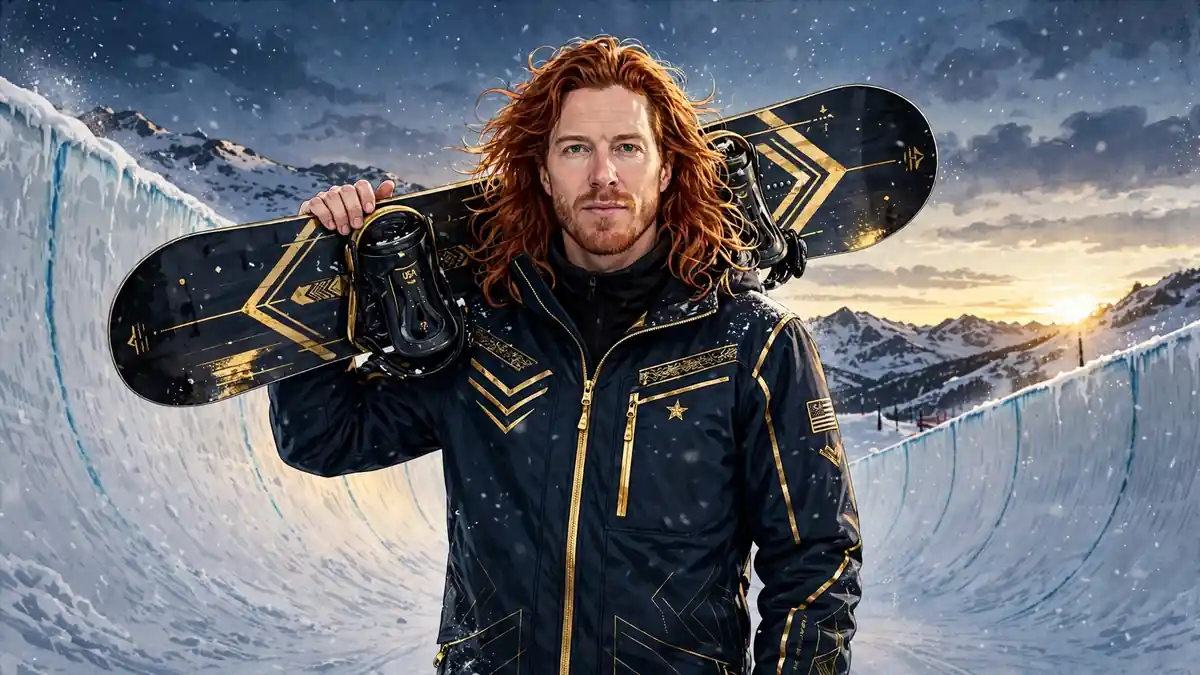
The nickname came early. Television commentators called him the “Flying Tomato” for his long red hair and the height he got above the halfpipe lip. White hated it at first, then learned to use it. The hair became a logo in itself — instantly recognisable in a sport where helmets and goggles hide most faces, and a gift to every brand that put him on a poster.
Education
White’s schooling bent around the competition calendar. He attended school in Carlsbad while travelling for events from his early teens, and much of his later education was arranged around training and travel rather than a fixed classroom. He never went to college. By the time his peers were choosing universities, White was already a professional with a Burton contract, X Games medals and a video-game deal.
That absence of formal education is worth stating plainly because it frames the business story that follows. White’s commercial education came from the deals themselves: negotiating with Burton as a teenager, watching how Red Bull built campaigns around him, and later hiring the people who could run a brand and a league while he supplied the name and the vision. He has said in interviews that the athletes who last are the ones who learn the business side early. He learned it by living inside it.
Career Journey
White’s competitive career ran from the mid-1990s to February 2022, and it split cleanly into two acts: the teenage prodigy who collected medals in two sports, and the adult superstar who turned Olympic gold into a personal brand worth tens of millions.
The first act began at the X Games. White took silver in the snowboard superpipe at Aspen in 2002, aged fifteen. A year later he won gold in the superpipe and the slopestyle, and in the summer of 2003 he became the first athlete to win gold medals at both the Winter X Games and the Summer X Games, taking the skateboard vert title. No action-sports athlete had done that before. He repeated the double-sport trick for years, winning skateboard vert gold again at the Summer X Games in 2007 and 2011 while piling up winter medals every January.
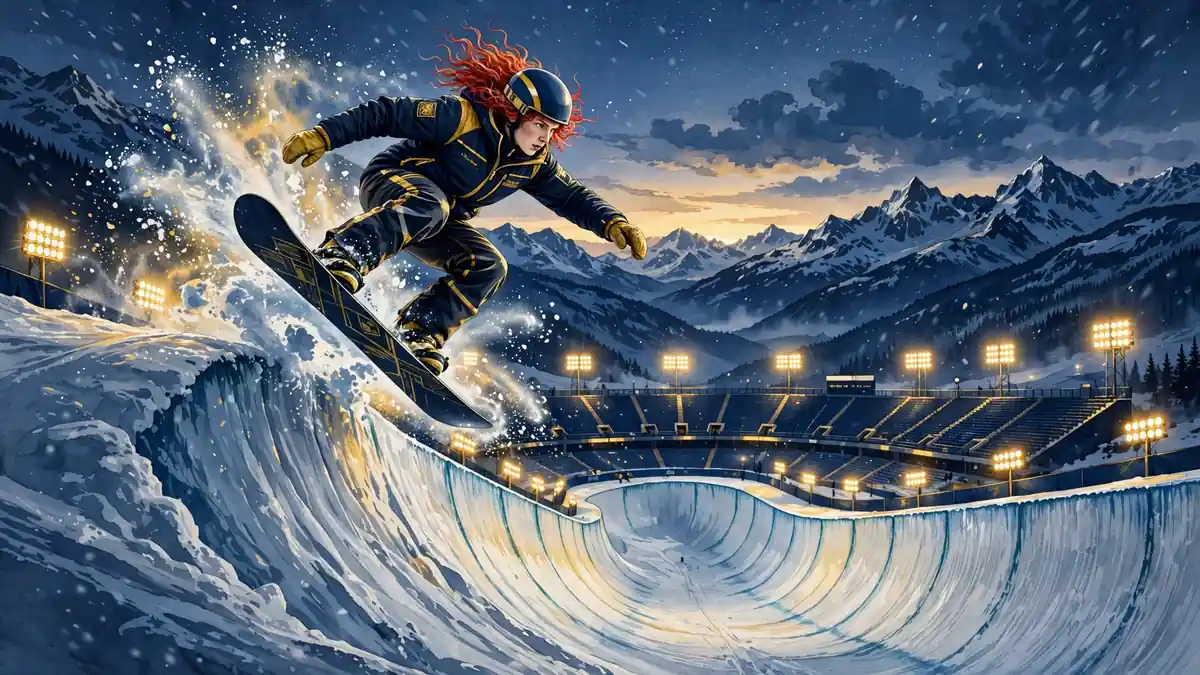
Through the 2013 Winter X Games, White had collected 18 winter medals — 13 gold, 3 silver and 2 bronze — the most X Games gold medals by any snowboarder, a record he still holds. The streak included six straight superpipe victories and, at the 2012 Winter X Games, the first perfect 100 score ever awarded in the men’s snowboard superpipe. Judges had never given a 100 before. White landed back-to-back double McTwists and a frontside double cork 1080 in a single run, and the scoreboard simply ran out of room.
The Olympic act began in Turin in 2006. White arrived as the favourite in the halfpipe and won gold on his first run, posting a score so high that the gold was settled before his second run began. He finished ahead of fellow American Danny Kass. Four years later in Vancouver he defended the title, becoming the first snowboarder to win back-to-back Olympic halfpipe golds, and he did it with a Double McTwist 1260 — a trick no one had landed in competition before. His final run in Vancouver scored 48.4 out of 50, the highest halfpipe score in Olympic history at the time.
Sochi 2014 broke the run. White finished fourth in the halfpipe and pulled out of the slopestyle, and the American press treated it as the end of an era. It was not. He rebuilt his riding, survived a training crash in New Zealand in 2017 that left him with 62 stitches in his face, and arrived at PyeongChang 2018 needing a near-perfect final run to win. He delivered one — back-to-back 1440s — scoring 97.75 and taking his third gold. The win was the 100th gold medal in United States Winter Olympic history, a piece of trivia that put White’s name in every American newspaper the next morning.
Beijing 2022 was the farewell. White, then 35, finished fourth in the halfpipe at his fifth Olympic Games and announced his retirement from competition on the spot. He had competed at five Olympics across sixteen years, won three golds, and left the sport as its most decorated snowboarder and its most famous face.
Between the Olympics there was the rest of the career: Dew Tour titles, U.S. Open victories, and a 2008 video game, Shaun White Snowboarding, published by Ubisoft, which sold well enough to earn a 2009 sequel, Shaun White Snowboarding: World Stage. He also crossed into film, with a cameo in Friends with Benefits in 2011 and an appearance in Disney Channel’s Cloud 9 in 2014. None of those paid Olympic money. All of them kept his name in front of audiences who never watched a halfpipe.
Rise to Fame
White became famous twice, and the second fame was worth far more than the first. The first came in 2006, when the Turin gold and the red hair made him a household name in America. He was nineteen, on cereal boxes and chat shows, and the press called him the face of snowboarding. The second came in 2010, when the Vancouver gold — and the Double McTwist 1260 that won it — turned him from a famous athlete into a commercial property. Forbes estimated his net worth at $20 million in 2012 and reported that he was earning around $9 million a year at the time, making him the highest-paid winter athlete in the world.
What set White apart from other Olympic champions was the calendar. Most Winter Olympians are famous for two weeks every four years. White was famous every January at the X Games, every winter on the Dew Tour, and all year in skateboarding, video games and advertising. Sponsors were paying for twelve months of visibility, not two weeks, and that is why his endorsement income stayed near $10 million a year even in seasons when he barely competed. As one 2026 roundup put it, he earned that money in years when he was not competing regularly at all.
The 2018 PyeongChang gold refreshed the brand a third time, twelve years after the first. By then White was 31, an age when most snowboarders are retired, and the comeback story — the stitches, the fourth-place finish in Sochi, the perfect final run — gave sponsors a narrative that a first gold never could. The 2022 retirement did the same again, converting the athlete into a founder and broadcaster while the name still carried value.
Main Sources of Income
White’s money comes from four places, and their order has flipped since retirement. During his competitive peak, endorsements were everything. Today the balance is shifting toward the businesses he owns.
Endorsements were the engine. At his peak White earned an estimated $10 million a year from sponsors, according to Forbes and to multiple 2026 roundups that trace the figure to the same reporting. The Burton deal was the anchor, Red Bull the second pillar, and Oakley, Target, Hewlett-Packard and Ubisoft filled out a portfolio that put his face on boards, drinks, sunglasses, clothing lines, computers and a video game. Prize money, by contrast, was a footnote — Olympic medals pay a $37,500 bonus from the United States Olympic and Paralympic Committee, and X Games purses were modest next to the sponsor cheques.
Whitespace, his own activewear and outerwear brand, launched in 2022 and is now the centre of his post-retirement income. The brand covers snowboarding gear, outerwear and streetwear, developed with the retailer Backcountry, which lets White keep a larger share of each sale than a sponsorship ever did. No revenue figures have been made public, so any number attached to Whitespace’s size is guesswork — including a viral 2025 post that claimed leaked documents showed $15 million in annual revenue and a path to $100 million. No such documents have been verified, and the claim should be treated as fiction.
The Snow League, the professional halfpipe circuit White founded in 2024, is the long bet. White owns the league he created, which means its media rights, sponsorships and ticket revenue accrue to the business rather than to a sponsor’s cheque. The league raised $15 million in a funding round led by Left Lane Capital, announced in January 2026.
Real estate and media work round out the picture. White bought and sold Los Angeles property through his career, including a Hollywood Hills home bought for $3.7 million in 2018 and sold for $3.9 million in 2024, and he has worked as a broadcaster since retiring, serving as an NBC analyst at the 2026 Milan-Cortina Winter Olympics.
| Income source | Peak / current status | Share of the fortune |
|---|---|---|
| Endorsements (Burton, Red Bull, Oakley, Target, HP, Ubisoft) | About $10 million a year at peak; reduced since retirement | Largest contributor by far |
| Whitespace brand | Launched 2022; active; no public financials | Growing; ownership upside |
| The Snow League | Founded 2024; $15 million raised in 2026 | Long-term equity value |
| Prize money and Olympic bonuses | Small throughout his career | Minor |
| Real estate | Two documented Los Angeles deals | Modest, steady |
| Media, games and appearances | Ubisoft games, film cameos, NBC analyst work | Supplementary |
Salary and Earnings
Snowboarders do not have salaries. White’s “salary” was whatever his sponsors paid him each year, and the honest answer is that the number moved with his results and his fame. The best-documented figures cluster tightly. Forbes reported in 2012 that White was worth $20 million and earning about $9 million a year. Later reporting, repeated across 2026 roundups, puts his peak endorsement income at $10 million a year. The two numbers describe the same peak from different years, and we use $10 million as the peak-year figure because it is the number most outlets now cite.
Competition paid far less. The United States Olympic and Paralympic Committee pays $37,500 for an Olympic gold medal, $22,500 for silver and $15,000 for bronze. Three golds therefore earned White $112,500 in Olympic bonuses across his whole career — about one percent of a single peak endorsement year. X Games and Dew Tour purses were larger but still small next to the sponsor money. The point is structural: in action sports, the medals are the advertising, and the advertising is the pay.
What White earned after retirement is not public, and no honest article should invent a number. His current income most likely comes from Whitespace sales, The Snow League, residual brand agreements and real estate. None of those businesses publish figures, and White has never disclosed his income. The $60–70 million net worth range reflects that gap: the fortune is real and well documented in its parts, but its exact size is an estimate, not a bank statement.
For scale, here is how White’s reported fortune compares with other action-sports stars, using Celebrity Net Worth’s reported estimates:
| Athlete | Sport | Reported net worth |
|---|---|---|
| Tony Hawk | Skateboarding | $140 million |
| Shaun White | Snowboarding / skateboarding | $60–70 million |
| Travis Pastrana | Motocross / action sports | $25 million |
| Kelly Slater | Surfing | $25 million |
| Chloe Kim | Snowboarding | $6 million |
White sits second in that group and far ahead of every other snowboarder. Chloe Kim, the heir to his halfpipe crown, is reported at roughly a tenth of his fortune — a measure of how much of White’s money came from being first, and from staying famous for twenty years rather than five.
Businesses and Investments
White spent his twenties as a sponsored athlete and his thirties becoming an owner. The shift was deliberate. In interviews around his retirement he said he wanted to build things that would outlast his competitive career, and the two ventures he built are the clearest evidence of that plan.
Whitespace is the more mature of the two. White launched the brand in 2022, after his final Olympics, as an activewear and outerwear label covering snowboarding, skating and streetwear. The brand was developed with Backcountry, the outdoor retailer, and the structure matters: as an owner rather than a sponsored rider, White keeps a larger share of the margin on every jacket and board sold. The line includes technical outerwear, snowboards and everyday streetwear, all carrying White’s design input. No revenue or valuation has been published. That silence is normal for a private brand, but it means Whitespace’s contribution to the $65 million estimate cannot be itemised — it sits inside the range as upside rather than as a counted asset.
The Snow League is the bigger swing. White announced the league in June 2024 at the Cannes Lions festival, pitching it as a season-long professional circuit for halfpipe snowboarding and freeskiing — a sport that had never had a proper league, with athletes paid properly and fans given a season to follow rather than a single Olympic fortnight. Season One ran four events: Aspen in March 2025, Yunding Snow Park in China in December 2025, Aspen again in February 2026 and Laax, Switzerland, in March 2026, where the first champions were crowned — snowboarders Sena Tomita and Yuto Totsuka, and freeskiers Eileen Gu and Luke Harrold. The prize pool was announced at $1.6 million across the four events and grew to a reported $2.2 million once freeskiing joined, with $50,000 going to each ski event winner. In January 2026 the league announced a $15 million funding round led by Left Lane Capital, and Season Two was scheduled to open in Cardrona, New Zealand, in September 2026. White founded the league, and Range Sports advises it on media rights and commercial partnerships. If the league becomes the sport’s main circuit, White’s equity in it could one day be worth more than his entire competitive career. If it does not, the money raised belongs to the league’s investors, not to White personally — a distinction worth keeping straight.
White’s earlier business moves were smaller but showed the same instinct. He ran the Air + Style festival series in Los Angeles, a snowboarding and music event that mixed a big-air competition with live acts. He also launched the Shaun White Supply Co. clothing line with Target in the 2010s, putting his name on racks in thousands of stores, and he has been reported to hold a stake in Mammoth Mountain, the California resort where he trained. That last holding is reported by a single outlet and has never been confirmed by White or the resort, so it stays in the “reported, unverified” column.
What White did not do is also informative. There is no record of him buying into restaurants, crypto schemes or celebrity tequila — the usual athlete traps. His investments stayed inside the world he knew: boards, mountains, events and apparel. That discipline is part of why the fortune survived retirement.
Brand Deals and Sponsorships
The Burton deal is the most important commercial relationship in snowboarding history. Burton first sponsored White when he was seven years old, and in 2009 the two sides signed a ten-year endorsement deal that was reported at the time as the longest contract in the sport’s history. The deal covered signature boards — including the Flying V line — apparel, and White’s image across Burton’s global marketing. It ran through the peak of his career and into retirement, and it is the single largest contributor to his wealth.
Red Bull was the second pillar. The energy drink company sponsored White through his competitive prime, funded his video projects and put him at the centre of its action-sports marketing. Red Bull deals are rarely disclosed, but the company’s top athletes command high six-figure to seven-figure annual retainers plus production budgets, and White was one of its most visible American athletes for more than a decade.
The rest of the portfolio filled the gaps. Oakley supplied eyewear and goggles. Target carried his clothing line and put his face in front of shoppers who had never seen a halfpipe. Hewlett-Packard used him in computer advertising. Ubisoft built two video games around him. Park City Mountain Resort, GoPro and Toyota also appeared in his sponsor list at various points. The breadth mattered: when one category cooled, another paid.
Two details separate White’s sponsor career from most athletes’. First, the money kept coming in years when he barely competed — Forbes and later roundups both note he earned around $10 million a year even in quiet seasons, because sponsors were buying the name and the story, not the results. Second, he walked away from deals on his own terms. The Burton relationship ended when the ten-year deal ran its course and White launched Whitespace — he traded a sponsor’s cheque for an owner’s margin, a move few athletes in any sport manage.
Houses, Cars and Other Assets
White’s property record is unusually well documented, because Los Angeles real estate trades leave a paper trail. The clearest deal is his former Hollywood Hills home, a 1955 midcentury modern house he bought in 2018 for $3.7 million, lived in for six years, and sold in 2024 for $3.9 million to Michael Silvaggi, a former Louis Vuitton human-resources executive. The house — three bedrooms, two bathrooms, about 2,000 square feet, with wood ceilings and marble accents — went back on the market in early 2026 listed at $5 million. White’s profit on the sale was modest, roughly $200,000 before costs, which tells its own story: he treated the house as a home, not a flip.
The second documented property is the one he bought with Nina Dobrev. In July 2023 the couple paid $4.3 million for a 3,793-square-foot midcentury home in the Hollywood Hills, built in 1964, with four bedrooms, four bathrooms, an infinity pool and a bocce court. The house was widely described as the home they would marry in. In February 2025, months before their split, the property was listed for rent at $34,995 a month and leased within days. What happens to the shared house after the split has not been publicly reported.
White’s cars have drawn less attention than his boards, and the record is thin. He has been photographed with a modest collection rather than a supercar fleet, and no single vehicle purchase has been reported as a headline deal. That fits the pattern of his spending: the money went into businesses, not display. His most valuable physical assets are probably the least glamorous ones — his share of Whitespace inventory and his equity in The Snow League, neither of which has a public valuation.
One more asset is worth naming: the name itself. “Shaun White” remains a licensable brand in winter sports, attached to boards, apparel and events. That is why the fortune keeps its value after retirement. The medals are history; the name still sells.
Awards and Achievements
White’s medal record is the best in snowboarding history, and it is worth laying out in full because most roundups quote only the Olympic golds.
At the Olympics: gold in the men’s halfpipe at Turin 2006, Vancouver 2010 and PyeongChang 2018; fourth place at Sochi 2014 and Beijing 2022; five Olympic appearances from 2006 to 2022. He is the only snowboarder with three Olympic gold medals, and his 2018 win was the 100th Winter Olympic gold in American history.
At the Winter X Games: 18 medals through 2013, including 13 golds, 3 silvers and 2 bronzes — the most golds and the most medals by any snowboarder. The run included six straight superpipe wins and the first perfect 100 in superpipe history in 2012. At the Summer X Games he won skateboard vert gold in 2003, 2007 and 2011, making him the first athlete to win gold at both the summer and winter Games.
Beyond medals, White won 10 ESPY Awards, collected multiple Dew Tour titles and U.S. Open wins, and landed the Double McTwist 1260 in competition at Vancouver 2010 — a trick that had never been done before. In 2010 his Burton board from the Winter X Games went on display at the Smithsonian’s National Museum of American History, a rare honour for a living athlete’s equipment.
Net Worth Growth Over the Years
White’s fortune grew in steps that track his career: a steep climb through his twenties, a plateau in his thirties, and a shift from sponsor income to business equity after retirement.
| Year | Reported estimate | What drove it |
|---|---|---|
| 2012 | $20 million (Forbes) | Two Olympic golds; peak endorsement years; $9 million annual earnings reported |
| 2018 | $40 million (Celebrity Net Worth) | Third Olympic gold in PyeongChang; Burton and Red Bull deals at full strength |
| 2022 | $60 million | Retirement year; Whitespace launch; multiple outlets converge on $60 million |
| 2024 | $65 million | Whitespace growth; The Snow League founded; Hollywood Hills home sold |
| 2026 | $60–70 million (anchor $65 million) | The Snow League raises $15 million; NBC analyst role; most outlets hold at $65 million |
The spread in 2026 deserves a note. Celebrity Net Worth, the most-cited source on this topic, lists $65 million. Surprise Sports and several other 2026 roundups agree. A smaller group, including Scintillating Stars and a Yahoo/Reality Tea item from mid-2026, still quotes $60 million, and Asia Media Journal puts the figure at $70 million. Older pages quoting $40 million are simply out of date — that number comes from 2018 reporting and has been overtaken twice since. The $60–70 million range captures the live disagreement honestly; the $65 million anchor is where the weight of current reporting sits.
Social Media Presence
White’s social media presence is smaller than his fame, and that is by design. He is active on Instagram and X, where he posts a mix of Snow League announcements, Whitespace product launches, training clips and personal moments, and he keeps a YouTube presence built around his video projects. His following runs into the millions, but he has never chased the influencer model — no daily vlog, no paid-post treadmill, no reality show. The accounts work as a shop window for the two businesses, not as a business in themselves.
That restraint is a commercial choice as much as a personal one. A retired athlete’s social following is worth money only if it moves product, and White’s posts do exactly that: a Snow League announcement reaches the snowboarding world instantly, and a Whitespace drop reaches the buyers who already know the name. The 2025–26 split from Nina Dobrev played out partly on social media — Dobrev removed her pinned engagement post, and fans read the absence before the news broke — which is a reminder that for famous couples, the feed is also the press release.
Personal Life
White was in a relationship with actress Nina Dobrev for five years, from 2019 until September 2025. The pair went public in 2020, bought the $4.3 million Hollywood Hills home together in 2023, and got engaged in October 2024, when White proposed at The Golden Swan restaurant in New York City with a five-carat Lorraine Schwartz diamond ring. Dobrev announced the engagement on Instagram with the line “RIP boyfriend, hello fiancé.” In September 2025, People first reported that the couple had ended their engagement, describing it as a mutual decision made with love and deep respect. They were last photographed together on August 31, 2025, at a Los Angeles farmers’ market. Dobrev later moved from Los Angeles to New York City. White has not publicly confirmed a new relationship since the split.
Before Dobrev, White kept his relationships largely private. He has no children. He remains close to his family — his parents, who drove him to competitions as a child, and his siblings Jesse and Kerri — and he has spoken about his heart condition in public health campaigns, including work with the American Heart Association, turning the defect he was born with into an advocacy cause.
Since retiring, White has split his time between Los Angeles and the mountains, running Whitespace and The Snow League and working as a broadcaster. At the 2026 Milan-Cortina Winter Olympics he worked as an NBC analyst, returning to the Games as a voice rather than a competitor — and, by several reports from the Games, taking at least one run on the halfpipe himself while he was there.
Sources & Reporting
Figures in this article were checked against the sources below between March and November 2026. Where sources disagree, the article publishes the range and names both sides.
- Celebrity Net Worth — the $65 million net worth estimate, the most-cited figure on this topic; also the peer-comparison estimates for Tony Hawk, Travis Pastrana, Kelly Slater and Chloe Kim.
- Forbes — the 2012 estimate of $20 million and roughly $9 million in annual earnings; the Burton ten-year deal and White’s status as the highest-paid winter athlete.
- People — first report of the September 2025 split from Nina Dobrev; the engagement proposal details and the five-carat ring.
- Realtor.com — the Hollywood Hills home bought for $3.7 million in 2018 and sold for $3.9 million in 2024; the joint $4.3 million purchase with Dobrev and the $34,995 monthly rental listing.
- NBC — White’s analyst role at the 2026 Milan-Cortina Winter Olympics and his return to the halfpipe during the Games.
- Wikipedia and Olympedia — birth date and place, height, tetralogy of Fallot and the two childhood operations, Olympic results, and the Winter X Games medal count of 18 medals including 13 golds.
- The Denver Post — The Snow League’s four-event Season One schedule and its $1.6 million prize pool.
- Boardriding — The Snow League’s launch in June 2024, its Season One and Season Two schedules, and the first champions crowned in March 2026.
- Yardbarker — The Snow League’s $15 million funding round led by Left Lane Capital and the freeski prize breakdown.
- Surprise Sports — 2026 net worth roundup confirming $65 million and the $10 million peak endorsement figure, updated October 2026.
- Daily Express — the 2018 reporting of the $40 million estimate and the Burton ten-year deal as the longest in snowboarding history.
Reporting window: March–November 2026. Estimates are labelled as estimates throughout; Whitespace and The Snow League publish no financials, so no revenue figure is claimed for either business.
Frequently Asked Questions
What is Shaun White’s net worth in 2026?
Shaun White’s net worth is estimated at $60–70 million in 2026, with $65 million as the anchor figure. Celebrity Net Worth lists $65 million, and most 2026 roundups agree, while a smaller set of outlets still quotes $60 million and one puts him at $70 million. No exact figure is verified — White is a private individual with no public filings.
How much does Shaun White make a year?
At the peak of his competitive career, White earned an estimated $10 million a year from endorsements alone, according to Forbes and later roundups — and he earned close to that even in years when he barely competed. His current annual income is not public. It now comes from his Whitespace brand, The Snow League, residual brand deals and real estate, none of which publish figures.
Is Shaun White retired?
Yes. White retired from competitive snowboarding after finishing fourth in the halfpipe at the Beijing 2022 Winter Olympics, his fifth Olympic Games. Since then he has run his Whitespace brand, founded The Snow League, and worked as a broadcaster, including as an NBC analyst at the 2026 Milan-Cortina Winter Olympics.
How many Olympic gold medals does Shaun White have?
Three. White won gold in the men’s snowboard halfpipe at Turin 2006, Vancouver 2010 and PyeongChang 2018. He also finished fourth at Sochi 2014 and Beijing 2022. He is the only snowboarder with three Olympic gold medals, and his 2018 win was the 100th Winter Olympic gold in United States history.
What is The Snow League?
The Snow League is a professional halfpipe circuit for snowboarders and freeskiers that White founded and announced in June 2024. Season One ran four events in Aspen, China and Switzerland with a prize pool announced at $1.6 million, and the first champions were crowned in March 2026. The league raised $15 million in a funding round led by Left Lane Capital in January 2026.
Who is Shaun White’s wife or girlfriend?
White is not married. He was engaged to actress Nina Dobrev, whom he dated for five years; they got engaged in October 2024 and ended the engagement in September 2025, in what People described as a mutual decision. White has not publicly confirmed a new relationship since the split.
How tall is Shaun White?
Shaun White is 5 feet 8 inches tall (173 cm). He was born on September 3, 1986, in San Diego, California, which makes him 40 years old as of November 2026.
What is Whitespace?
Whitespace is Shaun White’s own activewear and outerwear brand, launched in 2022 after his retirement. It covers snowboarding gear, outerwear and streetwear and was developed with the retailer Backcountry. No revenue figures have been made public, so claims about the brand’s size — including a viral 2025 post alleging leaked financial documents — should not be treated as fact.
Final Thoughts
Shaun White’s $60–70 million fortune is the best-paid career in winter sports history, and it was built the hard way: twenty years of winning, a sponsor portfolio that paid like a salary, and a retirement plan that swapped endorsement cheques for ownership. The $10 million endorsement years did the heavy lifting. Whitespace and The Snow League are the second act — the first turns a famous name into a brand he owns, the second tries to rebuild the sport that made him. If the league takes hold, the fortune grows. Either way, the medals are already history: three Olympic golds, thirteen Winter X Games golds, and a perfect 100 that nobody else has matched. The money followed the winning, and the winning never really stopped — it just changed shape.
Published on November 7, 2026. Last reviewed November 2026. Found an error? See our corrections policy.