
Howie Mandel‘s net worth is estimated at $50 million to $65 million as of November 2026, anchored at $60 million. The Canadian comedian turned game-show fixture built that fortune across four decades of television: a six-year run on St. Elsewhere, the voice of Gizmo in Gremlins, the creation of the Emmy-nominated cartoon Bobby’s World, a long hosting run on Deal or No Deal, and a judge’s chair on America’s Got Talent that he has held since 2010. His best-documented paycheck is the AGT one — a reported $70,000 per episode, or roughly $1.5 million to $1.7 million per season — and his sharpest single money move may be a Hidden Hills property he bought for $2.6 million and sold for $9.5 million.
Howie Mandel: Quick Facts
| Estimated net worth | $60 million (range: $50 million to $65 million) |
|---|---|
| Profession | Comedian, television host, actor, voice actor, producer, author, podcaster |
| Nationality | Canadian |
| Born | November 29, 1955 (age 70) |
| Height | 5 ft 10 in (178 cm) |
| Primary income sources | America’s Got Talent judging salary, Deal or No Deal hosting, stand-up touring, voice acting and producing, podcasting, real estate |
| Active years | 1978–present |
| Last reviewed | November 2026 |
- Early Life and Background
- Education
- Career Journey
- Rise to Fame
- Main Sources of Income
- Salary and Earnings
- Businesses and Investments
- Brand Deals and Sponsorships
- Houses, Cars and Other Assets
- Awards and Achievements
- Net Worth Growth Over the Years
- Social Media Presence
- Personal Life
- Sources & Reporting
- Frequently Asked Questions
- Final Thoughts
Early Life and Background
Howard Michael Mandel was born on November 29, 1955, in Toronto, Ontario, Canada, and grew up there in a Jewish family. Toronto in the 1960s and 1970s gave him two things that shaped his whole career: a thick-skinned, quick-fire comic sensibility and a restless streak that made classrooms a poor fit. Friends and biographers describe a kid who was funny before he was anything else — the class clown who treated every room like a stage and every authority figure like a straight man.
That restlessness showed up early in his working life. Before comedy paid, Mandel worked ordinary jobs, including a spell selling carpet. The detail matters because it explains the shape of his career: he did not arrive in show business through drama school or a family connection. He arrived through stand-up rooms, one set at a time, and the habits of that grind — writing constantly, reading a crowd, never depending on a single gig — stayed with him for the next four decades.
His family background also explains the dual identity that runs through his career. He is a Canadian who became an American television fixture without ever cutting the tie home: he still judges Canada’s Got Talent, still works Canadian productions, and was inducted into Canada’s Walk of Fame in 2009. The Toronto roots are not a footnote to his fortune; they are the reason two countries’ television industries have paid him.
Mandel has spoken openly for years about living with obsessive-compulsive disorder and attention-deficit/hyperactivity disorder, subjects he put at the center of his 2009 memoir Here’s the Deal: Don’t Touch Me. The book’s title is a joke about his well-known germophobia — he famously offers a fist bump instead of a handshake — but the book itself is candid about anxiety and compulsive behaviour. That openness later became a second public identity: mental-health advocate. It also became a business asset in an unexpected way, giving him a speaking and media lane that pure comedy never would have.
Education
Mandel attended William Lyon Mackenzie Collegiate Institute in Toronto, and his school career ended the way his comedy career began: with a stunt. He was expelled after impersonating a school official — accounts of the episode describe him hiring a construction company to build an addition to the school, a prank that the administration did not find funny. He never went back to finish, and he has never treated that as a wound. In interviews he has framed it as an early sign that he was built for performance, not for sitting still.
The lack of a diploma never slowed him down, and it is worth saying plainly because net-worth readers often look for a credential behind a fortune. Mandel has none. His education was the Comedy Store’s amateur nights, the road, and six years on a network drama set. By the time his peers were finishing university, he was already earning a television salary.
What he did learn in school, by his own account, was how to work a room. The expulsion story gets retold because it is funny, but the useful part is the instinct behind it: he understood, even as a teenager, that a bold bit executed with total confidence can carry a room. That instinct is the same one that later let him hold a live game show together with nothing but a briefcase wall and a contestant’s nerves.
Career Journey
Mandel’s break came by accident. On a trip to Los Angeles in the late 1970s, he wandered into an amateur night at the Comedy Store on the Sunset Strip and took the stage. The set landed. Within a short time he was a regular at the club, and the club circuit did what it has done for generations of comics: it turned a funny stranger into a working act, with talk-show spots and Vegas dates following. His act was physical, high-energy and unpredictable — rubber-voiced characters, sudden bits, a willingness to look ridiculous — and it translated well to television.
Television noticed quickly. His first film role came in the 1981 Canadian comedy Gas, and in 1982 he landed the part that changed his life: Dr. Wayne Fiscus, the rowdy emergency-room intern on NBC’s acclaimed medical drama St. Elsewhere. He played Fiscus for six seasons and 137 episodes, from 1982 to 1988, and the role did two things at once. It proved he could act inside a serious ensemble, and it put him on American screens every week for most of the decade. A stand-up who can also hold a dramatic series regular role is a rare hire, and casting directors remembered it.
While St. Elsewhere was running, Mandel was building a parallel career in voice work. He voiced Gizmo in Gremlins (1984) and returned for Gremlins 2: The New Batch (1990), and he voiced Skeeter in the animated series Muppet Babies (1984). Voice work paid, it kept him visible between live-action jobs, and it taught him the production side of animation — a lesson he cashed in with his next big move.
That move was Bobby’s World. Mandel created the Fox children’s cartoon, supplied the voices of Bobby Generic and his father, and served as executive producer. The show ran for 81 episodes across seven seasons, from 1990 to 1998, and earned an Emmy nomination. Creating a show, rather than just starring in one, changed his economics: a creator-executive producer earns fees and a stake that a hired actor never sees, and Bobby’s World gave him his first taste of ownership income. It also gave him a property that could rerun and pay residuals for years.
The late 1990s brought a syndicated talk show, The Howie Mandel Show (1998–1999), which lasted one season. It was a miss, and the miss is instructive: talk-show hosting is a different skill from game-show hosting, and Mandel’s manic energy worked better with a format and a contestant to play off than with a desk and a celebrity guest. He went back to stand-up, to voice work, and to guest spots, and the next format that fit him arrived in 2005.
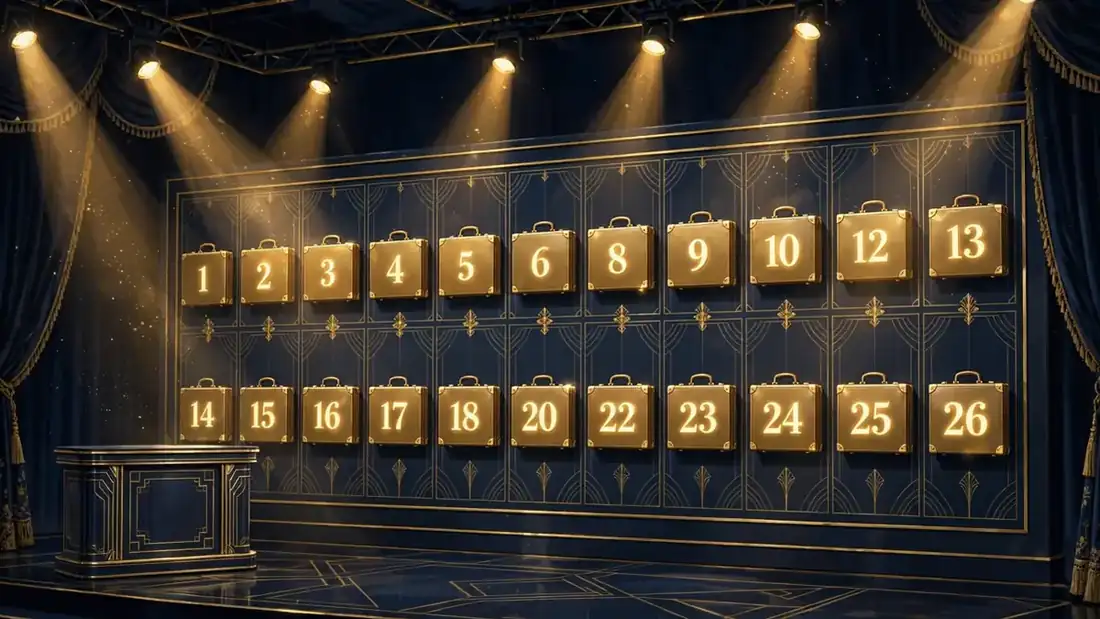
That format was Deal or No Deal. NBC handed him a prime-time game show built around 26 briefcases, a banker on the phone, and a contestant’s nerve. Mandel hosted the American version from 2005 to 2009, the Canadian version on Global from 2007, a syndicated daytime version from 2008, and the CNBC revival in 2018–2019. He also hosted the hidden-camera series Howie Do It on NBC in 2009 and the Game Show Awards on GSN the same year.
In January 2010, NBC announced that Mandel would replace David Hasselhoff as a judge on America’s Got Talent, starting with season 5. He has held the chair ever since — through season 20 in 2025, alongside Simon Cowell, Sofía Vergara and Mel B — making him the longest-tenured judge in the show’s history. He added a second judging chair in 2022 on Canada’s Got Talent, and he appeared as a contestant, of all things, on The Masked Singer in 2023, performing as Rock Lobster.
Rise to Fame
Mandel’s rise happened in three distinct waves, and each wave paid differently. The first wave was St. Elsewhere: weekly network exposure from 1982 to 1988 that made him a recognizable face in American homes. The second wave was Bobby’s World and Gremlins: ownership and voice work that turned a performer into a producer with a catalogue. The third wave was Deal or No Deal in 2005, which made him a household name in the way only a prime-time game show can — a show your grandmother and your teenager watched together.
Deal or No Deal was the inflection point for his wealth. The show was a ratings hit for NBC, ran in dozens of international versions, and made Mandel the face of a format. Prime-time hosting fees at that level are a different order of money from a sitcom guest spot, and the show’s success gave him the bargaining power to negotiate from strength for everything after it — including the AGT chair. The exact Deal or No Deal salary was never made public, which is why so many conflicting numbers float around it; we take that dispute apart in the salary section below.
The AGT chair then did something Deal or No Deal could not: it made his income durable. A game show can be cancelled; a judging panel seat on a franchise that has run for twenty seasons is closer to an annuity. Season after season, the same chair, the same reported per-episode fee, the same summer in the public eye. Add the podcast, the stand-up dates and the Canadian judging work, and you get a career that has produced income in every single year since 1982 — forty-four years without a gap. That is the real engine of a $60 million fortune: not one windfall, but four decades of never being out of work.
The 2020s added a digital layer. Mandel launched the Howie Mandel Does Stuff podcast in February 2021 with his daughter Jackelyn Shultz as co-host, and the show’s interview clips — including a widely discussed 2023 conversation with Tom Sandoval of Vanderpump Rules — travel far beyond podcast apps. His TikTok presence, where he posts prank calls and backstage clips, reaches millions. The podcast and the social accounts do not pay like a network contract, but they keep a 70-year-old entertainer in front of the audience that advertisers and networks care about, and that visibility is what keeps the big chairs coming.
Main Sources of Income
Mandel’s money comes from six streams, and the mix is what makes the fortune sturdy. No single stream dominates, which is why the loss of any one show never sank him.
Television judging — the anchor. America’s Got Talent is the biggest single line item: a reported $70,000 per episode across a season of roughly 24 episodes, or about $1.5 million to $1.7 million a season, every year since 2010. Canada’s Got Talent adds a second judging fee on top. Judging is also the lowest-effort income in his portfolio relative to the pay: a few months of taping a year, no touring, no writing room.
Game-show hosting — the fortune-maker. Deal or No Deal in its NBC prime-time run, its daytime syndicated run, its Canadian version and its CNBC revival gave Mandel his biggest single-show paydays. The fee was never disclosed, and the numbers in circulation disagree wildly, but even the most conservative credible figure — $75,000 per episode, traced to a Forbes report via Cheat Sheet — implies millions per season across seasons that ran to 70 episodes. Hosting is where the bulk of the $60 million was built.
Acting and voice work — the long tail. St. Elsewhere paid a series-regular salary for six years. Gremlins and Gremlins 2 paid voice fees and, through residuals, keep paying in small amounts whenever the films air or stream. Bobby’s World paid him three ways at once — as voice actor, creator and executive producer — and syndication and home-video residuals extended that income for years after the show ended in 1998.
Stand-up comedy — the constant. Mandel has never stopped touring. Live stand-up is the income stream with the fewest middlemen: ticket sales, merchandise and corporate dates, with the comedian keeping a far larger share than a television salary leaves after agents and managers take their cut. It is also the stream that kept him earning in the gaps between television jobs, including the years between the end of Deal or No Deal and the start of AGT.
Podcasting and digital media — the growth stream. Howie Mandel Does Stuff, launched in February 2021 with daughter Jackelyn, earns from advertising, sponsorships and video distribution. The sums are smaller than a network contract, but the show costs little to make, it is an asset he owns rather than a job he rents, and its clips feed his TikTok and YouTube audiences, which in turn support his touring and his market value to networks.
Real estate — the quiet compounder. Property has produced some of his largest single gains. The Hidden Hills flip alone — buy at $2.6 million in 2018, sell at $9.5 million in November 2020 — produced a gross gain of about $6.9 million before renovation costs, taxes and fees. That one transaction is worth roughly four full seasons of AGT salary. His other holdings, detailed below, add rental income and long-term appreciation on top.
Salary and Earnings
The best-documented number in Mandel’s finances is the AGT fee. Celebrity Net Worth reports $70,000 per episode; Parade repeated the figure in June 2026, and The Cinemaholic and MEAWW cite the same number. A typical season runs about 24 episodes, which puts a season at roughly $1.7 million — Parade’s arithmetic — while a shorter 22-episode season lands near $1.5 million. The honest statement is a range: $1.5 million to $1.7 million per AGT season.
Now do the multiplication over time, because that is where the AGT chair’s true value shows. IMDb credits Mandel with about 335 AGT episode appearances, according to an analysis by TheThings. At a flat $70,000 an episode, that implies roughly $23.45 million in cumulative AGT earnings. Treat that as arithmetic, not as a reported fact: his per-episode fee has almost certainly risen since 2010, and not every credited appearance is a full judging episode. But even discounted heavily, the AGT chair alone accounts for a large share of his fortune, and it is still paying.
The Deal or No Deal number is a mess, and saying so is more useful than picking a figure and pretending it is solid. Three numbers circulate. The most credible is $75,000 per episode, reported by Cheat Sheet and traced to a Forbes report; the catch is that the original Forbes article no longer resolves, so the figure rests on a second-hand citation. TheThings ran the arithmetic on that number: at 70 episodes a season, it implies about $5.25 million per season. A second set of outlets claims $750,000 per episode, and a third claims $1 million per episode — both without a named primary source. Our judgment: the $75,000 figure has the only traceable sourcing chain, the higher figures look like they were copied from one another, and the true number is likely in the low-to-mid six figures per episode at the show’s peak, given what NBC was paying prime-time hosts in the mid-2000s. We do not present any of these as confirmed.
The comparison that puts his AGT pay in context is his own judging panel. Simon Cowell, who created the format and owns a share of it, has earned a reported $45 million to $95 million a year from his television work, according to Celebrity Net Worth reporting cited by FandomWire — a different universe of money, because Cowell is a producer-owner, not a hired judge. Sofía Vergara earns a reported $10 million per AGT season, per Forbes, and Heidi Klum a reported $3 million per season, per Hello! magazine. Mandel’s $1.5 million to $1.7 million is the smallest chair on the panel, and the reason is tenure, not talent: he joined as a hired judge in 2010, while Vergara and Klum negotiated their deals later, when the show’s economics were richer. His advantage is duration — sixteen seasons of steady pay beats one big season that never repeats.
Other earnings are smaller but real. His St. Elsewhere salary was never published, but a six-year series-regular run on a hit NBC drama in the 1980s paid comfortably into six figures a year at the time. His book, Here’s the Deal: Don’t Touch Me (2009), earned an author advance and royalties; the book was a New York Times bestseller, which in publishing terms means the advance was earned out and the royalties kept coming. Stand-up touring fees vary by venue, but a legacy comic playing theatres and casinos commands five figures a night, and Mandel plays them year after year.
Put together, a reasonable estimate of his recent annual earnings is $2 million to $3 million in a year with a full AGT season, a Canada’s Got Talent season, touring dates and podcast revenue — and substantially more in years when a property sale lands. That is consistent with a net worth that has held steady near $60 million for several years rather than climbing steeply: at 70, he is earning well and spending on a large property portfolio, not compounding aggressively.
Businesses and Investments
Mandel’s business life is quieter than his television life, which is typical of a performer whose wealth came from fees rather than from founding companies. He has never sold a startup, never taken a company public, and never claimed to be a venture investor. His business activity sits in three buckets: production, publishing and property.
Production is the oldest bucket. Through his production banner, he created and executive-produced Bobby’s World, which gave him creator economics — fees plus a stake — rather than a performer’s flat rate. He has carried producer credits on his later projects, including his hidden-camera series and his podcast, and producer fees on a show he hosts are a standard way for a television personality to capture a second slice of the same pie. The sums are not public, but the structure matters: every project where he is both talent and producer pays him twice.
Publishing is the second bucket. Here’s the Deal: Don’t Touch Me (2009) was published by Bantam Books and became a New York Times bestseller. A bestselling memoir by a television personality earns an advance in the mid-to-high six figures and royalties after that, and it also functions as a calling card for speaking engagements. Mandel has spoken about OCD and mental health at events and in media for years, and that advocacy work, while not a business in itself, keeps his name in front of audiences that book speakers.
Property is the third bucket, and it is the one with hard numbers — covered in detail in the assets section below. Beyond property, there is no public record of Mandel holding a stock portfolio, a crypto position, a restaurant chain or a brand he founded. That absence is worth noting rather than filling in with guesses: his fortune is a performer’s fortune, built from fees, residuals and bricks, not from equity bets. The risk profile matches: steady, diversified across shows and properties, with no single blow-up exposure.
One more business note: the podcast is a business, not a hobby. Howie Mandel Does Stuff is produced with his daughter Jackelyn as co-host, distributed across podcast platforms and YouTube, and monetized through advertising and sponsorships. Owning the show outright means the advertising revenue flows to his own company rather than to a network. It is a small business by the standards of his television money, but it is the only one in his portfolio that he fully controls, and at 70 it is the asset most likely to keep earning if the network chairs ever stop coming.
Brand Deals and Sponsorships
Mandel is not a big endorsement earner by the standards of his AGT co-stars, and the reason is structural. Sofía Vergara’s $10 million AGT season sits beside a large endorsement portfolio; Mandel’s public brand work is thinner, and his income reflects television fees far more than sponsorships. That is not a failure — it is a choice of lane. A game-show host and judge monetizes through the show itself.
What brand work exists clusters around three areas. First, the podcast carries sponsor reads and integrated advertising — the standard monetization for a show of its size, with rates set by downloads and video views. Second, his social-media presence, led by a TikTok account with a reported 10.8 million followers, supports sponsored posts and promotional appearances, though he posts far more prank calls and backstage clips than paid partnerships. Third, his mental-health advocacy has put him in front of audiences for organizations and events in that space, work that is usually paid as speaking fees rather than endorsements.
He has also done the classic celebrity voice and appearance circuit: commercials, guest spots and voice roles that pay a fee without requiring an ongoing brand relationship. None of these is individually large, and none is documented with a public dollar figure, so we do not invent one. The honest summary is that endorsements are a minor stream for Mandel — probably low six figures a year at most — and his fortune does not depend on them.

Houses, Cars and Other Assets
Real estate is the best-documented part of Mandel’s wealth, because property records are public and Celebrity Net Worth has tracked his moves in detail. The headline transaction is the Hidden Hills flip. In 2018 he bought a ranch-style home inside the gated Hidden Hills community for $2.6 million. He rebuilt it into a mansion of almost 10,000 square feet, held through a family trust with his wife, and put it on the market in June 2020 at $10.5 million. He sold it in November 2020 for $9.5 million to NFL player Jalen Ramsey. The gross gain on the purchase price is about $6.9 million; the net gain after construction costs, carrying costs, agent commissions and taxes would be smaller, but even a conservative reading leaves several million dollars of profit on a single property held for two years.
That was not his only Hidden Hills holding. He owns another mansion there of almost 13,000 square feet, custom-built on land he bought in 1999 for $650,000. Buying land in 1999 and building on it is the oldest wealth-building move in Los Angeles real estate, and the land alone is worth many times the purchase price today. He listed that home for rent at $50,000 a month in 2023, according to reporting cited by ZMagazine, which — if let at that rate — would produce $600,000 a year in gross rental income.
The rest of the portfolio is smaller but real. He sold a home on Malibu’s Point Dume for $7 million in 2013. He paid $1.53 million for a home in Calabasas in 2016. ZMagazine also reports three Santa Monica condos worth $4.8 million in total. We cite the Malibu and Calabasas figures from Celebrity Net Worth’s reporting and the Santa Monica condos from ZMagazine, because the condo figure does not appear in Celebrity Net Worth’s profile; treat it as reported rather than confirmed.
On cars, Mandel is not a collector in the public sense. He has been photographed with luxury vehicles, but there is no documented collection, no reported supercar stable, and no reliable reporting of a specific fleet value — so we do not invent one. His visible spending goes to property, not to cars, and his public image is that of a man who collects houses, not horsepower. That pattern — property-heavy, car-light — is consistent with a fortune built by someone who thinks of money as security rather than display.
Total property equity is impossible to state precisely without knowing his mortgages, but the shape is clear: several million dollars of Los Angeles real estate, anchored by a large Hidden Hills home, plus the realized gains from the Ramsey sale and the Malibu sale. Property likely accounts for a third or more of his net worth, which is a higher share than most television personalities carry and a lower-risk one than a stock-heavy portfolio.
Awards and Achievements
Mandel’s honours are the kind that mark a long career rather than a single peak. On September 4, 2008, he received a star on the Hollywood Walk of Fame, and on the same day Comedy Central listed him at No. 82 on its list of the 100 greatest stand-up comedians of all time. A year later, on September 12, 2009, he was inducted into Canada’s Walk of Fame in Toronto, becoming only the third game-show host to receive that honour, after Monty Hall in 2002 and Alex Trebek in 2006.
Bobby’s World earned an Emmy nomination, the most formal industry recognition of his producing work. He and his fellow AGT judges won Favorite TV Judges at the Kids’ Choice Awards in 2019, a shared award that reflects the panel’s popularity with younger viewers. He hosted the 2011 Canada’s Walk of Fame Awards, a hosting job that underlined his standing in Canadian entertainment.
What he has not won is also worth stating: no Primetime Emmy, no Golden Globe, no major acting award. His career was never built on awards-season prestige; it was built on ratings, longevity and reliability. A star on two walks of fame and a forty-year run of network employment is a different kind of achievement, and for net-worth purposes it is the more valuable kind — it is what keeps the phone ringing.
Net Worth Growth Over the Years
Mandel’s wealth grew in steps tied to his shows, not in a smooth line. The table below uses the figures reported by the outlets named; early years are estimates based on the reporting available, and the 2026 figure is the range we publish.
| Year | Estimated net worth | What moved it |
|---|---|---|
| 1988 | Under $1 million | End of the St. Elsewhere run; a working actor’s savings, not yet a fortune |
| 1998 | $3 million – $5 million | Bobby’s World creator economics plus voice work and touring |
| 2009 | $20 million – $25 million | Four seasons of Deal or No Deal prime-time hosting |
| 2015 | $35 million – $40 million | Five AGT seasons banked; CNBC Deal or No Deal revival ahead |
| 2019 | $40 million | Reported at about $40 million by outlets tracking his wealth that year |
| 2022 | $50 million | Lower-end estimates put him at $50 million as AGT seasons accumulated |
| 2026 | $50 million – $65 million (anchored $60 million) | Celebrity Net Worth, Parade and OK! Magazine converge on $60 million; Hidden Hills sale gains realized |
Two things stand out. First, the growth is slow and steady after 2009 — no doubling years, no crashes — which fits a fortune built from salaries rather than from equity or speculation. Second, the 2019-to-2022 jump from about $40 million to about $50 million lines up with the Hidden Hills sale: a $9.5 million transaction landing in late 2020 would show up in estimates a year or two later, once the gain was visible in the record.
How does he stack up against the people he shares a stage with? The peer table below uses Celebrity Net Worth estimates throughout, so the numbers are comparable even if every one of them is an estimate.
| AGT personality | Estimated net worth | Main money engine |
|---|---|---|
| Simon Cowell | $600 million | Format ownership and producing; $45M–$95M a year in TV earnings |
| Sofía Vergara | $180 million | Acting, endorsements and business; $10M per AGT season |
| Heidi Klum | $160 million | Modelling, endorsements and TV; about $3M per AGT season |
| Howie Mandel | $60 million | TV fees and property; $1.5M–$1.7M per AGT season |
| Nick Cannon | $30 million | Hosting and producing; former AGT host |
| Terry Crews | $25 million | Acting and hosting; current AGT host |
Mandel sits in the middle of his own panel — ten times poorer than the man who created the show, and more than twice as rich as the man who hosts it. That is the honest shape of television money: owners take the most, stars with endorsement machines come next, and reliable long-tenure professionals like Mandel take a solid middle that compounds quietly for decades.
Social Media Presence
Mandel’s social following is large and lopsided toward video. According to talent-agency booking profile MN2S, his combined audience reach is about 17.6 million, led by TikTok at 10.8 million followers, Facebook at 5.2 million, Instagram at 1.3 million and YouTube at about 327,000. Older reporting from WealthyPipo put his Instagram above 1 million, his X following above 817,000 and his Facebook above 4.6 million — figures that line up with the MN2S picture, allowing for growth since.
TikTok is where he is most himself: prank calls, backstage clips from AGT, and bits with his family. The platform suits his style — short, physical, immediate — better than any format since the Comedy Store. Instagram carries a mix of show promotion, family photos and tour dates; X is his news and commentary channel; YouTube hosts full podcast episodes and clips from Howie Mandel Does Stuff.
For net-worth purposes, the social audience is a supporting asset rather than a primary income source. It does not pay like a network contract, but it does three things money cannot buy directly: it keeps him castable at 70, it fills theatre seats on tour, and it gives his podcast a free distribution channel. A comedian with 10.8 million TikTok followers does not need to audition for relevance; the audience is already there.
Personal Life
Mandel has been married to Terry Mandel (née Soil) since March 16, 1980. They met as high-school sweethearts in Toronto, and the marriage has lasted more than 46 years — longer than most Hollywood careers, let alone Hollywood marriages. Terry has been a constant presence in his business life as well; the Hidden Hills properties are held through a family trust in both their names.
They have three children: daughters Jackelyn Shultz (born 1984) and Riley Mandel (born 1992), and son Alex Mandel (born 1989). Jackelyn co-hosts the Howie Mandel Does Stuff podcast with her father, a working partnership that has made the show a family business in the literal sense. Alex works as a comedian, actor, director and video creator; Riley works in fitness. The children are adults with their own careers, and Mandel’s public comments about them are consistently proud rather than promotional.
The family lives in Hidden Hills, California, in the large custom-built home on land bought in 1999. Mandel’s germophobia and OCD are part of the family’s public story — his children have joked about it on the podcast, and he has written and spoken about it frankly — but the household detail that matters for this article is simpler: a 46-year marriage, three adult children, and a family trust holding the property portfolio. That is the structure that keeps a fortune intact across decades.
He is also open about his health. Beyond OCD and ADHD, he has spoken about a heart condition — he revealed in interviews that he lives with atrial fibrillation — and about the anxiety that comes with it. He has not let any of it slow his schedule: AGT seasons, Canada’s Got Talent, touring and a weekly podcast, all at 70. The workload is itself a statement about where his money comes from. He is still earning it, week by week, in front of a camera.
Sources & Reporting
Celebrity Net Worth — the $60 million net-worth figure, the $70,000-per-episode AGT salary, and the full real-estate record (Hidden Hills $2.6M purchase and $9.5M sale to Jalen Ramsey, the 1999 land purchase, the Malibu Point Dume $7M sale, the Calabasas $1.53M purchase). Profile updated July 24, 2026; snapshot November 6, 2026.
Parade — June 2, 2026 profile confirming the $60 million figure, the $70,000-per-episode AGT salary and the $1.7 million season arithmetic, plus the Deal or No Deal run dates and the note that his Deal or No Deal salary was never made public.
OK! Magazine — April 2026 reporting of the $60 million figure, as cited by TVShowsAce on May 2, 2026.
TVShowsAce — May 2, 2026 article confirming the $60 million estimate and the AGT per-episode figure, and noting his season 20 judging panel.
TheThings — December 2022 analysis of the Deal or No Deal salary dispute, including the $75,000-per-episode figure traced to a Forbes report via Cheat Sheet, the dead Forbes link, and the 335-episode IMDb count behind the $23.45 million cumulative AGT arithmetic.
The Cinemaholic — AGT judges’ salary reporting, including Mandel at about $1.75 million per season and his status as the longest-tenured judge; updated October 30, 2024.
MEAWW — April 2025 AGT salary reporting, including Vergara at $10 million and Klum at $3 million per season, and Mandel’s $70,000 per episode.
EBSCO — biography research starter confirming birth date, St. Elsewhere dates, Bobby’s World, the 2008 and 2009 Walk of Fame honours, the 2010 AGT start and the 2022 Canada’s Got Talent start.
Wikipedia — career chronology cross-check: St. Elsewhere 137 episodes, Bobby’s World 81 episodes, AGT season 5 start, Canada’s Got Talent since 2022, Walk of Fame dates September 4, 2008 and September 12, 2009.
MN2S — talent-agency booking profile with social audience figures: TikTok 10.8M, Facebook 5.2M, Instagram 1.3M, YouTube 327K, combined reach 17.6M.
People — June 19, 2024 profile of Terry Mandel confirming the marriage and family details cited via EBSCO.
Reporting window: October 2024 – November 2026. Figures are estimates drawn from public reporting, not audited financial statements. Where sources disagree — most visibly on the Deal or No Deal salary and on the top-line net worth — we publish the range and name who says what rather than picking a single number.
Frequently Asked Questions
What is Howie Mandel’s net worth in 2026?
Howie Mandel’s net worth is estimated at $60 million in 2026, within a published range of $50 million to $65 million. Celebrity Net Worth puts him at $60 million, Parade repeated that figure in June 2026, and OK! Magazine reported the same number in April 2026. Lower estimates run to $50 million and higher ones to $65 million, so $60 million is the most widely corroborated anchor.
How much does Howie Mandel get paid for America’s Got Talent?
Mandel reportedly earns $70,000 per episode of America’s Got Talent, according to Celebrity Net Worth, a figure Parade repeated in June 2026. With a typical season running about 24 episodes, that works out to roughly $1.5 million to $1.7 million per season. He has held the judging chair since 2010, making him the longest-tenured judge on the show.
What did Howie Mandel make for Deal or No Deal?
His Deal or No Deal salary was never made public. The most traceable figure is $75,000 per episode, reported by Cheat Sheet and traced to a Forbes report — though the original Forbes article no longer resolves, so the number rests on a second-hand citation. Other outlets claim $750,000 or even $1 million per episode without a named primary source. At 70 episodes a season, the $75,000 figure implies about $5.25 million per season.
How old is Howie Mandel?
Howie Mandel was born on November 29, 1955, in Toronto, Ontario, Canada, which makes him 70 years old as of November 2026. He turns 71 on November 29, 2026. He has worked in television since 1982, when he joined the cast of St. Elsewhere.
Who is Howie Mandel’s wife?
Howie Mandel has been married to Terry Mandel (née Soil) since March 16, 1980. They were high-school sweethearts in Toronto and have been married for more than 46 years. They have three children together: daughters Jackelyn and Riley and son Alex. Jackelyn co-hosts his podcast, Howie Mandel Does Stuff, with him.
How tall is Howie Mandel?
Howie Mandel is 5 feet 10 inches tall (178 cm). Some lower-quality bio sites list 6 feet or 183 cm, but 5 ft 10 in is the figure carried by the most widely cited profiles.
What is Bobby’s World, and did Howie Mandel create it?
Yes. Mandel created the Fox children’s cartoon Bobby’s World, voiced the title character Bobby Generic and his father, and served as executive producer. The show ran for 81 episodes across seven seasons from 1990 to 1998 and earned an Emmy nomination. It was his first creator-owned property and his first taste of producer economics.
Why doesn’t Howie Mandel shake hands?
Mandel lives with obsessive-compulsive disorder and has spoken openly about germophobia, including in his 2009 memoir Here’s the Deal: Don’t Touch Me. He famously offers a fist bump instead of a handshake. He has turned that openness into mental-health advocacy, speaking about OCD and anxiety for years.
Final Thoughts
Howie Mandel’s $60 million is a working entertainer’s fortune, not a windfall. It was built the slow way: six years on a network drama, a cartoon he created and owned, a game show that made him a household name, sixteen seasons in the same judging chair, and a property portfolio that produced a multi-million-dollar gain on a single sale. No single year made him rich. Forty-four years of never being out of work did.
The number to remember is not $60 million but $70,000 — his reported AGT per-episode fee — multiplied by 335 episodes and sixteen seasons. That is the engine: a durable chair on a durable franchise, plus the discipline to keep touring, keep podcasting and keep buying property while the television money flows. At 70, he is still adding to the total every season, and the range we publish — $50 million to $65 million, anchored at $60 million — reflects a fortune that is stable, documented and still growing.
Published on November 8, 2026. Last reviewed November 2026. Found an error? See our corrections policy.