
Nicky Hilton‘s net worth is estimated at $100 million as of November 2026. The figure comes from Celebrity Net Worth, refreshed in October 2026, and it caps a 26-year fashion career that started when she was still a teenager designing handbags for a Japanese label. Her money story is easy to misread: she carries one of the most famous surnames in American business, married into the Rothschild banking family, and still built the bulk of her fortune herself — one licensing deal, one capsule collection, and one jewelry line at a time.
Nicky Hilton: Quick Facts
| Estimated net worth | $100 million (range: $50 million–$100 million) |
|---|---|
| Profession | Fashion designer, businesswoman, model |
| Nationality | American |
| Born | October 5, 1983 (age 43) |
| Height | 5 ft 7 in (170 cm) |
| Primary income sources | Fashion design collaborations and licensing, Theo Grace jewelry (co-founder and owner), modeling, book royalties |
| Active years | 2000–present |
| Last reviewed | November 2026 |
- Early Life and Background
- Education
- Career Journey
- Rise to Fame
- Main Sources of Income
- Salary and Earnings
- Businesses and Investments
- Brand Deals and Sponsorships
- Houses, Cars and Other Assets
- Awards and Achievements
- Net Worth Growth Over the Years
- Social Media Presence
- Personal Life
- Sources & Reporting
- Frequently Asked Questions
- Final Thoughts
Early Life and Background
Nicholai Olivia Hilton was born on October 5, 1983, in New York City, the second daughter of real estate businessman Richard Hilton and Kathy Hilton. She was named after her great-uncle Conrad Nicholas Hilton Jr., and she grew up on Manhattan’s Upper East Side with her older sister Paris and younger brothers Barron and Conrad. The family home sat inside one of the most photographed social circles in America, and the Hilton name opened doors before Nicky could walk through them on her own merits. What followed, over the next four decades, was a long exercise in deciding what to do with that head start.
The Hilton name carries a specific weight in American business. Her great-grandfather Conrad Hilton entered the hotel business in Texas in 1919 with $5,000 in savings, bought the Waldorf Astoria’s operating company in 1949, and paid $111 million for the Statler hotel group in 1954 — described at the time as the largest real estate transaction in history. Conrad left only $500,000 directly to his son Barron, directing most of his wealth toward charity, and Barron later followed the same pattern: in 2007 he announced that 97% of his estate would go to the Conrad N. Hilton Foundation. After his death in 2019, that bequest lifted the foundation’s endowment from $2.9 billion to $6.3 billion. The remaining 3% was the family portion, and the amount Nicky received individually has never been publicly established. The practical point for her net worth is blunt: the hotel fortune mostly went to charity, and the family no longer controls the company at all — Blackstone bought Hilton in a $26 billion transaction in 2007. Nicky Hilton is an heiress in the social sense far more than in the financial one.
Her father built his own branch of the family money differently. Richard Hilton made his fortune in Los Angeles luxury real estate through Hilton & Hyland, the brokerage he co-founded, rather than from hotel royalties. Forbes’ analysis of the Hilton family estate structure traces the personal wealth of Richard Hilton’s branch primarily to that real estate business. That matters because it explains the shape of Nicky’s own career: she grew up watching a parent convert a famous name into a working business, not watching a trust fund pay out.
Raised Roman Catholic, Nicky attended the Convent of the Sacred Heart, an all-girls school on the Upper East Side, where uniforms, no makeup, and no nail polish were the rules. She has described sneaking into her mother’s closet as a child, watching her get ready, and falling in love with the ritual of dressing up — the outfit, the jewelry, the handbag, the accessories. “I knew I wanted to do something in fashion,” she told HELLO! in August 2026. “I loved sneaking into my mom’s closet… I was always a girly girl. I loved dressing up.” That early obsession became a career before she finished school: while still in high school, she began designing handbags for the Japanese accessories company Samantha Thavasa, a working design job at seventeen that most fashion graduates would wait years to land.
As teenagers and young adults, Nicky and Paris became fixtures of New York’s social scene and entertainment coverage. The sisters were photographed everywhere, and the mid-2000s tabloid economy ran on their nightlife. Nicky took part in that world, then stepped sideways from it. Paris expanded into reality television, music, and an extensive celebrity-brand business. Nicky built a quieter identity instead: appearing at fashion shows, working with established manufacturers, and putting her name on products she had actually designed. That distinction — visibility as a business versus design as a business — is the thread that runs through her whole financial story.
Education
Hilton’s formal education ran through two of New York’s most traditional institutions. She attended the Convent of the Sacred Heart on Manhattan’s Upper East Side, the all-girls Catholic school where she spent her childhood and adolescence. After that she took classes at the Fashion Institute of Technology (FIT) and at Parsons School of Design, the two schools that anchor New York fashion education. She did not complete a degree at either one. Her career had already started — the Samantha Thavasa handbag work began while she was still a teenager — and the classroom gave way to the workroom.
The unfinished degree is worth noting because it cuts against the usual heiress narrative. Hilton did not buy a fashion education and then a fashion label; she learned the trade by doing paid design work in her teens and built her labels on top of two decades of manufacturer relationships. Her book 365 Style, published in 2014, reads as the product of that practical education: a guide to organizing a wardrobe and developing personal style, built around staple pieces, dressing for different occasions, and shopping with a clearer sense of what suits the wearer. It is the kind of book written by someone who spent years inside the industry, not someone who studied it from a distance.
That pattern — learning on the job, then formalizing the knowledge into a product — repeats across her career. The handbag lines taught her manufacturing and retail margins. The clothing lines taught her seasonal cycles and wholesale. The jewelry lines taught her materials and price architecture. By the time she co-founded Theo Grace in 2025, she had spent 25 years collecting the specific skills a brand owner needs, one collaboration at a time.
Career Journey
Nicky Hilton’s career began at seventeen, designing handbags for Samantha Thavasa, the Japanese luxury accessories house founded in 1994 by Kazumasa Terada. The brand was famous for using Western celebrities in its advertising, and Nicky was one of the young socialites it put on handbag lines alongside Victoria Beckham and the Cruz sisters. The work mattered more than the publicity: she learned how a handbag moves from sketch to factory to department-store shelf, and the category stayed with her for the rest of her career. Handbags would return again and again — Linea Pelle in 2015, and more collaborations after that — because it was the product she understood best.
In 2004, at twenty-one, she launched her first clothing line, Chick, aimed at youthful, accessible celebrity fashion. The timing was deliberate: her public profile was at its peak, and a clothing line let her convert attention into a product. Three years later she stepped upmarket with her second line, Nicholai, which held its fashion show for the spring/summer 2008 season on September 9, 2007, in New York City during Mercedes-Benz Fashion Week. The show was a statement of intent — a proper runway presentation, not a licensing stamp — and it marked the moment her fashion work stopped looking like a celebrity side project.
The same period brought her first modeling work. In 2005 she was the face of Antz Pantz, the Australian underwear line, alongside Kimberly Stewart, and she modeled for the cover of Lucire for its New Zealand and Romanian editions. Modeling was never the center of her career, but it kept her visible in fashion media between her own launches and gave her a second income stream that required no inventory, no factory, and no retail risk. Celebrity Net Worth still classifies her among its model profiles, where she ranks tied at number 26 of 912 covered profiles — a small, concrete measure of how the industry files her.
The next decade was a steady accumulation of product lines rather than a single breakout hit. She launched an Art Deco-inspired fashion jewelry line in 2010, with pieces priced from $82.50 to $740 and an average price around $200 — accessible luxury, aimed at the customer who wanted a designer name without a four-figure ticket. In 2014 she released a ten-piece collection with the online retailer eLuxe, naming pieces after the women in her family, and published 365 Style with Harlequin, a HarperCollins subsidiary. The book gave her a product that did not depend on seasonal fashion cycles, and it sold the expertise she had spent a decade building.
2015 brought a classic-style handbag capsule with Linea Pelle and a cosmetics collaboration with Smashbox. In 2017 she partnered with Tolani on a Mommy and Me collection — coordinated clothing for mothers and children — followed by a travel-inspired Tolani line in 2019. The mother-and-child theme was not a marketing pose: her first daughter was born in 2016, her second in 2017, and her design work started to track her own life. The same year, 2019, she launched her first footwear collection, Nicky Hilton x French Sole, built around ballet flats and wearable styles with bows, animal prints, and designs inspired by members of her family. She introduced the collection through a presentation at her New York penthouse, bringing her home and personal wardrobe into the marketing. Later French Sole collections leaned into sustainability — Spanish-made espadrilles and ballet flats in organic cotton and linen with plant-based soles — and she named shoe styles after women she admired, including the best-selling Kathy, named for her mother.
The 2020s brought the most polished work of her career. A Spring/Summer 2021 capsule with Dotty Dungarees, a British childrenswear line, extended the mother-and-child theme. In October 2024 she partnered with Australian designer Rebecca Vallance on a holiday collection of party dresses with crystal details and prominent bows, sold through Saks Fifth Avenue and Harrods. The partnership grew out of a friendship and a shared taste for polished occasionwear, and it put her name in two of the world’s most selective department stores. Then, in June 2025, came the move that changed the economics of her career: Theo Grace, her first fine jewelry line and the first brand she co-founded as an owner rather than a collaborator. And in 2026 she added a 21-piece collection with the luxury childrenswear brand La Coqueta, built around a French toile print illustrating scenes from her family life. At 42, she was still launching — and still choosing partners who sold through real retail channels.
Rise to Fame
Nicky Hilton became famous the same way her sister did: by being young, wealthy, photogenic, and constantly out in New York at the exact moment the tabloid press and early reality television learned to monetize all four. The difference is what she did with the fame. Paris turned it into a reality-TV career and then into one of the most aggressive celebrity licensing businesses ever built. Nicky turned it into a design career — slower, quieter, and built on products rather than on herself.
The fork in the road came early. In 2004, the year she launched Chick, she also married her childhood friend Todd Meister in Las Vegas; the marriage was annulled after less than three months. The episode was tabloid gold and could have set the pattern for a career built on personal drama. Instead, the next decade of her public life reads as a deliberate retreat from that pattern: fewer headlines about her private life, more product launches, and a growing reputation inside fashion circles as someone who showed up, did the design work, and understood retail.
Her one attempt to enter the family industry directly is the cautionary tale of her career. In 2006 she announced the Nicky O hotel concept, a plan to redevelop properties in Miami and Chicago with outside partners. The hotels were separate from Hilton Hotels, and the venture collapsed into lawsuits: she filed a federal suit objecting to the use of her name and the handling of the project, and in 2007 developer Robert Falor’s companies sued her in turn, alleging she had failed to meet promotional obligations. The planned hotels were abandoned. The lesson stuck. Every venture since has stayed inside fashion and accessories — categories she controls, with partners she can walk away from, and no one’s surname on a building.
Her marriage in 2015 to James Rothschild, the British financier and heir to the Rothschild banking family, pushed her public profile back up — a Kensington Palace wedding with a $77,000 Valentino gown does that — but the coverage treated her as a fashion figure marrying a financier, not as a socialite marrying money. By then she had eleven years of design work behind her, a published book, and a string of retail collaborations. The wedding was a life event, not a career launch. That is the shape of her fame: real, durable, and always one step behind the work.
Main Sources of Income
Nicky Hilton’s income comes from five streams, and the balance between them has shifted over time. Early in her career, modeling fees and appearance money mattered most. In the middle years, design collaborations and licensing royalties carried the weight. Since June 2025, the most important stream is the one she owns: Theo Grace jewelry, where she holds an equity stake and a continuing role in product development. The table below breaks down the mix as it stands in 2026.
| Income stream | Share of career earnings (estimate) | Notes |
|---|---|---|
| Fashion design collaborations & licensing | Largest single stream | Samantha Thavasa, Chick, Nicholai, eLuxe, Linea Pelle, Tolani, French Sole, Rebecca Vallance, La Coqueta — royalty or fee-based deals spanning 2000–2026 |
| Theo Grace jewelry (co-founder, owner) | Growing fast since 2025 | Equity stake, undisclosed size; personalized fine jewelry sold in 30+ countries |
| Modeling & campaigns | Smaller, early-weighted | Antz Pantz face in 2005, Lucire covers, campaign work |
| Book royalties | Modest, steady | 365 Style (Harlequin, 2014), still in print |
| Family distributions & investments | Undisclosed | Share of the 3% family portion of Barron Hilton’s estate; no public figure exists |
The honest version of her income story is that no single deal made her rich. There is no fragrance empire worth billions, no television contract, no company sale. What she has instead is 26 years of paid fashion work without a gap year — a career that looks, from a distance, like a series of small bets that compounded. The licensing model explains the shape of it: a collaborator’s fee or royalty on each collection, repeated across a dozen partners, with the brand carrying the manufacturing and retail risk. It is a lower-risk, lower-ceiling model than owning a fashion house, and it is also the reason her fortune grew steadily rather than in jumps.
That model changed with Theo Grace. In a 2026 interview she drew the line herself: earlier collaborations paid royalties, while Theo Grace gives her an ownership interest. Ownership means the upside is no longer capped by a fee schedule — but it also means she carries the risk. The size of her stake and the company’s valuation have not been disclosed, so no honest estimate can put a number on that holding yet. What can be said is that it is the first asset in her portfolio that could plausibly be worth far more than any single collaboration, and the first one whose value she controls directly.
One more stream deserves a clear label: family money. Nicky Hilton’s inheritance is real but small relative to her net worth, and the exact amount has never been publicly established. Barron Hilton’s 97% pledge to the foundation means the family portion was 3% of his estate, split among his eight children and four grandchildren. Her father’s real estate fortune is separate and substantial, but Richard Hilton is alive and running his business. The $100 million estimate rests mainly on her own career, not on a payout.
Salary and Earnings
Nicky Hilton does not draw a salary in the conventional sense, and any profile that prints one is guessing. She is not an employee of a studio, a network, or a fashion house. Her earnings arrive as collaboration fees, royalties on licensed collections, modeling day rates, book royalties, and — since 2025 — distributions from a business she part-owns. None of those numbers are public, and the honest way to describe her annual income is as a range that moves with her launch calendar: a year with a major retail collaboration and a jewelry launch pays far more than a quiet year.
The price points of her products give the clearest window into the economics. Her 2010 fashion jewelry line ran from $82.50 to $740 per piece, averaging around $200 — the accessible-luxury band where volume, not margin per piece, does the work. Her French Sole ballet flats and espadrilles sold at premium high-street prices, and her Rebecca Vallance holiday dresses moved through Saks Fifth Avenue and Harrods, where a single party dress can retail for several hundred dollars. Theo Grace pieces span sterling silver, gold vermeil, and solid gold, from accessible gifts to expensive diamond-studded jewelry. A designer in her position typically earns a royalty of a few percent of wholesale on licensed lines, plus upfront fees for capsule collections — enough, across a dozen partners and two decades, to build serious wealth without ever owning a factory.
The modeling side paid differently. Her 2005 Antz Pantz campaign and Lucire covers were one-off fees, not retainers, and modeling has been a small part of her income since her twenties. The book, 365 Style, earns standard author royalties on a backlist title — modest, steady, and unlikely to move the net worth needle on its own. What the book did pay for, indirectly, was credibility: it positioned her as a style authority rather than a celebrity name on a label, and that positioning is what kept the collaboration offers coming.
The biggest single documented payout in her orbit is not hers at all, and it is worth separating clearly. Her husband James Rothschild listed the family’s Rushbrooke estate in Suffolk for £24 million in 2015, and some outlets have credited him with a personal fortune of $60 million while others claim $1.3 billion or $1.5 billion. Those numbers describe James and the Rothschild family, not Nicky, and the spread between them shows how unreliable family-fortune math becomes once it leaves the public record. Her $100 million is hers: built from her own deals, her own book, and her own brand.
Businesses and Investments
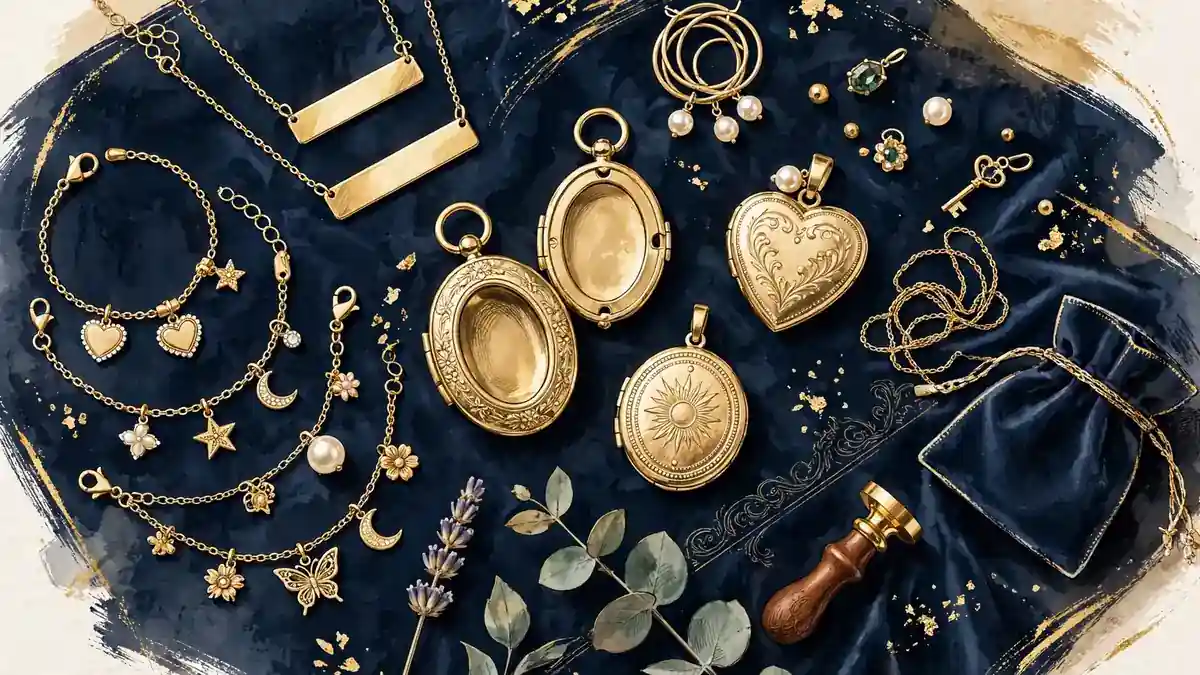
Theo Grace is the center of Nicky Hilton’s business life in 2026, and it deserves the detail because it is the first venture she owns. Launched on June 24, 2025, at the SeaGlass Carousel in New York, the brand sells personalized fine jewelry — nameplate necklaces, lockets that hold a favorite photo, engraved messages, and a photo ring where customers upload a picture of their pet. Its name joins elements of her daughters’ names: Theodora and Lily-Grace. The jewelry team behind it is associated with the business previously known as MYKA, and the launch was backed by the Tenen Group. The brand operates in more than 30 countries and produces custom necklaces, bracelets, rings, and earrings in sterling silver, gold vermeil, and solid-gold and diamond-studded styles.
The personalization angle is not a gimmick; it is the whole concept. Hilton has said the brand grew out of her own habit of wearing jewelry that keeps reminders of her husband and children with her while she travels. Her top sellers, by her own account in the August 2026 HELLO! interview, are the personalized nameplate necklaces, the photo lockets, and the Coco photo ring — the one where customers upload a picture of their pet. That is a useful detail for judging the business: the bestsellers are the most personal items, which means repeat customers come back for new occasions, new children, new pets. Personalized jewelry has a built-in reason to be bought twice.
The ownership question is where the money story gets interesting and where honest reporting has to stop short. Hilton has confirmed she is an owner and co-founder, and that Theo Grace is the first time she has held equity rather than collecting royalties. The size of her stake and the company’s valuation have not been disclosed. No outlet has published revenue figures for the brand. So the right way to treat Theo Grace in her net worth is as a real, growing, but unvalued asset — a business with international distribution and a clear product-market fit, whose contribution to the $100 million estimate is directional rather than precise. If the brand scales, it could become the largest single holding in her portfolio. It is not yet provable as one.
Her earlier business record is a study in what not to repeat. The Nicky O hotel venture of 2006 — redevelopment projects in Miami and Chicago with outside partners — ended in dueling lawsuits in 2007 and was abandoned. She filed a federal suit over the use of her name; the developer’s companies sued her over promotional obligations. The dispute was contractual, the allegations were never resolved in her favor in a public judgment, and the practical result was a dead venture and a lesson: stay in categories you understand, with partners you can exit cleanly. Every business she has touched since has been fashion, jewelry, or childrenswear.
On investments beyond her own brands, the public record is thin. There are no disclosed venture stakes, no property-flipping portfolio, and no fund investments attached to her name. Her husband co-founded Tru Arrow Partners, an investment firm, and previously worked in real estate investment at TriGranit in Budapest, but that is his professional record, not hers. The cleanest reading of her portfolio is that it consists of her business equity, her property, and the accumulated earnings of 26 years of fashion work — a simple balance sheet, honestly built, with no exotic holdings to mark up or write down.
Brand Deals and Sponsorships
Hilton’s deal history reads as a catalog of fashion’s middle market — established manufacturers and retailers who wanted her name and her eye, not a fast-fashion logo slap. The earliest and longest-running is Samantha Thavasa, the Japanese house that hired her as a teenager to design handbags and kept her name on the category for years. Japanese accessories retail runs on celebrity-designed lines, and the Samantha Thavasa deal taught her the licensing model she would use for the rest of her career: design the product, let the partner manufacture and distribute it, take a fee or royalty.
The eLuxe collaboration of 2014 showed a different skill: selling directly to an online customer. The ten-piece collection was named after the women in her family, and it let her test designs without the wholesale calendar of a department store. Linea Pelle, the handbag capsule of 2015, returned her to her strongest category with a classic, grown-up collection. Smashbox, the cosmetics collaboration, took her into beauty — a category she has touched only lightly since, which suggests the economics or the fit were weaker than fashion. Tolani, in 2017 and 2019, gave her the Mommy and Me and travel-inspired lines that matched her life as a young mother. French Sole, from 2019 onward, became her most durable footwear relationship, with seasonal collections built around comfort, sustainability, and family-inspired naming.
The Rebecca Vallance holiday collection of October 2024 was a step up in distribution and in price point. Vallance is an Australian designer with a strong occasionwear business, and their joint collection — party dresses, crystal details, prominent bows — sold through Saks Fifth Avenue and Harrods. That placement matters for her net worth story: Saks and Harrods do not carry a collection on the strength of a surname alone. They carry it because the buyer’s team believes it will sell. The 2026 La Coqueta collection — 21 pieces of luxury childrenswear built around a French toile print illustrating scenes from her family life — continues the same pattern: a respected specialist partner, a real retail channel, and a product tied to her own life rather than to a trend.
What she has not done is also informative. She has no fragrance line, no reality show, no fast-fashion mega-deal, and no paid social media empire built on sponsored posts. Her endorsements have stayed inside the fashion industry, with partners who make physical products. That restraint cost her the kind of explosive paydays her sister collected, and it also spared her the boom-and-bust cycle of celebrity brands that flame out when the trend moves on. The deal sheet is long, steady, and boring in the best sense: it reads like a working designer’s client list.

Houses, Cars and Other Assets
The best-documented property in Nicky Hilton’s name is also a small lesson in honest accounting. In 2007 she paid $2.8 million for a traditional-style house in the Hollywood Hills — a 1940s residence with about 4,000 square feet of living space, several entertaining areas, and a swimming pool. She sold it in 2013 for $2.625 million, which was $175,000 below her purchase price before transaction costs and other expenses. It was a loss, not a win, and it is worth printing because most celebrity property coverage only reports the wins. Her property history is a normal one: buy, live in it, sell it for a bit less than you paid.
The family’s current New York base is a penthouse in Manhattan’s NoHo neighborhood, where she and James Rothschild live with their three children. The apartment combines Rothschild family furnishings with a more relaxed arrangement suited to young children, and it has doubled as a marketing setting — she introduced her French Sole collection through a presentation held there. The family has also maintained a home on Long Island, giving them an alternative to city living. Neither property’s purchase price has been publicly reported, so no honest estimate can add them to her balance sheet as line items; they are real assets with undisclosed values.
The English side of the property story belongs mostly to her husband’s family. Around the time of their 2015 wedding, James put the Rushbrooke estate in Suffolk — a 1,700-acre property that had been in the Rothschild family since 1938 — on the market for £24 million. The estate was his family’s property, not a joint purchase, and it illustrates the scale of the Rothschild side of the household without adding anything to Nicky’s personal net worth. The couple’s life between London and New York, which she described in 2026 as a constant split while managing her business and raising the children, runs on two housing markets and two sets of family property.
On cars, the public record offers little that is verifiable. She has been photographed arriving at fashion events in chauffeured cars and has appeared in campaigns wearing the kind of high heels — Manolo Blahnik, Aquazzura, crystal-embellished — that fashion coverage notes more carefully than the vehicles. No outlet has published a verified list of cars she owns, and this profile will not invent one. Jewelry is a more honest asset category for her: beyond Theo Grace, her personal collection includes the pieces she wears to fashion week — De Beers jewels, vintage finds, and the personalized lockets that became her brand’s bestsellers. Their value is personal and undisclosed, and it sits outside the $100 million estimate rather than inside it.
Awards and Achievements
Nicky Hilton’s trophy shelf is thin, and that fact says something useful about her career. She has no major fashion award, no design prize, and no industry honor that outlets report on. Her achievements are commercial, not ceremonial: a fashion week runway show for Nicholai in 2007, a published book with a major publisher in 2014, a footwear line that ran for multiple seasons, a holiday collection carried by Saks Fifth Avenue and Harrods in 2024, and a jewelry brand she co-founded in 2025 that sells in more than 30 countries. In fashion’s middle market, those are the milestones that matter — retail buyers and repeat customers, not juries.
The closest thing to a ranking is Celebrity Net Worth’s model-profile list, where she sits tied at number 26 of 912 covered profiles at $100 million. The number is a curiosity rather than an honor, but it places her in the top tier of working models-turned-designers on the site’s list. Her book, 365 Style, earned her the one credential the industry actually respects from a celebrity author: a second act as a published writer whose advice readers kept buying after the launch publicity faded.
Her philanthropic record is steadier than her awards record. Celebrity Net Worth notes her support for causes related to animal rights and human welfare, and she has appeared at charity galas with her mother — including the 2025 Unforgettable Evening Gala, where she wore a floral Rebecca Vallance dress and crystal-embellished Aquazzura heels alongside Kathy Hilton. The Hilton family’s charitable tradition runs deep: the Conrad N. Hilton Foundation, which received 97% of Barron Hilton’s estate, is one of the largest private foundations in the United States. Nicky’s own giving is private and unquantified, and this profile does not attach a dollar figure to it.
The fairest way to judge her achievements is against the career she chose. She set out to be a working fashion designer with her name on real products in real stores. Twenty-six years in, she has clothing lines, handbag lines, jewelry lines, a footwear line, a book, and a brand she owns. The absence of awards is not a gap in that record; it is a sign that she built a business instead of a reputation for winning prizes.
Net Worth Growth Over the Years
The growth table below tracks the public estimates of Nicky Hilton’s net worth alongside the career events that moved them. The early figures are labeled estimates because no outlet published a sourced number for her before the 2020s; the 2021 and 2026 figures come from named sources. The pattern is a slow, steady climb — no windfall, no crash, and no single year that did the heavy lifting.
| Year | Estimated net worth | What moved it |
|---|---|---|
| 2004 | $5 million (estimate) | Chick clothing line launches; Samantha Thavasa handbags already selling |
| 2007 | $10 million (estimate) | Nicholai debuts at New York Fashion Week; Hollywood Hills house bought for $2.8 million |
| 2010 | $15 million (estimate) | Art Deco fashion jewelry line launches |
| 2014 | $25 million (estimate) | eLuxe collection and 365 Style book published |
| 2019 | $40 million (estimate) | French Sole footwear and second Tolani collection launch |
| 2021 | $50 million | Wealthy Persons estimate; French Sole sustainable collections continue |
| 2024 | $65 million | The Most 10 estimate; Rebecca Vallance holiday collection sells at Saks and Harrods |
| 2025 | $100 million | Celebrity Net Worth updates to $100 million; Theo Grace jewelry launches in June |
| 2026 | $100 million | Celebrity Net Worth snapshot, November 2026; La Coqueta collection launches |
The jump from $65 million to $100 million between 2024 and 2025 deserves a careful read. Part of it is the Theo Grace launch: owning a brand is worth more than licensing one, and trackers repriced her accordingly. Part of it is catch-up: the $50 million and $65 million figures were already stale when they were published, and the $100 million figure is the first one to reflect a full decade of continuous deal-making. Readers should treat the table as a story of steady accumulation with a late revaluation, not as a record of a single payday.
How does her fortune compare with the people around her? The family table is instructive — and it corrects the usual assumption that every Hilton is equally rich.
| Person | Estimated net worth | Source of the figure |
|---|---|---|
| Nicky Hilton | $100 million | Celebrity Net Worth, November 2026 |
| Paris Hilton | $300 million | Multiple outlets, 2025–2026; her fragrance and licensing empire |
| Kathy & Richard Hilton | $350 million | Your Next Shoes, 2026; combined, led by Richard’s real estate business |
| James Rothschild (husband) | $60 million–$1.5 billion (conflicting) | Just Richest reports $60 million; other outlets claim $1.3–$1.5 billion; no verified figure exists |
| Rothschild family (combined) | $400 billion–$1 trillion (estimate) | Widely cited range; the family does not disclose finances |
The comparison makes two points. First, Paris built a fortune roughly three times Nicky’s by choosing maximum visibility and maximum brand extension — the opposite strategy, with the opposite payoff. Second, the Rothschild family fortune, at $400 billion to $1 trillion, dwarfs both sisters combined, and almost none of it belongs to any one person in any verifiable way. Nicky Hilton sits in the middle of that picture: richer than most working designers, poorer than her sister, and married into a family whose wealth is measured in hundreds of billions that no individual member can claim as their own.
Social Media Presence
Nicky Hilton’s social media presence matches her career: polished, family-forward, and commercial without being loud. Her Instagram is her main platform, where she posts a mix of fashion week appearances, her own collections, family photographs, and Theo Grace jewelry — the lockets and nameplate necklaces she designs, worn in the context of her own life rather than in a studio shoot. The account functions as a lookbook and a storefront at once: a Rebecca Vallance dress at a gala, a French Sole flat on a school run, a Theo Grace locket with her daughters’ photos inside.
She does not run the kind of influencer operation that sells sponsored posts by the dozen. Her feed promotes her own products and her partners’ collections — the La Coqueta childrenswear, the Rebecca Vallance holiday dresses, the Theo Grace drops — rather than a rotating cast of unrelated brands. That restraint is consistent with her licensing history: she monetizes her name through products she designed, not through her attention alone. No verified follower count is published in a form this profile can cite with confidence, and the number matters less than the pattern: her audience follows her for fashion and family, and she sells to that audience directly.
Her public appearances fill the gaps social media leaves. In 2025 she attended the Unforgettable Evening Gala with her mother Kathy Hilton, wearing a floral Rebecca Vallance dress and crystal Aquazzura heels. In 2026 she gave interviews around the La Coqueta launch and spoke about dividing her time between London and New York while managing her business and raising three children. The public image is consistent across every channel: a working designer, a mother of three, and a member of two famous families who would rather show you a product than a party.
Personal Life
Nicky Hilton’s personal life has two chapters, and the first one lasted less than three months. In 2004 she married her childhood friend Todd Meister in Las Vegas; the marriage was annulled within weeks. It was a tabloid episode that could have defined her, and it did not. She spent the next seven years building her fashion career before her private life returned to the headlines.
She met James Rothschild in 2011 at the wedding of Petra Ecclestone and James Stunt in Rome. The New York Times reported the meeting, and the pairing made immediate sense to anyone who follows old-money Europe: she was the great-granddaughter of a hotel founder, he was the grandson of Victor Rothschild, 3rd Baron Rothschild, and the son of Amschel Rothschild, the former executive chairman of Rothschild Asset Management. James is also an heir to the Guinness brewing fortune through his mother, Anita Patience Guinness. The couple became engaged in 2014 and married on July 10, 2015, at the Orangery in Kensington Palace, London. Nicky wore a Valentino Haute Couture gown with a reported price of $77,000, Paris served as maid of honor, and the day produced the much-photographed moment when the bride’s long veil caught beneath a car tire. It was, by any measure, a wedding of two dynasties.
James Rothschild was born on May 14, 1985, in Westminster, London, the youngest child and only son of Amschel and Anita Rothschild. His father died in 1996, when James was eleven. He has worked in investment management and co-founded Tru Arrow Partners, an investment firm, and previously spent three years in real estate investment at TriGranit, Europe’s largest privately held developer, from its Budapest headquarters. His personal fortune is genuinely hard to pin down: Just Richest puts it at $60 million, citing the £24 million Rushbrooke farm sale and his inheritance as Amschel’s only son, while other outlets claim $1.3 billion or $1.5 billion. Forbes has noted that the family fortune is managed through a Swiss-based holding company, Rothschilds Continuation, which makes any individual figure speculative. This profile reports the conflict rather than picking a winner.
The couple have three children: Lily-Grace Victoria, born in 2016; Theodora Marilyn, known as Teddy, born in 2017; and Chasen, born in 2022. Family life has shaped her work directly — the Tolani Mommy and Me collection, the Dotty Dungarees capsule, the La Coqueta childrenswear line, and Theo Grace itself, named after her daughters and built around the jewelry she wears to keep her family close while traveling. In 2026 she described dividing her time between London and New York while managing the business and raising the children. Her parents, Kathy and Richard Hilton, have been married for more than 45 years, and she has credited their marriage as her model for her own: communication, family first, and a partnership that outlasts the headlines.
Sources & Reporting
Celebrity Net Worth — the $100 million estimate, updated October 21, 2026, with a November 5, 2026 snapshot; the full career timeline (Chick 2004, Nicholai 2007, jewelry 2010, eLuxe 2014, Linea Pelle 2015, Tolani 2017–2019, French Sole 2019, Rebecca Vallance 2024, Theo Grace June 2025); the Hilton family estate structure; the Hollywood Hills purchase and sale prices; the Nicky O lawsuit history; and the wedding-gown price of $77,000. Reporting window: profile first published July 2020, updated through October 2026.
Forbes — analysis of the Hilton family estate structure, showing the personal wealth of Richard Hilton’s branch traces primarily to real estate investment rather than hotel royalties; reporting on the Rothschild family fortune being managed through the Swiss-based holding company Rothschilds Continuation.
The New York Times — the 2011 meeting of Nicky Hilton and James Rothschild at Petra Ecclestone’s wedding in Rome.
Wikipedia — career chronology cross-checks (Samantha Thavasa from age 17, Nicholai fashion week show September 9, 2007, Theo Grace launch June 24, 2025, Tenen Group backing, operations in 30+ countries) and James Rothschild’s biography (born May 14, 1985, Tru Arrow Partners, TriGranit, Rushbrooke listing).
HELLO! — August 2026 exclusive interview: Theo Grace as her first owned brand versus earlier royalty collaborations, the La Coqueta 21-piece collection and French toile print, top sellers including the Coco photo ring, and her account of dividing time between London and New York.
Social Life Magazine — the $100 million figure with 2025 dating, the argument that the fortune was built through positioning rather than inheritance, and the Conrad Hilton will directing the majority of his estate to the foundation.
Your Next Shoes — the Hilton family fortune breakdown: Kathy and Richard Hilton at $350 million combined, Paris Hilton at $300 million, Nicky Hilton at $100 million, and James Rothschild’s net worth estimates around $60 million to $1.5 billion.
Wealthy Persons — the older $50 million estimate, last updated November 2021, which anchors the low end of our published range.
The Most 10 — the $65 million estimate published June 2025, the midpoint of our range.
Just Richest — James Rothschild’s $60 million estimate, the Amschel Rothschild inheritance detail, and the Barron Hilton 97% foundation pledge.
Locale Magazine — the French Sole sustainable collections, the nine-piece Spring/Summer 2021 line in organic cotton and linen, and the Dotty Dungarees capsule.
Reporting window: sources consulted November 9–10, 2026. Figures are estimates built from public reporting, not audited financial statements, and are corrected when new evidence emerges.
Frequently Asked Questions
What is Nicky Hilton’s net worth in 2026?
Nicky Hilton’s net worth is estimated at $100 million as of November 2026, according to Celebrity Net Worth, which refreshed its profile in October 2026. We publish a range of $50 million to $100 million because older sources still circulate lower figures — Wealthy Persons reported $50 million in 2021 and The Most 10 reported $65 million in 2025. The $100 million figure is the current, best-sourced estimate, built from her fashion collaborations, her ownership stake in the Theo Grace jewelry brand, and property records.
How did Nicky Hilton make her money?
She made it in fashion, over 26 years. She started designing handbags for Samantha Thavasa as a teenager, launched the Chick clothing line in 2004 and the Nicholai label in 2007, then built a long list of licensed collections — jewelry in 2010, eLuxe in 2014, Linea Pelle handbags in 2015, Tolani in 2017 and 2019, French Sole footwear from 2019, and a Rebecca Vallance holiday collection in 2024. Since June 2025, the most important asset is Theo Grace, the personalized fine jewelry brand she co-founded and owns. Modeling and her book 365 Style (2014) added smaller income streams.
Who is Nicky Hilton married to?
Nicky Hilton is married to James Rothschild, a British financier born May 14, 1985. They met in 2011 at Petra Ecclestone’s wedding in Rome, became engaged in 2014, and married on July 10, 2015, at the Orangery in Kensington Palace, London. James is the son of Amschel Rothschild and Anita Patience Guinness, the grandson of Victor Rothschild, 3rd Baron Rothschild, and a co-founder of the investment firm Tru Arrow Partners. He is an heir to both the Rothschild banking fortune and the Guinness brewing fortune.
How old is Nicky Hilton?
Nicky Hilton was born Nicholai Olivia Hilton on October 5, 1983, in New York City, which makes her 43 years old as of November 2026. She is the younger sister of Paris Hilton, who was born in 1981, and the older sister of Barron and Conrad Hilton.
How tall is Nicky Hilton?
Nicky Hilton is 5 feet 7 inches tall (170 cm). Her height has been widely reported in fashion coverage, including a 2025 gala report that noted her 5 ft 7 frame alongside her mother Kathy Hilton.
Does Nicky Hilton have children?
Yes. Nicky Hilton and James Rothschild have three children: Lily-Grace Victoria, born in 2016; Theodora Marilyn, known as Teddy, born in 2017; and Chasen, born in 2022. Her daughters inspired the name of her jewelry brand Theo Grace, and her children have shaped her design work, from the Tolani Mommy and Me collection to the La Coqueta childrenswear line she launched in 2026.
Did Nicky Hilton inherit the Hilton hotel fortune?
Not in the way most people assume. Her great-grandfather Conrad Hilton left most of his estate to the Conrad N. Hilton Foundation, and her grandfather Barron Hilton pledged 97% of his estate to the same foundation in 2007 — a bequest that lifted the foundation’s endowment from $2.9 billion to $6.3 billion after his death in 2019. The remaining 3% was split among his eight children and four grandchildren, and Nicky’s individual share has never been publicly disclosed. The Hilton family also no longer controls the hotel company: Blackstone bought it for $26 billion in 2007. Her $100 million fortune comes mainly from her own fashion career.
What is Theo Grace, Nicky Hilton’s jewelry brand?
Theo Grace is the personalized fine jewelry brand Nicky Hilton co-founded and launched on June 24, 2025. Named after her daughters Theodora and Lily-Grace, it sells customizable pieces — nameplate necklaces, photo lockets, engraved messages, and a photo ring for pet pictures — in sterling silver, gold vermeil, and solid gold, operating in more than 30 countries. The launch was backed by the Tenen Group, working with the team behind the business previously known as MYKA. It is the first brand Hilton owns outright rather than licensing, and she has described it as the most important business move of her career.
Final Thoughts
Nicky Hilton’s $100 million is the quietest fortune in her family, and that is exactly the point. Paris built three times as much by turning herself into the product. Her parents built $350 million by turning a famous name into a real estate brokerage. Nicky built her hundred million by doing the least glamorous version of the job: designing handbags at seventeen, showing a clothing line at New York Fashion Week, writing a style book, and saying yes to a dozen licensing deals that each paid a little and taught her a lot.
The number is honest in a way celebrity net worth figures rarely are. It is not a trust fund payout — the hotel money went to charity two generations ago. It is not a windfall — there is no company sale, no television contract, no fragrance empire in her history. It is 26 years of paid work, repriced upward in 2025 when she finally stopped licensing her name and started owning a brand. Theo Grace is the bet that decides whether the next decade looks like the last one. If personalized jewelry scales the way her early bestsellers suggest it might, the $100 million will look like a starting point. If it does not, she still owns a career that has paid her, steadily, since she was a teenager. Either way, the fortune is hers in the sense that matters: she made it, one collection at a time, under her own name.
Published on November 10, 2026. Last reviewed November 2026. Found an error? See our corrections policy.