
J.K. Rowling‘s net worth is estimated at $1.1 billion–$1.2 billion as of November 2026. Forbes put the figure at $1.2 billion in its September 2026 real-time estimate, while the 2026 Sunday Times Rich List valued her fortune at £975 million — the gap comes down to currency and method, not a real disagreement about the scale of the money. The fortune rests on one of the most durable income machines in entertainment: more than 600 million Harry Potter books sold, eight films that grossed $7.7 billion, a stage play past $1 billion, theme parks, a video game that has sold 40 million copies, and an HBO series now in production. She also gave away more than $250 million between 2005 and 2025, according to Forbes, a habit that once knocked her off the billionaire list entirely.
J.K. Rowling: Quick Facts
| Estimated net worth | $1.2 billion (Forbes, September 2026) (range: $1.1 billion–$1.2 billion) |
|---|---|
| Profession | Author, screenwriter, film and television producer |
| Nationality | British |
| Born | 31 July 1965 (age 61) |
| Height | 5 ft 5 in (1.65 m) |
| Primary income sources | Harry Potter book royalties, film and television rights, Wizarding World licensing, theatre, video games |
| Active years | 1997–present |
| Last reviewed | November 2026 |
- Early Life and Background
- Education
- Career Journey
- Rise to Fame
- Main Sources of Income
- Salary and Earnings
- Businesses and Investments
- Brand Deals and Sponsorships
- Houses, Cars and Other Assets
- Awards and Achievements
- Net Worth Growth Over the Years
- Social Media Presence
- Personal Life
- Sources & Reporting
- Frequently Asked Questions
- Final Thoughts
Early Life and Background
Joanne Rowling was born on 31 July 1965 in Yate, Gloucestershire, England, and grew up in the village of Tutshill, near Chepstow on the Welsh border. Her father, Peter James Rowling, was a Rolls-Royce aircraft engineer; her mother, Anne, worked as a science technician. She has a younger sister, Dianne, known as Di. The family lived in Church Cottage, a 19th-century house in Tutshill that Rowling would later buy back — a small, telling detail about how she has spent her money since.
Writing started early. Rowling wrote her first story, about a rabbit she called Rabbit, at the age of six, and kept writing through her teens, including a novel about seven cursed diamonds that she never finished. The habit mattered later: by the time the Harry Potter idea arrived, she had been practising fiction for more than two decades without an audience.
Her mother’s health shaped the next chapter. Anne Rowling had multiple sclerosis, and her condition worsened through the 1980s. She died in December 1990, at 45, the same year Rowling first imagined a boy wizard on a delayed train. Rowling has said the loss fed directly into the books — Harry is an orphan, and the Mirror of Erised, which shows the viewer their deepest desire, shows Harry his dead parents. The grief was not decoration; it sits at the centre of the story that made her rich.
Education
Rowling attended Wyedean School and College in Chepstow, where she was head girl, then studied French and Classics at the University of Exeter, graduating in 1986. She spent a year in Paris as part of her degree, and later took a secretarial course in London before joining Amnesty International as a researcher and bilingual secretary — work that put her in daily contact with human-rights case files and sharpened the moral streak that runs through her fiction.
In 1991 she moved to Porto, Portugal, to teach English as a foreign language. The three years there gave her a marriage, a daughter, and a divorce — and the manuscript she carried everywhere. She returned to Scotland in late 1993 with her infant daughter Jessica, moved into a flat in Edinburgh, and finished the first Harry Potter book while living on state benefits as a single mother. The café-writing story has been romanticised since, but the plain version is striking enough: she wrote in longhand, in Edinburgh cafés, because her flat was cold and her baby slept better out in the pushchair.
A grant of £8,000 from the Scottish Arts Council in 1995 let her finish the book. Twelve publishers turned it down before Bloomsbury took it in 1996, reportedly paying an advance of around £2,500, and printed 500 copies of Harry Potter and the Philosopher’s Stone in June 1997. The first print run is now a collector’s item; a single first edition has sold at auction for tens of thousands of pounds.
Career Journey
The seven Harry Potter novels arrived between 1997 and 2007, and each one outsold the last. Philosopher’s Stone (1997) was followed by Chamber of Secrets (1998), Prisoner of Azkaban (1999), Goblet of Fire (2000), Order of the Phoenix (2003), Half-Blood Prince (2005) and Deathly Hallows (2007). The final book sold more than 11 million copies in its first 24 hours — 8.3 million in the United States, according to Scholastic, and 2.65 million in Britain, according to Bloomsbury — a first-day record for a book that still stands.
By the time the series closed, the books had sold more than 600 million copies worldwide and been translated into 85 languages, according to Forbes and Scholastic, making Harry Potter the best-selling book series in history. The scale is hard to overstate: roughly one copy for every thirteen people alive. Bloomsbury’s May 2026 trading update noted that Harry Potter sales “remain robust in the 29th year after first publication” — the backlist sells like a new release, year after year, which is exactly why the royalty cheques never stop.
Rowling did not stop at Potter. She wrote The Casual Vacancy (2012), her first novel for adults, and the Cormoran Strike detective series under the pen name Robert Galbraith, beginning with The Cuckoo’s Calling in 2013. The Strike books became a BBC drama, and the eighth novel, The Hallmarked Man, was published in September 2025. She also wrote the screenplays for the Fantastic Beasts films and the story for the stage play Harry Potter and the Cursed Child. The Galbraith books earn far less than Potter, but they matter to the fortune in a different way: they prove the income is not tied to a single pen name or a single decade.
Rise to Fame
Forbes first listed Rowling as a billionaire in 2004, making her the first author to reach that mark on book sales alone. In 2008 she was the world’s highest-paid author, a title Forbes gave her again in 2017 and 2019. The 2019 figure was $92 million in the year ending 1 June 2019, counting books, theme parks, theatre and film.
Then came the unusual twist in her wealth story: she gave the money away fast enough to fall off the list. Forbes removed her from its billionaire ranking in 2012, citing high UK taxes and charitable giving of around $160 million by that point. A 2016 report in The New York Times still put her at no less than $1.15 billion, but the official Forbes list stayed empty of her name for more than a decade. Forbes put her back on the billionaire list in May 2025, estimating her wealth at $1.2 billion, and its real-time tracker showed the same $1.2 billion figure on 23 September 2026.
The 2026 Sunday Times Rich List told the same story in pounds: £975 million, placing her 159th among the richest people in Britain. The two lists differ because they measure different things — the Sunday Times weighs UK-held assets in sterling, Forbes weighs the whole picture in dollars — but both land in the same place: she is a billionaire again, and the franchise keeps adding to the total rather than shrinking it.
Main Sources of Income
Rowling’s fortune comes from one asset — the Harry Potter intellectual property — monetised through half a dozen separate channels. That is the whole secret of the number: she owns the underlying rights, so every new format that uses them pays her again.
Books. The seven novels are the foundation. With more than 600 million copies sold in 85 languages, the royalty stream alone is enormous. CNBC once estimated that Rowling has earned well over $1 billion from Harry Potter book sales alone, assuming a standard 15% royalty rate, plus roughly $50 million more for her adult books and Potter spin-offs. The royalty rate itself is not public, so the CNBC maths is an estimate, not a disclosure — but it shows why the book income dwarfs almost every other author’s lifetime earnings. New editions, illustrated versions, audiobooks and the ongoing backlist keep the stream flowing; Bloomsbury’s 2026 update confirms the books still sell strongly nearly three decades after publication.
Films. In 1999 Rowling sold the film rights to the first four novels to Warner Bros. for a reported $1.9 million, keeping strict creative control. The eight Harry Potter films went on to gross nearly $7.7 billion at the worldwide box office, according to Forbes, and the three Fantastic Beasts films added about $1.88 billion more ($814 million, $655 million and $407 million respectively, according to Box Office Mojo). Rowling’s cut of that box office comes through her share of the franchise rights rather than a simple salary, and the films also feed the licensing machine — every ticket sold advertises the books, the parks and the merchandise.
Theatre. Harry Potter and the Cursed Child opened in London’s West End in 2016 and became one of the most successful plays ever staged. Forbes reported that it had sold more than 11 million tickets and grossed over $1 billion by 2025, and Deadline reported that Rowling herself had made $10.5 million from the production as of 2023. A single play paying its author eight figures is almost unheard of — it is a useful measure of how far the Potter brand travels beyond the page.
Theme parks and licensing. The Wizarding World lands at Universal parks in Orlando, Hollywood, Japan and Beijing generate licensing income on every ticket, wand and butterbeer sold. Rowling earns a share of that licensing revenue, and the parks also act as permanent advertising for the books. In June 2026 Hasbro became the global lead toy licensee for Harry Potter, covering both the films and the new HBO series, according to the Los Angeles Business Journal — a fresh deal that will pay out for years.
Video games. Hogwarts Legacy, released in February 2023, sold more than 12 million copies and generated $850 million in its first two weeks, passed 22 million copies by the end of 2023, and reached 40 million copies by December 2025, according to Warner Bros. Games. Forbes has confirmed that Rowling earns royalties from the game even though she was not involved in making it. A sequel is in active development. A former Avalanche marketing manager’s LinkedIn profile put the game’s lifetime revenue past $2 billion in 2026 — Warner Bros. has never confirmed that figure, so we treat it as unconfirmed, but the confirmed 40 million copies alone make it one of the best-selling games of the decade.
Television. Warner Bros. is remaking the seven books as a seven-season HBO series, with Rowling as an executive producer. Forbes reported in May 2025 that she could earn about $20 million a year from the series — a forecast, not a disclosed payment — which would mean roughly $140 million across seven seasons if the plan holds. Filming began in Britain in 2025, and the first season is expected in 2027.
Salary and Earnings
Rowling has no salary in the ordinary sense. Her income is royalties and licensing, which arrive in lumps tied to releases and in a steady flow from the backlist. The best public estimates of the annual flow are these:
Newsweek reported that she earns between $50 million and $100 million every year from Harry Potter royalties alone. Forbes, in its May 2025 report, estimated that she had earned more than $80 million a year in the preceding years from books and Harry Potter-related businesses. And in her single biggest year on record, Forbes measured $92 million in the twelve months ending 1 June 2019, counting theme parks, theatre and film alongside the books. The range matters: $50 million a year and $100 million a year are both plausible in different years, because a film release, a game launch or a new book pushes the number up sharply.
The HBO series could add a further layer. Forbes’ forecast of about $20 million a year for her involvement would lift annual earnings by roughly a quarter if it proves accurate. The Cursed Child’s $10.5 million to Rowling by 2023, reported by Deadline, shows the same pattern on a smaller scale: each new format opens a new pipe from the same reservoir.
One more earnings fact is worth spelling out, because it explains the billionaire math. CNBC’s estimate — well over $1 billion from book sales alone at a standard 15% royalty — implies that the books by themselves, before films, parks, theatre or games, already made her a billionaire. The rest of the empire is, in financial terms, surplus. That is why the fortune survives her giving: the underlying asset keeps paying.
Peer comparison puts the scale in context. Stephen King’s net worth is widely estimated at around $500 million — a huge fortune built over fifty years and more than sixty novels, yet less than half of Rowling’s. James Patterson is widely cited at roughly $800 million. George R.R. Martin and Stephenie Meyer sit far lower, around $120 million and $125 million respectively in widely cited estimates. No other living author is close to Rowling, and the gap is not talent alone: it is seven books that became eight films, four theme-park lands, a record-breaking play and a 40-million-selling game.
Businesses and Investments
Rowling runs her empire through companies rather than taking cheques in her own name. Brontë Film and TV, her production company, handles her television adaptations, including the Cormoran Strike dramas for the BBC. The company is the reason the Strike novels reached the screen on her terms, and it is also the vehicle through which her executive-producer fees and backend on the HBO Harry Potter series will flow.
Pottermore, launched in 2011 as the digital home of Harry Potter, became Wizarding World Digital — the e-book and audiobook storefront that lets her sell digital editions directly rather than through a retailer taking a cut. Control of the digital rights is one of the least visible and most valuable parts of the structure: e-books and audiobooks carry high margins, and every Audible sale of a Harry Potter audiobook pays into the same pool.
Her charitable vehicles are companies too. The Volant Charitable Trust, set up in 2000, channels her giving, and Lumos, the children’s charity she founded in 2005, works to end the institutionalisation of children worldwide. The Blair Partnership, her literary agency, represents her books. She is also listed as a person with significant control of Caernarfon Lettings Ltd, a property-management firm she runs with her husband, Neil Murray — a small window into a property portfolio that is otherwise kept private.
She does not appear to hold the kind of public stock portfolio that fills other billionaires’ wealth. There are no reported stakes in listed companies, no venture fund, no crypto holdings on the record. The fortune is concentrated: intellectual property, property, and cash. That concentration is a risk in theory — one franchise, one reputation — but in practice the franchise has sold steadily for 29 years, and the HBO series, the game sequel and the parks give it three separate growth engines. Fellow creator-billionaire Tyler Perry’s net worth shows the same pattern from the other side: own the studio and the IP, and the money compounds instead of leaking away to middlemen.
Brand Deals and Sponsorships
Rowling does almost no personal brand deals. There are no perfume lines, no fashion campaigns, no paid social posts, no watch or car ambassadorships. That absence is deliberate and, financially, it barely matters: her licensing income dwarfs anything a personal endorsement could pay.
What she does have is franchise licensing at industrial scale. Warner Bros. Consumer Products licenses Harry Potter across toys, clothing, homeware and collectibles; Universal licenses the theme-park lands; Hasbro took the global lead toy licence in June 2026. Each deal pays royalties on sales, and each one renews the brand for a new generation of children. The distinction is worth making: she sells the wizard, not herself, and the wizard never ages, never gets tired and never asks for a bigger fee.
The one place her name itself carries commercial weight is publishing. “J.K. Rowling” on a cover — or “Robert Galbraith”, once the secret was out — guarantees a bestseller. The Cormoran Strike novels sell on the strength of the writing and the revelation of the author, and the 2025 release of The Hallmarked Man was a publishing event in its own right. That is a brand deal of a different kind: her name is the endorsement, and she keeps all of it.
Houses, Cars and Other Assets
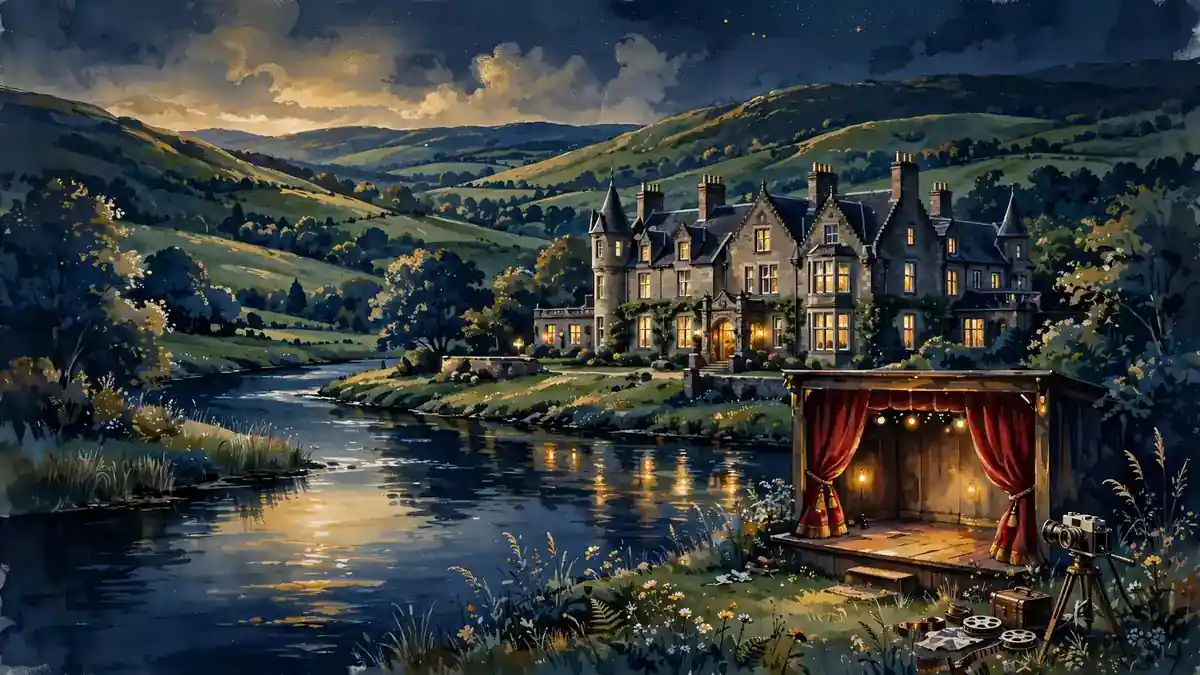
Rowling’s property portfolio is substantial but modest by billionaire standards — a handful of homes, not a trophy collection. The best-known is Killiechassie, a 19th-century country estate near Aberfeldy in Perthshire, on the banks of the River Tay. She bought the estate in 2001, reportedly paying £440,000 for the house itself (some reports say £500,000), and later bought about 72 acres of adjoining farmland for around £1.5 million. The house has seven bedrooms, a two-bedroom west-wing extension, and a Grade B listed dovecote, and she married Neil Murray in its library on Boxing Day 2001. Some celebrity-wealth sites value Killiechassie at $10.7 million today; no sale record supports that figure, and it looks like a guess built on the estate’s fame rather than a valuation.
In Edinburgh she owns a 17th-century home reported to be worth around £2 million, and in London a Georgian house in Kensington reported at £4.5 million as of 2020. She also bought back Church Cottage in Tutshill, her childhood home. The pattern is consistent: she buys houses with personal meaning and keeps them, rather than trading property for profit.
Her cars are reported to include a Rolls-Royce Phantom, a Range Rover, a Ferrari 458 and a Lamborghini Aventador — a small, fast collection, though none of these purchases is documented in the way her property buys are. The superyacht story needs a caveat. Several yacht-tracking sites link Rowling to the 88.5-metre Oceanco yacht SAMSARA, valued by SuperYachtFan at roughly $150 million, but no ownership record confirms it, and the link rests on sightings and registry interpretation rather than a bill of sale. We report it as a link made by trackers, not as an established asset, and we do not count it in the net worth range.
The honest summary of her visible assets is this: a few million pounds of Scottish and London property, a car collection, and companies that hold the rights to the most valuable children’s franchise ever created. The property is a rounding error next to the intellectual property. That is the opposite of most celebrity fortunes, where the houses are the wealth. Here, the houses are where the wealth lives while it is not working.
Awards and Achievements
Rowling’s awards shelf is as long as her bank statement, and it matters to the fortune because prizes drive sales. Prisoner of Azkaban won the Whitbread Children’s Book of the Year in 1999, Goblet of Fire won the Hugo Award for Best Novel in 2001, and the series collected British Book Awards, the Nestlé Smarties Book Prize three years running, and the Hans Christian Andersen Literature Award in 2010.
The state honours followed. She was appointed OBE in 2000, received the Prince of Asturias Award for Concord in 2003, was made a Chevalier of the French Legion of Honour in 2009, and was appointed a Member of the Order of the Companions of Honour in 2017 for services to literature and philanthropy. Harry Potter and the Cursed Child won six Tony Awards in 2018, including Best Play — a stage record for a new play at the time.
The commercial achievements are the ones that pay. Best-selling book series in history. First author to become a billionaire on book sales. Fastest-selling book in history (Deathly Hallows, 11 million copies in 24 hours). Highest-paid author in the world in 2008, 2017 and 2019. Best-selling video game in the United States in 2023 (Hogwarts Legacy, the first non-Call of Duty or Rockstar title to top the yearly chart since 2008). Each record is a marketing line that sells the next edition, the next ticket, the next game.
Net Worth Growth Over the Years
The arc of Rowling’s wealth is a straight line up with one dip — and the dip was voluntary. She went from benefits to billionaire in seven years, gave away enough to lose the title, then earned it back as the franchise kept growing without her needing to write another word.
| Year | Estimated net worth | What moved it |
|---|---|---|
| 1997 | Under £100,000 | First book published; £2,500 advance from Bloomsbury |
| 2000 | ~$100 million | Four books out, film deal signed, global publishing phenomenon under way |
| 2004 | $1 billion | Forbes first lists her as a billionaire — the first author to get there on books alone |
| 2012 | Below $1 billion | Forbes drops her from the billionaire list after ~$160 million in giving and high UK taxes |
| 2016 | At least $1.15 billion | New York Times estimate; Cursed Child opens, Fantastic Beasts launches |
| 2019 | ~$1 billion | $92 million earned in a single year, per Forbes; highest-paid author in the world |
| 2023 | ~$1 billion | Hogwarts Legacy sells 22 million copies in its first year |
| 2025 | $1.2 billion | Forbes returns her to the billionaire list; Sunday Times puts her at £945 million |
| 2026 | $1.1 billion–$1.2 billion | Forbes $1.2 billion (September); Sunday Times £975 million (May); HBO series in production |
The table carries a warning the numbers themselves make: the 2012 dip was not a loss of earning power but a transfer of wealth to charity. The books never stopped selling. Strip out the giving and the line rises without interruption from 1997 to today.
Social Media Presence
Rowling is one of the most followed authors on the planet, and her social media is almost entirely X, where she posts as @jk_rowling to around 14 million followers. She uses the account the way she uses her name: directly, often, and without a publicist’s filter. Her posts about gender and women’s rights since 2020 have made the account a news story in itself, and her replies to critics — including the much-quoted 2024 line that she gets the royalties whether people read the books or burn them — show a writer who knows exactly how little a boycott can hurt a backlist that sells itself.
She does not run the account as a brand channel. There are no sponsored posts, no affiliate links, no book-tour hype machine, and her Instagram presence is minimal by comparison. Her official website, jkrowling.com, carries her essays, FAQs and statements, and it is the primary source for her own account of her wealth: its FAQ page cites the 2026 Sunday Times Rich List figure of £975 million and notes that she has given away more than £200 million to charity since Harry Potter took off.
The commercial point is that social media earns her nothing directly and costs her nothing either. The boycott calls around Hogwarts Legacy in 2023 were the clearest test: the game sold 12 million copies in two weeks and 40 million by the end of 2025, the best-selling game in America in its release year. A franchise this size does not need its creator to be liked online; it needs her to keep owning the rights.
Personal Life
Rowling married the Portuguese television journalist Jorge Arantes in Porto in October 1992. Their daughter, Jessica, was born in July 1993. The marriage ended in 1995, and Rowling moved to Edinburgh with Jessica, where she finished the first Harry Potter book. She has spoken about that period as one of real hardship — a single mother on benefits, writing in cafés while her daughter slept — and it is the part of her story that makes the later billions land so hard with readers.
She married Dr Neil Murray, a Scottish anaesthetist, at Killiechassie on 26 December 2001. They have two children together: David, born in 2003, and Mackenzie, born in 2005. The family divides its time between Edinburgh and Perthshire, and Rowling guards their privacy closely; her children do not appear in public life.
Her mother, Anne, died of multiple sclerosis in 1990 at 45. Rowling has given more than £10 million to the Anne Rowling Regenerative Neurology Clinic in Edinburgh, named for her mother — £10 million in 2010 and a further £15.3 million reported by the BBC in 2019 — making her one of Britain’s largest individual donors to MS research. The giving is not a footnote to the fortune; it is the reason the fortune was ever in doubt. As Oprah Winfrey’s net worth shows the same pattern at a larger scale, the richest self-made women in media tend to give at a scale that would bankrupt a smaller fortune — and Rowling’s kept growing anyway.
Philanthropy runs through the whole story. Lumos, founded in 2005, works to move children out of institutions and into families. The Volant Charitable Trust supports women, children and multiple sclerosis research. The Sunday Times Giving List for 2026 recorded £18.8 million donated in the previous year alone — 1.9% of her estimated fortune, and 21st on the list. Forbes estimates her total giving between 2005 and 2025 at more than $250 million. The 2026 Sunday Times Tax List put her tax bill at an estimated £47.5 million in a single year, a reminder that the British exchequer is one of the largest beneficiaries of Harry Potter.
Sources & Reporting
How we estimated this: The headline range ($1.1 billion–$1.2 billion) anchors to the two strongest public valuations of 2026: Forbes’ real-time billionaire estimate of $1.2 billion (September 2026) and the Sunday Times Rich List’s £975 million (May 2026). Earnings figures come from Forbes’ May 2025 report (more than $80 million a year), its 2019 earnings list ($92 million) and Newsweek’s $50 million–$100 million annual royalty estimate. Giving figures come from Forbes (more than $250 million, 2005–2025; $160 million by 2012) and the Sunday Times Giving List (£18.8 million in the year to 2026). Sales figures come from Scholastic and Bloomsbury (600 million books, 85 languages; 11 million copies of Deathly Hallows in 24 hours), Warner Bros. Games (40 million Hogwarts Legacy copies by December 2025) and Box Office Mojo (Fantastic Beasts grosses). Property details come from public records and reporting summarised by Wikipedia’s Killiechassie entry and the Sunday Times. Where sources disagree — most notably the Forbes and Sunday Times valuations — we publish the range and explain why. Reporting window: May–November 2026.
Sources consulted: Forbes (billionaire estimate, earnings, giving, HBO series forecast) · The Sunday Times (2026 Rich List, Giving List, Tax List) · The New York Times (2016 wealth estimate) · Newsweek (annual royalty estimate) · Scholastic (book sales, first-day records) · Bloomsbury (UK sales, 2026 trading update) · Deadline (Cursed Child earnings to Rowling) · Box Office Mojo (Fantastic Beasts grosses) · CNBC (royalty maths on book earnings) · BBC (Anne Rowling Clinic donation) · J.K. Rowling’s official website (Rich List figure, charitable giving) · Parade (2026 net worth overview, first-printing royalties).
Frequently Asked Questions
What is J.K. Rowling’s net worth in 2026?
J.K. Rowling’s net worth is estimated at $1.1 billion–$1.2 billion as of November 2026. Forbes put it at $1.2 billion in September 2026, while the 2026 Sunday Times Rich List valued her fortune at £975 million. The difference comes from currency and method: the Sunday Times weighs UK-held assets in pounds, Forbes weighs the whole picture in dollars. Both agree she is a billionaire again.
Is J.K. Rowling a billionaire?
Yes. Forbes first listed her as a billionaire in 2004, removed her from the list in 2012 after she had given away around $160 million and paid high UK taxes, and returned her to the billionaire list in May 2025 at $1.2 billion. Her own website cites the Sunday Times Rich List figure of £975 million for 2026.
How much does J.K. Rowling make a year?
Estimates put her annual earnings at $50 million–$100 million from Harry Potter royalties, according to Newsweek, with Forbes estimating more than $80 million a year in the years before May 2025. Her best single year on record was $92 million in the twelve months ending 1 June 2019. The HBO Harry Potter series could add about $20 million a year, according to a Forbes forecast.
How much money did J.K. Rowling make from Harry Potter?
CNBC estimated she has earned well over $1 billion from Harry Potter book sales alone, assuming a standard 15% royalty on more than 600 million copies sold. On top of that come the eight films, which grossed nearly $7.7 billion at the box office, the Cursed Child stage play (over $1 billion grossed), theme-park licensing, merchandise and the Hogwarts Legacy game, which has sold 40 million copies. Her exact royalty rates are not public, so the total is an estimate built from reported sales.
How much did J.K. Rowling earn from the first Harry Potter book?
Bloomsbury paid a reported advance of around £2,500 for Harry Potter and the Philosopher’s Stone and printed just 500 copies in June 1997. Parade reported she made about $4,200 in royalties on the first printing of 5,650 copies. Within a few years the same book was earning millions a year as the series took off around the world.
Does J.K. Rowling still earn money from Harry Potter?
Yes — she owns the underlying intellectual property, so every new format pays her. The books still sell strongly 29 years after publication, according to Bloomsbury’s May 2026 update; the theme parks, merchandise and the Hogwarts Legacy game (40 million copies by December 2025) all generate licensing income; and the HBO series now in production is forecast by Forbes to pay her about $20 million a year.
What houses does J.K. Rowling own?
Her best-known home is Killiechassie, a 19th-century estate near Aberfeldy in Perthshire, bought in 2001 for a reported £440,000, plus about 72 acres of adjoining farmland bought for around £1.5 million. She also owns a 17th-century home in Edinburgh reported at around £2 million, a Georgian house in Kensington reported at £4.5 million, and Church Cottage in Tutshill, her childhood home, which she bought back.
How much has J.K. Rowling donated to charity?
Forbes estimates her charitable giving between 2005 and 2025 at more than $250 million, including around $160 million before 2012 — enough, with UK taxes, to knock her off the billionaire list. The Sunday Times Giving List recorded £18.8 million donated in the year to 2026 alone. Her main vehicles are the Volant Charitable Trust and Lumos, the children’s charity she founded in 2005, plus large gifts to multiple sclerosis research in memory of her mother.
Final Thoughts
J.K. Rowling’s net worth in 2026 — $1.1 billion to $1.2 billion, depending on whose list you trust — is the most instructive fortune in publishing, because it was built once and has paid ever since. She wrote seven books in ten years, kept the rights, and let the world build films, parks, a play and a game on top of them. The 2012 dip off the billionaire list is the detail that proves the point: she gave away $160 million and the machine kept running, because the books never stopped selling.
What comes next is more of the same, at a larger scale. The HBO series will put Harry Potter in front of a new generation for seven seasons, the Hogwarts Legacy sequel is in development, and Bloomsbury says the backlist is still selling strongly in its 29th year. The honest forecast is that the number goes up, not down — and that the giving will keep pace, since the Sunday Times recorded £18.8 million donated in a single year. Rowling once wrote in cafés because her flat was cold. The fortune that followed is still, at its core, a royalty cheque that has never stopped arriving.
Published on 11 November 2026. Last reviewed November 2026. Found an error? See our corrections policy.