
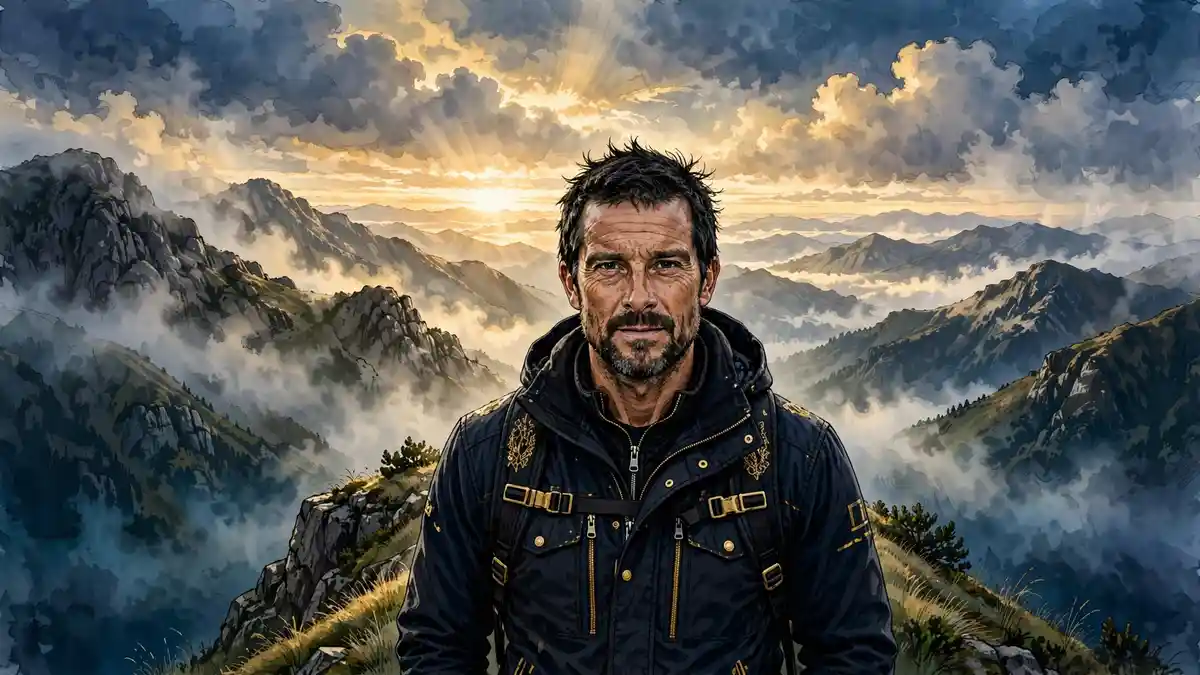
Bear Grylls‘s net worth is estimated at $25 million to $30 million as of November 2026. The British adventurer turned a three-year stint in the SAS, a broken back, and a climb up Everest into a television career that has now run for two decades — and in 2026 he added a Fox comeback for Running Wild and a six-episode Prime Video series with the cast of The Chosen to a catalogue that already spans more than 100 series.
Bear Grylls: Quick Facts
| Estimated net worth | $25 million (range: $25 million to $30 million) |
|---|---|
| Profession | Adventurer, television presenter, author, motivational speaker |
| Nationality | British (born in Northern Ireland) |
| Born | 7 June 1974 (age 52) |
| Height | 6 ft 0 in (1.83 m) |
| Primary income sources | Television presenting and production, book royalties, speaking fees, brand partnerships, survival courses and licensing |
| Active years | 1994–present (television since 2005) |
| Last reviewed | November 2026 |
- Early Life and Background
- Education
- Career Journey
- Rise to Fame
- Main Sources of Income
- Salary and Earnings
- Businesses and Investments
- Brand Deals and Sponsorships
- Houses, Cars and Other Assets
- Awards and Achievements
- Net Worth Growth Over the Years
- Social Media Presence
- Personal Life
- Sources & Reporting
- Frequently Asked Questions
Early Life and Background
Edward Michael Grylls was born on 7 June 1974 in Donaghadee, County Down, Northern Ireland. His father, Sir Michael Grylls, was a Conservative Member of Parliament, and his mother, Sarah, came from a family with deep ties to public service. The nickname “Bear” arrived early — his sister Lara gave it to him when he was a week old — and it stuck so firmly that most of the world has never known him by any other name.
The family moved to the Isle of Wight when Grylls was four, and the island shaped everything that followed. His father taught him to sail and climb before he was old enough to do either well, and the boy spent his free hours on the cliffs and in the water around the island’s coast. By his teens he was slipping out at night to lead climbing trips with friends, a habit his autobiography describes with a mix of pride and relief that nobody was hurt.
That island childhood is the first of five facts most short profiles skip. Grylls did not pick up survival skills for television. He learned them as a child on a windy island, then refined them in the military, and only later turned them into a screen career. The through-line matters for the money story too: every income stream he has — television, books, courses, speaking — sells the same credibility, and that credibility was built years before a camera arrived.
Grylls has spoken often about faith as a second anchor from his youth. He was raised in a Christian household, and he has described prayer and church as a steady part of his life through the SAS years, the accident that nearly ended his career, and the decades of filming since. That faith moved to the front of his public work in 2026, when he hosted The Chosen in the Wild, a Prime Video series built around conversations about belief in wilderness settings.
Education
Grylls attended Eton College, one of Britain’s best-known independent schools, where he threw himself into mountaineering and martial arts rather than classroom distinction. The school years gave him two things that later paid directly: a taste for structured physical punishment, and a network. Eton’s alumni web is real, and Grylls has never hidden that his background opened doors — his father’s parliamentary career and the family’s standing gave him a start most adventurers never get.
After Eton he spent months hiking in the Himalayas while weighing a commission in the Indian Army, an idea he eventually set aside in favour of the British military. He also trained in karate in Japan, earning a second-degree black belt, and the discipline of that training — repetition, discomfort, control under pressure — shows up in almost everything he has done since, from SAS selection to the way he presents on camera.
The education that counts most for his fortune, though, was not formal at all. It was the combination of island sailing and climbing as a boy, martial arts as a teenager, and special-forces training as a young man. No university course teaches a person to stay calm with a broken back at 16,000 feet, and no media degree teaches a presenter to hold an audience while eating something most viewers would refuse to touch. Grylls collected those skills in the field, and television later paid him to display them.
Career Journey
Grylls joined the Territorial Army in 1994 and served three years with 21 SAS, the reserve regiment of the Special Air Service, as a trooper, patrol medic and survival instructor. Selection for the SAS is famously punishing, and passing it at 20 gave him the credential that still underpins his public image. The service ended abruptly in 1996, during a free-fall parachuting exercise over Zambia, when his canopy ripped at 16,000 feet and he fell with only a partially deployed parachute. He broke three vertebrae in his back and doctors told him he might never walk normally again.
Twelve months of rehabilitation followed. Eighteen months after the accident, in May 1998, the 23-year-old stood on the summit of Mount Everest. At the time he was among the youngest Britons ever to do it — a record complicated by the earlier summit of James Allen, a dual Australian-British citizen who reached the top at 22 in 1995, a dispute Wikipedia records in its account of the climb. The year before Everest, Grylls had become the youngest Briton to climb Ama Dablam, a peak Sir Edmund Hillary once described as unclimbable. In 2007 he added a record-setting paramotor flight in the Himalayas near Everest, flying higher on a powered paraglider than anyone had before.
Television came calling in 2005, when Channel 4 gave him Escape to the Legion, a four-part series following foreign-legion training. The next year Discovery Channel launched Man vs. Wild — Born Survivor: Bear Grylls in Britain — and the format ran for 73 episodes between 2006 and 2011. The show’s premise was simple and endlessly repeatable: drop Grylls in a hostile environment, watch him find food, water, shelter and a way out. It reached an estimated 1.2 billion viewers in more than 180 countries, according to his publisher Penguin, and made him the most recognised survival presenter on the planet.
The Discovery relationship ended in a contract dispute in 2012, and Grylls rebuilt on a wider base. He launched The Island on Channel 4 in 2014, hosted Get Out Alive for NBC, and took Running Wild with Bear Grylls to NBC in July 2014, a celebrity format that put famous guests through two days in the wilderness with him. He presented the National Geographic series Hostile Planet, fronted Netflix’s interactive You vs. Wild in 2019, and hosted the revival of World’s Toughest Race: Eco-Challenge Fiji for Amazon Prime Video in 2020. His own production company, The Natural Studios, now makes the shows, which means Grylls earns as a producer and rights-holder as well as a presenter — a distinction that explains much of the gap between his per-episode presenting fee and his total wealth.
That shift from hired presenter to owner-producer is the single most important turn in his money story. A presenter collects a fee. An owner collects fees, format sales, licensing income and a share of the catalogue. Grylls made the move early, and the 2026 slate — a Fox season of Running Wild, a BBC relationship series, and a Prime Video faith-adventure show — all flows through companies and formats he controls or co-owns.
Rise to Fame
Fame arrived in stages, and each stage widened the audience that would later pay him. The SAS years gave him a story. Everest gave him a record. Man vs. Wild gave him a global audience. But the moment that turned a well-known presenter into a household name was the show’s tone: Grylls did things on camera that other presenters would not — drinking his own urine, eating raw animals, squeezing water from elephant dung — and the clips travelled far beyond the show’s own viewers. The stunts drew criticism, including a 2007 admission that some scenes had been staged, with a programme consultant revealing that Grylls had stayed in hotels on some nights. The controversy dented his credibility for a season, yet the audience stayed, and the show ran until 2011.
Running Wild changed the fame equation again. Instead of Grylls alone against nature, the show put a celebrity beside him, and the guest’s audience became his audience. The roster reads like a casting director’s wish list: Channing Tatum, Kate Winslet, Zac Efron, Michael B. Jordan, Ben Stiller, and, in 2015, President Barack Obama on a trip through Alaska — the first time a sitting American president had appeared on a reality show. The Obama episode alone put Grylls in front of a political and news audience that survival television never reaches.
The Modi episode in 2019 pushed the numbers further still. Grylls filmed an adventure with Indian Prime Minister Narendra Modi that his speaking agency Saxton describes as the world’s most trending televised event, with 3.6 billion impressions. Whatever the precise counting method behind that figure, the episode made Grylls a prime-time name in India, one of the largest television markets in the world, and it opened a speaking and brand market there that few British presenters ever touch.
By 2026 the fame had compounded into something durable. He was no longer a presenter chasing a commission; he was a brand that broadcasters came to. Fox picked up a new season of Running Wild in February 2026, rebranded as Bear Grylls Is Running Wild, and aired eight episodes between April and June 2026, including an episode with rapper Machine Gun Kelly. The BBC launched Bear Grylls: Wild Reckoning, a sixteen-part series about family and relationship issues worked through survival challenges, in February 2026. And in August 2026, The Chosen in the Wild with Bear Grylls arrived on Prime Video with all six episodes at launch, pairing Grylls with the cast of the crowdfunded drama The Chosen, including Jonathan Roumie and Dallas Jenkins. Three networks, three formats, one year — that is the shape of a career at its peak, not its tail.
His parallel as a television builder is instructive. Simon Cowell turned a single talent-show idea into a format empire; Grylls did the same with a single survival premise, spinning it into celebrity, family, competition, interactive and faith variants. The scale differs — Cowell’s fortune runs into the hundreds of millions — but the method is the same, and it is the method that separates a well-paid presenter from a wealthy one.
Main Sources of Income
Grylls earns from five streams, and the balance between them is what keeps the total growing in a year when any single show could end. Television presenting and production is the largest. Book royalties are the steadiest. Speaking fees are the highest per hour. Brand partnerships and licensing add a layer that scales without his physical presence. Survival courses and live experiences turn the brand into ticket sales.
Television pays in three ways at once. There is the presenting fee for each series, the producer’s share through The Natural Studios, and the licensing income as formats and back-catalogue episodes sell into new territories and streamers. Penguin notes that his shows have been watched by 2 billion viewers in more than 150 countries; his own site, beargrylls.com, credits The Natural Studios with more than 100 series across Discovery, National Geographic and Netflix. A catalogue that wide keeps paying long after filming stops, and it is the main reason a presenter whose best-known show ended in 2011 is still adding to his wealth in 2026.
Books are the second pillar. Penguin reports that Grylls has written more than 90 books selling in excess of 19 million copies worldwide. The autobiography Mud, Sweat and Tears (2011) spent fifteen weeks at number one on the Sunday Times bestseller list. The backlist is unusually broad for a television personality: adult memoir and self-help (A Survival Guide for Life, 2012; True Grit, 2013; Soul Fuel, 2019; Never Give Up, 2021), the Everest account Facing Up (published in the United States as The Kid Who Climbed Everest), and a long-running children’s adventure series, Mission Survival, that put his name in front of a generation of young readers and their parents. A children’s series matters commercially because it renews the audience every year; a ten-year-old who reads Mission Survival today is a potential viewer, course customer and book buyer for the next two decades.
Speaking is the third pillar and the most lucrative per hour of work. Grylls is listed by multiple agencies as one of the most in-demand motivational speakers in the world, telling the Everest and SAS stories to corporate audiences on leadership, resilience and operating under pressure. His agency listings put his fee in a range that most television presenters never reach, and the details are covered in the salary section below.
Brand partnerships and licensing form the fourth stream. Grylls has fronted campaigns for Land Rover, worked with Harrods, and put his name to survival gear, knives, clothing and outdoor equipment sold through his own store and retail partners. The Bear Grylls brand also licenses the survival-academy and experience formats that run courses for the public. These deals pay less per contract than a television series, but they cost him almost no time, and they keep the name in shops between series.
The fifth stream is the experience business itself: Bear Grylls Survival Academy courses, adventure weekends and corporate team events that charge the public to learn fire-lighting, shelter-building and navigation from his instructors. The courses sit at the premium end of the adventure market, and they convert television viewers into paying customers — a funnel that a presenter without a brand cannot build.
Salary and Earnings
No contract of Grylls’s has ever been published, so every salary figure in circulation is a reported estimate, and the reports disagree. The most repeated figure is about $30,000 per episode for Man vs. Wild, cited by several outlets including eCelebritySpy and CelebrityDig, which both tie it to the 2006–2011 Discovery run. Other reports push higher: some put the figure at $50,000 per episode, and Radio Times, citing The Richest, reported £22,000 per episode, roughly $28,000 at the exchange rates of the time. The honest reading is a range of roughly $30,000 to $50,000 per episode for the early series, with later series and the celebrity format commanding more. Across 73 episodes of Man vs. Wild, even the low end of that range puts the show’s presenting fees above $2 million, before any production share.
The per-episode number understates his television earnings badly, because it counts only the presenting fee. As the owner-producer of later formats through The Natural Studios, Grylls also collects production fees and a share of format and licensing income, and those sums are not disclosed. Industry reporting on comparable celebrity-led factual formats suggests the production share can exceed the presenting fee over a series’ life, which is why the $25 million net worth figure is plausible on television income alone across two decades, even at a modest per-episode rate.
Speaking fees are better documented, because agencies publish them. Key Speakers lists Grylls’s typical fee at $100,000 to $221,000, with the lower end covering virtual appearances and the upper end covering in-person engagements in the United States, before travel. Executive Speakers lists his fee as over $200,000. Even at the bottom of that range, a handful of corporate keynotes a year adds seven figures to his annual income — and his speaking agency Saxton notes that he has addressed audiences of 2,000 or more at major corporate conferences, the kind of booking that commands the top of the range.
Annual income estimates from net-worth trackers cluster around $2 million to $2.5 million a year in recent years, though those numbers are modelled rather than reported — one tracker divides the $25 million net worth across his career to reach $2.5 million a year, which is arithmetic rather than evidence. The safer statement is that his income is lumpy: a year with a Fox series, a Prime Video launch and a book release is worth far more than a quiet year, and 2026, with three separate network projects, looks like one of the stronger years.
One comparison puts the scale in context. David Copperfield, a fellow live-spectacle earner, built a fortune measured in billions from a stage show; Grylls’s per-night numbers are far smaller, but his income is spread across more streams, which is why a cancelled series has never dented his wealth the way it would a presenter who lived on one contract.
Businesses and Investments
The Natural Studios is the centre of Grylls’s business life. His site describes it as his production company, responsible for more than 100 series across Discovery, National Geographic and Netflix, watched by 2 billion viewers in over 150 countries. Owning the production company rather than working for one is the decision that turned a presenting career into a business: the company holds the formats, employs the crews, sells the shows, and keeps the margin that a hired presenter never sees.
Bear Grylls Ventures is the umbrella for the commercial side — the survival academy, the licensed gear, the live experiences and the partnerships. The ventures arm also runs the Bear Grylls Survival Academy, which sells courses ranging from a 24-hour family survival weekend to multi-day expeditions, and the corporate events business that takes executive teams into the wild for leadership training. The model is efficient: the television shows create the demand, and the academy sells the experience of living a small piece of the show.
Grylls has also invested in the brand itself in a way most celebrities never do. He owns the name, the formats and the backlist, and he has kept them under his own companies rather than licensing them away to a studio. That ownership is visible in the 2026 slate: when Fox wanted a new season of Running Wild, when the BBC wanted a relationship series, and when 5&2 Studios wanted a faith-adventure spin-off, all three deals ran through Grylls’s own operation, and each one paid him as a producer as well as a presenter.
His publishing business works the same way. More than 90 books and 19 million copies sold, per Penguin, make the backlist a genuine asset rather than a vanity project. Children’s adventure fiction, in particular, sells steadily year after year with almost no new work from the author once the series is written. The books also feed the other businesses: a reader becomes a viewer, a viewer becomes a course customer, and a course customer buys the gear.
There are gaps in the public record. No filings disclose the revenue of The Natural Studios or Bear Grylls Ventures, and Grylls has never spoken publicly about private investments, property portfolios or equity stakes beyond his own companies. That silence is normal for a private individual, and it is one reason the net worth estimate carries a range. What is documented is enough: a production company with a hundred-series catalogue, a publishing backlist of 19 million copies, and a speaking practice at six-figure fees add up to a fortune in the tens of millions without needing to assume any hidden windfall. Patrick Bet-David built a comparable multi-stream business from media into products and events; Grylls’s version runs on adventure rather than finance, but the structure — content that sells the brand, a brand that sells the product — is the same.
Brand Deals and Sponsorships
Grylls’s first commercial break came before television, when he was approached to star in a Sure for Men deodorant commercial — the Rexona brand worldwide — and the UK Ministry of Defence used him to front the Army’s anti-drugs television campaign. He also featured in the first major advertising campaign for Harrods. Those early deals showed advertisers what television later confirmed: Grylls’s image — discipline, endurance, clean living — is unusually safe for a celebrity endorser, and brands pay for safety.
Land Rover is the partnership most associated with him. The marque’s rugged, go-anywhere image maps directly onto Grylls’s own, and the relationship has run across campaigns, vehicles and events for years. His garage, reported by LADbible, includes a Land Rover Defender and a Land Rover Discovery alongside a Lincoln Navigator — vehicles that double as both transport and brand alignment.
The gear business is where the brand deals turn into recurring revenue. Grylls-branded knives, survival kits, clothing and outdoor equipment sell through his online store and retail partners, and the licensing model means he earns on products he never touches. The store also sells the books and course places, making it the single checkout for the whole brand. None of the individual licensing contracts is public, so no single figure can be attached, but the pattern is clear: the deals are numerous, long-running and tied to products his audience genuinely buys, rather than one-off cheques for a social media post.
Corporate partnerships extend into the speaking circuit too. His client list, as described by his agencies, includes major banks, technology firms and global conferences, and the fee range — $100,000 to $221,000 per engagement — reflects what blue-chip companies pay for a speaker who can hold a room with a story about Everest and a broken back. The speaking deals also feed the brand deals: a company that books him for a keynote is a company that may also sponsor a series or license a course.
One deal type Grylls has largely avoided is the quick social-media endorsement. His feed promotes his own shows, books and courses far more than third-party products, and that restraint protects the value of the partnerships he does sign. A brand that pays for Grylls is buying an image that has been kept clean for twenty years, and the price of that image is visible in the fee ranges his agencies publish.
Houses, Cars and Other Assets
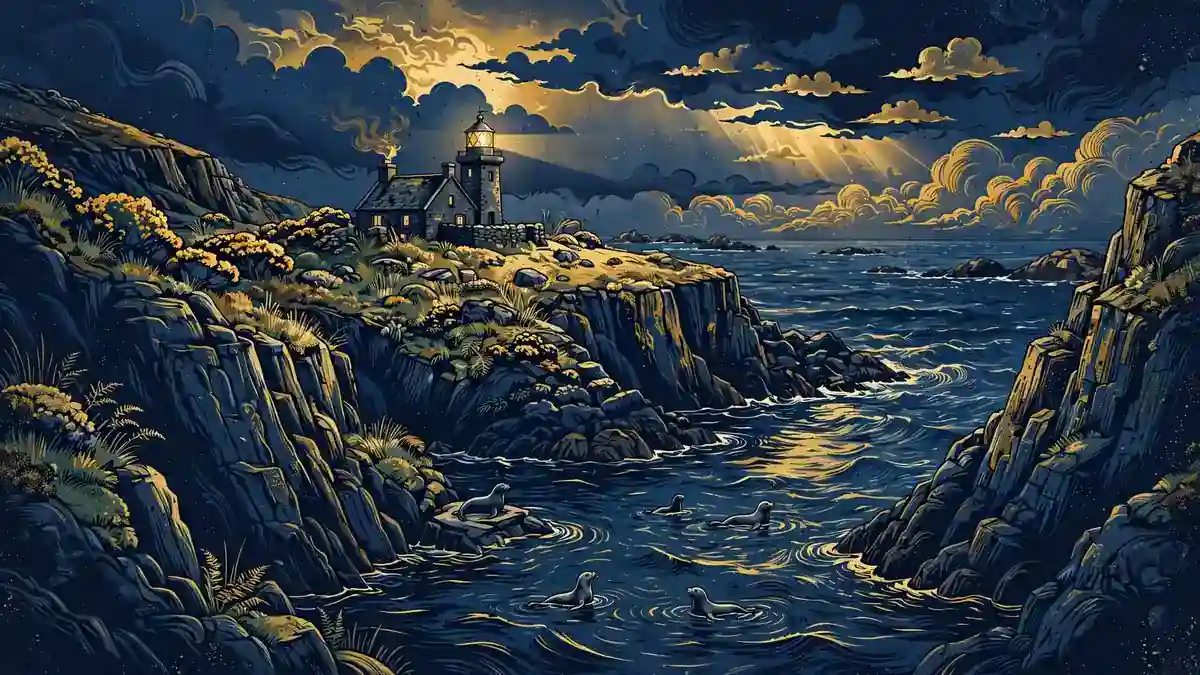
The most famous asset Grylls owns is also the cheapest thing he ever bought. In 2001, he and his wife Shara bought St Tudwal’s Island West, a 20-acre island off the Llyn Peninsula in north Wales, for about £95,000 — the figure reported by multiple outlets, with an Australian report putting it at $120,000 in US dollars. The couple had been looking at a London flat priced at about $288,000 and chose the island and a Thames houseboat instead, for less than the flat would have cost. The island came with a 200-year-old lighthouse and two derelict lightkeeper’s cottages, no mains electricity, no running water, no roof and, by Grylls’s own account to the Sunday Times in 2021, rats. Over two decades the family converted the cottages into a single four-bedroom home with limestone walls 60 centimetres thick, built to stand up to Atlantic gales. The island is still off-grid, reached by a nine-metre rigid inflatable boat, and Grylls has called it the best purchase he ever made. Its current value is not public, and any estimate would be guesswork — a private island with no mains services does not trade like a London flat — but the purchase price against today’s coastal property values suggests a large paper gain on a tiny cash outlay.
The family’s London base has moved with their fortunes. They raised their three sons on a houseboat on the River Thames, a barge with an outdoor bath, a hammock and a canoe that featured in countless profiles. In 2015 Grylls told MailOnline the family had bought a luxury apartment in the redeveloped Battersea Power Station, explaining that they wanted “a bit of history that we could pass on down through the family” rather than a run-of-the-mill townhouse. His own site now says the family lives between the UK and Switzerland, spending part of the year on the Welsh island. The Battersea apartment’s purchase price was not disclosed, and neither was any Swiss property, so the property portfolio can be described but not valued — another reason the net worth figure is a range rather than a point.
The car collection fits the image. LADbible reports a Land Rover Defender, a Lincoln Navigator and a Land Rover Discovery in the garage — four-wheel drives, all of them, and all of them vehicles a man who films in deserts and mountains can actually use. There is no reported supercar collection, no fleet of classics, and no public record of exotic purchases. Grylls spends money on the island, on boats and on expeditions, not on the kind of garage that fills a magazine spread.
The less visible assets are worth more than the visible ones. The Natural Studios’ catalogue of more than 100 series, the publishing backlist of 90-plus books, the Bear Grylls trademark and the survival-academy business are the assets that generate the income, and they are also the assets that would be valued if the business were ever sold. None of them has a published valuation, which is normal for a private company, but the catalogue alone — a hundred series that have aired in 150-plus countries — is the kind of library that media buyers pay real money for.
Awards and Achievements
Grylls’s trophy shelf is modest next to his audience numbers, which says something about how factual television hands out prizes. He has won two Emmy Awards for Netflix’s You vs. Wild, the interactive series that let viewers choose his next move, and two BAFTA awards for Channel 4’s The Island, the format that stranded ordinary people — and later celebrities — on a remote island with minimal supplies. Both wins matter commercially: an Emmy and a BAFTA on a format’s record make it easier to sell the next series, and easier to charge more for it.
The honours outside television are heavier. He was appointed OBE in the 2019 Queen’s Birthday Honours for services to young people, the media and charity. He became the youngest-ever Chief Scout of the United Kingdom in July 2009, at 35, and held the post until September 2024, making him the second-longest-serving Chief Scout after the movement’s founder, Robert Baden-Powell. He is the first-ever Chief Ambassador to the World Scout Organization, representing a global family of some 50 million Scouts, and an Honorary Colonel of the Royal Marines Commandos, with an honorary Lieutenant Commander rank in the Royal Navy.
The expedition record stands on its own. Everest at 23, eighteen months after breaking his back. Ama Dablam at 22, the youngest Briton to climb it. A record paramotor flight in the Himalayas in 2007. The first team to jet-ski around Britain on a pioneering fuel made from rubbish. Several world records in hostile environments, as Wikipedia’s summary puts it. None of these paid him directly, but all of them fed the credibility that every later pay cheque rested on.
His publishing record is an achievement in its own right. Mud, Sweat and Tears spent fifteen weeks at number one on the Sunday Times bestseller list, and the total of more than 90 books and 19 million copies, reported by Penguin, puts him among the most prolific adventure authors alive. The Modi episode’s reported 3.6 billion impressions, cited by his speaking agency Saxton, is a different kind of record — a single television event that reached a sizable share of the planet.
There is one more achievement that rarely makes the lists: longevity. Steven Seagal, a fellow action-adventure screen figure, built his name in a single decade and spent the years since living off it. Grylls has stayed at the top of his field for twenty years, across four networks and three continents, and in 2026 he was still launching new formats on three of them. Staying relevant that long is harder than getting famous once, and it is the reason the fortune kept growing after the show that made him ended.
Net Worth Growth Over the Years
The figures below are NetWorthCraft estimates, built by tracing reported career milestones — the Man vs. Wild fees, the book sales, the speaking fees and the production-company growth — against the published $25 million anchor from Celebrity Net Worth. They are not reported figures for those years, and no source publishes a year-by-year balance sheet for Grylls. Treat them as a shape of the curve, not a ledger.
| Year | Estimated net worth | What moved it |
|---|---|---|
| 1998 | Under $100,000 | Everest summit at 23; no television income yet, book deal for Facing Up to come |
| 2006 | About $2 million | Man vs. Wild launches on Discovery; first book royalties and early brand work |
| 2011 | About $10 million | 73 episodes of Man vs. Wild complete; Mud, Sweat and Tears tops the bestseller list for 15 weeks; Chief Scout role raises profile |
| 2016 | About $18 million | Running Wild established on NBC; The Island wins BAFTAs; speaking practice at six-figure fees; survival academy running |
| 2020 | About $22 million | You vs. Wild wins Emmys; World’s Toughest Race on Prime Video; book backlist passes 19 million copies |
| 2023 | About $25 million | Production company catalogue passes 100 series; Running Wild continues; speaking and licensing steady |
| 2026 | $25 million to $30 million | Fox season of Running Wild; BBC’s Wild Reckoning; Prime Video’s The Chosen in the Wild; Celebrity Net Worth anchor at $25 million |
Three things stand out in the curve. First, the growth is steady rather than spiky: no single windfall, no lottery win, no viral moment that doubled the fortune overnight. Second, the curve flattens after 2016, which is what a mature brand looks like — the fortune grows by the margin on each year’s work rather than by a step change. Third, the 2026 range widens at the top because the year’s three-network slate is the busiest of his career, and a strong year of production income could plausibly push the total toward $30 million, the figure a smaller set of trackers already claims. The gap between the $25 million anchor and the $30 million claim is the honest uncertainty in the record, and it is why this article carries a range.
One more comparison frames the curve. Lewis Hamilton, another British daredevil who turned physical risk into a global brand, built a fortune several times Grylls’s size — but Hamilton did it on Formula 1 salaries and sponsorships that run to tens of millions a year, a pay scale survival television never offers. Grylls’s achievement is different: he built a $25 million fortune in a genre where most presenters earn a salary and retire on it. Ownership — of the production company, the formats and the backlist — is what closed the gap.
Social Media Presence
Grylls runs his social channels as an extension of the television work rather than as a separate business. His Instagram feed mixes expedition clips, behind-the-scenes footage from current series, book announcements, family moments on the Welsh island and the Thames, and short motivational posts built around the Everest and SAS stories. His YouTube channel carries full clips and highlights from the shows, and his X account posts series news and expedition updates. The content is consistent: short, visual, and always tied to something he is actually doing, which is why the audience stays engaged between series.
The commercial value of the following is indirect but real. A large, loyal audience lets him launch a new series with a built-in marketing channel, sell course places without buying advertising, and move books on publication week. It also supports the speaking business: corporate bookers check a speaker’s following before they check the fee. Grylls has never chased the influencer economy — there are no paid product posts, no affiliate-link farming, no brand ambassadorships for products he does not use — and the restraint keeps the audience’s trust, which is the asset the whole brand rests on.
The 2026 slate showed the following working as a launchpad. The Fox season of Running Wild, the BBC’s Wild Reckoning and the Prime Video launch of The Chosen in the Wild were all promoted heavily through his own channels, and the Chosen series in particular reached an audience — faith-based viewers — that his survival channels had not previously served. Each new audience widens the funnel for the books, the courses and the next series, and that widening is visible in the growth of the fortune even in a year when no single show dominates.
Personal Life
Grylls married Shara Cannings Knight in 2000, and the couple have three sons: Jesse, Marmaduke and Huckleberry. Shara is an author in her own right — her book Marriage Matters is about building a lasting marriage — and she has worked alongside him on charity projects for years. The family is famously private for a household built on television: the boys were raised largely out of the public eye, on the Thames houseboat and on the Welsh island, and Grylls rarely discusses them in interviews beyond the occasional anecdote.
The family set-up is also a business decision, whether or not it was made as one. Living on a houseboat and an off-grid island is cheap in cash terms — the island cost £95,000 and the houseboat a fraction of a London house — and it keeps the family’s overheads low while the income runs high. That gap between earnings and spending is the quiet engine of the net worth figure: a man who lives on an island with no mains electricity does not burn through a television fortune the way a celebrity with a fleet of cars and a staff of twenty does.
Faith is a real part of the household, not a branding exercise. Grylls has spoken about praying daily and about the role of his Christian faith in his recovery from the parachute accident and in his family life. The 2026 Prime Video series with the cast of The Chosen grew directly out of that faith — his involvement, according to the show’s own coverage, was motivated by his personal belief — and it opened a new audience and a new income stream at the same time. Few television presenters get to turn a private conviction into a prime-time format; Grylls did, and the series premiered with all six episodes on 9 August 2026.
His father, Sir Michael Grylls, died in 2001, the same year Grylls bought the island. Grylls has described his father as the person who taught him to climb and sail, and the island purchase — made with Shara in the year his father died — reads as a deliberate choice to raise his own sons the way he was raised: outdoors, self-reliant, and a long way from a city flat.
Sources & Reporting
Every figure in this article traces to a named source below, or is labelled as our estimate. Figures were checked in November 2026; where sources disagree, the article carries a range and names the disagreement.
- Celebrity Net Worth — the $25 million net worth anchor, updated September 2025, and the basis for the low end of our range.
- Distractify — May 2026 report confirming the $25 million Celebrity Net Worth figure and the 2026 Running Wild episode with Machine Gun Kelly.
- Radio Times — 2020 profile reporting The Richest’s £22,000-per-episode figure for Man vs. Wild, the 2005 television debut, and the staging controversy.
- LADbible — 2022 report of the $25 million figure, the $30,000-per-episode estimate, the 1.2 billion viewers for Man vs. Wild, and the Land Rover Defender, Lincoln Navigator and Land Rover Discovery in his garage.
- Wikipedia — biography: birth date and place, 21 SAS service 1994–1997, the 1996 parachuting accident at 16,000 feet, the Everest summit in May 1998, the Ama Dablam record, Chief Scout tenure 2009–2024, and the 2026 Fox season, BBC Wild Reckoning and The Chosen in the Wild details.
- Penguin Books — publisher data: more than 90 books, over 19 million copies sold, Mud, Sweat and Tears fifteen weeks at number one on the Sunday Times bestseller list, and Man vs. Wild reaching 1.2 billion viewers.
- Bear Grylls — his official site: The Natural Studios’ 100-plus series across Discovery, National Geographic and Netflix, two Emmys and two BAFTAs, family details, and the UK–Switzerland–Wales living arrangement.
- Saxton Speakers — speaking profile: the Modi episode’s reported 3.6 billion impressions, the 15 weeks at number one for the autobiography, and the 90-book, 19-million-copy publishing record.
- Key Speakers — agency-listed speaking fee range of $100,000 to $221,000.
- Executive Speakers — agency listing of his speaking fee as over $200,000.
- realestate.com.au — November 2026 report on the St Tudwal’s Island purchase: $120,000, the 20-acre size, the derelict lighthouse and cottages, and the conversion into a four-bedroom home.
- UniFresher — 2026 estimate of about £20 million, consistent with the $25 million anchor at recent exchange rates.
- NetWorthPrime — the higher $30 million to $35 million claim, carried as the top of the range’s upper bound and treated as thinly sourced.
- eCelebritySpy — the $30,000-per-episode Man vs. Wild salary figure and the show’s 2006–2011 run.
Reporting window: November 2026. Figures for the 2026 television slate (Fox’s Bear Grylls Is Running Wild, BBC’s Wild Reckoning, Prime Video’s The Chosen in the Wild) were confirmed against Wikipedia and trade coverage in November 2026. The year-by-year growth table is a NetWorthCraft estimate built from the milestones above, not a set of reported figures.
Frequently Asked Questions
What is Bear Grylls’ net worth in 2026?
Bear Grylls’s net worth is estimated at $25 million to $30 million as of November 2026. Celebrity Net Worth puts the figure at $25 million, a number echoed by most recent trackers, while a smaller set of outlets argues for $30 million or more. The range reflects the absence of any audited financial statement and the thin sourcing behind the higher claims.
How much did Bear Grylls make per episode of Man vs. Wild?
Reports put his Man vs. Wild fee at about $30,000 per episode, with some outlets reporting up to $50,000 and Radio Times, citing The Richest, reporting £22,000 per episode. The honest figure is a range of roughly $30,000 to $50,000 per episode for the early series. Across 73 episodes, that puts the show’s presenting fees above $2 million before any production share — and as owner-producer of later formats, he earned well beyond the presenting fee.
How did Bear Grylls make his money?
Five streams: television presenting and production through his company The Natural Studios, which has made more than 100 series; book royalties from over 90 books selling more than 19 million copies; speaking fees of $100,000 to $221,000 per engagement; brand partnerships and licensing, including Land Rover and his survival-gear lines; and the Bear Grylls Survival Academy courses and live experiences.
Did Bear Grylls really climb Mount Everest?
Yes. He summited Everest in May 1998, at 23, eighteen months after breaking three vertebrae in a free-fall parachuting accident. At the time he was among the youngest Britons ever to reach the summit, though the “youngest Briton” claim is disputed: James Allen, a dual Australian-British citizen, summited at 22 in 1995. The year before Everest, Grylls became the youngest Briton to climb Ama Dablam.
What happened to Bear Grylls in the SAS?
Grylls served three years with 21 SAS, the reserve SAS regiment, from 1994 to 1997 as a trooper, patrol medic and survival instructor. In 1996, during a free-fall parachuting exercise over Zambia, his canopy ripped at 16,000 feet and he fell with only a partially deployed parachute, breaking three vertebrae. Doctors told him he might never walk normally again; after twelve months of rehabilitation he recovered, and eighteen months after the accident he climbed Everest.
Where does Bear Grylls live?
He lives between the UK and Switzerland with his wife Shara and their three sons, spending part of the year on St Tudwal’s Island West, a 20-acre off-grid island off the Welsh coast that the couple bought in 2001 for about £95,000. The family previously lived on a houseboat on the River Thames and owns an apartment in London’s Battersea Power Station.
Who is Bear Grylls’ wife?
Bear Grylls is married to Shara Grylls (née Cannings Knight), whom he married in 2000. She is an author — her book Marriage Matters is about building a lasting marriage — and has worked with him on charity projects. The couple have three sons: Jesse, Marmaduke and Huckleberry.
How much is Bear Grylls paid for a speaking engagement?
His speaking agencies list a fee of $100,000 to $221,000 per engagement, according to Key Speakers, with the lower end covering virtual appearances and the upper end covering in-person events in the United States. Executive Speakers lists his fee as over $200,000. He is one of the most in-demand motivational speakers in the world, telling the Everest and SAS stories to corporate audiences on leadership and resilience.
Final Thoughts
Bear Grylls’s net worth of $25 million to $30 million is the product of twenty years of turning the same story into new income. The SAS years gave him the story. Everest gave him the proof. Man vs. Wild gave him the audience. And the decision to own the production company, the formats and the book backlist gave him the fortune — a presenter who had stayed a hired hand would have earned a good living and retired on it, not built a business that pays him in 2026 from shows he filmed years ago.
The 2026 slate shows the machine still running: a Fox season, a BBC series and a Prime Video launch in a single year, each one paying him as a producer as well as a presenter. The island he bought for £95,000 instead of a London flat is the other half of the story — a man whose spending stayed close to the ground while his earnings climbed. That combination, high income and low overhead, is the simplest explanation for the number at the top of this article, and it is the one most profiles miss while they argue over the per-episode fee.
Published on 2026-11-11. Last reviewed November 2026. Found an error? See our corrections policy.