
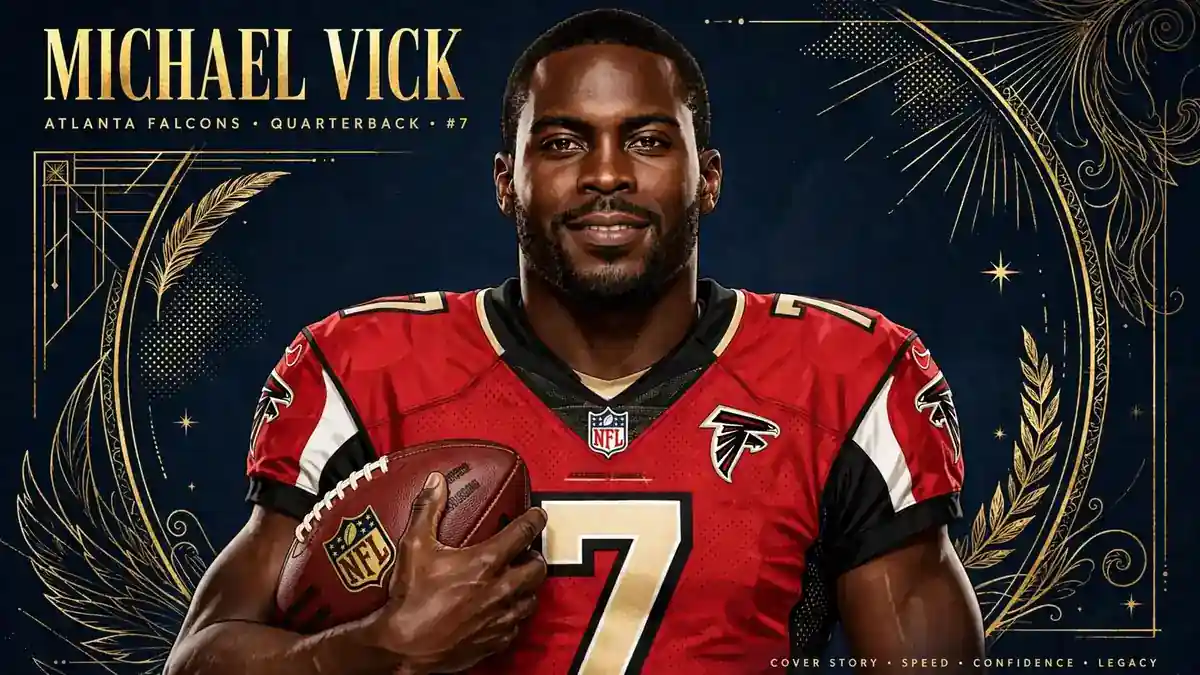
Michael Vick‘s net worth is estimated at $4 million to $16 million as of November 2026. The wide range is the story itself: Vick earned about $116 million in NFL salary, signed two contracts worth $100 million or more, lost nearly everything to a federal prison sentence and a 2008 bankruptcy, repaid almost every dollar he owed, and rebuilt his finances through television work with Fox Sports and a head-coaching job at Norfolk State University that pays $400,000 a year.
Michael Vick: Quick Facts
| Estimated net worth | $4 million–$16 million (range: $4 million to $16 million) |
|---|---|
| Profession | Former NFL quarterback; head football coach, Norfolk State University |
| Nationality | American |
| Born | June 26, 1980 (age 46) |
| Height | 6 feet 0 inches (183 cm) |
| Primary income sources | NFL salaries, broadcasting with Fox Sports, college coaching, endorsements, business ventures |
| Active years | 2001–2015 (NFL); 2017–2024 (broadcasting); 2024–present (coaching) |
| Last reviewed | November 2026 |
- Early Life and Background
- Education
- Career Journey
- Rise to Fame
- Main Sources of Income
- Salary and Earnings
- Businesses and Investments
- Brand Deals and Sponsorships
- Houses, Cars and Other Assets
- Awards and Achievements
- Net Worth Growth Over the Years
- Social Media Presence
- Personal Life
- Sources & Reporting
- Frequently Asked Questions
Early Life and Background
Michael Dwayne Vick was born on June 26, 1980, in Newport News, Virginia, to Brenda Vick and Michael Boddie. His father worked in the local shipyards as a sandblaster and spray-painter, and money was tight while Vick was growing up. He was the second of four children, with an older sister, Christina, a younger sister, Courtney, and a younger brother, Marcus, who later played quarterback in the NFL himself. His second cousin, Aaron Brooks, also reached the NFL as a quarterback, so the position ran in the family long before Vick made it famous.
Football gave Vick a way out of a neighbourhood where trouble was never far away. At Warwick High School in Newport News, his speed and arm stood out so sharply that college recruiters treated him as a national prospect before he had finished his junior year. He threw for 4,846 yards and 43 touchdowns in high school and added 1,048 rushing yards with 18 scores on the ground, numbers that made him one of the most sought-after dual-threat quarterbacks of his generation. He chose Virginia Tech, close enough to home that his family could watch him play, and arrived in Blacksburg in 1998.
The early years matter to the money story because Vick entered the NFL with no family wealth behind him. Everything he later earned, lost and rebuilt came from football and the deals football made possible. That context explains both the scale of his spending in his twenties and the discipline of the repayment plan he accepted after bankruptcy, when he chose to pay creditors back in full rather than wipe the slate clean.
Education
Vick redshirted his first year at Virginia Tech in 1998, then took over as the starting quarterback in 1999 and turned college football upside down. As a redshirt freshman he led the Hokies to an unbeaten regular season and a place in the BCS National Championship Game against Florida State, a run no freshman quarterback had ever managed before. He finished third in the Heisman Trophy voting that year, the highest finish ever by a freshman at the time, and was named Big East Offensive Player of the Year.
His two seasons as a starter produced a 22–2 record. The college numbers, kept by Pro-Football-Reference’s college records and repeated across his biographies, show 3,279 passing yards with 21 touchdowns and 1,216 rushing yards with 17 touchdowns in 1999 and 2000 combined. The 1999 season alone made him a national figure: a left-handed quarterback who could throw 60 yards from his own end zone and outrun defensive backs in the open field.
Vick left Virginia Tech after his sophomore season to enter the 2001 NFL Draft. He never completed a degree, and that fact later shaped his second career: when Norfolk State hired him as head coach in December 2024, he arrived with 13 seasons of NFL experience and seven years in a television studio, but no prior coaching job at any level. The university bet on his name, his football mind and his ties to the Hampton Roads community rather than a coaching résumé.
Career Journey
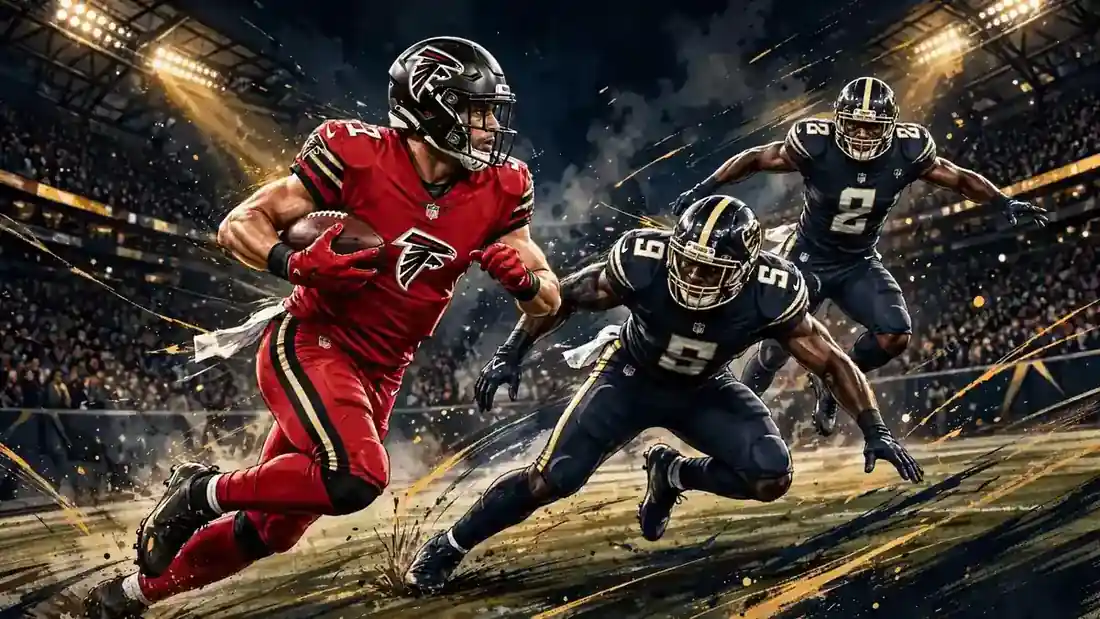
The Atlanta Falcons selected Vick first overall in the 2001 NFL Draft, making him the first Black quarterback ever taken with the No. 1 pick. He signed a six-year, $62 million rookie contract, the kind of money that changed his family’s life overnight. He started only two games as a rookie, then took the job full-time in 2002 and led Atlanta to a playoff win at Green Bay in January 2003, the first road playoff victory in franchise history and the first time a visiting team had ever won a playoff game at Lambeau Field.
The Falcons years, 2001 to 2006, were the peak of his earning power. In December 2004 he signed a 10-year, $130 million contract extension that made him the highest-paid player in the league. In 2006 he became the first quarterback in NFL history to rush for more than 1,000 yards in a season, finishing with 1,039 yards on the ground. By that point, Celebrity Net Worth reports, his combined salary and endorsement income topped $25 million a year, putting him among the highest-earning athletes in the world.
It all collapsed in 2007. Federal investigators found a dogfighting operation on property Vick owned in Virginia. He pleaded guilty in August 2007, was sentenced to 23 months in federal prison, and served 18 months before his release in 2009. The NFL suspended him indefinitely, the Falcons voided his contract and pursued repayment of nearly $20 million of his signing bonus, and his sponsors walked away within days. He filed for Chapter 11 bankruptcy in July 2008, listing about $18 million in debts.
The comeback began with the Philadelphia Eagles, who signed him in August 2009 to a one-year, $1.6 million deal with incentives. He spent 2009 as a backup and spot contributor, then won the starting job in 2010 and produced the best season of his life: 3,018 passing yards, 21 touchdowns against six interceptions, a career-high 100.2 passer rating, plus 676 rushing yards and nine rushing touchdowns. The Eagles rewarded him in August 2011 with a six-year, $100 million contract carrying $40 million in guaranteed money. With it, Vick became only the third athlete in professional sports history, alongside Derek Jeter and Shaquille O’Neal, to sign two contracts worth $100 million or more.
His final playing years were quieter. He signed a one-year, $5 million contract with the New York Jets in 2014 and a one-year deal with the Pittsburgh Steelers in 2015, then announced his retirement in 2017. Across 13 seasons he played 143 games and started 115, throwing for 22,464 yards with 133 touchdowns and 88 interceptions, and running for 6,109 yards with 36 touchdowns at 7.0 yards per carry, according to Pro-Football-Reference. His 6,109 rushing yards stood as the career record for a quarterback until Lamar Jackson moved past the mark years later, and his 1,039-yard season in 2006 stood as the single-season quarterback rushing record until Jackson ran for 1,206 yards in 2019.
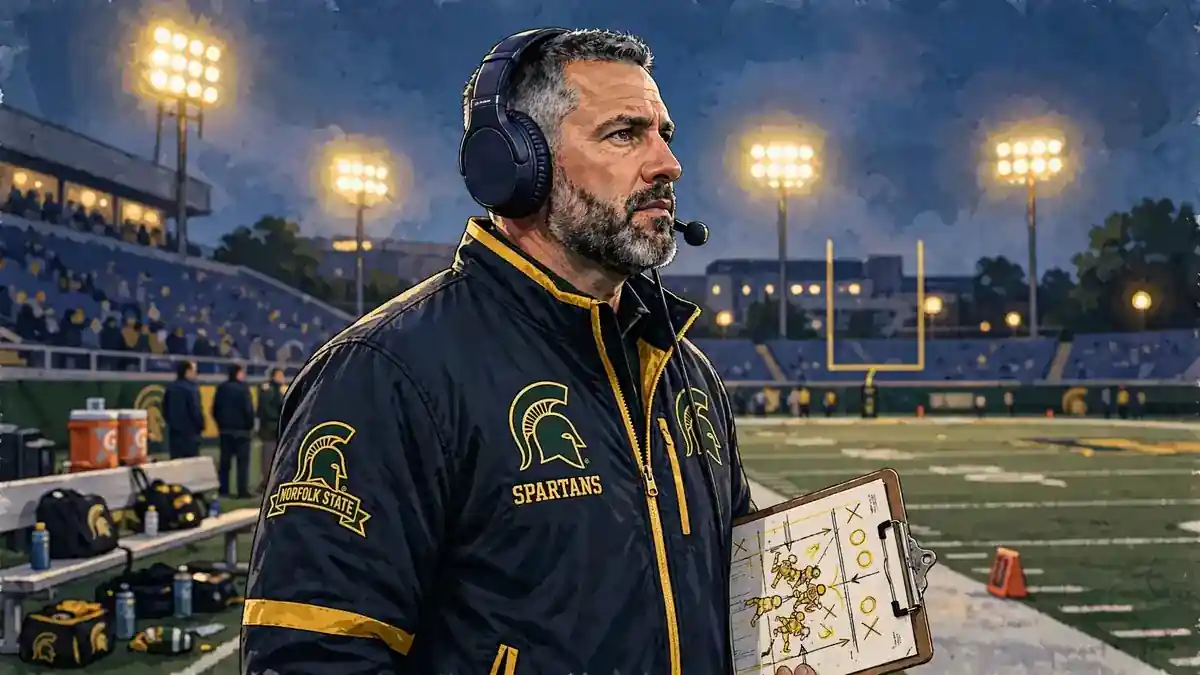
Retirement led to the broadcast booth. Vick joined Fox Sports as an NFL analyst in 2017 and spent seven seasons on FS1 studio shows, a steady television salary that replaced the volatility of playing contracts. In December 2024 he left that role for coaching, accepting the head-coaching job at Norfolk State University, the historically Black university about 20 miles from where he grew up. The Spartans finished his first season 1–11, winless in MEAC play, with their only victory a 34–31 overtime win over Virginia State in September 2025. He has spoken openly about how hard the transition has been, and he sought advice from Deion Sanders, who made a similar jump from NFL stardom to HBCU head coaching at Jackson State.
Rise to Fame
Vick’s fame arrived in two waves. The first came at Virginia Tech, where the 1999 championship run made a 19-year-old the most talked-about player in college football. The second came in Atlanta, where his speed turned the Falcons into a national television draw. His jersey became the league’s top seller, the Georgia Dome sold out after years of empty seats, and Nike built a signature shoe line around him with the “Michael Vick Experience” advertising campaign in 2004, a theme-park fantasy of what it felt like to play quarterback like Vick.
He was also the cover athlete for Madden NFL 2004, the video game that defined football fandom for a generation of players. In the game his speed rating made him almost unfair to play against, and that virtual reputation fed his real one: defenders had to account for a quarterback who could turn a broken play into a 50-yard run. The 2002 season, when he threw for 2,936 yards and ran for 777 more while leading Atlanta to the playoffs, remains the template for the modern dual-threat quarterback. Every running quarterback since, from Cam Newton to Lamar Jackson, has been measured against what Vick did first.
Fame cut both ways. The same visibility that sold jerseys and shoes made his fall a national spectacle in 2007, covered on nightly news rather than just the sports pages. His return carried the same glare: when the Eagles signed him in 2009, animal-rights groups protested, sponsors stayed cautious, and every snap was judged as a referendum on second chances. The 2010 season answered the football question — he was voted NFL Comeback Player of the Year and made his fourth Pro Bowl — but the financial damage took far longer to repair than the reputation damage.
Main Sources of Income
Vick’s money has come from four distinct phases, and each one paid very differently. The first phase, 2001 to 2006, was the Falcons era: a $62 million rookie deal, a $130 million extension, and endorsement income that at its peak pushed his annual earnings past $25 million. The second phase, 2007 to 2008, was a financial wipeout: suspended, released, stripped of endorsements, and in bankruptcy court. The third phase, 2009 to 2017, was the rebuild as a player: the Eagles’ $100 million contract, the Jets and Steelers deals, and the slow climb out of debt. The fourth phase, 2017 to today, is the post-playing career: Fox Sports broadcasting, speaking and appearances, business ventures, and now a college coaching salary.
NFL salary dominates the lifetime total. Celebrity Net Worth puts his career salary at $116 million, split almost evenly — about $57.5 million earned before the criminal charges and about $58.5 million after them. Over The Cap, which tracks contracts rather than cash received, lists $118.65 million in total career earnings with $94 million guaranteed. The gap between the two figures is a tracking difference, not a dispute: contract values include money that was voided when the Falcons tore up his deal, while cash received is lower. Either way, the playing career produced well over $100 million before tax.
Endorsements were the second stream while he played. At his peak he held deals with Nike, Coca-Cola, Kraft, EA Sports, Hasbro and Powerade, and Forbes estimated his total compensation in 2005 at $37.5 million, salary plus endorsements combined. That stream went to zero in 2007 and returned only slowly: a car-dealership spot in 2010, a protective-equipment deal in 2011, and a Nike return the same year. It never approached the pre-2007 level, which is one reason the net worth range today sits far below the career-earnings total.
Broadcasting became the steady income of his late thirties and early forties. Fox Sports hired him in 2017, and he worked FS1 studio shows through the 2024 season. Fox has never disclosed his analyst salary, and we do not guess at it; what matters for the estimate is that it was a multi-year national television contract, the kind that pays a former star quarterback comfortably but nowhere near playing money. He gave that up in December 2024 for Norfolk State’s $400,000-a-year coaching salary, a pay cut he has described as a choice to build something at home rather than chase the larger television cheque.
Coaching now anchors his income. The Norfolk State contract runs four years and is worth $1.6 million in base salary, with performance bonuses that can add meaningful sums: $10,000 for a MEAC regular-season title, $15,000 per FCS playoff win, $25,000 for a Celebration Bowl victory, $100,000 for an FCS national championship, and $2,500 to $5,000 for Coach of the Year honours. The deal, executed on December 18, 2024 and reported by the Virginian-Pilot through a public-records request, also includes a university vehicle and an automatic one-year extension if the Spartans finish in the top half of the MEAC in his third season.
Salary and Earnings
The contract timeline tells the earnings story more honestly than any single total. Vick’s rookie deal with Atlanta in 2001 was six years and $62 million. The 2004 extension, 10 years and $130 million, was the richest contract in league history when he signed it. His biggest cash year came in 2005, when he was paid $23.1 million, according to contract-tracking reporting repeated by SportsJone. The Falcons paid him $23 million that season alone, and Forbes put his all-in compensation for 2005 at $37.5 million once endorsements were counted.
Then came the years when the money ran the other way. The Falcons voided the $130 million deal and sought repayment of nearly $20 million of his signing bonus. Court documents later showed that between 2007 and 2012, Vick spent roughly $30 million on taxes, creditors, lawyers and accountants — about 95 percent of everything he earned in that five-year window, according to filings reported by Celebrity Net Worth. That figure is the clearest explanation of why $116 million in career salary did not leave him rich: for five years, nearly every dollar went to the past.
The Eagles contract rebuilt the base. The six-year, $100 million deal signed in August 2011 carried $40 million guaranteed and worked out to $16.5 million a year, his highest annual salary on a per-year basis. He collected the bulk of it between 2011 and 2013, then signed a one-year, $5 million deal with the Jets in 2014 and finished with the Steelers in 2015. By the time he retired in 2017, he had repaid $17.4 million of the $17.6 million he owed his creditors — 99 percent of the total, a repayment record that bankruptcy lawyers still cite as extraordinary.
| Contract | Team / period | Reported value |
|---|---|---|
| Rookie contract | Atlanta Falcons, 2001 | 6 years, $62 million |
| Extension | Atlanta Falcons, 2004 | 10 years, $130 million (later voided) |
| Comeback deal | Philadelphia Eagles, 2009 | 1 year, $1.6 million plus incentives |
| Second blockbuster | Philadelphia Eagles, 2011 | 6 years, $100 million; $40 million guaranteed |
| Late-career deal | New York Jets, 2014 | 1 year, $5 million |
| Coaching contract | Norfolk State, 2024 | 4 years, $1.6 million; $400,000 a year |
One comparison puts the scale in perspective. Vick’s two $100 million-plus contracts made him, at the time, only the third athlete in professional sports to sign two deals of that size, after Derek Jeter and Shaquille O’Neal. The money was real. So was the loss: the voided Falcons deal, the bonus clawback, the legal bills and the bankruptcy together erased more wealth than most athletes ever earn.
Businesses and Investments
Vick’s business record is thinner than his football record, and the public record reflects that honestly. His best-documented venture is the V7 clothing line, launched during his Eagles years and sold exclusively at Modell’s sporting-goods stores, with part of the proceeds going to the Boys and Girls Club of Philadelphia. It was a modest retail play, not a fashion empire, and it traded on his name at a moment when his name was rebuilding its value.
After retirement he moved into athlete development and equity roles rather than consumer brands. He joined Levels Sports Group as head of athlete development, working with young prospects on the transition to professional football — a role that uses his experience rather than his capital. He also became an equity partner in Double Eagle Holdings and a founding partner at Champions + Legends, a CBD sports-supplements brand, and announced FanField, a company built around digital collectibles for fans. None of these ventures has a publicly reported valuation, and we do not assign them one. They are real roles with real equity, but their contribution to his net worth cannot be verified from public filings, so the honest treatment is to name them and move on.
That restraint matters because some low-quality aggregators credit Vick with a whiskey brand, technology startups and a real-estate portfolio worth tens of millions, pushing his net worth to $50 million or $60 million. We checked those claims against named reporting and found no primary source behind them: no company filing, no brand announcement, no interview in a business outlet. The $50 million-plus figures trace back to content-farm pages that repeat each other. Readers should treat them as fiction. The verifiable business story is smaller and more believable: a clothing line, a handful of equity partnerships, and a coaching career.
The investment lesson of Vick’s life is written in his bankruptcy filing. Before 2007 he put money into several failed businesses, and court records show he was ordered to pay creditors more than $3 million over defaulted loans tied to those ventures in 2009 and 2010 alone. A sports-marketing deal signed early in his career also proved costly: it gave a firm 25 percent of his future endorsement earnings, and the dispute over it produced a $4.5 million judgment that helped push him into bankruptcy. The pattern was not one bad bet but a series of them, made young, with little oversight, at the peak of his earning power.
Brand Deals and Sponsorships
Nike defined Vick’s endorsement career, twice. The company signed him as a rookie in 2001 and built his signature shoe line around the “Michael Vick Experience” campaign of 2004, a series of commercials that imagined a theme park where fans could feel what it was like to play quarterback like Vick. The campaign is still remembered two decades later, and Vick has used his Norfolk State media appearances to nudge Nike toward re-releasing one of his four signature shoes.
Nike cut him in August 2007, the day he pleaded guilty, terminating a deal that had been among the most lucrative in the sport. Then, on July 1, 2011, Nike re-signed him — the first time a sponsor had ever brought back an athlete it had dropped, according to reporting at the time. The company had supplied him with free gear since October 2009, but the 2011 deal restored a formal relationship. The terms were never disclosed, and the money was a fraction of the pre-2007 deal, yet the symbolism carried weight: a major brand was willing to bet, publicly, that his comeback was real.
The first deals of the comeback came from smaller names. In December 2010, Woodbury Nissan in New Jersey signed him as a spokesman; reports said he was not paid a fee but received the use of a custom Nissan Armada valued at more than $50,000. In January 2011, Unequal Technologies, which makes protective football pads, signed him to a two-year endorsement deal — his first national endorsement since his release from prison, according to TheStreet. Before the fall, his portfolio had also included Coca-Cola, Kraft, EA Sports, Hasbro and Powerade, deals struck when he was the league’s highest-paid player and one of its most marketable stars.
Endorsement income today is a minor line. His public profile now comes from coaching and the BET docuseries “The Coach Vick Experience”, which premiered on February 4, 2026 and follows his first seasons at Norfolk State. The show, produced by SMAC Entertainment, keeps his name in front of a national audience without the endorsement machinery of his playing days. For a net worth estimate, that means the current income is salary-led — coaching first, media second — rather than brand-led, and the range we publish reflects that steadier, smaller base.
Houses, Cars and Other Assets
Here is where honest reporting requires saying what is not known. No verified public record in our research window ties Vick to a current property portfolio, and we will not invent one. During his playing career he owned a home in Virginia that became the centre of the 2007 investigation, and later reporting placed his family home in Florida, but no current deed, listing or property-tax record surfaced in the outlets we reviewed, so we do not claim a house, a value or a location for 2026.
What can be documented is smaller and more concrete. The custom Nissan Armada from the Woodbury Nissan deal in 2010, valued at more than $50,000, was his most-publicised vehicle of the comeback years. His playing-days car collection, like his property holdings, was liquidated in the bankruptcy era, and the court record shows the scale of that unwind: by 2012 he had directed about 95 percent of his income over five years to taxes, creditors, lawyers and accountants.
The asset that matters most to his current wealth is not a house or a car but a contract: four years of coaching salary at Norfolk State, worth $1.6 million before bonuses, plus the media value of the BET docuseries and his ongoing public profile. That is a modest asset base beside the $130 million contract he once held, and it is the main reason the top of our range stops at $16 million. Anyone claiming a large property portfolio for Vick in 2026 is guessing, and our estimate does not include guesses.
Awards and Achievements
Vick’s trophy case reflects a career of firsts rather than championships. He never played in a Super Bowl — his deepest playoff run ended in the 2004 NFC Championship Game, when the Falcons lost to the Eagles — but he collected honours that mark how the league viewed him at his best.
- 4× Pro Bowl — selected in 2002, 2004, 2005 and 2010, the last of them after his comeback season with Philadelphia.
- NFL Comeback Player of the Year, 2010 — for the 3,018-yard, 21-touchdown season that rebuilt his career with the Eagles.
- Bert Bell Award, 2010 — given to the NFL’s player of the year as voted by the Maxwell Football Club.
- First quarterback to rush for 1,000 yards in a season — 1,039 yards in 2006, a record that stood until Lamar Jackson ran for 1,206 in 2019.
- Career quarterback rushing record at retirement — 6,109 yards, the most by any quarterback when he left the game.
- Heisman Trophy, third place, 1999 — the highest finish by a freshman in the award’s history at the time.
- Big East Offensive Player of the Year, 1999 — after leading Virginia Tech to the national championship game.
- Virginia Tech Sports Hall of Fame — inducted for the 1999–2000 seasons that made the Hokies a national power.
- Madden NFL 2004 cover athlete — the video-game honour that fixed his image for a generation of fans.
The coaching chapter has no awards yet. His first Norfolk State season ended 1–11, and the measure of that job will be whether the recruiting classes he is building — including the HBCU All-American receiver he landed for 2026 — turn a one-win programme into a competitive one. The BET cameras are recording the attempt either way.
Net Worth Growth Over the Years
A year-by-year net worth chart for Vick would be guesswork, and we do not publish guesswork as data. What the record supports is a timeline of financial turning points, each tied to a document or a named outlet. Read the table as the arc of the fortune, not as a bank statement.
| Period | Financial position | Evidence |
|---|---|---|
| 2001–2004 | Rapid rise: rookie deal then the richest contract in the league | 6-year, $62 million rookie deal; 10-year, $130 million extension in 2004 |
| 2005–2006 | Peak earning years; annual income above $25 million with endorsements | Forbes 2005 total compensation $37.5 million; $23.1 million cash in 2005 |
| 2007–2008 | Collapse: contract voided, endorsements ended, bankruptcy | 23-month federal sentence; Chapter 11 filing July 2008 with about $18 million in debts |
| 2009–2011 | Rebuild begins; second blockbuster contract | Eagles 1-year $1.6 million deal in 2009; 6-year $100 million deal in 2011 |
| 2012–2017 | Debt repaid almost in full while still playing | Court records: $17.4 million of $17.6 million repaid by 2017 |
| 2017–2024 | Steady broadcasting income; net worth estimates settle near $16 million on some outlets | Fox Sports analyst role; PlayersBio and The Tradable at $16 million |
| 2024–2026 | Coaching salary replaces television pay; conservative outlets hold at $4 million | Norfolk State $400,000 a year; Celebrity Net Worth at $4 million |
Why do the outlets disagree so sharply today? The low end, $4 million, comes from Celebrity Net Worth, which has tracked Vick since the bankruptcy and weighs the debt history heavily; its figure has barely moved in years, which suggests a conservative model that credits little for broadcasting and business income. The high end, $16 million, comes from outlets that credit the Fox Sports years, the Eagles contract’s tail, and his business roles more generously. Both approaches use the same public facts and different judgment calls about private assets and liabilities. That is exactly why we publish the range: the truth sits somewhere between a model that remembers 2008 and a model that counts the rebuild.
Peer comparisons sharpen the picture. Adrian Peterson, another star running back of Vick’s era, followed a similar arc of huge earnings followed by well-documented money trouble. Brett Favre, the quarterback Vick’s generation grew up watching, turned a long career into a durable post-playing fortune. Emmitt Smith, the league’s all-time rushing leader, built a second career in business and broadcasting that Vick’s own post-playing path echoes in miniature. Vick’s range sits below all three, and the reason is not talent but timing: his peak earnings coincided with the years he lost to prison and bankruptcy, while theirs compounded uninterrupted.
Social Media Presence
Vick’s social following is large for a retired player, and it grew again when he took the Norfolk State job. A 2026 profile roundup puts his following at roughly 1.6 million on Instagram, about 2.6 million on X, and more than 3 million on Facebook, though those counts move daily and the underlying pages do not publish audited figures. The audience matters commercially because it is the platform for his coaching story: Norfolk State announcements, recruiting news and clips from “The Coach Vick Experience” all travel through his accounts first.
He uses the accounts the way a coach does, not the way an influencer does. Posts lean toward team news, community events in the Hampton Roads area, and throwbacks to his playing days, with the occasional nudge — like the campaign for a Nike re-release of his signature shoe — that reminds followers of the brand equity he still carries. There is no verified evidence of paid brand posts as a current income stream, and we do not count social media as a revenue line in the estimate.
Personal Life
Vick married Kijafa Frink on June 30, 2012, at the Fontainebleau Miami Beach, after a relationship that began when she was a student at Hampton University and he was at Virginia Tech. Kijafa, born December 15, 1980, in Philadelphia, is an entrepreneur and television producer in her own right, and she has spoken publicly about holding the family together through the prison years and the bankruptcy. The couple have four children: Mitez, born July 10, 2002, from Vick’s earlier relationship with his high-school sweetheart Tameka Taylor; Jada, born October 12, 2004; London, born October 19, 2007; and Michael Vick Jr., born November 20, 2017.
Family has been the through-line of his public statements since his release. He has talked about fatherhood as the reason he chose Chapter 11 over Chapter 7 — repaying creditors in full rather than discharging the debt — because he wanted his children to see him settle what he owed. His younger brother Marcus played quarterback at Virginia Tech and in the NFL, and the brothers’ careers have been linked in coverage ever since. His parents, Brenda Vick and Michael Boddie, still live in the Hampton Roads area, close to Norfolk State’s campus and to the community where Vick’s story began.
Off the field, Vick’s charitable work runs through the Michael Vick Foundation, which focuses on education and youth programmes, and through the Boys and Girls Club of Philadelphia, which benefited from the V7 clothing line. He has also worked with the Humane Society on animal-welfare advocacy since his release, a turn that drew scepticism at first and has continued for more than a decade. He mentors young athletes in the Norfolk area and has said that coaching at Norfolk State is, in part, a way to give the teenagers of his hometown the guidance he did not always have.
Sources & Reporting
Reporting window: November 2026. Every figure below traces to the outlet named beside it; where outlets disagree, the article publishes the range and names both sides.
- Celebrity Net Worth — the $4 million net worth figure; the $116 million career-salary total split $57.5 million before and $58.5 million after the charges; the $18 million bankruptcy debt; the $30 million spent on taxes, creditors, lawyers and accountants between 2007 and 2012; the 2004 extension and 2011 Eagles contract terms.
- Pro-Football-Reference — career statistics: 143 games, 22,464 passing yards, 133 touchdowns, 88 interceptions, 6,109 rushing yards, 36 rushing touchdowns; season-by-season rushing totals including 1,039 yards in 2006.
- The Tradable — the $16 million estimate; the Norfolk State coaching contract ($1.6 million over four years, $400,000 a year); the $17.4 million of $17.6 million debt repaid; Vick as the third athlete with two $100 million-plus contracts.
- SportsJone — the $16 million estimate; Over The Cap’s $118.65 million career-earnings total; the $23.1 million biggest cash year in 2005; the $30 million 2007–2012 outflow.
- PlayersBio — the $16 million estimate; family details including children’s birth dates, Kijafa’s background, and Virginia Tech college statistics.
- TheStreet — the Unequal Technologies two-year deal of January 2011, Vick’s first national endorsement after prison; the pre-2007 Nike, Coca-Cola, Kraft and Hasbro portfolio.
- Yardbarker — Nike’s July 1, 2011 re-signing as the first sponsor return of its kind; the Norfolk State compensation package and bonus ladder; the 2025 season record and the 2026 turnaround.
- Sports Illustrated — the Norfolk State contract details via the Virginian-Pilot’s public-records request: $400,000 base salary, bonuses, vehicle, extension clause.
- HBCU Gameday — the 1–11 finish to the 2025 season, the 10-game losing streak, and Vick’s return to Fox NFL Countdown after his first coaching season.
- EssentiallySports — Vick’s admission that he was not ready for coaching when Norfolk State called; the 22–2 Virginia Tech starter record; the Deion Sanders advice; the BET docuseries premiere date of February 4, 2026.
- Distractify — the $4 million Celebrity Net Worth figure as reported in February 2026 and the 10-year, $130 million Falcons contract.
- MN2S — Levels Sports Group role, Double Eagle Holdings equity partnership, Champions + Legends founding partnership, FanField, and the V7 Modell’s clothing line.
Frequently Asked Questions
What is Michael Vick’s net worth in 2026?
Michael Vick’s net worth is estimated at $4 million to $16 million as of November 2026. Celebrity Net Worth puts him at $4 million, while PlayersBio, The Tradable and SportsJone each estimate about $16 million. The gap reflects different judgments about his private assets after the 2008 bankruptcy, so we publish the full range rather than picking one number.
How much money did Michael Vick make in the NFL?
Vick earned about $116 million in NFL salary across 13 seasons, according to Celebrity Net Worth — roughly $57.5 million before his 2007 legal troubles and $58.5 million after them. Over The Cap, which tracks contract values rather than cash received, lists $118.65 million. His largest deals were the 10-year, $130 million Falcons extension in 2004 and the six-year, $100 million Eagles contract in 2011.
Why did Michael Vick go bankrupt?
Vick filed for Chapter 11 bankruptcy in July 2008 with about $18 million in debts, a year after pleading guilty in the federal dogfighting case. The Falcons voided his $130 million contract, Nike and his other sponsors dropped him, and legal bills and failed business loans piled up. He deliberately chose Chapter 11 over Chapter 7 so he could repay his creditors in full — and by 2017 he had repaid $17.4 million of the $17.6 million owed.
How much does Michael Vick make as Norfolk State’s head coach?
Vick’s Norfolk State contract pays a $400,000 base salary per year on a four-year deal worth $1.6 million, signed in December 2024. He can add bonuses of $10,000 for a MEAC title, $15,000 per FCS playoff win, $25,000 for a Celebration Bowl victory, $100,000 for an FCS national championship, and $2,500 to $5,000 for Coach of the Year honours. The deal also includes a university vehicle.
Is Michael Vick still coaching Norfolk State in 2026?
Yes. Vick is in his second season as Norfolk State’s head football coach in fall 2026. His first season, in 2025, ended 1–11 with no MEAC wins, and his only victory was a 34–31 overtime win over Virginia State. The BET docuseries “The Coach Vick Experience”, which premiered on February 4, 2026, follows his rebuild of the programme.
Who is Michael Vick’s wife?
Michael Vick is married to Kijafa Frink Vick, an entrepreneur and television producer. They met while she was studying at Hampton University, and married on June 30, 2012, at the Fontainebleau Miami Beach. They have four children: Mitez, Jada, London and Michael Vick Jr.
How old is Michael Vick and how tall is he?
Michael Vick was born on June 26, 1980, in Newport News, Virginia, making him 46 years old as of November 2026. He is 6 feet tall (183 cm) and played at about 215 pounds. He was the first overall pick in the 2001 NFL Draft and the first Black quarterback ever selected No. 1 overall.
Did Michael Vick ever win a Super Bowl?
No. Vick never reached a Super Bowl in 13 NFL seasons. His deepest playoff run came in 2004, when the Atlanta Falcons reached the NFC Championship Game and lost to the Philadelphia Eagles. He did win four Pro Bowl selections, the 2010 NFL Comeback Player of the Year award, and the Bert Bell Award in 2010.
Final Thoughts
Michael Vick’s net worth in 2026 — $4 million to $16 million — is the most honest number in sports finance because it refuses to pretend the past did not happen. The $116 million he earned as a player is a matter of contract record. The $18 million bankruptcy, the $30 million swallowed by taxes, creditors and lawyers between 2007 and 2012, and the $17.4 million he paid back are matters of court record. The $400,000 coaching salary at Norfolk State is a matter of a public-records request. Put together, they describe a man who earned a fortune, lost it, and rebuilt a smaller, steadier one on purpose.
The range will narrow only when better information exists: a verified account of his broadcasting earnings, a public valuation of his business stakes, or a property record that confirms what he owns today. Until then, any outlet printing a single confident figure for Vick is selling certainty it does not have. The $50 million-plus numbers on content-farm pages are the worst of it — no named source, no filing, no interview behind them. Readers who want the real story should hold the two honest numbers side by side: $4 million from the outlet that has tracked him since the bankruptcy, $16 million from the outlets that credit the rebuild, and a career behind them that no other quarterback of his era can match for drama, on or off the field.
Published on November 12, 2026. Last reviewed November 2026. Found an error? See our corrections policy.