
Raymond Cruz‘s net worth is estimated at $3 million to $4 million as of November 2026. The figure rests on a career few character actors can match: 210 episodes as Detective Julio Sanchez across The Closer and Major Crimes, seven episodes as the unforgettable Tuco Salamanca in the Breaking Bad universe, a film resume that runs from Clear and Present Danger to Training Day, and a Silver Lake house bought for $365,000 in 1997 that is now valued near $2 million.
Raymond Cruz: Quick Facts
| Estimated net worth | $3 million to $4 million (range: $2 million to $5 million across all trackers) |
|---|---|
| Profession | Actor (television and film) |
| Nationality | American, of Mexican descent |
| Born | September 10, 1964, per current Wikipedia listing (age 62) — older sources list July 9, 1961 (see Early Life) |
| Height | 5 feet 6 inches to 5 feet 7 inches (1.68–1.70 m) |
| Primary income sources | Television series salaries, film roles, residuals and syndication, one long-held Los Angeles property |
| Active years | 1987–present |
| Last reviewed | November 2026 |
- Early Life and Background
- Education
- Career Journey
- Rise to Fame
- Main Sources of Income
- Salary and Earnings
- Businesses and Investments
- Brand Deals and Sponsorships
- Houses, Cars and Other Assets
- Awards and Achievements
- Net Worth Growth Over the Years
- Social Media Presence
- Personal Life
- Sources & Reporting
- Frequently Asked Questions
- Final Thoughts
Early Life and Background
Raymond Cruz was born and raised in East Los Angeles, California, and is of Mexican descent. That much every biographical source agrees on. The date is where the record splits — and the split matters, because it changes his age by three years and it shows how thin the public record on Cruz really is.
Wikipedia’s current entry lists his birth as September 10, 1964, which would make him 62 in November 2026. A long line of older sources — including earlier versions of the same Wikipedia page, The Biography, LifeStory.press, Celebily, and Net Worth Height Salary — list July 9, 1961, which would make him 65. The 1961 date dominated biographical pages for years; the 1964 date is the one Wikipedia now carries, with TMDB’s biography also giving September 10, 1964. We use the 1964 date in the Quick Facts box because it is the current listing on the most actively maintained reference page, but we flag the 1961 date here rather than burying it, since a reader checking a second source will find it within seconds.
East Los Angeles shaped the actor Cruz became. He grew up in a neighborhood where gang activity was part of daily life, and he has spoken in interviews about watching that world up close. The experience gave him a first-hand feel for the streets, the codes, and the speech patterns he would later bring to gang members, soldiers, and cops alike. He did not grow up in the industry. There was no child-actor start, no famous parent, no early break. His path ran through local theater and small film parts, built one booking at a time.
Cruz is fully fluent in English and Spanish, a skill that widened the roles open to him from the start. Casting directors could place him as a soldier, a cartel man, a detective, or a priest, and the language never became a barrier. That range is a quiet thread through his whole filmography: he has played men on both sides of the law, in uniform and out of it, in English-language blockbusters and in stories rooted in Mexican-American life.
His family background stays mostly private. Cruz has never put his parents or siblings in front of cameras, and no reliable profile names them. What is documented is the East Los Angeles upbringing, the Mexican heritage, and the decision to pursue acting seriously enough to train for it rather than drift into it. That discipline shows in the career that followed: nearly four decades of steady work, with almost no fallow years.
Education
Cruz attended East Los Angeles College, the community college in Monterey Park that has served East LA students since 1945. Multiple biographical sources name the school, and it fits the shape of his early life: a local kid, a local college, a practical route into acting rather than a drama-school pipeline.
No source we reviewed lists a degree, a graduation year, or a major for Cruz, and we do not invent one. East Los Angeles College has a long theater tradition, and Cruz’s later interviews describe a classical theater grounding — the kind of training that shows in his stage-ready diction and his control of stillness on screen. Whether that training came through the college’s theater program, community theater, or both is not documented in the public record, and the honest answer is that the detail is missing.
What the education record does establish is the absence of a shortcut. Cruz did not arrive in Hollywood with a conservatory credential or a famous mentor. He arrived with a community-college background, fluency in two languages, and a neighborhood’s worth of observed life. For a working character actor, that turned out to be enough — and the 97 acting credits listed on his IMDb profile are the evidence.
Career Journey
Cruz’s screen career began in 1987 with a small part as Sam in Maid to Order, a comedy starring Ally Sheedy. It was a foot in the door, not a launch. The next few years brought the kind of journeyman work that defines most acting careers: Twice Dead in 1988, a credited turn as “The Messenger” in Gremlins 2: The New Batch in 1990, and Ramirez in Under Siege in 1992, sharing scenes with Steven Seagal’s franchise machine at its peak.
The early 1990s gave him two roles that still anchor his film resume. In 1993 he played Chuey, a Vatos Locos gang member, in Blood In Blood Out, Taylor Hackford’s three-hour epic of Chicano gang life in East Los Angeles — a film shot in the world Cruz grew up in. In 1994 he played Domingo “Ding” Chavez, the sniper in Clear and Present Danger, opposite Harrison Ford in the Tom Clancy adaptation. Chavez was a disciplined, lethal professional, and Cruz played him with a stillness that casting directors remembered. The same year he appeared in Dead Badge as Tomas Gomez.
The mid-1990s kept him in uniform. He was Joey Six, Tom Berenger’s second-in-command, in The Substitute in 1996; an uncredited U.S. Marine in The Rock the same year, listed in some databases as Sergeant Rojas; and Private Vincent DiStephano in Alien Resurrection in 1997. He played Jesus in From Dusk Till Dawn 2: Texas Blood Money in 1999, Hector in Out for Justice, and a Los Angeles firefighter in Collateral Damage in 2002. None of these parts made him a star. All of them kept him working, visible, and trusted by directors who needed a man who could hold a weapon convincingly and deliver a line without chewing the scenery.
Television filled the gaps between films. Cruz logged guest spots across three decades of American TV: Cagney & Lacey, Murder, She Wrote, The X-Files in 1997 as Eladio Buente, a Star Trek: Deep Space Nine episode as Vargas, 24, CSI: Crime Scene Investigation, Nip/Tuck as Alejandro Pérez in 2003 and 2006, My Name Is Earl as Paco, Day Break, and White Collar. Each appearance added a credit and a relationship. The X-Files episode, “El Mundo Gira,” carried a personal consequence too: it was where he met Simi Mehta, the actress who would become his wife.
Then came 2001 and Training Day. Cruz played Sniper, the gang member in the film’s card-game scene who does not know that three-of-a-kind beats two pair — a small, menacing, darkly funny part in Antoine Fuqua’s Oscar-winning film starring Denzel Washington and Ethan Hawke. The scene is still quoted, and it put Cruz on screen with two of the biggest actors of the era. Ethan Hawke’s net worth reflects the very different career arc of the film’s co-lead, but on the day, Cruz held his own in the room. Training Day grossed more than $100 million worldwide and won Washington an Academy Award; for Cruz it was another brick in a wall that was getting hard to ignore.
By 2005, when TNT cast The Closer, Cruz had 18 years of credits and a reputation as a reliable, intense supporting player. The show gave him the one thing his career had never offered: a permanent address.
Rise to Fame
Cruz’s rise did not arrive as a single breakthrough. It arrived as two roles pulling in opposite directions at the same time — the good cop and the terrifying criminal — and the tension between them is what made him famous.
The Closer premiered on TNT in 2005 with Kyra Sedgwick as Deputy Chief Brenda Leigh Johnson. Cruz joined as Detective Julio Sanchez, the LAPD detective who served as the Major Crimes Division’s guns-and-gangs specialist. He was recurring in the first two seasons and a main cast member from season three through season seven. The show ran seven seasons, from 2005 to 2012, and Cruz appeared in 105 episodes. Sanchez was shot in season four, survived five surgeries and shoulder reconstruction, and returned to the force — a storyline that gave Cruz the show’s most physical arc. Later seasons explored his marriage, the death of his wife, and his attempt to become a foster parent, a long-form character journey that procedural television rarely allows a supporting player.
When The Closer ended in 2012, TNT launched the spin-off Major Crimes, and Cruz carried Sanchez across with it. The spin-off ran six seasons, from 2012 to 2018, and Cruz appeared in all 105 episodes — every one. Combined, he played Julio Sanchez in 210 credited episodes over 13 years, a run of continuity almost no working actor achieves. In a 2015 interview with The A.V. Club, he said he wished every actor could have the chance to play a character for 11 years. By the time Major Crimes ended, he had played Sanchez for 13.
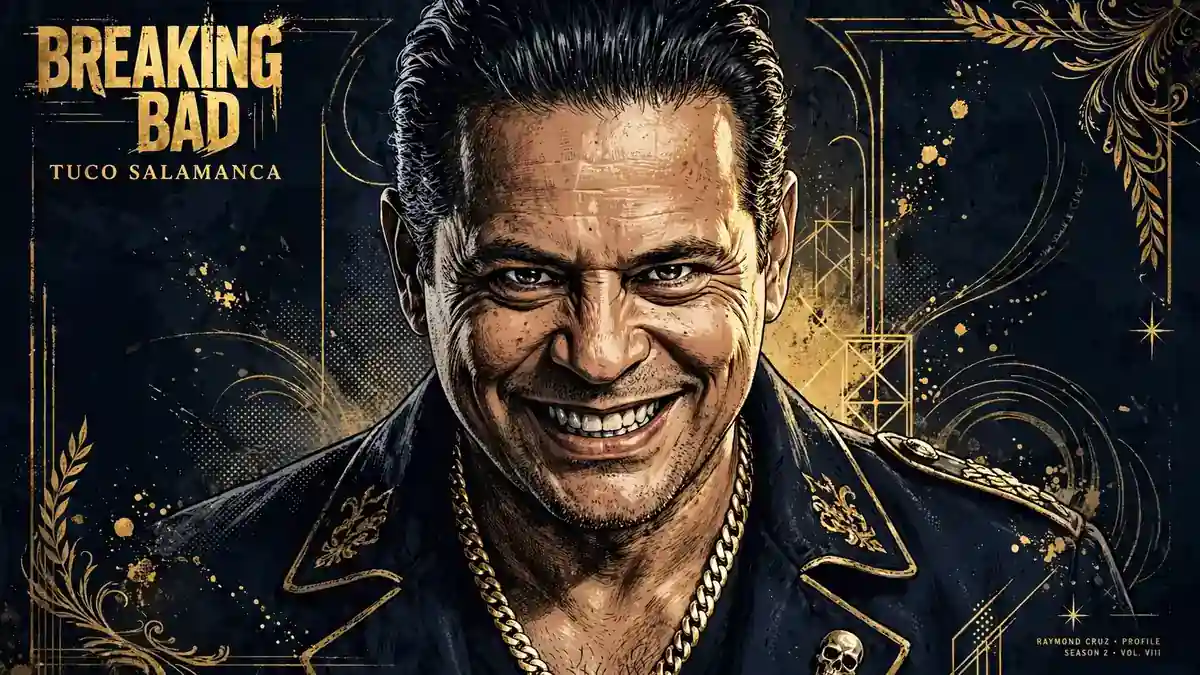
While The Closer was still running, the second half of the double act arrived. In 2008, Cruz was cast as Tuco Salamanca in AMC’s Breaking Bad, the volatile, unpredictable meth distributor who becomes Walter White’s first real brush with the criminal world. Tuco appeared in just four episodes across 2008 and 2009 — and died in the second season — yet the performance became one of the most quoted and imitated in the show’s history. Cruz played Tuco as pure live wire: laughing one second, reaching for a gun the next. The role earned him a permanent place in television history despite its brevity.
The logistics were punishing. As Cruz told The A.V. Club, he shot The Closer during the week in Los Angeles, flew to Albuquerque on Friday night, shot his Breaking Bad scenes on Saturday and Sunday, and flew back to Los Angeles for Monday. He did the same double duty again when Better Call Saul called him back as Tuco in 2015 and 2016, this time while Major Crimes was shooting. He appeared in three episodes of the prequel across its first two seasons, including the opening episodes that established the show’s debt to its parent series.
The two roles together explain why Cruz’s fame outruns his billing. Sanchez gave him 13 years of steady, respected work. Tuco gave him four episodes that millions of viewers can still picture frame by frame. One built the fortune; the other built the legend.
Main Sources of Income
Cruz’s money comes from one source above all others: acting, sustained over 39 years. There is no second career, no restaurant chain, no clothing line, and no public record of a production company. The wealth in this profile was built the old-fashioned way for a character actor — by working constantly, in long-running shows, and by holding on to the property bought with the early paychecks.
Television series salaries form the foundation. The 210 episodes of The Closer and Major Crimes represent 13 years of series-regular pay on a TNT drama, with the per-episode rate of a long-running cable procedural rising across seasons as the show proved itself. Cruz was a supporting player, not the lead — Kyra Sedgwick carried The Closer — so his checks were smaller than a star’s. But 210 episodes of anything is a fortune in aggregate, and the run gave him something rarer than a big check: 13 years without a gap in employment. In an industry where most actors spend months between jobs, that continuity is the single biggest fact in his financial story.
Residuals and syndication add a second layer. The Closer and Major Crimes stream on Max and air in repeats, Breaking Bad and Better Call Saul remain among the most rewatched dramas in streaming history, and Training Day, Clear and Present Danger, The Rock, and Alien Resurrection all still earn. Under SAG-AFTRA rules, actors receive residual payments when their work is re-aired or streamed, and a 210-episode catalog plus a role in the most binge-watched crime drama ever made produces a long tail of payments. No public figure exists for Cruz’s residual income, and we do not guess at one — but any estimate that ignored residuals would understate his earnings by a wide margin.
Film roles supplied the third stream. Cruz’s film career never delivered a leading-man payday, but it delivered dozens of supporting fees across studio pictures with real budgets: Clear and Present Danger, The Rock, Alien Resurrection, Training Day, Collateral Damage, and The Curse of La Llorona. The last of these is worth singling out, because it was the biggest box-office hit of his film career. Made for $9 million, The Curse of La Llorona grossed $123.1 million worldwide, and Deadline Hollywood calculated its net profit at $45.6 million once all revenues and expenses were counted. Cruz played Rafael Olvera, the former priest turned curandero who helps the family fight the spirit — a heroic, central role, and a long way from the one-scene gang member of his early years. The film sits inside the orbit of the Conjuring universe, produced by James Wan’s Atomic Monster, and its success returned Cruz to the role for the sequel The Revenge of La Llorona, listed as in post-production for a February 25, 2027 release. Vera Farmiga’s net worth shows what the Conjuring franchise did for its leading star; Cruz’s share of the same universe was smaller, but the film still put him on the biggest stage of his movie career at age 55.
Guest appearances and recurring television filled the remaining income. Before Sanchez, Cruz worked the guest-star circuit for two decades — 24, CSI, Nip/Tuck, My Name Is Earl, White Collar — and after Major Crimes ended he kept going: Get Shorty in 2018 and Mayans M.C. as Che “Padre” Romero, returning him to the biker-gang world that first made his name. Each booking was a fee, and together they form a steady floor under the headline roles.
Property appreciation is the quiet fourth stream, and it may be the most valuable single asset he owns. In 1997, Cruz paid $365,000 for a home in Silver Lake, Los Angeles. He has owned it for nearly three decades, and Celebrity Net Worth reports it has been valued at $2 million. News coverage of the September 2025 incident outside the house identified it as still his residence that year. A house bought for $365,000 and now worth around $2 million represents roughly $1.6 million of appreciation — more than half of the low end of his entire estimated net worth. It is the clearest proof in his story that the fortune was built by holding, not by spending.

Salary and Earnings
Here is the honest limit of the public record: no per-episode salary for Raymond Cruz has ever been published. TNT never disclosed cast pay for The Closer or Major Crimes, AMC never disclosed it for Breaking Bad or Better Call Saul, and no contract, filing, or interview puts a number on what Cruz earned per episode. Any article that prints a specific per-episode figure for him is inventing it. We will not.
What can be said with confidence is structural. Cruz spent 13 years as a series regular on two TNT procedurals. Cable drama supporting players with that tenure earn per-episode fees that rise with each season and each renegotiation, and a 210-episode run means those fees were collected more than two hundred times. The Breaking Bad work was different in kind: four episodes as a recurring guest star, paid at a guest rate, with the real value arriving later in the form of residuals and in the doors the role opened across his career. The same applies to his three Better Call Saul episodes. Tuco made Cruz famous; Sanchez paid the mortgage.
Film pay followed the same pattern. Cruz was a supporting player in studio films, not a star, so his fees were working-actor fees — solid, repeated, and supplemented by residuals as the films moved from theaters to cable to streaming. The exception that proves the rule is The Curse of La Llorona: a $9 million film that returned $123.1 million worldwide. Even a modest supporting fee on a film with that return on investment is a good day’s work, and the sequel booking that followed is worth more than any single check.
One more earnings fact deserves a place here because it separates Cruz from most actors with a similar resume: he never stopped. His IMDb profile lists 97 acting credits across 39 years, with work in every decade from the 1980s to the 2020s. There is no five-year gap, no comeback narrative, no period where the phone stopped ringing. For a character actor, that continuity is the salary story. The fortune is not one big payday. It is 39 years of paydays, almost none of them missed.
To put the scale in context, the table in the Net Worth Growth section below tracks the published estimates year by year. They cluster tightly — between $2 million and $4 million in nearly every tracker — which is itself a signal. When independent estimators using different methods land within a million dollars of each other, the range is probably close to the truth.
Businesses and Investments
Cruz has no public business empire, and that absence is itself a finding. A search of business reporting, interviews, and profiles turns up no restaurant, no production company, no clothing label, no tequila brand, and no tech investment attached to his name. He is not one of the actors who converted fame into a portfolio of companies. His investments, as far as the public record shows, are two: his craft, and his house.
The house is the investment that can be documented. The $365,000 Silver Lake purchase in 1997, held for 28 years and now valued near $2 million, is a textbook case of Los Angeles real estate doing the heavy lifting for a working actor’s balance sheet. Silver Lake was already a desirable neighborhood in 1997, and its values have climbed steadily since. Cruz bought early, stayed put, and never appears to have flipped, refinanced publicly, or traded up. That patience is worth more than any stock tip in his story: roughly $1.6 million of appreciation on a single purchase, tax-deferred until sale, on an asset he also lives in.
Beyond the house, there is no verifiable record of stock holdings, property portfolios, or business stakes. Some net-worth pages claim Cruz has “investments” and “business ventures” in the abstract, but none names a company, a deal, or a dollar figure, and we do not repeat claims that cannot be traced to a source. The same applies to endorsement income beyond the single documented commercial deal discussed in the next section. If Cruz holds private investments, they are private — and an honest estimate says so rather than dressing up silence as a portfolio.
That conservatism fits the rest of his public life. Cruz does not live as a celebrity spender. There are no stories of supercar collections, no yacht coverage, no jewelry-heavy red carpet appearances. The one big purchase on the record is a house bought in 1997 and kept. The financial portrait that emerges is of a man who earned steadily, spent modestly, and let time and Los Angeles real estate do the compounding.
Brand Deals and Sponsorships
Cruz has exactly one documented brand deal of any size: a commercial for PopCorners, in which he reprised Tuco Salamanca for the snack brand. The spot leaned on the Breaking Bad connection directly — Tuco, back on screen, selling popcorn — and it showed how durable the character had become. More than a decade after Tuco’s death on the show, an advertiser was willing to pay to bring him back.
Beyond PopCorners, there is no record of endorsement deals, sponsored posts, or brand partnerships. Cruz does not maintain a public influencer presence, and his name does not appear in endorsement databases or advertising trade coverage. That is consistent with his career shape: he is a character actor famous for two specific roles, not a lifestyle celebrity with a sellable personal brand. Advertisers buy reach and aspiration; Cruz’s fame is intensity and menace, which sells popcorn once but does not sustain a sponsorship portfolio.
The PopCorners spot is still worth noting for what it proves about the value of Tuco. A four-episode role from 2008–2009 generated a paid commercial reprisal years later. That is the kind of long-tail value that residuals alone do not capture, and it is a reason the $3 million to $4 million range holds up: the fame keeps paying, in small amounts, long after the episodes aired.
Houses, Cars and Other Assets
The Silver Lake house is the centerpiece of Cruz’s asset list, and it is the only property with a documented paper trail. Celebrity Net Worth reports that Cruz paid $365,000 for the home in 1997 and has owned it ever since, with the property valued at around $2 million in recent years. The house sits in Silver Lake, the hillside Los Angeles neighborhood east of Hollywood that has become one of the city’s most expensive enclaves. News coverage of the September 2025 incident outside the home — Cruz was washing his car in front of the house when the dispute began — confirms it was still his residence 28 years after the purchase.
That single fact carries most of the weight in this section. A $365,000 purchase now valued near $2 million means the house alone accounts for roughly half of his estimated net worth at the low end of the range. It also explains why the estimates cluster where they do: take the house at $2 million, add 39 years of acting income minus a modest lifestyle, and $3 million to $4 million is the shape that emerges.

No second property is documented. No reporting links Cruz to additional homes, rental properties, or land holdings, and we do not list any. Cars are the same story: the September 2025 reports describe him washing a car outside his Silver Lake home, but no source identifies the make, model, or value, and no car collection has ever been reported. We will not invent a garage. The honest asset list is short: one house, held for a long time, in a neighborhood that rewarded patience.
Other assets are the ordinary ones of a working actor: residual streams from a large catalog of television and film work, SAG-AFTRA pension and health benefits earned across 39 years of union work, and the ongoing value of the Tuco and Sanchez roles as rewatchable, licensable performances. None of these can be valued from public sources, and none is counted separately in our estimate. They are part of the reason the range is a range.
Awards and Achievements
Cruz has no major award wins on his record — no Emmy, no Golden Globe, no Screen Actors Guild Award — and no record of a major nomination either. That sentence will surprise readers who know Tuco Salamanca, because the performance feels like award work. It is not, by the record, and saying so plainly is part of taking this actor seriously. Awards follow leads and campaigns; Cruz built his career as a supporting player, and supporting players in cable procedurals rarely reach the podium.
What he does have is a different kind of achievement, and it is rarer than a trophy. He played one character, Detective Julio Sanchez, for 13 years and 210 episodes across two series — a run of continuity that very few actors in television history can claim. He created a second character, Tuco Salamanca, in four episodes, who became one of the defining villains of the prestige-TV era and who was brought back for the prequel, for a commercial, and for endless parody and homage. He worked steadily for 39 years, across film and television, in English and Spanish, as a soldier, a cop, a gang member, a priest, and a detective.
The critical record backs the achievement. The A.V. Club’s 2015 profile called him an “overall badass” and praised the range between Sanchez and Tuco. Smashing Interviews Magazine’s 2015 interview centered on the “huge payoff” his character received in Major Crimes. The Breaking Bad role is cited in nearly every retrospective of the show’s first two seasons. None of that is a trophy. All of it is a legacy, and for a character actor, legacy is the award that pays.
His filmography also carries a quiet distinction: he has worked with directors and co-stars at the top of the industry — Harrison Ford in Clear and Present Danger, Denzel Washington and Ethan Hawke in Training Day, Michael Bay’s orbit in The Rock, James Wan’s production company on The Curse of La Llorona — without ever becoming a tabloid figure. The work, not the noise, is the achievement.
Net Worth Growth Over the Years
The published estimates for Cruz have barely moved in three years, and that stability is informative. This is not a fortune that doubled on a single deal. It is a fortune that crept upward as a house appreciated and a catalog kept earning.
| Year | Published estimate | Source | What changed |
|---|---|---|---|
| 2023 | $2 million to $4 million | Celebrity Birthdays ($2M); Biography Tribune (over $4M, Sept 2023) | Estimators split between $2M and $4M; Major Crimes residuals and La Llorona earnings in the catalog |
| 2024 | $2 million to $5 million | Net Worth List ($2M); TheMost10 ($5M, 2025 table) | Outlier $5M figure appears with no sourcing; low-end trackers unchanged at $2M |
| 2025 | $3 million to $4 million | DailyWikiBio ($3M–$4M, updated Oct 2025) | Estimates tighten; September 2025 arrest and October charge decision bring fresh coverage but no financial impact |
| November 2026 | $3 million to $4 million | Celebrity Net Worth ($3M, updated ~Oct 2026); DailyWikiBio ($3M–$4M) | Best-sourced current estimates agree on $3M–$4M; house valued near $2M |
The $35 million figure that appears on one content-farm page deserves a direct answer, because a reader may find it first. It is not supported by any named source, any filing, or any reporting, and it contradicts every other tracker by a factor of ten. It appears on a low-quality page that also misstates basic facts about Cruz’s career. We treat it as a fabricated outlier and exclude it from the range.
The long-run test puts Cruz’s career in perspective. Signature television roles are measured in episodes, and on that measure his Sanchez run stands apart even from the stars of his own shows:
| Actor | Signature TV role | Episodes in the role | Span |
|---|---|---|---|
| Raymond Cruz | Detective Julio Sanchez, The Closer / Major Crimes | 210 | 2005–2018 |
| Raymond Cruz | Tuco Salamanca, Breaking Bad / Better Call Saul | 7 | 2008–2016 |
| Bryan Cranston | Walter White, Breaking Bad | 62 | 2008–2013 |
| Aaron Paul | Jesse Pinkman, Breaking Bad | 62 | 2008–2013 |
The contrast is the point. Cranston and Paul carried 62 episodes each as leads. Cruz carried 210 as a supporting player, then added seven episodes that made him just as famous. Longevity, not billing, built his fortune — and longevity is the one asset in this profile that no estimator disputes.
Social Media Presence
Cruz keeps a low public profile online, and our research found no verified public Instagram, X, or TikTok account that can be confidently attributed to him. Fan pages and clip accounts exist for Tuco Salamanca and for Breaking Bad generally, but those are not Cruz’s accounts, and we do not link them as if they were.
That absence is consistent with everything else about him. He does not court attention, does not post about his personal life, and does not use social media to promote projects. His public presence runs through his work: the episodes, the films, and the occasional interview, such as the 2015 conversations with The A.V. Club and Smashing Interviews Magazine. For a net-worth profile, the practical consequence is simple: there is no social-media income stream to count. No sponsored posts, no brand partnerships conducted through a feed, no follower count to monetize. The PopCorners commercial remains the only documented brand payment, and it came through traditional advertising, not a social channel.
Readers looking for Cruz online will find his IMDb profile, his Wikipedia entry, and extensive coverage of his roles. What they will not find is a daily feed. In an era when many actors treat their accounts as a second career, Cruz’s silence is itself a statement about where his money comes from: the work, not the audience.
Personal Life
Cruz is married to actress Simi Cruz, née Mehta. The couple met on the set of The X-Files in 1997, when Simi appeared in the episode “El Mundo Gira” and Cruz played Eladio Buente. They married in a small private ceremony on July 17, 2000, attended by family and friends, according to biographical profiles. Simi has six acting credits, best known for the 1998 film Phoenix, and is described in profiles as an actress turned yoga instructor and entrepreneur. The couple has no children.
One correction matters here. Some low-quality pages describe Simi as Cruz’s “ex-wife.” The better-sourced profiles, including Wikipedia and Biography Tribune, list her as his current wife, and there is no credible reporting of a divorce. We treat the “ex-wife” label as an error from content-farm pages and do not repeat it.
Cruz’s private life is otherwise guarded. He does not discuss his family in interviews, and no reliable profile names his parents or siblings. The one public episode that broke that privacy came in September 2025, and it deserves a careful account because it was widely reported and widely misunderstood.
On the morning of September 8, 2025, Cruz was washing his car outside his Silver Lake home when a dispute began with women in a nearby vehicle over parking and space. TMZ first reported that Cruz allegedly sprayed water from a garden hose at three women in a minivan; the Los Angeles Police Department confirmed officers responded to a call about an alleged battery at about 10:40 a.m. Cruz was arrested on suspicion of misdemeanor battery, booked, and released on his own recognizance the same day after about five hours. His agent, Raphael Berko, told People the accusation was “outrageous” and said Cruz had been harassed while washing his car. A court date was set for October 1, 2025.
On October 1, 2025, the Los Angeles City Attorney’s Office declined to file any criminal charges, a decision reported by MyNewsLA and confirmed to Entertainment Weekly by a spokesperson for the office. No reason was given for the decision. The case ended there: an arrest, a release, and no charges. We include it because readers searching Cruz’s name in 2026 will find the arrest headlines, and a profile that omitted the outcome would leave them with the wrong impression. The incident had no reported financial consequence — no fine, no settlement, no career interruption — and it does not change the net-worth estimate.
As of November 2026, Cruz’s reported upcoming work includes The Revenge of La Llorona, in post-production for release on February 25, 2027, and the film Anabios (2026). Biographical profiles also report him shooting the films Serpentine and Alien Vacation and the series The Eddie Files, though those projects have no confirmed release dates in the sources we reviewed. At 62, with a 39-year career behind him, he is still working — which is the most reliable predictor of where the estimate goes next.
Sources & Reporting
How this article was reported. Research was conducted in November 2026 from live search results and the sources below. Every money figure traces to a named outlet or is labeled an estimate. Where sources disagree, the article publishes the range and names who says what. No per-episode salary for Cruz exists in the public record, and none is printed here.
Celebrity Net Worth — the $3 million estimate, updated about a month before this article, plus the Silver Lake house purchase price of $365,000 in 1997, the current valuation near $2 million, and the 210-episode count for Sanchez.
Wikipedia — birth date of September 10, 1964, the East Los Angeles upbringing, the full filmography and television credits, the 105-episode counts for each series, and the September 2025 arrest with the October 2025 decision to drop charges.
The A.V. Club — the 2015 interview in which Cruz described his weekend commute between The Closer and Breaking Bad, and the comparison of Sanchez and Tuco as opposite poles of his range.
Smashing Interviews Magazine — the 2015 interview on the Major Crimes payoff for Sanchez, and the full list of Cruz’s film and television credits to that date.
MyNewsLA — the September 9, 2025 arrest report and the October 1, 2025 report that the Los Angeles City Attorney declined to file charges.
Entertainment Weekly — confirmation from the Los Angeles City Attorney’s Office that no charges would be filed, as reported through FemaleFirst.
TMZ — first report of the September 8, 2025 arrest, as cited by TV Insider and other outlets.
People — the account of the arrest and the statement from Cruz’s agent Raphael Berko, as reported through Men’s Journal.
Box Office Mojo and The Numbers — the $123.1 million worldwide gross for The Curse of La Llorona against a $9 million budget.
Deadline Hollywood — the calculation of The Curse of La Llorona‘s net profit at $45.6 million.
DailyWikiBio — the $3 million to $4 million estimate for 2025, the 1987–present career span, and the marriage details.
Biography Tribune — the estimate of over $4 million as of September 2023, the height of 5 feet 6 inches, and the reported upcoming projects Serpentine, Alien Vacation, and The Eddie Files.
Net Worth List — the low-end $2 million estimate that anchors the bottom of the published range.
Reporting window: November 2026. Figures are estimates as of that date and will be corrected when new evidence emerges.
Frequently Asked Questions
What is Raymond Cruz’s net worth in 2026?
Raymond Cruz’s net worth is estimated at $3 million to $4 million as of November 2026. Celebrity Net Worth lists $3 million in its most recent update, while DailyWikiBio puts the figure between $3 million and $4 million. Lower-end trackers still list $2 million, and one outlier claims $5 million. The range reflects a 39-year acting career, 210 episodes as Detective Julio Sanchez, and a Silver Lake house bought for $365,000 in 1997 and now valued near $2 million.
How old is Raymond Cruz?
It depends on which birth date you trust. Wikipedia’s current entry lists September 10, 1964, which would make him 62 in November 2026. Many older sources list July 9, 1961, which would make him 65. The 1964 date is the one Wikipedia now carries, so this article uses it and flags the older date rather than hiding the disagreement.
Who is Raymond Cruz’s wife?
Raymond Cruz is married to Simi Cruz, née Mehta, an actress turned yoga instructor. They met on the set of The X-Files in 1997 and married in a small private ceremony on July 17, 2000. They have no children. Some low-quality pages wrongly call her his ex-wife; the better-sourced profiles list her as his current wife.
How many episodes of The Closer and Major Crimes did Raymond Cruz appear in?
He appeared in 105 episodes of The Closer (2005–2012) and all 105 episodes of Major Crimes (2012–2018), for a combined 210 episodes as Detective Julio Sanchez over 13 years. He was recurring in the first two seasons of The Closer and a main cast member from season three onward.
Was Raymond Cruz arrested in 2025?
Yes. On September 8, 2025, Cruz was arrested on suspicion of misdemeanor battery after allegedly spraying water from a garden hose at women outside his Silver Lake home during a dispute while he washed his car. He was released on his own recognizance the same day. On October 1, 2025, the Los Angeles City Attorney’s Office declined to file any criminal charges. No fine, settlement, or career interruption followed.
What is Raymond Cruz doing now?
As of November 2026, Cruz is reported to be returning as Rafael Olvera in The Revenge of La Llorona, in post-production for release on February 25, 2027, and appearing in the film Anabios (2026). Profiles also report him shooting the films Serpentine and Alien Vacation and the series The Eddie Files, though none has a confirmed release date yet.
How tall is Raymond Cruz?
Raymond Cruz is listed at 5 feet 6 inches (1.68 m) by Biography Tribune, while other profiles give 5 feet 7 inches (1.70 m). This article gives the range of 5 feet 6 inches to 5 feet 7 inches, since no single measurement is confirmed by a primary source.
How much did Raymond Cruz make from Breaking Bad?
No per-episode salary for Cruz’s Breaking Bad work has ever been published, and this article does not print one. He appeared in four episodes as Tuco Salamanca in 2008–2009 and three episodes of Better Call Saul in 2015–2016, paid at a guest-star rate, with residuals continuing as the shows stream. The real financial value of Tuco was the fame it created: it led to the PopCorners commercial reprisal and kept Cruz in demand, while the 210 episodes of The Closer and Major Crimes provided the steady income.
Final Thoughts
Raymond Cruz’s net worth of $3 million to $4 million is not a story of one big break. It is the story of a working actor who never stopped working: 39 years, 97 credits, 210 episodes in one role, and seven episodes in another that made him famous around the world. The house he bought in 1997 for $365,000 and still owns, now valued near $2 million, did as much for his balance sheet as any single job.
The numbers in this profile are modest by celebrity standards, and that is the point. Cruz never chased a brand empire, never cashed in on a lifestyle following, and never landed a leading-man payday. He built his fortune the way character actors always have: by showing up, by being good enough that directors called again, and by staying in one role long enough for the checks and the residuals to compound. Tuco Salamanca gave him immortality in four episodes. Julio Sanchez gave him 13 years of mortgage payments. Together they explain every dollar in the estimate — and they explain why, at 62, with a sequel on the way, the estimate is more likely to rise than to fall.
Published on 2026-11-15. Last reviewed November 2026. Found an error? See our corrections policy.