
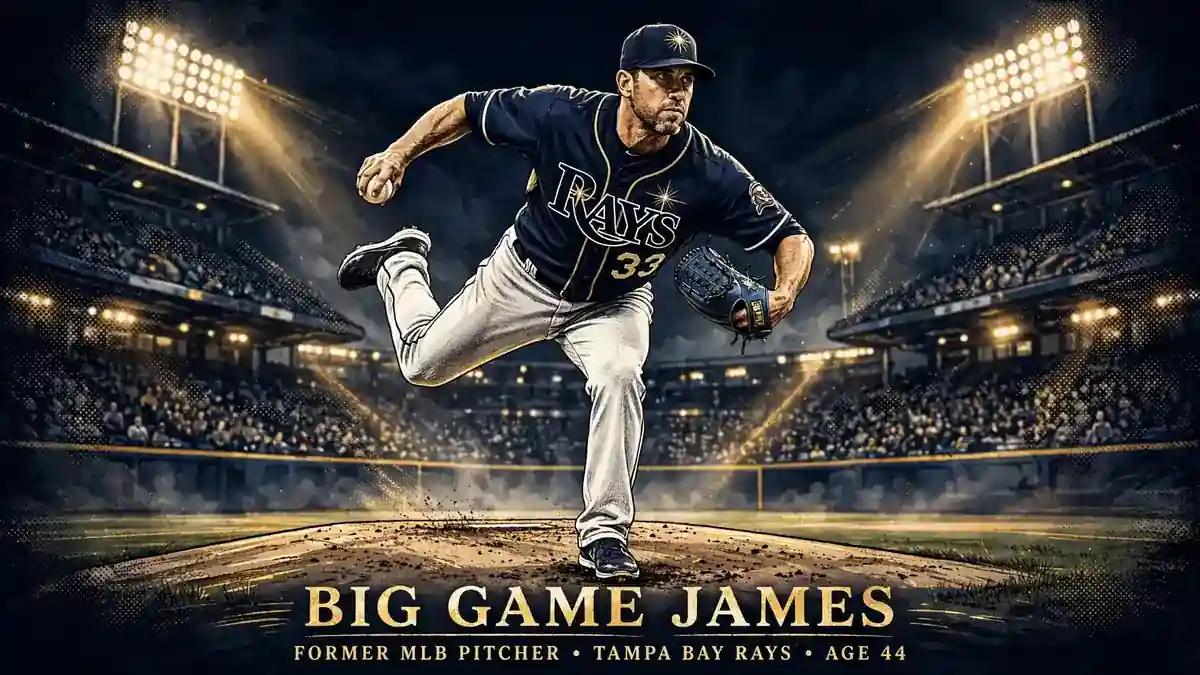
James Shields‘s net worth is estimated at $40 million to $45 million as of November 2026. The former Major League Baseball pitcher known as “Big Game James” banked $116.1 million in salary across 13 big-league seasons, signed a four-year, $75 million contract with the San Diego Padres in 2015, and in March 2026 listed the custom Rancho Santa Fe estate he built with his wife for $23 million. Celebrity Net Worth, which refreshed its Shields page in March 2026, puts the figure at $45 million; older estimates ranged from $38 million to $40 million, which is why this article carries a range rather than a single number.
James Shields: Quick Facts
| Estimated net worth | $45 million (range: $40 million to $45 million) |
|---|---|
| Profession | Former Major League Baseball starting pitcher |
| Nationality | American |
| Born | December 20, 1981 (age 44) |
| Height | 6 feet 3 inches |
| Primary income sources | MLB salaries and bonuses, real estate development |
| Active years | 2006–2018 (MLB); formally retired 2022 |
| Last reviewed | November 2026 |
- Early Life and Background
- Education
- Career Journey
- Rise to Fame
- Main Sources of Income
- Salary and Earnings
- Businesses and Investments
- Brand Deals and Sponsorships
- Houses, Cars and Other Assets
- Awards and Achievements
- Net Worth Growth Over the Years
- Social Media Presence
- Personal Life
- Sources & Reporting
- Frequently Asked Questions
Early Life and Background
James Anthony Shields was born on December 20, 1981, in Newhall, California, a community in the Santa Clarita Valley north of Los Angeles. He grew up there with two older brothers, in a household where baseball was a constant. Newhall in the 1980s and 1990s was a working-class suburb with strong youth baseball leagues, and Shields came up through that system rather than through a private academy or a showcase circuit. The path mattered later: Shields was never the hardest thrower of his generation, and his career was built on command, a changeup he refined for years, and a willingness to take the ball every fifth day.
Shields attended William S. Hart High School in Newhall, where he pitched well enough to draw professional attention without becoming a first-round name. The Tampa Bay Devil Rays selected him in the 16th round of the 2000 amateur draft — the 466th overall pick, a slot where most selections never reach the majors. Celebrity Net Worth’s earnings table records a $200,000 signing bonus for 2000, the first money of a career that would eventually pay more than $116 million. A 16th-round pick signing for $200,000 is a modest start by baseball standards, and it frames everything that followed: Shields earned his money by outlasting pitchers drafted far ahead of him.
His first taste of professional ball went well. Shields pitched effectively at Class-A level in 2001, and the Rays had reason to think they had found a steal. Then his shoulder gave out. He underwent serious shoulder surgery and missed the entire 2002 season, a setback that ends many young pitching careers before they start. Shields was 20 years old, a year removed from organised baseball, with a repaired shoulder and no guarantee the arm would hold. He rebuilt his mechanics in rehab, leaned harder on his changeup — a pitch that asks less of the shoulder than a max-effort fastball — and returned to climb the minor-league ladder one level at a time: Hudson Valley, Charleston, Bakersfield, Montgomery and Durham. He spent five full seasons in the minors before his call-up, a slow apprenticeship that explains the polish he showed as a rookie.
One family detail runs through his story. Shields is the first cousin of former MLB outfielder Aaron Rowand, a World Series winner with the Chicago White Sox in 2005 and a 2007 All-Star. Rowand reached the majors first, and the two cousins shared the unusual experience of growing up in the same extended family and both making it to the highest level of the sport. Shields has rarely talked about the connection at length, but it is one more thread in a career shaped by family and by the Santa Clarita baseball community.
Education
Shields finished his schooling at Hart High School in Newhall and signed with the Devil Rays straight out of high school, so he never played college baseball. That is worth stating plainly because it shaped his earnings curve: unlike a college pitcher who signs at 21 or 22 with a degree in hand, Shields entered professional baseball at 18 and spent his early twenties earning minor-league wages while his draft classmates went to university. The trade-off paid off only because he survived the shoulder surgery and kept developing.
His real education happened in the minor leagues. Between 2000 and 2006, Shields learned the craft that carried him: a fastball that sat in the low 90s, a curveball, and a changeup that became his signature pitch. Pitching coaches in the Rays system worked with him on sequencing — using the changeup to keep hitters off the fastball — and on the durability habits that later defined him: a repeatable delivery, a strict between-starts routine, and a refusal to come out of games early. By the time he reached Triple-A Durham in 2006, he was a finished product rather than a project, and the Rays called him up on May 31, 2006, at age 24.
Shields later put his name to a book, September Nights, written with Tampa Bay sports writer Bill Chastain. The book, a novel set around baseball, is a small part of his post-playing income, but it says something about how he spent his education: he learned the game from the inside, as a pitcher who had to think his way through lineups, and he stayed close to writing about it after he stopped playing.
Career Journey
Shields made his MLB debut on May 31, 2006, for the Tampa Bay Devil Rays. He went 6–8 with a 4.84 ERA in 21 starts as a rookie, ordinary numbers that hid a useful sign: he threw 124.2 innings in those 21 starts, nearly six innings per outing, and the Rays could see a starter who would give them length. In 2007 he broke out, going 12–8 with a 3.85 ERA across 215 innings in 31 starts. The Devil Rays were still a last-place club, but Shields had become the most reliable arm on the staff, and his durability was already drawing notice — only four other pitchers accumulated more innings than Shields from 2007 to 2012.
The 2008 season changed the franchise and Shields’s standing in it. The Rays dropped “Devil” from their name, won 97 games, and reached the World Series for the first time. Shields went 14–8 with a 3.56 ERA in 215 innings, then won Game 2 of the World Series against the Philadelphia Phillies — the first World Series game ever won by a Tampa Bay pitcher. The Rays lost the series in five games, but Shields had pitched in the sport’s biggest showcase at 26 and delivered. After the season, with less than two full years of major-league service behind him, the Rays signed him to a four-year, $11.25 million extension with three club options and performance bonuses that could have stretched the deal to seven years and more than $44 million. It was a team-friendly contract by design: Tampa Bay locked up a durable starter at a discount, and Shields took guaranteed money early rather than betting on free agency.
He rewarded the deal with volume. In 2009 he went 11–12 with a 4.14 ERA in 219.2 innings. In 2010 came the worst season of his career: 13–15 with a 5.18 ERA, the fourth-highest ERA among qualifying starters, and a league-leading 246 hits and 117 earned runs allowed. A pitcher coming off a season like that usually loses his rotation spot or his bargaining position. Shields answered with the best season of his life, which is covered in detail below. He followed it in 2012 with a 15–10 record, a 3.52 ERA and 223 strikeouts in 227.2 innings, and by then the Rays faced a familiar small-market choice: pay a 31-year-old starter market money, or trade him for prospects while his value was high.
They traded him. On December 9, 2012, Shields and pitcher Wade Davis went to the Kansas City Royals for a package headlined by Wil Myers — then baseball’s top prospect — plus Jake Odorizzi, Mike Montgomery and Patrick Leonard. It was one of the most debated trades of the decade: Kansas City was trading the future for the present, and Shields was the present. The Royals exercised his $13.5 million club option for 2014 on October 31, 2013, and he gave them two seasons of exactly what they paid for: 13–9 with a 3.15 ERA in 228.2 innings in 2013, then 14–8 with a 3.21 ERA in 227 innings in 2014, when Kansas City reached the World Series for the first time in 29 years. Shields started Game 1 of that World Series against the San Francisco Giants. The Royals lost in seven games, and Shields became a free agent that winter having pitched in two World Series with two different clubs.
Free agency delivered his biggest payday. On February 11, 2015, the San Diego Padres signed Shields to a four-year, $75 million contract with a $16 million club option for 2019 or a $2 million buyout — the largest free-agent deal in Padres history at the time. The structure paid him $10 million in 2015 and $21 million in each of 2016, 2017 and 2018. He declined a $15.3 million qualifying offer from the Royals to take it. In his one full season in San Diego he went 13–7 with a 3.91 ERA and 216 strikeouts in 202.1 innings, the eighth straight season in which he topped 200 innings. Then, on June 4, 2016, the Padres traded him to the Chicago White Sox for pitcher Erik Johnson and 17-year-old shortstop prospect Fernando Tatís Jr. — a name that would later become one of the biggest in the sport. San Diego agreed to pay $30,770,492 of the money still owed on Shields’s contract, including $8,770,492 in 2016 and $11 million in each of 2017 and 2018, which left Chicago paying only about $10 million a season for a pitcher earning $21 million.
Chicago was the hard chapter. Shields went 4–12 with a 6.77 ERA in 114.1 innings for the White Sox in 2016, finishing the year 6–19 with a 5.85 ERA overall and tied for the major-league lead in losses. He declined to opt out of his contract that October — a rational financial call, with $44 million still guaranteed — and kept pitching. Injuries limited him to 21 starts and 117 innings in 2017, when he went 5–7 with a 5.23 ERA. In 2018, his final season, he made 34 starts and threw 204.2 innings, going 7–16 with a 4.53 ERA. His last MLB appearance came on September 25, 2018, for the White Sox. The White Sox declined his 2019 option and paid the $2 million buyout. Shields stepped away, tried to rehab his shoulder, and formally announced his retirement in March 2022. On March 30, 2023, more than a decade after his last pitch for Tampa Bay, he returned to Tropicana Field to throw out the ceremonial first pitch on Opening Day as the Rays symbolically retired him as a Ray. ESPN noted at the time that he still ranked as Tampa Bay’s all-time leader in starts (217) and wins (87).
Rise to Fame
The nickname came first, then the season that earned it. “Big Game James” stuck because Shields pitched his best when the stakes were highest — the 2008 World Series win, the pennant race starts in Kansas City, the complete games in September when the Rays were chasing a playoff spot. Nicknames in baseball are usually handed out by teammates and rarely survive contact with a bad season. This one survived because Shields kept backing it up with innings.
The season that made him a star was 2011. Shields went 16–12 with a 2.82 ERA in 33 starts, threw a career-high 249.1 innings, struck out 225 batters, and led the major leagues with 11 complete games — the most by any pitcher in 12 years — including four shutouts. Only Roy Halladay had more than six complete games that season; he finished with eight. Shields finished third in American League Cy Young voting, behind Justin Verlander and Jered Weaver, and made his only All-Star team. The Tampa Bay chapter of the Baseball Writers’ Association of America named him the Rays’ Most Valuable Player for 2011. The turnaround from 2010 was stark: his ERA fell by 2.36 runs in a single year, from 5.18 to 2.82, and he went from leading the league in hits allowed to leading it in complete games.
Durability was the skill that separated him from other good pitchers of his era. Shields threw at least 200 innings in eight consecutive seasons, from 2007 through 2014, and finished his career with 2,616 innings across 407 games, 405 of them starts. His career line reads 145–139 with a 4.01 ERA and 2,234 strikeouts. The win total deserves a note: several low-quality net-worth sites credit him with 155 wins, which is wrong. Baseball-Reference, StatMuse and Wikipedia all record 145 wins against 139 losses. The same sites that inflate his wins also inflate his career earnings — one puts the figure at $141 million, against the $116,094,900 that the year-by-year contract record supports. Both errors trace to the same habit: copying a number without checking it against the contract table.
His peak also explains why the Royals paid what they did. When Kansas City traded for Shields in December 2012, it was buying a pitcher who had just thrown 227.2 innings with a 3.52 ERA and 223 strikeouts, and who had made 33 starts in six straight seasons. The Royals were a franchise that had not reached the playoffs since 1985, and Shields’s reputation — a veteran who took the ball every fifth day and steadied a young rotation — was the point of the deal as much as his arm. His teammate Eric Hosmer, then a 23-year-old first baseman, played alongside Shields on the 2013 and 2014 Royals teams that ended the playoff drought and reached the 2014 World Series. Shields started Game 1 of that series, and even in defeat he gave Kansas City what it had traded for: a frontline starter on the biggest stage.
Main Sources of Income
Shields’s fortune is unusually simple for a modern athlete: almost all of it came from his playing contracts. His $116,094,900 in career salary and bonuses accounts for the overwhelming share of his wealth, and there is no public record of a second income stream anywhere near that scale. That simplicity is itself a finding. Unlike NBA or NFL stars of the same era, a starting pitcher in the 2000s and 2010s did not command a large endorsement portfolio, and Shields — a low-profile, team-first pitcher on small-market clubs for most of his career — never chased one.
The money arrived in three waves. The first was the Rays extension and options, worth roughly $40.5 million in total once all three club options were exercised, covering 2009 through 2014 at salaries that climbed from $1.5 million to $13.5 million. The second was the Padres contract, $75 million over four years, which supplied $63 million of his career pay in just four seasons and pushed his annual earnings to $21 million in 2016, 2017 and 2018. The third, much smaller wave was the $2 million buyout the White Sox paid when they declined his 2019 option. His early-career pay was modest by comparison: a $200,000 signing bonus in 2000, then league-minimum scale salaries through his first two big-league seasons, with his first seven-figure salary — $1 million — arriving in 2008, his third season.
After baseball, the income picture changed shape rather than scale. Shields and his wife moved into real estate development, designing and building their own Rancho Santa Fe estate and acquiring properties in Teton County, Idaho, where they plan further development work. The Rancho Santa Fe project is both a home and an investment: the couple bought the lot for $1.8 million, spent about three years building a 13,500-square-foot house on it, and listed it in 2026 for $23 million — a paper gain of more than $21 million before construction costs, which were substantial and are not public. His book, September Nights, adds a small royalty stream. There is no public record of Shields holding equity in a startup, launching a brand, or taking a broadcasting job, and this article does not invent one. His post-playing wealth rests on the money he banked as a player and the property he built with it.
One more income detail is worth recording because it shows how baseball contracts actually work. When San Diego traded Shields to Chicago in June 2016, the Padres kept paying most of his salary — $30,770,492 in total. Shields’s pay did not change; only the team writing the cheques did. That arrangement is common in MLB trades involving large contracts, and it meant the White Sox got a $21-million-a-year pitcher for roughly $10 million a year while the Padres paid for a player no longer on their roster. For Shields, the trade changed his uniform and his ERA, not his bank balance.
Salary and Earnings
The year-by-year record below comes from Celebrity Net Worth’s contract table, published in its March 2026 update of Shields’s page, and it matches the contemporary reporting of his two big contracts. The figures are cash earnings per season, including bonuses, and they sum to $116,094,900. Two notes on the table: the 2000 figure is his signing bonus, and his 2006 rookie salary at league-minimum scale is not itemised in Celebrity Net Worth’s table, so the season-by-season list starts with the bonus year and resumes in 2007. The total is the figure Celebrity Net Worth states, and it lines up with the contract reporting from the Rays extension and the Padres deal.
| Year | Team | Cash earnings |
|---|---|---|
| 2000 | Tampa Bay (signing bonus) | $200,000 |
| 2007 | Tampa Bay Devil Rays | $394,900 |
| 2008 | Tampa Bay Rays | $1,000,000 |
| 2009 | Tampa Bay Rays | $1,500,000 |
| 2010 | Tampa Bay Rays | $2,500,000 |
| 2011 | Tampa Bay Rays | $4,250,000 |
| 2012 | Tampa Bay Rays | $7,500,000 |
| 2013 | Kansas City Royals | $10,250,000 |
| 2014 | Kansas City Royals | $13,500,000 |
| 2015 | San Diego Padres | $10,000,000 |
| 2016 | San Diego Padres / Chicago White Sox | $21,000,000 |
| 2017 | Chicago White Sox | $21,000,000 |
| 2018 | Chicago White Sox | $21,000,000 |
| 2019 | Buyout (option declined) | $2,000,000 |
| Career total | $116,094,900 |
The shape of that table tells the story of his career. For his first six big-league seasons, Shields earned a combined $16.6 million — good money, but the pay of a cost-controlled starter on a small-market team. Then the options and free agency kicked in: $10.25 million in 2013, $13.5 million in 2014, and $63 million across the four Padres years. His three peak seasons, 2016 through 2018, each paid $21 million, more than his entire 2007–2012 earnings combined. The $2 million buyout in 2019 closed the ledger.
How does $116.1 million in gross pay become a $40 million to $45 million net worth? The honest answer is that nobody outside Shields’s household knows the exact split, and this article will not pretend otherwise. The standard drains on an MLB salary apply: federal and state income tax on earnings in multiple states, agent commission (typically around 3 to 5 percent in baseball), union dues, and living costs across a 13-year career that included homes in Florida, Kansas City, San Diego and Chicago. Against those outflows sit two big offsets: Shields played his peak-earning years in his thirties, when a veteran with a family tends to save rather than spend at a rookie’s pace, and his largest asset — the Rancho Santa Fe estate — appreciated sharply. Celebrity Net Worth’s $45 million figure and BaseballBiographies’ $30 million to $45 million range both sit in the same zone, and our $40 million to $45 million range reflects that agreement while leaving room for the uncertainty in the property’s final sale price.
It is also worth placing his contracts beside the two pitchers he was measured against in the winter of 2014–15. When Shields hit free agency after the 2014 season, Max Scherzer signed a seven-year, $210 million deal with the Washington Nationals and Jon Lester signed a six-year, $155 million deal with the Chicago Cubs, while Shields settled for four years and $75 million from San Diego. The gap reflected age — Shields was 33, Scherzer 30 and Lester 31 — and perceived upside, not durability: Shields had thrown more innings than either of them over the previous eight seasons. The Padres deal was still the largest free-agent contract in franchise history at the time, and it remains the single biggest paycheque of Shields’s life.
| Pitcher | Free-agent deal (winter 2014–15) | Length |
|---|---|---|
| Max Scherzer | $210 million (Washington Nationals) | 7 years |
| Jon Lester | $155 million (Chicago Cubs) | 6 years |
| James Shields | $75 million (San Diego Padres) | 4 years |
One contract detail from the Rays years deserves attention because it shows how much money Shields left on the table early. The four-year, $11.25 million extension he signed after the 2008 season contained three club options for 2012, 2013 and 2014. The Rays exercised all three, paying him $7.5 million, $10.25 million (after the trade, by Kansas City) and $13.5 million in those seasons, for a total deal value of about $40.5 million. Had Shields reached free agency after 2008 instead of signing, a durable 27-year-old starter coming off a World Series run would likely have commanded far more. He traded upside for security at 27, then made it back — and more — with the Padres deal at 33.
Businesses and Investments
Shields has no public portfolio of startups, restaurants or equity stakes, and this section says so rather than filling the gap with guesswork. What he does have is a genuine second act in property. He and his wife Ryane, a photographer, spent years designing and building their Rancho Santa Fe home from scratch, acting as their own developers: they bought the lot, hired the architects and builders, and made the design decisions themselves, from the baseball-diamond shape of the parcel to the photography studio built into the house for Ryane’s work. That is development in the literal sense, and it is the business Shields has actually done since baseball.
The family’s next chapter points the same way. Reporting on the Rancho Santa Fe listing in 2026 — in Celebrity Net Worth, Homes.com and the Wall Street Journal coverage those outlets cite — says the Shields family is shifting its focus to Teton County, Idaho, where they own multiple properties and have developed an interest in equestrian living. The family keeps horses there and plans further development projects. No purchase prices or project values for the Idaho holdings are public, so this article does not assign them a dollar figure. What is public is the direction of travel: a former player turning his largest asset into cash and redeploying it into land and building projects in a market he knows personally.
His other post-career venture is the book September Nights, co-written with Bill Chastain. A baseball novel by a former player is a modest commercial proposition, and no sales figures are public; it belongs in this section as evidence of how Shields spends his time, not as a material income source. He has also stayed connected to youth baseball, promoting youth initiatives through his social channels, which keeps his name current in the game without a formal coaching or broadcasting role. As of November 2026, no MLB team lists him as a coach, scout or executive, and no network lists him as a broadcaster.
The investment lesson of Shields’s career is unglamorous and worth stating: his wealth came from showing up. He earned $116.1 million by making 405 starts over 13 seasons, never missing a turn through the rotation for long stretches, and signing two contracts that paid him fairly for that reliability. There is no venture-capital win or brand empire in the story. The property play in Rancho Santa Fe and Idaho is the closest thing to a business strategy, and it follows the same pattern as his pitching: patient, hands-on, and built over years rather than bought in a single move.
Brand Deals and Sponsorships
No major national endorsement deal for James Shields appears in the public record. He never fronted a shoe campaign, a car advertisement or a national beverage spot, and no endorsement income is itemised in any of the contract tables that track his earnings. That absence is consistent with his profile: a starting pitcher, not a position player, on small-market teams for most of his career, in an era when MLB’s marketing machine favoured sluggers and big-city stars. Pitchers who throw every fifth day get less camera time than everyday players, and Shields’s teams — Tampa Bay, Kansas City, San Diego and the rebuilding White Sox — were rarely the centre of national attention outside October.
What he did have was the standard equipment and apparel arrangement that comes with being a major-league player: league-wide uniform and equipment deals that pay players through licensing rather than individual contracts. Those payments are real but small next to a $21 million salary, and they are not broken out publicly for individual players. Shields also appeared in team and league promotional material, and his “Big Game James” nickname featured in Rays and Royals marketing during his peak years. None of that amounts to an endorsement portfolio, and this article does not inflate it into one.
The contrast with his peers is instructive. Position players of his generation with similar career earnings often carried visible brand deals; Shields’s marketability rested on a quality that does not photograph well — taking the ball every fifth day for a decade. His durability was the brand, and the market paid for it through his contracts rather than through commercials. For readers comparing him with flashier contemporaries, that is the honest explanation for why his net worth tracks his salary so closely: there was no side income to add, and no side spending to subtract.
Houses, Cars and Other Assets
The Rancho Santa Fe estate is the centrepiece of Shields’s asset picture, and it is also the freshest news about him: in March 2026, eight years after he stopped playing, it put him back in the headlines. The property sits at 14783 Roxbury Terrace in the gated Roxbury Estates enclave of Rancho Santa Fe, about 20 miles north of San Diego. Shields and his wife bought the vacant lot in late 2018 for $1.8 million — some reports date the purchase to 2019, but Homes.com and Celebrity Net Worth both record 2018 — drawn to a parcel shaped, unusually, like a baseball diamond. They spent about three years designing and building on it, completing the house in 2022.
The finished home covers about 13,500 square feet on 2.44 acres. The Compass listing describes five bedrooms and eight bathrooms, and the amenity list reads like a private resort: a bowling alley, a golf simulator, a gym, a sauna and a steam room, a backyard putting green, a safe room, a photography studio for Ryane, and a resort-style pool complex. The house has no conventional front door; 16-foot glass walls open the living space to the grounds instead, a design choice that Homes.com made the centre of its April 2026 feature on the property. The architecture is described in the listing as California Modern Organic — warm woods, glass and stone, built around privacy and wellness rather than display.
On March 26, 2026, the Shields family listed the estate for $23 million, with Compass agents Eric Iantorno and Pilar Meza holding the listing. Celebrity Net Worth covered the listing on March 30, 2026, noting that the couple had built the house as a long-term family home rather than a flip, which made the decision to sell notable. The asking price put it among the priciest homes in the San Diego area. By the autumn of 2026, the price had moved: Homes of Celebs reported on September 28, 2026 that the estate had been relisted at $19.9 million, and Compass’s own pages showed conflicting figures — $19,990,000 in area search results against $23,000,000 on the property page — so the live asking price should be treated as $19.9 million with a note that the brokerage’s displays differed. No sale had been confirmed as of November 2026. The gap between the $1.8 million lot price and a $19.9 million or $23 million ask is large, but construction costs over three years of custom building were substantial and are not public, so the profit on the project cannot be stated as a clean number.
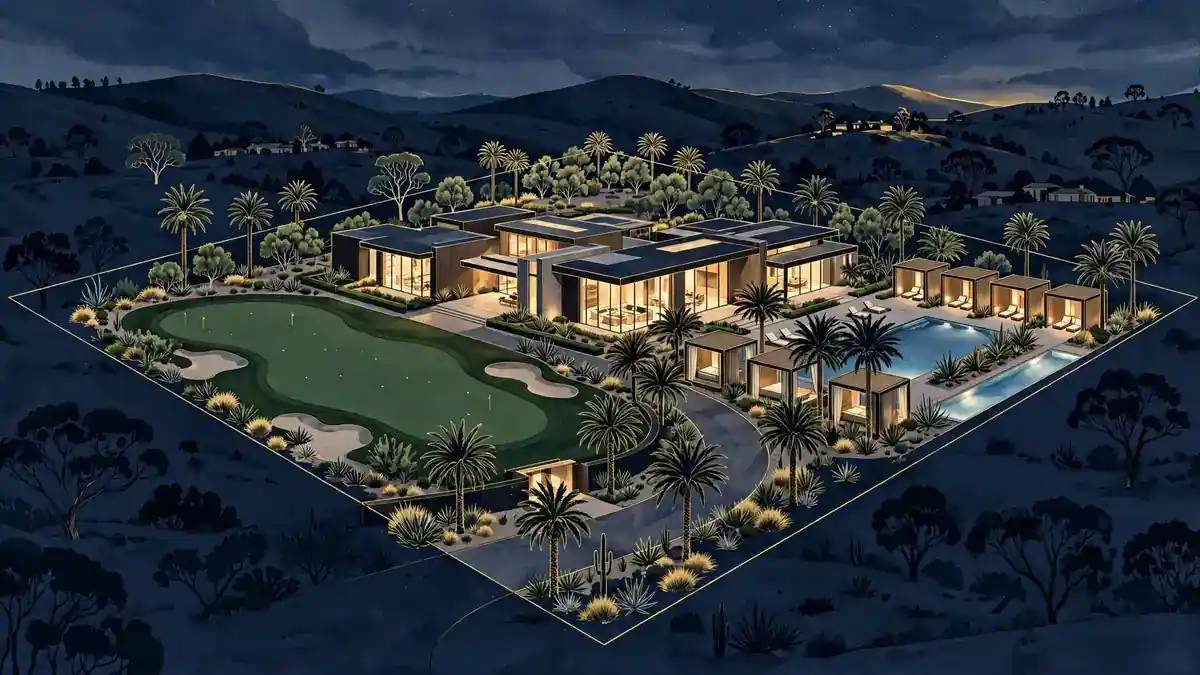
Beyond Rancho Santa Fe, the family’s property holdings centre on Teton County, Idaho, where they own multiple properties and keep horses. No addresses, acreage or values for those holdings are public, and this article does not estimate them. The move itself is the story: after nearly eight years in the house they built, the family is relocating its base to Idaho and its development plans with it.
On cars, the public record is thin, and this article will not fill it with a borrowed list. No verified reporting documents a Shields car collection, a garage feature or a specific luxury vehicle purchase. He drove to the ballpark like every other player; the car he drove was never part of his public story. That is normal for a pitcher of his profile — the flashy garage features belong to a different kind of athlete — and readers should treat any site that lists his cars as inventing the detail. The same honesty applies to watches, jewellery and other portable assets: none are documented, and none are claimed here.
Awards and Achievements
Shields’s trophy case is thin by Hall of Fame standards and strong by the standards of a working starter, which is the right way to read it. His honours are:
- MLB All-Star (2011) — his only All-Star selection, earned on the strength of the 16–12, 2.82 ERA season described above.
- Third place, AL Cy Young Award voting (2011) — behind Justin Verlander and Jered Weaver, and ahead of every other starter in the league that year.
- Tampa Bay Rays Most Valuable Player (2011) — named by the Tampa Bay chapter of the Baseball Writers’ Association of America.
- Major-league leader, complete games (2011) — 11 complete games, the most by any pitcher in 12 years, with four shutouts. The last American League pitcher to reach 11 complete games and four shutouts in a season before him was Roger Clemens in 1992.
- Tampa Bay Rays franchise records — all-time leader in starts (217) and wins (87) for the club, marks that still stood when ESPN reported on his ceremonial retirement in March 2023.
- Two World Series appearances — with Tampa Bay in 2008 and Kansas City in 2014, winning Game 2 of the 2008 series, the first World Series victory in Rays history.
- Eight consecutive 200-inning seasons (2007–2014) — a durability run few pitchers of his generation matched.
Two corrections belong here because several net-worth sites get them wrong. First, Shields was an All-Star once, not twice, and he never won a Gold Glove; sites that credit him with two All-Star selections and a Gold Glove are copying each other rather than checking the record. Second, his career lasted 13 major-league seasons, not 18; the “18-year career” figure that appears on some low-quality pages counts his minor-league years and his time away from the game after 2018. His 2011 season also invites a comparison with the game’s great workhorses. Orel Hershiser, another pitcher remembered for complete games and October durability, built his reputation the same way Shields did — by finishing what he started — and the parallel is a fair one: both men turned stamina into the defining fact of their careers.
On the Hall of Fame question, the record is clear-eyed. Shields’s career WAR sits in the mid-30s by Baseball-Reference’s measure, well short of the threshold for Cooperstown, and he has never been a serious Hall candidate. That does not diminish the career. A pitcher who makes 405 starts, throws 2,616 innings, wins two World Series games across two franchises and banks $116 million has had a career most draft picks would trade for — and the 16th round of the 2000 draft produced few better returns.
Net Worth Growth Over the Years
Shields’s wealth grew in step with his contracts, with the steepest climb coming late. The table below is a NetWorthCraft estimate built from his cumulative career earnings at each point, less the taxes and costs discussed in the salary section, plus the property value he was building in Rancho Santa Fe. The figures are estimates, not bank statements, and they are labelled as such.
| Year | Career earnings to date | Estimated net worth | What moved it |
|---|---|---|---|
| 2008 | About $1.6 million | About $1 million | Rays extension signed; first seven-figure salary |
| 2011 | About $10.3 million | About $5 million | All-Star season; salary rising to $4.25 million |
| 2014 | About $41.6 million | About $20 million | Royals option years at $10.25M and $13.5M; World Series run |
| 2016 | About $72.6 million | About $32 million | First $21 million season; Padres deal in full swing |
| 2018 | About $114.1 million | About $40 million | Final $21 million season; Rancho Santa Fe lot bought |
| 2022 | $116.1 million | About $42 million | Formal retirement; Rancho Santa Fe house completed |
| 2026 | $116.1 million | $40 million – $45 million | Estate listed at $23M, then cut to $19.9M |
Two features of that curve stand out. The first is how late the money arrived: by the end of 2011, after six big-league seasons and an All-Star year, Shields had earned only about $10 million in total. More than half of his career pay — $63 million — came in the four Padres years, when he was 33 to 36 years old. The second is how flat the curve has been since he stopped playing. With no salary coming in after 2019, his net worth since then has moved only with his property: the Rancho Santa Fe build added value as construction finished in 2022, and the 2026 listing put a public price on it. The price cut from $23 million to $19.9 million in the autumn of 2026 is the main reason this article carries a range rather than a single figure — a $3.1 million swing in the asking price of his largest asset moves any honest estimate by a similar amount.
For readers weighing the $45 million figure against the $38 million and $40 million numbers still circulating on older pages: the lower figures predate the March 2026 Celebrity Net Worth update and the Rancho Santa Fe listing. BaseballBiographies, which gives a $30 million to $45 million range, and Celebrity Net Worth, which states $45 million outright, are the two most current sources, and they agree at the top of the range. Our $40 million to $45 million estimate follows them, with the bottom of the range allowing for the lower relist price and for the costs of carrying a 13,500-square-foot house while it sits on the market.
Social Media Presence
Shields keeps a low public profile for a former athlete with a $45 million fortune. He is not a daily poster, a podcast host or a hot-take merchant, and he has never built a personal brand around his playing days. What he does share, through his social channels, is weighted toward youth baseball initiatives and the charities he supports — the same causes he worked on while he was still playing. BaseballBiographies notes that he uses social media to promote youth baseball and charity work, and that is consistent with everything else on the public record: the Heart Gallery and Eckerd Youth Alternatives work, the donated suite at Tropicana Field, and the low-key retirement.
No verified follower count is published for his accounts, and this article does not state one. Follower numbers for retired athletes change constantly and are frequently inflated on net-worth pages that copy each other. The useful fact is the shape of his presence: private, family-centred, and tied to baseball development rather than to self-promotion. Fans looking for daily content from Shields will not find it; fans looking for the occasional youth-baseball post or charity appearance will.
Personal Life
Shields married Ryane Barber in November 2007 in Kauai, Hawaii. Ryane is a photographer, and her work shaped the house the couple built in Rancho Santa Fe — the photography studio was designed into the home from the start, and she led much of the design process alongside her husband. The couple have two daughters and made their home in Rancho Santa Fe, California, for nearly two decades before the 2026 listing and the move toward Idaho. The family story is, by the standards of professional sports, strikingly quiet: one marriage, no public scandals, no tabloid coverage of any note, and a retirement spent building a house and raising a family rather than chasing the spotlight.
The couple’s charity work has been steady rather than showy. They are involved with The Heart Gallery, which helps find adoptive families for children in foster care, and with Eckerd Youth Alternatives, which supports at-risk young people. In 2010, while Shields was pitching for Tampa Bay, the couple donated a suite at Tropicana Field to support those causes. The work fits the pattern of his career: unglamorous, consistent, and aimed at children who need a break. Shields has spoken about it rarely, and the organisations themselves are the source for most of what is known.
His first cousin, former MLB outfielder Aaron Rowand, is the one famous name in the family tree. Rowand won a World Series with the Chicago White Sox in 2005 and made the All-Star team in 2007, the year before Shields’s own breakout. The two cousins took different routes — Rowand as a first-round pick out of Cal State Fullerton, Shields as a 16th-round pick out of high school — and arrived at the same place: long major-league careers, a World Series appearance each, and retirements spent away from the game.
Shields’s health history is part of his personal story too. The shoulder surgery that cost him the 2002 season was the first serious injury of his career, and shoulder trouble followed him: it limited his effectiveness in his final seasons and contributed to his decision to step away after 2018, when he spent two years rehabbing before formally retiring in 2022. He has not spoken publicly in detail about his medical history beyond what the playing record shows, and this article does not speculate about it.
Sources & Reporting
Celebrity Net Worth — net worth estimate of $45 million and the year-by-year earnings table totalling $116,094,900, updated March 26, 2026; also the March 30, 2026 report on the Rancho Santa Fe estate listing at $23 million, including the $1.8 million lot purchase and the 13,500-square-foot build.
Wikipedia — career record (145–139, 4.01 ERA, 2,234 strikeouts), team history, contract details (Rays extension, Royals trade, Padres deal, White Sox trade), personal life (marriage to Ryane Barber, two daughters, Heart Gallery and Eckerd Youth Alternatives, cousin Aaron Rowand), and the April 2026 estate listing.
ESPN — March 30, 2023 report on Shields’s ceremonial first pitch and symbolic retirement with the Rays, including his franchise records (217 starts, 87 wins) and career line.
Sportsnet — February 2015 report on the Padres finalising the four-year, $75 million contract, including the $10 million first-year salary, the $21 million annual salaries that followed, the $16 million club option and $2 million buyout, and Shields declining the Royals’ $15.3 million qualifying offer.
Homes.com — April 2026 feature on the Rancho Santa Fe listing, including the 16-foot glass walls, bowling alley, golf simulator, gym, sauna, steam room and putting green, the late-2018 lot purchase, and listing agents Eric Iantorno and Pilar Meza of Compass.
Homes of Celebs — September 28, 2026 report that the estate was relisted at $19.9 million, with the baseball-diamond-shaped lot and the family’s move toward Teton County, Idaho.
NBC Sports — October 2011 report on the Rays exercising Shields’s $7.5 million option, including the 2011 season line (16–12, 2.82 ERA, 11 complete games) and the remaining club options.
Bleacher Report — 2011 season coverage confirming 249.1 innings, 225 strikeouts, the league-leading 11 complete games and the third-place AL Cy Young finish.
BaseballBiographies — net worth range of $30 million to $45 million, career overview, retirement in 2018, and Shields’s social-media promotion of youth baseball and charity work.
StatMuse — career statistics (145–139, 4.01 ERA, 2,234 strikeouts, 2,616 innings) and postseason record, plus the note that his 11 complete games in 2011 are the most in a season since 2001.
Reporting window: contract and career figures draw on reporting from 2008 through 2015 and on records updated in 2026; the net worth estimate and the property details reflect reporting from March to November 2026. Where sources disagree — the net worth figure, the lot purchase year, and the current asking price — this article states the range and names the source for each figure rather than picking one silently.
Frequently Asked Questions
What is James Shields’s net worth in 2026?
James Shields’s net worth is estimated at $40 million to $45 million as of November 2026. Celebrity Net Worth, which updated its Shields page in March 2026, puts the figure at $45 million, while BaseballBiographies gives a range of $30 million to $45 million. Older pages listing $38 million or $40 million predate the 2026 update and the Rancho Santa Fe estate listing.
How much did James Shields earn in his MLB career?
Shields earned $116,094,900 in salary and bonuses across his 13-season MLB career, according to Celebrity Net Worth’s year-by-year contract table. His pay peaked at $21 million a season in 2016, 2017 and 2018 under the four-year, $75 million Padres contract, plus a $2 million buyout when the White Sox declined his 2019 option.
What was James Shields’s biggest contract?
His biggest contract was the four-year, $75 million deal he signed with the San Diego Padres on February 11, 2015 — the largest free-agent contract in Padres history at the time. It paid him $10 million in 2015 and $21 million in each of the next three seasons, with a $16 million club option for 2019 or a $2 million buyout.
What teams did James Shields play for?
Shields played for four MLB teams: the Tampa Bay Devil Rays/Rays (2006–2012), the Kansas City Royals (2013–2014), the San Diego Padres (2015–2016) and the Chicago White Sox (2016–2018). He reached the World Series with Tampa Bay in 2008 and with Kansas City in 2014.
When did James Shields retire?
Shields last pitched in the majors on September 25, 2018, for the Chicago White Sox, and formally announced his retirement in March 2022. On March 30, 2023, he returned to Tropicana Field to throw out the ceremonial first pitch on Opening Day as the Rays symbolically retired him as a Ray.
How old is James Shields?
James Shields was born on December 20, 1981, in Newhall, California, which makes him 44 years old as of November 2026. He turns 45 on December 20, 2026. He is 6 feet 3 inches tall and pitched right-handed.
Is James Shields married?
Yes. Shields married photographer Ryane Barber in November 2007 in Kauai, Hawaii. The couple have two daughters and built their Rancho Santa Fe home together. They support The Heart Gallery and Eckerd Youth Alternatives, charities that help children in foster care and at-risk young people.
What is James Shields’s Rancho Santa Fe house worth?
The estate was listed for $23 million on March 26, 2026, and relisted at $19.9 million in September 2026. Shields and his wife bought the lot for $1.8 million in 2018 and spent about three years building the 13,500-square-foot house on 2.44 acres. The family is moving its focus to Teton County, Idaho, where they own multiple properties.
Final Thoughts
James Shields’s $40 million to $45 million fortune is a monument to showing up. A 16th-round draft pick who lost a full season to shoulder surgery at 20, he earned $116.1 million by doing the least glamorous thing a pitcher can do: taking the ball every fifth day for 13 seasons, throwing 200 innings eight years running, and finishing what he started — 11 times in full in 2011 alone. The $75 million Padres contract was the reward, the $23 million Rancho Santa Fe listing is the visible result, and the price cut to $19.9 million is a reminder that even a carefully built fortune moves with the market. “Big Game James” was never the most talented pitcher of his generation. He was the most reliable, and reliability, paid annually for over a decade, is what built the fortune.
Published on November 18, 2026. Last reviewed November 2026. Found an error? See our corrections policy.