
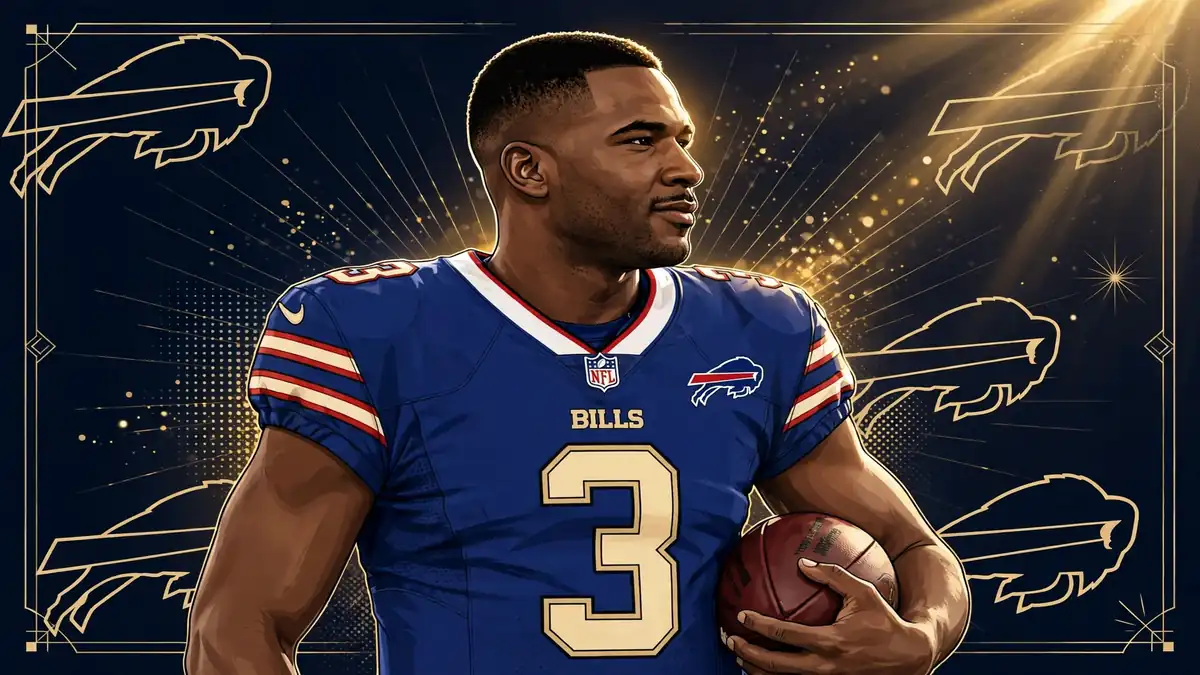
EJ Manuel‘s net worth is estimated at $5 million to $5.5 million as of November 2026. The former first-round NFL quarterback banked $9.79 million in career earnings — most of it from a fully guaranteed $8.89 million rookie deal with the Buffalo Bills — then took $4.9 million upfront from the Fantex brand-stock experiment in 2014, and has spent the years since retirement building a second career as an ACC Network and ESPN college football analyst.
EJ Manuel: Quick Facts
| Estimated net worth | $5 million to $5.5 million (range: $5 million–$5.5 million) |
|---|---|
| Profession | Former NFL quarterback; ACC Network and ESPN college football analyst |
| Nationality | American |
| Born | March 19, 1990 (age 36) |
| Height | 6 ft 5 in (1.96 m) |
| Primary income sources | NFL salaries and signing bonus, Fantex brand payment, broadcasting salary |
| Active years | 2008–2019 (playing); 2019–present (broadcasting) |
| Last reviewed | November 2026 |
- Early Life and Background
- Education
- Career Journey
- Rise to Fame
- Main Sources of Income
- Salary and Earnings
- Businesses and Investments
- Brand Deals and Sponsorships
- Houses, Cars and Other Assets
- Awards and Achievements
- Net Worth Growth Over the Years
- Social Media Presence
- Personal Life
- Sources & Reporting
- Frequently Asked Questions
Early Life and Background
Erik Rodriguez Manuel Jr. was born on March 19, 1990, in Virginia Beach, Virginia, to Erik Manuel Sr. and Jackie Manuel. His father worked as a civilian contractor for the United States Navy; his mother worked in the athletics department at Old Dominion University. He grew up with an older sister, Amber, in a household where football and faith sat at the centre of daily life, and he has credited that upbringing — two working parents, a tight family unit, a church community — with keeping him steady through the sharp turns his career later took.
Virginia Beach in the 1990s and 2000s produced a steady line of football talent, and Manuel stood out early. At Bayside High School, home of the Marlins, he threw for nearly 7,400 yards and 68 touchdowns and earned All-American honours. Recruiters noticed the combination first: a 6 ft 5 in frame, a live arm, and the mobility to escape pressure and pick up yards with his legs. By his senior year he ranked among the most sought-after quarterback prospects in the country, and Florida State won the race for his signature.
The detail that explains more about Manuel than any scouting report is what happened during his senior season at Florida State. In August 2012, a week before the season opener against Murray State, his mother Jackie was diagnosed with Stage 1 breast cancer. She began chemotherapy that ran through the entire season — seven treatments by late December, with one more scheduled for December 31, the day before the Orange Bowl. She still made it to all but four of Florida State’s games that year, talking to her son by Skype when she could not travel, and she walked with him on Bobby Bowden Field for Senior Day days after a treatment. ESPN’s Heather Dinich reported at the time that Manuel called his mother’s fight the hardest thing his family had faced, and that it reframed a season in which he was chasing a conference title. Jackie Manuel beat the cancer. The episode is worth more than a biographical footnote: it is the reason teammates and coaches from that Florida State team still describe Manuel first as steady under pressure, and only second as a quarterback.
Manuel’s father, Erik Sr., had been married to Jackie for 28 years by that 2012 season and called her his best friend. The family story matters to the money story too. When Manuel signed his rookie contract in June 2013, one of his first large purchases was a house for his parents in Chesapeake, Virginia, according to DailyWikiBio’s profile of the family — a classic first-contract move for a player whose parents had driven 11 hours to Tallahassee to watch him play.
Education
Manuel enrolled at Florida State University in 2008 and redshirted his true freshman season. He spent 2009 and 2010 as the backup to Christian Ponder, the starter who would go on to be a first-round pick himself, and the apprenticeship shaped him: two years of watching, two years of spot duty, then two full seasons as the starter. He played under two head coaches at Florida State — the final years of Bobby Bowden’s long tenure, including Bowden’s last game, the 2009 Gator Bowl, and then Jimbo Fisher, who took over the programme in 2010.
His classroom record drew less attention than his football, and no public reporting dwells on his degree — a common pattern for players of his era, whose college years are documented almost entirely through the sport. What the record does show is a player who stayed five years, graduated into the draft as a 23-year-old with 31 college starts, and left Tallahassee holding programme records that still stand. Florida State lists him as its all-time leader in completion percentage at 66.9 percent, a mark tied for third in ACC history, and he ranks among the top five Seminole quarterbacks ever in passing yards (7,736), total offence (8,563), completions (600) and attempts (897), despite only two seasons as the full-time starter, per ESPN’s press-room biography.
The education that paid, in the end, was the football one. Manuel left Florida State as the second quarterback in FBS history to win four straight bowl games, with a 25-6 record as a starter and a 15-3 mark against ACC opponents. Those numbers, plus a Senior Bowl MVP award in January 2013, carried him into the first round of the draft — and into the guaranteed money that forms the base of his net worth today.
Career Journey
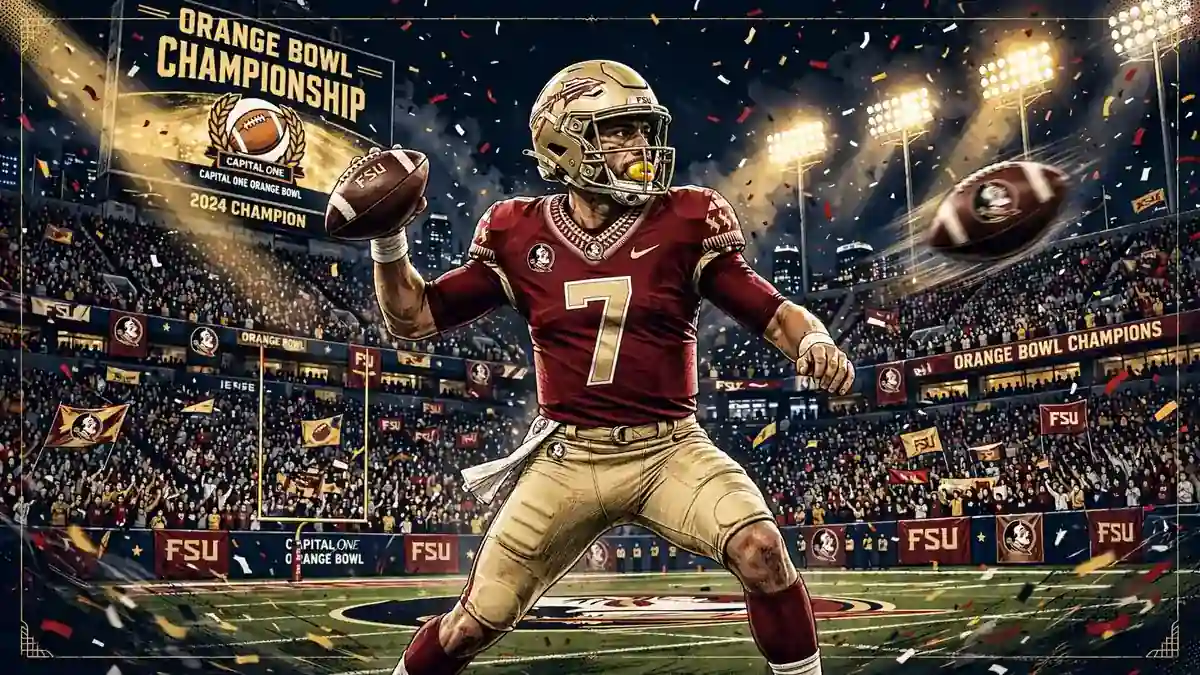
Manuel’s college career unfolded in stages. He redshirted in 2008, then backed up Ponder in 2009 and 2010, starting a handful of games when Ponder was hurt — including the 2009 Gator Bowl, the final game of Bobby Bowden’s career, a 33-21 win over West Virginia. He took over full-time in 2011 and threw for 2,666 yards, 18 touchdowns and eight interceptions, then produced his best season as a senior in 2012: 3,392 passing yards, then the second-highest single-season total in school history, as Florida State went 12-2, won the ACC championship and beat Northern Illinois 31-10 in the Orange Bowl. Manuel threw for 291 yards and a touchdown in that Orange Bowl win. Across 2011 and 2012 combined he passed for 6,058 yards and 41 touchdowns.
The 2013 NFL Draft made him a historic pick. The Buffalo Bills took him 16th overall, the only quarterback selected in the first round that year, and the first quarterback Buffalo had ever taken with its first pick in franchise history. NFL.com analyst Bucky Brooks had projected him as a top-five quarterback in the class and compared him to Josh Freeman. The Bills saw a franchise quarterback: big, mobile, accurate in the short and intermediate game, and a winner at a major programme.
His rookie season started well and then broke down. Manuel started 10 games in 2013, throwing for 1,972 yards, 11 touchdowns and nine interceptions, with 186 rushing yards and two rushing touchdowns. But he missed six regular-season games with three separate knee injuries, and the Bills’ season ended with him on the sideline. The injuries mattered more than the numbers: a quarterback drafted to be the future lost the rhythm of his first year, and the organisation’s patience began to thin.
On September 29, 2014, after a poor start to his second season, Manuel was benched for veteran Kyle Orton. He made just seven combined starts over the next three seasons, sitting behind Orton and then Tyrod Taylor on the depth chart. On May 2, 2016, the Bills declined his fifth-year option for 2017 — a decision that saved them $11.357 million against the cap, according to Sports Illustrated’s report at the time, and confirmed that Buffalo had moved on. Manuel played out his rookie deal, threw for 3,371 yards with 19 touchdowns in three years in Buffalo, and left as a free agent.
He signed a one-year deal with the Oakland Raiders in March 2017, served as Derek Carr’s backup, and made one start when Carr was hurt — a 30-17 loss to the Baltimore Ravens on October 8, 2017. He sat out the entire 2018 season, signed with the Kansas City Chiefs in February 2019, and announced his retirement on May 13, 2019, before the preseason began. Five NFL seasons, 18 starts, 3,767 passing yards, 20 touchdowns, 16 interceptions and a 77.1 passer rating: a career that never matched its draft slot, but one that paid him nearly $9.8 million in contract earnings before he turned 30.
The broadcasting chapter began almost immediately. In June 2019, weeks after retiring, Manuel joined the ACC Network for its launch as a college football studio analyst, and he has been there ever since — a second act that has now lasted longer than his NFL career did.
Rise to Fame
Manuel’s fame peaked twice, and the two peaks tell different stories. The first came at Florida State in the autumn of 2012. On September 22 that year he delivered the signature performance of his college career: a 49-37 nationally televised win over No. 10 Clemson in which he played at a Heisman-calibre level, throwing for 380 yards and two touchdowns and running for another score. Florida State climbed the rankings, won the ACC title for the first time since 2005, and closed the year with the Orange Bowl rout. Manuel finished his college career as a winner — 25-6 as a starter, a conference champion, a Senior Bowl MVP — and entered the draft as the class’s most debated quarterback.
The second peak was draft night itself, April 25, 2013. When Buffalo called his name at No. 16, Manuel became the first quarterback off the board in a class that produced no other first-round passer. The pick made him the face of a franchise rebuild and the subject of a level of scrutiny that followed him for four years in Buffalo. His first start, a 23-21 win over the New England Patriots in the 2013 season opener, briefly looked like the start of something: a rookie beating Tom Brady’s Patriots in his debut. The knee injuries that followed, and the benching a year later, turned the story into a cautionary tale instead — the risk of drafting a quarterback on tools and college wins rather than on sustained professional polish.
His third act, broadcasting, has been quieter but steadier. As a studio analyst on the ACC Network’s flagship show “The Huddle” and a co-host of the ACC Network Football Podcast with Roddy Jones, Manuel now talks about the position he once played, and his first-round pedigree gives his analysis a credibility that pure broadcasters cannot borrow. ESPN’s press room notes that he now works across the company’s college football studio programming, including College Football Final on Saturday nights and regular appearances on SportsCenter and College Football Live. Fame, for Manuel, has settled into something more durable than the draft-night spotlight: a working television career built on the same football knowledge that once made him a first-round pick.
One comparison frames his standing among his peers. Josh Allen, the quarterback Buffalo drafted five years after Manuel to finally solve the position, has built a fortune many times larger on a second contract worth hundreds of millions. The gap is not a mystery — Allen stayed healthy, kept the starting job and signed the mega-deal Manuel’s career never produced. Manuel’s story is the other side of that coin: what a first-round quarterback earns when the second contract never comes.
Main Sources of Income
Manuel’s income breaks into three clear phases, and the first two are closed books while the third is still running.
NFL contracts (2013–2019): the foundation of everything. Over The Cap puts his career earnings at $9,785,300, of which $8,885,300 came from the four-year Bills rookie deal and $800,000 from the one-year Raiders contract in 2017. The Bills deal was fully guaranteed — every dollar of it — which is the single most important fact in Manuel’s financial story. A player who loses his starting job in year two normally loses future earnings; Manuel kept his because the guarantee was already locked in.
The Fantex brand payment (2014): a one-off windfall that most net worth profiles of Manuel skip entirely. In February 2014 he signed a brand agreement with Fantex, Inc., a startup that sold tracking stock linked to athletes’ future earnings, and received $4.9 million upfront in exchange for 10 percent of his future football-related income. The payment landed in July 2014, months before he lost the Bills starting job — timing that, with hindsight, looks like the best financial decision of his career.
Broadcasting (2019–present): his current income. Manuel has worked as an ACC Network studio analyst since the network’s launch in 2019 and now appears across ESPN’s college football studio programming. ESPN does not publish analyst salaries, and no reliable outlet has reported Manuel’s pay, so we do not invent a figure. What can be said is that a seven-year run at a major network, with a podcast and regular SportsCenter appearances, pays a working professional’s salary — enough to sustain, but not to transform, a net worth built on his playing career.
Endorsements were never a major pillar. Unlike star quarterbacks who earn millions from national campaigns, Manuel’s endorsement income was modest — local and regional deals in Buffalo and Florida, plus whatever brand income flowed through the Fantex arrangement. No major national endorsement deal of his has ever been reported, and we do not claim one. His wealth is a salary story, not a sponsorship story.
Salary and Earnings
The contract record, as compiled by Over The Cap, is precise — and it is the spine of any honest estimate of Manuel’s wealth.
Buffalo Bills, 2013–2016 — $8,885,300. Signed June 14, 2013: four years, fully guaranteed, with a $4.85 million signing bonus spread at $1.2 million a year across the deal. The Associated Press reported the same figures at the time — a $8.9 million deal with a $4.84 million bonus. Base salaries rose on a set ladder: $1.6 million in 2013, $2.0 million in 2014, $2.4 million in 2015 and $2.8 million in 2016. His largest single cash payment, $5,247,036 in 2013, combined the signing bonus with his first-year salary. The guarantee is the point: when Buffalo benched him in September 2014 and declined his fifth-year option in May 2016, none of that money went away. A fifth-year option would have paid $11.357 million in 2017; declining it cost Manuel that sum, but the $8.89 million already banked was his regardless.
Oakland Raiders, 2017 — $800,000. A one-year deal as Derek Carr’s backup, fully paid. He also signed a one-year, $1 million Raiders deal for 2018 with only $80,000 guaranteed, which was terminated before the season — Over The Cap records $0 paid on that contract, so it adds nothing to his earnings.
Kansas City Chiefs, 2019 — $805,000 on paper, $0 in practice. Manuel signed in February 2019 and retired on May 13, before the preseason. Over The Cap lists the contract value but records no payment, and no reporting suggests he collected any of it. We count it as zero.
Total: $9,785,300. That is Over The Cap’s career-earnings figure, and it is the number every other estimate has to be reconciled against. The gap between $9.79 million in gross career earnings and a $5 million–$5.5 million net worth is not a contradiction; it is what remains after five years of federal and state taxes on high salaries, agent fees (typically around 3 percent), the 10 percent of football-related income owed to Fantex under the 2014 brand agreement, living costs, and the simple fact that the Fantex $4.9 million was itself a prepayment against future income rather than free money on top of his salary. A player who earns $9.79 million gross and keeps roughly half after taxes and obligations lands almost exactly where the published estimates put Manuel.
For scale, his rookie deal’s average annual value was $2.22 million — modest by the standards of franchise quarterbacks, and a fraction of what the position pays today. Patrick Mahomes, drafted four years after Manuel, signed a deal worth nearly half a billion dollars; Lamar Jackson and Joe Burrow have both signed contracts above $250 million. Manuel played his NFL years just before quarterback salaries exploded, and his career ended just as the market took off — timing that cost him far more than any single game ever did.
| Team / period | Contract | Paid (per Over The Cap) |
|---|---|---|
| Buffalo Bills, 2013–2016 | 4 years, $8,885,300, fully guaranteed | $8,885,300 |
| Oakland Raiders, 2017 | 1 year, $800,000 | $800,000 |
| Oakland Raiders, 2018 | 1 year, $1,000,000 (terminated) | $0 |
| Kansas City Chiefs, 2019 | 1 year, $805,000 (retired before season) | $0 |
| Career total | $9,785,300 |
Businesses and Investments
Manuel has no publicly documented business empire, and this profile does not invent one. No company filings, no restaurant chain, no clothing line and no venture fund carry his name in public records, and the business press has never profiled him as an entrepreneur. That absence is itself informative: his wealth comes from employment income — first football, now television — rather than from building or selling a business.
The one deal that looks like a business move is the Fantex agreement, and it deserves a full telling because it is the most unusual financial episode of his career. Fantex, Inc. was a San Francisco startup that let investors buy tracking stock linked to an individual athlete’s future earnings. The model was simple on paper: the company paid the athlete a lump sum upfront, and in return took a fixed percentage — 10 percent in Manuel’s case — of the athlete’s future football-related income, including salary, bonuses, endorsements, broadcasting and coaching pay. The company then sold shares linked to that income stream to the public.
Manuel’s brand agreement is dated February 14, 2014, and the contract — filed with the Securities and Exchange Commission and published by Justia — names his company, Kire Enterprises LLC, as a party alongside him. The brand percentage was 10 percent. ChatSports reported at the time that Manuel received $4.9 million from Fantex, a figure that valued his expected total career income at $104 million, discounted to $49 million for risk. In other words, Fantex bet that Manuel would go on to earn roughly $100 million across his career. He earned less than a tenth of that. The bet was settled in his favour: he kept the $4.9 million, and Fantex collected 10 percent of a much smaller income stream than it had projected.
The SEC filings tell the rest of the story. In a December 2014 comment letter, the regulator noted that Fantex had cut its estimate of the endorsement income it would realise from the Manuel contract, and recorded a realised loss of $265,879 on the contract between its funding on July 25, 2014 and September 30, 2014. The trigger was visible to everyone: on September 29, 2014, Manuel was replaced as the Bills’ starting quarterback, and Fantex’s own risk disclosures warned that without meaningful playing time he might never sign another high-value multi-year NFL contract. He never did. Fantex later wound down its athlete-tracking-stock business entirely.
Was the deal good for Manuel? On the numbers, yes — decisively. He traded 10 percent of future football income that mostly never arrived for $4.9 million in cash at a moment when he was still a starting NFL quarterback. The 10 percent he gave up applied to his remaining Bills salary, the $800,000 Raiders deal and his early broadcasting income — a real cost, but far smaller than the upfront payment. It is the rare athlete finance story where the player, not the investor, came out ahead, and it is a large reason his net worth held up after his playing income stopped. No other investment of his has been reported with anything like this level of documentation, and we do not speculate about private holdings, property portfolios or stock positions that no source has confirmed.
Brand Deals and Sponsorships
Manuel’s endorsement record is thin, and the honest way to report it is to say so. During his Bills years he appeared in local and regional promotions in Buffalo and Florida, the kind of appearances — car dealership events, local media spots, community work — that pay a working NFL starter a useful but modest sum. No national campaign, no shoe deal and no long-term ambassador role of his has ever been reported by a major outlet, and the endorsement estimates in some net worth profiles are not sourced to any deal at all.
The Fantex arrangement is the exception that proves the rule. Fantex’s SEC filings show the company cutting its estimate of the endorsement income it expected from Manuel’s brand contract within months of signing it — a sign that the endorsement market for a benched quarterback dried up fast. That is consistent with everything else in his record: endorsement value in the NFL tracks playing time and stardom, and Manuel lost both in his second season.
His broadcasting career has a different kind of brand value. As an ACC Network and ESPN analyst, Manuel’s name now carries weight with college football audiences, and his employer is itself the brand — ESPN’s platform, rather than a sponsor’s logo, is what pays him. Speaking engagements and media appearances around college football add to that, though no fees have been publicly reported. We do not attach a dollar figure to any of it.
One comparison puts the endorsement gap in perspective. Aaron Rodgers, a contemporary who held a starting job for nearly two decades, built a large share of his fortune on endorsements and equity deals that Manuel never had access to. The difference was never talent alone; it was tenure. A quarterback who starts for a decade gets the commercials. A quarterback who starts for 18 games gets the local spots.
Houses, Cars and Other Assets
Public records on Manuel’s property are sparse, and this section reports only what sources have actually stated. The best-documented purchase is the house he bought for his parents in Chesapeake, Virginia, with his rookie deal money — reported by DailyWikiBio’s profile of the family. No price has been published for that home, and we do not guess one.
No property record, mortgage filing or listing has publicly tied Manuel himself to a named home purchase, and no reliable outlet has reported a car collection, a watch collection or any other luxury asset of his. That silence is normal for a player of his profile: he was never paid enough, or covered closely enough, for the property press to track his purchases, and he has never posted the kind of lifestyle content that invites that coverage. We do not fill the gap with invented detail.
What can be said with confidence is where his money is not. There is no reporting of a large real estate portfolio, no business headquarters, no fleet of exotic cars. His assets, as far as the public record shows, are the ordinary holdings of a former athlete turned broadcaster: savings and investments built from $9.79 million in career earnings and the $4.9 million Fantex payment, a home, and a steady television salary. The $5 million–$5.5 million estimate is consistent with that picture — a player who earned well, spent without public excess, and kept most of what he made.
Awards and Achievements
Manuel’s trophy case is a college one. His professional career produced no Pro Bowl, no All-Pro selection and no playoff appearance, and this profile does not dress that up. What he did win, and what still defines his reputation, all happened at Florida State.
- ACC champion (2012) — led Florida State to its first conference title since 2005, a 12-2 season capped by the Orange Bowl win.
- Second-team All-ACC (2012) — the conference’s formal recognition of his senior season.
- Senior Bowl MVP (2013) — named the game’s most valuable player in Mobile, Alabama, weeks before the draft; the performance helped lift him into the first round.
- Four straight bowl wins — the second quarterback in FBS history to win four consecutive bowl games, from the 2009 Gator Bowl through the 2013 Orange Bowl.
- Programme records at Florida State — all-time leader in completion percentage (66.9 percent), plus top-five marks in passing yards, total offence, completions and attempts.
- 25-6 as a starter — the fourth-most wins by a starting quarterback in Florida State history, with a 15-3 record against ACC opponents.
His NFL record holds no awards, but it does hold one distinction that still gets cited: he was the only quarterback taken in the first round of the 2013 draft, and the first quarterback Buffalo had ever drafted with its top pick. That is a historical footnote now, but it explains why his name still comes up whenever a draft class is re-graded — Manuel is the cautionary pick of 2013, the year the league learned, again, that a first-round quarterback is a bet, not a guarantee.
Net Worth Growth Over the Years
Manuel’s net worth curve is flat compared with star quarterbacks, and the shape of it tells the story of his career: a steep rise on the rookie deal and the Fantex payment, then a long plateau once the playing income stopped and broadcasting took over. The figures below are NetWorthCraft estimates built from the contract record and the published estimates, not reported balances — no bank or filing has ever disclosed them.
| Year | Estimated net worth | What moved it |
|---|---|---|
| 2013 | $2 million | Rookie deal signed; $5.25 million largest cash payment in year one |
| 2014 | $3 million | Fantex $4.9 million upfront payment lands in July; benched in September |
| 2016 | $4 million | Final year of the guaranteed Bills deal; fifth-year option declined |
| 2017 | $4.2 million | Raiders $800,000 deal; last NFL salary |
| 2019 | $4.5 million | Retirement in May; ACC Network analyst role begins in June |
| 2022 | $5 million | Three years of broadcasting income; estimates converge around $5 million |
| 2026 | $5 million–$5.5 million | Seven years into the broadcasting career; DailyWikiBio puts the figure at $5.5 million |
Two things stand out. First, the Fantex payment is the reason the curve kept rising in 2014 even as his career was stalling — without it, the benching would have frozen his wealth at the rookie-deal level. Second, the curve has barely moved since 2019. Broadcasting pays a salary, not a fortune, and Manuel’s net worth now grows the way a working professional’s does: steadily, modestly, and without the jumps that a second NFL contract would have produced. The $10 million figure that appears in a handful of low-quality profiles has no source behind it and conflicts with both the earnings record and the better-sourced $5 million–$5.5 million range; we do not use it.
Social Media Presence
Manuel keeps a low profile online. He posts on Instagram and X under his own name, mostly about college football, Florida State and his ACC Network work, and his following is modest — tens of thousands rather than the millions that active star quarterbacks command. He is not a creator, an influencer or a regular poster of lifestyle content, and his accounts read like those of a working broadcaster: game clips, studio photos, the occasional family post, and little else.
That restraint is consistent with the rest of his public life. He has never built a personal brand business on social media, never launched a podcast of his own beyond the ACC Network Football Podcast he co-hosts for his employer, and never used his platforms to sell products. For a net worth profile, the practical consequence is simple: social media contributes nothing measurable to his income, and his follower counts are not an asset to value. His audience is ESPN’s, not his own, and that is where his post-playing value sits.
Personal Life
Manuel was born and raised in Virginia Beach, Virginia, where his parents still have roots — his father a Navy civilian contractor, his mother a longtime Old Dominion University athletics department employee. His older sister Amber remains close to him, and the family has stayed a visible part of his story: his mother walking Senior Day with him in 2012, his parents’ house in Chesapeake bought with his rookie money, and the faith he has spoken about as the anchor of his family life.
His marital status is a case where the reporting splits, and this profile reports the split rather than picking a side. Several low-quality biography sites claim he is married to a woman named Vilomena and that the couple have two children, citing Instagram posts. Other profiles state plainly that he is not married and that no relationship information is publicly available. No major outlet — ESPN, the Associated Press, Sports Illustrated, the NFL — has ever confirmed a marriage, a spouse’s name or children, and Manuel himself has not spoken about it in any interview we could find. The honest statement is that his relationship status is not publicly confirmed, and the claims circulating on content-farm biography sites are not reliable enough to repeat as fact. We note the disagreement here so readers are not misled by the confident claims elsewhere.
What is documented is the family he grew up in and the one he provides for: parents in Virginia, a sister he is close to, and a life after football built around television studios in Bristol and Charlotte rather than the NFL cities he played in. He is 36 years old, seven years into a broadcasting career that has already outlasted his time as an NFL starter, and by every public measure settled into the second act.
Sources & Reporting
Over The Cap — contract history and career earnings ($9,785,300), Bills deal structure ($8,885,300, fully guaranteed, $4.85 million signing bonus), Raiders and Chiefs contracts, year-by-year salary ladder. Reporting window: contract record current to 2026.
ESPN Press Room — Manuel’s ACC Network and ESPN biography: Florida State records (25-6 as starter, 66.9 percent completions, 7,736 passing yards), 2013 draft position, five NFL seasons, current studio roles including College Football Final and the ACC Network Football Podcast. Reporting window: biography current to 2026.
Wikipedia — career statistics (3,767 passing yards, 20 touchdowns, 16 interceptions, 77.1 passer rating), draft and team history, benching timeline, retirement date of May 13, 2019. Reporting window: page updated November 2026.
Sports Illustrated — Bills declining the fifth-year option on May 2, 2016, saving $11.357 million; contract context for the 2013–2016 period. Reporting window: May 2016.
ChatSports — the Fantex brand deal: $4.9 million upfront for 10 percent of future football-related income, and the $104 million career-income valuation behind it. Reporting window: 2016.
U.S. Securities and Exchange Commission — Fantex filings and comment letter (December 2014): the Manuel brand contract’s $265,879 realised loss, reduced endorsement-income estimates after the September 29, 2014 benching, and the contract’s funding date of July 25, 2014. Reporting window: 2014 filings.
Justia — full text of the Fantex Brand Agreement dated February 14, 2014, including the 10 percent brand percentage and the Kire Enterprises LLC party. Reporting window: contract filed 2014.
ESPN — Heather Dinich’s December 2012 report on Jackie Manuel’s Stage 1 breast cancer diagnosis, chemotherapy through the 2012 season, and Senior Day. Reporting window: December 2012.
Pro Football History — career narrative: 2011–2012 Florida State seasons (6,058 yards, 41 touchdowns combined), knee injuries in the rookie year, and the move into ACC Network broadcasting in 2019. Reporting window: profile current to 2026.
DailyWikiBio — the $5.5 million net worth estimate for 2025, career earnings summary, and family details including the Chesapeake house purchase for his parents. Flagged as a weaker, single-source outlet: used only where it agrees with the contract record or where no stronger source exists, and its family claims are labelled as reported rather than confirmed. Reporting window: profile updated 2025.
Estimates in this article are NetWorthCraft’s own, built from the sources above. Where sources disagree — notably the $5 million figure carried by several outlets against DailyWikiBio’s $5.5 million — we publish the range and name who says what. Figures are reviewed against new reporting and corrected when the record changes.
Frequently Asked Questions
What is EJ Manuel’s net worth in 2026?
EJ Manuel’s net worth is estimated at $5 million to $5.5 million as of November 2026. Several outlets put the figure at $5 million, while DailyWikiBio estimates $5.5 million. We publish the range because no rich list or filing has confirmed a single number, and a $10 million figure found on some low-quality sites has no source behind it.
How much did EJ Manuel make in the NFL?
Over The Cap puts EJ Manuel’s career NFL earnings at $9,785,300. Almost all of it came from his four-year Bills rookie deal worth $8,885,300, which was fully guaranteed, plus $800,000 from a one-year contract with the Oakland Raiders in 2017. He also received $4.9 million upfront from Fantex in 2014 in exchange for 10 percent of his future football-related income.
What is EJ Manuel doing now?
EJ Manuel works as a college football studio analyst for the ACC Network and ESPN. He joined the ACC Network at its launch in June 2019, weeks after retiring from the NFL, and now appears on “The Huddle,” co-hosts the ACC Network Football Podcast with Roddy Jones, and contributes to ESPN’s College Football Final and other studio shows.
Where did EJ Manuel go to college?
EJ Manuel played college football at Florida State University from 2008 to 2012. He went 25-6 as a starter, won the ACC championship and the Orange Bowl in his senior season, and left as Florida State’s all-time leader in completion percentage at 66.9 percent. He was the second quarterback in FBS history to win four straight bowl games.
Who did EJ Manuel play for in the NFL?
EJ Manuel played for the Buffalo Bills from 2013 to 2016, the Oakland Raiders in 2017, and signed with the Kansas City Chiefs in February 2019 before retiring that May. He was drafted 16th overall by Buffalo in 2013, the only quarterback taken in the first round that year, and started 18 games across his career.
Was EJ Manuel a first-round draft pick?
Yes. The Buffalo Bills selected EJ Manuel 16th overall in the first round of the 2013 NFL Draft. He was the only quarterback drafted in the first round that year and the first quarterback Buffalo had ever taken with its top pick in franchise history.
Is EJ Manuel married?
His marital status is not publicly confirmed. Some low-quality biography sites claim he is married with two children, while other profiles say he is unmarried and that no relationship information is available. No major outlet has confirmed a marriage, so we do not report one as fact.
How tall is EJ Manuel?
EJ Manuel is 6 ft 5 in (1.96 m) tall. His size was one of the reasons the Bills drafted him 16th overall in 2013 — a big, mobile quarterback with the frame to stand in the pocket and the athleticism to escape it.
Final Thoughts
EJ Manuel’s net worth — $5 million to $5.5 million — is the ledger of a career that promised more than it delivered on the field and still paid him well. The fully guaranteed $8.89 million rookie deal did the heavy lifting, the $4.9 million Fantex payment was a piece of timing that looks smarter every year, and the ACC Network job has given him something most former first-round picks never find: a second career that outlasts the first. He never signed the mega-deal, never became the franchise quarterback Buffalo drafted him to be, and never built a business empire. What he did was bank the money his talent earned him, take an upfront payment that bet against his own future and won, and turn football knowledge into a steady television living. For a player whose NFL career lasted five seasons and 18 starts, that is a solid outcome — and a reminder that in the NFL, the contract you sign on draft day matters more than the one you never get to sign next.
Published on November 18, 2026. Last reviewed November 2026. Found an error? See our corrections policy.