
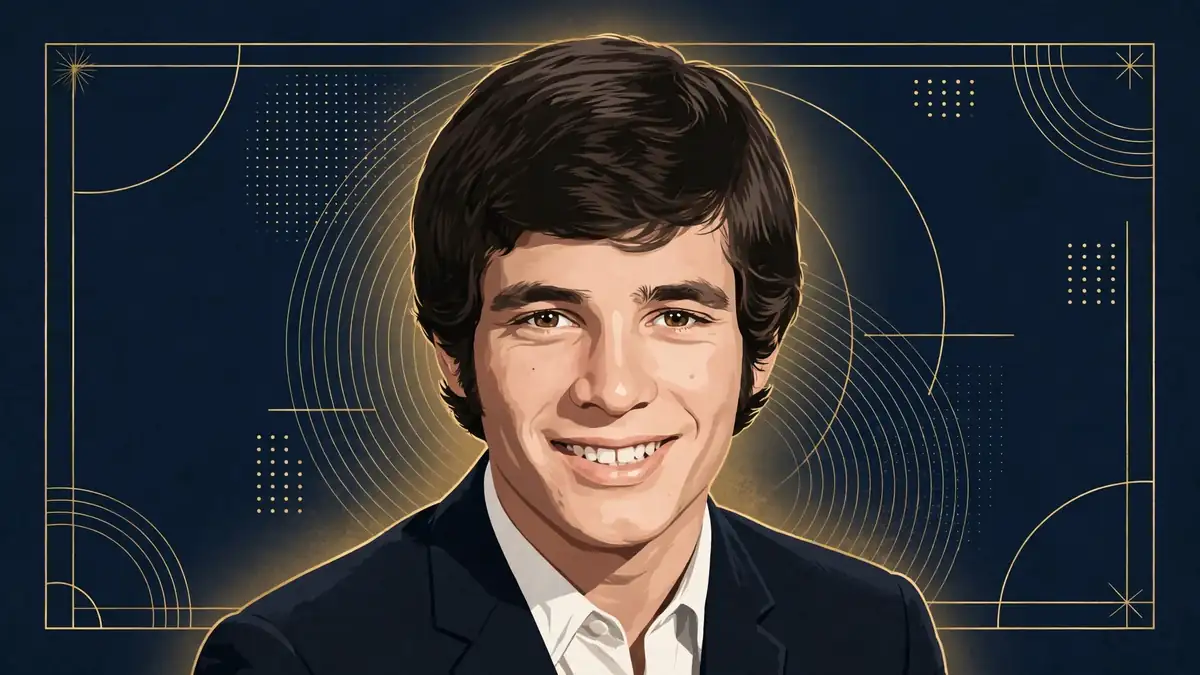
Don Grady‘s net worth is estimated at $2 million to $5 million as of November 2026. Grady died in 2012, so the figure is his estate at death: the $2 million figure is the one most outlets report, a second source puts it at $5 million, and the $10 million number floating around some net-worth sites is a posthumous projection that ignores the fact he died fourteen years ago. His money came from 379 episodes as Robbie Douglas on My Three Sons, a 1967 Top 25 hit as drummer of The Yellow Balloon, and a long second career writing television themes and film scores — including the theme for The Phil Donahue Show.
Don Grady: Quick Facts
| Estimated net worth | $2 million (range: $2 million to $5 million) |
|---|---|
| Profession | Actor, musician, composer |
| Nationality | American |
| Born | June 8, 1944, San Diego, California (died June 27, 2012, aged 68) |
| Height | Not publicly recorded |
| Primary income sources | Television acting salaries and residuals, music royalties, composing fees for TV themes and film scores |
| Active years | 1954–2006 |
| Last reviewed | November 2026 |
- Quick Facts
- Early Life and Background
- Education
- Career Journey
- Rise to Fame
- Main Sources of Income
- Salary and Earnings
- Businesses and Investments
- Brand Deals and Sponsorships
- Houses, Cars and Other Assets
- Awards and Achievements
- Net Worth Growth Over the Years
- Social Media Presence
- Personal Life
- Sources & Reporting
- Frequently Asked Questions
- Final Thoughts
Early Life and Background
Don Grady was born Don Louis Agrati on June 8, 1944, in San Diego, California. His mother, Mary B. Castellino, worked as a talent agent, and his father, Lou Anthony Agrati, made sausages for a living. That split — a mother inside the business, a father outside it — shaped the household Grady grew up in, and it helps explain how a child from a working family ended up on a Disney soundstage before his teens. The family later settled in Lafayette, California, a small town in the hills above Berkeley, where Grady spent most of his childhood.
Show business ran in the family. His younger sister, Lani O’Grady, became an actress in her own right and is still remembered as Mary Bradford on the family drama Eight Is Enough, which ran on ABC from 1977 to 1981. A second sister, Marilou Reichel, stayed out of the spotlight. Mary Agrati represented her own children among her clients, so Grady’s first auditions came through his own mother — an arrangement that would look like a conflict of interest now and was simply how small talent agencies worked in 1950s Los Angeles.
Grady’s break came at twelve. Walt Disney’s The Mickey Mouse Club debuted in 1955, and Grady was one of the 24 original Mouseketeers picked for the show. His audition became part of his legend inside the Disney orbit: he played seven different instruments, sang, and tap-danced for Walt Disney himself. BMI, the music-rights organisation that later counted Grady among its longtime members, recorded that he landed his first television roles because of his musical talent, not in spite of it — the audition was a music audition as much as an acting one. The Mouseketeer years put him in daily contact with the other young performers Disney was building into stars, including Annette Funicello, and gave him a professional education no classroom could match: live television, choreography, recording sessions, and a national audience before he was a teenager.
Child acting in the 1950s paid working wages, not fortunes. Disney’s Mouseketeers were salaried contract players, and the money Grady earned went into a family that treated show business as a trade rather than a lottery ticket. Nothing in the record suggests a lavish childhood or a trust-fund start. His parents divorced while he was still young, and Grady said later that My Three Sons star Fred MacMurray and producers Don Fedderson and Ed Hartmann became father figures to him during his teens — a detail that matters when you look at how long he stayed loyal to that show and how little drama surrounded his exit from it.
Before My Three Sons, Grady collected the kind of credits that built a working child actor’s resume: guest spots on westerns and anthology dramas, including The Restless Gun, Zane Grey Theater, Wagon Train and The Rifleman, plus the NBC medical drama The Eleventh Hour. He also appeared on The New Adventures of Spin and Marty, where he worked alongside Tim Considine — the actor who would become his on-screen older brother Mike Douglas a few years later. These were one-episode jobs, paid by the week, and they taught him the discipline of the studio system: learn the lines, hit the mark, and be ready for the next call.
Education
Grady finished high school at Burbank High School, graduating with the class of 1962 — right in the middle of his My Three Sons run, which had started when he was sixteen. Balancing a full school schedule with a weekly television series meant tutors on set and homework between takes, the standard arrangement for working child actors of the era. His classmates remembered him as Don Agrati, the local boy who was already on television every week, and the Burbank High alumni community marked his death in 2012 with an obituary notice of its own.
He did not stop studying when the show made him famous. During the run of My Three Sons, Grady attended Los Angeles City College, fitting classes around a production schedule that shot most of the season in concentrated blocks. The choice fits the pattern of his whole career: he kept building skills that would outlast the acting job. Music was the main one. He had been playing instruments since childhood, and by his late teens he was writing songs, forming bands, and thinking about the career that would follow television.
At nineteen, Grady signed a recording contract with Capitol Records — a deal that put a dollar value on the musical talent Disney had spotted a decade earlier. Capitol was one of the biggest labels in America, home to the Beach Boys and the Beatles’ American releases, and a contract there at nineteen was a serious professional credential. It also set up the tension that would define the next decade of his life: a television contract that paid the bills and a music career that pulled him in a different direction.
There is no record of Grady attending a four-year university or earning a degree, and this article does not invent one. His education was the studio system itself: the Mouseketeer years, the Los Angeles City College classes, the Capitol Records sessions, and eleven years of working beside Fred MacMurray, one of the most business-minded actors in Hollywood. MacMurray’s habit of shooting a whole season in about 65 days and spending the rest of the year on his investments was a lesson Grady watched up close — even if he never built a fortune on the same scale.
Career Journey
Grady’s career breaks cleanly into three acts, and the money follows the same split. Act one was the child actor: the Mouseketeer years and the western guest spots of the late 1950s. Act two was My Three Sons, eleven years as Robbie Douglas, from 1960 to 1971, with the show itself running until 1972. Act three was music — composing, recording, and writing themes — which filled the four decades after he left television acting behind. Most net-worth pages about Grady only cover act two. That is a mistake, because act three ran three times as long and produced the royalties that kept paying after the acting cheques stopped.
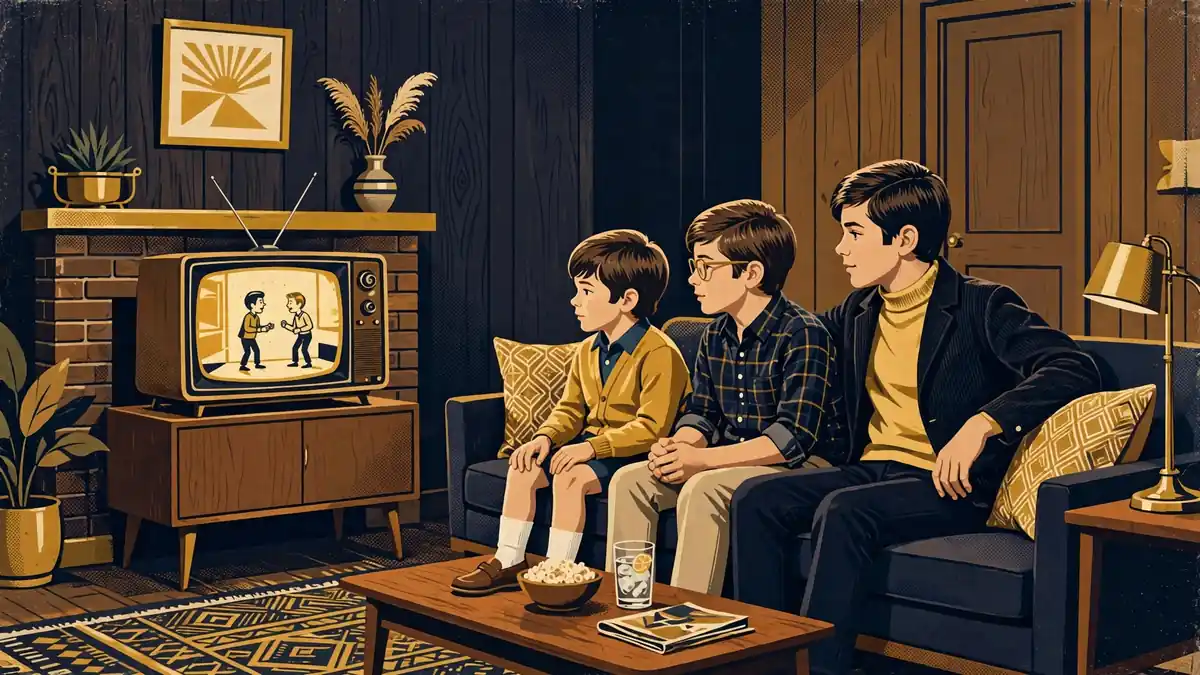
My Three Sons premiered on ABC in 1960, starring Fred MacMurray as widowed aeronautical engineer Steve Douglas, raising three sons with the help of his father-in-law, played by William Demarest. Grady played Robbie Douglas, the middle son at first — frustrated, earnest, and a little overshadowed by his older brother Mike, played by Tim Considine. When Considine left the show, Robbie became the confident eldest brother, and when Barry Livingston joined as adopted youngest son Ernie, Grady became the steady centre of the family. The show moved from ABC to CBS in 1965 and kept running until 1972: twelve seasons and 380 episodes, one of the longest-running family sitcoms in American television history. IMDb credits Grady with 379 episodes, which means he missed exactly one episode in twelve years.
What set Grady apart on the show was that he was allowed to bring his real skill onto the set. He appeared with his own band, The Greefs, on the series and wrote two original songs for the show. The producers did not treat his music as a gimmick; it was written into Robbie’s character, and it gave Grady a second income stream inside his acting contract — performance fees for the music, and songwriting credit that would pay royalties later. Few sitcom actors of the era negotiated that kind of dual role for themselves.
At the end of 1970, Grady told the press he would “cut the umbilical cord” and leave My Three Sons after eleven years. The phrase was his own, and it was quoted in obituaries forty years later because it captured the decision so well. He was 26, he had spent his entire adolescence on one set, and he wanted to find out whether he could make a living as a musician without the safety net of a weekly series. He left on good terms — there was no contract fight and no public falling-out — and the show wrote Robbie out by marrying him off to Katie, played by Tina Cole, and sending the couple away. Grady’s last season was 1970–71; the show itself ended in 1972.
He also served four years in the United States Army Reserve, a commitment that ran alongside his television career and is easy to miss in profiles that only list his credits. The Reserve paid modestly, but it mattered for a different reason: it was one more sign that Grady treated his working life as a set of parallel jobs rather than a single lucky break. Acting, music, and military service overlapped in his twenties, and the habit of keeping several income streams going stayed with him for the rest of his life.
After My Three Sons, Grady made a handful of guest appearances on television in the 1970s and 1980s — The Love Boat, Murder, She Wrote, The Lucy Show, Simon and Simon, The Ann Sothern Show — and worked on stage in musicals including Pippin and Godspell. The stage work is worth noting because it paid differently from television: weekly theatre salaries instead of residuals, and a chance to use the singing and dancing he had learned as a Mouseketeer. But acting was no longer the main event. By the mid-1970s, Grady’s working identity was composer and musician, and that is where the rest of his earnings came from.
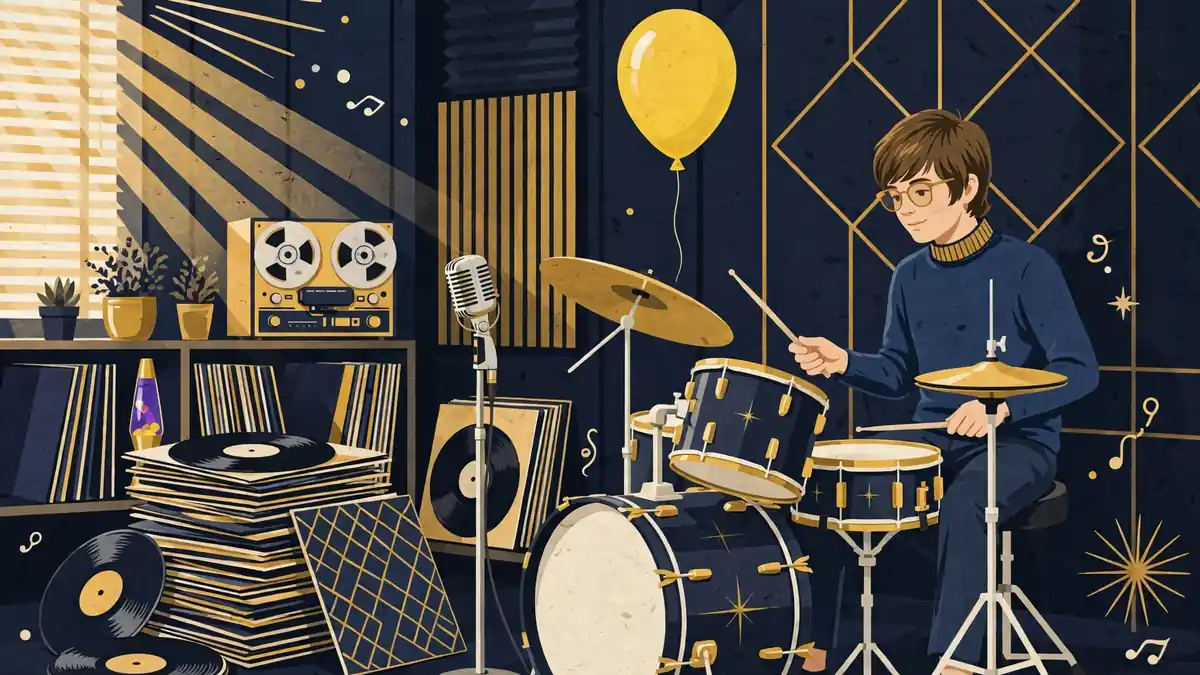
The music career had actually started while the show was still running. In 1967, Grady was the drummer for The Yellow Balloon, a sunshine-pop band put together by songwriter and producer Gary Zekley. Their single “Yellow Balloon” became a nationwide Top 25 hit on the Billboard chart in the spring of 1967, and the band released a self-titled album on Canterbury Records the same year. Grady was billed in the band as “Luke R. Yoo” — a stage name that let him keep a small distance between the teen idol on television and the working musician in the band. The group’s other members included Daryl Dragon, who later became famous as one half of Captain & Tennille, and the album was reissued on CD by Sundazed Music in 1998 with Grady’s solo singles and a recorded interview included. A Top 25 single in 1967 meant real money: record sales, radio play, publishing royalties, and touring fees, even for a band that broke up within a year when further success did not follow.
His solo recording career produced two albums that bookend his life in music. Homegrown, released by Elektra Records in 1973, was his first original album as a solo artist — the record he walked away from My Three Sons to make. Boomer: JazRokPop, released in the fall of 2008, was a collection of songs written for and about the baby-boom generation, and his first original album as an artist since Homegrown thirty-five years earlier. Neither album was a commercial blockbuster, and this article does not pretend otherwise. Their value was in publishing and performance royalties over decades, and in keeping Grady’s name active as a songwriter rather than a former child star.
The composing work paid the steadiest money of his later life. Grady wrote the theme song for The Phil Donahue Show, the daytime talk show that ran from 1967 to 1996 and aired more than 1,200 episodes — a theme heard by millions of daytime viewers for years, with the performance royalties that come with that kind of exposure. He scored the Blake Edwards comedy film Switch in 1991, and he wrote the music for EFX, the Las Vegas multimedia stage spectacular that starred Michael Crawford, David Cassidy, Tommy Tune and Rick Springfield. BMI, which represented Grady’s catalogue, reported that he wrote and produced more than 100 songs for the Walt Disney Company, co-wrote “Keep the Dream Alive” — recorded by Herbie Hancock, Della Reese and others for the Jazz to End Hunger project — and met his longtime collaborator, lyricist Marty Panzer, while working on the EFX show. As late as April 2002, IMDb’s biography noted he was working on film and television scores for Lifetime and the Discovery Channel. That is a working composer’s resume: not glamorous, not front-page, but steady paid work across four decades.
Rise to Fame
Grady became famous twice, and the two fame peaks paid very differently. The first came at twelve, as a Mouseketeer. The second came at sixteen, as Robbie Douglas. The Mouseketeer years made him recognisable to children across America; My Three Sons made him recognisable to their parents as well. By the mid-1960s, the show was one of the most-watched family comedies on American television, and Grady was one of the most recognisable young men in the country — the dimpled, dark-haired older brother every family with a teenage son thought they knew.
The show’s economics explain why its stars did not all get rich at the same rate. Fred MacMurray, the lead, negotiated one of the cleverest contracts in television history: he shot all of his scenes for an entire season in about 65 days, freeing the rest of the year for his business interests, and he owned a percentage of the show. Celebrity Net Worth puts MacMurray’s fortune at $150 million at his death in 1991, built mostly on a real-estate portfolio worth between $100 million and $150 million. MacMurray had been earning $420,000 a year from Paramount Pictures as far back as 1943 — a figure Celebrity Net Worth equates to around $6.5 million a year in today’s money — and he funnelled film salaries into land for fifty years. Grady, a teenage supporting player on a weekly salary, had no such bargaining power and no ownership stake. The gap between $150 million and $2 million is the gap between a star who owned the show and a young actor who worked on it.
That gap is the honest context for Grady’s wealth, and it is also what makes the comparison with his peers interesting. Micky Dolenz, the Monkees’ drummer-singer, followed a strikingly similar path — 1960s television fame, a real career as a working musician, and a long tail of residuals and royalties — and the two men’s careers rhyme in ways that explain why Grady’s fortune stayed modest. Both were famous young, both were genuinely musical, and both spent the decades after their shows ended working steadily rather than cashing in on one big payday. The money in that kind of career comes in hundreds of small payments, not one large one.
Grady’s fame also had a long tail that most profiles undercount. My Three Sons ran in syndication for decades after 1972, on local stations and later on cable, and every rerun generated residual payments to the cast under the Screen Actors Guild’s residual rules. Those payments shrink with each rerun cycle — a first rerun pays far more than the fiftieth — but across 380 episodes and fifty years of syndication, they added up to a real income stream. The same applies to the Donahue theme: a theme that airs daily for nearly thirty years generates performance royalties every time it is broadcast, and those royalties flow to the composer’s estate after death. This is why the estate figure matters more than any single year’s salary: Grady’s wealth was a river of small payments, not a lake filled once.
One more piece of the fame story is often missed. Grady’s sister Lani O’Grady became a television star in her own right on Eight Is Enough, which meant the Agrati family had two working actors in prime time in the late 1970s. Lani died in 2001, eleven years before her brother, and her death was widely reported at the time. The family’s story — a talent-agent mother, two children on network television, a father who made sausages — is the kind of detail that makes Grady’s career feel human rather than statistical, and it is also a reminder that fame in that family was a trade, passed down and practised, not a windfall.
Main Sources of Income
Grady’s income came from four streams, and their balance shifted across his life. In the 1960s, television acting salaries dominated. From the late 1960s onward, music — records, publishing, and performance royalties — grew until it passed acting. From the 1970s onward, composing fees for television themes, film scores, and stage shows became the steadiest source. And from 1972 until his death, residuals and royalties from My Three Sons reruns and his music catalogue provided the background income that kept paying whether or not he was working that month.
Television acting. The Mouseketeer contract, the western guest spots, and then eleven years on My Three Sons as a series regular. A series regular on a hit network sitcom in the 1960s earned a weekly salary that rose with each season renewal, plus residuals when episodes were rerun. Grady’s 379 episodes represent roughly 380 weeks of paid work on a single show — the kind of employment security almost no actor enjoys, and the foundation of everything he earned afterward.
Music performance and recording. The Capitol Records contract at nineteen, The Greefs’ appearances on My Three Sons, The Yellow Balloon’s hit single and album in 1967, and the two solo albums, Homegrown in 1973 and Boomer: JazRokPop in 2008. Record royalties in the 1960s and 1970s were modest per unit — a few cents per album sold after the label recouped its costs — but a Top 25 single and a catalogue of more than 100 Disney songs, as BMI documented, generate publishing income for decades.
Composing. The Phil Donahue Show theme, the score for Blake Edwards’ Switch, the music for the Las Vegas spectacular EFX, and film and television scores for Lifetime and the Discovery Channel. Composing fees for a feature film or a Las Vegas stage show run into five and six figures per project, and the performance royalties that follow can exceed the original fee over time. This was Grady’s most reliable income in his forties, fifties, and sixties.
Residuals and royalties. The long tail. My Three Sons reruns, Donahue theme broadcasts, Yellow Balloon record sales and the 1998 Sundazed reissue, and the Disney song catalogue all paid Grady — and later his estate — in small recurring amounts. No single residual cheque made him rich. Together, across fifty years, they were the difference between a comfortable retirement and a forgotten one.
What Grady did not have is just as important for an honest estimate. There is no public record of endorsement deals, no brand partnerships, no product lines, no restaurant chain, no real-estate empire, and no venture-capital portfolio. The net-worth sites that list “business ventures” or “endorsements” for Grady are filling a template, not reporting a fact. His wealth was earned the old-fashioned way for a working entertainer: salaries, fees, and royalties, saved over a fifty-year career.
Salary and Earnings
No contract for Don Grady’s My Three Sons salary has ever been published, and this article will not invent one. That matters, because several net-worth pages about Grady quote specific per-episode figures with no source attached. The honest position is this: his salary is not public, and any site that prints an exact number for it is guessing. What we can do instead is put his earnings in the context of what television paid in his era, and what his co-stars and peers earned, so the $2 million estimate can be judged rather than just believed.
Television salaries in the 1960s were a fraction of what they are now. One aggregator’s profile of Grady cites an American Federation of Television and Radio Artists figure putting the average annual salary for a television actor in the 1960s and 1970s at around $60,000, and uses it to estimate Grady’s earnings at $100,000 to $200,000 a year during his peak years. Treat that as a rough guide, not a fact: it comes from a low-quality content site, not from a union filing or a contract. The direction is right, though — a series regular on a hit show earned a comfortable upper-middle-class living, not a fortune, and the real money came from staying employed for eleven straight years.
The comparison that puts Grady’s pay in perspective comes from a different sitcom a decade later. Anson Williams, who played Potsie on Happy Days, revealed in October 2026 that his salary began at $900 per episode, rising to $1,200 in the second season and $1,800 in the third. Happy Days started in 1974, when television pay had already risen well above 1960s levels. Grady, starting in 1960, would have begun lower and climbed more slowly — but he had 379 episodes to climb with, and twelve seasons of annual raises. Over eleven years, a steadily rising weekly salary on a hit show, plus residuals, adds up to a substantial career total even when no single year looks spectacular.
The clearest parallel for Grady’s final figure comes from Don Most, who played Ralph Malph on Happy Days and is listed by Celebrity Net Worth at $2 million — the same figure most often attached to Grady. Most was the wisecracking second banana on a long-running sitcom, spent decades working steadily afterward, and ended up with a modest, well-earned fortune. That is the same shape as Grady’s career, and the same number is the natural result: a lifetime of solid professional pay, saved and invested conservatively, without a blockbuster payday or a business windfall.
Grady’s music earnings are easier to pin down in shape, if not in exact dollars. A Top 25 single in 1967 — “Yellow Balloon” — earned money four ways: the record itself, radio airplay royalties, publishing royalties as a songwriter, and live performance fees. The band broke up within a year, which cut off the touring income, but the record kept selling and the 1998 Sundazed reissue put it back in shops thirty years later. His two solo albums earned far less: Homegrown in 1973 and Boomer: JazRokPop in 2008 were artist’s records, not commercial ones, and their value was in the publishing catalogue they built rather than in chart positions.
The composing fees are the least documented and the most important part of his later earnings. A theme for a daily talk show that runs for nearly thirty years is, financially, one of the best jobs in television music: the original fee is only the start, and the performance royalties arrive with every broadcast. The Donahue theme ran from 1967 to 1996. The EFX show in Las Vegas paid a composer’s fee plus a share of a long-running production. The Switch score in 1991 was a feature-film fee. None of these figures is public, and none of them individually would explain a large fortune — but together, across thirty years, they are the reason Grady could keep working as a musician into his sixties instead of returning to acting for the money.
Two claims about Grady’s current earnings need to be corrected, because they appear on live net-worth pages and they are wrong. One site claims Grady earns around $100,000 a year in 2026, including “occasional public appearances.” Grady died in 2012. He makes no public appearances, and his estate’s income from residuals and royalties is not $100,000 a year — no source supports that number, and the site that prints it also claims his net worth “remains $2 million” while crediting him with six-figure annual earnings, which does not add up. The second claim is the $10 million figure printed on a “Don Grady Net Worth 2024” page, which projects his wealth forward as if he were still alive and working. He was not. Both numbers are content-farm artefacts, and both are why this article publishes a range with named sources instead of a single confident figure.
Adjusted for inflation, the $2 million estate figure from 2012 is worth roughly $2.8 million in 2026 dollars. The $5 million outlier, if it were correct, would be worth roughly $6.9 million today. Either way, the story is the same: a working entertainer who earned steadily for fifty years, lived within his means, and left a modest estate to his wife and children — not a tycoon, and not a cautionary tale either.
Businesses and Investments
Grady was not a businessman in the way his co-star Fred MacMurray was. MacMurray bought California land in 1941, built a cattle ranch and a vineyard, and died with a property portfolio worth between $100 million and $150 million, according to Celebrity Net Worth. Grady left no such record. There is no evidence in any obituary, interview, or public filing that he owned a production company, invested in real estate at scale, launched a product, or backed a startup. This section is short because the record is short — and padding it with invented ventures would be worse than leaving it honest.
What he did invest in was his own catalogue. A songwriter’s catalogue is a business asset: more than 100 songs written for Disney, the Donahue theme, the EFX score, the Yellow Balloon recordings, and two solo albums. Publishing rights pay for decades, and they pass to the estate. BMI represented Grady for years, and the performance royalties collected by BMI on his behalf were the closest thing he had to passive income. It is a quieter kind of investment than MacMurray’s ranches, but it is a real one, and it is the reason his music still earns money after his death.
His one quasi-business venture was The Yellow Balloon itself. The band was assembled by producer Gary Zekley as a recording project, and Grady was both its drummer and a stakeholder in its success: a hit single meant royalties, and an album on Canterbury Records meant a share of record sales. The band broke up amicably within a year when further success did not follow, and the members went their separate ways — Daryl Dragon to Captain & Tennille, Grady back to television and then to composing. It was a music business, not a startup, and it ended the way most bands end: with a good record and a short run.
There is also no public record of Grady owning a home of unusual value, holding a notable art collection, or investing in stocks in a way that made the news. He lived in Thousand Oaks, California, where he died at home under hospice care, and his burial was at Pierce Brothers Valley Oaks Memorial Park in Westlake Village — a well-known resting place for entertainment figures, and a modest one. The absence of property gossip around Grady is itself a data point: he was not a celebrity whose houses made headlines, and his estate was not large enough to generate a public probate fight. For a net-worth estimate, that is useful negative evidence — it supports the low end of the range, not the high end.
Teddy Pendergrass, whose profile sits in our music catalogue, offers a useful contrast: a singer whose fortune was built on touring and record sales at a far larger scale, and whose estate still had to be fought over in court. Grady’s estate, by comparison, passed quietly to his wife Ginny and their two children. Quiet is not a synonym for poor — it is a synonym for a life lived without borrowed money, debt, or public financial drama.
Brand Deals and Sponsorships
No brand deal, endorsement, or sponsorship involving Don Grady appears in any public record. He did not advertise products, lend his name to a clothing line, or appear in commercials as an adult — and the endorsement economy that now surrounds television stars barely existed during his peak years. The Mouseketeer years came with Disney merchandising, but that was a studio contract, not a personal brand deal: the Mouseketeers wore the ears, sang the songs, and the money went through Disney.
This is a real difference between Grady’s era and the present. A supporting player on a hit sitcom today can earn more from a single Instagram partnership than from a season of acting. In the 1960s and 1970s, that market did not exist for television actors, and even film stars’ endorsements were limited to a handful of print and television campaigns. Grady’s income was almost entirely earned income — salaries, fees, and royalties — with no brand money layered on top. That is one more reason his estate stayed at $2 million rather than growing into the eight-figure sums that modern television stars accumulate.
The one commercial relationship worth mentioning is his long association with the Walt Disney Company, which was less a brand deal than a career-long working relationship: Mouseketeer in the 1950s, more than 100 songs written for Disney over his composing career, and a catalogue that Disney productions continued to use. BMI’s tribute to Grady after his death made the point directly — music was his passion, and Disney was one of his steadiest clients. It paid in royalties, not in endorsement fees, and it paid for decades.
Readers comparing Grady with modern celebrities should keep this in mind: his $2 million was earned without a single brand deal, in an era when actors were paid to act and musicians were paid to write songs. Judged against his own era, it is a respectable fortune. Judged against the endorsement-driven fortunes of today, it looks small — but that says more about how the business changed than about how Grady did.
Houses, Cars and Other Assets
Grady’s assets at death are not a matter of public record, and this article does not invent a property portfolio for him. What is known is limited and specific: he died at his home in Thousand Oaks, California, after four years of hospice care there, and he is buried at Pierce Brothers Valley Oaks Memorial Park in Westlake Village. Thousand Oaks is a comfortable suburb northwest of Los Angeles, popular with entertainment professionals who wanted space and quiet without leaving the industry’s orbit. A home there in 2012 was a solid middle-class-to-upper-middle-class asset, not a mansion, and nothing in the record suggests Grady owned multiple homes or an investment property portfolio.
There is no public record of a notable car collection, and no report of Grady collecting art, wine, watches, or memorabilia at a level that would move a net-worth estimate. He was, by every account, a working musician who spent his money on his family and his craft — instruments, studio time, and a home in the suburbs — rather than on display. That is consistent with the estate figure: a man with a $2 million estate does not leave behind a garage full of classics, and a man who collected them would have left a paper trail.
His most valuable assets were intangible. The publishing rights to more than 100 Disney songs, the Donahue theme, the EFX score, the Yellow Balloon recordings, and his two solo albums form a catalogue that continues to generate royalties. Intangible assets are hard to value without access to the royalty statements, which is one reason the published estimates for Grady range from $2 million to $5 million: the low end counts the visible estate, and the high end gives the catalogue the benefit of the doubt. This article anchors at $2 million — the figure the most recent net-worth reporting uses — and reports $5 million as the top of the range, not as a fact.
One asset that should not be counted is the My Three Sons show itself. Grady did not own a percentage of the series, unlike MacMurray, and he did not own the rights to Robbie Douglas. What he owned was the right to residuals under the Screen Actors Guild’s rules, and those payments decline over time. By 2012, after forty years of reruns, the residual stream from the show was a modest one. The estate’s ongoing income today comes more from the music catalogue than from the television reruns — a reversal of the balance during his lifetime, and a fitting one for a man who always said music was his real work.
Awards and Achievements
Grady never won an Emmy, a Grammy, or a major industry award, and no honest profile should pretend otherwise. His achievements were of a different kind: longevity, range, and a catalogue that outlived him. Eleven years as a series regular on one of the longest-running sitcoms in American television history is an achievement that very few actors can claim — 379 episodes, twelve seasons, and a character who grew from a frustrated middle brother into the confident eldest son of the family. That is a career, not a credit.
The music achievements are more concrete. A Top 25 Billboard hit with “Yellow Balloon” in 1967 put Grady on the national charts as a working musician, not as a television actor dabbling in music. A recording contract with Capitol Records at nineteen, a solo album on Elektra Records in 1973, and a second solo album in 2008 show a recording career that spanned five decades. Writing the theme for a talk show that ran for nearly thirty years and aired more than 1,200 episodes is a composing achievement that most working composers never reach. And writing and producing more than 100 songs for the Walt Disney Company, as BMI recorded, is a body of work that would be a career on its own.
His stage work deserves a mention too: musicals including Pippin and Godspell in the 1970s and 1980s, where he used the singing and dancing he had learned as a Mouseketeer. Stage work pays less than television and reaches fewer people, but it is the hardest test of a performer’s skill — eight shows a week, live, with no second take — and Grady passed it.
The recognition that mattered most to Grady’s legacy came after his death. The Television Academy’s obituary called him a “prolific musician” as well as a television star, and BMI’s tribute said plainly that music was his passion and that he had walked away from My Three Sons to write his first album. Those are the words of institutions that knew his work, and they correct the record in a useful way: the public remembers Robbie Douglas, but the industry remembered a composer. For a net-worth story, that matters — the composing catalogue, not the sitcom residuals, is what still earns money today.
Net Worth Growth Over the Years
There are no audited year-by-year figures for Grady’s wealth, and the table below does not pretend otherwise. It tracks the career moments that moved his finances, with the wealth band at each stage labelled as an estimate. The pattern is the story: a slow, steady climb through the 1960s, a plateau during the composing decades, and a fixed estate figure after 2012.
| Year | Career moment | Estimated wealth band |
|---|---|---|
| 1955 | Becomes an original Mouseketeer at twelve | Modest child-actor earnings |
| 1960 | Cast as Robbie Douglas on My Three Sons | Series-regular salary begins |
| 1963 | Signs with Capitol Records at nineteen | Recording income added |
| 1967 | “Yellow Balloon” reaches the Billboard Top 25 | First significant music royalties |
| 1971 | Leaves My Three Sons after eleven years | Peak acting earnings; composing career begins |
| 1973 | Releases solo album Homegrown on Elektra | Catalogue income building |
| 1991 | Scores Blake Edwards’ film Switch | Feature-film composing fees |
| 1996 | The Phil Donahue Show ends after 29 years | Theme royalties continue |
| 2008 | Releases Boomer: JazRokPop | Catalogue complete; steady royalties |
| 2012 | Dies in Thousand Oaks, aged 68 | $2 million to $5 million |
| 2026 | Estate figure, reviewed November 2026 | $2 million (range $2M–$5M) |
The table makes one thing clear: Grady’s wealth was built in the 1960s and then maintained, not multiplied. He never had the kind of windfall that doubles a fortune in a year — no hit film, no ownership stake, no business sale. He also never had the kind of collapse that wipes one out. The $2 million estate is the end point of a fifty-year career of steady, professional earnings, and it is a more honest number than the $10 million projection some sites print, because it respects the fact that his earning life ended in 2012.
For readers who want a sense of scale, the comparison with his co-stars is instructive. Fred MacMurray died in 1991 with about $150 million, built on fifty years of film salaries and real-estate investment. Don Most, the Happy Days second banana, is listed at $2 million — the same figure as Grady. And Richard Dawson, another classic-television figure whose career ran on game shows and sitcoms rather than on ownership and investment, ended his life with a similarly modest fortune. Grady sits exactly where his career says he should sit: among the working stars of classic television, not among its owners.
Social Media Presence
Grady died in 2012, before social media became the machine it is now, and he never had an official Instagram, X, or TikTok account. There is no verified social-media presence to report, and no follower count to quote. Any account using his name today is a fan page or a memorial page, not an official channel, and none of them is run by his estate as far as the public record shows.
That absence is a useful reminder of how the fame economy has changed. A television actor of Grady’s stature today would have millions of followers and a direct line to brand money; Grady’s fame was mediated entirely by the networks, the record labels, and the reruns. His audience found him on a television schedule, not a feed, and his income came from contracts and royalties, not from sponsored posts. The estate earns nothing from social media, and that is one more reason the $2 million figure has stayed flat since 2012 rather than growing the way a living celebrity’s brand value grows.
What does exist online is a durable memorial presence: obituaries from the Los Angeles Times and the Television Academy, a BMI tribute, fan-run pages that share clips of My Three Sons and The Yellow Balloon’s single, and the Sundazed reissue of the Yellow Balloon album, which keeps his music in print. For a performer who died fourteen years ago, that is a healthy afterlife — and it is the afterlife that generates the small, steady royalty stream his estate still receives.
Personal Life
Grady married twice. His first marriage, to Julie Boonisar, ran from 1976 to 1979 and ended in divorce; the couple had no children. His second marriage lasted the rest of his life. He married Virginia “Ginny” Lewsader on December 31, 1985 — they had met at Disneyland — and they stayed together for 27 years, until his death in 2012. They had two children, Joey and Tessa, who survive him along with his mother Mary and his sister Marilou Reichel. His sister Lani O’Grady, the Eight Is Enough actress, died in 2001, and his father Lou Agrati died before him.
The Disneyland detail is a small one, but it fits the man. Grady met his wife at the place where his own career had started as a child — the Disney orbit — and the marriage that came out of it was, by every account, a stable and private one. There were no tabloid scandals, no public breakups, and no custody fights. Ginny Grady was the person who confirmed his death to the Los Angeles Times and who spoke for the family in the days afterward, describing a four-year battle with cancer that had been fought mostly out of public view.
Grady died on June 27, 2012, at his home in Thousand Oaks, California, under hospice care, after a four-year battle with cancer. He was 68, nineteen days past his birthday. The cause was myeloma, a cancer of the plasma cells, as recorded in his obituaries. His co-star Barry Livingston, who played youngest brother Ernie on My Three Sons, confirmed the death to the Associated Press and told reporters Grady had been receiving hospice care at home. He is buried at Pierce Brothers Valley Oaks Memorial Park in Westlake Village, California.
His mother, Mary Agrati, outlived him, as did his wife and children. The estate passed to his family without public dispute, and there is no record of a contested will or a probate fight — a quiet ending for a man whose working life had been unusually free of public drama. The Los Angeles Times obituary, published June 28, 2012, summed him up in its headline as a “Mouseketeer” and a “My Three Sons star,” and the Television Academy’s tribute added the word that mattered most to Grady himself: “prolific musician.”
Juliet Mills, another performer whose career bridged British and American television across the same decades, offers a useful parallel for readers interested in how working actors of Grady’s generation built long careers without ever becoming tabloid figures: steady employment, a second skill, and a private life kept private.
Sources & Reporting
Los Angeles Times — obituary by Robert J. Lopez, June 28, 2012: death at home in Thousand Oaks after a four-year battle with cancer, survived by wife Ginny, children Joey and Tessa, mother Mary and sister Marilou; also the June 27, 2012 breaking report quoting Ginny Grady.
Television Academy — obituary and career summary: Mouseketeer and Robbie Douglas, Capitol Records contract at nineteen, Switch, the Phil Donahue Show theme, EFX, and the two solo albums Homegrown (1973) and Boomer: JazRokPop (2008).
Wikipedia — biography and filmography: born Don Louis Agrati, June 8, 1944, San Diego; My Three Sons 1960–1972; The Yellow Balloon; marriages to Julie Boonisar and Virginia Lewsader; death from myeloma, June 27, 2012; burial at Pierce Brothers Valley Oaks Memorial Park.
IMDb — credits and biography: 379 episodes of My Three Sons; composer credits including the Donahue theme across 1,240 episodes; film and television scores for Lifetime and the Discovery Channel as of 2002.
BMI — tribute, “Remembering Don Grady: 1944–2012”: the seven-instrument Mouseketeer audition, more than 100 songs for Disney, “Keep the Dream Alive” with Herbie Hancock and Della Reese, and the Marty Panzer collaboration on EFX.
Legacy.com — obituary carried from The Record/Herald News, June 29, 2012: The Greefs on My Three Sons, The Yellow Balloon’s minor hit in 1967, and the composing career after television.
NetWorthRoom — net-worth page, published March 17, 2026: the $2 million estate figure used as this article’s anchor, and the $100,000-a-year 2026 earnings claim this article corrects.
Celebrity Net Worth — peer figures used for comparison: Fred MacMurray at $150 million at his 1991 death, with a $100–150 million real-estate portfolio and $420,000 a year from Paramount in 1943; Don Most at $2 million; and the October 2026 Anson Williams salary disclosure ($900 per episode rising to $1,800).
Reporting window: obituaries and career reporting from June–July 2012; net-worth pages and peer figures reviewed November 2026. No estate filing, probate record, or contract for Grady’s salary is public; where the record is silent, this article says so rather than filling the gap with a guess.
Frequently Asked Questions
What was Don Grady’s net worth when he died?
Don Grady’s net worth at his death in 2012 is estimated at $2 million to $5 million. The $2 million figure is the one most net-worth pages report, including NetWorthRoom’s March 2026 page, and it is the anchor for this article’s estimate. A second source puts the figure at $5 million. The $10 million number on some sites is a posthumous projection that ignores the fact he died in 2012, and should not be relied on.
How did Don Grady die?
Don Grady died of myeloma, a cancer of the plasma cells, on June 27, 2012, at his home in Thousand Oaks, California. He was 68 and had been battling cancer for four years, receiving hospice care at home in his final days. His wife Ginny confirmed the death to the Los Angeles Times, and his My Three Sons co-star Barry Livingston confirmed it to the Associated Press.
Was Don Grady a Mouseketeer?
Yes. Don Grady was one of the 24 original Mouseketeers on Walt Disney’s The Mickey Mouse Club, which debuted in 1955. He was twelve when he joined, and his audition — playing seven instruments, singing and tap-dancing for Walt Disney — became part of his legend. His musical talent was the reason he was cast, and it shaped the rest of his career.
Who did Don Grady play on My Three Sons?
Don Grady played Robbie Douglas, the middle son who became the eldest brother after Tim Considine left the show. He appeared in 379 of the show’s 380 episodes across twelve seasons, from 1960 to 1971, starring alongside Fred MacMurray as his father Steve Douglas. He left the show at the end of 1970, saying he wanted to “cut the umbilical cord” and pursue music.
Was Don Grady married?
Yes, twice. His first marriage, to Julie Boonisar, lasted from 1976 to 1979 and ended in divorce, with no children. He married Virginia “Ginny” Lewsader on December 31, 1985, after meeting her at Disneyland, and they stayed together for 27 years until his death. They had two children, Joey and Tessa.
What did Don Grady do after My Three Sons?
Grady left television acting to work as a musician and composer. He wrote the theme for The Phil Donahue Show, scored the Blake Edwards film Switch (1991), wrote music for the Las Vegas stage spectacular EFX, and wrote and produced more than 100 songs for the Walt Disney Company. He released two solo albums, Homegrown in 1973 and Boomer: JazRokPop in 2008, and was still scoring film and television for Lifetime and the Discovery Channel in 2002.
Did Don Grady have a hit song?
Yes. As drummer of The Yellow Balloon, Grady played on the single “Yellow Balloon,” which became a nationwide Top 25 hit on the Billboard chart in the spring of 1967. The band released a self-titled album on Canterbury Records the same year, and the album was reissued on CD by Sundazed Music in 1998. Grady was billed in the band as “Luke R. Yoo.”
Who was Don Grady’s sister?
Don Grady’s younger sister was Lani O’Grady, an actress best known as Mary Bradford on the ABC family drama Eight Is Enough (1977–1981). Their mother, Mary B. Castellino, was a talent agent who represented her own children. Lani died in 2001, eleven years before her brother. Grady’s other sister, Marilou Reichel, stayed out of show business.
Final Thoughts
Don Grady’s $2 million estate is not a story of a fortune won or lost. It is the story of a working entertainer who earned steadily for fifty years and never stopped being employable: a Mouseketeer at twelve, a sitcom regular for eleven years, a charting drummer at twenty-three, and a working composer into his sixties. The money came from 379 episodes, a Top 25 single, a talk-show theme that aired for nearly thirty years, and a catalogue of more than 100 Disney songs — hundreds of small payments, not one large one.
The comparison with Fred MacMurray is the one that explains everything. MacMurray owned a piece of the show and spent fifty years buying California land; Grady worked on the show and spent fifty years writing songs. Both were successful by the standards of their own choices. Grady’s estate went quietly to his wife and children, without a probate fight or a headline, and his music still earns royalties fourteen years after his death. For a man who walked away from television at twenty-six to find out whether he could make a living as a musician, that is a complete answer: he could, and he did.
Published on November 18, 2026. Last reviewed November 2026. Found an error? See our corrections policy.