
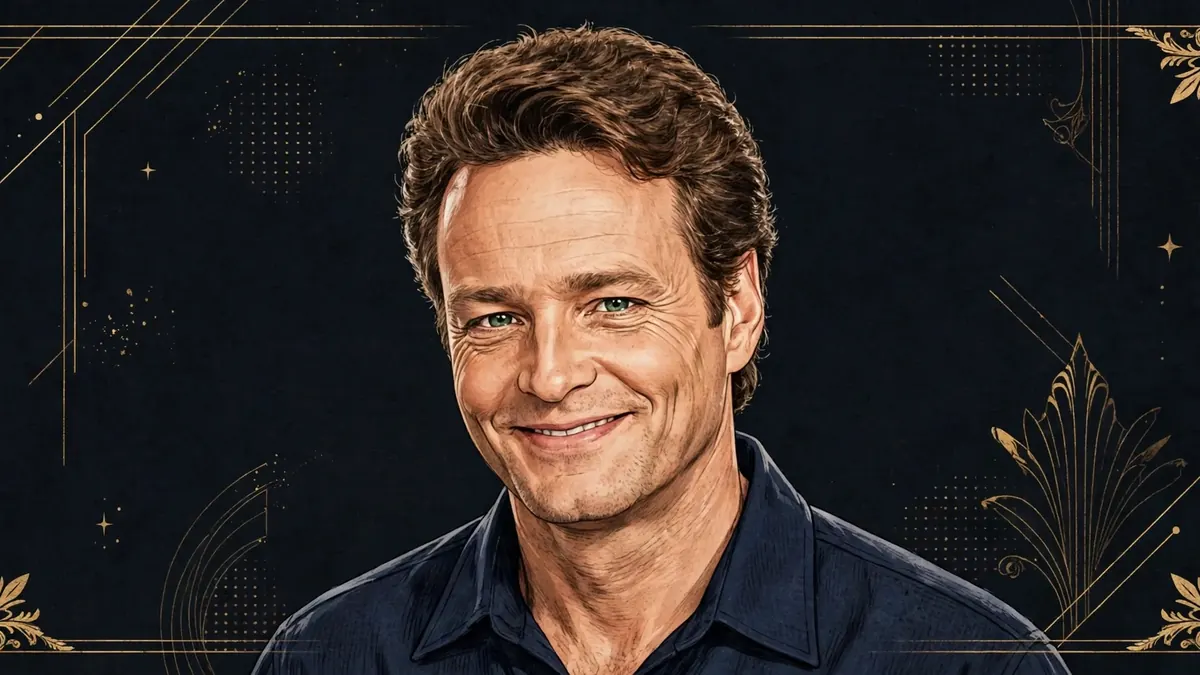
William Russ‘s net worth is estimated at $1.9 million to $2 million as of November 2026. The figure rests on two published estimates that land almost on top of each other: The Legit put him at over $1.9 million in September 2020, and The Richest listed him at $2 million in its Boy Meets World cast ranking. Behind that modest total sits one of the longest working-actor careers in American television — seven seasons as Alan Matthews on Boy Meets World, 142 screen credits listed by IMDb, a directing career that ran in parallel with his acting, and a return to the role in the Disney Channel sequel Girl Meets World.
William Russ: Quick Facts
| Estimated net worth | $1.9 million – $2 million (range: $1.9M–$2M) |
|---|---|
| Profession | Actor, television director |
| Nationality | American |
| Born | October 20, 1950 (age 76) |
| Height | 6 ft (1.83 m) |
| Primary income sources | Television acting, film roles, television directing, residuals and syndication |
| Active years | 1977–present |
| Last reviewed | November 2026 |
- Early Life and Background
- Education
- Career Journey
- Rise to Fame
- Main Sources of Income
- Salary and Earnings
- Businesses and Investments
- Brand Deals and Sponsorships
- Houses, Cars and Other Assets
- Awards and Achievements
- Net Worth Growth Over the Years
- Social Media Presence
- Personal Life
- Sources & Reporting
- Frequently Asked Questions
Early Life and Background
William Hardy Russ IV was born on October 20, 1950, in Portsmouth, Virginia. He turned 76 in October 2026, a birthday marked by fan tributes that repeated the same core facts: Portsmouth birthplace, the Alan Matthews role, a wife named Clare Wren, and two children. Portsmouth sits in the Hampton Roads naval region, and the biographical record describes Russ as the son of a naval officer — the description used by Wikipedia and by IMDb, which calls him a self-described Navy brat. One outlet, The Legit, gives a different account of his parents, describing his father as a taxi driver and his mother as a housewife, and says he was raised an only child. The two versions cannot both be right about his father’s job, and no interview with Russ himself settles it in the public record, so this article follows the naval-officer account used by the reference sources and flags the conflict rather than picking a detail to hide.
What is consistent across the sources is the shape of his youth: a Virginia childhood, school sports, and a pull toward performance that arrived in his late teens. The Legit reports that he played football and soccer at high school and finished school in 1968. IMDb’s biographical note records a detail Russ has mentioned in interviews himself — that before acting paid the bills he worked a string of manual and service jobs, listing welder, cab driver, waiter, cook, dishwasher, and garbage-truck worker among them. That list matters to the money story. Russ did not arrive in Hollywood as a child star or a famous family’s son. He reached his first screen credit at 27, after years of stage work and day jobs, and the fortune he eventually built came from volume and staying power rather than one huge payday.
Portsmouth in the 1950s and 1960s was a working navy town, and the naval connection runs through Russ’s early story in a second way: his family moved in military circles, and the discipline of that background shows up in the way his career unfolded. He did not chase fame in his twenties. He learned a craft first, on stage, and treated acting as a trade. That trade-first attitude explains a career that looks unusual on paper — nearly 50 years of continuous work, more than 140 credits, and no long gaps — and it explains why his net worth, while modest beside the eight-figure fortunes of sitcom leads, reflects a working actor who kept earning for five decades.
Education
Russ attended the University of Michigan, where he studied drama and graduated in 1972, according to The Legit. Michigan gave him two things that shaped his career. First, formal drama training, which he followed with study at the Neighborhood Playhouse in New York, the school associated with the Meisner technique and with generations of stage-trained American actors. Second, an athletic life: he was a member of Michigan’s cheer team at a time when it was all male, and he was also a diver for the university, according to Disney’s reference material and Wikipedia.
The five years after graduation were spent almost entirely on the New York stage. Russ has described that period as his apprenticeship, and the record supports the word. He appeared in stage plays through the mid-1970s, refining his skills before television came calling. Stage pay in 1970s New York was thin — regional and off-Broadway work paid a living wage at best — so those years built craft, not wealth. They also built the reputation that got him his first screen roles: casting directors in New York knew him as a reliable stage actor who could carry a scene without fuss.
That training shows in the roles that followed. Russ has always been a character actor rather than a leading man, and character work rewards exactly what stage training teaches: listening, timing, and the ability to make a small part feel lived-in. His best-reviewed film performance, in Pastime, is a quiet, interior piece of acting that leans on those skills, and his seven years as Alan Matthews worked because he played a father as a real person rather than a sitcom cut-out.
Career Journey
Russ’s screen career began in 1977 with a supporting role in Death Bed: The Bed That Eats, a surreal horror film that was not officially released until 2003. His first television appearance came a year later, in 1978, as Burt McGowan on the soap opera Another World. The 1980s filled in steadily: Just You and Me, Kid (1979) with George Burns and Brooke Shields, Cruising (1980), The Border (1982), and a run of television films and guest spots that included Crisis at Central High (1981) with Joanne Woodward, St. Elsewhere (1986), and Crime Story (1986).
Two 1980s roles still get mentioned in every profile of him. In 1983 he played Slick Goodlin in The Right Stuff, Philip Kaufman’s film about the Mercury astronauts, a prestige picture that put him on screen with Sam Shepard, Ed Harris, and Dennis Quaid. In 1985 he guest-starred in the Miami Vice episode “Evan” as Evan Freed, an ATF agent with a shared history with Don Johnson’s Sonny Crockett — one of the series’ most talked-about episodes. From 1987 to 1990 he appeared 14 times on the crime drama Wiseguy as Roger Lococco, his first recurring television role of real length, and he carried 13 episodes of Capital News in 1990.
The performance that changed how the industry saw him came in Pastime (1990, released in some listings as 1991), in which he played Roy Dean Bream, a veteran minor-league pitcher mentoring a young phenomenon. Critics praised the performance — the Los Angeles Times reviewed the baseball film warmly in August 1991 — and it earned Russ a nomination for Best Male Lead at the 1992 Independent Spirit Awards. He did not win, but the nomination put his name on the independent-film map and remains the only major awards nomination of his career. The baseball connection is worth noting for readers who follow the genre: Kevin Costner’s baseball films made the sport a reliable box-office draw in the same era, and Pastime belongs to that same wave of baseball pictures, even though it worked on a far smaller budget.
Through the early 1990s Russ kept a film career running alongside television: Aspen Extreme (1993), Traces of Red (1992), and television films almost every year. Then, in 1993, came the casting that defined his public identity. He was hired as Alan Matthews on Boy Meets World, the ABC sitcom created by Michael Jacobs and April Kelly, and he stayed with the show until its finale on May 5, 2000. Wikipedia credits him with 120 episodes as a main cast member across the show’s seven seasons; TMDB lists the series at 158 episodes in total. Either way, he was there for the whole run, from Cory Matthews’ middle-school years to his college graduation and wedding.
What many viewers missed is that Russ was already directing by the final seasons. He directed nine episodes of Boy Meets World between 1998 and 2000, including “Heartbreak Cory,” the season-five episode in which Cory meets Lauren at a ski lodge. His former castmates discussed that episode on their Pod Meets World rewatch podcast in 2023, when Russ returned as a guest for a record third appearance, and they credited him with an insert shot — a small piece of visual storytelling the show rarely used — that made the episode stand out. Directing paid separately from acting, gave him a second income stream inside the same production, and set up the second half of his career behind the camera.
After Boy Meets World ended, Russ worked the way veteran character actors work: a guest spot here, a recurring role there, a film every year or two. He starred in the short-lived serial drama Mister Sterling in 2003 as Tommy Doyle, in 10 episodes. He appeared in Deadwood, The Sopranos (as Paul Calviano in the 2006 episode “Moe n’ Joe”), Boston Legal (five episodes as A.D.A. Christopher Palmer from 2005 to 2008), The Young and the Restless, CSI, NCIS, Criminal Minds, Scandal, Colony, Grimm, Bosch (three episodes as Captain Garwood in 2018), 9-1-1 (two episodes in 2019), and Animal Kingdom (three episodes as Tre in 2022). His later film work includes Founders Day (2023), in which he played Mr. Jackson, the slasher film that became his most recent widely seen movie role, and Silver Lake (2025) as Phil Patterson. IMDb also lists a 2026 credit, Treasure of the Lost Reel, as Mr. Fixit — a sign that, at 76, he is still taking roles.
His directing credits after Boy Meets World include one episode of Lizzie McGuire (2003, credited as Rusty Russ) and one episode of Rude Awakening (2000). When Girl Meets World arrived in 2014, Russ returned as Alan Matthews for two episodes — “Girl Meets Home for the Holidays” and “Girl Meets Goodbye” — and directed one more, “Girl Meets Hurricane,” in season two. That made him the only cast member to direct episodes of both Boy Meets World and Girl Meets World, a distinction Wikipedia and the show’s own histories both record. He also served on the production staff of Girl Meets World for 47 episodes between 2015 and 2017, a steady behind-the-scenes job that kept him paid by the franchise long after his acting appearances in it ended.
Rise to Fame
Russ’s rise was slow, and that is the point. He was 43 when Boy Meets World premiered in September 1993, and he had already spent 16 years as a working actor. The show was part of ABC’s TGIF Friday-night lineup, and it followed Cory Matthews from junior high through college, which meant the adult cast had to grow with the children. Alan Matthews, the father, ran a grocery store and later an outdoor-supplies shop; the character’s story was about balancing work and fatherhood, and Russ played him as a man who was figuring it out rather than a man who had all the answers. The role was more prominent in the early seasons, when the family home was the centre of the show, and it stayed a main role for all seven years.
The show’s long run in syndication and on Disney Channel, and later on Disney+, is what turned a seven-year job into a decades-long income. Boy Meets World became a staple of 1990s nostalgia television, and the 2014 sequel Girl Meets World introduced Alan Matthews to a second generation. The Pod Meets World podcast, launched by Danielle Fishel, Rider Strong, and Will Friedle in 2022, kept the cast in the news through the 2020s, and the November 2026 publication of Book Meets World, the cast’s behind-the-scenes memoir from Hanover Square Press, put the show back in the headlines in the same month this article was written.
Within that ensemble, Russ occupied a particular spot: the adult anchor. Sitcom history shows that the adult regulars on a long-running family show tend to earn more, and keep earning longer, than the child stars who grow up on it — compare Tim Allen’s run as the father on Home Improvement, another 1990s ABC family sitcom built around a dad, or Ted Danson’s decades of steady television work, which shows the same pattern of a reliable TV actor building wealth through longevity rather than one breakout film. Russ’s career follows that pattern. He never had a $20 million film payday, and he never needed one: seven seasons of a hit sitcom, plus directing fees, plus nearly two decades of guest work after it, added up to the $1.9 million to $2 million range the published estimates describe.
Fame, for Russ, has always been of the low-key kind. He does not run a public social media account, he rarely gives interviews, and his convention appearances are infrequent. The 2023 Pod Meets World appearance was notable precisely because he had stayed out of the spotlight for so long. That privacy has a financial side too: there are no endorsement deals, no product lines, and no paid-appearance circuit to add to his income, which is one reason his net worth sits well below those of castmates who stayed in the public eye and built second careers.
Main Sources of Income
Four streams built William Russ’s fortune, and they arrived in sequence rather than all at once. The first was film and television acting before 1993 — guest spots, supporting film roles, and television movies. The second, and largest, was Boy Meets World: seven seasons as a series regular, plus directing fees for nine episodes. The third was directing and production work on other series, including Girl Meets World. The fourth, and the one that still pays, is residuals — the payments actors receive when shows they appeared in are rerun, syndicated, or streamed.
Acting fees were the base. A series regular on a network sitcom in the 1990s earned a per-episode fee set by contract, renegotiated between seasons, and Russ held that job for seven seasons without interruption. On top of the fee, he earned directing fees for the nine Boy Meets World episodes he helmed, which are paid under a separate Directors Guild agreement, and later a production-staff salary for 47 episodes of Girl Meets World. Guest appearances after 2000 — single episodes of procedurals such as CSI, NCIS, and Criminal Minds, and short recurring runs on Boston Legal, Bosch, and Animal Kingdom — paid SAG-AFTRA scale or above for each appearance, and each one also generated its own residual stream.
Film work added smaller, lumpier payments. Supporting roles in studio films such as The Right Stuff and American History X paid a flat fee for the shoot, while independent films such as Pastime and Founders Day paid less up front and offered little in the way of backend participation for a supporting actor. Russ has never been reported to hold backend points or profit participation in any film, and this article does not claim any. His film income was real but secondary; television was the engine.
Residuals deserve a closer look because they are the least understood part of a working actor’s income and the most important to Russ’s long tail. Under SAG-AFTRA rules, actors are paid again when a show is rerun or sold to a new platform, with the amounts falling over time. Boy Meets World has been in near-continuous circulation since 2000 — syndication, Disney Channel reruns, and streaming on Disney+ — and every one of those windows generated residual cheques for the cast. The cheques shrink with each cycle, and streaming residuals pay less per view than the old syndication model did, but across 120 credited episodes and 25 years of reruns, they add up to a meaningful sum. No figure for Russ’s residual income has ever been published, so this article does not invent one; the point is structural. A one-season show pays residuals for a while and stops. A seven-season show on a platform that never takes it down keeps paying, in smaller and smaller amounts, for decades.
The web series Home at Last, in which Russ starred as Bob, a homeless man who moves in with the son he abandoned at birth, was a smaller venture — a comedy web series rather than a network job — and there is no published evidence it paid him anything close to network rates. It belongs in the record as creative work, not as a money story. The same applies to his stage work, which ended when his screen career took off and which paid little even at the time.
Salary and Earnings
William Russ’s per-episode salary on Boy Meets World has never been disclosed, and any article that states one as fact is guessing. What can be reported honestly is the pay ladder around him, which the cast laid out in unusual detail in November 2026, when Book Meets World was published and covered by Entertainment Weekly, Page Six, and E! News. According to the book, William Daniels, who played Mr. Feeny, was the highest-paid actor on the set for the first six seasons, earning close to six figures per episode. For season seven, Ben Savage, who played Cory, used his acceptance to Stanford University as bargaining power and negotiated a raise that brought him close to, if not equal to, Daniels’ rate — close to six figures per episode. Danielle Fishel, who played Topanga, received $30,000 per episode for season seven, still 20 percent less than Rider Strong and Will Friedle, who negotiated equal pay with each other. Maitland Ward, who joined the cast in the later seasons as Rachel McGuire, said in 2025 that she earned $20,000 or $25,000 per episode, in comments reported by ComingSoon and US Weekly.
Those numbers frame Russ’s position without fixing it. He was an adult series regular with 16 years of professional experience when the show began, a status that put him above the younger cast in any normal negotiation, and below Daniels, the Emmy-winning veteran who anchored the pay scale. A reader who wants to place him on that ladder can do so with the figures above; this article will not assign him a number the record does not support. What the ladder does show is the scale of the money: even the younger cast earned tens of thousands of dollars per episode by the final season, across a 22-episode season, and the adults earned more. Seven seasons at that level, even after tax and the standard 10 percent agent and 10 percent manager commissions, is the core of a $2 million fortune for an actor who kept working rather than spending it.
Directing paid on top. Directors Guild minimums for a half-hour sitcom episode in the late 1990s ran into five figures per episode, and an actor-director on his own show would typically earn at or above that floor. Nine episodes of Boy Meets World, one of Girl Meets World, and one each of Lizzie McGuire and Rude Awakening add 12 directing fees to his career total, plus the production-staff salary for 47 episodes of Girl Meets World. None of those amounts has been published, and this article reports them as a category of income, not a number.
Two common claims about Russ’s pay should be treated with care. First, some net-worth aggregator sites repeat a single $1.9 million figure without naming a source; that figure traces back to The Legit’s September 2020 estimate, and it should be cited as theirs, not as a fact. Second, no outlet has reported a salary for his Young and the Restless role as Tucker McCall, which lasted only a few months in 2009 before the part was recast with Stephen Nichols. A short soap stint pays well per episode, but a few months of work does not move a net worth by itself, and this article does not claim it did.
For the record on taxes and costs: a California-based actor in the 1990s faced combined federal and state tax rates that could take close to half of top-bracket income, plus agent and manager commissions of around 20 percent combined, plus union dues and the cost of maintaining a career between jobs. That is why a gross career earning figure, even if it could be calculated, would be far higher than the $1.9 million to $2 million net worth that remains. The gap between gross and net is not a mystery; it is the normal arithmetic of an acting career.
Businesses and Investments
There is no public record of William Russ owning a business, launching a product, or holding a reported investment portfolio. IMDb’s biographical note describes him, in its opening line, as a “businessman, entrepreneur, actor and television director,” but no company, venture, or investment tied to him appears in business reporting, interviews, or filings, and this article does not repeat the label as though it were a documented fact. The honest statement is narrower: his wealth came from acting and directing, not from a business empire, and the absence of a business story is itself part of why his net worth is $2 million rather than $20 million.
That absence puts him in a different category from castmates who built second careers. Danielle Fishel moved into directing and hosting; Rider Strong moved into producing and directing; Will Friedle built a long voice-acting career as Batman, Star-Lord, and Deadpool in animated series. Russ’s second career was directing, which is a craft rather than a business, and it paid him fees rather than equity. He never launched a production company, never sold a show, and never attached his name to a brand.
On investments, the same silence applies. No property record, stock holding, or fund has been publicly linked to Russ, and no interview has discussed his finances. It would be wrong to describe a real-estate portfolio or an investment strategy for a person who has never spoken about either. What can be said is that a working actor with a seven-year network salary, a house in Los Angeles, and 25 years of residuals would normally hold most of his wealth in his home and in savings rather than in a visible portfolio, and the $1.9 million to $2 million estimate is consistent with that shape of wealth: a home, savings, and a continuing trickle of residuals, rather than a business or a property empire.
The one investment Russ clearly made was in his own craft — five years of stage work before his first screen credit, and a move into directing that extended his earning life by a decade. That investment paid off in the only currency the record shows: work. He was still being hired at 75, for Animal Kingdom in 2022 and Founders Day in 2023, in an industry that discards most actors by 50.
Brand Deals and Sponsorships
William Russ has no known brand deals or sponsorships. No endorsement contract, advertising campaign, or paid partnership involving him appears in reporting, and he has no public social media account on which a sponsored post could run. That is not an omission in the research; it is a fact about his career. He built his income entirely from performance and directing fees, and his name has never been attached to a product.
The contrast with his castmates is sharp. Maitland Ward has spoken openly about earning six figures a month from adult platforms, a figure she contrasted with her $20,000-to-$25,000-per-episode Boy Meets World pay. Danielle Fishel has hosted and directed. Russ, by comparison, never converted his television fame into a commercial sideline. The trade-off is visible in the numbers: endorsement income is often the difference between a $2 million net worth and a $10 million one for a television actor, and Russ never collected it.
Convention appearances are the one area where a small amount of commercial income may exist. Former Boy Meets World cast members appear at nostalgia conventions, where they are paid appearance fees and sell autographs and photographs. Russ has appeared at such events only rarely, and no fee for any appearance has been reported. If he has earned appearance money, it has been occasional and small, and this article does not count it as a meaningful income stream.

Houses, Cars and Other Assets
No home purchase, property record, or car belonging to William Russ has been publicly reported, and this article will not invent one. That restraint matters, because property is where many net-worth articles quietly fabricate detail. Russ lives a private life in Los Angeles, where he has been based for most of his career, but the address, the purchase price, and the current value of any home he owns are not in the public record, and no outlet has reported them.
What can be said is that a Los Angeles home is the most likely large asset in a $1.9 million to $2 million net worth for an actor of his generation. Actors who bought in Los Angeles in the 1990s, when Russ’s Boy Meets World salary was at its peak, saw those homes appreciate several times over by the 2020s, and that appreciation alone could account for a large share of his wealth. That is a general observation about the Los Angeles market, not a claim about a specific property, and it is labelled as such. If Russ rented rather than owned, the arithmetic changes, and the record does not say which is true.
Cars, watches, art, and other collectibles are equally undocumented. Russ has never been photographed with a luxury car collection, never discussed a watch, and never appeared on a list of celebrity car owners. His public image, such as it is, is of a man who skis and windsurfs — the two pastimes listed in his biographical profiles — and who keeps his private life out of view. A downhill skier owns skis, not a fleet. The absence of a visible luxury lifestyle is consistent with the size of the fortune: $2 million supports a comfortable life, not a conspicuous one.
Awards and Achievements
Russ’s awards record is short, and the shortness is itself informative. He was nominated for Best Male Lead at the 1992 Independent Spirit Awards for Pastime, and he did not win. That nomination is the only major awards nomination listed in his filmography, and it remains the high point of his critical recognition as a film actor. A second, smaller honour appears in The Legit’s profile: in 2012, Russ and his colleagues won a Silver Ace Award at the Las Vegas International Film Festival for Green Guys, the 2011 film in which he played Peter Donnelly.
Boy Meets World itself won five awards and was nominated for 17 others over its run, according to The Legit, but those were ensemble and show honours rather than individual awards for Russ, and this article does not credit them to him personally. He was never nominated for an Emmy, a Golden Globe, or a Screen Actors Guild Award, and he has never won a directing award.
The achievements that matter to his money story are not trophies but durability records. He held a main role on a network sitcom for seven seasons. He directed nine episodes of that sitcom, then directed an episode of its sequel — the only cast member to direct both series. He accumulated 142 acting credits, according to IMDb, across film and television from 1977 to 2026. He worked on the production staff of a Disney Channel series for 47 episodes. And he was still being cast in his mid-seventies, when most of his contemporaries had stopped. None of those facts comes with a prize, but together they are the reason the residuals still arrive and the estimate still holds.
Net Worth Growth Over the Years
The table below is a modelled estimate, not a set of published figures. Only two numbers in it come from outlets: the $1.9 million figure from The Legit, dated September 2020, and the $2 million figure from The Richest, dated December 2019. Every other row is our estimate, built by working backwards from those anchors and forwards from the career milestones in the record. A working actor’s wealth grows in steps — a series-regular salary lifts it, a long gap trims it, residuals slow the decline — and the ranges below reflect that shape. They are wide on purpose. Anyone who gives a precise net worth for William Russ in 1995 is inventing it.
| Year | Estimated net worth | What was happening |
|---|---|---|
| 1985 | $50,000 – $150,000 | Guest spots and supporting film roles; stage years behind him, steady TV work beginning |
| 1990 | $200,000 – $400,000 | Wiseguy recurring role; Pastime and its Independent Spirit nomination |
| 1995 | $500,000 – $800,000 | Two seasons into Boy Meets World as a series regular |
| 2000 | $1 million – $1.5 million | Seven seasons of Boy Meets World complete; directing fees for nine episodes banked |
| 2010 | $1.3 million – $1.7 million | Guest work and The Young and the Restless stint; residuals from syndication and DVD |
| 2019 | $2 million | The Richest cast ranking figure |
| 2020 | Over $1.9 million | The Legit estimate, September 2020 |
| 2026 | $1.9 million – $2 million | Girl Meets World residuals and streaming; Founders Day and Animal Kingdom late-career roles |
Three things stand out in that shape. First, the fortune was built slowly and late: Russ was 50 when Boy Meets World ended, and most of his wealth dates from the second half of his career. Second, it has been flat for a decade, which is what a residual-based income looks like once the big salary years end — the money coming in roughly matches the money going out. Third, there is no spike. No film franchise, no endorsement windfall, and no business sale ever lifted the line. The $1.9 million to $2 million range in 2026 is essentially the same figure the outlets reported in 2019 and 2020, adjusted for six more years of modest income and normal spending.
How does Russ compare with the rest of the Matthews family cast? The Richest’s December 2019 ranking gives a snapshot, and it is the only source that prices the whole cast on the same basis. The figures are seven years old and come from a single outlet, so they should be read as a comparison of order rather than a current valuation — but the order is revealing.
| Cast member | Character | Net worth (The Richest, Dec 2019) |
|---|---|---|
| Ben Savage | Cory Matthews | $12 million |
| Danielle Fishel | Topanga Lawrence | $8 million |
| William Daniels | George Feeny | $5 million |
| Matthew Lawrence | Jack Hunter | $4 million |
| Rider Strong | Shawn Hunter | $3 million |
| William Russ | Alan Matthews | $2 million |
| Betsy Randle | Amy Matthews | $2 million |
| Maitland Ward | Rachel McGuire | $1 million |
| Trina McGee-Davis | Angela Moore | $1 million |
| Will Friedle | Eric Matthews | $500,000 |
Russ sits exactly in the middle of that table, tied with Betsy Randle, who played his on-screen wife. The pattern is plain: the younger stars who stayed visible and built second careers — Savage, Fishel, Daniels — pulled away, while the working actors who kept taking roles without a second income stream clustered around $1 million to $2 million. Russ’s $2 million is not a small fortune for a character actor. It is a normal one, and the table shows why: the show made its leads rich and its supporting cast comfortable.
Social Media Presence
William Russ has no verified public social media account, and no social media presence of any kind is documented for him. He is not on Instagram, X, or TikTok under his own name, and the fan accounts that post birthday tributes to him — including the Instagram collage that marked his 76th birthday in October 2026 — are run by fans, not by Russ. That absence is complete enough that it should be stated plainly rather than filled in with guesses about follower counts.
The absence has a financial cost. A 1990s sitcom star with a social media following can earn appearance fees, sponsored-post income, and convention bookings that Russ does not collect. It also has a reputational benefit: Russ has never been drawn into a public dispute, never had a post taken out of context, and never had to manage a personal brand. His former castmates, who co-host Pod Meets World and maintain public profiles, have had public disagreements — including the rift with Ben Savage that the November 2026 book describes — while Russ has stayed out of all of it.
For readers looking for him online, the reliable places to find Russ are the reference pages, not social feeds: his Wikipedia filmography, his IMDb page with 142 credits, and the Pod Meets World episode in which he returned as a guest in 2023. The Disney+ stream of Boy Meets World is the closest thing to a current public presence he has, and it is a performance, not a profile.
Personal Life
Russ is married to actress Clare Wren, and the couple have two children, a daughter and a son, according to Wikipedia, IMDb, and TMDB. The Legit reports that they met in the mid-1990s, began dating about a week later, and married in the early 2000s in a private ceremony attended by close friends and family. Wren, who is 12 years younger than Russ according to The Legit, is an actress known for The Young Riders, Steel and Lace, Midnight Edition, and JAG. ArticleBio, writing in 2021, put Wren’s own net worth at $100,000 as of July 2021, while repeating the $1.9 million figure for her husband.
The couple have kept their children out of the media, and neither child’s name has been publicly reported. The Legit says their first child was born several months after the wedding and the second three years later; the children’s names and birth dates are not public, and this article does not publish them. That privacy is consistent across every source: no outlet has reported a detail about the children beyond the fact that there are two of them.
Outside acting, Russ’s known pastimes are downhill skiing and windsurfing, both listed in his biographical profiles, along with the thrill sports mentioned in fan tributes. He has also been described as an avid skier since his Michigan days, when he was a diver and a member of the cheer team. He does not discuss his politics, his religion, or his health in public, and no reporting links him to a charity or a foundation. His private life, in short, is private — and the money story reflects that. There are no divorces, lawsuits, or public disputes in the record to explain any sudden change in his wealth, and the $1.9 million to $2 million estimate has stayed steady for exactly that reason.

Sources & Reporting
Reporting window: November 2026. Figures were checked against sources published between December 2019 and November 2026, with career facts verified against reference pages updated in November 2026.
The Legit — the September 2020 profile “Actor William Russ — Net Worth, Height, Wife, Biography” supplied the over-$1.9 million estimate, the height of 6 ft (1.83 m), the account of his parents and schooling, and the details of his marriage to Clare Wren and their two children. Its figures are dated September 2020 and are cited as that outlet’s estimate, not as current fact.
The Richest — the December 8, 2019 cast ranking “Boy Meets World Cast, Ranked By Net Worth” supplied the $2 million figure for Russ and the peer figures in the comparison table (Savage $12 million, Fishel $8 million, Daniels $5 million, Matthew Lawrence $4 million, Strong $3 million, Randle $2 million, Ward $1 million, McGee-Davis $1 million, Friedle $500,000). All ten figures are from that single 2019 ranking and are labelled as such.
Wikipedia — the William Russ biography supplied the birth date and place, the University of Michigan education, the full filmography (including the 120-episode Boy Meets World credit and the nine directing credits), the Girl Meets World return, and the Independent Spirit Awards nomination. Page last reviewed in the November 2026 crawl.
IMDb — the William Russ profile supplied the 142-credit count, the height, the spouse and children, the 2025 Silver Lake and 2026 Treasure of the Lost Reel credits, and the interview note about his pre-acting jobs (welder, cab driver, waiter, cook, dishwasher, garbage-truck worker).
TMDB — the William Russ profile supplied the full birth name (William Hardy Russ IV), the 158-episode series total for Boy Meets World, and the 2023 Founders Day role as Mr. Jackson.
ComingSoon and Us Weekly (via ComingSoon) — Maitland Ward’s statement that she earned $20,000 or $25,000 per episode on Boy Meets World, reported in 2025.
Entertainment Weekly, Page Six, and E! News — coverage of Book Meets World (Hanover Square Press, November 10, 2026) reporting the season-seven pay ladder: William Daniels close to six figures per episode, Ben Savage close to that figure after his Stanford-bargaining raise, and Danielle Fishel at $30,000 per episode.
iHeart — the Pod Meets World episode “William ‘Rusty’ Russ Meets World Again,” in which Russ discussed directing “Heartbreak Cory” and his return to the show’s world.
Los Angeles Times — the August 23, 1991 review of Pastime, cited for the critical reception of Russ’s performance as Roy Dean Bream.
ArticleBio — the Clare Wren profile repeating the $1.9 million figure for Russ and estimating Wren’s own net worth at $100,000 as of July 2021.
What we did not find: no Forbes, Celebrity Net Worth, or Bloomberg figure for Russ; no disclosed per-episode salary for Russ himself; no property record, business filing, or endorsement deal in the public record. Where the record is silent, this article says so instead of filling the gap.
Frequently Asked Questions
What is William Russ’s net worth in 2026?
William Russ’s net worth is estimated at $1.9 million to $2 million as of November 2026. The Legit estimated it at over $1.9 million in September 2020, and The Richest listed him at $2 million in its December 2019 Boy Meets World cast ranking. No rich list such as Forbes has published a verified figure, so the honest answer is a range built on those two published estimates.
How old is William Russ?
William Russ was born on October 20, 1950, in Portsmouth, Virginia, which makes him 76 years old as of November 2026. He celebrated his 76th birthday in October 2026, marked by fan tributes on social media.
Who is William Russ’s wife?
William Russ is married to actress Clare Wren, known for The Young Riders, Steel and Lace, Midnight Edition, and JAG. The Legit reports they met in the mid-1990s and married in the early 2000s in a private ceremony. They have two children, a daughter and a son, whose names have not been publicly reported.
How tall is William Russ?
William Russ is 6 feet tall (1.83 m), according to IMDb. A TMDB biographical note describes him as 6-foot-1, so the two sources differ by an inch; the IMDb figure is used in this article’s quick-facts table.
What role did William Russ play on Boy Meets World?
William Russ played Alan Matthews, the father of Cory and Eric Matthews, on Boy Meets World from 1993 to 2000. He was a main cast member for all seven seasons and also directed nine episodes of the series in its final three seasons. He returned as Alan in two episodes of the sequel Girl Meets World (2014–2017).
Did William Russ direct episodes of Boy Meets World?
Yes. Russ directed nine episodes of Boy Meets World between 1998 and 2000, including the season-five episode “Heartbreak Cory.” He also directed one episode of Girl Meets World (“Girl Meets Hurricane”), one episode of Lizzie McGuire, and one episode of Rude Awakening — making him the only cast member to direct episodes of both Boy Meets World and Girl Meets World.
How much did William Russ make per episode on Boy Meets World?
His per-episode salary was never disclosed, so no reliable figure exists. The pay ladder around him is documented: the November 2026 book Book Meets World reports William Daniels earned close to six figures per episode, Ben Savage negotiated close to that in season seven, Danielle Fishel earned $30,000 per episode in season seven, and Maitland Ward has said she earned $20,000 or $25,000 per episode. Russ, an adult series regular, would have sat above the younger cast on that ladder, but assigning him a number would be guesswork.
What is William Russ doing now?
At 76, Russ is still taking acting roles. His recent credits include three episodes of Animal Kingdom as Tre in 2022, the horror film Founders Day as Mr. Jackson in 2023, Silver Lake as Phil Patterson in 2025, and a listed 2026 credit, Treasure of the Lost Reel, as Mr. Fixit. He has no public social media account and rarely gives interviews.
Final Thoughts
William Russ’s net worth of $1.9 million to $2 million will never top a richest-actors list, and that is precisely what makes it an honest story. He earned it the slow way: five years on stage, sixteen years of guest spots and supporting film roles, seven seasons as the father on a hit sitcom, a second career as a director on the same shows, and a quarter-century of residuals from a series that never left the air. The two published estimates agree with each other, the pay ladder revealed in November 2026 explains how the money was made, and the flat trend since 2019 fits a working actor living on residuals and occasional roles rather than chasing a windfall.
The comparison with his castmates puts the figure in context. Ben Savage’s $12 million and Danielle Fishel’s $8 million came from staying visible and building second careers; Russ’s $2 million came from staying employed. Both are legitimate ways to make a living in television, and only one of them makes headlines. Russ chose the other one, kept his family out of the press, and was still being hired at 76. For a character actor who started as a welder and a cab driver before his first screen credit at 27, that is not a modest outcome. It is the whole point of the career.
Published on November 21, 2026. Last reviewed November 2026. Found an error? See our corrections policy.