
Lauren Hutton‘s net worth is estimated at $10 million to $20 million as of November 2026. The 83-year-old supermodel and actress built that fortune twice: first on the biggest modeling contract of the 1970s — $250,000 a year from Revlon for 20 days of work — and then again from scratch in her fifties, after discovering the partner who managed her money had spent most of what she earned. She still books campaigns in her eighties, walking for Bottega Veneta in 2026 and fronting a Gant campaign in February of the same year.
Lauren Hutton: Quick Facts
| Estimated net worth | $10 million – $20 million (range: $10 million to $20 million) |
|---|---|
| Profession | Model, actress |
| Nationality | American |
| Born | November 17, 1943 (age 83) |
| Height | 5 ft 7 in (1.70 m) |
| Primary income sources | Modeling contracts and campaigns, film and television roles, brand ambassadorships, her own cosmetics line |
| Active years | 1963–present |
| Last reviewed | November 2026 |
- Early Life and Background
- Education
- Career Journey
- Rise to Fame
- Main Sources of Income
- Salary and Earnings
- Businesses and Investments
- Brand Deals and Sponsorships
- Houses, Cars and Other Assets
- Awards and Achievements
- Net Worth Growth Over the Years
- Social Media Presence
- Personal Life
- Sources & Reporting
- Frequently Asked Questions
- Final Thoughts
Early Life and Background
Lauren Hutton was born Mary Laurence Hutton on November 17, 1943, in Charleston, South Carolina, to Lawrence Bryan Hutton and Minnie (Behrens) Hutton. Her father, a Mississippi native who grew up next door to the writer William Faulkner, was stationed in England with the U.S. Army Air Corps when she was born. She never knew him. Her parents divorced in 1945, her mother moved with her to Miami and then Tampa, Florida, and her father died of a heart attack on June 24, 1956, at 37, while working as a farm editor for The Cotton Trade Journal. Hutton later said never meeting her father was the most painful thing in her life, and that all she had of him were two books of his letters and drawings from the war.
After her mother remarried in 1949, Hutton took the surname Hall, though her stepfather never formally adopted her. She grew up in Tampa as a self-described tomboy, spending her days outdoors, and graduated from Chamberlain High School in Tampa in 1961. She was among the first students to attend the University of South Florida, enrolling the same year she finished high school.
The move that changed her life came through a Tampa disc jockey named Pat Chamburs, a war veteran 19 years her senior who had lost a leg in a kamikaze attack. Hutton relocated to New York City with Chamburs, where she worked as a “Bunny” waitress at the Playboy Club. The name change happened there: with too many cocktail waitresses named Mary on staff, she began going by Lauren, a variation on her middle name, inspired by Lauren Bacall. She made her first appearance on camera in 1963 as a decoy contestant on the game show To Tell the Truth. The couple later lived in Europe and the Bahamas before moving to New Orleans, where she finished her degree.
That southern, outdoorsy childhood stayed with her for the rest of her career. Decades later, interviewers still met a woman who talked about scuba diving, motorcycles, and wildlife with the same ease she talked about couture — a mix that set her apart from the polished, European-born models who dominated fashion in the 1960s.
Education
Hutton’s schooling ran in two parts. She started at the University of South Florida in 1961, one of its first students, and left after a year to try her luck in New York. After the Playboy Club stint and time abroad with Chamburs, she enrolled at Newcomb College, then the coordinate women’s college within Tulane University in New Orleans, and graduated with a Bachelor of Arts degree in 1964.
The degree matters to the money story in a quiet way. Hutton was not a teenager plucked from nowhere and handed a contract; she arrived in New York in her early twenties, literate, well-read, and old enough to read a newspaper front page and spot a business idea in it. That is exactly what happened in 1973, when a New York Times story about a baseball player demanding a million-dollar contract gave her the idea to demand one of her own. She was 31 by then, an age at which most models of the era were already being pushed out — and she turned it into the most lucrative negotiating position in the industry.
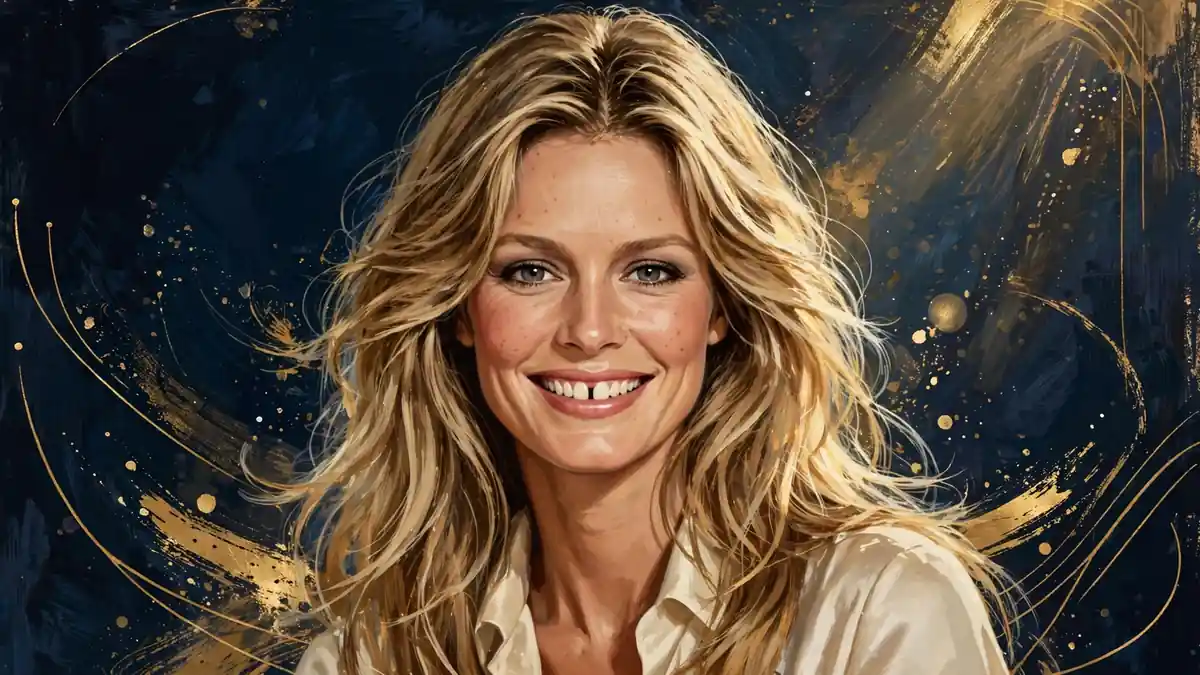
Agents had told her for years that her gap-toothed smile was a flaw to fix. She tried morticians’ wax to cover the gap, cutting a line down the middle of it, and later a cap she kept swallowing, laughing out, or misplacing. She gave up hiding it, and the gap became the most recognizable smile in American fashion — the detail that made her face impossible to confuse with anyone else’s on a newsstand.
Career Journey
Hutton returned to New York by herself in the mid-1960s and signed with the Ford Modeling Agency. Her first Vogue cover came in November 1966. Work followed fast: in 1968 she appeared in a Chanel advertisement photographed by Richard Avedon, one of the most sought-after fashion photographers alive, and the same year she made her film debut in Paper Lion, the sports drama starring Alan Alda. The modeling and the acting ran side by side from the start, and both paid.
The 1970s were her peak earning decade. The Revlon contract, signed in 1973, paid $250,000 a year for 20 days of work and ran for ten years. She became a fixture on magazine covers, appearing on the front of Vogue a record 26 times, according to Wikipedia and Celebrity Net Worth — a figure this article examines in the awards section, because other outlets count differently. She also worked steadily in film: The Gambler in 1974 opposite James Caan, John Carpenter’s television movie Someone’s Watching Me! in 1978, and the female lead in American Gigolo in 1980 opposite Richard Gere.
The 1980s were harder. Revlon ended the first contract after a decade, when Hutton was around 40, and film roles thinned into B-movies. She appeared in two Pepsi Light commercials in 1982 — one in which she strips to a one-piece swimsuit and dives into a pool — and in a Barneys New York campaign in 1988. In 1993 she walked the runway for Calvin Klein, and The New York Times responded with an article saying she was “just as good as the current flock of fledglings.” She also found a second home on television, with the primetime soap Paper Dolls in 1984, the miniseries Sins in 1986 opposite Joan Collins, several episodes of Falcon Crest in 1987, and the CBS soap Central Park West in 1995, playing the wealthy socialite Linda Fairchild.
Then came the collapse. When her partner and financial manager Bob Williamson died in 1997, Hutton discovered that the fortune she believed she had was mostly gone. She was in her fifties, an age when the fashion industry had already written her off once, and she went back to work. The rebuild ran through catalogues and department stores first — Barneys and J.Crew in 1989, a brand ambassadorship for the Australian department store David Jones from 1997 until Megan Gale replaced her in 2001 — and then through a long second act that no one in fashion had planned for a model past 50.
From 2008 onward, the comeback became the story. She appeared in the lookbook for Mary-Kate and Ashley Olsen’s line The Row in 2008, the same year retailer Mango launched a collection inspired by her personal style and she appeared in Lord & Taylor’s fall/winter and spring collections. She was a guest judge on Project Runway in 2010, appeared in J.Crew advertising the same year, and in 2011 walked the runway for Tom Ford’s spring 2012 collection and became the house model for Alexis Bittar jewelry. She appeared in Alexander Wang’s “Do Something” campaign in 2015 alongside Rod Stewart and Kate Moss, walked for Bottega Veneta at the 2016 New York Fashion Week, and at 73 starred in a Calvin Klein underwear campaign directed by Sofia Coppola in 2017. In August 2019, StriVectin named her its first celebrity global brand ambassador in a multiyear deal. She has never stopped: she attended Paris Fashion Week in September 2024 at 80, sat front row at the Giorgio Armani show during Milan Fashion Week on September 28, 2025, walked for Bottega Veneta’s Spring 2026 show, and fronted a Gant campaign in February 2026.
Rise to Fame
Hutton’s rise had two distinct peaks, and the second is the more remarkable one. The first peak was the Revlon deal of 1973. Before it, models worked by the hour — Hutton herself was earning $400 a day for makeup ads, doing four in a year, which was more than anyone else. She was about to turn 31, an age she described as “horrifying” in an industry where no one was anywhere near that age, and she was reading the front page of the New York Times when she saw a story about a baseball player, about to turn 35, saying he was in a youth-oriented business and needed a million-dollar contract. She shouted across the room to Williamson, who was reading the Wall Street Journal, and said she needed a contract. His advice was blunt: tell Eileen Ford she would not do any more makeup ads, and tell all her photographers the same.
She did. She went to Revlon with a proposition no model had made before: instead of paying her by the hour, sign her to an exclusive contract — $250,000 a year, 20 days of work in any given year, and she was theirs. Revlon agreed, for its Ultima II brand. The deal was the biggest contract in the history of the modeling industry at the time, and Hutton told W magazine years later that within weeks, no girl in the business was working by the hour anymore. The contract made her the face of Revlon for a decade and turned a day-rate worker into a salaried star — the template every supermodel contract since has followed, from Cindy Crawford’s Pepsi and Revlon deals to the nine-figure endorsement portfolios of today’s top models.
The second peak was the comeback. After Williamson’s death in 1997 left her nearly broke, Hutton rebuilt in public, at an age when the industry’s rulebook said she was finished. The November 1999 Millennium cover of American Vogue, which presented her as one of the “Modern Muses,” marked the turn. Then came the run of campaigns and runways in her sixties and seventies — Tom Ford, Bottega Veneta, Calvin Klein, Alexander Wang — each one newsworthy precisely because a woman of her age was not supposed to be booking it. In 2005, at 61, she posed nude for Big magazine’s “Lauren Hutton: The Beautiful Persists” feature and defended the shoot on ABC’s Good Morning America, saying she wanted women not to feel ashamed of who they are. The fame she holds now rests on longevity and defiance as much as on the Revlon years, and it is the reason brands still call her in her eighties.
Her film career added a separate strand of fame. American Gigolo, released in 1980, cast her as the wealthy, daring adulteress opposite Richard Gere, and the film’s Armani-soaked style made it a cultural marker. She was 35 while filming it and living at the Chateau Marmont. The Gambler, six years earlier, had already shown she could hold a screen opposite James Caan. Acting never paid her what modeling did, but it kept her name in front of audiences who never opened a fashion magazine, and it gave her a second career to fall back on when the modeling work slowed.
Main Sources of Income
Hutton’s money has always come from four streams, in different proportions at different stages of her life. Modeling contracts and campaign fees dominate: the Revlon decade, the second Revlon deal for the Results line twenty years later, and the long run of campaigns from Barneys and J.Crew through H&M, Lord & Taylor, Alexander Wang, and Calvin Klein. Acting fees form the second stream — film roles from Paper Lion in 1968 through The Joneses in 2009, plus television series work on Paper Dolls, Falcon Crest, and Central Park West, and her own late-night talk show, Lauren Hutton and…, which ran on Turner from 1996 to 1997.
Brand ambassadorships are the third stream, and they matter more in her later career than in her early one. The David Jones ambassadorship in Australia ran from 1997 to 2001. The StriVectin deal, signed in August 2019, made her the skincare brand’s first celebrity face in a multiyear global partnership, with a campaign built around the line “Hold on to your collagen. At every age.” and featuring her goddaughter Nina Clemente. These later deals pay less per year than the Revlon contract did in real terms, but they run for years and cost her far fewer working days.
The fourth stream is her own product. After recovering from the motorcycle crash in 2000, she became the spokeswoman for her own signature cosmetics line, “Lauren Hutton’s Good Stuff,” aimed at mature women and sold mainly in the United States, with secondary distribution in Europe and South America. In November 2010 she signed with Henson Independent Properties, the licensing arm of the Jim Henson Company, as the global licensing agent for a merchandising program aimed at women over 40 — eyewear, handbags, luggage, and home décor, launched globally in 2012. The licensing model meant she earned from the use of her name and image without running a factory or a store.
What she does not have is equally telling. There is no record of a major real-estate portfolio, no restaurant or fashion label of her own, and no venture-capital activity. Her wealth is the accumulated remainder of fees, not the product of a business empire — which is why the 1997 wipeout cut so deep. When the manager who held the money was gone, there was no company or property portfolio left behind to cushion the loss.
Salary and Earnings
The only hard salary figure in Hutton’s record is also the most famous one: $250,000 a year from Revlon, starting in 1973, for 20 days of work per year, for ten years. That is $2.5 million in nominal pay across the life of the contract. Adjusted for inflation, the $250,000 annual payment is worth about $1.81 million in 2025 dollars, according to the inflation figure carried by Wikipedia, while Celebrity Net Worth puts the same payment at about $1.7 million in today’s dollars. Either way, the ten-year deal was worth roughly $17–$18 million in today’s money — before tax, before agency commission, and before the manager who handled it.
Before Revlon, the numbers were smaller but still strong for the era. She earned $400 a day for makeup advertisements, and did four of them in the year before the contract — more than any other model that year. Day-rate work of that kind, plus editorial fees and catalogue work, made her one of the best-paid models in New York before she ever signed an exclusive deal. The contract’s real strength lay in its structure, as much as in the headline number. Twenty days a year left her free for 345 other days of film roles, editorials, and commercials, all of which paid separately.
After the first Revlon deal ended, her fees are harder to pin down, because neither Hutton nor the brands published them. What the record does show is volume: Pepsi Light commercials in 1982, Barneys in 1988, a Calvin Klein runway in 1993, David Jones campaigns from 1997, catalogues for Barneys and J.Crew around 1989, and then the long late-career run — The Row, Mango, Lord & Taylor, Badgley Mischka, J.Crew, Club Monaco, Alexis Bittar, Alexander Wang, Tod’s, H&M, Bottega Veneta, Calvin Klein, StriVectin. A model who books that many campaigns across six decades is earning steadily, even if no single fee makes headlines.
Acting pay is the least documented part of her earnings. Film salaries for supporting and leading roles in the 1970s and 1980s were modest by modern standards, and Hutton’s own account suggests she sometimes took roles for the wrong reasons — she later said she took acting work she should not have taken in the 1980s simply to spend time away from Williamson. Her 1995–96 run on Central Park West and her 1996–97 talk show would have paid network-television rates, but no figures have been published. This article does not invent them.
The honest way to read her lifetime earnings is as two fortunes. The first, built between 1966 and 1997, was large — Hutton herself has said her modeling and acting money should have grown to at least $30–$40 million if it had simply been invested passively — and most of it vanished under Williamson’s management. The second, built from 1997 onward in her fifties, sixties, seventies, and eighties, is the one she still holds. The $10–$20 million estimate reflects the second fortune plus whatever survived of the first, not the $30–$40 million she might have held with honest management.
Businesses and Investments
Hutton never built a company in the way later supermodels did. Cindy Crawford turned her name into Meaningful Beauty, a skincare business with real scale; Hutton’s equivalent, “Lauren Hutton’s Good Stuff,” remained a niche cosmetics line for mature women, launched after her 2000 motorcycle crash and sold mainly in the United States. It kept her name on shelves and paid her as its spokeswoman, but nothing in the public record suggests it became a large business, and it is not cited as a major wealth driver by any outlet that tracks her fortune.
The Henson licensing deal of 2010 was the more businesslike move. By appointing Henson Independent Properties as global licensing agent for a merchandising program — eyewear, handbags, luggage, home décor, aimed at women over 40 and launched globally in 2012 — Hutton monetized her name without operating a business. Licensing income of that kind is typically a royalty on wholesale sales, modest per unit but steady, and it fits a pattern: she has always preferred to be paid for her face and her name rather than to run an operation.
Her talk-show venture points the same way. Lauren Hutton and…, which debuted in 1996 for Turner Original Production and ran until 1997, was made with her partner at the time, Luca Babini, who directed it and handled set design and post-production. The couple founded Lula Productions as part of the arrangement with Turner. The show lasted about a year, and there is no public record of it generating lasting business income.
On investments, the record is defined by its absence. Hutton has never spoken publicly about a stock portfolio, a property portfolio, or a business stake, and the defining financial fact of her life is that she delegated money management entirely to Williamson. In a 1996 interview she explained the psychology plainly: she had no father, she wanted a child with a protector, and Williamson gave her a way to see the world. She trusted one person with everything, never checked the accounts, and learned the cost only after his death. The lesson of her finances is not a clever investment; it is the absence of one, and the rebuild that followed.
That rebuild was itself a kind of investment strategy — in the only asset she controlled outright. She kept working, kept her name visible, and kept saying yes to campaigns that other models her age were not offered. The StriVectin deal at 76, the Bottega Veneta runway at 82, and the Gant campaign at 82 are the returns on that strategy. For a performer whose wealth was once wiped out by trusting the wrong person, the safest investment turned out to be her own continued employability.
Brand Deals and Sponsorships
Revlon is the deal that defines her, and it came in two chapters. The first, signed in 1973 for the Ultima II brand, paid $250,000 a year for 20 days of work and ran for ten years. The second came twenty years later, when she signed a new Revlon contract to be the spokeswoman for Results, a line of corrective moisturizing treatments. Between them, Revlon was the spine of her modeling income for much of her adult life, and the first contract’s structure — exclusivity for a fixed number of days at a fixed annual fee — became the template for the industry.
The rest of the list reads like a history of American fashion retail. Chanel photographed her in 1968, with Richard Avedon behind the camera. Pepsi Light put her in two commercials in 1982. Barneys New York featured her in 1988 and again in catalogues around 1989, alongside J.Crew. Calvin Klein put her on the runway in 1993 and, in 2017, cast her at 73 in its underwear campaign, directed by Sofia Coppola, closing the film with the tagline “Calvin Klein, or nothing at all.” David Jones, the Australian department store, made her its brand ambassador in 1997. The Row, Mango, Lord & Taylor, Badgley Mischka, J.Crew, Club Monaco, Alexis Bittar, Alexander Wang, Tod’s, and H&M all followed.
Two of those deals deserve a closer look, because they show how her value changed with age. The Calvin Klein underwear campaign of April 2017 cast her alongside Kirsten Dunst, Rashida Jones, Laura Harrier, and Maya Thurman-Hawke in a short film series directed by Coppola, who hand-picked Hutton herself — the two families had been friends for more than 30 years, according to the brand. Hutton appears at the end of her film, in an oversized polka-dot shirt open over a white bra, grinning straight at the camera with the gap tooth on show. The campaign ran in the same season she walked the Bottega Veneta Spring 2017 show, leading the finale arm-in-arm with Gigi Hadid and carrying the house’s new “Lauren” bag, an update of the archival clutch her American Gigolo character had carried. One season, two houses, and a 73-year-old model at the center of both — that is not a nostalgia booking, it is a brand using her as its sharpest asset.
StriVectin, signed in August 2019, was the most deliberate deal of her late career. The skincare brand had never signed a celebrity face before, and it chose a 76-year-old as its first global ambassador, tying the announcement to the relaunch of its first-ever product, SD Advanced Plus Intensive Moisturizing Concentrate. The campaign, which broke in September magazines and online, featured Hutton with her goddaughter Nina Clemente under the message “Hold on to your collagen. At every age.” Hutton told NewBeauty she was approached by plenty of brands, mostly car companies by then, but StriVectin was the product she actually used — she sent it to her three sisters and got good reports back. The multiyear partnership gave her a steady, age-positive income stream in her late seventies, and it is still the deal she talks about most warmly.
Smaller deals filled the gaps. She was a guest judge on Project Runway in 2010, appeared in the Metropolitan Museum’s “Model as Muse” roundtable in May 2009 alongside Iman and Paulina Porizkova, and modeled for Tod’s Timeless Icons retrospective in 2016. None of these paid Revlon money. Together, they kept her earning across six decades, which is the real achievement: very few models book paid work in their twenties, their fifties, and their eighties.
Houses, Cars and Other Assets
Hutton’s property record is modest, and that modesty is part of the financial story. As of 2004, she lived mainly in Taos, New Mexico, where she owned a prefab steel home, and she also kept a home in Manhattan’s NoHo neighborhood. A prefab steel house in the high desert is a long way from the mansion portfolios that anchor most celebrity net-worth stories, and it fits a woman who has always described herself as outdoorsy rather than acquisitive. No purchase price, no sale, and no mortgage record for either home has been published, so this article assigns no dollar value to her property.
Cars tell a similar story. Hutton is a lifelong motorcyclist, not a collector of exotic cars, and the vehicle most associated with her is a motorcycle — the one she was riding in October 2000 when she crashed near Hoover Dam at more than 100 miles per hour during a 100-mile ride celebrating “The Art of the Motorcycle,” the Guggenheim exhibition, in the company of Dennis Hopper, Laurence Fishburne, and Jeremy Irons. She suffered multiple leg fractures, a fractured arm, broken ribs and sternum, and a punctured lung. Hopper had insisted she wear motorbike leathers, and Irons had given her a full-face helmet minutes before the crash — two small decisions that likely saved her life. She recovered fully and kept riding.
Her other tangible assets are the professional kind: a name that still books campaigns, a face that still sells skincare, and a filmography that still pays residuals. American Gigolo and The Gambler remain in circulation, and her television work, including Nip/Tuck and Central Park West, still streams. Residuals from work of that vintage are small per showing, but they accumulate across decades and platforms, and they arrive without her having to leave Taos.
The absence of a property empire is worth stating plainly, because it disciplines the estimate. A $10–$20 million fortune built from fees, with one modest home in New Mexico and one in Manhattan, is a very different shape from the same headline number built on a $30 million real-estate portfolio. Hutton’s wealth is liquid and career-shaped: it rises when she books, and it stops rising when she stops. That is why the 2025 and 2026 bookings matter to the number — an 82-year-old still walking runways is still adding to it.
Awards and Achievements
Hutton’s trophy case is not a shelf of statuettes; it is a set of firsts and records, and they are worth listing precisely because they explain her earning power.
First, the contract. In 1973 she signed the biggest modeling contract in history to that point, and the first exclusive beauty contract any model had held. She proposed the structure herself, and within weeks, as she later told W magazine, no model in the business was working by the hour anymore. That is a labor achievement as much as a personal one: she changed the pay model for an entire profession, and the models who followed her — including Kendall Jenner, whose generation earns eight-figure annual sums from contracts Hutton’s deal made thinkable — work in a market she helped create.
Second, the covers. She appeared on the front of Vogue a record 26 times, according to Wikipedia and Celebrity Net Worth, and The Zoe Report counts 26 American Vogue covers and 40 worldwide. Other outlets give different numbers — some say 27, some 41 — and the disagreement is instructive. Cover counts depend on what you count: American Vogue alone, all international editions, or every magazine with Vogue in the title. The 26-figure is the one the most careful sources agree on, and it is the one this article uses. By any count, she holds the record for the most Vogue covers of any model, and the record has stood for decades.
Third, the longevity records. She was presented on the November 1999 Millennium cover of American Vogue as one of the “Modern Muses.” She walked for Tom Ford at 68, for Bottega Veneta at 72 and again at 82, starred in a Calvin Klein underwear campaign at 73, and became a skincare brand’s first celebrity ambassador at 76. She modeled for H&M’s fall 2016 video campaign at 72, appeared in Alexander Wang’s “Do Something” campaign at 71, and posed nude for Big magazine at 61. Each of those bookings broke an unspoken age rule, and together they make her the most durable modeling career on record.
Fourth, the screen career. Her film debut came in Paper Lion in 1968, opposite Alan Alda, and her central roles in The Gambler (1974) and American Gigolo (1980) are still the films she is introduced by. Television added Paper Dolls in 1984 — co-starring Morgan Fairchild — Falcon Crest, Central Park West, and a guest run on Nip/Tuck. She has no major acting award, and this article does not invent one. Her achievement in acting was different: she was one of the first models to cross into serious film roles and be taken seriously there, a crossing that is routine now and was rare then.
Fifth, the cultural honor that is harder to measure: she is regularly named among the original supermodels, the generation that turned modeling from anonymous day work into celebrity. She did it without hiding the gap in her teeth, without lying about her age — agents told her to say she was 18 when she entered the industry at 22, and she refused — and without retiring when the industry told her to. Those refusals are the through-line of her career, and they are also, in a direct sense, the reason she is still earning.
Net Worth Growth Over the Years
Year-by-year net-worth figures for Hutton do not exist in any reliable source, and this article will not manufacture them. What the record does support is a timeline of reported milestones, with the honest gaps left visible.
| Period | Reported milestone |
|---|---|
| 1966–1972 | First Vogue cover (November 1966); Chanel campaign with Avedon (1968); film debut in Paper Lion. Day-rate modeling at up to $400 a day. |
| 1973–1983 | Revlon contract: $250,000 a year for 20 days of work, ten years — $2.5 million nominal, roughly $17–$18 million in today’s money. |
| 1984–1996 | Film and television work (Paper Dolls, Falcon Crest, Central Park West); second Revlon deal for Results; Barneys and catalogue work. Earnings continue; management stays with Williamson. |
| 1997 | Williamson dies. Hutton believes she is worth $15–$20 million and discovers she is nearly broke; between $13 million (Celebrity Net Worth) and $30 million (Wikipedia) had been spent or lost. |
| 1998–2009 | Rebuild: David Jones ambassadorship, catalogues, The Joneses (2009), The Row lookbook and Mango collection (2008). |
| 2010–2019 | Tom Ford runway, Alexis Bittar, Alexander Wang, H&M, Bottega Veneta, Calvin Klein at 73; StriVectin global ambassadorship (2019). Steady late-career fees. |
| 2020–2026 | Continued fashion-week presence; Paris Fashion Week at 80 (2024); Milan front row (September 2025); Bottega Veneta Spring 2026 runway; Gant campaign (February 2026). |
| November 2026 | Estimated net worth: $10 million (Celebrity Net Worth) to $20 million (The Richest, NetWorthPost). |
How does she compare with the models who followed her? The gap is large, and it is mostly explained by the 1997 loss and by the era she worked in. The table below uses figures as listed by Celebrity Net Worth, the same outlet that puts Hutton at $10 million, so the comparison is apples-to-apples within one source’s method.
| Model | Reported net worth (Celebrity Net Worth) | What sets the figure apart |
|---|---|---|
| Lauren Hutton | $10 million | Revlon pioneer; fortune rebuilt after a $13–$30 million loss in 1997 |
| Cindy Crawford | $400 million | Decades of endorsements plus the Meaningful Beauty skincare business |
| Naomi Campbell | $80 million | Four decades of runway and campaigns at the top of the industry |
| Kendall Jenner | $150 million | Highest-paid model of her generation; contracts Hutton’s deal made possible |
The comparison flatters no one and excuses nothing. Hutton earned first, at a time when the money was smaller and the contracts were new, and then lost most of it to a manager she trusted completely. Crawford and Jenner kept their earnings and turned them into businesses. Hutton’s number is lower because her history is rougher — and because she spent her fifties rebuilding instead of compounding. The $10–$20 million range is, in that light, a recovery story as much as a valuation.
Social Media Presence
Hutton has no personal social-media presence, and she has said so herself. In a 2019 NewBeauty interview she put it plainly: “I’ve never had social media.” She once ran a makeup company whose advertising ran to hundreds of millions of dollars, and that company had a Facebook page, but she did not. Fan accounts and agency pages carry her name and image, and IMG Models, which represents her as one of its “Special Bookings” models, features her in its roster materials — but there is no verified personal Instagram, TikTok, or X account run by Hutton herself.
That absence is commercially relevant. A model of her generation who relied on social following for income would be finished; Hutton earns from bookings, campaigns, and ambassadorships, not from sponsored posts. It also means the usual follower-count math that props up younger models’ valuations does not apply to her. Her value to a brand is her face, her history, and the press coverage her age-defying bookings generate — the Calvin Klein campaign at 73 and the Bottega Veneta runway at 82 earned more media than most influencers’ posts ever will.
She stays visible the old-fashioned way: front rows and runways. She attended Paris Fashion Week in September 2024 at 80, sat front row at the Giorgio Armani show during Milan Womenswear Spring/Summer 2026 on September 28, 2025, alongside Cate Blanchett and Glenn Close, and appeared at the Dior Cruise 2027 show in early 2026. Fashion-week photographers do the distribution work that an Instagram account would do for a younger model, and the pictures travel just as far.
Personal Life
Hutton never married and has no children. Her defining relationship was with Robert “Bob” Williamson, a freelance stock speculator and self-taught intellectual she met when she was 21. They were together from 1964 until his death in 1997, and he served as her career and financial manager for much of that time. Accounts differ on the exact length — some say 27 years, others 37 — but the dates themselves, 1964 to 1997, are not in dispute. When he died, she discovered the scale of what had happened to her money: she had believed she was worth somewhere in the $15–$20 million range, and found herself nearly broke. Celebrity Net Worth puts the amount he squandered at $13 million; Wikipedia, drawing on interviews Hutton gave afterward, puts it at some $30 million; one account of the aftermath says only about $400,000 remained of roughly $30 million earned. His will left $2.5 million to his new wife and nothing to Hutton.
She has spoken about the relationship with unusual candor. She said she was looking for a father figure — she had never met her own father — and wanted a child with a protector, and that Williamson gave her a way to see the world and think about how people lived. She also said, years later, that she should have walked away after ten years but did not have the courage, and that she took acting roles in the 1980s she should not have taken simply to spend time away from him. She never dated anyone after his death, according to multiple profiles of her later life.
She later had a relationship with Luca Babini, whom she met on a film set in 1991. Babini directed her talk show, handled its set design and post-production, and co-founded Lula Productions with her. He described her in 1996 as accessible and down to earth, with very clear opinions she was willing to express.
Outside work, she is a scuba diver, a motorcyclist, and a longtime resident of Taos, New Mexico, where she has lived mainly since the early 2000s in a prefab steel home, with a home in Manhattan’s NoHo neighborhood as well. She has fourteen godchildren — she sought their permission before posing nude for Big magazine at 61, and they told her the photographs would be inspirational. She survived a surfing accident in Hawaii in April 2009, nine years after the motorcycle crash that nearly killed her, and kept working through both recoveries.
Sources & Reporting
Reporting window: sources published between 2017 and November 2026, with the core biographical record drawn from reference works and interviews spanning 1996–2026. Every figure in this article traces to one of the outlets below. Where they disagree — most importantly on the size of her fortune and the amount lost under Williamson’s management — the article publishes the range and names who says what.
- Celebrity Net Worth — the $10 million net-worth estimate; the $13 million squandered by Williamson; the $15–$20 million Hutton believed she held; the $30–$40 million she said passive investment would have produced; the 26 Vogue covers; the $250,000 Revlon payment as $1.7 million in today’s dollars. Page published August 2023.
- The Richest — the $20 million net-worth estimate, the top of our published range.
- NetWorthPost — the $20 million estimate as of late 2016; her IMG Models “Special Bookings” representation.
- Wikipedia — the biographical spine: birth, family, education, the 1973 Revlon contract at $250,000 a year for 20 days of work (about $1.81 million in 2025 dollars), the 26 Vogue covers, the film and television career, the 2000 motorcycle crash, the $30 million squandered by Williamson, the Taos home, and the 2008–2021 campaign run. Page reviewed November 2026.
- W Magazine — Hutton’s first-person account of the Revlon negotiation: the New York Times baseball story, the $400-a-day makeup ads, Williamson’s advice, and the claim that within weeks no model worked by the hour anymore.
- BioSpace (PR Newswire) — the StriVectin announcement of August 7, 2019: first celebrity global brand ambassador, multiyear partnership, campaign with goddaughter Nina Clemente.
- NewBeauty — the 2019 interview: no personal social media, the StriVectin product she uses, the brands that approach her now, and her account of losing the Revlon association in her forties.
- The Zoe Report — 26 American Vogue covers and 40 worldwide; her pride in returning to modeling at 47; her StriVectin routine.
- The Business of Fashion and AARP — the Calvin Klein underwear campaign of April 2017: Hutton at 73, directed by Sofia Coppola, “Calvin Klein, or nothing at all.”
- Hello! Magazine and The List — 2025–2026 freshness: Milan front row on September 28, 2025, the Gant campaign of February 2026, the Dior Cruise 2027 show, and the Bottega Veneta Spring 2026 runway.
- MN2S — the consolidated career record: brand partnerships from Revlon to StriVectin, the Tom Ford and Bottega Veneta runways, and the 2019 ambassadorship.
- Rotten Tomatoes — the film career summary, including the Revlon contract and the 1980 American Gigolo role.
Figures we did not use: an $80 million-plus estimate carried by low-authority content farms, which names no income stream that could support it and contradicts every established tracker; and a $20–$30 million figure from a single thin source, which sits inside our range’s top end but adds no evidence. No salary figure for any individual film or television role has been published; none is invented here. All net-worth figures are estimates, not audited statements, and this article will be corrected if new evidence emerges.
Frequently Asked Questions
What is Lauren Hutton’s net worth in 2026?
Lauren Hutton’s net worth is estimated at $10 million to $20 million as of November 2026. Celebrity Net Worth lists $10 million, while The Richest and NetWorthPost list $20 million. We publish the range because the established trackers disagree, and no audited figure exists. She earned far more across her career — she has said passive investment of her modeling and acting money should have produced $30–$40 million — but most of the first fortune was lost under her former manager’s handling before she rebuilt in her fifties.
How much did Lauren Hutton earn from Revlon?
Her 1973 Revlon contract paid $250,000 a year for 20 days of work, and it ran for ten years — $2.5 million in total at the time. Adjusted for inflation, the annual payment is worth about $1.7–$1.81 million in today’s dollars, making the decade-long deal worth roughly $17–$18 million in current money. It was the biggest contract in modeling history when she signed it, and she negotiated the structure herself after reading about a baseball player demanding a million-dollar deal.
How did Lauren Hutton lose her money?
Her partner and financial manager, Bob Williamson, handled her money from 1964 until his death in 1997. When he died, Hutton discovered she was nearly broke despite believing she was worth $15–$20 million. Celebrity Net Worth puts the amount he squandered at $13 million; Wikipedia, drawing on her interviews, puts it at some $30 million. His will left $2.5 million to his new wife and nothing to Hutton. She rebuilt the fortune by returning to modeling in her fifties, sixties, seventies, and eighties.
How old is Lauren Hutton?
Lauren Hutton was born Mary Laurence Hutton on November 17, 1943, in Charleston, South Carolina, which makes her 83 years old as of November 2026. She turned 80 in November 2023 and still attends fashion weeks and books campaigns, including a Gant campaign in February 2026 and a Bottega Veneta runway appearance the same year.
Is Lauren Hutton still modeling?
Yes. She attended Paris Fashion Week in September 2024 at 80, sat front row at the Giorgio Armani show in Milan on September 28, 2025, walked for Bottega Veneta’s Spring 2026 show, and fronted a Gant campaign in February 2026. Her late-career bookings also include a Calvin Klein underwear campaign at 73, directed by Sofia Coppola, and a multiyear StriVectin ambassadorship signed in 2019.
How many Vogue covers does Lauren Hutton have?
She appeared on the cover of Vogue a record 26 times, according to Wikipedia and Celebrity Net Worth, with The Zoe Report counting 26 American Vogue covers and 40 worldwide. Some outlets claim 27 or 41, but those counts mix different editions and counting methods. By the careful count of 26, she holds the record for the most Vogue covers of any model.
What movies was Lauren Hutton in?
Her film debut was Paper Lion in 1968, opposite Alan Alda. Her best-known roles are in The Gambler (1974) opposite James Caan and American Gigolo (1980) as the female lead opposite Richard Gere. She also appeared in John Carpenter’s television movie Someone’s Watching Me! (1978), Lassiter (1984), Once Bitten (1985), and The Joneses (2009) alongside Demi Moore and David Duchovny. On television she starred in Paper Dolls, Falcon Crest, and Central Park West.
Is Lauren Hutton married?
No, Lauren Hutton never married and has no children. Her longest relationship was with Bob Williamson, her partner and financial manager from 1964 until his death in 1997. She later had a relationship with Luca Babini, whom she met on a film set in 1991 and who directed her late-night talk show Lauren Hutton and…. She has fourteen godchildren and lives mainly in Taos, New Mexico.
Final Thoughts
Lauren Hutton’s net worth — $10 million to $20 million — is the smaller of the two fortunes she earned. The first was the bigger one: a decade of Revlon money, forty years of film and campaign fees, and a sum she herself puts at $30–$40 million if it had been invested instead of handed to one man. The second is the one she still holds, built in public, in her fifties and beyond, one campaign at a time.
That is the number that matters, and the reason it is still growing at 83. Most models get one peak. Hutton got two, separated by a wipeout that would have ended most careers, and the second peak is the more impressive precisely because it was never supposed to happen. The Revlon contract changed how models get paid. The comeback changed what people believe a model can be at 60, 70, and 80. Both are still paying her.
Published on November 21, 2026. Last reviewed November 2026. Found an error? See our corrections policy.