
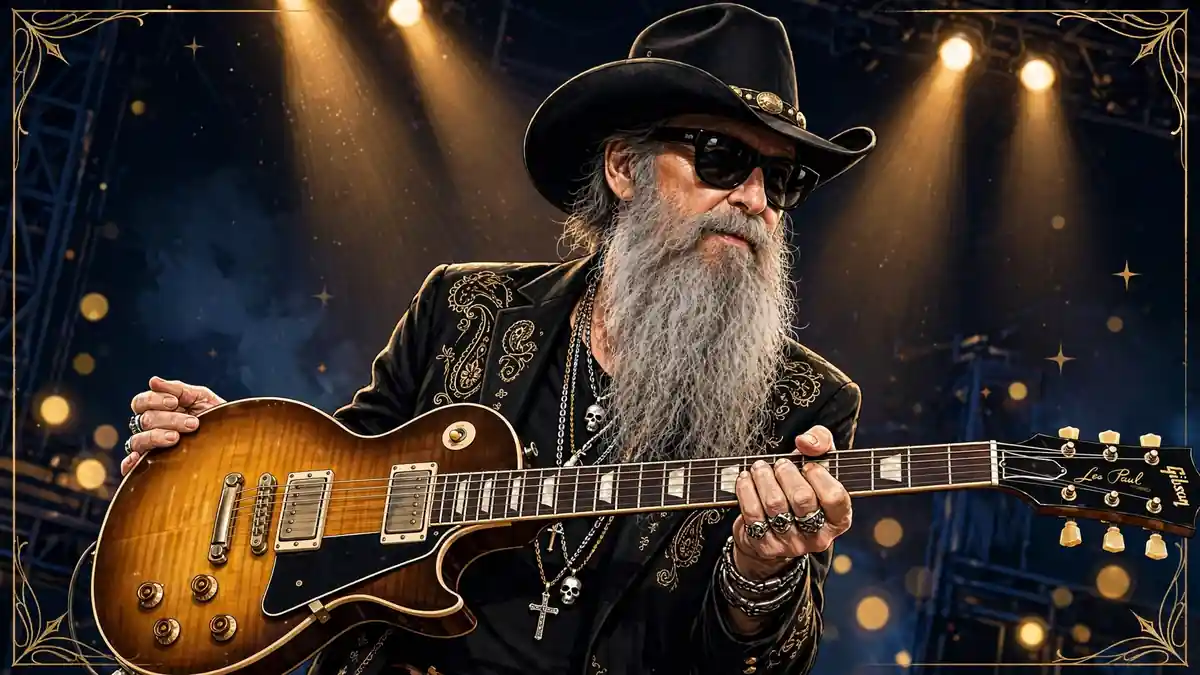
Billy Gibbons‘s net worth is estimated at $50 million to $70 million as of November 2026. The ZZ Top frontman built that fortune across 57 years in music: more than 50 million albums sold with the band, a diamond-selling 1983 blockbuster in Eliminator, a reported $50 million catalog sale to BMG and KKR in December 2021, and a touring machine that grossed more than $248 million across 1,059 reported shows. At 76, after the deaths of both of his original bandmates, he is still on stage leading ZZ Top.
Billy Gibbons: Quick Facts
| Estimated net worth | $60 million (range: $50 million to $70 million) |
|---|---|
| Profession | Musician, singer, songwriter, record producer, actor |
| Nationality | American |
| Born | December 16, 1949 (age 76) |
| Height | 5 ft 10 in (1.78 m, approx.) |
| Primary income sources | ZZ Top record sales and royalties, touring, songwriting publishing, solo albums, guitar and car ventures, television |
| Active years | 1967–present |
| Last reviewed | November 2026 |
- Early Life and Background
- Education
- Career Journey
- Rise to Fame
- Main Sources of Income
- Salary and Earnings
- Businesses and Investments
- Brand Deals and Sponsorships
- Houses, Cars and Other Assets
- Awards and Achievements
- Net Worth Growth Over the Years
- Social Media Presence
- Personal Life
- Sources & Reporting
- Frequently Asked Questions
- Final Thoughts
Early Life and Background
William Frederick Gibbons was born on December 16, 1949, in Houston, Texas, to Frederick Royal Gibbons and Lorraine Gibbons. Music was the family trade. His father worked as an entertainer, concert pianist and orchestra conductor, with projects connected to MGM Studios, so the boy grew up inside the business rather than watching it from outside. That early access shaped everything that followed: Gibbons did not stumble into a recording studio as a teenager and learn the rules there. He had been around session players, conductors and show people since childhood.
Two childhood encounters get retold in almost every profile of Gibbons because they explain the guitar style that later made him rich. At five, his mother took him and his sister to see Elvis Presley perform. At seven, his father brought him to a recording session with blues legend B.B. King. The King session left the deeper mark. Gibbons has said in interviews over the years that King taught him to play what he wanted to hear, a piece of advice he repeated so often it became part of his own teaching patter. His father also pushed him beyond the blues, arranging for the young Gibbons to study percussion with Tito Puente in New York. The Latin grounding surfaced again half a century later on his first solo album, Perfectamundo, which leaned hard into Afro-Cuban rhythms.
Gibbons got his first electric guitar, a sunburst Gibson Melody Maker, for his 13th birthday in 1962, with a Fender Champ amplifier to go with it. He started playing in local Houston bands while still at school, learning licks from Little Richard, Muddy Waters and Jimmy Reed records. By 14 he had formed a band called the Saints. The group later changed its name to the Moving Sidewalks, and that name change marked the start of his professional career. Nothing about the Houston scene of the mid-1960s suggested a future fortune. The clubs paid little, the bands changed lineups constantly, and the path from a Texas garage to a diamond album ran through a decade of grinding that most musicians never survive.
Education
Gibbons attended Warner Bros.’ art school in Hollywood, California, after his school years in Houston. The art-school spell matters more than it first appears. Gibbons has always treated ZZ Top as a visual project as much as a musical one: the beards, the sunglasses, the hot rods, the matching stage outfits, the videos. That eye for image was trained, not accidental, and it later became a commercial asset in its own right when the band’s look sold records, videos and merchandise in the MTV era.
While in Hollywood he played in his first bands, including the Saints, Billy G & the Blueflames and the Coachmen. No degree or formal music qualification anchors his biography, and no source credits him with a college education. His training was the club circuit, the recording session and the road — the same route most of his generation’s guitar players took. The art-school year gave him design instincts; the bands gave him the rest.
Career Journey
Gibbons formed the psychedelic rock band the Moving Sidewalks in Houston in 1967, inspired in part by the Texas group the 13th Floor Elevators and by his friend Roky Erickson. The band released several singles, including “99th Floor”, and recorded the album Flash in 1969. Commercially the group went nowhere. Historically it mattered because the Moving Sidewalks opened several concerts for the Jimi Hendrix Experience, and Hendrix took a public liking to Gibbons’ playing. Hendrix praised the young Texan’s guitar work, and the two became friends. Stories that Hendrix called Gibbons one of America’s best young guitarists have circulated for decades; the praise itself is well documented, even if the exact wording varies by retelling. For a 19-year-old guitarist, an endorsement from Hendrix was worth more than any paycheck the band ever earned.
When the Moving Sidewalks dissolved in 1969, Gibbons formed ZZ Top in Houston late that year. The classic lineup settled quickly: bassist Dusty Hill and drummer Frank Beard, both recruited from the Dallas blues outfit American Blues, joined him. The trio stayed intact for more than five decades, one of the longest unbroken lineups in rock history. ZZ Top signed with London Records and released ZZ Top’s First Album in 1971. The record sold modestly, but the band’s blues-heavy sound and relentless touring built a following across Texas and the American South.
The breakthrough arrived with 1973’s Tres Hombres, which carried “La Grange”, a blues-rock anthem inspired by a notorious Texas brothel, the Chicken Ranch. The song became one of the band’s signature recordings and fixed Gibbons’ guitar style — a greasy, pinch-harmonic-laden boogie built on John Lee Hooker’s rhythms — in the public ear. Fandango! followed in 1975 with “Tush”, then Tejas in 1976. The band’s reputation as a live act grew through the elaborate Worldwide Texas Tour of 1976–77, which ran 98 shows over 18 months and featured an enormous Texas-shaped stage and live animals associated with the state’s wildlife. By the end of the decade ZZ Top ranked among America’s most successful touring rock bands, yet the real money still lay ahead.
After an extended break from touring, the band returned with Degüello in 1979 and El Loco in 1981. Gibbons began experimenting with synthesizers, electronic percussion and more contemporary production. The shift set up the commercial peak of his career, and it also set up the catalog that would one day be worth a reported $50 million to a buyer.
Rise to Fame
Eliminator, released in March 1983, turned ZZ Top from a respected American touring band into international superstars. The album fused Gibbons’ blues guitar with synthesizers, drum machines and danceable rhythms, and its singles — “Gimme All Your Lovin'”, “Sharp Dressed Man” and “Legs” — crossed from rock radio to pop radio. The videos became fixtures on MTV, featuring the band’s famous 1933 Ford hot rod, models, and the increasingly recognizable long beards of Gibbons and Hill. Eliminator earned diamond certification in the United States for sales above 10 million copies, and it remains ZZ Top’s most commercially successful album and one of the defining rock recordings of the 1980s.
Afterburner followed in 1985, selling more than five million copies in the United States and producing “Sleeping Bag”, “Stages” and “Rough Boy”. The two albums together account for the bulk of the band’s recorded-music wealth. ZZ Top kept recording and touring through the 1990s and 2000s — Recycler in 1990, Antenna in 1994, Rhythmeen in 1996, XXX in 1999 and Mescalero in 2003 — without matching the 1980s sales peak. In 2004 the band was inducted into the Rock & Roll Hall of Fame. La Futura, the band’s 15th studio album, arrived in 2012, produced with Rick Rubin and praised as a return to the stripped-down blues-rock of the early records. The 2019 documentary ZZ Top: That Little Ol’ Band from Texas, directed by Sam Dunn, told the band’s story with all three original members on camera. In 2022 the band released Raw, a soundtrack album of live-in-the-studio performances recorded for the documentary.
The fame had a second act that most 1980s acts never got. Streaming kept “La Grange”, “Sharp Dressed Man” and “Legs” in circulation with new generations, the catalog sale of 2021 converted decades of future royalties into cash, and the band never stopped touring. Gibbons’ own solo career added a third income stream in his sixties and seventies, when most of his peers had retired from recording entirely.
Main Sources of Income
Record sales sit at the base of Gibbons’ fortune. ZZ Top has sold more than 50 million albums worldwide, according to BMG, and the band’s certifications tell the story in shorthand: four Gold albums, three Platinum, two multiple-Platinum and one Diamond. Eliminator alone accounts for more than 10 million copies in the United States, and Afterburner for more than five million. Those sales generated royalties for Gibbons as a songwriter, performer and, on the band’s own terms, a rights holder. The publishing side of that income mattered most in the end: when BMG and KKR bought the band’s music interests in December 2021, they were buying the publishing catalog plus income from recorded music and performance royalties — the same streams that had paid Gibbons for fifty years, packaged into one transaction.
Touring is the second pillar, and by the 2020s it was the larger one year to year. In June 2025, concert industry publication Pollstar reported that ZZ Top had generated more than $248 million in gross ticket revenue across 1,059 performances reported to its database, accounting for nearly 4.9 million tickets sold. Those figures are gross box office, not Gibbons’ personal take: promoters, venues, management, production companies and the other musicians all take a share before the frontman sees his cut. Even so, the scale explains how a band with one diamond album kept earning at arena level into its sixth decade. ZZ Top toured in 2025 and 2026, including a co-headlining Dos Amigos run with Dwight Yoakam and a Latin American leg in November 2026.
Songwriting and publishing royalties form the third stream. Gibbons wrote or co-wrote the bulk of the ZZ Top catalog, including the songs that still earn the most: “La Grange”, “Tush”, “Sharp Dressed Man”, “Gimme All Your Lovin'” and “Legs”. Those songs earn from radio, streaming, film and television licensing, and advertising. The 2021 catalog sale ended most of that future income in exchange for an immediate payment — a trade that makes sense at 72, when a lump sum beats decades of diminishing royalty checks.
Solo recording and touring add a fourth stream. Gibbons has released three solo studio albums — Perfectamundo in 2015, The Big Bad Blues in 2018 and Hardware in 2021 — and he has kept releasing singles into 2026, including “Brown Paper Bag” with Keith Urban in May 2026 and “I Like the High” that September. His solo work was not part of the ZZ Top catalog sale, so those rights stayed with him. Guest appearances and session work with artists including Queens of the Stone Age, Nickelback, Kid Rock, Hank Williams III, Sammy Hagar, Jeff Beck and Gov’t Mule have added fees and royalties across the years, as have his television roles.
The remaining income comes from the businesses built around his image: guitars and musical equipment, eyewear, consumer products, his BFG hot sauce line, and a book. None of these rivals the music money, but together they keep cash flowing between tours and album cycles, and they turn a personal hobby — custom cars — into a brand that sells merchandise.
Salary and Earnings
No salary figure for Billy Gibbons exists in any public filing, and any site that prints one — the “$0.5 million a month” and “$6 million a year” numbers that circulate on low-quality net-worth pages — is guessing. Gibbons has never disclosed his pay, ZZ Top is not a public company, and touring contracts are private. What can be stated honestly is the shape of his earnings across a career, and the documented numbers that anchor it.
The biggest single documented payday was the catalog sale. In December 2021, BMG and global investment firm KKR announced they had acquired ZZ Top’s entire music interests. Music Business Worldwide and Variety put the price at around $50 million, though the exact figure was never disclosed. Here the honest reading matters: that $50 million was the price for the whole band’s interests, not Gibbons’ personal share. The payment was split among the rights holders, including the estate of Dusty Hill, who had died earlier that year, and the exact distribution was never made public. Any article that credits the full $50 million to Gibbons personally is wrong. His share was substantial — he was the band’s founder, primary songwriter and frontman — but it was a share, not the total.
Touring earnings follow the same rule. Pollstar’s June 2025 tally of more than $248 million in gross ticket revenue across 1,059 shows is a box-office figure. A headline act of ZZ Top’s size typically keeps a minority of gross after venue, promoter, production, crew and management costs, and that remainder is then split within the band’s own arrangements. The gross still matters because it shows the scale of the machine: nearly 4.9 million tickets sold over a career, with the band still playing arenas and amphitheaters in 2026.
Album royalties are harder to pin down, and the honest answer is that they have fallen sharply as a share of income. In the 1980s, a diamond album paid handsomely under the record contracts of the day. In the streaming era, the same songs earn fractions of a cent per play, which is exactly why the 2021 catalog sale made financial sense: it traded a long tail of small payments for a large sum up front. Gibbons’ solo albums, released through Concord Records, earn on a smaller scale, and his guest appearances pay session and feature fees that are modest beside the ZZ Top numbers.
Television paid too, though on a different scale again. His recurring role on the Fox crime drama Bones, where he played a fictionalized version of himself as the father of Angela Montenegro, ran across multiple seasons. Network television guest fees for a recurring role of that kind run into five figures per episode, a useful supplement rather than a fortune-maker. Voice work on King of the Hill and Metalocalypse added smaller sums. The book Billy F Gibbons: Rock + Roll Gearhead, published in 2005 and later expanded, earned author royalties and doubled as marketing for the car collection that underpins his merchandise brand.
Businesses and Investments
Gibbons’ most visible business outside music is the world of custom cars and guitars, and he has spent decades turning a private passion into commercial ventures. He co-wrote Billy F Gibbons: Rock + Roll Gearhead with author Tom Vickers, first published in 2005, a book built around his collections of custom automobiles and guitars. The book was later expanded with more photographs and stories, and it functions as both a revenue stream and a catalog of the assets that define his public image.
The guitar business is the more serious commercial arm. Gibbons’ association with Gibson runs back to his first electric guitar, and his 1959 Gibson Les Paul Standard, “Pearly Gates”, is one of the most famous guitars in rock. Gibson has produced signature and tribute models tied to Gibbons and to Pearly Gates, and his Gretsch Billy Bo guitar is another named instrument in his lineup. These are endorsement and licensing arrangements rather than businesses he owns outright, but they pay, and they keep his name on shop walls beside the instruments he actually plays. His playing style itself became a product: the Mexican peso coin he famously used as a pick and his pinch-harmonic technique are part of the Gibbons brand that guitar companies sell.
Food is the most unexpected venture. In 2011 Gibbons worked with Texas-based Mojo Products to introduce a line of hot sauces under the BFG brand, and he later appeared in advertisements for Fiesta Mart supermarkets. Hot sauce is a small business beside a catalog sale, yet it fits the pattern of his commercial life: a Texas-flavored product, tied to his name and image, sold through regional channels he actually uses. A Tres Hombres bourbon line carrying the ZZ Top name has also been reported in recent coverage of the band’s brand extensions, a reminder that the band’s name still sells product five decades in.
What Gibbons has not done is also informative. There is no record of him building a venture-capital portfolio, launching a tech startup, or buying into sports teams — the moves that pushed some of his peers past the billion-dollar mark. His investments, as far as public reporting shows, are his music rights (now largely sold), his property, and his collections. That conservatism explains the size of the fortune: $50 million to $70 million is a lot of money, and it is also a fraction of what the Rolling Stones’ frontman holds. The comparison is instructive rather than damning. Gibbons kept a three-piece Texas blues band together for 57 years and got paid for it. He did not build a corporate empire, and his net worth reflects the choice.
Brand Deals and Sponsorships
Gibbons’ endorsement history is built on gear, not fashion or fragrance. The Gibson relationship is the anchor: he has played Gibson guitars since his teens, and the Pearly Gates Les Paul is the centerpiece of his sound and his image. Gretsch’s Billy Bo model carries his name. These deals are the classic guitar-hero arrangement — the manufacturer gets the association with a famous player, the player gets instruments, a fee and a royalty on signature models. The sums are not public, and they are not the main event, but over decades they add up to real money.
Eyewear is the second gear category. The dark sunglasses are as much a part of the ZZ Top look as the beards, and Gibbons has been involved in eyewear partnerships and consumer products tied to that image. The BFG hot sauce line, launched with Mojo Products in 2011, is the most concrete consumer-product deal in his record, with Fiesta Mart supermarket advertising to support it. The Fiesta Mart spots show how regional his commercial appeal has stayed: a Houston grocery chain, a Texas product, a Texas musician.
Film and television licensing is the quiet earner in this section. ZZ Top songs appear in films, television shows, commercials and video games, and every placement pays a synchronization fee on top of the performance royalties. “Sharp Dressed Man”, “Legs” and “La Grange” are among the most licensed classic-rock tracks of their era, and the band’s visual identity — the car, the beards, the sunglasses — makes the songs easy to place in advertising. The catalog sale transferred most of that future licensing income to BMG and KKR, which is the trade-off at the heart of the 2021 deal: immediate cash in exchange for the long tail.
Houses, Cars and Other Assets
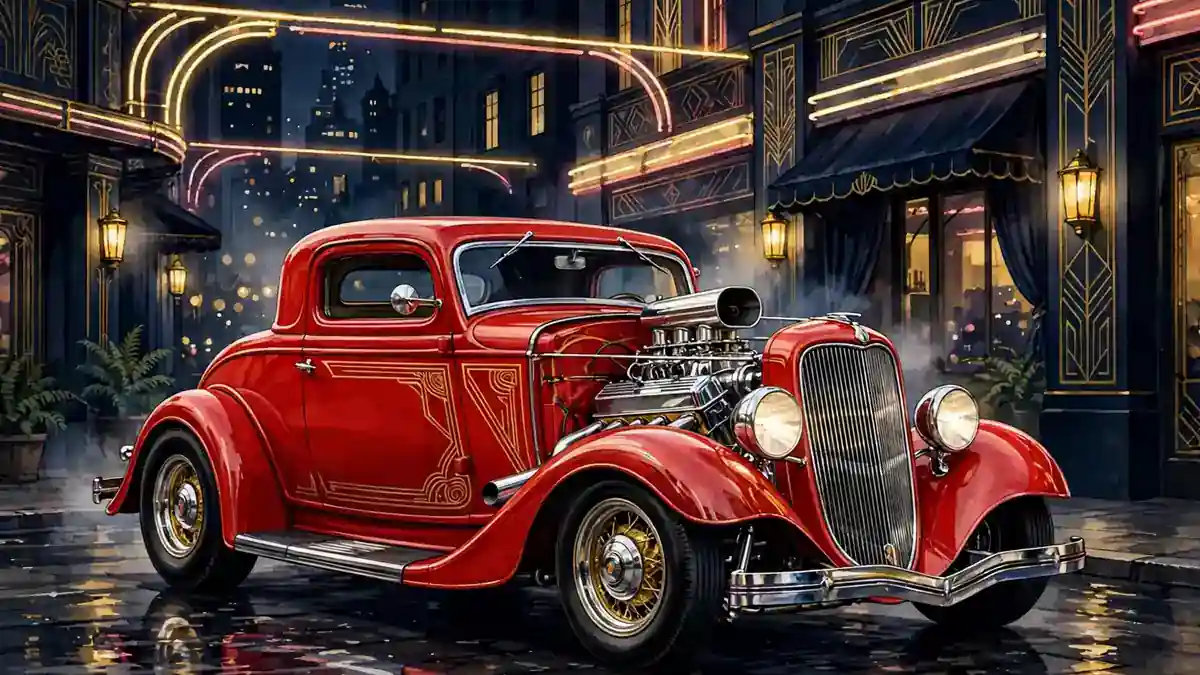
The car collection is the asset Gibbons is most famous for outside music, and it is also the hardest to value honestly. The star of the collection is the Eliminator, a customized 1933 Ford coupe that appeared in the band’s 1980s videos and became almost as recognizable as the musicians. His collection has also included CadZZilla, a heavily customized 1948 Cadillac Series 62; a 1950 Ford Business Coupe known as Kopperhed; a 1958 Ford Thunderbird nicknamed the Mexican Blackbird; a 1932 Highboy Ford; a 1936 Ford truck rat rod; and a 1962 Chevrolet Impala called Slampala. He has worked with prominent designers and builders to create vehicles that mix classic American styling with elaborate custom work, and he wrote a whole book about them. Custom cars of this kind are worth whatever a collector will pay, and the famous ones are worth far more than the sum of their parts because of who owned them. No public valuation of the collection exists, and this article does not invent one.
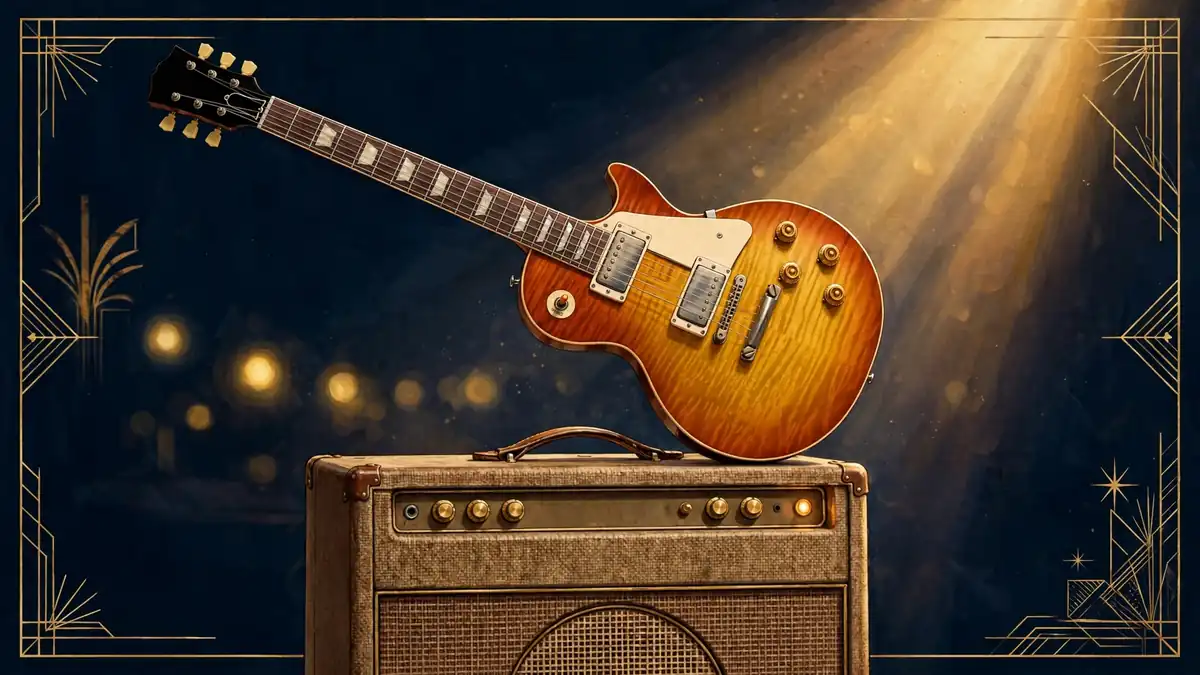
The guitar collection is the parallel asset. Pearly Gates, the 1959 Gibson Les Paul Standard he bought early in his career, is the centerpiece. Gibbons’ own account of acquiring it — a story involving a would-be actress named Renee Thomas, a borrowed 1939 Packard, an audition trip to Hollywood and a $250 check that eventually funded the purchase of a ’59 Burst found under a rancher’s bed — has become part of rock folklore. A 1959 Les Paul Standard in original condition is one of the most valuable electric guitars in the world, with comparable examples selling for six figures and, in rare cases, far more. Pearly Gates, with its history, would command a premium over an anonymous example. Again, no public valuation exists, and the guitar is an asset he plays rather than one he has tried to sell.
Property is the quieter part of the portfolio. Gibbons has owned residences in Houston and Los Angeles, reflecting his Texas roots and his California entertainment ties. The best-documented property is a Spanish Mission-style mansion built in 1926, located just north of the Sunset Strip in Los Angeles. Gibbons undertook an extensive restoration of the three-story residence beginning around 2000, working with architect Malcolm Worby to create a home and studio with Southwestern and Mediterranean influences, exposed wooden beams, thick plaster walls, arched doorways and gallery spaces. Low-quality net-worth sites attach specific dollar values to his houses — one puts a Houston home at $740,200 — but those figures trace to no property record we could verify, so they are not repeated here as fact. What is documented is that he owns significant real estate in two expensive markets and has spent serious money restoring it.
Awards and Achievements
The Rock & Roll Hall of Fame induction in 2004 is the headline honor, recognizing ZZ Top’s sound and influence on generations of rock and blues musicians. The band’s commercial record backs it up: more than 50 million albums sold worldwide, a Diamond album in Eliminator, five million-plus sales for Afterburner, and a catalog that BMG and KKR valued at a reported $50 million in 2021. In 2001, Rolling Stone named Gibbons the 32nd greatest guitarist of all time, a ranking that has held up well as his reputation has grown with age.
His solo work earned its own honors. The Big Bad Blues, released in September 2018, won Blues Rock Album of the Year at the 2019 Blues Music Awards, a peer-voted prize that carries weight inside the blues world. In 2012 the Texas Commission on the Arts named him Texas State Musician, a state honor that fits a man who has never hidden where he comes from. ZZ Top’s songs have been recognized in the usual ways for a band of its stature — gold and platinum certifications across four decades — but the band was never a Grammy darling, and its trophy shelf is thinner than its sales suggest. The achievement that matters most for the net worth story is not a trophy but a run: 57 years with the same band, 15 studio albums, more than a thousand reported shows, and a catalog still earning in its sixth decade.
The peer comparison puts the figure in context. Celebrity Net Worth’s November 2026 ranking of the richest lead singers puts Mick Jagger’s net worth at $600 million, Dave Grohl’s net worth at $330 million and Ozzy Osbourne’s net worth at $220 million at his death in 2025. Gibbons, at $60 million, sits well below all three. The gap is not a mystery. Jagger’s band sold far more records and played far bigger stadiums; Grohl built a second career as a frontman, director and producer; Osbourne had reality television and a merchandising machine. Gibbons kept a smaller band going longer, sold his catalog once, and never chased the side businesses that multiply a fortune. The comparison is the honest frame: a rich man by any normal measure, a modest fortune by rock-legend standards.
Net Worth Growth Over the Years
Net worth timelines for musicians are usually fiction, filled in year by year with numbers nobody published. This section does the opposite: it lists only dated published estimates, and says plainly where the record goes quiet.
| Period | Published estimate | What drove it |
|---|---|---|
| 1983–1985 | No published estimate | Eliminator goes diamond; Afterburner passes five million US sales |
| 2004 | No published estimate | Rock & Roll Hall of Fame induction; touring at arena level |
| 2021 | No published estimate | BMG/KKR catalog sale reported at about $50 million for the band’s interests |
| 2024 | $60 million (Celebrity Net Worth); $75 million (one low-quality site) | Catalog cash banked; touring continues; solo work ongoing |
| February 2025 | $60 million (Celebrity Net Worth) | Estimate reaffirmed on the site’s Gibbons page |
| 2025 | $70 million (CA Knowledge); $50 million (Famous People Today) | Outlier estimates show the spread in weak sourcing |
| August 2026 | $50 million–$70 million (WhoWorth) | Range estimate citing catalog rights, touring and solo work |
| November 2026 | $60 million, range $50M–$70M (this article) | Frank Beard’s death; band resumes touring; new singles released |
The pattern is clear. The fortune was built slowly, in the 1970s and 1980s, through record sales and touring, then converted into a lump sum in 2021 when the catalog sold. Since then the number has barely moved in published estimates, because the big transaction is done and the remaining income — touring, solo records, licensing of the work he kept — is steady rather than explosive. Claims of a $100 million fortune, which appear on some content-farm pages, have no named source behind them and contradict the best-sourced estimates. The honest range is $50 million to $70 million, anchored at $60 million.
Social Media Presence
Gibbons keeps a lower social media profile than most musicians of his standing, and that is a deliberate choice rather than an accident. His official website, billygibbons.com, carries tour news, solo releases and merchandise, and ZZ Top’s official channels carry the band’s announcements — including the August 2026 statement on Frank Beard’s death and the return to the stage in Austin. He is not a daily poster, and he does not monetize his following the way younger artists do with sponsored posts and brand partnerships. The audience finds him through the records, the tours and the television appearances, not through a feed.
That restraint costs him money in the modern sense — a large, engaged following is a revenue stream for artists who use it — but it fits the rest of his career. Gibbons has always sold the music and the image rather than himself, and the image was built on stage and on video long before social media existed. Fans looking for current news should check the official site and the band’s channels, where tour dates for the 2026 Latin American leg and new single releases were posted. Follower counts change weekly and are not a reliable measure of wealth, so this article does not publish them as facts.
Personal Life
Gibbons married his longtime partner, Gilligan Stillwater, on December 14, 2005, after a relationship of about thirty years. Stillwater, born Ellen J. Oetjen, has managed ZZ Top’s tours since 2005, so the marriage and the business are closely tied: the person who runs the road operation is the person he goes home to. The couple has no children, as far as public reporting shows, and they have kept their private life private despite Gibbons’ fame. That privacy is unusual for a rock star of his longevity, and it is one reason so little gossip attaches to his name.
He splits his time between Houston, where he was born and where the band started, and Los Angeles, where the Sunset Strip mansion and studio sit. The car and guitar collections are the public face of his private life, and the book Rock + Roll Gearhead is the closest he has come to opening the garage doors for the public. Friends and collaborators describe a man who collects, restores and plays — guitars, cars, records — and who treats the work as a craft rather than a performance. At 76, with both of his original bandmates gone, he has chosen to keep playing. In an interview with Texas Monthly after Beard’s death, he said the band would continue and that the current lineup is “still ZZ Top”, adding that the group now has the luxury of adding to what took fifty years to build. Elwood Francis plays bass, Michael Monahan plays drums, and Gibbons fronts the band, exactly as he has since 1969.
Sources & Reporting
Celebrity Net Worth — the $60 million estimate, the catalog sale account, the Pollstar touring figures, the solo-career and car-collection detail; page last updated February 20, 2025, refreshed November 2026.
WhoWorth — the $50 million to $70 million range estimate, published August 20, 2026; the only recent range-based estimate from a named outlet.
BMG — the December 21, 2021 announcement that BMG and KKR acquired ZZ Top’s entire music interests, including publishing, recorded and performance royalties; the 50-million-albums-sold figure and the band’s certifications.
Music Business Worldwide — the reported $50 million price for the catalog deal, sourced to industry experts.
Wikipedia — biographical facts (birth date, Moving Sidewalks, solo album dates, marriage date, Rolling Stone ranking, Texas State Musician honor), checked against the Celebrity Net Worth account; accessed November 2026.
Pollstar — the June 2025 touring tally: more than $248 million gross across 1,059 reported shows and nearly 4.9 million tickets, as reported by Celebrity Net Worth.
Celebrity Net Worth — peer figures from its November 18, 2026 richest lead singers list: Mick Jagger $600 million, Dave Grohl $330 million, Ozzy Osbourne $220 million.
Reporting window: sources published between December 2021 and November 2026, reviewed November 22, 2026. Where sources disagreed on the net worth figure, this article publishes the range and names who says what. No figure in this article comes from an unnamed source, and no salary figure is stated because none is publicly documented.
Frequently Asked Questions
What is Billy Gibbons’ net worth in 2026?
Billy Gibbons’ net worth is estimated at $60 million as of November 2026, within a range of $50 million to $70 million. Celebrity Net Worth puts him at $60 million, while WhoWorth’s August 2026 estimate gives the $50 million to $70 million range. No audited disclosure exists, so the range is the honest figure.
How did Billy Gibbons make his money?
Mostly from ZZ Top: more than 50 million albums sold worldwide, including the diamond-selling Eliminator, plus decades of touring that grossed more than $248 million across 1,059 reported shows. The December 2021 sale of the band’s music interests to BMG and KKR, reported at about $50 million for the whole band, converted future royalties into cash. Solo albums, songwriting, television roles and guitar and car ventures add smaller streams.
How much did ZZ Top sell their catalog for?
BMG and KKR announced the acquisition on December 21, 2021. The price was never officially disclosed, but Variety and Music Business Worldwide put it at around $50 million. That was the price for the entire band’s music interests, split among the rights holders including Dusty Hill’s estate — not Gibbons’ personal share alone.
Is Billy Gibbons still alive and touring?
Yes. Gibbons, 76, is the only surviving member of ZZ Top’s classic lineup after Dusty Hill died in July 2021 and drummer Frank Beard died on August 17, 2026. The band resumed touring on August 22, 2026, in Austin with Michael Monahan on drums and Elwood Francis on bass, and played a Latin American leg in November 2026.
Who is Billy Gibbons’ wife?
Gibbons married Gilligan Stillwater, born Ellen J. Oetjen, on December 14, 2005, after a relationship of about thirty years. She has managed ZZ Top’s tours since 2005. The couple has no children, as far as public reporting shows, and keeps a private life.
What guitar does Billy Gibbons play?
His most famous guitar is Pearly Gates, a 1959 Gibson Les Paul Standard he bought early in his career. He also plays a Gretsch Billy Bo model and has used a Mexican peso coin as a pick. His first electric guitar was a Gibson Melody Maker, given to him for his 13th birthday in 1962.
How old is Billy Gibbons?
Billy Gibbons was born on December 16, 1949, in Houston, Texas, which makes him 76 years old as of November 2026. He formed ZZ Top in late 1969 at age 20 and has led the band for 57 years.
Is Billy Gibbons a billionaire?
No. The best-sourced estimates put him at $50 million to $70 million, anchored at $60 million. That is a large fortune, but it is far below the billionaire tier and below peers such as Mick Jagger ($600 million) and Dave Grohl ($330 million) on Celebrity Net Worth’s November 2026 list.
Final Thoughts
Billy Gibbons’ $60 million fortune is the record of a career built the slow way. One diamond album, one five-million seller, fifty million records in total, a thousand shows, and a catalog sale that turned fifty years of royalties into a single payment. The range of $50 million to $70 million is honest about what is not known — the split of the catalog money, the value of the cars and guitars, the private touring contracts — and the anchor of $60 million is the figure the best-sourced outlet has stood behind for two years.
What stands out in November 2026 is not the number but the fact that the man behind it is still working. His bassist died in 2021, his drummer died in August 2026, and Gibbons, at 76, went back on stage within five days of the funeral and told Texas Monthly the band goes on. The fortune is a finished fact; the career, remarkably, is not.
Published on 2026-11-22. Last reviewed November 2026. Found an error? See our corrections policy.