
Cole Hauser‘s net worth is estimated at $8–$10 million as of November 2026. The figure rests on three decades of steady acting work, a late-career television payday that now pays him a reported $1.2 million per episode, a coffee company selling in more than 1,700 Walmart stores, and a family tree that runs straight back to the founders of Warner Bros.
Cole Hauser: Quick Facts
| Estimated net worth | $8–$10 million (range: $8–$10 million) |
|---|---|
| Profession | Actor, producer, entrepreneur |
| Nationality | American |
| Born | March 22, 1975 (age 51) |
| Height | 6 ft 1 in (1.85 m) |
| Primary income sources | Television salaries (Yellowstone, Dutton Ranch), film roles, Free Rein Coffee Company, brand partnerships |
| Active years | 1992–present |
| Last reviewed | November 2026 |
- Quick Facts
- Early Life and Background
- Education
- Career Journey
- Rise to Fame
- Main Sources of Income
- Salary and Earnings
- Businesses and Investments
- Brand Deals and Sponsorships
- Houses, Cars and Other Assets
- Awards and Achievements
- Net Worth Growth Over the Years
- Social Media Presence
- Personal Life
- Sources & Reporting
- Frequently Asked Questions
Early Life and Background
Cole Kenneth Hauser was born on March 22, 1975, in Santa Barbara, California. He arrived with a Hollywood pedigree few actors can match, and a childhood that was far less settled than the family name suggests. His mother, Cass Warner, founded the film production company Warner Sisters in 1990 to tell her own family’s story. His father, Wings Hauser, was a prolific character actor with more than 100 film and television credits, best known as the villain Ramrod in Vice Squad (1982) and as Greg Foster on The Young and the Restless.
Hauser’s parents separated when he was two years old, and his mother raised him largely on her own. The family moved between California, Oregon, and Florida while he was growing up. He has said he did not know who his father was until he was about nine or ten, when he spotted the name Wings Hauser in the credits of a film on television. The two built a relationship later, around the time Cole was 15, and Wings lived long enough to watch his son become a television star. Wings Hauser died on March 15, 2025, at his home in Santa Monica, after a long struggle with chronic obstructive pulmonary disease. His daughter Bright Hauser confirmed the cause; the family statement put his age at 77, while several outlets reported 78, a discrepancy that traces to his December 12, 1947 birth date and the way outlets rounded his age.
The Warner side of the family is the part of the story that stops people mid-sentence. Hauser’s maternal great-grandfather was Harry Warner, one of the four brothers who founded Warner Bros. in 1923 and the studio’s first president. His maternal grandfather, Milton Sperling, was a screenwriter and producer with more than 50 films to his credit and two Academy Award nominations. His maternal grandmother, Betty Warner Sheinbaum, was an artist and political activist. On his father’s side, his paternal grandfather, Dwight Hauser, was an Academy Award-winning screenwriter whose career ran from radio drama in the 1940s into television writing.
That lineage invites an easy misunderstanding, so it is worth clearing up early: Cole Hauser did not inherit a Warner Bros. fortune. The family’s ownership stake in the studio was diluted across generations long before he was born, and his own mother built Warner Sisters from scratch at 41 to document a family history she felt Hollywood had written out. What the lineage gave him was access, fluency in the business, and a name that opened doors — not a trust fund. His father, for all his credits, worked as a journeyman actor, and the household money during Cole’s childhood was inconsistent. The wealth he has now was earned on sets, not inherited from a studio lot.
Hauser grew up athletic and restless, more interested in sports than in school. He played football and spent his free time outdoors, a habit that never left him: as an adult he fishes, rides, and hunts, and his social media reads like a field journal of Florida flats fishing and Montana ranch work. The outdoorsman image that later defined Rip Wheeler was not a costume he put on for the role. It was the life he had been living since childhood, just without the cameras.
The family story also shaped his business instincts in a direct way. Watching his mother launch Warner Sisters at 41 taught him that a performer could own the means of production instead of renting out his face. That lesson sat quiet for decades, then surfaced in his forties, when he started a coffee company and a whiskey label instead of waiting for the next acting cheque. Every part of the Cole Hauser money story — the slow build, the late breakout, the businesses — makes more sense once the family history is in view.
Education
Hauser left high school at 16 to pursue acting full time. He did not attend college, and he has never presented himself as formally trained. His education in the craft came from working sets: a first film role at 17, bit parts and supporting roles through his teens and twenties, and the kind of on-the-job schooling that teaches an actor how a production actually runs.
That choice looks reckless on paper and sensible in context. A teenager with his family connections could get in rooms other teenagers could not, and he used that access to accumulate credits instead of credits in a classroom. By the time his peers were graduating from university, he had already appeared in School Ties, Dazed and Confused, and Good Will Hunting — three films that still anchor his résumé. The trade-off was real: he has spoken about the gaps in his formal schooling, and his early career shows the unevenness of a self-taught actor learning on the job. But the bet paid off in the only currency that matters for a working actor: he never stopped working.
There is a second, less obvious education in his story. Growing up inside a family that produced, wrote, and performed gave him a producer’s understanding of the business before most actors develop one. He watched his mother finance and run a production company. He watched his father navigate the feast-or-famine economics of character acting. By the time he negotiated his Yellowstone spinoff salary in 2024 — holding out for a figure Paramount initially refused to meet — he was drawing on thirty years of watching how Hollywood money actually moves. That is the education that shows up in his net worth.
Career Journey
Hauser’s first screen credit came in 1992, when he played Jack Connors in School Ties at 17. A year later he appeared in Richard Linklater’s Dazed and Confused (1993), a film that has since become a cult classic and a calling card for almost everyone in its young cast. The work kept coming in small, steady doses: supporting roles in studio films, guest spots on television, and the slow accumulation of a reputation as a reliable presence who could play tough, quiet men without overplaying them.
The late 1990s gave him his first real visibility. In Good Will Hunting (1997), he played Billy McBride, one of Will Hunting’s South Boston friends, alongside Matt Damon and Ben Affleck. The film won two Academy Awards and grossed more than $225 million worldwide, and it put Hauser on the map as part of a generation of young actors who would define the next decade. He followed it with Pitch Black (2000), the science-fiction thriller that launched Vin Diesel as a franchise lead, and Tigerland (2000), Joel Schumacher’s Vietnam-era drama.
The 2000s were his working-actor decade: never a star, never out of work. He played a Navy SEAL officer in Tears of the Sun (2003) opposite Bruce Willis, the drug kingpin Carter Verone in 2 Fast 2 Furious (2003) — a role that still gets him recognised by franchise fans — and a German prisoner of war in Hart’s War (2002) with Bruce Willis and Colin Farrell. He headlined the creature feature The Cave (2005), appeared in the hit comedy The Break-Up (2006) with Jennifer Aniston and Vince Vaughn, and worked steadily through genre films that kept his name in casting conversations without ever making him a marquee name.
Television gave him steadier ground. He starred as former Navy SEAL Jimmy Godfrey in the short-lived series Rogue (2007), then carried the NBC crime drama Chase (2010–2011) as U.S. Marshal Jimmy Godfrey. Neither show lasted, but both proved he could hold a series. He also worked in the Yellowstone creator Taylor Sheridan’s orbit before Yellowstone existed, building the relationship with Sheridan that would eventually change his career. The through-line of these three decades is consistency: more than 40 film and television credits before Yellowstone premiered, almost all of them supporting roles, almost all of them competently done, none of them the breakout.
That long apprenticeship matters for the money story. Hauser was not an overnight success; he was a thirty-year overnight success. The supporting-role years paid working-actor wages — solid, unglamorous, and far below the figures he commands now. His net worth in the years before Yellowstone reflected that reality: comfortable, built on volume rather than windfalls, and nowhere near the eight-figure range it occupies today. The fortune is a late-career phenomenon, and the late-career phenomenon has a single cause.
Rise to Fame
Yellowstone premiered on the Paramount Network in June 2018, and Hauser’s Rip Wheeler became the show’s breakout character almost immediately. Rip is the Dutton ranch’s foreman and enforcer: a man with a violent past, an unshakeable loyalty to patriarch John Dutton, and a tender, guarded romance with Dutton’s daughter Beth. Hauser played him with a stillness that made the character’s rare eruptions land harder, and audiences responded. Rip Wheeler fan clubs, merchandise, and Halloween costumes followed. By the show’s later seasons, Yellowstone was the most-watched scripted series on cable television, and Hauser was its most recognisable face after Kevin Costner himself.
The fame arrived at 43, after 26 years in the business. That timing shaped everything about how Hauser handled it. He did not chase the spotlight; he used it. He has said in interviews that he put on around 20 pounds for the role to give Rip a heavier, more physical presence, and the physical transformation became part of the character’s mythology. He kept his family in Florida, far from the Hollywood churn, and treated the show’s success as a platform for businesses rather than as an end in itself.
The show’s ending only raised his value. Yellowstone concluded with its fifth season in late 2024, after Costner’s departure and a long, public negotiation over the cast’s future. While the parent series ended, Hauser and co-star Kelly Reilly were the two cast members Paramount could not afford to lose: their characters’ marriage was the emotional spine of the franchise. The pair closed deals to lead Dutton Ranch, a sequel series that premiered on Paramount+ in 2026. The new show became Paramount+’s biggest original series debut, according to Celebrity Net Worth, and was renewed for a second season. Hauser serves as an executive producer on the spinoff, which means his pay now includes a producing component on top of his acting fee — a structural upgrade from his Yellowstone deal.
The rise also changed his negotiating position in a way that shows up directly in his bank balance. In early 2024, entertainment journalist Matthew Belloni reported in Puck that Hauser was earning $700,000 per episode for Yellowstone. When the spinoff was negotiated, Hauser and Reilly reportedly asked for $1.25 million per episode. Paramount countered at $850,000 for the first season and $950,000 for the second, with a two-season guarantee. The final number, revealed by Variety’s salary survey on November 12, 2026, was $1.2 million per episode for both stars. That is a 71 percent jump from his final Yellowstone rate, and it puts him among the best-paid television actors working today.
Main Sources of Income
Hauser’s income comes from four streams, and their relative weight has flipped over time. Acting salaries dominate the total: the Yellowstone and Dutton Ranch paydays account for the largest single share of his estimated wealth, and the per-episode figures are the hardest numbers in this article. Film work contributes a smaller, steadier stream — supporting-role fees and residuals from a catalogue that includes several films still in heavy rotation on streaming and cable. His businesses, led by Free Rein Coffee Company, are the fastest-growing stream and the one with the most upside. Brand partnerships, including deals with Lucky Brand and Frye, add a fourth stream that trades directly on the Rip Wheeler image.
The shape of that mix is unusual for an actor of his generation. Most performers in their fifties depend almost entirely on acting fees, which rise and fall with casting luck. Hauser has built a second business — coffee — that sells whether or not he is on a set, and a third — whiskey — that is still early but follows the same western-lifestyle logic. The businesses do not yet rival his acting income in absolute dollars, and Free Rein’s valuation has not been disclosed, so we do not assign it a number in the estimate. But they change the risk profile of his wealth: if the acting work slows, the coffee keeps selling in 1,700 Walmart stores.
Residuals deserve a mention because they are the quiet earner in every long-career actor’s finances. Good Will Hunting, 2 Fast 2 Furious, Pitch Black, and Yellowstone itself all generate ongoing payments as they stream, air, and re-license. No outlet has published Hauser’s residual figures, and we do not guess at them, but for an actor with his catalogue they form a meaningful baseline income between projects. The same applies to his Yellowstone catalogue value: five seasons of a hit series, now streaming on Paramount+ and Peacock, continue to pay the people who made it.
Producing fees are the newest stream. As an executive producer on Dutton Ranch, Hauser earns beyond his acting salary, and Variety has noted that its published per-episode figures can include producing fees and other bonuses. That matters for interpreting the $1.2 million number: it is a reported package, not a pay stub, and the acting-versus-producing split has not been disclosed. What is clear is that the producer credit converts him from a hired hand into a stakeholder in the franchise’s future — the same transition his mother made when she founded Warner Sisters, and the same one his great-grandfather’s generation made when they built a studio instead of just working for one.
Salary and Earnings
The salary story has three chapters, and the numbers get dramatically better in each one. In the pre-Yellowstone years, Hauser earned working-actor fees for supporting film roles and short-lived television leads. Those figures were never published, and we do not invent them. What the public record shows is a career of volume: dozens of credits across three decades, each paying a professional rate, none of them the kind of payday that builds a fortune on its own.
Chapter two is Yellowstone. Hauser joined the series in 2018, when his pay would have reflected a respected but not yet famous supporting actor. As the show grew into cable’s biggest scripted hit, his pay grew with it. By February 2024, Puck’s Matthew Belloni reported he was earning $700,000 per episode. Season 5 ran to 14 episodes, which puts his earnings for that season alone at roughly $9.8 million before taxes, management, and agent commissions — more, in a single season, than many actors earn in a career. Parade reported the same $700,000 figure, and Celebrity Net Worth’s $10 million net worth estimate is consistent with a performer who banked the bulk of that season’s pay while maintaining a relatively modest lifestyle.
Chapter three is Dutton Ranch, and it is the freshest data in this article. Variety’s salary survey, published November 12, 2026, lists Hauser and Kelly Reilly at $1.2 million per episode each — among the highest per-episode figures on television, behind only the $2 million tier occupied by stars such as Jennifer Aniston, Reese Witherspoon, Sylvester Stallone, and Chris Pratt. Variety cautions that its figures are approximate and can include producing fees and bonuses, so the $1.2 million should be read as the value of the total package rather than a base acting salary. Even with that caution, the direction is plain: his per-episode pay rose about 71 percent between the final season of Yellowstone and the sequel.
The negotiation behind that number is almost as informative as the number itself. Puck reported that Hauser and Reilly initially sought $1.25 million per episode for the spinoff, while Paramount offered $850,000 for season one and $950,000 for season two, backed by a two-season guarantee. The eventual $1.2 million landing point shows what each side held in the negotiation: Paramount needed the couple to anchor the franchise’s future, and Hauser needed Paramount’s platform to keep the character alive. The two-season guarantee matters too — it converts a per-episode rate into a multi-year income floor, the kind of security that lets an actor invest in businesses rather than hoard cash between jobs.
After taxes and representation, the take-home is smaller than the headlines. A standard 10 percent agent commission and 10 percent management fee, plus federal and state taxes, can cut a headline salary roughly in half before it reaches a bank account. We raise that point because net worth estimates that simply multiply a per-episode rate by episode counts overstate what an actor keeps. Hauser’s $8–$10 million estimate already reflects that reality: it is a net figure after years of spending, taxes, and fees, not a gross sum of his salaries. His Florida real estate and business investments are the visible places where the kept money went.
Businesses and Investments
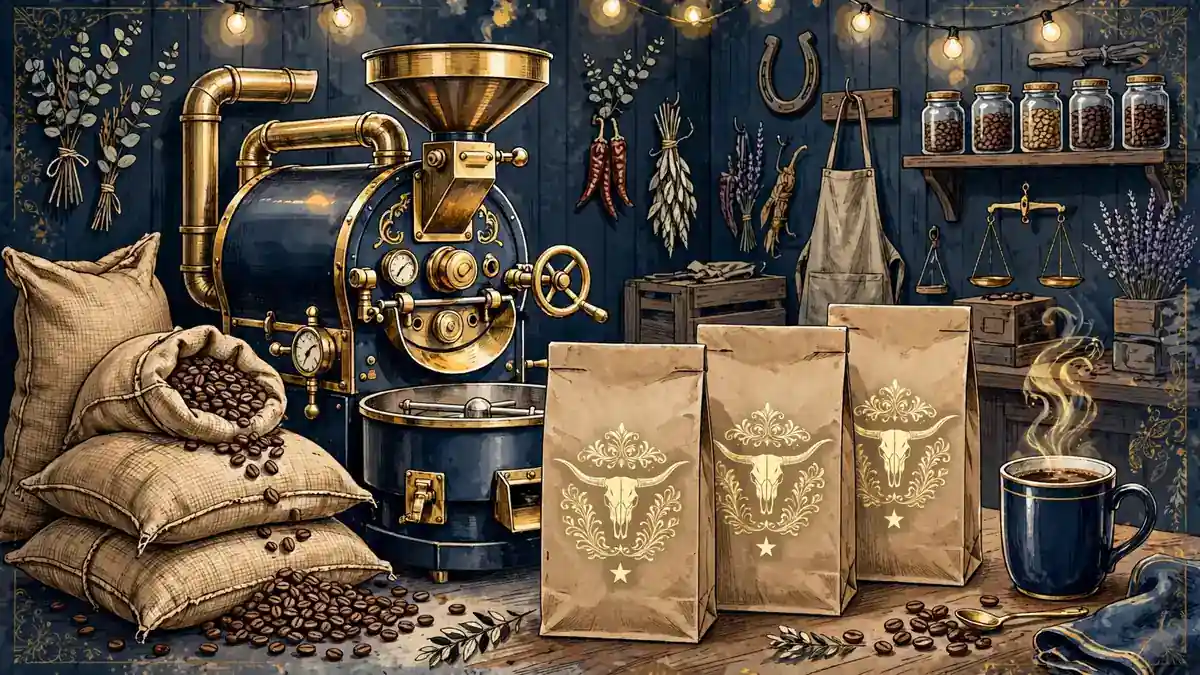
Free Rein Coffee Company is the centrepiece of Hauser’s business life, and it is the part of his story most competitors under-report. In 2022, Hauser and three longtime friends — Karl Pfluger, Paul Anderson, and Aron Marquez — bought Longhorn Coffee Co., a small-batch roaster based in San Angelo, Texas. They rebranded it as Free Rein and launched direct-to-consumer sales in October 2023 with six blends, including American Dirt (Hauser’s signature dark roast), Homestead, Heavy Spur, and Branded. Twelve-ounce bags sold for $15.99 on the company’s website, with whole-bean, ground, and single-serve pod formats alongside hats, shirts, and drinkware.
The brand’s identity is inseparable from Rip Wheeler. Western imagery, ranch language, and a stated mission of serving people who serve — military personnel, first responders, and community workers — run through everything Free Rein sells. A portion of sales supports the Special Operations Warrior Foundation, a nonprofit that supports the families of fallen and severely wounded special operations personnel, where Hauser is a longtime supporter and board member. The “Buy a Bag, Give a Cup” promise, launched with the Walmart expansion, commits the company to donating a cup of coffee for every bag sold.
Distribution is where the business went from a celebrity side project to a real company. In September 2024, Free Rein announced its first national retail expansion: coffee in more than 1,700 Walmart stores and on Walmart.com, in three roasts — American Dirt, Homestead, and Prospect — starting at $12.97. Hauser marked the launch with a dawn meet-and-greet at a Fort Worth Walmart on September 17, 2024, signing bags for the first 50 fans in line in front of a covered wagon, then taking the brand on a Yellowstone RV Tour of Walmart stores from Texas to Montana. At the time of the launch, the company said it had served more than 250,000 customers and donated more than 60,000 cups of coffee. Mark Wahlberg joined as an investor and brand ambassador, and Hauser’s Yellowstone co-star Forrie J. Smith signed on as an ambassador. Free Rein coffee is also served at HTeaO shops and is the official coffee of Billy Bob’s Texas in Fort Worth.
The business has not been without friction. In November 2023, Taylor Sheridan’s Bosque Ranch sued Free Rein in federal court in Texas, alleging trademark infringement, unfair competition, and false advertising: Bosque Ranch’s overlapping “BR” logo, in use since the ranch was founded in 2005, looked similar to Free Rein’s overlapping “FR” mark, and Bosque Ranch had launched its own coffee line with Community Coffee earlier that year. Sheridan’s lawyers asked for the suit to be dropped about a month after filing it, and the dismissal was with prejudice — Bosque Ranch cannot sue Free Rein again over the same claims. The episode cost both sides legal fees and headlines, but it ended quickly and left Free Rein free to grow.
Free Rein kept growing after the lawsuit. In August 2026, the company introduced a Protein Coffee Collection, moving beyond traditional coffee into functional beverages — a category with higher margins and a younger customer base. Hauser’s exact ownership percentage and the company’s valuation have not been disclosed, so we do not put a dollar figure on his stake. What can be said is that a coffee brand in 1,700 Walmart stores, with a celebrity founder, a national ambassador in Wahlberg, and a new product line, is a genuine asset rather than a vanity label. It is also the most likely source of future growth in his net worth: acting pay has a ceiling set by the market, while a consumer brand can scale.
His second venture is smaller but follows the same logic. Lazy K Bar Straight Bourbon Whiskey, Hauser’s bourbon label, began selling in Texas retailers in July 2024. Like the coffee, it trades on the western lifestyle his screen persona embodies, and like the coffee, it is a real product in real stores rather than a licensing deal with his name on it. No sales figures have been published, and we do not estimate them. The pattern, though, is clear: Hauser is building a portfolio of western-lifestyle consumer brands, each one reinforcing the others, and each one aimed at the same audience that watches him on television.
Brand Deals and Sponsorships
Hauser’s endorsement work is narrow and on-brand: western clothing and footwear, not the broad consumer-goods deals that fill other actors’ portfolios. He has worked with Lucky Brand and Frye on western-inspired clothing and footwear campaigns, using the Rip Wheeler image to sell boots, jeans, and leather goods to an audience that already buys into the ranch aesthetic. The deals are a natural fit — the man who plays a ranch foreman wearing the clothes of a ranch foreman — and they pay without demanding much of his time.
He has also been appointed an honorary Fort Worth Police Officer, a civic honour that came with a public ceremony in April 2024 and a reminder of how closely his screen persona has merged with his public identity in Texas. That merger is the commercial engine behind his brand work: companies are not hiring Cole Hauser the character actor, they are hiring Rip Wheeler’s credibility with a specific audience. It is a narrower market than a Marvel star commands, but it is a loyal one, and it converts well for boots, coffee, and bourbon.
What he does not do is also informative. He has no major fragrance, watch, or automobile deal on the public record, no crypto or supplement sponsorships, and no paid social-media campaigns of the kind that fill other celebrities’ feeds. His Instagram is used mainly to promote Free Rein, his family, and his outdoor life — the businesses he owns, rather than other companies’ products. That restraint keeps his endorsement value concentrated in the western-lifestyle lane, where his credibility is highest, instead of diluting it across categories where he has none.

Houses, Cars and Other Assets
Real estate is where Hauser’s money is most visible, and the story is a coast-to-coast move. For years, the family lived on a ranch property in the Agoura Hills area of California: a 5,400-square-foot main residence with five bedrooms, four bathrooms, a gourmet kitchen, a three-car garage, and two fireplaces, set on horse country land. Hauser listed it for $4.25 million in 2020 and sold it for $3.85 million in 2021, according to Wide Open Country and Realtor.com reporting. His co-listing agent said at the time that he was selling because he needed to relocate for work — and the relocation turned out to be about as far from Hollywood as a working actor can get while staying in the continental United States.
The family moved to Sewall’s Point, a small, exclusive peninsula enclave in Stuart, Florida, on the Treasure Coast. The waterfront estate there runs to roughly 6,900 square feet, with five bedrooms, six bathrooms, two elevators, an outdoor kitchen, a wine cellar, separate guest quarters, and a private pool and hot tub overlooking the St. Lucie River. The property has 135 feet of direct waterfrontage with private deep-water docking — a serious consideration for a man who fishes the open ocean as often as his schedule allows. The couple moved in during July 2021, and his wife Cynthia announced the move publicly in June 2022.
The price of the Florida home is one of the few points where the reporting genuinely conflicts, so we report the conflict rather than picking a side. Some outlets describe a purchase price around $4.2 million; others value the estate at about $5.4 million today. The gap is consistent with a 2021 purchase followed by several years of Florida waterfront appreciation, and either figure places the home as the single largest asset in his portfolio — worth roughly half his estimated net worth on its own. What is not in dispute is the choice itself: no Beverly Hills mansion, no Malibu beach house, just a large family home in a quiet Florida town where his children could grow up outside the entertainment industry’s glare.
Cars are the least documented part of his asset picture, and we do not invent a garage list. Hauser is photographed most often with trucks and ranch vehicles suited to Florida and Montana, and his public image is built around work vehicles rather than supercars. That fits the rest of the profile: the money goes into the house, the businesses, and the family, not into a collection designed to be photographed. If there is a luxury car in the driveway, no outlet has reliably reported it, and a net worth article that invents one would be doing its readers a disservice.
The other asset worth naming is the one that does not appear on a balance sheet: the Dutton Ranch contract itself. A two-season guarantee at a reported $1.2 million per episode is a future income stream with a present value, and it underwrites the family’s Florida life and the coffee company’s expansion in the same way a mortgage underwrites a house. It is also the reason the $8–$10 million estimate is likely to rise: the biggest paydays of his career are happening now, not behind him.
Awards and Achievements
Hauser’s trophy case is thinner than his résumé, and that is worth saying plainly rather than dressing up. He has no Academy Award, no Emmy, and no Golden Globe. His career was built on ensemble work and supporting roles, and the awards system rarely rewards those. What he does have is the recognition that matters most for a working actor: a character that entered the culture. Rip Wheeler is quoted, memed, costumed at Halloween, and invoked in country songs. That kind of recognition does not come with a statuette, but it does come with a $1.2 million per-episode salary, which is its own form of industry verdict.
The Yellowstone ensemble earned a Screen Actors Guild Award nomination for outstanding performance by an ensemble in a drama series, the kind of nomination that recognises the whole cast rather than a single performance. Hauser shared that nomination with Costner, Reilly, and the rest of the Dutton company. It is the closest thing to a major awards credential on his record, and it is an honest one: the show worked because the ensemble worked, and Rip Wheeler worked because Hauser understood he was part of a larger machine.
His father’s generation collected the formal honours: Dwight Hauser won an Academy Award for his writing, and Milton Sperling earned two nominations. Cole’s achievements sit in a different column: longevity, a late-career breakout that most actors never get, a coffee brand in national retail, and a sequel series that made him one of television’s best-paid actors at 51. Measured against the career he actually had — three decades of supporting roles — that is a substantial achievement. Measured against the awards lists, it is a reminder that the lists miss a great deal.
Net Worth Growth Over the Years
No outlet has published a year-by-year record of Hauser’s wealth, and private individuals do not file public balance sheets. The table below is our estimate of the trajectory, built from the reported salary milestones and the timing of his business launches. It is labelled as an estimate because that is what it is; the direction and the inflection points are the informative parts, not the precision of any single row.
| Year | Estimated net worth | What changed |
|---|---|---|
| 2017 | $2–$3 million | Three decades of supporting roles; steady work, no breakout |
| 2019 | $3–$4 million | Yellowstone premieres; Rip Wheeler becomes a fan favourite |
| 2021 | $4–$5 million | California ranch sold for $3.85 million; Florida estate purchased |
| 2023 | $5–$6 million | Free Rein Coffee launches; Bosque Ranch lawsuit filed and dropped |
| 2024 | $7–$8 million | $700,000 per episode for Yellowstone season 5; Walmart expansion to 1,700 stores |
| 2026 | $8–$10 million | Dutton Ranch at a reported $1.2 million per episode; Protein Coffee Collection launches |
Two features of that trajectory stand out. The first is how late the money arrives: Hauser was 43 when Yellowstone premiered and 49 when his per-episode pay reached $700,000. The second is how steeply the curve bends after 2023, when acting pay and business income started compounding at the same time. A performer who had spent 25 years accumulating credits suddenly had a hit series, a national retail brand, and a negotiating position — all at once. The $8–$10 million figure is the sum of that convergence, and the Dutton Ranch guarantee suggests the curve has not flattened yet.
Peer comparison puts the figure in context. Kevin Costner, Hauser’s Yellowstone patriarch, carries an estimated fortune around $250 million — a movie-star fortune built over four decades of leading roles, directing, and producing. Hauser’s $8–$10 million is a fraction of that, and the gap is instructive: Costner was a leading man at 30, while Hauser was a supporting player until 43. On the other hand, Hauser’s $1.2 million Dutton Ranch episode rate now matches Kelly Reilly’s exactly, and it sits in the same tier as the biggest television salaries Variety reported in November 2026. The net worth gap with Costner reflects history; the salary parity with Reilly reflects the present.
Social Media Presence
Hauser keeps a lower social media profile than most actors at his level of fame, and he uses the accounts he has as business and family channels rather than as a personal brand machine. His Instagram is the main stage: photographs of his wife and children, Florida fishing trips, Montana ranch work, and Free Rein Coffee promotions, with the occasional behind-the-scenes glimpse of Dutton Ranch. The tone is consistent with the man — outdoors, family-first, and light on self-promotion.
That restraint has a commercial logic. An actor whose audience trusts his authenticity can sell coffee and bourbon to that audience; an actor who posts sponsored content for unrelated products cannot. Hauser’s feed sells the life that his products belong to, which is a more durable form of marketing than a paid post. It also protects his privacy: his children appear in family photographs on his terms, and the family’s Florida life stays largely out of the tabloid cycle.
He is not a major presence on X or TikTok, and he does not run the kind of engagement-driven operation that other celebrities use to monetise followers directly. For a net worth analysis, that means social media contributes little direct income — no seven-figure sponsored-post rate card — but significant indirect value as the marketing engine for Free Rein. The coffee company’s Instagram, rather than Hauser’s personal account, is where the brand’s community lives, and the two accounts reinforce each other with every post.
Personal Life
Hauser has been married to Cynthia Daniel since December 22, 2006. Daniel, born Cynthia-Lynn Daniel in Gainesville, Florida, on March 17, 1976, was a teen star in her own right: she and her identical twin sister Brittany Daniel played Elizabeth and Jessica Wakefield in the 1990s series Sweet Valley High, and the twins were the Doublemint Twins in chewing-gum commercials. She left acting and now works as a photographer. The couple met in the 1990s and were together for years before marrying; they will mark 20 years of marriage in December 2026.
They have three children. Their eldest son, Ryland, was born on September 20, 2004, and now studies at Texas Christian University, where he enrolled in the fall of 2023. Their second son, Colt Daniel Hauser, was born on June 12, 2008; a three-star offensive lineman at Cardinal Newman High School in West Palm Beach, he committed in June 2026 to play football at NC State as part of the class of 2027. Their daughter, Steely Rose, is the youngest: outlets differ on the year, with The List reporting December 16, 2012 and Parade reporting 2013, so we record the birth as late 2012, with some outlets listing 2013. She is, by her parents’ accounts, an avid basketball player who inherited her father’s competitive streak.
The family’s Florida life is a deliberate choice, and Hauser talks about it in those terms. Stuart is a small Treasure Coast town, far from the industry’s centres, where his children attended local schools — Ryland graduated from Jensen Beach High School — and where the family’s daily life revolves around the water, the schools, and the coffee business rather than premieres. Cynthia’s photography work and the children’s activities fill the family’s public record more than any Hollywood social calendar does. It is, by design, an ordinary life funded by extraordinary paydays.
Hauser’s relationship with his father remained complicated to the end, and he has been candid about it. He has said he only learned who his father was at nine or ten, that their reunion at 15 was brief, and that Wings was struggling with addiction at the time. The two men eventually built a real relationship, talking about Yellowstone and about the Montana roots of the Hauser side of the family — Wings liked to remind people that the Hausers were, in his words, Montanans at heart. Wings’s death in March 2025 closed that chapter. Cole has not spoken publicly at length about the loss, and we do not speculate about any inheritance: no outlet has reported that he inherited his father’s estate, and the family’s finances are private.
Sources & Reporting
Reporting window: November 2026. Net worth figures are estimates compiled from the outlets below; salary figures are reported pay, not confirmed contracts, and are labelled as such in the text.
- Celebrity Net Worth — $10 million net worth estimate; $700,000 per-episode Yellowstone salary; $1.2 million per-episode Dutton Ranch salary; Free Rein Coffee’s 1,700-store Walmart expansion; family background and filmography.
- Parade — $10 million net worth estimate; $700,000 per-episode Yellowstone figure and the $9.8 million season-5 calculation; family history including Harry Warner and Milton Sperling; marriage to Cynthia Daniel and the children’s birth years.
- Variety — November 12, 2026 salary survey listing Hauser and Kelly Reilly at $1.2 million per episode for Dutton Ranch, with the caution that figures are approximate and may include producing fees.
- Puck — Matthew Belloni’s February 2024 reporting of the $700,000 per-episode Yellowstone rate, and the spinoff negotiation details: the $1.25 million ask against Paramount’s $850,000/$950,000 counter with a two-season guarantee.
- CultureMap Fort Worth — Free Rein Coffee’s Walmart launch, the September 17, 2024 Fort Worth event, the 1,700-store figure, the Longhorn Coffee acquisition, and the Lazy K Bar bourbon launch.
- Wide Open Country — the California ranch listing at $4.25 million and sale at $3.85 million in 2021; the Sewall’s Point estate details; the Hauser children’s names and milestones.
- NME and The Hollywood Reporter — Wings Hauser’s death on March 15, 2025, at 77, after a long struggle with COPD, as confirmed by his daughter Bright Hauser.
- People and NBC News — the Bosque Ranch lawsuit against Free Rein Coffee, filed November 21, 2023, and its withdrawal about a month later.
- The List — the Hauser children’s birth dates, including Ryland’s September 20, 2004 birth and Steely Rose’s December 16, 2012 birth; Colt Hauser’s June 2026 commitment to play football at NC State.
Where outlets disagree — the $8 million versus $10 million net worth estimates, the Florida home’s purchase price versus its current value, Wings Hauser’s age at death (77 versus 78), and Steely Rose’s birth year (2012 versus 2013) — this article reports the range or the disagreement rather than choosing a side. Figures attributed to a single outlet are labelled with that outlet’s name.
Frequently Asked Questions
What is Cole Hauser’s net worth in 2026?
Cole Hauser’s net worth is estimated at $8–$10 million as of November 2026. Celebrity Net Worth and Parade both put him at $10 million, while other outlets estimate closer to $8 million. The estimate is anchored in his reported television salaries — $700,000 per episode for the final season of Yellowstone and $1.2 million per episode for the sequel Dutton Ranch — plus his Free Rein Coffee Company business and Florida real estate.
How much did Cole Hauser make per episode of Yellowstone?
Cole Hauser earned a reported $700,000 per episode for Yellowstone’s final season, according to Puck’s Matthew Belloni, writing in February 2024. Season 5 ran to 14 episodes, which puts his earnings for that season at roughly $9.8 million before taxes, agent and manager commissions. His pay rose over the course of the series as it became cable’s biggest scripted hit.
How much does Cole Hauser make per episode of Dutton Ranch?
Variety’s salary survey, published November 12, 2026, lists Cole Hauser at $1.2 million per episode for Dutton Ranch, the Yellowstone sequel series on Paramount+, the same figure as his co-star Kelly Reilly. Variety cautions that its figures are approximate and may include producing fees and bonuses, since Hauser also serves as an executive producer on the show.
Is Cole Hauser related to the founders of Warner Bros.?
Yes. Cole Hauser is the great-grandson of Harry Warner, one of the four brothers who founded Warner Bros. in 1923. His maternal grandfather was producer and screenwriter Milton Sperling, and his mother, Cass Warner, founded the production company Warner Sisters. He did not, however, inherit a Warner Bros. fortune — the family’s studio ownership stake was diluted across generations long before he was born.
Who is Cole Hauser’s wife?
Cole Hauser has been married to Cynthia Daniel since December 22, 2006. Daniel is a former actress best known for playing Elizabeth Wakefield in the 1990s series Sweet Valley High alongside her identical twin sister Brittany Daniel. She left acting and now works as a photographer. The couple met in the 1990s and will mark 20 years of marriage in December 2026.
How many children does Cole Hauser have?
Cole Hauser and Cynthia Daniel have three children: sons Ryland (born September 20, 2004) and Colt (born June 12, 2008), and daughter Steely Rose (born in late 2012, with some outlets listing 2013). Ryland studies at Texas Christian University, and Colt, a high-school offensive lineman, committed in June 2026 to play football at NC State.
Where does Cole Hauser live?
Cole Hauser lives with his family in Sewall’s Point, a small waterfront enclave in Stuart, Florida, on the state’s Treasure Coast. The family moved there in July 2021 after selling their California ranch for $3.85 million. Their Florida estate is roughly 6,900 square feet with 135 feet of waterfront on the St. Lucie River, and outlets value it at around $5.4 million.
Does Cole Hauser own a coffee company?
Yes. Cole Hauser co-founded Free Rein Coffee Company with three friends — Karl Pfluger, Paul Anderson, and Aron Marquez — after buying the Texas roaster Longhorn Coffee Co. in 2022. The brand launched in October 2023 and expanded into more than 1,700 Walmart stores in September 2024. Mark Wahlberg is an investor and brand ambassador. A portion of sales supports the Special Operations Warrior Foundation, where Hauser serves as a board member.
Final Thoughts
Cole Hauser’s $8–$10 million fortune is a late-bloomer’s fortune, and that is what makes it interesting. He spent 26 years as a reliable supporting actor before Rip Wheeler turned him into a television star at 43, and the money followed the fame rather than preceding it. The $700,000-per-episode Yellowstone payday and the $1.2 million-per-episode Dutton Ranch deal did the heavy lifting, but the more durable part of the story is what he did with the platform: a coffee company in 1,700 Walmart stores, a bourbon label, and a Florida family life deliberately built far from Hollywood.
The family angle that drives searches for this topic turns out to be both real and misunderstood. He is genuinely the great-grandson of a Warner Bros. founder, the grandson of an Oscar-nominated producer, and the son of a working actor who died in March 2025. None of that made him rich. What it gave him was a fluency in the business — the instinct to own a brand instead of just endorsing one, and the nerve to hold out for $1.2 million an episode when Paramount offered less. The inheritance was not money. It was the knowledge of how money works in Hollywood, and he has used it well.
Published on November 23, 2026. Last reviewed November 2026. Found an error? See our corrections policy.