
Diana Ross‘s net worth is estimated at $250 million to $350 million as of November 2026. Diana Ross net worth figures split the record in two: Celebrity Net Worth lists her at $350 million after a February 2026 revision, while Parade and several other outlets still report $250 million, and the gap between those two numbers tells the real story of a 66-year career that ran from the Brewster-Douglass housing projects in Detroit to a record-setting RCA contract, an Oscar-nominated film career, and a 2026 tour that put her back on stage at 82.
Diana Ross: Quick Facts
| Estimated net worth | $350 million (Celebrity Net Worth, February 2026 revision) (range: $250 million to $350 million) |
|---|---|
| Profession | Singer, actress, record producer |
| Nationality | American |
| Born | March 26, 1944 (age 82) |
| Height | 5 ft 4 in (1.63 m) |
| Primary income sources | Recording royalties and catalog, touring and Las Vegas residencies, film and television, licensing |
| Active years | 1959–present |
| Last reviewed | November 2026 |
- Early Life and Background
- Education
- Career Journey
- Rise to Fame
- Main Sources of Income
- Salary and Earnings
- Businesses and Investments
- Brand Deals and Sponsorships
- Houses, Cars and Other Assets
- Awards and Achievements
- Net Worth Growth Over the Years
- Social Media Presence
- Personal Life
- Sources & Reporting
- Frequently Asked Questions
- Final Thoughts
Early Life and Background
Diana Ernestine Earle Ross was born on March 26, 1944, at Hutzel Women’s Hospital in Detroit, Michigan, the second child of Fred Ross Sr., a factory worker and former United States Army soldier, and Ernestine Earle Ross, a schoolteacher. The family lived first in Detroit’s North End, at 635 Belmont Street, in a neighbourhood where a young Smokey Robinson lived nearby, and later moved into the Brewster-Douglass Housing Projects, the vast public housing complex on Detroit’s east side that also produced a generation of Motown talent. Money was tight. Her mother sang in the church choir, her father worked shifts, and the children learned early that a voice could be a way out of a room with too many people in it.
Ross has described a childhood built around singing wherever anyone would listen: in the Baptist church choir, harmonising with neighbours on street corners, and performing for her parents’ guests at home. In her 1993 autobiography, Secrets of a Sparrow, she wrote about growing up poor in Detroit and about the discipline her mother drilled into her — school first, singing second, and no shortcuts. That discipline shows up again and again in the financial story that follows: Ross rarely spent wildly, rarely chased a trend, and kept working long after peers with bigger single paydays had stopped.
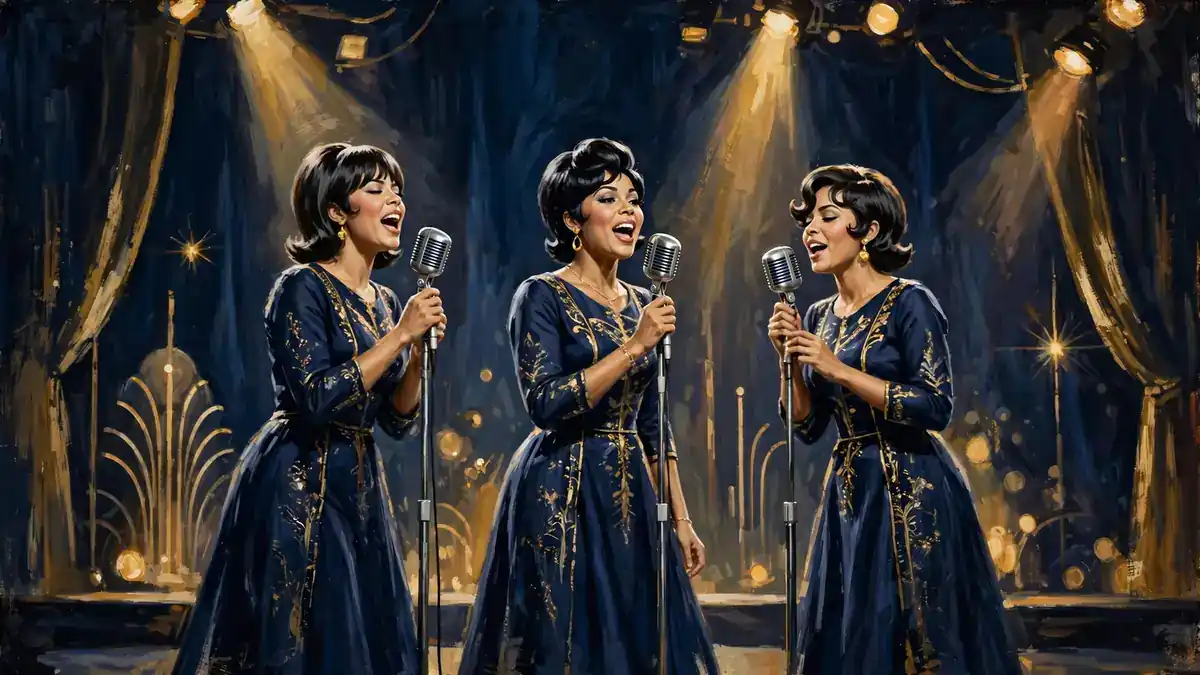
The break came through a neighbour. Florence Ballard, who lived nearby, invited Ross to audition for a vocal group she was putting together. The group called itself the Primettes, after the male group the Primes, and the four teenagers — Ross, Ballard, Mary Wilson and Betty McGlown — rehearsed in living rooms and sang at local talent shows and sock hops around Detroit. They were good enough that Berry Gordy, the founder of the young Motown label, started paying attention. In January 1961, on the condition that they change their name, Gordy signed them. Ballard picked the new name from a list: the Supremes. Ross was 16 years old, still in high school, and about to become the lead voice of the most successful American vocal group of the century.
Two facts from those early years matter for the money story. First, Motown in the early 1960s paid its artists modestly by later standards, and the Supremes’ first years brought fame faster than fortune; the wealth came later, from royalties, touring and a solo career that lasted decades. Second, Gordy spotted something in Ross beyond the voice. He groomed her as a solo star in waiting, put her at the front of the group, and in 1967 renamed the act Diana Ross & the Supremes. That grooming was a business decision as much as an artistic one, and it set up the most valuable move of her career: leaving the group at the peak of its fame to start again on her own.
Education
Ross attended Cass Technical High School in downtown Detroit, one of the city’s most demanding public schools, and graduated in January 1962 — a year after the Supremes had signed with Motown. Cass Tech, known for its music and technical programmes, gave her formal training that matched the street-corner harmonising of her childhood. She studied fashion design there, a detail that later fed directly into her stage image: Ross designed and sewed many of her own early costumes, and the glamorous gowns that became her trademark on stage started as a practical skill learned at school.
She did not go to college. By the time she left Cass Tech, the Supremes were already recording, and the choice was between a classroom and a recording studio. The education that shaped her earnings came instead from inside Motown’s artist-development machine — choreography, diction, stagecraft and media training at the label’s in-house finishing school — and from two decades of watching Berry Gordy run a record company from the inside. Ross later said she learned the business by standing next to the people who ran it, and the 1981 RCA negotiation, when she walked away from Motown and signed the biggest recording contract in music history, was the exam she passed with that education.
Career Journey
Ross’s career splits cleanly into three acts, and each one paid differently. Act one was the Supremes, 1961 to 1970. The group’s first hit came in late 1963 with “When the Lovelight Starts Shining Through His Eyes,” and then the run that defined the decade began: “Where Did Our Love Go” reached number one on the Billboard Hot 100 in the summer of 1964, and between 1964 and 1969 the Supremes put 12 songs at number one in the United States — “Baby Love,” “Come See About Me,” “Stop! In the Name of Love,” “Back in My Arms Again,” “I Hear a Symphony,” “You Can’t Hurry Love,” “You Keep Me Hangin’ On,” “Love Is Here and Now You’re Gone,” “The Happening,” “Love Child” and “Someday We’ll Be Together.” No other American vocal group has matched that run, and the Supremes remain the best-charting female group in Billboard history. The records sold in the millions — “Love Child” passed two million copies, “Someday We’ll Be Together” passed three million — and the group toured the world, played the Copa, appeared on television constantly, and put Black glamour on magazine covers at a time when that still counted as a statement.
Act two was the solo breakthrough, 1970 to 1980, and it started with a risk. Ross left the Supremes in January 1970, making her final appearance with the group on January 14 in Las Vegas, and released her self-titled solo debut on Motown five months later. The first single, “Ain’t No Mountain High Enough,” went to number one. Over the next decade she stacked six solo Hot 100 number ones — “Ain’t No Mountain High Enough,” “Touch Me in the Morning” (1973), “Theme from Mahogany (Do You Know Where You’re Going To)” (1975), “Love Hangover” (1976), “Upside Down” (1980) and “Endless Love” (1981) — and recorded four top-ten albums between 1972 and 1980. The 1980 album Diana, produced by Nile Rodgers and Bernard Edwards of Chic, became her best-selling solo studio album, powered by “Upside Down” and “I’m Coming Out,” two songs that still earn her money every time they are licensed, sampled or streamed.
Film ran alongside the music. Her first role, Billie Holiday in Lady Sings the Blues (1972), won her a Golden Globe for New Star of the Year and an Academy Award nomination for Best Actress, and the soundtrack became her only solo album to reach number one on the Billboard 200, shipping 300,000 copies in its first eight days and selling close to two million in total. She followed it with Mahogany (1975), which she also helped shape as a film about a fashion designer from Chicago, and The Wiz (1978), the all-Black retelling of The Wizard of Oz that paired her with Michael Jackson. Television brought a Tony Award in 1977 for her one-woman Broadway show An Evening with Diana Ross, and a run of prime-time specials that kept her in front of audiences between albums.
Act three began in 1981 with the RCA move and has never really ended. After two decades at Motown, Ross left the label at the end of 1980, collected a reported $250,000 severance payment from Berry Gordy, and on May 20, 1981 signed a seven-year, $20 million contract with RCA Records — then the most lucrative recording deal in music history. Her RCA debut, Why Do Fools Fall in Love (1981), sold more than a million copies. “Endless Love,” her duet with Lionel Richie from the same year, spent nine weeks at number one on the Hot 100 and was certified platinum by the RIAA for two million copies. The 1980s kept her on the charts with “Why Do Fools Fall in Love,” “All of You” with Julio Iglesias, and “Chain Reaction” (1985), written by the Bee Gees, which went to number one in the United Kingdom. The 1990s brought “If We Hold on Together” and “When You Tell Me That You Love Me,” and a top-75 UK hit single in every year from 1964 to 1996 — 33 consecutive years, a chart record.
The 2000s and 2010s shifted the income mix from records to the stage. Ross toured steadily, played Las Vegas residencies at the Encore Theater at Wynn Las Vegas — Endless Memories (2017–18), Music and Love (2018), Diamond Diana (2019) and An Extraordinary Evening (2020) — and released Thank You in 2021, her first studio album in 15 years. In 2026 she launched Diana in Motion, a tour that ran across the United States with dates in Japan — her first there in 11 years — and return runs at the Encore Theater in Las Vegas, including shows on February 12, 14 and 15 and again on October 4, 2026. At 82, she is in her fifth consecutive active touring year, and the stage, not the record shop, is now the engine of her income.
Rise to Fame
The Supremes did not break through at once. Their first two years at Motown produced singles that went nowhere, and Gordy kept them on the label largely on faith and on the strength of Ross’s voice. The turn came in 1964, when Holland-Dozier-Holland handed them “Where Did Our Love Go.” It went to number one in August 1964, and the group then scored five consecutive number ones — a run no American group had managed before. By 1965, “Baby Love” was topping the charts in Britain as well as the United States, and the Supremes were the biggest-selling American group in the world, outselling the Beatles in the US in 1965 by some measures of singles sales.
Fame at that scale carried a price the group felt in the accounts. Motown’s contracts in the 1960s gave artists a small share of record revenue, and the Supremes’ early wealth was modest next to their fame. The group’s real financial value built slowly, through royalties that kept paying as the records kept selling, through touring fees that rose with each hit, and through the brand Ross carried out of the group in 1970. That is the first of several ways Ross’s fortune differs from the modern pop-star model: there was no single windfall year, no billion-dollar tour, no beauty brand exit. The money arrived in waves across six decades and stayed because she kept working.
The solo years made her a different kind of star. “Ain’t No Mountain High Enough” in 1970 proved she could hold a number one without the group behind her. Lady Sings the Blues in 1972 proved she could hold a cinema screen. By the mid-1970s, Ross was one of the few performers in the world who could sell records, fill concert halls, open a film and carry a television special — and that range is what let her negotiate from strength in 1981, when she left the label that had made her and signed the biggest deal in the business.
Guinness recognised the scale of it in 1993, declaring Ross the most successful female music artist in history on the strength of her chart record in the United States and the United Kingdom, with 18 number-one records in the US at that point. Billboard ranked her the 30th greatest charting artist of all time on the Hot 100 in 2021, and her combined Supremes and solo hits put her among the top five Hot 100 artists of the entire 1955–2018 period. Those are not the numbers of a nostalgia act. They are the numbers of a catalog that still earns.
Main Sources of Income
Touring and live performance is now the largest single source of Ross’s income, and it has been for years. The Diana in Motion tour in 2026 ran across the United States with dates in Japan and return engagements at the Encore Theater at Wynn Las Vegas, where she has staged limited-run residencies since 2017. Legacy headliners of her stature command substantial guarantees per show — industry reporting on comparable veteran arena and theatre headliners puts fees for a single evening in the high six figures — and Ross plays theatres and showrooms rather than stadiums, which keeps production costs low and margins high. The Wynn relationship matters here: a returning residency at one venue cuts travel and staging costs, and the Encore Theater shows in February and October 2026 sold as premium events. No promoter has published her per-show fee, so we do not invent one; the shape of the income is clear even without the exact figure.
Recording royalties and catalog form the second pillar. Ross has sold more than 100 million records worldwide as a solo artist, according to Celebrity Net Worth, and the Supremes’ catalog adds millions more. The solo number ones — “Ain’t No Mountain High Enough,” “Upside Down,” “I’m Coming Out,” “Endless Love” — are among the most licensed songs of their era: “I’m Coming Out” alone has been sampled, synced and covered for four decades, and “Endless Love” remains a wedding standard. Streaming pays far less per play than the vinyl and CD eras did, but a catalog of 18 American number ones generates steady royalty income every year, and the 2021 album Thank You refreshed the catalog with new recordings that she owns more fully than the Motown masters.
Film and television contributed both fees and a second income stream in the form of soundtrack royalties. The Lady Sings the Blues soundtrack, her only solo number-one album, has sold close to two million copies. Her television specials of the 1970s and the 1977 Tony-winning Broadway run paid performance fees, and her later television films — Out of Darkness (1994), for which she earned a Golden Globe nomination, and Double Platinum (1999) — kept acting income flowing after the film offers slowed.
The remaining income comes from licensing, merchandising on tour, and her own management and production interests. In 1981, as she left Motown, Ross founded RTC Management, named for the first initials of her daughters Rhonda, Tracee and Chudney, giving her control of her own bookings and business affairs rather than paying a manager’s percentage to an outside firm. She has also earned from books — her autobiography Secrets of a Sparrow (1993) and the children’s book Going Back — and from the steady licensing of her image and name for compilations, documentaries and tribute projects. What she has not done, and what sets her apart from younger pop stars, is build a consumer-products empire: there is no Ross cosmetics line, no fashion label sale, no tequila brand. The fortune is a music fortune, built the old way, over 66 years.
Salary and Earnings
The single most important pay figure in Ross’s career is the RCA contract: seven years, $20 million, signed May 20, 1981. At the time it was the largest recording deal in music history, and it is the only contract figure in her career that is documented in contemporary reporting rather than estimated by aggregators. The structure was an advance against royalties, paid across the seven-year term, which means Ross received the money in instalments tied to album deliveries rather than as a single cheque. Her first RCA album, Why Do Fools Fall in Love, sold more than a million copies, which put the deal on a sound footing from the start. Measured against the music business of 1981, $20 million was an extraordinary sum — roughly $70 million in 2026 dollars after inflation — and it gave her the liquidity to buy property, fund her own management company and stop depending on Motown’s accounting.
What came before the RCA deal was far less generous, and the contrast is the key to understanding her wealth. Motown’s 1960s contracts paid artists a small royalty rate after the label recouped recording, promotion and touring costs, and the Supremes’ early years produced fame without matching bank balances. Ross also left Motown with a reported $250,000 severance payment — a small figure next to the $20 million that followed, and a reminder of how little of the Supremes’ value she took with her when she walked out. The severance, reported by Celebrity Net Worth and repeated in later profiles, has become one of the most quoted numbers in her financial story precisely because it shows how lopsided the old label system was: twenty years of work, and the exit payment was one-eightieth of the deal she signed five months later.
Solo record earnings in the 1970s came from a mix of advances, royalties and soundtrack income. Her Motown solo albums sold steadily rather than spectacularly — Touch Me in the Morning (1973), Mahogany (1975) and Diana Ross (1976) all produced number-one singles — while the Lady Sings the Blues soundtrack, at close to two million copies, was the commercial peak of her acting years. The 1980 album Diana was the commercial peak of her recording years: “Upside Down” and “I’m Coming Out” both became global hits, and the album remains her best-selling solo studio record. “Endless Love,” the 1981 duet with Lionel Richie, was certified platinum for two million copies and spent nine weeks at number one on the Hot 100 — the biggest-selling single of her career.
Touring pay is where the modern money sits, and it is also where the public record goes quiet. Ross does not disclose her guarantees, and no promoter has published them. What can be said with confidence is that she has toured in five consecutive years through 2026, that the Diana in Motion dates include premium Las Vegas showroom runs, and that veteran headliners at her level typically earn high six-figure guarantees per theatre date, with residency runs offering better margins still. Her choice of venues supports that reading: theatres and showrooms of 1,500 to 5,000 seats, sold at premium ticket prices, with a small band and a costume-heavy production that costs far less to move than a stadium show. The economics favour the artist, and Ross has been running that model since the 2017 Wynn residency began.
Film and television fees are a smaller line. The Lady Sings the Blues payday was substantial for 1972 but modest next to the RCA deal, and her later film work — Mahogany, The Wiz — paid leading-lady fees of the period rather than the eight-figure sums that top film stars command today. The lasting value of the film work is in the soundtrack royalties and in the prestige that kept her touring fees high for decades afterward. An Oscar nomination does not pay a salary, but it raises the price of every ticket sold for the next fifty years.
Businesses and Investments
Ross’s most deliberate business move was taking control of her own affairs. When she left Motown in 1981 she founded RTC Management, named after the first initials of her three daughters — Rhonda, Tracee and Chudney — and ran her career through it rather than handing a manager’s percentage to an outside firm. That decision, reported in reference profiles of her life, matters more to her net worth than any single deal: over four decades, the fees she did not pay to outside managers stayed in her own accounts. RTC also gave her control of her touring schedule, which is why she could keep working at her own pace into her eighties instead of being pushed into the kind of punishing tour schedules that burn out younger artists.
Her catalog is her main investment asset, and it behaves like one. The Supremes’ masters belong to Motown’s corporate successors, which limits what Ross earns from the group’s recordings, but her solo catalog — including the 1980 album Diana and the RCA years — generates royalties across streaming, radio, sync licensing and compilations. Songs such as “I’m Coming Out” and “Ain’t No Mountain High Enough” are licensed constantly: in films, in advertising, in samples by later artists. Each use pays a fee, and the fees add up across a catalog of hundreds of recordings. The 2021 album Thank You also matters commercially because it was recorded and released under arrangements that give her a stronger ownership position than the Motown-era masters, where the label took the larger share.
Real estate has been her most visible investment outside music, and it is covered in detail in the assets section below. Beyond property, Ross has kept her business footprint narrow: no restaurant chain, no cosmetics line, no venture-capital portfolio has ever been attached to her name in credible reporting. That narrowness is a choice with two sides. On one side, she never had a billion-dollar brand exit of the kind that now defines celebrity wealth. On the other, she never lost money on one either, and the fortune she holds is built on income she earned herself, in public, over 66 years, rather than on a paper valuation that could vanish.
One more business fact belongs here because competitors usually miss it: Ross was among the first Black women in American entertainment to negotiate as a free agent at the top of the market. The $20 million RCA deal in 1981 did more than pay her; it reset the market for every Black female artist who negotiated a contract after her. The deal’s value to her net worth is direct — $20 million across seven years, plus the royalties it generated — and its value to the industry is harder to price but real. When later stars signed nine-figure deals, they were walking through a door Ross had opened.
Brand Deals and Sponsorships
Ross built her fortune without the endorsement portfolio that defines modern celebrity wealth, and that absence is itself a finding. There is no record in credible reporting of a major long-term endorsement contract — no cosmetics deal, no fashion house ambassadorship, no drinks brand — of the kind that now pays pop stars tens of millions a year. Her brand value was spent differently: on stage, in concert residencies, and in the licensing of her music and image for films, compilations and documentaries.
What she did do, consistently, was monetise her image on her own terms. Her concert tours have carried sponsorship and merchandising income, her likeness has been licensed for tribute projects and documentaries, and her music has been synced to advertising — “I’m Coming Out” in particular has appeared in campaigns and films for decades, each use paying a licensing fee. Her books — the autobiography Secrets of a Sparrow (1993) and the children’s book Going Back — brought advances and royalties, and her 1970s television specials carried sponsorship revenue of the period.
The comparison with her peers is instructive. Cher, whose net worth public trackers put at about $360 million, and Barbra Streisand, tracked at about $400 million, both built fortunes that include substantial film, television and touring income alongside music — the same mix as Ross, without a consumer brand exit either. Gladys Knight, a fellow soul-era headliner whose fortune we profiled at NetWorthCraft, sits far below Ross, which shows how much the solo breakout and the RCA deal were worth. The lesson of Ross’s career for anyone counting endorsement money is that a 66-year touring and recording career, plus one record-breaking contract, can match the wealth of stars who chased far more deals.

Houses, Cars and Other Assets
The centrepiece of Ross’s property holdings is Quarry Farm, her waterfront estate in the Belle Haven neighbourhood of Greenwich, Connecticut. She bought the 1920s-era property in the 1980s for about $3.5 million, according to Celebrity Net Worth, and built it into a five-acre estate with 12,500 square feet of living space, 11 bedrooms, six bathrooms, five fireplaces, a swimming pool, a hot tub and a tennis court. In 2007 she listed it for $39.5 million — more than ten times what she had paid — and then, as the property market turned, cut the asking price in 2009. The house did not sell at that price, and Ross kept living there; it remains her best-known home and the venue for family events, including her son Evan’s 2014 wedding to singer Ashlee Simpson, which Ross herself officiated on the estate grounds.
The Greenwich numbers deserve a careful reading. A $39.5 million asking price is not a sale price, and no public record confirms a sale at or near that figure, so the estate should not be counted as a realised gain. What it does show is the scale of the asset: a five-acre waterfront property in one of America’s most expensive suburbs, bought for $3.5 million in the 1980s and carried for four decades while Greenwich waterfront values rose sharply. Even at a conservative valuation, the property is one of the largest single items in her net worth, and it is the asset that most explains why her fortune kept growing in years when she released little new music.
Her other property story is smaller and more personal. The family’s Detroit home at 635 Belmont Street, where Ross grew up and where Smokey Robinson lived nearby, came up for sale a little over a decade ago at $132,500 for a 2,112-square-foot, four-bedroom house — a price the listing broker said rose once buyers learned whose childhood home it was. Ross has also been reported to own property in California, including a home in the Los Angeles area that she restored around the time of her son Evan’s wedding. No public record puts a firm value on the California holdings, so we do not assign one; the Greenwich estate is the property asset that can be documented.
Cars have never been a headline part of the Ross fortune. Unlike stars whose garages are part of the brand, Ross has not been associated in credible reporting with a large or publicised car collection, and we do not invent one. Her visible luxury spending has gone into stage costumes — the gowns are legendary, and she designed many of her early ones herself — and into the Greenwich estate. The pattern fits the rest of her financial story: money spent on the things that earn money, and on the house her family gathers in, rather than on depreciating display assets.
Awards and Achievements
Ross’s honours list is one of the longest in American entertainment, and it matters financially because prestige is what keeps a legacy artist’s touring fees high. The headline items: an Academy Award nomination for Best Actress for Lady Sings the Blues (1973 ceremony, for the 1972 film), a Golden Globe win for New Star of the Year for the same role, and a Tony Award in 1977 for her one-woman Broadway show An Evening with Diana Ross. She has been nominated for 12 Grammy Awards without a competitive win — a fact she has joked about on stage — and then received the Grammy Lifetime Achievement Award twice: in 2012 as a solo artist, and in 2023 as a member of the Supremes, making her the first woman to receive the honour both as a soloist and as a group member.
The civic honours sit above the industry ones. She received the Kennedy Center Honors in 2007, presented during the presidency of George W. Bush, and the Presidential Medal of Freedom in 2016 from President Barack Obama — the highest civilian honour in the United States. In 1988 she was inducted into the Rock and Roll Hall of Fame as a member of the Supremes, and she holds two stars on the Hollywood Walk of Fame, one as a solo artist and one with the Supremes — a distinction held by very few performers. The American Music Awards gave her its Lifetime Achievement Award in 2017.
The chart records are the achievement that pays most directly. Eighteen American number-one singles between 1964 and 1981 — 12 with the Supremes, six solo — made her, for a time, the female solo act with the most number ones in the United States. A top-75 hit single in the United Kingdom in every year from 1964 to 1996, 33 consecutive years, is a chart record. Billboard ranked her the 30th greatest Hot 100 artist of all time in 2021, and her combined hits place her among the top five Hot 100 artists across the whole 1955–2018 period. Guinness named her the most successful female music artist in history in 1993. These are the numbers that promoters quote when they set her fee, and they are the reason the fee stays high at 82.
Net Worth Growth Over the Years
Ross’s fortune grew in steps rather than in a straight line, and the steps map to the three acts of her career. The Supremes years built fame and a royalty base but modest cash; the solo 1970s added film income and the first real touring money; the 1981 RCA deal was the step change, putting $20 million of contracted income on the table at once. The decades after that were compounding: royalties from a catalog that never stopped selling, touring fees that rose as her peers retired, and a Greenwich property bought for $3.5 million that appreciated for forty years. The published estimates reflect that shape: trackers held her at about $250 million for years, then Celebrity Net Worth revised its figure to $350 million in February 2026, and Alux put her at $330 million in October 2026. The revision, rather than any single event, is what moved the number — the underlying assets did not change overnight, but the estimate of them did.
| Period | Estimated net worth | What drove it |
|---|---|---|
| 1960s (Supremes peak) | Under $5 million | Modest Motown royalties; fame outran fortune |
| 1970s (solo + film) | $10 million – $25 million | Six solo number ones; Lady Sings the Blues and soundtrack |
| 1980s (RCA deal) | $25 million – $60 million | $20 million RCA contract; Diana album; “Endless Love” |
| 1990s – 2000s | $100 million – $150 million | Catalog royalties; steady touring; Greenwich property appreciation |
| 2010s | $150 million – $250 million | Las Vegas residencies from 2017; licensing; catalog value rises |
| 2020 – 2025 | $250 million | Most trackers converge on $250 million; Thank You (2021) |
| November 2026 | $250 million – $350 million | Celebrity Net Worth revises to $350 million (Feb 2026); Alux $330 million (Oct 2026); Diana in Motion tour |
The growth table carries a warning that applies to every figure in it before 2026: the early numbers are reconstructions, not published estimates from the time, because no tracker published a Ross net worth in the 1960s or 1970s. They are our reading of the documented income — the RCA deal, the record sales, the property purchase — expressed as a range. The 2026 figures are the documented ones, and the range between them is the honest headline.
Against her closest peers, Ross sits in the upper tier of pre-1970 solo stars, behind the two women whose film and touring income ran even longer, and well ahead of the soul-era headliners who never broke out as solo film and touring stars.
| Artist | Reported net worth (2026) | How it compares with Ross |
|---|---|---|
| Barbra Streisand | About $400 million | Film directing and a longer screen career added to the music fortune |
| Cher | About $360 million | Film, television and a longer Las Vegas residency run |
| Diana Ross | $250 million – $350 million | Music, touring and property; no brand exit |
| Gladys Knight | Far below Ross (see our profile) | Soul-era touring without the solo breakout or the record RCA deal |
Peer figures are reported estimates from public trackers, shown for comparison only; each carries the same uncertainty as the Ross range above.
Social Media Presence
Ross keeps a lighter social media footprint than stars who came up with the platforms, and that is consistent with a career built before them. She posts on Instagram and X, sharing tour dates, rehearsal clips, family photographs and birthday messages, and her accounts function as a tour noticeboard rather than a daily content operation. She does not run the kind of sponsored-post business that younger stars do, and no credible reporting puts a figure on her social media earnings — which is itself the point. For an artist of her generation, social media is a way to sell tickets to people who already know the songs, not a separate income stream.
The accounts still matter commercially. Tour announcements for Diana in Motion in 2026 travelled through her social channels first, and the Wynn Las Vegas dates were promoted with clips from her Encore Theater shows. Her daughter Tracee Ellis Ross, who has a large social following of her own, regularly posts about her mother, and those posts reach an audience that Ross’s own accounts do not. The family, in effect, markets the tour for free. That is a small but real part of why the touring economics work so well at 82: the audience finds the shows without an expensive advertising campaign.
Personal Life
Ross has five children, and the family story is as public as the career one. Her eldest, Rhonda Ross Kendrick, was born in August 1971; her biological father is Motown founder Berry Gordy, and she was raised by Ross’s first husband, music executive Robert Ellis Silberstein, whom Ross married in January 1971 when Rhonda was still a baby. Ross and Silberstein had two daughters together: Tracee Ellis Ross, born in 1972, who became an Emmy-nominated actress on Girlfriends and Black-ish and a Golden Globe winner, and Chudney Ross, born in 1975, who opened the children’s bookstore Books and Cookies in Santa Monica and published the children’s book Lone Bean. Ross and Silberstein divorced in 1977.
Her second marriage was to Norwegian shipping magnate Arne Næss Jr., whom she met in 1985 and married in 1986. They had two sons, Ross Arne Næss, born in 1987, and Evan Ross, born in 1988, who became an actor and musician, appearing in ATL, The Hunger Games and The United States vs. Billie Holiday. Ross and Næss divorced in 2000, and Næss died in a mountaineering accident in South Africa in 2004; Ross has called him the love of her life and remains close to his three older children from his first marriage, including folk singer Leona Naess. Evan Ross married singer Ashlee Simpson in 2014 in a ceremony at the Greenwich estate, with Ross officiating. Ross has seven grandchildren.
Her private life has had public difficulties, and the record is honest about them. She was arrested for driving under the influence in Tucson, Arizona, in December 2002, while undergoing substance abuse treatment, and later served a two-day sentence. She has spoken in interviews about the pressures of fame and about the long shadow of her relationship with Berry Gordy, which she acknowledged publicly on The Oprah Winfrey Show in 1994. None of this dented the career: she kept touring, kept recording, and in 2021 released Thank You, an album whose title reads as a message to the audience that stayed with her.
Family is also a business asset. Tracee Ellis Ross’s fame keeps the Ross name in front of younger audiences who never bought a Supremes record, and the family’s public closeness — Diana officiating her children’s weddings, her children opening for her on tour, Rhonda opening shows for her mother in 2017 — turns the personal story into part of the live show. The audience at a 2026 Diana Ross concert is buying a ticket to a family as much as to a singer, and that is a durable advantage no marketing budget can buy.
Sources & Reporting
Celebrity Net Worth — the $350 million estimate, updated February 2, 2026; the $20 million RCA contract figure; the $250,000 Motown severance; the Greenwich estate purchase price of about $3.5 million and the 2007 listing at $39.5 million; the 100-million-plus solo record sales figure. Reporting window: page updated February 2026, consulted November 2026.
Parade — the $250 million estimate in its January 2, 2026 profile, attributed to Celebrity Net Worth before the February revision; the key evidence that the $250 million figure predates the current $350 million figure. Reporting window: January 2026.
Alux — the $330 million estimate as of October 2026, and the note that Ross headlined into 2026 as an active touring artist. Reporting window: October 2026.
Billionaires.Africa — the June 12, 2026 profile carrying the $250 million figure, the RCA contract detail, the Supremes’ 12 number ones, and the Detroit childhood background. Reporting window: June 2026.
Wynn Las Vegas — the Diana in Motion: 2026 US Tour dates at the Encore Theater (February 12, 14 and 15, 2026), the residency history from 2017, and the honours summary including the two Grammy Lifetime Achievement Awards, the Kennedy Center Honors and the Presidential Medal of Freedom. Reporting window: January 2026.
Wikipedia — birth date and place, family details, chart records (18 American number ones, 33 consecutive years of UK top-75 hits), the 12 Grammy nominations, the two Hollywood Walk of Fame stars, and the marriages and children. Consulted November 2026; used for biographical and chart facts, not for the net worth figure.
Hello! Magazine — the five children, their careers and the family details, including Tracee Ellis Ross’s Emmy nominations and Golden Globe, and Evan Ross’s marriage. Reporting window: 2026.
Reporting note: every money figure in this article is either attributed to the outlet above or labelled as our estimate. The $250 million to $350 million range reflects a genuine disagreement in published estimates, explained in the article, not uncertainty about the underlying career facts. No figure in this article comes from an anonymous source or an unlabelled aggregator.
Frequently Asked Questions
What is Diana Ross’s net worth in 2026?
Diana Ross’s net worth is estimated at $250 million to $350 million as of November 2026. Celebrity Net Worth lists her at $350 million after a February 2, 2026 revision, while Parade reported $250 million in January 2026 and Alux put her at $330 million in October 2026. The range reflects a revision in the estimate, not a change in her assets, so we publish the full range with the newest figure as the anchor.
How did Diana Ross make her money?
Mostly from music and touring across 66 years. The building blocks are the Supremes’ royalties from 12 American number-one singles, six solo number ones, the $20 million RCA contract she signed in 1981, film income including the Lady Sings the Blues soundtrack, and decades of touring — including Las Vegas residencies at Wynn’s Encore Theater since 2017 and the Diana in Motion tour in 2026. She also owns a valuable Greenwich, Connecticut estate bought in the 1980s.
Is Diana Ross still alive and touring in 2026?
Yes. Diana Ross is alive and touring at 82. Her Diana in Motion tour ran across the United States in 2026, with dates in Japan — her first there in 11 years — and return shows at the Encore Theater at Wynn Las Vegas, including February 12, 14 and 15 and October 4, 2026. It is her fifth consecutive active touring year.
How many number-one hits did Diana Ross have?
Eighteen in the United States between 1964 and 1981: 12 as the lead singer of the Supremes and six as a solo artist. Her solo number ones were “Ain’t No Mountain High Enough,” “Touch Me in the Morning,” “Theme from Mahogany (Do You Know Where You’re Going To),” “Love Hangover,” “Upside Down” and “Endless Love.” She also had a top-75 hit single in the United Kingdom in every year from 1964 to 1996, a run of 33 consecutive years.
What was Diana Ross’s biggest hit?
Her biggest-selling single was “Endless Love,” the 1981 duet with Lionel Richie, which spent nine weeks at number one on the Billboard Hot 100 and was certified platinum for two million copies. Her biggest-selling solo single was “Upside Down,” and the Supremes’ biggest seller was “Baby Love,” which has sold more than four million copies over time.
Who are Diana Ross’s children?
Diana Ross has five children: Rhonda Ross Kendrick (born 1971), Tracee Ellis Ross (born 1972), Chudney Ross (born 1975), Ross Arne Næss (born 1987) and Evan Ross (born 1988). Tracee is an Emmy-nominated, Golden Globe-winning actress; Evan is an actor and musician married to singer Ashlee Simpson. Rhonda’s biological father is Motown founder Berry Gordy.
Where does Diana Ross live?
Diana Ross lives at Quarry Farm, her waterfront estate in the Belle Haven neighbourhood of Greenwich, Connecticut. She bought the 1920s-era property in the 1980s for about $3.5 million; the five-acre estate has 11 bedrooms and 12,500 square feet of living space, and she listed it for $39.5 million in 2007 before keeping it. She also has ties to homes in Detroit, where she grew up, and California.
Was Diana Ross in The Supremes?
Yes. Diana Ross was the lead singer of the Supremes, Motown’s most successful act of the 1960s. She joined the group — originally called the Primettes — as a teenager, signed with Motown in January 1961, and sang lead on all 12 of the group’s American number-one singles between 1964 and 1969. She left the group in January 1970 to begin her solo career, making her final appearance with them on January 14, 1970, in Las Vegas.
Final Thoughts
Diana Ross’s fortune is the least flashy kind of celebrity wealth, and that is why it has lasted. There was no single windfall, no brand exit, no billion-dollar tour — just 18 number-one singles, a $20 million contract that reset the market in 1981, a catalog that has paid royalties for six decades, and a Greenwich estate bought for $3.5 million that is worth many times that today. The honest headline is the range: $250 million to $350 million, with Celebrity Net Worth’s February 2026 revision to $350 million as the newest figure and Parade’s $250 million as the number most outlets still carry. Either way, she sits among the richest legacy singers in the world, and at 82 she is still adding to it one theatre at a time on the Diana in Motion tour. The money was never the point of the career, but the career was long enough, and disciplined enough, that the money followed.
Published on November 24, 2026. Last reviewed November 2026. Found an error? See our corrections policy.