
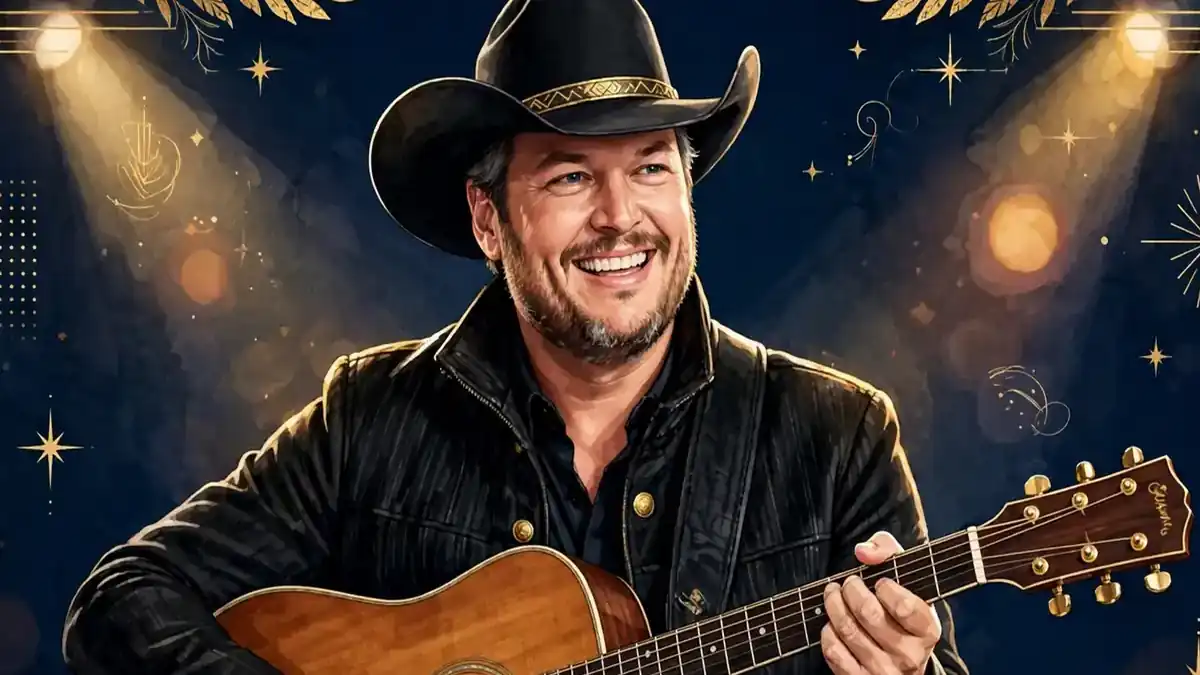
Blake Shelton‘s net worth is estimated at $130 million as of November 2026. That figure sits inside a published range of $100 million to $150 million, and the spread itself tells the story: Shelton built his money on three very different machines — a 23-season run on The Voice that paid a reported $13 million per season late in his tenure, a touring and recording career that produced 30 No. 1 country singles, and a bar-and-restaurant brand, Ole Red, that grew to six venues in 2026 with a seventh on the way. He turned 50 in June 2026 and spent the year doing the opposite of slowing down, with 16 Las Vegas residency shows, a summer festival run, a 30th chart-topper and a new CBS series he executive-produced.
Blake Shelton: Quick Facts
| Estimated net worth | $130 million (range: $100 million–$150 million) |
|---|---|
| Profession | Country singer-songwriter, television personality |
| Nationality | American |
| Born | June 18, 1976 (age 50) |
| Height | 6 feet 5 inches (196 cm) |
| Primary income sources | The Voice salary, touring and Las Vegas residency, music royalties and catalog sale, Ole Red venues, endorsements |
| Active years | 2001–present |
| Last reviewed | November 2026 |
- Early Life and Background
- Education
- Career Journey
- Rise to Fame
- Main Sources of Income
- Salary and Earnings
- Businesses and Investments
- Brand Deals and Sponsorships
- Houses, Cars and Other Assets
- Awards and Achievements
- Net Worth Growth Over the Years
- Social Media Presence
- Personal Life
- Sources & Reporting
- Frequently Asked Questions
- Final Thoughts
Early Life and Background
Blake Tollison Shelton was born on June 18, 1976, in Ada, Oklahoma, a small city in the south-central part of the state, and raised there by his parents, Richard and Dorothy Shelton. Ada sits in Pontotoc County, farm and ranch country, and the rhythms of that place — church, high school football on Friday nights, country radio, Lake Texoma an hour south — shaped the singer he became far more than any later Nashville polish did. He has talked for years about Oklahoma as home in a way that sounds less like branding than habit: it is where his family is buried, where his ranch sits, and where he chose to get married.
The defining event of Shelton’s childhood came when he was 14. His older brother, Richie Shelton, died in a car accident in 1990 at the age of 24. Shelton has spoken about the loss in interviews across his career, and it hangs over his early songwriting in a way fans recognize: the ache in his voice on ballads was not a studio effect. His father, Richard, worked as a used-car salesman, and his mother ran a beauty salon; neither had music-industry connections, which meant the route to Nashville would have to be built from scratch.
Music entered early. Shelton started singing as a boy and picked up the guitar in his early teens, playing local gigs around Ada while still in school. By 16 he had written “All Over Me,” a song that later became a Top 20 hit for him — an unusual detail, because most teenage songwriters never see their juvenilia on the radio at all. The local circuit gave him stage time, and a demo tape eventually reached the ears of Mae Boren Axton, the songwriter behind Elvis Presley’s “Heartbreak Hotel,” who became an early champion and helped open doors in Nashville. Axton died in 1997, before Shelton’s breakthrough, but he has credited her encouragement repeatedly in the years since.
At 17, two weeks after graduating from Ada High School in 1994, Shelton moved to Nashville. He arrived with a guitar, a demo and no safety net, and spent his first years in town working odd jobs — including painting houses — while writing songs and playing writers’ rounds. The move is the hinge of the whole financial story: had he stayed in Ada, there would be no Voice salary, no Ole Red, no catalog sale. Nashville in the mid-1990s was a hard town for a traditional-leaning country singer, with the genre drifting toward pop polish, and Shelton spent seven years there before his first single reached radio.
That long apprenticeship matters for the net worth picture. Shelton did not arrive rich, and he did not get rich quickly. His first decade in the business paid working-musician money, and the fortune came later, in a concentrated burst between 2011 and 2023, when television money stacked on top of touring money. The Oklahoma ranch he bought in 2015, Ten Point Ranch near Tishomingo, is in that sense a homecoming: the kid who left Ada at 17 bought his way back to the same soil, on a much larger scale.
Education
Shelton attended Ada High School in Ada, Oklahoma, graduating in 1994. He did not attend college; instead he moved to Nashville two weeks after graduation to pursue music full time. That choice was deliberate rather than accidental — he had been writing songs since his mid-teens and had a demo tape and a Nashville contact in Mae Boren Axton — but it also meant his education in the business came on the job: writers’ rounds, demo sessions, publishing deals and, later, the far larger education of a network television contract.
The absence of a degree never slowed him, and it is worth stating plainly because it shapes how his money works. Shelton’s wealth is not credential wealth. It is catalog wealth, television-contract wealth and brand wealth — the kind that depends on a voice, a persona and a run of hits rather than a diploma. His songwriting education, such as it was, came from the Nashville system itself: co-writing rooms, publishers who taught him to finish songs, and producers who taught him what radio wanted. By the time “Austin” reached No. 1 in 2001, he had spent seven years learning the trade in the room where it is taught.
Later in his career, Shelton became a mentor figure himself — first informally, then literally, as a coach on The Voice for 23 seasons. The show’s format put him in the position of teaching young singers the things Nashville taught him: song choice, stage craft, how to survive a bad week on television. Several of his winning artists — Cassadee Pope, Danielle Bradbery, Chloe Kohanski — went on to recording careers of their own. The teaching role paid, too: the coaching chair was the single largest income stream of his life, as the salary section below lays out in detail.
Career Journey
Shelton’s Nashville years ran from 1994 to 2001, and they were slow. He signed a publishing deal, wrote songs, recorded demos and waited. His first break came through Giant Records, which signed him in 2001; his debut single, “Austin,” was released that year and spent five weeks at No. 1 on the Billboard Hot Country Songs chart — a debut run that announced a major new voice and gave him the first real money of his career. The self-titled debut album, Blake Shelton (2001), went gold, and the follow-up single “All Over Me” — the song he wrote at 16 — reached the Top 20.
The 2000s built the catalog brick by brick. The Dreamer (2003) produced the Top 10 hit “The Baby”; Blake Shelton’s Barn & Grill (2004) gave him “Some Beach” (a No. 1) and “Goodbye Time”; Pure BS (2007) and Startin’ Fires (2008) kept him on radio through a period when country was fragmenting into pop-country and traditional camps. He was a reliable hitmaker, not yet a superstar, and his income in this period came from the standard country mix: record royalties, radio play, touring mid-size venues and songwriting cuts. It was comfortable money, not fortune money.
The turn came in 2010 and 2011. Shelton was inducted into the Grand Ole Opry on October 23, 2010 — the institution’s formal stamp of approval — and his 2010 single “All About Tonight” and the 2011 album Red River Blue pushed him to a new level of radio dominance. “Honey Bee,” the lead single from Red River Blue, became the fastest-selling digital single by a male country artist at the time, and “God Gave Me You” followed it to No. 1. Then, in April 2011, NBC premiered The Voice, with Shelton as one of four original coaches alongside Adam Levine, Christina Aguilera and CeeLo Green. Nothing in his financial life was ever the same again.
The 2010s were the harvest decade. Album followed album — Cheers, It’s Christmas (2012), Based on a True Story… (2013), Bringing Back the Sunshine (2014), If I’m Honest (2016), Texoma Shore (2017), Fully Loaded: God’s Country (2019) — and the singles kept coming: “Boys ‘Round Here,” “Mine Would Be You,” “Doin’ What She Likes,” “Neon Light,” “Sangria,” “Gonna,” “Came Here to Forget,” “A Guy with a Girl,” “Every Time I Hear That Song,” “I’ll Name the Dogs,” “God’s Country.” The last of those, released in 2019, became one of the defining songs of his career and a Grammy-nominated performance. By the end of the decade he had stacked up 30 No. 1 singles on the country charts, a total that puts him among the most successful radio artists in the genre’s history.
Television kept pace with the music. Shelton stayed in the red chair for every one of the show’s first 23 seasons, from 2011 to 2023, winning nine times — more than any other coach. He hosted the USA Network game show Barmageddon, which premiered in late 2022 with a second season in November 2023. He voiced characters in animated films, appeared as himself across talk shows and award broadcasts, and became, by the mid-2010s, one of the most recognizable faces in American entertainment — a country singer who was also, unmistakably, a television star.
The post-Voice chapter began in May 2023, when he walked away from the show after season 23. The exit was framed as a family decision — more time at home with Stefani and her three sons — and the years since have shown what “more time” looks like for Shelton: a Las Vegas residency that opened in February 2025, a new record deal with BBR Music Group/BMG Nashville, a 13th studio album in May 2025, and a move into producing. In fall 2025 he executive-produced The Road, a CBS singing-competition series created with Taylor Sheridan and hosted by Keith Urban. He returned to The Voice stage once, for the season 27 finale in May 2025, as a guest — a curtain call, not a comeback.
Rise to Fame
Shelton’s rise had two distinct phases, and confusing them is the most common mistake in profiles of him. Phase one was the country-radio rise: “Austin” in 2001, a steady run of hits through the 2000s, Opry membership in 2010. That made him famous inside country music. Phase two was the television rise: The Voice in 2011, which made him famous everywhere else. The money followed the same split — phase one paid a working star’s income, phase two paid a television star’s income, and the two together, sustained for a dozen years, produced the fortune.
The Voice did three things for Shelton’s bank account that radio alone never could. First, it paid a salary — a reported $13 million per season in his later years, which over 23 seasons adds up to a gross figure Parade puts at about $299 million. Second, it kept him in front of a national audience twice a year, every year, which kept his tour grosses high and his back catalog selling. Third, it made him a brand safe enough for mainstream advertisers — Pizza Hut, Pepsi, Walmart — who would never have bought a country-radio-only star. The show’s format also suited him: the banter with Adam Levine became a running storyline, the “bromance” segments were cheap to produce and endlessly clipped on social media, and Shelton’s dry Oklahoma humor played well in living rooms that had never bought a country album.
The nine coaching wins mattered commercially as well as competitively. Each win — Jermaine Paul (season 2), Cassadee Pope (season 3), Danielle Bradbery (season 4), Craig Wayne Boyd (season 7), Sundance Head (season 11), Chloe Kohanski (season 13), Todd Tilghman (season 18), Cam Anthony (season 20), Bryce Leatherwood (season 22) — was a storyline that ran for a full season, and Shelton’s record as the winningest coach became a credential NBC used to sell the show. He appeared in 445 episodes, according to TheWrap, a workload that explains both the size of the paycheck and the reason he eventually left: 12 years of twice-yearly production schedules is a grind, even at $13 million a season.
Radio kept pace the whole time. “God’s Country” (2019) won CMA Single of the Year and gave Shelton one of his biggest streaming hits; “Happy Anywhere” and “Nobody But You,” his duets with Stefani, crossed over to pop and adult-contemporary audiences. In 2024, “Texas” returned him to No. 1, and in 2026 “Stay Country or Die Tryin'” became his 30th No. 1 country single — a number that puts him second only to Kenny Chesney for the most No. 1s on the country chart, according to Nairobi News. Thirty No. 1s across 25 years is the kind of consistency that keeps a catalog earning long after the singles stop charting.
Fame also changed the shape of his touring. Before The Voice, Shelton played fairs, casinos and mid-size arenas. After it, he headlined amphitheaters and arenas, launched the Friends and Heroes Tour with veteran acts like Trace Adkins, Craig Morgan and Deana Carter, and in 2025 settled into a Las Vegas residency at the 4,300-seat Colosseum at Caesars Palace — a room that pays a headliner very differently from a one-night arena date, because the production stays put and the audience comes to him. The residency model, three blocks across 2025 and 2026, is the late-career version of the touring machine: fewer miles, higher margin, same songs.
Main Sources of Income
Shelton’s income breaks into five streams, and the proportions shifted sharply over his career. In the 2000s, music was nearly all of it. By the 2010s, television was the biggest line. In the 2020s, the mix is television residuals and producing, live performance, catalog royalties, the Ole Red brand and endorsements — with no single stream carrying the whole fortune, which is part of why the estimates are so stable across outlets.
Television. The Voice was the largest single income source of Shelton’s life: a reported $13 million per season in his later years, 23 seasons, a gross total Parade estimates at about $299 million. That is gross pay before managers, agents, taxes and the costs of maintaining a public life — Celebrity Net Worth makes the same point about its own estimate, noting that Shelton has generated hundreds of millions in gross revenue since 2011 across television, touring, recordings, merchandise and licensing, and that gross revenue is not take-home pay. Add Barmageddon hosting fees and his executive-producer role on CBS’s The Road, and television remains his biggest earner even after he left the red chair.
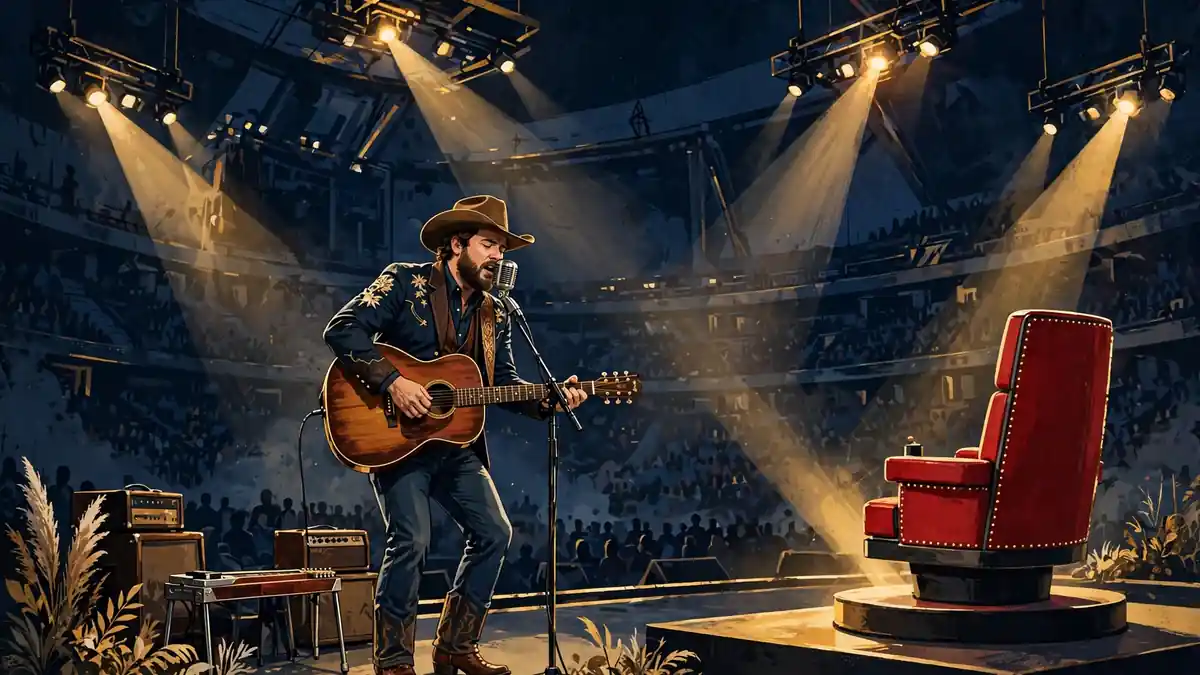
Touring and live performance. Shelton has toured for a quarter century, and his live grosses grew with his fame. Reports cited by GuideNetWorth put his shows at grosses of up to about $1 million per concert in his peak touring years — gross, not take-home, and before the band, crew, buses and venue splits. The 2026 model is different: 16 residency shows at the Colosseum, plus festival headline slots at Carolina Country Music Fest, Voices of America and Rock The Country, plus one-off dates such as WinStar World Casino on April 25, 2026 and Hondo Rodeo Fest in Phoenix on November 14, 2026. A residency concentrates the economics — one production, one city, repeatable nights — and for a 50-year-old headliner it is the highest-margin way to play live.
Music royalties and the catalog sale. Thirty No. 1 singles, 13 studio albums and reported sales of more than 10 million albums generate a steady royalty stream from streaming, radio play, sync licensing and physical sales. The streaming numbers are large — the tracker site Kworb counted more than four billion Spotify streams for Shelton as of February 2024, per Net Worth Radar — and they keep paying whether or not he is on tour. The bigger event was the catalog sale: Rolling Stone reported in 2021 that Shelton sold his song catalog for $50 million, a one-time payment that converted decades of future royalties into cash at once. Catalog sales of that size are a standard late-career move for artists with deep back catalogs, and the $50 million figure is the single largest documented lump sum in Shelton’s financial record.
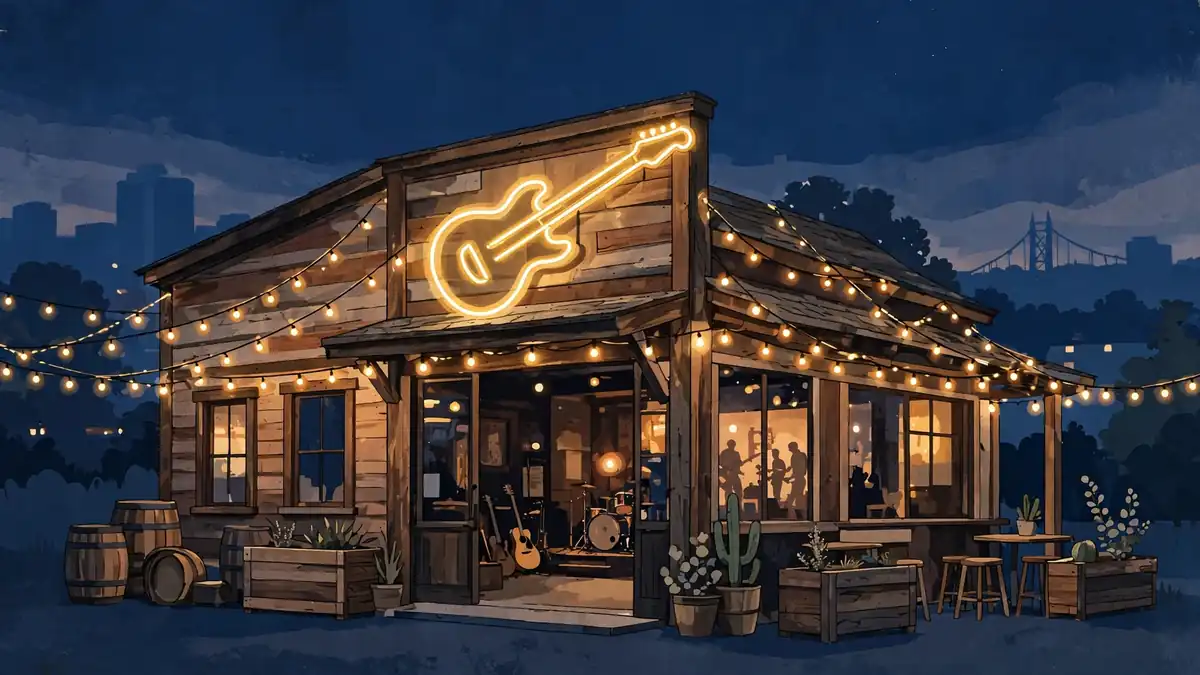
Ole Red and brand licensing. Ole Red, the bar-restaurant-live-music brand named after his 2001 hit “Ol’ Red,” is the business stream with the most visible growth. Six venues were operating in 2026 — Tishomingo, Nashville, Orlando, Gatlinburg, Las Vegas and Nashville Airport — and a seventh, a 37,000-square-foot Indianapolis venue, was announced in April 2026 for a late-2027 opening. The venues are owned and operated by Ryman Hospitality Properties through its Opry Entertainment Group, which means Shelton’s return comes through licensing and partnership rather than day-to-day restaurant operations — a lower-risk, lower-headache structure than owning the buildings himself.
Endorsements. Parade lists Pizza Hut, Pepsi, Lands’ End, Gildan, Smithworks Vodka and Walmart among Shelton’s endorsement deals. Smithworks, the vodka brand he launched in 2016, is the most personal of the set — a product with his name and Oklahoma identity attached, sold nationally. The rest are classic celebrity-endorsement fees: a famous, trusted face attached to mass-market products. Individually none of these deals rivals a Voice season; together they add a steady seven-figure layer to his annual income.
Salary and Earnings
The Voice salary is the number every profile of Shelton has to get right, because it is the largest verified income line in his career. Celebrity Net Worth reports $13 million per cycle in the later years of his run, and Parade reports the same figure, adding that Shelton’s estimated total from the series was about $299 million — the arithmetic of 23 seasons at the late-run rate. Two cautions apply. First, the $13 million figure describes the later seasons; early-season pay was lower, so $299 million is an estimate built by applying the late rate across the run, not a payroll record. Second, it is gross compensation. Managers typically take 10 to 20 percent, agents take their cut, and taxes take the largest share, so the amount Shelton kept from the show is far below $299 million — still an enormous sum, but not the fortune itself.
Forbes tracked Shelton’s annual earnings during his peak years, and the three figures it published are the best hard data in the record: $31.5 million in 2017, $28 million in 2018, and $45 million between June 2019 and June 2020. Those are earnings years, not net worth, and they show how the machine worked at full speed — a Voice season, a tour, an album cycle and endorsements all landing in the same 12 months. Parade’s estimate of $31.5 million to $45 million a year in his peak period lines up with the Forbes numbers. In 2026, without a Voice salary, his annual income is lower — Parade notes the figure “may be much lower in 2026” — which is why the net worth estimate is a stock of accumulated wealth, not a run-rate: the fortune was built between 2011 and 2023, and 2026 is a year of spending it down more slowly than he built it.
The catalog sale deserves its own line because it is the only nine-figure-scale transaction in the record that is documented rather than estimated. Rolling Stone reported in 2021 that Shelton sold his song catalog for $50 million. Catalog deals are taxed as capital gains rather than ordinary income in many structures, which is one reason artists take them, and the $50 million arrived as a lump sum rather than a royalty drip. It also means a slice of his future music income now belongs to someone else — the buyer paid $50 million precisely because the catalog was expected to earn more than that over time. For Shelton, the trade was cash now against royalties later, and at 45, with a television salary still flowing, it was a reasonable one.
Touring economics are harder to pin down because promoters do not publish artist guarantees. The best public guide is the per-show gross: reports cited by GuideNetWorth put his peak-era shows at up to about $1 million in gross ticket sales per concert. A headliner at Shelton’s level typically keeps a large share of the gross after venue and promoter splits, then pays the band, crew, trucks, staging and travel from it. The Las Vegas residency changes the math in his favor — 16 shows in one room, one production build, no daily trucking — which is why residencies have become the standard late-career move for arena acts from Elton John to Adele. Shelton’s three Colosseum blocks (February 2025, January 2026, May 2026) are the touring equivalent of a salary: predictable, repeatable, high-margin.
Put together, the earnings picture is a $130 million estimate built on roughly $299 million of gross Voice pay, $50 million from the catalog sale, three Forbes-documented earnings years totaling $104.5 million, and a decade of touring grosses — minus taxes, commissions, lifestyle costs and the two homes detailed below. That subtraction is why the net worth is $130 million and not $400 million, and why any profile that adds the grosses together and calls the sum a net worth is wrong. Celebrity Net Worth says the same thing in its own profile: the gross figures are not the amount Shelton kept.
Businesses and Investments
Ole Red is the business Shelton is most closely associated with, and it is also the one most often misdescribed. He does not own the venues outright. Ole Red is owned and operated by Ryman Hospitality Properties through its Opry Entertainment Group, the same company that runs the Grand Ole Opry, and Shelton’s role is licensor, namesake and frontman: his name, his song and his presence at openings, in exchange for a licensing and partnership return. The distinction matters financially — he carries none of the restaurant industry’s brutal operating risk, and his return scales with the brand rather than with any single location’s food costs — and it is a smarter structure than celebrity restaurant ownership usually is.
The growth has been steady. The first Ole Red opened in Shelton’s hometown of Tishomingo, Oklahoma, in 2017, in a building on Main Street that turned a small town into a destination for his fans. Nashville followed, then Orlando, Gatlinburg and the Nashville Airport location, and in April 2024 the Las Vegas venue held its grand opening, with Shelton and Stefani on stage. By 2026, Celebrity Net Worth counted six Ole Red venues operating in the United States. The seventh was announced on April 29, 2026: a 37,000-square-foot, multi-level venue in downtown Indianapolis’s Fieldhouse District, at 231–235 S. Meridian Street, developed by Boxcar Development — an entity controlled by Pacers owner Herb Simon — with Opry Entertainment Group, and projected to open in late 2027. The announcement was made on stage with Indiana Governor Mike Braun and Indianapolis Mayor Joe Hogsett present, a measure of how seriously the city takes a country-music venue as an anchor tenant.
Smithworks Vodka, launched in 2016, is Shelton’s other named consumer brand. The vodka was developed with Pernod Ricard’s US arm and positioned as an American-made, heartland-branded spirit — a natural fit for a singer whose public identity is Oklahoma-bred. No sales figures are published, so the brand’s contribution to his net worth cannot be quantified, but its longevity — still listed among his deals by Parade in 2026, a decade after launch — suggests it earns rather than costs him money.
Beyond Ole Red and Smithworks, Shelton’s business footprint is quieter than many celebrities’ at his wealth level. He has no widely reported venture-capital portfolio, no tequila or skincare line, no SPAC. His production company, Shelton Family Entertainment, handles his touring, merchandise and live events, per Net Worth Radar — the operational shell around the touring business rather than a separate empire. He also holds a minority stake in the Nashville Predators, the NHL team, purchased in 2019 for a reported $10 million, according to one 2026 profile — a long-term sports investment that fits the pattern of a Nashville-based entertainer buying into the city’s sports scene. That stake is the closest thing in his portfolio to a passive investment, and its value is private.
The producing move is the newest line. The Road, the CBS series he executive-produced with Taylor Sheridan, David Glasser and Lee Metzger and hosted by Keith Urban, premiered in fall 2025, with Urban filming performances around the country in spring 2025 and emerging artists serving as his opening act. Producing pays differently from performing: backend participation, fees and, if the format sells internationally, format rights. It also keeps Shelton inside the television business he left as a coach, on the ownership side of the table rather than the talent side. At 50, with a catalog sold and a residency running, producing is the logical next act — the move from being paid by television to being paid by owning a piece of it.
Brand Deals and Sponsorships
Shelton’s endorsement roster reads like a list of companies that want to be liked by middle America: Pizza Hut, Pepsi, Lands’ End, Gildan and Walmart, alongside Smithworks Vodka. Parade names all six in its 2026 profile, and the mix is revealing. Pizza Hut and Pepsi are mass-market food and drink; Lands’ End and Gildan are apparel; Walmart is retail. None of them is a luxury brand, and that is the point — Shelton’s commercial value is trust and familiarity, not aspiration. He is the celebrity endorser for people who buy pizza on Friday night, not the one for people who buy watches.
The Voice was the engine of the endorsement business. Before 2011, Shelton’s deals were country-music scale. After a decade in America’s living rooms twice a year, he was a household name with a favorability profile that mainstream brands could buy into, and the deals followed. The mechanism is straightforward: a brand pays a fee for the right to use a famous face in advertising, and the fee scales with reach. Shelton’s reach, at his peak, was tens of millions of weekly television viewers plus a radio audience — the combination that makes a country singer worth more to Pizza Hut than a pop star with a bigger but narrower fanbase.
Walmart deserves a specific mention because it connects to Shelton’s television work in a way the other deals do not. He appeared in Walmart advertising tied to his music and television presence, and the retailer’s scale — the largest in the United States — means even a modest campaign fee is large by entertainment standards. Gildan, the T-shirt and basics manufacturer, is the same logic at a smaller scale: Shelton’s name on everyday apparel, sold everywhere.
None of the endorsement fees is publicly disclosed, so no honest profile can put a number on them. What can be said is that they are a supporting stream, not a lead one: a Voice season paid $13 million, a catalog sale paid $50 million, and no single endorsement deal in Shelton’s career is reported at that level. Together, though, the deals add a steady layer — the kind of money that covers the ranch, the staff and the lifestyle without touching the capital. For a net worth estimate, the endorsements matter less as a line item than as evidence of durable commercial value: brands kept hiring him in 2026, after he left television, which says his name still sells.
Houses, Cars and Other Assets
Shelton’s real estate tells the same two-place story as his career: Oklahoma and Los Angeles, the ranch and the mansion, the place he is from and the place his work required. The Oklahoma property is Ten Point Ranch, near Tishomingo, which Shelton bought in 2015. Reports put the ranch at roughly 1,300 acres — some outlets say 1,600 — with ponds, a horse barn, a working farm, a vegetable garden and a four-bedroom home, and a private chapel Shelton built on the land. It was in that chapel that he and Gwen Stefani married on July 3, 2021. The ranch is more than an asset; it is where the couple spent the pandemic, where Stefani learned to drive a tractor and garden, and where Shelton proposed in October 2020. Entertainment Now reported in November 2026 that the ranch is so large — about 1,300 acres — that Shelton uses a private helicopter to ferry friends the seven miles from the nearest airport, a detail that doubles as a measure of the property’s scale.
The California home is the Encino mansion Shelton and Stefani bought together in May 2020 for about $13.2 million, according to Architectural Digest. The estate sits on roughly 1.6 acres in the San Fernando Valley and contains about 13,000 square feet of interior space, with a home theater, gourmet kitchen, spa, fitness area, pool, spa, cabana, wet bar and outdoor kitchen. It was purchased off-market, so public details are limited, but the price is documented and the house is the couple’s Los Angeles base — the place that keeps them near recording studios and television production while the ranch keeps them near Oklahoma.
The ranch’s purchase price is reported at about $4 million for the Oklahoma property in 2015, per Entertainment Now — a figure that looks small next to the Encino house but reflects Oklahoma land prices rather than the property’s importance. Together, the two homes represent the largest visible asset block in Shelton’s portfolio after his cash and investments, and they are the reason any net worth estimate has to count property as well as income: roughly $17 million of real estate at purchase prices, likely worth more now, sits inside the $130 million figure.
Cars and other toys are a smaller part of the picture, and Shelton’s taste runs to trucks and ranch vehicles rather than supercars — consistent with a man whose public image is a pickup, not a Lamborghini. The helicopter, confirmed by Shelton himself in a 2016 Jimmy Kimmel interview and still in use in 2026, is the most notable vehicle in the collection: a working tool for a 1,300-acre ranch seven miles from the nearest airport, and a date-night vehicle for a couple who have used it to fly to dinner. No reliable public valuation exists for the aircraft, so it is noted here as an asset without a number attached — the honest treatment for a private purchase.
What Shelton does not appear to own is also worth noting. There are no reported private jets, no yacht, no art collection in the press record. His visible spending goes to land, a house, a helicopter and the ranch operation — the spending of a man who bought the place he grew up near rather than the toys his peers buy. That restraint is part of why the $130 million estimate has held up across outlets: the money went into assets that keep their value, not into depreciating luxuries.
Awards and Achievements
Shelton’s trophy case is large, and it has one famous gap. He has been nominated for 10 Grammy Awards and has never won one — a fact that surprises people who assume a star of his size must have a Grammy, and one that his fans bring up every awards season. The nominations span his career, including “God’s Country” for Best Country Solo Performance, and the zero wins are a genuine anomaly: few artists with 30 No. 1 singles have so little Grammy hardware.
The Country Music Association has been kinder. Shelton has won 10 CMA Awards, including five consecutive Male Vocalist of the Year awards from 2011 to 2015 — a run that coincides exactly with his Voice-era peak — and Single of the Year for “God’s Country” in 2019. The Academy of Country Music has honored him similarly, with multiple wins across his career. The Opry induction in 2010 remains the honor he seems to value most: membership in the Grand Ole Opry is a peer vote, not a sales award, and for an Oklahoma kid who grew up listening to the Opry on the radio, it was the credential that mattered.
The Voice record is an achievement of a different kind: nine coaching wins, the most in the show’s history, across 23 seasons and 445 episodes, with a commemorative jean jacket hung from the rafters like a retiring athlete’s jersey. The show’s producers marked his exit that way deliberately — Shelton was more than a coach; he was the show’s institutional memory, the only coach who had been there since the first episode. His return for the season 27 finale in May 2025, two years after leaving, was treated as an event in itself.
The chart achievements are the ones that pay. Thirty No. 1 country singles, including “Austin” (five weeks at No. 1), “Honey Bee,” “God Gave Me You,” “Boys ‘Round Here,” “God’s Country,” “Texas” and “Stay Country or Die Tryin’,” put Shelton second only to Kenny Chesney for the most No. 1s on the country chart. Thirteen studio albums, reported sales of more than 10 million albums, and more than four billion Spotify streams as of February 2024 round out a commercial record that few of his contemporaries match. The 2026 milestone — the 30th No. 1, in the year he turned 50 — is the kind of late-career punctuation that keeps a catalog valuable: it proves the artist is still current, which is what buyers pay for.
Net Worth Growth Over the Years
The table below traces Shelton’s wealth as reported estimates, not as audited figures. The early years are ranges because no outlet published a firm number for them; the later years are anchored to the outlets named. The pattern is the story: slow growth through the radio years, a steep climb once television money arrived, and a plateau in the 2020s as the catalog sale converted future income into present cash.
| Year | Estimated net worth | What moved it |
|---|---|---|
| 2001 | $1M–$3M (est.) | “Austin” spends five weeks at No. 1; debut album goes gold |
| 2010 | $10M–$20M (est.) | Opry induction; “Honey Bee” era begins; radio catalog deepens |
| 2013 | $30M–$50M (est.) | The Voice salary compounding; “Boys ‘Round Here” and touring growth |
| 2017 | $60M–$80M (est.) | Forbes reports $31.5M in earnings for the year |
| 2020 | $80M–$100M (est.) | Forbes reports $45M earned June 2019–June 2020; Encino home bought |
| 2021 | $90M–$110M (est.) | Catalog sale reported at $50M (Rolling Stone) |
| 2023 | $100M–$130M (est.) | Voice exit after season 23; gross show pay put near $299M (Parade) |
| 2026 | $130M (range $100M–$150M) | Parade and Celebrity Net Worth prints; Vegas residency; 30th No. 1 |
Two things stand out in that timeline. First, the 2011–2020 decade did almost all the work: three Forbes earnings years alone total $104.5 million, and the Voice salary ran for 23 seasons. Second, the 2021 catalog sale is the hinge between growth and plateau. Selling a catalog converts a growing royalty stream into a fixed sum, which is why the estimate flattens after 2021 even as Shelton keeps working. The 2026 range — $100 million at NetWorthSpot, $125 million at InfoSeeMedia, $130 million at Parade and Celebrity Net Worth via net-worth.vip, $150 million at Celebrity Net Worth’s current page and Parade’s November update — reflects honest disagreement about how much of the gross pay survived taxes and spending, not disagreement about the career itself.
Peer comparison puts the figure in context. Shelton’s $130 million sits below his wife Gwen Stefani’s $160 million, according to Celebrity Net Worth via Parade — she is, as Parade puts it, wealthier than her husband by about $10 million on the $150 million print, and by $30 million on the $130 million anchor. It sits above his ex-wife Miranda Lambert, whose net worth is estimated in the $50–70 million range. Among his Voice colleagues, the spread is wide: the show made them all richer, but Shelton’s 23-season tenure and nine wins gave him the longest run at the highest rate. Among country peers, his fortune is large but not the largest — the genre’s biggest earners built theirs on longer touring careers or bigger catalog sales, and Shelton’s television money is what lifts him into their company.
For readers comparing Shelton with other musicians we have profiled, Carrie Underwood’s net worth shows the American Idol route to a country fortune, while Drake’s net worth, Eminem’s net worth, Lady Gaga’s net worth and The Weeknd’s net worth show how pop and hip-hop stars built larger fortunes on streaming scale and business empires — a useful contrast with Shelton’s television-led path.
Social Media Presence
Shelton’s social media presence is large, plain-spoken and ranch-centered — less a brand operation than a window into Ten Point Ranch. His Instagram is the main stage: photos and videos from the ranch, gardening and farming projects with Stefani, fishing on Lake Texoma, tour and residency announcements, and the occasional joke at his own expense. In March 2026 he posted a video from the ranch announcing that he and Stefani were “going to do some actual real professional gardening, farming type stuff out here,” a line that captures the tone — a superstar talking about dirt, on purpose, to millions of people.
He is active on X (formerly Twitter) as @blakeshelton, where his feed mixes tour news, Voice nostalgia, sports commentary and replies to fans, and on Facebook, where his page carries tour dates and video clips to an older audience that still uses the platform. TikTok clips of his Voice banter with Adam Levine circulate widely, though his own posting there is lighter than on Instagram. The social accounts serve the same commercial purpose as the television work: they keep him visible between projects, sell residency tickets, and keep the Ole Red brand in front of the audience that visits it.
The numbers move, so this profile does not print a follower count that will be stale next week. What is stable is the scale — millions of followers on each major platform — and the content strategy: ranch life, music, family, and very little of the polished brand content that fills other celebrities’ feeds. That authenticity is itself a commercial asset. Brands pay Shelton because his audience believes him; a feed full of tractor videos is worth more to a Pizza Hut or a Walmart than a feed full of ads, because the audience trusts the man holding the fishing rod.
Personal Life
Shelton’s personal life has been public for two decades, and the broad strokes are well documented. He was married to Kaynette Williams from 2003 to 2006, then to Miranda Lambert from 2011 to 2015; both divorces were covered heavily in the country press, and the Lambert split in particular coincided with his Voice-era rise, which meant it played out in front of the largest audience of his career. He met Gwen Stefani on The Voice in 2014, when she joined as a coach in season 7; both were going through divorces at the time, and the relationship became public in 2015. They married on July 3, 2021, in the chapel on Ten Point Ranch, and celebrated their fifth anniversary on July 3, 2026.
Stefani brought three sons from her marriage to Gavin Rossdale — Kingston, Zuma and Apollo — and Shelton has spoken openly about stepfatherhood changing him, telling Access Hollywood that becoming a stepdad changed his perspective and that he no longer thinks of himself first. That change is the reason he gave for leaving The Voice, and it is the through-line of his post-2023 life: more time on the ranch, more time with the boys, a schedule built around family rather than around a television production calendar. The couple splits time between the Encino house and Ten Point Ranch, and the ranch has become the center of their public family life — gardening videos, fishing trips, holiday gatherings, all of it documented on social media with a candor that is unusual for a couple of their fame.
Shelton turned 50 on June 18, 2026, a milestone he marked by working: the Las Vegas residency, the festival run, the 30th No. 1. For the full detail on Blake Shelton’s age and birthday in full, our sister site CelebAmerica carries a dedicated profile. He is 6 feet 5 inches tall, a physical fact that comes up in nearly every profile of him and that made the red chair on The Voice look, on occasion, slightly small. His health, by all public accounts, is good; he has spoken about staying active on the ranch — farming, fishing, working the land — as his version of exercise, and there are no reported health issues in the record.
Off stage, Shelton’s interests are the ones his songs describe: hunting, fishing, farming, and Oklahoma. He has supported the Opry and country-music charities over the years, and his public giving is modest and local rather than headline-driven — consistent with a man whose philanthropy, like his spending, runs to his home state rather than to gala circuits. The ranch, in the end, is the personal life and the financial life in the same place: a 1,300-acre property that is at once a home, a wedding venue, a farm, a social-media set and the largest single piece of land he owns.
Sources & Reporting
Celebrity Net Worth — the $150 million current estimate and the $13 million per-cycle Voice salary; its profile notes Shelton has generated hundreds of millions in gross revenue since 2011 and that gross figures are not take-home pay. Reporting window: page last updated within 48 days of November 2026, snapshot November 6, 2026.
Parade — the $130 million January 2026 estimate and the $150 million November 2026 update; the $13 million per-season Voice figure and the estimated $299 million total from the series; the $50 million catalog sale as reported by Rolling Stone; the endorsement list (Pizza Hut, Pepsi, Lands’ End, Gildan, Smithworks Vodka, Walmart); Stefani’s $160 million net worth. Reporting window: published January 1, 2026, updated November 5, 2026.
Forbes — annual earnings of $31.5 million in 2017, $28 million in 2018 and $45 million between June 2019 and June 2020, as cited across the profiles above.
Rolling Stone — the 2021 report that Shelton sold his song catalog for $50 million, as cited by Parade.
NBC — Shelton’s 23-season run on The Voice, his nine coaching wins with the winning artists named, his exit after season 23 in May 2023, and meeting Stefani in season 7 in 2014.
TheWrap — the 445-episode count and the season 23 finale coverage, May 2023.
Country Now — the seventh Ole Red location in Indianapolis, announced April 29, 2026, and the 37,000-square-foot venue details.
American Songwriter — the Ole Red Indianapolis announcement and the six operating locations.
Architectural Digest — the Encino home purchase in May 2020 for about $13.2 million, the 1.6-acre lot and roughly 13,000 square feet of living space.
NBC News and Billboard — chart reporting behind the 30 No. 1 singles count, including “Stay Country or Die Tryin'” as the 30th in 2026; CBS for The Road, executive-produced by Shelton with Taylor Sheridan and hosted by Keith Urban, fall 2025.
Net worth figures for public personalities are estimates built from public reporting, not audited financial statements. Where sources disagree, this article publishes the range and names who says what; where a figure is a gross amount (Voice pay, concert grosses, the catalog sale), it is labeled gross and never added to other grosses as if it were wealth kept. This profile was reported from live sources in November 2026.
Frequently Asked Questions
What is Blake Shelton’s net worth in 2026?
Blake Shelton’s net worth is estimated at $130 million in 2026, inside a published range of $100 million to $150 million. Parade’s January 2026 reporting and Celebrity Net Worth via net-worth.vip both print $130 million, while Celebrity Net Worth’s current page and Parade’s November 2026 update print $150 million. No audited balance sheet exists, so $130 million is an anchored estimate, not a confirmed figure.
How much did Blake Shelton make per season on The Voice?
Blake Shelton reportedly earned $13 million per season on The Voice in the later years of his run, according to Celebrity Net Worth and Parade. Across 23 seasons as a coach from 2011 to 2023, Parade puts his total gross earnings from the show at about $299 million before managers, agents, taxes and other costs.
Why did Blake Shelton leave The Voice?
Shelton left The Voice after season 23 in May 2023 to spend more time with his family, above all in his role as stepfather to Gwen Stefani’s three sons. He announced the decision in October 2022, telling Access Hollywood that becoming a stepfather changed his perspective. He was the show’s longest-serving original coach and its winningest, with nine victories.
Is Blake Shelton still married to Gwen Stefani?
Yes. Blake Shelton and Gwen Stefani married on July 3, 2021, in a chapel Shelton built on his Ten Point Ranch in Tishomingo, Oklahoma. They met on The Voice in 2014, when Stefani joined as a coach in season 7, and celebrated their fifth wedding anniversary on July 3, 2026.
How tall is Blake Shelton?
Blake Shelton is 6 feet 5 inches tall (196 cm), according to InfoSeeMedia’s November 2026 profile. His height is one of the most-searched facts about him, alongside his age and his wife.
How old is Blake Shelton in 2026?
Blake Shelton turned 50 on June 18, 2026. He was born on June 18, 1976, in Ada, Oklahoma, and marked the milestone year with a Las Vegas residency, a summer festival run and his 30th No. 1 country single.
Does Blake Shelton own Ole Red?
Ole Red is a bar, restaurant and live-music brand inspired by Shelton and named after his 2001 hit “Ol’ Red”. The venues are owned and operated by Ryman Hospitality Properties through its Opry Entertainment Group, not by Shelton personally. Six locations were operating in 2026, in Tishomingo, Nashville, Orlando, Gatlinburg, Las Vegas and Nashville Airport, with a seventh in Indianapolis announced for late 2027.
What is Blake Shelton doing in 2026?
In 2026 Shelton played 16 shows in his Live in Las Vegas residency at The Colosseum at Caesars Palace, in January and May, headlined summer festivals including Carolina Country Music Fest, and executive-produced the CBS series The Road with Taylor Sheridan. His 13th studio album, For Recreational Use Only, came out in May 2025, and “Stay Country or Die Tryin'” became his 30th No. 1 country single in 2026.
Final Thoughts
Blake Shelton’s $130 million is a television fortune with a country-music foundation. The songs made him famous in Nashville; The Voice made him rich everywhere else, paying a reported $13 million a season for 23 seasons and turning a radio star into a household name that Pizza Hut, Pepsi and Walmart wanted to rent. The $50 million catalog sale in 2021 locked in a piece of the music money for good, and Ole Red turned a hit song into a growing brand with six venues and a seventh coming. At 50, with the red chair behind him and a Las Vegas residency, a new album and a producing credit in front of him, Shelton is not winding down — he is spending the second half of his career on his own terms, from a ranch in Oklahoma, with the woman he met on the show that made him rich. The range matters as much as the anchor: $100 million to $150 million, with the freshest prints at the top, and no audited figure anywhere. Treat $130 million as the best current read of the record, and check back — the next catalog deal, the next residency block or the next Ole Red opening will move it.
Published on November 10, 2026. Last reviewed November 2026. Found an error? See our corrections policy.