
Christian Laettner‘s net worth is estimated at $1 million to $10 million as of November 2026. The Duke legend banked $61.5 million in NBA salary across 13 seasons, poured much of it into a real estate empire that collapsed into more than $30 million of debt, and then rebuilt a quieter working life from youth basketball camps, coaching, and paid speaking appearances.
Christian Laettner: Quick Facts
| Estimated net worth | $1 million to $10 million (range: $1M–$10M) |
|---|---|
| Profession | Retired professional basketball player, entrepreneur, basketball coach |
| Nationality | American |
| Born | August 17, 1969 (age 57) |
| Height | 6 ft 11 in (2.11 m) |
| Primary income sources | NBA salary ($61.5M career), real estate development, basketball camps and academy, speaking engagements, corporate appearances |
| Active years | 1988–2005 (Duke 1988–1992; NBA 1992–2005) |
| Last reviewed | November 2026 |
- Early Life and Background
- Education
- Career Journey
- Rise to Fame
- Main Sources of Income
- Salary and Earnings
- Businesses and Investments
- Brand Deals and Sponsorships
- Houses, Cars and Other Assets
- Awards and Achievements
- Net Worth Growth Over the Years
- Social Media Presence
- Personal Life
- Sources & Reporting
- Frequently Asked Questions
Early Life and Background
Christian Donald Laettner was born on August 17, 1969, in Angola, New York, a small town south of Buffalo, to George and Bonnie Laettner. He grew up in a working-class household and attended Nichols School in Buffalo, a private college-preparatory school where his basketball talent quickly outgrew the local scene. By the time he finished high school, Laettner had been named New York State Player of the Year twice, and every major college program in the country wanted him.
He chose Duke. The decision shaped everything that followed: the championships, the fame, the hatred from rival fans, the Olympic gold, and the business partnership with a Duke teammate that would later nearly wipe him out. At Nichols, Laettner had been a big fish in a small pond. At Duke, under head coach Mike Krzyzewski, he became the most talked-about — and most booed — college player in America.
That small-town start matters to the money story. Laettner arrived at Duke with no family wealth behind him. Unlike the sons of former pros who filled rosters in his era, he had no financial cushion and no business background. When the NBA money arrived in 1992, it was the first real money his family had ever seen, and the habits he formed with it — aggressive, all-in, trusting the people around him — explain both the real estate empire and the crash that followed.
Education
Laettner played four seasons at Duke University from 1988 to 1992, starting every year and reaching the Final Four in all four of them. No player in NCAA history had started in four consecutive Final Fours before him, and none has matched it since. Duke lost the 1989 semifinal and the 1990 final, then won back-to-back national championships in 1991 and 1992 — the school’s first two titles.
The numbers from those four tournament runs still sit in the record books. Laettner scored 407 points in NCAA Tournament games, the most in tournament history. He played in 23 of a possible 24 tournament games and won 21 of them, both NCAA records. He shot 45.5 percent from three-point range across his college career, an odd skill for a 6-foot-11 forward-center in that era, and it was the threat of that jumper that made the most famous play of his life possible.
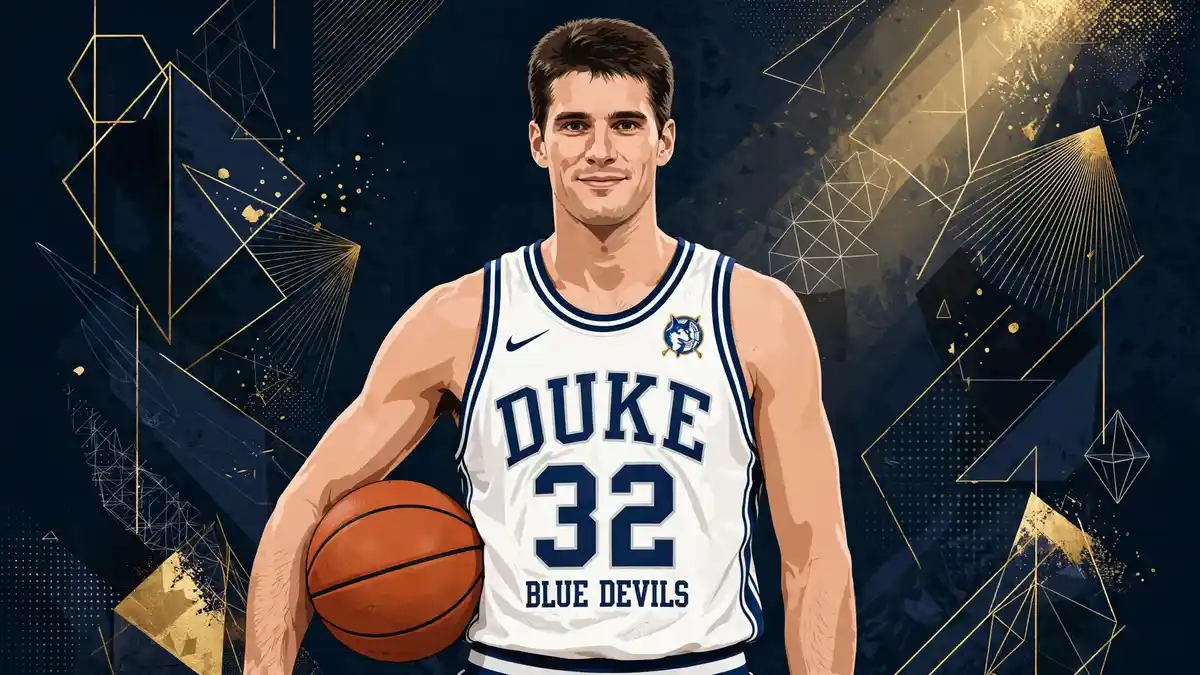
His senior season, 1991–92, was one of the great individual campaigns in college basketball history. Laettner averaged a career-high 21.2 points per game, swept the national player of the year awards — the Naismith Award, the Wooden Award, and AP Player of the Year — and was named Final Four Most Outstanding Player in 1991. Duke retired his number 32 jersey, and in 2010 he entered the Naismith Memorial Basketball Hall of Fame as a member of the 1992 Dream Team.
Here is the financial detail that frames the rest of this article: Laettner earned nothing from any of it. College athletes in 1992 could not be paid, could not sign endorsement deals, and could not profit from their name, image, or likeness. The most famous college basketball player in America, the face of back-to-back champions, left Duke with a degree, a gold medal, and zero dollars from the fame. A 2021 University of Chicago Booth study later estimated that elite college basketball players of his calibre could have earned roughly $1.2 million a year if revenue had been shared the way it is in pro sports — which means Laettner’s four Duke seasons represented something like $4 million to $5 million of value he never saw. The NIL rules that would have paid him arrived in July 2021, sixteen years after he retired.
Career Journey
The Minnesota Timberwolves selected Laettner third overall in the 1992 NBA Draft, behind Shaquille O’Neal and Alonzo Mourning. His rookie contract was worth $21.6 million over six years, the largest deal in Timberwolves history at the time. He averaged 18.2 points and 8.7 rebounds per game as a rookie, finished with 11,121 career points, and played 13 NBA seasons for six franchises before retiring in 2005.
Minnesota was his longest stop: four seasons from 1992 to 1996, during which the Timberwolves were a young expansion franchise going nowhere. Laettner put up solid numbers — he averaged 16.8 points and 8.2 rebounds across his Timberwolves years — but the team never won more than 26 games in a season with him, and the losing wore on him. In February 1996, Minnesota traded him to the Atlanta Hawks, where his career briefly peaked. In Atlanta he made his only All-Star team in 1997, averaging 18.1 points and 8.8 rebounds that season on a 56-win Hawks team, the best record of his pro career.
From there he became a well-paid journeyman. Atlanta traded him to Detroit in 1999, where he played one full season and averaged 12.2 points per game. Dallas acquired him in 2000, then flipped him to Washington after just 53 games. He spent parts of four seasons with the Wizards, his production sliding each year — 8.0 points per game in Washington — as injuries and age caught up with him. He finished with the Miami Heat in 2004–05, playing 49 games and averaging 5.3 points before retiring at 35.
The final career line reads 12.8 points, 6.7 rebounds, and 2.6 assists per game across 868 games. It is a respectable career, and a long way short of the stardom his college years promised. Grant Hill, his Duke teammate, once called Laettner the greatest college player he had ever seen — and the gap between that college peak and a solid-but-unspectacular NBA career is the central tension of Laettner’s story. The pro game exposed his limits: he was not quick enough to guard the league’s best big men, and his scoring touch, so reliable at Duke, never quite translated against NBA length. What the pro game did give him, in full, was the money.
Rise to Fame
Laettner was already famous before he played a single NBA minute, and the fame came from one weekend in March 1992. In the East Regional Final against Kentucky, Duke trailed 103–102 in overtime with 2.1 seconds left. Grant Hill threw a pass the length of the court. Laettner caught it at the free-throw line, faked right, dribbled once, turned, and hit a jumper at the buzzer for a 104–103 win. The game is regularly ranked the greatest in college basketball history, and the shot — simply “The Shot” — is the most replayed moment in the sport. Laettner finished that game 10-for-10 from the field, 10-for-10 from the free-throw line, with 31 points.
It was not even his first buzzer-beater. Two years earlier, in the 1990 East Regional Final against UConn, Duke trailed by one in overtime with two seconds left and Laettner hit the winner there too. But the Kentucky shot, on the biggest stage, against a storied program, with a Final Four trip at stake, turned him into a national figure. It also turned him into a villain. Laettner played with an edge — he had stomped on the chest of Kentucky’s Aminu Timberlake earlier in that same 1992 game and picked up a technical foul — and rival fans loved to hate him. ESPN’s 2015 “30 for 30” documentary was titled, without irony, “I Hate Christian Laettner.”
Three months after The Shot, Laettner was picked as the only college player on the 1992 United States Olympic team, the Dream Team, taking a roster spot many expected to go to Shaquille O’Neal. He played sparingly in Barcelona behind David Robinson and Patrick Ewing, but he came home with a gold medal and a place in basketball history that no other college player has ever held. The Dream Team was inducted into the Hall of Fame as a unit in 2010, which is how Laettner — who would never make the Hall on his NBA record alone — got in.
That fame had a strange financial shape. In 1992, a college star could not cash in on being famous. By the time Laettner reached the NBA, the fame was already fading, and his pro career never generated the endorsement income that his college profile suggested it might. The money he made came almost entirely from his contracts — which is why the $61.5 million salary figure, not endorsements, dominates every honest account of his wealth.
Main Sources of Income
Laettner’s income has come from four distinct phases, and they barely overlap. The first phase was NBA salary: $61,485,000 over 13 seasons, the overwhelming bulk of everything he has ever earned. The second was real estate development through Blue Devil Ventures, the company he co-founded with Duke teammate Brian Davis — a venture that made paper profits for a few years, then produced debts that dwarfed the basketball money. The third, after the collapse, was the slow rebuild: youth basketball camps and his academy, coaching at the minor-league level, corporate appearances, and paid speaking. The fourth, small and steady, is the afterlife of fame: documentary appearances, Duke-related events, and the occasional media or memorabilia payday.
Endorsements, the income stream that carries most retired stars, were never a major part of Laettner’s story. He never had a signature shoe deal, never fronted a national campaign, and no credible reporting puts his career endorsement income anywhere near the eight-figure sums his contemporaries banked. His marketability peaked in college, when athletes could not be paid for it, and by the time he was a pro, he was a good player on bad teams — not the profile sponsors chase. That single fact explains more about his net worth than any other: of the $61.5 million he earned, almost all of it was salary, and salary stops the day you retire.
Today, the income picture is modest and hands-on. He runs the Christian Laettner Basketball Academy, founded in 2006, which hosts youth camps and clinics across the United States, and he serves as director of coach and player development for the Blue Chip Elite Basketball Academy in Florida. He is listed as a keynote speaker with AAE Speakers Bureau, which books him for corporate events and private appearances out of Ponte Vedra Beach, Florida — and in February 2026 he was the guest speaker at a Boys & Girls Club fundraising banquet in Aberdeen, South Dakota. None of this is NBA money. It is working income, and by every recent account it is enough to keep him comfortable, not rich.

Salary and Earnings
Laettner’s NBA salary, season by season, is one of the best-documented parts of his finances, compiled from Basketball-Reference contract data. The table below is the full picture: a rookie deal that was enormous for its time, a steady climb to a $6.6 million peak in 2000–01, and a slide into veteran-minimum territory by the end.
| Season | Team | Salary |
|---|---|---|
| 1992–93 | Minnesota Timberwolves | $2,100,000 |
| 1993–94 | Minnesota Timberwolves | $2,730,000 |
| 1994–95 | Minnesota Timberwolves | $3,360,000 |
| 1995–96 | Minnesota Timberwolves | $3,910,000 |
| 1996–97 | Atlanta Hawks | $4,500,000 |
| 1997–98 | Atlanta Hawks | $5,050,000 |
| 1998–99 | Detroit Pistons | $5,360,000 |
| 1999–00 | Detroit Pistons | $6,062,500 |
| 2000–01 | Dallas Mavericks | $6,625,000 |
| 2001–02 | Washington Wizards | $4,500,000 |
| 2002–03 | Washington Wizards | $5,062,500 |
| 2003–04 | Washington Wizards | $5,625,000 |
| 2004–05 | Miami Heat / Golden State Warriors | $6,600,000 |
| Career total | 13 seasons, 6 teams | $61,485,000 |
Two notes on that table. First, the 2004–05 line combines two contracts: $1.1 million from Miami and $5.5 million from Golden State, who acquired him in a trade and then waived him. Second, the 2003–04 figure of $5,625,000 is the residual that reconciles the published season figures to the widely reported $61,485,000 career total. The total itself is consistent across EssentiallySports, Celebrity Net Worth, and the salary databases they draw on.
The rookie deal deserves a closer look, because it shows how fast the money arrived. Laettner’s six-year, $21.6 million contract with Minnesota was the richest in Timberwolves history when he signed it in 1992. He was 23 years old, a few months removed from a college career in which he had been paid nothing, and he was suddenly earning more per season than most Americans earn in a lifetime. His peak season, 2000–01 with Dallas, paid $6,625,000 — good money then, and a useful measure of how much the league has changed, since a single season of a modern star’s contract now clears Laettner’s entire career total.
How does $61.5 million stack up against the men around him? The comparison is unflattering, and it is the point. Laettner’s Dream Team teammate Shaquille O’Neal earned $286,344,668 in NBA salary, per Spotrac figures cited by ClutchPoints — nearly five times Laettner’s total. His Duke teammate Grant Hill earned roughly $140 million in salary, per Celebrity Net Worth, plus about $120 million in endorsements. Scottie Pippen, who later became one of Laettner’s creditors, earned about $109.9 million in salary, per Spotrac figures cited by Heavy. Laettner sits at the bottom of that group on earnings and, unlike Hill and O’Neal, never built a second fortune to replace the first.
| Player | Career NBA salary | Reported net worth |
|---|---|---|
| Christian Laettner | $61.5 million | $1M–$10M |
| Grant Hill (Duke teammate) | ~$140 million | ~$250 million |
| Shaquille O’Neal (Dream Team) | $286.3 million | Several hundred million |
| Scottie Pippen (creditor, then peer) | ~$109.9 million | ~$20 million |
Salary figures are pre-tax, pre-agent-fee, and pre-everything-else. After federal and state taxes, agent commissions, and living costs across 13 years, the take-home slice of $61.5 million is far smaller — commonly estimated at roughly half for athletes of his era — and Laettner then put much of what remained into real estate. That is where the money story turns.
Businesses and Investments
While still playing, Laettner teamed up with former Duke teammate Brian Davis and developer Tom Niemann to launch Blue Devil Ventures, a real estate development firm. Their first project, in downtown Durham, North Carolina, was genuinely good: they bought a cluster of abandoned Liggett & Myers tobacco warehouses and converted them into West Village, a mixed-use development of loft apartments, offices, and shops. The project, launched in March 1999 as a $36.5 million development, filled up fast and still thrives today — a 14-acre site of 10 historic buildings holding roughly 453 loft apartments, plus a six-story, 156-unit building added in 2014.
West Village worked. Everything after it, mostly, did not. Emboldened, Laettner and Davis expanded aggressively into projects across the country, borrowing heavily to do it. In 2006 they formed Grizzly Acquisition Holdings and tried to buy a controlling interest in the NBA’s Memphis Grizzlies for $360 million. The bid went nowhere, but the appetite it showed — former players trying to buy a franchise with borrowed money — set the tone for what followed. When the 2008 financial crisis hit, the expansion collapsed. By 2010, court filings and reporting put Laettner at roughly $10 million in assets against roughly $40 million in liabilities. By 2012, he and Davis owed close to $30 million in unpaid loans, and lawsuits were arriving from every direction.
The creditor list reads like a sports page. Scottie Pippen, who had lent the pair money, won a $2.5 million judgment against them in August 2010; as late as 2016, reports said Laettner still owed Pippen at least $600,000, a debt Pippen’s then-wife Larsa aired publicly. Former NFL linebacker Shawne Merriman lent $3 million and won a $3.7 million judgment in January 2011. Former Duke captain Johnny Dawkins, of all people, won a $671,309 judgment for an unpaid loan. Fannie Mae and Chevron sued. The American Bankruptcy Institute, summarizing the wreckage in 2016, put the total of lawsuits against Laettner for unpaid loans at more than $44 million. One detail from Celebrity Net Worth’s March 2026 account stands out: at one point Laettner himself won a $10 million default judgment against his own company, a move the outlet describes as effectively ensuring he got paid before his partners did.
The endgame came in 2016. On June 28 of that year, five creditors — including NFL players Jonathan Stewart, owed a reported $3.6 million, and Ernie Sims, owed nearly $1.5 million — filed an involuntary Chapter 7 bankruptcy petition against Laettner personally, claiming $14,051,927.84. His lawyer, Hassan Zavareei, told reporters Laettner planned to negotiate a deal that would get the filing dismissed. The opening for that deal arrived from the one project that had worked all along: in February 2016, the completed West Village complex was sold by its then-owners to the Ohio-based Connor Group for about $187 million. Laettner, through a related entity called Fuller Street Development, still held a minority stake, and that stake entitled him to a share of a payout pool reported at more than $28 million — Sports Illustrated put Fuller Street’s share at $28.3 million. By September 2016, he had reached an agreement to repay investors and avoid Chapter 7 liquidation. The bankruptcy was never filed against his will, and the settlement closed the worst chapter of his financial life.
It is worth being precise about what the $187 million headline did and did not mean. Laettner did not receive $187 million. He held a minority stake in one entity among several that shared a payout pool of roughly $28 million, and most of that money went straight to the creditors owed $14.05 million. The West Village sale saved him from forced bankruptcy; it did not make him rich again. That distinction is where most net worth pages go wrong — they print the $187 million next to his name and let readers draw the wrong conclusion.
One more venture deserves a mention, because it shows the road not taken. Laettner never made a dollar from name, image, and likeness money at Duke, and the NIL era arrived in July 2021, long after his playing days. Had the rules existed in 1992, the most famous college player in America would have been among the highest-paid amateurs in the country. It is a counterfactual worth roughly $4 million to $5 million across his four Duke seasons by the Chicago Booth study’s math — money that might have changed his tolerance for risk later, or might not have. Either way, it is gone.
Brand Deals and Sponsorships
This is the thinnest section of Laettner’s money story, and honesty requires saying so. There is no public record of a signature shoe deal, a national advertising campaign, or any endorsement contract worth seven figures. The big shoe money of his era went to other people: Grant Hill signed a seven-year, $80 million Fila deal in 1997, then the largest shoe contract in history; Shaquille O’Neal built a Reebok empire. Laettner, the college star with the bigger campus profile, got none of that — because by the time he could legally sign a deal, the spotlight had moved on.
What he did have was a steady stream of smaller paid appearances: corporate events, charity golf outings, autograph sessions, and the speaking circuit. AAE Speakers Bureau lists him as a keynote speaker on basketball, leadership, and Hall of Fame themes, bookable for private corporate events out of Ponte Vedra Beach. The February 2026 Boys & Girls Club banquet in Aberdeen, South Dakota, is a typical booking: a fundraising dinner, a speech, photos with donors. These gigs pay thousands, not hundreds of thousands, and they are the reason his current income looks like a working coach’s income rather than a retired star’s.
The one piece of media that keeps his name in circulation is the ESPN “30 for 30” documentary “I Hate Christian Laettner,” released in 2015. It did not pay him a fortune, but it fixed his place in basketball culture: the villain of college basketball’s golden age, a role that still fills rooms at speaking events and still sells his camps to parents who remember The Shot. Fame, for Laettner, turned out to be a durable asset even after the money attached to it was gone.

Houses, Cars and Other Assets
The most famous asset Laettner ever owned is the one he lost. In his playing days he bought a custom mansion in Ponte Vedra Beach, Florida, valued at $3.65 million. In March 2015 he was served with foreclosure papers on the house, and with penalties and interest the debt on the property had ballooned past $5 million. The home was sold off in October 2015. It was the most visible symbol of the collapse: the house a $61 million career had bought, taken by a bank.
What he owns now is not a matter of public record, and this article will not invent a property portfolio to fill the gap. He still lives in the Ponte Vedra Beach and Jacksonville, Florida, area, according to his speaking bureau listing and recent profiles — the same stretch of coast where the foreclosed house stood, which suggests a rented or far more modest home rather than a replacement mansion. No verified reporting credits him with a car collection, a boat, a private jet, or any other trophy asset, and none is claimed here. For a man who once tried to buy an NBA franchise, the absence of a flashy asset list is itself the story.
The one asset that unquestionably retains value is his name. The Christian Laettner Basketball Academy, founded in 2006, is a real business with a real website and a travelling camp schedule, and it trades entirely on the Duke legend and The Shot. His Duke number 32 jersey is retired, his Dream Team membership is permanent, and his NCAA tournament scoring record still stands. None of that can be foreclosed on.
Awards and Achievements
- 2× NCAA Champion with Duke (1991, 1992) — the school’s first two titles
- Only player in NCAA history to start in four consecutive Final Fours (1989–1992)
- NCAA Tournament all-time scoring leader: 407 points; played in 23 of 24 possible tournament games, winning 21
- Naismith College Player of the Year (1992)
- John R. Wooden Award (1992)
- AP College Basketball Player of the Year (1992)
- Final Four Most Outstanding Player (1991)
- Olympic gold medal, Barcelona 1992 — the only college player on the Dream Team
- NBA All-Star (1997, Atlanta Hawks)
- NBA All-Rookie First Team (1993)
- Naismith Memorial Basketball Hall of Fame (2010, as a member of the Dream Team)
- Duke University retired jersey No. 32
- ESPN “30 for 30” documentary subject: “I Hate Christian Laettner” (2015)
The college honours are the ones that last. His NBA record — one All-Star appearance in 13 seasons — would not put him near the Hall of Fame on its own, and Laettner has never pretended otherwise. The Hall came through the Dream Team, the retired jersey came through Duke, and the enduring fame came through a single jumper on March 28, 1992. It is a legacy built in four college years, and it has carried him for the 34 years since.
Net Worth Growth Over the Years
Laettner’s net worth has moved in a wider arc than almost any athlete of his generation: from nothing, to tens of millions on paper, to negative territory, and back to a modest positive figure. The table below is our estimate at each stage, built from the reporting cited in the Sources section. Figures before 2016 are reconstructions from court filings and press coverage, not audited statements.
| Year | Estimated net worth | What drove it |
|---|---|---|
| 1992 | ~$0 (before rookie deal) | Leaves Duke with no NIL income; signs $21.6M rookie contract |
| 1997 | ~$15–20 million | All-Star season in Atlanta; five NBA seasons banked; Blue Devil Ventures launched |
| 2000 | ~$20–25 million | Peak salary year ($6.6M); West Village filling up; Grizzlies bid era approaching |
| 2005 | ~$10–15 million | Retires with $61.5M career salary; real estate borrowing already heavy |
| 2010 | Negative (about $10M assets vs ~$40M liabilities) | 2008 crisis; Pippen and Merriman judgments; debts mount |
| 2016 | Near zero / negative | Involuntary bankruptcy petition ($14.05M claimed); mansion foreclosed; West Village sale and settlement reset the balance sheet |
| 2026 | $1 million to $10 million | Camps, academy, coaching, speaking; no major debts reported since the 2016 settlement |
The shape of that curve is the point of the article. Most athletes’ wealth charts rise and flatten. Laettner’s rose, peaked, went under water, and came back — and the comeback is the smallest part of the chart. The 2016 settlement did not restore a fortune; it stopped the bleeding. Everything since has been earned a camp and a speech at a time.
Social Media Presence
Laettner has almost no public social media presence, and that appears to be a choice. There are no verified, high-follower Instagram, X, or TikTok accounts in his name, and profiles that claim to be him are fan-run. Recent profiles describe him as deliberately private, engaging with the public through his basketball camps, his academy website, and speaking appearances rather than through posts.
For a net worth researcher, the silence is informative. Modern athletes monetize their followings directly — sponsored posts, partnerships, subscription content — and Laettner has none of that revenue. His income comes from showing up in person: a camp in Green Bay, a clinic in Buffalo, a banquet speech in Aberdeen. It is the least scalable income of any former star of his fame, and it caps his earning power in a way that shows up directly in the $1 million to $10 million estimate.
Personal Life
Laettner married Lisa Thibault on September 28, 1996, while he was playing for the Atlanta Hawks. The couple has three children: daughters Summer and Sophie, and son Tor. Lisa has stayed out of the public eye for most of their marriage, and the family has kept its private life private even through the bankruptcy headlines of 2016.
He still lives in the Ponte Vedra Beach area of Florida, near Jacksonville, where he works with the Blue Chip Elite Basketball Academy as director of coach and player development. He has stayed connected to Durham through charitable work — a 2025 profile credits him with supporting the Emily K Center, the nonprofit founded in honor of Coach K’s mother — and he still turns up at Duke events, where he remains one of the program’s most recognizable alumni. His life today is low-profile by design: coaching kids, running camps, and taking the speaking gigs that come with being the man who hit The Shot.
Sources & Reporting
Celebrity Net Worth — net worth figure revised to $1 million in its March 22, 2026 update; career salary total of just over $61 million; and the March 2026 long-form account of the debt crisis, the $187 million West Village sale, and the $28 million-plus payout pool. The freshest single source on this page, and the reason the low end of our range is $1 million.
EssentiallySports — September 2025 net worth estimate of roughly $10 million and the full season-by-season salary table (1992–93 through 2004–05) that this article reproduces; also the NIL analysis noting Laettner never earned NIL money and the Chicago Booth study figures.
Basketball Network — March 2026 reporting on the 2016 involuntary bankruptcy, the $14.05 million claim, the West Village sale, and Laettner’s current camp and academy work; also the Grant Hill interview calling Laettner the greatest college player Hill had seen, and the 2025 account of the Pippen debt and Larsa Pippen’s public comments.
Sports Illustrated — July 2016 reporting on the involuntary bankruptcy filing, the $14.05 million owed to five creditors, and Fuller Street Development’s $28.3 million share from the West Village sale.
American Bankruptcy Institute — the June 2016 involuntary bankruptcy petition details: five creditors, $14,051,927.84 claimed, the 2006 Grizzlies bid vehicle, the Merriman and Pippen judgments, and total lawsuits exceeding $44 million.
Commercial Observer — March 2021 refinancing coverage confirming the West Village facts: 14 acres, 10 historic Liggett & Myers tobacco warehouses, the February 2016 sale to the Connor Group for about $187 million, and Laettner and Davis as the project’s originators through Blue Devil Ventures.
Heitner Legal — March 2012 account of the debt spiral: the $36.5 million West Village launch, the near-$30 million owed, the Pippen ($2.5M) and Merriman ($3.7M) judgments, and the Dawkins ($671,309) judgment.
ClutchPoints — Shaquille O’Neal’s career salary total of $286,344,668, per Spotrac.
Heavy — Scottie Pippen’s career salary total of about $109.9 million, per Spotrac.
Laettner32.com — Laettner’s official site: four straight Final Fours, the 407-point NCAA Tournament scoring record, “The Shot” details (2.1 seconds, 104–103, Grant Hill’s full-court pass), and the Wooden, Naismith, and AP awards from 1992.
AAE Speakers Bureau — Laettner’s current speaking profile and Ponte Vedra Beach base; corroborates the post-basketball income stream.
Reporting window: sources published between 2012 and March 2026, reviewed November 2026. Where sources disagreed — above all on the net worth figure itself — this article publishes the range and names who says what, rather than picking the most flattering number.
Frequently Asked Questions
What is Christian Laettner’s net worth in 2026?
Christian Laettner’s net worth is estimated at $1 million to $10 million as of November 2026. The range is unusually wide because the sources disagree sharply: Celebrity Net Worth revised its figure down to $1 million in a March 2026 update, while EssentiallySports and several other outlets hold at roughly $10 million. The truth sits somewhere in that spread — he rebuilt a modest, working income after the 2016 debt settlement, but there is no public evidence of a large fortune.
How much money did Christian Laettner make in the NBA?
Laettner earned $61,485,000 in NBA salary over 13 seasons, from 1992 to 2005, playing for six teams. His biggest single season was 2000–01 with the Dallas Mavericks at $6,625,000, and his rookie contract with Minnesota was worth $21.6 million over six years. Those figures are salary only and before taxes, agent fees, and expenses.
Did Christian Laettner go bankrupt?
He came close but avoided a formal bankruptcy. On June 28, 2016, five creditors filed an involuntary Chapter 7 bankruptcy petition against him, claiming $14,051,927.84 in unpaid real estate debts. By September 2016 he had reached a settlement to repay investors — funded in part by his minority stake in the West Village project, which had sold for about $187 million that February — and the forced bankruptcy was avoided.
Where is Christian Laettner now?
He lives in the Ponte Vedra Beach and Jacksonville, Florida, area, where he works as director of coach and player development for the Blue Chip Elite Basketball Academy and runs the Christian Laettner Basketball Academy’s youth camps and clinics. He also takes paid speaking engagements — in February 2026 he was the guest speaker at a Boys & Girls Club fundraising banquet in Aberdeen, South Dakota. He keeps a very low public profile and has no verified social media accounts.
Who is Christian Laettner’s wife?
Christian Laettner has been married to Lisa Thibault since September 28, 1996. The couple has three children: daughters Summer and Sophie, and son Tor. Lisa has largely stayed out of the public eye throughout their marriage, including during the bankruptcy headlines of 2016.
How tall is Christian Laettner?
Christian Laettner is 6 feet 11 inches tall (2.11 m). He played power forward and center at Duke and in the NBA, and his size combined with a reliable outside shot — he hit 45.5 percent of his three-pointers in college — is what made him so hard to guard.
What is Christian Laettner’s “The Shot”?
“The Shot” is Laettner’s buzzer-beating jumper against Kentucky in the 1992 NCAA Tournament’s East Regional Final. With Duke trailing 103–102 in overtime and 2.1 seconds left, Grant Hill threw a full-court pass, Laettner caught it, faked right, dribbled once, turned, and hit the jumper for a 104–103 win. He finished the game 10-for-10 from the field and 10-for-10 from the free-throw line with 31 points, and the play is regularly called the greatest moment in college basketball history.
Did Christian Laettner make NIL money at Duke?
No. Laettner played at Duke from 1988 to 1992, and the rules allowing college athletes to profit from their name, image, and likeness did not arrive until July 2021 — sixteen years after he retired from the NBA. A 2021 University of Chicago Booth study estimated that elite college basketball players of his calibre could have earned roughly $1.2 million a year under revenue sharing, which puts the value he never saw at roughly $4 million to $5 million across his four Duke seasons.
Final Thoughts
Christian Laettner’s money story is the rare athlete fortune tale where the basketball part is the least interesting chapter. The $61.5 million he earned in the NBA is fully documented, season by season, and it should have been enough. What happened next — the warehouses, the heavy borrowing, the $360 million franchise bid, the judgments from teammates and fellow athletes, the foreclosure, the involuntary bankruptcy petition — is a case study in how fast earned wealth disappears when it is borrowed against and bet on the next deal.
The honest number today is a range, $1 million to $10 million, and the width of that range is the story: after the 2016 settlement, Laettner’s finances went private, and his income became the kind that leaves no filings — camps, clinics, speeches, appearances. He is not broke, and he is not rich. He is a 57-year-old former star who works for a living in the sport that made him famous, in the same Florida town where he lost his mansion. The Shot still pays, in a way — it fills his camps and his speaking rooms. It just no longer pays like it used to.
Published on November 8, 2026. Last reviewed November 2026. Found an error? See our corrections policy.