
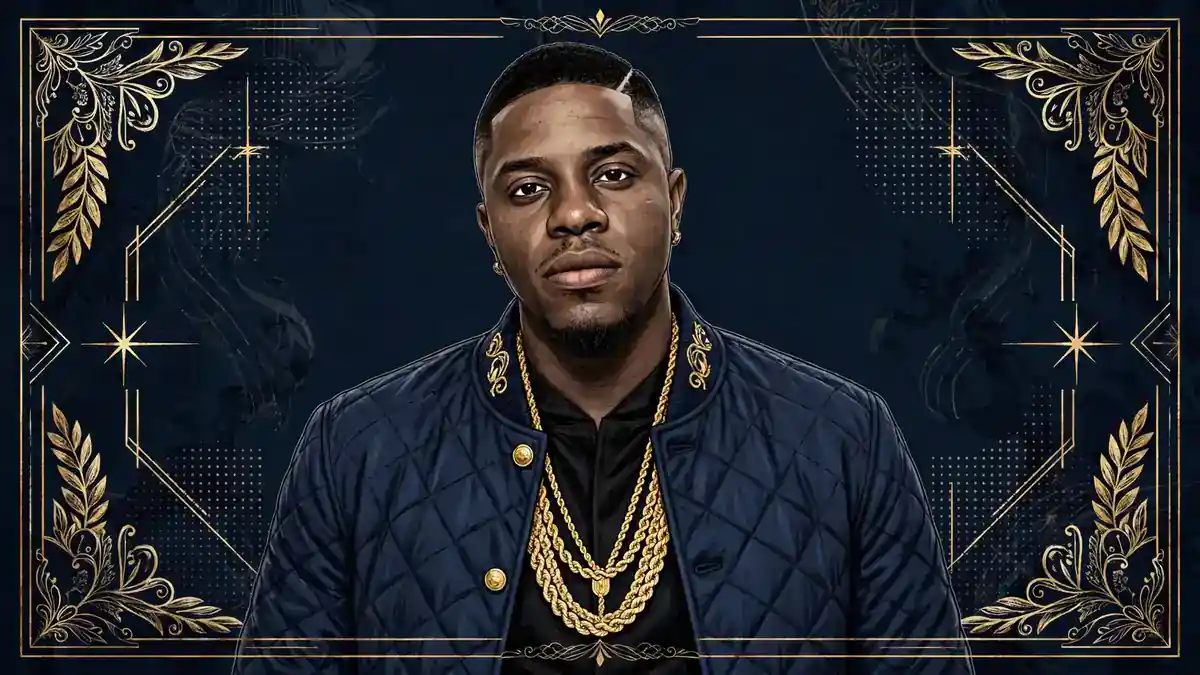
Dorrough‘s net worth is estimated at $3 million to $8 million as of November 2026. The Dallas rapper built that fortune on one platinum-era hit, “Ice Cream Paint Job,” a debut album that reached No. 2 on Billboard’s rap chart, and a merchandise deal with the Dallas Cowboys that made him the first hip-hop artist to sell gear through an NFL team’s official pro shop.
Dorrough: Quick Facts
| Estimated net worth | $3 million – $8 million (range: $3 million to $8 million) |
|---|---|
| Profession | Rapper, songwriter |
| Nationality | American |
| Born | October 28, 1986 (age 40) |
| Height | Not publicly listed |
| Primary income sources | Music sales and streaming, touring and live shows, Dallas Cowboys merchandise deal, songwriting |
| Active years | 2003–present |
| Last reviewed | November 2026 |
- Early Life and Background
- Education
- Career Journey
- Rise to Fame
- Main Sources of Income
- Salary and Earnings
- Businesses and Investments
- Brand Deals and Sponsorships
- Houses, Cars and Other Assets
- Awards and Achievements
- Net Worth Growth Over the Years
- Social Media Presence
- Personal Life
- Sources & Reporting
- Frequently Asked Questions
Early Life and Background
Dorwin Demarcus Dorrough was born on October 28, 1986, at Baylor Hospital in Dallas, Texas. He performs as Dorrough Music, shortened to Dorrough, and later adopted the alias Six 3. Dallas shaped almost everything about his career: he grew up in the city, built his first audience there, and two decades later the city handed him its keys.
Basketball came first. Dorrough started playing at age seven and kept playing through his teens, a path that looked, for a while, like the more realistic route out. At Lancaster High School in Lancaster, Texas, he became captain of the basketball team. The detail that ties his two lives together is a small one his early label biography preserved: the Lancaster team would run out onto the court to music Dorrough had recorded with friends. He was already making songs while he was still chasing a basketball career, and the gym crowd was his first test audience.
That dual track matters to the money story. Dorrough did not arrive in the music business through a talent show or a viral moment. He spent his high-school years handing out mixtapes at basketball games, building a local following one gym and one parking lot at a time. By the time a label deal arrived, he had already spent roughly five years learning which songs moved a Dallas crowd.
Dallas hip-hop in the 2000s had produced stars, but it had not produced many sustained national rap careers from the city itself. The Dallas Cowboys would later describe Dorrough as the only hip-hop artist from Dallas to break through to mainstream success in his era, a claim that helps explain why the team eventually treated him as a civic asset rather than a one-off collaborator. His Dallas identity was not a marketing line added after fame; it was the base his whole career was built on.
Little is publicly documented about Dorrough’s parents or childhood home, and this article does not fill that gap with guesswork. What the record does show is a teenager who split his time between the court and the studio, and who chose, by the end of high school, to bet on the studio.
Education
Dorrough attended Lancaster High School, where he captained the basketball team. After graduation he enrolled at Prairie View A&M University in Prairie View, Texas, about 50 miles northwest of Houston, with a specific plan: walk on to the university basketball team.
The walk-on plan did not work out the way he hoped, but the university years changed his career anyway. While at Prairie View, Dorrough recorded “Do Tha Muscle” and “Halle Berry (She’s Fine),” early underground singles that found a local audience. He has said the Prairie View campus, with its sororities and social scene, fed directly into “Walk That Walk,” his breakout single about women walking through clubs and turning heads. The song’s inspiration was not abstract: he has described watching women on campus and writing the record from that scene.
Prairie View also gave him his first sense of scale beyond Dallas. His MySpace page, the main discovery platform for independent rap in the late 2000s, passed 3.6 million plays while he was still building, with more than 2 million of those plays coming from “Walk That Walk” alone, according to his label biography from the period. Those numbers look small beside modern streaming totals, but in 2008 and 2009, for an unsigned Texas rapper, they were the signal that a regional act had national reach.
There is no public record of Dorrough completing a degree at Prairie View A&M, and no reporting that he returned to formal education after music took over. His education, in the sense that counts for his net worth, was the mixtape circuit: learning to record, to press and hand out his own music, and to read a live crowd.
Career Journey
Dorrough’s career starts, by his own timeline and the label record, in 2003, when he was still in high school. For five years he worked the underground: mixtapes handed out at basketball games, local singles, and a slow build across Texas. The first singles to travel beyond Dallas were “Do Tha Muscle” and “Halle Berry (She’s Fine),” recorded during his Prairie View years.
The turning point came in 2008 with “Walk That Walk.” The single reached No. 28 on Billboard’s Hot R&B/Hip-Hop Songs chart and No. 12 on the Hot Rap Tracks chart, and it earned heavy rotation on urban radio. Its follow-up, “Ice Cream Paint Job,” went further: it reached No. 27 on the Billboard Hot 100 in 2009, Dorrough’s only single ever to enter that chart. The song’s hook, a slow-rolling tribute to a customized car, became his signature, and the record’s success carried him to a distribution deal with E1 Music, the label then known as Koch Records.
His debut album, Dorrough Music, arrived on August 4, 2009, on E1 Music. It peaked at No. 36 on the Billboard 200, No. 6 on the Top R&B/Hip-Hop Albums chart, and No. 2 on the Top Rap Albums chart. For a debut from a Dallas rapper with one radio hit behind him, those chart positions were a genuine commercial result, not a vanity placement. The album bundled both breakout singles with the local records that had built his name.
The second album, Get Big, followed on September 7, 2010, on NGenius, Prime Time, and E1. It peaked at No. 68 on the Billboard 200, a step down from the debut, with two official singles, “Hood Bitch Fetish” featuring Yo Gotti and the title track “Get Big.” Two promotional singles preceded it: “I Want (Hood Christmas Anthem)” in December 2009 and “Number 23” in January 2010. The album’s softer chart performance marked the end of Dorrough’s run as a charting album artist, and his career after 2010 shifted toward mixtapes, features, and regional touring rather than major-label album cycles.
The mixtape run was heavy. Dorrough released six mixtapes in total, three of them in DJ Drama’s Gangsta Grillz series, the most respected mixtape brand in hip-hop at the time. Number 23 (Gangsta Grillz) arrived on February 17, 2010, an 18-song tape with Yo Gotti, Shawty Lo, Slim Thug, OJ da Juiceman, and Diamond. Gangsta Grillz: Code Red followed on February 3, 2011, a 15-song tape with no guest features at all, a deliberate showcase of Dorrough on his own. Gangsta Grillz: Silent Assassin landed on August 9, 2011, 19 songs featuring 2 Chainz, Yo Gotti, Nipsey Hussle, Jim Jones, Travis Porter, Trae tha Truth, Slim Thug, and Diamond. Highlights, with DJ Ill Will and DJ Rockstar, came on April 2, 2012, with a guest list that ran from Nipsey Hussle and Twista to E-40, Kid Ink, YG, Wale, Juvenile, Paul Wall, and Bun B.
Later tapes kept the same pattern: Shut the City Down in 2013, recorded after he returned to the full Dorrough Music name, and Shut the City Down 2 in 2015, featuring Lil Boosie, Too Short, and Young Dolph. Ride wit Me arrived in 2017 on Real Cures Inc. Across the four studio albums listed in his discography, six mixtapes, and 24 singles, the catalog is far larger than the one-hit label suggests, even if only one song ever cracked the Hot 100.
In 2012, Dorrough was featured on a track by E-40, a placement that kept him connected to the West Coast veteran circuit as his own album cycle wound down. The years after 2010 were not a disappearance; they were a shift from chasing the Hot 100 to working the mixtape economy, where a Dallas rapper with a loyal regional base could keep earning without a radio hit.
Rise to Fame
Dorrough’s rise took about six years, from his first high-school mixtapes in 2003 to the Billboard Hot 100 in 2009, and it happened in two distinct jumps. The first jump was “Walk That Walk” in 2008, which proved a Dallas rapper could get national urban radio play. The second was “Ice Cream Paint Job” in 2009, which proved he could reach the Hot 100 and sell an album off the back of it.
The numbers behind the rise are specific. “Walk That Walk” hit No. 28 on the R&B/Hip-Hop chart and No. 12 on the rap chart. “Ice Cream Paint Job” reached No. 27 on the Hot 100. The debut album peaked at No. 36 on the Billboard 200 and No. 2 on the rap albums chart. Those are modest figures beside the chart-toppers of 2009, but they were enough to make Dorrough the most visible Dallas rapper of his moment, and the Dallas Cowboys later pointed to exactly that when they called him the city’s only recent hip-hop artist to reach mainstream success.
Radio mattered more than streaming in 2009, and “Ice Cream Paint Job” was built for radio: a mid-tempo groove, a memorable car metaphor, and a hook that worked in clubs. The song’s staying power outlived its chart run. In May 2025, Rolling Stone ranked “Ice Cream Paint Job” the 48th best one-hit wonder of the 2000s decade, a list that treated the song as a defining artifact of its era rather than a footnote. That ranking, sixteen years after release, is one reason the song still earns: it keeps Dorrough’s name in print and his catalog in playlists tied to 2000s nostalgia.
The rise also had a ceiling, and the record is honest about it. One Hot 100 entry, one platinum-era single, and a debut album that peaked outside the Billboard top 30. Dorrough never repeated the chart success of 2009, and Get Big in 2010 confirmed the pattern. His fame peaked early and narrowly, which is exactly why the $3 million to $8 million range is wide: the fortune depends heavily on how much value you assign to a catalog anchored by one big song and a long regional touring career.
Main Sources of Income
Dorrough’s income has come from four streams, and their balance changed sharply over time. In 2009 and 2010, recorded music led: album sales, single sales, and radio play. After the chart run ended, touring, features, and merchandise carried more of the weight. No single stream has ever been large enough on its own to explain the full estimate, which is why the range stays wide.
Recorded music. The debut album’s chart run, No. 36 on the Billboard 200 and No. 2 on the rap albums chart, produced his largest single burst of recording income. “Ice Cream Paint Job” was his only Hot 100 single, and the Dallas Cowboys and his label have both described him as a platinum recording artist, which points to the single’s certification-level sales in its era. Album sales, digital downloads, and later streaming royalties from a catalog of four studio albums, six mixtapes, and 24 singles form the base layer of his earnings. Streaming pays far less per play than the download sales of 2009 did, so the catalog now earns steadily rather than spectacularly, with “Ice Cream Paint Job” doing most of the work.
Touring and live shows. Dorrough toured the United States after “Walk That Walk” broke, and live performance has been his most durable income source since. Regional shows, club dates, festival slots, and one-off appearances in Texas and the South pay a working rapper with a recognizable hit far more reliably than streaming does. His 2016 performance with the Dallas Cowboys Rhythm & Blue Dancers, eight songs for a packed plaza crowd at AT&T Stadium, shows the scale of live work available to him in Dallas alone.
Merchandise and sports partnerships. The Dallas Cowboys merchandise collaboration, announced in October 2016 and renewed in 2018, put Dorrough’s hats and shirts in the team’s official pro shops and online store. That deal is covered in full below, but as an income stream it matters because it paid a rapper who no longer had a radio hit, through a channel no other hip-hop artist had opened with an NFL team.
Songwriting and features. Dorrough is credited as a songwriter as well as a rapper, and his mixtape guest lists show a working feature economy: appearances on other artists’ tapes, including the E-40 feature in 2012, and a long list of collaborations with Southern rap names from Yo Gotti and Slim Thug to 2 Chainz and Nipsey Hussle. Feature fees and songwriting splits are not publicly disclosed for any of these, so this article does not assign them a dollar figure. They belong in the picture as steady, smaller income rather than a headline number.
What Dorrough does not have, as far as the public record shows, is a major endorsement portfolio, a record label of his own, or a product line beyond the Cowboys merchandise. That absence is part of the estimate: his fortune was built on music and live work, not on brand deals or business exits.

Salary and Earnings
There is no public salary figure for Dorrough, and this article will not invent one. Rappers do not draw salaries; they earn in bursts tied to releases, tours, and deals. What the record does support is a clear earnings shape: a sharp peak in 2009 and 2010, then a long, lower plateau sustained by touring, catalog royalties, and the Cowboys partnership.
The peak years are easy to date. “Ice Cream Paint Job” reached the Hot 100 in 2009, the debut album peaked at No. 2 on the rap albums chart the same year, and Get Big followed in 2010. Those two years produced the bulk of his recording income, including the platinum-level single sales that earned him the “platinum recording artist” billing his later partners used. No outlet has published an exact dollar figure for that peak, and the $8 million upper estimate from CAknowledge, repeated unchanged since 2023, reads as a rounded, unsourced total rather than a sum built from disclosed deals.
The plateau years are harder to price and easier to describe. A rapper with one Hot 100 hit and a deep regional catalog earns from club and festival bookings, feature verses, and streaming. Streaming economics cut both ways for Dorrough: “Ice Cream Paint Job” has had seventeen years to accumulate plays, and 2000s nostalgia playlists keep it in rotation, but per-stream rates mean even millions of plays translate into thousands of dollars, not hundreds of thousands, in any single year.
For scale, the peer picture helps. Celebrity Net Worth puts Young Dro, another Southern rapper with a single major hit era, at $1 million, and Juvenile’s net worth sits in the same mid-single-digit millions as a Cash Money veteran with a far deeper catalog. Dorrough landing between those poles, with Celebrity Net Worth at $3 million and CAknowledge at $8 million, fits the shape of his career: a bigger single hit than Young Dro’s, a thinner catalog than Juvenile’s.
One honest caveat belongs here. Dorrough’s earnings after 2010 are almost entirely undocumented in public sources. There are no reported tour grosses, no disclosed feature fees, and no published streaming totals. The $3 million to $8 million range reflects that uncertainty rather than hiding it: the lower end counts the verifiable hit and catalog, the upper end credits seventeen years of steady regional work and the Cowboys deal at full value.
Businesses and Investments
Dorrough has no publicly documented business empire, and this article does not pretend otherwise. There is no record of him founding a label, launching a product line, or buying into a company. His business story is narrower and more specific than the typical rapper-entrepreneur narrative, and it is, in its own way, more distinctive: he turned a hometown sports fandom into a commercial partnership no other hip-hop artist had secured.
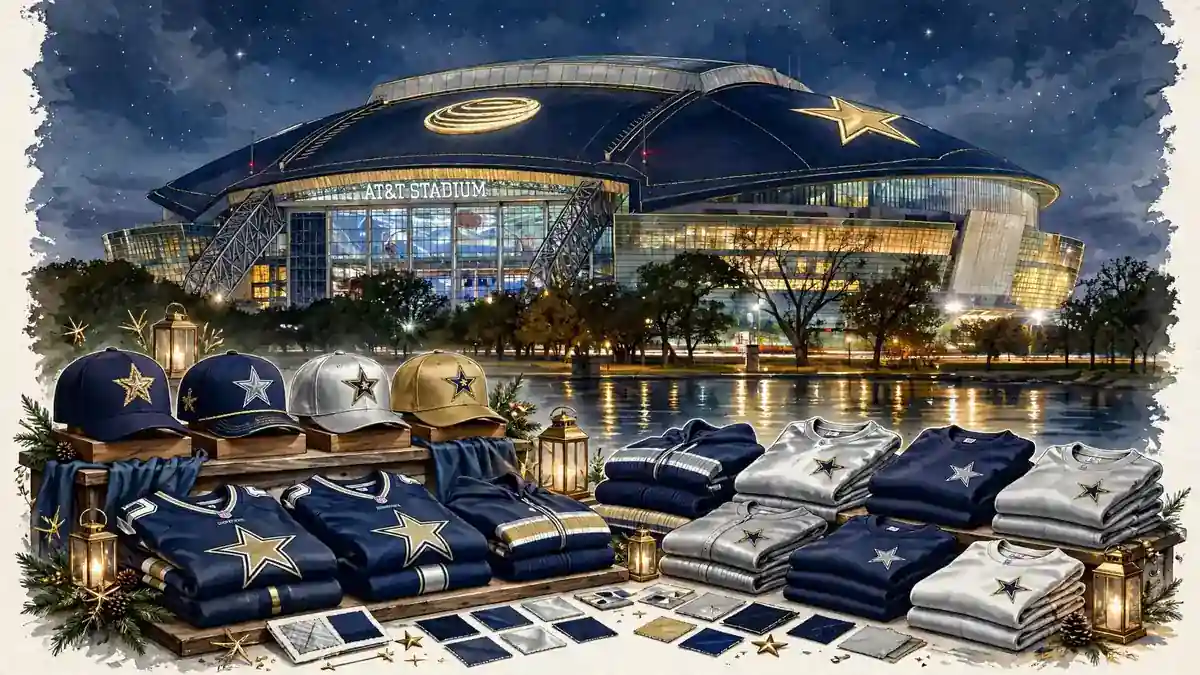
The centerpiece is the Dallas Cowboys relationship. Dorrough had worked with the team since 2013, when he recorded the season anthem “It’s Our Time.” In October 2016, the Cowboys and Dorrough announced a merchandise collaboration: a hat and shirt collection released on October 27, 2016, sold only through Dallas Cowboys Pro Shops and the team’s online store. The team said it was the first NFL team to enter such a collaboration and only the third time a major sports team and a music act had joined for merchandise, after Drake’s deal with the Toronto Raptors and Chance the Rapper’s with the Chicago White Sox. Miles Austin’s net worth story runs through the same Cowboys machine, but Austin earned his money on the field; Dorrough earned his by selling gear to the team’s fans.
The deal was renewed in 2018, the same year Dorrough received the keys to the city of Dallas from Mayor Mike Rawlings for his philanthropic work and community involvement. A renewed merch contract plus a civic honor in the same month is a business signal: the Cowboys saw enough sell-through to run the partnership a second time, and the city saw enough community work to honor him for it.
His manager, Kevin Mubenga, designed jackets the two wore to games, a detail from the collaboration’s coverage that shows how hands-on the merchandising was. The collection was not a logo slap: it was a designed line, sold in the team’s own retail channel, with Dorrough’s name attached to the most valuable sports franchise in the world. Forbes has valued the Cowboys above every other NFL team for years, which makes the retail shelf space itself the prize.
Beyond the Cowboys, Dorrough worked with the Dallas Mavericks, composing and performing an anthem for the team and shooting a commercial tied to the playoffs. The Mavericks connection came through Snoop Dogg, who brought Dorrough on stage during a Dallas show, leading to a meeting with Mavericks owner Mark Cuban. The commercial was held back when the Mavericks’ season fell apart, a reminder that sports partnerships pay in exposure and relationships as much as in fees.
On investments, the public record is silent. There are no reported property purchases, no startup stakes, and no investment portfolio tied to Dorrough’s name. That silence is itself a data point for the estimate: the $8 million upper figure cannot be supported by any documented asset beyond the music catalog and the Cowboys deal, which is why this article treats $3 million as the anchored end of the range.
Brand Deals and Sponsorships
Dorrough’s brand-deal record is short, and its shortness is the story. He has one major partnership, with the Dallas Cowboys, and it is a better one than most rappers with longer deal lists ever land.
The Cowboys collaboration, announced on October 25, 2016, put Dorrough’s hats and shirts on sale at the team’s pro shops from October 27, 2016, and on the team’s online store. The team framed it as a first: the first NFL team to collaborate with a hip-hop artist on merchandise, and only the third major sports team-music merchandise partnership of its kind. The other two, Drake with the Toronto Raptors and Chance the Rapper with the Chicago White Sox, involved far bigger stars, which makes Dorrough’s inclusion the more striking fact. The Cowboys chose him, in their own words, because he was the only hip-hop artist from Dallas to reach mainstream success with chart-topping hits.
Financial terms were never disclosed, and this article does not estimate them. What is documented is the renewal: in May 2018, GlobeNewswire reported a renewed merchandise deal with the Cowboys alongside the keys-to-the-city honor, which means the first run sold well enough to justify a second. Dorrough has said he had wanted the partnership since he started working with the team in 2013 on the “It’s Our Time” anthem, so the 2016 deal closed a three-year courtship, not a cold call.
The live side of the partnership added value beyond the merch table. In November 2016, Dorrough performed eight songs with the Dallas Cowboys Rhythm & Blue Dancers, the NFL’s first and only co-ed hip-hop professional dance team, for a crowd packed around the stage at AT&T Stadium. He had also served on the judging panel for the dancers’ final auditions at the team’s NFL Draft Party, and he specifically asked the team to dance with him on stage. Those appearances kept him visible to the Cowboys’ enormous fan base without a radio hit behind him.
Outside the Cowboys, the Mavericks anthem and commercial represent a second sports relationship, though a thinner one: an anthem, a commercial shoot, and a meeting with Mark Cuban arranged through Snoop Dogg. No other brand deal, endorsement, or sponsorship is documented in the public record for Dorrough. There are no sneaker deals, no liquor partnerships, no fashion lines. The Cowboys deal stands alone, and it stands tall enough that it does not need company.
Houses, Cars and Other Assets
Public records tie no specific house, car, or property to Dorrough, and this section will not invent any. No real-estate listing, county record, or interview has put a dollar figure on his home or his garage, and net-worth sites that list assets for him are repeating one another without a source.
What the record does show is the car culture at the center of his biggest song. “Ice Cream Paint Job” is a tribute to a customized car, a candy-painted ride with rims, and the song’s imagery became Dorrough’s visual signature. The car in the song was a persona as much as a vehicle, and it is fair to say the song’s success was tied to a car culture his Dallas audience recognized instantly. Whether Dorrough owned the cars he sang about is not documented, and the song is not evidence of a collection.
The honest asset picture is therefore the catalog itself. Four studio albums, six mixtapes, and 24 singles, anchored by a platinum-era single that still streams, is the main durable asset. Music catalogs earn for decades, and “Ice Cream Paint Job” has already earned for seventeen years. The Cowboys merchandise line is a second asset of sorts, a retail relationship that was renewed once and tied to a permanent place in Dallas sports culture.
Readers looking for a property portfolio or a car collection will not find one in the public record, and any site that lists one for Dorrough is guessing. The $3 million to $8 million estimate rests on music earnings, touring, and the Cowboys deal, not on real estate.
Awards and Achievements
Dorrough has no Grammy nomination and no major industry award on the public record, and this article does not dress that up. His achievements are chart positions, a civic honor, and a set of firsts that matter more to his story than a trophy shelf.
The chart achievements are exact. “Walk That Walk” reached No. 28 on Billboard’s Hot R&B/Hip-Hop Songs chart and No. 12 on the Hot Rap Tracks chart. “Ice Cream Paint Job” reached No. 27 on the Billboard Hot 100. The debut album Dorrough Music peaked at No. 36 on the Billboard 200, No. 6 on the Top R&B/Hip-Hop Albums chart, and No. 2 on the Top Rap Albums chart. Get Big reached No. 68 on the Billboard 200. Those numbers are the spine of his commercial record.
The civic achievement came on May 23, 2018, when Mayor Mike Rawlings presented Dorrough with the keys to the city of Dallas for his philanthropic work and community involvement. Keys to the city are ceremonial, but they are not handed out casually, and the timing, alongside the renewed Cowboys merch deal, marked 2018 as the year Dallas formally claimed Dorrough as one of its own.
The historical achievement arrived in May 2025, when Rolling Stone ranked “Ice Cream Paint Job” the 48th best one-hit wonder of the 2000s decade. The list treated the song as a defining record of its era, sixteen years after release, and it is the closest thing Dorrough has to a lasting critical honor. A one-hit-wonder label cuts both ways, but Rolling Stone’s list is a canon, and being on it keeps the song, and the catalog behind it, earning.
The commercial firsts round out the list: the first hip-hop artist to sell merchandise through an NFL team’s official pro shop, the first NFL team to enter such a collaboration, and, by his own account in the music press, the first hip-hop artist with an NFL deal covering music, merchandise, and live performance. Those firsts are the reason his name still appears in sports-business coverage years after his last chart entry.
Net Worth Growth Over the Years
The table below is an estimated trajectory, not an audited balance sheet. No source has published year-by-year figures for Dorrough, so the figures track the shape of his career: a sharp rise with the 2009 hit, a plateau through the mixtape years, and a lift from the Cowboys deal. Treat each row as a reasoned estimate tied to a documented career event.
| Year | Estimated net worth | What drove it |
|---|---|---|
| 2008 | Under $500,000 | “Walk That Walk” breaks on urban radio; first national exposure |
| 2009 | $1 million – $2 million | “Ice Cream Paint Job” hits No. 27 on the Hot 100; debut album peaks at No. 2 on the rap chart |
| 2010 | $2 million – $3 million | Get Big released; Gangsta Grillz mixtape run begins |
| 2013 | $2 million – $4 million | Cowboys anthem “It’s Our Time”; Shut the City Down mixtape |
| 2016 | $3 million – $5 million | Dallas Cowboys merchandise deal launches; AT&T Stadium performance |
| 2018 | $3 million – $6 million | Cowboys deal renewed; keys to the city of Dallas |
| 2023 | $3 million – $8 million | CAknowledge first publishes the $8 million figure; Six 3 rebrand and Star Baby announced |
| 2026 | $3 million – $8 million | Rolling Stone ranks “Ice Cream Paint Job” 48th best one-hit wonder of the 2000s; catalog and touring continue |
Two things stand out in that trajectory. First, the lower end barely moves after 2010, which is what you would expect for a catalog anchored by one hit: the money keeps coming, but it does not compound the way a touring stadium act’s does. Second, the upper end jumps in 2023, when CAknowledge’s $8 million figure appears and then gets repeated without new evidence. That jump is a reporting artifact, not a documented windfall, and it is why this article anchors on the range rather than the headline number.
Social Media Presence
Dorrough maintains profiles under the Dorrough Music name on the major platforms, where he posts music, Dallas Cowboys content, and updates on the Six 3 rebrand and the Star Baby project. His following is modest beside the chart-topping rappers of his era, which fits a career built before social media became the main discovery engine: his breakout happened on radio and MySpace, not on TikTok.
The MySpace numbers from his breakout era remain the most concrete social metric on record. His page passed 3.6 million plays, with more than 2 million from “Walk That Walk” alone, according to his label biography. Those plays were the 2009 equivalent of a viral moment, and they were what convinced a label that a Dallas rapper with no album out could move units.
Social media is not a major income stream for Dorrough in the way it is for creators who monetize a large following directly. It functions for him as a tour and release noticeboard, keeping a regional audience informed about shows and new music. This article does not publish follower counts, which change daily and were not verified in this reporting window.
Personal Life
Dorrough keeps his personal life private, and the public record respects that boundary by being nearly empty. He was born and raised in Dallas, and Dallas remains his base: his career, his Cowboys partnership, and his civic honor all run through the city. Beyond that, verified detail is thin.
Some net-worth sites mention a wife in passing, but none names a spouse, a wedding date, or children with a verifiable source, and this article does not repeat an unverified claim as fact. No interview in the reporting window discusses his family life in detail. The responsible statement is that Dorrough has not made his relationships or family public, and no reliable outlet has documented them.
What is documented is his community work in Dallas, which earned him the keys to the city in 2018. Mayor Mike Rawlings presented the honor for Dorrough’s philanthropic work and community involvement, a recognition that sits alongside the music as the public record of what he does off stage. His basketball past also stays visible: the Lancaster High School captain who once walked on at Prairie View A&M still shows up at Dallas sports events, and the Cowboys partnership grew directly out of a lifelong fandom.
In 2023, Dorrough announced a new rap moniker, Six 3, and a forthcoming album, Star Baby, framed by the Dallas Observer as a mark of artistic growth and a modern take on his signature style. The rebrand is the most recent public chapter of his personal story: a 37-year-old artist, fourteen years past his chart peak, choosing to reintroduce himself rather than rest on one song.
Sources & Reporting
Wikipedia — birth name Dorwin Demarcus Dorrough, born October 28, 1986, at Baylor Hospital in Dallas; singles “Walk That Walk,” “Get Big,” “Ice Cream Paint Job,” and “Beat Up the Block”; six mixtapes including three Gangsta Grillz; two studio albums in the main article with four listed in the discography; “Ice Cream Paint Job” peaked at No. 27 on the Billboard Hot 100; debut album peaked at No. 36 on the Billboard 200, No. 6 on R&B/Hip-Hop, No. 2 on rap albums; Get Big released September 7, 2010; Gangsta Grillz tape dates and guest lists; Rolling Stone’s May 2025 ranking of “Ice Cream Paint Job” as the 48th best one-hit wonder of the 2000s. Reporting window: article and discography pages as accessed November 2026.
AllMusic — biography by Jason Birchmeier: Dallas rapper, Lancaster High School basketball captain, Prairie View A&M walk-on plan, debut album Dorrough Music on E1 Music in 2009, Get Big in 2010, Silent Assassin in 2011, Shut the City Down in 2013, Shut the City Down 2 and Ride wit Me in 2017. Reporting window: biography as accessed November 2026.
Celebrity Net Worth — Dorrough’s net worth at $3 million, the anchored lower end of this article’s range. Reporting window: listing as accessed November 2026.
CAknowledge — the $8 million figure, published for 2023 and repeated for 2025, with a biography covering the 2003 career start, the 2009 debut album, and the Lancaster and Prairie View background. Its methodology is not shown, which is why this article treats $8 million as an uncorroborated upper end rather than a confirmed figure. Reporting window: 2023 and 2025 editions as accessed November 2026.
Dallas Cowboys — official announcement of the Dorrough Music merchandise collaboration on October 25, 2016: hat and shirt collection released October 27, 2016, sold only at Dallas Cowboys Pro Shops and online; first NFL team in such a collaboration; third major sports team-music merchandise partnership; Dorrough described as a platinum recording artist and the only hip-hop artist from Dallas to reach mainstream success. A second team report covers his November 2016 performance with the Rhythm & Blue Dancers and his role judging their auditions. Reporting window: October–November 2016 reports as accessed November 2026.
GlobeNewswire — May 23, 2018 release: Dorrough receives the keys to the city of Dallas from Mayor Mike Rawlings for philanthropic work and community involvement, with a renewed Dallas Cowboys merchandise deal. Reporting window: May 2018 release as accessed November 2026.
Dallas Observer — July 18, 2023 report on the Six 3 rebrand and the forthcoming Star Baby album; the Cowboys anthem, the Mavericks anthem and commercial, the Snoop Dogg stage appearance, and the meeting with Mark Cuban. Reporting window: July 2023 report as accessed November 2026.
Rolling Stone — May 2025 ranking of “Ice Cream Paint Job” as the 48th best one-hit wonder of the 2000s decade, via the Wikipedia citation. Reporting window: May 2025 list as accessed November 2026.
Billboard — chart positions cited via Wikipedia and AllMusic: “Walk That Walk” No. 28 Hot R&B/Hip-Hop Songs and No. 12 Hot Rap Tracks; “Ice Cream Paint Job” No. 27 Hot 100; Dorrough Music No. 36 Billboard 200. Reporting window: chart history as accessed November 2026.
How we estimated: the $3 million to $8 million range spans Celebrity Net Worth’s $3 million and CAknowledge’s $8 million. The lower end is anchored to a named tracker with a stated public-sources method; the upper end is an unsourced figure repeated unchanged across two editions. No filing, rich list, or audited statement covers Dorrough, so no single-point estimate would be honest. Figures are estimates as of November 2026 and will be corrected if new evidence emerges.
Frequently Asked Questions
What is Dorrough’s net worth in 2026?
Dorrough’s net worth is estimated at $3 million to $8 million as of November 2026. Celebrity Net Worth puts him at $3 million, while CAknowledge has repeated an $8 million figure since 2023. No filing or audited statement covers his finances, so the honest figure is the full range, built on his 2009 hit “Ice Cream Paint Job,” his debut album’s chart run, touring, and the Dallas Cowboys merchandise deal.
What is Dorrough’s real name?
His real name is Dorwin Demarcus Dorrough. He performs as Dorrough Music, shortened to Dorrough, and in 2023 he adopted the alias Six 3 for his Star Baby project.
How old is Dorrough?
Dorrough was born on October 28, 1986, in Dallas, Texas, which makes him 40 years old as of November 2026.
What is Dorrough’s biggest song?
“Ice Cream Paint Job” is his biggest song. It reached No. 27 on the Billboard Hot 100 in 2009, his only single ever to enter that chart, and in May 2025 Rolling Stone ranked it the 48th best one-hit wonder of the 2000s decade. “Walk That Walk” was his first breakout, reaching No. 28 on the R&B/Hip-Hop chart.
Where is Dorrough now?
Dorrough is still based in Dallas and still making music. In 2023 he rebranded as Six 3 and announced the album Star Baby, and he continues to perform and release music while maintaining his Dallas Cowboys partnership and community work in the city.
Is Dorrough still making music?
Yes. His catalog runs to four studio albums, six mixtapes, and 24 singles, most recently Ride wit Me in 2017, and in 2023 he announced new music under the Six 3 name with the Star Baby album. He also continues to tour and perform in Texas and beyond.
How tall is Dorrough?
Dorrough’s height is not publicly listed. No reliable source publishes a verified height for him, and this article does not repeat the unsourced figures that circulate on low-quality net-worth sites.
What was Dorrough’s Dallas Cowboys deal?
In October 2016, Dorrough and the Dallas Cowboys launched a hat and shirt collection sold only through the team’s pro shops and online store, making the Cowboys the first NFL team to collaborate with a hip-hop artist on merchandise. The deal was renewed in 2018. Dorrough had worked with the team since 2013, when he recorded the season anthem “It’s Our Time.”
Final Thoughts
Dorrough’s story is a useful corrective to the idea that a rap fortune needs a long chart run. One song, “Ice Cream Paint Job,” reached No. 27 on the Hot 100 in 2009, and seventeen years later it still pays: through streaming, through 2000s nostalgia playlists, and through a Rolling Stone ranking that keeps the record in print. The debut album behind it peaked at No. 2 on the rap albums chart, and the mixtape run that followed kept him working long after the radio moved on.
The Dallas Cowboys deal is the second half of the fortune, and the more unusual half. A rapper with one Hot 100 hit became the first hip-hop artist to sell merchandise through an NFL team’s pro shop, and the team renewed the deal two years later. That partnership, plus the keys to the city of Dallas in 2018, turned a regional rap career into a permanent place in the city’s sports culture.
The $3 million to $8 million range is wide because the evidence is uneven: a named tracker says $3 million, an unsourced site says $8 million, and nothing in between is documented. The lower end is the safer read, and the upper end is the most that seventeen years of touring, catalog earnings, and the Cowboys deal can plausibly support. Either way, Dorrough’s fortune was built the hard way for a one-hit artist: not on one payday, but on one song that never stopped working and one hometown deal that nobody else had thought to make.
Published on November 18, 2026. Last reviewed November 2026. Found an error? See our corrections policy.