
Eamonn Walker‘s net worth is estimated at $2 million to $6 million as of November 2026. The London-born actor built that fortune across four decades of screen and stage work, from his award-winning turn as Kareem Saïd on HBO’s Oz to 253 episodes as Chief Wallace Boden on NBC’s Chicago Fire, a run that ended in May 2024 when he stepped down as a series regular after 12 seasons. Celebrity Net Worth, the most widely cited tracker of his wealth and the freshest of the major sources after an update in March 2026, puts the figure at $6 million, while TheRichest and Net Worth List both hold it at $2 million — a spread that says less about Walker’s bank balance than about how little of a working character actor’s money ever shows up in public records.
Eamonn Walker: Quick Facts
| Estimated net worth | $6 million (Celebrity Net Worth, March 2026) (range: $2 million to $6 million) |
|---|---|
| Profession | Actor — television, film, and stage |
| Nationality | British |
| Born | 12 June 1962 (age 64) |
| Height | 6 ft 1 in (1.85 m) |
| Primary income sources | Television salaries (Chicago Fire, Oz), film roles, stage work, residuals |
| Active years | 1983–present |
| Last reviewed | November 2026 |
- Early Life and Background
- Education
- Career Journey
- Rise to Fame
- Main Sources of Income
- Salary and Earnings
- Businesses and Investments
- Brand Deals and Sponsorships
- Houses, Cars and Other Assets
- Awards and Achievements
- Net Worth Growth Over the Years
- Social Media Presence
- Personal Life
- Sources & Reporting
- Frequently Asked Questions
Early Life and Background
Eamonn Roderique Walker was born on 12 June 1962 in Islington, North London, to a Grenadian father and a Trinidadian mother. He grew up in Islington at a time when the borough was still a working-class neighbourhood rather than the gentrified address it later became, and the Caribbean household he grew up in shaped the actor he became — he has spoken in interviews about spending six months in Trinidad at the age of nine, an early stretch of time in the Caribbean that sat alongside a London childhood.
Walker’s route into acting was anything but direct. He did not come from a theatrical family, and he did not go to drama school as a teenager. His first serious ambition was dance. He trained as a dancer and joined the Explosive Dance Theatre Company in London, and for a while that looked like the career. Then an abscess on his calf muscle ended his dancing, and the injury that closed one door pushed him toward the stage. It is one of the more consequential accidents in his biography: without it, there is no Kareem Saïd, no Wallace Boden, and no four-decade acting career to price.
The Islington upbringing also explains something about Walker’s screen presence. He has spent his career playing authority figures — a prison imam, a police officer, a fire chief, a senator, a reverend, Frederick Douglass — and the stillness he brings to those parts reads as lived-in rather than performed. Casting directors kept handing him men who hold rooms together, and the through-line starts with a North London kid from a Caribbean family who learned to command attention without raising his voice.
Walker has kept his parents and siblings out of the press almost entirely. No interviews with family members circulate, and no profiles name his parents. That privacy is a pattern across his whole life, and it matters for anyone trying to price his wealth: Walker has never discussed money in public, never given a “how I spend it” interview, and never put a property or a purchase on display. Every number attached to him is an outside estimate, built from his work record rather than from anything he has said about his finances.
Education
Walker attended Hungerford School in Islington, the local school that educated him through his teens. After school he went to the Polytechnic of North London to study social work — a choice that says a lot about the man before the actor. Social work is a caring profession built on listening to people in trouble, and Walker’s acting has always carried that same quality: his best characters listen before they speak, and they carry other people’s problems as if they were their own.
He did not finish that path. Dance training took over, and after the calf injury ended dancing, acting training followed. He later studied at the New York Film Academy in the United States, a stint that gave him an American foothold years before Oz would make him a familiar face to US audiences. The combination — a London schooling, social work studies, dance discipline, and American film training — is unusual for an actor of his generation, and it shows in the range of his work: he has played British police officers and American fire chiefs with equal ease, and shifted between stage, screen, and radio without the seams showing.
There is no record of Walker attending RADA, LAMDA, or any of the traditional British drama schools, which makes his rise more striking. He learned the craft on the job: a stage debut in 1983, small television parts through the mid-1980s, and a slow accumulation of credits that built the authority he now trades on. For a net worth story, that matters because it means Walker’s earnings curve is back-loaded — the big money arrived in his late forties and fifties, when Chicago Fire turned a respected working actor into a network television fixture.
Career Journey
Walker made his professional acting debut on stage in London in 1983, playing an East End punk rocker in the musical Labelled with Love, a show built around the music of the pop band Squeeze. His first television appearance came two years later, in an episode of the ITV action series Dempsey and Makepeace that aired on 19 October 1985. A children’s anthology appearance on Dramarama followed in 1986, and then the part that made him known in Britain: Winston, the Black, gay council carer who needled Alf Garnett, in the BBC sitcom In Sickness and in Health from 1985 to 1987.
The late 1980s brought steady British television work. He appeared in an episode of Bulman on Granada TV in 1987 and in Tales of the Unexpected in 1988, and in 1988 he won the role of PC Malcolm Haynes in ITV’s long-running police drama The Bill, a part he held from 1988 to 1989. His first film role arrived in 1991, playing Carlton in Young Soul Rebels, a film about the collision of youth cultures in late-1970s Britain. More British television followed through the early 1990s — Bergerac, Love Hurts, three episodes of Birds of a Feather as Colin, an episode of One Foot in the Grave — and a second film, Shopping, in 1994. He also worked in sitcoms (The Detectives, Goodnight Sweetheart) and the prison drama The Governor in 1995–96.
The turning point came in 1997. Walker appeared as Jake Brown in the ITV miniseries Supply & Demand, and the same year he won the part of Kareem Saïd on HBO’s prison drama Oz. He stayed with Oz from its first episode on 12 July 1997 until the third episode of the final season in 2003 — six seasons as the moral centre of a show that became HBO’s first hour-long drama series and a landmark of prestige television. To play Saïd, a devout Muslim inmate and former Black Muslim leader, Walker spent time at a mosque in Harlem researching the Nation of Islam and American Muslim culture, telling the Trinidad and Tobago Express that “as an actor, my portrayal had to be real.” The work won him Best Actor in a Dramatic Series at the inaugural CableACE Awards and a Satellite Award nomination for Best Actor in a TV Drama Series in 1999.
Film work picked up around Oz. In 2000 he appeared in two films: the crime drama Once in the Life, acting alongside Laurence Fishburne on Fishburne’s directorial debut, and the fantasy mystery Unbreakable alongside Bruce Willis and Samuel L. Jackson, where he played Dr. Mathison. He also appeared in Homicide: The Movie, the finale film of Homicide: Life on the Street. In 2001 he returned to British television to lead ITV’s modern adaptation of Othello, playing John Othello opposite Christopher Eccleston, a performance that won him Best Male Performance in Television at the first Black Film Makers (BMF) Film and Television Awards in September 2002.
The 2000s kept him moving between continents and mediums. He starred in the war film Tears of the Sun in 2003 as Ellis “Zee” Pettigrew alongside Bruce Willis, appeared in an episode of Fox’s The Jury, and in 2005 made two more films — the crime thriller Lord of War with Nicolas Cage, in which he played arms dealer Andre Baptiste Sr., and the family adventure Duma — and debuted on Broadway, playing Mark Antony in Julius Caesar at the Belasco Theatre alongside Denzel Washington as Brutus. In May 2007 he became the first Black actor to play Othello at Shakespeare’s Globe in London, a milestone that earned coverage in The Independent and a place in theatre history.
American television kept calling. He played Dr. Stephen Dakarai in three episodes of ER in 2006, starred as Luther Graves in the Fox legal drama Justice in 2006–07, and in 2008 played a US presidential candidate, Senator Joy, in the BBC drama Bonekickers. That same year he took three film roles: the action drama Blood and Bone, the biographical music drama Cadillac Records — in which he played the blues singer Howlin’ Wolf, released 5 December 2008 — and the war drama The Messenger as Colonel Stuart Dorsett. He also performed on BBC Radio 4 in October 2008 in the first UK adaptation of Alice Walker’s The Color Purple. Further television followed: Kings in 2009 as Reverend Ephram Samuels, The Whole Truth in 2010, Lights Out in 2011, an episode of Inspector George Gently in 2012, two episodes of Strike Back, and Frederick Douglass in the BBC series Copper in 2013.
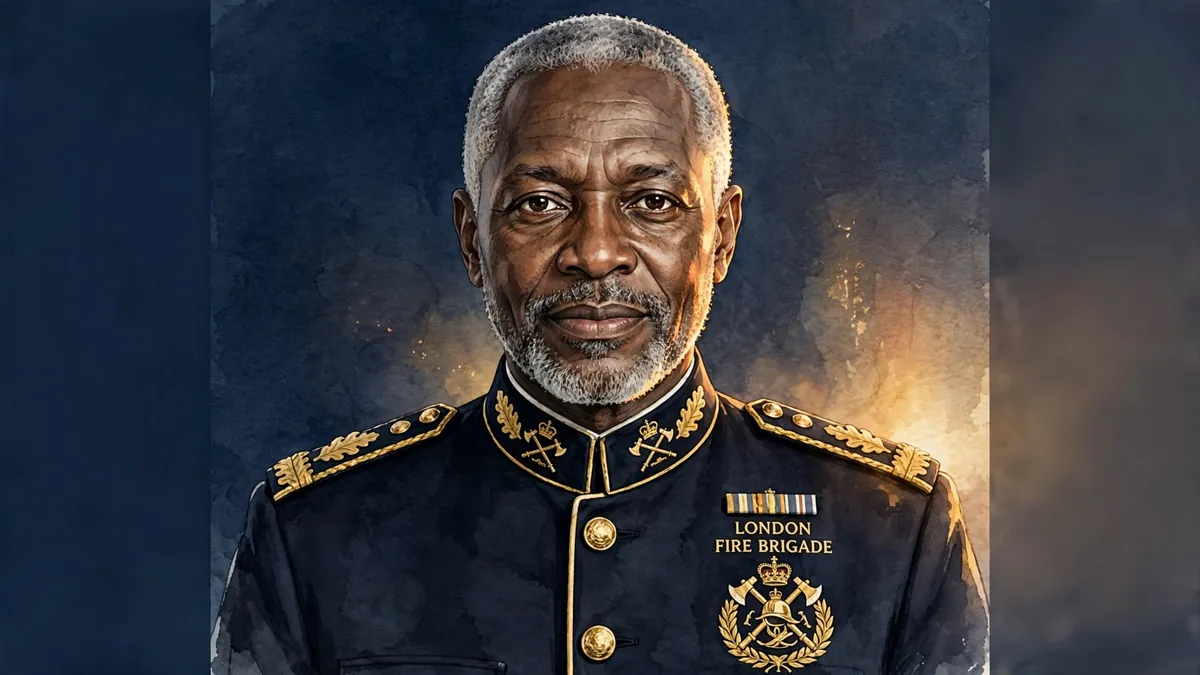
Then came the part that changed his finances. In 2012 Walker was cast as Battalion Chief Wallace Boden in NBC’s Chicago Fire, the first series in Dick Wolf’s One Chicago franchise. He was, by Wolf’s own account, the first actor cast on the show — Wolf told Deadline that “Eamonn was the first actor cast on Chicago Fire, and we knew once he said yes, that we were off and running.” Walker stayed for 12 seasons, appearing in 253 of the show’s 301 episodes according to TelevisionStats, and crossed over into Chicago P.D. as a recurring guest from 2014 to 2020, Chicago Med from 2017 to 2019, and Chicago Justice. The show premiered on 10 October 2012 and became one of NBC’s most reliable dramas, airing in more than 200 territories and generating the kind of long-tail syndication and streaming income that keeps paying a series regular long after the cameras stop.
Rise to Fame
Walker became famous twice, in two different countries, for two different roles. In Britain, the first wave came with In Sickness and in Health in the mid-1980s, where his Winston was one of the few Black gay characters on British television at the time, and the second came with Othello in 2001 and the Globe in 2007. In America, fame arrived with Oz in 1997. Kareem Saïd was not a supporting player: he was the conscience of the show, the character other inmates and the audience measured themselves against, and Walker’s performance won the CableACE Best Actor award at the ceremony that launched those awards. For a British actor who had spent a decade in UK television, Oz was a career reset — it put him on HBO, the most prestigious address in American television, and it made him a known quantity to US casting directors for the next 25 years.
The second American wave was bigger and far more lucrative. Chicago Fire made Walker a household face in a way Oz, a premium-cable show with a fraction of the audience, never could. As Chief Boden he was the undisputed leader of Firehouse 51, the character who settled arguments, buried the dead, and held the ensemble together — and off-screen, by Dick Wolf’s account, he filled the same role for the cast. The show’s success was structural: a Dick Wolf procedural on NBC, in a franchise that spawned three spin-offs and hundreds of episodes, with the kind of international sales and streaming deals that turn a steady acting job into a fortune. Walker’s 253 episodes put him among the most-seen actors on American network television of the 2010s and 2020s.
What makes Walker’s fame unusual is how little of it he has cashed in outside acting. He has no reality show, no product line, no memoir, no podcast, and no social media empire. His fame is the old-fashioned kind: it comes from the work, and it pays through the work. That is why the gap between the $2 million and $6 million net worth estimates is so wide — there are no businesses, endorsements, or property portfolios to count, only a long career of paycheques, residuals, and the occasional stage fee. The money is real, but it is private, and the estimators are guessing from the outside.
The exit from Chicago Fire in May 2024 was handled with unusual grace for a network drama. A couple of weeks before the season 12 finale, news broke that Walker would step down as a series regular. In the finale, Boden returned to Chicago, put his name forward for the Chicago Fire Department’s Deputy Commissioner job — with a recommendation from Stella Kidd — and won it. The farewell scene, in which Severide, Kidd, and Cruz thanked Boden for making Firehouse 51 feel like home, was widely described as a tearjerker. Dermot Mulroney’s Chief Dom Pascal took over the firehouse in season 13. Walker never gave a detailed public explanation for leaving; ScreenRant noted that after 12 years on one show, an actor wanting to step back and explore other work is “completely understandable,” and showrunner Andrea Newman told Deadline that “any change in his position on Fire is going to be like an earthquake coming through.”
He did not stay away long. In March 2025, Variety reported that Walker would return as Boden, and he guest-starred in season 13, episode 18, “Post-Mortem,” which aired on 16 April 2025, leading an internal investigation storyline. The return confirmed what the exit had suggested: Boden was promoted, not killed off, and Walker remains part of the One Chicago family whenever the story and his schedule allow.
Main Sources of Income
Walker’s money comes from acting, and almost entirely from television. The structure of his income is simple to describe and hard to price precisely, because the two biggest paydays of his career — Oz and Chicago Fire — paid him under contracts that have never been made public. What follows is the honest picture: the sources are certain, the exact figures are not, and every number in this article is either sourced or labelled as an estimate.
Network television salary — Chicago Fire. This is the largest single source of Walker’s wealth. He was a series regular for 12 seasons, from the premiere on 10 October 2012 to the season 12 finale in May 2024, appearing in 253 episodes. Network drama leads on a hit NBC show earn substantial per-episode fees, and a 12-season run at that level is the kind of compounding income that builds a multi-million-dollar fortune even before residuals. The show’s success in syndication and on streaming — it airs in more than 200 territories — adds a long tail of residual payments that continue after the final episode airs. Walker also earned fees for his recurring appearances as Boden on Chicago P.D. (2014–2020), Chicago Med (2017–2019), and Chicago Justice, each a separate paycheque for the same character.
Premium cable — Oz. Six seasons on HBO from 1997 to 2003 as Kareem Saïd. HBO paid less per episode than a broadcast network in that era, but Oz was the network’s first hour-long drama and a prestige credit that paid Walker in reputation as much as cash — the CableACE Award and the Satellite nomination that followed raised his asking price for everything after. Residuals from Oz continue through streaming, where the series still finds new viewers.
Film roles. Walker’s film career runs from Young Soul Rebels (1991) through Tears of the Sun (2003), Lord of War (2005), Cadillac Records (2008), and The Company Men (2010). These were supporting roles in studio films rather than leading-man paydays, and none of them carried a reported salary. Tears of the Sun and Lord of War were the biggest commercial films of his career — Lord of War took more than $72 million worldwide — but a supporting player’s fee on a film like that is a flat payment, not a share of the gross, and Walker’s film income is best understood as a solid supplement to his television money rather than a fortune in itself.
Stage work. Theatre pays far less than television, and Walker’s stage career — Julius Caesar on Broadway in 2005, Othello at Shakespeare’s Globe in 2007, Between Riverside and Crazy at Chicago’s Steppenwolf Theatre Company in 2020, and Liberation in 2025 — was never about the money. Broadway salaries for a supporting player in 2005 ran to a few thousand dollars a week, a fraction of a network television fee. The value of the stage work is reputational: it kept Walker’s craft sharp, it put him opposite Denzel Washington at the Belasco, and it gave him the Globe milestone that no other Black actor had achieved. That reputation is what kept the television offers coming.
Residuals and repeats. The quiet engine of Walker’s wealth. A series regular on a show that runs 12 seasons and 253 episodes earns residuals every time an episode re-airs, streams, or sells abroad. Chicago Fire is one of the most widely distributed dramas on television, and Oz remains in HBO’s catalogue. These payments are modest per episode but they arrive for years, and for an actor with Walker’s episode count they add up to a meaningful share of his net worth. They also explain why his fortune kept growing after he left Chicago Fire as a regular: the residuals did not stop when the filming did.
Voice and audio work. Walker voiced Paul Redeker in the 2006 audiobook of Max Brooks’s World War Z, and he performed in the BBC Radio 4 adaptation of The Color Purple in 2008. Audiobook and radio fees are small beside television money, but they are part of the same pattern: a working actor who says yes to good work in every medium.
Salary and Earnings
Here is the honest answer to the question every reader asks: no outlet has ever published Eamonn Walker’s per-episode salary for Chicago Fire, and no reliable source has published his Oz salary either. Walker has never discussed his pay in an interview, NBC and Wolf Entertainment do not disclose cast salaries, and the trade press never reported his deal. Any article that gives you a precise per-episode figure for Walker is guessing — and most of them are guessing from the same thin sources.
The figure that circulates most often is $75,000 per episode, which appears on TheMost10 and a handful of low-quality biography sites. It has no named source, no reporting behind it, and no corroboration from any trade outlet. We are not treating it as fact. What it is, at most, is a plausible ballpark for a veteran supporting lead on a network drama in the 2010s — and “plausible” is not the same as true. Readers should treat it as an unverified claim, not a reported salary.
What can be said with confidence is this. Walker was a series regular on a hit NBC drama for 12 seasons and 253 episodes. A veteran actor in that position on a Dick Wolf procedural earns a substantial fee per episode, and that fee rises with each contract renewal. Chicago Fire ran 22 or 23 episodes a season in its early years and around 13 to 22 in later seasons, so a single season represented a full year’s work at network rates. Over 12 seasons, even a mid-range network fee compounds into millions — and that is before residuals, crossover appearances on Chicago P.D. and Chicago Med, and the guest return in season 13.
To show the scale without inventing a salary, here is an openly labelled illustration, not a reported figure. If a veteran series regular earned between $75,000 and $125,000 per episode across roughly 21 episodes a season, a single season would pay between $1.6 million and $2.6 million before tax, agent commission (typically 10 percent), and management fees. Over 12 seasons, that range implies career television earnings in the low tens of millions before tax and expenses — a range that fits comfortably with a net worth of $2 million to $6 million after four decades of taxes, living costs, and a private family life in the United States. The illustration is ours, the assumptions are visible, and the per-episode rate is not Walker’s reported pay because no such figure exists in the public record.
The Oz years paid less. HBO in the late 1990s paid its drama casts well but below broadcast network rates, and Walker’s six seasons there were the making of his reputation rather than his fortune. The Broadway run of Julius Caesar in 2005 would have paid a weekly salary in the low thousands — serious money for a stage actor, a rounding error beside a network television fee. Film fees were flat payments per picture. The pattern is consistent across his career: television paid, film supplemented, theatre honoured, and residuals kept the total growing.
One more earnings fact is worth stating plainly. Walker left Chicago Fire as a series regular in May 2024, which means his largest paycheque stopped that year. His 2025 guest return in “Post-Mortem” was a single-episode fee. His income in 2025 and 2026 comes from residuals, the Liberation stage run, and whatever projects he has not announced — not from a weekly network salary. That is the normal shape of a veteran actor’s late career, and it is why his net worth is best read as a stock of past earnings rather than a flow of current ones.
Businesses and Investments
Walker has no public business record. There is no production company in his name, no restaurant, no clothing line, no tech investment, and no real estate portfolio that any outlet has documented. Company records and interviews turn up nothing, and Walker has never announced a venture outside acting. For a net worth article, that absence is information: unlike actors who convert fame into businesses, Walker’s wealth is the product of paycheques, not enterprises.
That puts him in the same camp as most working character actors. The fortune is built the slow way — a salary, saved and invested over decades — rather than through a single exit or a brand. It also means there is nothing to mark down: no failed restaurant, no bad investment, no business dispute. The only “financial controversy” stories attached to his name are the fabricated ones on junk gossip sites, including a 2026 story claiming a “financial collapse” tied to a child’s cancer diagnosis, which has no basis in any credible reporting and contradicts everything known about his family. We are not repeating its claims as fact, and readers should treat that site’s Walker stories — including a June 2026 piece claiming he welcomed a child at 64 — as invented.
What Walker does with his money is private, and it stays private. There are no interviews about his portfolio, no property records cited in the press, and no charitable foundation in his name that we could verify. The one investment that is visible is in his craft: the stage work, the research trips to Harlem mosques for Oz, the years of theatre between television jobs. That investment paid off in the form of the roles themselves.
Brand Deals and Sponsorships
Walker has no known endorsement deals. He has never fronted an advertising campaign, lent his name to a product, or appeared in a commercial that any outlet has recorded. That is consistent with his whole public profile: he is a private actor who does the work and goes home, not a celebrity who monetises attention. The contrast with his Chicago Fire co-stars is instructive — the younger cast members have social media followings and the brand work that follows, while Walker has neither.
The absence of endorsements is one reason the $2 million estimates exist at all. An actor with Walker’s episode count and a string of brand deals would be priced higher by the net worth sites; without them, the estimators are counting salary and residuals alone. It also means there is no endorsement income to lose: Walker’s fortune does not depend on a sponsor’s mood, and his post-Chicago Fire earnings are not hostage to a social media following he never built.

Houses, Cars and Other Assets
There is no verified public record of Walker’s property holdings. No property purchase has been reported in the press, no real estate listing names him, and no outlet has documented a house, a car, or a collection. TheFamousPeople reports that the family lives in a mansion in Los Angeles, but that site gives no address, no price, and no source, and we are treating it as an unverified claim rather than a fact. Wikipedia, the most reliable source on his personal life, says only that he lives in the United States with his wife Sandra.
That gap is normal for an actor of Walker’s type. He is not a tabloid figure, he does not post his home on social media, and Los Angeles property records are not routinely mined for character actors. What can be said is that a family that has lived in the United States for more than a decade, with three children and grandchildren, owns or rents a substantial home — and that a Los Angeles home bought years ago would itself be a significant asset, given how the city’s property market has moved. But the value of that home is unknown, and we are not inventing one.
The same applies to cars. No outlet has reported what Walker drives, and there are no paparazzi shots of him with a vehicle that the press has made anything of. In an article full of numbers, this section is deliberately short: the honest answer is that Walker’s visible assets are his career and his residuals, and his physical assets are private.
Awards and Achievements
Walker’s awards shelf is modest in number and rich in meaning. The headline honour is the CableACE Award for Best Actor in a Dramatic Series, won at the inaugural CableACE Awards ceremony in Los Angeles for his first season on Oz. The CableACE Awards were cable television’s answer to the Emmys, and winning Best Actor at their first ceremony put Walker at the front of a medium that was about to take over American drama. He followed it with a Satellite Award nomination for Best Actor in a TV Drama Series in 1999, again for Oz.
The second major honour came in Britain. For his performance as John Othello in ITV’s 2001 adaptation of Othello, Walker won Best Male Performance in Television at the first Black Film Makers (BMF) Film and Television Awards, held at the Grosvenor House Hotel in London in September 2002. The BBC covered the ceremony, and the award recognised a performance that had already been widely praised. The same production made him the first Black actor to play Othello on television in a leading role in that adaptation’s modern-dress setting — and five years later, in May 2007, he became the first Black actor to play Othello at Shakespeare’s Globe, a milestone The Independent covered on its front pages of arts coverage.
Beyond the trophies, Walker’s achievements are the kind that do not come with statuettes. He was the first actor cast on Chicago Fire, the show Dick Wolf built a franchise around. He played Mark Antony on Broadway opposite Denzel Washington. He carried a Steppenwolf Theatre Company production, Between Riverside and Crazy, in 2020. He voiced a character in the World War Z audiobook, a cult favourite. And he played Frederick Douglass in the BBC’s Copper in 2013, one of the few actors to take on Douglass on screen. None of these paid like a network salary, and all of them are why the salary kept coming.
Net Worth Growth Over the Years
The table below is NetWorthCraft’s own estimate, built from Walker’s career record and the published figures. It is not a bank statement: no outlet has published Walker’s wealth year by year, and the early figures are reconstructions. They show the shape of a career — slow growth, a television breakthrough, and a long plateau at the top — rather than exact balances.
| Year | Estimated net worth | What drove it |
|---|---|---|
| 1990 | Under $250,000 | British television parts, The Bill, first film role |
| 1997 | $250,000–$500,000 | Oz begins; first HBO paycheques, CableACE win |
| 2003 | $750,000–$1 million | Oz ends; Tears of the Sun, Othello, stage work |
| 2005 | $1 million–$1.5 million | Broadway Julius Caesar, Lord of War, Duma |
| 2012 | $1.5 million–$2 million | Chicago Fire begins; first network regular salary |
| 2016 | $2 million–$3 million | Four seasons of Chicago Fire plus crossovers |
| 2020 | $3 million–$4.5 million | Eight seasons in, residuals compounding |
| 2024 | $4 million–$6 million | Twelve seasons complete; series-regular pay ends |
| 2026 | $2 million–$6 million | Published range: Celebrity Net Worth $6M; TheRichest and Net Worth List $2M |
The gap in the 2026 row is the story of this article. Celebrity Net Worth’s $6 million, updated in March 2026, sits at the top of the range; TheRichest and Net Worth List both say $2 million; eCeleb Gossip, updating in November 2026, also says $2 million. TheMost10 publishes $8 million on one page and $12 million on another, with no sourcing on either — we are setting those aside as unsourced outliers. The honest reading is that Walker’s fortune sits somewhere in the $2 million to $6 million band, and that the top of the band is the better-anchored figure because it comes from the most cited source and the freshest update. A 12-season network regular with 253 episodes, residuals, and no public spending habit does not usually end up at the bottom of his own range.
One factor pushes the estimate up and another pushes it down. On the upside, Walker’s residuals from 253 episodes of a globally distributed drama will keep paying for years, and his costs are modest for a man of his standing — no entourage, no public extravagance, no business losses on record. On the downside, his biggest paycheque stopped in May 2024, he has not taken another series-regular role, and American taxes and agent commissions take a large share of every gross figure. The range holds both facts at once.
Social Media Presence
Walker keeps almost no public social media profile. Our research found no verified Instagram, X, or Facebook account in his name, and no TikTok presence. That is a deliberate choice rather than an oversight: Walker is famously private, rarely gives interviews, and has never used social media to promote his work. Fan accounts exist, and clips of Chief Boden circulate widely on YouTube and TikTok, but none of them are his.
The absence matters for his net worth in a small, direct way. Actors with large followings earn endorsement and appearance fees that Walker does not, and the net worth sites price that in. It also matters for fans: the fastest way to hear from Walker is through NBC and Wolf Entertainment announcements, not through his own channels. His guest return to Chicago Fire in April 2025, for example, was announced through Variety and the trade press, not through a post of his own.
Personal Life
Walker has been married to Sandra Walker for more than three decades. Sandra, born in Edinburgh and trained at the Glasgow School of Art, is an artist and illustrator who works in pen and ink; a 2020 sketch of her husband, which she titled “The Man,” was posted to her Facebook page. The couple have three children: twins Jahdine and Deke Roderique-Walker, and their youngest son, Kane. Jahdine has built a career around food, Deke around bodybuilding, and Kane works as a director and poet. The family also includes grandchildren — Deke’s children Milan and Paris, and Jahdine’s son Cory — according to recent reporting on the family.
The couple guard their privacy closely. They rarely attend events together, they have never given a joint interview, and the date of their marriage has never been made public. Walker has said in interviews that he has been with Sandra for more than thirty years, and that is about as far as the public record goes. The children were raised largely in London while Walker worked in the United States, a split that the family has managed without ever turning it into a story.
Two rumours deserve a direct answer. First, Walker is alive and well. Stories claiming he had died circulated in 2026, built on his departure from Chicago Fire as a series regular, and they are hoaxes: he returned to the show in April 2025 and appeared on stage in Liberation the same year. Second, a June 2026 story claiming he welcomed a child at 64 is invented — it contradicts the established record of his three adult children and comes from a site that also published the death hoax. Readers who see either story should treat the source, not the headline, as the news.
Walker splits his time between the United States and London, and his family home is reported to be in Los Angeles. He is 64, he has been working since 1983, and by every credible account he is in good health and open to returning to Chicago Fire when the story calls for it.
Sources & Reporting
Wikipedia — Eamonn Walker biography and full filmography: birth date and place, family background, education, stage debut, television and film credits, awards, and the 2024 exit and 2025 return to Chicago Fire. Reporting window: page last reviewed August 2026.
Celebrity Net Worth — the $6 million net worth estimate, the most cited figure for Walker; page updated 26 March 2026.
TheRichest — the $2 million net worth estimate and biographical summary.
Net Worth List — the $2 million net worth estimate.
eCeleb Gossip — the $2 million net worth estimate and marriage details; page updated 9 November 2026.
ScreenRant — the account of Walker’s Chicago Fire exit after season 12, the Deputy Commissioner storyline, and Dick Wolf’s statement on his casting.
CBR — reporting on Walker’s return as Boden in Chicago Fire season 13, episode 18, citing Variety.
TelevisionStats — Walker’s episode count on Chicago Fire: 253 of 301 episodes.
The Independent — 2001 profile of Walker and 2007 coverage of his history-making Othello at Shakespeare’s Globe.
BBC News — coverage of the first Black Film Makers Awards in September 2002, where Walker won Best Male Performance in Television for Othello.
Estimates in this article are dated November 2026. Where sources disagreed, we published the range and named each source. Where no source existed — notably Walker’s per-episode salary and his property holdings — we said so rather than inventing a figure.
Frequently Asked Questions
What is Eamonn Walker’s net worth in 2026?
Eamonn Walker’s net worth is estimated at $2 million to $6 million as of November 2026. Celebrity Net Worth, the most cited source and the freshest after an update in March 2026, puts the figure at $6 million. TheRichest, Net Worth List, and eCeleb Gossip all put it at $2 million. The range reflects how little of a private character actor’s finances ever becomes public.
Is Eamonn Walker still on Chicago Fire?
Not as a series regular. Walker left Chicago Fire at the end of season 12 in May 2024, when his character, Chief Wallace Boden, was promoted to Deputy Commissioner of the Chicago Fire Department. He returned as a guest star in season 13, episode 18, “Post-Mortem,” which aired on 16 April 2025, and the door remains open for further appearances.
Why did Eamonn Walker leave Chicago Fire?
Walker stepped down as a series regular after 12 seasons, a decision the show handled by promoting Boden rather than killing him off. Walker never gave a detailed public explanation. Showrunner Andrea Newman told Deadline that any change in his position would be “like an earthquake coming through,” and Dick Wolf said Walker had filled the same leadership role off-screen that Boden filled on it. After 12 years on one show, stepping back to explore other work is a common move for a veteran actor.
Who is Eamonn Walker’s wife?
Walker is married to Sandra Walker, an artist and illustrator from Edinburgh who studied at the Glasgow School of Art. The couple have been together for more than three decades and have three children: twins Jahdine and Deke, and their youngest son, Kane. They keep their family life private and rarely appear in public together.
How old is Eamonn Walker?
Eamonn Walker is 64 years old. He was born on 12 June 1962 in Islington, London, and turned 64 in June 2026.
What is Eamonn Walker doing now?
Since leaving Chicago Fire as a series regular in May 2024, Walker has returned to the stage — he appeared in Liberation in 2025 — and guest-starred as Boden in Chicago Fire season 13 in April 2025. As of November 2026, no new television series-regular role has been announced. His income now comes mainly from residuals on his 253 episodes of Chicago Fire and six seasons of Oz.
How tall is Eamonn Walker?
Eamonn Walker is 6 feet 1 inch tall (1.85 metres).
Is Eamonn Walker dead?
No. Eamonn Walker is alive and well. Stories claiming he had died circulated online in 2026, built on his departure from Chicago Fire as a series regular, but they are hoaxes. He returned to Chicago Fire in April 2025 and appeared on stage the same year.
Final Thoughts
Eamonn Walker’s $2 million to $6 million fortune is the record of a career built the slow way: a stage debut in 1983, a breakthrough on HBO in 1997, a Broadway run in 2005, a history-making Othello in 2007, and then 12 seasons and 253 episodes as the anchor of one of American television’s most reliable dramas. There are no businesses, no endorsements, and no property portfolio to count — only paycheques, residuals, and a reputation that kept the offers coming for four decades. Celebrity Net Worth’s $6 million is the best-anchored figure in the range, and it fits a man who spent a dozen years at the centre of a hit network show and never spent his money in public. Walker left Chicago Fire on his own terms, came back when the story needed him, and at 64 is still working — which means the number is not finished yet.
Published on 18 November 2026. Last reviewed November 2026. Found an error? See our corrections policy.