
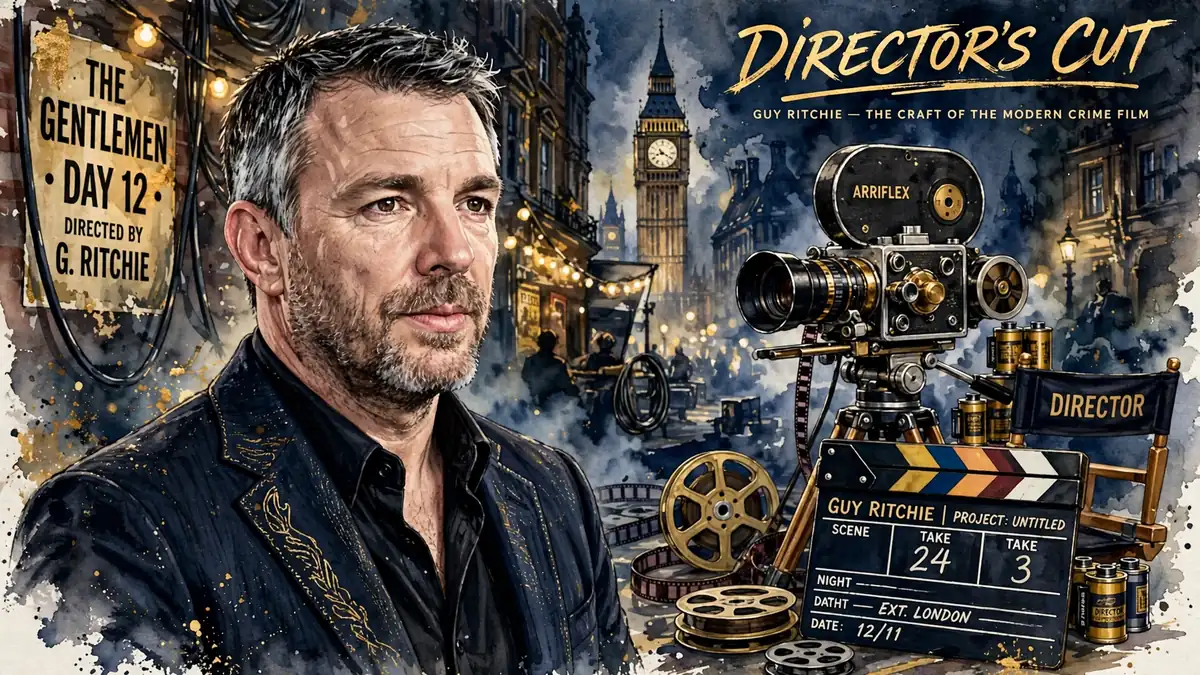
Guy Ritchie‘s net worth is estimated at $150–160 million as of November 2026. The British director behind Lock, Stock and Two Smoking Barrels, Snatch, the Sherlock Holmes films and Disney’s billion-dollar Aladdin built that fortune across three decades of directing fees, producing profits and television deals — then added a second fortune in bricks, beer and barbecue through his Wiltshire estate, his London pub and a Dorset airfield. His films have grossed roughly $2.9 billion worldwide, and his 2008 divorce from Madonna remains one of the most expensive celebrity splits in British history.
Guy Ritchie: Quick Facts
| Estimated net worth | $150–160 million (range: $150–160 million) |
|---|---|
| Profession | Film director, screenwriter, producer, television creator, businessman |
| Nationality | British |
| Born | September 10, 1968 (age 58) |
| Height | 5 ft 11 in (1.80 m) |
| Primary income sources | Directing and writing fees, producing profits and backend participation, television creation and executive producing, hospitality and brewing businesses, property |
| Active years | 1995–present |
| Last reviewed | November 2026 |
- Early Life and Background
- Education
- Career Journey
- Rise to Fame
- Main Sources of Income
- Salary and Earnings
- Businesses and Investments
- Brand Deals and Sponsorships
- Houses, Cars and Other Assets
- Awards and Achievements
- Net Worth Growth Over the Years
- Social Media Presence
- Personal Life
- Sources & Reporting
- Frequently Asked Questions
- Final Thoughts
Early Life and Background
Guy Stuart Ritchie was born on September 10, 1968, in Hatfield, Hertfordshire, England, the second child of Amber Parkinson and Captain John Vivian Ritchie, a former Seaforth Highlanders officer who became an advertising executive. He has an older sister, Tabitha, and a half-brother, Kevin Bayton, who was born to his mother and placed for adoption. His parents divorced while he was young and both remarried; his mother married Sir Michael Leighton, 11th Baronet, and Ritchie spent part of his childhood living on Leighton’s estate — an early taste of English country-house life that would later shape both his films and his property portfolio.
The money story of Ritchie’s childhood is not one of wealth handed down. His father worked in advertising, his mother came from a family with land and titles on her side, and the household was comfortable rather than rich. What mattered more for his later fortune was what the household gave him in exposure: film sets, London advertising offices and country estates. Ritchie has said that watching Butch Cassidy and the Sundance Kid as a boy fixed his ambition on making films. He never wavered from it, even when school failed him completely.
Ritchie is dyslexic, and reading and writing came hard to him at school. The condition shaped his whole working method: he learned to think in pictures, in sequences of shots and in spoken dialogue rather than on the page. Directors who work with him describe a filmmaker who blocks scenes physically and talks actors through a sequence beat by beat. That visual, spoken way of working became the rapid-cut, overlapping-dialogue style that made his name — and it started as a workaround for a classroom he could not keep up with.
Education
Ritchie attended Windlesham House School in West Sussex and then Stanbridge Earls School in Hampshire, a school that specialised in teaching dyslexic pupils. He was expelled from Stanbridge Earls at 15. Ritchie has said drug use was the reason; his father later disputed that account and said his son had been skipping classes and entertaining a girl in his room. Either way, formal education ended there. He also spent time at Sibford School in Oxfordshire, but he never sat the exams that would have taken him to university, and he never attended film school — a fact he has repeated with pride, saying the work of film-school graduates struck him as boring and unwatchable.
Leaving school at 15 with no qualifications looks like a disaster on paper. For Ritchie it removed the one path he was bad at and forced him onto the one he was good at. He went straight into entry-level jobs in the British film industry, starting as a runner — the lowest job on a set, fetching, carrying and watching everything. Runners learn how a production actually works: where the money goes, who makes decisions, how a day of shooting is costed. Ritchie spent his late teens absorbing that, then moved into music videos and television commercials, where he taught himself directing, editing and camera placement by doing the work rather than studying it.
The commercial and music-video years matter to the money story because they taught him to shoot fast and cheap. A director who can deliver a finished, stylish piece on a tight budget is a director producers trust with their money — and that reputation is what let a 29-year-old with no film-school degree raise the financing for his first feature.
Career Journey
In 1995 Ritchie financed and directed a 20-minute short film, The Hard Case, a crime story in the style that would become his signature. The short did what a short is supposed to do: it proved he could direct. It caught the attention of Trudie Styler, the producer and wife of Sting, who became one of the key supporters of his first feature. With producer Matthew Vaughn — who would become his long-term producing partner — Ritchie then spent well over a year assembling financing for Lock, Stock and Two Smoking Barrels. The script’s interlocking plot about gamblers, gangsters, drug dealers and antique guns was hard to finance; several potential deals fell apart before the money finally came together.
Lock, Stock arrived in 1998, produced for roughly £1 million and grossing about $28 million worldwide. The return on that tiny budget — roughly twenty times the production cost in ticket sales alone, before video and television — announced a director who could turn very little money into a lot. It also launched two acting careers: former professional footballer Vinnie Jones played debt collector Big Chris, and Jason Statham, then selling merchandise on London streets and modelling, played hustler Bacon after Ritchie asked him to demonstrate his real-life sales patter in the audition. The Ritchie–Statham partnership that began on that set has now lasted more than 25 years and eight films.
Snatch followed in 2000, a bigger, louder version of the same formula with Brad Pitt as bare-knuckle boxer Mickey O’Neil, alongside Statham, Benicio del Toro and Dennis Farina. It earned $83.6 million worldwide and turned Ritchie’s stylised version of the British criminal underworld into a recognisable genre of its own. Around the same time his personal life began attracting as much attention as his films: introduced to Madonna through Trudie Styler, he married her in December 2000, and the tabloid glare that followed would follow him for the rest of his career.
The next five years were the first serious test of his earning power. Swept Away (2002), the Madonna-starring remake of Lina Wertmüller’s 1974 film, flopped badly, won five Golden Raspberry Awards including Worst Director for Ritchie, and became shorthand for a director blinded by his own celebrity marriage. Revolver (2005), which reunited him with Statham, drew poor reviews and grossed only about $7 million worldwide. By 2006 Ritchie looked like a director whose best work was behind him — and whose market value had fallen with it.
He rebuilt with RocknRolla (2008), a return to the London criminal world with an ensemble led by Gerard Butler, Tom Hardy, Idris Elba and Mark Strong. It was not a blockbuster — about $25.7 million worldwide on an $18 million budget — but it was a creative return to form, and it put him back in front of the studios at exactly the right moment. Warner Bros. hired him to reinvent Sherlock Holmes as a large-scale action franchise, and that job changed the scale of his earnings permanently.
Rise to Fame
The first Sherlock Holmes (2009) starred Robert Downey Jr. as Holmes and Jude Law as Watson, and Ritchie played the character’s physical, eccentric, bare-knuckle side rather than the familiar armchair detective. It earned $524 million worldwide and two Academy Award nominations, for score and art direction. The sequel, Sherlock Holmes: A Game of Shadows (2011), added Jared Harris as Moriarty and earned another $545 million. Together the two films took nearly $1.07 billion — more than thirty times what Lock, Stock and Snatch had earned combined — and they moved Ritchie from the ranks of interesting British directors into the small group of filmmakers studios trust with nine-figure budgets.
The Holmes years also changed how he was paid. A director of a $500 million film does not earn a flat fee alone; he earns a fee plus a share of the film’s profits, plus writing and producing fees when he takes those credits too. Ritchie has increasingly taken all three credits — director, writer, producer — on his later projects, which means three separate cheques from the same production and a producing stake in the film’s long tail of streaming and television licensing.
After Holmes he tested the limits of that trust. The Man from U.N.C.L.E. (2015), a stylish Cold War spy film starring Henry Cavill, earned only about $110 million worldwide against a $75 million budget and was counted a disappointment, though it later built a loyal following on streaming. King Arthur: Legend of the Sword (2017), intended as the start of a Warner Bros. franchise, cost well over $150 million to produce and earned only $149 million worldwide — one of the biggest box-office disappointments of his career. Two expensive misses in three years would have ended many directing careers. Ritchie’s next film became the highest-grossing of his life.
Disney hired him to direct the live-action Aladdin (2019), a pairing that looked odd on paper — the director of violent British gangster films handed one of Disney’s most beloved animated musicals — and it worked. Starring Mena Massoud, Naomi Scott and Will Smith as the Genie, with Ritchie co-writing the screenplay, Aladdin earned $355.6 million in North America and $1.054 billion worldwide. It remains his only billion-dollar film and generated nearly as much theatrical revenue as both Sherlock Holmes films combined. It also reset his market value: the director who had just delivered Disney a billion dollars could name his price on the next job.
He spent that capital going back to where he started. The Gentlemen (2019), made for a comparatively modest $22 million with Matthew McConaughey as marijuana kingpin Mickey Pearson, earned more than $110 million worldwide and became his most profitable crime film in years. The film then became more valuable still as intellectual property: Ritchie expanded it into a Netflix television series, premiering in 2024 with Theo James and Kaya Scodelario, which he created, co-wrote, executive produced and directed. A single idea now earns him money as a film, a series and a licensable format — the kind of compounding that explains why his wealth kept growing even as his later films struggled at the box office.
That struggle is real and worth stating plainly, because it shapes the 2026 picture. Wrath of Man (2021) earned more than $100 million worldwide despite arriving while cinemas were still recovering from the pandemic. But none of his films since has broken even theatrically: Operation Fortune: Ruse de Guerre (2023) took $49 million against a $50 million budget, The Covenant (2023) took $21.9 million against $55 million, The Ministry of Ungentlemanly Warfare (2024) took $27–30 million against $60 million, and In the Grey (2026) took about $28 million against a reported $70 million budget. Fountain of Youth (2025), a $180 million Apple TV+ adventure starring John Krasinski and Natalie Portman, skipped cinemas entirely. Trade reporting in 2026, including Collider’s analysis of his recent run, makes the same point: his films now use their theatrical runs as marketing for streaming, where they perform strongly — In the Grey spent more than two months at the top of Starz’s domestic chart despite its cinema flop, with an 82% audience score on Rotten Tomatoes against a 53% critics’ score. The money has moved from the box office to the streamers, and Ritchie has moved with it.
Main Sources of Income
Ritchie’s wealth comes from five streams, and the balance between them has shifted sharply over his career. In the 1990s the money was almost entirely directing fees on small British films. In the 2010s it was studio franchise fees plus profit participation. In the 2020s the largest cheques increasingly come from television and from businesses that have nothing to do with a camera. Here is how each stream works.
Directing fees. The foundation. From Lock, Stock onwards, every film has paid a director’s fee, and the fee grew with the budgets: small on the early crime films, franchise-scale on Sherlock Holmes and Aladdin, and streaming-scale on the Apple TV+ and studio features of the 2020s. No studio has ever published his per-film fee, and any outlet quoting an exact number is guessing. What the public record does show is the scale of the productions he is hired to run — $60 million, $70 million, $180 million budgets — and directors of productions that size are paid in the low eight figures per film.
Writing and producing fees. Ritchie writes or co-writes most of his films and produces many of them through his company Toff Guy Films, whose credits include The Gentlemen, Wrath of Man, Operation Fortune, The Covenant and The Ministry of Ungentlemanly Warfare. Each credit is a separate fee, and producing gives him a share of the film’s profits rather than a single flat payment. When a film he produced earns money for years on streaming and television licensing, the producing stake keeps paying.
Backend participation and residuals. On his biggest hits — the two Sherlock Holmes films and Aladdin — Ritchie is understood to hold profit participation, the industry term for a percentage of a film’s earnings after costs. A single point of backend on a $1.05 billion film is worth millions, and it arrives over years as the film is licensed to streamers and broadcasters around the world. Residuals from his older films, which still play constantly on television and streaming, add a steady smaller stream on top.
Television creation and executive producing. The 2020s added a new and fast-growing stream. As creator and executive producer of Netflix’s The Gentlemen, director of the opening episodes of Paramount+’s MobLand and Prime Video’s Young Sherlock, and executive producer of the documentary series The Diamond Heist, Ritchie is paid creator fees, per-episode directing fees and executive-producer fees across several platforms at once. Trade reporting in November 2026 noted he had four streaming series in various stages of production simultaneously — MobLand season three, The Gentlemen season three, Young Sherlock season two and a new Prime Video crime drama called Capital — a workload that puts him among the busiest filmmakers in the business even while his recent films have underperformed in cinemas.
Hospitality, brewing and property. The fifth stream is the one his competitors in the directors’ rich lists mostly lack. Ritchie owns a working country estate that sells shooting days, hospitality and overnight stays; a London gastropub; a Dorset airfield with a smokehouse restaurant, flight experiences and holiday lets; and a brewing operation. These are real businesses with staff, bookings and revenue, not vanity projects — and they are the reason his net worth has a floor under it that box-office flops cannot remove. The business section below covers them in detail.
Salary and Earnings
There is no published salary for Guy Ritchie, and readers should treat any outlet that states one as fact with suspicion. Film directors’ contracts are private, studios do not disclose them, and Ritchie has never discussed his pay in an interview. What can be said honestly is the range the trade press and film-finance outlets report for directors at his level, and how his own career maps onto it.
Film-finance reporting puts established franchise directors in the $10–20 million range per major studio film, before writing and producing fees and before any profit participation. Ritchie’s fees on Aladdin and the Sherlock Holmes films would sit at the top of that range, while his fees on his smaller crime films — The Gentlemen cost $22 million in total — would necessarily be far lower, since the fee cannot exceed a sensible share of the budget. The honest picture is lumpy: a billion-dollar Disney year pays many times what a $22 million crime-film year pays, and the profit participation on the big hits arrives over several years rather than in a single paycheque.
His recent run shows how the arithmetic has changed. In the Grey cost a reported $70 million and grossed about $28 million worldwide, and The Covenant cost $55 million against $21.9 million in ticket sales. On a pure fee-plus-backend model, those films would have paid him far less than Aladdin did. But Ritchie’s 2020s income is no longer tied to a single film’s box office: the same years brought creator and executive-producer fees from three streaming series, directing fees on Fountain of Youth — a $180 million Apple production that paid its director regardless of ticket sales, since there were no ticket sales — and revenue from his estate, pub and airfield businesses. That spread is exactly why his estimated net worth has held at $150–160 million through a run of theatrical flops that would have damaged a director who lived on fees alone.
The one hard number in his financial history is not a salary at all but a settlement. When his marriage to Madonna ended in 2008, Madonna’s spokeswoman Liz Rosenberg said he would receive between £50 million and £60 million — $76–92 million at the exchange rates of the time — in cash and property, including Ashcombe House and the Punchbowl pub. The figure was reported by the Associated Press, the BBC and Reuters, and it remains one of the largest celebrity divorce settlements in British history. It is also the single largest one-off addition to his wealth ever made public, and it arrived in property as much as cash: the estate he kept is worth far more today than the £9 million he and Madonna paid for it in 2001.
Put together, the earnings picture is this: roughly $2.9 billion in worldwide box-office grosses across the films he directed, a billion-dollar Disney hit, three hit streaming series, and a property and hospitality portfolio built in large part from the divorce settlement. No single year’s salary explains a $150–160 million fortune; the accumulation of thirty years of fees, backend, television money and property appreciation does.
Businesses and Investments
Ritchie is unusual among film directors in that he runs a visible portfolio of operating businesses, and the portfolio has grown steadily since the Madonna divorce gave him the capital and the property to build on. The businesses sit under his Ashcombe Estates umbrella and related companies, and they share a theme: English country life, sold as an experience.
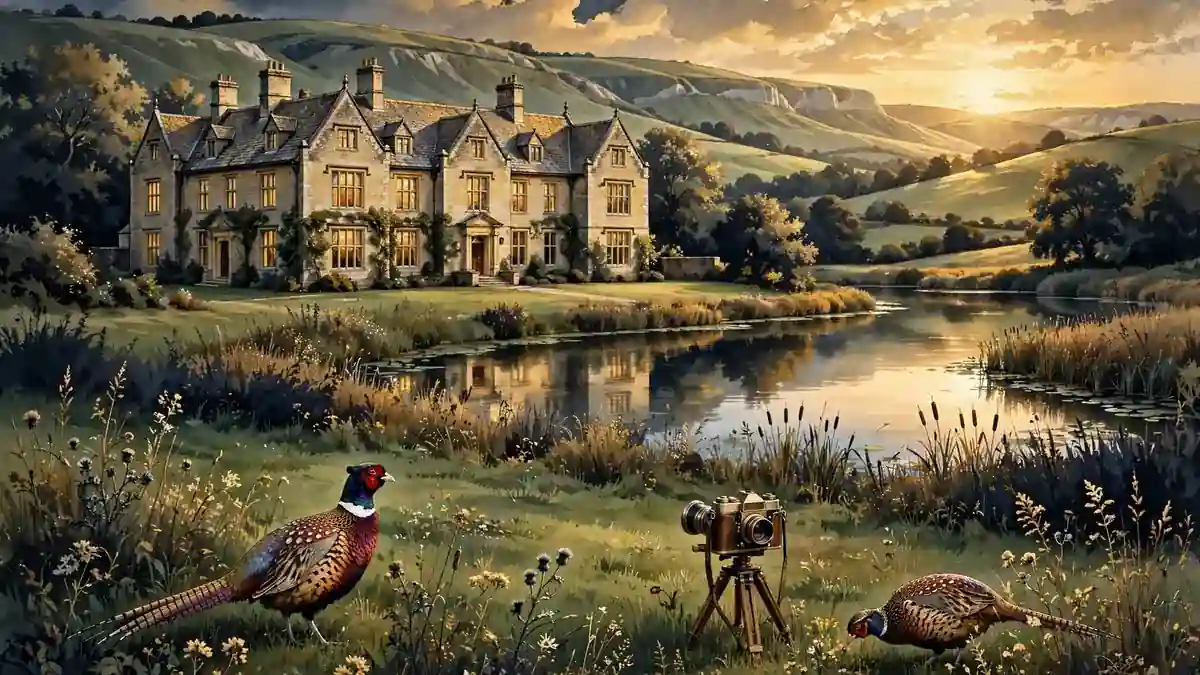
Ashcombe House and estate. The anchor asset. Ritchie and Madonna bought Ashcombe House, a Grade II-listed Georgian manor near Tollard Royal on the Wiltshire–Dorset border, in 2001 for a reported £9 million. The house was once rented by the photographer Cecil Beaton, who lived there from 1930 to 1945 and wrote a book about it. The estate runs to roughly 1,100 acres of chalk downland and includes a driven pheasant shoot, a private lake and a working farm. Ritchie kept it in the 2008 divorce and has since turned it into a commercial hospitality operation: bespoke shooting parties, private dining through a partnership with Carousel London that began in 2024, and overnight stays in six en-suite bedrooms named after writers, with interiors designed by Edward Hurst. One recent UK analysis put an author-estimated value of £35–40 million on the estate — but that figure is the author’s own estimate from comparable sporting-estate sales, with no surveyor or agent valuation behind it, and it should be read as an informed guess rather than a fact. What is certain is that a 1,100-acre Wiltshire estate bought for £9 million in 2001 is worth several times that today.
Gritchie Brewing Company. Ritchie launched his own brewery on the estate in 2017, selling Gritchie beer through his pub and at the estate. The brewery ceased production in October 2024, a detail several net-worth pages still get wrong by listing it as a live business. The brand and the beers live on through the estate’s hospitality and the airfield, but the brewing operation itself is closed — a reminder that not every venture in the portfolio survives.
Lore of the Land. In 2019 Ritchie took over a traditional pub on Conway Street in Fitzrovia, central London, and reopened it as Lore of the Land, a gastropub serving Sunday roasts and beer from his own brewery. It became the template for his hospitality brand: generous, meat-led cooking, open fires and a deliberately old-London feel. The pub also serves as the London end of his food businesses, while the estate serves as the country end.
WildKitchen. His outdoor-cooking company, which runs fire-cooked dining experiences at the estate and elsewhere. It grew out of the same instinct as the pub and the brewery — cooking over fire, outdoors, for groups — and it supplies the catering style used across his hospitality sites.
Compton Abbas Airfield. The most ambitious purchase. Ritchie bought the historic Dorset airfield, which sits next to his estate, in 2022, with his Ashcombe Estates company taking over its ownership and operation from the Hughes family on February 1, 2023. The airfield, first opened in 1961, now combines its flying school and vintage aircraft with a visitor business: Spitfire flight experiences, the Lore of the Sky smokehouse restaurant — opened in 2025 with a Texan barbecue menu cooked on a J&R Oyler Smoker, the first of its kind in the UK — and public events. In November 2026 Dorset Council granted planning permission to convert two existing buildings at the airfield into holiday apartments, with two and four bedrooms, adding short-stay accommodation to the site. Local reporting has noted neighbours’ concerns that the airfield is becoming an aviation theme park; Ritchie’s team has said the development brings economic benefit to the area. Either way, the airfield is now a genuine leisure business, not a rich man’s toy.
English whisky. Celebrity Net Worth also records that Ritchie has entered the English whisky business, alongside the brewing and hospitality ventures. Fewer public details exist for this one than for the pub or the airfield, and no production figures have been published — treat it as a smaller, developing interest rather than a major income stream until more is disclosed.
Toff Guy Films. His production company is the film-industry side of the same instinct: own the asset rather than rent out the labour. Toff Guy has produced his recent films and gives him a producer’s share of profits and a stake in the underlying rights — including the rights to The Gentlemen, which he then turned into a Netflix series. For a director, owning the rights to your own hit is the difference between being paid once and being paid for years.
As an entrepreneur filmmaker, Ritchie belongs in the same conversation as the handful of directors who built businesses beyond the camera — the model Christopher Nolan represents on the pure filmmaking side, with a production company of his own, but taken further into property and hospitality than Nolan has ever gone.
Brand Deals and Sponsorships
Ritchie is not a brand ambassador in the usual celebrity sense. He does not appear in watch adverts, front fashion campaigns or lend his face to products, and there is no public record of a major endorsement deal. That absence is itself informative: his income comes from owning productions, property and businesses, not from renting out his image.
What he does have are commercial partnerships tied to his own ventures. The Carousel London partnership at Ashcombe, running since 2024, brings a respected restaurant group onto his estate for seasonal dining. The Lore of the Sky restaurant works with local Dorset and Wiltshire breweries, and sells house drinks created for the airfield — Altitude lager and Aircyde cider — with aviation-themed labels designed in-house. His films have also carried the usual studio-level brand integrations of big-budget productions, but those deals sit with the studios and distributors, not with Ritchie personally, and no figure for them has ever been published.
The closest thing to a sponsorship in his career is the reverse of the usual arrangement: brands pay to be near his work, not near him. Aladdin‘s merchandising, tie-ins and theme-park presence generated licensing revenue for Disney, and as a profit participant Ritchie shared in the film’s success rather than in any single brand deal. For readers comparing him with actors who earn eight figures from endorsements, the contrast is the point — Ritchie’s fortune was built by owning things, not by endorsing them.
Houses, Cars and Other Assets
Ashcombe House, Wiltshire. The centrepiece, covered above: bought for £9 million in 2001, kept in the 2008 divorce, roughly 1,100 acres, Grade II-listed manor, driven shoot, lake, working farm, hospitality operation and, as of 2026, planning permission for a private family burial ground on the estate. It is his family home and his largest single asset.
London home, Fitzrovia. Ritchie owns a Grade I-listed home in Fitzrovia, central London, which made the news in 2012 when squatters moved in and said they intended to turn it into a free school. The property sits in one of London’s most expensive central districts and has appreciated substantially since he bought it.
The Punchbowl pub, Mayfair. The west London pub he received in the divorce settlement and later sold in 2013. The sale price was not published, but a Mayfair freehold pub sold in 2013 would have added a substantial sum on top of the settlement’s cash element.
Compton Abbas Airfield, Dorset. Bought in 2022, operated by Ashcombe Estates from February 2023, now carrying the Lore of the Sky restaurant, flight experiences and, from 2026, planning permission for two holiday apartments. The airfield is both a property asset and an operating leisure business.
Cars. Ritchie is known as a car enthusiast — his films are full of classic British metal — but he does not publicise a collection, and no verified inventory of his cars exists. Reports of specific vehicles in his garage are speculation, so we do not list them here. What is documented is his taste rather than his garage: the vintage aircraft at Compton Abbas, including the two-seat Spitfire used for flight experiences, are business assets of the airfield rather than personal toys.
What he does not own — or does not show. Unlike many directors of his wealth, Ritchie has no public art collection, yacht or private jet on record, and he does not display his wealth on social media. The fortune is visible in land, buildings and businesses, not in portable luxury. That is consistent with a man whose spending has always gone into the estate and the next production rather than into jewellery and cars.
Awards and Achievements
Ritchie’s awards record is uneven in a way that matches his career: early acclaim, a long fallow period, then blockbuster-scale recognition without the major prizes. The highlights:
Lock, Stock and Two Smoking Barrels earned a BAFTA nomination for Outstanding British Film and announced him as the most talked-about young British director of 1998. Sherlock Holmes (2009) earned two Academy Award nominations, for Best Original Score and Best Art Direction, and won the Golden Globe for Best Actor for Robert Downey Jr. — the closest Ritchie has come to the industry’s biggest prizes.
The low point is also on the record. Swept Away won five Golden Raspberry Awards, including Worst Director for Ritchie and Worst Actress for Madonna — one of the most decorated failures in modern cinema. Revolver and King Arthur added commercial disappointments rather than awards. His later films have earned strong reviews in places — The Covenant is his best-reviewed film, and The Gentlemen won back his critical standing — but no major directing award has followed.
The achievements that matter financially are not trophies. A billion-dollar film (Aladdin), two $500 million-plus franchise films, a hit Netflix series spun out of his own film, and three concurrent streaming series in 2026 are the record that keeps studios and streamers hiring him. In a business where the last film is the only film, his ability to keep getting hired after five consecutive theatrical disappointments — because the streaming numbers and the television work are strong — is itself the achievement.
Net Worth Growth Over the Years
Published estimates of Ritchie’s wealth are noisy, and the table below shows that noise honestly rather than smoothing it into a tidy upward curve. Different outlets publish different numbers in the same year, and early years have no reliable published estimate at all. The pattern that survives the noise is clear enough: a working director’s fortune through the 2000s, a step-change from the 2008 divorce settlement, another step-change from the Sherlock Holmes and Aladdin years, and a plateau around $150 million in the 2020s as television and property income replaced box-office income.
| Year | Published estimate | What drove it |
|---|---|---|
| 1998 | No reliable published estimate | Lock, Stock grosses $28M on a ~£1M budget; first real money |
| 2000 | No reliable published estimate | Snatch grosses $83.6M; marriage to Madonna |
| 2008 | $76–92M settlement (cash + property) | Divorce settlement per Madonna’s spokeswoman; Ashcombe House and Punchbowl pub retained |
| 2011 | No reliable published estimate | Two Sherlock Holmes films pass $1.07B combined |
| 2019 | ~$140M (film-finance reporting) | Aladdin passes $1.05B; The Gentlemen adds $110M+ |
| 2022 | $100M (one outlet) | Shows how far outlets disagree — lower than 2019 despite more work; treat with caution |
| 2025 | $150M (Celebrity Net Worth) | The Gentlemen series, MobLand, Fountain of Youth; estate and airfield businesses growing |
| 2026 | $150–160M (Celebrity Net Worth; UK film-finance reporting) | In the Grey, Young Sherlock, airfield holiday-lets permission; current range |
The 2022 figure deserves a word of warning. One outlet put him at $100 million that year, below the $140 million figure reported for 2019 — a fall no career event explains. The likeliest reading is that the 2022 figure was simply a weaker estimate, not evidence that his wealth fell by $40 million and then rose by $50 million in three years. Net-worth estimates for private individuals are educated guesses from incomplete public data, and they disagree by tens of millions. That is why this article publishes a range and names the sources, rather than presenting a single number as fact.
Social Media Presence
Ritchie keeps a low profile online for a man with three hit streaming series. He is on Instagram, where he posts behind-the-scenes material from his films and his estate — shooting days at Ashcombe, work on the airfield, glimpses of the pub and the brewery — rather than personal or lifestyle content. He does not run the account as a brand channel: there are no sponsored posts, no endorsement deals and no daily stories, and he does not use it to discuss his finances or his family.
That restraint fits the rest of his public behaviour. He gives few interviews, rarely appears on talk shows, and has never built the kind of personal social-media following that actors of comparable wealth maintain. His films and his businesses do the talking, and the accounts that carry his name are mostly fan-run or tied to the productions themselves. For readers looking for him online, the reliable places are the official accounts for his films and series — The Gentlemen, MobLand and Young Sherlock — rather than any personal feed.
Personal Life
Ritchie married Madonna on December 22, 2000, at Skibo Castle in Scotland, in a ceremony where Gwyneth Paltrow was maid of honour and Matthew Vaughn was best man. Their son Rocco was born on August 11, 2000, and in 2006 they adopted David Banda, born September 24, 2005, from Malawi. The marriage lasted nearly eight years and ended in 2008. The financial terms — £50–60 million in cash and property, per Madonna’s spokeswoman — made it one of the most expensive divorces in British celebrity history, and the couple also agreed a custody arrangement for their sons, who split their time between Ritchie’s London home and Madonna’s home in New York. For the full picture of the other side of that marriage, see Madonna’s net worth on this site.
He met English model Jacqui Ainsley in 2010, and they married on July 30, 2015. They have three children together: Rafael, born September 5, 2011; Rivka, born November 29, 2012; and Levi, born June 8, 2014. With Rocco and David, Ritchie has five children. The family lives at Ashcombe House, where Ainsley is closely involved in the estate’s hospitality side, and Ritchie’s public life since 2015 has been strikingly quieter than the Madonna years — fewer headlines, more time on the estate, and a working rhythm built around the Wiltshire–London axis rather than the red carpet.
Outside film and business, Ritchie is known for country pursuits: shooting, fishing, cooking over fire — the interests that his businesses now sell to other people. He is also a Brazilian jiu-jitsu practitioner, a discipline he has trained in for years and one that friends link to the physical, hands-on way he directs action. He keeps his family out of the press, and his children, unlike many celebrity children, have no public profiles of their own.
Sources & Reporting
Celebrity Net Worth — the $150 million estimate, the career narrative, the Toff Guy Films producing credits, the whisky business, and the film-by-film box-office figures for Sherlock Holmes, Aladdin and The Gentlemen. Page current as of October–November 2026.
Wikipedia — birth date and place, family details, dyslexia and expulsion, marriage dates, the filmography and television credits including MobLand, Young Sherlock, Wife & Dog and Viva La Madness, and the 2025–2026 project timeline. Reporting window: page updated November 2026.
BBC — the £9 million Ashcombe House purchase price in 2001, and the divorce settlement reporting carried from Madonna’s spokeswoman Liz Rosenberg (£50–60 million including Ashcombe House and the Punchbowl pub).
Collider — the November 2026 reporting on Ritchie’s recent box-office run (five films in five years, none breaking even theatrically), the In the Grey figures ($28 million worldwide against a $70 million budget, 53% critics’ score, 82% audience score, two months atop the Starz chart), and the four series in production (MobLand, The Gentlemen, Young Sherlock, Capital).
Hello! Magazine — Ashcombe House as his Wiltshire home, the 1,100-acre estate, the six writer-named bedrooms, the 2012 squatters at his Fitzrovia home, and the estate’s hospitality operation.
Box Office Mojo and The Numbers — worldwide theatrical grosses cited throughout, including Lock, Stock ($28 million), Snatch ($83.6 million), Sherlock Holmes ($524 million), A Game of Shadows ($545 million) and Aladdin ($1.054 billion).
Country and Town House — Lore of the Land and Lore of the Sky, the Compton Abbas Airfield restaurant, the J&R Oyler Smoker and the Gritchie brewery background.
Wiltshire Live — the Compton Abbas Airfield purchase and Ashcombe Estates’ takeover of the airfield in February 2023.
Reporting window for this article: October–November 2026. Figures are estimates from the outlets named; where outlets disagree we publish the range and say so. The £35–40 million Ashcombe valuation quoted in one recent UK analysis is that author’s estimate from comparable sales, with no surveyor’s valuation behind it, and is flagged as such in the text.
Frequently Asked Questions
What is Guy Ritchie’s net worth in 2026?
Guy Ritchie’s net worth is estimated at $150–160 million as of November 2026. Celebrity Net Worth puts the figure at $150 million, and UK film-finance reporting puts the range at $150–160 million. The estimate covers his directing, writing and producing fees, profit participation on hits like Aladdin and the Sherlock Holmes films, television work, and his property and hospitality businesses — including the Ashcombe estate, the Lore of the Land pub and Compton Abbas Airfield. No audited figure exists, so the range is the honest answer.
How did Guy Ritchie make his money?
He made it in three stages. First, directing fees on low-budget British crime films (Lock, Stock and Snatch), then franchise fees and profit participation on the two Sherlock Holmes films ($1.07 billion combined) and Disney’s Aladdin ($1.054 billion). Second, producing through his company Toff Guy Films and creating hit television — Netflix’s The Gentlemen, Paramount+’s MobLand and Prime Video’s Young Sherlock. Third, property and hospitality: the Ashcombe estate, a London pub, a brewery and a Dorset airfield. The 2008 divorce settlement from Madonna, worth £50–60 million in cash and property, was the largest single addition to his wealth.
How much did Guy Ritchie get in his divorce from Madonna?
Madonna’s spokeswoman Liz Rosenberg said Ritchie would receive between £50 million and £60 million — $76–92 million at the time — in cash and property when the couple divorced in 2008. The settlement included Ashcombe House in Wiltshire and the Punchbowl pub in Mayfair, which he later sold in 2013. The exact split between cash and property was never published, and the figure is a spokeswoman’s statement rather than a court disclosure, so it is reported as a range rather than a single number.
What is Guy Ritchie’s most successful movie?
Aladdin (2019) is his highest-grossing film by a wide margin, earning $1.054 billion worldwide, including $355.6 million in North America. His next biggest are Sherlock Holmes: A Game of Shadows ($545 million) and Sherlock Holmes ($524 million). His most profitable film relative to its budget is probably The Gentlemen, which cost $22 million and earned more than $110 million — and then earned again as a Netflix series.
How much is Ashcombe House worth?
There is no published surveyor’s valuation of Ashcombe House. Ritchie and Madonna bought the roughly 1,100-acre Wiltshire estate for a reported £9 million in 2001, and Ritchie kept it in the 2008 divorce. One recent UK analysis estimated £35–40 million based on comparable sporting-estate sales and the estate’s hospitality income, but the author of that piece states plainly that no agent or surveyor has valued it. Treat £35–40 million as an informed guess, not a fact; what is certain is that the estate is worth several times its 2001 purchase price.
Is Guy Ritchie married now?
Yes. He has been married to English model Jacqui Ainsley since July 30, 2015. They met in 2010 and have three children together — Rafael (born 2011), Rivka (born 2012) and Levi (born 2014). Ritchie was previously married to Madonna from 2000 to 2008; they have a son, Rocco, and an adopted son, David Banda. The family lives at Ashcombe House in Wiltshire.
How tall is Guy Ritchie?
Guy Ritchie is 5 ft 11 in tall (1.80 m). He was born on September 10, 1968, in Hatfield, Hertfordshire, England, which makes him 58 years old as of November 2026.
What is Guy Ritchie working on next?
His next film is Wife & Dog, a crime thriller starring Benedict Cumberbatch, Rosamund Pike and Anthony Hopkins, due in cinemas in February 2027. After that comes Viva La Madness, reuniting him with Jason Statham, due in 2028. On television he is working on the third seasons of MobLand and Netflix’s The Gentlemen, the second season of Prime Video’s Young Sherlock, and a new crime drama called Capital. His most recent film, In the Grey, was released in 2026.
Final Thoughts
Guy Ritchie’s $150–160 million fortune is really two fortunes stitched together. The first was earned the way film directors earn money: a breakout hit on a tiny budget, two franchise films that grossed over a billion dollars between them, a billion-dollar Disney film, and a steady run of writing and producing fees. The second was built the way landowners build money: a £9 million country estate bought in 2001 and kept through a divorce, a London pub, a brewery, a Dorset airfield and a hospitality business that turns his own way of life into something other people pay to experience.
That second fortune is what makes the 2026 picture interesting. Five films in five years, none of them breaking even in cinemas, would have sunk a director who lived on fees alone. Ritchie kept getting richer — or at least stayed rich — because the money had already moved: into television, where he now has four series in production at once, and into land and businesses that earn whether or not his latest film sells tickets. The streaming numbers back him up — In the Grey flopped in cinemas and then spent two months at the top of the Starz chart — and the studios keep hiring him for the same reason: his films find their audience, even if they find it late.
The honest caveats stay on the record. Nobody has published his salary, his per-film fees or an audited net worth; the $150–160 million range is built from Celebrity Net Worth’s $150 million estimate, UK film-finance reporting and the public record of his films, his settlement and his property. The Ashcombe valuation is an author’s guess, not a surveyor’s. But the shape of the fortune is not in doubt: a director who learned to shoot cheap, got paid very well for going big, and then bought the land, the pub and the airfield to make sure the next flop could not take it away.
Published on November 21, 2026. Last reviewed November 2026. Found an error? See our corrections policy.