
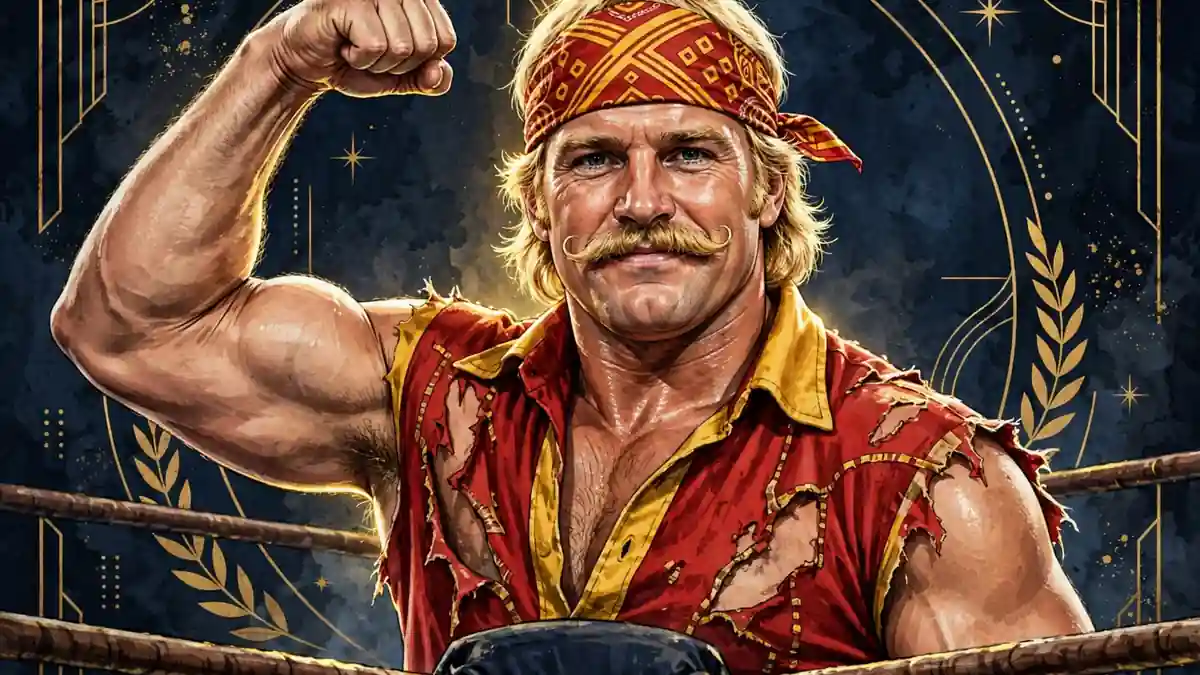
Hulk Hogan‘s net worth was estimated at $25 million to $30 million when he died on July 24, 2025, at age 71. He was professional wrestling’s first true mainstream superstar — the man whose $2 million signing bonus and $675,000-per-event WCW deal rewrote what wrestlers could earn, whose $31 million Gawker settlement helped rebuild a fortune gutted by divorce, and whose estate, now held largely in trusts, became the subject of a very public family fight after his death.
Hulk Hogan: Quick Facts
| Estimated net worth | $25 million (range: $25 million – $30 million, at death July 2025) |
|---|---|
| Profession | Professional wrestler, actor, television personality, entrepreneur |
| Nationality | American |
| Born | August 11, 1953, Augusta, Georgia (died July 24, 2025, at age 71) |
| Height | 6 ft 7 in (201 cm) |
| Primary income sources | Wrestling contracts, merchandise royalties, acting and reality TV, endorsements, businesses, $31M Gawker settlement |
| Active years | 1977–2025 |
| Last reviewed | October 2026 |
- Early Life and Background
- Education
- Career Journey
- Rise to Fame
- Main Sources of Income
- Salary and Earnings
- Businesses and Investments
- Brand Deals and Sponsorships
- Houses, Cars and Other Assets
- Awards and Achievements
- Net Worth Growth Over the Years
- Social Media Presence
- Personal Life
- Sources & Reporting
- Frequently Asked Questions
Early Life and Background
Terry Gene Bollea was born on August 11, 1953, in Augusta, Georgia, and raised in Tampa, Florida — the city he would call home for the rest of his life. His father, Peter Bollea, worked as a construction foreman; his mother, Ruth, taught dance. The household was working-class and unremarkable, which makes what came later stranger: the most famous body in American sports entertainment was built by a kid who first dreamed of baseball.
Bollea was a promising baseball pitcher as a teenager and was reportedly scouted by the Cincinnati Reds, according to later ESPN reporting. An elbow injury ended that path before it began. He drifted into Tampa’s music scene instead, playing bass guitar in local rock bands — a detail that matters because it put him in rooms with the kind of men who filled wrestling cards in Florida’s territory era. He was 6-foot-7 and over 300 pounds in his prime build, and in 1977 he talked his way into training under Hiro Matsuda, the Japanese wrestler whose Florida dojo had a reputation for breaking rookies in half before teaching them anything. Matsuda reportedly broke Bollea’s leg on their first day to test whether he would come back. He came back.
His first professional match came later that year in Fort Myers, Florida, under forgettable names. The transformation into “The Hulk” happened almost by accident: appearing on a local Tampa talk show in his early days, a host compared the massive young wrestler to Lou Ferrigno, television’s Incredible Hulk. Ferrigno stood 6-foot-5; Bollea was two inches taller, and the nickname stuck. When he signed with the World Wide Wrestling Federation in late 1979, promoter Vince McMahon Sr. gave him the Irish surname “Hogan” — Terry Bollea became Hulk Hogan, and the handlebar mustache, the bandana, and the shirt-ripping followed.
The money in these years was negligible. Territory wrestlers in the late 1970s earned a few hundred dollars a night on a good weekend. Hogan spent his first years bouncing between Florida, Alabama, Memphis, and the Carolinas — learning that the real paychecks belonged to whoever controlled the arenas, not whoever bled in them. That lesson shaped the contract demands he would make twenty years later.
Education
Bollea attended Robinson High School in Tampa, where he played baseball and graduated in 1971. He enrolled briefly at Hillsborough Community College but never completed a degree; by his own later telling, his attention was already split between music gigs and the gym.
His real education was Matsuda’s training and the territory system itself — learning to read a crowd, to pace a match, and to understand that the wrestler who could fill an arena on a Friday could name his price on a Saturday. No classroom taught him the 1998 WCW contract; the road did.
Career Journey
Hogan’s career unfolded in five acts, and each one paid differently. Act one was the apprenticeship: Florida and southeastern territories from 1977 to 1979, then a first WWF run as a villain from late 1979 to 1981. He was a curiosity — enormous, charismatic, green — but the WWF of that era was still a regional promotion, and the money matched.
Act two was the making of a star. Hogan jumped to the American Wrestling Association in 1981, where promoter Verne Gagne turned him into the AWA’s top hero and its biggest box-office draw. Then came the detour that nearly ended everything: in 1982, Hogan defied the wrestling business’s unwritten rules and left to film Rocky III, playing the wrestler “Thunderlips” opposite Sylvester Stallone. Parade notes he left the WWF to take the role; wrestling promoters treated Hollywood as desertion. But the film put his face in front of tens of millions of people who had never watched a match, and when he returned to the WWF in late 1983, he came back as someone the national audience already recognized.
In January 1984, Hogan defeated The Iron Sheik for the WWF World Heavyweight Championship, and “Hulkamania” — the red-and-yellow merchandising phenomenon — detonated. He headlined the first WrestleMania in 1985 at Madison Square Garden alongside Mr. T, then headlined seven more of the first nine WrestleManias, including the legendary 1987 body-slam of André the Giant at WrestleMania III in front of a reported 93,173 fans at the Pontiac Silverdome. His first WWF title reign ran 1,474 days, still one of the longest in company history. This was the period when wrestling moved from smoky arenas to stadiums and pay-per-view, and Hogan was the engine — six WWF championships across the decade, a Saturday-morning cartoon (Hulk Hogan’s Rock ‘n’ Wrestling on CBS), and the first wrestler to become a genuine mainstream celebrity.
Act three was the reinvention. His WWF contract expired in late 1993, and in 1994 he signed with World Championship Wrestling. By 1996, his good-guy act was stale — and then came the most famous heel turn in wrestling history. At Bash at the Beach in July 1996, Hogan joined Scott Hall and Kevin Nash to form the New World Order (nWo), turning villain as “Hollywood” Hogan in black and white. WCW then beat the WWF in the television ratings for 83 consecutive weeks during the “Monday Night Wars,” and Hogan’s 1998 contract — a $2 million signing bonus, 50 percent of his merchandise, $675,000 per pay-per-view appearance — became the richest deal any wrestler had ever signed. WCW collapsed in 2001, but Hogan had already extracted the peak earnings of his career.
Act four was the victory lap with detours. He returned to WWE in 2002, won the Undisputed WWE Championship, and was inducted into the WWE Hall of Fame in 2005. From 2009 to 2013 he worked for TNA Wrestling as an on-screen authority figure and backstage consultant, reportedly earning $35,000 per television appearance according to the Wrestling Observer — big money for TNA, and money the promotion’s co-founder Jeff Jarrett later blamed for sending the company into what he called a “financial death spiral” on the Dark Side of the Ring series. Hogan returned to WWE as an ambassador in 2014, was fired in July 2015 after the National Enquirer published racist comments from a leaked tape, and was reinstated to the Hall of Fame in July 2018, serving as a WWE ambassador and legends-contract performer through 2025.
Act five was the businessman. In his final years Hogan focused on his Florida ventures — Hogan’s Beach Shop, Hogan’s Hangout bar and restaurant, and Real American Beer, the beer brand he launched in June 2024 with WWE as a partner. He remained a cultural fixture to the end: in July 2024 he tore his shirt off on stage at the Republican National Convention in Milwaukee endorsing Donald Trump, a moment watched by millions. In 2026, Netflix released the four-part docuseries Hulk Hogan: Real American, in which WWE executive Triple H discussed having to call Hogan in 2015 to end their business relationship — a coda to the most complicated legacy in wrestling history.
Rise to Fame
Hogan’s rise had two separate peaks, which is almost unheard of in wrestling. The first, 1984 to 1993, made him the most recognizable athlete in America: the 24-inch pythons, the ear-cupping pose, “say your prayers, eat your vitamins.” He headlined eight of the first nine WrestleManias, starred in films, sold millions in merchandise, and turned the WWF from a regional promotion into a national entertainment company. At his peak he was arguably the most famous professional athlete on the planet who never played a mainstream sport.
The second peak, 1996 to 1998, was arguably more impressive as a business feat. As the villainous leader of the nWo, Hogan helped WCW’s Monday Nitro defeat WWE’s Monday Night Raw in head-to-head ratings for nearly two years. The nWo T-shirt became one of the best-selling wrestling shirts ever. Hogan was 43 years old, supposedly past his prime, and he was the hottest act in the industry — which is exactly why his 1998 contract paid him like one.
What made Hogan different from every wrestler before him was the crossover. The cartoon, the movies, the talk-show ubiquity, the endorsements — he proved a wrestler could be a mainstream celebrity, which is the template Dwayne Johnson and John Cena later followed to far greater Hollywood fortunes. Hogan never got the movie career he wanted (his films were mostly flops), but he got something rarer: permanent cultural immortality. Kids who never saw him wrestle know the mustache.
Main Sources of Income
Wrestling contracts were the foundation. Across five decades, Hogan earned from the WWF/WWE, WCW, and TNA — with the 1998 WCW deal as the centerpiece, paying a $2 million signing bonus plus per-event fees that Parade estimated could total $4 million to $6 million from pay-per-views alone. In his final years, Sports Illustrated estimated his WWE ambassador salary at roughly $2.5 million per year.
Merchandise was the quiet fortune. His 1998 contract gave him 50 percent of all merchandise bearing his likeness plus $20,000 a month just to promote and wear it. Even late in life, trackers estimated his merchandise revenue around $2 million annually — the Hulkamania brand never stopped selling.
Acting and television paid steadily if not spectacularly: Rocky III (1982), No Holds Barred (1989), Suburban Commando (1991), Mr. Nanny (1993), the syndicated series Thunder in Paradise (1994), and the VH1 reality hit Hogan Knows Best (2005–2007), which ran four seasons and made his family — wife Linda, daughter Brooke, son Nick — celebrities in their own right. He also hosted Celebrity Championship Wrestling on CMT in 2008.
Endorsements and sponsorships ran through his whole career, from 1980s deals with Honey Nut Cheerios and Honda to later partnerships with 1-800 LoanMart and the cannabis company Carma HoldCo, per Sports Illustrated. His businesses — the Beach Shop, Hogan’s Hangout, and Real American Beer — added retail and hospitality income in his final decade.
And then there was the lawsuit. The $31 million Gawker settlement in 2016, after taxes, was the single largest check of his life — larger than any wrestling contract — and the main reason his net worth recovered from the divorce years.
Salary and Earnings
The best-documented payday of Hogan’s life is the WCW contract he signed in 1998, whose full terms are publicly available. Parade laid them out: a $2 million signing bonus — nearly more than he had earned in his prior two WCW years combined — plus 50 percent of all merchandise sales carrying his likeness, $20,000 per month to promote and wear his own merchandise, 25 percent of gross ticket sales for every Nitro and Thunder event he appeared at (with a $25,000 minimum), and $675,000 for every pay-per-view he appeared on, capped at 15 events — more than $10 million from PPVs alone — plus 15 percent of PPV revenue above his guarantee. The deal also gave him creative control over his character. Parade estimated the PPV terms alone likely totaled $4 million to $6 million, and Fox Sports put his average WCW salary around $4 million a year. No wrestler had ever been paid like that; few have since.
His 1980s WWF earnings are harder to pin down — WWF contracts of that era were private, and the company shared far less revenue with talent than WCW later did. What is certain is that Hogan was the company’s top merchandise mover and its biggest live-event draw through the decade, headlining the events that built the pay-per-view business. The precise split he received is not public, which is one reason his 1980s fortune is so often guessed at rather than known.
The TNA years (2009–2013) are better documented: the Wrestling Observer reported via WrestlingInc that TNA paid Hogan $35,000 per television appearance, potentially totaling over $2 million a year — an enormous sum for a promotion of TNA’s size, and one that strained its finances. His final WWE chapter, the ambassador and legends deal from 2018 to 2025, was estimated by Sports Illustrated at about $2.5 million annually.
Acting paydays were never disclosed, but his film career was a commercial disappointment relative to his fame: No Holds Barred, Suburban Commando, Mr. Nanny, and Santa with Muscles all underperformed. The reality show Hogan Knows Best was a bigger earner culturally than financially — it made Brooke Hogan a pop-culture figure but the family’s real money was always the ring.
Two unusual paydays deserve mention. In 1985, comedian and talk-show host Richard Belzer sued Hogan for $5 million after Hogan put him in a front chinlock on live television and Belzer passed out, splitting his scalp open on the studio floor. Belzer later told Vulture he collected only about $400,000 — a settlement, not a salary, but money moving because of Hogan’s hands. And in 2007, Hogan said he was spending $38,000 a month on lawyers’ fees — a staggering burn rate that foreshadowed how expensive his later life would become.
Businesses and Investments
Hogan’s business record was genuinely mixed — a string of Florida hospitality wins, one famous restaurant disaster, and a beer brand he was building when he died.
The wins: Hogan’s Beach Shop, the merchandise retail store he opened on Clearwater Beach in 2012 (later expanding to Orlando and other Clearwater locations), and Hogan’s Hangout, his beachfront bar and restaurant on Clearwater Beach that became a tourist fixture with live music and memorabilia. Both traded on the one asset no competitor could copy: tourists would pay to drink a beer where Hulk Hogan’s boots were on the wall.
The final venture was Real American Beer, launched in June 2024 with a WWE partnership that included ring-mat branding and, per reporting, a minority WWE ownership stake. Hogan leaned into his patriotic persona — the beer was the business version of tearing his shirt at the RNC. It was still early when he died, and its future now belongs to his estate.
The disasters are part of the legend. Pastamania, his restaurant at the Mall of America, opened in 1995 and closed within about a year after losing money — the Hulkster’s pasta never found its audience. The Hulk Hogan Thunder Mixer, a mid-1990s protein-shake blender, flopped so completely that Hogan later joked about it on television, describing a gadget that spun three times and quit.
Then there is the most famous almost-deal in endorsement history — and it turns out to be fiction. For years Hogan claimed he missed a phone call from his agent offering him a choice between endorsing a grill or a blender; he took the blender (the Thunder Mixer) while George Foreman got the grill and made hundreds of millions — Foreman himself said the grill earned him more than $200 million, including a $138 million lump-sum buyout from Salton in 1999. But in 2025, Pablo Torre’s Pablo Torre Finds Out investigated and the story collapsed: the grill’s inventor Michael Boehm’s family stated that “George Foreman was the only celebrity our dad approached about endorsing the grill,” and Henry Holmes, the lawyer who represented both men, said Hogan’s account was not his recollection — the other celebrities considered were Pamela Anderson and Chuck Norris. It is a useful parable about Hogan: the man told great stories, and not all of them were true.
One genuinely smart financial move deserves credit: Hogan held his real estate in trusts and LLCs rather than in his own name. When he died, his roughly $11 million in Florida property never entered probate — which is why the court filings list only $5 million in assets, and why the family kept control of the houses without a public fight over them.
Brand Deals and Sponsorships
At his 1980s peak, Hogan endorsed Honey Nut Cheerios and Honda, appeared in countless commercials, and had his own Saturday-morning cartoon — the kind of mainstream brand access no wrestler had enjoyed before. His 1998 WCW contract formalized what had long been true: he was paid $20,000 a month specifically to promote and wear his own merchandise, a sponsorship of himself.
Later deals were smaller but steady. Sports Illustrated’s 2026 rundown lists 1-800 LoanMart and the cannabis firm Carma HoldCo among his sponsors, alongside his own ventures. The Real American Beer launch came with the WWE partnership — ring-mat logos during WWE programming — which was effectively a sponsorship flowing in both directions. None of these individually moved the net-worth needle the way the WCW merch percentages did, but together they kept the Hulkamania brand monetized for four decades.
Houses, Cars and Other Assets
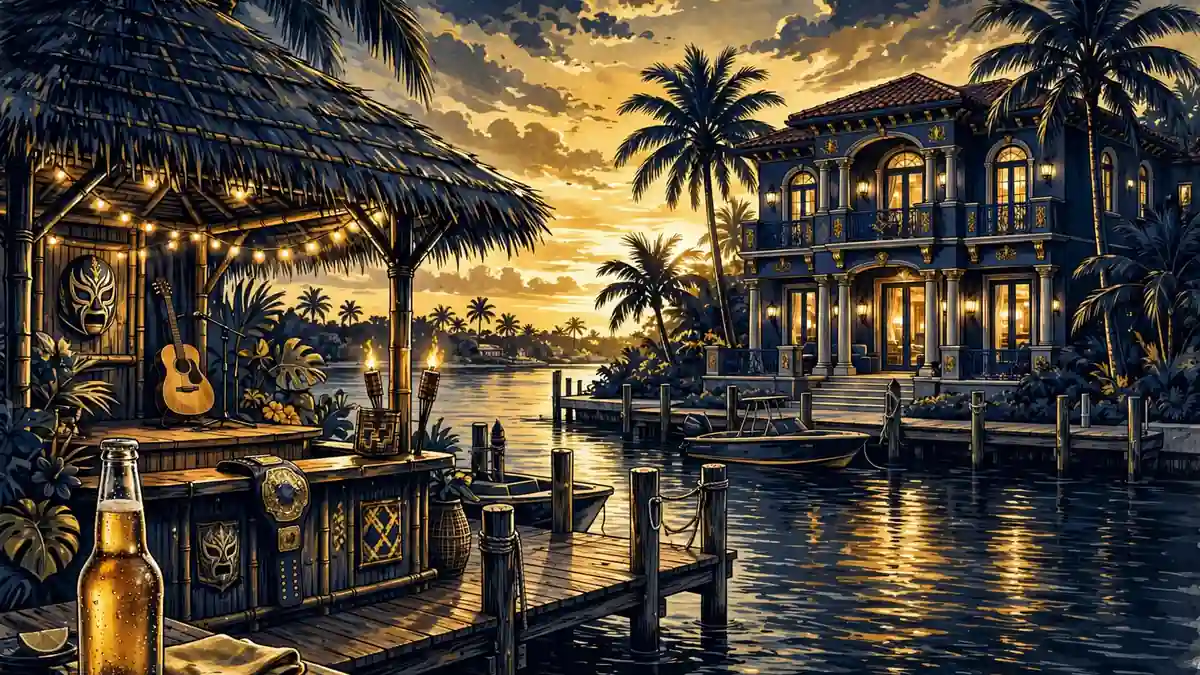
Hogan’s real estate story is a parable of the Florida boom, the crash, and the divorce. In 1992 he bought land in Belleair, Florida, for $2 million, demolished the existing house, and spent four years building a 17,145-square-foot European-inspired waterfront estate — the mansion America saw on Hogan Knows Best, with its gym, tanning room, waterfalls, and boat lifts on the Intracoastal Waterway. In June 2006, at the top of the market, he listed it for $25 million. Then came the crash and the divorce. The price fell and fell: $13.9 million, $10.9 million, $8.9 million. In April 2012 it finally sold for $6.2 million to Michael Galinski, CEO of America II Electronics, per the Tampa Bay Times — a $19 million haircut from the original ask. The property taxes alone had been brutal: over $124,000 in 2010.
He had already downsized. In 2012 Hogan bought a Mediterranean-style house at 1040 Eldorado Avenue on Clearwater Beach for $3.3 million — about 5,000 square feet, a far cry from Belleair — and later added the cottage next door, assembling a small compound. The estate began marketing the main house in January 2026 at $10.989 million; by September 2026 the asking price had been cut nearly in half to $6.9 million, according to property trackers. The houses are held in an LLC tied to his estate, which is why the probate filings make no mention of them.
Earlier, in 2006, the Akron Beacon Journal reported Hogan had moved the family to a $12 million bayfront estate on Miami Beach so the kids could pursue entertainment careers — a reminder that at his peak, his property ambitions matched anyone’s.
What the probate court did see, per the September 2025 filing by his son Nick: $200,000 in cryptocurrency, $799,000 in personal and intellectual property, and his right of publicity — the commercial value of the Hulk Hogan name and likeness — appraised at $4 million. Total probate assets: roughly $5 million. The two Clearwater homes, worth an estimated $11 million combined, sit outside that figure in trust structures. Cars were never a documented part of his wealth story the way they are for some athletes; his garage never made the gossip columns, and we will not invent one.
Awards and Achievements
The wrestling résumé is unmatched: six-time WWE Champion and six-time WCW World Heavyweight Champion — twelve world titles — with a first WWF reign of 1,474 days, among the longest in history. He headlined eight of the first nine WrestleManias. He was inducted into the WWE Hall of Fame twice: individually in 2005, and in 2020 as a member of the nWo. In 2026, WWE recognized his WrestleMania III match against André the Giant as an “Immortal Moment.”
The cultural achievements matter as much: the first wrestler to become a genuine mainstream celebrity, the man who made WrestleMania a stadium-scale institution, the creator of the nWo — the most influential faction in wrestling history — and a pop-culture figure whose catchphrases (“Whatcha gonna do when Hulkamania runs wild on you?”, “say your prayers, eat your vitamins”) outlived his career. After his death, Florida governor Ron DeSantis declared July 25, 2025 “Hulk Hogan Day in Florida,” with flags flown at half-staff.
Net Worth Growth Over the Years
| Year | Estimated net worth | What drove it |
|---|---|---|
| Mid-1980s–early 1990s | Not publicly tracked; peak-era earnings | Hulkamania merchandising, WWF paydays, acting roles; wealth built but never disclosed |
| Late 1990s | ~$30 million (reported peak) | 1998 WCW mega-contract: $2M signing bonus, 50% merch, $675K per PPV; nWo merchandise boom |
| 2006 | High-water mark on paper | Belleair estate listed at $25M; family moved to $12M Miami Beach estate |
| 2009–2012 | Fell sharply | Divorce: Linda received 70% of liquid assets (~$7.44M of $10.41M), $3M in property, 40% of businesses; Belleair sold for $6.2M in 2012 |
| 2016 | Rebuilt | $31M Gawker settlement (after taxes); note Linda’s 40% likeness stake entitled her to a share |
| 2018–2024 | ~$25 million (stable) | WWE ambassador deal (~$2.5M/yr est.), merchandise, Beach Shop/Hangout, Real American Beer launch 2024 |
| July 24, 2025 | $25M – $30M | At death: Celebrity Net Worth $25M; other outlets up to $30M |
| September 2025 | $5M in probate | Estate filing: $200K crypto, $799K personal/IP, $4M right of publicity; ~$11M in homes held in trusts/LLCs outside probate |
A note on the numbers: year-by-year celebrity net worth figures before 2016 are reported tracker estimates, not audited accounts. The shape of the curve — 1990s peak, divorce crater, Gawker rebuild, stable final decade — is consistent across every serious outlet that has covered him.
Social Media Presence
Hogan was an active social media presence to the end, with millions of followers across Instagram, X, and Facebook, where he promoted Real American Beer, his beach businesses, and WWE appearances. His accounts became memorial pages after July 2025, flooded with tributes from Ric Flair, Kevin Nash, Triple H, and Donald Trump, who called him a “great friend” and praised his strength and patriotism. His final viral moment came a year before his death: the shirt-rip at the July 2024 Republican National Convention, which introduced Hulkamania to a generation that had never seen him wrestle.
Personal Life
Hogan married three times. His 1983 marriage to Linda Claridge produced daughter Brooke (born 1988) and son Nick (born 1990) and the VH1 series that made them all famous; it ended in a brutal 2009 divorce after Linda filed in November 2007. He married Jennifer McDaniel in December 2010; they divorced in 2022. In September 2023 he married Sky Daily, a yoga instructor with three children from a previous relationship, in Clearwater, Florida. She was his widow at his death.
The family saw real tragedy. In August 2007, 17-year-old Nick crashed his Toyota Supra while street racing in Clearwater; his passenger, John Graziano, suffered catastrophic brain injuries and was left permanently disabled. Nick served eight months in jail, and the Hogans settled the family’s civil lawsuit for an undisclosed sum — one of the great unquantified drains on the family fortune. In September 2024, Hogan revealed on Logan Paul’s Impaulsive podcast that he had undergone 25 surgeries in the previous decade — a medical history that explains both his absence from the ring and his expenses.
His death, on the morning of July 24, 2025, was sudden. Clearwater Fire & Rescue responded to a cardiac-arrest call at his Clearwater Beach home at 9:51 a.m.; he was pronounced dead at Morton Plant Hospital at 11:17 a.m. He was 71. The Pinellas County medical examiner later determined the cause was acute myocardial infarction — a heart attack — with a history of atrial fibrillation, and revealed he had also been living with chronic lymphocytic leukemia, a detail his family had never made public. Police found no foul play.
The aftermath was messy in the way of all famous estates. On September 9, 2025, Nick Hogan filed court documents — first reported by Us Weekly — listing himself as his father’s sole beneficiary and seeking to serve as co-personal representative of the estate alongside Terry McCoy. The filing revealed Hogan had executed his will in 2016 and amended it four times, most recently in July 2023 — when, at her own request, daughter Brooke was removed as a beneficiary. Sky Daily was listed as the surviving spouse. The filing also disclosed a potential medical-malpractice claim: Sky was reportedly considering legal action against the surgeon who operated on Hogan’s neck in May 2025, after which his phrenic nerve was allegedly damaged. Brooke, who had been estranged from her father, skipped his funeral at Indian Rocks Baptist Church in Largo — but as an interested party, the legal story of the estate was not necessarily over.
For a man who spent forty years telling the world to take its vitamins, the ending carried its own lesson: the body that made the fortune was also what spent it. Twenty-five surgeries, a heart condition, leukemia — the medical bills of a 71-year-old who had punished himself for decades. He is survived by his wife Sky, his children Brooke and Nick, and a name that will sell merchandise long after the probate closes.
Sources & Reporting
- Parade — net worth estimate at death ($25M per Celebrity Net Worth, ~$30M per other outlets); full terms of the 1998 WCW contract; 1990s salary context; divorce settlement details; Richard Belzer settlement; Gawker case summary; 25 surgeries revelation. Reporting window: 2025–2026.
- Sports Illustrated (Fannation) — $25M net worth estimate; businesses (Hogan’s Beach Shop, Hogan’s Hangout); sponsors (1-800 LoanMart, Carma HoldCo, Honey Nut Cheerios); estimated $2.5M annual WWE salary. Reporting window: 2024–2026.
- USA Today — official cause of death (acute myocardial infarction) via Pinellas County Forensic Science Center documents; atrial fibrillation and CLL leukemia history. Reporting window: July 2025.
- Associated Press — death confirmation; “Hulk Hogan Day in Florida” declaration. Reporting window: July 2025.
- Us Weekly — September 2025 probate filing: Nick Hogan sole beneficiary, $5M in assets ($200K crypto, $799K personal/IP, $4M right of publicity), will amendments including Brooke’s 2023 removal, potential malpractice claim. Reporting window: September 2025.
- Celebrity Net Worth — the $25M anchor estimate used across outlets. Accessed October 2026.
- Daily Mail — 2009 divorce terms: $7.44M of $10.41M in liquid assets, $3M in property, 40% of businesses including likeness rights. Reporting window: 2009–2012.
- Tampa Bay Times — Belleair estate sold for $6.2M (April 2012). Reporting window: 2012.
- WrestlingInc (via Wrestling Observer Newsletter) — TNA pay of $35,000 per TV appearance. Reporting window: 2011.
- Fox Sports — WCW salary averaging ~$4M per year in the late 1990s. Reporting window: 2015.
- Vulture — Richard Belzer’s account of the $400,000 settlement. Reporting window: 2015.
- Netflix — Hulk Hogan: Real American four-part docuseries (2026), including Triple H on the 2015 WWE split. Released 2026.
- Cultaholic — George Foreman grill claim debunked (Pablo Torre investigation; inventor’s family and shared lawyer statements); Nick Hogan sole-beneficiary filing summary. Reporting window: 2025–2026.
- Akron Beacon Journal — death confirmation via Clearwater Police Department; 2006 Miami Beach $12M estate move. Reporting window: 2006, 2025.
- F4WOnline — Jeff Jarrett on TNA’s “financial death spiral” after Hogan’s 2009 arrival (Dark Side of the Ring). Reporting window: 2025.
Frequently Asked Questions
What was Hulk Hogan’s net worth when he died?
Hulk Hogan’s net worth was estimated at $25 million to $30 million at his death on July 24, 2025. Celebrity Net Worth — the figure most outlets cite — held at $25 million, while Parade noted other trackers put him near $30 million. His fortune had peaked higher in the 1990s before a costly divorce, and was rebuilt largely by his $31 million Gawker settlement in 2016.
How did Hulk Hogan die?
Hulk Hogan died of a heart attack on the morning of July 24, 2025, at his home in Clearwater Beach, Florida. He was 71. Emergency crews responded to a cardiac-arrest call at 9:51 a.m., and he was pronounced dead at Morton Plant Hospital at 11:17 a.m. The Pinellas County medical examiner determined the official cause was acute myocardial infarction, noting a history of atrial fibrillation — and revealed he had also been living with chronic lymphocytic leukemia, which had never been made public.
Who inherited Hulk Hogan’s money?
His son Nick Hogan is the sole beneficiary of the estate, per court documents filed September 9, 2025, and first reported by Us Weekly. The probate filing lists about $5 million in assets — $200,000 in cryptocurrency, $799,000 in personal and intellectual property, and his right of publicity valued at $4 million. His roughly $11 million in Florida homes sits outside probate in trusts and LLCs. Daughter Brooke Hogan was removed from the will in 2023 at her own request; widow Sky Daily is listed as the surviving spouse.
How much did Hulk Hogan get from the Gawker lawsuit?
Hogan settled with Gawker for $31 million in 2016, after a jury awarded him $140 million over the site’s 2012 publication of a secretly recorded sex tape. The case was bankrolled by billionaire Peter Thiel. The settlement — after taxes — was the single largest check of his life, but his ex-wife Linda’s 40 percent ownership stake in his likeness businesses, granted in the 2009 divorce, reportedly entitled her to about $12.4 million of it.
How much money did Hulk Hogan lose in his divorce?
A great deal. When his divorce from Linda Hogan was settled in 2009, the Daily Mail reported she received $7.44 million of the couple’s $10.41 million in liquid assets — about 70 percent — plus $3 million in property and a 40 percent ownership stake in his businesses, including his likeness and public image. There was no alimony, but the settlement permanently reduced his wealth and gave Linda a cut of his future Gawker winnings.
What was Hulk Hogan’s salary as a wrestler?
His best-documented deal was the 1998 WCW contract: a $2 million signing bonus, 50 percent of his merchandise, $20,000 a month to promote it, 25 percent of ticket sales at events he appeared on, and $675,000 per pay-per-view — which Parade estimated could total $4 million to $6 million from PPVs alone. Fox Sports put his average WCW salary near $4 million a year. In TNA (2009–2013) he reportedly earned $35,000 per TV appearance, and Sports Illustrated estimated his final WWE ambassador deal at about $2.5 million a year.
What businesses did Hulk Hogan own?
His main ventures were Hogan’s Beach Shop (merchandise retail, opened 2012 in Clearwater Beach), Hogan’s Hangout (a beachfront bar and restaurant), and Real American Beer, the beer brand he launched in June 2024 with WWE as a partner. Earlier flops included Pastamania, a Mall of America restaurant that closed within about a year in the mid-1990s, and the Hulk Hogan Thunder Mixer blender.
Did Hulk Hogan really turn down the George Foreman Grill?
Probably not — the story appears to be fiction. Hogan claimed for years that he missed a phone call offering him a choice between endorsing a grill or a blender, took the blender, and watched George Foreman make $200 million-plus on the grill. But a 2025 investigation by Pablo Torre’s Pablo Torre Finds Out debunked it: the grill’s inventor Michael Boehm’s family said Foreman was the only celebrity approached, and the lawyer who represented both men said Hogan’s version was not his recollection. Foreman did make an enormous fortune — including a $138 million buyout from Salton in 1999 — just not at Hogan’s expense.
Final Thoughts
Hulk Hogan died with an estimated $25 million to $30 million — a fortune that tells the whole story of modern celebrity wealth in miniature. He earned like no wrestler before him, with a 1998 WCW contract that paid a $2 million signing bonus and $675,000 per pay-per-view. He spent and lost like few others: a divorce that took 70 percent of his liquid assets, a $6.2 million fire sale of a mansion once listed at $25 million, $38,000-a-month legal bills, and twenty-five surgeries in a decade. And he was rescued, financially, by the strangest windfall in entertainment history — a $31 million privacy settlement against a gossip blog, bankrolled by a billionaire with his own grudge.
The estate he left behind is cleaner than the headlines suggest: about $5 million in probate assets, $11 million in trust-held Florida property, a $4 million right of publicity, and one son as sole beneficiary. The number that matters most, though, isn’t a dollar figure. Hogan took a regional carnival act and turned it into stadium entertainment, made himself the most famous wrestler who ever lived, and built a brand — the mustache, the bandana, the vitamins — that will out-earn most living celebrities for decades. The money was real. The myth was bigger. In the end, both were his.
Published on 2026-10-09. Last reviewed October 2026. Found an error? See our corrections policy.