
Ina Garten‘s net worth is estimated at $60 million as a combined household figure with her husband Jeffrey Garten as of November 2026. The number comes from Celebrity Net Worth, the source most outlets repeat, and it carries a correction that changes how the figure should be read: that $60 million is already the couple’s combined total, not Ina Garten’s personal fortune plus a second $60 million for Jeffrey. Some outlets have doubled it to $120 million by mistake. The real story underneath is more interesting than the doubled figure. A former White House budget analyst with no formal culinary training bought a tiny Hamptons food shop in 1978, turned it into a beloved institution, sold it before she ever wrote a cookbook, and then built a second fortune from books and television that has lasted more than two decades. Her cookbooks have sold an estimated 13 to 14 million copies, her Food Network show Barefoot Contessa ran from 2002 to 2021 and collected five Daytime Emmy Awards, and her follow-up series Be My Guest is still in production under a multi-year Food Network deal renewed in 2024.
Ina Garten: Quick Facts
| Estimated net worth | $60 million (combined with husband Jeffrey Garten) (range: $50 million to $60 million in current reporting; older outlier claims reach $70 million) |
|---|---|
| Profession | Television cook, cookbook author, former specialty food shop owner |
| Nationality | American |
| Born | February 2, 1948 (age 78) |
| Height | Not publicly reported |
| Primary income sources | Cookbook advances and royalties, Food Network television contracts, Barefoot Contessa Pantry licensing, rental income from the former shop building, real estate appreciation |
| Active years | 1978–present |
| Last reviewed | November 2026 |
- Early Life and Background
- Education
- Career Journey
- Rise to Fame
- Main Sources of Income
- Salary and Earnings
- Businesses and Investments
- Brand Deals and Sponsorships
- Houses, Cars and Other Assets
- Awards and Achievements
- Net Worth Growth Over the Years
- Social Media Presence
- Personal Life
- Sources & Reporting
- Frequently Asked Questions
- Final Thoughts
Early Life and Background
Ina Rosenberg was born on February 2, 1948, in Brooklyn, New York, and raised in Stamford, Connecticut, as one of two children of Charles H. Rosenberg, a surgeon specializing in ear, nose and throat medicine, and his wife Florence. Food Network’s own biography notes that she excelled in science at Rippowam High School in Stamford, a detail that matters more than it first appears: Garten has said the scientific habit of testing, measuring and adjusting shaped how she later developed recipes. She did not grow up training in a professional kitchen. In fact, her own account, repeated in her 2024 memoir Be Ready When the Luck Happens and in coverage of it, is close to the opposite — cooking was her mother’s domain, and Ina was steered toward studying instead. She has said, in words quoted by PureWow, “It’s my job to cook, and it’s your job to study,” describing her mother’s rule. That closed kitchen door became, years later, the engine of a self-taught cooking education built on Julia Child’s books and on feeding people at home.
At 15, on a trip to visit her older brother at Dartmouth College, she met Jeffrey Garten, then a Dartmouth student. Food Network’s biography preserves the library-window version of the meeting: Jeffrey, a freshman in the Dartmouth library, saw her walking on campus and told his roommate, “Look at that girl. Isn’t she beautiful?” The roommate, as the story goes, already had a date with her that night. The couple married on December 22, 1968, at her parents’ house in Stamford, when she was 20. Jeffrey then served a four-year Army tour, and the couple lived at Fort Bragg, North Carolina. Those early years explain two threads that run through the whole fortune story. First, Jeffrey’s career — Army, State Department, investment banking, Yale — gave the household a second, entirely separate income stream and a partner who understood finance. Second, Ina’s cooking began as a practical answer to long stretches at home while Jeffrey served, including time apart during his service and a later work trip to Tokyo, sustained by the letters the couple exchanged. She worked through Julia Child’s Mastering the Art of French Cooking at home, and after Jeffrey’s service the couple travelled in France, where open-air markets and fresh produce gave her a first taste of the French cooking that would shape her style.
The memoir, published October 1, 2024, by Crown, also disclosed a harder part of the childhood story that earlier profiles had not carried: Garten has described an abusive and emotionally cold upbringing. Coverage of the memoir in 2024 and 2025 treats that disclosure as central to her later insistence on warmth, generosity and hospitality as a deliberate choice rather than a personality trait she inherited. Readers who only know the television version of Garten — calm, smiling, handing a guest a drink — miss that the warmth was built, not simply found. It is also the reason her brand has survived so long: the audience is not buying speed or spectacle, it is buying steadiness.
Education
After high school, Garten attended Syracuse University, where she first planned to study fashion design and then switched her major to economics. She did not finish a degree at Syracuse on the conventional timetable; she postponed her studies to marry Jeffrey in 1968 and move to Fort Bragg. After the couple moved to Washington, D.C., in 1972, she took business courses at George Washington University and eventually earned an MBA from the George Washington School of Business, according to Food Network’s biography and her Wikipedia entry. Jeffrey, in parallel, worked at the State Department while earning a PhD at Johns Hopkins School of Advanced International Studies.
The MBA is not a footnote in a wealth story. It is the credential that explains why Garten ran her shop like a business analyst rather than a hobbyist cook. She tracked margins, expanded only when the numbers supported it, and later negotiated publishing and television deals from a position of someone who had already run a profitable company for nearly two decades. Her first paid professional work used that training directly: in Washington she worked for the Federal Power Commission and then in the White House Office of Management and Budget, where she was an analyst working on the federal nuclear power budget during the Carter administration. Parade’s 2026 profile quotes her dry summary of those four Washington years: “I worked in Washington for four years, and nothing happened. They’re still working on the same issues.” The line is funny, but the underlying fact is serious — she left a secure, prestigious government job at 30 to buy a food shop, and she did it with analytical training and with house-flipping profits behind her.
Career Journey
Garten’s wealth story divides into four distinct careers, and confusing them is how most net worth articles go wrong. Career one was government and property. While living in Washington, she bought, renovated and resold row houses, and Parade reports that those flipping profits gave her the funds to buy her first shop. Career two was retail: the Barefoot Contessa shop, 1978 to 1996. Career three was publishing, from 1999 onward. Career four was television, from 2002 onward. Each one funded the next, and each one taught her something the next one needed — property taught her capital discipline, retail taught her what customers actually buy, publishing taught her that her recipes travelled, and television taught her that her personality was itself a product.
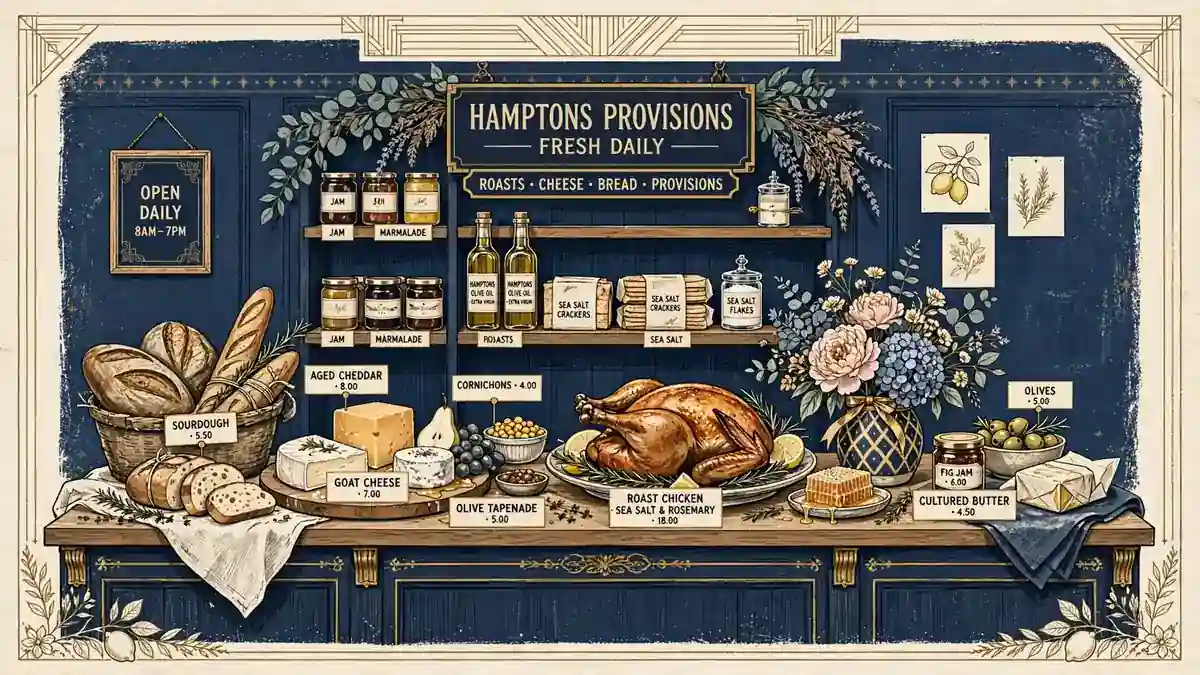
The shop purchase is the hinge of the whole story. In 1978, Garten spotted a New York Times advertisement for a specialty food store for sale in Westhampton Beach, Long Island. She and Jeffrey drove out to look, she made an offer the seller accepted, and she bought a 400-square-foot business called Barefoot Contessa. The name came from the shop’s previous owner, Diana Stratta, whose family had nicknamed her the Barefoot Contessa after the 1954 Ava Gardner film of the same name. Garten had no culinary training, no retail experience, and a business that, at the start, was a two-person operation — one person at the front, one in the kitchen. Food Republic’s history of the name notes that she worked 22-hour days with Stratta over her first big holiday weekend, Memorial Day. Within three years she moved the shop across Main Street to larger premises, and in 1985 she opened a second, larger location in East Hampton, in space vacated by the gourmet shop Dean & DeLuca. East Hampton, unlike seasonal Westhampton, had a year-round community and a larger customer base. There she expanded the store to more than seven times its original size, past 3,000 square feet, selling lobster Cobb salad, caviar, imported cheeses and local produce to a clientele that came to include Steven Spielberg, Lauren Bacall and Martha Stewart. The Daily Meal’s profile of the shop says it eventually employed more than 100 people.
By the mid-1990s Garten was burned out. In 1996 she sold the shop to two employees, manager Parker Hodges and chef Amy Forst, according to Celebrity Net Worth, and turned to writing. The shop itself later closed — sources differ on the year, with Food Republic giving 2003 and Celebrity Net Worth giving 2004 after a lease negotiation failed — and a Rag & Bone store later occupied the East Hampton space. Parade adds two facts most profiles miss: Garten retained ownership of the building that housed the shop, so she continued to earn rental income from it after selling the business, and the street on which the building stands has since been named Ina Garten Way. Selling the business but keeping the building is a classic owner-operator move, and it is one reason her income did not stop when the shop closed. She kept the asset that appreciates and sold the operation that exhausted her.
Rise to Fame
Garten’s first cookbook, The Barefoot Contessa Cookbook, was published in 1999, three years after she sold the shop. It sold more than 100,000 copies in its first year, according to The Daily Meal and PureWow, and went on to sell more than a million copies, according to The New York Times account cited in her shop history. The book worked because it was not a chef’s book. It was a shopkeeper’s book: recipes customers had actually bought, photographed in a way home cooks could follow, built around local and seasonal ingredients. Appearances on The Martha Stewart Show spread the word, and the book’s success proved that Garten’s audience was not limited to Hamptons shoppers.
Food Network came calling, and Garten turned the network down several times because she doubted she would be good on camera. She eventually agreed, and Barefoot Contessa debuted in 2002. The show ran through 2021 — nearly two decades, one of the longest runs in the network’s history — and won five Daytime Emmy Awards, according to Parade and her publisher, Penguin Random House. Taste of Home notes the show won the Daytime Emmy for Outstanding Culinary Series in 2015 and 2021, and Garten won the culinary host Emmy in 2009. The format never changed much, and that was the point: Garten filmed in her own home and later in the barn on her East Hampton property, cooking for friends, for Jeffrey, and for the camera as if the camera were a guest. Production took over her house for eight weeks at a time, twice a year, a disruption she described to Oprah Daily as the reason she eventually built a separate filming barn. She has also said she refuses to watch episodes of her own show, a detail Taste of Home preserves and one that fits her self-taught, perfectionist streak.
The second television act began in 2022 with Be My Guest, a series in which Garten welcomes a well-known friend to her barn for a day of cooking and conversation. Guests have included Emily Blunt, Jennifer Garner, Nathan Lane, Laura Linney, Stanley Tucci, astronaut Nicole Mann, ballerina Misty Copeland, restaurateur Danny Meyer, Bobby Flay, Julia Louis-Dreyfus, Stephen Colbert and his wife Evie McGee Colbert, Tina Fey, Christine Baranski, violinist Itzhak Perlman, fashion designer Daniel Roseberry, Allison Janney, Jon Batiste, Hoda Kotb and Michael Barbaro, across seasons announced by Food Network in 2024, 2025 and 2026. In June 2024 Food Network announced a new multi-year deal with Garten covering new episodes of Be My Guest, and the series streams the next day on HBO Max and discovery+. The guest-list format matters financially because it keeps Garten on air without the grind of a weekly cooking show: fewer episodes, higher-profile guests, and a format that doubles as promotion for each new book.
Main Sources of Income
Garten’s income has five legs, and their balance is unusual among celebrity chefs. Most of her peers built restaurants, product empires, or both. Garten built books, television, a deliberately small product line, rental income, and property appreciation — and she turned down the rest. Parade’s 2026 profile makes the point directly: she has turned down offers for cookware lines and other branding deals. That restraint is a financial decision, not a missed opportunity. A cookware line would have paid an advance and then demanded her time, her name on products she did not control, and her reputation if the products disappointed. By saying no, she protected the premium that makes her books sell.
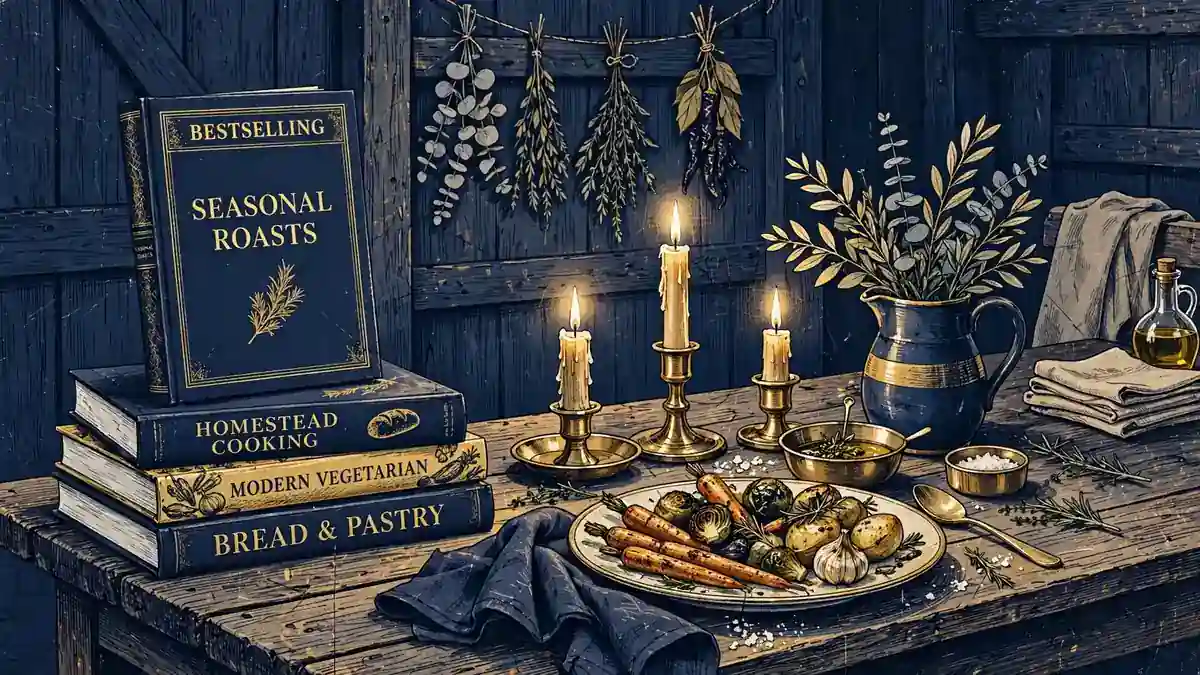
Books are the largest and most durable leg. Garten is the author of thirteen bestselling cookbooks, according to her publisher, plus the 2024 memoir Be Ready When the Luck Happens, which debuted at number one on the New York Times bestseller list and was named a best book of the year by The New York Times Book Review, Time, The New Yorker, Vanity Fair and Town & Country. Total copy sales are reported at more than 14 million by Social Life Magazine and at more than 13 million by other profiles, so this article uses a 13 to 14 million range. The titles run from The Barefoot Contessa Cookbook (1999) through Barefoot in Paris (2004), which sold almost 400,000 copies between 2004 and 2005, Barefoot Contessa at Home, Back to Basics, How Easy Is That?, Foolproof, Make It Ahead, Cooking for Jeffrey, Modern Comfort Food (2020), Go-To Dinners (2022), and the memoir. Parade also reports a 14th cookbook, Simply Ina, scheduled for publication in October 2026. That title had not been confirmed in publisher listings checked for this article, so it is reported here as Parade’s report, not as a confirmed release.
Television is the second leg, and it works as marketing as much as salary: every season of Barefoot Contessa and Be My Guest sent viewers back to the backlist, where the margins are highest because the books are already written. The third leg, Barefoot Contessa Pantry products with Stonewall Kitchen — cake mixes, sauces and marinades sold through retailers such as Williams Sonoma and Sur La Table — is intentionally small. The fourth leg is rental income from the former shop building in East Hampton. The fifth is appreciation on three properties bought decades before Hamptons and Manhattan prices reached current levels. Together they explain how a fortune can keep growing after the age of 75 without a restaurant group or a product empire behind it: the backlist sells every year, the television deal renews, and the property sits in three of the most expensive markets in the world.
Salary and Earnings
Here is the honest version of Garten’s salary, and it is thinner than most net worth articles admit: Food Network has never disclosed what it pays her, and no filing, contract leak, or verified interview gives a per-episode figure. That absence matters, because the numbers circulating online fail basic checks. One low-authority site claims she earns $500,000 per episode, or about $10 million per season of 20 episodes. Another set of secondary sites repeats an annual salary of $10 million. A $10 million annual television salary sustained over twenty years would imply $200 million in gross television pay alone, before books — a total that cannot be squared with a $60 million combined household net worth unless taxes, spending and investment losses consumed almost everything, which nothing in her record suggests. The $500,000-per-episode claim should be treated as unsupported, and the $10 million annual figure as repeated secondary-site estimation, not reporting.
What can be said with confidence is narrower. Top-tier Food Network hosts are reported in industry coverage to earn in the tens of thousands of dollars per episode, and one profile of Garten’s career puts her at the top of that bracket given her seniority and ratings, while noting her exact salary is not public. A separate industry roundup puts experienced Food Network hosts at $3 million to $10 million per year across all their work, not television alone — a range so wide it is best read as “lucrative but undisclosed” rather than a figure. The defensible summary is this: Garten’s television pay is certainly in the high six figures to low seven figures per year under her current multi-year deal, her book advances are described by Publishers Weekly as multi-million-dollar deals and among the most lucrative in publishing, and her annual cash income in peak years most plausibly sat in the low millions once books, television and licensing are combined. Any article that gives you a precise Garten salary to the dollar is inventing it.
The book deals deserve separate attention because they are the one place where a named trade source speaks. Publishers Weekly, the publishing industry’s trade magazine, has described Garten’s contracts as among the most lucrative book deals of all time, worth multiple millions per book, with exact figures undisclosed. That wording has been repeated by Parade and others, and it is consistent with the sales record: a writer whose first book sold more than a million copies and whose backlist still sells does not negotiate from weakness. A multi-book, multi-million-dollar contract signed in 2009 for two further books after Barefoot Contessa at Home was reported at the time as the most lucrative deal for a culinary author to date. Advances are not profit — they are repaid from royalties before the author earns more — but at Garten’s sales volume, royalties long ago passed the advance stage on her major titles, which is why the backlist keeps paying decades after publication.
Speaking and live appearances form a smaller, later income stream. Garten tours with “An Evening with Ina Garten” events tied to the memoir, including a February 2026 date in Detroit advertised through the Fisher Theatre, and university and theatre appearances built around the book. Fees for such appearances are not disclosed, and this article does not estimate them. They matter less as income than as evidence of demand: at 78, Garten can still sell out a theatre on the strength of a memoir, which is a form of pricing power most television cooks never achieve.
Businesses and Investments
Garten’s business record is a study in knowing when to stop. She owned and operated the Barefoot Contessa shop for 18 years, grew it from a 400-square-foot store to a 3,000-square-foot East Hampton institution with more than 100 employees at its peak, and sold it in 1996 while it was still successful rather than waiting for burnout to destroy its value. She kept the building. That single decision — sell the operation, keep the real estate — separated the exhausting part of the business from the appreciating part, and it is the move that most celebrity-chef profiles overlook when they describe her as simply a cook who got lucky on television.
Her corporate structure is also more formal than the cozy television image suggests. The Barefoot Contessa trademark is held by Ina Garten LLC, of East Hampton, New York, under U.S. trademark serial number 76172249, filed in November 2000 and recorded as registered and renewed as of July 8, 2025, covering food products, retail store services featuring gourmet foods and books, and related classes. A trademark held for 25 years and renewed in 2025 is not a passive asset; it is the legal frame that lets a small pantry line exist without giving away the name, and it is what a licensee such as Stonewall Kitchen actually licenses. Garten’s online store, run through her Barefoot Contessa website, sells a curated selection of her favourite ingredients, keeping a direct retail channel alive without reopening a physical shop she has said she would not reopen.
On investments beyond property, the public record is thin, and this article does not fill the gap with guesses. Garten has not disclosed a stock portfolio, startup stakes, or restaurant investments, and she is not known as a restaurant owner — a sharp contrast with peers such as Bobby Flay or Gordon Ramsay, whose fortunes rest heavily on restaurant groups. Jeffrey Garten’s career supplies the household’s other investment story: investment banking, a senior government role as Undersecretary of Commerce for International Trade, and the deanship of the Yale School of Management from 1995 to 2005, followed by his current role as Juan Trippe Professor in the Practice of International Trade, Finance, and Business at Yale. His earnings are not disclosed separately, which is precisely why Celebrity Net Worth reports the couple’s figure as combined: the two careers cannot be cleanly separated from public data, and any article that splits the $60 million into an Ina share and a Jeffrey share is guessing.
Brand Deals and Sponsorships
Garten’s brand-deal history is defined by refusal. Parade’s 2026 profile states plainly that she has turned down offers for cookware lines and other branding deals. The one significant exception is Barefoot Contessa Pantry, the line of cake mixes, sauces and marinades produced with Stonewall Kitchen and sold through high-end retailers including Williams Sonoma and Sur La Table. The line is small by design, and its smallness is the strategy: a cake mix with her name on it in a store she respects does not dilute the brand, while a full cookware range in a discount chain would. Social Life Magazine’s analysis of her fortune makes the same point from the other side, noting that her licensing income is intentionally limited to about $1 million per year in its estimates, against much larger book and television income.
That restraint has a cost that shows up in peer comparisons. Rachael Ray built a $100 million fortune, according to Celebrity Net Worth via The List, on a far wider licensing footprint. Garten, at a combined $60 million, is wealthier than most Food Network stars but not the richest, and the gap is largely explained by the deals she declined. The trade was deliberate: she kept control of her name, her recipes, and her schedule, and she is still signing multi-year television deals at 78 while peers with bigger product empires have retired from television. For a wealth story, the lesson is that net worth measures what someone refused to sell just as much as what they earned.
Her other brand-adjacent income is quieter: magazine columns and contributions over the years, the Barefoot Contessa website’s recipe traffic, and the 2026 launch of Happy Hour with Ina Garten, a weekly video and audio series reported by Parade in September 2026, in which she welcomes guests for relaxed conversations from her New York City apartment. The series extends the Be My Guest format into a lower-cost, higher-frequency format, filmed in Manhattan rather than the East Hampton barn, and it gives her a owned-media channel that does not depend on a network schedule. No revenue figure for the series has been disclosed.
Houses, Cars and Other Assets
Garten and Jeffrey divide their time between three homes: East Hampton, Manhattan, and Paris. The East Hampton property is the centre of the story and the hardest to value precisely, which is why estimates for it range so widely. The couple bought their first East Hampton property in the 1990s, built a larger shingle-style farmhouse down the street from their original house, and then, after writing to a neighbour every year for a decade asking him to sell, bought the adjoining land in 2006 and built the barn that became her filming kitchen and office. Mashed, drawing on Spokeo and Zillow data, puts the main house on a 37,026-square-foot lot and cites a Zillow estimate of about $5.5 million for the house alone, while Celebrity Net Worth puts the East Hampton home, on a nearly 40,000-square-foot lot, at worth at least $10 million. The gap is not a contradiction so much as a difference in what is counted: a house alone versus a compound that includes a 2,000-square-foot professional barn, gardens, an orchard of white crabapple trees she planted from saplings because she could not afford 25 mature trees, and land bought in stages over thirty years. This article therefore values the East Hampton compound at $5.5 million to $10 million-plus, depending on whether the barn and full land are included, and notes that Realtor.com’s 2026 profile of the estate describes a pandemic-era interior redesign in light, neutral tones, optimized for hosting, with a round table at its centre.
The Manhattan apartment is the best-documented purchase in her portfolio. In August 2016, Garten bought a two-bedroom, three-bathroom apartment of about 2,450 square feet in the Philip House, a pre-war building on Park Avenue on the Upper East Side, for $4.65 million, according to Parade, Forbes via Mashed, and Celebrity Net Worth, which rounds the figure to $4.6 million. The apartment has 10-foot ceilings, multiple fireplaces, a library with floor-to-ceiling bookshelves, and a kitchen updated in 2018 with a $15,000 stove, according to Town & Country via Mashed. The New York Post reported the property was listed for sale in 2017, but no outlet recorded a sale, and Parade’s 2026 reporting treats the Manhattan apartment as a current home and the filming location for Happy Hour with Ina Garten. The Paris apartment is the least documented of the three: Garten confirmed it in a December 2018 Instagram post recalling Jeffrey’s early letter promising that someday they could afford an apartment in Paris, and Parade notes it is a top-floor apartment close to her favourite bakeries and flower shops, with a large stove. No purchase price or date has been disclosed, and this article does not estimate one.
On cars and other luxury assets, Garten’s public record is strikingly quiet. She is not known for a car collection, a yacht, or a private jet, and no credible outlet has reported such purchases. That absence is itself data: a fortune built on books and television, held largely in property and in a backlist that pays royalties, looks very different from a fortune built on restaurants or endorsements, where the spending is part of the brand. The former shop building in East Hampton, which she still owns and rents out, is arguably her most interesting asset after the three homes, because it converts nostalgia into rent: the building that made her name now pays her as a landlord.
Awards and Achievements
Garten’s awards record is strong and slightly messy in the retelling, so the numbers below carry their sources. Barefoot Contessa won five Daytime Emmy Awards in total, according to Parade and Penguin Random House, including Outstanding Culinary Series in 2015 and 2021, according to Taste of Home, and Garten won the Outstanding Culinary Host Emmy in 2009. Her publisher also credits her with a James Beard Award, while Dan’s Papers, reporting a 2019 season launch, described her as a three-time James Beard Award recipient, and a 2026 publisher summary credits her with three James Beard Awards. The honest statement is that she has won five Daytime Emmys and multiple James Beard Awards, with the exact James Beard count varying between one and three depending on whether the source counts book, broadcast, or both. Either way, the combination of Emmys and Beard honours puts her in a small group of television cooks recognized by both the television academy and the food world.
The publishing honours are cleaner. Thirteen bestselling cookbooks, a number-one New York Times bestselling memoir, and best-book-of-the-year citations for that memoir from The New York Times Book Review, Time, The New Yorker, Vanity Fair and Town & Country form a publishing record that few celebrity chefs match. The memoir’s success also matters commercially: a number-one memoir at 76, after a career built on recipes, proved that Garten’s audience would buy her life story as well as her roast chicken, and it opened the live-event and podcast formats that now extend her earning years. Beyond awards, her civic footprint includes a seat on East Hampton’s Design Review Board, noted by Dan’s Papers, and the naming of Ina Garten Way for the street of her former shop, a municipal honour that no Emmy can buy.
Net Worth Growth Over the Years
The table below tracks reported estimates, not audited wealth. Early figures are lower, later figures are higher, and the jump from $50 million to $60 million reflects both real growth and the fact that newer estimates count Jeffrey’s wealth inside the same number.
| Period | Reported estimate | What drove it |
|---|---|---|
| 1978 | Shop purchase; no public net worth figure | House-flipping profits fund the Barefoot Contessa shop purchase |
| 1999 | First cookbook sells 100,000+ copies in year one | The Barefoot Contessa Cookbook becomes a bestseller |
| 2002–2021 | Rising through the Food Network years | Barefoot Contessa runs for nearly two decades; multi-book deals follow |
| 2021 | $50 million (The List, via earlier estimates) | Listed among the wealthiest Food Network stars at about $50 million |
| 2024 | Memoir year; estimates move upward | Be Ready When the Luck Happens debuts at number one; new multi-year Food Network deal signed in June 2024 |
| 2025–2026 | $60 million combined (Celebrity Net Worth, via Parade and The List) | Current anchor figure; explicitly combined with Jeffrey Garten |
Peer comparison puts the figure in context. The List’s ranking of the richest Food Network stars, using Celebrity Net Worth figures, puts Rachael Ray at $100 million, Emeril Lagasse at $70 million, and Garten at $60 million, with Jamie Oliver at $300 million in a 2021 edition of the same ranking — a figure that reflects a global restaurant and media empire far larger than any American cable career. Garten sits third among the American names in that comparison, ahead of most of her peers, behind only the widest licensors. The comparison also shows why the combined-versus-personal distinction matters: if Garten’s $60 million already includes Jeffrey, her personal fortune alone would be lower, and the gap to Ray would be wider than the headline suggests. No outlet has published a split, so this article does not invent one.
Social Media Presence
Garten’s social media presence is large for a cook of her generation and, unusually, it is run in her own voice. CreatorFanbase’s 2026 profile puts her Instagram following at 5.1 million, and her publisher describes her as an Instagram sensation with millions of followers in the United States and abroad. Her Instagram account is where the Paris apartment story was confirmed in December 2018, where she marked the 46th anniversary of buying the shop by recalling 22-hour days with Diana Stratta, and where she shared the East Hampton garden and the pandemic-era house redesign that Realtor.com later profiled. The account functions as a second publishing channel: a recipe, a garden update, or a guest announcement reaches millions without a network or a publisher in between, and it is the channel through which Happy Hour with Ina Garten is promoted.
The commercial value of that following is indirect. Garten does not appear to monetize Instagram through the paid-partnership volume seen on younger food creators’ accounts, and no sponsored-post rate has been disclosed. Its value is in demand: a book announcement on an account with 5.1 million followers moves pre-orders, a television season announcement moves ratings, and a theatre tour announcement moves tickets. For a 78-year-old author, that owned audience is a form of insurance against the day a network deal ends. It is also, notably, an audience she built without controversy-driven growth — no restaurant scandals, no product recalls, no public feuds — which is rarer than it should be in food television.
Personal Life
Garten has been married to Jeffrey Garten since December 22, 1968 — more than 57 years as of 2026, a marriage that began when she was 20 and he was a Dartmouth student she met at 15. Jeffrey’s career ran in parallel to hers: Army service, the State Department, investment banking, Undersecretary of Commerce for International Trade, dean of the Yale School of Management from 1995 to 2005, and now Juan Trippe Professor at Yale. He appears on her shows as cook, taster, and Friday-night dinner guest, and Parade quotes his assessment of her as a business thinker: “Without any consciousness about it, she is the model of an innovator,” he told Parade, praising her habit of experimenting incrementally while staying centred on the consumer. Jeffrey’s own words are the best summary of why the fortune lasted: constant small experiments, never a bet-the-company pivot.
The couple’s private life is deliberately low-key. They have no children, a fact Garten has discussed in interviews over the years, and they spend their time between East Hampton, Manhattan and Paris, with Jeffrey’s Yale work anchoring part of the year in Connecticut. The memoir’s disclosure of a difficult childhood reframed public understanding of the marriage: Garten has described learning, over decades, to build the warm household she did not grow up in, and the East Hampton house — its round table, its garden, its barn built so a film crew would stop taking over the bedroom for eight weeks at a time — is the physical form of that project. The barn story, told to Oprah Daily, is worth repeating because it captures the marriage’s economics in miniature: “We were filming for eight weeks straight, twice a year, and during that time, the crew took over the entire house, which meant Jeffrey and I practically lived in our bedroom. I knew that either Jeffrey was going to divorce me or I was going to have to find some other place to film.” She built the barn. The marriage, and the show, survived.
Sources & Reporting
Celebrity Net Worth — anchor $60 million figure, explicitly combined with Jeffrey Garten; shop sale to Parker Hodges and Amy Forst in 1996, 2004 closure, Manhattan purchase rounded to $4.6 million, East Hampton home worth at least $10 million. Reporting window: profile updated through 2025–2026.
Parade — 2026 profile updated September 16, 2026: $60 million estimate, five Emmys, Be My Guest history, Publishers Weekly multi-million-dollar book deals, retained shop building and rental income, Ina Garten Way, Manhattan $4.65 million purchase, Paris apartment, Simply Ina reported for October 2026, Happy Hour with Ina Garten reported launched September 2026. Reporting window: January–September 2026.
The List — richest Food Network stars rankings: Garten at $60 million via Celebrity Net Worth, Rachael Ray at $100 million, Emeril Lagasse at $70 million, Jamie Oliver at $300 million in the 2021 edition, and an older $50 million figure for Garten. Reporting window: 2021–2025.
Food Network — Garten biography (Syracuse economics, George Washington MBA, White House nuclear budget role, 1968 marriage, Fort Bragg), Be My Guest season announcements 2024–2026, June 2024 multi-year deal announcement. Reporting window: 2024–2026.
Penguin Random House — publisher record: thirteen bestselling cookbooks, five Emmy Awards, memoir publication October 1, 2024, number-one New York Times bestseller status and best-book citations. Reporting window: 2024–2026.
Publishers Weekly — trade reporting, via Parade, that Garten’s book deals are among the most lucrative of all time, worth multiple millions per book, exact figures undisclosed. Reporting window: cited in 2026 profiles.
The New York Times — East Hampton barn and property history (1990s purchase, 2006 adjoining land purchase, year-long barn build), first cookbook sales past one million copies. Reporting window: 2012 profile, cited in later coverage.
Mashed — East Hampton and Manhattan property detail: 37,026-square-foot lot, 2,000-square-foot Barn, Zillow estimate about $5.5 million for the house, Manhattan 2,450 square feet in the Philip House, $15,000 stove update. Reporting window: 2025–2026.
Realtor.com — 2026 East Hampton estate profile: shingle-style farmhouse, pandemic-era redesign, hosting-focused interior, garden and orchard history. Reporting window: 2026.
Taste of Home — Barefoot Contessa production detail (eight-week shoots twice a year), Outstanding Culinary Series Emmys 2015 and 2021, host Emmy 2009. Reporting window: 2022–2026.
Where outlets disagree, this article says so in the text: the shop’s closing year (2003 vs 2004), total book copies (13 million-plus vs 14 million-plus), James Beard Award counts (one vs three in different publisher summaries), and East Hampton values ($5.5 million house-only vs $10 million-plus compound). Salary figures from secondary sites are flagged as unverified where they appear.
Frequently Asked Questions
What is Ina Garten’s net worth in 2026?
Ina Garten’s net worth is estimated at $60 million as of November 2026, according to Celebrity Net Worth. That figure is a combined household total with her husband Jeffrey Garten, not Ina’s personal fortune alone, and no outlet has published a split between the two.
How did Ina Garten get so rich?
She built her fortune in stages: profits from flipping houses in Washington funded her purchase of the Barefoot Contessa food shop in 1978; the shop’s success led to a bestselling cookbook career from 1999; Food Network’s Barefoot Contessa ran from 2002 to 2021; and a small Stonewall Kitchen product line, rental income from her former shop building, and property in East Hampton, Manhattan and Paris added further income.
What is Ina Garten’s Food Network salary?
Food Network has never disclosed her salary, and no verified per-episode figure exists. Secondary sites repeat annual figures around $10 million and one low-authority site claims $500,000 per episode, but both fail basic checks against her $60 million combined net worth and should be treated as unverified estimates, not reporting.
Is the $120 million Ina Garten net worth figure real?
No. The $120 million figure comes from doubling Celebrity Net Worth’s $60 million combined total — counting $60 million for Ina and another $60 million for Jeffrey. Celebrity Net Worth states the $60 million is already combined, so $120 million double-counts the same money.
Does Ina Garten still own the Barefoot Contessa store?
She sold the business in 1996 to two employees, Parker Hodges and Amy Forst, and the shop later closed in the early 2000s — sources differ between 2003 and 2004. She retained ownership of the East Hampton building that housed the shop and earns rental income from it, and the street is now named Ina Garten Way.
Where does Ina Garten live?
Her main home is in East Hampton, Long Island, where she lives with Jeffrey in a shingle-style farmhouse with a separate 2,000-square-foot barn used as her filming kitchen and office. She also owns a Manhattan apartment on Park Avenue bought for $4.65 million in 2016 and an apartment in Paris.
How many cookbooks has Ina Garten written?
She is the author of thirteen bestselling cookbooks, according to her publisher, plus her 2024 memoir Be Ready When the Luck Happens, which debuted at number one on the New York Times bestseller list. Total book sales are reported at 13 to 14 million copies. Parade has also reported a 14th cookbook, Simply Ina, scheduled for October 2026.
Is Ina Garten still on television?
Yes. Barefoot Contessa ran from 2002 to 2021, and her current series Be My Guest, in which she cooks with famous friends at her East Hampton barn, debuted in 2022 and continues under a multi-year Food Network deal renewed in June 2024, with new seasons in 2025 and 2026. She also launched Happy Hour with Ina Garten, a weekly video and audio series from her Manhattan apartment, reported in September 2026.
Final Thoughts
Ina Garten’s fortune is best understood as a $60 million combined household figure, not a doubled $120 million headline, and not a precise personal salary multiplied across twenty years. The money came from four careers stacked in order — government analyst, shopkeeper, author, television host — each funding the next, and from a discipline most celebrity chefs never show: selling the exhausting business, keeping the appreciating building, refusing the cookware deals, and letting a backlist of thirteen cookbooks do the quiet work of compounding. At 78 she is still signing television deals, still selling out theatre evenings for a memoir, and still filming guests in a barn she built because a film crew had taken over her bedroom. The roast chicken made her famous. The restraint made her rich, and it is why the fortune is still growing when most television careers from 2002 are long over.
Published on November 3, 2026. Last reviewed November 2026. Found an error? See our corrections policy.