
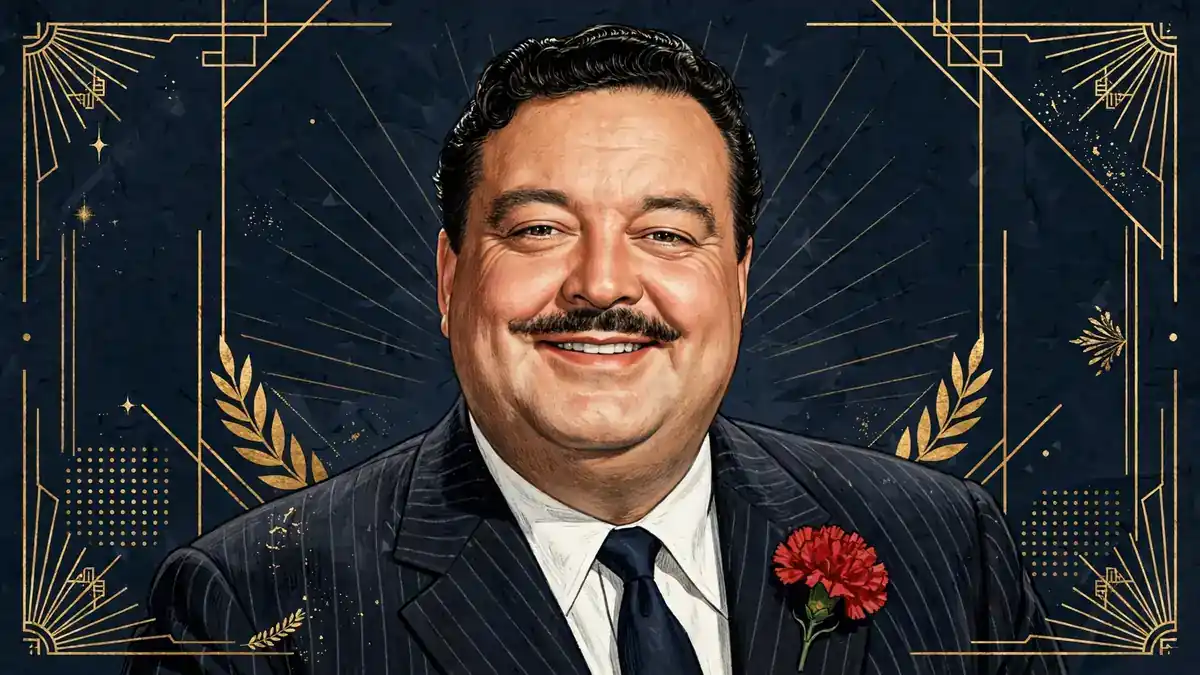
Jackie Gleason‘s net worth is estimated at $10 million to $20 million as of November 2026. The figure most outlets settle on is $10 million at the time of his death in 1987 — the equivalent of roughly $25 million in 2026 dollars — built on a CBS contract worth $11 million in 1955 money, a record-breaking run of mood-music albums, and a late film comeback in Smokey and the Bandit that grossed $126.7 million in North America.
Jackie Gleason: Quick Facts
| Estimated net worth | $10 million at death in 1987 (about $25 million in 2026 dollars) (range: $10 million to $20 million) |
|---|---|
| Profession | Comedian, actor, television host, musician and composer |
| Nationality | American |
| Born | February 26, 1916 (age 71 at death on June 24, 1987) |
| Height | 5 feet 10 inches (1.77 m) |
| Primary income sources | Television contracts and production, film salaries, mood-music album sales, syndication and residuals |
| Active years | 1940–1986 |
| Last reviewed | November 2026 |
- Early Life and Background
- Education
- Career Journey
- Rise to Fame
- Main Sources of Income
- Salary and Earnings
- Businesses and Investments
- Brand Deals and Sponsorships
- Houses, Cars and Other Assets
- Awards and Achievements
- Net Worth Growth Over the Years
- Social Media Presence
- Personal Life
- Sources & Reporting
- Frequently Asked Questions
Early Life and Background
Jackie Gleason was born Herbert Walton Gleason Jr. on February 26, 1916, at 364 Chauncey Street in the Bedford-Stuyvesant section of Brooklyn, New York. He was baptized John Herbert Gleason, and his mother, Mae, called him Jackie from the start. His father, Herbert Sr., worked as an insurance auditor. The family lived in a cramped railroad apartment that Gleason later used as the model for Ralph and Alice Kramden’s flat on The Honeymooners — right down to the address, 328 Chauncey Street, Apartment 1A, which was the Gleason family’s own address.
Comfort never lasted long in that household. Gleason’s older brother, Clement, died of meningitis at 14. When Jackie was nine, his father walked out of the family home and never came back. Mae went to work as a subway change-booth attendant to keep the two of them fed, and Jackie drifted toward the street life of his neighborhood: hanging with a local gang, hustling pool in Brooklyn pool halls, and learning to hold a room with talk. The pool-hall education paid off decades later in ways nobody could have predicted — the swagger, the patter, the cool under pressure all resurfaced in his Oscar-nominated turn as Minnesota Fats in The Hustler.
Then, in 1935, Mae died of sepsis. Gleason was 19, orphaned, broke, and living in a hotel room he shared with a friend and a comedian. He had no trade, no diploma, and no safety net. What he had was a stage instinct he had been sharpening since he was six, when his father took him to a vaudeville matinee at the Halsey Theatre. Friends later said he decided that day that he would face an audience for the rest of his life. The vow held. From that hotel room, Gleason talked his way into a comedy gig in Reading, Pennsylvania — his first paid job as a professional comedian — and never looked back.
Those Brooklyn years explain the money story that follows. Gleason spent cash the way he had learned to spend everything: fast, big, and in public. Friends at Lindy’s watched him run through money as quickly as he ran through drinks, and his lifelong taste for custom suits, monogrammed shirts, red carnations, fine food and generously poured scotch became part of the legend Orson Welles summed up when he christened him “The Great One” after a long night on the town. The same appetite drove him to demand the biggest contracts in television — and to build a house shaped like a spaceship.
Education
Gleason attended P.S. 73 Elementary School in Brooklyn, then John Adams High School in Queens, then Bushwick High School back in Brooklyn. He quit before graduating and took a job as a master of ceremonies at a local theatre. The decision looks reckless on paper and turned out to be the making of him: the MC stool taught him timing, crowd control, and how to rescue a dying room, skills no classroom in 1930s Brooklyn was teaching.
His real education happened after dark. During the Depression, when unemployment ran above 20 percent, Gleason held steady work in Brooklyn theatres — the Majestic, the Central, the Folly and the Halsey — plus Club Miami and the Empire Burlesque in Newark. He worked as a carnival barker and a stunt driver, jobs that paid little and taught him how to sell anything to anyone. By his late teens he was playing the bigger clubs on Long Island and in Philadelphia, and by the early 1940s he had worked his way into Manhattan rooms such as Leon and Eddie’s and Jack White’s Club 18.
One gap in his schooling mattered to his second career. Gleason could not read or write music. When he became a recording star in the 1950s, he composed melodies in his head and hummed or described them to assistants who transcribed them into notation. Biographer William A. Henry III, in his 1992 book The Great One: The Life and Legend of Jackie Gleason, wrote that beyond conceiving many of the melodies, Gleason had little direct hand in the recordings themselves, and composer-arranger George Williams is cited in biographies as the ghostwriter behind most of the arrangements on his 1950s and 1960s albums. The records sold anyway — more than a million copies each for his first ten albums — because the public bought the mood Gleason was selling, not the sheet music.
Career Journey
Gleason’s film career began at 24 with a small part in the 1941 musical comedy Navy Blues. He followed it the same year with Steel Against the Sky, then appeared in seven films in 1942 alone, including All Through the Night opposite Humphrey Bogart and Larceny, Inc. opposite Edward G. Robinson. The pace stopped there: he did not appear on screen again until The Desert Hawk in 1950. In between, the war years passed him by — he was classified 4-F and exempted from military service because of an injury that never fully healed and his weight — and his energy went into stage and club work.
The stage gave him his first serious notices. He acted in the musical revue Keep Off the Grass in 1940, toured in a road-show production of Hellzapoppin with Lew Parker, and landed a hit in the 1944 Broadway musical Follow the Girls. More Broadway followed: The Duchess Misbehaves, Heaven on Earth, Along Fifth Avenue. The stage peak came in 1959, when he starred as Uncle Sid in the original production of Take Me Along and won a Tony Award. He returned to the stage nearly two decades later in the play Sly Fox.
Television changed everything. His breakthrough came in 1949 as the star of the first television version of the radio comedy The Life of Riley on the DuMont network. The next year he began hosting DuMont’s variety show Cavalcade of Stars, soon renamed The Jackie Gleason Show. He signed with CBS on November 23, 1951, and the show, which employed more than 160 people as production staff, actors, dancers, musicians and crew, was broadcast live for the first time on September 20, 1952. Ratings soon hit 42 percent. Gleason became “Mr. Saturday Night,” and the variety format became the engine of his fortune for the next two decades.
Film kept pace in the 1960s. His turn as pool shark Minnesota Fats in The Hustler (1961), opposite Paul Newman, earned him an Academy Award nomination for Best Supporting Actor. He wrote and starred in the 1962 comedy Gigot, played a washed-up boxer in Requiem for a Heavyweight the same year, and followed with Papa’s Delicate Condition (1963) and Soldier in the Rain (1963). Later comedies — Skidoo, How to Commit Marriage, Don’t Drink the Water, How Do I Love Thee? — kept him visible but not at the top of the box office. After a seven-year break from film, he returned in 1977 with Mr. Billion and Smokey and the Bandit. The second of those remade his career for a new generation: Gleason stole the film as Sheriff Buford T. Justice, reprised the role in two sequels, and closed his film career in 1986 opposite a young Tom Hanks in Nothing in Common.
Running beside all of it was the music. Gleason recorded for Capitol Records through the 1950s and 1960s, releasing nearly 60 long-playing albums and more than 20 singles of lush, romantic “mood music.” His first album, 1952’s Music for Lovers Only, still holds the record for the longest stay in the Billboard Top Ten, at 153 weeks. His first ten albums each sold over a million copies. At one point he held the record for the most number-one albums on the Billboard 200 without ever charting a hit on the Hot 100 singles chart — a pure album artist, selling atmosphere by the LP.
Rise to Fame
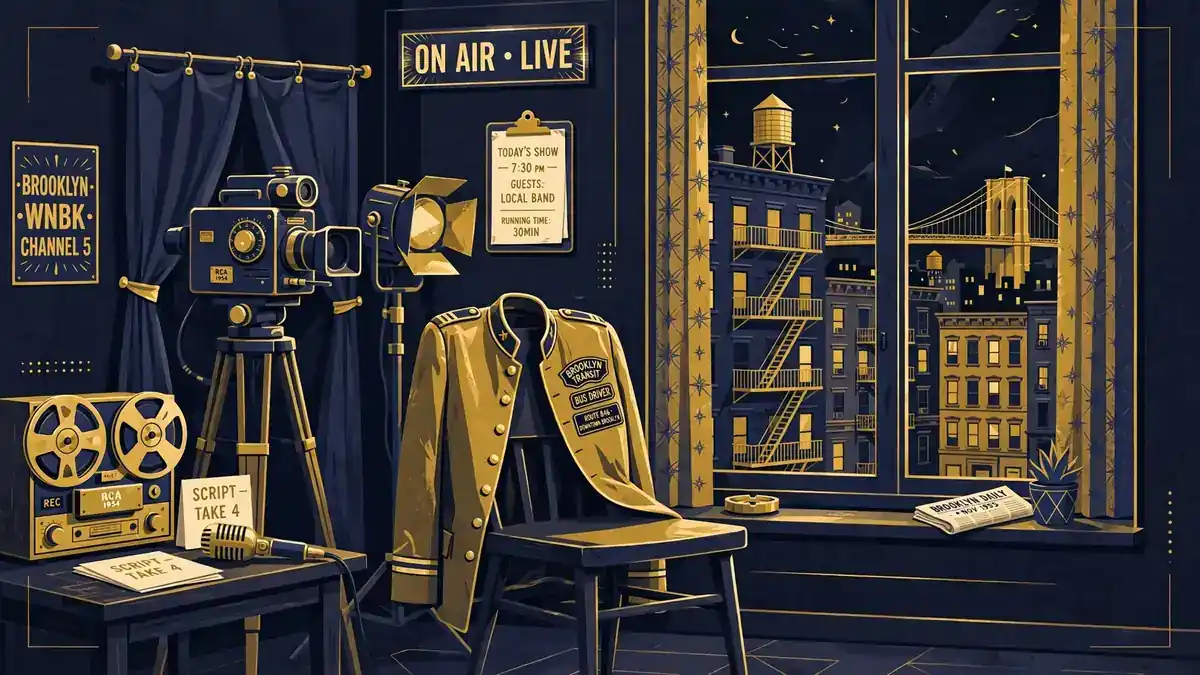
Ralph Kramden made Jackie Gleason immortal. The blustering Brooklyn bus driver first appeared in sketches on The Jackie Gleason Show, built from the speech, the walk and the frustrations of the men Gleason had grown up around. In 1955, the sketches spun off into a standalone sitcom, The Honeymooners, co-starring Art Carney as Ed Norton, Audrey Meadows as Alice Kramden and Joyce Randolph as Trixie Norton. The show ran for a single season of 39 half-hour episodes — the “Classic 39,” airing October 1955 through September 1956 — and then Gleason ended it himself, on top, rather than watch it fade.
The decision is the most revealing money story of his life. The CBS/Buick deal behind the show was reportedly worth $11 million over three years, calling for 78 episodes across two seasons with an option for a third season of 39 more. Gleason walked away after 39 episodes with roughly $7 million still left on the contract, returning to the variety format because he feared the sitcom was losing its edge. The $7 million was contract money remaining, not cash he had already banked, but the walk-away still ranks among the boldest negotiating moves in television history — a star leaving millions on the table to protect a character.
What he kept was worth more in the long run. Because the episodes were filmed with Electronicam cameras, Gleason could release them in syndication, and The Honeymooners has run in reruns ever since, introducing Ralph Kramden to every new generation. The catchphrases — “One of these days, Alice, pow! Right in the kisser!”, “Bang! Zoom! To the moon, Alice, to the moon!”, “How sweet it is!” and “And away we go!” — entered the language. In 2000, a statue of Gleason as Ralph Kramden was installed outside the Port Authority Bus Terminal in New York City. The Sunset Park Bus Depot in Brooklyn was renamed the Jackie Gleason Depot in 1988. The Flintstones, with Fred Flintstone’s voice and mannerisms modeled on Ralph Kramden, carried the character’s DNA into animation for decades.
Fame also brought the variety-show years that paid the bills. The Jackie Gleason Show ran in its various forms until 1970, and in 1964 Gleason moved the whole production — and himself — to Miami Beach, Florida, where he lived for the rest of his life. The show’s move south made him Miami’s most famous booster, and the city returned the favor: after his death in 1987, the Miami Beach Auditorium was renamed the Jackie Gleason Theater of the Performing Arts. In 1986, a year before he died, he was inducted into the Academy of Television Arts & Sciences Television Hall of Fame.
The 1977 comeback completed the arc. Smokey and the Bandit was the second-highest-grossing domestic film of 1977, behind only Star Wars, and Gleason’s Buford T. Justice — modeled, at Burt Reynolds’s suggestion, on Reynolds’s own father, a former police chief of Jupiter, Florida — gave audiences who had never seen The Honeymooners a reason to know his name. He was 61, and he was a movie star again.
Main Sources of Income
Gleason’s money came from four streams, and the balance between them shifted with each decade of his career. Television paid the most and the longest: the variety show, the sitcom, and the CBS contract structure that sat underneath both. Film paid in bursts — a strong 1960s run, a seven-year gap, then the Smokey and the Bandit payday. Music paid steadily through the 1950s and 1960s, when his Capitol albums sold by the million. Syndication and residuals paid last and longest, as The Honeymooners reruns and record reissues kept earning after he stopped working.
The television stream had two layers. First, his on-air pay as host and star. Second, his production company, Jackie Gleason Enterprises, which handled production of The Honeymooners and took the production budget out of his per-episode fee — a structure that made his headline pay look larger than his personal take-home, and that gave him control over the show. Celebrity Net Worth also records a separate CBS guarantee: a deal in the 1950s that included a guaranteed $100,000 annual payment for 20 years, even if he never went on the air. He stopped doing his show in 1970 and left CBS when the contract expired, but guarantees of that kind are the sort of floor that keeps a fortune intact between hits.
The music stream is easy to underrate and wrong to ignore. Gleason’s mood-music albums were a genuine commercial phenomenon: Music for Lovers Only spent 153 weeks in the Billboard Top Ten, still a record, and his first ten albums each sold more than a million copies. Four of his albums reached number one on the Billboard 200 — Lover’s Rhapsody, Music to Make You Misty, And Awaaay We Go! and Music, Martinis and Memories. He kept recording through 1972, and his catalog now spans more than 20 singles, nearly 60 LPs and over 40 CD releases. He wrote the theme songs for his own show (“Melancholy Serenade”) and for The Honeymooners (“You’re My Greatest Love”), adding composer royalties to the performer money.
Film money arrived in three waves. The early 1940s studio years paid working-actor wages. The 1960s run — The Hustler, Gigot, Requiem for a Heavyweight — paid star money, though no verified per-film salary for those roles survives in public reporting, and this article does not invent one. The 1977 wave paid best: Smokey and the Bandit was made for $4.3 million and grossed $126.7 million in North America and roughly $300 million worldwide. Gleason’s exact salary for the film is not on the public record — Burt Reynolds took $1 million, leaving $3.3 million to make the rest of the film — but the film’s success revived his market value at 61 and led directly to the two sequels.
Two smaller streams deserve a mention. Gleason owned Gleason’s Pub in Peekskill, New York, a neighborhood business tied to his Hudson Valley years. And he created the annual Jackie Gleason Inverrary Classic golf tournament in Florida, which kept his name attached to the PGA Tour and to the Inverrary golf community where he lived. Neither stream rivaled television or records, but both show the same instinct: turn fame into something that pays after the cameras stop.
Salary and Earnings
The headline number of Gleason’s career is the 1955 deal: $11 million over three years with CBS and Buick, a figure contemporary accounts described as making him the highest-paid entertainer on the planet. Movies News Today, retelling the deal in 2026, puts the modern equivalent above $120 million. The structure called for 78 episodes across two seasons, with an option for a third season of 39 more, at $65,000 per episode in the first season and $70,000 per episode planned for the second. In today’s money, that first-season per-episode figure is roughly $779,000, and the planned second-season figure about $839,000.
Two facts keep that number honest. First, the per-episode money was not pure salary. Gleason’s production company covered the cost of making each episode out of the fee, so the $65,000 had to pay the cast, the crew, the sets and the orchestra before Gleason kept anything. Second, he never collected the full $11 million. He ended the standalone sitcom after 39 episodes with about $7 million still remaining under the contract and went back to the variety show. The walk-away cost him a fortune on paper and bought him something rarer: a perfect 39-episode run that has never stopped earning in syndication.
The cast pay gap tells the same story from the other side of the call sheet. Art Carney, who played Ed Norton, earned $3,500 a week. Audrey Meadows, who played Alice, earned $2,000 a week — and negotiated residuals, the sharpest contract move anyone on the show made besides Gleason himself. Joyce Randolph, who played Trixie Norton, earned $500 a week, a figure The New York Times later confirmed. Gleason’s planned per-episode payment was more than 18 times Meadows’s weekly salary and more than 130 times Randolph’s. The average American family earned about $4,400 a year in 1955; Gleason’s single-episode fee was nearly fifteen times that.
| Cast member | Character | Reported pay | Pay structure |
|---|---|---|---|
| Jackie Gleason | Ralph Kramden | $65,000 (season 1), $70,000 planned (season 2) | Per episode, production costs included |
| Art Carney | Ed Norton | $3,500 | Per week |
| Audrey Meadows | Alice Kramden | $2,000 | Per week, plus residuals |
| Joyce Randolph | Trixie Norton | $500 | Per week |
Beyond the sitcom, the CBS guarantee of $100,000 a year for 20 years — reported by Celebrity Net Worth — gave Gleason a floor of $2 million across two decades whether he performed or not. That kind of guaranteed money is the difference between a star who flames out and a star who dies with $10 million in 1987 after decades of heavy spending. His film pay is less documented: no verified salary survives for The Hustler or Smokey and the Bandit, and the $1 million Burt Reynolds earned for the second film is the only hard cast figure on the record. What is documented is the box office Gleason helped create: Smokey and the Bandit grossed $126.7 million domestically on a $4.3 million budget, second only to Star Wars among 1977 domestic releases, with a worldwide gross near $300 million. Burt Reynolds’s own fortune was built on the same run of 1970s hits, and the two men’s paydays on that film — Reynolds’s $1 million fee against Gleason’s unrecorded but substantial supporting salary — show how a low-budget hit could reset both careers at once.
The music money worked differently: smaller checks, more of them, for longer. With his first ten albums each selling over a million copies and Music for Lovers Only sitting in the Billboard Top Ten for 153 weeks, Gleason’s Capitol catalog was a steady royalty stream through the 1950s and 1960s. Royalty rates from that era are not public, so this article does not put a dollar figure on the catalog. The volume alone — nearly 60 albums — makes the stream material to the final estimate.
Businesses and Investments
Gleason was a performer first and a businessman second, and his business record shows it: one bold production company, a handful of personal ventures, and a real-estate instinct that was better than his spending habits. Jackie Gleason Enterprises was the serious one. By producing The Honeymooners through his own company, Gleason controlled the show’s costs, its look and its future — including the filmed episodes that made syndication possible. The structure cut both ways: production costs came out of his fee, so a lavish episode ate his own pay, but the ownership stake is what kept the show earning for decades.
His most famous investment was also his strangest: the round house in Cortlandt Manor, New York, covered in full in the assets section below. Gleason spent $650,000 building it in the 1950s — roughly $7 million in today’s dollars by Celebrity Net Worth’s calculation, or about $5.6 million by Realtor.com’s estimate — and CBS helped underwrite the build. The house was a personal passion project, not a flip, and he sold it to CBS when he moved to Miami rather than cashing it in himself. The property’s later price history — $150,000 in 1976, a $12 million asking price in 2018, $5.5 million in 2025 — says more about celebrity real estate as a collectible than about Gleason’s investing skill.
Smaller ventures filled out the picture. He owned Gleason’s Pub in Peekskill, near the Cortlandt Manor house. He created the Jackie Gleason Inverrary Classic, a PGA Tour golf tournament that ran at the Inverrary Country Club near his Florida home and kept him close to the professional golf world he loved. He invested in his own comfort with the same enthusiasm he brought to everything else — Italian marble by the quarry-load, a recording studio in his guest house, a sound system that rose out of his living-room floor at the push of a button. None of that was an investment in the financial sense. It was spending, and Gleason did a great deal of it.
What the record does not show is a portfolio of stocks, startups or endorsement equity of the kind modern stars build. Gleason’s era did not offer those vehicles to television stars, and his wealth was built the old way: contracts, box office, record sales and property. The $10 million estate figure reflects that — a fortune built from fees, not from compounding investments — and it also explains why the figure stayed flat rather than growing after his death. The estate earned from reruns and reissues, but the big paydays stopped in 1986.
Brand Deals and Sponsorships
Gleason’s biggest brand relationship was also his biggest contract. The 1955 CBS deal was backed by Buick, which sponsored The Honeymooners as part of the $11 million arrangement. In the 1950s, a sponsor did not just buy ad slots; it bought association with the star, and Buick’s name sat beside Gleason’s at the height of his fame. The deal’s structure — sponsor money flowing through the network into a production budget Gleason controlled — was the 1950s version of a brand partnership, and it paid him more than any single endorsement of his career.
His other long brand association was golf. The Jackie Gleason Inverrary Classic carried his name on the PGA Tour, and his Florida life revolved around the Inverrary Country Club, where he played constantly and hosted pros, politicians and fellow stars — Bob Hope and Joe Namath among them, with Presidents Richard Nixon and Gerald Ford also appearing at his events. The tournament was not a paid endorsement in the modern sense; it was a name-licensing and hosting arrangement that kept Gleason’s brand alive in a world — professional golf — where he genuinely belonged.
Music gave him a quieter commercial stream. Capitol Records marketed his albums as the sound of romance itself, and the “music for lovers” branding sold millions of LPs to an audience that bought records the way later generations bought streaming subscriptions. Gleason’s name on an album cover was the endorsement, and the public bought it for two decades.
Honesty requires a note on what is missing. No verified record survives of Gleason taking paid product endorsements, equity deals or spokesperson contracts of the kind that fill modern net-worth articles. The brand money in his life came through sponsorship of his shows and through his name on a golf tournament and a record label — the channels available to a 1950s television star. This article does not invent endorsement figures to fill the gap.

Houses, Cars and Other Assets
The Mothership is the asset that defines Gleason’s taste — and his spending. In the early 1950s, Gleason hired Robert Cika, a disciple of Frank Lloyd Wright, to build him a house shaped like a spaceship on 8.5 acres at 196 Furnace Dock Road in Cortlandt Manor, New York. Construction took five years, from 1954 to 1959. The structures were prefabricated off-site by a shipbuilder, then reassembled piece by piece on the property. The main house — the Mothership — and a smaller guest house Gleason called the Scout Ship were both circular, with no right angles anywhere: round living room, round bedrooms, round shower, built-in round beds, and a 40-foot, three-sided fireplace.
The cost was $650,000, an enormous sum for a private home in the 1950s. Gleason wanted so much Italian marble that he bought a quarry in Italy to keep the supply coming, and flew the marble craftsman from Italy to live at the property during construction. The house had central air conditioning — rare in a private home at the time — and a state-of-the-art built-in sound system with a microphone that rose out of the marble living-room floor at the push of a wall button. Audrey Meadows wrote in her autobiography about staring at the round hole in the floor next to the piano before Gleason pressed the button and the microphone rose. Frank Sinatra, Marilyn Monroe and Joe DiMaggio partied there. All told, the estate holds about 7,500 square feet of living space across its structures, with five bedrooms, six bathrooms, a library and a card room.
The price history after Gleason left is a story in itself. When he moved to Miami in the 1960s, CBS bought the property from him. Accounts differ on the chain that followed — Celebrity Net Worth records a sale to a private buyer in 1969 and a donation to Pace University in 1974, while Robb Report-derived coverage records CBS selling the estate in 1976 for $150,000 — but the later milestones are consistent: the owner listed it for $12 million in July 2018 and pulled the listing without a buyer, and in 2025 it returned to the market at $5.5 million through Corcoran agent Heidi Henshaw, with the main house, the Scout Ship bunkhouse and a 1930s stone Colonial Revival guesthouse called the Barracks on 8.6 wooded acres. The $5.5 million asking price lands almost exactly where Realtor.com puts the inflation-adjusted build cost — a neat full circle for a house Gleason built to look like the future.
Florida was where he actually lived. In 1965 he bought a home beside the Country Club of Miami’s golf course in Hialeah. By 1971 he had moved north to the Inverrary golf community near Fort Lauderdale, where he hosted the PGA’s Jackie Gleason Inverrary Classic. His final home, in Lauderhill’s Inverrary section, was a 4,123-square-foot house with six bedrooms, three bathrooms and an entertainment room with a sunken bar. His widow Marilyn kept living there after his death and later sold it with the condition that everything inside — furniture and Gleason’s personal mementos — stay put. The buyer agreed, and after that buyer’s death the house came back on the market almost unchanged, priced at $299,000 around the time of Gleason’s centenary in 2016.
His cars and personal effects went to Marilyn under the will — jewelry, clothing, artworks and automobiles — but no verified inventory or valuation of the collection survives in public reporting, so this article does not price it. What the record does show is a man who spent on the things he loved — houses, golf, music, clothes, entertaining — and died with an estate that still measured $10 million after all of it.
Awards and Achievements
Gleason’s trophy shelf is thinner than his fame, and the gap is part of his story. He was nominated for one Academy Award — Best Supporting Actor for The Hustler in 1961 — and did not win. He was nominated for three Golden Globe Awards and five Primetime Emmy Awards, and never won an Emmy. When he hosted the 1976 Emmy Awards, Paul Lynde won Entertainer of the Year and immediately handed the award to Gleason on stage, a gesture the audience understood.
The win that mattered most to him as a stage actor came in 1959: a Tony Award for his performance as Uncle Sid in the original Broadway production of Take Me Along. The honor that mattered most to television came late: induction into the Academy of Television Arts & Sciences Television Hall of Fame in 1986, a year before his death.
The records he set outside awards season may last longer. Music for Lovers Only still holds the record for the longest stay in the Billboard Top Ten, at 153 weeks. His first ten albums each sold over a million copies. He once held the record for the most number-one albums on the Billboard 200 without ever charting a hit on the Hot 100 singles chart. The Honeymooners ran for 39 episodes and has never left television since. The 1955 CBS/Buick contract was, dollar for dollar, one of the largest entertainment deals ever signed at the time. And Smokey and the Bandit, made for $4.3 million, became the second-highest-grossing domestic film of 1977. Those are the achievements that built the fortune — and they are the reason the fortune is still discussed in 2026, nearly forty years after his death.
His name also lives on in places that do not hand out trophies. The Jackie Gleason Theater of the Performing Arts in Miami Beach carries his name. The Jackie Gleason Depot in Brooklyn — the Sunset Park Bus Depot, renamed in 1988 — carries it too, a fitting honor for the man who played a bus driver. The statue of Ralph Kramden outside the Port Authority Bus Terminal has greeted commuters since 2000. And the Mothership, listed again in 2025, keeps his strangest dream on the market.
Net Worth Growth Over the Years
Gleason’s fortune followed the shape of his career: a slow climb through clubs and small film parts, a vertical leap in the mid-1950s, a long plateau sustained by television and records, a late film-driven bump, and a flat line after death as the estate lived on reruns and reissues. No audited year-by-year figures exist — Gleason’s finances were private, and the $10 million figure is an estate estimate, not a balance sheet — so the table below tracks the documented milestones that drove the fortune, not invented annual totals.
| Period | Milestone | Money signal |
|---|---|---|
| 1930s–1940s | Club MC, burlesque and vaudeville work; film debut in Navy Blues (1941) | Working wages; steady Depression-era employment |
| 1949–1952 | The Life of Riley, Cavalcade of Stars; CBS signing (1951) | National television pay begins |
| 1955–1956 | The Honeymooners; CBS/Buick deal | $11 million contract; $65,000 per episode |
| 1950s–1960s | Capitol mood-music albums; Music for Lovers Only record run | First ten albums each over 1 million copies |
| 1954–1959 | Mothership built in Cortlandt Manor | $650,000 build cost (about $7 million today) |
| 1961–1963 | The Hustler Oscar nomination; Gigot; Requiem for a Heavyweight | Film-star pay; critical peak |
| 1970 | The Jackie Gleason Show ends; CBS contract expires | $100,000-a-year guarantee floor runs to its term |
| 1977–1983 | Smokey and the Bandit trilogy | First film: $126.7 million domestic on a $4.3 million budget |
| 1986 | Final film, Nothing in Common; Television Hall of Fame | Last active earnings year |
| 1987 | Death on June 24, age 71 | Estate estimated at $10 million |
| 2026 | Inflation-adjusted value; Mothership listed at $5.5 million | $10 million in 1987 is about $25 million today |
The honest way to read the range is this: every mainstream outlet that has priced Gleason’s estate lands on $10 million, and Celebrity Net Worth — the most-cited source on this figure — reaffirmed it in an update dated November 19, 2026. One outlet, The Musicians Net Worth, puts the figure at $20 million, which is why this article carries a $10 million to $20 million range with $10 million as the anchor. The $10 million figure is also the number that makes sense against the documented money: a man who walked away from $7 million of a contract, spent $650,000 on a spaceship house, lived large for five decades, and still died with $10 million had earned far more than $10 million across his life. The estate figure is what was left, not what passed through his hands.
Social Media Presence
Jackie Gleason died in 1987, years before social media existed, so there is no Instagram, X or TikTok account to audit and no follower count to report. His presence today is archival and institutional. The official site, jackiegleason.com, carries his biography and keeps the record straight. Clips of The Honeymooners and The Jackie Gleason Show circulate widely on YouTube, where the “Classic 39” episodes draw new viewers who were born decades after Gleason died. Fan pages and classic-television communities keep the catchphrases alive, and the 2025 re-listing of the Mothership brought a fresh round of coverage across real-estate and entertainment outlets.
That absence from social media is itself a data point for the estimate. Modern stars monetize attention directly — sponsored posts, subscriber revenue, brand deals priced by follower count. Gleason’s fortune came from the older machinery: contracts, tickets, box office and record sales. The machinery stopped when he did, which is why his net worth is frozen at a 1987 estate figure rather than a growing 2026 brand valuation. The comparison with later television stars is instructive: Carol Burnett built her own variety-show fortune on a similar model a generation later, and her career shows the same pattern — long television runs, live performance, and a catalog that keeps earning. Gleason’s catalog is smaller and older, and his estate figure reflects that.
Personal Life
Gleason married three times, and the three marriages map the three acts of his adult life. He met dancer Genevieve Halford while working in vaudeville, and they married on September 20, 1936. They had two daughters, Geraldine (born 1940) and Linda (born 1942). Linda became an actress and is the mother of actor Jason Patric, Gleason’s grandson. The marriage was stormy from the start: Halford wanted a quiet home life, Gleason wanted the nightclubs, and the couple separated and reconciled more than once — first in 1941, reconciled in 1948, separated informally again in 1951. During that second separation Gleason had a relationship with his secretary, Honey Merrill. Halford, a devout Catholic, refused a divorce until 1970.
Ten days after that divorce was final, Gleason married Beverly McKittrick, a country-club secretary he had met in 1968, on July 4, 1970. The marriage lasted five years and ended in divorce in 1975. By then the widowed Marilyn Taylor — a dancer from his television show, the younger sister of choreographer June Taylor, and the woman Gleason had wanted to marry since the 1950s — had moved to Miami. Gleason married her on December 16, 1975, and they stayed together until his death. Friends and family described Marilyn as the love of his life.
His health declined through the 1970s and 1980s. A chronic smoker and a diabetic, Gleason underwent quadruple coronary bypass surgery in 1978. He was diagnosed with colon cancer in 1986, and the disease spread to his liver. He died at his home in Lauderhill, Florida, on June 24, 1987, at 71, and was buried at Our Lady of Mercy Catholic Cemetery in Doral, Florida.
The will he left behind became a news story of its own. In April 1985 he had made a will leaving half his estate to Marilyn, with the balance split equally between his two daughters, and $25,000 to his secretary of 29 years, Sydell Spear. On June 23, 1987 — the day before he died, too ill to sign his own name — he amended it: Marilyn’s share fell to one-third, each daughter’s share rose to one-third, and Spear’s bequest rose to $100,000. The amended will was filed in Broward Probate Court and reported by the South Florida Sun-Sentinel in July 1987. The estate’s total value was not stated in the filing, which is one reason every public net-worth figure for Gleason remains an estimate rather than a probate record.
One more part of his personal life deserves a straight telling: the UFOs. Gleason was fascinated by aliens and the paranormal all his life — the Mothership is the proof in concrete and marble — and he told friends that in 1973 President Richard Nixon arranged for him to visit Homestead Air Force Base in Florida, where he was shown the embalmed bodies of extraterrestrials. The story comes from Gleason himself, retold in biographies and in the coverage of the Mothership’s sale; no official record confirms it, and this article reports it as his claim, not as fact. It does, however, explain the house, and the house explains a good part of where the money went.
Sources & Reporting
Celebrity Net Worth — the $10 million estate figure and its inflation adjustment to about $25 million today; the Mothership’s $650,000 build cost and $7 million modern equivalent; the 2018 $12 million listing; the $100,000-a-year-for-20-years CBS guarantee; career filmography and biography. Page updated November 19, 2026.
Wikipedia — birth and death dates, Brooklyn origins, the 153-week Billboard Top Ten record for Music for Lovers Only, first ten albums selling over a million copies each, the Oscar nomination, Tony win, Television Hall of Fame induction, marriages and children, and Smokey and the Bandit box-office figures ($126.7 million domestic, about $300 million worldwide, $4.3 million budget).
JackieGleason.com — the official biography: the “Great One” nickname from Orson Welles, the 1951 CBS signing, the 42 percent ratings, the 43 mood-music albums, the Mothership, the Inverrary Classic, and the 1978 bypass surgery.
Movies News Today — the 1955 CBS/Buick deal retold in 2026: the $11 million contract value, $65,000 and $70,000 per-episode figures, the $7 million left on the contract, the cast pay table (Carney $3,500, Meadows $2,000, Randolph $500 a week), and the $5.5 million 2025 Mothership listing.
Robb Report (via 2025 listing coverage) — the Mothership’s five-year build, $650,000 cost, CBS underwriting, the 1976 $150,000 sale, and the 2025 $5.5 million asking price through Corcoran.
South Florida Sun-Sentinel — the July 1987 probate report: the April 1985 will, the June 23, 1987 deathbed amendment cutting Marilyn Taylor Gleason’s share from one-half to one-third and raising secretary Sydell Spear’s bequest from $25,000 to $100,000.
Top Ten Real Estate Deals — Gleason’s final Lauderhill home: the 1965 Hialeah purchase, the 1971 Inverrary move, the 4,123-square-foot final house, and its $299,000 listing after his death.
The Musicians Net Worth — the $20 million outlier figure, carried here as the top of the range rather than the anchor. Asia Media Journal, Web of Bio, Next Magazine and CanBee Lifestyle each independently report the $10 million figure and its $25 million inflation adjustment.
Reporting window: November 2026. Figures are estimates built from public reporting, not audited statements. Where sources disagreed — the $10 million consensus against one $20 million figure, and the two accounts of the Mothership’s post-Gleason sale chain — this article publishes the range and names the disagreement instead of picking a side silently.
Frequently Asked Questions
What was Jackie Gleason’s net worth when he died?
Jackie Gleason’s net worth was estimated at $10 million at the time of his death on June 24, 1987. Celebrity Net Worth, the most-cited source for the figure, reaffirmed it in an update dated November 19, 2026. One outlet puts the figure at $20 million, so this article carries a $10 million to $20 million range with $10 million as the anchor.
How much is Jackie Gleason’s $10 million worth in today’s money?
About $25 million in 2026 dollars. Celebrity Net Worth applies the same inflation adjustment, and several other outlets independently arrive at the same $25 million figure. The adjustment matters because Gleason earned his biggest paydays in the 1950s, when $65,000 an episode was an extraordinary sum.
How much did Jackie Gleason make per episode of The Honeymooners?
His CBS/Buick contract called for $65,000 per episode in the first season and $70,000 per episode planned for the second, as part of an $11 million deal over three years. The money covered production costs — his company, Jackie Gleason Enterprises, paid for making each episode out of the fee — so the per-episode figure was not pure take-home pay. In today’s money, $65,000 an episode is roughly $779,000.
Who inherited Jackie Gleason’s money?
His will, filed in Broward Probate Court, left his estate to his third wife, Marilyn Taylor Gleason, and his two daughters from his first marriage, Geraldine and Linda. An amendment made on June 23, 1987, the day before he died, cut Marilyn’s share from one-half to one-third, raised each daughter’s share to one-third, and raised his secretary Sydell Spear’s bequest from $25,000 to $100,000. His personal effects — jewelry, clothing, artworks and automobiles — went to Marilyn.
What is Jackie Gleason’s Mothership house worth now?
The Mothership, his circular spaceship house in Cortlandt Manor, New York, was listed for $5.5 million in 2025 through Corcoran. Gleason spent $650,000 building it between 1954 and 1959 — roughly $7 million in today’s dollars. The same property was listed for $12 million in 2018 and did not sell, and CBS had sold it for $150,000 in 1976.
Did Jackie Gleason win an Oscar for The Hustler?
No. He was nominated for the Academy Award for Best Supporting Actor for playing Minnesota Fats in The Hustler (1961), opposite Paul Newman, but did not win. He was also nominated for three Golden Globes and five Emmys without winning. His major competitive win was a Tony Award in 1959 for the Broadway musical Take Me Along, and he was inducted into the Television Hall of Fame in 1986.
How much money did Jackie Gleason make from his music?
No verified total exists for his music earnings, and this article does not invent one. What is documented is the scale: his first album, Music for Lovers Only (1952), spent a record 153 weeks in the Billboard Top Ten, his first ten albums each sold over a million copies, and four of his albums reached number one on the Billboard 200. He released nearly 60 albums for Capitol Records through 1972.
What did Jackie Gleason die of, and how old was he?
Jackie Gleason died of colon cancer that had spread to his liver on June 24, 1987, at his home in Lauderhill, Florida. He was 71. A chronic smoker and a diabetic, he had undergone quadruple coronary bypass surgery in 1978. He was buried at Our Lady of Mercy Catholic Cemetery in Doral, Florida.
Final Thoughts
Jackie Gleason’s $10 million estate is a small number beside the money that passed through his hands — an $11 million contract in 1955, a $650,000 spaceship house, record sales by the million — and that gap is the real story. He earned like the biggest star in television, spent like a man who never expected the applause to stop, and still died with a fortune that most working actors never touch. The $20 million outlier in our range is worth noting, but the $10 million consensus, reaffirmed in November 2026, is the figure the record supports.
What lasted was not the money but the work it bought: 39 episodes of The Honeymooners that have never left the air, a 153-week chart record that still stands, and a round house in the Hudson Valley that went back on the market in 2025 for $5.5 million — almost exactly what it cost to build, adjusted for inflation. Gleason walked away from $7 million to protect a sitcom, and the sitcom paid him back for the next seventy years. That trade, more than any single paycheck, is why his net worth is still being counted in 2026.
Published on November 20, 2026. Last reviewed November 2026. Found an error? See our corrections policy.