
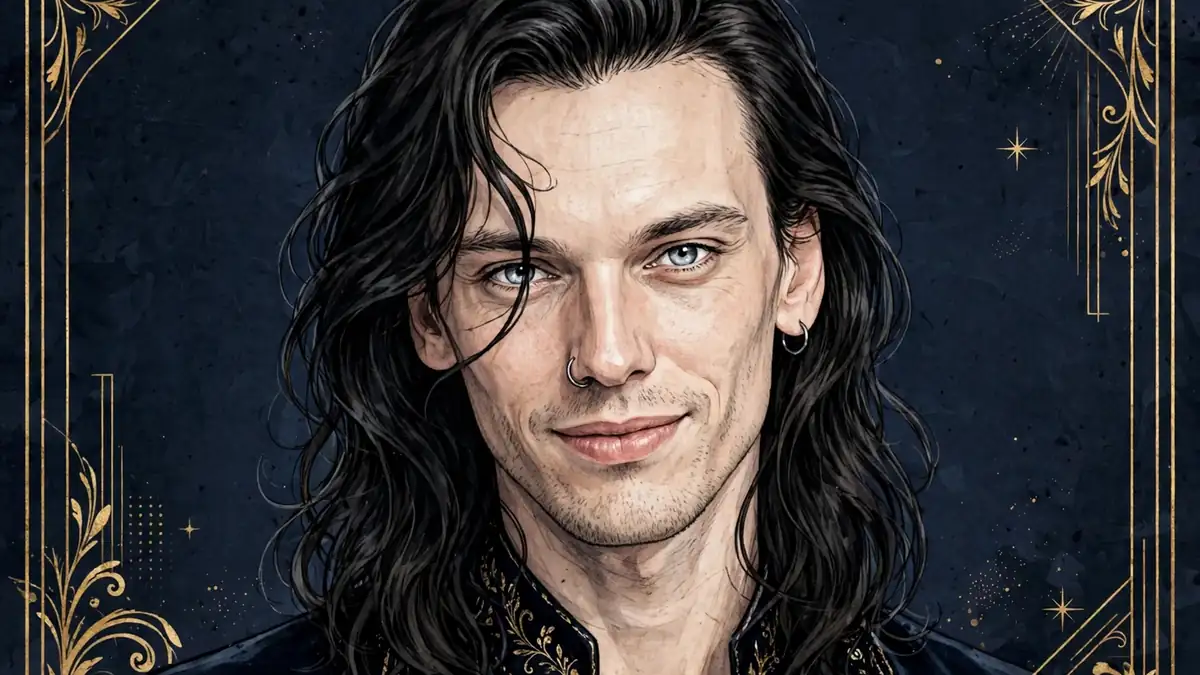
Jamie Campbell Bower‘s net worth is estimated at $3 million to $5 million as of November 2026. Celebrity Net Worth has carried the $3 million figure since early 2021, and most outlets still repeat it — yet the number has barely moved in five years while Bower’s career has changed completely: he went from a supporting player in the Twilight and Harry Potter franchises to the monster at the centre of Netflix’s biggest hit, playing Vecna in the final two seasons of Stranger Things, with second-hand reports putting his season 5 pay near $750,000 an episode. The range in this article is honest about that tension: $3 million is the documented anchor, $5 million is where the newer, thinner reporting lands, and the truth sits somewhere between them.
Jamie Campbell Bower: Quick Facts
| Estimated net worth | $3 million to $5 million (range: $3 million to $5 million) |
|---|---|
| Profession | Actor, singer, musician, model |
| Nationality | English |
| Born | November 22, 1988 (age 37) |
| Height | 6 feet (1.83 m) |
| Primary income sources | Television and film salaries, voice work, music, modelling campaigns, theatre |
| Active years | 2007–present |
| Last reviewed | November 2026 |
- Early Life and Background
- Education
- Career Journey
- Rise to Fame
- Main Sources of Income
- Salary and Earnings
- Businesses and Investments
- Brand Deals and Sponsorships
- Houses, Cars and Other Assets
- Awards and Achievements
- Net Worth Growth Over the Years
- Social Media Presence
- Personal Life
- Sources & Reporting
- Frequently Asked Questions
Early Life and Background
James Metcalfe Campbell Bower was born in London on November 22, 1988, the son of Anne Elizabeth Roseberry and David Bower. The household was steeped in music from the start: his mother worked as a music manager and his father worked for the Gibson Guitar Corporation, the American guitar maker whose instruments have been on stages for a century. That combination — a mother who managed musicians and a father who worked inside the guitar business — explains a lot about the two careers Bower would later run side by side, acting and music, instead of choosing one.
He grew up in London with his younger brother Samuel, born in 1994, who would later play in Bower’s band Counterfeit. Music came first in the family routine: Bower started playing the violin as a child, taught using the Suzuki method, which trains young players by ear before they read notation. He has also described himself as a restless, physical child, and the arts-school route that followed suited that energy better than a conventional classroom ever did.
One detail from his family tree still turns up in almost every profile of him: his maternal great-great-great-great-grandfather was Sir John Campbell of Airds, a Scottish lawyer who served as Lieutenant Governor of Saint Vincent and the Grenadines in the 19th century. It is a piece of ancestry Bower himself has never made much of, and it has no bearing on his money — he was not born into wealth, and his parents worked in the music trade rather than in finance or property. What the family did give him was access: a home where performance was normal work, and parents who understood the entertainment business well enough to let a teenager treat it as a career.
London in the late 1980s and 1990s gave him a second advantage. The city was the centre of British theatre, British music and a film industry that was starting to attract the big American franchises — the Harry Potter films were already in production by the time Bower was a teenager. He would end up inside two of those franchises before his 25th birthday, and the groundwork was laid in a childhood spent around musicians, rehearsal rooms and stage schools rather than in any single lucky break.
Education
At the age of eight, Bower left London for Bedales School, a co-educational independent school in Steep, Hampshire, known for its liberal, arts-first approach to education. He stayed there until he was 17. Bedales has a long record of producing performers — its alumni include Daniel Day-Lewis, Minnie Driver, Lily Allen and Juno Temple — and its timetable gave drama and music the same weight as academic subjects. For a boy who had been playing violin since childhood and was already drawn to the stage, it was a better fit than a school built around exams alone.
Alongside Bedales, Bower joined two of London’s youth performance institutions: the National Youth Music Theatre and the National Youth Theatre. Both are selective, audition-based companies that have launched a long line of British actors, and membership put him in rehearsal rooms with other teenagers who were serious about performing. He appeared in school and youth-theatre productions through his teens, and it was while he was still at Bedales that his professional break arrived — a friend, actress Laura Michelle Kelly, recommended him to her agent, and the agent put him forward for Tim Burton’s Sweeney Todd.
Bower has also spoken about having mild dyslexia, which he first discussed publicly in a December 2007 interview, just as his career was starting. He has never presented it as an obstacle that defined him; it sits in his story as a small piece of context for a performer whose strengths were always physical and musical rather than academic. He did not go to drama school or university. His training was Bedales, the youth theatres, and then — from the age of 18 — working on professional film sets.
Career Journey
Bower’s professional career began in 2007, when he was cast as Anthony Hope in Tim Burton’s Sweeney Todd: The Demon Barber of Fleet Street, opposite Johnny Depp and Helena Bonham Carter. For a first film role, it was an unusually strong start: a Burton musical, a major studio release, and a part with real screen time. The film grossed roughly $153 million worldwide, and Bower’s performance — singing as well as acting — put him on casting directors’ lists while he was still a teenager.
The next two years filled in fast. In 2008 he played Rocker in Guy Ritchie’s RocknRolla and Jack in the Dutch war film Winter in Wartime. In 2009 he took the role of Number 11–12 in the remake of the cult series The Prisoner, and then joined the biggest franchise in the world at the time: he was cast as Caius, one of the ancient Volturi leaders, in The Twilight Saga: New Moon. New Moon grossed about $709 million worldwide, and Bower returned as Caius in both parts of Breaking Dawn (2011 and 2012), which grossed roughly $712 million and $829 million respectively. Three Twilight films, each a global hit, gave him a fan base and a steady income in his early twenties — even if his share of those grosses, as a supporting player, was a fraction of what the leads earned.
In 2010 he stepped into a second franchise, playing the young Gellert Grindelwald in Harry Potter and the Deathly Hallows – Part 1, the dark wizard whose defeat shaped Dumbledore’s past. The film grossed about $976 million worldwide. He reprised the role eight years later in Fantastic Beasts: The Crimes of Grindelwald (2018), which took roughly $654 million. Between the two Grindelwald appearances he played King Arthur in the Starz series Camelot (2011, ten episodes), the young Earl of Oxford in Roland Emmerich’s Anonymous (2011), and Whiteboy in London Boulevard (2010).
The early 2010s also brought his first leading-man test. In 2013 he played Jace Wayland in The Mortal Instruments: City of Bones, the film version of Cassandra Clare’s bestselling young-adult novels. The film was supposed to launch a franchise; instead it grossed about $90 million against a $60 million budget, a result the studio treated as a disappointment, and the planned sequels were cancelled. It was the first real setback of his career, and it showed the limits of franchise arithmetic: a $90 million gross sounds large until it is measured against a $60 million budget plus marketing, at which point the film barely broke even.
After City of Bones, Bower spread his work across stage, television and voice roles rather than chasing another franchise lead. He played Joe in the West End musical Bend It Like Beckham from June 2015, a stage role that used his singing as much as his acting. In 2017 he joined the TNT series Will as Christopher Marlowe, the Elizabethan poet, spy and rival of Shakespeare, across ten episodes. In January 2019 he was announced as part of Bloodmoon, a Game of Thrones prequel, but HBO decided not to pick the series up, and the part vanished before filming. Since 2015 he has voiced Skiff the railboat in the Thomas & Friends franchise, work that has run through the television series, home videos and the feature film Sodor’s Legend of the Lost Treasure — steady, long-running voice work that pays reliably even when it never makes headlines.
The 2020s brought a busier film slate. He appeared in the independent film Six Days of Sistine (2019), then returned to cinemas in 2024 with three films in a single year: Kevin Costner’s western Horizon: An American Saga, in which he played Caleb Sykes; the horror remake Witchboard, as Alexander Babtiste; and the erotic drama Emmanuelle, as Sir John. Horizon underperformed theatrically, grossing roughly $38 million worldwide against a much larger production cost, but the three films together showed a working actor taking varied parts rather than waiting for one big offer. Looking ahead, he has been cast as Celeborn in season 3 of Amazon’s The Lord of the Rings: The Rings of Power, a main role in one of television’s most expensive productions — and a part that, if the season lands, could become his next long-running franchise income.
Rise to Fame
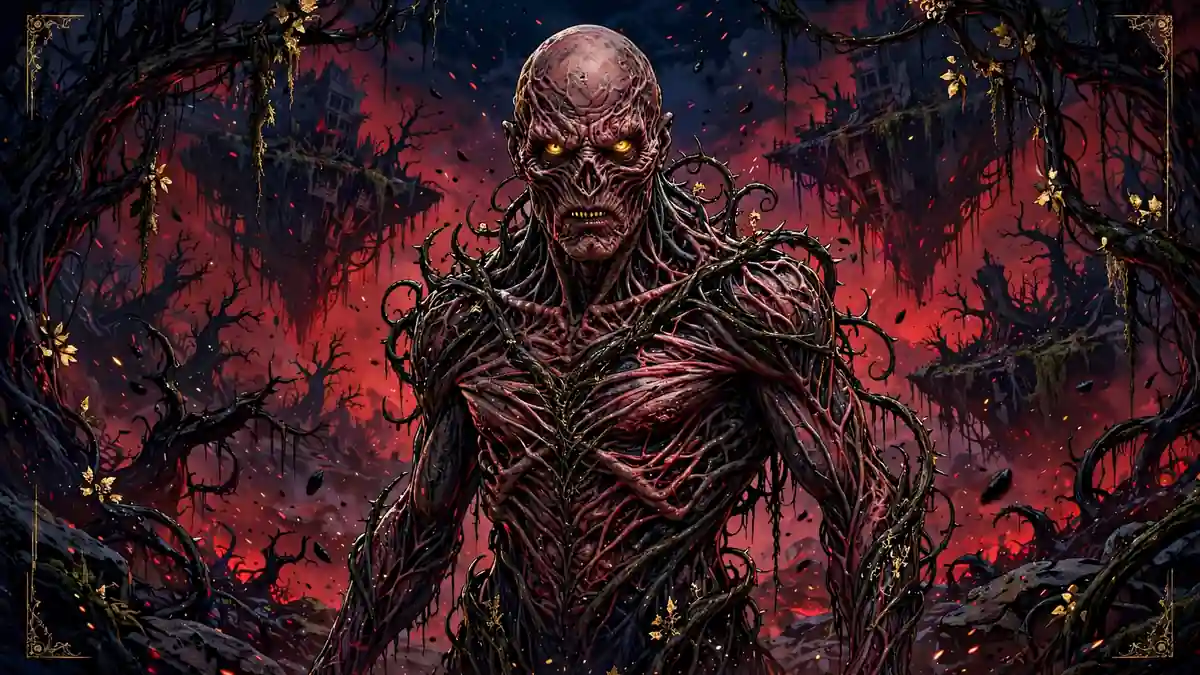
Bower had been famous in the franchise sense for more than a decade before the role that actually made him a household name arrived. In 2022 he was cast as Henry Creel — also known as One, and as the monster Vecna — in season 4 of Netflix’s Stranger Things. The character was the show’s first true Big Bad: a human villain with a backstory, a voice, and a face under the prosthetics. Bower’s performance, delivered through up to eight hours of makeup application a day, drew the strongest reviews of his career. Critics singled out the voice work, the stillness, and the way he made a creature covered in vines feel like a person with a grievance.
The scale of the show matters for understanding his money. Season 4 of Stranger Things was reported to cost up to $30 million per episode, among the most expensive television ever made, and the season became one of Netflix’s most-watched releases. Bower returned for the fifth and final season, released in three parts across November and December 2025, closing out a run that stretched across three and a half years of his working life. By the end of it, Vecna was the role he was known for first — ahead of Caius, ahead of Grindelwald, ahead of Jace Wayland — and the one that reset his market value.
The role also produced the most quoted line of his career, and it was a joke. Asked in late 2024 whether he would return to the Vecna latex after the series ended, Bower said he would need to be paid “$100 million per episode” to do it again. The remark was reported straight by some outlets and as a joke by others; either way, it told the truth about the job. The makeup process was gruelling enough that he has spoken about it as the hardest physical part of his career, and the line became shorthand for how demanding the role was.
His connection to the show outlasted the series itself. In December 2025 he made a surprise appearance in the final scene of Stranger Things: The First Shadow on Broadway, reprising Henry Creel for one night at the Marquis Theatre in New York. It was his Broadway debut, and it came as a gift to the audience rather than a paid run — a cameo that kept his name tied to the franchise in its final weeks. The Stranger Things years are the reason his name now carries a premium it did not have in 2021, when the $3 million net worth figure was first published. The figure stayed still; the career did not.
Main Sources of Income
Bower’s income comes from five streams, and the balance between them has shifted sharply over his career. In the early years, franchise film work dominated. Today, streaming television pays the most, with modelling and music adding smaller but real amounts on top. No single stream explains the whole fortune, and none of them is large enough on its own to make a $20 million figure believable — which is why the honest range stops at $5 million.
Television salaries are now the largest stream. Stranger Things seasons 4 and 5 are the biggest paydays of his career, and the upcoming Rings of Power season 3 role as Celeborn adds a second high-budget streaming income. Before that, his television work was mostly shorter runs — ten episodes of Camelot, ten of Will — which paid well but never at streaming-franchise rates.
Film salaries form the second stream. Across his career he has appeared in films that grossed billions combined — the Twilight films alone took more than $3.3 billion worldwide — but grosses are not salaries, and a supporting player in a franchise earns a flat fee rather than a share of the box office. His film fees rose with his profile, and the three-film run in 2024 (Horizon, Witchboard, Emmanuelle) kept the stream flowing between Stranger Things seasons.
Voice work is the quietest stream and one of the steadiest. Voicing Skiff in Thomas & Friends since 2015 has meant regular sessions, home-video releases and a feature film, and he returned to the character’s world in the 2024 video game Stranger Things VR (as Vecna) and the 2026 game Dead by Daylight, where Henry Creel became a playable character using his likeness. Game and animation work pays residuals-style fees that accumulate quietly over years.
Music brings in a fourth stream, smaller than acting but real: streaming royalties, touring with Counterfeit in 2017, solo releases, and the newer BloodMagic project. Modelling is the fifth: campaign fees from Burberry, Dolce & Gabbana, Hugo Boss, Fendi, Saint Laurent, Tom Ford and Cartier, spread across a decade. None of these is a fortune on its own. Together, across 18 years, they are the reason the estimate sits in the low millions rather than the hundreds of thousands.
What Bower does not have, as far as any public record shows, is a business empire. There is no production company, no brand he founded, no restaurant chain, no tequila label — the kinds of side businesses that push other actors’ net worths into eight figures. His money is almost entirely earned income from performing, which is also why it grows slowly: every dollar has to be earned on a set, a stage or a runway, and then taxed, agented and managed.
Salary and Earnings
Here is where the reporting gets thin, and honesty matters more than a confident number. Netflix does not publish cast salaries. Bower has never stated a per-episode fee. What exists is a chain of second-hand reporting that starts with Puck News, the industry outlet that first described the Stranger Things season 5 pay structure as a tier system, with the longest-serving adult stars at the top and the younger cast in tiers below them. Syfy’s coverage of that reporting put the top tier at about $9.5 million per actor for the final season, and the younger regulars at “just over” $7 million and “just over” $6 million for the season. Bower was not named in any tier in that reporting.
Where the $750,000-per-episode figure comes from is a different chain. The site SSBCrack published a season-by-season salary breakdown in November 2025 that assigned Bower $750,000 per episode for season 5, totalling about $7 million for the season, and the bio site CelebWikiCorner repeated the same numbers. Neither outlet cites a primary source, and the arithmetic in the SSBCrack piece is loose — $750,000 an episode across eight episodes is $6 million, not $7 million — so the figure should be read as reported, not established. A separate bio site, The Famous Info, puts his average at $250,000 per episode, a number that looks like a guess carried over from earlier seasons. The two figures cannot both be right, and neither is verified.
What can be said with confidence is narrower. Bower joined Stranger Things in season 4, when the show’s budget had already reached $30 million an episode, and he was its central villain for two seasons — a position that commands a strong fee even for a late addition. His season 4 pay would have been set when he was still a supporting franchise actor; his season 5 pay would have been renegotiated after the season 4 reviews made Vecna the show’s breakout. A fee in the mid-six figures per episode for season 5 is plausible for a performer in his position; a fee of $750,000 an episode would put his season 5 income near $6 million, which would be more than double his entire estimated net worth — and that gap is the strongest reason to treat the $3 million net worth figure as stale rather than the salary figure as wrong. After taxes, agent commission (typically 10%), manager fees and living costs in London and Los Angeles, a $6 million gross season does not leave $6 million in the bank, but it does leave a great deal more than a $3 million lifetime total suggests.
For his film work, no per-film salary has ever been published. Supporting roles in the Twilight and Harry Potter films in the 2009–2012 period would have paid in the low-to-mid six figures per film for an actor at his level at the time — enough to live well in London, not enough to retire on. His West End run in Bend It Like Beckham and his television runs in Camelot and Will would have paid standard British theatre and television rates, which are solid but modest next to American streaming money. The honest summary: Bower’s biggest paydays are recent, his early paydays were modest, and his lifetime earnings are consistent with a net worth in the low millions, not the tens of millions some content-farm sites claim.
Businesses and Investments
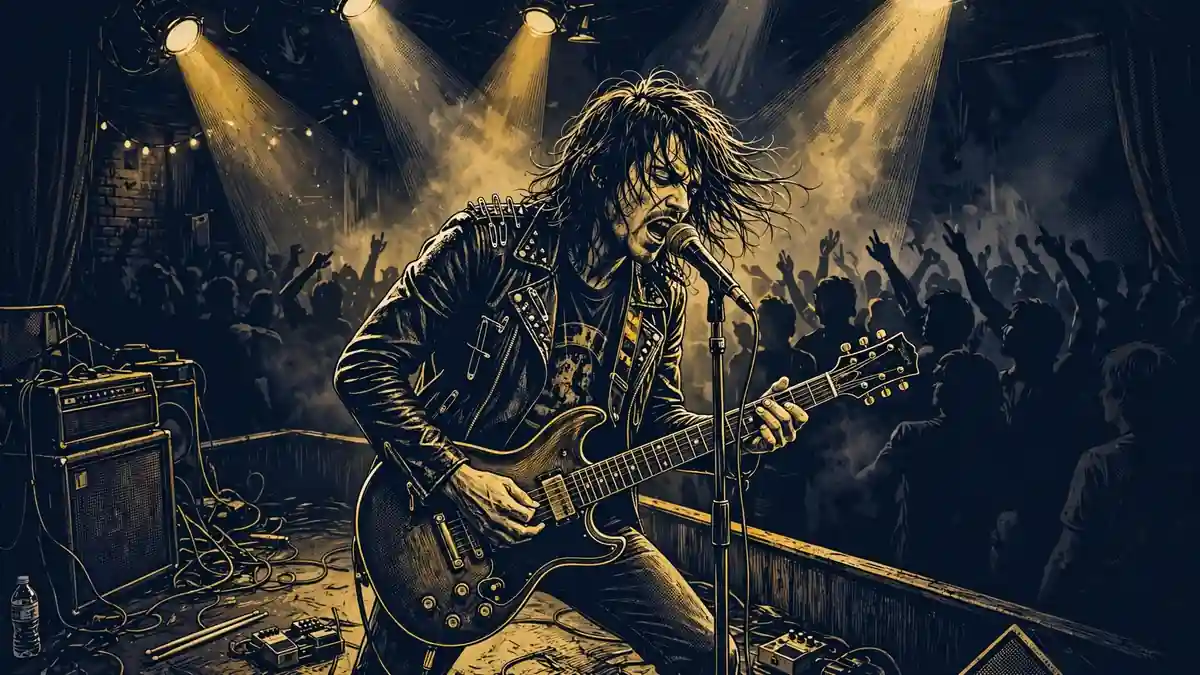
Music is the closest thing Bower has to a business of his own, and he has run it like a working musician rather than a celebrity hobby. He played drums in an early band called William K, then fronted The Darling Buds, a band that never released an album and broke up in June 2015. That same year he formed the punk band Counterfeit with his brother Sam on guitar, Tristan Marmont also on guitar, James Craig on drums and Roland Johnson on bass. Bower was lead singer and guitarist, and the band signed to Xtra Mile Recordings in November 2016. Their debut album, Together We Are Stronger, came out in March 2017, and they toured the United States that year — real touring, in real venues, in front of audiences who had come for the music rather than for a famous face.
Counterfeit split in November 2020, when Bower announced the break-up on the band’s Instagram page. A second album had been recorded and was never released, which is a loss in the ordinary sense: finished work that never earned a royalty. Bower has said the split left him with sadness and grief, and he moved into solo work shortly after, releasing music under his own name and talking about a project inspired by Dante’s Divine Comedy. In April 2024 he announced a new band, BloodMagic, deleted his old Instagram photos and started a fresh account under the band’s name, with drummer Kyle Adams. The solo video “Waiting for Your Love” followed on March 19, 2026, and on July 3, 2026 he made a surprise guest appearance singing “Machines” with Biffy Clyro at Finsbury Park in London.
As a business, music pays Bower in streaming royalties, occasional live fees and merchandise, and it costs him in studio time, touring expenses and the years he put into a band that folded before its second album. It is not a wealth engine. It is a second career that he treats seriously — his influences run from Placebo, Deftones, Blur and Oasis to The Cure, whose album Pornography he has called his greatest inspiration as a solo artist, and to black metal acts like Sunn O))), Mayhem and Darkthrone, which he listened to while preparing for Vecna. The music career explains why his public image is that of a rock musician who acts, rather than an actor who dabbles in music, and it gives him an income stream that does not depend on casting directors.
Beyond music, there is no public record of Bower holding business interests, startup investments or property developments. He has not launched a brand, taken a producer credit that carried backend points, or spoken publicly about investing. That absence is itself informative: the actors whose net worths jump into the tens of millions usually do so through equity — a production company, a brand, a franchise stake — and Bower’s money, as far as anyone can verify, comes from fees for work done. He also has no known endorsement of crypto, no NFT project and no paid social-media empire. His income is old-fashioned: show up, perform, get paid.
Brand Deals and Sponsorships
Bower’s modelling career began at the start of his acting career, when he signed as a part-time model with Select Model Management in London. Modelling was never a side hustle he picked up after fame; it ran alongside the acting from the beginning, and the campaign list that followed reads like a tour of the luxury industry. In December 2013 he joined Burberry’s Campaign Stars for spring/summer 2014. In 2016 he posed for Dolce & Gabbana. In 2017 he modelled for Hugo Boss’s fall/winter campaign. In 2018 he worked with Fendi and shot a fashion editorial for Flaunt Magazine with model Erika Linder.
The fashion work continued into the 2020s rather than fading after his twenties. In 2023 he appeared at Paris Fashion Week for Saint Laurent. In February 2024, during Milan Fashion Week, he walked for Tom Ford. In September 2025 he modelled for Cartier and for Ann Demeulemeester, and the same year he posed for a Hugo Boss campaign tied to Formula One. That 2025 run — Cartier, Ann Demeulemeester and a Formula One-linked Boss campaign in a single year — came after Stranger Things made him globally recognisable, and it shows how the Vecna years fed the modelling income: fashion houses book faces the public already knows.
What the campaigns paid is not public, and fashion fees vary enormously — a runway walk pays far less than a campaign, and a campaign for a house like Burberry or Cartier pays far more than a magazine editorial. None of the fees has ever been reported, so this article does not guess at them. The safe reading is that modelling has been a steady, mid-five-figure-to-low-six-figure annual supplement in the years he worked, rather than a primary income. It also explains his visibility: a 6-foot actor with long dark hair and striking features photographs well, and the fashion world noticed that before Hollywood did.
One more detail from the campaign list deserves a note. Bower’s modelling has been almost entirely in high fashion — Burberry, Saint Laurent, Tom Ford, Cartier — rather than in mass-market advertising or social-media sponsorships. He does not appear to run a paid-post business on Instagram, and his feed has been reset more than once, most recently when he cleared it for BloodMagic in April 2024. That is a choice with a cost: a social following of his size could be monetised directly, and he has largely chosen not to.
Houses, Cars and Other Assets
Bower splits his time between London and Los Angeles, a fact he has confirmed himself, and bio sites report that he owns a home in London. No purchase price, address or property record has been published, and this article does not repeat the unsourced London-home claims as fact. What is known is that he works in two cities and lives between them, which is itself an expense: two bases, two sets of living costs, and regular transatlantic travel.
On cars, there is nothing reliable to report. No interview, profile or public record ties Bower to a particular vehicle, and the car lists that appear on content-farm bio pages are invented — they name models with no source attached. This article will not reproduce them. The same applies to watches, art and other luxury goods: Bower’s public image is built around music, black clothing and a rock-star look, not around visible consumption, and there is no documented collection to value.
His real assets, in the sense that they produce income, are intangible: the Vecna role and the recognition it brought, a two-decade filmography across four major franchises (Twilight, Harry Potter/Fantastic Beasts, Stranger Things and now The Lord of the Rings), a music catalogue with Counterfeit and BloodMagic, and a modelling portfolio with the biggest luxury houses. None of those can be sold, but all of them can be rented out — in the form of the next fee. That is the honest shape of his wealth: not property or equity, but earning power built over 18 years.
One correction worth making here, because several bio sites get it wrong: some low-quality profiles credit Bower with a role in 28 Years Later: The Bone Temple, the January 2026 horror sequel. He is not in the film. The confirmed cast list published by GamesRadar names Alfie Williams, Ralph Fiennes, Chi Lewis-Parry, Jack O’Connell and Cillian Murphy, with no Bower, and the “Jamie” in that franchise is a different character played by Aaron Taylor-Johnson. The error seems to have spread because the character shares his first name. It is a small mistake, but it is a useful warning about the sites that also publish his net worth: the same pages that invent a film role will invent a fortune.
Awards and Achievements
Bower has no major competitive award wins to his name — no Emmy, no Golden Globe, no BAFTA, no Screen Actors Guild Award — and this article will not invent nominations to fill the gap. What he has instead is the kind of critical acclaim that does not come with a trophy: reviews of his Vecna performance in 2022 called it the standout of Stranger Things season 4, and the role became his most widely known work, the one that changed how casting directors saw him. For an actor who spent his twenties as a supporting player in other people’s franchises, that shift in perception is the achievement that matters most for his earnings.
The career achievements that do carry numbers are the franchise totals. He has appeared in films that grossed more than $3.3 billion worldwide in the Twilight series alone, close to $1 billion in a single Harry Potter film, and roughly $654 million in a Fantastic Beasts sequel. He played King Arthur in a television series, Christopher Marlowe in another, and the young Grindelwald in two films across eight years — a run of literary and mythic roles that few actors of his generation can match. He held a West End stage role in Bend It Like Beckham, toured the United States with his own band, and made his Broadway debut in December 2025 with a surprise cameo in Stranger Things: The First Shadow.
The music achievements sit alongside the acting ones. Counterfeit’s debut album Together We Are Stronger (March 2017) was a real release on a real label, Xtra Mile Recordings, followed by an American tour — not a vanity project. BloodMagic, formed in April 2024, is his second band, and his guest appearance with Biffy Clyro at Finsbury Park in July 2026 put him on one of London’s biggest stages in front of a crowd that had come for the music. None of this comes with an award, and none of it needs one: the achievement is a working life in two industries at once, sustained for nearly two decades.
Net Worth Growth Over the Years
The most honest thing to say about Bower’s net worth over time is that the published figure has barely moved, and that is the story. Celebrity Net Worth put him at $3 million in early 2021. Five years later, most outlets still print $3 million, and a smaller group prints $5 million. Either the figure is wrong now, or it was always a rough estimate that nobody has bothered to update. Given what has happened to his career since 2021 — two seasons as the villain of the world’s biggest streaming show, a Broadway debut, a Rings of Power casting, a run of 2025 fashion campaigns — the second explanation is the likelier one.
| Year | Estimated net worth | What changed |
|---|---|---|
| 2007–2009 | Under $1 million | Film debut in Sweeney Todd; supporting roles in RocknRolla and New Moon; early-career fees |
| 2010–2013 | $1 million to $2 million | Young Grindelwald in Harry Potter; King Arthur in Camelot; Jace Wayland in The Mortal Instruments; Burberry campaign |
| 2014–2019 | $2 million to $3 million | Thomas & Friends voice work; West End run; Will; Counterfeit album and US tour; Fendi and Hugo Boss campaigns |
| 2020–2021 | $3 million | Counterfeit splits; solo music begins; Celebrity Net Worth publishes the $3 million figure |
| 2022–2024 | $3 million to $4 million | Vecna in Stranger Things season 4; critical acclaim; three films in 2024; BloodMagic forms; Tom Ford runway |
| 2025–2026 | $3 million to $5 million | Final Stranger Things season; Broadway debut; Cartier and Formula One-linked campaigns; Rings of Power casting |
The early rows of that table are estimates built from career stage, not from published figures — no outlet tracked Bower’s wealth in 2010 — and they should be read as a shape, not a ledger. The shape is a slow climb through franchise supporting roles, a flat period in the late 2010s, and a step up after 2022 that the published $3 million figure has not caught. The $5 million top of the range is where the newer bio sites land, and it is best understood as a guess at the post-Vecna value rather than a documented total.
A peer comparison puts the range in context. Stranger Things co-star Millie Bobby Brown, the show’s biggest name, was ranked by Just Jared in December 2025 as the cast’s wealthiest member at $20 million — a figure that reflects a decade as a lead, a separate Netflix overall deal, and her own beauty brand. Bower, who joined the show 15 years into his career and only became its villain in season 4, sits well below that. The gap is not a judgement on talent; it is the difference between a lead with equity and a supporting actor who earns fees. His fortune is a working actor’s fortune, and the range reflects that.
Social Media Presence
Bower’s social media presence is deliberately light for an actor of his profile, and it has been reset at least once. In April 2024, when he announced BloodMagic, he deleted all his photos from Instagram and started a new account under the band’s name — a move that wiped his personal feed clean and replaced it with a band account. It was a statement of priorities: the music comes first on his public channels, and the acting career is promoted through the projects themselves rather than through a personal brand.
He has used X (formerly Twitter) more personally, and it was there in July 2022 that he posted the message about his sobriety that drew praise from mental health organisations — writing that he had been seven and a half years clean and sober after a period of active addiction that had put him in hospital for his mental health. That post, and the interviews around it, are the most direct communication he has had with his audience, and they show a performer who uses social media in bursts, for things that matter to him, rather than as a daily broadcast.
He does not appear to run a sponsored-post business. No rate card, no brand-deal posts, no affiliate links have been documented on his accounts, and the fashion campaigns he does are arranged through agencies rather than through his own feed. For a net worth article, that matters: social media is a zero or near-zero income stream for him, where for some actors it is a six-figure one. It also means his follower counts, which fluctuate with each account reset, are a poor guide to his earnings. What his presence does provide is reach for the music — BloodMagic’s audience is built on the same channels that once carried his personal photos — and a direct line to fans of Vecna, who remain the most active part of his online following.
Personal Life
Bower’s best-known relationships were both with co-stars. In February 2010 he was confirmed to be dating English actress Bonnie Wright, whom he had met on the set of Harry Potter and the Deathly Hallows – Part 1, where she played Ginny Weasley. They confirmed their engagement in April 2011 and announced an amicable split in June 2012. From 2012 to 2018 he was in an on-off relationship with English-American actress Lily Collins, his co-star in The Mortal Instruments: City of Bones. In 2025 he began dating social media personality Elena Taber, a relationship that became public early that year. He is not married and has no children.
He has been open about his health in a way that few actors are. He has spoken about having mild dyslexia since a 2007 interview, and he has discussed his past struggles with alcoholism and mental health at length — in a September 2019 interview about recovery, and again in the July 2022 post in which he wrote that he had been in active addiction 12 and a half years earlier, had ended up in hospital for his mental health, and was then seven and a half years clean and sober. His band Counterfeit released the song “It Gets Better” on the subject, and mental health organisations including Turning Point praised his openness. In September 2022 he said he had grown up with anxiety and had used alcohol to relieve his fears and insecurities, and in an interview with la Repubblica two months later he described healing as beginning when “you realize that nothing can be controlled, and you start to let go.” He was 27 when he got sober — an age he has said he never thought he would reach detox — and the recovery is now a decade old.
Day to day, he splits his time between London and Los Angeles, keeps a low profile between projects, and spends his time off on music: writing songs, working with BloodMagic, and playing the guitar and piano he has played since childhood. He is a baritone singer, and his musical tastes — The Cure, Placebo, Deftones, black metal — are the tastes of a man who listens to heavy music while preparing to play a monster. It is a private life by the standards of his fame, and it is part of why his finances are so hard to pin down: there are no public property purchases, no public divorces, no public business deals to count.
Sources & Reporting
Celebrity Net Worth — the $3 million estimate, first published in early 2021 and still the figure most outlets cite; reporting window 2021–2026.
Wikipedia — full biography and filmography: birth date and family, Bedales and youth theatre, Counterfeit and BloodMagic timelines, modelling campaigns, relationships, sobriety account, and the December 2025 Broadway cameo; page reviewed October 2026.
Syfy — coverage of the Puck News reporting on the Stranger Things season 5 pay tiers, including the $9.5 million top tier and the $7 million and $6 million tiers below it, and the note that Bower was not named in any tier.
IMDb — birth details, family, height of 6 feet (1.83 m), and career credits.
Just Jared — December 2025 ranking of the Stranger Things cast by net worth, with Millie Bobby Brown at $20 million as the wealthiest member.
GamesRadar — confirmed cast list for 28 Years Later: The Bone Temple (January 2026), used to correct bio sites that wrongly credit Bower with a role in the film.
Netflix Junkie — November 2024 reporting of Bower’s “$100 million per episode” remark about returning to the Vecna makeup.
We Got This Covered — the $3 million Celebrity Net Worth figure and the agency listing of his height at six feet.
SSBCrack News — November 2025 season-by-season Stranger Things salary breakdown assigning Bower $750,000 per episode for season 5; carried here as reported, not established, because it cites no primary source and its arithmetic is inconsistent.
CelebWikiCorner — 2026 profile repeating the $3 million estimate and the $750,000-per-episode season 5 figure; also the source for the six-foot height listing used alongside IMDb.
The Famous Info — profile putting his average at $250,000 per episode; carried here only to show that secondary salary reporting disagrees with itself.
Estimates were reviewed in November 2026. Where outlets disagree, this article publishes the range and names who says what, rather than picking the biggest number. Box office figures are the widely reported worldwide grosses for each film. No figure in this article comes from Bower, his representatives, Netflix, or any private financial record, and none has been independently verified against a filing.
Frequently Asked Questions
What is Jamie Campbell Bower’s net worth in 2026?
Jamie Campbell Bower’s net worth is estimated at $3 million to $5 million as of November 2026. Celebrity Net Worth has carried the $3 million figure since early 2021, and most outlets still repeat it, while a smaller group of bio sites puts him at $5 million. The range reflects the fact that the $3 million figure is five years old and has not been updated since his Vecna years, while the $5 million figure comes from thinner sourcing. His money comes from acting, streaming television, voice work, music and modelling.
How much did Jamie Campbell Bower make from Stranger Things?
No confirmed figure exists — Netflix does not publish cast salaries and Bower has never stated one. Puck News reported a tier system for season 5 pay, with the top tier at about $9.5 million per actor for the season, but Bower was not named in any tier. A secondary site, SSBCrack, put him at $750,000 per episode for season 5, about $6–7 million for the season, but it cites no primary source and its numbers do not add up cleanly. Another bio site puts him at $250,000 per episode. The honest answer is that he was paid well as the show’s central villain for two seasons, and the exact fee is private.
Who is Jamie Campbell Bower dating?
As of 2026, Bower is reported to be dating social media personality Elena Taber, a relationship that became public in early 2025. He was previously engaged to actress Bonnie Wright, his Harry Potter co-star, from April 2011 until their split in June 2012, and was in an on-off relationship with actress Lily Collins, his Mortal Instruments co-star, from 2012 to 2018. He is not married and has no children.
How tall is Jamie Campbell Bower?
Jamie Campbell Bower is 6 feet tall (1.83 m), according to IMDb and his theatrical agency, Dalzell & Beresford. He was born on November 22, 1988, in London, which makes him 37 years old as of November 2026.
Who plays Vecna in Stranger Things?
Jamie Campbell Bower plays Vecna, whose real name in the show is Henry Creel, also known as One. He first appeared as the character in season 4 in 2022 and returned for the fifth and final season in 2025. Applying the Vecna makeup took up to eight hours a day, and the role became the most acclaimed performance of his career. He reprised the character for a surprise cameo in the Broadway play Stranger Things: The First Shadow in December 2025.
What band was Jamie Campbell Bower in?
Bower was the lead singer and guitarist of the punk band Counterfeit from 2015 to 2020. The band signed to Xtra Mile Recordings, released their debut album Together We Are Stronger in March 2017, and toured the United States that year. A second album was recorded but never released before the band split in November 2020. He later pursued a solo career and formed a new band, BloodMagic, in April 2024.
What movies has Jamie Campbell Bower been in?
His films include Sweeney Todd (2007), RocknRolla (2008), The Twilight Saga: New Moon (2009) and both parts of Breaking Dawn (2011–2012) as the vampire Caius, Harry Potter and the Deathly Hallows – Part 1 (2010) and Fantastic Beasts: The Crimes of Grindelwald (2018) as the young Gellert Grindelwald, The Mortal Instruments: City of Bones (2013) as Jace Wayland, and Horizon: An American Saga, Witchboard and Emmanuelle in 2024. He has also played King Arthur in Camelot and Christopher Marlowe in Will on television.
Is Jamie Campbell Bower in 28 Years Later: The Bone Temple?
No. Several low-quality bio sites credit him with a role in the January 2026 film, but he is not in the cast. The confirmed cast includes Alfie Williams, Ralph Fiennes, Chi Lewis-Parry, Jack O’Connell and Cillian Murphy. The confusion seems to come from the fact that a character in the franchise is named Jamie — played by Aaron Taylor-Johnson — which is a different person entirely.
Final Thoughts
Jamie Campbell Bower’s fortune is a working actor’s fortune: $3 million to $5 million, earned across 18 years in four major franchises, a West End stage, a punk band and a decade of luxury modelling campaigns. The $3 million figure that most of the internet still prints dates from early 2021, before Vecna, before the final season of Stranger Things, before the Broadway cameo and before the Rings of Power casting. It is the best-documented number available, and it is almost certainly out of date — which is why this article publishes a range instead of pretending to know a precise total.
What the range does not hide is the shape of the career behind it. Bower spent his twenties as a supporting player in other people’s franchises, took a real risk on a leading role in The Mortal Instruments that did not launch a series, kept working through stage, voice and television roles when the film offers thinned, and then — at 33 — landed the role that changed everything. Vecna made him a household name, reset his market value, and put him in a position where his next decade could pay far more than his last one. The Rings of Power role as Celeborn is the first sign of that second act. If it lands, the $5 million top of this range will look conservative within a few years. If it does not, the $3 million anchor will have been about right all along.
Published on November 6, 2026. Last reviewed November 2026. Found an error? See our corrections policy.