
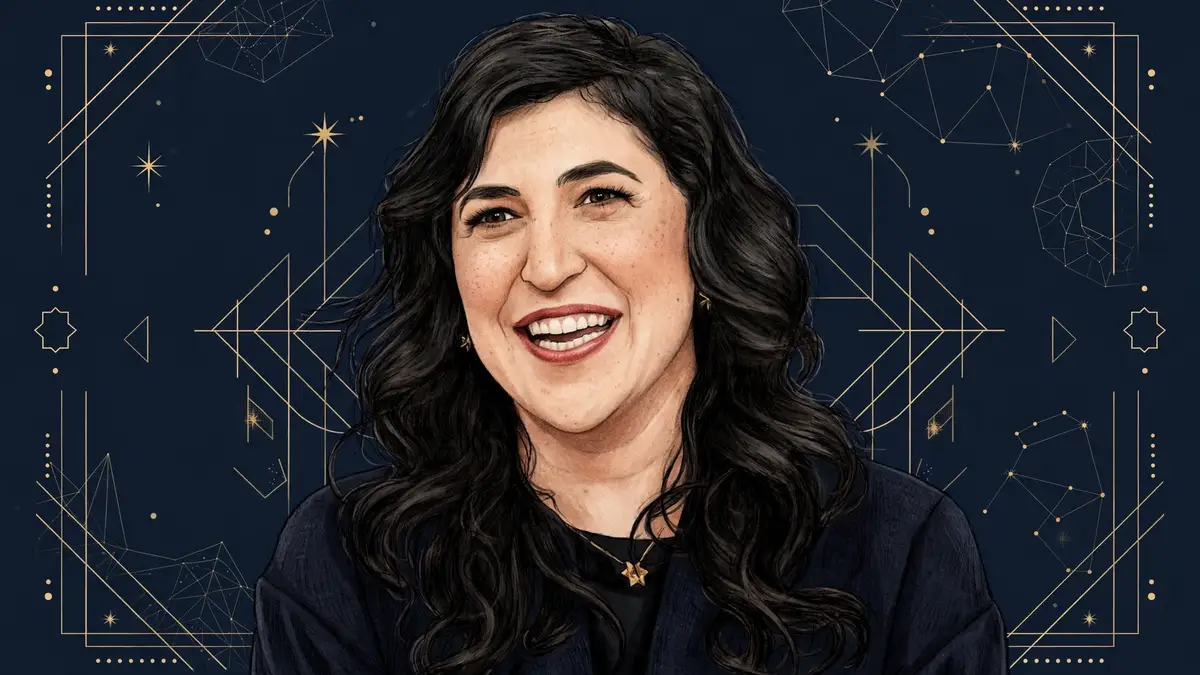
Mayim Bialik‘s net worth is estimated at $20 million to $25 million as of November 2026. The range exists because the two most-cited trackers disagree: Celebrity Net Worth lists $20 million after an August 2026 update, while Distractify and JustJared still put her at $25 million. Behind either number sits one of the strangest money stories in Hollywood — a child star who walked away from acting to earn a neuroscience PhD, came back because she needed health insurance, and then landed a $500,000-per-episode contract on The Big Bang Theory that paid her roughly $24 million across two seasons.
Mayim Bialik: Quick Facts
| Estimated net worth | $20 million (range: $20 million to $25 million) |
|---|---|
| Profession | Actress, neuroscientist, author, producer, television host |
| Nationality | American |
| Born | December 12, 1975, San Diego, California (age 50) |
| Height | 5 feet 4 inches (163 cm) |
| Primary income sources | Television acting, game-show hosting, producing, books, podcasting |
| Active years | 1987–present |
| Last reviewed | November 2026 |
- Early Life and Background
- Education
- Career Journey
- Rise to Fame
- Main Sources of Income
- Salary and Earnings
- Businesses and Investments
- Brand Deals and Sponsorships
- Houses, Cars and Other Assets
- Awards and Achievements
- Net Worth Growth Over the Years
- Social Media Presence
- Personal Life
- Sources & Reporting
- Frequently Asked Questions
- Final Thoughts
Early Life and Background
Mayim Chaya Bialik was born on December 12, 1975, in San Diego, California, to first-generation American parents whose families had emigrated from Eastern Europe. Her first name comes from the Hebrew word for water. She grew up in a Reform Jewish household in Los Angeles, and the identity she formed there — bookish, science-curious, openly nerdy — would later become the spine of her public brand and, indirectly, of her earning power.
Bialik started acting as a child in the late 1980s, and the work came fast. Her television debut arrived in 1987 with a guest spot on Beauty and the Beast, followed by appearances on The Facts of Life and Webster in 1988. That same year she made her film debut twice over: a small part in the horror cult film Pumpkinhead, and the role that first put her on the industry’s radar, playing the young version of Bette Midler’s character in Beaches. UCLA’s alumni profile singles out the Beaches role as her first real notice, and it is easy to see why — a child actor holding her own in scenes built around one of the biggest stars of the era.
The early money was modest by Hollywood standards, and Bialik has been unusually candid about that. Child acting in the late 1980s paid working wages, not fortunes, and her family treated it as a job rather than a lottery ticket. That attitude matters to the net worth story, because it explains the decision she made a few years later: when the acting work slowed, she did not chase the next audition at any cost. She went back to school instead.
One detail from this period rarely appears in net worth roundups, and it shapes everything that follows. Bialik also appeared in Michael Jackson’s 1989 music video for “Liberian Girl,” a credit that places her inside the pop-culture orbit of the late 1980s before she was even a teenager. It was a small job, but it is a useful marker of how early — and how steadily — she was working.
Education
Bialik graduated from high school in 1993 and deferred her place at the University of California, Los Angeles, because acting commitments got in the way. She eventually enrolled and earned a bachelor’s degree in neuroscience in 2000, with minors in Hebrew and Jewish studies. She kept going. In 2007 she completed a PhD in neuroscience at UCLA, with a dissertation on Prader-Willi syndrome and the regulation of hypothalamic function — work on the brain circuitry behind hunger and obsessive-compulsive behavior.
The degree was not a vanity credential collected between auditions. Bialik spent roughly a decade in full-time study while raising a family, teaching neuroscience, and taking only scattered acting jobs. Parade reports that she taught neuroscience for about five years during this stretch, and that her then-husband was still working on his master’s degree while she carried the teaching load. ZipRecruiter puts the average United States salary for a neuroscience professor at $87,585 a year, and Glassdoor estimates UCLA PhD students earn between $62,000 and $89,000 a year — figures that frame the economics of this period honestly. She was earning a professional salary, not a celebrity one, and the household ran on academic money.
That decade is the part of Bialik’s biography that competitors usually treat as a colorful aside. From a money standpoint it is the hinge of the whole story. Most child stars who step away for ten years never come back to a bigger contract. Bialik did, and the doctorate became part of her negotiating identity rather than a gap in her resume. When she returned to full-time acting in the late 2000s, she arrived as a credentialed scientist who happened to act — a combination no other sitcom star could offer, and one that later made her the natural choice to host Jeopardy! and to front a science-and-mental-health podcast.
Her own account of the return is disarmingly practical, and it is worth quoting because it undercuts the usual comeback mythology. She told ABC’s Popcorn With Peter Travers that she came back to acting in part because she was running out of health insurance. “The true story is I was running out of health insurance and figured if I could even get a couple of acting jobs here and there, and if it’s enough to get you Screen Actors Guild health insurance, we would at least have insurance,” she said. “I was not expecting to be a full-time actor.” The line is revealing twice over: it shows a household making decisions on insurance rather than ambition, and it shows how little of the fortune that followed was planned.
Career Journey
Bialik’s career splits into three acts, and each one paid at a different scale. Act one ran from 1987 to 1995: child actor, working steadily, famous young. Act two ran from roughly 1995 to 2009: student, teacher, voice actor, guest star — the low-earning years that built the credential. Act three began in 2010 and is still running: the Big Bang Theory payday, the Jeopardy! hosting years, producing, books, and a podcast.
The first act peaked with Blossom. Bialik landed the title role on the NBC sitcom in 1990, playing Blossom Russo, a teenager navigating divorce, addiction in the family, and adolescence with a mix of comedy and sincerity. The show ran five seasons and 114 episodes before NBC canceled it in 1995. It made her a household name at fifteen, and it made her famous in the particular way that 1990s network sitcoms could make a teenager famous — recognizable everywhere, with a theme song people still hum.
What Blossom did not do is make her rich, and Bialik has said so on the record. On fellow child star Jaleel White’s Ever After podcast, she explained that she “did not have the kind of financial success that would’ve set me up for the rest of my life” from the show. When White asked whether her salary had cracked six figures, she answered: “No.” The second half of that admission matters more than the first. “Also, our show was never put into syndication,” she said. Syndication is where sitcom money compounds — the rerun checks that keep paying for decades. Without it, a five-season hit pays once and stops. That single fact explains why Bialik entered her twenties famous and not wealthy, and why the Big Bang Theory money, when it arrived, landed on a relatively thin financial base.
Between Blossom and The Big Bang Theory she never fully stopped working. The voice-acting credits piled up: Jonny Quest, Aaahh!!! Real Monsters, Johnny Bravo, Hey Arnold!, and Recess. Live-action guest spots followed on Curb Your Enthusiasm, Bones, 7th Heaven, Saving Grace, Til Death, and The Secret Life of the American Teenager. She played herself in a two-episode arc on Showtime’s Fat Actress in 2005, and in 2014 she co-hosted a revival of Candid Camera on TV Land with Peter Funt. None of these jobs paid sitcom-star money. Together they kept her in the union, kept her visible to casting directors, and kept the health insurance that had pulled her back in the first place.
The turning point came in 2009, when she guest-starred on The Big Bang Theory as a potential love interest for Sheldon Cooper. The character, Amy Farrah Fowler, was written as a female mirror of Sheldon: a neurobiologist with no social filter. The joke of the casting was that Bialik was the only person on the set who actually held a neuroscience doctorate. The audience response was strong enough that a one-off guest spot became a recurring role in 2010, then a series-regular contract. She stayed through the 2019 finale — nine seasons, 203 episodes as Amy, and the payday that defines her net worth.
Rise to Fame
Bialik’s rise happened twice, and the second rise was bigger than the first. The Blossom years made her a teen star. The Big Bang Theory years made her a wealthy one. The distance between those two facts is the story of the article.
On The Big Bang Theory, Amy Farrah Fowler started as a joke about Sheldon Cooper meeting his match and grew into one of the show’s emotional centers. The Amy–Sheldon relationship — the “Shamy” storyline — carried some of the final seasons’ most-watched arcs, including their wedding in the season 11 finale and their shared Nobel Prize in the series finale. Four Primetime Emmy nominations for Outstanding Supporting Actress in a Comedy Series followed, in 2012, 2013, 2014, and 2015, per the Television Academy. The nominations did not convert into wins, but they converted into bargaining power: by the time the final contract talks opened in 2017, Bialik was no longer a supporting player asking for a raise. She was a co-lead of television’s top-rated comedy.
The 2017 negotiation is the single most important money event of her career, and it is worth describing in full because the mechanics are unusual. Bialik and Melissa Rauch, who played Bernadette, were earning a reported $175,000 to $200,000 per episode in season 10. The five original stars — Jim Parsons, Johnny Galecki, Kaley Cuoco, Simon Helberg, and Kunal Nayyar — were each making about $1 million per episode. When Bialik and Rauch pushed for parity, the five originals each agreed to take a $100,000-per-episode pay cut, dropping to $900,000, so the money could be redirected. TVLine, citing Variety, reported that Bialik and Rauch then signed deals worth a reported $500,000 per episode for seasons 11 and 12. Parade’s 2026 reporting tells the same story with the same numbers, and Celebrity Net Worth’s math matches: 48 episodes at $500,000 comes to roughly $24 million in gross salary, or about $12 million per season, before taxes, agent fees, and manager fees.
That collective-bargaining detail is a genuine gap in most net worth coverage, which usually prints the $500,000 figure without explaining where it came from. The money was not conjured by the studio out of generosity. It was transferred, episode by episode, from the five highest-paid cast members to the two lowest-paid ones. It is also why Bialik’s net worth, even after that raise, sits well below her co-stars’. At $900,000 an episode, the original five were still earning nearly double her rate in the final seasons, and they had been earning $1 million an episode for years before she reached $500,000. The gap compounds across a decade of seasons, which is exactly what the peer comparison table later in this article shows.
After The Big Bang Theory ended in May 2019, Bialik moved behind the camera as well as in front of it. She formed her production company, Sad Clown Productions, and in August 2019 signed an exclusive deal with Warner Bros. Entertainment. With Jim Parsons’s company That’s Wonderful Productions, she developed and starred in Call Me Kat, a Fox sitcom adapted from the British comedy Miranda, playing a single woman who spends her wedding fund opening a cat café in Louisville. The show premiered in January 2021 and ran three seasons and 53 episodes before Fox canceled it in 2023. Bialik starred in it and executive-produced it — two paychecks from one show, plus the producer fees that come with a Warner Bros. deal.
She also directed her first feature film in this period. As They Made Us, which she wrote and directed, was released in April 2022, starring Dustin Hoffman, Candice Bergen, Dianna Agron, and her Big Bang co-star Simon Helberg. The film — a drama about family dysfunction, illness, and reconciliation — was a small independent release, not a box-office event, but it established a directing credit that most actors of her generation never collect. Directing changes the economics of a career: it opens a second lane of work that does not depend on being cast.
Then came Jeopardy!, the hosting job that kept her in the national conversation after the sitcom ended. Following Alex Trebek’s death in 2020, Bialik guest-hosted in the spring of 2021, and in August of that year Sony named her host of the show’s primetime specials and spinoffs. In July 2022 she and Ken Jennings were named joint hosts of the syndicated show — an unusual two-host arrangement the show’s executive producer, Michael Davies, defended as necessary given how much Jeopardy! the franchise was producing. Her tenure ended on December 15, 2023, when she posted on Instagram that Sony had informed her she would no longer host the syndicated version. Jennings became the sole syndicated host. The show’s official account said the change was about continuity for viewers and that it hoped to keep working with her on primetime specials. She hosted the first season of Celebrity Jeopardy! in 2022–2023 and earned a fifth Emmy nomination, for Outstanding Game Show Host, in 2023.
Main Sources of Income
Bialik’s income comes from five streams, and their relative weight has shifted sharply across her career. Television acting still dominates the total, because the Big Bang Theory contracts were so large that nothing else she has done comes close in raw dollars. Hosting, producing, books, and podcasting add up to a meaningful second tier — enough to keep the fortune growing after the sitcom money stopped, but not enough to replace it.
Television acting is the foundation. The reported $24 million gross from the final two seasons of The Big Bang Theory alone accounts for more than the whole of her estimated net worth once taxes and fees are subtracted, which tells you how much of the number is really one contract. Her earlier seasons on the show paid less — roughly $45,000 per episode at the start, per Parade, rising to about $175,000 per episode when she became a series regular — but even those rates, spread across 203 episodes, add up to millions. Call Me Kat added three more seasons as a star and executive producer, with the two paychecks that dual role carries.
Game-show hosting was the second-biggest stream while it lasted. Sony never disclosed her Jeopardy! pay, and the figures in circulation should be treated with care. Celebrity Net Worth says later reporting put it at roughly $4 million a year across the syndicated and primetime shows — a figure FanBolt notes it could not confirm with a second outlet. Other outlets have suggested closer to $1 million per season. The honest statement is that she earned a host-level salary for about two and a half years, somewhere in the low millions per year, and that the income stopped in December 2023. For comparison, Alex Trebek was reported to earn $18 million a year, a figure that reflected 37 years of tenure rather than the market rate for a newcomer host.
Producing is the stream with the most room to grow. Sad Clown Productions holds an exclusive Warner Bros. deal, and Call Me Kat was its first series. Producer fees and backend participation on a network sitcom do not match acting salaries episode for episode, but they pay on a different schedule — development fees, per-episode producer fees, and any syndication or streaming backend that accrues over time. The company’s value is best understood as an asset rather than a paycheck: a production banner with a studio deal is the kind of holding that can generate income long after the founder stops appearing on screen.
Books form the fourth stream. Bialik is the author of five books. Beyond the Sling, a guide to attachment parenting, arrived in 2012. Mayim’s Vegan Table, a vegan cookbook, followed in 2014. Girling Up: How to Be Strong, Smart and Spectacular, written for girls aged 10 to 18, came out in 2017, and its companion volume Boying Up: How to Be Brave, Bold and Brilliant in 2018. In 2021 she published Flash Facts, a children’s science book built around the DC superhero The Flash. No publisher has disclosed her advances or royalties, and book income for a celebrity author with this profile typically runs to the low six figures per title rather than the millions — meaningful, but a footnote next to a sitcom contract.
Podcasting and digital media are the fifth stream. Mayim Bialik’s Breakdown, launched during the COVID-19 pandemic, focuses on mental health and features celebrity guests and expert interviews. She told Parade she started it after noticing during quarantine that people with existing mental-health struggles were struggling more and people who had never struggled were starting to. The show runs across podcast platforms and a YouTube channel with close to a million subscribers, and it earns through advertising and sponsorships. She also founded the lifestyle site Grok Nation in 2015, which ran until new content stopped in 2019. Neither venture has published earnings, and neither rivals a network contract — but the podcast keeps her brand active in the years between television jobs, which is exactly what a working actor needs after a hosting exit.

Salary and Earnings
The salary story is best told as a ladder, because Bialik climbed it in public and the rungs are all on the record. Each step is sourced, and the gaps between steps explain why the net worth range exists.
Blossom (1990–1995): under six figures. Bialik has said directly that her pay on the show never reached six figures per episode, and that the show never went into syndication. Five seasons of a hit NBC sitcom, and the checks stopped when the show stopped. This is the detail that separates her from co-stars whose early hits kept paying rerun residuals for decades. It is also the reason her fortune is a second-act fortune: the first act built fame, not wealth.
The Big Bang Theory, early seasons (2010–2016): $45,000 rising to about $175,000 per episode. Bialik joined as a recurring player in 2010 at a reported $45,000 per episode, per Parade, alongside Melissa Rauch at the same rate. When both were promoted to series regulars, their pay rose to about $175,000 per episode. Celebrity Net Worth puts the season 10 figure slightly higher, at $175,000 to $200,000 per episode. Either way, the math is straightforward: at $175,000 across a 24-episode season, a single season paid about $4.2 million gross.
The Big Bang Theory, final seasons (2017–2019): $500,000 per episode. The April 2017 deals reported by TVLine, citing Variety, set Bialik and Rauch at $500,000 per episode for seasons 11 and 12. With 48 episodes produced across those two seasons, the gross comes to roughly $24 million, or about $12 million per season. Celebrity Net Worth’s arithmetic agrees, and Parade’s 2026 piece repeats the same total. The one wrinkle in the record is worth naming: an earlier report in March 2017, also citing Variety, put the new deals at around $450,000 per episode, with the original five stars’ cut funding the raise. The final signed figure reported by TVLine was $500,000, and that is the number we use — while noting the $450,000 figure appeared first. After taxes, agent commission (typically 10 percent), manager fees, and publicist costs, the take-home on $24 million gross lands closer to $12–$14 million. That single calculation is the core of the $20–$25 million estimate: one contract, after the standard Hollywood deductions, supplies more than half the fortune.
Jeopardy! (2021–2023): undisclosed, reported in the low millions per year. Sony never published her hosting salary. The most-cited figure, from Celebrity Net Worth, is roughly $4 million a year across the syndicated and primetime shows; FanBolt flags that it could not verify that number with a second outlet, and other coverage has suggested about $1 million per season. We report the $1–$4 million range with that caveat attached, because inventing precision here would be worse than admitting uncertainty. What is certain is the duration — about two and a half years — and the endpoint, December 2023.
Call Me Kat (2021–2023): star plus executive producer. No salary figure has been reported for the Fox sitcom, and we do not guess one. A network sitcom lead with an executive-producer credit typically earns in the low-to-mid six figures per episode, plus producer fees, but Bialik’s exact number is not public. The show’s 53 episodes across three seasons represent steady, substantial income during the same years she was hosting Jeopardy! — the only period in her career when two major paychecks overlapped.
Residuals and syndication. The Big Bang Theory is one of the most-syndicated sitcoms in television history, and residuals form a durable tail on Bialik’s earnings. The exact residual schedule is not public, but the show’s afterlife on cable, streaming, and international broadcast means the checks keep arriving years after the finale. This is the mirror image of the Blossom problem: the show that paid her properly is also the show that keeps paying. Residuals are a real reason the $20 million figure has held up even after the Jeopardy! income ended.
Put together, the earnings picture is unusually legible for a celebrity fortune. One contract worth roughly $24 million gross. Several earlier seasons worth millions more. Two and a half years of hosting pay. Three seasons of a second sitcom as star and producer. Book advances, podcast advertising, and endorsement fees on top. Subtract taxes and representation costs across fifteen years, add two Studio City properties, and the $20–$25 million range is the number the arithmetic points to — with Celebrity Net Worth’s $20 million at the cautious end and the $25 million figures from Distractify and JustJared at the generous end.
Businesses and Investments
Sad Clown Productions is Bialik’s main business asset, and it deserves more attention than it usually gets in net worth coverage. She founded the company as she moved into producing, and in August 2019 it signed an exclusive deal with Warner Bros. Entertainment. The deal’s terms were not disclosed, but exclusive studio deals of this kind typically include development funding, office overhead, and first-look rights on the producer’s projects — in other words, the studio pays the company to develop television, and the company keeps a producer fee and backend stake on anything that gets made.
The company’s first series was Call Me Kat, developed with Jim Parsons’s That’s Wonderful Productions, BBC Studios, and Miranda Hart, and produced with Warner Bros. and Fox Entertainment. Bialik starred in the show and executive-produced it, which meant Sad Clown earned producer fees across 53 episodes while its founder collected an acting salary from the same production. That stacking — actor money plus producer money from one show — is how working actors build wealth in the streaming era, when per-episode acting fees alone no longer guarantee a fortune. The show’s cancellation in 2023 ended the fees, but the Warner Bros. relationship and the company’s development slate remain assets with future value.
Bialik also directed her first feature through the same period. As They Made Us, released in April 2022, was a small independent film, and its box-office returns were modest. Its value to her balance sheet is indirect: a directing credit raises her quote for future directing work and gives Sad Clown a feature pipeline to pitch. No net worth tracker assigns a dollar value to the company itself, and neither do we — private production companies of this size are not valued in public — but the deal structure is real income-generating infrastructure, not a vanity label.
Outside entertainment, Bialik’s investments are not a matter of public record. She has not announced startup stakes, venture investments, or a product line, and no filing or interview ties her to one. That absence is itself informative. Unlike co-stars who built second fortunes in tequila, beauty brands, or real estate portfolios, Bialik’s wealth is concentrated in two things: her contracts and her homes. The risk profile is different from a diversified celebrity investor’s — her fortune rises and falls with her employment, not with a portfolio — and it is one reason the estimate has drifted down rather than up since 2022.
Her digital ventures fit the same pattern. Grok Nation, the lifestyle and commentary site she founded in 2015, ran for four years before new content stopped in 2019. The podcast Mayim Bialik’s Breakdown has run since 2020 and earns advertising revenue, but no figure has been published. Both ventures function as brand infrastructure: they keep her audience engaged between television jobs and they give sponsors a place to reach her following. Neither is a business that would appear on a balance sheet as a separable asset.
Brand Deals and Sponsorships
Bialik’s endorsement work is smaller than her acting income, and it leans on the same credential her acting does: the neuroscience PhD. The deals she has taken tend to sell brain health, wellness, or values, not luxury goods, and that consistency is part of the brand.
In March 2021 she appeared in advertisements for Neuriva, a nutritional supplement marketed for brain health. The ads aired frequently while she was guest-hosting Jeopardy!, which made the pairing hard to miss: a neuroscientist selling a brain supplement during a trivia show. The campaign ran across television and digital, and while the fee was not disclosed, a national supplement campaign with a celebrity neuroscientist typically pays in the mid-to-high six figures. A month later, in April 2021, she announced a partnership with Purina Pro Plan, the pet-food brand — a deal that fit her public profile as an animal lover and cat owner, and that dovetailed with Call Me Kat‘s cat-café premise premiering the same year.
Earlier, in 2019, she teamed up with Sabra to create a vegan recipe hotline, 1-866-CODE-VEGAN, offering vegan recipes to non-vegan hosts around the holidays. The partnership matched her long-standing veganism and her cookbook authorship, and it is the kind of values-aligned deal that brands offer to celebrities whose audience trusts their lifestyle choices. She also appeared in a commercial for IBM in 2019, a one-off that played on the same scientist-celebrity positioning.
None of these deals has a published fee, and we do not invent one. Taken together they represent a meaningful but secondary income stream — likely low seven figures across her career, spread over several years, and nowhere near the scale of the sitcom contracts. What they do show is a disciplined endorsement strategy: Bialik has not chased every offer, and the ones she accepted reinforced the public identity that makes her castable. That discipline is itself a money decision. A celebrity who endorses everything eventually endorses nothing credibly.

Houses, Cars and Other Assets
Bialik’s real estate is concentrated in one Los Angeles neighborhood, and the two properties in it tell a compact story about how her money moved. Celebrity Net Worth reports that she paid about $2.3 million for a four-bedroom home in Studio City in 2014 — the year her Big Bang Theory salary was climbing toward its peak. The timing fits: the purchase came the year before the final contract talks that would lock in the $500,000-per-episode rate, when her income was already in the millions per season.
The second property is smaller and older. Celebrity Net Worth reports that she and her former husband bought a smaller Studio City house in the early 2000s for $529,000, and that she kept it in their 2013 divorce settlement. FanBolt notes it could not confirm either purchase with a second outlet, so both figures carry a single-source caveat and we present them as reported by Celebrity Net Worth alone. The shape of the story is plausible on its face: a modest house bought on academic-era money, kept through a divorce, and a larger house bought once the sitcom money arrived. Studio City prices have risen substantially since both purchases, so the two homes together likely represent several million dollars of equity — a real share of the $20–$25 million estimate, and the most durable part of it, since property does not depend on the next casting call.
Her cars are not a matter of public record in the way some celebrities’ collections are. No outlet has published a garage inventory, and Bialik has never made vehicles part of her public image. That absence fits the rest of the profile: her spending is private, her lifestyle is low-key for a sitcom star, and the visible assets are the two houses and the production company. We do not pad this section with speculation about cars she may or may not own. The honest statement is that her documented assets are real estate and a production banner, and that her public spending profile is modest — which is one reason the fortune has survived the end of two major paychecks.
The broader point about assets is worth stating plainly. Bialik’s net worth is not built on a portfolio of businesses or a property empire. It is built on fifteen years of high television salaries, minus taxes and fees, plus two houses in a neighborhood that appreciated. That is a narrower base than some of her co-stars hold, and it explains both the size of the number and its direction of travel since 2022.
Awards and Achievements
Bialik’s trophy record is thin for an actor of her standing, and the nominations matter more than the wins. She earned four consecutive Primetime Emmy nominations for Outstanding Supporting Actress in a Comedy Series for The Big Bang Theory, in 2012, 2013, 2014, and 2015, per the Television Academy. She did not win any of them. The nominations still did real work: they kept her name in the awards conversation during the years her salary was being negotiated, and they gave her agents a line to quote in the room.
Her fifth Emmy nomination came in a different category and a different job: Outstanding Game Show Host for Jeopardy! in 2023. It arrived the same year her hosting tenure ended, which gives it a bittersweet timing — industry recognition for a role she was about to lose. She has also been nominated for Critics’ Choice Television Awards for her Big Bang Theory work, winning the Critics’ Choice award for Best Supporting Actress in a Comedy Series in 2016 and again in 2018.
The achievements that do not come with trophies are arguably more valuable to her earning power. A PhD in neuroscience from UCLA is a credential no other sitcom star holds, and it is the reason she was credible as a game-show host, a science author, and a mental-health podcaster. Five books, a production company with a Warner Bros. deal, a feature directing debut, and a three-season sitcom as star and executive producer form a resume that most actors never assemble. The awards section of a net worth article usually exists to pad the page. Here the point is the opposite: Bialik’s career capital sits in credentials and credits, not in a trophy cabinet, and that capital is what keeps her employable after the sitcom money stops.
Net Worth Growth Over the Years
The trajectory of Bialik’s fortune has three phases, and the table below maps them against the career events that drove each move. The early figures are estimates reconstructed from her reported salaries, because no tracker published a number for her before the Big Bang Theory years. The later figures are the published estimates, with their sources named.
| Year | Estimated net worth | What moved it |
|---|---|---|
| 1995 | Under $1 million | Blossom ends after five seasons; pay never reached six figures per episode and the show never entered syndication |
| 2007 | Under $1 million | PhD completed at UCLA; household running on teaching and academic income |
| 2012 | About $3–$5 million | Series-regular pay on The Big Bang Theory reaches about $175,000 per episode; first book published |
| 2017 | About $10–$12 million | New deal at $500,000 per episode for seasons 11 and 12 begins |
| 2019 | About $18–$20 million | The Big Bang Theory ends; $24 million gross from the final two seasons largely banked |
| 2022 | About $25 million | Distractify figure cited by FanBolt; Jeopardy! co-hosting and Call Me Kat both paying |
| 2024 | About $20–$25 million | Jeopardy! exit in December 2023 and Call Me Kat cancellation end both major paychecks |
| 2026 | $20–$25 million | Celebrity Net Worth updates to $20 million in August 2026; Distractify and JustJared hold $25 million |
Two features of this table deserve emphasis. First, the fortune is young: almost all of it was earned after 2017, when she was already 41. That is unusual for a child star and it is the direct result of the ten-year academic detour. Second, the recent direction is flat to slightly down. The $25 million figure from 2022 has not been repeated by Celebrity Net Worth, which now lists $20 million, and FanBolt’s October 2026 update explicitly notes the drop. The reason is not a scandal or a loss. It is arithmetic: two major paychecks ended within weeks of each other in late 2023, and nothing has replaced them at the same scale yet. Residuals from The Big Bang Theory, podcast advertising, and the production company keep income flowing, but the growth phase of the fortune is paused until her next series-level job arrives.
The peer comparison puts the number in context. Among the Big Bang Theory cast, JustJared’s October 2026 ranking and Celebrity Net Worth’s figures place Jim Parsons at about $160 million, Kaley Cuoco at about $110 million, and Johnny Galecki at about $100 million — all three built on a decade at $1 million per episode plus producing and endorsement income. Simon Helberg and Kunal Nayyar sit near $45 million each, and Melissa Rauch, Bialik’s fellow late-arriving regular, sits at about $20 million — the same tier. The pattern is clean: the five originals are worth four to eight times the two late arrivals, because they earned double the per-episode rate for twice as many seasons. Bialik’s fortune is not small. It is small relative to the people she shared a stage with, and the reason is a contract timeline, not a talent gap.
Social Media Presence
Bialik’s social media presence is an extension of her brand rather than a separate business. Her Instagram account, where she announced her Jeopardy! exit in December 2023, is her main public channel, and her YouTube channel — built around Mayim Bialik’s Breakdown and her mental-health videos — has close to a million subscribers, per Parade. She uses both to talk about neuroscience, mental health, parenting, and her work, in the same plainspoken register as her books.
The commercial value of the following is real but modest by celebrity standards. A YouTube channel near a million subscribers earns advertising revenue in the five-figure range per year, not the seven-figure range, and her Instagram following is far smaller than her sitcom co-stars’. She has never built her income around sponsored posts, and her feed reads like a working actor and author talking to an audience, not an influencer selling a lifestyle. That restraint costs her money in the short term and protects the credibility that makes her endorsements — the Neuriva and Purina deals — believable in the first place.
One social media moment matters to the money story directly. Her December 15, 2023 Instagram post announcing the end of her syndicated Jeopardy! hosting was the first public word of the exit, and it moved the story from rumor to fact in a single post. The announcement also illustrates how much of her public communication now runs through her own channels rather than through a studio press release. For a performer whose next job depends on staying visible, owning the channel is a small but real asset.
Personal Life
Bialik married Michael Stone, her college sweetheart, on August 31, 2003. The couple had two sons: Miles, born in 2005, and Frederick, born in 2008. They divorced in 2013, and Bialik kept the smaller Studio City house the couple had bought in the early 2000s for $529,000, per Celebrity Net Worth. She has spoken publicly about co-parenting and about raising her sons with an attachment-parenting approach — the subject of her first book, Beyond the Sling, published in 2012.
Her personal life is unusually public for a celebrity of her profile, because she has chosen to write and talk about it. The books, the podcast, and the Grok Nation site all draw on her experiences as a mother, a divorced parent, and a person managing obsessive-compulsive disorder — a diagnosis she has discussed openly, including its roots in her childhood. That openness is a commercial decision as much as a personal one: it is the raw material for the books and the podcast, and it is why her audience trusts her on mental-health subjects. It also means the boundary between her private life and her brand is thinner than most celebrities maintain, and she has managed that trade-off for more than a decade without a public scandal attached to it.
She lives in Los Angeles, in the Studio City home she bought in 2014, and her day-to-day life in 2026 centers on the podcast, the production company, and selective acting work — including the 2026 return to the Big Bang universe on HBO Max’s Stuart Fails to Save the Universe, where she guest-stars as alternate versions of Amy Farrah Fowler. CinemaBlend reported her reaction to the return: “It’s nice not to be asked to have to recreate the job you had when you were 35.” One version of her Amy in the series is a doctor at a mental institution; another is married to the Flash. Guest fees for the appearances are not public, but the work keeps her tied to the franchise that made her rich — and it leaves the door open to a larger role if the spinoff grows.
Sources & Reporting
Celebrity Net Worth — the $20 million estimate (page last updated August 2026); the $500,000-per-episode final-seasons figure and the $24 million two-season total; the $175,000–$200,000 season 10 rate; the $4 million-a-year Jeopardy! figure (single-source, flagged as such); the Studio City property purchases ($2.3 million in 2014; $529,000 in the early 2000s); the Call Me Kat run of three seasons and 53 episodes.
Parade — 2026 net worth feature (published January 2, 2026): the $20 million estimate; the $45,000 starting episode rate and the $175,000 regular rate; the $100,000-per-episode pay cut by the five original stars; the Blossom salary admission from the Jaleel White podcast; the teaching years and health-insurance return to acting; the five books; the Neuriva, Purina Pro Plan, and Sabra partnerships; the Call Me Kat and As They Made Us projects.
FanBolt — October 2026 update: the $25 million Distractify figure from 2022 and the explicit note that Celebrity Net Worth’s $20 million is lower; the TVLine/Variety $500,000 figure; the December 2023 Jeopardy! exit; the May 2024 Young Sheldon finale reunion; the 2026 Stuart Fails to Save the Universe guest appearances per CinemaBlend; the single-source caveat on both the Jeopardy! pay and the property figures.
Distractify — the $25 million estimate cited by FanBolt from 2022, representing the generous end of the current range.
JustJared — October 31, 2026 cast ranking: Bialik at $25 million, with Jim Parsons at $160 million as the cast’s wealthiest member.
TVLine, citing Variety — the April 2017 report of the $500,000-per-episode deals for Bialik and Melissa Rauch for seasons 11 and 12, and the March 2017 report of the original five stars’ $100,000-per-episode cut.
Britannica — career chronology: Blossom 1990–1995, UCLA degrees in 2000 and 2007, The Big Bang Theory 2010–2019, Jeopardy! co-hosting 2022–2023, and four books published between 2012 and 2019.
Television Academy — four Emmy nominations for Outstanding Supporting Actress in a Comedy Series (2012–2015) and the 2023 nomination for Outstanding Game Show Host.
Wikipedia — Sad Clown Productions’ August 2019 Warner Bros. deal; Jeopardy! hosting dates and episode counts; Candid Camera revival in 2014; the 1989 “Liberian Girl” music video appearance.
Fox News — the December 15, 2023 report of Bialik’s Instagram announcement ending her syndicated Jeopardy! hosting, and the May 2024 Young Sheldon finale reunion with Jim Parsons.
Reporting window: figures and events checked against sources published or updated between January 2026 and November 2026, with contract history traced to the original 2017 TVLine/Variety reporting. Where sources disagreed — most importantly the $20 million versus $25 million estimates and the $1 million versus $4 million Jeopardy! pay — we published the range and named the disagreement rather than picking a side.
Frequently Asked Questions
What is Mayim Bialik’s net worth in 2026?
Mayim Bialik’s net worth is estimated at $20 million to $25 million as of November 2026. Celebrity Net Worth lists $20 million after an August 2026 update, while Distractify and JustJared put her at $25 million. No audited figure exists, so the honest answer is the range, with Celebrity Net Worth’s $20 million as the cautious anchor.
How much did Mayim Bialik make per episode of The Big Bang Theory?
She earned a reported $500,000 per episode in the final two seasons (seasons 11 and 12), under deals signed in April 2017 and reported by TVLine citing Variety. Across 48 episodes that came to roughly $24 million gross, or about $12 million per season, before taxes and fees. Earlier she earned about $45,000 per episode as a recurring player, rising to roughly $175,000 to $200,000 per episode when she became a series regular.
Is Mayim Bialik still hosting Jeopardy!?
No. She announced on Instagram on December 15, 2023 that Sony had informed her she would no longer host the syndicated version of Jeopardy!, and Ken Jennings became the sole syndicated host. She had co-hosted with Jennings since July 2022 after guest-hosting in 2021. She also hosted the first season of Celebrity Jeopardy! in 2022–2023.
Does Mayim Bialik really have a PhD?
Yes. She earned a PhD in neuroscience from UCLA in 2007, with a dissertation on Prader-Willi syndrome and hypothalamic function. She also holds a bachelor’s degree in neuroscience from UCLA (2000). She taught neuroscience for about five years while completing her studies and raising her children.
How much did Mayim Bialik make on Blossom?
Less than most people assume. She has said on the record that her Blossom salary never reached six figures per episode, and that the show was never put into syndication — so the rerun checks that make sitcom stars rich never arrived. The show made her famous at fifteen, but it did not make her wealthy; the fortune came two decades later from The Big Bang Theory.
What is Mayim Bialik doing in 2026?
She returned to the Big Bang universe in 2026, guest-starring as alternate versions of Amy Farrah Fowler on HBO Max’s Stuart Fails to Save the Universe, per CinemaBlend and Celebrity Net Worth. She continues to host her podcast Mayim Bialik’s Breakdown, runs her production company Sad Clown Productions, and takes selective acting and directing work.
Who is Mayim Bialik married to, and does she have children?
She is divorced. She married Michael Stone, her college sweetheart, in August 2003, and they divorced in 2013. They have two sons, Miles (born 2005) and Frederick (born 2008). She kept the smaller Studio City house the couple bought in the early 2000s in the divorce settlement.
How tall is Mayim Bialik?
Mayim Bialik is 5 feet 4 inches tall (163 cm). She was born on December 12, 1975, in San Diego, California, and turned 50 in December 2025.
Final Thoughts
Mayim Bialik’s $20–$25 million fortune is the most interesting kind of celebrity net worth to write about, because it breaks the usual pattern. She did not get rich young and stay rich. She got famous young, walked away to become a scientist, came back because she needed health insurance, and then — at an age when most child stars are footnotes — signed the contract that made her wealthy. The $500,000-per-episode deal, funded in part by her own co-stars taking pay cuts, is the hinge of the whole story, and the $24 million it paid across two seasons is the reason the estimate sits where it does.
The range matters, and so does its direction. Celebrity Net Worth’s move from $25 million to $20 million is not a scandal. It is what happens when two major paychecks end in the same season and nothing at the same scale replaces them. The residuals keep coming, the podcast keeps growing, and the production company holds a Warner Bros. deal — but the next leap in her net worth depends on her next series-level job, not on the last one. The 2026 return to the Big Bang universe on Stuart Fails to Save the Universe is a small step in that direction. If it grows into something bigger, the number will follow. Until then, $20–$25 million — anchored at $20 million — is the figure the evidence supports.
Published on November 21, 2026. Last reviewed November 2026. Found an error? See our corrections policy.