
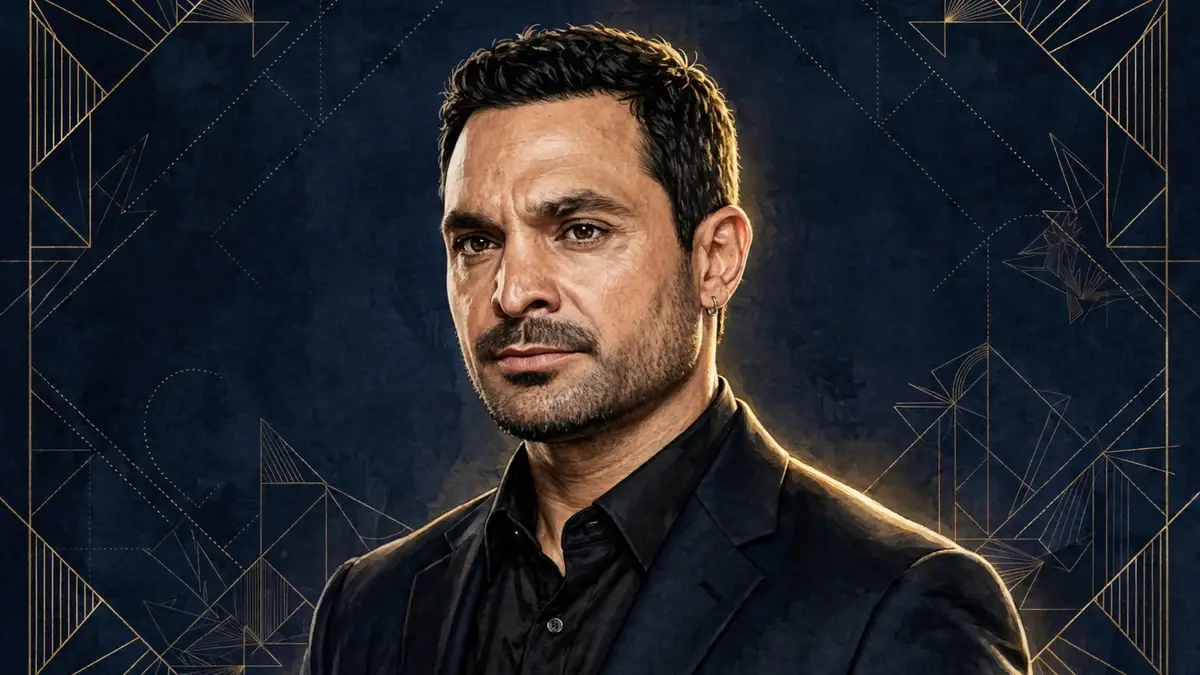
Michael Mando‘s net worth is estimated at $2.4 million to $3 million as of November 2026. The Canadian actor built that fortune the slow way: six seasons as Nacho Varga on Better Call Saul, the voice and face of Vaas Montenegro in Far Cry 3, a Marvel role that waited nine years to pay off, and a 2026 in which he played a villain for Marvel and DC in the same year.
Michael Mando: Quick Facts
| Estimated net worth | $2.4 million – $3 million (range: $2.4 million to $3 million; some outlets stretch to $4.5 million) |
|---|---|
| Profession | Actor, writer, director |
| Nationality | Canadian |
| Born | July 13, 1981 (age 45) |
| Height | 5 ft 9 in (1.75 m) |
| Primary income sources | Television salaries, film roles, video-game voice and motion-capture work, residuals, writing and directing |
| Active years | 2000–present |
| Last reviewed | November 2026 |
- Early Life and Background
- Education
- Career Journey
- Rise to Fame
- Main Sources of Income
- Salary and Earnings
- Businesses and Investments
- Brand Deals and Sponsorships
- Houses, Cars and Other Assets
- Awards and Achievements
- Net Worth Growth Over the Years
- Social Media Presence
- Personal Life
- Sources & Reporting
- Frequently Asked Questions
Early Life and Background
Michael Mando was born Mikel Mroué on July 13, 1981, in Quebec City, Quebec, Canada. He was raised mostly by his father and is the second of three brothers. His mother is from Guinea in West Africa; his father, a doctor of chemistry, is from Germany. That mixed heritage, plus a childhood spent moving, shaped the actor he became: a performer who slips between languages and cultures without visible effort.
The family moved constantly. Before his mid-20s, Mando had lived in more than 35 homes across 10 cities on four continents, according to his own accounts repeated by Wikipedia and his AMC biography. Much of his childhood and early adolescence passed in Africa — Ghana and Ivory Coast — and in Beirut, Lebanon, where he studied under the French international private school system, before the family returned to Canada when he was a teenager. French is his native language; he is also fluent in English and Arabic, and has been reported to speak Spanish as well.
Acting was not the first plan. Growing up, Mando wanted to be a writer or an athlete. The pivot came in his mid-20s, when a knee injury ended the athletic path and pushed him toward a different kind of performance. That injury, which could have read as a setback, is the hinge his whole career turns on: without it, there is no Dawson College, no Orphan Black, no Nacho Varga.
Money was not part of the family story in any public way. Mando has never discussed family wealth, property, or inheritance in interviews, and no credible outlet reports any. His fortune, such as it is, starts at zero in his twenties and is built job by job — a fact that matters when weighing the estimates, because there is no trust fund or family money quietly inflating the number.
Education
Mando’s education reads like a man sampling futures before committing to one. After high school he enrolled at the University of Montreal, where he studied international relations and psychology. The academic route lasted until the knee injury forced a rethink, and in 2004 he discovered the performing arts at the Dome Theatre Program at Dawson College in Montreal.
He arrived with no prior training and left as one of the program’s standout graduates. Mando played the male lead in all five productions of the program — Orlando in Shakespeare’s As You Like It, Professor Katz in David Edgar’s Pentecost, and Valentine Xavier in Tennessee Williams’ Orpheus Descending among them — and graduated in 2007. AMC’s own biography of the actor notes he graduated with honours from theatre school in Montreal, where he was classically trained.
The training shows up in the work. Mando’s performances are built on stillness and precise diction rather than volume, the kind of control that comes from stage training. Casting directors noticed fast: after two award-winning professional theatre productions in Montreal, he moved almost straight into screen work, with early Canadian television roles on The Border, The Bridge, and Lost Girl.
Education, for Mando, also included the languages. A French native who works fluently in English and Arabic, he can audition across three markets — Quebec, Hollywood, and international productions — where a monolingual actor gets one. That range has quietly widened his casting pool for two decades, and it is one reason his career survived the long gap between his Canadian television years and his American breakthrough.
Career Journey
Mando’s screen career began in the early 2000s with short films and small Canadian television parts. His first credited screen appearance came in the short film The Last Hit in 2003, and the next several years were the standard working-actor grind: guest spots, recurring Canadian TV roles, and theatre between jobs. He played Tobias Fornell in the CTV series The Bridge and picked up early film credits in The Colony (2013), Elysium (2013), and Make Your Move (2013).
He also started building a second career behind the camera. After his stage success in Montreal, Mando founded Red Barlo Productions. The company’s first film, Conditional Affection (2010) — which he wrote, directed, and starred in — was officially selected at the Fantasia, Bare Bones, ACTRA Short Films, and New Hope International Film Festivals. Directing his own short at 29, with festival selections to show for it, marked him early as an actor who intended to control his own material rather than wait for the phone to ring.
The first real break came in 2012, when he was cast in the first season of the science-fiction series Orphan Black, which began airing in 2013. He played Vic Schmidt, an abusive drug dealer and the ex-boyfriend of Tatiana Maslany’s Sarah Manning, across the show’s first two seasons (2013–2014). The role earned him a Canadian Screen Award nomination for Best Supporting Actor in a dramatic program or series, and a second nomination the same year for a guest performance on Rookie Blue. Two nominations in one year, for two different shows, put the Canadian industry on notice.
The same year Orphan Black premiered, Mando delivered the performance that would define him for a different audience entirely. In 2012, Ubisoft released Far Cry 3, with Mando as the voice, likeness, and motion-capture performer behind Vaas Montenegro, the unhinged pirate leader whose “definition of insanity” monologue became one of the most quoted scenes in gaming. The game sold more than 10 million copies, and Vaas is still ranked among the greatest video-game villains ever created. Mando returned to the character in 2021, when Ubisoft brought Vaas back for downloadable content in Far Cry 6 — a payday, and a residuals stream, arriving nine years after the original session.
Film work filled the gaps between television jobs: Spider-Man: Homecoming in 2017, where he played Mac Gargan, a criminal who comic-book fans recognised as the future Scorpion; The Wheelman (2017); The Hummingbird Project (2018); and the FX drama series The Son (2017–2019). None of these made him rich on its own. Together, they kept him working, visible, and steadily raising his quote — the unglamorous middle stretch that most net-worth profiles skip and that actually builds the fortune.
One job did not go as planned. Mando was cast in Apple TV+’s crime drama Sinking Spring, but was replaced during production after a reported clash on set, according to reporting by Netflix Junkie. The episode cost him a prestige streaming role and, briefly, generated the kind of headline no actor wants. It also shows the other side of a career built on intensity: the same edge that makes his villains magnetic can make a set difficult. The 2026 rebound — a Marvel return, a DC voice role, a Netflix film deal — suggests the industry moved on fast.
Rise to Fame
The role that changed everything arrived in 2014, when Mando was cast as Ignacio “Nacho” Varga in AMC’s Better Call Saul, the Breaking Bad prequel. The show began airing in 2015 and ran for six seasons until 2022. Nacho, a cartel lieutenant trapped between the Salamanca family and Gus Fring’s organisation, started as a supporting player and grew into one of the series’ emotional anchors — a decent man doing terrible work, trying to buy his father’s safety with his own life.
Critics singled Mando out from the first season. His performance earned widespread praise for its restraint: Nacho rarely raises his voice, and the menace sits in the eyes and the pauses. By the final season, his arc carried some of the show’s heaviest scenes, including his death in “Rock and a Hard Place,” an episode widely called one of the series’ finest hours. The cast earned a Screen Actors Guild Award nomination for Outstanding Performance by an Ensemble in a Drama Series in 2019.
Better Call Saul did two things for Mando’s bank account. First, it paid him a steady television salary for seven years, across six seasons of a prestige AMC drama — the longest continuous employment of his career. Second, it made him a known quantity in Hollywood. Before Nacho, he was a Canadian actor with a cult video-game role. After Nacho, he was the guy who held his own against Bob Odenkirk, Jonathan Banks, and Giancarlo Esposito on one of the most acclaimed dramas of the decade — and casting directors remembered.
The proof arrived in 2025, when Marvel announced Mando would return as Mac Gargan in Spider-Man: Brand New Day, the fourth solo Spider-Man film starring Tom Holland. The film reached US cinemas on July 31, 2026, directed by Destin Daniel Cretton, and opened to a record US opening for the series, according to Marvel Marathon’s box-office tracking. Trailers showed Gargan finally suited up as Scorpion, nine years after Homecoming teased the transformation. Mando told The Hollywood Reporter that he and Cretton had discussed the character’s comic-book future — including the storyline in which Gargan becomes the longest-tenured Venom outside Eddie Brock — calling Brand New Day “level one” of the character’s potential. A multi-film Marvel future, if it materialises, would be the largest payday of his career by a wide margin.
2026 doubled the villainy. The same year he returned as Scorpion for Marvel, Mando voiced Bane in the animated Batman: Knightfall trilogy for DC, with Part 1 premiering on August 25, 2026. As SlashFilm noted in June 2026, he became one of the rare actors to play a marquee villain for both Marvel and DC in the same calendar year. Voice work pays less than live action, but a trilogy lead is steady, high-profile employment — and it keeps him in front of the two biggest franchise machines in the business at once.
Main Sources of Income
Mando’s income comes from four streams, and their balance has shifted over time. Television is the foundation: Orphan Black, then six seasons of Better Call Saul, plus guest and recurring work on Canadian and American series. Film is the second stream — supporting roles in studio pictures like Spider-Man: Homecoming and Brand New Day, independent features like The Hummingbird Project, and, in 2026, the Netflix comedy 72 Hours opposite Kevin Hart, whose own fortune we profiled in our Kevin Hart net worth breakdown.
Video games are the third stream, and the most unusual. Vaas Montenegro paid Mando three times over: the original Far Cry 3 session in 2012, residuals and royalties as the game sold more than 10 million copies and stayed in print for a decade, and the 2021 return for Far Cry 6 downloadable content. Voice and motion-capture work also carries a different pay structure from screen acting — session fees plus reuse payments — which means a single iconic performance can keep paying long after the recording booth closes.
The fourth stream is his own work as a writer and director. Red Barlo Productions, the company he founded after theatre school, produced Conditional Affection and remains his vehicle for self-generated projects. Writing and directing pay less than a Marvel film, but they pay in control: Mando owns the material, and ownership is the difference between a salary and an asset.
Streaming residuals tie the streams together. Better Call Saul streams on Netflix worldwide, Orphan Black has cycled through streamers for a decade, and Far Cry 3 still sells. None of these cheques is large on its own — residuals for a supporting actor on a streaming drama run to modest four-figure sums per cycle — but stacked across four properties over ten years, they form a reliable floor under his income between jobs.

Salary and Earnings
Here is where honest reporting matters, because the numbers circulating online are not what they seem. No outlet has published Mando’s actual Better Call Saul per-episode salary from a contract, filing, or verified interview. The figure most often repeated — $50,000 to $75,000 per episode across roughly 59 episodes, totalling $3 million to $4.4 million — comes from CelebWikiCorner, a low-authority biography site, and no stronger source corroborates it. Treat it as an unverified online estimate, not a fact. If it were true, his television salary alone would exceed his entire estimated net worth, which is a useful reality check: after tax, agent fees (typically 10%), manager fees, and a decade of living costs, gross pay and net worth are very different numbers.
What is verified is the benchmark at the top of the call sheet. Nicki Swift, citing Celebrity Net Worth, reported that Bob Odenkirk earned a reported $200,000 per episode as Jimmy McGill. Mando, as a supporting player for most of the run, would have earned a fraction of the lead’s rate, with raises as his role grew across the seasons. Standard industry practice for a supporting actor on a prestige cable drama in the late 2010s put per-episode fees in the tens of thousands, rising with each season renewal — consistent with a career total from the show in the low seven figures before tax, not the headline-grabbing numbers some sites print.
Film pay is similarly opaque. His Spider-Man: Homecoming role was small — a few scenes as Mac Gargan — and would have paid a standard supporting-feature fee rather than a star salary. Brand New Day (2026) is a different matter: a larger role, a record-breaking opening, and a character Marvel has signalled it wants to keep. If Gargan returns in future films, as Mando himself has discussed publicly, the pay scale jumps with each appearance. The 2026 film is best read as an investment in future earnings rather than a single windfall.
Voice work pays on a different scale again. A lead voice role in a major game like Far Cry 3 typically commands a session fee in the five-figure range plus residuals tied to sales — meaningful money in 2012, and still paying through re-releases and the 2021 Far Cry 6 return. The Batman: Knightfall trilogy, as a voice lead across three films, adds another steady voice-acting income line in 2026 and beyond.
Putting it together: Mando’s gross career earnings are plausibly in the $5 million to $7 million range across two decades, with the bulk arriving after 2015. After tax, representation, and living costs — and with no reported property portfolio or business windfall to add to it — a net worth of $2.4 million to $3 million is the figure the evidence supports. Outlets that print $6 million or $8 million, like TheMost10 and a syndicated Urbanist post, offer no sourcing for those totals and contradict the lower, better-documented estimates; we do not use them.
Businesses and Investments
Mando is not a businessman in the way some actors are. There is no tequila brand, no production empire, no reported venture-capital portfolio. His one formal business is Red Barlo Productions, the Montreal company he founded after theatre school. Its output has been modest — short films, including Conditional Affection — but it matters for a different reason: it is the structure through which he develops his own material, and in 2026 that strategy started paying off in a bigger way.
Supanova, the Australian convention organiser, reported in 2026 that Mando had recently signed a multi-film deal with Netflix. The deal’s terms are not public, and multi-film deals for a supporting actor typically mean a guaranteed number of pictures at negotiated rates rather than a lump-sum windfall. Even so, it is the first time in his career that a streamer has committed to him across multiple projects — a form of income security that a job-by-job actor never has. The first fruits are visible: 72 Hours, the Netflix comedy opposite Kevin Hart, and Gundam, the Netflix and Legendary sci-fi feature opposite Sydney Sweeney, which began production in Australia in April 2026 for a 2027 release. Sweeney’s own career arc, from prestige television to franchise film, is profiled in our Sydney Sweeney net worth breakdown.
No public record ties Mando to real-estate investment, stock holdings, startups, or endorsement equity. He has not spoken about investing in interviews, and no filing or rich list mentions him as an investor. That absence is itself informative: his net worth is a working actor’s net worth, built from fees and residuals, not from a side business that multiplied it. The risk in that profile is obvious — income stops when the jobs stop — and the Netflix deal looks, in that light, like a deliberate answer to it.
Music is a smaller, often-overlooked thread. Mando has released music independently and performed as a singer, and several biographies list singer among his occupations. There is no evidence it earns material income, but it fits the pattern: he keeps creative options open, and every option is a potential revenue line if one of the bigger ones stalls.
Brand Deals and Sponsorships
Mando has no reported brand endorsement deals. No watch, car, fashion, or grooming contract appears in any credible reporting, and his public presence gives sponsors little to work with: he keeps his personal social media locked down, gives few interviews, and has never built the influencer-style following that brands pay for. For an actor of his profile, that is normal — character actors earn from roles, not from selling products.
The closest thing to a commercial partnership is the convention circuit. Mando is a regular guest at fan conventions — Supanova in Australia listed him as a guest for 2026, promoting Spider-Man: Brand New Day, Better Call Saul, and Far Cry 3 — and convention appearances pay appearance fees plus a share of photo and autograph sales. For a performer with three separate fanbases (prestige TV, Marvel, and gaming), the circuit is a real income line, and a reliable one: Vaas and Nacho fans have been paying for signatures for a decade.
What he has not done is also worth noting. He has not lent his name to a crypto project, a supplement, or a paid social-media campaign — the three traps that have dented other actors’ reputations and finances. The absence of brand money is a choice that costs him income in the short term and protects the credibility that gets him cast in the long term.
Houses, Cars and Other Assets
There is almost nothing on the public record about Mando’s property or cars, and that is by design. He is one of the most private actors working in prestige television: no real-estate purchases have been reported in the press, no property records circulate on celebrity-home sites, and he has never shown a home or a car collection on social media. Any article that lists his houses or vehicles is inventing them.
What can be said is circumstantial but fair. A working actor based between Montreal and Los Angeles, with two decades of steady employment and a net worth in the low seven figures, typically holds the bulk of that wealth in a primary residence, retirement accounts, and cash — not in a portfolio of investment properties. Mando splits his time between Canada and the United States for work, and has been reported to maintain ties to Montreal, where he trained and founded his production company. Beyond that, the record is silent, and we leave it silent rather than fill it with guesses.
The same applies to cars. No outlet has reported a vehicle collection, and Mando has never discussed cars publicly. The one luxury that is documented is time: he chooses projects slowly, turns down work that does not interest him, and has spoken about letting roles go when they are not right. That selectiveness is itself an asset — it is why, at 45, he is playing villains for both Marvel and DC instead of burning out in his thirties.
Awards and Achievements
Mando has never won a major award, and the nominations tell the story of a respected working actor rather than a trophy collector. He is a two-time Canadian Screen Award nominee and a two-time Screen Actors Guild Award nominee, per Wikipedia and his AMC biography. The details:
- 2013 — New York Videogame Critics Circle Awards, Best Overall Acting in a Game, Far Cry 3 — nominated.
- 2014 — Canadian Screen Awards, Best Guest Performance in a Drama Series, Rookie Blue — nominated.
- 2014 — Canadian Screen Awards, Best Supporting Actor in a Dramatic Program or Series, Orphan Black — nominated.
- 2019 — Screen Actors Guild Awards, Outstanding Performance by an Ensemble in a Drama Series, Better Call Saul — nominated.
- 2012 — NAVGTR Awards, Lead Performance in a Drama, Far Cry 3 — nominated.
The nominations cluster in two places — Canadian television and video games — which maps neatly onto the two halves of his career. The SAG ensemble nomination is the prestige marker: it puts him, on paper, in the company of the best television casts in America. No Emmy nomination has come his way, individually or otherwise, though Better Call Saul itself earned multiple Emmy nominations including Best Drama Series.
Achievements beyond trophies are easier to count. He originated one of the most quoted villains in gaming history; he played a lead role in a trilogy-spanning Batman animation; he returned to the Marvel Cinematic Universe after a nine-year gap — a rare second act in a franchise that discards most supporting players; and he signed a multi-film deal with Netflix at 45, an age when many character actors are winding down. The career, measured in longevity and range rather than silverware, is the achievement.
Net Worth Growth Over the Years
Year-by-year figures for Mando do not exist in any audited form, so the table below is our reconstruction from the published estimates and his career timeline — not a ledger. It shows the shape of the fortune, not the cents.
| Year | Estimated net worth | What moved it |
|---|---|---|
| 2012 | Under $500,000 | Far Cry 3 session fees; Orphan Black casting; still a working Canadian TV actor |
| 2014 | $500,000 – $1 million | Orphan Black seasons 1–2; two Canadian Screen Award nominations; Far Cry 3 residuals as sales pass 10 million |
| 2017 | $1 million – $1.5 million | Better Call Saul seasons 2–3; Spider-Man: Homecoming; The Wheelman |
| 2020 | $1.5 million – $2 million | Better Call Saul season 5; streaming residuals compounding |
| 2022 | $2 million – $2.4 million | Final Better Call Saul season; Idol Net Worth’s $2.4 million figure circulates |
| 2025 | $2.4 million – $3 million | Marvel return announced; Netflix multi-film deal; DailyWikiBio range $2.4M–$4.5M |
| 2026 | $2.4 million – $3 million | Brand New Day record opening; Batman: Knightfall; 72 Hours; Gundam filming |
The shape is a slow climb, not a spike. There is no single year in which Mando’s wealth jumps by millions, because there is no single windfall in his career — no franchise lead payday, no backend deal, no business exit. The growth comes from duration: seven years on one prestige show, a decade of game residuals, and a 2026 slate that finally puts him in franchise films as a named villain rather than a cameo. If the Marvel future he has discussed comes to pass, the 2027–2028 row of this table will look very different.
Social Media Presence
Mando keeps a deliberately small footprint online. He has an Instagram presence under his name, but his personal account has been reported as private or locked, and he posts rarely and says little about his private life. There are no verified public follower counts worth citing — outlets that print them are guessing — and he has never used social media to promote products, tease projects, or engage with fans at scale.
That restraint is consistent with everything else about him. Where other actors monetise their following, Mando treats attention as something to spend carefully. The cost is real: no social following means no influencer income and less bargaining power in negotiations. The benefit is also real: no controversies, no brand-risk headlines, and a mystique that makes his villains land harder. In an industry where oversharing is the default, his absence is a strategy, not an accident.
Personal Life
Mando is unmarried and has no children, and he has never publicly confirmed a wife or girlfriend. That much is consistent across every credible biography. The rumours have mostly circled one co-star: for years, fans speculated about a relationship with Rhea Seehorn, who played Kim Wexler opposite him on Better Call Saul. The speculation was unfounded — Seehorn has been married to Graham Larson since 2018 — and Mando has never confirmed any romantic relationship, past or present.
Occasional photos of him with unidentified women on social media have fuelled further guessing, but no partner has ever been named by a reliable outlet, and Mando himself has said nothing. One low-quality biography claims he is in a long-term relationship with a named man; no reputable source corroborates it, and we do not repeat it as fact. The honest summary is the one the better biographies give: his romantic life is private, unconfirmed, and not public business.
Outside work, the documented facts are thin but consistent: he is close to his brothers, he returns to Montreal, and he keeps his creative life busy with writing, directing, and music. He has supported mental-health and education causes in the past, though no specific charity affiliation is documented strongly enough to name here. He is 45, healthy, working more than ever, and — by every available account — single by choice and private by habit.
Sources & Reporting
Wikipedia — biography backbone: birth date and place, 35-home childhood, Dawson College training, filmography, award nominations, and the 2026 Brand New Day and Knightfall credits. Reporting window: page updated within the last two weeks as of November 2026.
AMC — the network’s official cast biography: childhood in Ghana, Ivory Coast and Beirut, classical theatre training, two Canadian Screen Award nominations for Orphan Black.
Nicki Swift — Better Call Saul cast pay reporting: Odenkirk’s reported $200,000 per episode and Mando’s $2.4 million Idol Net Worth estimate.
The Richest — cast net-worth ranking citing Idol Net Worth’s $2.4 million figure for Mando (published May 2022).
CelebWikiCorner — 2026 biography (updated August 2026) putting net worth at $2.5 million to $3 million; source of the unverified $50,000–$75,000 per-episode claim, flagged as such in this article.
TheCityCeleb — 2026 biography estimating $3 million; height 1.75 m; unmarried with no children.
DailyWikiBio — 2025 profile giving a $2.4 million to $4.5 million range; height 5 ft 9 in; single status.
SlashFilm — June 2026 reporting on Mando playing Marvel’s Scorpion and DC’s Bane in the same year.
ScreenRant — August 2026 reporting on the Batman: Knightfall voice role and trilogy premiere date.
The Hollywood Reporter (via Inbella syndication) — Mando’s interview on returning as Scorpion, the Venom storyline discussion, 72 Hours, Gundam, and Criminal.
Supanova — 2026 convention guest page: Netflix multi-film deal, Gundam production in Australia from April 2026, Brand New Day release date.
Marvel Marathon — Spider-Man: Brand New Day release and record US opening data (published October 31, 2026).
Reporting window: March 2026 – November 2026 for the 2026 estimates and film reporting; 2022–2025 for the earlier net-worth figures. Where sources conflict, this article publishes the range and names the outlet behind each figure. No figure in this article comes from a single anonymous source, and no salary is stated as fact without a named outlet behind it.
Frequently Asked Questions
What is Michael Mando’s net worth in 2026?
Michael Mando’s net worth is estimated at $2.4 million to $3 million as of November 2026. Idol Net Worth puts him at $2.4 million, a figure cited by The Richest and Nicki Swift, while 2026 biographies from CelebWikiCorner and TheCityCeleb estimate $2.5 million to $3 million. One outlet, DailyWikiBio, stretches the range to $4.5 million. No audited figure exists, so the honest answer is the range, not a single number.
How much did Michael Mando make per episode of Better Call Saul?
No verified figure exists. The number most often repeated online — $50,000 to $75,000 per episode — comes from CelebWikiCorner, a low-authority biography site, and no stronger source confirms it. What is verified is that lead Bob Odenkirk earned a reported $200,000 per episode, according to Nicki Swift citing Celebrity Net Worth. As a supporting player, Mando would have earned a fraction of that, with raises as his role grew across six seasons.
Is Michael Mando married? Does he have a wife?
No. Michael Mando is unmarried and has never publicly confirmed a wife or girlfriend. Rumours linking him to Better Call Saul co-star Rhea Seehorn are unfounded — Seehorn has been married to Graham Larson since 2018. Mando keeps his romantic life private, and no reliable outlet has named a partner.
How old is Michael Mando?
Michael Mando was born on July 13, 1981, in Quebec City, Canada, which makes him 45 years old as of November 2026.
How tall is Michael Mando?
Michael Mando is 5 feet 9 inches tall (1.75 metres), according to multiple biographies including DailyWikiBio and TheCityCeleb.
Who did Michael Mando play in Spider-Man?
Michael Mando plays Mac Gargan, who becomes the villain Scorpion. He first appeared as Gargan in Spider-Man: Homecoming (2017), then returned in Spider-Man: Brand New Day (2026), where trailers showed him finally suited up as Scorpion. He has said he and director Destin Daniel Cretton discussed Gargan’s comic-book future, including the storyline in which he becomes Venom.
Is Michael Mando in Spider-Man: Brand New Day?
Yes. Spider-Man: Brand New Day, starring Tom Holland, reached US cinemas on July 31, 2026, with Mando returning as Mac Gargan / Scorpion. The film opened to a record US opening for the series. It was his first Marvel appearance since Homecoming in 2017.
Who voices Vaas in Far Cry 3?
Michael Mando is the voice, likeness, and motion-capture performer behind Vaas Montenegro in Far Cry 3 (2012). The performance earned him nominations from the New York Videogame Critics Circle and NAVGTR, and he returned to the character in 2021 for downloadable content in Far Cry 6.
Final Thoughts
Michael Mando’s estimated $2.4 million to $3 million net worth is the fortune of a patient actor, not a lucky one. There is no lottery ticket in his story — no franchise lead payday, no viral moment, no business exit. There is a knee injury that rerouted a life, a theatre-school graduation, a video-game villain that became a cultural landmark, and six seasons on one of the best dramas ever made. The money followed the work, slowly, and the work kept getting better.
What makes 2026 interesting is that the slow climb may finally steepen. A Marvel return after nine years, a DC trilogy voice role in the same calendar year, a Netflix multi-film deal, and a Gundam feature opposite Sydney Sweeney — that is not a winding-down career. It is a second act, and second acts pay more than first ones. If Mac Gargan becomes Venom, as Mando himself has openly discussed, the next edition of this article will need a bigger range. For now, $2.4 million to $3 million is the number the evidence supports — earned the hard way, one season at a time.
Published on 2026-11-18. Last reviewed November 2026. Found an error? See our corrections policy.