
Ms Rachel‘s net worth is estimated at $40–60 million as of October 2026, anchored near $50 million. The number moved fast: as recently as 2024 most trackers still carried her at $6–10 million, then Forbes published her 2025 creator earnings at $23 million, Netflix picked up three seasons of her show, and the 2026 trackers converged on fifty. The money comes from the least likely empire in the creator economy — slow-paced toddler videos about first words — monetized through YouTube ads, a Netflix licensing deal, Spin Master toys, and Random House books.
Ms Rachel: Quick Facts
| Estimated net worth | ~$50 million (range: $40–60 million) |
|---|---|
| Profession | Children’s educator, YouTuber, songwriter |
| Nationality | American |
| Born | November 30, 1982 (age 43), Biddeford, Maine |
| Height | Not publicly disclosed |
| Primary income sources | YouTube ad revenue, Netflix licensing, toys and merchandise, books, music |
| Active years | 2019–present |
| Last reviewed | October 2026 |
- Early Life and Background
- Education
- Career Journey
- Rise to Fame
- Main Sources of Income
- Salary and Earnings
- The Netflix Deal, in Detail
- Businesses and Investments
- Brand Deals and Sponsorships
- Houses, Cars and Other Assets
- Ms Rachel vs Other Kids’ Creators
- Awards and Achievements
- Net Worth Growth Over the Years
- Why Some Sites Still Say Ten Million
- Social Media Presence
- Personal Life
- Philanthropy and Giving
- Sources & Reporting
- Frequently Asked Questions
- Final Thoughts
Early Life and Background
Rachel Anne Griffin was born on November 30, 1982, in Biddeford, Maine, and raised in the neighboring towns of Sanford and Springvale. Her childhood looked nothing like a media empire in the making. She grew up in a household held together by her mother, who raised Rachel and her sister as a single parent — a woman Rachel still describes with open awe. In a 2025 interview with TODAY.com, she recalled that her mother “raised us with so much unconditional love and joy” and even built the kids “an epic tree house all herself.” That detail matters more than it seems: the Ms Rachel on screen — patient, encouraging, endlessly willing to repeat a word until a toddler gets it — reads like a direct inheritance from that upbringing.
At Sanford High School, Rachel gravitated toward theatre, the first public sign of a performer who liked being watched. But the through-line of her early years was teaching, not stardom. She was the teenager other parents trusted with their kids, the one who seemed to understand instinctively that small children learn through rhythm and repetition rather than instruction. Friends from Maine describe someone who treated babysitting like lesson planning — songs for cleanup, rhymes for counting — years before any of it had a business model.
Nothing about Sanford, Maine, population around 21,000, suggested a path to tens of millions of dollars. Rachel’s family had no entertainment connections and no money to speak of in industry terms. What she did have was a specific, unfashionable expertise: she understood how toddlers acquire language, and she loved the unglamorous work of teaching it. That combination — deep subject knowledge plus genuine affection for the audience — would later become the entire commercial moat around her brand. Competitors could copy the pink headband. They could not copy the decade of classroom instincts behind it.
Education
Rachel’s education reads like a curriculum designed, in retrospect, for exactly the career she built. She studied music as an undergraduate at the University of Southern Maine, training in vocal performance and music theory and picking up an early understanding of how melody carries memory — why children remember a sung alphabet years after forgetting a spoken one.
She then moved to New York City for a master’s degree in music education at NYU Steinhardt, completing it in 2016. The program drilled into her the research-backed methods that now structure every Songs for Littles video: the Orff approach, the Kodály method, Dalcroze eurhythmics — pedagogies built on learning through singing, movement, and play. She wasn’t collecting credentials for a résumé. She was assembling a toolkit she would deploy, video by video, to an audience of two-year-olds.
Then she went further than almost any YouTuber in her niche: a second master’s degree, this one in early childhood education. Dual graduate training in music education and early childhood development gave her something rare in children’s media — the ability to design content around how speech actually develops, informed by speech-language pathology research rather than vibes. Her videos use sign language alongside speech, deliberate pauses that invite toddlers to respond, and repetition cycles calibrated to hold a very young child’s attention. Parents with backgrounds in speech therapy noticed immediately. That professional credibility became the engine of her word-of-mouth growth: the channel spread not through ads or algorithms alone, but through parent group chats and therapist recommendations.
Career Journey
Before YouTube, Rachel was a preschool music teacher in New York City’s public schools, including a post at Bedford Park Elementary School in the Bronx. The job paid a teacher’s salary and demanded everything she had: classrooms of three- and four-year-olds, many from homes where English was a second language, all of them learning to talk at once. Colleagues from those years remember her as the teacher who could hold a room of toddlers with a song — the same skill, unglamorous and unrecorded, that would later hold tens of millions of them through a screen.
The pivot point arrived through her personal life. She had met Aron Accurso, a Broadway composer and music director, at a Unitarian church on Manhattan’s Upper East Side. They married in July 2016 in South Portland, Maine. Their son Thomas was born in 2018 — after a miscarriage Rachel later spoke about publicly, calling Thomas her “rainbow baby” in a song she shared with her audience in September 2024. Thomas had a speech delay. His first word, “mama,” didn’t arrive until he was 2 years and 8 months old. “As a parent, you want to do anything you can to help them,” Rachel later said, “and it’s not our fault when our child has a speech delay. A lot of things I teach are things I wish I had known for my son.”
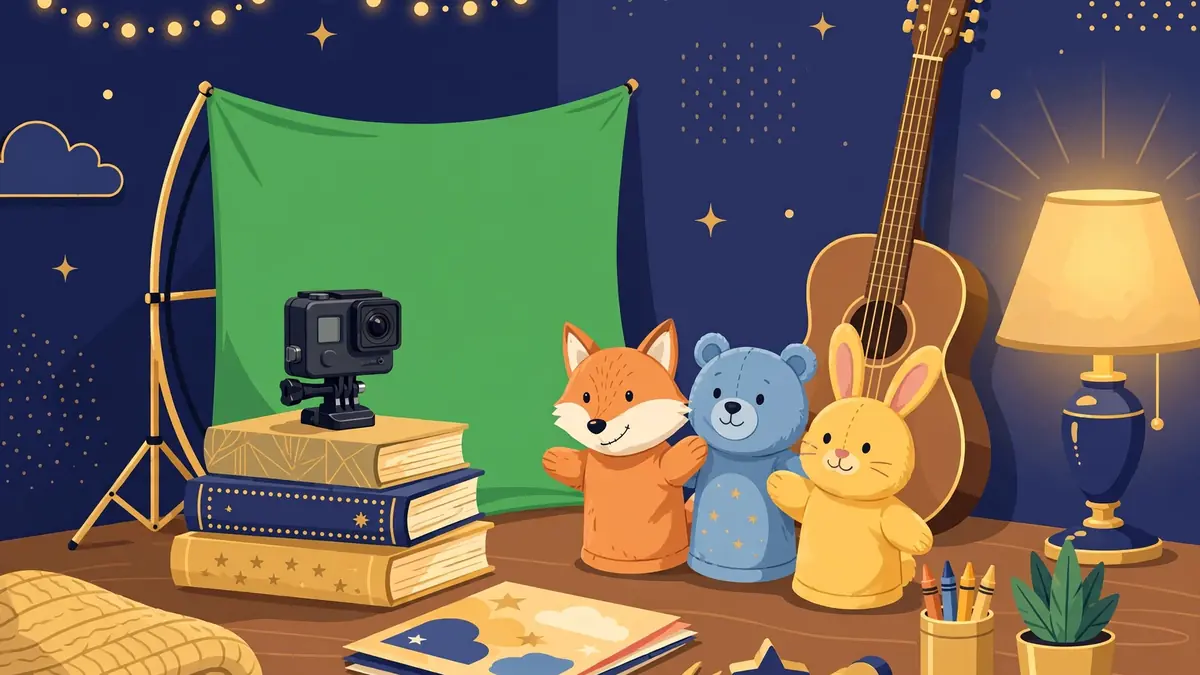
The Accursos went looking for videos that could help Thomas and found the pickings thin: plenty of noise, little actual pedagogy. So in 2019 they started making their own. The first upload was a counting song for preschoolers called “Bubble, Bubble Pop!” The production setup, which Aron described in a September 2026 NPR interview, tells you everything about the early economics: they filmed in a parent’s basement, stacked books to substitute for a tripod they didn’t own, and hung a pop-up green screen. Aron — who had been an associate music director and conductor on Broadway’s Aladdin, with earlier credits including The Little Mermaid, Sister Act, and Nice Work If You Can Get It — eventually left his Broadway chair to work on the channel full time: songs, arrangements, puppets, scripts, editing. What began as therapy homework for one toddler became a two-person studio.
| Year | Milestone | Why it mattered for the money |
|---|---|---|
| 2016 | NYU master’s completed; marriage to Aron Accurso | The credential stack and the creative partnership were both in place |
| 2018 | Son Thomas born; speech delay diagnosis | The problem the business would solve |
| 2019 | Songs for Littles launches; “Bubble, Bubble Pop!” | Zero-cost start: basement, books for a tripod |
| 2020–21 | Pandemic-era parent demand explodes | Watch time compounds; ad revenue scales with views |
| 2024 | CAA representation; first picture book; Cameo fundraiser | The brand professionalizes beyond YouTube |
| 2025 | Netflix licensing; three seasons; daughter Susannah born | Streaming money arrives; audience passes 20M subscribers |
| 2026 | Debut album I’m So Happy; Spin Master line expands; Forbes $26M earnings | Four-pillar business: ads, streaming, toys, music |
Rise to Fame
Ms Rachel’s rise didn’t look like a normal YouTube breakout. There was no viral moment, no controversy, no collaboration that 10x’d her overnight. Instead the channel grew the way a good preschool grows: one trusted recommendation at a time, until the recommendations formed a flood. The pandemic years did the initial heavy lifting — millions of parents stuck at home with toddlers, desperate for screen time that didn’t feel like a guilty compromise. Songs for Littles offered something close to the opposite of guilt: videos a speech therapist would approve of, paced slowly enough for a two-year-old to follow, with sign language, repetition, and pauses built in for the child to answer back.
The format was the strategy. Where most kids’ content chases attention with noise and speed, Ms Rachel’s videos slow down. She speaks directly to the camera in a high, singsong register, holds up objects, names them three times, waits. The wait is the product — it turns passive watching into something closer to a lesson. Parents started reporting, in comments and then in press profiles, that the videos were working: first words arriving, signs learned, speech therapists recommending the channel by name. The Washington Post and CBS News both profiled her as the channel crossed into the mainstream, and each profile sent another wave of parents to check what the fuss was about.
By mid-2026 the numbers had left the “YouTube channel” framing behind. The channel carried more than 21.4 million subscribers and 17.6 billion lifetime views, according to September 2026 tracking data from SPEAKRJ, adding roughly 53,000 subscribers and 61 million views every single day. To put that daily view count in perspective: it means her videos are watched more times per day than most cable networks draw in a week. The audience isn’t just large — it’s uniquely durable. Toddlers rewatch the same videos dozens of times, which is why her view counts compound in a way that entertainment channels, dependent on novelty, rarely match.
Main Sources of Income
Ms Rachel’s income looks less like a YouTuber’s and more like a children’s media company’s. Four pillars carry the business, each large enough to be a career on its own. YouTube advertising remains the foundation — the billions of annual views convert directly into ad dollars at premium family-friendly rates. Streaming licensing, led by the Netflix deal, added a second pillar in 2025. Consumer products — the Spin Master toy line, Tonie figurines, books — form the third, and it’s the fastest-growing. Music, including the 2026 debut album, is the fourth and newest.
What the structure buys her is resilience. A pure YouTube business lives and dies by the algorithm; a change in kids’ content policy or ad rates could cut revenue overnight. Ms Rachel’s diversification means no single platform controls her income. The table below breaks down the estimated annual contribution of each pillar, built from Forbes’ published earnings figures and third-party platform data. These are ranges, not audited line items — the underlying deals are private — but the shape of the business is well documented.
| Income source | Est. annual contribution | Notes |
|---|---|---|
| YouTube ad revenue | $8–15 million | ~1.8B monthly views; premium family-friendly CPMs |
| Netflix licensing | $3–6 million | Three seasons of curated episodes; terms undisclosed |
| Toys & merchandise | $3–6 million | Spin Master master license; Tonies; Melissa & Doug |
| Books & publishing | $1–2 million | Penguin Random House; preorder records |
| Music & streaming royalties | $0.5–1.5 million | Debut album I’m So Happy (Sept 2026) |
| Sponsorships & appearances | $1–2 million | Selective; family brands only |
| Total | $17–33 million | Consistent with Forbes’ $23–26M published figures |
Salary and Earnings
The most useful way to understand Ms Rachel’s earnings is to start with the view counter and do the math yourself. In September 2026, SPEAKRJ’s tracking put the channel at 21.4 million subscribers and 17.6 billion views, growing by about 61 million views per day. YouTube pays creators per thousand monetized views — the CPM — and kids’ educational content commands some of the highest CPMs on the platform, because advertisers selling diapers, snacks, and minivans will pay a premium to reach parents in a brand-safe environment. Industry estimates for her channel’s effective CPM cluster in the $4–8 range after YouTube’s cut.
Run the rough numbers: 61 million daily views at even a conservative $5 CPM works out to roughly $300,000 per day in gross ad revenue, or about $9 million a month — before YouTube takes its 45% platform share, leaving the channel around $5 million a month at the top of the range. The published tracker estimates land in the same neighborhood from different directions. Starstat’s July 2026 estimate put monthly channel earnings at $2.33 million (about $28 million annualized). Social Blade’s long-running estimate spans $104,000 to $1.7 million per month — a wide band, but its top end has historically understated fast-growing channels. SPEAKRJ’s September 2026 monthly average ran $366,700 to $8.2 million. The honest reading: YouTube alone likely generates high-single-digit to low-double-digit millions per year for the channel, and the exact figure moves with ad markets.
Then there’s Forbes, which applies its own methodology — estimating gross creator earnings across all revenue streams, before taxes and expenses, for a defined twelve-month window. Forbes ranked her No. 20 on its 2025 Top Creators list at about $23 million in annual earnings, then No. 24 on the 2026 list at about $26 million for the year to March 2026. Those two data points are the strongest anchors in this entire estimate: independently reported, methodologically consistent, and showing growth. A creator grossing $23–26 million a year who has been banking at that scale since roughly 2023, with a growing licensing business on top, reaches a $40–60 million net worth through straightforward accumulation — even after taxes, a production team, and the costs of running the business.
| Period | Metric | Figure | Source |
|---|---|---|---|
| Sept 2026 | Subscribers | 21.4 million | SPEAKRJ |
| Sept 2026 | Lifetime views | 17.6 billion | SPEAKRJ |
| Sept 2026 | Daily new views (avg) | 61.1 million | SPEAKRJ |
| July 2026 | Est. monthly YouTube earnings | $2.33 million | Starstat |
| 2026 | Est. monthly YouTube earnings | $104K–$1.7M | Social Blade |
| 2025 | Annual creator earnings | ~$23 million | Forbes Top Creators (No. 20) |
| 2025–26 | Annual creator earnings | ~$26 million | Forbes Top Creators (No. 24) |
The Netflix Deal, in Detail
In 2025, Netflix began carrying curated episodes of Ms Rachel’s educational programming — and the results surprised even people who follow the streaming wars. The series has since been streamed more than 69 million times, making it the highest-ranked new kids’ television show on the platform, with three seasons now listed. For context on what that means commercially: Netflix doesn’t buy children’s programming casually. Its kids’ slate is one of the most competitive licensing markets in media, and a YouTube-native property jumping straight to the top of it validated, in one stroke, that Ms Rachel had outgrown the “YouTuber” label.
The financial terms were not disclosed — Netflix almost never publishes licensing fees — so any dollar figure attached to the deal in tracker articles is speculation, and we won’t repeat one here. What can be said with confidence is structural: licensing deals of this type typically pay the rights holder per season or per episode window, often in the low-to-mid seven figures for a property with proven global demand, plus backend participation tied to viewing thresholds. The Daily BS reported in October 2026 that the brand’s commercial expansion continued through the Netflix relationship alongside the toy business, with no sign of the deal slowing.
Strategically, the Netflix deal did something YouTube revenue alone couldn’t: it put Ms Rachel in front of households that don’t live on YouTube — grandparents buying gifts, parents who default to the Netflix app, international markets where the platform carries more weight than the open web. Every one of those households is a potential toy buyer and book buyer. The streaming deal works as more than a revenue line: it’s the top of a funnel that feeds the merchandise business, which is where children’s properties historically make their real money.
Businesses and Investments
Behind the videos sits a real company, and its shape explains a lot about where the $50 million comes from. What started as a two-person operation — Rachel on camera, Aron composing, arranging, voicing puppets, scripting, and editing — professionalized in 2024 when the brand signed with Creative Artists Agency (CAA) for brand management, a move reported around that year’s Licensing Expo. CAA’s involvement signaled that the Accursos were done treating the channel as a family project and had begun running it as an intellectual property business: the same playbook that turned independent creators into licensing franchises.
The publishing arm came first. Penguin Random House — via Random House Children’s Books — signed Ms Rachel for a series of picture books aimed at babies, toddlers, and preschoolers. Her first picture book, Ms. Rachel and the Special Surprise, arrived in 2024, and the line set a single-day preorder record for the publisher — a data point that tells you the audience converts to buyers at unusual rates. The catalog has kept growing through 2026, aimed squarely at the under-five shelf where parents buy on trust.
Music became a formal business in 2026. On September 25, the Accursos released I’m So Happy, Ms Rachel’s debut album: a 23-song compilation of original music, children’s favorites, and traditional nursery rhymes. In a September 2026 NPR interview, Rachel framed the record as a statement about what children deserve — “rich, thought-out music” with real instruments, recorded properly rather than churned out. The album matters to the net worth picture in two ways: direct streaming and sales revenue, and the expansion of the brand into a category (recorded music) with its own licensing afterlife in films, ads, and playlists.
What about investments beyond the brand — stocks, startups, real estate portfolios? Here honesty requires a blank space: none are publicly documented. Unlike celebrity investors who announce every funding round, the Accursos have kept their private finances private. The wealth visible from the outside is the operating business itself, which is common for creator-economy fortunes at this stage. The money is in the IP: the channel, the characters, the song catalog, and the licensing contracts built on them.
Brand Deals and Sponsorships
Ms Rachel’s approach to brand deals is defined as much by what she refuses as what she signs. The channel carries no parade of random sponsors; partnerships are limited to family and children’s brands that fit the educational mission. That selectivity is itself a business decision — it protects the trust premium that makes her audience convert — but it also means sponsorship revenue, while real, is smaller than at comparable channels that take every deal offered. Industry estimates put it in the low seven figures annually.
The deal that matters most isn’t a sponsorship at all. It’s the master toy license with Spin Master, one of the largest children’s entertainment companies in the world, which became the master toy licensee for the Ms Rachel brand — covering plush, puzzles, vehicles, playsets, and developmental learning toys. In August 2026 the line expanded significantly for the UK market, and the product list reads like a merchandising masterclass: each item maps directly to something toddlers already do in the videos.
| Product | What it does | Why it sells |
|---|---|---|
| Sing & Learn Tractor | Interactive musical tractor; sings when the Ms Rachel figure sits in the driver’s seat | Ties the toy to the videos’ music-led learning |
| Birthday Party Playset | Counting, color recognition, and matching activities | Maps to the channel’s core curriculum |
| Speak & Giggle Herbie | Interactive plush with 30+ sounds, songs, jokes, and affirmations | Herbie is a beloved on-screen puppet character |
| My First Learning Songs & Nursery Rhymes Book | Interactive book with 20+ prompts for communication and motor skills | Extends the videos’ methods off-screen |
| Melissa & Doug First Words Wooden Magnets | 20-piece shaped wooden magnet set for word identification | Prestige partner brand; gift-able price point |
Beyond Spin Master, the merchandise shelf keeps filling: Tonie figurines — the screen-free audio characters — have repeatedly sold out, a telling signal of demand outrunning supply. Dolls, rattles, talking toy phones, and pyjamas are all in market through major retailers including Target. On the content side, collaborations with Sesame Street and Blippi — the two biggest names in children’s entertainment — function as both credibility markers and audience exchanges, introducing Ms Rachel to adjacent fan bases while borrowing nothing from their commercial playbooks.

Houses, Cars and Other Assets
Here’s where Ms Rachel’s profile diverges sharply from the typical celebrity fortune story: there is no mansion portfolio to itemize. The Accursos live in New York City as a family of four, and Rachel films her videos at home — a fact widely reported, including by The Tab, which notes the family keeps its home life private. No verified property records, luxury car collections, or asset purchases have surfaced in public reporting, and we won’t invent any.
That absence is itself informative. Creator-economy wealth at this level usually shows up in one of two places: visible assets (the Los Angeles mansion phase) or the operating business (reinvested earnings, IP value). All available evidence points to the second for the Accursos. The money appears to be working inside the brand — funding production, the toy pipeline, the book program, and the team — rather than being converted into trophy assets. It’s the financial profile of founders still in build mode, not celebrities in spend mode. For the net worth estimate, that means the $40–60 million lives primarily in business value and accumulated earnings rather than in a Zillow portfolio we could screenshot.
Ms Rachel vs Other Kids’ Creators
Context helps: how does a $50 million estimate compare with the rest of children’s YouTube? The kids’ category is one of the platform’s most lucrative — enormous watch time, brand-safe content, and an audience that rewatches — but the fortunes in it vary widely by business model. Ms Rachel’s position is distinctive: she earns like an entertainment property while spending like an educator, and her licensing business is unusually developed for a channel that started in 2019.
| Creator / Channel | Model | Est. net worth (2026) | What sets them apart |
|---|---|---|---|
| Ms Rachel | Educational; ads + Netflix + toys + books | $40–60M | Speech-development niche; strongest licensing mix |
| Blippi | Entertainment; acquired by Moonbug | ~$75M (reported) | Sold into a larger kids’ media rollup |
| Ryan’s World (Ryan Kaji) | Toy-review origins; massive merch | ~$100M (reported) | Earlier start (2015); Walmart-scale retail |
| CoComelon | Animation; acquired by Moonbug/Blackstone | N/A (corporate-owned) | Valued in the billions as a company, not a person |
| Vlad and Niki | Family entertainment; global licensing | ~$40–70M (reported) | Closest comp: similar licensing-led model |
The comparison supports the estimate rather than undermining it. Vlad and Niki — the nearest structural comparable, a family-run channel with global licensing — sit in the same $40–70 million band. Blippi and Ryan’s World, both further along the merchandising curve with earlier starts, sit higher. Ms Rachel at $50 million lands exactly where the comps say a 2019-vintage, licensing-led, educator-trusted property should land in 2026. If anything, the trajectory suggests upside: her licensing business is younger than her comparables’, and the Netflix and album expansions are still early in their revenue curves.
Awards and Achievements
Ms Rachel’s trophy shelf looks different from a pop star’s, but it’s substantial. Rolling Stone named her the third most influential creator of 2025, placing an educator who sings about first words alongside the biggest names in digital culture. Forbes’ Top Creators list has featured her twice — No. 20 in 2025 at about $23 million in earnings, No. 24 in 2026 at about $26 million — the rare creator whose ranking is driven by an education niche rather than entertainment scale.
The commercial records tell their own story: her Netflix series became the streamer’s highest-ranked new kids’ show with 69 million-plus streams; her Random House picture books set a single-day preorder record for the publisher; her Tonie figurines sell out on release. Press recognition has followed the same arc — profiles in the Washington Post, CBS News, and a September 2026 NPR interview about the debut album all treating her as a cultural figure, not a curiosity. For a woman who started by stacking books as a tripod in a basement, the distance traveled is the achievement.
Net Worth Growth Over the Years
Ms Rachel’s wealth curve is one of the steepest in the creator economy — not because she had a single windfall, but because every year added a new revenue pillar while the old ones kept compounding. The table below reconstructs the trajectory from public estimates and reported earnings. Treat the early years as approximate: before Forbes started publishing her creator earnings in 2025, the figures come from tracker estimates and channel-scale math.
| Year | Est. net worth | What drove it |
|---|---|---|
| 2019 | Under $1M | Channel launch; basement production; minimal ad revenue |
| 2020 | $1–2M | Pandemic watch-time surge; first meaningful AdSense checks |
| 2021 | $3–5M | Subscriber base crosses into the millions; CPMs rise |
| 2022 | $6–9M | Merchandise testing; brand inbound interest builds |
| 2023 | $10–18M | Full-time business; team and production scale up |
| 2024 | $18–30M | CAA signing; first book; Cameo fundraiser; audience ~14M |
| 2025 | $30–45M | Netflix deal; Forbes $23M earnings; 20M subscribers |
| 2026 | $40–60M | Forbes $26M earnings; album; Spin Master expansion |
The shape matters more than any single row. This is a compounding curve, not a lottery ticket: each year’s earnings funded the next year’s expansion, and each new pillar (books, then streaming, then toys, then music) stacked on top of the last without cannibalizing it. That’s why the 2024-to-2026 jump looks so dramatic — it’s the licensing business maturing all at once, the way children’s properties historically do once retail and streaming validate them.
Why Some Sites Still Say Ten Million
Search “Ms Rachel net worth” and you’ll find a confusing spread: $50 million on most 2026 trackers, but $6–8 million on some, $10–15 million on others. The gap isn’t a mystery — it’s a freshness problem. The low figures come from weaker trackers running old math: estimates built before Forbes published her $23 million 2025 earnings, before the Netflix deal’s scale was public, and before the toy line expanded.
Here’s the simplest debunk available. Starstat’s independent channel valuation put the YouTube channel alone at $49.9 million in July 2026 — and that’s just the channel, before Netflix, toys, books, or music. A $6–8 million total net worth would require believing that a business grossing $23–26 million a year (per Forbes, two years running) is somehow worth less than one year’s revenue. The $10–15 million figures fail the same test. The $50 million consensus survives because it’s the only number consistent with the published earnings: at $23–26 million grossed annually since roughly 2024, minus taxes and operating costs, a $40–60 million accumulated net worth is the conservative reading, not the aggressive one.
Our range — $40–60 million anchored near $50 million — reflects the remaining honest uncertainty. The underlying business is private, so the exact split between banked earnings and IP value can’t be audited from outside. But the direction of travel is one-directional and well documented: every new data point since 2024 — Forbes twice, Starstat, the channel trackers — has pointed up. For a brand built on patience and repetition, that seems about right.
Social Media Presence
Ms Rachel’s social footprint is concentrated where it matters: YouTube first, everything else in support. The main channel — home of Songs for Littles — carried 21.4 million subscribers and 17.6 billion views as of September 2026, adding roughly 53,000 subscribers a day. The growth rate is the remarkable part: most channels of that size plateau, but hers keeps compounding because the audience regenerates itself — every year a new cohort of toddlers ages into the content while older ones age out, and parents of newborns discover her exactly when they need her most.
Her Instagram account, @msrachelforlittles, functions as the family’s public square: birth announcements (daughter Susannah’s arrival was revealed there in April 2025), fundraising drives, and the occasional personal note, like the 2024 post where she shared her miscarriage and “rainbow baby” song for Thomas. The account’s tone matches the channel’s — warm, direct, unafraid of sincerity — and it’s where her advocacy (Save the Children ambassadorship, the $1 million giving pledge) gets its widest hearing. She keeps the rest of her public life deliberately small: no reality TV, no podcast circuit, no personal-brand sprawl. The discipline is strategic. Every public appearance reinforces the same trusted-teacher identity that the entire business rests on.
Personal Life
Rachel married Broadway composer and music director Aron Accurso in July 2016 in South Portland, Maine, after meeting at a Unitarian church on Manhattan’s Upper East Side. Aron is the business’s co-founder in every sense that matters: he composes the songs, voices puppet characters, writes scripts, and edits — and he gave up an associate music-director and conductor chair on Broadway’s Aladdin (with earlier credits on The Little Mermaid, Sister Act, and Nice Work If You Can Get It) to do it full time. The channel’s music — the actual product, in many ways — is his.
Their son Thomas was born in 2018. His speech delay, and the couple’s fruitless search for videos that could help, is the origin story of the entire enterprise; his first word, “mama,” arrived when he was 2 years and 8 months old. Rachel has spoken openly about the miscarriage that preceded him, sharing a song in September 2024 calling Thomas her “rainbow baby” and writing to followers who understood the grief. On April 8, 2025, the family grew again: daughter Susannah, born via surrogate after Rachel was unable to carry the pregnancy for medical reasons. Rachel revealed in a TODAY.com interview that Susannah is named after her own mother — the single mom who raised Rachel and her sister, and who built them that tree house by hand.
The family of four lives in New York City, where Rachel films her videos at home, and guards its privacy closely. Rachel has used her platform for advocacy — describing herself as “political” in March 2026 and meeting lawmakers on Capitol Hill that June on children’s issues — while keeping that work separate from the preschool content itself. It’s a careful line to walk for someone whose audience is toddlers, and so far the brand has walked it without visible commercial damage: the toy deals and the Netflix relationship both expanded through 2026.
Philanthropy and Giving
Giving isn’t a side project for Ms Rachel — it’s wired into the business model. In 2024 she raised $50,000 for Save the Children by selling personalized videos on Cameo, and she serves as an ambassador for both Save the Children and Room to Grow, the organizations working on child poverty and early development. The product line carries the same ethos: kit sales are structured so that purchased literacy and preschool kits fund copies for children who wouldn’t otherwise receive them — buy one, give one, built into the SKU rather than bolted on as marketing.
In September 2026, she pledged a $1 million donation tied to her expanding product business, adding to a giving record that has grown in step with the revenue. Her public philosophy on wealth is unusually explicit for someone in her position. Responding to a fan who hoped she’d “make billions” because she’d do good with it, she wrote: “I’ll never be a billionaire because I don’t believe that’s right, but thank you! I love giving.” Whether you share the philosophy or not, it’s a data point the net worth estimate has to reckon with: this is a founder who has repeatedly chosen to convert revenue into donations and donated product rather than maximize the personal balance sheet. The $50 million, in other words, is net of unusual generosity.
Sources & Reporting
Forbes (Top Creators lists, 2025 & 2026): Published annual creator-earnings estimates — ~$23M for 2025 (No. 20) and ~$26M for the year to March 2026 (No. 24). The strongest anchors in this estimate; methodology is gross earnings before taxes and expenses.
NPR / WAMC (Sept 18, 2026): Leila Fadel interview on the debut album I’m So Happy (Sept 25, 2026, 23 songs); 17.2B views; basement-filming origin story (books for a tripod, pop-up green screen).
SPEAKRJ (Sept 24, 2026): Channel tracking data — 21.4M subscribers, 17.6B views, daily/monthly view and earnings averages.
Starstat (July 2026): Independent channel valuation of $49.9M; monthly earnings estimate of $2.33M.
The Tab (2025): Celebrity Net Worth’s $50M figure; $10–20M annual YouTube earnings range; NYC home filming; the “never be a billionaire” quote.
The Toy Book (Licensing Expo): Spin Master as master toy licensee; Penguin Random House partnership; CAA representation.
FashionTimes (Sept 2026): Forbes 2026 figures; $1M donation pledge; Spin Master collaboration.
The Toy Book (Licensing Expo): Spin Master as master toy licensee; Penguin Random House partnership; CAA representation.
Reporting window: 2024–October 2026. Netflix licensing terms and the Accursos’ private investments are undisclosed; figures built on those are labeled estimates or ranges.
Frequently Asked Questions
What is Ms Rachel’s net worth in 2026?
Ms Rachel’s net worth is estimated at $40–60 million as of October 2026, anchored near $50 million. Most 2026 trackers, including Celebrity Net Worth, converge on $50 million, and the figure is consistent with Forbes’ published creator earnings of $23 million (2025) and $26 million (2025–26). Lower figures ($6–15 million) on some sites reflect outdated estimates from before the Netflix deal and the Forbes earnings reports.
How much does Ms Rachel make per month?
Estimates vary by source and methodology. Starstat’s July 2026 estimate put her YouTube channel earnings at about $2.33 million per month; Social Blade’s long-running band spans $104,000 to $1.7 million monthly; SPEAKRJ’s September 2026 tracking averaged $366,700 to $8.2 million per month. Across all revenue streams — YouTube, Netflix, toys, books, music — Forbes’ annual figures imply roughly $2 million per month in gross creator earnings.
What is Ms Rachel’s real name?
Ms Rachel’s real name is Rachel Anne Griffin Accurso (née Griffin). She was born on November 30, 1982, in Biddeford, Maine, and performs under the name Ms Rachel on her Songs for Littles YouTube channel.
How old is Ms Rachel?
Ms Rachel is 43 years old as of 2026. She was born on November 30, 1982, which makes her one of the older breakout stars of the creator economy — she launched her channel at 36 after a full teaching career.
Who is Ms Rachel’s husband?
Ms Rachel is married to Aron Accurso, a Broadway composer and music director. He was an associate music director and conductor on Broadway’s Aladdin (with earlier credits including The Little Mermaid and Sister Act) before leaving to work on the channel full time — composing songs, voicing puppets, and editing. They married in July 2016.
Does Ms Rachel have kids?
Yes — two. Her son Thomas was born in 2018; his speech delay inspired the creation of Songs for Littles in 2019. Her daughter Susannah was born on April 8, 2025, via surrogate, and is named after Rachel’s mother.
Why did Ms Rachel start YouTube?
She started the channel in 2019 to help her son Thomas, who had a speech delay — his first word didn’t come until he was 2 years and 8 months old. Unable to find videos that combined real pedagogy with engaging music, she and her husband began making their own, filming in a basement with books stacked as a tripod. The channel grew through parent recommendations and speech-therapist referrals.
Is Ms Rachel on Netflix?
Yes. Netflix began licensing curated episodes of her educational programming in 2025 and now lists three seasons. The series has been streamed more than 69 million times, making it Netflix’s highest-ranked new kids’ show. The financial terms of the licensing deal were not disclosed.
Final Thoughts
Ms Rachel’s $50 million is the most instructive fortune in the creator economy because of how it was built: no viral lottery ticket, no controversy arbitrage, no pivot to whatever the algorithm wanted that quarter. A teacher with two master’s degrees identified a real problem — her own son’s speech delay — built the solution she couldn’t find, and monetized it through every channel available to a children’s property: ads, streaming, toys, books, music. Each pillar arrived in sequence, each one validated the next, and the compounding did the rest.
The honest caveats remain. The business is private, so the $40–60 million range reflects genuine uncertainty about the split between banked earnings and IP value. The Netflix terms are undisclosed. The toy business is still young enough that its long-run margins are unproven. But the direction is unambiguous: every independently reported figure since 2024 — Forbes twice, Starstat, the channel trackers — has pointed up. For a brand built on patience and repetition, that seems about right.
Published on October 6, 2026. Last reviewed October 2026. Found an error? See our corrections policy.