
Paul Teutul Sr.‘s net worth is estimated at $500,000 to $2 million as of November 2026. The founder of Orange County Choppers went from a one-man welding shop to the star of Discovery’s American Chopper, watched his fortune collapse into a 2018 bankruptcy filing that listed $1.8 million in assets against $1.07 million in debts, sold his 38-acre New York estate for $1.5 million, and rebuilt the business in Florida — where, at 77, he is back on Discovery with a new series in 2026.
Paul Teutul Sr.: Quick Facts
| Estimated net worth | $500,000 (range: $500,000 to $2 million) |
|---|---|
| Profession | Motorcycle builder, entrepreneur, reality television personality |
| Nationality | American |
| Born | May 1, 1949 (age 77) |
| Height | 6 feet (1.83 m, commonly reported) |
| Primary income sources | Orange County Choppers, American Chopper television, OCC Road House & Museum, merchandise and appearances |
| Active years | 1973–present |
| Last reviewed | November 2026 |
- Early Life and Background
- Education
- Career Journey
- Rise to Fame
- Main Sources of Income
- Salary and Earnings
- Businesses and Investments
- Brand Deals and Sponsorships
- Houses, Cars and Other Assets
- Awards and Achievements
- Net Worth Growth Over the Years
- Social Media Presence
- Personal Life
- Sources & Reporting
- Frequently Asked Questions
Early Life and Background
Paul John Teutul was born on May 1, 1949, in Yonkers, New York, and grew up in Pearl River, a hamlet in Rockland County north of New York City. The family had no money to spare and no connection to the motorcycle world that would later make his name. What Teutul did have, from an early age, was a willingness to work with his hands and a temper that would become famous on television decades later.
At 18, during the Vietnam War era, Teutul joined the United States Merchant Marine. According to Discovery, he traveled internationally and helped transport ammunition and other supplies to American forces. The work took him far from Pearl River and gave him his first sustained experience of hard, disciplined, physical labor under pressure — the same qualities that later defined his shop floor. When he came home, he bought a 1964 International pickup truck from his father and a four-cylinder Hobart welding machine. Those two purchases, modest as they sound, became the foundation of everything that followed.
The Yonkers and Pearl River years matter to the money story because Teutul never came from wealth and never had a financial cushion. Every business he built started with his own labor, and every setback hit a man who had borrowed against what he owned. That pattern — building from nothing, borrowing to grow, losing ground when the borrowing caught up — repeats at every stage of his career, from the welding shop to the motorcycle empire to the bankruptcy court in 2018.
Teutul’s love of motorcycles dated back decades before fame. He was drawn to the custom bikes of 1960s and 1970s chopper culture, the long forks and hand-shaped tanks associated with films such as Easy Rider. For years it stayed a private passion while he earned his living in steel. The bikes he admired cost money he did not have, so he learned to build the things he could not buy — a habit that turned into a business when other people started asking him to build bikes for them.
Education
Teutul has no college degree and no record of formal education beyond high school. His schooling, in any real sense, was the Merchant Marine at 18 and the welding trade that followed. He learned fabrication the way tradesmen of his generation learned it: by doing the work, making mistakes on real jobs, and getting hired again when the work held up.
The Merchant Marine years gave him something a classroom would not have — experience working inside large, disciplined operations where a missed deadline or a sloppy job had immediate consequences. Discovery’s account of his service notes that he moved ammunition and supplies during wartime, work that demanded reliability under stress. Teutul later ran his shops the same way, with shouting, deadlines, and little patience for excuses. Viewers of American Chopper saw that management style up close; it was not a television character. It was how a self-taught fabricator who had learned on the job ran a crew.
Welding itself became his real education. He started in the early 1970s repairing farm equipment and taking small fabrication jobs around Orange County, New York. Each job taught him something the last one had not — structural steel, custom metal shaping, managing a crew, pricing work so the shop survived. By the time he founded his own company in 1973, he had spent years accumulating the practical knowledge that no course could have given him: how to quote a job, how to keep workers busy, how to turn a pile of steel into something a customer would pay for.
That background explains both his rise and his later troubles. Teutul could build almost anything from metal and could run a shop floor, but he had no training in corporate finance, deal structuring, or the legal side of taking outside investment. When television money arrived and investors started offering millions, the gap between his fabrication skill and his business education showed — most painfully in the Derbyshire dispute of 2017, where a deal over a new television series collapsed into fraud allegations that Teutul disputed.
Career Journey
Teutul began welding farm equipment and taking on small fabrication jobs in the early 1970s. In 1973, he established Paul’s Welding with little more than his truck, his welding equipment, and his own labor. The business grew job by job into a commercial steel-fabrication company employing dozens of workers from a large facility in Rock Tavern, New York. It eventually became known as Orange County Ironworks, a name that tied the company to the county where Teutul lived and worked — not to Orange County, California, a confusion that later became a running joke and the reason for his “OCC New York” tattoo.
Steel fabrication gave Teutul the skills he later applied to motorcycles: shaping and welding metal, managing fabrication crews, working under deadlines, and turning custom designs into finished physical products. It also gave him his first real money. By the late 1990s, Orange County Ironworks was an established business, and Teutul had the workshop space, the equipment, and the crew to treat motorcycle building as a serious hobby. He started fabricating bikes inside the ironworks shop, working with his son Paul Jr., whose design and fabrication ability soon became central to the projects.
In 1999, Teutul formally founded Orange County Choppers. The company specialized in highly customized theme bikes that often worked as rolling advertisements or commemorative sculptures — machines built for corporations, sports organizations, military units, charities, and celebrities. OCC bikes were not mass-produced. According to PlayersWiki, the shop built a maximum of two bikes a month, and the bikes sold for $50,000 to $150,000 each. The business model was low volume and high price: a small number of spectacular machines, each one a showcase.
Teutul brought the bikes to motorcycle events including Daytona Bike Week, and the attention they drew caught the eye of the Discovery Channel. Discovery first filmed the Teutuls for motorcycle specials that aired in 2002. The regular series American Chopper premiered in March 2003 and quickly became one of the network’s signature programs. Teutul later handed day-to-day control of Orange County Ironworks to his son Daniel, keeping the steel company separate from the motorcycle business that made the family famous.
The original run of American Chopper moved between Discovery and TLC before ending in 2010. The franchise then continued as American Chopper: Senior vs. Junior from 2010 through 2012, built around the competition between Paul Sr.’s OCC and Paul Jr.’s new company, Paul Jr. Designs. CMT carried Orange County Choppers in 2013 and 2014, and a further series, Orange County Choppers: American Made, followed. Discovery revived the show in 2018, and the final original-building reunion special, American Chopper: The Last Ride, aired in 2020, with father and son building a motorcycle together for the first time in more than a decade.
Through all of it, Teutul stayed the face of the brand. He was the owner on camera, the man arguing in the shop, the one whose name was on the door. That visibility became his most valuable asset — and, when the arguments turned into lawsuits, his biggest liability.
Rise to Fame
American Chopper worked because the motorcycles were only part of the appeal. Viewers tuned in for the constant arguments between Paul Sr. and Paul Jr., whose creative approach clashed with his father’s demanding personality. Younger son Michael “Mikey” Teutul provided comic relief, while fabricators and designers including Rick Petko and Jason Pohl developed their own followings. The show documented some of OCC’s most elaborate custom builds, including motorcycles inspired by fire departments, military aircraft, corporations, sports teams, and celebrities.
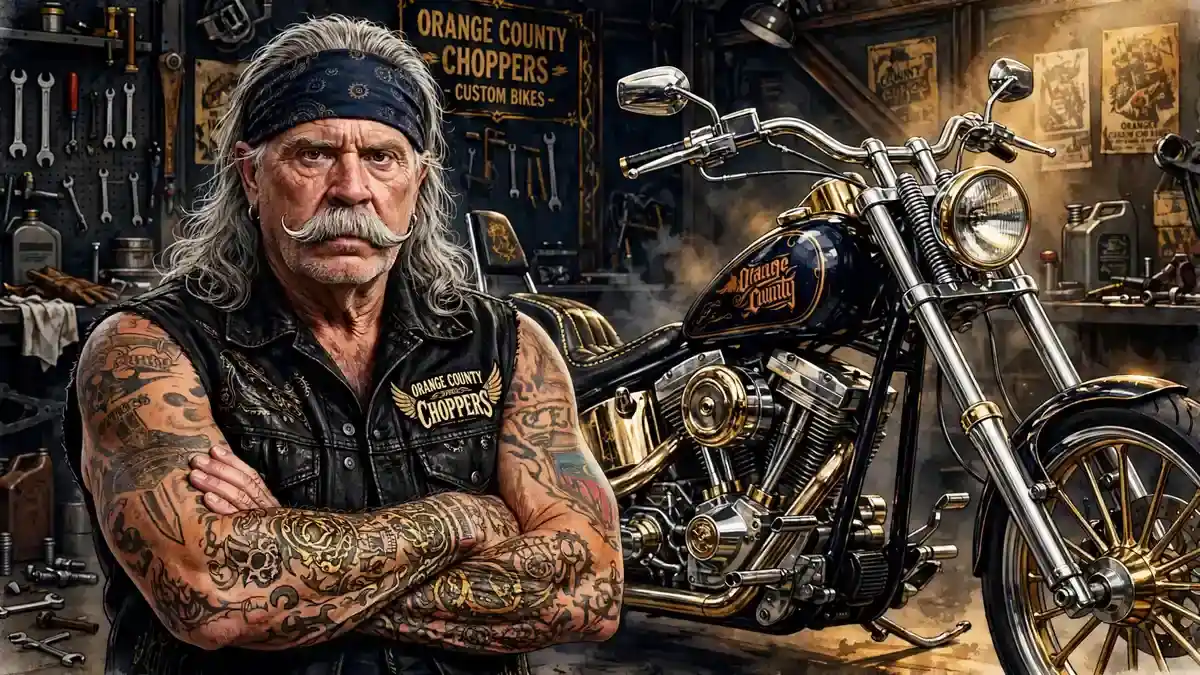
At its peak, the show averaged 3 million viewers, according to the Daily Voice, as reported by HotCars. That audience turned OCC merchandise, personal appearances, sponsorships, and branded products into businesses of their own. The OCC name started appearing on T-shirts, posters, die-cast models, and licensed goods. A small custom shop in upstate New York had become a national brand, and Teutul’s face — handlebar mustache, tattoos, black sleeveless shirts — became one of the most recognizable images in reality television.
The fame also made Teutul a peer of other motorcycle and reality television figures. His path crossed with custom bike builder Jesse James, whose own West Coast Choppers operation ran a parallel course through the same custom-bike boom, and with reality television stars such as Rick Harrison, whose Las Vegas pawn shop show proved the same formula — a family business, a camera crew, and a strong personality — could carry a series for years. Teutul’s version of that formula ran for the better part of two decades across five different series.
The 2008 firing of Paul Jr. became the most famous moment in the show’s history and the start of its most damaging chapter. One intense dispute ended with Paul Sr. ordering his son out of the shop. Paul Jr. was terminated from Orange County Choppers, later returned under a consulting arrangement, and then left permanently to found Paul Jr. Designs. The family dispute moved into court over Paul Jr.’s ownership interest in OCC. Paul Sr. sought to exercise a contractual option to purchase his son’s shares, while Junior challenged the valuation and terms. The litigation was eventually resolved when Paul Sr. purchased Paul Jr.’s remaining ownership stake — a buyout that cost real money at a time when the business was already under strain.
Their rivalry became the central premise of American Chopper: Senior vs. Junior, which turned a family breakdown into ratings. The relationship improved and deteriorated repeatedly over the following years. The 2020 reunion special revived some of their familiar creative conflicts even as they built a bike together. Fame had given Teutul everything, including a public record of his worst family fights, and the money that came with it never fully repaired the damage.
Main Sources of Income
Teutul’s money has always come from four streams, and their relative weight has changed sharply over time. In the peak years, television and the motorcycle shop fed each other. After 2018, the balance shifted toward the Florida venue and the brand itself.
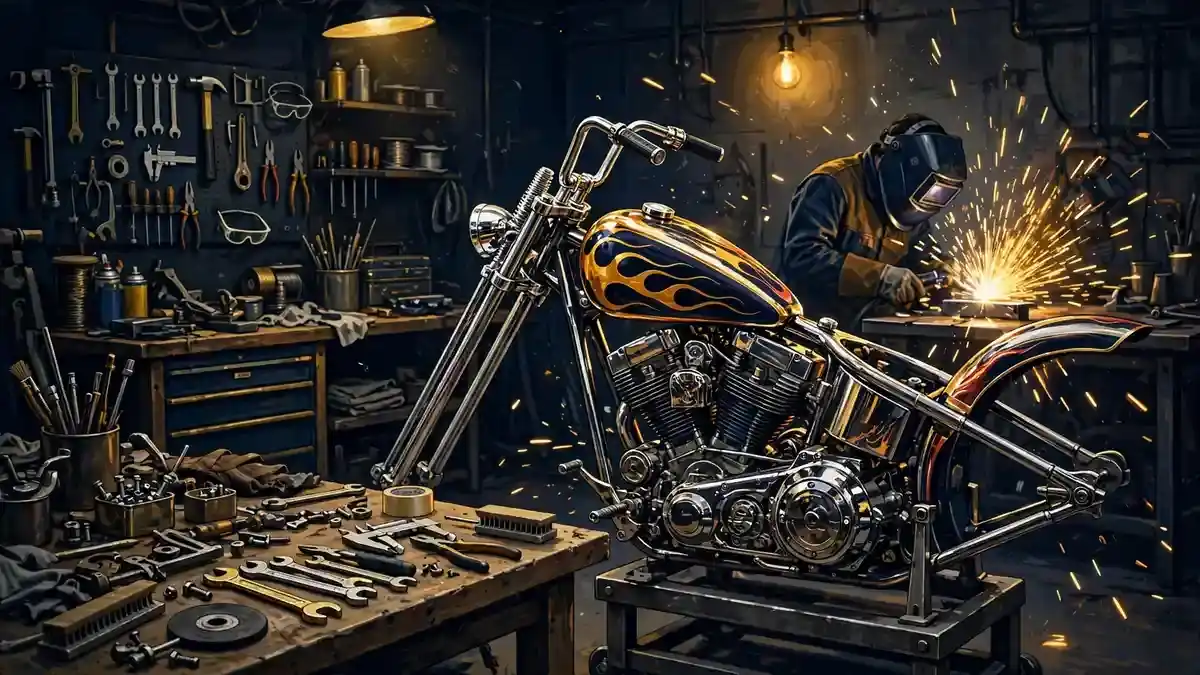
Custom motorcycle building. Orange County Choppers remains the core business. OCC builds theme bikes for corporate clients, charities, military units, and private buyers, with prices reported between $50,000 and $150,000 per machine. At a reported maximum of about two bikes a month, the shop’s revenue ceiling was always modest by manufacturing standards — the value was in the name on the tank, not the volume. A single commissioned bike could carry a six-figure price because Discovery had made OCC famous, and that fame premium is what separated Teutul’s shop from every other custom builder in the country.
Television. American Chopper and its spinoffs paid Teutul across nearly two decades: the original Discovery run, the TLC years, Senior vs. Junior, the CMT series, the 2018 Discovery revival, and the 2020 reunion special. Beyond salary, the show generated rerun and licensing income, and it fed every other revenue line — merchandise, appearances, and bike commissions all traced back to the screen. The new series, Orange County Choppers Original, which premiered on Discovery on February 21, 2026, has put him back on television at 77, filmed at the Florida shop with Mikey, Rick Petko, and Jim Quinn back on the crew.
The Florida venue. Since June 2021, the OCC Road House & Museum in Pinellas Park, Florida, has combined a restaurant, bar, live-entertainment venue, retail shop, and motorcycle museum displaying many of the custom bikes made famous by the show. The venue turns decades of television history into a permanent tourist attraction, and it earns money in ways a bike shop alone cannot: food and drink, ticketed events, concerts, and merchandise sold to visitors who came to see the bikes. Teutul remains the owner and face of OCC, while his longtime partner Joan “Joannie” Bulger-Kay serves as the company’s CEO and oversees operations.
Merchandise, licensing, and appearances. OCC-branded clothing, collectibles, and licensed products have sold since the show’s peak, and Teutul continues to earn from personal appearances at motorcycle shows, charity events, and branded OCC events. He has also written two books: Orange County Choppers: The Tale of the Teutuls and Ride of a Lifetime: Doing Business the Orange County Choppers Way. Book income is small next to television and venue revenue, but the books keep his name in print and his story in circulation.
The steel business that started it all, Orange County Ironworks, still exists under his son Daniel’s day-to-day control. It is a separate company from OCC, and Teutul’s income from it is not part of the public record. What the record does show is a career built on one skill — shaping metal — that Teutul turned into four different businesses, each one feeding the next.
Salary and Earnings
The most quoted salary figure attached to Teutul is also the least reliable. SurpriseSports reports that he earned $100,000 per episode of American Chopper and multiplies that by 165 episodes to reach $16.5 million in total show earnings. No primary source confirms the per-episode figure, and the outlet’s own page undercuts it: its FAQ section puts his net worth at $500,000, the same number Celebrity Net Worth publishes. A $16.5 million payday and a $500,000 net worth cannot both be true for the same man without an explanation, and no explanation is offered.
The court record tells a different story. When Teutul filed for Chapter 13 bankruptcy in February 2018, his filings listed monthly income of just over $15,000 — roughly $180,000 a year — from his work at Orange County Choppers, with monthly expenses of more than $12,000. Page Six, reporting on the same filings, put his monthly income at $16,531 against monthly spending of at least $20,129, a gap that explains why the debts kept growing. Either way, the documented pay was a working fabricator’s salary, not a television star’s fortune. The $100,000-per-episode number, repeated across low-quality net-worth sites, has no filing, contract, or interview behind it, and it should be treated as an internet rumor rather than a fact.
PlayersWiki adds a useful detail: Teutul’s own filing listed his occupation as “Steel Fabricator” with a monthly salary of $13,398.67 from the show, and the site reports his highest earning year at $16.5 million in 2009 — a number that appears to recycle the same unverified episode math. The honest reading of the evidence is that Teutul earned well during the show’s peak, spent heavily, borrowed against his property, and was left with a documented monthly income of about $15,000 when the bills came due in 2018.
What did the peak years actually pay? The public record gives pieces rather than a total. OCC earned roughly $1 million a year for Teutul from 2002 to 2006 and again in 2008 to 2009, according to SurpriseSports — a plausible figure for a shop selling a small number of six-figure bikes with television exposure driving commissions. Television pay, merchandising, and appearance fees sat on top of that. The 61,000-square-foot Newburgh headquarters, built in 2008 for about $12 million to $13 million, shows how much money was flowing through the operation at its height — and how much of it was borrowed, since the building itself went to the bank in 2011 and Teutul leased it back afterward.
Television pay in reality shows of that era also came with a catch that rarely shows up in net-worth articles: the cast was paid, but the production company owned the show, the footage, and most of the merchandising control. Teutul owned OCC and its brand, but Discovery owned American Chopper. When the show ended, the rerun and licensing money did not flow to him the way it would to someone who owned the program outright. That ownership gap is one reason a man who starred in a hit series for the better part of two decades filed for bankruptcy with $15,000 a month in income.
Since the Florida move, Teutul’s earnings have come from a steadier mix: the bike shop, the Road House restaurant and museum, merchandise, and the 2026 Discovery series. None of these figures are public. The venue’s economics — a restaurant and event space on a 9.5-acre complex next to a Harley-Davidson dealership — look healthier than a two-bikes-a-month shop ever did, but Teutul’s personal take from the venture is not disclosed, and the Road House was built with partner Keith Overton, so the profits are shared. For a man who once listed $20,129 a month in expenses against $16,531 in income, a shared, diversified income is a safer position than the one he held in 2018.
Businesses and Investments
Orange County Ironworks. Teutul’s first company and the one that taught him the trade. Founded as Paul’s Welding in 1973, it grew into a commercial steel-fabrication business with dozens of employees in Rock Tavern, New York. It fabricated structural steel and custom metalwork for commercial clients, and it stayed a working industrial business even after the motorcycle fame arrived. Teutul handed day-to-day control to his son Daniel, and the ironworks remains separate from OCC. Its value to Teutul was always the cash flow and the skills, not a sale price — there is no public record of the company changing hands or being valued.
Orange County Choppers. Founded in 1999, OCC is the business that defines him. It began in Rock Tavern, moved to Montgomery, New York, then to the big Newburgh headquarters in 2008, and finally to Pinellas Park, Florida, in 2021. The company’s assets were always its brand, its television history, and its back catalog of famous theme bikes. Those are valuable but hard to put a number on, and they are exactly the kind of assets that disappear from a balance sheet when a bankruptcy court lists what a man owns. The filing listed his interests in various businesses among his $1.8 million in assets without breaking out a value for OCC itself.
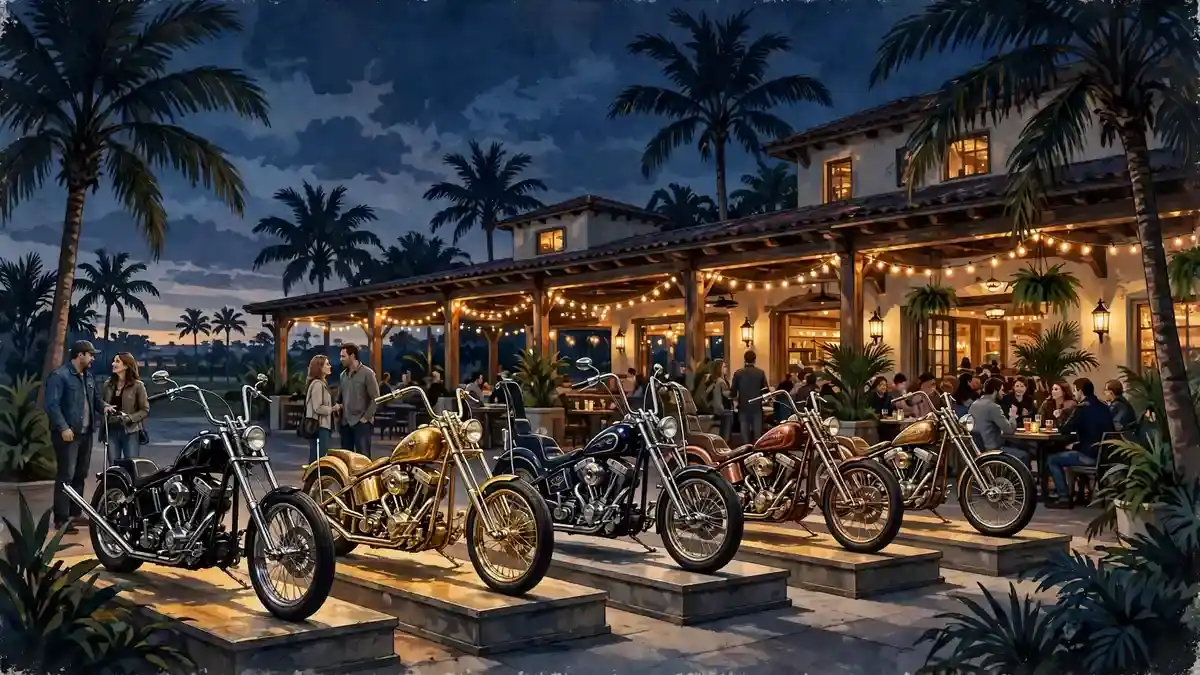
OCC Road House & Museum. The Florida venture is Teutul’s most important business move since the bankruptcy. Developed with hospitality executive Keith Overton, whom Teutul met at a bike show at Overton’s TradeWinds Island Resort, the venue opened in late June 2021 on a 9.5-acre complex at 10575 49th Street North in Pinellas Park, sharing ground with Bert’s Barracuda Harley-Davidson. The build cost more than $6.5 million, created more than 50 construction jobs, and was expected to support roughly 90 full-time and 20 part-time restaurant positions, according to Bikernet. The building houses a bike-building shop, a museum of the famous television bikes, a restaurant, a bar, a retail section, a billiard hall, and a concert pavilion. It is a joint venture, so Teutul does not own all of it — but it gives the OCC brand a permanent, revenue-generating home for the first time since the Newburgh building was lost to the bank.
Orange County Choppers Cafe. The New York restaurant attached to the Newburgh headquarters became a liability rather than an asset. Teutul owed New York State more than $22,000 in tax money for the cafe, according to Page Six, and the cafe closed with the rest of the Newburgh complex. It is a reminder that Teutul’s side ventures did not all pay: the restaurant business, which has humbled plenty of television personalities — including Guy Fieri, who built a far larger restaurant empire from the same kind of fame — was one of Teutul’s weakest lines.
Real estate as investment. Teutul’s property history reads like a case study in borrowing against an asset. He took out a $1.5 million mortgage on his Montgomery estate in 2005, according to SlashGear, listed the property for $2.895 million in 2017, cut the price repeatedly, faced foreclosure in early 2018, and sold it through the bankruptcy court for $1.5 million in 2019. The sale covered the mortgage and fed the repayment plan, but it left no profit. He has also split time with a farm in Brooksville, Florida, according to HotCars, though no purchase price or ownership details are public. There is no evidence of a property portfolio beyond the homes he lived in — no rental empire, no commercial holdings, no land bank.
Investments. No stocks, funds, startups, or investment portfolios appear in the public record for Teutul, and his bankruptcy filing listed no investment accounts of substance. His wealth was always tied up in his businesses, his house, his vehicles, and his name. That concentration is the central fact of his financial story: when OCC struggled, there was nothing else to fall back on.
Brand Deals and Sponsorships
Teutul’s brand deals were never the endorsement contracts that make other reality stars rich. He did not sell sneakers or watches or meal kits. His deals were the kind a motorcycle builder gets: parts suppliers, tool companies, bike-week sponsors, and companies that wanted their name on a theme bike rolling down the street on national television.
The most valuable deal of his career was not a sponsorship at all — it was the Discovery Channel agreement that put OCC on television. Discovery paid for the show, and the show made the brand. The bikes themselves became advertisements: a fire-department bike, a military bike, a corporate anniversary bike. Each one was a rolling billboard that a company had paid OCC to build, and each one aired to millions of viewers. That model — clients paying for the bike and the show providing the audience for free — was more profitable than any conventional endorsement while it lasted.
Merchandising was the second deal stream. OCC-branded clothing, hats, posters, and die-cast models sold through the Newburgh shop and later online. A 2019 lawsuit shows the underside of that business: photographer Scott Gunnells sued Teutul and OCC over the alleged unauthorized use of photographs of Mikey Teutul on merchandise. A federal judge initially entered a default judgment of $258,484.45 against Teutul and OCC in February 2020, according to Page Six, before later vacating it; the parties dismissed the claims in 2021. A separate claim by an employee, reported by TheBiography, alleged the show sold merchandise with his face on it without permission and never paid him. Merchandise money was real, but the rights behind it were messy.
Teutul also appeared in a 2007 cameo in the motorcycle comedy Wild Hogs alongside Tim Allen and John Travolta, appeared in Nickelback’s “Rockstar” music video the same year, and guest-starred on My Name Is Earl. In 2012 he competed on the fifth celebrity season of The Apprentice, hosted by Donald Trump, alongside Arsenio Hall, Clay Aiken, Penn Jillette, Dee Snider, Lou Ferrigno, and Lisa Lampanelli. These were paid appearances that raised his profile, not long-term endorsement contracts.
Since the Florida move, the deal structure has changed. The Road House itself is the sponsorship model now: a venue where the OCC brand, the bikes, the restaurant, and the concerts all sell each other. The 2026 Discovery series, Orange County Choppers Original, is the newest version of the same arrangement — a network paying to film the shop, and the shop earning from everything the cameras make famous.
Houses, Cars and Other Assets
The Montgomery estate. Teutul’s longtime home in Montgomery, New York, was the biggest asset in his bankruptcy filing and the center of his repayment plan. The roughly 3,450-square-foot house sat on about 38 acres and included barns, garages, a swimming pool, a koi pond, guest accommodations, and extensive space for his collection of animals and equipment. He listed it for $2.895 million in 2017 and cut the price several times as he tried to sell it. In February 2018, the Times Herald-Record reported the property was facing foreclosure, and Teutul had taken out a $1.5 million mortgage on it back in 2005. In 2019, a bankruptcy judge approved its sale for $1.5 million — a transaction that covered the house and land along with pieces of equipment, furniture, tools, boats, and farm animals. The proceeds funded the Chapter 13 repayment plan and helped clear the way for the move to Florida.
Florida property. Teutul has split time with a farm in Brooksville, Florida, and now lives and works around the Pinellas Park area, where the Road House operates. No purchase price, acreage, or ownership record for a Florida home is public. Unlike the Montgomery estate, which was documented in court filings down to the koi pond, his Florida living arrangements are not part of any public record.
The Newburgh headquarters. The 61,000-square-foot building OCC moved into in April 2008 cost roughly $12 million to $13 million to build and housed the bike-building workspace, a merchandise shop, and a cafe. It was the physical symbol of the OCC empire at its height. The building was transferred to the bank in 2011, and Teutul leased it back, operating there until the late-2020 decision to leave New York entirely. The old building is now a self-storage facility, and the adjoining cafe has closed, though the signage can still be seen. Teutul never owned the headquarters during the years it made him famous — a fact that surprises people who assume the television star owned the castle on screen.
Vehicles. The bankruptcy filing listed a collection of cars, boats, and trailers valued at $208,550, according to TrendCelebs, along with the 20-acre property parcel valued at $201,548 in the same filing. His known vehicles include a Chevrolet Corvette Z06 valued at about $76,000, a 1960 fuel-injected Corvette convertible worth about $60,000, and a 1957 Ariel T-5 motorcycle that he later auctioned for $13,000. The Corvette also produced a legal bill: JTM Motorsports, which performed work on the car, claimed $51,841.01 and alleged Teutul had promised promotional exposure in exchange for the work. The parties reached a $30,000 settlement in January 2019, and the company sued again afterward, alleging the sum was not paid, according to The Blast.
Other assets. The filing also listed firearms, personal property, and his interests in various businesses. His extensive collection of biker memorabilia — including a “patch wall” of tens of thousands of patches given to him by members of the military and first responders over the years — now forms part of the Road House museum display. The patches have sentimental and display value, but no market price.
Awards and Achievements
Teutul’s trophy shelf is thin by Hollywood standards and exactly what you would expect for a fabricator who became famous by accident. His most notable award came in 2007, when he won the ASTRA Award for Favourite International Personality or Actor for American Chopper. The ASTRAs, awarded by the Australian Subscription Television and Radio Association, recognized the show’s reach beyond the United States — proof that a shop in upstate New York had become appointment television on the other side of the world.
The achievements that matter more than awards are the ones with numbers attached. He built Orange County Ironworks from a one-man welding operation into a commercial fabrication company with dozens of employees. He founded Orange County Choppers in 1999 and turned it into a brand known in dozens of countries. He starred in a television franchise that ran, across its various series, from 2002 to 2020, with a new series launching in 2026. He built theme bikes for corporations, military units, sports teams, and charities that were seen by millions. He wrote two books about the business.
The charitable record belongs in the same section. OCC built motorcycles for charitable organizations and fundraising campaigns throughout its history, benefiting the Make-A-Wish Foundation, military and veterans’ organizations, children’s charities, and animal rescue groups. In 2010, the company established the OCC Foundation to formalize some of that work. Animal rescue became particularly important to Teutul and Bulger-Kay, who became involved with the Hudson Valley SPCA, where Teutul served as vice president, according to SurpriseSports. Charity bikes and fundraising builds were a constant through the television years, and they continued after the move to Florida.
He also holds a quieter achievement: longevity. Most reality television stars fade within a few years of their show ending. Teutul is still building bikes, still the face of his brand, and still on Discovery at 77 — more than two decades after the first special aired. The 2026 series is not a nostalgia appearance. It is a working shop show, filmed in his Florida facility, with members of the original crew back on the floor.
Net Worth Growth Over the Years
Teutul’s net worth has not grown in a straight line. It rose fast, peaked on paper, collapsed in court, and has been rebuilt slowly since. The table below uses documented figures where they exist and labels the rest as reported estimates. The $15 million figure that still circulates on some sites is a pre-bankruptcy listing from TheRichest; it does not survive contact with the 2018 filing.
| Year | Milestone | Estimated net worth |
|---|---|---|
| 1973 | Founds Paul’s Welding with a truck and a welder | Minimal — a working tradesman |
| 1999 | Founds Orange County Choppers | Low six figures (business + ironworks) |
| 2003 | American Chopper premieres on Discovery | Rising fast; shop revenue growing |
| 2008 | Moves into the 61,000 sq ft Newburgh HQ; fires Paul Jr. | Peak era — reported around $2 million |
| 2011 | Newburgh building transferred to the bank; leased back | Declining; debts mounting |
| 2018 | Chapter 13 bankruptcy: $1,801,729 in assets, $1,070,893 in liabilities | Net position about $731,000 on paper |
| 2019 | Montgomery estate sold for $1.5 million through the court | Reduced; proceeds fund repayment plan |
| 2021 | OCC Road House & Museum opens in Florida | $500,000 (Celebrity Net Worth) |
| 2026 | New Discovery series Orange County Choppers Original premieres | $500,000 to $2 million |
Two numbers in that table deserve attention. The first is the 2018 net position: $1,801,729 in listed assets minus $1,070,893 in liabilities leaves about $731,000. That is the closest thing to a verified balance sheet Teutul has ever had in public, and it was filed under oath. The second is the gap between that figure and the $500,000 estimate Celebrity Net Worth has carried since 2021 and reaffirmed in its September 2026 update. The difference is the cost of the repayment plan, the legal bills, and the estate sale — the price of the years between the filing and today.
Why do some sites still say $15 million? The number comes from TheRichest, which published it before the bankruptcy, when OCC’s television-era revenues were at their height and nobody had seen the court filings. Sites that repeat it are repeating a snapshot from before the collapse. SurpriseSports illustrates the confusion on a single page: its headline section claims $15 million for 2026, while its own FAQ answers the same question with $500,000. TrendCelebs, meanwhile, states $2 million in its headline answer and then quotes $15 million to $20 million in another section of the same article. When a source contradicts itself, the court filing wins. That is why this article anchors on $500,000 and publishes the range up to $2 million.
The honest way to describe Teutul’s wealth in 2026 is that he is comfortable, working, and no longer in crisis — but not rich in the way his television fame suggests. He owns a business with a famous name, a share of a Florida venue, and a new television series. He does not own a mansion, a property portfolio, or an investment account that anyone can document. The comeback is real. The fortune is not what the headlines claim.
Social Media Presence
Teutul’s social media presence is practical rather than polished. His Facebook page is the main channel, and it is where OCC news has broken for years: construction photos from the Florida move, the new Road House logo and renderings, and hints about new television projects. TopSpeed reported that he hinted on Facebook about a new show called OCC The Next Chapter, and HotCars noted construction photos posted to his Facebook page during the early phases of the Florida build. For a man of 77 who runs a workshop, Facebook is the noticeboard, not a brand strategy.
He also reaches fans through the OCC Road House’s own channels and through appearances at motorcycle events, where the audience is in the room rather than on a screen. In July 2025, he appeared as a guest at Bike Days Willingen in Germany, according to Harleysite — a reminder that the OCC name still draws crowds in Europe more than two decades after the show first aired. The 2026 Discovery series gives him a fresh reason to be in front of cameras and, by extension, on social feeds.
What he does not do, as far as the public record shows, is monetize social media the way younger reality stars do. There are no reported brand ambassador deals, no sponsored-post rate cards, and no follower-count milestones in the coverage. His social presence supports the businesses — the shop, the venue, the show — rather than operating as a business on its own. That fits the pattern of his whole career: the metalwork and the venue are the product, and everything else is advertising for them.
Personal Life
Teutul was married to Paula Teutul from 1969 until 1995. They had four children: Paul Jr., Michael, Daniel, and Cristin. Paul Jr. became the family’s best-known motorcycle designer outside his father and eventually founded Paul Jr. Designs. Mikey became a television personality through American Chopper, while Daniel took over Orange County Ironworks. Cristin pursued a career in healthcare. Teutul has seven grandchildren, according to SurpriseSports.
In 2007, Teutul married Beth Dillon. The couple later separated and divorced. He has been in a long-term relationship with Joan Bulger-Kay since 2011. Bulger-Kay serves as CEO of Orange County Choppers and works closely with Teutul on the business and on animal-rescue causes. She was central to the Florida move and to the Road House venture, and she is the person most often described as running the day-to-day operation while Teutul remains the public face.
Teutul has spoken openly about overcoming alcohol addiction and maintaining sobriety for decades. His heavily tattooed appearance became part of his public image, including the “OCC New York” tattoo he got because viewers kept assuming Orange County Choppers was based in Orange County, California. The tattoos, the mustache, and the sleeveless shirts are not a costume — they are the look of a man who spent his working life in a fabrication shop and never changed it for television.
He is alive and working, despite periodic death rumors that circulate online. RealityStarFacts addressed the rumors directly in a 2026 article, noting that the motorcycle builder remains active and putting his net worth at $500,000. At 77, he is building bikes in Florida, running a restaurant and museum venue with his partner, and filming a new Discovery series. The personal story and the business story have always been the same story for Teutul: a family that fought in public, a business that nearly collapsed, and a man who kept showing up to the shop.
Sources & Reporting
Celebrity Net Worth — the $500,000 estimate, updated September 29, 2026; the fullest single account of the bankruptcy filing, the estate sale, the Florida move, and the family history. Reporting window: profile first published October 2021, updated September 2026.
Page Six — bankruptcy filing details, the $16,531 monthly income against $20,129 in monthly expenses, the $22,000-plus cafe tax debt, the Derbyshire dispute, and the $258,484.45 photographer judgment. Reporting window: 2018–2020.
Nicki Swift — the Derbyshire investment dispute, the JTM Motorsports claim, the eight pending lawsuits disclosed in the filing, and the $30,000 JTM settlement. Reporting window: 2018–2019.
HotCars — the 3-million-viewer peak audience, the Florida relocation announcement, and the $500,000 estimate with the bankruptcy figures. Reporting window: 2021.
Surprise Sports — the $100,000-per-episode claim, the $15 million headline figure, and the contradictory $500,000 FAQ answer on the same page; also the seven-grandchildren detail and the Hudson Valley SPCA role. Reporting window: updated May 2026.
Miami Herald — the 2016 report that more than a dozen businessmen claimed to have invested $12 million to $15 million in the Derbyshire television project. Reporting window: 2016.
Bikernet — the OCC Road House & Museum build cost of more than $6.5 million, the 9.5-acre site, and the jobs figures. Reporting window: March 2021.
The Blast — the JTM Motorsports suit following the January 2019 settlement. Reporting window: 2019.
Wikipedia — Orange County Choppers — the Newburgh headquarters build, the 2011 bank transfer, and the June 2021 Florida opening. Reporting window: updated November 2026.
SlashGear — the $1.5 million mortgage taken on the Montgomery estate in 2005 and the foreclosure proceedings. Reporting window: 2024.
Where sources disagreed, this article published the range and named who said what. The $100,000-per-episode figure is reported by one outlet with no primary source behind it and is flagged as unverified. The $15 million net worth figure is a pre-bankruptcy listing that the 2018 court filing contradicts. Figures from the bankruptcy filing — $1,801,729 in assets, $1,070,893 in liabilities — come from court documents as reported by Celebrity Net Worth and Page Six.
Frequently Asked Questions
What is Paul Teutul Sr.’s net worth in 2026?
Paul Teutul Sr.’s net worth is estimated at $500,000 to $2 million as of November 2026. Celebrity Net Worth, updated in September 2026, puts him at $500,000 — the figure this article anchors on. Other outlets publish $2 million, while a $15 million figure still circulates from a pre-bankruptcy listing that the 2018 court filing contradicts.
How much did Paul Teutul Sr. make per episode of American Chopper?
One outlet reports $100,000 per episode and multiplies it by 165 episodes to claim $16.5 million, but no contract, filing, or interview confirms that number — and the same outlet’s own FAQ puts his net worth at $500,000. His 2018 bankruptcy filing listed monthly income of just over $15,000, roughly $180,000 a year, which is the only documented pay figure in the public record.
Did Paul Teutul Sr. file for bankruptcy?
Yes. He filed for Chapter 13 bankruptcy protection in February 2018 in New York. The filing listed $1,801,729 in assets and $1,070,893 in liabilities spread across about 50 creditors, with eight lawsuits pending. His Montgomery estate was sold through the court for $1.5 million in 2019, with the proceeds funding the repayment plan.
Where is Paul Teutul Sr. now?
He lives and works in Florida. Orange County Choppers moved from New York to Pinellas Park, Florida, in 2021, where the OCC Road House & Museum combines a bike shop, museum, restaurant, and concert venue. In February 2026 he returned to Discovery with a new series, Orange County Choppers Original, filmed at the Florida shop.
What happened to Orange County Choppers?
Orange County Choppers is still in business. The Newburgh, New York headquarters building went to the bank in 2011, and the company left New York entirely at the end of 2020. Since June 2021 it has operated from the OCC Road House & Museum in Pinellas Park, Florida, still building custom motorcycles under Paul Teutul Sr.
Is Paul Teutul Sr. still alive?
Yes. Paul Teutul Sr. is alive and active at 77. He is building motorcycles in Florida, running the OCC Road House & Museum with his partner Joan Bulger-Kay, and starring in the Discovery series Orange County Choppers Original, which premiered in February 2026.
How old is Paul Teutul Sr.?
Paul Teutul Sr. was born on May 1, 1949, in Yonkers, New York, which makes him 77 years old as of November 2026. He joined the Merchant Marine at 18, founded Paul’s Welding in 1973, and founded Orange County Choppers in 1999.
Is Paul Teutul Sr. married?
He is not currently married. He was married to Paula Teutul from 1969 to 1995, with whom he had four children, and later married Beth Dillon in 2007 before divorcing. Since 2011 he has been in a long-term relationship with Joan Bulger-Kay, who serves as CEO of Orange County Choppers.
Final Thoughts
Paul Teutul Sr.’s money story is the opposite of the one most net-worth sites tell. He did not quietly turn television fame into a fortune. He turned a welding shop into a famous motorcycle brand, earned well for a few years, borrowed heavily, fought his own son in court, and filed for bankruptcy with $15,000 a month in income and $1.07 million in debts. The $15 million figure that still follows him around the internet belongs to a version of his life that ended in 2018.
What happened after the filing is the part worth remembering. He sold the estate, paid the plan, moved the business to Florida, and built a venue that earns money in five different ways instead of one. At 77, he is back on Discovery with a new series, back in the shop with members of the original crew, and running a business that no longer depends on a single television contract. His net worth in 2026 — $500,000 to $2 million, anchored at $500,000 — is modest next to the legends. It is also honest, documented, and his own. For a man who started with a pickup truck and a welder, that is the real bottom line.
Published on 2026-11-24. Last reviewed November 2026. Found an error? See our corrections policy.