
Prince‘s net worth is estimated at $156.4 million as of October 2026. That figure is not a press guess — it is the court-settled valuation of his estate, agreed in January 2022 by the IRS, the estate administrator Comerica Bank & Trust, and Prince’s heirs, ending a six-year legal fight that followed his death without a will on April 21, 2016. The estate’s value has since been split between his three eldest heirs and the New York music company Primary Wave, while posthumous releases like the August 2026 vault compilation Timeless keep the catalog earning.
Prince: Quick Facts
| Estimated net worth | $156.4 million (range: $82.3M–$163.2M during the IRS dispute; press guesses at death ran $200M–$300M) |
|---|---|
| Profession | Musician, singer-songwriter, producer, actor |
| Nationality | American |
| Born | June 7, 1958, Minneapolis, Minnesota — died April 21, 2016 (aged 57) |
| Height | 5 ft 2 in (1.57 m) |
| Primary income sources | Recording catalog and publishing, master recordings, touring, Paisley Park estate, vault licensing and reissues |
| Active years | 1975–2016 (41 years) |
| Last reviewed | October 2026 |
- Early Life and Background
- Education
- Career Journey
- Rise to Fame
- Main Sources of Income
- Salary and Earnings
- Businesses and Investments
- Brand Deals and Sponsorships
- Houses, Cars and Other Assets
- Awards and Achievements
- Net Worth Growth Over the Years
- Social Media Presence
- Personal Life
- Sources & Reporting
- Frequently Asked Questions
Early Life and Background
Prince Rogers Nelson was born June 7, 1958, at Mount Sinai Hospital in Minneapolis, Minnesota, to John L. Nelson, a jazz pianist and songwriter who performed as Prince Rogers, and Mattie Della Shaw, a jazz singer. Music ran through the house from the start — his father played piano, his mother sang, and the seven-year-old Prince wrote his first song, “Funk Machine,” on his father’s piano. His parents separated when he was about ten, and he bounced between households before settling with his mother and stepfather.
The teenage Prince was self-taught on nearly everything he touched: piano, guitar, drums, bass. He played in neighborhood bands, and by 14 he was fronting a group called Grand Central with his friends André Anderson (later André Cymone) and Morris Day. Local talent scouts noticed him fast. Owen Husney, a Minneapolis advertising executive turned manager, caught a demo and began shopping it around — and in 1977, at age 19, Prince signed with Warner Bros. Records. The reported deal: a three-album contract with a $180,000 advance, plus full creative control, a concession almost no teenager had ever secured from a major label.
That contract planted the seed of everything that followed, including the wealth and the famous war over who owned his music. Prince negotiated ownership terms into his deals from the beginning, and for the rest of his life he treated his masters, his publishing, and his name and likeness as property to be guarded — or, when the industry wouldn’t deal fairly, taken back by force of contract.
Education
Prince attended Bryant Junior High School in Minneapolis and graduated from Central High School in 1976. He reportedly turned down formal conservatory training — the music education that mattered happened in Minneapolis club back rooms and on his father’s piano. Biographers note he learned guitar technique partly from watching bandmates, then outpracticed all of them. By the time he walked into Warner Bros.’ offices, he could play every instrument on his own demos, a one-man band habit that lasted his entire career and kept his recording costs — and his royalty exposure — uniquely his.
Career Journey
Prince’s Warner Bros. run opened with For You (1978), a modest debut he played entirely himself, and built through Prince (1979) with the hit “I Wanna Be Your Lover.” Dirty Mind (1980) and Controversy (1981) earned critical cult followings, but the 1982 double album 1999 — with “Little Red Corvette” and “1999” — made him an MTV star and a genuine pop force. He toured relentlessly and played nearly every instrument on his records, a cost-saving machine in the studio and an irresistible draw on stage.
Then came Purple Rain (1984). The album held number one on the Billboard 200 for 24 consecutive weeks, sold more than 13 million copies in the United States alone, and the accompanying film grossed roughly $70 million worldwide on a production budget reported around $7 million. Prince won the Academy Award for Best Original Score in 1985 — a film trophy for a musician’s debut leading role. The decade kept delivering: Around the World in a Day (1985), Parade (1986) with “Kiss,” and the double album Sign o’ the Times (1987), widely regarded as one of the greatest records ever made.
The 1990s brought Diamonds and Pearls (1991), the Symbol album (1992), and a ferocious release pace — more than one album a year at times. The 2000s and 2010s added Musicology (2004), 3121 (2006), Planet Earth (2007), and his final studio album, Hit n Run Phase Two (2015). Across 41 years he released 39 studio albums and sold more than 100 million records worldwide, per the industry’s standard tallies. He also wrote hits for others — “Manic Monday” for The Bangles, “I Feel for You” for Chaka Khan, “Nothing Compares 2 U” for Sinéad O’Connor — each one a royalty stream that fed his publishing income for decades.
The 2000s brought a second commercial act. Musicology (2004) debuted at number three in the US and won two Grammys, 3121 (2006) gave him his first number-one album since Batman, and in 2007 he did something only Prince would do: he gave away Planet Earth free inside Britain’s Mail on Sunday newspaper, moving a reported three million copies in a day while the record industry called it madness and retailers briefly threatened a boycott. The 21 Nights residency at London’s O2 Arena that same summer then converted that attention into ticket revenue — Prince understood the attention economy a decade before the phrase existed.
Rise to Fame
Prince’s fame had two engines: the records and the live show. The Purple Rain tour of 1984–85 was one of the highest-grossing tours of its era and cemented him as a stadium draw. But the defining live moment of his later career came on February 4, 2007, at Super Bowl XLI in Miami, where he played the halftime show in pouring rain — a performance many critics and fans still call the greatest halftime show in Super Bowl history. That single twelve-minute set introduced him to a new generation and triggered one of the biggest catalog sales spikes of his career.
His commercial instincts stayed sharp late. The Musicology tour in 2004 sold out arenas; the 21 Nights residency at London’s O2 Arena in 2007 was a critical and commercial triumph; the 2011 “Welcome 2 America” tour and the intimate 2016 “Piano & a Microphone” solo tour proved he could command top ticket prices with nothing but a piano. Billboard-era tour grosses for major Prince tours routinely ran into the tens of millions of dollars, and because he wrote, produced, and often self-released his music, he kept an unusually large share of every dollar.
Main Sources of Income
Prince’s money came from five pillars, and understanding them explains why his estate’s value was so hotly contested.
1. The recording catalog and masters. The core asset. In April 2014 — two years before his death — Prince reached a landmark deal with Warner Bros. that returned ownership of his Warner-era masters to him, a victory Billboard noted at the time as a rare artist win. Speaking to Entertainment Weekly afterward, Prince put it plainly: “I got my stuff back.” Owning those recordings meant the estate inherited one of the most valuable artist-owned catalogs in music. Billboard reported in 2022 that the estate’s distribution included “a music catalog valued at more than $150 million.”
2. Publishing and songwriting royalties. Prince wrote almost everything he recorded, plus hits for other artists. When “Nothing Compares 2 U” became a global number one for Sinéad O’Connor in 1990, the publishing royalties flowed to Minneapolis. Streaming added a new tail: one industry roundup citing Forbes put the estate’s 2024 earnings from royalties, licensing, and Paisley Park visitors at roughly $35 million.
3. Touring. Decades of headline tours and residencies, mostly self-promoted in his later years, built the cash reserves that funded Paisley Park and his independence from labels.
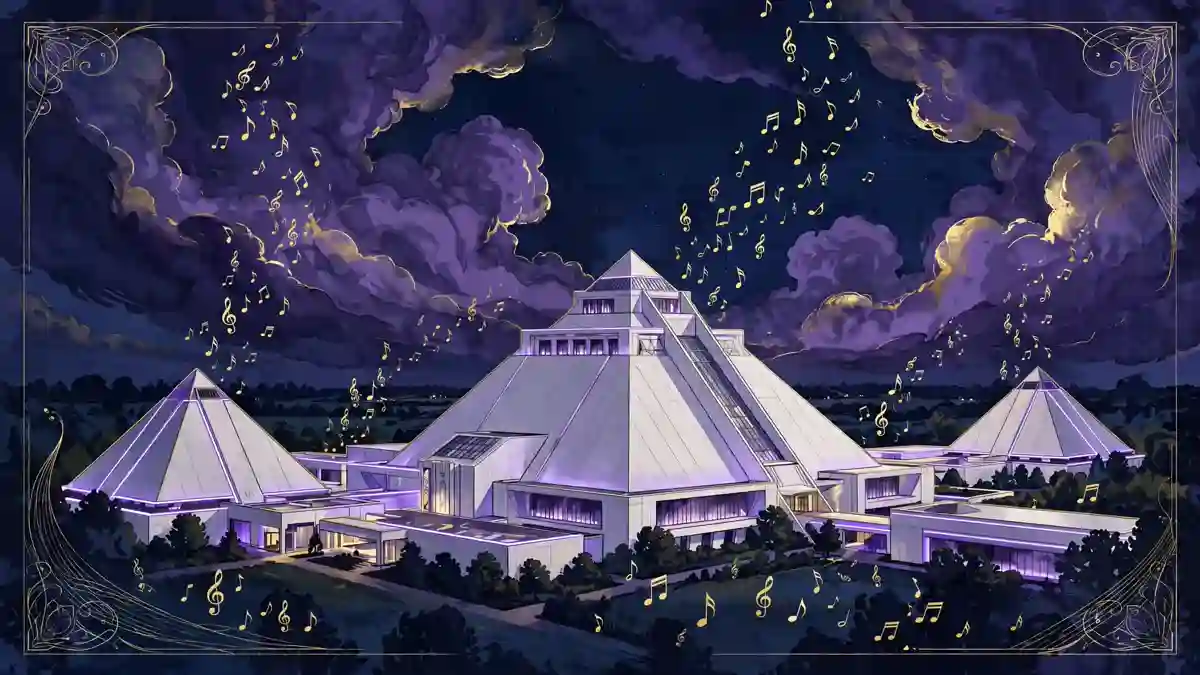
4. Paisley Park. The 65,000-square-foot studio complex in Chanhassen, Minnesota, which Prince built in 1987, became a museum after his death — opened to the public in October 2016 — generating ticket and event revenue on top of its real estate value.
5. The vault. Prince recorded thousands of unreleased songs, alternate takes, and live performances — his former engineer Susan Rogers has said more than 2,000 songs were already in the vault when she left in 1989, per the New York Daily News via Twin Cities Business. The vault is a renewable asset: posthumous releases like Welcome 2 America (2021, recorded 2010, per The New York Times) and the August 2026 compilation Timeless keep generating fresh revenue decades after the tapes were cut.
Salary and Earnings
Prince never had a “salary” in the conventional sense — he was his own employer — but his career earnings followed a clear arc. The 1977 Warner Bros. deal’s reported $180,000 advance was small by superstar standards, but the 1992 Warner Bros. contract he signed at his commercial peak was widely reported at the time as a $100 million deal for six albums, one of the largest recording contracts ever written. That number fed a lot of the early net-worth folklore: the press spent the next two decades estimating his fortune at $200 million to $300 million, a range Bloomberg News echoed the week he died, valuing his catalog alone at about $100 million.
The death of a superstar is, grimly, a financial event. In the three days after Prince died on April 21, 2016, Nielsen Music tracked 579,000 album sales — up from about 1,400 in the three days before — a spike Entertainment Tonight reported as a 42,000 percent increase. Fans bought roughly 239,000 albums on the day he died and another 399,000 that weekend, plus more than 2.8 million individual song downloads, led by “Purple Rain,” “When Doves Cry,” and “Little Red Corvette.” That posthumous surge was the first big injection into an estate that would spend six more years in court before anyone could distribute a dollar of it.
One verified income detail stands apart: the cash left at distribution. When the estate was finally split in 2022, Billboard reported the two successor entities divided about $6 million in cash, alongside the music catalog and other intangibles. Everything else — the headline valuation — was tied up in rights, property, and the vault. The estate’s 2026 release Timeless, issued August 28 via NPG Records and Legacy Recordings, debuted at No. 59 on the Billboard 200 and hit No. 1 on Switzerland’s album sales chart, per The Music Universe — evidence the catalog keeps minting new revenue ten years after his death.
Businesses and Investments
Prince ran his career like a business empire, and he pioneered moves the music industry later copied. NPG Records, founded in 1993, gave him an independent label vehicle outside the Warner system. In 2001 he launched the NPG Music Club, one of the first direct-to-fan online subscription services from a major artist — members paid for exclusive downloads and early concert access, years before streaming platforms normalized the model. He also co-owned the 3121 performance venue and event space in Las Vegas during the mid-2000s residency era.
His biggest single capital investment was Paisley Park itself. Built in 1987 in Chanhassen, Minnesota, the 65,000-square-foot white complex — studios, soundstages, offices, and Prince’s home — was reported at the time to cost roughly $10 million to construct. It became his command center: every album from Sign o’ the Times onward passed through it, and it housed the vault. After his death it was converted into a museum (opened October 2016), which Variety covered among the posthumous openings, adding tourism revenue to the property’s ledger.
Prince also owned his name and likeness outright — increasingly rare for an artist of his stature — which gave the estate merchandising and licensing power no label could veto. The 2015 Tidal exclusive streaming deal, signed with Jay-Z’s platform, briefly pulled his catalog off competing services; the financial terms were never disclosed, but it demonstrated that Prince treated distribution itself as a tradeable asset.
What Prince notably did not do was diversify the way modern stars do. There were no billion-dollar sneaker lines, no tequila brands, no venture portfolios. His “business empire” was music itself: the songs, the tapes, the building they were made in. That concentration is exactly why the IRS fight centered on one question — what is a lifetime of master recordings actually worth? — and why the answer took six years.
Brand Deals and Sponsorships
Prince was famously allergic to traditional endorsements. He never fronted a sneaker campaign or a soft-drink deal, and he turned down advertising money most peers chased. His closest equivalents to brand deals were distribution deals: the 2015 Tidal streaming exclusivity arrangement, the 2014 Warner Bros. partnership that returned his masters, and the post-2016 Legacy Recordings partnership that has issued the vault compilations including 2026’s Timeless. Posthumous licensing — Paisley Park exhibits, branded merchandise, music placements in film and advertising — now generates the kind of sponsorship-adjacent income he declined in life, and the estate’s two controlling entities, Primary Wave and Prince Legacy LLC, actively manage it.
Houses, Cars and Other Assets
Prince’s real estate holdings were concentrated in his home state. Carver County property records, reported by Twin Cities Business, showed he owned 16 properties in Minnesota worth just over $31 million combined: four in Chanhassen, two in Minneapolis, one in Excelsior, and others scattered across the metro. The most valuable single parcel was a 156-acre stretch on the shores of Lake Lucy and Lake Ann in Chanhassen, assessed at $13.68 million. Paisley Park itself — the 9-acre recording, living, and party complex where he died — was assessed at $7 million, though fan and media estimates of its market value as a one-of-a-kind music landmark run as high as $10 million.
Those property records date from 2016–2017, and it is worth remembering the money going the other way: Entertainment Tonight reported that Prince had been subject to federal tax liens on Paisley Park in 2013 for back taxes allegedly owed from 2009–2011, with additional liens tied to 2011. The liens were against property, not a sign of empty accounts, but they complicated the estate’s early administration.
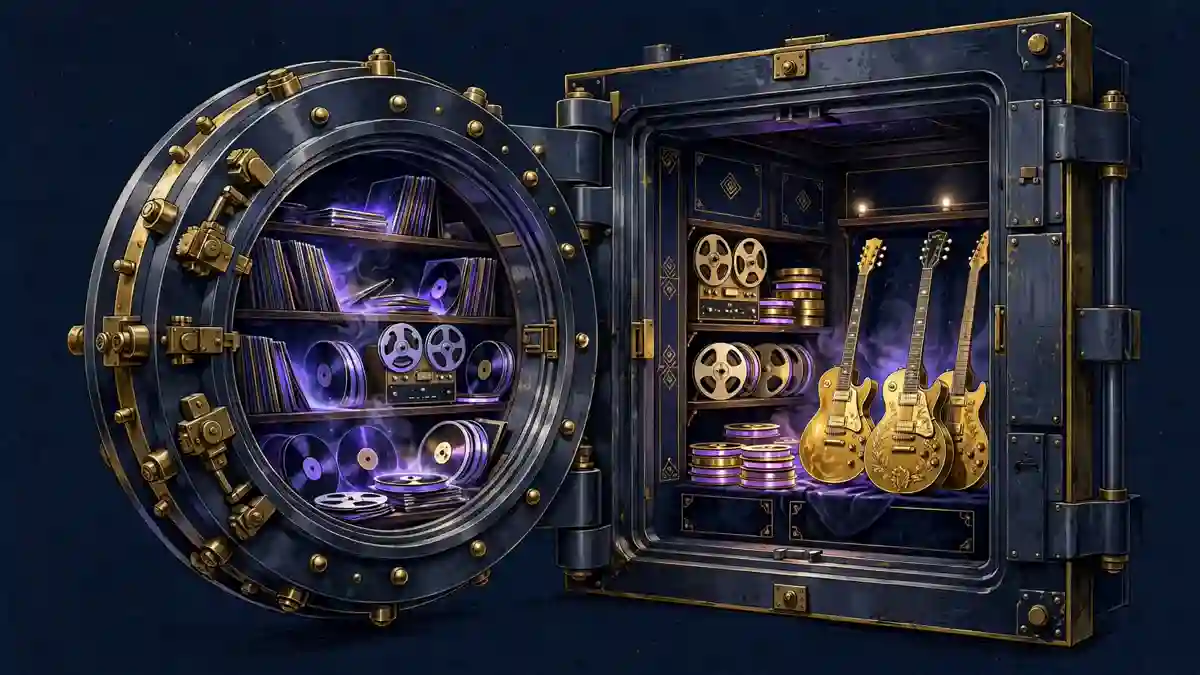
The crown jewel asset was never the real estate. The vault — a climate-controlled room at Paisley Park that, per The Guardian, had to be drilled open after his death because only Prince had access — held the unreleased recordings, alternate masters, and filmed performances that make up the estate’s renewable income. Former engineer Susan Rogers has said more than 2,000 songs were already banked by the time she left in 1989; former tour manager Alan Leeds noted Prince recorded nearly every concert he ever played. His instruments — including the iconic “Cloud” guitars custom-built by luthier Dave Rusan — carry collector value, though no public appraisal has ever itemized them.
Awards and Achievements
Prince’s trophy record is one of the densest in pop history: seven Grammy Awards from 32 nominations, the 1985 Academy Award for Best Original Score for Purple Rain, a 2005 Golden Globe for “The Song of the Heart” from Happy Feet, and induction into the Rock and Roll Hall of Fame in 2004, his first year of eligibility. Purple Rain was added to the National Recording Registry, and he sold more than 100 million records worldwide across 39 studio albums. For net-worth purposes, the awards matter because they are monetizable: the Oscar, the Hall of Fame status, and the catalog’s canonical standing all underpin the licensing premiums the estate now charges — the reason the IRS could argue, with a straight face, that the music alone was worth nine figures.
Net Worth Growth Over the Years
No single public number tracks Prince’s fortune across his life; the most honest picture is the legal record of the dispute. Use the table below as a timeline of how the estimates evolved, with the source behind each figure.
| Year | Estimated value | What it represents |
|---|---|---|
| 1984 | ~$10 million | Post–Purple Rain wealth; press estimates as the album and film exploded |
| 1992 | ~$100 million | Reported value of the landmark Warner Bros. contract signed that year |
| 2016 (at death) | $200–300 million | Bloomberg News press estimate the week he died; catalog alone ~$100 million |
| 2016–2020 (estate claim) | $82.3 million | Comerica Bank & Trust’s appraisal, filed with the court |
| 2020 (IRS claim) | $163.2 million | The IRS’s valuation, triggering an additional tax bill plus a $6.4 million accuracy penalty |
| 2022 (settled) | $156.4 million | Agreed valuation by the IRS, Comerica, and the heirs (Star Tribune, January 2022); penalties dropped |
| 2026 | $156.4M+ (appreciating) | Post-distribution estate earning via vault releases (Timeless), licensing, and Paisley Park; exact current value undisclosed |
How does that figure compare with other legendary catalogs? The comparison is instructive because Prince’s estate is one of the few that was never sold outright. Bob Dylan’s publishing catalog reportedly changed hands for about $300 million to Universal Music in 2020; David Bowie’s publishing went to Warner Chappell in 2022 in a deal reported above $250 million; Bruce Springsteen sold his masters and publishing to Sony for roughly $500 million in 2021; and the Michael Jackson estate sold its remaining Sony/ATV stake for $750 million back in 2016. Prince’s $156.4 million estate valuation — covering not just music rights but all his real estate and the vault — looks modest next to those sale prices, but those were outright sales at peak market prices while Prince’s assets remain jointly owned and still earning. If the heirs and Primary Wave ever chose to sell, the market precedent suggests the music alone could command a nine-figure price well above the 2022 tax valuation.
Distribution formally closed the court case, but it opened the monetization era. With the estate split into Prince Oat Holdings LLC (Primary Wave) and Prince Legacy LLC (the three eldest heirs plus advisors McMillan and Spicer), the two sides began operating the assets jointly from early 2023. Primary Wave moved quickly on its stated goal of “protecting and growing” the legacy: the Paisley Park museum program expanded, the Purple Rain Broadway musical adaptation advanced through workshops, and the vault pipeline — quiet in the immediate post-settlement years — resumed with 2026’s Timeless. The heirs’ side, through Prince Legacy LLC, retained approval power over how Prince’s name and likeness are used, the very rights he had fought to control in life. Ten years after his death, the estate he never planned for is finally doing what he always did: working constantly.
Two notes on the numbers. First, the gulf between Comerica’s $82.3 million and the IRS’s $163.2 million — roughly $80 million — was fought almost entirely over intangible assets: what the master recordings, publishing, and unreleased vault material were worth. The IRS settled last spring of 2021 on the real-estate portion and didn’t finish the intangible valuation until October 2021, per the Star Tribune’s reporting. Second, some outlets in 2025–2026 have claimed the estate has grown past $400 million; those figures are uncited against any court filing, so we anchor this article on the verified $156.4 million and note the estate continues to earn.
Social Media Presence
Prince was the industry’s most famous social-media holdout. He maintained no public personal accounts, periodically ordered his music pulled from YouTube and streaming platforms, and sued bootleggers and fan sites for unauthorized distribution. What exists today is posthumous: the estate operates official Prince and Paisley Park channels on YouTube, Instagram, and X, used mainly to promote vault releases — the August 2026 Timeless: Global Album Release Party livestream, for example, drew more than 173,000 views across YouTube and Facebook, per The Music Universe. For a net-worth profile, the point is simple: Prince’s fame was pre-digital, and his wealth was built without a single sponsored post.
Personal Life
Prince married dancer Mayte Garcia in 1996; their son, Amiir, was born in October 1996 and died a week later from Pfeiffer syndrome, a tragedy the couple largely kept private. They divorced in 2000. He married businesswoman Manuela Testolini in 2001; they divorced in 2006. He converted to the Jehovah’s Witnesses in 2001 and became a practicing member, known for door-to-door ministry in Minneapolis suburbs. He was a strict vegetarian and a private, exacting figure who ran his life with the same control he applied to his contracts.
On April 21, 2016, Prince was found dead in an elevator at Paisley Park at age 57; the Midwest Medical Examiner’s Office ruled it an accidental overdose of the opioid fentanyl. His body was cremated and a private memorial followed. Because he left no will and had no spouse, children, or living parents, Minnesota law passed the estate to his sister and half-siblings — six heirs total: full sister Tyka Nelson and half-siblings Sharon, Norrine, and John Nelson, Omarr Baker, and Alfred Jackson. More than 700 other people filed claims of heirship; all were dismissed. Two of the six recognized heirs, Alfred Jackson and John R. Nelson, died before the estate was finally divided.
Sources & Reporting
- Star Tribune — the January 2022 settlement: IRS and Comerica agreeing the $156.4 million valuation, the dropped $6.4 million accuracy penalty, and the split between Primary Wave and the three eldest heirs; reporting window 2021–2022.
- Billboard — the August 2022 distribution of roughly $6 million in cash plus a catalog valued above $150 million between Primary Wave and Prince Legacy LLC; reporting window 2021–2022.
- BET — the six-year estate settlement timeline, the three heirs who sold to Primary Wave, and the July 2022 court agreement; 2022.
- Forbes — cited by industry roundups for the estate’s ~$35 million 2024 earnings from royalties, licensing, and Paisley Park visitors; 2024.
- Bloomberg News — the $200–300 million press estimate at death in April 2016, with the catalog alone at ~$100 million; reported via ET, April 2016.
- Entertainment Tonight — Nielsen’s 42,000 percent post-death sales spike (579,000 albums in three days) and the 2013 federal tax liens on Paisley Park; 2016.
- Nielsen Music — the underlying post-death sales data: 239,000 albums sold the day he died, 2.8 million song downloads; April 2016.
- The Wall Street Journal — the $100–300 million estate range and Primary Wave’s ~42 percent stake after the August 2021 heir purchases; 2021.
- USA Today — Tyka Nelson’s court filing that Prince died without a will; April 2016.
- Variety — Paisley Park’s conversion to a public museum in October 2016; 2016.
- The Guardian — the vault being drilled open after his death and the $156.4 million settlement figure; 2016 and 2022.
- The New York Times (via syndication) — Welcome 2 America, the 2010-recorded posthumous album released in 2021; 2021.
- Consequence — the August 2026 release of Timeless, ten vault tracks spanning 1977–2016; 2026.
- The Music Universe — Timeless chart debuts (No. 59 Billboard 200, No. 1 Switzerland) and the 2026 “Calabama” EP release; 2026.
- SPIN — the June 2026 announcement of Timeless as the first release spanning every era of his career; 2026.
- Twin Cities Business — Carver County property records: 16 Minnesota properties worth $31 million+, the $13.68 million Lake Lucy/Ann parcel, the $7 million Paisley Park assessment, and the 2,000+ song vault figure via Susan Rogers; 2016–2017.
Reporting windows: April 2016 (death and sales surge) through October 2026 (Timeless EP cycle). Estate valuation figures come from court filings and the outlets that covered them, not from fan or aggregator estimates.
Frequently Asked Questions
What was Prince’s net worth when he died?
Prince’s estate was court-settled at $156.4 million in January 2022, after a six-year fight between the IRS (which argued $163.2 million) and the estate administrator Comerica Bank & Trust (which argued $82.3 million). Press estimates the week he died ran higher — Bloomberg News put the figure at $200–300 million, with the song catalog alone worth about $100 million. Because he died in 2016, his “net worth” today is really the value of his estate, which keeps earning from vault releases and licensing.
Did Prince have a will?
No. Prince died intestate on April 21, 2016 — no will, no trust, no estate plan of any kind. His sister Tyka Nelson filed court documents stating as much days after his death. Under Minnesota law, the estate passed to his six heirs: his full sister Tyka and five half-siblings. More than 700 other claimants came forward; every claim was dismissed.
Who inherited Prince’s money?
The estate was divided between two camps. Three of the six heirs — Omarr Baker, Alfred Jackson, and most of Tyka Nelson’s share — sold their interests to the music company Primary Wave in August 2021. The final court distribution in 2022 split the estate roughly 50/50 between Primary Wave (about 42–50% of the estate) and Prince Legacy LLC, the entity holding the interests of the three eldest heirs — Sharon Nelson, Norrine Nelson, and John R. Nelson — plus their advisors L. Londell McMillan and Charles Spicer.
Who owns Prince’s music catalog now?
Ownership of the Prince catalog is split. Primary Wave controls its roughly half through Prince Oat Holdings LLC, and Prince Legacy LLC — the three eldest heirs and their advisors — controls the other half. Both sides share in royalties from masters, publishing, name and likeness, and the vault. The estate’s catalog was valued at more than $150 million at the 2022 distribution, per Billboard’s reporting.
How much is Paisley Park worth?
Carver County assessed Paisley Park, the 9-acre studio and home complex in Chanhassen, Minnesota, at $7 million in property records reported by Twin Cities Business. Media estimates of its market value as a landmark property run up to $10 million. Prince built it in 1987 at a reported cost of about $10 million; it opened as a museum in October 2016.
Who owns Paisley Park now?
Paisley Park is part of the estate and is administered under the divided ownership structure: Primary Wave and Prince Legacy LLC share the estate’s real estate alongside the music rights. It operates as a public museum and event venue, generating ticket revenue on top of its property value.
How did Prince win back his masters from Warner Bros.?
After his famous 1990s battle — when he changed his name to an unpronounceable symbol and wrote “slave” on his face to protest Warner Bros.’ control of his recordings — Prince reached a deal with the label in April 2014 that returned ownership of his Warner-era masters to him, alongside a reissue of Purple Rain‘s 30th anniversary. Billboard noted at the time it was a rare artist victory. Because he owned his masters when he died, the catalog became the most valuable piece of his estate.
How much unreleased music did Prince leave behind?
His former engineer Susan Rogers has said more than 2,000 songs were already in the Paisley Park vault when she left in 1989, and former tour manager Alan Leeds said Prince recorded nearly every concert he played. The estate has issued posthumous releases including Welcome 2 America (2021) and Timeless (August 2026, ten tracks spanning 1977–2016), and Sony’s Legacy Recordings partnership continues to mine the archive.
Final Thoughts
Prince’s $156.4 million estate is a strange monument to a man who controlled everything except the paperwork. He owned his masters, his publishing, his name, his building, and a vault of thousands of songs — and died without a will, handing six years of billing to lawyers, banks, and the IRS. The number that survived the fight, $156.4 million, is lower than the $200–300 million the press guessed in 2016 and higher than the $82.3 million his own estate administrator claimed — and it’s honest: audited by court order, argued line by line, settled by all sides.
What makes the figure durable is that the asset behind it never stopped working. A catalog valued above $150 million, a vault the estate is still opening (Timeless debuted at No. 59 on the Billboard 200 in 2026, ten years after his death), and a studio complex drawing visitors to Minnesota keep the machine running. Whether you take the court-settled $156.4 million or the press’s $300 million guess, Prince did what almost no artist of his generation managed: he died owning the thing the industry had spent twenty years trying to take from him.
Published on October 12, 2026. Last reviewed October 2026. Found an error? See our corrections policy.