
Shelley Duvall‘s net worth is estimated at $400,000 to $600,000 as of October 2026. The Shining star died on July 11, 2024, so there is no 2026 paycheck to count — the best-sourced figure remains the $500,000 Celebrity Net Worth placed on her estate at the time of her death, and our 2026 review of live reporting found nothing that moves that number. Her money story runs through three acts: peak-era acting paychecks from The Shining and Popeye in 1980, a productive second career running the beloved children’s series Faerie Tale Theatre and her own production company through the 1980s, and a mid-1990s collapse — earthquake damage, insurance battles, and debts she only half-explained in a 2021 Hollywood Reporter interview — that shrank her fortune to a modest Texas estate.
Shelley Duvall: Quick Facts
| Estimated net worth | $500,000 (range: $400,000–$600,000) |
|---|---|
| Profession | Actress, producer, screenwriter |
| Nationality | American |
| Born | July 7, 1949, Fort Worth, Texas (died July 11, 2024, age 75) |
| Height | 5 ft 7 in (1.70 m) |
| Primary income sources | Acting salaries (1970s–2000s), producing Faerie Tale Theatre and other children’s series, sale of production company |
| Active years | 1970–2002; brief return in 2023 |
| Last reviewed | October 2026 |
- Early Life and Background
- Education
- Career Journey
- Rise to Fame
- Main Sources of Income
- Salary and Earnings
- Businesses and Investments
- Brand Deals and Sponsorships
- Houses, Cars and Other Assets
- Awards and Achievements
- Net Worth Growth Over the Years
- Social Media Presence
- Personal Life
- Sources & Reporting
- Frequently Asked Questions
Early Life and Background
Shelley Alexis Duvall was born on July 7, 1949, in Fort Worth, Texas, the first child of Bobbie Ruth Crawford — née Massengale (1929–2020), a real estate broker — and Robert Richardson “Bobby” Duvall (1919–1994), a cattle auctioneer who became a lawyer. Celebrity Net Worth notes he was no relation to the actor Robert Duvall. She grew up with three younger brothers, Scott, Shane, and Stewart. The family moved around in her early years for her father’s work, then settled in Houston when she was five.
By her own description and every profile since, she was a bright, restless kid with a pull toward art and science. Nothing in that upbringing pointed at Hollywood. The turning point arrived at a party in 1970: she and her then-husband hosted a gathering attended by director Robert Altman, who was in Texas shooting Brewster McCloud. Crew members were taken with her unusual look and upbeat energy and asked if she’d like to be in the film. She had never acted. She said yes, flew to Hollywood for the first time, and played the love interest of Bud Cort’s title character. One party, one impulsive yes — a career began.
Education
Duvall was a straight-A student at Waltrip High School in Houston, graduating in 1967. She then enrolled at South Texas Junior College to study nutrition and diet therapy — she had originally considered a career in science — and worked selling cosmetics at the Foley’s department store. No film school, no acting classes: the most famous scream in horror cinema was delivered by a former cosmetics counter clerk with a nutrition degree.
Career Journey
Altman kept casting her, and each film moved her up the call sheet. After Brewster McCloud (1970) came McCabe & Mrs. Miller (1971), where she played a sweet-natured young widow opposite Warren Beatty and Julie Christie; Thieves Like Us (1974); Altman’s ensemble comedy Nashville (1975); and Buffalo Bill and the Indians, or Sitting Bull’s History Lesson (1976). Success brought a Saturday Night Live hosting gig — five sketches — and a small part in Woody Allen’s Annie Hall (1977).
The decade’s big swings were 3 Women (1977), the Altman thriller in which she starred and improvised much of her dialogue, and then the double-header of 1980: The Shining and Popeye. The 1980s kept her busy — Terry Gilliam’s Time Bandits (1981), Tim Burton’s short Frankenweenie (1984), Fred Schepisi’s Roxanne (1987) — while she quietly built her second act as a producer of children’s television. The 1990s brought smaller, sporadic film work: Steven Soderbergh’s The Underneath (1995), Jane Campion’s The Portrait of a Lady (1996), Home Fries (1998), Tale of the Mummy, The 4th Floor, and finally Gabrielle Burton’s comedy Manna from Heaven (2002), after which she retired from acting for more than two decades.
Then came the coda nobody expected. In 2022 she announced a comeback, and in 2023 she appeared in The Forest Hills, a crowdfunded independent horror film directed by Scott Goldberg. She played Mama — the inner voice of Chiko Mendez’s disturbed Rico — shooting all her scenes via Zoom from her Texas home. It premiered in March 2023 at Kevin Smith’s Smodcastle Cinemas and received a US release on October 4, 2024, three months after her death. She told People: “Acting again — it’s so much fun. It enriches your life.” When the interviewer pressed her about ambition at 73, she answered, “[Jessica Tandy] won an Oscar when she was 80. I can still win.”
Rise to Fame
The true breakthrough was 3 Women. Her performance as the dreamy, fragile Millie Lammoreaux earned her the Best Actress award at the 1977 Cannes Film Festival, a BAFTA nomination, and the Los Angeles Film Critics Association award for Best Actress. Critics who had seen her as an Altman curiosity now treated her as a serious talent.
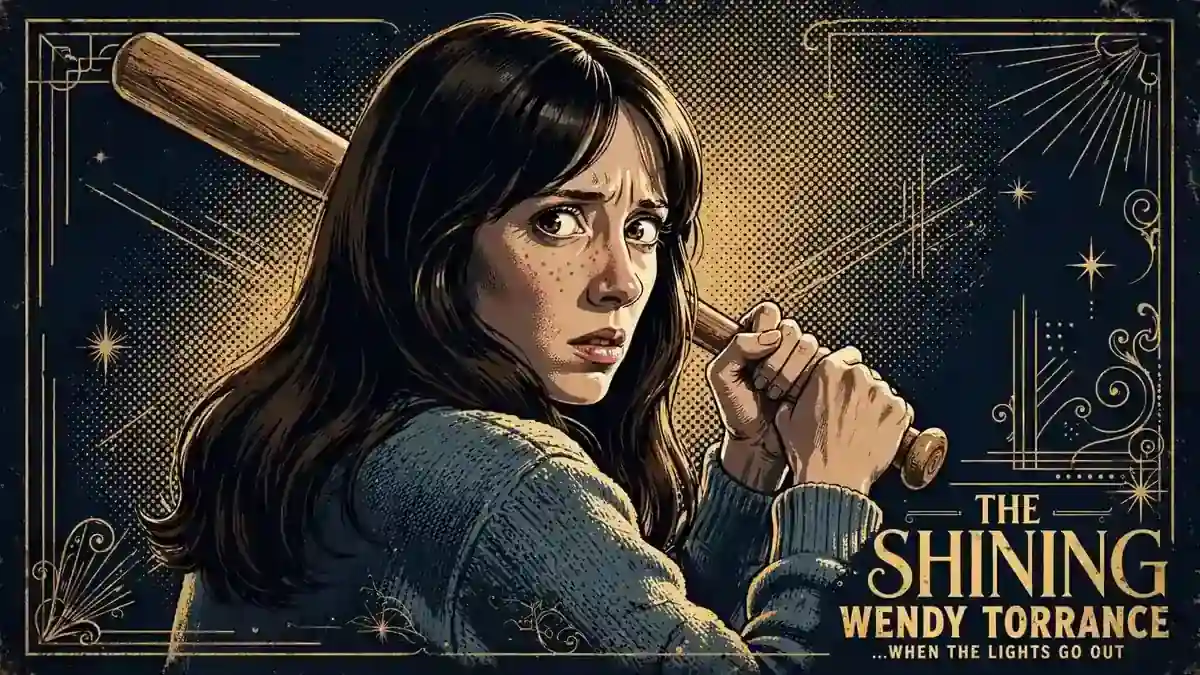
Three years later came the role that made her immortal. As Wendy Torrance in Stanley Kubrick’s The Shining (1980), opposite Jack Nicholson, Duvall carried the film’s emotional weight across a grueling 56-week shoot. The production’s demands became legend: the staircase sequence with the baseball bat took Guinness World Records‘ listed 127 takes — a claim filmmaker Lee Unkrich later contested using Kubrick’s own shot logs, but the sheer volume of retakes is undisputed. Duvall was constantly supplied with water bottles for dehydration from crying. In her words to Mental Floss: “From May until October I was really in and out of ill health because the stress of the role was so great. Stanley pushed me and prodded me further than I’ve ever been pushed before. It’s the most difficult role I’ve ever had to play.”
Contemporary critics were unkind — some called the performance shrill — but time has reversed the verdict. Her Wendy is now widely read as one of the most honest portrayals of sustained terror on film. And while Kubrick’s cameras were still rolling, Altman cast her again: Olive Oyl in Popeye (1980), opposite Robin Williams in his first major film role. Made for a reported $20 million and grossing roughly $50–60 million worldwide, Popeye opened to jeers and has aged into a cult object; Duvall, in particular, drew praise, and director Paul Thomas Anderson later used her song “He Needs Me” in Punch-Drunk Love.
Main Sources of Income
Duvall’s money came from four places, in descending order of importance:
1. Acting salaries, 1970–2002. Her peak earning window ran roughly 1977–1987: starring roles in 3 Women, The Shining, and Popeye, plus steady supporting work. No per-film salaries were ever made public — a data gap this article flags honestly rather than filling with guesses.
2. Producing children’s television. From 1982 to 1987 she produced every aspect of Faerie Tale Theatre — 27 episodes on Showtime — while hosting, narrating, and appearing in seven of them. She followed it with Tall Tales & Legends (nine episodes, 1985–1987), Nightmare Classics (1989), and Shelley Duvall’s Bedtime Stories (1992–1994). As an owner-producer rather than a hired hand, this was likely her steadiest income stream of the 1980s.
3. The sale of her production company. She founded Think Entertainment in 1988, which joined the newly formed Universal Family Entertainment in 1992; she sold the company in the 1990s and retired from producing. Terms were never disclosed.
4. Residuals. The Shining and Popeye never left circulation — cable, home video, streaming — generating modest, ongoing residual payments for decades. After a 20-plus-year retirement with no new work, residuals and savings were essentially her whole income.

Salary and Earnings
Here is the honest, uncomfortable truth at the center of this estimate: not one of Shelley Duvall’s film salaries was ever publicly reported. No contract figure for The Shining, Popeye, or any Altman picture appears in trade reporting, interviews, or filings we could find. Competitors who imply precision about her paychecks are guessing.
What the record does show is suggestive. In a February 2023 People interview, Duvall spoke plainly about Hollywood pay in her era: most female actresses didn’t get paid much, she said, because the industry expected them to marry and be supported by their husbands. That single quote reframes the whole fortune — a woman carrying two 1980 studio pictures was paid under the assumptions of a different era, while her male co-stars built the nine-figure fortunes that followed them for life.
The 56-week Shining shoot deserves its own line in the ledger. More than a year of Kubrick’s retakes — dehydration, stress-related illness, the works — bought her the defining role of her life but not, as far as the public record shows, a payday commensurate with it. By the 1990s she was working in guest and supporting roles (The Underneath, The Portrait of a Lady, Home Fries), the industry’s standard signal of declining quotes. Her final role, The Forest Hills, was a crowdfunded indie shot over Zoom — a labor of affection, not a paycheck.
Residuals kept a floor under her: The Shining is a perennial, Popeye found its cult, and Faerie Tale Theatre lives on in retrospectives. But after 2002 there were no new contracts, and a fortune built on 1980s salaries spends down over twenty quiet years.
Businesses and Investments
Duvall’s sharpest business move was going behind the camera. In 1982 she founded Platypus Productions and created Faerie Tale Theatre, an anthology of classic fairy tales staged with serious filmmakers and an all-star guest cast — Robin Williams, Jeff Goldblum, Teri Garr, and Mick Jagger all appeared. Twenty-seven episodes aired on Showtime through 1987. The series won a Peabody Award in 1984 and brought her an Emmy nomination in 1988, and as the show’s owner-producer she held the rights position, not just a performer’s fee.
She repeated the formula with Tall Tales & Legends (1985–1987), an anthology of American folk tales, then Nightmare Classics (1989), aimed at horror stories. In 1988 she consolidated everything into a new company, Think Entertainment, to develop shows and TV films for cable. In 1992 Think joined the newly formed Universal Family Entertainment venture, and she created Shelley Duvall’s Bedtime Stories (1992–1994), which earned her a second Emmy nomination (Outstanding Animated Program, 1992). A fifth series, Mrs. Piggle Wiggle, followed. Then, in the mid-1990s, she sold the company and retired from producing — the last big liquidity event of her career. The sale price was never made public, but it marked the moment her active business income stopped.
Beyond that, the record shows no investment portfolio, no startup stakes, no real estate empire. Her finances, like her final decades, were quiet.
Brand Deals and Sponsorships
None are documented. Duvall never fronted a notable endorsement campaign, fragrance, fashion line, or product deal in the public record — she was a character actress and children’s-TV producer, not a tabloid fixture, and the sponsorship economy that now pads celebrity fortunes barely existed during her peak. If she earned endorsement money, no outlet ever reported it, and this estimate assumes zero.

Houses, Cars and Other Assets
Property tells the financial story better than any paycheck. In 1989 Duvall began living with musician Dan Gilroy, former lead singer of Breakfast Club, on a 3-acre hillside property in Studio City, California — a menagerie of 36 birds, two cats, and eight dogs included. Then came the Northridge earthquake of January 1994, which damaged the home.
What happened next she described herself in a rare 2021 Hollywood Reporter profile by Seth Abramovitch. Asked whether the earthquake drove her from Hollywood, she answered: “Yeah. They wear you out, man.” Asked to clarify whether she meant the earthquakes: “No, the people. Afterwards, it’s like FEMA, then the next guys, and the next guys. Engineers one day, insurance people the next. Sometimes at the same time…”
In the same interview she volunteered that she was having financial issues soon after the quake: “It’s not just owning something that makes money. You have to also control it. You have to make sure it’s a good deal.” After filming her small part in Soderbergh’s The Underneath, she went to visit her mother in Houston — her mother had offered to help, and had even suggested she try painting, musing that “Joni Mitchell gets $40,000 a painting” — and she essentially never returned to Los Angeles for two decades. The List adds a second reason for the exit: her brother’s spinal cancer diagnosis, which she told the New York Times she had cited alongside the earthquake.
She sold the Los Angeles home and settled in Blanco, Texas, in the Hill Country about 50 miles west of Austin, where she lived quietly with Gilroy until her death. No car collection, no portfolio of homes: the Blanco house was the estate’s main physical asset, and its value is folded into the $400,000–$600,000 range rather than stated as a separate figure, because no verified valuation exists.
Awards and Achievements
Duvall’s trophy case is real, and it mattered to her earning power in the 1980s:
• Best Actress, 1977 Cannes Film Festival — for 3 Women, her career’s highest honor.
• BAFTA nomination, Best Actress — also for 3 Women.
• Los Angeles Film Critics Association Award, Best Actress — 3 Women.
• Peabody Award, 1984 — for Faerie Tale Theatre, the producing achievement she was proudest of.
• Emmy nomination, 1988 — Outstanding Children’s Program, for Faerie Tale Theatre.
• Emmy nomination, 1992 — Outstanding Animated Program, for Shelley Duvall’s Bedtime Stories.
• She also hosted Saturday Night Live in the 1970s and narrated Disney Channel’s Mother Goose Rock ‘n’ Rhyme.
Awards don’t pay the mortgage, but the Cannes win is what converted an Altman regular into a bankable lead — the brief window in which her quotes were highest.
Net Worth Growth Over the Years
Unlike living celebrities, Duvall’s number has a hard stop: July 11, 2024. The table below marks the phases honestly, labeling what the record doesn’t say.
| Period | Milestone | Estimated net worth |
|---|---|---|
| 1970–1976 | Altman discovery through Nashville; working actress | Not publicly documented |
| 1977–1980 | Cannes win, The Shining, Popeye — peak earning years | Not publicly documented; likely her lifetime high |
| 1982–1992 | Faerie Tale Theatre producing peak; Think Entertainment founded, joins Universal Family Entertainment | Not publicly documented |
| Mid-1990s | Company sold; Northridge earthquake; financial strain (per 2021 THR interview) | Declining |
| 2002 | Retires from acting after Manna from Heaven; no new income beyond residuals | Declining |
| 2024 | Dies July 11 in Blanco, Texas | $500,000 (Celebrity Net Worth, at time of death) |
| 2026 | No new reporting; estate figure stands | $400,000–$600,000 (NetWorthCraft review) |
A note on the junk data polluting this search: two AI-spam pages (themost10.com) publish mutually contradictory “growth tables” — one claims $5M in 2022 rising to $9.5M in 2026, the other claims $10M rising to $16M — with no sources and no acknowledgment that she died in 2024. They are fabricated. A separate site (briefingroom.uk) lists $5 million with no sourcing at all. The only figure with a named methodology behind it is Celebrity Net Worth’s $500,000, repeated by ScreenRant and We Got This Covered at the time of her death.
Social Media Presence
Duvall had no public social media accounts — no Instagram, no X, no TikTok, no YouTube. She retreated from public life in 2002, years before the social era, and never returned to it. After her death, tributes flowed across other people’s accounts: Stephen King and the Stanley Kubrick estate posted remembrances, and fan-run archive accounts (notably the Shelley Duvall Archive on Instagram) shared birthday-visit photos from her final weeks. Her estate earns nothing from social media.
Personal Life
Duvall married artist Bernard Sampson in 1970 — the husband who co-hosted the fateful Altman party — and they separated in 1974 as her career took off. From 1976 to 1979 she dated musician Paul Simon; he ended the relationship at the airport as he dropped her off for her flight to London to film The Shining. She had introduced Simon to actress Carrie Fisher, who became his next partner. In the late 1970s she was also romantically linked with Ringo Starr.
In 1989 she began her defining relationship, with Dan Gilroy, the musician and former Breakfast Club frontman she met while acting together in Mother Goose Rock ‘n’ Rhyme. They were partners for 35 years, until her death. She had no children, but rarely lacked animals — the Studio City years included 36 birds, two cats, and eight dogs.
Her final decade was hard. A November 2016 appearance on Dr. Phil, in which an evidently distressed Duvall discussed her mental illness on daytime television, drew broad condemnation — Mia Farrow called it “upsetting and unethical,” and Vivian Kubrick, the director’s daughter, published an open letter to Phil McGraw. Duvall later told The Hollywood Reporter: “I found out the kind of person he is the hard way.” Filmmaker Lee Unkrich tracked her down in 2018 while researching his Taschen book on The Shining and reported that her memory was sharp and her pride in her career intact. In one of her last interviews, with the New York Times, she revealed a diabetes diagnosis and a foot injury that limited her mobility. After several months in hospice care, she died in her sleep at home in Blanco on July 11, 2024 — four days after her 75th birthday — of complications from diabetes. Gilroy announced it to The Hollywood Reporter: “My dear, sweet, wonderful life partner and friend left us. Too much suffering lately, now she’s free. Fly away, beautiful Shelley.”
Sources & Reporting
Celebrity Net Worth — the $500,000 figure “at the time of her death”; career and personal-life detail including the Studio City property, the 1994 earthquake move, and the 2021 THR interview summary. Page published March 6, 2022.
The Hollywood Reporter — Seth Abramovitch’s 2021 profile: the earthquake aftermath (“FEMA, then the next guys”), the financial-issues admission (“It’s not just owning something that makes money…”), and the Joni Mitchell painting anecdote; also the outlet Dan Gilroy notified of her death.
The New York Times — her account of leaving Hollywood (her brother’s illness and the earthquake) and one of her final interviews (diabetes diagnosis, foot injury limiting mobility).
People — February 2023 interview (“the longest sabbatical,” “I was a star… It’s violence,” Hollywood pay for women) and her quotes on the Forest Hills comeback (“Acting again — it’s so much fun”).
The List — the financial-troubles account, the brother’s spinal cancer, and the NYT health details, cross-checked against THR.
ScreenRant — $500,000 at death (citing Celebrity Net Worth), the 56-film/TV credit count, and the Blanco retirement context.
We Got This Covered — July 2024 report repeating the $500,000 figure while noting unsourced claims of up to $5 million.
Best Life — the 2021 THR profile’s key quotes on the earthquake, the insurance ordeal, and the Forest Hills announcement.
Looper — the 20-year disappearance timeline, the Dr. Phil fallout, and the 2023 comeback details.
Wikipedia — filmography chronology, the Platypus/Think Entertainment company history, Emmy nomination years, and the Forest Hills release dates (festival cut March 2023; US release October 4, 2024).
Mental Floss — the 56-week shoot and her quote on Kubrick pushing her further than she’d ever been pushed.
New York Women in Film & Television — the in-memoriam career summary and the Forest Hills role description.
Reporting window: obituaries and retrospectives from July 2024, the THR profile from 2021, the People interview from February 2023, and net-worth pages current through August 2026. No probate filings or estate disclosures are public; where the record is silent, this article says so.
Frequently Asked Questions
What was Shelley Duvall’s net worth?
Shelley Duvall’s net worth was an estimated $500,000 at the time of her death on July 11, 2024, according to Celebrity Net Worth — the only figure with a named methodology behind it. Our October 2026 review found no newer reporting, so we publish a cautious range of $400,000 to $600,000. Unsourced claims of $5 million and AI-spam “growth tables” reaching $16 million are fabricated.
How much was Shelley Duvall worth when she died?
$500,000, per Celebrity Net Worth’s at-death estimate, repeated by ScreenRant and We Got This Covered in July 2024. She had been retired from acting since 2002 with no new income beyond residuals, and she told The Hollywood Reporter in 2021 that she had faced financial issues after the 1994 Northridge earthquake.
What did Shelley Duvall pass away from?
Complications from diabetes. She died in her sleep at her home in Blanco, Texas, on July 11, 2024 — four days after her 75th birthday — after several months in hospice care, her partner Dan Gilroy told The Hollywood Reporter. She had disclosed the diabetes diagnosis and a mobility-limiting foot injury to The New York Times in one of her final interviews.
Why did Shelley Duvall leave Hollywood?
Three things converged in the mid-1990s: the January 1994 Northridge earthquake damaged her Studio City home and buried her in FEMA adjusters, engineers, and insurance people; she was having financial problems she never fully detailed; and her brother was diagnosed with spinal cancer. After filming The Underneath, she visited her mother in Houston and simply never moved back to Los Angeles, settling instead in Blanco, Texas.
Why was filming The Shining so hard on Shelley Duvall?
Stanley Kubrick’s 56-week shoot pushed her past her limits — isolation from the cast, endless retakes (Guinness once credited the staircase bat scene with 127 takes, a figure Kubrick researcher Lee Unkrich disputes), and crying scenes so intense she was kept hydrated with water bottles between takes. She later called it “the most difficult role I’ve ever had to play” and said the stress left her in and out of ill health for months.
What was Shelley Duvall’s last movie?
The Forest Hills (2023), a crowdfunded indie horror film directed by Scott Goldberg, in which she played Mama — the inner voice of Chiko Mendez’s tormented Rico — filming all her scenes via Zoom from her Texas home. It premiered in March 2023 and got its US release on October 4, 2024, three months after her death.
Did Shelley Duvall have children?
No. She was married to artist Bernard Sampson from 1970 to 1974, dated Paul Simon from 1976 to 1979, and spent 35 years — from 1989 until her death — with musician Dan Gilroy. She had no children but kept a famous menagerie of pets, including 36 birds, two cats, and eight dogs at her Studio City home.
What happened in Shelley Duvall’s Dr. Phil interview?
In November 2016, a visibly distressed Duvall discussed her mental illness on Phil McGraw’s daytime show. The segment was widely condemned as exploitative — Mia Farrow called it “upsetting and unethical” and Stanley Kubrick’s daughter Vivian published an open letter to McGraw. Duvall cut off contact with the show afterward and later told The Hollywood Reporter, “I found out the kind of person he is the hard way.”
Final Thoughts
Shelley Duvall’s $500,000 estate is the financial signature of a career the industry never quite knew how to price. She carried two 1980 studio pictures, won Cannes, then built a Peabody-winning children’s television business — and still ended up telling People that actresses of her generation weren’t paid much because Hollywood expected them to marry money. The Northridge earthquake, the insurance maze, and debts she described only in outline did the rest. What remains is the honest number: a modest Texas estate, no scandals attached to it, and a screen legacy — Wendy Torrance’s baseball bat, Olive Oyl’s lanky grace — that no accountant could ever value. That is the whole story, and unlike the spam sites inventing $16 million fantasies, we see no reason to dress it up.
Published on October 19, 2026. Last reviewed October 2026. Found an error? See our corrections policy.