
Thomas Staub‘s net worth is estimated at $2 million to $6 million as of November 2026. The spread is not sloppy reporting: Celebrity Net Worth, the outlet every other tracker quotes, carried the $6 million figure for years and then cut it to $2 million in its October 2025 update. Staub built his money the old-fashioned way, running the family company that put the first treadmill in American living rooms, then watched that company go bankrupt after he sold it — and went back to work selling fitness equipment for someone else.
Thomas Staub: Quick Facts
| Estimated net worth | $2 million–$6 million (range: $2 million–$6 million) |
|---|---|
| Profession | Businessman; former CFO and CEO of Aerobics Inc.; Vice President of Sales and Operations at Gym Source |
| Nationality | American |
| Born | Not publicly disclosed |
| Height | Not publicly disclosed |
| Primary income sources | Fitness equipment executive roles, Aerobics Inc. ownership, Gym Source executive salary |
| Active years | 1990s–present |
| Last reviewed | November 2026 |
- Early Life and Background
- Education
- Career Journey
- Rise to Fame
- Main Sources of Income
- Salary and Earnings
- Businesses and Investments
- Brand Deals and Sponsorships
- Houses, Cars and Other Assets
- Awards and Achievements
- Net Worth Growth Over the Years
- Social Media Presence
- Personal Life
- Sources & Reporting
- Frequently Asked Questions
Early Life and Background
Thomas N. Staub grew up inside one of the more unlikely origin stories in American fitness. His father, William Edward Staub, was a mechanical engineer from Philadelphia, born November 3, 1915, who ran an aerospace components company called Besco Corp. out of Clifton, New Jersey. William Staub did not exercise. Then, in 1968, he read Dr. Kenneth Cooper’s book Aerobics, which argued that regular aerobic exercise could transform public health. At the time, treadmills were machines doctors used for cardiac stress tests. There was no cheap treadmill a person could buy for home use, so William Staub built one for himself.
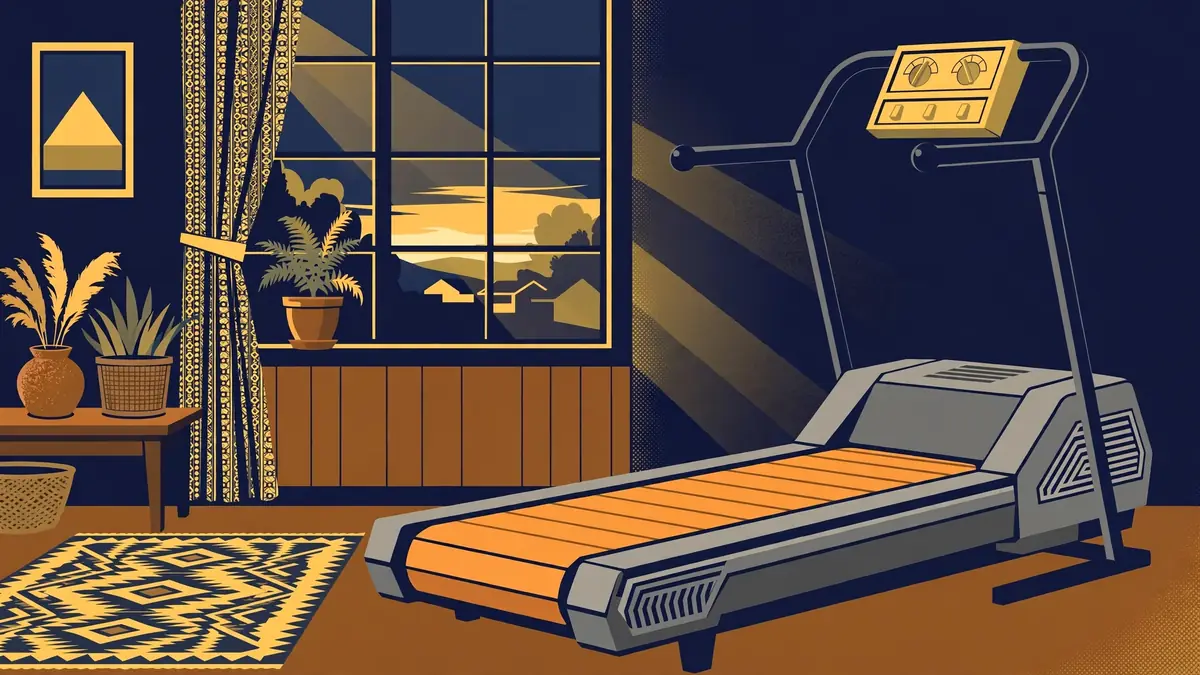
The first machine was rough and charming in equal measure: 40 steel rollers covered by an orange belt, a gray cover over the motor, and orange dials to set time and speed. His son Gerald designed the on-off switch. William Staub sent the prototype, which he called the PaceMaster 600, to Dr. Cooper, who liked it enough to lend his name and credibility to the idea. William Staub began production in Clifton, then moved the plant to Little Falls, New Jersey, and slowly wound down his aerospace work to focus on the treadmill through a company he called Aerobics Inc. The Associated Press obituary of William Staub, published when he died at 96 on July 19, 2012, records that by the mid-1980s Aerobics Inc. was selling about 2,000 treadmills a year, and by the mid-1990s that number had reached 35,000 a year.
Thomas Staub was born into that business. SuperbHub, which has published the fullest biographical account of him, reports that his mother was Dorothy Staub, who died in 2007, and that he grew up with five siblings besides his brother Gerald: brothers William and Norman, sisters Dorothy Kentis and Dolores Colucci-Healey, and a sister Patricia who died in 1977. The family details beyond Gerald come from that single outlet, so treat them as reported rather than confirmed. What the stronger record confirms is the shape of the household: a New Jersey manufacturing family, a father who was an inventor first and a salesman second, and a dinner table where the family product was the family business.
That matters to the net worth question, because Thomas Staub’s money was never a salary story or a fame story. It was an inheritance of a working company — a second-generation manufacturing business in a niche his father had effectively created. The home treadmill market William Staub opened up would eventually be worth billions, dominated by giants like ICON Health & Fitness and NordicTrack. Aerobics Inc. was early, respected for build quality, and small. PaceMaster treadmills earned a loyal following among serious runners and gyms for durability and precision engineering, but the company never had the scale of its mass-market rivals. That tension — a premium product from a family firm competing against industrial-scale manufacturers — runs through everything that happened to the money afterward.
One small piece of housekeeping for anyone researching Staub online: several low-quality net worth aggregators describe Aerobics Inc. as a maker of “pacemaker treadmills.” That is a mangled copy of “PaceMaster” — the brand name — repeated from site to site. There was no pacemaker business. The company made treadmills, and the brand was PaceMaster.
Education
Thomas Staub attended Seton Hall University in South Orange, New Jersey, where he earned a Bachelor of Science degree in Accounting. The degree is one of the few hard facts in his biography that every profile agrees on, and it fits the job he took next. He did not join the family company as a figurehead. He joined as its chief financial officer, the numbers person, and worked his way up to chief executive. An accounting degree from a New Jersey Catholic university is not the kind of credential that generates headlines, but for a family manufacturer selling a premium product into a price-sensitive market, it was the right training for the decisions that would later decide the company’s fate: what to spend on manufacturing at home, when to sell, and what a sale was worth.
No record names a graduate degree, an MBA, or any other formal qualification, and no source gives his graduation year. His birth date has never been published either, which means his age cannot be stated honestly — only inferred loosely from the timeline of his marriage in 1993 and his daughters’ births in 1993 and 1998. This article does not guess. Where the public record is silent, the gap is marked as a gap.
Career Journey
After graduating from Seton Hall, Staub joined Aerobics Inc. as chief financial officer and later rose to chief executive officer. The timing of the handover is one of the small disagreements in the record: Wikipedia’s account of his father says William Staub sold the business to his sons Gerald and Thomas in the mid-1990s, while Celebrity Net Worth and SuperbHub put the brothers’ takeover in the late 1990s. Either way, the brothers bought the company from their father, with Gerald as Thomas’s partner, and led it through what Celebrity Net Worth calls its most successful era — the period when annual sales ran into the tens of thousands of machines.
The brothers’ tenure ended in a sale. As global competition intensified in the 2000s — cheap imported treadmills undercutting American-made machines on price — Thomas and Gerald Staub sold Aerobics Inc. to a private equity group, hoping the new owners would fund international expansion. The price was never disclosed, and that undisclosed sale price is the single biggest blank in any estimate of Thomas Staub’s wealth. If the brothers sold near the top of the market, the proceeds would explain the $6 million figure that trackers carried for years. If they sold cheap, or took much of the price in equity that later evaporated, the current $2 million figure makes more sense. Nobody outside the deal knows, and no source has ever leaked a number.
What happened next is documented. The private equity owners moved production overseas, and the brand lost the quality and identity that had been its selling point. The company filed for bankruptcy in 2010. The Staub brothers tried to claw the brand back: with the help of an investor, they relaunched the business as PaceMaster LLC in 2010, but the revival could not find its footing and closed for good in 2011. Two attempts to save a family name, one year apart, both ending in closure. That is the arc of the Staub treadmill fortune — built over four decades, sold once, and gone within about a decade of the sale.
Staub did not leave the fitness industry. In 2012 he joined Gym Source, one of the largest specialty fitness retailers in the United States, as Vice President of Sales and Operations. Gym Source sells premium home and commercial equipment through showrooms across the country, and the role put Staub’s decades of manufacturing and product knowledge to work on the retail side — managing sales, logistics and nationwide operations. Celebrity Net Worth still lists him in that role, and no newer public record contradicts it. It is the last confirmed job in his career, and it reframes the net worth picture: since 2012, Staub has been a salaried executive, not an owner. Salaried executives accumulate wealth slowly, through pay and savings, not through equity events. That is consistent with a net worth that drifted down from the $6 million of the ownership years to the $2 million Celebrity Net Worth now reports.
Rise to Fame
Thomas Staub is famous for a marriage, not for a product. He met Danielle Staub — born Beverly Ann Merrill — in the early 1990s, and they married in 1993. Sixteen years later, Danielle joined the cast of Bravo’s The Real Housewives of New Jersey for its first season in 2009, and her ex-husband’s name entered the tabloid record with her. The show made Danielle a reality television figure; it made Thomas a footnote in her storyline, a wealthy ex-husband whose money and marriage were discussed on camera by other people.
Staub himself appeared on the show exactly once, briefly, in 2010, during an episode built around his daughter Christine’s Sweet 16 birthday. The scene is still the most replayed moment of his public life, and not for a flattering reason: Danielle wore her old engagement ring from Thomas in front of his new wife. The moment was engineered for television, and Staub, by every account, declined to play along afterward. He has never given an interview about the show, never written a response to his ex-wife’s memoir, and never used the exposure to promote himself or a business. That restraint is a pattern, not a pose: in the years since, while Danielle Staub’s television career, book, bankruptcy filing and engagements kept her in the press, Thomas Staub’s name has surfaced almost only in net worth roundups that recycle the same few facts.
The fame, such as it is, has had no visible commercial value for him. He holds no endorsement, sells no product under his name, and runs no public profile that trades on the RHONJ connection. The one concrete effect of the marriage on his public record is that it created the search demand this article answers: people look up Thomas Staub because they watched Danielle Staub on television and wondered about the businessman she was married to for fourteen years. The answer is less glamorous than the question implies — a second-generation manufacturer who sold the family firm, lost the revival, and went back to a salaried job.
Main Sources of Income
Staub’s income has come from three distinct phases, and they matter in that order: ownership, sale, and salary.
First, Aerobics Inc. As CFO and then CEO of a family-owned manufacturer, Staub drew an executive salary and, as an owner after the buyout from his father, shared in the company’s profits. In the mid-1990s the company was selling roughly 35,000 treadmills a year, according to the Associated Press obituary of William Staub. Even at modest margins, a manufacturer moving that many premium machines generates real cash for its owners. This was the wealth-building phase, and it is the phase that supports the higher end of the net worth range.
Second, the sale to private equity. The brothers sold Aerobics Inc. in the 2000s for an undisclosed sum. A sale of a profitable niche manufacturer is normally the largest single payday in an owner’s life, and it is reasonable to treat the proceeds as the core of Staub’s wealth. It is also the least documented part of his finances: no price, no structure, no record of whether the brothers were paid in cash, notes, or equity in the buyer’s vehicle. The bankruptcy of the private equity-owned company in 2010 hints that the buyers overpaid or mismanaged the asset, which cuts both ways — it may mean the Staub brothers sold at a good price to a buyer who then destroyed the value, or it may mean the price was modest and the business was already fading. The record does not settle it.
Third, the Gym Source salary. Since 2012, Staub has worked as Vice President of Sales and Operations at Gym Source. This is a senior role at a national specialty retailer, and it pays an executive salary, but it is a salary, not an ownership stake. No figure for his pay has ever been published, and Gym Source is a private company, so there is no filing to check. The honest statement is that his income since 2012 has been a senior retail executive’s pay, plus whatever he retained and invested from the Aerobics Inc. years.
There are no other documented income streams. No book, no speaking circuit, no television pay, no product line, no licensing deal. The PaceMaster LLC revival of 2010–2011 was an attempt at a fourth income stream — ownership again — and it closed within a year, which suggests it cost money rather than made it.

Salary and Earnings
No public source states Thomas Staub’s salary at any point in his career, and this article will not invent one. Aerobics Inc. was a private family company, so its executive pay was never filed. Gym Source is also private. The numbers that do exist are the ones that frame the salary question rather than answer it: the company sold about 2,000 treadmills a year in the mid-1980s and about 35,000 a year by the mid-1990s, a seventeen-fold increase in volume during the period when Thomas and Gerald Staub took over. Volume on that scale, for a premium-priced machine, means the brothers were running a serious manufacturing business, not a lifestyle workshop — and their pay as owner-operators would have reflected that.
What can be said about the Gym Source years is structural rather than numerical. A Vice President of Sales and Operations at a national specialty retailer is a senior management job with responsibility for revenue and logistics across many showrooms. In American retail, roles at that level pay well into six figures, with bonuses tied to sales performance. That is a general fact about the job, not a fact about Staub’s paycheck, and it is included here only to explain why a $2 million net worth is plausible for a man who has held such a role for more than a decade while also retaining proceeds from a business sale: steady high pay, plus a lump sum from the 2000s, minus the cost of a failed relaunch and fourteen years of family life, lands in the low single-digit millions. It does not land at $500 million, the figure one content farm, TheMost10, publishes in a table that also claims Staub is 40 years old and owns a private jet and an art collection. None of that appears in any credible source. The $500 million number is fabricated, and it is worth naming as fabricated because it is the kind of figure that spreads when nobody checks it.
The same discipline applies to the $6 million figure. It is not a measured fact; it is an estimate that Celebrity Net Worth published for years, that ScreenRant and SuperbHub repeated, and that Celebrity Net Worth itself has now revised down to $2 million. The revision is the most informative event in Staub’s recent financial record: the outlet that knows this beat best decided, in October 2025, that the old number was too high. Readers should weigh the fresh $2 million more heavily than the stale $6 million, and this article’s range keeps both visible so the revision is not hidden.
Businesses and Investments
Staub’s business life is a single-industry story, and that concentration is both the explanation for his wealth and the explanation for its limits.
Aerobics Inc. was the business. Founded by William Staub in New Jersey, built around the PaceMaster line, manufactured first in Clifton and then in Little Falls, it was one of the first companies to sell gym-quality equipment for the home. Thomas Staub ran it as CFO and CEO with his brother Gerald after buying it from their father. The company’s strengths were real — American manufacturing, a reputation for durability, a loyal base of serious users — and its weakness was scale. By the 2000s, imported machines from large manufacturers were cheaper, and the market consolidated around giants. ICON Health & Fitness, the world’s largest maker of home fitness equipment, swallowed brands like NordicTrack and ProForm and sold through mass channels Aerobics Inc. could not match. The Staub brothers’ decision to sell to private equity was, in that light, a rational exit from a consolidating market. The buyers’ decision to move production overseas and the bankruptcy that followed in 2010 suggest the brand’s value was in its American-made identity all along — the one thing the new owners discarded.
PaceMaster LLC was the comeback attempt. In 2010, with an investor’s backing, the brothers relaunched the brand under the new name. It closed in 2011. A one-year lifespan for a relaunch tells its own story: the distribution, the supplier relationships and the customer base had not survived the bankruptcy, and a family name alone could not rebuild them. The venture is best read as a sunk cost against the proceeds of the original sale, not as a second fortune.
Gym Source is the third act, and it is employment rather than ownership. As Vice President of Sales and Operations since 2012, Staub has applied the product knowledge of a manufacturer to the problems of a retailer: which equipment to stock, how to sell premium machines in a market full of cheap ones, how to run showrooms and logistics nationally. It is a fitting role for a man who spent his working life inside the fitness equipment trade, and it is also a much less lucrative position than owning the manufacturer. That shift — from owner to employee — is the single most important fact for understanding why his net worth sits where it does.
No other business or investment is documented. There is no record of Staub holding stakes in other companies, investing in property beyond his homes, or running a side venture. Contrast that with a fellow product entrepreneur such as Robert Croak, who turned Silly Bandz into a $25 million fortune and stayed in the product business: Croak’s wealth came from a fad product scaled fast, while Staub’s came from a durable product scaled slowly and then sold. Both are single-product fortunes; only the timing and the exit differed.
Brand Deals and Sponsorships
Thomas Staub has no recorded brand deals, endorsements or sponsorships, and that absence is consistent with everything else about him. He is a private manufacturing executive, not a public personality, and his one brush with television came through his ex-wife’s show rather than his own career. PaceMaster treadmills were sold on engineering and durability, not on celebrity endorsement, and there is no record of the company paying athletes or influencers to promote its machines. His Gym Source role is likewise a behind-the-scenes job. Readers looking for a sponsorship portfolio will not find one, and its absence is itself a useful signal: Staub’s money came from making and selling a product, not from lending his name to one.

Houses, Cars and Other Assets
The most concrete asset in Thomas Staub’s public record is a house he no longer owns. During his marriage to Danielle Staub, the couple shared a 7,500-square-foot home in New Jersey. After the divorce, the house appeared on the market and was covered by Variety in 2009 with an asking price of $1,495,000. A 7,500-square-foot house listed at just under $1.5 million tells a reader two things: the Staub family lived well during the Aerobics Inc. years, and New Jersey real estate in that period did not produce the kind of windfall that California or New York property did. The listing is a snapshot of the family’s peak lifestyle, not a current asset — the house was sold, and the proceeds were split in a divorce whose terms were never published.
The other reported asset is a car, and it comes with a story rather than a price tag. According to SuperbHub, citing Page Six, Thomas once gave Danielle a brand-new Mercedes-Benz S500 as a Christmas gift. A flagship Mercedes sedan was, in the 1990s and 2000s, the standard gift of a successful New Jersey businessman to his wife, and the anecdote survives because Danielle’s memoir, The Naked Truth, describes Thomas using money to get her attention during the marriage. Whether the car was a grand gesture or a symptom of a marriage running on spending rather than affection depends on whose account is read; the memoir’s version is that the relationship lacked emotional depth even when the money was flowing.
Today, Celebrity Net Worth reports that Thomas and his second wife, Rebecca, live in Rockaway, New Jersey. No property record for that home has been published in the sources consulted for this article, and no price is stated here. There is no public record of other real estate, no reported art collection, no reported car collection, and no private jet — the jet belongs to the fabricated $500 million profile, not to Staub. The honest summary of his assets is a short one: proceeds from a business sale, a senior executive’s salary since 2012, and a quiet family home in New Jersey. That is a comfortable life, not a lavish one, and it matches the $2 million end of the range better than the $6 million end.
Awards and Achievements
No award, honor or public recognition for Thomas Staub personally appears in any source consulted for this article. That is not a surprise for a private manufacturing executive, and it is not a gap that needs filling with invention. The achievement that belongs in this section is his father’s: William Staub invented the first home treadmill, built a company around it, and was still using a treadmill two months before his death at 96, according to his Associated Press obituary. Thomas Staub’s achievement is different and quieter — he kept that company running through its peak years, sold it before the market turned against small American manufacturers, and then rebuilt a career on the retail side of the same industry. Keeping a family business alive for a generation and landing on one’s feet after it closed is a real achievement, even though no trophy marks it. Readers who want a trophy case should look elsewhere; readers who want a case study in second-generation manufacturing will find one here.
Net Worth Growth Over the Years
There is no reliable year-by-year record of Thomas Staub’s net worth, and the table below does not pretend otherwise. It tracks the events that moved his wealth, with figures only where a source provides one.
| Period | What happened | Effect on wealth |
|---|---|---|
| Late 1960s–1980s | William Staub builds Aerobics Inc. around the PaceMaster; Thomas grows up in the business | Family wealth accumulates; Thomas holds no stake yet |
| Mid-1990s | Thomas and Gerald Staub buy Aerobics Inc. from their father; sales reach about 35,000 treadmills a year | Ownership phase begins; profits flow to the brothers |
| 2000s | Brothers sell Aerobics Inc. to a private equity group for an undisclosed sum | Largest single payday; amount never disclosed |
| 2010 | Private equity-owned company files for bankruptcy after moving production overseas | Any retained equity in the buyer likely wiped out |
| 2010–2011 | Brothers relaunch as PaceMaster LLC with an investor; it closes in 2011 | Relaunch costs money; no return |
| 2012–present | Staub joins Gym Source as Vice President of Sales and Operations | Steady executive salary; slow accumulation |
| Before October 2025 | Trackers including Celebrity Net Worth, ScreenRant and SuperbHub carry $6 million | Reported figure: $6 million |
| October 2025 | Celebrity Net Worth revises its figure down to $2 million in its October 16, 2025 update | Reported figure: $2 million |
| November 2026 | This article’s estimate, holding both figures as a range | $2 million–$6 million |
The shape of that table is the story: a rise through ownership, a single large but undisclosed exit, a failed attempt to buy back in, and then a long, flat period of salaried work. Wealth built that way does not compound the way a founder’s equity in a growing public company does. It peaks at the sale and then depends on how carefully the proceeds are kept. The downward revision from $6 million to $2 million fits that shape.
Social Media Presence
Thomas Staub has no known public social media presence. No verified Instagram, X, Facebook or LinkedIn profile in his name has been identified in the sources consulted for this article, and no follower counts or posts are available to report. That is consistent with a private businessman in his second marriage who has avoided the spotlight since a single reality television appearance in 2010. His ex-wife Danielle Staub, by contrast, remains active on social media and has used it to promote her television appearances and engagements. The difference is a useful reminder: the search interest in Thomas Staub comes from other people’s fame, not from anything he posts. Readers hoping to follow him online will not find him, and any account claiming to be him should be treated with suspicion.
Personal Life
Thomas Staub married Danielle Staub in 1993, and the marriage lasted fourteen years, ending in divorce in 2007. They had two daughters: Christine, born in 1993, and Jillian, born in 1998. Both daughters are now adults. Christine’s Sweet 16 birthday in 2010 was the occasion for Thomas’s only appearance on The Real Housewives of New Jersey, and ScreenRant’s reporting on the family notes that both parents take pride in their daughters’ careers. Danielle’s memoir, The Naked Truth, published in 2010, describes the marriage as one that looked affluent from the outside while lacking emotional closeness inside — a frank account from one side of a divorce, and one this article reports as her account rather than as settled fact.
After the divorce, Danielle’s life stayed public: she returned to The Real Housewives of New Jersey in 2017, left again in 2020, wrote her memoir, filed for Chapter 7 bankruptcy in 2012 listing $500,000 to $1 million in debt, and married Marty Caffrey in 2018 in a marriage that ended within weeks. Celebrity Net Worth now puts her net worth at $200,000, updated in October 2025 — a sharp contrast with her ex-husband’s $2 million to $6 million, and a reminder that the couple’s finances diverged completely after 2007. The financial distance between the two former spouses is one of the starker facts in this story: the same fourteen-year marriage left one partner with a manufacturing fortune and the other with a bankruptcy filing.
Thomas Staub remarried after the divorce. His second wife is named Rebecca, and the couple have a son together. They live in Rockaway, New Jersey, and have kept their family life almost entirely out of the press. His daughters’ half-brother, his life in Rockaway, and his work at Gym Source are the whole of his public present — a private second act, deliberately kept that way. The Real Housewives connection still defines him in search results, because Teresa Giudice, the show’s longest-running star, remains the reference point for the franchise’s finances, and Danielle Staub’s story is told against the backdrop of that cast. But Staub himself has not sought the camera since 2010, and nothing in the record suggests he will.
Sources & Reporting
Celebrity Net Worth — current net worth figure of $2 million, updated October 16, 2025, plus the full career account: CFO-to-CEO path at Aerobics Inc., sale to private equity, 2010 bankruptcy, PaceMaster LLC revival and closure in 2011, Gym Source role from 2012, marriage and divorce dates, daughters’ birth years, remarriage to Rebecca and life in Rockaway, New Jersey. Reporting window: page published October 15, 2025, updated October 16, 2025.
SuperbHub — the $6 million figure as previously carried, the late-1990s buyout from his father, the 7,500-square-foot New Jersey home listed at $1,495,000 in 2009, the Mercedes-Benz Christmas gift, the PaceMaster LLC relaunch, the Gym Source appointment, and the family details (mother Dorothy, siblings Gerald, William, Norman, Dorothy Kentis, Dolores Colucci-Healey and Patricia). Reporting window: profile published 2019–2020, still live in 2026.
ScreenRant — the $6 million figure repeated in its Real Housewives of New Jersey coverage, the 14-year marriage, and the daughters’ pride in both parents. Reporting window: December 2020 articles.
NetWorthList — the $6 million figure and the Aerobics Inc. career summary, including the 2010 bankruptcy, the PaceMaster LLC attempt and the Gym Source role. Reporting window: undated profile, accessed November 2026.
Associated Press — William Staub’s obituary: the invention of the PaceMaster 600 in the late 1960s, the 40 steel rollers and orange belt, Dr. Kenneth Cooper’s book Aerobics, Besco Corp., the sale of the business to Gerald and Thomas in the 1990s, sales of 2,000 treadmills a year in the mid-1980s rising to 35,000 a year by the mid-1990s, and the company’s folding in 2010. Reporting window: July 2012 obituary.
Wikipedia — William Edward Staub biography: birth November 3, 1915, death July 19, 2012, the PaceMaster 600 prototype sent to Dr. Cooper, production in Clifton and Little Falls, New Jersey, and the mid-1990s sale to sons Gerald and Thomas. Reporting window: article accessed November 2026.
People — Danielle Staub’s account, via her memoir The Naked Truth, that her marriage to Thomas was ending because the couple were emotionally detached. Reporting window: memoir coverage, 2010.
TheMost10 — cited only as a negative example: its table claims a $500 million net worth, an age of 40, a private jet and an art collection for Staub, none of which appears in any credible source. Reporting window: published June 12, 2025.
Reporting note: Thomas Staub’s birth date, height and salary have never been published. This article marks those fields as not publicly disclosed rather than estimating them. The Aerobics Inc. sale price was never disclosed. The net worth range reflects a real disagreement between sources, not uncertainty about the method: Celebrity Net Worth’s current $2 million against its own former $6 million, still repeated by other trackers.
Frequently Asked Questions
What is Thomas Staub’s net worth in 2026?
Thomas Staub’s net worth is estimated at $2 million to $6 million as of November 2026. Celebrity Net Worth, the most-cited tracker, currently lists $2 million after revising down from $6 million in its October 2025 update. Other trackers, including ScreenRant, SuperbHub and NetWorthList, still carry the older $6 million figure, which is why this article reports a range rather than a single number.
How did Thomas Staub make his money?
Staub made his money in the fitness equipment industry. He served as chief financial officer and then chief executive officer of Aerobics Inc., the family company behind the PaceMaster treadmill line, which he bought from his father with his brother Gerald in the 1990s. The brothers later sold the company to a private equity group for an undisclosed sum. Since 2012 he has worked as Vice President of Sales and Operations at Gym Source, a national specialty fitness retailer.
Who is Thomas Staub’s wife?
Thomas Staub is now married to a woman named Rebecca, with whom he has a son. They live in Rockaway, New Jersey. His first wife was reality television personality Danielle Staub, star of The Real Housewives of New Jersey. They were married from 1993 to 2007 and had two daughters, Christine and Jillian.
How long were Thomas and Danielle Staub married?
Thomas and Danielle Staub were married for 14 years, from 1993 until their divorce in 2007. Danielle later wrote in her memoir The Naked Truth that the marriage had fallen apart because the couple were emotionally detached and no longer in love.
What happened to PaceMaster treadmills?
PaceMaster was the treadmill brand of Aerobics Inc., founded by Thomas Staub’s father William Staub, who invented the first home treadmill in the late 1960s. Thomas and his brother Gerald sold the company to a private equity group in the 2000s; production moved overseas and the company filed for bankruptcy in 2010. The brothers tried to revive the brand as PaceMaster LLC in 2010, but it closed for good in 2011.
Who invented the home treadmill?
William Edward Staub, Thomas Staub’s father, invented the first home treadmill. A mechanical engineer from Philadelphia, he built the PaceMaster 600 in the late 1960s after reading Dr. Kenneth Cooper’s 1968 book Aerobics. His first machine used 40 steel rollers covered by an orange belt. He died in 2012 at the age of 96.
Where does Thomas Staub live now?
Thomas Staub lives in Rockaway, New Jersey, with his second wife Rebecca and their son, according to Celebrity Net Worth. He has kept his family life private since his divorce from Danielle Staub in 2007 and his brief appearance on The Real Housewives of New Jersey in 2010.
What is Thomas Staub doing now?
As far as the public record shows, Thomas Staub works as Vice President of Sales and Operations at Gym Source, a role he took in 2012. No newer job, business venture or public appearance has been reported since, and he has no known public social media presence.
Final Thoughts
Thomas Staub’s story is a useful corrective to the way net worth is usually talked about. There was no windfall and no empire, just a family company built on a genuine invention, run well for a generation, sold at the wrong moment in a consolidating market, and then lost. The $2 million to $6 million range is honest about what can and cannot be known: the sale price was never disclosed, the old $6 million estimate has been cut to $2 million by the outlet that published it, and the man himself has spent the last fourteen years as a salaried executive rather than an owner. His father’s treadmill changed how America exercises at home. Thomas Staub’s part in that story was to keep the company his father built running through its best years — and then, when it was gone, to go back to work in the same industry and stay there. That is a smaller fortune than the internet’s wilder numbers suggest, and a more interesting life than the reality television footnote suggests.
Published on 2026-11-18. Last reviewed November 2026. Found an error? See our corrections policy.