
Tom Felton‘s net worth is estimated at $10 million–$20 million as of November 2026. The eight Harry Potter films made him famous as a child, a Broadway comeback made him box-office news again in 2025, and a bestselling memoir, a music label and a sharp property flip filled in the rest.
Tom Felton: Quick Facts
| Estimated net worth | $15 million (midpoint estimate) (range: $10 million–$20 million) |
|---|---|
| Profession | Actor and musician |
| Nationality | English |
| Born | September 22, 1987 (age 39) |
| Height | 5 ft 9 in (1.75 m) |
| Primary income sources | Film and television acting, Broadway stage work, music and royalties |
| Active years | 1997–present |
| Last reviewed | November 2026 |

- Quick Facts
- Early Life and Background
- Education
- Career Journey
- Rise to Fame
- Main Sources of Income
- Salary and Earnings
- Businesses and Investments
- Brand Deals and Sponsorships
- Houses, Cars and Other Assets
- Awards and Achievements
- Net Worth Growth Over the Years
- Social Media Presence
- Personal Life
- Sources & Reporting
- Frequently Asked Questions
- Final Thoughts
- Related Profiles
Early Life and Background
Tom Felton was born Thomas Andrew Felton on September 22, 1987, in Epsom, Surrey, England, the youngest of four sons born to Sharon and Peter Felton. He grew up in the Guildford area with three older brothers, in a household that had nothing to do with show business. His father worked in property, and the family kept him close to ordinary life even after fame arrived — a grounding that shows up again and again in his own account of his career.
Music came before acting. From the age of seven, Felton sang in four school choirs, and his voice was strong enough that he was offered a place in the Guildford Cathedral Choir. He turned it down. Acting found him instead, through a family friend who worked as an actress and noticed the eight-year-old’s confidence. Within two weeks of meeting an agent, he had landed an international commercial campaign, and the work kept coming: early television spots included a Barclaycard commercial, the kind of steady child-actor work that builds a CV long before anyone knows the name.
That early start matters to the money story. Felton was earning professional fees from the age of eight, and by the time he was thirteen he was under contract to the biggest film franchise on the planet. Child actors in Britain work under strict rules — limited hours, on-set tutoring, and trust arrangements for earnings — so the fortune did not arrive as a lump sum he could spend. It accumulated, film by film, across a decade, and the habits formed in that period — he has described himself as careful rather than flashy with money — help explain why his wealth looks the way it does today: solid, diversified across acting, stage, music and property, and nowhere near the nine-figure sums of the three leads.
Surrey also shaped the adult Felton keeps returning to in interviews: a keen fisherman who spends free time on riverbanks, a golfer, and a man who still talks about Guildford as home. The contrast with the Los Angeles years he describes in his memoir is sharp. In Surrey he was a schoolboy who sang in choirs; in Los Angeles, a decade later, he was a former child star trying to work out who he was without a wand in his hand.
Education
Felton attended Cranmore School in West Horsley, Surrey, until the age of thirteen, then moved on to The Howard of Effingham School. His schooling ran straight into his acting career: he left Cranmore the same year the first Harry Potter film began production, and the next decade of his education happened around film schedules, with tutors on set and school terms fitted between shoots.
He has never presented himself as an academic, and he did not go to university. What he got instead was a decade-long practical education on film sets, working alongside actors such as Alan Rickman, Maggie Smith, Michael Gambon and Ralph Fiennes. In his memoir, he writes about watching those performers the way other teenagers watch their teachers — stealing technique, timing and professionalism from people at the top of the craft.
The choir background deserves a line of its own, because it explains the music career that followed. Four school choirs from the age of seven gave him a trained ear and a comfort with performance that had nothing to do with cameras. He picked up the guitar as a teenager, wrote songs between films, and eventually built a small independent label around that habit. The education, in other words, was never only the classroom: it was choirs, film sets and, later, recording studios.
That pattern — formal schooling cut short by a franchise, replaced by on-the-job training — is common among child stars, and it usually ends badly for the finances. Felton’s version ended with a working adult career, a memoir, a record label and a Broadway contract, which is the exception rather than the rule.
Career Journey
Felton’s first screen credit came in 1997, when he was ten: a voice role as James in the children’s television series Bugs, followed the same year by his film debut as Peagreen Clock in The Borrowers, a family fantasy built around the classic children’s novel. Two years later he was sharing scenes with Jodie Foster in Anna and the King (1999), playing her son Louis, and working with Clive Owen in the crime drama Second Sight (1999–2000). For a child actor, this was an unusually serious run of credits — period drama, studio family film, television crime — and it put him in front of casting directors who mattered.
The audition that changed everything came in 2000. Felton tried out for Harry Potter and for Ron Weasley before the casting team settled him into the role that fit his look and his edge: Draco Malfoy, the blond Slytherin antagonist. He has since admitted, with the candour that marks his memoir, that he had not read the books and fudged his way through the audition questions about them — a very Draco move, as he puts it. The casting team saw past that. At thirteen, he signed on to a franchise that would run for ten years and eight films.
Harry Potter and the Sorcerer’s Stone opened in November 2001 and grossed close to $1 billion worldwide. Felton was in every one of the eight films, from the eleven-year-old school bully of the first instalment to the frightened, conflicted young man of Deathly Hallows. The role grew with him: early Draco is a sneering caricature, but by the final films the character is a boy trapped between his family and his conscience, and Felton’s performance in those scenes — the hesitation, the refusal to identify Harry in the manor scene — is the work adult critics remember.
Between Potter films he kept working. The Disappeared (2008) and 13Hrs (2010) were low-budget British horror, the kind of roles child stars take to prove they can carry a film without a franchise behind them. After the series ended in 2011, the pattern continued: Rise of the Planet of the Apes (2011), where he played the cruel animal handler Dodge Landon in a film that grossed more than $480 million worldwide; the period drama Belle (2013); the thriller In Secret (2013); the golf drama From the Rough (2013); the horror film The Apparition (2012); and the independent drama Feed (2017), which he also produced.
Television gave him longer arcs. He played a detective in the TNT crime series Murder in the First (2014–2015), then joined The CW’s The Flash (2016–2017) as Julian Albert, a forensic scientist with a secret identity as the villainous alchemist Doctor Alchemy — a part that let him play both sides of the hero-villain line he had walked since childhood. In 2018 he led the YouTube Premium science-fiction series Origin, and in 2012 he had appeared in the miniseries Labyrinth.
The 2020s brought a steadier, more varied slate. Save the Cinema (2022) and the war thriller Burial (2022) kept him in British film; Some Other Woman (2023) and the science-fiction film Altered (2024), in which he played Leon, kept the independent work going. Then 2025 delivered two of the most interesting credits of his adult career: the R-rated period comedy Fackham Hall, in which he played Archibald, and a role in Hansal Mehta’s prestige series Gandhi, playing Josiah Oldfield, the close friend and roommate of the young Mohandas Gandhi during his student years in London. The series, based on historian Ramachandra Guha’s books and starring Pratik Gandhi, premiered at the Toronto International Film Festival in September 2025. In March 2026 he returned to cinemas in the horror-comedy They Will Kill You, playing Kevin alongside Zazie Beetz and Patricia Arquette in a film produced by Andy and Barbara Muschietti.
Rise to Fame
Fame arrived all at once, and it never really left. The first Harry Potter film turned four unknown British children into the most recognised young faces on earth, and Felton’s platinum-blond hair made him the easiest of the four to spot in a crowd. For ten years, every November brought a new premiere, a new press tour and a new round of interviews in which a teenager was asked to explain a character he was still growing into.
The franchise’s scale is the foundation of every net worth estimate attached to his name. The eight films grossed more than $7.7 billion at the worldwide box office, and the merchandising, home video and streaming afterlife has kept money flowing to the cast through residuals for fifteen years since the final film. Felton’s share was far smaller than the three leads — Daniel Radcliffe’s $120 million fortune and Emma Watson’s $85 million fortune dwarf his own — but it was still life-changing money earned before he could legally drink.
The second wave of fame came from the books’ author rather than the films. J.K. Rowling’s $1.2 billion fortune kept the wizarding world in the headlines for two decades, and every revival — the stage play, the studio tour, the planned television reboot — pulled the original cast back into the conversation. Felton understood that pull better than most of his co-stars: he stayed visible to the fanbase, worked the convention circuit, kept posting, and wrote a memoir that gave fans the behind-the-scenes book they had wanted for years.
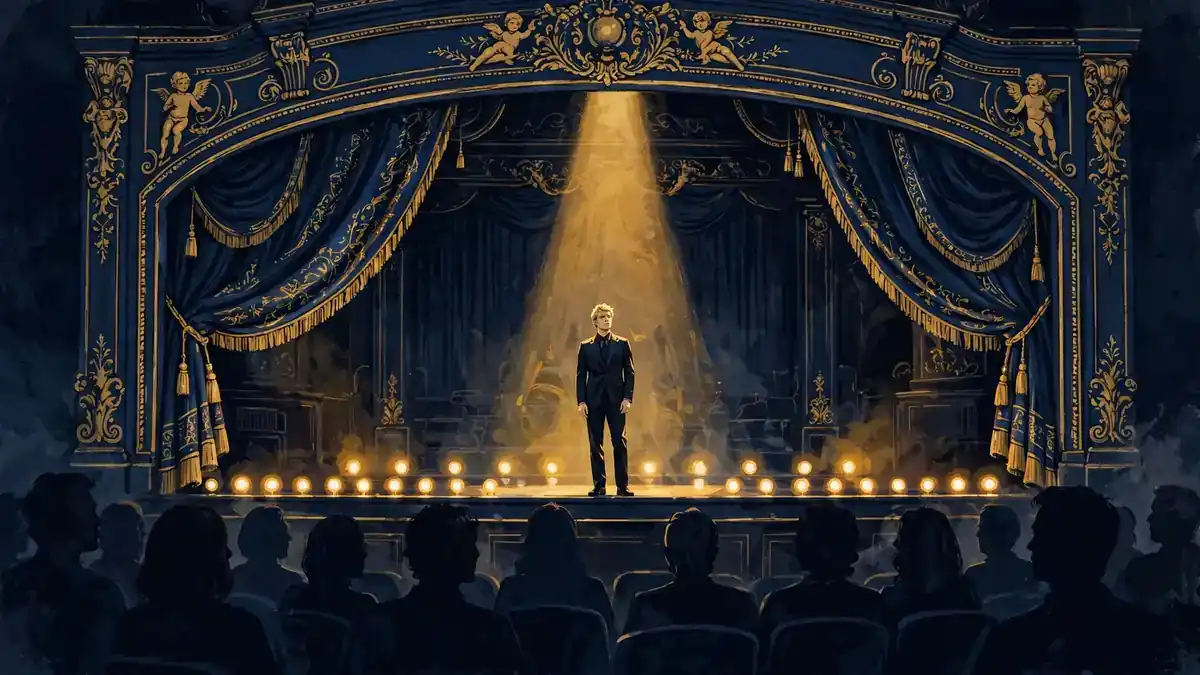
The third wave is the one running right now. On June 5, 2025, Felton announced he would reprise Draco Malfoy in Harry Potter and the Cursed Child on Broadway — the first actor from the original film cast ever to join the stage production. He made his Broadway debut at the Lyric Theatre on November 11, 2025, playing Draco as a father, nineteen years after the story of the films ends. The commercial response was immediate: his first week in the show grossed roughly $2.59 million across seven performances, more than $1 million above the previous week’s total; the following week climbed to about $2.97 million, then an all-time high for the Broadway production; and a nine-performance week ending December 28, 2025, set the Lyric Theatre’s box-office record at $3.7 million. Playbill reported the show has held the No. 1 spot on the Broadway grosses since his arrival. The run, first booked as a limited 19-week engagement through March 22, 2026, was extended to May 10, then to November 1, 2026, and on August 11, 2026, producers announced a final extension through January 3, 2027.
That Broadway run is the single most valuable thing to happen to Felton’s career since the films ended, and for more than the salary. It put him back on front pages, it gave the memoir a second life, and it set up a reunion nobody had dared to schedule: Rupert Grint is set to join the same production as Ron Weasley from February 2027, just weeks after Felton’s run ends. Two of the four original young stars, on the same Broadway stage, a year apart — the kind of symmetry that sells tickets and keeps a thirty-year-old franchise in the news.
Main Sources of Income
Felton’s income has never come from one tap. The Potter films paid the foundation, but the structure built on top of it has five distinct streams, and the balance between them has shifted steadily away from film fees toward stage, music, books and residuals.
Film and television acting remains the largest stream. The eight Potter films are the core, but the post-Potter filmography — Rise of the Planet of the Apes, The Flash, Murder in the First, Origin, Fackham Hall, They Will Kill You — has kept acting fees coming for fourteen years since the franchise ended. None of those parts paid Potter money, but together they make up a working actor’s living, and the 2025–2026 run of Gandhi, Fackham Hall and They Will Kill You is the busiest stretch of his adult career.
Stage work is the newest stream, and in 2026 it is the most important. A Broadway principal’s contract across a run that stretches from November 2025 to January 2027 — fourteen months, with extensions driven by record grosses — is a substantial, steady paycheque, and it comes with the kind of visibility that feeds every other stream. Felton’s exact Broadway salary has not been made public, and this article does not guess at it.
Royalties and residuals are the quiet stream, and the hardest to value from outside. The Potter films still earn from streaming licences, television syndication and home media, and the cast’s residual cheques keep arriving. How large those cheques are for a supporting player is not public. A useful point of comparison comes from his co-star’s tax case: Celebrity Net Worth reported that Rupert Grint received roughly £4.5 million in residuals in a recent period, a figure that surfaced during Grint’s dispute with HMRC. That is Grint’s money, not Felton’s, and the two contracts were never identical — but it shows the scale of money still moving through the franchise a decade after the final film.
Music is the stream Felton built himself. He writes songs, records them, releases them through his own label, and plays live. It will never match a film fee, but it is his, it is steady, and it connects directly to the fanbase that buys the memoir and the convention tickets.
Books, appearances and investments round out the picture. Beyond the Wand was a #1 New York Times bestseller, which means a real advance and real royalties, plus a paperback edition in October 2023 with a new chapter. Fan conventions and personal appearances pay appearance fees. And a 2022 move into food technology — as a brand ambassador and investor in the UK plant-based company Jack & Bry — put him into the kind of small, early-stage equity that can either vanish or multiply, and that no net worth tracker can value with confidence.
Salary and Earnings
The honest answer first: nobody outside Felton’s accountants knows his exact pay for any single Harry Potter film. Warner Bros. never published the supporting cast’s contracts, and Felton has never disclosed his fees. What exists instead is a set of reported totals that point in the same direction, and they are worth laying out side by side because the gap between them explains the $10 million–$20 million range.
One tally, published by Famous People Today, puts his total earnings from the eight Potter films at more than $18 million, and cites a separate reported figure of £12.7 million for his cumulative franchise pay. The two numbers describe the same career from different angles — one in dollars across the full run, one in pounds as reported in the British press — and both sit far below the three leads. Celebrity Net Worth, which puts Grint’s total base salary across the eight films at roughly $60 million to $70 million, has never published a per-film breakdown for Felton, and this article does not invent one.
What is certain is the shape of the pay curve. Child actors on a franchise start low and renegotiate upward as the films succeed. Felton was thirteen when the first film shot and twenty-three when the last one wrapped; his fee for Deathly Hallows was a multiple of his fee for Sorcerer’s Stone. That rising curve, stretched across a decade, is why a supporting player can finish a franchise with eight figures while still earning a fraction of the leads.
Post-Potter pay is a different world. A supporting part in a studio film such as Rise of the Planet of the Apes pays a solid six-figure fee; a lead in an independent film pays far less; a season of network television pays per episode; a Broadway contract pays weekly across a long run. None of those figures is public for Felton, and the article that pretends otherwise is guessing. The shape is what matters: fourteen years of continuous, varied work after the franchise, with the biggest single paycheque of his adult career very likely the Broadway run now in progress.
Peer comparison puts the range in context. The table below uses published 2026 estimates, not audited figures, and the spread between the four young stars is the story: the same eight films made one of them a nine-figure fortune and another a comfortable eight-figure one, because billing, renegotiation power and post-franchise careers diverged so sharply.
| Actor | Harry Potter role | Published 2026 estimate | Main wealth source |
|---|---|---|---|
| Daniel Radcliffe | Harry Potter | $120 million (Parade); $130 million (Alux) | Potter lead pay, stage and film |
| Emma Watson | Hermione Granger | $85 million (Alux, Bustle) | Potter pay, Beauty and the Beast, endorsements |
| Rupert Grint | Ron Weasley | $50 million (Parade, Celebrity Net Worth) | Potter pay, property portfolio |
| Tom Felton | Draco Malfoy | $10 million–$20 million | Potter pay, stage, music, memoir |
Two things stand out in that table. First, Felton is the only one of the four whose wealth still depends heavily on work he is doing right now — the Broadway run, the new films, the music — rather than on money banked as a teenager. Second, the $10 million gap between the low and high estimates for Felton is itself a finding: where Radcliffe’s and Watson’s fortunes are large enough to absorb estimation error, Felton’s sits in a band where the choice of source moves the headline by 100 percent. That is why this article publishes a range.
Businesses and Investments
Felton’s most personal business is Six String Productions, the independent record label he co-founded with David Proffitt and Phillip Haydn-Slater. It is the vehicle for his own music — the early EPs Time Well Spent (2008), All I Need (2008) and In Good Hands (2009), the Hawaii EP (2011), and the 2024 trilogy of EPs titled ReD, ORaNgE and YelLoW — and it gives him something few former child stars have: a company he controls, in a field he cares about, that earns whether or not a casting director calls. Label economics at this scale are modest, and no revenue figure is public, but the structure is sound: own the masters, own the label, keep the overhead low.
The investment that has drawn the most attention is Jack & Bry, a UK food-technology company making plant-based meat alternatives. In 2022 Felton became both a brand ambassador and an investor in the company, a dual role that put his face on the brand and his money into the business. Early-stage food-tech equity is a gamble — the sector has seen both spectacular funding rounds and quiet failures since 2022 — and the size of Felton’s stake has never been disclosed, so no tracker can honestly add a number for it. What it shows is intent: he is putting money into businesses he can talk about publicly, rather than collecting passive property alone.
Property is the third leg, and it is the only one with a public paper trail. In 2014 Felton paid $1.275 million for a two-bedroom, 2.75-bathroom house in the Nichols Canyon area of Hollywood Hills West. Two years later he sold the same house for $1.625 million — a gross gain of $350,000 on a two-year hold, before selling costs and taxes. It is a small deal by celebrity standards, and that is exactly the point: the transaction looks like a working actor buying a sensible house and selling it well, not a mogul assembling a portfolio. No other property purchase by Felton is a matter of public record, and this article does not list homes he has never been tied to.
He also earns as a producer. He produced the independent drama Feed (2017), in which he also starred, a credit that signals a shift from hired actor to someone building projects. Producing fees and backend participation on a small independent film are unlikely to be large, but the credit matters for the next decade: actors who produce control their own employment.
Brand Deals and Sponsorships
Felton’s endorsement history is thin compared with his co-stars, and the article says so plainly rather than padding the section. Emma Watson built a second career out of fashion and beauty partnerships; Felton did not. His commercial work divides into two phases with a long gap between them.
The first phase was childhood: television commercials, including a Barclaycard spot, booked before he was ten. Those were a child actor’s bread and butter, not brand ambassadorships, and they paid session fees rather than endorsement money.
The second phase is the Jack & Bry role from 2022 — brand ambassador and investor in one package. It fits him: a British company, a product he can talk about without a script, and an equity stake rather than a one-off fee. Beyond that, his paid public work has centred on the fan economy: convention appearances, signing events and personal appearances, where the fee is for showing up as Draco Malfoy rather than for endorsing a product.
That thin endorsement record is itself a data point for the net worth estimate. Actors whose wealth comes from advertising can double a film fortune with a single contract; Felton’s fortune was built the slower way, from fees, residuals, a book and a stage run. It also explains why the Broadway extension matters so much to his finances: for a performer without a major endorsement portfolio, a fourteen-month Broadway contract is the closest thing to guaranteed income the business offers.

Houses, Cars and Other Assets
The documented asset record for Tom Felton is short, and the article keeps it short rather than filling it with speculation. One property transaction is on the public record: the Nichols Canyon house in Hollywood Hills West, bought for $1.275 million in 2014 and sold for $1.625 million in 2016. The house had two bedrooms and 2.75 bathrooms, and the sale price represents a $350,000 gross gain across two years — a clean, well-timed flip in a rising Los Angeles market.
Beyond that single transaction, there is no verified public record of other homes, and this article does not claim any. Felton divides his time between London and Los Angeles for work, and his social media posts show him fishing on English rivers and walking in the Surrey countryside, but a social media post is not a property record.
On cars, the same discipline applies. No verified reporting ties Felton to a car collection, a supercar purchase or an exotic garage, and the article will not invent one to fill the section. He has been photographed with ordinary vehicles rather than showpieces, which fits everything else known about his spending: careful, low-key, and a long way from the fleet-collecting habits of some of his peers.
What he does own outright is harder to put a price on but easy to name: the rights to his music through Six String Productions, the ongoing royalties from a bestselling memoir, and a stake in Jack & Bry. Those are the assets that will still be earning in ten years, long after the Broadway run closes.
Awards and Achievements
Felton has never been an awards-circuit actor, and his trophy record reflects that. He has no Oscar, BAFTA or Golden Globe nomination, and the article does not dress that up. What he does have is a fan-voted prize that fits the role perfectly: he won Best Villain at the MTV Movie Awards in 2011 for Harry Potter and the Deathly Hallows – Part 1, after being nominated in the same category the year before. For the actor who played the franchise’s most famous antagonist, it was the right award from the right audience.
The franchise itself collected the prestige honours — BAFTAs, technical awards, and a place in box-office history as one of the highest-grossing series ever made — and Felton shared in those as a cast member across all eight films. The stage play he now stars in carries its own honours: Harry Potter and the Cursed Child has won nine Laurence Olivier Awards and six Tony Awards, including Best Play, and holds the Guinness World Records title for the highest-grossing non-musical play in Broadway history, with more than $430 million in total sales.
The publishing achievement is his own. Beyond the Wand: The Magic and Mayhem of Growing Up a Wizard, published in October 2022 by Grand Central Publishing with a foreword by Emma Watson, reached #1 on the New York Times bestseller list and was named one of the best memoirs of 2022 by Barnes & Noble. A paperback edition followed in October 2023 with a new chapter. For a former child star writing about addiction, rehab and the strangeness of growing up famous, that reception was the real prize — and it pays royalties every year the book stays in print.
The box-office record may be the most telling achievement of all. Since Felton joined Cursed Child, the production has held the No. 1 spot on the Broadway grosses, and the $3.7 million nine-performance week ending December 28, 2025, stands as the highest-grossing week in the history of the Lyric Theatre. No individual acting award measures that. A theatre record does.
Net Worth Growth Over the Years
No auditor has ever published Felton’s balance sheet, so the table below is an illustrative reconstruction, not a filing. It is built from the reported totals in the salary section, the property record, the memoir’s publication date and the Broadway run, and it shows the shape of the fortune rather than its exact balance at any date.
| Year | Estimated net worth | What moved it |
|---|---|---|
| 2001 | ~$1 million | First Potter film; child-actor fees under trust arrangements |
| 2005 | ~$4 million | Four Potter films banked; fees rising with each instalment |
| 2011 | ~$8 million | Final Potter film; reported career pay past $18 million gross |
| 2016 | ~$10 million | Nichols Canyon house sold for $1.625 million; The Flash run |
| 2022 | ~$12 million | Beyond the Wand becomes a #1 NYT bestseller; Jack & Bry investment |
| 2025 | ~$15 million | Broadway debut in Cursed Child; Fackham Hall; Gandhi series |
| 2026 | $10 million–$20 million | Broadway run extended to January 2027; They Will Kill You released |
The pattern is a slow climb rather than a spike. There is no single year in which Felton’s wealth doubled, and no windfall deal. The fortune grew the way a working actor’s fortune grows: a big early break, a decade of fees, a property gain, a bestselling book, and — late in the story — a stage run that pays steadily for fourteen months. The 2026 range is wider than the earlier estimates because the sources genuinely disagree: Celebrity Net Worth says $10 million, Alux says $15 million, Bustle says $20 million, and the truth, on the evidence available, sits somewhere inside that band.
Where does it go from here? Three things will decide the next five years. First, whether the Broadway run leads to more stage work — a West End transfer or a new play would turn a one-off contract into a second career. Second, whether the Gandhi series and the 2026 film slate lift his screen fees back toward studio levels. Third, whether the Jack & Bry stake or the Six String label produces a return that a tracker can actually value. None of those is guaranteed, but the direction of travel in 2026 is upward, and the range should narrow as the Broadway money lands.
Social Media Presence
Felton runs his own social media, and it reads like his: unfiltered, funny, and heavy on fishing. His Instagram account counts followers in the millions, and the feed mixes Broadway backstage posts, tour dates, guitar clips and riverbank photographs in roughly equal measure. It is also his direct line to the fanbase that buys the memoir and fills the Lyric Theatre — a marketing channel he owns outright, which matters for an actor without a major endorsement portfolio.
He is active on YouTube under his own name, where he has posted music and vlogs for years, and on X, where his following is smaller and his posts are more conversational. He does not run the kind of polished, brand-managed feed that turns a following into a sponsorship rate card. That is a choice, and it costs him endorsement money — but it is also why the audience trusts him when he does promote something, whether that is a book, a record or a plant-based food company.
The social following is also the reason the Broadway producers could bet on him. A performer who can put a show in front of millions of followers without spending a dollar on advertising is a commercial asset, and the $2.59 million first week at the Lyric is the receipt. Social reach, in Felton’s case, converts directly into ticket sales, and ticket sales convert into extensions.
Personal Life
Felton is not married, and as of 2026 no relationship has been publicly confirmed. His longest public relationship was with Jade Olivia, a stunt performer who worked on the Potter films; the two were together for around eight years before splitting in 2016. Parade reported in 2026 that he is not currently married and that speculation about a relationship has produced no official details. This article repeats only what is confirmed: he is unmarried, and he keeps his private life private.
His closest public friendship is with Emma Watson. The two grew up on the same sets, mocked each other as children — he teased her for not knowing what a boom mic was — and stayed close as adults. Watson wrote the foreword to Beyond the Wand, and Felton has described her as one of his dearest friends. Fans have speculated about more for years; both have said the relationship is a friendship, and the article leaves it there.
The memoir is where the personal life becomes public record, and it is candid in a way few celebrity books are. Felton writes about moving to Los Angeles in his twenties, drinking to escape a life that felt unreal, and being confronted by his managers, agents, then-girlfriend Jade Olivia and his lawyer in an intervention that sent him to a Malibu rehab facility costing $40,000 a month. He walked out after 24 hours, entered a second facility, was asked to leave after breaking its rules, and eventually checked himself into rehab a third time — a decision he called the hardest he ever made. He writes that alcohol was a symptom rather than the problem, that the problem ran deeper, and that he remains in therapy. Entertainment Tonight covered the revelations when the book was published in October 2022, and OK! Magazine reported the three rehab stays in the same week.
Outside work, he fishes. It is the hobby that appears in almost every profile, the pastime he returns to between jobs, and the one he posts about most. He golfs, he plays guitar, and he still talks about Surrey as home. The picture is of a man who spent his childhood inside the biggest franchise in film history, spent his twenties working out what that had cost him, and reached his late thirties with a steady career, a bestselling book, a Broadway contract and his health — which, by his own account, was the hardest thing to recover.
Sources & Reporting
Reporting window: October–November 2026. All figures are estimates drawn from public reporting; none comes from an audited disclosure by Felton or his representatives.
Parade — the $10 million net worth estimate attributed to Celebrity Net Worth; the June 2025 Broadway announcement; the April 2026 extension to November 1; Rupert Grint’s scheduled February 2027 Broadway return; Felton’s unmarried status.
Celebrity Net Worth — the $10 million estimate for Felton and the $50 million estimate for Rupert Grint; Grint’s $60 million–$70 million total Potter base salary and the £4.5 million residuals figure from his HMRC case.
Alux — the $15 million midpoint estimate for Felton; the $130 million Radcliffe and $85 million Watson estimates; the Six String Productions co-founders; the 2024 EP trilogy; the November 2026 career update.
Bustle — the $20 million estimate for Felton, in an article originally published in 2021 and updated February 20, 2024.
LoveMoney — the $10 million (£7.4 million) estimate for Felton and the $50 million estimate for Grint in its August 2026 Harry Potter rich list.
Famous People Today — the reported $18 million-plus total from the Harry Potter films and the £12.7 million cumulative pay figure; the 2014 purchase ($1.275 million) and 2016 sale ($1.625 million) of the Nichols Canyon house; the 2022 Jack & Bry ambassador and investor role.
Playbill — the Broadway debut date of November 11, 2025; the extensions through May 10 and November 1, 2026; the $3.7 million Lyric Theatre box-office record for the nine-performance week ending December 28, 2025; Felton as the first original film cast member to join the stage production.
BroadwayWorld — the April 2026 extension report and the $3.7 million record week.
MuggleNet — the August 11, 2026 announcement of the final extension through January 3, 2027, and the week-by-week grosses of $2.59 million and $2.97 million.
Entertainment Tonight — the October 2022 memoir revelations: the intervention, the $40,000-a-month Malibu facility, and walking out after 24 hours.
Hachette Book Group — the publisher’s page for Beyond the Wand: #1 New York Times bestseller status, the October 2023 paperback edition with a new chapter, and the Barnes & Noble best-memoir-of-2022 honour.
The Hollywood Reporter India — Felton’s role as Josiah Oldfield in Hansal Mehta’s Gandhi series and its TIFF world premiere.
FandomWire — the $20 million estimate for Felton in its 2026 ranking of the richest Harry Potter stars.
Frequently Asked Questions
What is Tom Felton’s net worth in 2026?
Tom Felton’s net worth is estimated at $10 million–$20 million as of November 2026, with a midpoint of about $15 million. The range exists because the sources disagree: Celebrity Net Worth puts him at $10 million, Alux at $15 million and Bustle at $20 million. The fortune comes from eight Harry Potter films, later film and television work, a bestselling memoir, music, and his 2025–2027 Broadway run in Harry Potter and the Cursed Child.
How much did Tom Felton make from Harry Potter?
Reported totals put his earnings from the eight Harry Potter films at more than $18 million, with a separate reported figure of £12.7 million for his cumulative franchise pay. Exact per-film fees were never made public, and his pay rose across the series as the films succeeded. For comparison, Celebrity Net Worth estimates Rupert Grint’s total Potter base salary at roughly $60 million–$70 million, and the three leads earned far more than the supporting cast.
How old is Tom Felton?
Tom Felton was born on September 22, 1987, in Epsom, Surrey, England, which makes him 39 years old as of November 2026. He was thirteen when he was cast as Draco Malfoy and twenty-three when the final Harry Potter film was released.
Is Tom Felton married?
No, Tom Felton is not married as of 2026. His longest public relationship was with Jade Olivia, a stunt performer on the Harry Potter films, whom he dated for around eight years before they split in 2016. No relationship has been publicly confirmed since, and he keeps his private life out of the press.
Is Tom Felton in Harry Potter and the Cursed Child?
Yes. Felton made his Broadway debut as Draco Malfoy in Harry Potter and the Cursed Child at the Lyric Theatre on November 11, 2025 — the first actor from the original film cast to join the stage production. His run was extended three times and now runs through January 3, 2027. The production set the Lyric Theatre box-office record with a $3.7 million nine-performance week in December 2025.
What is Tom Felton doing now?
As of November 2026 he is playing Draco Malfoy on Broadway in Harry Potter and the Cursed Child, with his run extended through January 3, 2027. He also appears in the 2025 comedy Fackham Hall, plays Josiah Oldfield in Hansal Mehta’s Gandhi series, and starred as Kevin in the horror-comedy They Will Kill You, released in March 2026.
Does Tom Felton have a music career?
Yes. Felton is a singer-songwriter and co-founder of the independent label Six String Productions. He has released several EPs, including Time Well Spent (2008), All I Need (2008), In Good Hands (2009), Hawaii (2011), and a 2024 trilogy titled ReD, ORaNgE and YelLoW. He sang in four school choirs from the age of seven and plays guitar.
Where is Tom Felton from?
Tom Felton is from Epsom, Surrey, England, and grew up in the Guildford area. He attended Cranmore School in West Horsley until age thirteen and then The Howard of Effingham School. He still talks about Surrey as home and spends his free time fishing on English rivers.
Final Thoughts
Tom Felton’s fortune is the smallest of the four young Harry Potter stars, and the most honestly earned. Daniel Radcliffe banked nine figures as a child; Felton banked a solid eight, then spent fourteen years working for the rest — independent films, network television, a record label, a bestselling memoir, and now a Broadway run that broke the Lyric Theatre’s box-office record. The $10 million–$20 million range is wide because the record is incomplete, not because the career is. On the evidence available, $15 million is the fair midpoint, and the direction of travel is up: a fourteen-month Broadway contract, a prestige television series, and a film slate that is busier than any year since the franchise ended. Draco Malfoy made him famous. The adult career he built after him is what made him wealthy — and the stage run that closes in January 2027 may turn out to be the most valuable chapter of all.
Published on November 23, 2026. Last reviewed November 2026. Found an error? See our corrections policy.