
Tony Danza‘s net worth is estimated at $40–$45 million as of October 2026. Celebrity Net Worth and ComingSoon both anchor at $40 million; CelebsMoney nudges toward $45 million. The figure is believable because the receipts behind it are unusually traceable: a Malibu beach house bought for $1.15 million and sold for $8 million, eight seasons headlining one of television’s most-syndicated sitcoms, a Broadway musical career that paid weekly star salaries for years, and a touring cabaret act that, at 75, still sells out rooms from Café Carlyle to San Antonio. He was never the highest-paid actor of his era. He simply never stopped working.
Tony Danza: Quick Facts
| Estimated net worth | $40 million (range: $40–$45 million) |
|---|---|
| Profession | Actor, television host, stage performer, former professional boxer |
| Nationality | American |
| Born | April 21, 1951 (age 75) |
| Height | 5 ft 9 in (1.75 m) |
| Primary income sources | Television salaries & residuals, stage & cabaret performances, real estate, books, hosting |
| Active years | 1976–present (boxing 1976–1979; acting 1978–present) |
| Last reviewed | October 2026 |

- Early Life and Background
- Education
- Career Journey
- Rise to Fame
- Main Sources of Income
- Salary and Earnings
- Businesses and Investments
- Brand Deals and Sponsorships
- Houses, Cars and Other Assets
- Awards and Achievements
- Net Worth Growth Over the Years
- Social Media Presence
- Personal Life
- Sources & Reporting
- Frequently Asked Questions
Early Life and Background
Antonio Salvatore Iadanza was born on April 21, 1951, in Brooklyn, New York, to Matty Anthony Iadanza, a garbage collector, and Anne Cammisa, a bookkeeper. His grandparents were Italian immigrants, and Danza grew up in a working-class Italian-American household where nobody knew anyone in show business. The family eventually moved to Malverne, Long Island, where he graduated from Malverne Senior High School in 1968. There was no stage in his childhood plan. The neighborhood joke, years later, was that the kid who collected cans on the street ended up collecting awards — but the cans came first.
What Brooklyn gave him, though, was a certain kind of charisma that never left: the open, unthreatening toughness that producers would later cast again and again. Even as a television millionaire, Danza kept the accent, the grin, and the mannerisms of the kid from the block. That authenticity turned out to be the most valuable thing he owned — it made him believable as a cab driver, a housekeeper, a mobster and a high school teacher alike, and it kept him employable across five decades when plenty of prettier contemporaries vanished. One visible edit came early: born Antonio Salvatore Iadanza, he shortened the family surname to Danza for the marquee — the kind of practical rebranding that the 1970s entertainment business expected and that nobody has questioned since.
Education
Danza attended the University of Dubuque in Iowa on a wrestling scholarship and graduated in 1972 with a bachelor’s degree in history — specifically history education. He has said repeatedly that he went to college to become a teacher. The wrestling scholarship was the financial mechanism, but the intent was a classroom, not a camera. That detail matters because it explains the strangest pivot of his later career: when he finally walked into a real high school classroom in 2009, he was certified and qualified to be there, not play-acting for a reality show.
The University of Dubuque detail also explains his midwestern comfort zone. In a 2026 interview with Chicago Concert Reviews, promoting a Des Plaines, Illinois show, Danza reminisced about his Dubuque years and noted that he married his first wife in Cook County, then lived in DuPage County — Downers Grove and Lemont — in the early 1970s. It’s a small thing, but it shows how much of his life is still filed under “Midwest normal” rather than “Hollywood.”
Career Journey
After college, Danza boxed. Not as a lark — as a professional middleweight from 1976 to 1979, compiling a record of 9 wins and 3 losses, with seven of the nine wins by knockout. Boxing purses in that era’s regional circuit were modest, but the career served two purposes: it paid rent, and it put him in the New York boxing gym where everything changed. A television producer spotted him training, liked the look, and cast him — with essentially no acting experience — as Tony Banta, an earnest boxer-turned-cab-driver, in the NBC sitcom Taxi in 1978.
Taxi ran from 1978 to 1983 and became one of the most acclaimed sitcoms of its era, winning multiple Emmy Awards for the show itself. Danza earned an Emmy nomination for his work on the series — an astonishing outcome for a former boxer who had never acted. The role also typecast him in the best possible way: audiences loved him as the sweet, slightly dim tough guy, and that persona became the template for the biggest job of his life.
Between sitcoms, Danza started crossing into film. He headlined The Hollywood Knights (1980) and the ape-comedy Going Ape! (1981), and later She’s Out of Control (1989). None of these made him a movie star, but they kept him visible — and proved he could carry a project outside the sitcom format. His most respected screen credit in this era was the 1997 Showtime television film 12 Angry Men, where he held his own opposite George C. Scott and Jack Lemmon — a genuine acting credential that silenced critics who saw him as a two-sitcom wonder. Meanwhile, his salary climbed with each season of Taxi, and by the time the show ended in 1983, he was a bankable television name with a five-season hit on his résumé.
Rise to Fame
In 1984, Danza landed the role that defined him: Tony Micelli, a retired professional baseball player working as a live-in housekeeper for a high-powered advertising executive, Angela Bower (Judith Light), in the ABC sitcom Who’s the Boss? The show premiered on September 20, 1984, ran for eight seasons and 196 episodes through 1992, and became one of the defining sitcoms of the 1980s — a ratings hit that flipped traditional gender roles by putting the man in the apron.
The chemistry with his co-stars did the heavy lifting. Judith Light, Katherine Helmond as Mona, Alyssa Milano as daughter Samantha, and Danny Pintauro as Jonathan formed one of the great ensemble casts of the era; the show earned multiple Golden Globe nominations for Danza himself — four in total — and won a Primetime Emmy and a Golden Globe for the series. In a 2026 interview, Danza credited the writing above all else: a crack troupe that rehearsed fast, with Helmond never making a mistake, and material that, as he put it, you can’t replace with acting alone. It remains a fixture in syndication more than three decades after the finale, and syndication checks on a 196-episode hit are the single steadiest line in his financial picture.
The long afterlife of the show nearly got a coda. A sequel series — with Danza and Milano attached to reprise Tony and Samantha Micelli, produced for Amazon Freevee with the late Norman Lear attached — was announced in 2020 and scrapped in 2024, per The Hollywood Reporter, with no reason given. Lear’s involvement gave the project special weight: his Embassy Communications had produced the original series, and his death in December 2023 removed its most powerful champion. The planned premise had Samantha as a single mother back in the Connecticut family home, butting heads with a retired Tony — a setup that would have flipped the original’s gender dynamics in reverse. In February 2026, Danza told the New York Post, via Parade, that he believed the show had a real chance: the script was strong, the cultural timing was right, and it would have been funny. It’s the closest he’s come to a third act as big as the first two — and a reminder that even at 74, his biggest earning asset is still Tony Micelli.
Main Sources of Income
Danza’s fortune is old-fashioned television money, layered with stage salaries, property profits and a late-career second act as a touring performer. The main streams:
Television salaries and residuals. Five seasons of Taxi, eight seasons of Who’s the Boss?, plus the 1997 NBC sitcom The Tony Danza Show (for which he won a 1998 People’s Choice Award), ABC’s Hudson Street (1995–96), CBS’s Family Law (2000–02) as attorney Joe Celano, an Emmy-nominated guest turn on David E. Kelley’s The Practice (1998), and the syndicated daytime talk show The Tony Danza Show (2004–06), broadcast live from New York. Residuals from the two landmark sitcoms — both long syndicated — have been paying him for decades, long after the final episodes aired.
Stage and live performance. Broadway paid star money. Danza made his Broadway debut in the 1997 revival of Arthur Miller’s A View from the Bridge, earned critical praise as Rocky in the 1999 revival of Eugene O’Neill’s The Iceman Cometh opposite Kevin Spacey, then headlined Mel Brooks’s The Producers as Max Bialystock from December 19, 2006 to March 11, 2007, before reprising the role in the Las Vegas production at Paris Las Vegas through its February 2008 close. He returned to Broadway in Honeymoon in Vegas (December 2014–April 2015). Beyond Broadway, his song-and-dance cabaret show — debuting in Atlantic City in 1995 and still touring — plus the Standards & Stories concerts, are a genuine business: 2026 dates include a sold-out run at Café Carlyle (September 8–19, tickets from $150) and the Des Plaines Theatre in Illinois (October 11).
Real estate. Property profits are the quiet giant of his balance sheet — notably the Malibu beach house bought for $1.15 million in 1987 and sold for $8 million in 2014, detailed below. He also bought and sold in Sherman Oaks and owned a Manhattan condo, timing the California market’s great run almost perfectly by accident of biography.
Books, albums and hosting. A debut album, The House I Live In (2003), a father-son cookbook with son Marc, Don’t Fill Up on the Antipasto (2008), and the bestselling teaching memoir I’d Like to Apologize to Every Teacher I Ever Had (Crown, 2012). Hosting gigs — multiple Saturday Night Live appearances, the 2001 Miss America pageant, the 2003 People’s Choice Awards — added appearance fees throughout.
Later-career screen work. Film roles including Disney’s Angels in the Outfield (1994), the Oscar-winning Crash (2004) and Don Jon (2013) opposite Joseph Gordon-Levitt; Netflix’s The Good Cop (2018); and, since 2022, the recurring role of mob boss Stefano Marchetti on Starz’s Power Book III: Raising Kanan — which Danza, in a 2024 Today interview, called some of the most fun he had ever had on a set.

Salary and Earnings
Here is where honesty is required: no contemporaneous payroll records for Taxi or Who’s the Boss? are public. The per-episode figures circulating online come from net-worth tracker sites, and they disagree wildly — which is itself informative. OtakuKart reports he started around $40,000 per episode on Who’s the Boss? with raises as the show’s ratings climbed. TryHardGuides estimates roughly $1 million per season at the show’s peak. JournalPress puts his height-of-fame rate above $100,000 per episode at the height of the show’s run. One thinly-sourced page claims as much as $200,000 per episode.
What can be said with confidence: on Taxi, he started modestly and his pay rose with the show’s success; by the end of its five-season run he was earning well into five figures per episode, substantial money for early-1980s television. On Who’s the Boss?, he was the undisputed lead of a top-rated network sitcom for eight seasons, and leads in that position negotiated escalating contracts — the standard 1980s path from mid-five-figures per episode to the $100,000 range by the final seasons. Treat any single “exact” number you see elsewhere as an estimate; the trajectory — upward, sharply, across 196 episodes — is the fact that matters.
A note on the outlier: one thinly-sourced page (celebworth.net) claims Danza is worth $100 million and earns $20 million a year — figures repeated on a couple of scraper mirrors. Nothing supports them. Celebrity Net Worth, ComingSoon and the bulk of tracker consensus sit at $40 million, and Danza’s known income history (1980s network salaries, residuals, stage pay, property) simply has no component that could generate $20 million a year. When one page disagrees with every other source by a factor of two and cites no reporting, the outlier is wrong, not interesting.
The deeper point is that salary was never the whole story. In the 1980s, a 196-episode sitcom hit meant syndication: local stations buying reruns for decades, with the stars’ contracts capturing a slice. Who’s the Boss? and Taxi both syndicated widely, and those residual payments — small per check, relentless in volume — have flowed to Danza for over thirty years. Add the daytime talk show years (2004–06, daily syndicated television), the Broadway star contracts (top-tier weekly salaries for the Producers and Honeymoon in Vegas runs), and the steady drumbeat of guest spots, and the $40 million figure stops looking like a guess. It’s what four decades of compound show-business income looks like when almost none of it was spent on a rock-star lifestyle.
Businesses and Investments
Danza was never a startup investor or a franchise owner; his “businesses” were extensions of his performing self, and they were profitable in a craftsmanlike way.
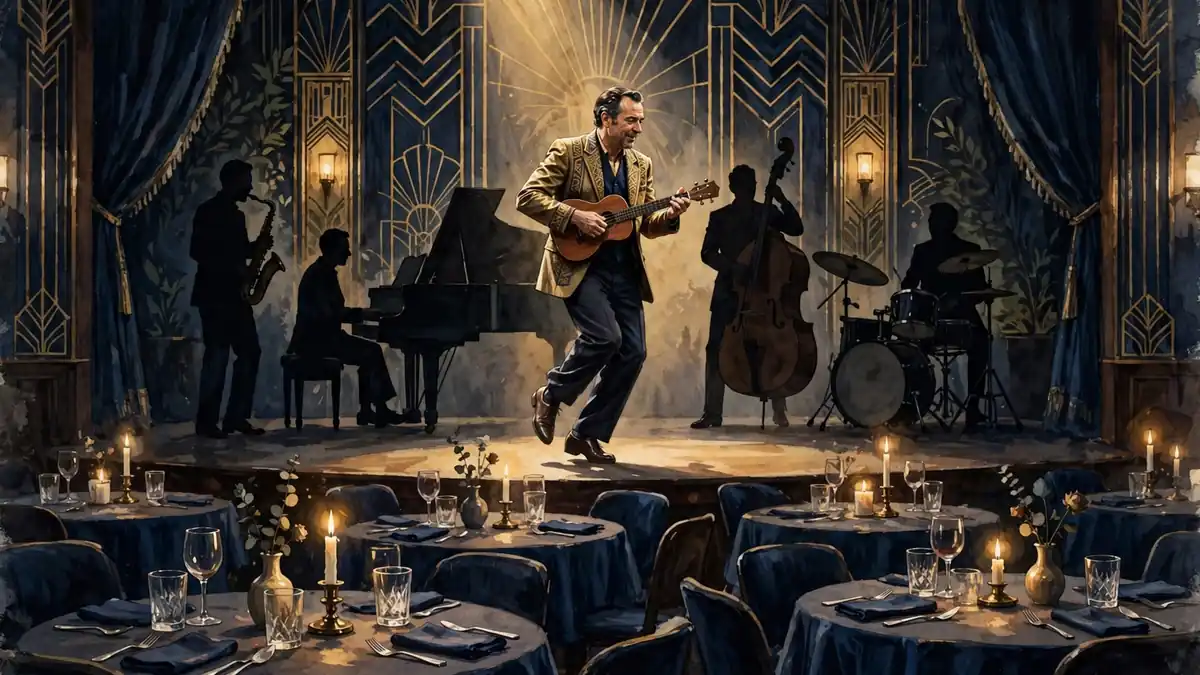
The touring cabaret act. This is the closest thing he has to a company. His song-and-dance show debuted in Atlantic City in 1995 and has run, in various forms, ever since — now as Standards & Stories, a Great American Songbook evening with a four-piece band, soft-shoe dancing and ukulele numbers. The economics of a 75-year-old with a fiercely loyal fan base are excellent: intimate venues, premium tickets (2026 Café Carlyle tickets started at $150 with a $95 food minimum; a Houston supper-club date ran $82–$227), multiple sold-out engagements, and nearly zero production overhead beyond his band. It’s the kind of income most aging stars would envy — a self-owned touring business with a built-in audience.
The daytime talk show. The Tony Danza Show (2004–06), syndicated by Buena Vista and taped live in New York, gave him two years of daily-television host money — historically one of the better-paying gigs in television. It also taught him the format’s brutal lesson: he folded the experience into his later projects rather than chasing a second run.
Publishing. The 2012 memoir I’d Like to Apologize to Every Teacher I Ever Had (Crown/Random House) was a genuine bestseller-adjacent book, reviewed widely and still in print; the 2008 cookbook Don’t Fill Up on the Antipasto, written with son Marc, kept the family-cooking lane alive. Neither is a fortune on its own, but advances plus long-tail sales are the definition of diversified income.
Real estate as investment. Unlike many celebrities who rent their lifestyle, Danza bought California property early and held it for decades — a buy-and-hold discipline that turned a $1.15 million 1987 purchase into an $8 million 2014 sale. That’s the single best “investment” of his career, and it required no expertise beyond staying put.
He has no known restaurant chain, fashion line or tech portfolio — the things junk net-worth pages sometimes invent for him. His wealth is career-shaped: salaries, residuals, stage pay, touring, property. The absence of exotic investments is a feature, not a gap.
Brand Deals and Sponsorships
Danza’s endorsement résumé is thin by modern celebrity standards, and that’s worth saying plainly. He built his fortune in an era when sitcom stars earned from contracts and reruns, not sneaker deals. There are no public records of major multi-million-dollar endorsement campaigns, product lines or equity partnerships under his name. What exists instead is the low-key end of the business: talk-show and awards-show hosting fees, paid personal appearances, autograph and memorabilia circuits, and the brand value embedded in his touring show’s ticket prices. If you’re looking for the reason his net worth is $40 million and not $400 million, this section is the answer — he never built (or sold) a business empire. He built a career, and it paid like one.
Houses, Cars and Other Assets
The Malibu beach house. The crown jewel of Danza’s asset history: a 1949 beachfront home in Malibu purchased in 1987 for $1.15 million, sitting on 50 feet of beachfront with 3,000 square feet of living space, three bedrooms, and two detached guest homes. He lived there for nearly 25 years. Amid his 2011 divorce proceedings it was listed for $9.1 million — a figure that still floats around the internet as if it were the sale price. It wasn’t. After three years on the market, Danza sold it in 2014 for $8 million, per property reporting picked up by The Things and Celebrity Net Worth. Even so: roughly $6.85 million in gross appreciation before costs, fees and the divorce settlement’s share — the single most profitable transaction of his life, and one that required nothing but buying in Malibu in 1987 and waiting.
The Sherman Oaks estate. Danza bought a Los Angeles property from actor Robert Urich in 1986 and watched the 1994 Northridge earthquake destroy the house. He rebuilt from the ground up: 6,778 square feet on 1.83 acres with a gunite pool, tennis court, wine cellar and canyon views. He sold it in 2008 after listing it at $6.15 million. The final sale price was never publicly disclosed — another case where the listing number gets quoted as fact online. What matters is the pattern: buy California land in the 1980s, improve it, sell into a hot market.
The Manhattan condo. Property records show a 2005 purchase: a 1,046-square-foot condo in Manhattan’s Millennium Tower for $1.7 million, giving him a New York base as his work tilted back toward stage and cabaret.
Cars and lifestyle. There are no public records of an exotic car collection, and Danza has never been a tabloid lifestyle figure. Competitor pages that claim specific vehicles are filling space. His lifestyle spending, by every credible account, is comfortable rather than lavish — which is precisely how a working actor keeps $40 million.
Awards and Achievements
The trophy case is solid, if not overflowing: an Emmy nomination for Taxi (1980) and another Emmy nomination for his guest role on The Practice (1998); four Golden Globe nominations for Who’s the Boss?; a People’s Choice Award in 1998 for Favorite Male Performer in a New Television Series for the sitcom The Tony Danza Show (often confused with his later talk show of the same name); an Outer Critics Circle nomination for the off-broadway Wrong Turn at Lungfish; and the 2010 AARP Inspire Award for his teaching year. The shows themselves won plenty — Taxi collected multiple Emmys, Who’s the Boss? a Primetime Emmy and a Golden Globe — but the personal haul is characteristically modest. Danza was never the awards-season guy. He was the guy still standing.
Net Worth Growth Over the Years
Net-worth trackers estimate his wealth grew steadily rather than in spikes — the signature of a residuals-and-real-estate fortune:
| Year | Estimated net worth | What drove it |
|---|---|---|
| 2020 | ~$32 million | Syndication residuals; Who’s the Boss? sequel announced |
| 2021 | ~$35 million | Power Book III: Raising Kanan recurring role begins (2022) |
| 2022 | ~$36 million | Raising Kanan as Stefano Marchetti; touring resumes post-pandemic |
| 2023 | ~$38 million | Ongoing touring; Standards & Stories dates |
| 2024 | ~$39 million | Amazon Freevee sequel officially scrapped; steady touring income |
| 2025 | ~$40 million | ComingSoon assessment at $40M |
| 2026 | $40–$45 million | Sold-out Café Carlyle run; Raising Kanan continues |
The numbers are tracker estimates, not audited figures — but the trajectory is credible precisely because it’s boring. Nothing here requires a windfall, a viral moment or a miracle deal. Just forty years of checks clearing.
Social Media Presence
Danza keeps a low but genuine online footprint. He posts on Instagram and Facebook — tour dates, throwback photos, the occasional ukulele video — aimed squarely at the audience that actually buys his tickets: people who watched him in the 1980s and are happy he’s still dancing. He doesn’t run a content empire, doesn’t do brand partnerships online, and his social media earns him attention rather than income. For a man whose fortune was built before the internet existed, that’s a perfectly rational arrangement.
Personal Life
Danza married his first wife, Rhonda Yeoman, in 1970; they divorced in 1974 and share a son, Marc Anthony Danza — the co-author of his cookbook. He married Tracy Robinson in 1986; they had two daughters, Gina and Emily, before filing for divorce in 2006, separating in 2011 and finalizing the split in 2013. He has a younger brother, Matty Jr. At 75, Danza splits his time between Los Angeles and New York, staying close to the stage work and the cabaret circuit that now anchor his calendar.
The teaching year remains the emotional center of his public story. In 2009–10, at 58, Danza did what he’d meant to do at 22: he earned his teaching accreditation and spent a full school year teaching 10th-grade English at Northeast High School, an inner-city public school in Philadelphia. The A&E cameras filmed the first semester for the seven-part series Teach: Tony Danza (premiered October 1, 2010) — and then, as PhillyVoice reported, he kept teaching most of the second semester with no cameras present, because the job was the point. His 2012 memoir, I’d Like to Apologize to Every Teacher I Ever Had, chronicled the year. He still returns to Northeast High every year to host a talent-show fundraiser. It’s the rare celebrity detour that wasn’t a detour at all — it was the original plan, finally executed, and it cost him a year’s salary to do it.
Sources & Reporting
- Celebrity Net Worth — $40M net worth anchor; real-estate timeline (Malibu $1.15M→$8M, Sherman Oaks $6.15M listing, Millennium Tower $1.7M condo).
- ComingSoon.net — 2025 net worth assessment at $40M; recent career recap including Power Book III: Raising Kanan.
- Parade — February 2026 Danza interview on the scrapped Who’s the Boss? sequel (“we had a real shot”), originally given to the New York Post; sequel timeline (announced 2020, scrapped 2024 per The Hollywood Reporter).
- BroadwayWorld — September 2026 “More Standards & Stories” Café Carlyle run (Sept 8–19, sold-out engagements); 2006 casting announcement for The Producers (Dec 19, 2006–Mar 11, 2007).
- Playbill — Danza’s Producers engagement dates and Broadway history (A View from the Bridge, The Iceman Cometh).
- PhillyVoice — teaching accreditation, camera-free second semester, annual Northeast High talent-show fundraiser.
- BookPage — 2012 memoir review; history-education degree and the decision to teach at 58.
- Goodreads — publisher biography: The Tony Danza Show talk show (2004–06), A&E’s Teach (seven episodes), AARP Inspire Award 2010, screen credits including 12 Angry Men and Crash.
- Chicago Concert Reviews — October 2026 interview; Dubuque/Iowa years; October 11, 2026 Des Plaines Theatre date.
- The List — Who’s the Boss? facts: September 20, 1984 premiere, eight seasons, 196 episodes, sequel declared dead.
- The Things — Malibu sale details ($8M after three years on market, bought for ~$1M in 1987); Emmy and four Golden Globe nominations.
- Relocation.com — 2011 reporting on the Malibu listing ($9.1M) and its history (bought 1987, $1.15M).
- World Property Journal — Malibu listing report: 50 feet of beachfront, two guest suites, three bedrooms.
- OtakuKart — career/earnings tracker: $40,000-per-episode starting salary on Who’s the Boss? (tracker estimate), boxing record 9-3 (7 KOs).
- JournalPress — earnings tracker: $100,000+ per episode at the height of Who’s the Boss? (tracker estimate).
- CelebsMoney — $45M high-end estimate (2026); birth date, height and background details.
Frequently Asked Questions
What is Tony Danza’s net worth in 2026?
Tony Danza’s net worth is estimated at $40–$45 million as of October 2026. Celebrity Net Worth and ComingSoon both anchor at $40 million; CelebsMoney puts it at $45 million. The fortune comes from decades of television salaries and residuals (Taxi, Who’s the Boss?), Broadway and touring income, book advances, and a well-timed Malibu real estate sale that netted roughly $6.85 million in appreciation.
How did Tony Danza make his money?
Television first: five seasons of Taxi (1978–83), eight seasons and 196 episodes of Who’s the Boss? (1984–92), the syndicated daytime talk show The Tony Danza Show (2004–06), and decades of residuals from both sitcoms. Layered on top: Broadway star salaries (The Producers, Honeymoon in Vegas), a touring cabaret act running since 1995, books including the 2012 memoir I’d Like to Apologize to Every Teacher I Ever Had, and real estate profits — notably the Malibu beach house bought for $1.15 million in 1987 and sold for $8 million in 2014.
Was Tony Danza really a professional boxer?
Yes. Danza boxed professionally as a middleweight from 1976 to 1979, compiling a 9-3 record with seven knockouts. He was discovered by a television producer while training at a New York boxing gym and cast with no acting experience as Tony Banta — a boxer — in Taxi in 1978. The boxing career ended when acting took over, but it’s the reason the role existed.
How much did Tony Danza make per episode of Who’s the Boss?
No official payroll figures were ever published, and net-worth trackers disagree: OtakuKart reports he started around $40,000 per episode with raises as ratings climbed; TryHardGuides estimates roughly $1 million per season at the peak; JournalPress puts him above $100,000 per episode at the height of the show’s run. The honest answer is a range — likely from the tens of thousands early on to six figures per episode by the final seasons — plus decades of syndication residuals that kept paying long after 1992.
Did Tony Danza really teach high school?
Yes — and it wasn’t a stunt. Danza graduated from the University of Dubuque in 1972 with a degree in history education, originally intending to teach. In 2009–10 he earned his teaching accreditation and spent a full school year teaching 10th-grade English at Northeast High School in Philadelphia. A&E filmed the first semester for the seven-part series Teach: Tony Danza (2010); he taught much of the second semester with no cameras present. He still returns annually to host the school’s talent-show fundraiser.
Is Tony Danza still alive, and what is he doing now?
Yes — he is 75 as of October 2026 and still working. He plays mob boss Stefano Marchetti on Starz’s Power Book III: Raising Kanan, tours his Standards & Stories cabaret act (a sold-out Café Carlyle run ran September 8–19, 2026, with an October 11 date at the Des Plaines Theatre in Illinois), and told the New York Post in February 2026 that the scrapped Who’s the Boss? sequel “had a real shot.”
Who was Tony Danza married to?
Danza has been married twice: to Rhonda Yeoman from 1970 to 1974, with whom he has a son, Marc Anthony Danza; and to Tracy Robinson from 1986 to 2013, with whom he has two daughters, Gina and Emily. The divorce from Robinson was filed in 2006 and finalized in 2013.
Why is Tony Danza worth $40 million?
Longevity and compounding. Two landmark sitcoms (Taxi, Who’s the Boss?) paid lead-actor salaries across 13 seasons and then generated syndication residuals for 30+ years. Broadway runs and a touring cabaret act added star-level stage income. A Malibu house bought for $1.15 million in 1987 sold for $8 million in 2014. And unlike many stars, he never spent lavishly or lost a fortune on vanity businesses — the money accumulated instead of evaporating.
Final Thoughts
Tony Danza’s $40–$45 million is the fortune of a man who was discovered in a boxing gym and never stopped treating show business like a trade. He didn’t get rich on one lucky contract or one brilliant investment. He got rich the slow way: 13 seasons of hit television, three decades of rerun checks, Broadway paychecks, a self-owned cabaret business that still sells tickets at 75, and a Malibu house bought in 1987 and sold in 2014 for roughly seven times what he paid. The honest range on his per-episode pay tells you everything about how celebrity wealth reporting works — nobody published the payroll, so trackers guess. But the direction of the money is not in doubt. Neither is the most unusual line on his résumé: at 58, at the height of his earning power, he spent a year teaching 10th-grade English in Philadelphia, for cameras he eventually sent home. You can’t buy that with $40 million. He did it with a history degree — and a wrestling scholarship that got him to college in the first place.
Published on October 9, 2026. Last reviewed October 2026. Found an error? See our corrections policy.