
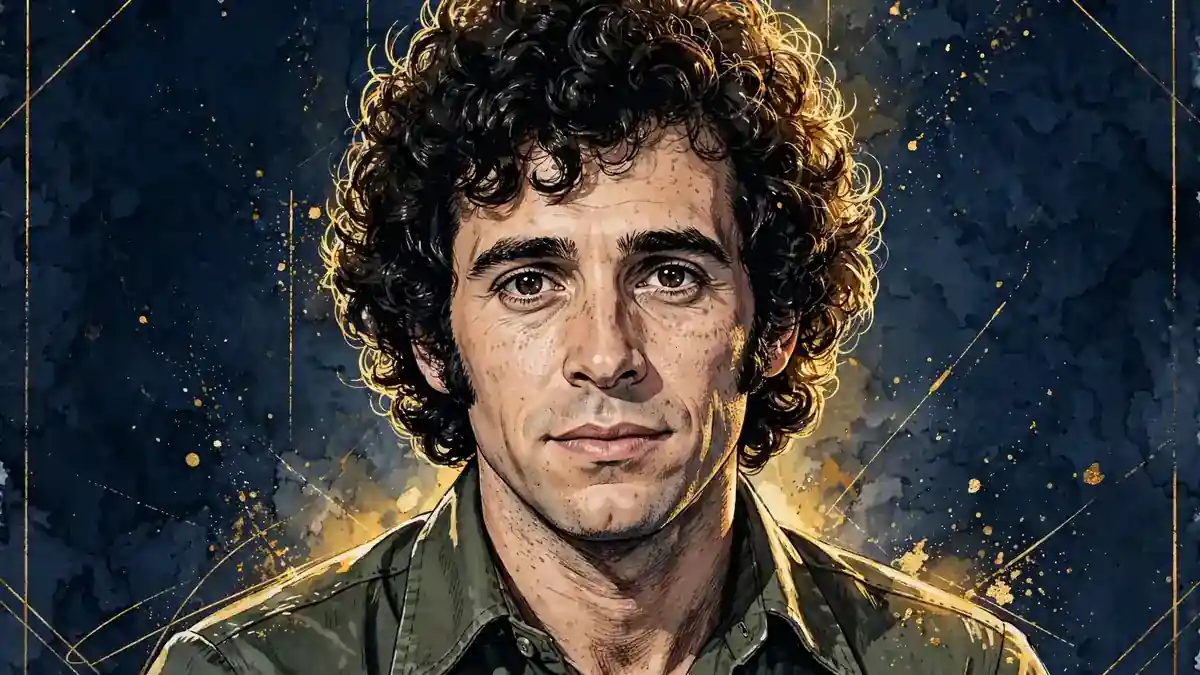
Richard Dreyfuss‘s net worth is estimated at $5 million as of October 2026. The Jaws star banked a reported $2 million for Close Encounters of the Third Kind in 1977, commanded $5 million per picture through the 1990s, and then told the Daily Mail in 2017 that he was broke — an admission his son Ben publicly confirmed in a November 2025 Substack essay that read, in part, “My dad has no money.”
Richard Dreyfuss: Quick Facts
| Estimated net worth | $5 million (range: $4 million–$8 million) |
|---|---|
| Profession | Actor, author, civics educator |
| Nationality | American |
| Born | October 29, 1947 (age 78) |
| Height | 5 ft 5 in |
| Primary income sources | Film acting, television roles, residuals, narration, books, speaking engagements |
| Active years | 1964–present |
| Last reviewed | October 2026 |
- Early Life and Background
- Education
- Career Journey
- Rise to Fame
- Main Sources of Income
- Salary and Earnings
- Businesses and Investments
- Brand Deals and Sponsorships
- Houses, Cars and Other Assets
- Awards and Achievements
- Net Worth Growth Over the Years
- Social Media Presence
- Personal Life
- Sources & Reporting
- Frequently Asked Questions
Early Life and Background
Richard Stephen Dreyfuss was born on October 29, 1947, in Brooklyn, New York, to Norman Dreyfuss, an attorney and restaurateur, and Geraldine Robbins, a peace activist. The family was of Jewish descent with roots in Russia and Poland, and Dreyfuss was the second of three children, raised in the Bayside neighborhood of Queens before the family spent a brief period in Europe and then relocated to Los Angeles when he was nine. The move west placed him inside the orbit of the entertainment industry at exactly the age — as he later told Glenn Beck’s podcast — when he fell in love with acting.
His first stage was the Beverly Hills Jewish Center, where his acting ambitions took shape as a child. The DailyWikiBio profile of the actor notes that this early passion was encouraged in a household that was political and activist in character — a background that would resurface decades later in his civics work. Dreyfuss has said he comes from a family where his great aunt and grandmother were activists, and in interviews about his later nonprofit work he repeatedly framed his career choices as reflecting his own ethics and beliefs.
During the Vietnam War, Dreyfuss registered as a conscientious objector and completed two years of alternative service as a clerk in a Los Angeles hospital. It was a decision consistent with the activist household he grew up in, and it cost him two years in which peers were building early careers. He entered the 1960s as a working young actor taking bit parts, guest appearances and stage work that built his reputation as a disciplined, intelligent performer — the quality that directors like George Lucas and Steven Spielberg would soon pay for.
Education
Dreyfuss attended Beverly Hills High School, where his drama ambitions sharpened, and then spent a year studying drama at San Fernando Valley State College — now California State University, Northridge. Formal training mattered less to his formation than the stage work he was already doing, but the year in a college drama program gave him the craft vocabulary that defined his early screen performances.
His second education came decades later and was self-directed: in the mid-2000s, Dreyfuss effectively retired from film acting for four years and moved to England to study civics, serving as a senior research advisor at St Antony’s College, Oxford. As he told AARP, he retired, went to Oxford for four years to study civics and civility, and the experience redirected the second half of his public life toward the Dreyfuss Civics Initiative. The Guardian documented his Oxford period as an exploration of the decline of civics education in American schools — research that became the foundation of his nonprofit and his 2022 book.
Career Journey
Dreyfuss’s film debut was an uncredited bit part in The Graduate (1967) — blink and you miss him — followed by the grind of 1960s television guest spots and small film roles. The work paid little and built his craft. His first real screen attention came in 1973 with George Lucas’s American Graffiti, where he played the thoughtful Curt Henderson; entertainment profiles put his pay for the film at about $480 a week, a figure that shows how modest even a career-making role could be in that era. The Canadian film The Apprenticeship of Duddy Kravitz (1974) followed, earning him a Golden Globe nomination and marking him as a serious leading-man prospect.
Then came Jaws (1975). As marine biologist Matt Hooper opposite Roy Scheider and Robert Shaw, Dreyfuss was part of the ensemble that created the summer blockbuster — and, as he revealed on The Daily Jaws podcast in January 2026, part of an ensemble that Universal Pictures never paid a bonus. “We didn’t get that at all,” he said of the bonuses and recognition the cast expected after the film became a phenomenon. “I have not worked for Universal since that. I don’t regret that.” It was a fifty-year grudge rooted in money, and it cost him the sequel and any future Universal work — a deliberate, principled walk-away from one of Hollywood’s biggest studios.
The 1980s brought the crash that nearly ended everything. A 1982 car crash and arrest forced Dreyfuss to confront drug problems that had derailed his momentum at the peak of his fame, and he has been candid that addiction and his bipolar disorder — which he discussed in Stephen Fry’s documentary The Secret Life of the Manic Depressive — damaged both his career and his finances. His comeback ran through Down and Out in Beverly Hills (1986) and Stakeout (1987), and by the early 1990s he was back commanding top-tier comedy salaries: a reported $5 million for What About Bob? (1991) and another reported $5 million for The American President (1995).
Dreyfuss’s intensity also made him a famously combustible collaborator, and that had a financial cost. TheRichest’s career overview notes that neither Robert Shaw on Jaws nor Bill Murray on What About Bob? gelled with his personality — People reported that his disorder affected his performance on films like Once Around, and Dreyfuss himself later described Murray as a “drunken bully” on the What About Bob? set. Feuds like these meant no Jaws sequel payday for him, no repeat pairings with bankable co-stars, and a reputation that narrowed his options precisely when his quote was highest.
Mr. Holland’s Opus (1995) earned him an Academy Award nomination and remains his signature later-career role, but the 2000s shifted him from studio leads to supporting parts, television, narration and independent films. The Oxford years (roughly 2004–2008) pulled him out of acting almost entirely; as he told interviewer Steve Farber, he believed he was “loaded,” then a family crisis changed that, and he returned to acting because “it was the only way I knew how to make a living.” Television carried him through the 2010s — the miniseries Madoff (2016), arcs on Weeds and Shots Fired — and he continues to take roles in his late seventies.
Rise to Fame
Dreyfuss’s rise was concentrated in a four-year burst from 1975 to 1978 that few actors have matched. Jaws made him famous; Close Encounters of the Third Kind (1977) made him rich and powerful. For the second Spielberg collaboration, Complex has reported, he earned $2 million — a salary that made him Hollywood’s highest-paid actor at that moment, according to the outlet’s retrospective. Between Jaws and Close Encounters, as one net-worth retrospective calculated, he earned the modern equivalent of roughly $10 million, cementing a financial foundation that should, by the math of the era, have lasted a lifetime.
Then The Goodbye Girl (1977) won him the Academy Award for Best Actor, making him the youngest winner in that category at the time. An Oscar at 30, two Spielberg blockbusters, and the highest quote in town: by 1978 Dreyfuss sat at the absolute summit of the industry. What the numbers of that era concealed was how little of it stuck — no backend participation on Jaws, no financial discipline (he told the Daily Mail in 2017 that no one ever told him to put a portion of each salary in an untouchable account), and the personal chaos that would interrupt his peak earning years.
The rise matters to the net-worth story because it explains the gap between what he earned and what he kept. Dreyfuss’s peak gross income across the 1970s and 1990s plausibly ran into the tens of millions before taxes, agents and managers took their cuts. What remained after three marriages, divorces, health struggles and career interruptions was, by his own 2017 admission, far less than anyone assumed.
Main Sources of Income
Film acting built the overwhelming majority of Dreyfuss’s wealth. Across six decades he appeared in more than fifty films he has said he is intensely proud of, with the paydays concentrated in three waves: the 1970s blockbusters (Jaws, Close Encounters), the late-1980s/1990s comedy and drama run (Stakeout, What About Bob?, The American President, Mr. Holland’s Opus), and the steady character-work years that followed. The middle wave was his richest: two reported $5 million salaries in the 1990s put him, briefly, in the top salary tier of working Hollywood actors.
Television added a second, steadier income stream, particularly in the 2000s and 2010s: his own series The Education of Max Bickford, the Bernie Madoff miniseries Madoff, and recurring arcs on Weeds and Shots Fired. Residuals from Jaws — one of the most re-aired films in history — and his other catalog titles have provided a long tail, though his January 2026 comments about the missing Universal bonuses show how thin that tail was at the start. Theatre work, narration, and voice roles contributed smaller but consistent amounts.
Beyond performance, Dreyfuss earned from books — the 1995 alternate-history novel The Two Georges, co-authored with Harry Turtledove, and the 2022 civics book One Thought Scares Me — and from speaking engagements, for which he has lectured on civics to more than 175,000 people. He told interviewer Steve Farber plainly that financial need brought him back to acting after the Oxford years, which suggests the speaking and writing income, while real, never replaced a film salary.
Salary and Earnings
Dreyfuss’s documented salaries trace the full arc of his earning power. Entertainment career profiles put his American Graffiti (1973) pay at about $480 a week — a working actor’s wage for a film that became a classic. HusbandInfo reports his Jaws (1975) salary at roughly $250,000, a strong payday for the era but, as his 2026 Daily Jaws interview made clear, one with no bonus attached even after the film rewrote box-office history. For Close Encounters of the Third Kind (1977), Complex has reported a $2 million salary that made him Hollywood’s highest-paid actor at the time — a figure worth roughly $8.7 million in today’s dollars, per HusbandInfo’s inflation calculation.
The 1990s delivered his biggest single paydays. Net-worth retrospectives credit him with $5 million for What About Bob? (1991) and $5 million for The American President (1995) — the two films that define his peak earning window. His later career moved to smaller, steadier checks: television arcs, supporting film roles and independent pictures that paid a fraction of the 1990s quote but kept him working into his seventies.
| Film / Project | Year | Reported salary | Source |
|---|---|---|---|
| American Graffiti | 1973 | ~$480/week | Entertainment career profiles |
| Jaws | 1975 | ~$250,000 (no bonus paid) | HusbandInfo; Daily Jaws podcast via Yardbarker |
| Close Encounters of the Third Kind | 1977 | $2,000,000 | Complex |
| What About Bob? | 1991 | $5,000,000 | Net-worth retrospectives |
| The American President | 1995 | $5,000,000 | Net-worth retrospectives |
Two caveats frame these numbers. First, 1970s and 1990s gross salaries tell only part of the story: agents, managers, taxes and the long gaps between roles all reduced what stayed in his accounts. Second, Dreyfuss’s own 2017 account — that he never set aside a protected portion of his salaries — explains why peak earnings of this size left a net worth of about $5 million rather than $50 million.
Businesses and Investments
Dreyfuss was never a Hollywood businessman in the mold of contemporaries who built production empires or restaurant chains. His business life has two real chapters: producing work on his own films and, far more significantly, the nonprofit sector. In 2006 he founded The Dreyfuss Civics Initiative, a nonprofit dedicated to reviving the teaching of civics in American public K-12 education. The initiative grew directly out of his four years at Oxford’s St Antony’s College and has been his primary institutional project for nearly two decades — but it is a cause, not an income stream. Net-worth retrospectives note that he poured personal time and funds into the initiative rather than extracting wealth from it.
His publishing ventures count as small businesses of a sort: the 1995 novel The Two Georges, co-written with science-fiction author Harry Turtledove, found an audience among history and mystery readers, and his 2022 book One Thought Scares Me carried his civics argument to a wider public. Neither was a commercial blockbuster, and neither features in any serious accounting of his wealth. What Dreyfuss demonstrably did not do — and this is part of the “where did it go” story — was build the investment portfolio or production company that might have converted his 1990s salaries into compounding wealth. The satirical MediaMass “highest-paid actor” item that still circulates, crediting him with $275 million, a CoverGirl endorsement and a vodka brand, is fiction; the site itself flags the story as false.
Brand Deals and Sponsorships
Dreyfuss’s endorsement record is thin, and that thinness is itself a data point in his net-worth story. Unlike action stars and romantic leads who layered endorsement income on top of salaries, Dreyfuss was a character-driven leading man whose fame never translated into major brand contracts. No credible source documents a significant endorsement deal in his career — no watch campaigns, no fragrance lines, no long-running commercial partnerships of the kind that padded the fortunes of his peers.
There is one recurring claim worth debunking because it keeps appearing in low-quality net-worth tables: that his fortune includes Honda commercials or a “real estate portfolio” of investments. The Honda-commercials claim traces to entertainment-profile filler with no verifiable campaign attached to it, and the real-estate-portfolio language describes at most a couple of personal homes, not an investment business. As the Amway “Achievers” retrospective — itself a content-farm piece, but a useful index of the mythology — noted, the $55 million figures on some rich-list sites are optimistic to the point of fantasy. Our estimate strips all of that out: acting income, residuals, and a small number of real, documented assets.

Houses, Cars and Other Assets
The best-documented property transaction of Dreyfuss’s life is a sale, not a purchase: in 1995 he sold a Los Angeles home to Kevin Costner for $2.7 million, a figure reported in career retrospectives and consistent with the peak of his earning years. It places him, in the mid-1990s, in the tier of stars who owned multi-million-dollar Los Angeles real estate — the kind of asset that, held, would have appreciated enormously.
His current holdings are harder to pin down, and the published estimates conflict. A 2024 HusbandInfo profile described an ocean-view San Diego property valued around $7 million — a custom Mediterranean-style home with five bedrooms and seven bathrooms across nearly 7,000 square feet. Other profiles place his Encinitas-area home at a value near $2 million. The spread is wide enough that neither figure should be treated as confirmed; what the reporting agrees on is that he lives in the San Diego/Encinitas area of California with his wife, and that his real estate is a personal residence rather than an investment portfolio.
No credible source documents an exotic car collection or other luxury assets at the scale that would move his net worth materially. The asset side of Dreyfuss’s ledger is, by every account, modest: a California home, ongoing residual income from a deep film catalog, and the earning capacity of a working actor in his late seventies. That modesty is the point his son made in November 2025 — there is no hidden pile of assets for the family to inherit.
Awards and Achievements
Awards do not pay directly, but for Dreyfuss they converted into the salary leverage that built his fortune. The headline achievement is the Academy Award for Best Actor for The Goodbye Girl (1977), which made him the youngest winner in the category at the time. The same performance brought him the Golden Globe for Best Actor in a Motion Picture Musical or Comedy and the BAFTA for Best Actor — a clean sweep of the year’s major acting honors.
He earned a second Academy Award nomination for Mr. Holland’s Opus (1995), the role that anchored his 1990s prestige run, and collected a Golden Globe nomination for The Apprenticeship of Duddy Kravitz back in 1975. Later honors reflect the industry’s respect for the full body of work: a Lifetime Achievement Award from California’s Independent Film Festival in 2010, and the Public Relations Society of America’s inaugural Civic Engagement Award in 2019 for his civics advocacy. The AARP interview that covered his career also captured his self-awareness about the business: he once claimed to have “turned down more big money-making hits than any other actor in Hollywood,” then cheerfully admitted to AARP that several of those claims were things he had told the press that weren’t true.
Net Worth Growth Over the Years
The trajectory below is our reconstruction from reported salaries, documented transactions and Dreyfuss’s own admissions — all figures are estimates. It shows the central paradox of his finances: peak earnings in the tens of millions, a current net worth of about $5 million.
| Year | Estimated net worth | Key driver |
|---|---|---|
| 1975 | ~$1M | Jaws salary (~$250K); sudden stardom, no bonus paid |
| 1977 | ~$3–5M | Close Encounters $2M salary; Oscar win; top quote in Hollywood |
| 1982 | ~$2M | Career interruption after car crash and arrest; work slows |
| 1991 | ~$5–8M | What About Bob? $5M payday; comeback complete |
| 1995 | ~$8–10M | The American President $5M; $2.7M LA home sale to Kevin Costner — peak wealth window |
| 2006 | ~$5M | Oxford years; acting nearly paused; civics initiative founded |
| 2017 | ~$3–5M | Told the Daily Mail he was broke; no protected savings, per his own account |
| 2022 | ~$4–5M | Book published; steady return to character work |
| 2025 | ~$5M | Son Ben’s Substack confirms the family’s thin finances |
| 2026 | $5M (range $4–8M) | Current consensus across net-worth outlets |
Three forces bent the curve downward from its 1995 peak: the divorces (his split from first wife Jeramie Rain came in the mid-1990s, right at the top of his earning power), the years of reduced output during his addiction struggles and the Oxford hiatus, and what Dreyfuss himself described as a lifetime of spending salaries in full rather than protecting a portion of each one. The $55–65 million figures that appear on some rich-list pages have no sourced basis; the satirical MediaMass item that invented a $275 million fortune even flags itself as false.
Social Media Presence
Dreyfuss’s relationship with social media is famously hands-off — and it once cost him dearly. His son Ben revealed in the November 2025 Substack essay that he had been managing his father’s Twitter account, and that a supportive message Ben posted on behalf of his brother Harry in 2017 — after Harry accused Kevin Spacey of misconduct — triggered a chain of events that fractured the family for years. The episode shows how little control the actor exercised over his own online presence even as it shaped his public story.
Dreyfuss is not a social-media earner in any meaningful sense: no sponsored content operation, no monetized following, no influencer revenue to speak of. His public communication runs through interviews, podcasts — like the January 2026 Daily Jaws appearance that produced the Universal-bonus revelation — and his civics advocacy. For an actor of his generation this is typical, but it also means there is no digital income stream cushioning the modest net worth.
Personal Life
Dreyfuss has been married three times. His first marriage, to Jeramie Rain, produced three children — Ben, Emily and Harry — and ended in divorce in the mid-1990s; his second marriage, to Janelle Lacey, also ended in divorce. Since 2006 he has been married to Svetlana Erokhin, and the couple lives in the San Diego area. The divorces were personal events with direct financial consequences: the end of the first marriage coincided with his peak earning years, and net-worth retrospectives consistently cite the settlements as one of the largest drains on his fortune.
His health history is public by his own choice. Dreyfuss has spoken openly about bipolar disorder, including in Stephen Fry’s documentary The Secret Life of the Manic Depressive, and about the drug problems that led to the 1982 crash and arrest. In a 2017 Daily Mail interview he connected the dots himself: “It’s a hard thing to admit. I have a greater body of work than any actor I know. I have created, I don’t know, maybe 50 or 60 films that I am intensely proud of” — and yet, he said, he was broke, partly because no one had ever taught him to protect a share of what he earned. His son Ben’s November 2025 essay — “Everyone assumes my siblings and I are wealthy from our dad… We have no money from my dad. My dad has no money” — confirmed that the 2017 admission was not a passing mood but the durable truth of the family’s finances.
His three children have had their own brushes with the public eye. Eldest son Ben is a journalist whose November 2025 Substack essay broke the family’s finances into the open; youngest son Harry publicly accused Kevin Spacey of groping him at age 18 back in 2017, the episode that — via a tweet Ben posted while managing his father’s account — set off years of family estrangement, as Celebrity Net Worth’s reporting detailed. The middle child, Emily, has stayed largely out of the spotlight. Dreyfuss’s blistering all-caps final email to Ben, published as part of the 2025 essay, accused his children of believing he was hiding money from them — the clearest sign that the family itself had trouble believing the fortune was gone.
Outside acting, his identity is now inseparable from civics. The Dreyfuss Civics Initiative, founded in 2006, grew out of four years studying at Oxford’s St Antony’s College as a senior research advisor; he has lectured on civics to more than 175,000 people, received PRSA’s inaugural Civic Engagement Award in 2019, and published One Thought Scares Me in 2022. He told Glenn Beck’s podcast that he gave up something he had loved since age nine — acting — for something he loved as much: “saving my country.” Financial need eventually pulled him back in front of the camera, but the initiative remains the project he chose over money.
Sources & Reporting
Celebrity Net Worth — the $5 million net-worth anchor, plus the detailed November 2025 “Down And Out In Beverly Hills” article on Ben Dreyfuss’s Substack essay and the family’s finances (reporting window: 2017–2025).
Distractify — $5 million estimate citing Celebrity Net Worth; reported the 2017 Daily Mail “broke” admission with Dreyfuss’s direct quotes (2025).
HusbandInfo — reported salaries: ~$250,000 for Jaws, $2 million for Close Encounters (citing Complex, with inflation math), plus the $7 million San Diego property description (2024).
Yardbarker — Dreyfuss’s January 2026 Daily Jaws podcast comments: Universal paid no bonuses on Jaws, and he has not worked for the studio since (January 2026).
TheRichest — career overview: St Antony’s College Oxford research role, The Dreyfuss Civics Initiative, the 2022 book One Thought Scares Me (citing Fox News), The Two Georges (1995) with Harry Turtledove, 2017 broke admission (sources cited: Celebrity Net Worth, The Guardian, Fox News, People).
BeliefNet — the Glenn Beck podcast interview: four Oxford years, founding the Civics Initiative in 2006, returning to acting for financial reasons (2023).
PRSA — Dreyfuss’s December 2019 Civic Engagement Award and the founding mission of The Dreyfuss Civics Initiative (2019).
AARP — in-depth interview: Oxford years, 175,000+ civics lectures, and his corrections to his own press claims about turning down roles (2019).
Far Out Magazine — biographical profile: ~$5 million net worth, birth details, awards sweep for The Goodbye Girl, key TV roles (2026).
Limerick Time — ~$5 million 2026 estimate; covered the 1982 crash, bipolar disorder discussion in Stephen Fry’s documentary, and the comeback films (2026).
CineNetWorth — $5 million estimate with FAQ coverage of awards and career challenges (2025).
Wealth Rector — $5 million estimate; career timeline from The Graduate (1967) through the Mr. Holland’s Opus Oscar nomination (2025).
Tafser A7lam — the high end of the range: $5–$8 million, with context on 1970s vs. modern pay structures (2026).
DailyWikiBio — the low end of the range: $4–$5 million; early-life and education details (2025).
Wikibious — the $2.7 million 1995 Los Angeles home sale to Kevin Costner; Encinitas home valuation near $2 million (2025).
Internewscast — corroborated the Celebrity Net Worth account of Ben Dreyfuss’s November 2025 statements on the family’s finances (2025).
Frequently Asked Questions
What is Richard Dreyfuss’s net worth?
Richard Dreyfuss’s net worth is estimated at $5 million as of October 2026. Celebrity Net Worth, Distractify, CineNetWorth, Wealth Rector, Far Out Magazine and Limerick Time all converge on the $5 million figure; across all outlets we reviewed, the full spread runs from $4 million to $8 million.
Why does Richard Dreyfuss say he is broke?
In a 2017 Daily Mail interview, Dreyfuss admitted he was broke despite a 50-plus-film career, explaining that he never set aside a protected portion of his salaries. His son Ben confirmed the situation in a November 2025 Substack essay, writing “My dad has no money.” Three divorces, addiction and health struggles, years of reduced output, and money poured into his civics nonprofit all contributed.
What was Richard Dreyfuss’s salary for Jaws?
HusbandInfo reports his Jaws (1975) salary at roughly $250,000 — solid money for the era. In January 2026, Dreyfuss told The Daily Jaws podcast that Universal Pictures never paid him or his co-stars any bonus after the film became a phenomenon, which is why he has refused to work for Universal ever since.
How much did Richard Dreyfuss make for Close Encounters of the Third Kind?
Complex has reported that Dreyfuss earned $2 million for Close Encounters of the Third Kind (1977), which made him Hollywood’s highest-paid actor at that moment. Adjusted for inflation, that is worth roughly $8.7 million today, according to HusbandInfo’s calculation.
Who is Richard Dreyfuss married to?
Richard Dreyfuss has been married to Svetlana Erokhin since 2006. It is his third marriage: he was previously married to Jeramie Rain, with whom he has three children, and to Janelle Lacey. He and Erokhin live in the San Diego, California area.
How many children does Richard Dreyfuss have?
Richard Dreyfuss has three children — Ben, Emily and Harry — all with his first wife, Jeramie Rain. His eldest son Ben is a journalist who wrote the November 2025 Substack essay about the family’s finances; his youngest, Harry, is also in the public eye.
Is Richard Dreyfuss still acting?
Yes. After a four-year near-retirement in the mid-2000s to study civics at Oxford, financial need brought him back to acting, and he continues to take film and television roles in his late seventies. His recent work skews toward supporting and character parts in independent films, alongside his ongoing civics advocacy.
What is the Dreyfuss Civics Initiative?
The Dreyfuss Civics Initiative is the nonprofit Richard Dreyfuss founded in 2006 to revive the teaching of civics in American public schools. It grew out of four years he spent as a senior research advisor at Oxford’s St Antony’s College. He has lectured on civics to more than 175,000 people and received PRSA’s inaugural Civic Engagement Award for the work in 2019.
Final Thoughts
Richard Dreyfuss’s $5 million net worth is the rare celebrity-finance story where the actor himself supplied the key evidence. He earned like a titan — a reported $2 million for Close Encounters when that made him the highest-paid actor in Hollywood, $5 million a picture in the 1990s — and then, in 2017, told the Daily Mail he was broke because no one ever taught him to protect a share of his salaries. His son’s November 2025 essay closed the loop: the money is gone, and there was never a secret pile.
What remains is instructive rather than tragic. Dreyfuss chose, in the second half of his life, to spend his scarcest resources — time and money — on a civics nonprofit instead of a comeback vehicle, and he kept working because, as he put it, acting was the only way he knew how to make a living. The Universal grudge he aired in January 2026, fifty years after Jaws, shows the same stubborn principle that defined his career: he would rather walk away from a studio than accept being taken for granted. Five million dollars after six decades in Hollywood is not the fortune the 1978 box office promised — but it is an honest number, and Dreyfuss, to his credit, has been honest about it.
Published on 2026-10-19. Last reviewed October 2026. Found an error? See our corrections policy.