
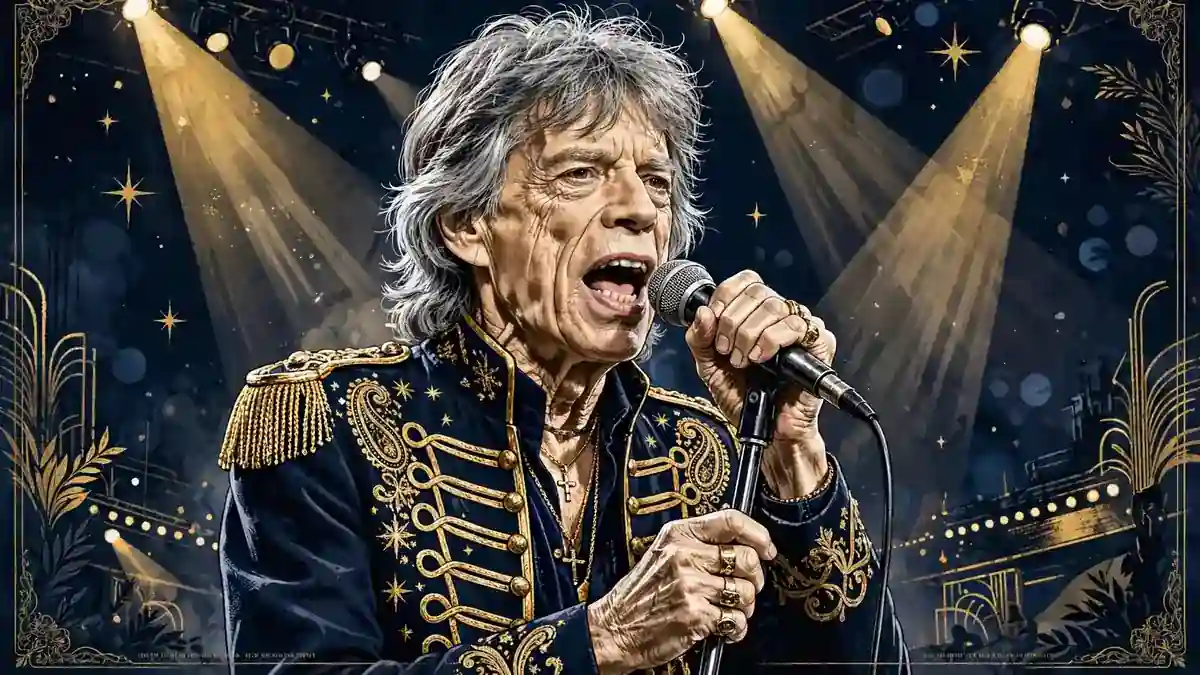
Mick Jagger‘s net worth is estimated at $500 million to $600 million as of November 2026. The Rolling Stones frontman built the fortune across six decades of touring, songwriting royalties, solo records, film production and a property portfolio that Celebrity Net Worth values at roughly $250 million — and at 83 he is still adding to it, with the band’s 2024 Hackney Diamonds Tour banking $235 million from just 18 shows.
Mick Jagger: Quick Facts
| Estimated net worth | $600 million (range: $500 million to $600 million) |
|---|---|
| Profession | Singer, songwriter, actor, film producer |
| Nationality | English |
| Born | 26 July 1943 (age 83) |
| Height | 5 ft 10 in (1.78 m) |
| Primary income sources | Rolling Stones touring, songwriting and publishing royalties, solo music, film production, property |
| Active years | 1962–present |
| Last reviewed | November 2026 |
- Early Life and Background
- Education
- Career Journey
- Rise to Fame
- Main Sources of Income
- Salary and Earnings
- Businesses and Investments
- Brand Deals and Sponsorships
- Houses, Cars and Other Assets
- Awards and Achievements
- Net Worth Growth Over the Years
- Social Media Presence
- Personal Life
- Sources & Reporting
- Frequently Asked Questions
- Final Thoughts
Early Life and Background
Michael Philip Jagger was born on 26 July 1943 in Dartford, Kent, England. His father, Joe Jagger, taught physical education; his mother, Eva Ensley, worked as a hairdresser. The household was comfortable but far from wealthy, and the young Jagger grew up in a post-war suburb where American rhythm and blues arrived on imported records and late-night radio. His younger brother, Chris Jagger, later became a musician in his own right, and the two have recorded together in adult life.
The detail that matters for the money story is the meeting that happened on a train platform. Jagger and Keith Richards had known each other as schoolboys at Wentworth Primary School in Dartford, then drifted apart. In 1961 they ran into each other on a train at Dartford station, Jagger carrying a stack of American blues records — Chuck Berry, Muddy Waters, Little Richard — under his arm. Richards noticed the records, the two started talking, and a partnership formed that would become one of the most durable songwriting teams in popular music. The Jagger-Richards credit, stamped on nearly every original Rolling Stones song, is the single most valuable asset in Jagger’s fortune: it pays publishing royalties every time a Stones song is played, streamed, licensed or covered, sixty years after the songs were written.
Jagger sang in the school choir and played in a local band, Little Boy Blue and the Blue Boys, with Dick Taylor while still a teenager. He was not the obvious frontman of his generation at first — he was a skinny, restless student with a sharp ear for American blues — yet the combination of his voice, his stage energy and his business instincts set the pattern for everything that followed. From the start he treated the band as a commercial enterprise as much as a creative one, a habit that explains why the Rolling Stones out-earned nearly every act of their era.
Education
Jagger attended Dartford Grammar School, where he did well enough academically to win a place at the London School of Economics in 1961. He enrolled to study business and finance, and the choice was not accidental: even then he was drawn to the commercial side of music. At the LSE he studied accounting, finance and the workings of business, subjects that later showed up in the way he ran the Rolling Stones — negotiating contracts, structuring touring companies and keeping control of the band’s brand.
He left the LSE in 1963, before completing his degree, once the Rolling Stones’ early momentum made a full-time music career unavoidable. The decision paid off in a way few drop-out stories do. The economics training never went to waste: Jagger has been described by band associates and business partners for decades as the member who reads the contracts, watches the numbers and drives the hardest bargains. The band’s later touring structure — the Stones as a tightly run touring company with its own sponsorship, merchandising and ticketing deals — owes a great deal to a frontman who had studied how businesses work before he ever ran one.
That background also explains a pattern in his career: Jagger diversified early. While other rock stars of his generation relied on record sales alone, he moved into film production in the 1990s, solo records in the 1980s, and property over several decades. Each move spread risk and added a revenue stream that did not depend on the band being on the road.
Career Journey
The Rolling Stones formed in London in 1962, built around Jagger, Richards and Brian Jones, with Bill Wyman and Charlie Watts joining soon after. Their first gig as the Rolling Stones came at the Marquee Club on 12 July 1962. The early years were a grind of club dates and short tours, and the band’s first singles — covers of American R&B songs — sold modestly. Their first UK No. 1 came in 1964 with “It’s All Over Now”, a Bobby Womack song, and the self-titled debut album reached the top of the British chart the same year.
The turning point was the songwriting. Manager Andrew Loog Oldham pushed Jagger and Richards to write their own material, locking them in a kitchen until they produced songs. The results changed the band’s economics permanently: “(I Can’t Get No) Satisfaction”, released in 1965, topped the US chart, and “Paint It Black”, “Jumpin’ Jack Flash”, “Sympathy for the Devil”, “Honky Tonk Women” and “Brown Sugar” followed. A band that owned its songs earned twice — once as performers, once as writers — and the Jagger-Richards catalogue became a royalty engine that still pays today.
The 1970s brought the band’s commercial peak on record. Exile on Main St. (1972), Goats Head Soup (1973) and Some Girls (1978) all topped charts on both sides of the Atlantic, and Some Girls alone sold more than six million copies in the United States. The Stones toured the world in stadiums, and Jagger’s stagecraft — the strut, the crowd work, the sheer stamina — became the template for the modern rock frontman. By the end of the decade the band had sold well over 100 million records, and Jagger’s personal wealth was already substantial.
The 1980s tested the partnership. Jagger recorded his first solo album, She’s the Boss, in 1985, which went platinum in the United States, and he recorded the chart-topping “Dancing in the Street” duet with David Bowie for Live Aid the same year. He followed with Primitive Cool in 1987 and Wandering Spirit in 1993, which critics regard as his strongest solo work. The solo detour caused real friction with Richards, who saw it as a distraction from the band, and the two barely spoke for stretches of the late 1980s. The split never became permanent, and the reunion produced Steel Wheels in 1989 and a tour that reset the band’s finances.
From the 1990s onward the Stones operated less as a recording band and more as a touring institution. Voodoo Lounge (1994) won a Grammy, and the accompanying tour grossed hundreds of millions. The band’s later albums — Bridges to Babylon (1997), A Bigger Bang (2005) and Blue & Lonesome (2016) — sold respectably, but the real money sat in the live show. The A Bigger Bang Tour of 2005 to 2007 grossed $558 million, the highest-grossing tour ever recorded at the time, according to Billboard Boxscore. The No Filter Tour of 2017 to 2019 added $415.6 million more.
The band marked its 60th anniversary with the Sixty Tour in 2022, playing stadiums across Europe, and then did something few expected: a new album of original material. Hackney Diamonds, released in October 2023, was the Stones’ first album of original songs in 18 years, and it debuted at No. 1 in the UK. The supporting Hackney Diamonds Tour ran from April to July 2024 across North America, grossing $235 million from 18 reported shows, according to Billboard Boxscore — the band’s sixth tour to pass $200 million and its tenth to pass $100 million, both Boxscore records. Two nights at MetLife Stadium in New Jersey alone grossed $29.2 million, the highest-grossing engagement of the band’s entire Boxscore history. Charlie Watts, the band’s drummer since 1963, died in August 2021 and was replaced by Steve Jordan, his chosen successor, but the touring machine did not slow.
Rise to Fame
Jagger’s rise was not a single breakout but a steady climb that made him the most recognisable frontman in rock. The 1965 run of “Satisfaction” made the Stones stars in America; the 1969 American tour, captured in the film Gimme Shelter, made them notorious; the 1972 Exile on Main St. tour, with its private plane and sold-out arenas, made them the biggest live draw in the world. By the mid-1970s Jagger was a tabloid fixture as well as a musician, and the fame fed the business: bigger venues, bigger guarantees, bigger merchandising.
What separated Jagger from other frontmen was stamina and reinvention. He kept touring into his seventies and eighties while peers retired, and each return to the road reset the band’s earning power. The 1989 Steel Wheels Tour revived a band many had written off; the 2005 A Bigger Bang Tour made it the highest-grossing live act on the planet; the 2024 Hackney Diamonds Tour proved, at 80 and 81 years old, that the demand had not faded — average ticket prices of $277.28 and sell-out crowds in every market, with every city except Glendale, Arizona delivering an eight-figure gross.
The knighthood in 2003 — Sir Mick Jagger, for services to popular music — formalised a status he had held informally for decades. He was inducted into the Rock and Roll Hall of Fame with the Stones in 1989, and the band received the Grammy Lifetime Achievement Award in 2005. Fame, for Jagger, was never an end in itself; it was the asset that let him charge stadium prices for six decades.
Main Sources of Income
Touring sits at the top of the list by a wide margin. The Rolling Stones have generated roughly $2.9 billion in all-time touring revenue, the highest figure of any band in history, and Jagger takes a leading share as frontman, co-writer and the band’s business driver. The 2024 run alone averaged about $13 million in gross ticket sales per show. Tour income is split with the band, crew, promoters and venues, so the gross is not Jagger’s personal pay — but even a fraction of a $235 million tour is a substantial annual income, and the Stones have produced six tours above $200 million.
Songwriting and publishing royalties form the second pillar. The Jagger-Richards catalogue includes some of the most licensed songs in rock history: “Satisfaction”, “Paint It Black”, “Sympathy for the Devil”, “Start Me Up”, “Angie” and “Wild Horses” appear in films, adverts, television and streaming playlists every year. Each use pays. The catalogue’s scale explains why reporting tied to a 2023 Wall Street Journal interview put its value at around $500 million — a figure that, on its own, sits close to the whole of Jagger’s estimated net worth, and a reminder that the published estimates are conservative by design.
Record sales add a third stream. The Stones have sold more than 200 million records worldwide, and the back catalogue sells steadily: reissues, vinyl revivals and streaming. Hackney Diamonds showed the catalogue still has commercial life, topping the UK chart 18 years after the previous album of original material. Solo records contribute a smaller but real stream, led by the platinum-selling She’s the Boss and the No. 1 Bowie duet.
Film and television work adds a fourth. Jagged Films, the production company Jagger co-founded in 1995, has produced feature films including Enigma (2001), The Women (2008) and the James Brown biopic Get On Up (2014). Jagger has also acted — Performance (1970), Ned Kelly (1970), Freejack (1992) and The Man from Elysian Fields (2001) — and his screen work, while secondary to music, has paid fees and producer credits across three decades.
Property rounds out the picture. Celebrity Net Worth values Jagger’s international real estate portfolio at about $250 million, spanning homes in London, France, the Caribbean and the United States. Property is the quiet half of his fortune: it appreciates, it generates no headlines, and it explains why the Sunday Times Rich List — which counts identifiable UK wealth — prints a lower number than the global estimates.

Salary and Earnings
Jagger does not draw a salary in the conventional sense, and no public filing states his annual pay. His earnings arrive as shares of tour grosses, royalty distributions and production fees, and the honest way to read them is through the tour numbers. The Hackney Diamonds Tour grossed $235 million across 18 reported shows in 2024, an average of roughly $13 million per night. Pollstar ranked the run sixth among all touring acts worldwide for the year, and first in North America, despite the Stones playing fewer than half as many shows as Bruce Springsteen, who ranked just ahead of them with $251 million from 44 dates.
The per-show economics explain why the band keeps touring. MetLife Stadium’s two nights in May 2024 took $29.2 million from 105,000 tickets — the biggest single engagement of the Stones’ Boxscore history. Chicago and Inglewood double-headers each cleared $20 million. Even the smallest market on the run, Glendale, Arizona, grossed $8.4 million. With average ticket prices of $277.28, the Stones charge premium prices and fill stadiums to match, a combination few acts of any age can sustain.
Tour gross is shared, and the split is private. Promoters, venues, crew, band members and management all take a cut before Jagger sees his share, so the $235 million is band revenue, not personal income. Even so, the scale is what matters: the Stones’ sixth $200 million tour and tenth $100 million tour are Boxscore records, and no other act holds either mark. The A Bigger Bang Tour’s $558 million in 2005–07 and the No Filter Tour’s $415.6 million in 2017–19 show the pattern is decades old, not a one-off.
Outside touring, royalty income is steadier and harder to quantify. The Stones’ catalogue streams hundreds of millions of times a year, and the band’s songs are licensed for film, television and advertising at premium rates. A single sync placement for a song like “Start Me Up” or “Sympathy for the Devil” can pay six figures; across a catalogue of hundreds of songs, the annual royalty flow runs into the millions. Solo royalties add a smaller layer, and the Bowie duet “Dancing in the Street” still earns from reissues and compilations.
One figure that puts the earnings in perspective: the Stones generated more than $1.5 billion from touring between 1989 and 2001 alone, according to contemporary reporting. The band’s all-time touring total of about $2.9 billion is the highest of any act in history. Jagger’s share of that, spread across 35 years of stadium touring, is the foundation of the $500 million to $600 million estimate.
Businesses and Investments
Jagged Films is Jagger’s most visible business outside music. He co-founded the production company in 1995 with Victoria Pearman, and it has operated as a genuine production house rather than a vanity label. Its slate includes the World War II code-breaking drama Enigma (2001), the ensemble comedy The Women (2008) and Get On Up (2014), the James Brown biopic starring Chadwick Boseman. The company also produced Being Mick (2001), a documentary that followed Jagger through a solo tour and offered a rare look at the business of being a rock star. Film production carries real risk — not every title profits — but it gave Jagger producer fees, backend participation and a second industry to work in.
The Rolling Stones themselves are a business, and Jagger runs it. The band operates through touring companies that negotiate sponsorship, merchandising and ticketing as a single brand. The 2024 tour carried AARP as its sponsor, a deal that matched the band’s older audience with a brand built for it, and the Stones’ merchandising — from tour T-shirts to the tongue-and-lips logo, one of the most recognisable marks in music — sells at every show. The logo alone, designed by John Pasche in 1970, has generated decades of licensing income.
Jagger has also invested in the catalogue itself, in the sense that he and Richards have held on to their publishing rather than selling it. In an era when legacy artists have sold their catalogues for hundreds of millions — Bob Dylan, Bruce Springsteen and others took nine-figure deals — Jagger has kept his, and the reported $500 million valuation attached to it in 2023 reporting shows why: the catalogue throws off income every year, and selling it would trade a growing asset for a single payment. Whether he sells in the end is a decision for his estate planners, and it is one of the largest open questions in his finances.
Smaller ventures fill out the picture. In January 2023 Jagger launched his own line of harmonicas, reported by NME, a modest commercial move that fits his habit of monetising his name in music-adjacent products. He has also been involved in the band’s own ventures, including the Stones’ branded merchandise and the occasional one-off product. None of these is large next to touring, but together they show a pattern: Jagger treats his name as a business asset and puts it to work in several directions at once.
Brand Deals and Sponsorships
Jagger has never been a heavy endorser in the style of modern pop stars, and that restraint is itself part of the brand. The Rolling Stones’ sponsorships have been struck at band level, with Jagger as the frontman who makes the deal valuable. The AARP sponsorship of the 2024 Hackney Diamonds Tour is the clearest recent example: a non-profit representing Americans over 50 backing a band whose core audience is exactly that demographic. The fit was precise, and it put a sponsor’s money behind a tour that was already selling out.
Earlier tours carried their own sponsors, and the band has long sold tour sponsorship as a package with naming, on-site branding and hospitality. The Stones’ brand partnerships have also extended into products: the tongue-and-lips logo appears on everything from clothing to accessories, and the band has licensed its name for limited collections. These are band deals, split among the members and the band’s companies, rather than personal endorsements by Jagger alone.
His solo brand work has been selective. The 2023 harmonica line, reported by NME, is the most recent example — a product tied directly to his identity as a musician rather than a generic endorsement. He has also appeared in advertising in his own right over the decades, most famously in the 1980s, but he has never built his fortune on endorsements the way athletes and younger pop stars do. The money has always come from the stage and the songs, and the brand deals have been the garnish, not the meal.
Houses, Cars and Other Assets
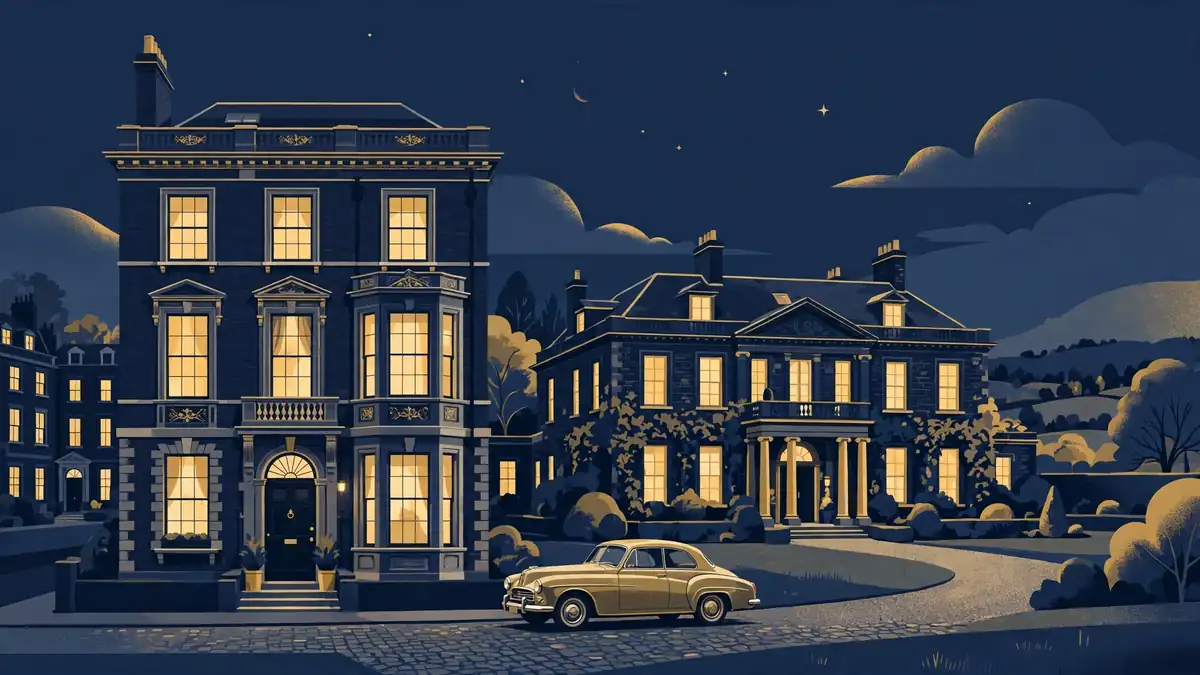
Celebrity Net Worth values Jagger’s international real estate portfolio at about $250 million, and the properties behind that figure span four countries. He owns homes in London, where he has lived for much of his life, and a country house in the south of France — the Château de Fourchette in the Loire Valley, bought in the 1980s, a property he has owned for four decades. He has a home on Mustique, the private Caribbean island favoured by wealthy Britons, and properties in the United States, including New York and Florida, where he and his partner Melanie Hamrick bought a home in the Lakewood Ranch area near Sarasota in 2020, reported at the time at just under $2 million.
The portfolio’s value sits in the mix: prime London property, a French château, a Caribbean island home and American real estate, bought over decades and held through several property cycles. Unlike touring income, which stops when the band stops, property appreciates and can be borrowed against, sold or passed on. It is the part of Jagger’s wealth that does not depend on him performing, and it is a large reason the global net worth estimates run ahead of the Sunday Times figure, which counts identifiable UK wealth only.
Cars have never been a public passion for Jagger in the way they are for some rock stars, and no verified list of a large collection exists. He has been photographed with classic cars over the years, and the Stones’ touring era ran on private jets and tour buses rather than showpiece garages. What he does own in abundance is art and memorabilia: decades of stage costumes, instruments and personal effects from a career that began in 1962, much of it with real value to collectors. The band’s archive — master tapes, stage designs, the original tongue-and-lips artwork — is itself an asset, and its value rises as the Stones’ history becomes museum material.
The most valuable asset of all is not a house or a car. It is the publishing catalogue, reported at around $500 million in value, and the Stones’ brand itself — the name, the logo, the touring operation — which has generated about $2.9 billion in ticket sales. Those two assets, together with the property portfolio, account for nearly all of the $500 million to $600 million estimate.
Awards and Achievements
The honours list starts with the knighthood. Jagger was knighted in 2003 for services to popular music, becoming Sir Mick Jagger in a ceremony at Buckingham Palace. The award recognised four decades at the front of British popular music, and it placed him alongside the small group of rock musicians — Paul McCartney, Elton John, Ringo Starr — who hold the honour.
With the Rolling Stones he was inducted into the Rock and Roll Hall of Fame in 1989, in the Hall’s fourth class, and the band received the Grammy Lifetime Achievement Award in 2005. The Stones have won three competitive Grammy Awards, including Best Rock Album for Voodoo Lounge in 1995, and have been nominated many more times. Jagger’s solo work earned its own recognition: “Dancing in the Street” with David Bowie topped the UK chart in 1985, and Wandering Spirit was widely praised as his best solo record.
The commercial achievements are the ones that matter for a net worth profile. More than 200 million records sold worldwide. More than 2,000 concerts played. About $2.9 billion in all-time touring revenue, the highest of any band. Six tours above $200 million and ten above $100 million — both Billboard Boxscore records. A UK No. 1 album in 2023, sixty-one years after the band’s first gig. And a frontman still selling out stadiums at 83, an age at which almost every peer has retired.
Net Worth Growth Over the Years
Jagger’s wealth has grown steadily rather than in jumps, and the Sunday Times Rich List gives the cleanest year-by-year picture. The list tracks identifiable UK wealth, so its figures run below the global estimates, but the direction is clear: £397 million in 2023, £415 million in 2024, £440 million in 2025 and £450 million in 2026. Each step up came with a touring or recording year behind it — the 2025 rise of £25 million followed the Hackney Diamonds Tour, and the 2026 figure held that gain.
Celebrity Net Worth tells the same story in dollars. Its older snapshots printed $500 million, and the current snapshot, updated in November 2026, prints $600 million. The $100 million gap between the two figures is the gap between an older estimate and a current one, and it is why this article publishes a range. Both sources agree on the shape: a fortune that keeps growing in the 2020s, powered by touring, while most of Jagger’s peers have stopped earning at that scale.
| Year | Estimate | Source | What moved it |
|---|---|---|---|
| 2023 | £397 million | Sunday Times Rich List | Hackney Diamonds album released; catalogue valued near $500 million in reporting tied to a Wall Street Journal interview |
| 2024 | £415 million | Sunday Times Rich List | Hackney Diamonds Tour grossed $235 million across North America |
| 2025 | £440 million | Sunday Times Rich List | Tour earnings banked; no new tour, fortune still rose £25 million |
| 2026 | £450 million (UK wealth) | Sunday Times Rich List | Rich List print for May 2026, recapped by NME and the Evening Standard |
| 2026 | $500 million – $600 million | Celebrity Net Worth and other outlets | Current global estimate; CNW snapshot updated November 2026 at $600 million |
The peer comparison puts the figure in context. Paul McCartney sits near $1.2 billion on Celebrity Net Worth’s estimates, the only British musician of Jagger’s generation clearly ahead of him, and Bruce Springsteen was listed at an estimated $1.2 billion on Forbes’ March 2026 celebrity-billionaire ranking. Elton John is estimated at roughly $650 million by Celebrity Net Worth as of August 2026, and Keith Richards at $600 million — the same figure as Jagger, a neat symmetry for a partnership that has lasted 65 years. Jagger is not the richest musician alive, but he is among the richest who earned it entirely from performing and writing, without a billion-dollar business sale behind the number.
| Musician | Estimated net worth | Main source |
|---|---|---|
| Paul McCartney | About $1.2 billion | Beatles catalogue, touring, business |
| Bruce Springsteen | About $1.2 billion | Catalogue sale, touring |
| Elton John | About $650 million | Catalogue, touring, residencies |
| Mick Jagger | $500 million – $600 million | Stones touring, publishing, property |
| Keith Richards | About $600 million | Stones touring, publishing |
Social Media Presence
Jagger is active on social media in a way that suits a working musician rather than an influencer. His Instagram account, @mickjagger, carries millions of followers and mixes tour photography, rehearsal clips, dance videos and tributes to fellow musicians. His posts during the 2024 tour — backstage footage, crowd shots from stadiums, short clips of him dancing in rehearsal — drew heavy engagement and served as the band’s most direct marketing channel. He also posts on X, where tour announcements and personal notes reach a large following.
The accounts earn him little directly: he does not run sponsored posts or paid partnerships on them in any visible way. Their value is commercial in a different sense — they keep the Stones’ audience warm between tours, sell tickets when dates are announced, and keep a 60-year-old band in the daily feed of fans who were not born when it formed. For a touring business, that reach is worth more than any single brand deal.
He is also one of the most impersonated musicians online, and his verified accounts are the only reliable source for tour news. Fans looking for dates, tickets or announcements should check those accounts and the band’s official channels rather than reposted claims.
Personal Life
Jagger has eight children from five relationships, and his family life has been public for six decades. His eldest, Karis, was born in 1970 to Marsha Hunt; Jade, born in 1971, is the daughter of his marriage to Bianca Jagger, whom he married in 1971 and divorced in 1978. With Jerry Hall, his partner through the 1980s and 1990s, he has four children: Elizabeth (born 1984), James (1985), Georgia (1992) and Gabriel (1997). His son Lucas was born in 1999 to Luciana Gimenez, and his youngest, Deveraux, was born in 2016 to his partner Melanie Hamrick, a former American Ballet Theatre dancer. Jagger and Hamrick are engaged, as Hamrick confirmed in interviews in 2025.
The inheritance question is the one readers ask most, and Jagger has addressed it himself. In a 2023 Wall Street Journal interview he said his children “don’t need” a vast fortune to live well, and that he was considering giving a large share of his estate to charity. The remarks were widely reported as a plan to leave little to his children, but that reading goes further than what he said: he spoke about charity as a serious option, not a settled decision, and no will or estate plan has been made public. What is certain is that his eight children are adults with their own careers — Georgia May Jagger models, James Jagger acts, Gabriel Jagger works in music — and none of them depends on an inheritance to live well.
He lives mainly in London and France, travels for the band, and at 83 keeps a famously disciplined routine: ballet, gym work and running, habits he has credited for his stamina on stage. He turned 83 on 26 July 2026, and the Stones’ 2024 tour — his most recent — showed no sign of slowing: two-hour shows, full stadiums, and a voice that still carries to the back rows.
Sources & Reporting
Celebrity Net Worth — current net worth snapshot of $600 million, updated November 2026; real estate portfolio valued at about $250 million; touring and career background.
The Times (Sunday Times Rich List) — UK wealth figures of £397 million (2023), £415 million (2024), £440 million (2025) and £450 million (2026), as recapped by NME and the Evening Standard in May 2026.
Billboard — Boxscore reporting on the Hackney Diamonds Tour: $235 million gross, 848,000 tickets, sixth $200 million tour and tenth $100 million tour, MetLife Stadium record of $29.2 million across two nights.
Pollstar — 2024 year-end touring rankings: the Stones sixth worldwide with $235 million and first in North America; average ticket price $277.28.
Forbes — March 2026 celebrity-billionaire ranking, listing Bruce Springsteen at an estimated $1.2 billion, used for the peer comparison.
The Wall Street Journal — 2023 interview in which Jagger discussed his catalogue’s value and his thinking on inheritance and charity.
Parade — 2026 net worth overview, confirming the $600 million Celebrity Net Worth figure and the equal $600 million estimate for Keith Richards.
Wikipedia — biographical facts: birth date and place, family, education at the London School of Economics, knighthood in 2003, solo albums and acting credits.
Reporting window: October–November 2026. Figures are estimates drawn from public reporting, not audited statements; where sources disagree, this article publishes the range and names the sources.
Frequently Asked Questions
How much is Mick Jagger worth in 2026?
Mick Jagger’s net worth is estimated at $500 million to $600 million as of November 2026. Celebrity Net Worth’s current snapshot puts him at $600 million, while several other outlets still carry the older $500 million figure. The Sunday Times Rich List, which counts identifiable UK wealth only, lists him at £450 million in 2026.
Is Mick Jagger a billionaire?
No. At an estimated $500 million to $600 million, Jagger is roughly halfway to a billion dollars. His bandmate Keith Richards is estimated at the same $600 million, and Paul McCartney — at about $1.2 billion — is the only British musician of Jagger’s generation who has crossed into billionaire territory on the published estimates.
How old is Mick Jagger?
Mick Jagger was born on 26 July 1943 in Dartford, Kent, England, which makes him 83 years old as of November 2026. He turned 83 on 26 July 2026, two years after the Rolling Stones’ 2024 Hackney Diamonds Tour.
How tall is Mick Jagger?
Mick Jagger is 5 feet 10 inches tall (1.78 metres). His height is often remarked on because his stage presence — the strut, the leaps, the constant movement — makes him seem larger than he is.
How many children does Mick Jagger have?
Mick Jagger has eight children: Karis (born 1970), Jade (1971), Elizabeth (1984), James (1985), Georgia (1992), Gabriel (1997), Lucas (1999) and Deveraux (2016). He is engaged to Melanie Hamrick, the mother of his youngest child, a former American Ballet Theatre dancer.
Will Mick Jagger leave his money to his children?
That is not settled. In a 2023 Wall Street Journal interview Jagger said his children “don’t need” a vast fortune to live well and that he was considering giving a large share of his estate to charity. He did not announce a final decision, and no will or estate plan has been made public, so reports that he will leave his children nothing go further than the record supports.
How much does Mick Jagger make per concert?
There is no public per-show salary, but the tour numbers give the scale. The Rolling Stones’ 2024 Hackney Diamonds Tour grossed $235 million from 18 reported shows — about $13 million per night in gross ticket sales — and two nights at MetLife Stadium took $29.2 million. That gross is split among the band, promoters, venues and crew before Jagger takes his share, so it is band revenue rather than personal pay.
What is Mick Jagger’s most valuable asset?
His songwriting catalogue. Reporting tied to a 2023 Wall Street Journal interview put the value of the Jagger-Richards catalogue at around $500 million, and it pays royalties every time a Stones song is played, streamed or licensed. His property portfolio, valued at about $250 million by Celebrity Net Worth, is the second-largest holding.
Final Thoughts
Mick Jagger’s fortune is the product of a simple idea carried out for 64 years: write the songs, own the songs, and play them in stadiums. The $500 million to $600 million estimate rests on three things that will not fade quickly — a publishing catalogue valued near $500 million, a touring operation that has banked about $2.9 billion in ticket sales, and a property portfolio worth roughly $250 million. The range exists because the sources measure different things: Celebrity Net Worth’s $600 million is a global estimate, the Sunday Times’ £450 million counts UK wealth only, and older pages still print the $500 million snapshot that Celebrity Net Worth itself has since revised upward.
The more interesting number is the trajectory. At 83, Jagger’s wealth rose by £10 million on the Sunday Times list in 2026 and by £25 million the year before, in a period when most of his peers had stopped earning. The 2024 tour proved the demand is still there — $235 million from 18 shows, a Boxscore record for a sixth $200 million tour — and the catalogue pays whether he tours or not. If he ever sells the publishing, the way Dylan and Springsteen did, the number could jump in a single deal. Until then, the estimate is a range, the range is honest, and the man at the centre of it is still working.
Published on 9 November 2026. Last reviewed November 2026. Found an error? See our corrections policy.