
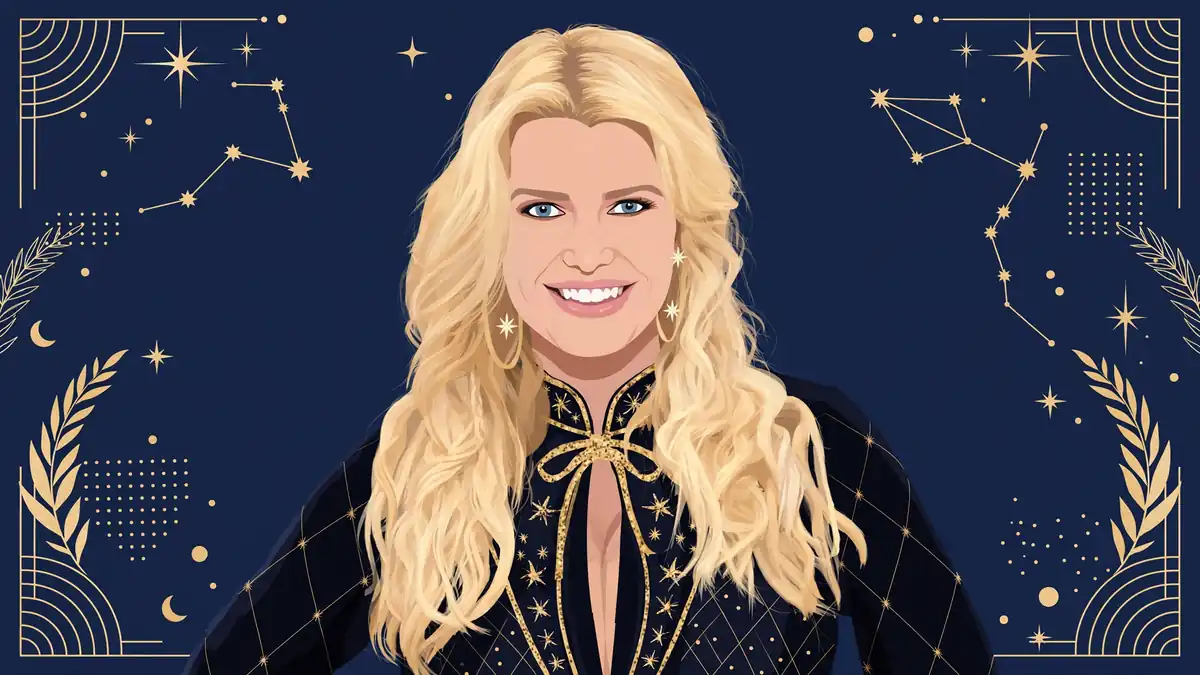
Jessica Simpson‘s net worth is estimated at $190 million to $210 million as of November 2026, anchored at $200 million. The number comes from Celebrity Net Worth and Parade, which both publish $200 million for 2026, and it rests on one of the strangest arcs in celebrity business: a pop career that sold more than 30 million albums, a fashion brand that crossed $1 billion in annual retail sales, a $117 million sale of most of that brand, and then a $65 million buyback out of bankruptcy that returned the whole company to her family.
Jessica Simpson: Quick Facts
| Estimated net worth | $200 million (range: $190 million – $210 million) |
|---|---|
| Profession | Singer, actress, fashion designer and entrepreneur |
| Nationality | American |
| Born | July 10, 1980 (age 46) |
| Height | 5 feet 3 inches (160 cm) |
| Primary income sources | The Jessica Simpson Collection (fashion licensing), music royalties, acting, endorsements, book sales |
| Active years | 1999 – present |
| Last reviewed | November 2026 |
- Early Life and Background
- Education
- Career Journey
- Rise to Fame
- Main Sources of Income
- Salary and Earnings
- Businesses and Investments
- Brand Deals and Sponsorships
- Houses, Cars and Other Assets
- Awards and Achievements
- Net Worth Growth Over the Years
- Social Media Presence
- Personal Life
- Sources & Reporting
- Frequently Asked Questions
Early Life and Background
Jessica Ann Simpson was born on July 10, 1980, in Abilene, Texas, to Tina Ann Simpson and Joseph “Joe” Simpson, a Baptist youth minister and psychologist. She grew up in a devout household in Texas, singing in church choirs from childhood, and the family moved around the state — Dallas, Waco, Richardson — as her father’s ministry work demanded. A brief stretch in Cincinnati, Ohio, during her preteen years, where she attended Amelia Middle School while her father did outreach work, ended after about 20 months when the family returned to Texas.
Music was not a hobby in the Simpson house; it was the family trade. Joe Simpson managed his daughter’s career from the start, and her younger sister Ashlee Simpson followed her into pop music a few years later, which made the Simpsons one of the few families with two charting pop singers under one roof. Jessica’s church-choir voice caught the ear of a Christian music label when she was still a teenager, and she recorded a gospel album that was never widely released after the small label folded. The record did lead somewhere useful: at a Christian youth camp, she was spotted by the head of Columbia Records, who signed her at 16. The gospel detour had given her a voice trained for big choruses, and Columbia set out to make her a mainstream pop star.
What set Simpson apart from the teen-pop pack of 1999 was the voice itself. Britney Spears and Christina Aguilera were her direct contemporaries, but Simpson sang with a fuller, more gospel-trained instrument, and her debut single leaned into that strength rather than hiding it. The family-first structure of her career — father as manager, mother as the steady hand on the business side — would matter far more a decade later, when the same two people helped her buy back her fashion brand from bankruptcy.
Education
Simpson attended J.J. Pearce High School in Richardson, Texas, where she took part in theatre and kept singing in church. Her schooling ended early: she dropped out in 1997, at 16, as her recording career began to take off, and earned her GED a year later through distance learning at Texas Tech High School. She has never attended college, and she has been open about the trade she made — a classroom for a recording studio at an age when most teenagers were picking prom dresses.
The gap in formal education never showed up as a gap in business sense. By her mid-twenties she was negotiating licensing deals, and by 2015 she was a party to a nine-figure brand sale. The practical education came from the deals themselves, and from watching her father manage her career through its first decade.
Career Journey
Simpson signed with Columbia Records in 1997 and released her debut single, “I Wanna Love You Forever,” in 1999. The song reached number three on the Billboard Hot 100, and her debut album, Sweet Kisses, arrived on November 23, 1999. It sold 65,000 copies in its first week, debuted at number 65 on the Billboard 200, and then kept selling — more than two million copies in the United States, a double-platinum certification from the Recording Industry Association of America, and over four million copies worldwide. For a debut, it was a solid commercial start rather than a phenomenon, and it placed her third in a teen-pop race that Spears and Aguilera were already winning.
Her second album, Irresistible, followed in May 2001 with a more mature image. It debuted at number six on the Billboard 200 after selling 127,000 copies in its first week, and its title track became her second top-20 Hot 100 hit. The album earned a gold certification. A third album, In This Skin, arrived in August 2003 and initially sold modestly — then reality television changed everything. After the album was re-released in 2004, it climbed to number two on the Billboard 200 and sold three million copies in the United States and more than seven million worldwide, making it the best-selling album of her career. A Christmas album, ReJoyce: The Christmas Album, followed in 2004 and also went gold.
The back half of her recording career was quieter. A Public Affair (2006) sold far less than its predecessors, and Do You Know (2008), a turn toward country music, debuted in the top five of the Billboard 200 but did not restart her chart run. She has sold more than 30 million albums worldwide across her career, a figure that puts her pop years in perspective: real, sustained, and well short of the 100-million-plus totals of the era’s biggest sellers. Her run sits among the other pop careers profiled in our musicians section, where the pattern repeats — a hot debut, a reality-TV peak, and then a second act somewhere else entirely.
That second act began in 2025. After a recording hiatus of nearly 17 years, Simpson returned with the single “Use My Heart Against Me” in February 2025 and the EP Nashville Canyon, Part 1 on March 21, 2025, a five-track set recorded after she spent time writing in Nashville. Nashville Canyon, Part 2 followed on September 4, 2025. In May 2025 she performed on the season 23 finale of American Idol, her first television performance in 15 years, and she toured behind the EPs on the Nashville Canyon Tour, which continued through 2026. In September 2026 she was featured on for KING + COUNTRY’s single “my mosaic.” The comeback is a working musician’s return, not a nostalgia cash-in: smaller rooms, country-leaning songs, and a catalogue she owns a stake in through her own label imprint.
Rise to Fame
Simpson’s fame arrived in two waves. The first was musical: a top-three single in 1999 and a debut album that went double platinum. The second, much larger wave was television. She married singer Nick Lachey of 98 Degrees on October 26, 2002, and the couple starred in MTV’s Newlyweds: Nick and Jessica, which ran from 2003 to 2005. The show turned their marriage into appointment viewing and turned Simpson into a household name far beyond pop radio. A much-quoted moment in which she asked whether the tuna she was eating was chicken became shorthand for the show’s appeal — unscripted, unguarded, and funny at her own expense.
The show did more than raise her profile; it moved records. In This Skin had stalled on release, and its re-release rode the Newlyweds audience to number two on the Billboard 200. That is the clearest example in her career of television doing what radio could not. The marriage ended in divorce in 2006, but the fame the show created never really left. It also fixed a public image she spent the next decade working around: the ditzy blonde of reality TV, a label that sat awkwardly beside the businesswoman who was quietly building a billion-dollar brand.
Film gave her a third lane. She made her feature debut as Daisy Duke in The Dukes of Hazzard in 2005, a role that traded directly on her image and paid her a reported $4 million, according to Parade. Critics were unkind, but audiences showed up: the film grossed more than $111 million worldwide. She followed it with Employee of the Month (2006), Blonde Ambition (2007) and The Love Guru (2008). None of them matched the Dukes box office, and her acting career cooled after 2010. She returned to scripted television in November 2025 with a guest role on Ryan Murphy’s Hulu series All’s Fair, her first non-reality television acting role since 2010, playing a woman seeking revenge after botched plastic surgery. A feature documentary about her life and career, directed by Joe Pearlman, is scheduled for Netflix in 2027, after Netflix commissioned the project in 2026.
Main Sources of Income
Simpson’s money comes from five streams, and their order matters. The fashion brand is first by a wide margin. Music royalties are second — a catalogue of late-1990s and 2000s hits that still earns, plus the new Nashville Canyon material. Acting fees are third, front-loaded in the mid-2000s. Endorsements are fourth, with a handful of large deals rather than a long list. Book sales are fifth, built on a single memoir that became a number-one bestseller.
The brand dominates because it is a licensing business. The Jessica Simpson Collection earns money when other companies make and sell shoes, clothing, handbags, fragrance and home goods under her name, and Simpson’s companies collect a share. That model scales without her time, which is why the brand could pass $1 billion in annual retail sales while she was raising three children and largely out of the public eye. Parade reports the brand now generates about $30 million a year in personal income for Simpson. No other income stream comes close to that figure, and none of her competitors’ profiles should be read without understanding that the brand, not the music, is the fortune.
Music still pays in a steadier, smaller way. Thirty million albums sold worldwide generate mechanical royalties, streaming income and sync fees, and her early hits remain fixtures on turn-of-the-century playlists. The 2025 comeback added touring income and new recordings. Acting residuals from Newlyweds reruns and her films add a thin but real tail. The honest picture is a fortune built on one great business decision — starting a shoe line in 2005 — with a pop career underneath it that supplied the fame the brand was built on.

Salary and Earnings
Simpson’s biggest single paydays are documented, and they tell the story in miniature. Her reported $4 million fee for The Dukes of Hazzard (2005) was the largest acting cheque of her career, according to Parade. Her music earnings were spread across the years rather than concentrated in one deal: Sweet Kisses sold more than four million copies worldwide, In This Skin more than seven million, and the royalties from those records, plus the singles, accumulated over two decades rather than arriving as a lump sum.
The brand transactions dwarf everything else. In April 2015 she sold a 62.5 percent stake in her brand’s operating company to Sequential Brands Group for $117 million in cash, plus 97,087 Sequential shares — total stated consideration of $118.75 million, according to SEC filings. That was money paid to her companies for a majority stake, before tax, fees and the split with her partners, not a personal bank balance. Six years later she paid $65 million to buy the stake back. The two numbers frame her fortune: roughly $117 million in, $65 million out, and full ownership of a brand that was still generating about $500 million a year in retail sales in 2020, according to Bloomberg.
Annual income is where reporting gets specific. Parade reports she earns about $30 million a year from the brand in its current form. That figure is the single most important number in this article after the net worth itself, because it explains how a $200 million estimate holds up: a business throwing off tens of millions a year in personal income, plus royalties and residuals, against a lifestyle that includes a large Hidden Hills home and three children. One 2025 article put her net worth at $210 million, which is the top of the range we publish; the $200 million consensus sits below it. The low end of our range, $190 million, reflects the honest caveat raised by a forensic review of her SEC filings: no audited personal balance sheet exists, and company-level transaction values are not the same as personal wealth after tax, debt and the $65 million buyback.
For comparison, her most famous pop peer, Britney Spears, is estimated at $120 million to $150 million after her own catalog sale, according to Parade’s September 2026 update — below Simpson, despite Spears’ far larger record sales. The difference is the brand: Spears never built a licensing business of Simpson’s scale. Paris Hilton, the other great 2000s reality-to-business story, sits above Simpson at about $300 million, according to Celebrity Net Worth, on the strength of her own fragrance and licensing empire. Simpson lands between them, which is a fair reflection of where her business sits.
Businesses and Investments
The Jessica Simpson Collection is the business, and its history is the most instructive part of this profile. Simpson launched it in 2005 in partnership with the Camuto Group, the company co-founded by Nine West co-founder Vince Camuto, starting with shoes and expanding through licenses into clothing, handbags, fragrance, sunglasses and home goods. By 2010 the brand was generating about $750 million a year in retail sales. By 2014 it had passed $1 billion in annual retail sales, the first celebrity fashion brand to reach that mark, according to Billboard. The distinction matters and is the first thing to get right about her wealth: $1 billion was the value of goods sold at retail, not money Simpson received. Audited company accounts show 2014 licensing income of $13.68 million and total company revenue of $17.23 million — real money, but a fraction of the headline retail figure.
Vince Camuto died of cancer in January 2015, and within months Simpson sold a majority stake. In April 2015, Sequential Brands Group paid $117 million in cash plus shares for 62.5 percent of the operating company. Simpson kept 12.5 percent; the Camuto side kept 25 percent. Sequential, a publicly traded licensing roll-up, planned to grow the brand into a $2 billion to $3 billion operation. It did the opposite. Loaded with debt from a string of acquisitions, Sequential filed for Chapter 11 bankruptcy protection on August 31, 2021.
The buyback is where Simpson’s business sense shows most clearly. Her original agreement with Sequential contained a clause giving her approval rights over any sale of the brand to another buyer — a provision that stopped the bankruptcy court from simply auctioning her name to the highest bidder. She and her mother Tina hired the boutique investment bank Treadstone Capital to arrange financing, and in August 2021 they offered $65 million for the 62.5 percent stake Sequential held. No other bidder stepped forward. A bankruptcy judge approved the deal, and the acquisition closed on November 12, 2021, returning the brand to full family ownership. Celebrity Net Worth reports the $65 million was mostly funded by Jessica personally. The SEC record adds two dry footnotes that sharpen the picture: her companies received $29.225 million in distributions from the venture through 2020, and the 97,087 Sequential shares she received in 2015 were cancelled without compensation when the company was wound down in March 2022.
Since the buyback, the brand has been run as a family business again, with Simpson and her mother in control. Designer Brands’ 2026 annual report confirms the footwear licensing remains active, though it discloses no current royalty figure. Simpson has also used the brand’s Nashville moment to launch new products, including a fragrance called Mystic Canyon tied to the Nashville Canyon era. She has not, as far as any public record shows, put money into venture capital, startups or crypto in a serious way; her investments are her brand, her catalogue and her home. That concentration is a risk a financial adviser would flag, and it is also the reason her fortune is so legible: one business, fully owned, throwing off licensing income.
Her approach to brand-building has drawn comparisons with Jessica Alba, who turned The Honest Company into a public company in the same era Simpson was fighting to reclaim hers. The two took opposite routes — Alba raised outside capital and went public, Simpson sold a majority stake and then bought it back — and Simpson’s route left her with full ownership and no shareholders to answer to.
Brand Deals and Sponsorships
Simpson’s endorsement career is a short list of large cheques rather than a long list of small ones. She appeared in Pizza Hut’s Super Bowl commercial in 2004 alongside the Muppets, and filmed a second Super Bowl spot for the chain after The Dukes of Hazzard. She signed with Proactiv as a spokesperson in a deal reported at $2.5 million, according to Adweek, as cited by Nicki Swift. She became a global face for CoverGirl in the mid-2000s, a deal that put her on magazine covers and in television spots at the height of her fame.
The largest endorsement deal of her career came after the birth of her first child. In 2012 she signed with Weight Watchers in a contract reported at $3 million to $4 million, according to Parade, to document her post-pregnancy weight loss. She lost 60 pounds on the programme and filmed a series of commercials for the brand. The deal was widely covered at the time, and it set a template — a celebrity paid to lose weight in public — that drew both praise for its honesty and criticism for the pressure it put on a new mother. She also filmed a DirecTV advertisement built around her Dukes of Hazzard role. Endorsements were never her main income, and she has taken few of them since the Weight Watchers deal; the brand pays better than any sponsor could.

Houses, Cars and Other Assets
Simpson’s most important asset after the brand is her home. In 2013 she and Eric Johnson bought a Hidden Hills estate from Ozzy and Sharon Osbourne for $11.5 million, less than a year before they married. The house runs to about 13,200 square feet, with seven bedrooms and ten bathrooms, according to Realtor.com, and sits in the gated Hidden Hills neighbourhood alongside homes owned by Kris Jenner and Kim Kardashian. The couple renovated it extensively, adding a recording studio where Simpson worked on her comeback music.
The house has been on and off the market for years, and its listing history tracks the marriage. The couple first listed it for $22 million in September 2023 and withdrew it in August 2024. They relisted it for $17.9 million on January 11, 2025 — two days before announcing their separation — and withdrew it again. It reappeared briefly in December 2025 and for two days in January 2026 before vanishing once more. Reporting on its current status conflicts: Realtor.com, citing TMZ, reported in 2026 that Simpson had decided to keep the house, while another report said the couple were still living under the same roof and working through the logistics of a sale. Either way, the property is worth far more than the $11.5 million they paid, and it is the largest single piece of real estate in her portfolio.
There is no verified public record of a car collection, and this profile will not invent one. Simpson has been photographed in luxury vehicles over the years, but no reliable outlet has published a list of cars she owns, and a net worth estimate should not pad itself with vehicles it cannot document. The same discipline applies to other property: she has spent long stretches in Nashville while writing and recording, living in a rental property in Tennessee, and she has said she is unsure whether she will relocate there full time. Her assets, on the public record, are the brand, the catalogue, the Hidden Hills house and cash — which is enough.
Awards and Achievements
Simpson’s awards shelf is thinner than her sales figures would suggest, and that gap is part of her story. She was never a Grammy nominee, and her acting drew more box-office receipts than critical praise. What she does hold is a set of commercial milestones that few of her peers can match. Sweet Kisses earned a double-platinum certification from the RIAA for more than two million copies sold in the United States. Irresistible and ReJoyce: The Christmas Album both went gold. In This Skin peaked at number two on the Billboard 200, her highest chart position, and sold more than seven million copies worldwide.
Her book is the clearest awards-style win of her career. Open Book, her memoir published in February 2020, reached number one on the New York Times bestseller list, and WSJ Magazine reported that nearly half a million copies sold in its first 14 weeks. The book was candid about her childhood, her marriage to Lachey, her drinking, and the business fights behind the brand, and its success proved there was an audience for her story told in her own words.
The brand milestones stand above the rest: the first celebrity fashion brand to pass $1 billion in annual retail sales, according to Billboard, and a buyback that returned a nine-figure business to family ownership. Her 2025 return added two more firsts — a performance on the American Idol finale, her first television performance in 15 years, and a guest role on All’s Fair, her first scripted television role since 2010. The through-line is persistence: a career that has been written off more than once and keeps finding a new room to play.
Net Worth Growth Over the Years
Celebrity Net Worth has published a $200 million estimate for Simpson for years, and Parade’s 2026 update matches it, which makes her growth curve flatter than most celebrity fortunes. The flat headline hides real movement underneath: the brand’s value swung from a billion-dollar retail peak to a bankruptcy buyback and back to family ownership, while the personal estimate stayed put. The milestones below show why.
| Year | Milestone | Financial effect |
|---|---|---|
| 1999 | Debut single reaches number three; Sweet Kisses goes double platinum | First serious earnings from record sales and touring |
| 2003–2005 | Newlyweds runs on MTV; In This Skin peaks at number two | Reality-TV fame lifts album sales to 3 million in the US |
| 2005 | The Jessica Simpson Collection launches with Camuto Group | Licensing income begins; the fortune’s foundation is laid |
| 2010 | Brand reaches about $750 million in annual retail sales | Licensing income scales sharply |
| 2014 | Brand passes $1 billion in annual retail sales; audited licensing income $13.68 million | Peak retail value; reported estimates rise toward $150 million |
| 2015 | Sells 62.5% of the brand to Sequential Brands for $117 million in cash plus shares | Largest single cash event of her career; $118.75 million stated consideration |
| 2020 | Open Book hits number one; nearly 500,000 copies in 14 weeks | Book income plus a reputational reset |
| 2021 | Buys the brand back from bankruptcy for $65 million | Full family ownership restored; $65 million out, brand retained |
| 2025 | Nashville Canyon EPs, American Idol performance, All’s Fair role | Touring and new recording income resume |
| 2026 | Net worth estimated at $190–210 million, anchored at $200 million | Brand income of about $30 million a year underpins the estimate |
The honest reading is that Simpson’s wealth peaked in transaction terms in 2015, when she banked $117 million in cash, and that the $65 million buyback six years later was the price of keeping the asset that generates her income. A $200 million estimate in 2026 is consistent with a business earning about $30 million a year for its owner, a catalogue that still pays, and a house worth well above its purchase price — minus the tax and financing costs of the 2015 sale and the 2021 buyback, which no public source can pin down. That is why we publish a range.
Social Media Presence
Instagram is Simpson’s main public channel, and she uses it the way she has always used publicity: directly, in her own words, and on her own schedule. She announced the Weight Watchers deal on Twitter in 2012, shared her sobriety milestones on Instagram — seven years in November 2024, eight years in November 2025 — and used the platform to tease the Nashville Canyon music and post photos from the Hidden Hills house as recently as October 2025. Her posts mix family photographs, fashion-brand promotion and studio footage, and the account is where her separation from Eric Johnson was first signalled to fans before the formal announcement in January 2025.
She is also active on TikTok, where clips of her Nashville-era songs and behind-the-scenes tour footage circulate, and on X, where she has posted since the early 2010s. She does not publish follower counts as a business metric, and this profile will not guess at them; what matters for her wealth is that her social channels are the brand’s shop window, driving traffic to the Collection’s retail partners without the cost of a traditional advertising campaign. In an era when celebrity brands live or die on their founder’s feed, hers is an asset in its own right.
Personal Life
Simpson married Eric Johnson, a former NFL tight end, on July 5, 2014, in Montecito, California, after four years together. They have three children: Maxwell Drew, born May 1, 2012; Ace Knute, born June 30, 2013; and Birdie Mae, born March 19, 2019. The family lived in the Hidden Hills house Simpson and Johnson bought in 2013, and she has spoken about the strain of raising three children while running a fashion business and, from 2025, rebuilding a music career.
On January 13, 2025, Simpson and Johnson announced their separation after ten years of marriage, saying they had been living separately and were navigating a painful situation in their marriage. No divorce filing had been finalised as of late 2026, and the couple have continued to co-parent their children, appearing together at family events including their daughter Maxwell’s basketball games. People reported in April 2026 that Simpson was dating Nashville musician Thomas Eisenhood. Her sister Ashlee, married to Evan Ross, remains her closest family collaborator, and her mother Tina remains her business partner in the Collection.
Simpson has been open about her sobriety, marking eight years in November 2025, and about the therapy and self-examination behind her memoir. She has described the Nashville move as a search for a place where she came first, telling her sister in a 2025 interview for The Cut that Los Angeles had stopped fitting her life. Whether she relocates to Tennessee full time remains undecided, and the Hidden Hills house — kept, listed, or somewhere in between — is the physical sign of that indecision.
Sources & Reporting
Celebrity Net Worth — the $200 million net worth figure; the $117 million 2015 sale and $65 million 2021 buyback detail; the approval-rights clause and the report that the buyback was mostly funded by Simpson personally. Reporting window: profile updated 2026, snapshot November 6, 2026.
Parade — the $200 million 2026 estimate; about $30 million in annual personal income from the brand; the $4 million Dukes of Hazzard payday; the $3 million to $4 million Weight Watchers deal. Reporting window: 2012 and 2026 updates.
Billboard — the Jessica Simpson Collection as the first celebrity fashion brand to pass $1 billion in annual retail sales; chart positions for Sweet Kisses, Irresistible and In This Skin. Reporting window: 1999–2014 chart and business coverage.
Bloomberg — the Collection still generating about $500 million in retail sales in 2020 despite Sequential’s collapse; the buyback bid reporting. Reporting window: 2021 bankruptcy coverage, as cited by Celebrity Net Worth and Market Realist.
Realtor.com — the Hidden Hills purchase price of $11.5 million in 2013; the $22 million listing in September 2023; the $17.9 million relisting in January 2025; the 2026 report that Simpson had decided to keep the house. Reporting window: 2023–2026.
People — Simpson dating Nashville musician Thomas Eisenhood, reported April 2026; Weight Watchers deal confirmation, 2012.
WSJ Magazine — nearly 500,000 copies of Open Book sold in its first 14 weeks. Reporting window: 2020.
SEC filings — the 2015 sale’s stated consideration of $118.75 million ($117.5 million cash plus 97,087 shares); the retained 37.5 percent stake fair-valued at $65.094 million; 2014 licensing income of $13.68 million and total company revenue of $17.23 million; $29.225 million in distributions through 2020; the cancellation of the Sequential shares in March 2022. Filings as analysed in a forensic review of the public record, checked September 2026.
Nicki Swift — the $2.5 million Proactiv deal, citing Adweek; the Weight Watchers contract details. Reporting window: updated October 2023.
Wikipedia — birth date and place; education; album sales and chart history; the Nashville Canyon EP release dates; the All’s Fair role; the Netflix documentary scheduled for 2027. Page last updated November 2026.
Grand Ole Opry — Nashville Canyon, Part 1 released March 21, 2025, with five tracks; Part 2 set for September 4, 2025; first original music in 15 years.
TMZ — via Realtor.com, the 2026 report that Simpson had decided to keep the Hidden Hills house and that Johnson had moved out.
Research for this article was completed on November 10, 2026. Figures are reported with their source or labelled as estimates; where sources disagree, the article publishes a range and names who says what. No figure in this article comes from an unnamed source.
Frequently Asked Questions
What is Jessica Simpson’s net worth in 2026?
Jessica Simpson’s net worth is estimated at $200 million in 2026, within a range of $190 million to $210 million. Celebrity Net Worth and Parade both publish $200 million. The range reflects the honest uncertainty: no audited personal balance sheet exists, and one 2025 article put the figure at $210 million while a forensic review of her SEC filings notes that company-level transaction values are not the same as personal wealth after tax and the $65 million buyback.
Is Jessica Simpson a billionaire?
No. Jessica Simpson has never been a billionaire. The $1 billion figure attached to her name describes the annual retail sales of The Jessica Simpson Collection at its 2014 peak — the total value of goods sold in stores — not money she received. Audited company accounts show 2014 licensing income of $13.68 million, a small fraction of the retail figure, and her personal net worth is estimated at about $200 million.
How much is the Jessica Simpson Collection worth?
The brand was valued at about $725 million after the 2021 buyback, according to Market Realist, down from its billion-dollar retail-sales peak. Its value is best understood through its transactions: Sequential Brands paid $117 million in cash plus shares for a 62.5 percent stake in 2015, and Simpson paid $65 million to buy that stake back in 2021. The brand still generates roughly $500 million a year in retail sales, according to Bloomberg, and about $30 million a year in personal income for Simpson, according to Parade.
How did Jessica Simpson get rich?
She got rich from fashion, not music. Simpson launched The Jessica Simpson Collection in 2005 with the Camuto Group, starting with shoes and expanding into clothing, handbags and fragrance through licensing deals. The brand passed $1 billion in annual retail sales by 2014. She sold a majority stake for $117 million in 2015, then bought it back for $65 million in 2021 and now owns it outright with her mother. Music royalties from more than 30 million albums sold, acting fees and endorsements added millions, but the brand is the fortune.
How much does Jessica Simpson make a year?
Parade reports she earns about $30 million a year from The Jessica Simpson Collection in its current form. Music royalties, touring income from the Nashville Canyon era, acting residuals and book sales add to that, but no reliable source publishes a total annual income figure, and the $30 million brand figure is the only documented yearly number.
Did Jessica Simpson buy back her brand?
Yes. After Sequential Brands Group filed for Chapter 11 bankruptcy in August 2021, Simpson and her mother Tina offered $65 million for the 62.5 percent stake Sequential held. Her original 2015 agreement gave her approval rights over any sale of the brand, which stopped it being auctioned to another buyer. No other bidder stepped forward, a bankruptcy judge approved the deal, and the acquisition closed on November 12, 2021, returning the brand to full family ownership.
Is Jessica Simpson still married to Eric Johnson?
No. Simpson and former NFL player Eric Johnson announced their separation on January 13, 2025, after ten years of marriage, saying they had been living separately. They share three children — Maxwell, Ace and Birdie — and have continued co-parenting. People reported in April 2026 that Simpson was dating Nashville musician Thomas Eisenhood. No divorce had been finalised as of late 2026.
How much did Jessica Simpson make from The Dukes of Hazzard?
Simpson was paid a reported $4 million to play Daisy Duke in the 2005 film, according to Parade, making it the largest acting fee of her career. The film grossed more than $111 million worldwide despite poor reviews, and she also recorded a cover of “These Boots Are Made for Walkin'” for its soundtrack.
Final Thoughts
Jessica Simpson’s $200 million fortune is a story about a second act that out-earned the first. The pop career gave her fame and a catalogue that still pays; the fashion brand gave her a business worth nine figures; and the buyback gave her something rarer than either — full ownership of her own name. She sold most of the company for $117 million, watched the buyer collapse, and spent $65 million of her own money to take it back. That is not the behaviour of a celebrity who stumbled into wealth. It is the behaviour of a founder who understood what she owned.
The honest caveat stays attached to the number. No audited personal balance sheet exists, and the gap between $1 billion in retail sales and $13.68 million in audited licensing income is a reminder that headlines and bank balances are different things. But the range we publish — $190 million to $210 million, anchored at $200 million — is consistent with everything the public record shows: a licensing business earning about $30 million a year for its owner, a house worth far more than its purchase price, and a music career that found a second wind in Nashville in 2025. At 46, with new music, a tour and a Netflix documentary ahead, Simpson’s fortune looks less like a finished story than a business still being run.
Published on November 10, 2026. Last reviewed November 2026. Found an error? See our corrections policy.