
Dave Hester‘s net worth is estimated at $3 million to $4.5 million as of November 2026, anchored at $4 million by Celebrity Net Worth. The Storage Wars star known as “The Mogul” built his money the slow way first — more than 25 years buying and selling at Southern California auctions — then multiplied it on television, where court papers from his own lawsuit put his peak pay at $25,000 an episode. He sued the network that made him famous, lost a six-figure fee fight in the process, survived a stroke that kept him off the show for six years, and walked back into the auction ring in 2025 at 61.
Dave Hester: Quick Facts
| Estimated net worth | $4 million (range: $3 million–$4.5 million) |
|---|---|
| Profession | Reality TV personality, licensed auctioneer, storage-unit buyer, businessman |
| Nationality | American |
| Born | July 23, 1964 (age 62) |
| Height | 6 feet 2 inches (reported) |
| Primary income sources | Storage Wars salary, Dave Hester Auctions, storage-unit resale, consignment and thrift retail |
| Active years | Auction business since the early 1990s; television 2010–2012, 2014–2019, 2025–present |
| Last reviewed | November 2026 |

- Early Life and Background
- Education
- Career Journey
- Rise to Fame
- Main Sources of Income
- Salary and Earnings
- Businesses and Investments
- Brand Deals and Sponsorships
- Houses, Cars and Other Assets
- Awards and Achievements
- Net Worth Growth Over the Years
- Social Media Presence
- Personal Life
- Sources & Reporting
- Frequently Asked Questions
Early Life and Background
Dave Hester was born on July 23, 1964, at Camp Pendleton Marine Corps Base near Oceanside, California. His father served in the United States Army, with postings in Korea and Vietnam, and the family moved several times during Hester’s childhood before settling in Orange County, California. That Orange County base mattered: it put the young Hester within driving distance of the swap meets, estate sales and storage auctions that would become his living.
By his own account, Hester’s eye for hidden value started early. Family accounts describe childhood summers spent around auctions in the 1960s and 1970s, watching his father bid and learning to judge a box of somebody else’s belongings from the doorway. He was not a strong student — biographies of Hester consistently describe unremarkable grades in high school — but he showed an early instinct for the deal: buy low, know what a thing is worth to someone else, and never pay for the story when you can pay for the object.
Orange County in the 1980s was a good place to learn that trade. The region’s thrift stores, estate liquidations and storage facilities produced a steady stream of abandoned goods, and a buyer who could spot a genuine antique among the junk could make a living without a degree or a loan. Hester spent his late teens and twenties inside that world, first as a customer and then as a seller, before the auctioneer’s podium gave him a way to charge for the skill itself.
The nickname came much later, but the persona was already forming: loud, certain, and willing to pay more than anyone else in the room when he believed the contents were worth it. On Storage Wars he would become the buyer other buyers loved to hate, the man who drove prices up on units he had no intention of winning just to make a rival pay. The roots of that style were not television. They were thirty years of standing in front of storage lockers in Southern California and deciding, in seconds, what was inside.
Education
No verified record of Dave Hester’s formal education has been published. No high school, college or training institution is named in any profile of him, and Hester has never discussed a degree in an interview. What is documented is a different kind of schooling: he worked as a bid catcher for an auction house in the early 1990s and became a licensed auctioneer himself in 1992, a credential that in California requires bonding and a state licence, and which he has held for more than three decades.
That gap in the record is worth stating plainly, because it shapes the money story. Hester’s fortune was not built on credentials. It was built on inventory knowledge — knowing the resale value of furniture, collectibles, tools and ephemera on sight — and on the auctioneer’s skill of reading a room. The bid-catcher years, spent tracking bids and calling prices for a working auction house, were his apprenticeship, and they explain why, when A&E needed a buyer who could perform at a storage auction on camera, Hester already looked like he had done it a thousand times. He had.
Career Journey
Hester’s first businesses were retail, not television. He ran the Rags to Riches thrift store in Costa Mesa, California, and owned the Newport Consignment Gallery, two shops that turned the same skill — buying other people’s unwanted goods cheap and selling them for more — into a storefront. The thrift store closed in June 2011, just as his television career was taking off, and the consignment gallery wound down around the same period. Both shops taught him the two halves of the resale business: sourcing, which he already knew from auctions, and merchandising, which meant pricing, display and patience with walk-in customers.
The auction side of his career moved faster. After his stint as a bid catcher in the early 1990s, Hester became a licensed and bonded auctioneer in 1992 and began working the Southern California storage-auction circuit in earnest. Storage auctions are a brutal classroom: the buyer gets a few minutes to look into a unit from the doorway, flashlight in hand, no touching, no opening boxes, and then the bidding starts. Hester spent the better part of two decades in that classroom, buying units, reselling the contents through his shops, and building a reputation among facility managers and fellow buyers as the man who would pay top dollar for the right locker — and who would remember it if you crossed him.
In 2011 he formalised the business as Dave Hester Auctions, an auctioneering and consulting firm that conducts and advises on auctions for charities, celebrities, government agencies and private collectors. The firm gave him income that did not depend on winning lockers: fees for running sales, consulting on estates, and lending his name to events. It also gave him a base to return to whenever television went quiet, which it did more than once.
The timeline that matters for the money is this: roughly 25 years of auctions and retail before the first television cheque, then a television career that has run in three separate stretches — 2010 to 2012, 2014 to 2019, and 2025 to the present — with the auction business carrying him through the gaps. That is the shape of a $4 million fortune built by a man who never had a salary job: long slow accumulation, then a few very good years on camera, then a return to the work that made him in the first place.
Rise to Fame
Storage Wars premiered on A&E on December 1, 2010, and Dave Hester was in the original cast. The format was simple: professional buyers bid blind on the contents of abandoned storage units in Southern California, then try to resell what they find for a profit. Hester’s role was the heavy. He bid aggressively, raised prices on rivals, and punctuated every winning bid with a single barked word — “Yuuup!” — that became the show’s most recognisable sound and, eventually, a trademarked catchphrase.
The show worked because the cast was a genuine working world, not a casting call. Hester had been buying lockers for years before the cameras arrived, and it showed in the way he read a unit. His most famous single score came early in the run: a unit that contained a collection of newspapers reporting the death of Elvis Presley, which he sold for a profit reported at $90,000. The find became the show’s signature example of the upside — a few hundred dollars at the door of a locker, tens of thousands on the other side — and it cemented Hester as the buyer who found the big-ticket items.
By the third season, Hester was the show’s villain and its engine at the same time. Viewers tuned in to see him lose as much as to see him win, and the producers knew it. His fellow buyers included Barry Weiss, the eccentric collector whose own fortune was built in the produce business, Darrell Sheets, Jarrod Schulz and Brandi Passante — a cast that stayed largely intact for a decade and gave the show its long run. Hester’s confrontational style, including a physical altercation with auctioneer Dan Dotson during a season 8 taping in 2015, kept him at the centre of the show’s drama, and the drama kept the ratings up.
The fame had a price, and Hester paid it in public. In late 2012 he accused the producers of staging the show — planting valuable items in lockers, scripting interviews, and filming fake bidding — and A&E fired him. He sued, missed the entire fourth season, and spent two years in court before a settlement brought him back. The lawsuit is covered in full below, because it is also the reason the best salary numbers in this article exist at all: Hester’s own court filing disclosed his contract.
After the settlement he returned to the series and stayed through the end of season 12 in 2019, when health problems forced him out again. The second absence lasted six years. His return in season 16, which premiered on June 7, 2025 in a new hour-long format, was announced by TMZ on June 26, 2025 and treated by the show’s fans as a comeback: the Mogul, back in the room, still shouting “Yuuup!” at 61. He has remained in the cast through season 17, which premiered on February 28, 2026, and season 18, which premiered on May 30, 2026, according to Wikipedia’s episode record and Celebrity Net Worth’s September 2026 update.
Main Sources of Income
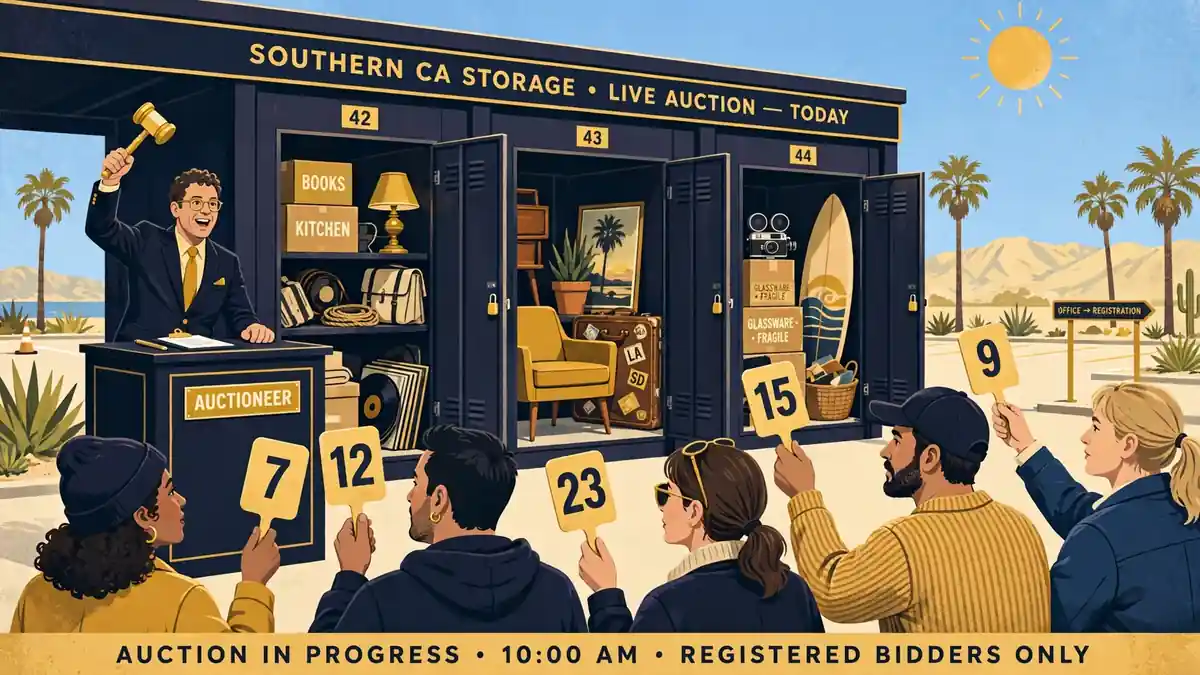
Hester’s money comes from four streams, and their order matters. Television paid the most per year, but the auction business paid for the longest, and the resale of locker contents sits between the two.
Television salary. Storage Wars is the largest single source of Hester’s wealth. At his peak, his contract was worth roughly $829,500 a season — the figure is broken down in the salary section below — and he collected it across most of the show’s first twelve seasons and again from season 16 onward. Even at the lower per-episode rates reported for other cast members, a 26-episode season guarantee made television the highest-paying work of his life by a wide margin.
Storage-unit resale. Before television and between television stretches, Hester bought abandoned storage units and resold the contents. The margins are real but uneven: a unit bought for a few hundred dollars can contain thousands of dollars of resaleable goods, or it can contain rubbish. His best-documented single score, the Elvis newspaper collection at around $90,000, shows the upside. The downside is the cost of the units themselves, the labour of sorting and hauling, and the rent on the space to store what does not sell quickly.
Dave Hester Auctions. Founded in 2011, his auctioneering and consulting firm earns fees for conducting sales and advising clients, including charities, celebrities, government agencies and private collectors. Unlike locker buying, this is fee income: it does not require Hester to put his own capital at risk on every deal, and it kept paying while he was off television between 2013 and 2014 and again between 2019 and 2025.
Retail and consignment. The Rags to Riches thrift store and Newport Consignment Gallery were the retail arm of the same trade — a place to sell what came out of the lockers at retail prices instead of wholesale. Both shops are now closed, but they carried the business through the 2000s, and the consignment model — taking a cut of other people’s goods — added margin without inventory cost. Fellow resale-television figures work the same trade from a different counter: Rick Harrison turned his family’s Las Vegas pawn shop into the Pawn Stars empire, and the economics — buy low, know the market, sell to the right buyer — are the same ones Hester practised in Costa Mesa.
Salary and Earnings
The salary numbers in this section are unusually solid for a reality-television star, because Hester put them in a court filing himself. When he sued A&E and Original Productions in December 2012, his complaint disclosed the contract he had been working under, and The Hollywood Reporter reported the terms. Under that contract Hester was entitled to $25,000 per episode with a guarantee of 26 episodes, worth $650,000 for the season. On top of that came $2,500 a month in travel expenses, a $124,500 non-accountable expense account, and a $25,000 signing bonus. With the monthly payments included, his package was worth about $829,500 for the season, according to Celebrity Net Worth’s reading of the same filing.
Two things about that figure need to be said plainly. First, it was Hester’s contract, not a cast-wide rate. Other Storage Wars buyers were reported to earn less — Barry Weiss was reported at upwards of $10,000 an episode — so the $25,000 figure should never be quoted as what the whole cast made. Second, it was gross pay before the costs of the job: taxes, the expense of running his auction business while filming, and, in the years that followed, legal fees. The lawsuit itself cost him money before it made him any, as the fee order below shows.
The lawsuit ran from December 2012 to a settlement in July 2014. Hester alleged wrongful termination, unfair business practices and breach of contract, and claimed producers regularly “salted” — planted — valuable items in storage lockers, staged bidding scenes, and scripted interviews, in violation of the Communications Act of 1934, which bars rigging contests of skill or chance. He sought $750,000 in damages, the value of the season-4 contract he lost when he was fired. A&E and Original Productions raised an anti-SLAPP defence, and in March 2013 a Los Angeles judge dismissed the unfair business practices claim and ordered Hester to pay $122,692 of the defendants’ legal fees. The judge allowed the wrongful termination claim to proceed if Hester refiled it with more specific allegations, which he did. The case ended in a settlement in July 2014 for an undisclosed amount, and Hester returned to the show later that year.
That $122,692 fee order is a real deduction from the fortune, and it is one of the reasons the net worth range in this article is a range rather than a single confident number. A season of peak pay at $829,500, less taxes, less a six-figure legal bill, less the lost season-4 income he sued to recover, leaves a smaller pile than the headline rate suggests. Hester’s own filing is also the reason the range stops at $4.5 million: the documented earnings support a fortune in the low single-digit millions, not the $5 million some bio sites claim without sourcing.
What did he earn after the return? No contract terms for his 2014–2019 run or his 2025 comeback have been published, and A&E does not disclose cast pay. The honest statement is that his later seasons almost certainly paid less than the 2012 peak in real terms — the show’s audience had shrunk from its early-2010s height — but a returning original cast member with a trademarked catchphrase still commands a premium over a new buyer. The $4 million anchor already reflects that: a fortune built mostly between 2010 and 2019, held steady since, with the 2025 return adding income rather than transforming the total.
Businesses and Investments
Dave Hester Auctions is the business that outlasted every television dispute. Founded in 2011, while Hester was still an original cast member, the firm conducts auctions and consults for charities, celebrities, government agencies and private collectors. The model is fee-based rather than inventory-based: Hester gets paid to run the sale, not to gamble on what is inside the lots. That distinction mattered during the two long gaps in his television career, when the firm was the main income stream, and it matters now, when a 62-year-old auctioneer can earn from the podium without bidding on a single locker himself.
His earlier retail businesses — Rags to Riches in Costa Mesa and the Newport Consignment Gallery — worked the other side of the trade. The thrift store bought and sold second-hand goods at retail; the consignment gallery sold other people’s antiques and collectibles for a percentage. Both are closed now, the thrift store since June 2011, but they served their purpose: they gave Hester somewhere to sell what came out of the lockers at full retail price, instead of wholesaling it to another dealer and leaving money on the table.
No property portfolio, stock holding or investment account belonging to Hester has been publicly documented, and this article does not invent one. What is documented is inventory: a working auctioneer’s stock of antiques, collectibles and resaleable goods, a business built around his own judgement, and a house in Westminster, California. That is a thinner asset base than a television star with endorsement deals and a production company, and it explains why the estimate sits at $4 million rather than $10 million. Frank Fritz built a similar fortune picking antiques on American Pickers, and the comparison holds: in the resale trade, the wealth is in the eye and the Rolodex, not in a portfolio.
One risk in that model deserves a line of its own. A buyer who lives on inventory can be caught holding stock that does not sell, and a consultant who lives on fees can lose clients when a lawsuit makes headlines. Hester’s 2012 lawsuit did both kinds of damage at once: it cost him a season of television income, a six-figure fee order, and two years of public argument with the network that employed him. The business survived, but the episode is a reminder that a fortune built on one man’s reputation is only as steady as that reputation.
Brand Deals and Sponsorships
There are no documented brand deals or sponsorships in Dave Hester’s career — no product line, no endorsement contract, no paid partnership that any outlet has reported. That absence is itself a fact about the money. Hester’s fame came from a show about buying other people’s things, and his brand was a catchphrase and a scowl, not a lifestyle a sponsor could attach a product to. His income has always come from the work itself: the auction, the locker, the resale.
The closest thing to a commercial asset is the catchphrase. “Yuuup!” — one word, three u’s, delivered as a bark — became so associated with Hester that he trademarked it, and it still opens doors: appearances, auction events, and the 2025 return to Storage Wars all trade on the recognition it carries. A trademarked catchphrase is a real, if modest, piece of intellectual property, and it is one of the few assets in his portfolio that costs nothing to hold and pays every time the show airs a clip.
His public appearances have been limited to auction events and the occasional interview, and he keeps no verified social-media storefront or merchandise line. For a reality star of his tenure that is unusual — most of his castmates have tried a book, a podcast or a product — and it caps the upside. The $4 million figure is, in that sense, an honest number: it is what the auction business and the television cheques add up to, with no sponsorship column to inflate it.

Houses, Cars and Other Assets
Hester lives in Westminster, California, in a four-bedroom house, according to multiple biographical profiles. Some celebrity-bio sites value the house at around $3.5 million, but no property record or sale price has been published to support that figure, and it should be treated with caution: a four-bedroom home in Westminster would ordinarily be worth a fraction of that amount, and the $3.5 million claim appears to be repeated from one weak source rather than verified. What can be said with confidence is that he owns a home in Orange County, where he has lived and worked for decades, and that the house is his main real-estate asset.
No car collection, luxury vehicle or second property belonging to Hester has been credibly documented. That is a contrast with his castmate Barry Weiss, whose vintage cars are a public hobby, and it fits the rest of the picture: Hester’s money went into inventory and the auction business, not into display assets. The most valuable things he owns, by the logic of his own trade, are probably the contents of his storage and showroom space — antiques and collectibles bought over thirty years, some of them waiting for the right buyer — and those are, by their nature, hard to value from the outside.
The honest summary of the asset side is short: a house in Westminster, a working auction business, a trademarked catchphrase, and inventory. There is no published record of a property portfolio, a car collection, or a stock account, and this article does not invent one to fill the section.
Awards and Achievements
Dave Hester has won no major television or industry awards, and Storage Wars itself was never an awards-show property. His achievements are commercial and professional rather than ceremonial, and they are worth listing on their own terms.
First, longevity: he has been a main cast member of Storage Wars across three separate stints — 2010 to 2012, 2014 to 2019, and 2025 to the present — on a show that reached 18 seasons by 2026. Very few reality-television performers survive one firing, a lawsuit against their own network, and a six-year health absence and still get invited back. Hester has done all three.
Second, the catchphrase. “Yuuup!” is one of a small number of reality-television phrases — alongside a handful of others from the 2010s — that entered general use, and Hester’s decision to trademark it turned a joke into an asset.
Third, the professional credential that predates the fame: a licensed and bonded auctioneer since 1992, with more than thirty years on the podium. Television made him famous, but the licence made him employable, and it is the licence that still pays him when the cameras are off.
Fourth, the single find that the show still uses as its example of the upside: the Elvis Presley newspaper collection, bought in a locker and sold for a reported $90,000 profit. It is the kind of story that makes the whole format credible, and it belongs to Hester.
Net Worth Growth Over the Years
The table below is our estimate, built from the reported earnings in this article. The 2026 figure is anchored on Celebrity Net Worth’s $4 million; the earlier years are estimates derived from his auction income, the shops, and the television contracts disclosed in the lawsuit, and they should be read as a shape rather than a ledger.
| Year | Estimated net worth | What drove it |
|---|---|---|
| 2010 | $1 million–$1.5 million | 25 years of auctions, thrift and consignment retail; Storage Wars premieres in December |
| 2012 | $2 million–$2.5 million | Peak television contract at $25,000 an episode; the Elvis newspaper score |
| 2014 | $2.5 million–$3 million | Settlement with A&E in July; return to the show; Dave Hester Auctions established |
| 2019 | $3.5 million–$4 million | Seasons 5–12 on television; stroke in November 2018 ends the run |
| 2025 | $4 million | Return to Storage Wars in season 16; auction consulting continues |
| 2026 | $4 million | Celebrity Net Worth, updated September 29, 2026; seasons 17 and 18 on air |
Two patterns stand out. The fortune grew fastest when television and auctions ran together, between 2010 and 2012, and it has been flat since 2019 — the stroke, the six-year absence and the smaller audiences of the later seasons all point the same way. The 2025 return stopped the drift rather than restarting the climb, which is why the range in this article is narrow: the documented record supports $4 million, and it does not support much more.
How does that compare with the rest of the cast? The peer table below uses the most recent published figures, and it shows Hester sitting in the middle of the cast — well behind the man who made his money before television, and well ahead of the younger buyers who never had a peak-era contract.
| Cast member | Estimated net worth | Source |
|---|---|---|
| Barry Weiss | $9 million–$10 million | Celebrity Net Worth, via our Barry Weiss profile |
| Dave Hester | $3 million–$4.5 million | Celebrity Net Worth, September 2026 |
| Darrell Sheets | $2 million–$4 million | Outlets disagree after his death in April 2026; Celebrity Net Worth reported $2 million |
| Brandi Passante | $2 million | Multiple outlets, 2024–2026 |
| Jarrod Schulz | $500,000–$2 million | Just Jared’s October 2026 ranking says $500,000; older outlets said $2 million |
The spread tells the story of the show. Weiss made his money in produce before the cameras arrived, so television was a bonus. Hester made his on camera, at a peak rate no other buyer matched. Sheets, Passante and Schulz, who never had Hester’s contract, sit lower — and the disagreement over Sheets’ figure after his death in April 2026 is a reminder that every number in this table is an estimate, including Hester’s.
Social Media Presence
Dave Hester keeps a low profile online, and that is a deliberate choice rather than an oversight. He has no large verified social-media following to report, no YouTube channel, and no merchandise store, and the accounts that use his name and photograph are mostly fan pages rather than official profiles. For a man whose catchphrase is one of reality television’s best-known sounds, the absence is striking — and it is consistent with everything else about him. He sells at auctions, not on the internet.
That low profile has a cost. In September 2026, death rumours about Hester circulated online, and because he has no official channel to correct them quickly, the rumours spread before bio sites could publish corrections. The reports were a hoax: Hester is alive, well, and appearing in Storage Wars seasons 17 and 18. The episode is a small case study in what a missing social-media presence costs a public figure — not money, but control of his own story.
What he does have online is the show itself. Clips of his bidding, his fights with Dan Dotson and Darrell Sheets, and the “Yuuup!” compilations circulate widely on video platforms, and A&E’s own channels carry the current seasons. The audience finds him through the programme, not through a personal brand, and the 2025 return suggests the programme still needs him as much as he needs it.
Personal Life
Hester is married to Donna Hester, and the two have been together since the early 1990s, according to Liveroger. Donna keeps a low profile and stays out of the media spotlight, and the couple have a son, Dave Hester Jr. Little else about the family is public, and this article does not speculate beyond what has been reported: a long marriage, a son, and a private life kept separate from the television persona.
The event that changed his personal life most was medical. In November 2018 Hester suffered a hemorrhagic stroke in his sleep — a blood vessel burst in his brain — and was rushed to hospital in Newport Beach, California. Doctors found he had been living with severe sleep apnea: according to TMZ, he had been stopping breathing more than 100 times an hour, which starved his brain of oxygen and drove his blood pressure up. He spent days in intensive care, then a month in live-in rehabilitation, and months re-learning basic tasks. In a September 2019 interview with TMZ, reported by Looper, he said he had to re-learn how to walk and shower, and that he was working with neurologists to get his strength back.
The stroke ended his second run on the show after season 12 in 2019, and it changed how he works. He has said he spends less time bidding on lockers than he used to, and more time on the consulting and auctioneering side of the business — work that pays without the physical strain of hauling units. He also lost weight, quit smoking and reduced his stress levels during recovery, according to biographical profiles of the period. The comeback in 2025, at 61, was a personal statement as much as a professional one: the man who had to re-learn to walk was back in front of a storage locker, shouting the same word.
His co-star Darrell Sheets, the buyer known as “The Gambler” and Hester’s rival for more than a decade, died on April 22, 2026, at 67. The death was reported by the Lake Havasu City police as a self-inflicted gunshot wound, and it cast a shadow over the cast’s 2026 season. Hester has not spoken publicly about it in any report we found, and this article does not attribute any reaction to him.
Sources & Reporting
Reporting window: October–November 2026, with the net worth anchor checked against Celebrity Net Worth’s September 29, 2026 update and the cast’s 2026 season dates checked against the episode record.
- Celebrity Net Worth — the $4 million net worth anchor (updated September 29, 2026), the $829,500 season package, and the return through seasons 17 and 18 in 2026.
- The Hollywood Reporter — the contract terms disclosed in Hester’s 2012 lawsuit: $25,000 per episode, 26 guaranteed episodes, $2,500 a month in travel, a $124,500 expense account and a $25,000 signing bonus.
- Grunge — the lawsuit’s allegations in Hester’s own words, the salting claims, and the judge’s 2013 rulings.
- Nicki Swift — the firing, the $750,000 damages claim, and the July 2014 settlement.
- Looper — the 2018 stroke, the TMZ interview of September 2019, and Hester’s recovery and return to auctioneering.
- Sportskeeda — the TMZ report of the season 16 return, the sleep apnea diagnosis, and the June 7, 2025 premiere date.
- TV Insider — Hester’s absence after season 12 and his place in the season 17 cast in 2026.
- Wikipedia — the Storage Wars episode record: season 16 premiered June 7, 2025; season 17 on February 28, 2026; season 18 on May 30, 2026.
- Just Jared — the October 2026 ranking of the Storage Wars cast by net worth, used for the peer table.
- Netlyworth — the $3 million–$4.5 million range and the per-season earnings breakdown.
- Internewscast — the Elvis Presley newspaper unit and the reported $90,000 profit.
- Liveroger — the marriage to Donna Hester, the reported height of 6 feet 2 inches, and the 2025 comeback details.
- Lab on Web — the $4 million estimate with the lower $3 million figure noted, and the per-episode pay range.
Figures in this article are estimates built from public reporting. Where outlets disagree — on the net worth range, on Darrell Sheets’ fortune, on Jarrod Schulz’s figure — the article publishes the range and names the sources, rather than picking the number that looks best.
Frequently Asked Questions
What is Dave Hester’s net worth in 2026?
Dave Hester’s net worth is estimated at $4 million in 2026, according to Celebrity Net Worth, which updated its page on September 29, 2026. Other outlets put the figure between $3 million and $4.5 million, so we publish that range and anchor on $4 million. His money comes from his Storage Wars salary, his auctioneering firm Dave Hester Auctions, and decades of buying and reselling storage units.
How much does Dave Hester make per episode of Storage Wars?
At his peak, Dave Hester was paid $25,000 per episode, with a guarantee of 26 episodes per season — $650,000 for the season. The figure comes from the contract Hester himself disclosed in his 2012 lawsuit against A&E, which also included $2,500 a month in travel expenses, a $124,500 expense account and a $25,000 signing bonus, taking the full season package to about $829,500. His pay for the 2025 comeback seasons has not been published.
Why did Dave Hester leave Storage Wars?
Hester left Storage Wars twice. The first time, in 2012, A&E fired him after he complained that producers staged the show — planting valuable items in lockers and scripting scenes — and he sued the network for wrongful termination. The case settled in July 2014 and he returned. The second time, after season 12 in 2019, he left because of his health: he had suffered a hemorrhagic stroke in November 2018 and needed months of rehabilitation. He returned in season 16 in 2025.
Is Dave Hester still alive?
Yes. Dave Hester is alive and well. Death rumours about him circulated online in September 2026, but they were a hoax, and Hester is appearing in Storage Wars seasons 17 and 18 in 2026. He is 62 years old as of November 2026.
What happened to Dave Hester?
In November 2018, Dave Hester suffered a hemorrhagic stroke in his sleep — a blood vessel burst in his brain. He was rushed to hospital in Newport Beach, California, spent days in intensive care, and then a month in live-in rehabilitation. Doctors found he had severe sleep apnea and had been stopping breathing more than 100 times an hour. He told TMZ in September 2019 that he had to re-learn basic tasks such as walking and showering, and he spent six years away from Storage Wars before returning in season 16 in 2025.
How old is Dave Hester?
Dave Hester was born on July 23, 1964, at Camp Pendleton Marine Corps Base near Oceanside, California. He is 62 years old as of November 2026, and he was 61 when he returned to Storage Wars in season 16 in June 2025.
Is Dave Hester married? Who is his wife?
Yes, Dave Hester is married to Donna Hester, and the two have been together since the early 1990s. Donna keeps a low profile and stays out of the spotlight. The couple have a son, Dave Hester Jr., and live in Westminster, California.
What is Dave Hester doing now in 2026?
As of 2026, Dave Hester is back on Storage Wars — he returned in season 16 in June 2025 and remains in the cast for seasons 17 and 18 — and he continues to run Dave Hester Auctions, his auctioneering and consulting firm, which works with charities, celebrities, government agencies and private collectors. He bids on fewer lockers than he used to and spends more time on the auctioneering side of the business after his stroke.
Final Thoughts
Dave Hester’s $4 million is the most honestly earned fortune on Storage Wars. He did not inherit it, marry into it, or make it in a business he sold to a corporation. He made it by standing in front of other people’s abandoned storage units for thirty years and knowing, faster than anyone else in the room, what was inside them worth. Television paid him $25,000 an episode at the peak and gave him a catchphrase the whole country knows, but the show also fired him, sued him, and cost him $122,692 in legal fees — and he came back anyway, twice. The stroke in 2018 should have ended the story. Instead, at 61, he walked back into the auction ring and shouted “Yuuup!” like nothing had changed. That is the whole of the Mogul in one scene: a man who bids high, takes the hit, and comes back for the next locker.
Published on November 15, 2026. Last reviewed November 2026. Found an error? See our corrections policy.