
William Katt‘s net worth is estimated at $500,000 to $800,000 as of November 2026. The figure comes from the two best-known celebrity wealth trackers, which agree on the low end and split on the high end — and it tells a very different story from the eight-figure guesses floating around some blogs. Katt earned it the slow way: a film breakout in Carrie (1976), three seasons carrying The Greatest American Hero (1981–1983), nine Perry Mason television films beside his mother, and five decades of acting, voice work and directing that never really stopped. In 2026, at 75, he is back in the spotlight as executive producer of a new Greatest American Hero comic series — and the 45th-anniversary graphic novel crowdfunding campaign tied to it cleared its funding goal within four hours of launch.
William Katt: Quick Facts
| Estimated net worth | $500,000–$800,000 (range: $500,000 to $800,000) |
|---|---|
| Profession | Actor, voice artist, musician, director |
| Nationality | American |
| Born | February 16, 1951 (age 75) |
| Height | About 5 ft 9 in (1.75 m) — published listings range from 5 ft 8 in to 5 ft 10 in |
| Primary income sources | Acting (film and television), voice work, directing, music royalties, comic-book and convention work |
| Active years | 1970–present |
| Last reviewed | November 2026 |
- Early Life and Background
- Education
- Career Journey
- Rise to Fame
- Main Sources of Income
- Salary and Earnings
- Businesses and Investments
- Brand Deals and Sponsorships
- Houses, Cars and Other Assets
- Awards and Achievements
- Net Worth Growth Over the Years
- Social Media Presence
- Personal Life
- Sources & Reporting
- Frequently Asked Questions
Early Life and Background
William Theodore Katt was born on February 16, 1951, in Los Angeles, California, into a household where show business was the family trade. His father was actor Bill Williams — born Herman August Wilhelm Katt — and his mother was Barbara Hale, best remembered as Della Street, the loyal secretary in the original Perry Mason television series. Katt grew up in the San Fernando Valley, surrounded by working actors, and that upbringing shaped his career in a way that shows up again and again in his filmography: he worked steadily for fifty years, but he never chased the kind of fame that burns out fast.
Being the son of two recognizable television actors gave Katt a head start and a handicap at the same time. Doors opened — casting directors knew the name — but the comparisons were constant. His mother had played one of the most famous supporting characters in television history, and his father had starred in westerns and adventure series through the 1950s. Katt has spent his whole career answering the question of who he is apart from his parents, and the honest answer is a working actor who built a long, varied résumé rather than a short, spectacular one.
The Valley childhood also put him close to the surf culture that would define his second big film. Big Wednesday (1978), John Milius’s surfing drama, cast Katt as Jack Barlow, one of three friends whose lives track the rise and fall of California surf culture from the 1960s into the 1970s. The role fit because Katt actually lived in that world — he was a Southern California kid who surfed, played music and drifted toward the arts before acting claimed him.
One detail from Katt’s early career has become a piece of film trivia that still follows him: in December 1975 he auditioned for the part of Luke Skywalker in Star Wars. The footage of his screen test has turned up in documentaries about the film ever since, and it sits in the same conversation as the other near-misses of that casting process. Mark Hamill got the role. Katt got Carrie instead, and that trade worked out fine for both men — Hamill became a franchise star, Katt became a horror-movie fixture and then a television lead.
Family connections stayed part of the story. In the late 1980s Katt would share the screen with his mother in nine Perry Mason television films, playing Paul Drake Jr. while Hale returned as Della Street. It was a rare arrangement in Hollywood — a mother and son working together as series regulars on a prestige franchise — and it gave Katt three years of steady, well-paid work at a point when many actors of his generation were already fading from view.
Education
Katt attended the Army and Navy Academy in Carlsbad, California, a military-style boarding school south of Los Angeles. After that he enrolled at Orange Coast College in Costa Mesa, where he first pursued music rather than acting. The order matters: Katt thought of himself as a musician before he thought of himself as an actor, and music has threaded through his career ever since — most visibly in 1982, when he signed to MCA Records and released a soft-rock album, Secret Smiles, under the name Billy Katt.
His acting training came the old-fashioned way: summer stock theatre and small television roles. There was no drama-school pedigree and no overnight discovery. Katt worked his way up through stage work and guest spots, learning the craft in front of audiences rather than in a classroom. That background explains a lot about his later career — he was comfortable in almost any format, from a filmed stage musical (Pippin, 1981) to voice booths, convention stages and comic-book pages, because he had never been trained to do only one thing.
The Orange Coast College years also gave him a practical skill set that mattered later. Musicians who can read a room, take direction and perform live tend to survive the dry spells between acting jobs, and Katt’s career has been defined by surviving dry spells. When the big film roles thinned out in the 1990s, he had voice work, directing, writing and music to fall back on — a portfolio built, in part, on what he studied and practiced before Hollywood ever called.
Career Journey
Katt’s professional career began in 1970, and the first six years were the slow climb every working actor knows: stage work, guest spots, small film parts. The break came in 1976, when Brian De Palma cast him as Tommy Ross in Carrie, the film version of Stephen King’s first novel. Tommy is the decent high-school athlete who takes Carrie White to the prom — and pays for it in the film’s blood-soaked finale. The part was not large, but the film was enormous: Carrie grossed about $33.8 million worldwide on a small budget, launched Sissy Spacek and John Travolta, and became one of the most rewatched horror films ever made. Katt has been attached to it ever since. Fifty years later, in September 2026, Remind Magazine was still running “where are they now” pieces on the Carrie cast with Katt front and center, and a new eight-episode Carrie series was heading to Prime Video — the kind of permanent cultural afterlife that keeps an actor’s name in circulation long after the paycheck clears.
The three years after Carrie were Katt’s run as a young film lead. First Love (1977) put him at the top of a romantic drama. Big Wednesday (1978) gave him the surf epic. Butch and Sundance: The Early Days (1979) handed him one of the most famous roles in westerns — the Sundance Kid, originated by Robert Redford a decade earlier — in a prequel to the 1969 classic. None of the three was a box-office smash on the scale of Carrie, and that is part of the financial story: Katt was a recognizable leading man in the late 1970s, but he never landed the one franchise payday that turns a working actor into a wealthy one. His earnings in this period came from steady film fees, not from backend points or profit participation, and no public record of those fees exists.
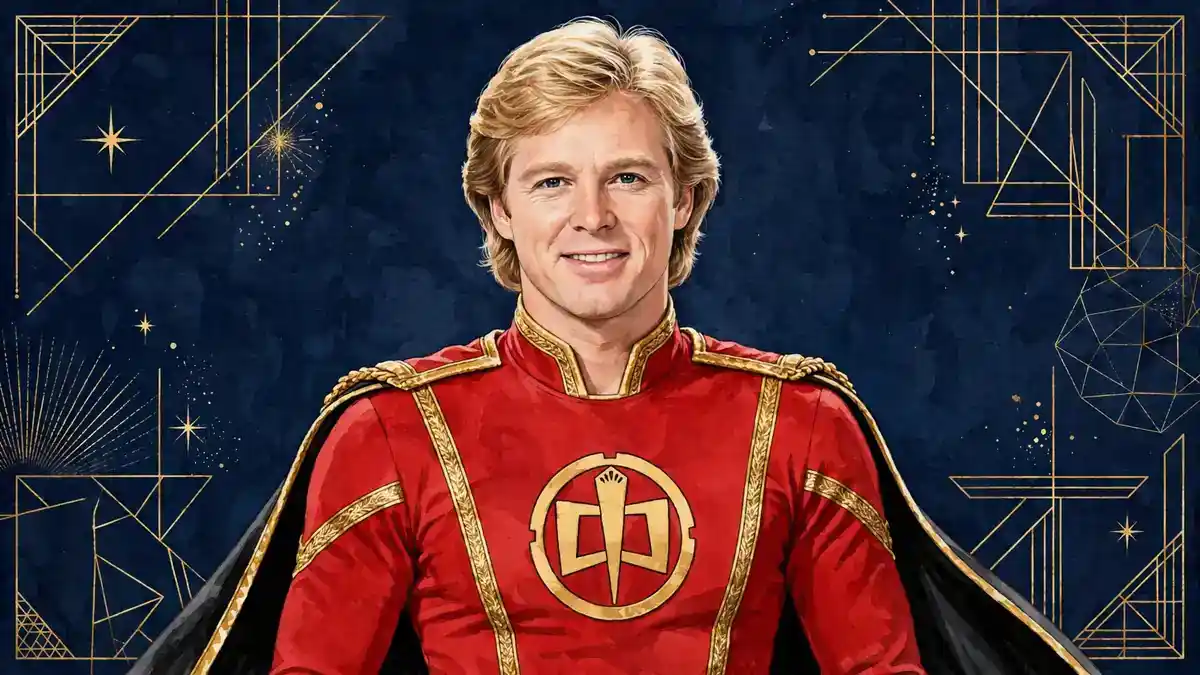
In 1981 Katt took the role that would define him. The Greatest American Hero, created by Stephen J. Cannell for ABC, cast him as Ralph Hinkley, a mild-mannered Los Angeles schoolteacher who is handed a red superpowered suit by aliens — and promptly loses the instruction manual. The premise was a comedy, and Katt played it straight, which is why it worked: a reluctant hero who could fly but could not land, partnered with FBI agent Bill Maxwell (Robert Culp) and lawyer Pam Davidson (Connie Sellecca). The show ran for three seasons, from 1981 to 1983, producing more than 40 episodes, and its theme song, “Believe It or Not” by Joey Scarbury, reached No. 2 on the Billboard Hot 100 — a piece of music trivia that still earns the show mentions in pop-culture roundups.
The same year the show premiered, Katt filmed the title role in a television production of the Broadway musical Pippin for Canadian network CTV, a reminder that his stage and music background was never far away. And in 1982, with the first season of The Greatest American Hero a hit, he signed to MCA and released Secret Smiles as Billy Katt — a soft-rock album that sold modestly and is now a collector’s item rather than a revenue stream. The album matters less for what it earned than for what it shows about how Katt approached his career: when a door opened, he walked through it, even if it led somewhere unexpected.
After the show was cancelled in 1983, Katt worked constantly but without another long-running hit. Baby: Secret of the Lost Legend (1985) was a family adventure film. House (1986) became a cult horror-comedy that grossed about $19 million at the domestic box office and spawned sequels Katt did not appear in. Between 1985 and 1988 he starred in nine Perry Mason television films as Paul Drake Jr., the son of the original series’ private detective, working alongside his mother Barbara Hale. Those nine films were the financial backbone of the decade for him: network television movies paid reliably, shot on a schedule, and kept him visible to casting directors.
The 1990s and 2000s settled into the pattern of a veteran character actor. Katt took supporting film roles, guest spots on television, and a growing amount of voice work — including appearances in Andromeda and voice roles tied to Justice League — plus a 2006 episode of the medical drama House and a brief appearance in season 3 of Heroes. His film credits from this stretch include the award-winning independent science-fiction film The Man from Earth (2007), Gamers (2006) and Alien vs Hunter (2007). He also moved behind the camera, directing independent features including The Clean and Narrow and River’s End. Directing pays on a different scale from acting — usually a flat fee rather than a per-episode rate — and for a working actor it is also a way to keep earning when the acting offers slow down.
Katt never stopped, and that is the point. The Movie Database (TMDB) credits him with 127 known acting credits across film and television, a total that spans from 1970 to a 2026 appearance on NCIS. In that episode, “Like and Subscribe,” Katt plays a doctor at a hospital where a character visits a pediatric cancer ward dressed in a Greatest American Hero costume to entertain the children — and Katt’s character escorts him to the ward after complimenting him on the suit. It is a small, self-aware piece of casting, the kind of wink a show gives a veteran actor whose best-known role is part of the audience’s shared memory.
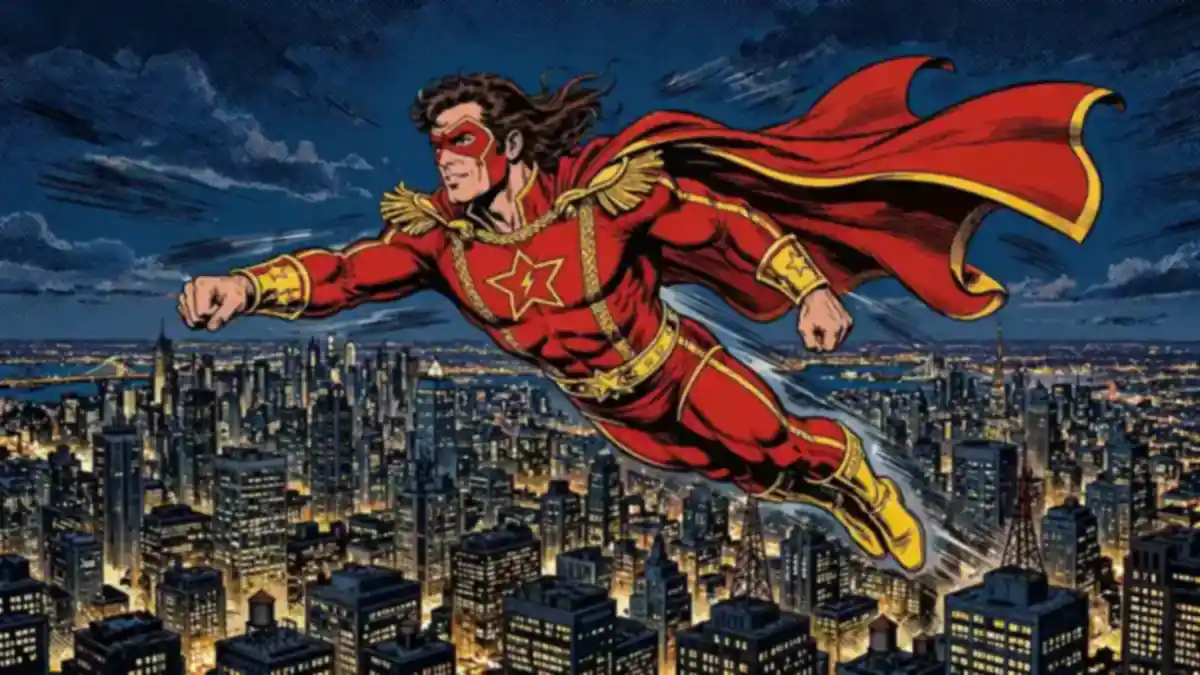
The other thread running through the later career is comics. In 2008 it was announced that Katt was writing a Greatest American Hero comic-book series for his own publishing company, Catastrophic Comics, with Arcana Studios; the three-issue miniseries debuted later that year, retelling the pilot episode in the present day. Katt also stayed involved with the show’s Facebook community. That comic-book thread is what exploded in 2026, when AMP Comics acquired the publishing rights and announced a new five-issue miniseries with Katt as executive producer — covered in the Business section below.
Rise to Fame
Katt’s rise happened in two steps, and the second one mattered more than the first. Carrie made him known in 1976: a handsome young actor in a hit horror film, standing next to Sissy Spacek and John Travolta at the moment both of them became stars. But Carrie was an ensemble, and Katt’s character dies at the prom. Fame, for him, arrived five years later, when The Greatest American Hero put his face on television every week and his name above the title.
The show’s success was real but brief. Three seasons is a respectable run — long enough to build a fan base, too short to reach the roughly 100-episode threshold that traditionally unlocked the richest daily-syndication deals. That structural fact shaped Katt’s finances for decades. A show that runs five or six seasons can pay its stars for years through residuals; a three-season show pays residuals too, but the checks are smaller and the syndication afterlife is thinner. Katt has spoken in interviews over the years about the show with obvious affection, and the fan conventions and comic projects that followed suggest he understood early that the role was an asset he could keep working — through appearances, signings, writing and now executive producing — rather than a paycheck that ended in 1983.
The Star Wars audition is the other piece of the fame story, and it is worth telling straight: Katt screen-tested for Luke Skywalker in December 1975, and the footage survives in documentaries. He did not get the part. What he got instead was Carrie, and then the red suit. Careers are built from the roles you land, not the ones you miss, and Katt’s two defining roles both came within five years of that audition. The near-miss is trivia; the work is the story.
Fame for Katt also came with a specific shape: he was a heartthrob who aged into a character actor without ever having a scandal or a flameout. There is no comeback narrative here because there was no collapse. He worked through the 1990s and 2000s in smaller parts, directed, wrote, did voice work, and showed up at conventions. In 2005 he was nominated for a TV Land Award in the Favorite Airborne Character category for The Greatest American Hero — a novelty nomination, but also a sign that the show’s audience had not forgotten him twenty-two years after it ended. That durability is the financial story in miniature: a modest fortune built on longevity, not on one big payday.
The 2026 revival is the latest chapter. When AMP Comics announced the new series in September 2025, with Katt executive producing and reprising Ralph Hinkley in comic form, the story was picked up by Graphic Policy, Comic Book Club and Bleeding Cool — trade and fan press that does not cover every nostalgia project. The creative team includes Tawnia McKiernan, daughter of the show’s late creator Stephen J. Cannell, co-breaking the story with AMP chief executive Don Handfield, who writes the initial arc. A 45th-anniversary graphic novel crowdfunding campaign launched on November 5, 2026, hit its $40,000 goal within four hours, and had raised more than $78,000 from backers by November 7, according to Comic Watch — with signed editions by Katt among the higher-priced rewards. At 75, Katt is not coasting on the role. He is still monetizing it, in a format that did not exist when the show aired.
Main Sources of Income
Katt’s income has always come from several streams at once, and the mix has shifted as his career moved through its phases. No single source dominates, which is exactly why the total is modest: he never had one windfall, and he never had a long stretch with nothing coming in either.
Acting fees — film and television. This is the foundation. From Carrie in 1976 through the Perry Mason films of the late 1980s and into the guest spots and supporting roles of the 2000s and 2020s, Katt has been paid to act for more than five decades. The fees themselves are private — no contract, pay stub or studio filing for Katt has ever become public — so any specific per-film or per-episode number you see on a fan site is a guess. What is documented is the volume: 127 credited roles on TMDB, three seasons as a network television lead, nine television films in a prestige franchise, and a filmography that never has a gap longer than a couple of years.
Residuals and royalties. The Greatest American Hero still airs in reruns and streams, and Carrie is rewatched every Halloween. Residuals from a three-season network show are real money but not life-changing money, and they shrink over time as the reuse fees step down. The show’s theme song, “Believe It or Not,” is a separate royalty stream — but it belongs to its writers and performers, not to Katt. His music royalty comes from Secret Smiles, the 1982 MCA album, which generates little today beyond collector sales.
Voice work. Katt branched into voice acting as on-camera leading roles thinned out, including work connected to Justice League and appearances in genre animation and audio projects. Voice sessions pay by the session and the role, and for a veteran actor they are efficient income: a day in a booth instead of a week on location. Katt has also narrated and performed in audiobook projects tied to his genre work.
Directing. His directing credits on independent features such as The Clean and Narrow and River’s End represent a second career track. Independent directing fees are far below studio rates, but they come with something acting does not: control over the project and, sometimes, a producer’s share. There is no public record of what Katt earned directing, and we do not estimate one.
Writing and comics. Katt wrote the 2008 Greatest American Hero comic miniseries for Catastrophic Comics and Arcana Studios, and in 2026 he is executive producer of the AMP Comics revival, with a 45th-anniversary graphic novel crowdfunding campaign running through December 5, 2026. Executive-producer credits on licensed comics typically pay a fee plus a share of defined revenues; the crowdfunding campaign’s higher tiers include items signed by Katt, which is direct income from his signature and his name. The campaign passed $78,000 against a $40,000 goal within two days of launch, according to Comic Watch — gross campaign revenue, not Katt’s personal cut, but evidence that the property still sells.
Conventions and appearances. Katt appears at fan conventions and comic-shop events — for example, signing the Free Comic Book Day 2026 edition of The Greatest American Hero at Golden Apple Comics in Los Angeles alongside AMP chief executive Don Handfield, as reported by Bleeding Cool. Convention appearances pay appearance fees plus signing income, and for actors whose best-known work is decades old, they are one of the most reliable income streams in the business.
Music. The Secret Smiles album and his early career as a musician never became a major income source, and Katt has never toured as a recording artist in the way some actor-musicians do. Music sits in his portfolio as a small, occasional stream — licensing, collector sales, and the odd performance — rather than a pillar.
Salary and Earnings
Here is the honest answer to the question every reader asks: no public record of William Katt’s salary for any role exists. No studio filing, no leaked contract, no verified interview has ever put a number on what he earned per episode of The Greatest American Hero, per film in the Perry Mason series, or for Carrie. Any website that prints a specific salary for Katt is inventing it, and this article will not repeat those inventions.
What can be said with confidence is about the structure of the money. Television leads in the early 1980s were paid per episode on contracts that rose with each season, and a three-season network lead earned a solid professional living — enough to buy a house and raise a family in Los Angeles, not enough to retire on. The real money in television then, as now, came from what happened after the show ended: syndication and residuals. Because The Greatest American Hero ran only three seasons and produced just over 40 episodes, it never reached the episode count that made daily syndication lucrative, so the residual stream was thinner than it would have been for a five-season hit. That is a structural fact about the show, not a guess about Katt’s bank account, and it explains why his net worth sits where it does rather than an order of magnitude higher.
The Perry Mason television films worked differently. Nine films over three years, on a network franchise, meant nine separate fees for a regular cast member — the closest thing to a salary in Katt’s career, and the steadiest income he ever had. Working alongside his mother on those films was a personal pleasure; financially, it was also the most reliable stretch of his working life.
Film work paid in lumps. Carrie was a low-budget film that became a hit, but actors on low-budget horror films in the 1970s were paid flat fees, not profit shares — the backend belonged to the producers. House (1986), which grossed about $19 million domestically, worked the same way. Katt’s name helped sell both films; his paycheck reflected the fee negotiated before anyone knew they would be hits.
Later career earnings look different again: guest spots pay a day rate or a weekly rate set by union scale plus negotiated bumps; voice sessions pay per session; directing fees are negotiated per project; convention appearances pay a flat appearance fee plus per-signature income. None of these numbers is public for Katt. The pattern they form is clear, though — a working actor’s income, spread across many small payments over fifty years, rather than a few large ones.
One comparison puts the scale in perspective. Mel Gibson, a contemporary who became one of the highest-paid actors in the world and then a director of self-financed blockbusters, is worth an estimated $425 million according to Celebrity Net Worth, as reported by Parade. Jack Nicholson, whose 1989 Batman deal alone eventually paid him an estimated $60 million to $90 million, sits at about $400 million. Those fortunes were built on backend points, profit participation and ownership — the deal structures Katt never had. His career was built on fees, and fees, however steady, do not compound into hundreds of millions.
Businesses and Investments
Katt has never been a businessman in the way some actors are. There is no production company with a slate of films, no restaurant chain, no tequila brand, no real-estate empire attached to his name — and that absence is itself informative. The celebrities who turn acting fame into nine-figure fortunes almost always do it through ownership: a company, a franchise, a product. Katt’s business activity has stayed close to his craft.
His one clear business venture is Catastrophic Comics, the publishing company through which he wrote and released the Greatest American Hero comic-book miniseries in 2008 with Arcana Studios. It was a small, creator-driven operation, not a commercial publisher, and it existed to keep the property alive rather than to generate large profits. The 2026 AMP Comics revival is a bigger commercial operation — a five-issue miniseries, a 45th-anniversary graphic novel, a Kickstarter campaign that cleared its goal in four hours — but Katt’s role there is executive producer and licensor of his likeness and the character, not owner of the publishing company. AMP Comics is Don Handfield’s company; Katt is a partner in the creative sense, not the corporate one.
On investments, there is nothing to report — and that is the report. No property portfolio has been documented in public records reporting, no stock holdings, no startup stakes, no endorsement equity. Katt has never been the subject of a business-profile interview in the financial press, and no rich list has ever tracked his assets beyond the headline net-worth estimate. That does not mean he has no investments; it means none are public, and this article will not invent any. The estimate in this article rests on his career earnings and the published tracker figures, not on a guessed portfolio.
The contrast with his peers is instructive. Richard Dreyfuss, another 1970s leading man whose career followed a similar arc of early stardom and long character work, is also estimated at about $5 million by Celebrity Net Worth — a modest figure for an Oscar winner, and a reminder that even the most respected actors of that generation often ended up with working-actor fortunes rather than mogul fortunes. The generation that came of age in the 1970s was paid before the era of giant backend deals and brand empires, and most of them, Katt included, kept working because they had to and because they loved it.
Brand Deals and Sponsorships
There are no documented brand deals or sponsorships in William Katt’s career. He has never fronted a national advertising campaign, never been the face of a product line, and never lent his name to a licensed consumer brand beyond the Greatest American Hero merchandise tied to the show itself — the comic books, the convention exclusives, the signed editions. That is not unusual for an actor of his profile: brand deals go to stars with large, young, measurable audiences, and Katt’s audience has always been a nostalgia audience — loyal, but not the demographic advertisers pay a premium to reach.
What he does have is a licensing asset: the character of Ralph Hinkley. The 2026 AMP Comics series, the 45th-anniversary graphic novel, the convention signings and the Free Comic Book Day appearances all monetize that character, and Katt’s participation as executive producer is the closest thing in his career to a brand partnership. It is a partnership with a publisher, not a consumer brand, and it pays in fees and revenue shares rather than endorsement checks.
Readers sometimes confuse Katt with the comedian Katt Williams — a different person entirely, with a different career, a different fortune (Celebrity Net Worth puts Williams at about $20 million) and a very different public profile. The confusion is understandable given the similar names, and it is one reason some low-quality sites publish inflated figures for William Katt: they merge two people into one. This article is about William Theodore Katt, born 1951, star of The Greatest American Hero. Katt Williams is not discussed further here except to prevent that mix-up.
Houses, Cars and Other Assets
No public record documents William Katt’s home, cars or other major assets. Property records for private individuals are not routinely published, and Katt has never been the subject of a real-estate feature, a “celebrity homes” profile, or a publicized purchase or sale. This section is short because the evidence is short, and padding it with guesses would mislead readers.
What is known is circumstantial but consistent with a modest fortune. Katt has lived and worked in the Los Angeles area for his entire career — he was born there, grew up in the San Fernando Valley, and his convention and comic-shop appearances in 2026 were in Los Angeles. A working actor with five decades of steady employment in Los Angeles typically owns a home there, and Los Angeles property has appreciated enormously over that period, but without a documented address, purchase price or sale, no figure can be attached to it. We do not estimate one.
The same honesty applies to cars. Katt has never been photographed with a notable car collection, never discussed vehicles in interviews that made it into print, and never appeared in automotive press. There is no evidence of a collection, and no reason to invent one. The assets that matter to Katt’s net worth are his career earnings, his residuals, and the ongoing value of the Greatest American Hero character — not a garage.
One asset does deserve a note: the character itself. Ralph Hinkley is intellectual property with a 45-year commercial life — a television series, a theme song, comic books in 2008 and 2026, a crowdfunding campaign, convention merchandise. Katt’s association with the character is the most durable asset he owns, and the 2026 revival shows it still generates income. It is not the kind of asset that appears on a balance sheet, but for a working actor it is the closest thing to one.
Awards and Achievements
Katt’s awards shelf is thin, and that is part of the story. He was nominated for a TV Land Award in 2005 in the Favorite Airborne Character category for The Greatest American Hero — a fan-voted nostalgia award, not an industry honor, but a genuine marker that the audience remembered him more than two decades after the show ended. He has no Oscar, Emmy or Golden Globe nomination, and no major critics’ award.
The achievements that matter are measured differently. Starring in Carrie, one of the most influential horror films ever made, is a credit most actors would trade awards for. Carrying a network television series for three seasons as the title character is another. Playing the Sundance Kid in a prequel to one of the most beloved westerns of all time is a third. And working steadily for more than fifty years — 127 credits on TMDB, from 1970 to a 2026 NCIS appearance — is an achievement in an industry where most careers last five years.
The 2026 comic-book revival is the latest achievement, and it is arguably the most interesting one. At 75, Katt is executive producing a new version of the character that made him famous, working with the daughter of the show’s creator and a publisher that sought him out. The 45th-anniversary graphic novel campaign cleared its $40,000 goal within four hours of launching on November 5, 2026, and had raised over $78,000 by November 7, according to Comic Watch. That is not an award, but it is a vote — by paying customers, in real time — that the work still matters.
Net Worth Growth Over the Years
There is no year-by-year public record of Katt’s wealth, so the table below tracks what is actually documented: the career phases that built the fortune, and the two published estimates that anchor it. Any site that prints a precise net worth for Katt in 1985 or 1998 is fabricating numbers, and this article does not do that.
| Period | What happened financially | Published estimate |
|---|---|---|
| 1976–1979 | Film breakout: Carrie, First Love, Big Wednesday, Butch and Sundance: The Early Days — flat film fees, no backend participation | Not published |
| 1981–1983 | Network television lead on The Greatest American Hero — per-episode fees for three seasons, plus the Secret Smiles album (MCA, 1982) | Not published |
| 1985–1988 | Nine Perry Mason television films — the steadiest income stretch of his career | Not published |
| 1990s–2000s | Supporting roles, guest spots, voice work, directing; income spread across many small payments | Not published |
| 2008–2009 | Greatest American Hero comic miniseries (Catastrophic Comics / Arcana Studios) | Not published |
| September 2021 | WealthyPersons updates its Katt profile | $800,000 |
| January 2026 | Celebrity Net Worth updates its Katt page | $500,000 |
| November 2026 | AMP Comics revival and 45th-anniversary graphic novel campaign under way | $500,000–$800,000 (our range) |
The shape of that table is the story: a fortune built slowly, in fees, over fifty years — not a spike. Katt’s net worth has probably never swung wildly in either direction. He never had a $20 million year, and he never had a bankruptcy or a public financial collapse. The range we publish, $500,000 to $800,000, reflects the two published estimates and the reality that a working actor’s wealth sits mostly in a home, savings and residuals that no outsider can audit.
How Katt compares with his peers. The table below puts Katt beside four contemporaries whose profiles we also cover, using Celebrity Net Worth estimates as reported in 2026. The gap is the point: all five men were leading men in the same era, but only the ones who owned a piece of their biggest hits — through backend deals, directing profits or production companies — built nine-figure fortunes.
| Actor | Breakout era | Estimated net worth (Celebrity Net Worth, 2026) |
|---|---|---|
| William Katt | Carrie (1976); The Greatest American Hero (1981–83) | $500,000–$800,000 |
| Mel Gibson | Mad Max (1979); Lethal Weapon (1987) | $425 million |
| Jack Nicholson | One Flew Over the Cuckoo’s Nest (1975); Batman (1989) | $400 million |
| Richard Dreyfuss | Jaws (1975); The Goodbye Girl (1977) | $5 million |
| Burt Reynolds | Deliverance (1972); Smokey and the Bandit (1977) | About $5 million at his death in 2018 |
Dreyfuss is the most telling comparison. An Oscar winner with a career as long as Katt’s, he is estimated at about $5 million — ten times Katt’s figure, but still a working actor’s fortune rather than a mogul’s. Gibson and Nicholson, by contrast, are the exceptions that prove the rule: Gibson self-financed The Passion of the Christ, which grossed more than $600 million worldwide on a $30 million budget, and Nicholson took profit participation on Batman instead of a flat fee. Those are ownership decisions. Katt’s career was built on fees, and the table shows what that difference is worth over fifty years.
Social Media Presence
William Katt keeps a low profile online, and there is no verified personal Instagram, X or TikTok account with a large following attached to his name. What exists is the community around the show: Katt has written a Greatest American Hero comic book and contributes to the series’ Facebook page, where fans of the show gather. That is where he talks to his audience — not through a personal brand account, but through the property that connects him to them.
This matters for the net-worth picture in a small but real way. Modern celebrities monetize social followings directly — sponsored posts, affiliate links, paid partnerships — and Katt has none of that income. His audience engagement runs through conventions, comic shops and the Facebook community, where the money comes from signings and merchandise rather than from a platform. It is an older model, and it fits a 75-year-old actor whose fame predates social media by decades.
Readers looking for Katt online should be careful: fan accounts and tribute pages use his name and image, and some of the net-worth figures circulating on social platforms — including the $8 million to $12 million claim repeated by a 2026 blog post — come from pages that mix him up with Katt Williams or simply invent numbers. The reliable figures are the ones in this article’s Sources section, from outlets that publish their methods.
Personal Life
Katt married Deborah Kahane in 1979. They had two sons, Clayton and Emerson, before divorcing in 1992. He married Danielle Hirsch on April 10, 1993, and they remain married; they have a daughter, Dakota, and Katt is stepfather to Hirsch’s son, Andrew. Wikipedia lists three children for Katt — Clayton, Emerson and Dakota — with Andrew as a stepson.
His parents remained part of his professional life as well as his personal one. Barbara Hale, his mother, played Della Street opposite Raymond Burr’s Perry Mason for nine seasons of the original series and then returned to the role in the television films of the 1980s — the same films in which Katt played Paul Drake Jr. Working with his mother on a prestige franchise, in the roles their family was known for, was both a personal pleasure and a professional anchor.
Katt has never been a tabloid figure. There are no public scandals, no high-profile feuds, no legal troubles in the record. His marriages, his children and his Los Angeles life have stayed largely private, and the reporting that exists comes from biographical sources rather than gossip coverage. That privacy is consistent with everything else about his career: steady, professional, and uninterested in fame for its own sake.
At 75, Katt is still working — a 2026 NCIS appearance, a comic-book series as executive producer, a crowdfunding campaign with his signature on the top rewards. The personal life and the professional life have converged into the same thing: a man who has done this work for fifty-five years and shows no sign of stopping.
Sources & Reporting
How this article was built. Every money figure in this article traces to a named outlet or a primary record. Where the outlets disagree, we publish the range and name who says what. Where no figure is public — Katt’s salary for any role, his property holdings, his investments — we say so instead of estimating one. Reporting window: September 2021 (oldest estimate cited) through November 2026 (latest reporting cited).
- Celebrity Net Worth — publishes the $500,000 net-worth estimate for William Katt; page updated January 2026. Also the source for the peer figures cited (Mel Gibson $425 million, Jack Nicholson $400 million, Richard Dreyfuss $5 million) and for Katt Williams ($20 million), used here only to prevent confusion between the two men.
- TheRichest — also publishes a $500,000 estimate for Katt and confirms his birth date (February 16, 1951, Los Angeles) and his best-known role.
- Wealthy Persons — puts Katt’s net worth at $800,000 in its September 2021 update; the high end of our range. Also lists his height at 1.74 m and confirms the marriage and children details.
- Wikipedia — biography and filmography: birth and family details, Army and Navy Academy and Orange Coast College, the December 1975 Star Wars audition, Secret Smiles (MCA, 1982), nine Perry Mason films, the 2008 comic-book series, the 2005 TV Land Award nomination, and the 2026 NCIS episode “Like and Subscribe.”
- IMDb — personal details: height 5 ft 10 in (1.78 m), marriage to Danielle Hirsch since April 10, 1993, two children with her, previous marriage to Deborah Kahane.
- The Movie Database (TMDB) — 127 known acting credits, 43 episodes of The Greatest American Hero, directing credits, birth date and place.
- Parade — Mel Gibson net-worth reporting (January 2026): $425 million per Celebrity Net Worth, including the Passion of the Christ gross of more than $600 million on a $30 million budget and the $25 million salary for Signs.
- Graphic Policy — AMP Comics’ acquisition of The Greatest American Hero publishing rights and the 2026 series announcement, with Katt as executive producer and Tawnia McKiernan and Don Handfield on the creative team.
- Comic Watch — the 45th-anniversary graphic novel Kickstarter (November 7, 2026): $78,925 raised against a $40,000 goal, 27 days remaining, signed merchandise by Katt among the rewards.
- Remind Magazine — “Carrie Turns 50” (September 26, 2026): Katt’s current age (75), his role as Tommy Ross, and his executive-producer role on the AMP Comics series.
- Comic Book Club — the AMP Comics announcement (September 9, 2025): the 2026 series, Katt executive producing, the 40-aired-plus-5-unaired episode count, and the 2009 Catastrophic Comics revival.
- Bleeding Cool — Free Comic Book Day 2026: Katt signing the AMP Comics edition at Golden Apple Comics, Los Angeles, with Don Handfield.
What we did not use. A 2026 blog post claiming Katt’s net worth is $8 million to $12 million was reviewed and set aside: it names no source, contradicts both established trackers, and appears to merge Katt’s finances with those of other performers. No figure from that post appears in this article. Box-office figures for Carrie (about $33.8 million worldwide) and House (about $19 million domestic) are the figures reported by box-office trackers and are labelled as such.
Frequently Asked Questions
What is William Katt’s net worth in 2026?
William Katt’s net worth is estimated at $500,000 to $800,000 as of November 2026. Celebrity Net Worth and TheRichest both publish a $500,000 estimate, while WealthyPersons put the figure at $800,000 in its September 2021 update. We publish the range because the outlets disagree, and no salary, contract or property record for Katt is public.
Is William Katt still alive?
Yes. William Katt is alive and working at 75. In 2026 he appeared in an episode of NCIS (“Like and Subscribe”) and served as executive producer of the new Greatest American Hero comic series from AMP Comics, including a 45th-anniversary graphic novel crowdfunding campaign that launched in November 2026.
How old is William Katt?
William Katt was born on February 16, 1951, in Los Angeles, California, which makes him 75 years old as of November 2026. His parents were actors Bill Williams and Barbara Hale.
Was William Katt in Star Wars?
No — but he came close. In December 1975 Katt auditioned for the role of Luke Skywalker in Star Wars: Episode IV – A New Hope. Mark Hamill won the part, and footage of Katt’s screen test has appeared in Star Wars documentaries. Katt’s breakout came the following year instead, as Tommy Ross in Carrie (1976).
What is William Katt doing now?
In 2026 Katt is executive producing the Greatest American Hero comic revival from AMP Comics, with a five-issue miniseries and a 45th-anniversary graphic novel whose Kickstarter campaign cleared its $40,000 goal within four hours of launching on November 5, 2026. He also appeared on NCIS in 2026 and continues to appear at fan conventions and comic-shop signings.
Who is William Katt married to?
William Katt has been married to Danielle Hirsch since April 10, 1993. They have a daughter, Dakota, and Katt is stepfather to Hirsch’s son, Andrew. He was previously married to Deborah Kahane from 1979 to 1992, and they have two sons, Clayton and Emerson.
How tall is William Katt?
Published listings disagree: IMDb lists him at 5 ft 10 in (1.78 m), while other biographical sources list 5 ft 9 in (1.75 m) or 5 ft 8 in (1.74 m). A fair summary is about 5 ft 9 in, with listings ranging from 5 ft 8 in to 5 ft 10 in.
What was William Katt’s most famous role?
Ralph Hinkley in The Greatest American Hero (1981–1983), the mild-mannered teacher given a red superpowered suit by aliens. He is also widely remembered as Tommy Ross in Carrie (1976) and as Paul Drake Jr. in nine Perry Mason television films (1985–1988) alongside his mother, Barbara Hale.
Final Thoughts
William Katt’s net worth — $500,000 to $800,000 by the best published estimates — is the honest price of a particular kind of Hollywood career: fifty years of steady work, one beloved television role, one classic horror film, and no windfall. He never owned a piece of his biggest hits, never built a brand empire, and never had a backend deal like the ones that made his contemporaries rich. What he had instead was longevity, and in 2026 that longevity is paying off in a new way: the character that made him famous is selling comic books again, with his name on the masthead as executive producer and his signature on the top-tier rewards.
That is the real lesson of Katt’s finances. A three-season show from 1981 still generates income in 2026 because the audience never left, and because Katt never left the audience — through conventions, comics, and a Facebook community he tends himself. The fortune is modest. The career is not. And at 75, with a new comic series on the stands and a graphic novel campaign that funded in four hours, William Katt is still doing the thing he has done since 1970: showing up, doing the work, and letting the red suit do the rest.
Published on November 16, 2026. Last reviewed November 2026. Found an error? See our corrections policy.