
Joe Craft‘s net worth is estimated at $500 million to $1.4 billion as of November 2026. The coal executive built his fortune as president, chief executive and chairman of Alliance Resource Partners, the eastern United States coal producer he took public in 1999, and the honest range matters: the last published rich-list figure for Craft is Forbes’ $1.4 billion from 2012, while the paper value of his disclosed Alliance stake works out near $429 million at the November 20, 2026 unit price — with roughly $45 million a year in cash distributions on top.
Joe Craft: Quick Facts
| Estimated net worth | $500 million–$1.4 billion (range: $500 million to $1.4 billion) |
|---|---|
| Profession | Coal executive — Chairman, President and CEO, Alliance Resource Partners, L.P. |
| Nationality | American |
| Born | October 13, 1950, Hazard, Kentucky (age 76) |
| Height | Not publicly reported |
| Primary income sources | Alliance Resource Partners unit distributions, Alliance equity stake, general-partner interests |
| Active years | 1976–present |
| Last reviewed | November 2026 |
- Quick Facts
- Early Life and Background
- Education
- Career Journey
- Rise to Fame
- Main Sources of Income
- Salary and Earnings
- Businesses and Investments
- Brand Deals and Sponsorships
- Houses, Cars and Other Assets
- Awards and Achievements
- Net Worth Growth Over the Years
- Social Media Presence
- Personal Life
- Sources & Reporting
- Frequently Asked Questions
- Final Thoughts
- Related Profiles
Early Life and Background
Joseph W. Craft III was born on October 13, 1950, in Hazard, Kentucky, a coal town in the Appalachian east of the state. He grew up while the local coal industry was in a down period, a slump he later described in an interview with the University of Kentucky student newspaper, the Kentucky Kernel. The turnaround in his young life tracked a national one: when President Lyndon B. Johnson declared a War on Poverty, money and attention flowed into eastern Kentucky, and in the 1970s an energy crisis pushed American energy policy back toward coal, opening jobs across the region.
Hazard shaped Craft in two ways that still show in his public record. The first is loyalty to place: decades later he put $1 million into a new wing of the Hazard ARH Regional Medical Center, the Joe Craft Tower, which opened in 2014. The second is a habit of staying close to the University of Kentucky, the school that educated him and later became the largest single beneficiary of his giving. Craft finished high school in Hazard in 1968 and left for Lexington, but he never really left Kentucky behind — even after building his career in Tulsa, Oklahoma, he kept a home base, a boardroom presence and a donor footprint in his home state.
One detail worth clearing up early: a cluster of low-quality biography sites lists Craft’s birthday as June 14, 1951. The University of Kentucky’s own records, the Kentucky Chamber of Commerce and Wikipedia all give October 13, 1950, and the 1951 date traces to content-farm pages that also get his career dates wrong. We use October 13, 1950, which makes him 76 in November 2026.
Craft’s childhood sits in sharp contrast to the boardroom figure he became. Hazard in the 1950s and 1960s was a working coal town, not a wealthy one, and the industry’s cycles — boom, bust, regulation, revival — were the town’s weather. That first-hand sense of coal as both a livelihood and a political football explains a lot about the executive he became: a lawyer by training who chose the business side, a coal advocate who argues the fuel’s case in Washington, and a donor who directs money toward Kentucky schools and hospitals rather than faraway causes.
Education
Craft earned an undergraduate degree in accounting from the University of Kentucky in 1972, then spent a year working at a certified public accounting firm before returning to Lexington for law school. He earned his Juris Doctor from the University of Kentucky College of Law in 1976. He was a member of the Sigma Alpha Epsilon fraternity as an undergraduate, and he later completed the Senior Executive Program at the Massachusetts Institute of Technology’s Sloan School of Management.
The accounting-then-law sequence is the hinge of his whole career. In the Kentucky Kernel interview, Craft recalled facing a choice after law school between practising as a tax attorney and going into business. He chose business, saying he would rather sell his ideas than sell his time — a line that reads as self-mythology until you check it against what happened next. Within a few years of graduating he was general counsel and chief financial officer of a Fortune 500 energy company, the youngest person to hold those posts there at the time, according to the Kernel. The law degree gave him the deal paper; the accounting degree gave him the numbers underneath it.
Kentucky has repaid the loyalty with honours. Craft was inducted into the Gatton College of Business and Economics Alumni Hall of Fame and the University of Kentucky’s Hall of Distinguished Alumni in 2010, the university’s highest recognition for graduates, and into the University of Kentucky College of Law Hall of Fame the same year. He sits on the University of Tulsa’s board of trustees, a second academic tie built after he moved his career to Oklahoma.
Career Journey
Craft began his career at Mapco Inc, a Tulsa-based pipeline company that had branched into energy, and rose fast. In 1985 he was elected senior vice president of legal and finance, and in 1986 he became head of the company’s coal division and president of Mapco Coal Inc. He had already served as the company’s general counsel and chief financial officer — a combination of legal and financial control that left him unusually well placed when Mapco decided to get out of coal a decade later.
The defining deal of his life came in 1996. Mapco sold a 75 percent stake in its coal division to the Beacon Group Energy Investment Fund, and Craft led the management buyout of the unit. The new company was called Alliance Coal LLC. Three years later, in 1999, Craft led the effort to take Alliance public as Alliance Resource Partners, L.P., and in August 1999 he became its president and chief executive. He has held the top job ever since — a 27-year run at the helm by November 2026 — and in January 2019 he added the chairmanship of the general partner’s board.
That longevity is the first thing to understand about the fortune. Craft did not get rich on a salary or a single exit. He got rich by keeping a large ownership slice of a company he helped buy, then running it as a listed partnership for more than a quarter of a century while it paid cash distributions to unitholders year after year. The buyout structure matters here: because he led the purchase rather than joining as a hired manager, his economics were owner economics from the start, and the general-partner interests he controls have kept him at the centre of the partnership’s cash flow ever since.
Along the way he collected the industry roles that come with running a major coal producer. He is a former chairman of the National Coal Council, has served on the board and executive committee of the National Mining Association, and was chairman of the Kentucky Chamber of Commerce for 2018. He has been a director of BOK Financial Corporation since April 2007 and serves on the Tulsa Community Foundation board. None of these posts pays anything like Alliance distributions, but they explain his Washington access — and his willingness to spend his own money on politics, covered below.
Rise to Fame
Craft is not famous in the celebrity sense, and he has never chased the spotlight. He became nationally known in two bursts. The first came in 2012, when Forbes put him on its billionaires list at $1.4 billion and the Lexington Herald-Leader called him “Kentucky’s most powerful non-elected individual” — a profile of wealth, University of Kentucky influence and political reach that has defined press coverage of him ever since. The second came in 2017–2019, when his wife Kelly Craft was appointed ambassador to Canada and then to the United Nations, putting the couple’s combined wealth and Republican donor history under a brighter light.
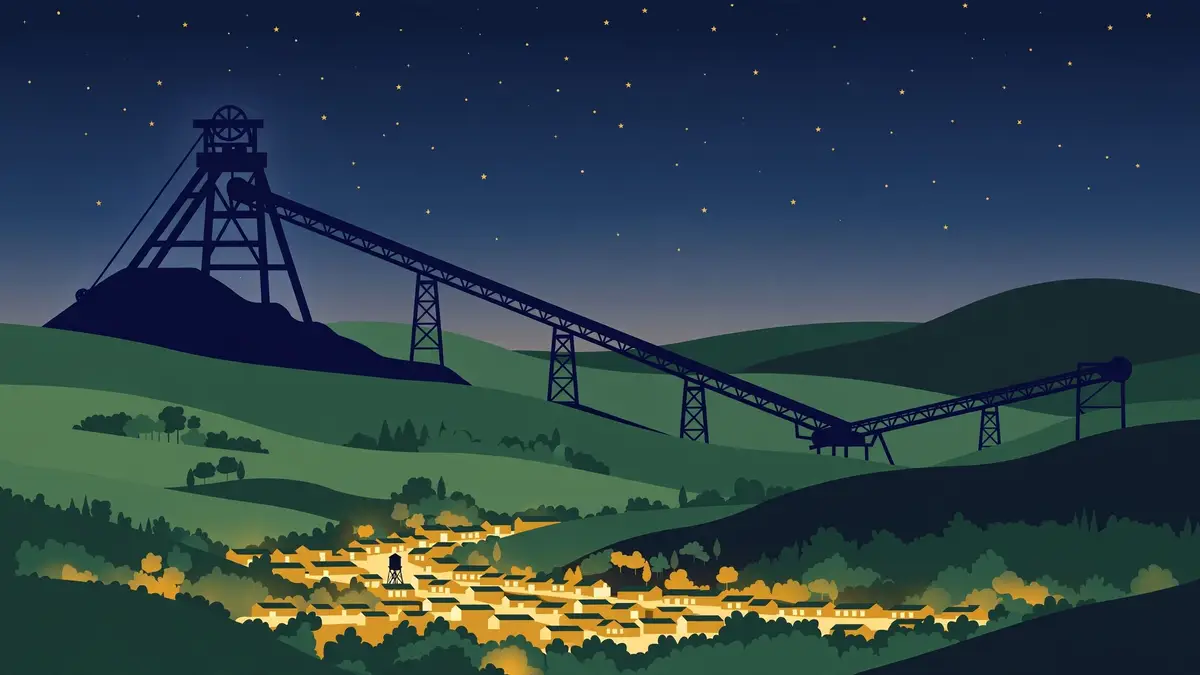
The business behind the profile is substantial. Alliance Resource Partners describes itself as a diversified natural resource company, and its 2024 annual report shows why: seven underground mining complexes across Illinois, Indiana, Kentucky, Maryland, Pennsylvania and West Virginia produced 32.2 million tons of coal in 2024 — 24.2 million tons from the Illinois Basin and 8.0 million from Appalachia — and the company sold 33.3 million tons. It also produced 1,501 thousand barrels of oil, 6,304 million cubic feet of natural gas and 850 thousand barrels of natural gas liquids that year from its royalty acreage. Wikipedia and company materials call Alliance the third-largest coal producer in the eastern United States; the Kentucky Chamber has called it the largest coal producer in Kentucky and the second-largest in the east. Either way, it is a top-tier American coal company, not a niche operator.
The company’s recent results show a business past its peak earnings but still throwing off serious cash. Full-year 2024 total revenue was $2.45 billion with net income attributable to Alliance of $360.9 million and adjusted EBITDA of $714.2 million. Full-year 2025, reported on February 2, 2026, brought total revenue of $2.19 billion, net income of $311.2 million and adjusted EBITDA of $698.7 million — revenue down 10.4 percent on lower coal prices and transport income, partly offset by record oil and gas royalty volumes. The third quarter of 2026, reported October 26, 2026, was stronger: total revenue of $603 million, up 5.5 percent year on year, and net income attributable to Alliance of $140 million, up 46.8 percent. Guidance for 2026 points to coal sales of 34.5 to 35.5 million tons at $54.25 to $54.75 a ton. For comparison, Chevron chief Mike Wirth runs an oil major many times Alliance’s size — but Craft’s claim is different: he owns a large slice of his company outright, where Wirth is a salaried manager.
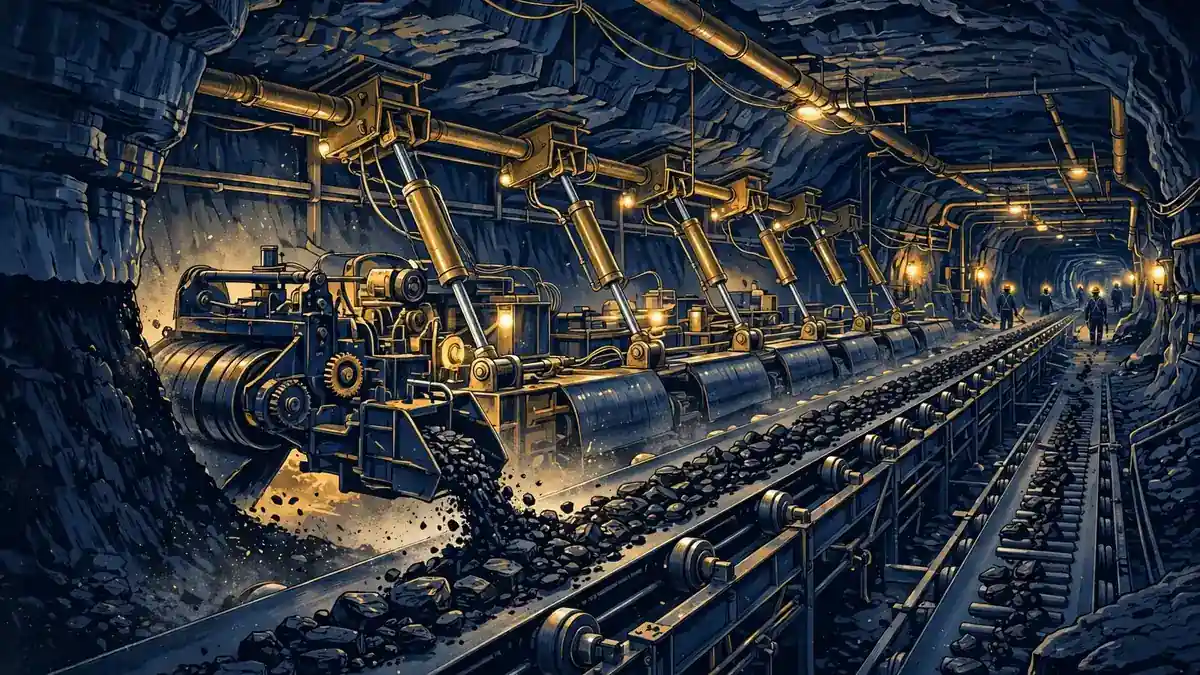
A second, quieter strand of his rise is the 2019 start of longwall mining under Interstate 70 near the West Virginia–Pennsylvania line, a project expected to run until 2038. Longwall panels of that kind are the most productive — and most capital-intensive — form of underground mining, and the project signals a company planning decades ahead in a fuel the market keeps writing off. That long horizon is characteristic of Craft: he has spent his career betting that coal demand from power generation and industry outlasts each round of obituaries.
Main Sources of Income
Almost everything Craft earns traces to one source: his ownership of Alliance Resource Partners. The partnership’s economics flow to him in two streams — the value of the units he holds, and the cash distributions those units pay. A third stream, his general-partner interests, gives him control and a share of the partnership’s incentive economics, though the filings disclose that interest in structure rather than a neat annual dollar figure, so we do not put a number on it.
The unit holding is documented in his own SEC filings. A Form 4 filed in December 2024 shows Craft beneficially owning 18,631,398 Alliance common units directly, plus 2,000 units held by a son and 168,602 units held through his spouse — roughly 18.8 million units in total. Against 128.66 million units outstanding, that is about 14.6 percent of the company, a figure Simply Wall St independently reports at 14.61 percent. At the November 20, 2026 closing price of $22.81 a unit, the direct holding alone is worth about $425 million; the full 18.8 million units come to roughly $429 million. At the 52-week high of $29.45 reached on March 27, 2026, the same holding was worth about $554 million — a $125 million swing on price alone, which is why a single-point estimate for Craft would be false precision.
The distributions are the steadier stream, and for Craft they function as salary. Alliance declared a quarterly cash distribution of $0.70 per unit in early 2025 and $0.60 per unit on January 27, 2026, an annualised $2.40 per unit. On roughly 18.8 million units, that annualises to about $45 million a year in gross cash before tax — paid every quarter, in cash, regardless of the unit price. Over a decade of distributions at anything like recent rates, that stream alone runs into the hundreds of millions, which is the missing piece in any valuation that looks only at the current unit price: Craft has been collecting Alliance cash for 27 years, and much of it arrived when the unit price and distribution were higher.
The company’s other segments add colour rather than a second fortune. Oil and gas royalties brought in $138.3 million of revenue in 2024, up slightly on 2023, and coal royalties form a fourth reported segment alongside the two coal basins. Alliance also disclosed a $22.4 million increase in the fair value of its digital assets in 2024 — a company-level holding, not a personal one, but a sign of how far the partnership has diversified from pure coal. Craft’s outside board seat at BOK Financial pays a director’s fee, and his Tulsa and Lexington civic roles are unpaid. There are no disclosed outside businesses, no venture portfolio and no book or speaking fortune to add.
Salary and Earnings
Here is the fact that surprises most readers, and the one most competitor pages get wrong: Joe Craft’s reported cash salary is $1. Simply Wall St, which tracks Alliance’s filings, lists his total compensation as US$1, with a $1 salary in its management table — the classic founder-owner’s nominal salary, taken because the real pay arrives as distributions on his units. Older filings show the same philosophy in different clothing: a 2015 company profile put his 2014 total compensation at $744,656, a modest figure for a chief executive of a $2 billion-revenue company even then. Craft’s pay has never been the story. His ownership has.
That $1 salary is worth comparing with the pay of the big-company chiefs readers know. Apple chief Tim Cook and Microsoft chief Satya Nadella both earn eight-figure packages built from salary, bonus and stock awards, because they are professional managers of companies they did not found. Craft is the opposite case: a founder-owner whose annual cash comes from owning 14.6 percent of the business, not from a pay committee. On the 2026 distribution rate of $2.40 per unit annualised, his roughly 18.8 million units throw off about $45 million a year — more than most Fortune 500 chief executives’ total pay, delivered as partnership distributions rather than a pay cheque.
The tax treatment matters to the net figure, and it cuts both ways. As a master limited partnership, Alliance passes income through to unitholders, and distributions are generally treated as a return of capital up to basis rather than ordinary income — a structure that has historically let MLP owners defer tax on much of what they receive. We do not estimate Craft’s tax bill, because his basis, deductions and other income are private, but any reader comparing his $45 million distribution stream with a salaried executive’s $45 million pay package should know the two are not taxed the same way.
One more earnings fact: Craft’s phantom units under Alliance Coal’s supplemental executive retirement plan were settled in cash, not units, when the plan was terminated on December 16, 2024, according to his Form 4 — 409,246 phantom units cashed out rather than converted. The filing does not state the cash amount, so we do not guess it, but the settlement is another reminder that his compensation history includes equity awards beyond the common units he still holds.
Businesses and Investments
Alliance Resource Partners is the business, and Craft’s control of it runs through the general partner. Company filings describe him as holding majority ownership of the managing general partner and owning, directly or indirectly, the special general partner — the layered MLP structure that gives him board control and a claim on the partnership’s incentive distributions on top of his common units. When Alliance Holdings GP, the former parent partnership, still existed, Craft held a majority of its units as well; the structure has simplified since, but his position at the top of it has not changed.
That control premium is the hardest part of his wealth to value, and the reason our range is wide. The 18.8 million common units are easy to price — multiply by $22.81. The general-partner interests are not listed, not separately traded and not disclosed at a market value, so no outside observer can price them exactly. Forbes’ 2012 figure of $1.4 billion presumably captured them at a moment when Alliance’s earnings and unit price were far stronger; a valuation today that counted only the listed units would understate the total. The honest treatment is the range we publish: the listed stake sets a floor near $430 million, and the GP interests, accumulated distributions and other assets push the real total well above it, toward — but not necessarily to — the old Forbes figure.
Outside Alliance, Craft’s most visible investment role is his BOK Financial directorship, held since April 2007. BOK Financial is the Tulsa-based parent of the Bank of Oklahoma, and a long board tenure there puts him inside the region’s financial establishment rather than merely its energy business. He is also a trustee of the University of Tulsa and a director of the Tulsa Community Foundation. BlackRock chief Larry Fink is the contrast case here: an asset manager whose wealth comes from running other people’s money, where Craft’s comes from owning the asset itself. Mark Cuban offers a nearer parallel — a founder who kept a large stake and cashed out on his own timetable — though Cuban sold his company outright where Craft still holds his.
What Craft has not done is equally telling. There is no record of a venture capital portfolio, a sports-team purchase, a media investment or a second operating company. His diversification, such as it is, sits inside Alliance: oil and gas royalties, coal royalties and the digital-asset position the partnership carries on its own balance sheet. That concentration is both the strength and the risk of the fortune. When coal prices and Alliance earnings rise, as they did in 2022 and 2023 when net income hit $586 million and then $630 million, his wealth rises fast. When they fall, as in 2024 and 2025, it falls just as fast — the $125 million swing in his stake’s value between the March 2026 high and the November 2026 price is the proof.
Brand Deals and Sponsorships
Craft has no brand deals, endorsements or sponsorships, and none should be expected. He is a 76-year-old coal executive, not a public entertainer or athlete, and his public appearances are industry conferences, university events and political fundraisers — none of which carries a shoe contract. Competitor pages that fill this section with generic endorsement copy for a businessman like Craft are padding; the accurate answer is that his income comes from ownership and distributions, full stop.
The nearest thing to a commercial partnership in his record is political: the donor network he built with his wife around Kentucky and national Republican politics, including the 2016 Trump fundraiser he hosted at the Aviation Museum of Kentucky and the couple’s role as co-chairs of Governor Matt Bevin’s inaugural committee. Those are influence and access, not income, and they cost money rather than making it — more than $2 million to the Trump inaugural committee through a trust, $431,000 to Trump Victory and $750,000 to the pro-Trump Future45 PAC in 2016, on top of about $500,000 to Mitt Romney’s Restore Our Future super PAC in 2012.

Houses, Cars and Other Assets
Craft is based in Tulsa, Oklahoma, where Alliance is headquartered, and keeps deep ties — and a home — in Lexington, Kentucky. No reliable public record states the value of either residence, and we do not repeat the invented property valuations that circulate on content-farm biography sites, some of which credit the couple with a $14 billion combined fortune and a real-estate empire that no credible outlet has ever documented. What the record does show is spending, not holdings: philanthropic gifts, not property flips.
The same discipline applies to cars, aircraft and art. No verified reporting lists a Craft car collection, a private jet or an art holding, and Kentucky reporting on the couple has never documented one. A net worth article that invents a garage to fill space would fail the accuracy test this site sets, so this section stays short on purpose: the assets that matter are the 18.8 million Alliance units, the general-partner interests and the cash those holdings have thrown off for 27 years. Everything else is unreported, and unreported means unstated.
Awards and Achievements
Craft’s honours list reads like a map of his two home states. He was inducted into the Tulsa Hall of Fame in 2007, named the Ernst & Young Entrepreneur of the Year for the Southwest Region in the energy, chemical and mining category in 2008, and inducted into the University of Tulsa’s Collins College of Business Hall of Fame in 2009. In 2010 came a double Kentucky honour: the Gatton College of Business and Economics Alumni Hall of Fame and the University of Kentucky Hall of Distinguished Alumni, plus induction into the University of Kentucky College of Law Hall of Fame. In 2018 he entered the Kentucky Entrepreneur Hall of Fame, and in 2017 he was elected chairman of the Kentucky Chamber of Commerce for 2018.
The business achievement behind the plaques is the 1996 buyout and the 1999 listing. Taking a division of a pipeline company, buying it with a private-equity partner, and turning it into a listed partnership that still operates seven mining complexes 27 years later is a rarer feat than it sounds — most coal companies of that era merged, failed or were taken private. Alliance survived the 2020 loss year, when it posted a $129 million net loss, and came back to $630 million of net income in 2023. Survival across coal’s cycles, under the same chief executive, is the achievement the awards recognise.
His philanthropic record belongs in this section too, because the scale is part of the wealth story. With his wife Kelly he co-founded the Craft Academy for Excellence in Science and Mathematics at Morehead State University in 2015, committing more than $10 million to it by 2019. His $6 million pledge completed the Joe Craft Center, Kentucky’s basketball practice facility, the largest private gift in UK Athletics history at the time. He gave $4.5 million toward the Wildcat Coal Lodge for the men’s basketball team and later organised a donor group behind a $7 million replacement lodge project. In 2014 he donated $5 million to A Gathering Place for Tulsa, the riverfront park, and $1 million to the Hazard ARH hospital wing that bears his name. In 2016 he gave $4.8 million for the building that houses Kentucky football’s day-to-day operations, and in 2022 he gave $7.5 million to renovate the football team’s indoor practice facility. In 2019 he gave $3 million to the Institute for the Study of Free Enterprise in Kentucky’s Gatton College. The couple have taken the Giving Pledge, promising to give the vast majority of their resources to philanthropic causes.
Net Worth Growth Over the Years
No annual rich-list series exists for Craft after 2012, so the honest growth table is built from the company’s own numbers and the stake maths that flows from them — not from invented yearly net worth figures. The table below shows what is documented, and the text beneath it explains what it means for his fortune.
| Year | Documented figure | What it meant for Craft |
|---|---|---|
| 1996 | Management buyout of Mapco coal division; Alliance Coal LLC formed | Craft becomes an owner, not a manager |
| 1999 | Alliance Resource Partners lists; Craft becomes president and CEO | Stake gains a public market value |
| 2012 | Forbes values Craft at $1.4 billion | Only published rich-list valuation; peak-era figure |
| 2020 | Alliance revenue $1.33 billion; net loss $129 million | Pandemic trough; stake value depressed |
| 2022 | Alliance net income $586 million | Coal-price recovery rebuilds the stake |
| 2023 | Alliance revenue $2.57 billion; net income $630 million | Best recent earnings year |
| 2024 | Revenue $2.45 billion; net income $360.9 million; 32.2m tons produced | Earnings fall 43 percent; distributions continue at $0.70 a quarter |
| 2025 | Revenue $2.19 billion; net income $311.2 million; adj. EBITDA $698.7 million | Second down year; distribution cut to $0.60 a quarter |
| Mar 2026 | ARLP 52-week high $29.45; stake ≈ $554 million | High-water mark for the listed holding |
| Nov 2026 | ARLP $22.81; stake ≈ $429 million; Q3 net income $140 million | Current anchor for the range |
Read the table as a story of a fortune tied to a commodity cycle. The 2012 Forbes figure captured Craft at a moment when coal equities were strong and Alliance was earning well. The 2020 loss year would have cut the stake’s value sharply. The 2022–2023 recovery rebuilt it. The 2024–2025 earnings slide — net income down from $630 million to $311 million in two years — pulled it back again, and the distribution cut from $0.70 to $0.60 a quarter in January 2026 trimmed his annual cash from about $53 million to about $45 million. A reader who sees only the $1.4 billion headline misses all of that movement; a reader who sees only today’s $429 million stake misses the decades of distributions and the unlisted general-partner value. The $500 million to $1.4 billion range holds both truths at once.
For scale, the partnership itself was worth about $2.97 billion at the November 20, 2026 unit price — Craft’s 14.6 percent is the largest single disclosed holding, and no other individual comes close to his economic interest in the company. That concentration is the point: his net worth is Alliance, and Alliance’s market value is the best real-time proxy for it.
Social Media Presence
Craft keeps no verified personal social media presence. There is no public X, Instagram or Facebook account in his name used for business or personal posts, and Alliance Resource Partners communicates with investors through SEC filings, press releases and earnings calls rather than a chief executive’s feed. That absence is normal for a 76-year-old industrial chief executive and a useful filter for readers: accounts claiming to be Joe Craft on social platforms are not verified, and quotes attributed to him there should not be trusted without a named primary source.
The company’s investor-relations channel is the practical substitute. Alliance’s quarterly results, distribution announcements and annual 10-K filings are the public record of the business — and, by extension, of the fortune — and they are published on a schedule no social feed can match for reliability.
Personal Life
Craft married Kelly Knight Craft on April 29, 2016. Kelly Craft, a Lexington businesswoman who runs the advisory firm Kelly G. Knight LLC, served as United States ambassador to Canada from 2017 to 2019 and as ambassador to the United Nations from 2019 to 2021, both appointments by President Donald Trump. Both had been married before: Craft was divorced from his first wife, Kathy, in 2011, according to Forbes, and has three children from that marriage; Kelly Craft has two daughters, Mia and Jane, from earlier marriages. Together the couple have a blended family of six children and, as of 2018, eleven grandchildren.
Politics runs through the personal story, and the record is more mixed than the usual partisan shorthand suggests. The Lexington Herald-Leader reported that between 2008 and 2019 Craft gave more money to Democratic candidates at Kentucky state level than to Republican candidates — a reminder that a Kentucky coal operator’s state politics are pragmatic. Nationally, the giving tilts the other way and is far larger: about $500,000 to Mitt Romney’s super PAC in 2012, then the 2016 Trump support — a private fundraiser at the Aviation Museum of Kentucky in July 2016, $431,000 to Trump Victory, $750,000 to Future45, and more than $2 million through a trust to the Trump inaugural committee. The New York Times also reported that Craft lobbied Trump administration officials at the Environmental Protection Agency to roll back the Clean Power Plan’s emissions limits — the clearest example of his business interest and his political spending pointing the same way.
The couple’s shared public project is philanthropy rather than politics. The Craft Academy at Morehead State, the Kentucky athletics gifts and the Tulsa park donation are joint commitments, made in both names, and the Giving Pledge the couple signed commits the vast majority of their resources to charitable causes focused on individual responsibility, economic freedom and reducing poverty. Whatever the final size of the fortune, a large share of it is already promised away — which is one more reason a net worth figure for Craft should be read as a snapshot of assets under his control, not a sum he intends to keep.
Daymond John built his fortune from a fashion label started in Queens; Craft built his from a coal division bought out of a pipeline company. The paths could hardly differ more, but the lesson is the same one this site keeps finding: the durable fortunes belong to owners, not employees. Joe Manchin, the former West Virginia senator from coal country, is the political mirror image — a coal-state politician whose career ran parallel to Craft’s business in the same mountains.
Sources & Reporting
Every figure in this article traces to a named source. Forbes supplied the only published rich-list valuation — $1.4 billion in 2012 — and the detail that Craft was divorced from his first wife, Kathy, in 2011. The U.S. Securities and Exchange Commission EDGAR database supplied the December 2024 Form 4 showing 18,631,398 directly held Alliance common units, the phantom-unit cash settlement, and the general-partner ownership structure, plus Alliance’s 2024 10-K figures for production, revenue and segment results. Business Wire carried Alliance’s February 2026 press release with full-year 2025 revenue of $2.19 billion, net income of $311.2 million and the $0.60 quarterly distribution. The Lexington Herald-Leader supplied the 2013 profile calling Craft Kentucky’s most powerful non-elected individual and the reporting on his state-level political giving. The New York Times supplied the 2018 reporting on his EPA lobbying and his ties to the Trump administration. The University of Kentucky and the Kentucky Kernel supplied his education dates, the 1968 high-school graduation, the accounting and law degrees, and his own account of choosing business over tax law. Simply Wall St supplied the $1 total-compensation figure and the 14.61 percent ownership figure, cross-checked against the Form 4. Finnhub and StockAnalysis supplied the November 20, 2026 ARLP price of $22.81, the $2.97 billion market capitalisation, 128.66 million units outstanding and the 52-week range. Wikipedia was used only as a cross-check for biographical dates and the philanthropy gift list, each confirmed against the underlying Kentucky and university reporting it cites. The Giving Pledge supplied the text of the couple’s charitable commitment. Reporting window: Forbes 2012 through Alliance’s third-quarter 2026 results, October 26, 2026, and market data as of November 20, 2026.
Frequently Asked Questions
What is Joe Craft’s net worth in 2026?
Joe Craft’s net worth is estimated at $500 million to $1.4 billion as of November 2026. Forbes last valued him at $1.4 billion in 2012 and has published no update since; the paper value of his disclosed Alliance stake is about $429 million at the November 20, 2026 unit price, with general-partner interests and decades of cash distributions pushing the real total well above the listed stake alone.
How did Joe Craft make his money?
He made it in coal. After running Mapco’s coal division, he led a 1996 management buyout of the unit with the Beacon Group, forming Alliance Coal, then took Alliance Resource Partners public in 1999 and has run it as chairman, president and CEO ever since. His wealth is his roughly 14.6 percent stake in Alliance plus general-partner interests and 27 years of partnership distributions.
What is Joe Craft’s salary?
His reported cash salary is $1, according to Simply Wall St’s reading of Alliance’s filings — a nominal founder-owner salary. His real annual pay is the cash distribution on his roughly 18.8 million Alliance units, about $45 million a year at the 2026 rate of $2.40 per unit annualised.
How many Alliance shares does Joe Craft own?
His December 2024 SEC Form 4 shows 18,631,398 Alliance common units held directly, plus 2,000 units held by a son and 168,602 through his spouse — about 18.8 million units, or roughly 14.6 percent of the 128.66 million units outstanding.
Who is Joe Craft’s wife?
He has been married to Kelly Knight Craft since April 29, 2016. She is a Lexington businesswoman who served as U.S. ambassador to Canada from 2017 to 2019 and as U.S. ambassador to the United Nations from 2019 to 2021. Both were married before; together they have a blended family of six children.
How old is Joe Craft?
He was born on October 13, 1950, in Hazard, Kentucky, which makes him 76 years old in November 2026. Some low-quality biography sites list June 14, 1951, but University of Kentucky records and the Kentucky Chamber of Commerce both give October 13, 1950.
Where is Joe Craft from?
He is from Hazard, Kentucky, where he was born and finished high school in 1968. He studied at the University of Kentucky in Lexington, then built his career in Tulsa, Oklahoma, where Alliance Resource Partners is headquartered. He maintains homes and deep civic ties in both states.
What has Joe Craft donated to the University of Kentucky?
More than $30 million across gifts documented in university and press reporting, including $6 million for the Joe Craft basketball practice facility, $4.5 million for the Wildcat Coal Lodge, $4.8 million for the football operations building, $7.5 million for the indoor practice facility renovation, $3 million for the Institute for the Study of Free Enterprise, and over $10 million with his wife to the Craft Academy at Morehead State University.
Final Thoughts
Joe Craft’s fortune is a useful corrective to the way net worth gets reported. The $1.4 billion figure that every biography page repeats is real — Forbes published it — but it is fourteen years old, and the company underneath it has since lost money in a pandemic year, earned $630 million in its best year, and cut its distribution in 2026. The current maths is less glamorous and more honest: about $429 million in listed units at the November 20, 2026 price, about $45 million a year in cash distributions, and unlisted general-partner interests that no outsider can price exactly. Our $500 million to $1.4 billion range says what the evidence supports and no more.
What is not in doubt is how the fortune was built: a lawyer-accountant from Hazard who chose business over a law practice, bought the coal division he ran, took it public, and held a large slice of it for 27 years while it paid him in cash every quarter. He took a $1 salary because he did not need one. And he has already promised most of it away — to Kentucky schools, to a Tulsa park, to a hospital wing in his hometown — under a Giving Pledge signed with the wife whose ambassadorial career put the couple’s wealth on the national stage. The coal baron label fits, but the fuller picture is a Kentucky owner-operator whose wealth, influence and giving all run through the same company, and whose net worth will keep moving with the price of a unit of Alliance Resource Partners.
Published on November 21, 2026. Last reviewed November 2026. Found an error? See our corrections policy.