
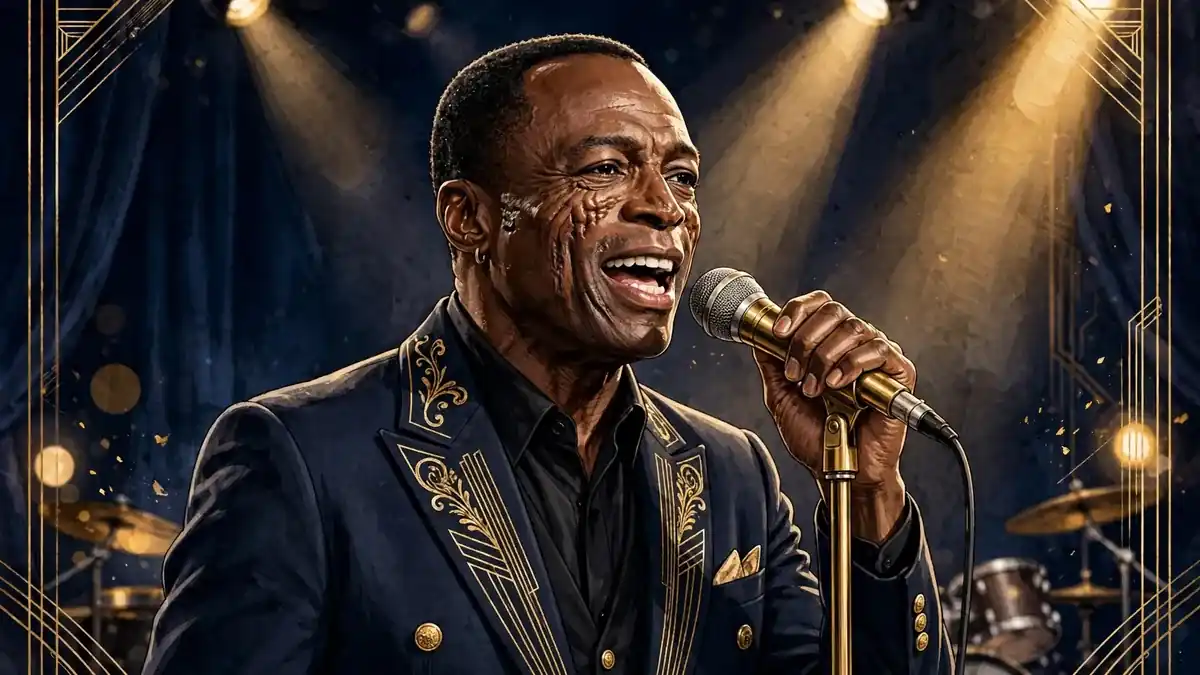
Seal‘s net worth is estimated at $40 million to $50 million as of November 2026. Celebrity Net Worth, the most-cited tracker of his fortune, puts him at $40 million in its latest update, while other outlets land as high as $50 million. The money comes from a catalogue that has refused to age: a debut album that sold millions, a ballad that still pays, three decades of touring, and a television run in Australia that made him a household name a second time over.
Seal: Quick Facts
| Estimated net worth | $40 million–$50 million (range: $40 million–$50 million) |
|---|---|
| Profession | Singer, songwriter, record producer |
| Nationality | British (born in London to a Nigerian mother and a Brazilian father) |
| Born | 19 February 1963 (age 63) |
| Height | 6 ft 4 in (1.92 m) |
| Primary income sources | Music royalties and publishing, album sales, international touring, television coaching, brand deals |
| Active years | 1987–present |
| Last reviewed | November 2026 |
- Early Life and Background
- Education
- Career Journey
- Rise to Fame
- Main Sources of Income
- Salary and Earnings
- Businesses and Investments
- Brand Deals and Sponsorships
- Houses, Cars and Other Assets
- Awards and Achievements
- Net Worth Growth Over the Years
- Social Media Presence
- Personal Life
- Sources & Reporting
- Frequently Asked Questions
Early Life and Background
Seal Henry Olusegun Olumide Adeola Samuel was born on 19 February 1963 at St Mary’s Hospital in Paddington, London. His mother, Adebisi Ogundeji, was Nigerian; his father, Francis Samuel, was Afro-Brazilian. The Yoruba names in his full name come from his mother’s side of the family, and he has spoken in interviews about growing up between cultures in a London that was still learning what that meant.
His first four years were spent with a foster family in Westminster. His mother then took him back, and he later lived with his father in Kilburn, a period he has described as harsh. He left home at 15. The years that followed were not a straight line to a recording studio: he worked as a bike messenger, in fast food, and for a designer on the King’s Road, and he slept rough at times. That stretch matters to the money story because it explains the caution that runs through his later financial life — there are no bankruptcy filings, no public blowouts, no fire-sale headlines attached to his name.
Music was already pulling at him. In the mid-1980s he toured Japan with a funk band and spent time with a Thai blues band, picking up stage craft far from the London scene that would later claim him. His younger brother, Jeymes Samuel — who records as The Bullitts and later became a film director — followed a parallel path into music, and the two brothers have remained close. The family story, in short, is one of two boys from a fractured London childhood who both built careers in the arts.
The scarring on his face, which became one of the most recognised features in pop, comes from discoid lupus erythematosus, a form of lupus that affects the skin. He developed it as a child. He has talked about it plainly over the years, and it never slowed his career — if anything, in an image-driven business, it made him unmistakable.
Education
Seal studied architecture before music took over. The training shows up in the way he talks about songs — structure first, decoration second — and it gave him a trade to fall back on in the years when music paid nothing. He has said the discipline of the subject, the habit of building something from a drawing to a finished form, shaped how he approached records with producer Trevor Horn: start with the frame, then fill it.
There is no record of him completing a full professional architecture career, and this article does not claim one. What the education did provide was a period of formal study in London while he sang in clubs and bands at night, and a practical mindset that later showed in his business decisions — long contracts negotiated carefully, a catalogue held close, and property bought in prime locations rather than flash purchases.
Career Journey
Seal’s first taste of fame arrived in 1990, and it arrived sideways. He sang lead vocal on “Killer”, a house track by producer Adamski, and the single went to number one in the UK. It was a dance record with a soul singer’s voice on top, and it put a 27-year-old who had been working odd jobs into the charts overnight. The collaboration paid twice: it gave him a hit, and it gave him a calling card for a solo deal.
That deal came with ZTT Records, the label run by producer Trevor Horn. Horn became the central creative partner of Seal’s career, producing his early albums and returning decades later for his 2025 single. The partnership mattered commercially as well as artistically — Horn’s productions were expensive, polished, and built to last, and the records they made together have kept selling and streaming long after their release dates.
His self-titled debut album, Seal, arrived in 1991. It carried “Crazy”, a single that reached the top ten on both sides of the Atlantic and still turns up in films and adverts, and “Future Love Paradise”. Celebrity Net Worth reports the album sold more than three million copies worldwide. It won him the Brit Award for Best British Male in 1992, and it established a template: a big voice, electronic textures, and songs that worked as well on radio as they did in clubs.
The second album, also called Seal and released in 1994, is the record that made the fortune. It opened with “Prayer for the Dying”, but its second life came from “Kiss from a Rose”. The song had been released to modest attention in 1994, then was remixed for the Batman Forever soundtrack in 1995 and went to number one on the Billboard Hot 100 in August that year, spending 12 weeks at the top of the Adult Contemporary chart. The album went on to sell more than four million copies in the United States alone, earning quadruple-platinum certification, and it topped the UK Albums Chart.
What followed was a long, steady career rather than a second explosion. Human Being arrived in 1998, Seal IV in 2003, System in 2007. None matched the sales of the first two albums, but each kept him touring and recording, and each added to a catalogue that generates income every year. The pivot came in 2008 with Soul, an album of classic soul covers that sold well on both sides of the Atlantic and opened a new audience — listeners who wanted the voice without the 1990s production. Seal 6: Commitment followed in 2010, Soul 2 in 2011, 7 in 2015, and Standards in 2017, the last of which earned a Grammy nomination for Best Traditional Pop Vocal Album. Ten studio albums in all, across 26 years.
Television gave him a second career in the 2010s. In 2012 he joined The Voice Australia as one of its four original coaches, alongside Keith Urban, Delta Goodrem and Joel Madden. He coached Karise Eden to victory in season one, then did it again in 2013 with Harrison Craig — back-to-back wins no other coach on the show matched at the time. He stepped away, then returned for the 2017 season. The show paid him, raised his profile in Australia — a market where he has toured heavily ever since — and kept him on screen between albums.
The 2020s have been a victory lap with new material attached. In 2023 he launched a 30th-anniversary tour celebrating his first two albums, reuniting with Trevor Horn for North American dates. A deluxe edition of the second album followed in 2024, with an alternate recording of “Kiss from a Rose”. On 14 February 2025 he released “All I Know Is Now”, his first new original song in several years, again produced by Horn. Celebrity Net Worth’s latest update, from November 2026, notes a further release in February 2026, and he has continued to perform internationally through 2025 and 2026.
Rise to Fame
Seal’s rise happened in two waves, and the gap between them is the interesting part. The first wave was British: “Killer” in 1990, the debut album in 1991, a Brit Award in 1992. He was a homegrown star with a distinctive look and a voice that radio programmers loved. The second wave was American, and it was bigger: “Kiss from a Rose” topping the Hot 100 in 1995, three Grammy Awards for the song in 1996, and an album that sold four million copies in the US.
The song’s path to the top is a case study in how a catalogue asset can pay twice. Written by Seal himself — he is the sole songwriter — “Kiss from a Rose” first appeared on the 1994 album, where it was a modest single. Its inclusion on the Batman Forever soundtrack, in a remixed form, put it in front of cinema audiences worldwide, and radio followed. Because he wrote it, the publishing income flows to him as well as the recording royalties, a distinction that matters enormously over 30 years of radio play, streaming, film licensing and cover versions.
By the mid-1990s he was, by the standards of the time, one of the best-paid British singers working. The money did not come from one windfall but from the stack: album advances, touring, publishing, and then the long tail of royalties. His peers from that era — Cyndi Lauper, who also rebuilt a career on a distinctive voice and a catalogue of hits — show the same pattern: a peak, then decades of steady income from work done early.
The fame also came with a level of press attention that had little to do with music. His marriage to Heidi Klum, beginning in 2005, made him a tabloid regular, and the annual vow-renewal ceremonies the couple held became a minor media ritual. He handled it by keeping the music separate from the coverage — touring, recording, and taking the television job in Australia while the personal coverage ran its own course.
Main Sources of Income
Seal’s income breaks into five streams, and the balance between them has shifted over 35 years. Record sales dominated the 1990s. Royalties and publishing dominate now. Touring has been the constant in between, and television and brand work have added lump sums at intervals.
Record sales. Wikipedia credits him with more than 20 million albums or singles sold; Celebrity Net Worth puts the album figure above 30 million. The gap between the two numbers is a measurement difference — singles versus albums, and different counting windows — but either way the scale is large. The debut album passed three million copies worldwide, the second passed four million in the US alone, and the Soul albums added millions more in the late 2000s. Those sales were made when a CD cost real money, so the per-unit revenue was far higher than a stream pays today.
Songwriting and publishing royalties. This is the stream most net-worth roundups underplay, and it is probably the most valuable one he owns. He wrote “Kiss from a Rose” himself, and he co-wrote much of his catalogue. Every radio play, every stream, every film or advert that uses the song, and every cover version generates publishing income. “Crazy” and “Killer” work the same way. A song that topped the Hot 100 in 1995 and still appears in films, television and commercials in the 2020s is an annuity, and 30 years of that annuity is the backbone of the $40 million–$50 million estimate.
Touring. Seal has toured internationally for three decades — Europe, North America, Australia and South America — and he still draws crowds in his sixties. The 2023 30th-anniversary tour, with Trevor Horn, sold on nostalgia and on the strength of two albums that audiences know track by track. Touring guarantees and ticket income for a legacy act of his size are not publicly disclosed, and this article does not invent them, but touring is the stream that lets a catalogue artist convert old fame into current cash without recording a note.
Television. Three seasons as a coach on The Voice Australia (2012, 2013, 2017) paid fees that Australian press at the time reported as substantial for a reality coach, though the exact figure was never confirmed publicly. The fee was only part of the value: the show reintroduced him to a market where he tours profitably, and it kept his name in front of casting directors for guest appearances and corporate events.
Licensing and sync. “Kiss from a Rose” has appeared on soundtracks, in television dramas and in advertising for three decades. Each placement pays a sync fee plus performance royalties. The 2025 Mountain Dew Super Bowl commercial, in which he sang a parody of the song while playing a literal seal, is the most recent high-profile example — a prime-time advertising slot built entirely around one song from 1994.

Salary and Earnings
There is no public record of Seal’s salary for any single year, and anyone publishing one is guessing. Celebrity Net Worth is explicit on this point: his individual recording contracts, touring guarantees and annual royalty income have not been publicly disclosed. What can be said honestly is that his earnings have followed the shape of a long catalogue career — large in the 1990s, steadier and lower in the 2000s, then lifted again by television, touring and the streaming era.
The 1990s were the peak earning years. Two multi-platinum albums, a number-one single in the world’s biggest market, and world tours built on them. Advances from ZTT and later labels, plus publishing, would have put his annual income in the millions at the height of it. One outlet, Music in Minnesota, puts his yearly income above $4 million, but that figure is not tied to a filing or a contract and should be treated as an estimate from a secondary source, not a fact.
The 2000s were leaner on paper but not empty. Seal IV and System sold modestly, but he toured throughout, and the Soul albums in 2008 and 2011 were commercial successes that refreshed the catalogue. The 2010s added the television fees and the Australian market. The 2020s have added the anniversary touring and the brand work — the Mountain Dew Super Bowl spot and the Leica camera collaboration in 2022, a limited-edition Q2 “Dawn” model of only 500 units.
Streaming changed the arithmetic without changing the direction. A stream pays a fraction of a cent, but a catalogue of songs that millions of people still search for — “Kiss from a Rose” alone has hundreds of millions of plays across platforms — produces a steady monthly flow. The honest way to describe Seal’s earnings today is this: not a salary, but a portfolio of small, recurring payments from work done years ago, topped up by touring and television whenever he chooses to work.
Two claims that circulate about his wealth deserve a correction. Some content-farm sites put his net worth at $80 million to $120 million, and others as low as $30 million. The high figures appear to be projections with no source attached; the low figure dates from older, thinner roundups. The credible range, anchored on Celebrity Net Worth’s $40 million and the $45 million–$50 million figures from other 2025–2026 trackers, is $40 million to $50 million. The spread reflects genuine uncertainty about private royalty income, not disagreement about the public record.
Businesses and Investments
Seal has never built a business empire in the way some of his contemporaries have. There is no fashion label, no drinks brand, no chain of restaurants with his name on it. His business life has been narrower and, by the evidence, more careful: the catalogue, the touring operation, and property.
The catalogue is the business. Owning the publishing on his biggest songs — above all “Kiss from a Rose”, which he wrote alone — is the single most valuable commercial decision of his career, even if it was made for artistic reasons at the time. Catalogue valuations for legacy artists have risen sharply in the streaming era, as buyers pay large multiples for predictable royalty streams. Seal has not sold his catalogue publicly, and there is no report of a sale, so no sale price can be added to his net worth. The point is the opposite: he still holds the asset, and it still pays.
His one documented venture into product was the Leica collaboration in 2022, a limited-edition Q2 “Dawn” camera with only 500 units made. Limited runs of that kind pay a fee plus a share of a high-priced item, and they trade on the artist’s eye — Seal is a keen photographer — rather than on mass sales. It was a brand deal with a craft angle, not a business launch.
Property is the other investment, and it is the one with a public paper trail. The Brentwood purchase and sale, detailed below, turned a roughly $10 million gross gain on a single house. The Topanga property bought in 2019 is a smaller, more private holding. There are no public records of stock portfolios, venture investments or startup stakes, and this article does not invent any. The picture is of an artist who invested in the two things he understood — his music and houses in Los Angeles — and left the rest alone.
Brand Deals and Sponsorships
Brand work has been a late-career addition rather than a lifelong stream. The standout is the Mountain Dew commercial for Super Bowl LIX in February 2025, in which Seal appeared as a literal seal singing a parody of “Kiss from a Rose”. A Super Bowl advertising slot is the most expensive airtime in American television, and the brands that buy it pay their talent accordingly — though the fee was not disclosed, and this article does not guess it. The advert worked because it treated the song as a shared cultural reference: everyone watching knew the tune.
The Leica Q2 “Dawn” camera in 2022 was a different kind of deal — a prestige collaboration with a German camera maker, limited to 500 units, aimed at collectors. Seal’s interest in photography is genuine and long-standing, which is why the partnership read as authentic rather than rented. He has also appeared in the 2014 Band Aid 30 charity single “Do They Know It’s Christmas?”, a non-commercial recording that kept him visible in the UK market.
Earlier in his career, endorsements were thin. The 1990s Seal sold records and concert tickets, not products, and the fame that came with the Heidi Klum marriage brought press attention rather than sponsorship cheques. The pattern is consistent with the rest of his financial life: income from the work itself first, brand money only when the fit is obvious.

Houses, Cars and Other Assets
The best-documented asset Seal has owned is the Brentwood mansion he bought with Heidi Klum. In December 2010 the couple paid $14.2 million for the house in Brentwood Country Estates, according to Celebrity Net Worth’s reporting on Klum’s property history; the Daily Mail put the price at $13.4 million, and the difference is likely a matter of fees and reporting dates. Either way, it was a distressed purchase — the previous owner had gone into foreclosure — for a roughly 12,300-square-foot Mediterranean-style mansion on 8.5 acres in one of Los Angeles’ most exclusive gated communities, with an infinity pool, a rose garden, a koi pond and a soundproofed home cinema.
When the marriage ended, Klum listed the house for $25 million and sold it later in 2014 for $24 million. Against a purchase price in the $13.4 million–$14.2 million range, that is a gross gain of roughly $10 million before renovation costs, which were substantial — Klum spent millions remodelling, including a master bathroom with a Pacific Ocean view. The sale is the single largest documented property profit in either of their lives, and it is a reminder that the couple’s wealth was never only about music or modelling.
Seal’s own purchase came after the divorce. In July 2019 he bought a secluded mountaintop property in Topanga, California, for slightly more than $3.5 million. The house is about 3,600 square feet, set on a hilltop with the privacy that the Brentwood estate, for all its gates, never quite gave him. It is a smaller, quieter asset, and it fits the pattern of his post-divorce life: less display, more control.
Cars have never been a public part of his story. There are no reported collections, no auction headlines, no garage tours. He has been photographed with high-end vehicles over the years, as most wealthy Los Angeles residents have, but no specific car, price or collection can be verified, so none is claimed here. The same restraint applies to watches, art and other portable assets: if it is not on the public record, it is not in this article.
Awards and Achievements
Seal has won four Grammy Awards and three Brit Awards, plus an MTV Video Music Award. The Grammy count is the one that matters most to his earning power, because it is tied directly to the song that still pays him.
“Kiss from a Rose” won three Grammys in a single night in 1996: Record of the Year, Song of the Year, and Best Male Pop Vocal Performance. He has four Grammy wins in total, and Standards later earned a nomination for Best Traditional Pop Vocal Album at the 2018 Grammys. The Brit Awards — Best British Male in 1992, and two more across his career — mark the British industry’s recognition, and the MTV Video Music Award dates from the early 1990s peak.
The chart achievements are easier to count and harder to argue with: a UK number one with “Killer” in 1990, a US number one with “Kiss from a Rose” in 1995, a quadruple-platinum album in the US, a UK Albums Chart number one for the 1994 album, and two winning seasons as a coach on The Voice Australia. The BMI London Awards recognised “Kiss from a Rose” again in 2021 with a 6 Million Award, marking six million radio performances — a number that translates directly into the publishing income described above.
Peer comparison puts the scale in context. Prince, whose catalogue also earned for decades after its peak, built a fortune on a far larger body of work and a famously tight grip on his masters. Mick Jagger has toured stadiums for 60 years. Seal’s achievement is different in kind: one song, written alone, that has paid for 30 years, plus a voice that kept him employable in every decade since. In a business where most 1990s stars have faded from the charts entirely, still touring, still recording and still being booked for a Super Bowl commercial at 62 is the achievement.
Net Worth Growth Over the Years
The table below is an estimate built from the published record. Early figures are reconstructions from the trackers that reported them at the time; later figures are anchored on Celebrity Net Worth and the 2025–2026 trackers. No year is presented as a bank balance.
| Year | Estimated net worth | What drove it |
|---|---|---|
| 1991 | $2 million–$5 million | Debut album, “Crazy”, first world tours |
| 1995 | $10 million–$15 million | “Kiss from a Rose” US number one, quadruple-platinum album |
| 2000 | $15 million–$20 million | Catalogue royalties, touring, Human Being |
| 2005 | $20 million–$25 million | Seal IV, touring, marriage to Klum raises profile |
| 2010 | $25 million–$30 million | Soul albums, Brentwood purchase, touring |
| 2015 | $30 million–$35 million | The Voice Australia, 7, Brentwood sale gain |
| 2020 | $35 million–$40 million | Streaming-era catalogue income, touring |
| 2026 | $40 million–$50 million | Anniversary touring, 2025 single, brand work, catalogue royalties |
The shape is the story: a steep rise in the first half of the 1990s, then a long, shallow climb rather than a fall. That is unusual. Most artists of his era peaked and declined; Seal’s fortune kept inching up because the catalogue never stopped paying and he never stopped working. The Brentwood sale in 2014 is the one visible step-change in the middle of the table — a property gain, not a music gain — and it is the reason the 2015 figure jumps.
Social Media Presence
Seal is active on social media, principally Instagram, where he posts about music, photography and family, and he maintains a presence on X and Facebook. He uses the accounts the way a touring musician does — tour dates, new releases, photographs from the road — rather than as a daily content operation. There are no verified public follower counts cited in this article, because the numbers move and the outlets that report them disagree; what matters for the money story is that social media is a marketing channel for him, not an income stream in itself. He does not appear to run a sponsored-post business, and no brand deal has been announced through his feeds as a paid partnership beyond the Leica and Mountain Dew work described above.
His photography, which he has pursued seriously for years, is the most distinctive part of his online presence. It was the basis for the Leica collaboration, and it gives his feeds a different texture from the standard celebrity account — fewer red carpets, more frames. For a singer whose face is famous, the choice to point the camera outward is characteristic.
Personal Life
Seal met Heidi Klum in a New York hotel lobby in 2004, shortly after she had ended her relationship with Formula One executive Flavio Briatore while pregnant with her daughter Leni. He was present for Leni’s birth in New York in May 2004, and he later adopted her — the adoption was formalised in late 2009, when her surname became Samuel. The couple married on 10 May 2005 in Mexico, while Klum was pregnant with their first son together, and they became known for renewing their wedding vows every year in ceremonies attended by close friends and family.
Their three children together were born in quick succession: Henry Günther Ademola Dashtu Samuel in September 2005, Johan Riley Fyodor Taiwo Samuel in November 2006, and Lou Sulola Samuel in October 2009. Klum’s fortune and career are a separate story, told in full in our sister site’s profile of Heidi Klum’s net worth, but the two were financially entangled for a decade — most visibly in the Brentwood house, bought together and sold as the marriage ended.
The couple announced their separation in January 2012, and the divorce was finalised in October 2014. Both have spoken since about co-parenting their four children, and Klum has said repeatedly that Seal is Leni’s father in every sense that matters. After the divorce Seal was reported to be in a relationship with Australian model Erica Packer from 2015; he has kept his later private life largely out of the press, and there is no public record of a remarriage. He remains close to his children — Leni has followed her mother into modelling, and the family is regularly photographed together at public events.
Outside music and family, his known interests are photography, which led to the Leica deal, and the outdoors — the Topanga property is a long way, in every sense, from the London council estates and foster homes of his childhood. He has lived in Los Angeles for much of his adult life, and California is where his property, his touring base and his family life have centred.
Sources & Reporting
Celebrity Net Worth — the $40 million estimate, the Brentwood purchase and sale figures, the Topanga purchase, album sales, and the note that his contracts and annual royalty income are not publicly disclosed; page updated November 2026, including the February 2026 release note.
Wikipedia — full name, birth date and place, parents, foster care, discoid lupus, discography of ten studio albums, Grammy and Brit Award counts, The Voice Australia seasons and winners, children and dates.
Hello! Magazine — biography, height of 6 ft 4 in, marriage to Klum in Mexico in May 2005, children Henry and Johan, and the early career timeline.
Nairobi News — September 2026 profile confirming the $40 million Celebrity Net Worth figure, the 20-million-plus records sold, and the Voice Australia and 2023–2025 career timeline.
CA Knowledge — the $50 million upper-end estimate, used here as the top of the range rather than the anchor.
Music in Minnesota — the above-$4 million annual income claim, flagged in the text as an unverified secondary estimate, plus the 20-million-plus records figure and the Grammy count.
Reporting window: career reporting from 1990 to November 2026; net-worth estimates as published in 2025–2026. Where sources disagreed — the $40 million versus $50 million estimates, the 20 million versus 30 million sales figures, the $13.4 million versus $14.2 million Brentwood purchase price — the range is published and the disagreement is named.
Frequently Asked Questions
What is Seal’s net worth in 2026?
Seal’s net worth is estimated at $40 million to $50 million as of November 2026. Celebrity Net Worth puts him at $40 million in its latest update; other trackers go as high as $50 million. The range reflects the fact that his royalty income is private, so no tracker has his exact accounts.
How did Seal make his money?
Mostly from music. He sold more than 20 million records, wrote “Kiss from a Rose” himself — so he earns publishing royalties as well as recording royalties — toured internationally for three decades, and coached on The Voice Australia in 2012, 2013 and 2017. Property also helped: the Brentwood mansion he bought with Heidi Klum sold for $24 million in 2014, roughly $10 million more than they paid for it.
How old is Seal?
Seal is 63 years old. He was born on 19 February 1963 in Paddington, London, and turned 63 in February 2026.
What is Seal’s real name?
His full name is Seal Henry Olusegun Olumide Adeola Samuel. He performs under the single name Seal, and the Yoruba names in his full name come from his Nigerian mother’s side of the family.
What happened to Seal’s face?
The scarring on Seal’s face is caused by discoid lupus erythematosus, a form of lupus that affects the skin. He developed the condition as a child. He has spoken about it openly over the years, and it has never affected his singing career.
Is Seal still making music in 2026?
Yes. He released the single “All I Know Is Now” in February 2025, produced by Trevor Horn, toured to mark the 30th anniversary of his first two albums in 2023, and Celebrity Net Worth’s November 2026 update notes a further release in February 2026. His last full studio album remains Standards from 2017.
How much did Seal make from “Kiss from a Rose”?
No public figure exists for the song alone, and his contracts have never been disclosed. What is known is that the song reached number one on the Billboard Hot 100 in 1995, won three Grammys including Record of the Year and Song of the Year, and drove an album that sold more than four million copies in the US. Because Seal wrote the song himself, he earns publishing income from every radio play, stream, film use and cover version, and that income has run for 30 years.
Is Seal still married to Heidi Klum?
No. Seal and Heidi Klum married in Mexico in May 2005, announced their separation in January 2012, and finalised their divorce in October 2014. They share four children — Henry, Johan, Lou, and Leni, whom Seal adopted in 2009 — and have both spoken about co-parenting since the split. Klum has since remarried; Seal has not publicly remarried.
Final Thoughts
Seal’s $40 million–$50 million fortune is not the story of a windfall. It is the story of a song written alone in 1994 that has paid, in one form or another, for 30 years — plus a voice, a touring habit and a television second act that kept the money coming while the song did its quiet work in the background. The Brentwood house added a one-off property gain; the Leica camera and the Super Bowl advert added late-career cheques; but the core of the wealth is the catalogue, and the catalogue is still his.
That is also why the range is honest. Nobody outside Seal’s accountants knows what “Kiss from a Rose” earns in a year, and the trackers that claim to know are guessing from the public record. What the record does show is a career with no financial disasters, no catalogue sale, and no sign of stopping — a 63-year-old still releasing music, still touring, and still being booked for the biggest advertising stage in the world. For a singer who left home at 15 and worked as a bike messenger, that is the real bottom line.
Published on 2026-11-24. Last reviewed November 2026. Found an error? See our corrections policy.