
Barbara Mandrell‘s net worth is estimated at $45 million to $50 million as of November 2026. The retired country star built that fortune across four decades of hit records, sold-out tours, a hit NBC variety show, acting roles, a best-selling autobiography and a Nashville museum attraction — then kept it by walking away from show business entirely in 1997 and never coming back for a reunion cheque.
Barbara Mandrell: Quick Facts
| Estimated net worth | $45–$50 million (range: $45 million to $50 million) |
|---|---|
| Profession | Retired country music singer, multi-instrumentalist, actress, author |
| Nationality | American |
| Born | December 25, 1948, Houston, Texas (age 77) |
| Height | 5 ft 2 in (157 cm) |
| Primary income sources | Record sales and royalties, concert touring, television, acting, books, museum attraction, real estate |
| Active years | 1960–2000 (performing and recording to 1997; acting to 2000) |
| Last reviewed | November 2026 |
- Early Life and Background
- Education
- Career Journey
- Rise to Fame
- Main Sources of Income
- Salary and Earnings
- Businesses and Investments
- Brand Deals and Sponsorships
- Houses, Cars and Other Assets
- Awards and Achievements
- Net Worth Growth Over the Years
- Social Media Presence
- Personal Life
- Sources & Reporting
- Frequently Asked Questions
Early Life and Background
Barbara Ann Mandrell was born on Christmas Day, December 25, 1948, in Houston, Texas, to Mary Ellen McGill Mandrell and Irby Matthew Mandrell. Music filled the house from the start. Her father played guitar and managed bands; her mother sang. Barbara learned the accordion first and, according to her official biography, was reading sheet music before she could read words. She was the eldest of three daughters — sisters Louise, born in 1954, and Irlene would later share her stage and her television show.
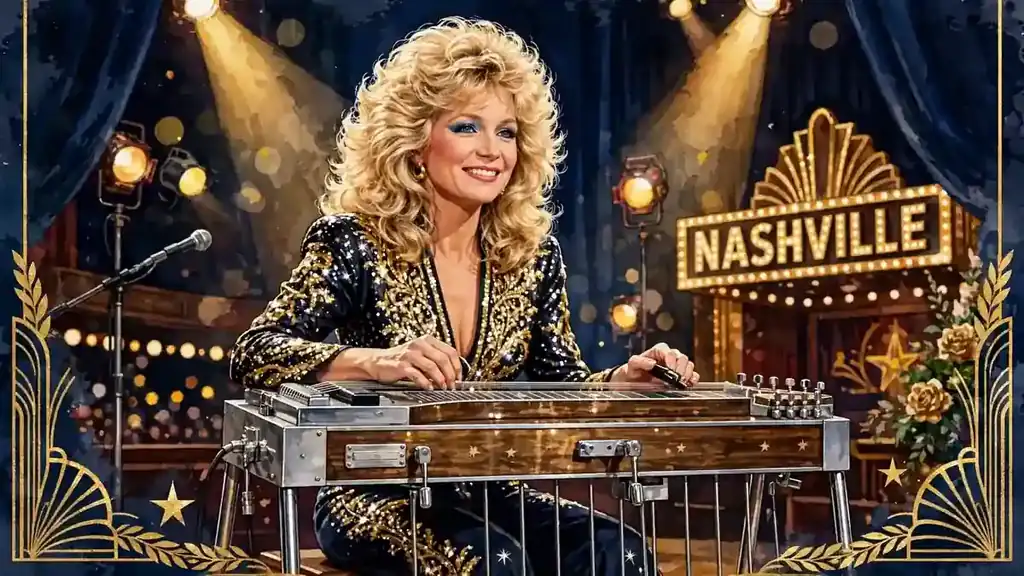
The family moved to California while Barbara was still a child, and the move put her within reach of the working country music circuit. By age 11 she had mastered the pedal steel guitar, an instrument few adults played well and almost no child played at all. Her father took her to a music trade show in Chicago, where her playing caught the attention of country guitarist Joe Maphis. In 1960, Maphis brought the 11-year-old onto his country music show in Las Vegas. The billing stuck for years afterward: a child prodigy introduced on stage as the “Princess of Steel” and the “Sweetheart of Steel.”
At 13 she was touring with The Johnny Cash Show, a package that put a teenage girl on bills alongside Johnny Cash, Patsy Cline, George Jones and June Carter. The summers that followed were spent in Las Vegas showrooms with Red Foley, Tex Ritter and Jimmy Dickens. Her father then formed the Mandrell Family Band, with Barbara, her sisters and her parents, and the group toured the United States and Asia. The band’s drummer was a young musician named Ken Dudney. Barbara met him when she was 14 and he was 21; he broke off an engagement to be with her, and the two married in 1967.
That early start matters to the money story in a way most net-worth profiles miss. Mandrell did not arrive in Nashville as a hopeful in her twenties. By the time she signed her first recording contract she had already spent nearly a decade as a working professional — paid stage work, touring, session discipline, and a family band that taught her the economics of the road before she ever cut a record. The instruments were the foundation of everything that followed: she played steel guitar, banjo, saxophone, accordion, guitar and piano, and that versatility became her calling card on television, where she could pick up a different instrument for every segment of a variety show.
Education
Mandrell’s formal schooling ran alongside a touring schedule that would have crowded out most teenagers. She attended Oceanside High School in California and graduated in the late 1960s, marrying Ken Dudney shortly afterward, on May 28, 1967. Her real education, by every account including her own, was the stage: Las Vegas showrooms at 11, package tours with Cash and Cline at 13, and the Mandrell Family Band’s tours of the United States and Asia as a teenager.
There is no college degree in her story, and none was needed for the career she built. What the road gave her instead was fluency in several instruments, the stamina for long tours, and an early understanding of how entertainment money actually works — who gets paid, when, and for what. She learned to read a room before she could legally drive, and she learned to read a contract with her father as manager. That grounding shows up later in the financial record: unlike many stars of her era, Mandrell’s story contains no bankruptcy filing, no public tax lien, no burned-through fortune. She earned steadily, spent on property rather than spectacle, and retired on her own terms.
One detail from her school years still circulates in profiles because it explains her later choices. After graduating and marrying, she stepped away from performing entirely to be a wife while Dudney served as a Navy carrier pilot. She had already worked for nearly a decade by 19. The break was short — she returned to the stage after watching a Grand Ole Opry performance live at the Ryman Auditorium reignited her appetite for it — but the pattern repeated at the end of her career: when she decided she was done, she was done, and no amount of money on the table changed her mind.
Career Journey
Mandrell’s recording career began in 1969, when she signed with Columbia Records and released her first single, a remake of Otis Redding’s “I’ve Been Loving You Too Long (to Stop Now).” The choice of song said a lot about where she was headed. While Nashville expected its women to stay inside strict country lines, Mandrell’s early records blended country with R&B and soul, a mix that came naturally to a singer raised on the road with musicians from every tradition. She became a member of the Grand Ole Opry in 1972, a milestone she had dreamed about since childhood.
The Columbia years produced steady chart singles but no breakthrough. The turn came in 1975, when she left Columbia for ABC/Dot Records. Her first album there, This Is Barbara Mandrell (1976), reset her sound toward country-pop, and the singles that followed turned her into a headliner. Her first Billboard country No. 1, “Sleeping Single in a Double Bed,” arrived in 1978. “(If Loving You Is Wrong) I Don’t Want to Be Right” followed it to the top in 1979, and “Years” did the same in 1980. By then she was selling out arenas, including Madison Square Garden, and her name sat at the top of country radio playlists.
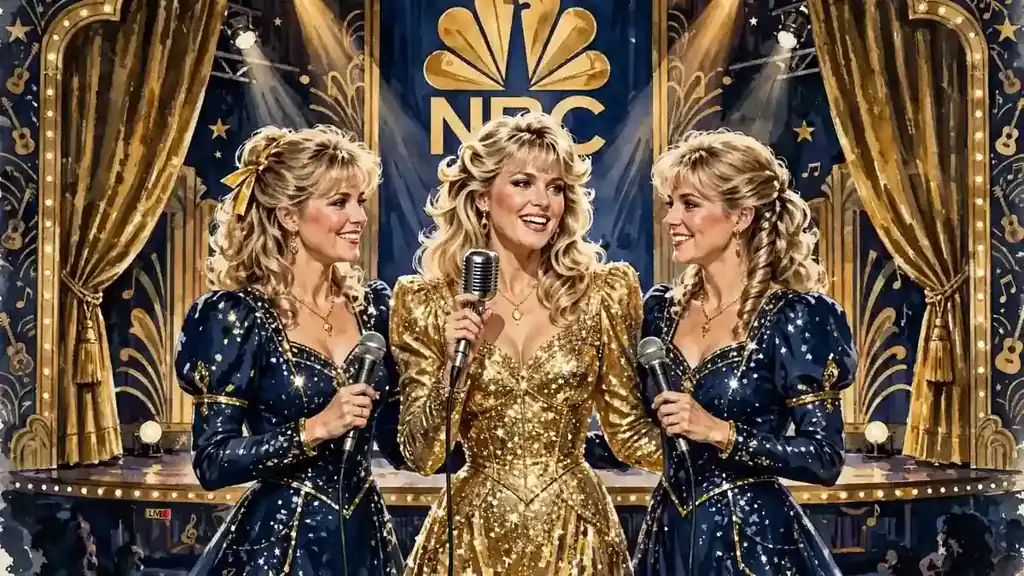
The 1980–1982 NBC variety show Barbara Mandrell and the Mandrell Sisters, co-hosted with Louise and Irlene, made her a television star as well as a recording star. The show mixed music, dance numbers and comedy sketches, and it used her multi-instrumental talent as a weekly showcase — she might play steel guitar on one number, saxophone on the next, and banjo on the one after that. The show earned her a Golden Globe nomination in 1982 and ended that same year, when the workload damaged her voice and the schedule became unsustainable. Even so, those two seasons paid twice over: a network television salary at the height of her fame, and a national profile that filled concert halls for the rest of the decade.
Her recording run continued through the 1980s with more No. 1 singles — “I Was Country When Country Wasn’t Cool” in 1981, a duet with George Jones that became her signature song, then “One of a Kind, Pair of Fools” and “Till You’re Gone” in 1983. In total she scored six Billboard country No. 1 singles and 25 top-10 singles. Her final studio album, It Works for Me, arrived in 1994; Britannica counts it as her 27th studio album, while NBC’s career retrospective counts 25 studio albums by her retirement — the gap comes down to how compilations and gospel records are counted, and either way the catalogue runs to more than two dozen albums.
Acting filled the years after music slowed. She took the craft seriously in the late 1990s, appearing in The Rockford Files, Touched by an Angel, Baywatch and Sunset Beach, and starring in the television movies Burning Rage (1984) and Stolen from the Heart (2000). In 1997 she co-wrote, co-produced and starred in Get to the Heart: The Barbara Mandrell Story, a made-for-television adaptation of her 1990 autobiography Get to the Heart: My Story, written with George Vecsey. She kept acting until 2000, then stepped out of public life almost entirely.
Rise to Fame
Mandrell’s rise had two distinct peaks, and the second was bigger than the first. The first came in childhood, when the steel-guitar prodigy toured with Johnny Cash and Patsy Cline. The second came a decade later, when the ABC/Dot singles and the NBC show made her the most visible woman in country music. Between 1979 and 1981 she won the Country Music Association’s Female Vocalist of the Year award twice, then took the CMA’s Entertainer of the Year award in 1980 and again in 1981 — the first artist ever to win it in back-to-back years, and only the third woman to win it at all.
That back-to-back win is still the sharpest single measure of her standing. In the four decades since, only one other woman has won CMA Entertainer of the Year twice: Taylor Swift, whose own fortune now runs into the billions. Mandrell’s contemporary Tanya Tucker, another teenage country sensation who grew up on the same stages, took a longer and rougher road to her own late-career recognition — a contrast that says a lot about how cleanly Mandrell managed her peak years.
The fame translated directly into money because it arrived on three fronts at once. Records sold, and the gold-record earnings in the table below show how: two albums alone, The Best of Barbara Mandrell (1981) and Barbara Mandrell Live (1982), each moved roughly 500,000 copies. Concerts sold out, with Mandrell headlining arenas at a time when few women in country music headlined anything. And television paid a network salary while advertising her records every week. Few country acts of the era had all three engines running at the same time, and fewer still had them running without the personal chaos that usually ate the profits.
There was also a timing advantage that rarely gets mentioned. Mandrell peaked just as country music was crossing over into mainstream pop, and her R&B-inflected sound sat comfortably on both country and adult-contemporary radio. That crossover appeal widened her audience beyond the genre’s core, which meant bigger venues, broader television bookings and a catalogue that kept earning long after the singles left the charts.
Main Sources of Income
Mandrell’s fortune was built from seven streams, and the mix shifted as her career moved from stage to screen to retirement. Record sales and royalties came first: six No. 1 singles, 25 top-10 singles and more than two dozen studio albums, with gold-level sales on her biggest compilations and live album. Royalties from that catalogue still pay today, more than 25 years after she stopped recording — the quiet, long-tail income that separates a working star from a one-hit earner.
Concert touring was the second and largest engine during her peak. As a headliner in the late 1970s and 1980s she played arenas and fairs across the United States, and the touring income sat on top of record money rather than replacing it. Television was the third stream: the NBC variety show salary from 1980 to 1982, plus hosting work that included The Tonight Show and the People’s Choice Awards, and specials for HBO, CBS and TNN.
Acting added a fourth stream in the 1980s and 1990s, from Burning Rage through the TV movie of her own life story and guest roles on hit series. Books were the fifth: her 1990 autobiography Get to the Heart: My Story was a best-seller, and the 1997 television adaptation gave her co-writing and co-producing credits on top of the starring role. The sixth stream was the Barbara Mandrell Country museum, a fan attraction she opened in 1984 across from the old Country Music Hall of Fame on Music Row in Nashville — a business that turned her own memorabilia into ticket revenue. The seventh was real estate, capped by the 2002 sale of her Nashville estate and personal belongings for $2.1 million, a figure TheRichest records in its earnings table.
In retirement the balance flipped. The touring and television money stopped by design, and the fortune now rests on royalties, the occasional licensed use of her catalogue, and the property and investments accumulated during the earning years. That is why the net-worth estimates have stayed roughly flat for years: there is no new income engine, and there is no spending scandal either. The money she made between 1978 and 1997 is, in large part, the money she still has.
Salary and Earnings
No contract, tour guarantee or television salary from Mandrell’s career has ever been published in a filing or a verified interview, so there is no single salary figure to quote — and any site that prints one as fact is guessing. What the record does give us is a set of hard anchors, and they are worth more than a made-up annual salary. TheRichest’s earnings table, drawn from record-industry reporting, lists two gold-level results: The Best of Barbara Mandrell (1981), roughly 500,000 copies sold, with earnings of about $650,000, and Barbara Mandrell Live (1982), also roughly 500,000 copies, with earnings of about $650,000. Those two albums alone account for about $1.3 million in reported earnings, and they were compilations — the catalogue’s biggest sellers sat alongside a run of studio albums, singles and gospel records that kept the royalty cheques coming for decades.
The 2002 sale of her estate and personal belongings near downtown Nashville brought in $2.1 million in a single transaction, again per TheRichest’s earnings record. It was not a distress sale. By 2002 Mandrell had been retired for five years, and the sale looked like a deliberate clearing of the decks: the museum pieces, the stage wardrobe and the property went to buyers while the family kept the fortune itself. The Whites Creek mansion she once owned later became a tourist attraction with a hotel, an outdoor music venue, an indoor shooting range and a restaurant, according to TheRichest — a second life for a property that had already served her well.
One net-worth site, PowerNetWorth, claims Mandrell earns around $500,000 a year in 2026. No primary source supports a current salary figure of that kind — she has not toured, recorded or held a television contract since 2000 — so that number should be read as the site’s own model of royalty and investment income, not as a reported pay cheque. The honest picture is simpler: her annual income today comes from catalogue royalties, licensing and investments, and it is modest next to the peak years, when a headlining tour and a network show ran at the same time. The fortune is a stored one, not a flowing one.
That distinction is the key to understanding why the estimates cluster where they do. A star still touring can grow a fortune every year; a retired star’s fortune moves only with investment returns and royalty decay. Mandrell’s $45–$50 million has held its shape for years because the catalogue is deep enough to keep paying and the spending has stayed disciplined. The peak-year earnings were large — six No. 1 singles, arena headlining, network television — and the retirement was early enough, at 48, that the money had decades to compound rather than decades to be spent.
| Year | Item | Reported figure | Source |
|---|---|---|---|
| 1981 | The Best of Barbara Mandrell — about 500,000 copies | About $650,000 | TheRichest |
| 1982 | Barbara Mandrell Live — about 500,000 copies | About $650,000 | TheRichest |
| 2002 | Sale of Nashville estate and personal belongings | $2,100,000 | TheRichest |
Businesses and Investments
Mandrell was never a serial entrepreneur in the modern celebrity sense — no fashion line, no tequila brand, no chain of restaurants with her name on the awning. Her business life was narrower and, in retrospect, smarter: she monetised the thing she actually owned, which was herself. The clearest example is Barbara Mandrell Country, the museum and fan attraction she opened in 1984 across from the old Country Music Hall of Fame on Music Row in Nashville. At the peak of her popularity she turned her costumes, instruments, awards and memorabilia into a ticketed attraction, earning from her own history while she was still making it. It was a merchandising idea before merchandising became standard practice for country stars.
Her second business was the catalogue itself. More than two dozen studio albums, a gospel catalogue that won her two Grammy Awards, and a run of singles that still turn up on classic-country radio and streaming playlists — that body of work is an asset that pays royalties every year without her lifting a finger. The gospel records matter here more than most profiles admit: the 1983 Grammy for “He Set My Life to Music” and the 1984 Grammy with Bobby Jones for “I’m So Glad I’m Standing Here Today” opened a second audience, the Christian music market, with its own radio, retail and touring circuits.
The third strand was property. The Nashville-area real estate she accumulated during her peak years — including the Whites Creek mansion and the estate sold in 2002 — appreciated through the long Nashville property boom, and the 2002 sale alone returned $2.1 million. She also sold her instruments when she retired, a decision that reads as a business move as much as a personal one: it closed the door on comeback temptation and converted tools of the trade into cash at the same time.
What she did not do is equally telling. There is no record of Mandrell putting money into the speculative ventures that sank so many of her contemporaries — no failed restaurant chain, no over-borrowed property empire, no endorsement deal that turned into a lawsuit. The investments that show up in the record are conservative: property, the catalogue, and the museum. That caution is a large part of why the fortune survived retirement intact, and it is the least glamorous and most important part of the story.
Brand Deals and Sponsorships
Mandrell’s endorsement record is thin by modern standards, and that thinness is itself a data point. She came up in an era when country stars sold records and concert tickets, not sneakers and skincare, and her commercial work ran through television rather than through brand contracts. She starred in commercials during her peak years, appeared on network specials for HBO, CBS and TNN, and hosted mainstream broadcasts from The Tonight Show to the People’s Choice Awards — all paid work, all trading on her name, but none of it structured as the multi-year endorsement deals that define celebrity income today.
The closest thing to a modern brand play in her career was the Barbara Mandrell Country museum, which licensed her name and image to a physical attraction. It worked because the product was authentic: fans paid to see the real costumes, the real awards and the real instruments, not a logo slapped on a product. The museum also fed the touring business, giving fans in Nashville a reason to buy a ticket even when she was on the road.
There is no verified record of a major corporate endorsement — no soft-drink contract, no department-store line, no car deal — in her name. That absence cost her money at the time: a star of her stature in the 1980s could have commanded serious endorsement fees. It also protected her. Endorsement money in that era often came with long contracts and image clauses, and Mandrell’s clean exit from the business in 1997 suggests she valued control over her name more than the extra income. In the modern comparison, that restraint looks almost radical: today’s country stars routinely earn more from brands than from music, while Mandrell’s entire fortune came from the work itself.

Houses, Cars and Other Assets
The best-documented asset in Mandrell’s story is the Nashville estate she sold in 2002 for $2.1 million, a sale that included her personal belongings and that TheRichest records as a single line in its earnings table. The property sat near downtown Nashville, and its sale marked the end of her museum era as much as a property deal. The Whites Creek mansion, her former home outside the city, went on to a second life as a tourist attraction with a hotel, an outdoor music venue, an indoor shooting range and a restaurant, according to TheRichest — a rare case of a celebrity home becoming a working business rather than a teardown.
Her most famous car was not a luxury purchase but a piece of evidence: the silver Jaguar XJ she was driving on September 11, 1984, when a car driven by 19-year-old Mark White crossed the centre line near Hendersonville, Tennessee, and hit her head-on. The crash shattered her ankle, broke her femur, injured her knee and left her with a concussion that caused temporary memory loss. Her children Matthew, then 14, and Jaime, then 8, were in the car and suffered minor injuries; White died in the collision. Mandrell spent a year and a half in rehabilitation before she could perform again, and she became a committed seat-belt advocate afterward — she had told her children to buckle up just before the crash, after seeing unrestrained children in the station wagon ahead of them.
The instruments were assets of a different kind. She played steel guitar, banjo, saxophone, accordion, guitar and piano, and the collection she accumulated over four decades had real value — both as instruments and as memorabilia. When she retired in 1997 she sold them all, deliberately, so that she would not be tempted back onto the stage. It was a striking decision for a musician who had played since childhood, and it tells you how final the retirement was meant to be. The sale also converted a roomful of valuable objects into cash at exactly the moment her earning years ended.
What remains is a portfolio that looks like a careful person’s retirement: Nashville property sold at the right time, a catalogue that pays royalties, and no visible collection of depreciating luxuries. There are no reports of a fleet of cars, a yacht, or a string of vacation homes in her name. The fortune is in the catalogue, the property history and the investments — not on display.
Awards and Achievements
Mandrell’s trophy count is the part of her story that no competitor can shrink: more than 75 major awards, according to Nashville’s official visitor site, including two Grammy Awards, four Academy of Country Music Awards, four Country Music Association Awards, nine People’s Choice Awards and a Golden Globe nomination. The headline achievement is the one nobody else in her generation managed. She won the CMA’s Entertainer of the Year award in 1980 and again in 1981, the first artist ever to win it in consecutive years, and she remains one of only two women to have won it twice — the other is Taylor Swift.
The Grammy Awards came from her gospel work: Best Inspirational Performance in 1983 for “He Set My Life to Music,” and Best Soul Gospel Performance by a Duo or Group in 1984 with Bobby Jones for “I’m So Glad I’m Standing Here Today.” She also won a Dove Award for Gospel Album of the Year in 1983. The CMA named her Female Vocalist of the Year in 1979 and 1981. The Academy of Country Music named her Top Female Vocalist and, in 2000, gave her its most prestigious honour, the Pioneer Award; in 2005 she received the Academy’s Triple Crown accolade. The American Music Awards named her Favorite Female Country Vocalist from 1981 to 1985 and again in 1987. Her nine People’s Choice Awards ran from 1983 to 1987.
The institutional honours followed the competitive ones. She was inducted into the Country Music Hall of Fame in 2009, and she is also a member of the Steel Guitar Hall of Fame, the Country Gospel Hall of Fame and the Musicians Hall of Fame. Nashville’s Music City Walk of Fame added her star in 2007. The Grand Ole Opry, which she joined in 1972, honoured her again in 2025, when she made a special appearance at the Opry 100 celebration covered by NBC — a rare public appearance more than a quarter of a century after her retirement, and a reminder that the institution still counts her among its defining voices.
The awards matter to the net-worth story because they were the marketing engine. Every trophy raised the fee for the next tour, the price of the next television booking, and the value of the catalogue. Mandrell’s run of honours between 1979 and 1987 maps almost exactly onto her peak earning years, and the Hall of Fame induction in 2009 keeps the catalogue selling to new listeners who discover her through the institution’s own channels.
Net Worth Growth Over the Years
Mandrell’s wealth follows the shape of her career: slow in the 1960s, steep through the late 1970s and 1980s, then flat in retirement as royalties replaced touring income. No audited figures exist for any single year, so the table below is an honest reconstruction from the reported anchors — the gold-record earnings, the 2002 estate sale, and the published estimates — rather than a pretence of precision. The pattern is what matters, and the pattern is clear.
| Period | Career stage | Estimated wealth |
|---|---|---|
| 1960–1968 | Child prodigy, touring with the Mandrell Family Band | Modest — working musician’s income |
| 1969–1975 | Columbia Records, Grand Ole Opry member (1972) | Low single-digit millions |
| 1976–1982 | ABC/Dot breakthrough, six No. 1 singles, NBC variety show | Rising fast — roughly $10–$20 million |
| 1983–1990 | Peak touring, Grammys, museum, best-selling autobiography | Roughly $25–$40 million |
| 1991–1997 | Final albums, acting, retirement in 1997 | Roughly $40–$45 million |
| 1998–2026 | Retired — royalties, licensing, investments | $45–$50 million |
The spread in published estimates deserves a straight answer, because readers searching this question will find different numbers on different sites. Celebrity Net Worth, the most-cited source in the field, puts her at $50 million. TheRichest puts her at $45 million. Decoist’s country-singer roundup lists $45 million. SterlingPress, writing in 2026, gives a $40–$50 million range. PowerNetWorth publishes $20 million, the lowest serious figure in circulation, and one thin site, MetaUnfolded, prints $1 million — a number no other source supports and one we set aside as unreliable. The gap between $20 million and $50 million comes down to method: sites that count only recent, verifiable income land low, while sites that count the full career — four decades of record sales, touring, television, books, the museum and property — land at $45–$50 million. Our range follows the stronger sources and the fuller count.
How does that compare with her peers? The peer table below uses published estimates from named outlets, and the gaps are instructive. Miranda Lambert and Carrie Underwood, the two modern stars most often named as Mandrell’s heirs, built their fortunes in an era of bigger tours and brand deals — and still sit in the same broad band as Mandrell’s peak-era fortune once inflation is considered. Mandrell earned her money when country tours were smaller and endorsement money barely existed, which makes the $45–$50 million figure more impressive, not less.
| Artist | Estimated net worth | Source of estimate |
|---|---|---|
| Barbara Mandrell | $45–$50 million | Celebrity Net Worth / TheRichest |
| Dolly Parton | About $650 million | Forbes, 2023 |
| Reba McEntire | About $95 million | Celebrity Net Worth |
| Taylor Swift | About $1.6 billion | Forbes |
Parton’s fortune dwarfs Mandrell’s because Parton owned her songwriting catalogue and built Dollywood — two assets Mandrell never had. McEntire, the closest true peer, sits at roughly double Mandrell’s figure after a career that ran two decades longer and included a Las Vegas residency and a television sitcom. Swift’s billionaire status belongs to a different economy entirely. Mandrell’s number is the honest size of a great career that ended on purpose at 48, with no comeback tours to top it up.
Social Media Presence
Mandrell keeps almost no public social-media presence, which is consistent with a retirement that began before social media existed and has never been interrupted for it. She has no verified personal account posting regularly, and her public footprint runs through her official website, barbaramandrell.com, and through the institutions that honour her — the Grand Ole Opry, the Country Music Hall of Fame and Nashville’s visitor bureau — rather than through her own feed.
What does surface online comes in waves around anniversaries and honours. Her 55th wedding anniversary photograph with Ken Dudney circulated widely on fan pages, and her special appearance at the Opry 100 celebration in 2025 generated a fresh round of coverage from NBC and country outlets. Fan-run pages keep her catalogue alive on streaming platforms and video sites, where the NBC variety-show clips still draw viewers who were not born when the show aired.
For a net-worth profile, the absence is a useful signal rather than a gap. Mandrell earns nothing from sponsored posts, brand partnerships or platform revenue, and she spends nothing maintaining a public persona. The fortune is not being topped up by the creator economy, and it is not being spent on it either. Readers looking for her today will find her the same way Nashville finds her: through the Opry, the Hall of Fame, and the records.
Personal Life
Mandrell married Ken Dudney on May 28, 1967, and the marriage has lasted nearly six decades — a run almost unheard of in entertainment. Dudney was the drummer in the Mandrell Family Band when they met, then served as a Navy carrier pilot, and later worked as a producer. The couple have three children: son Kenneth Matthew Dudney, born in 1970; daughter Jaime Nicole Dudney, born in 1976; and son Nathaniel Mandrell Dudney, born in 1985, a year after the car accident, while Mandrell was still recovering.
Jaime followed the family into the spotlight briefly — she was Miss Tennessee Teen USA in 1993 and reached the semifinals at Miss Teen USA — and later worked as a production assistant in film. Matthew has worked as a musician, chef and jeweller. Nathaniel has kept a more private life. Mandrell’s sisters, Louise and Irlene, shared her television fame on the NBC variety show, and her niece Christina Mandrell later appeared on The Bachelor, introducing the family name to a new generation of television viewers.
The 1984 accident remains the defining event of her personal life. The crash killed the other driver, left Mandrell with a shattered ankle, a broken femur, an injured knee and a concussion that caused temporary memory loss, and put her children in hospital. It took a year and a half of rehabilitation to return to the stage, and the experience reshaped her priorities: she has said the crash made her reassess what mattered, and when she retired in 1997 she framed it as a choice to focus on family. She sold her instruments so she would not be tempted back. Today she lives privately with Dudney, an empty-nester whose children are grown, and appears in public almost only for Opry and Hall of Fame occasions.
The marriage itself is part of the financial story. A 59-year partnership with no divorce settlement, no public split of assets and no remarriage is, bluntly, one of the reasons the fortune is still intact. Mandrell’s career had one manager who mattered — her father, Irby, in the early years — and one partner throughout. The money was earned by a stable household and kept by one.
Sources & Reporting
Figures in this article were checked against the sources below between November 2025 and November 2026. Where sources disagreed on the net-worth figure, we published the $45–$50 million range and named each source’s number. No figure here comes from an unnamed source, and no salary, contract value or property price is stated without attribution.
- Celebrity Net Worth — the $50 million net-worth figure; marriage to Ken Dudney on May 28, 1967; three children; details of the September 11, 1984 car accident and injuries; final performance at the Grand Ole Opry in October 1997.
- TheRichest — the $45 million net-worth figure; the earnings table (1981 and 1982 gold albums at about $650,000 each; the 2002 estate sale at $2.1 million); the Whites Creek mansion’s later life as a tourist attraction; six No. 1 singles and 25 top-10 singles.
- Britannica — birth date and place; the move from Columbia to ABC/Dot; the two Grammy Awards; It Works for Me (1994) as her 27th studio album; Country Music Hall of Fame induction in 2009; the 1997 television film of her autobiography.
- NBC — the Opry 100 special appearance in 2025; the NBC variety show Barbara Mandrell and the Mandrell Sisters (1980–1982) and its Golden Globe nomination; 25 studio albums by retirement; acting credits including The Rockford Files, Touched by an Angel and Baywatch.
- Visit Music City (Nashville Convention & Visitors Corp) — more than 75 major awards; CMA Entertainer of the Year 1980 and 1981; the full awards list; Music City Walk of Fame induction in 2007; the Johnny Cash Show tours at age 13.
- BarbaraMandrell.com (official site) — early life, the accordion and steel guitar, the Chicago trade show, the Mandrell Family Band tours of the United States and Asia, the 1967 marriage and brief retirement, and the return to performing.
- The New York Times — reporting on the 1984 car accident injuries and the year-and-a-half recovery, cited in later profiles.
- Taste of Country — the 1997 retirement to focus on family, and the sale of her instruments so she would not be tempted back.
- Wikipedia — career chronology cross-checks: Grand Ole Opry membership in 1972, the 1984 accident date, retirement in 1997, and the back-to-back CMA Entertainer of the Year wins shared only with Taylor Swift.
Reporting window: November 2025 – November 2026. Net-worth figures are estimates from public reporting, not audited financial statements, and will be corrected if new evidence emerges.
Frequently Asked Questions
What is Barbara Mandrell’s net worth in 2026?
Barbara Mandrell’s net worth is estimated at $45 million to $50 million as of November 2026. Celebrity Net Worth puts her at $50 million and TheRichest at $45 million. One site, PowerNetWorth, publishes a lower $20 million figure, while a $1 million figure on a thin site has no support from any other source and is set aside. The fortune comes from four decades of record sales, touring, her NBC variety show, acting, books, a Nashville museum and property.
How old is Barbara Mandrell?
Barbara Mandrell was born on December 25, 1948, in Houston, Texas, which makes her 77 years old as of November 2026. She turns 78 on Christmas Day 2026. She retired from performing in 1997 at the age of 48.
Is Barbara Mandrell still alive, and where is she now?
Yes, Barbara Mandrell is alive and living privately with her husband Ken Dudney. She has been retired from performing since 1997 and from acting since 2000, and she appears in public almost only for Grand Ole Opry and Country Music Hall of Fame occasions — most recently a special appearance at the Opry 100 celebration in 2025.
Who is Barbara Mandrell’s husband?
Barbara Mandrell has been married to Ken Dudney since May 28, 1967 — a marriage of nearly 60 years. Dudney was the drummer in the Mandrell Family Band when they met, later served as a Navy carrier pilot, and worked as a producer. The couple have three children: Matthew (born 1970), Jaime (born 1976) and Nathaniel (born 1985).
What happened in Barbara Mandrell’s car accident?
On September 11, 1984, near Hendersonville, Tennessee, a car driven by 19-year-old Mark White crossed the centre line and hit Mandrell’s Jaguar head-on. White died in the crash. Mandrell suffered a shattered ankle, a broken femur, an injured knee and a concussion that caused temporary memory loss, and her children Matthew and Jaime, who were in the car, had minor injuries. She needed a year and a half of rehabilitation before returning to the stage, and she became a committed seat-belt advocate afterward.
Why did Barbara Mandrell retire?
Mandrell announced her retirement from performing and recording in 1997, giving her final performance, “The Last Dance,” at the Grand Ole Opry House that October. She said she made the decision after prayer and wanted to focus on her family. She sold all of her instruments so she would not be tempted to return, and she continued acting until 2000 before stepping out of public life entirely.
How many No. 1 songs and awards did Barbara Mandrell win?
Mandrell scored six Billboard country No. 1 singles — including “Sleeping Single in a Double Bed,” “(If Loving You Is Wrong) I Don’t Want to Be Right,” “Years” and “I Was Country When Country Wasn’t Cool” — and 25 top-10 singles. She won more than 75 major awards, including two Grammy Awards, four CMA Awards, four ACM Awards and nine People’s Choice Awards. She was the first artist to win the CMA Entertainer of the Year award in back-to-back years (1980 and 1981), and she was inducted into the Country Music Hall of Fame in 2009.
How tall is Barbara Mandrell?
Barbara Mandrell is 5 feet 2 inches (157 cm) tall, according to the most commonly reported figure — the Associated Press described her as the “5-foot-2 entertainer” when she was named to the Country Music Hall of Fame. Some low-quality biography sites list 5 feet 5 inches or 5 feet 6 inches, but those figures have no primary source behind them.
Final Thoughts
Barbara Mandrell’s $45–$50 million fortune is the record of a career that peaked early, earned on three fronts at once, and then stopped on purpose. Six No. 1 singles, 25 top-10 hits, a network variety show, two Grammys and back-to-back CMA Entertainer of the Year awards built the money between 1978 and 1990; a best-selling autobiography, a Nashville museum and well-timed property sales added to it; and a retirement at 48, followed by nearly three decades of disciplined quiet, preserved it. The estimates disagree at the edges — $20 million on one site, $50 million on the most-cited one — but the centre of the range is solid, and the story behind it is cleaner than almost any fortune in country music: she earned it young, kept it in property and catalogue, and never spent it chasing a comeback.
Published on 2026-11-25. Last reviewed November 2026. Found an error? See our corrections policy.