
Billy Zane‘s net worth is estimated at $20 million as of November 2026. The estimate rests on a long screen career that peaked with a villain’s payday in the biggest film of the 1990s, a reported $2 million fee for the 1999 miniseries Cleopatra, and a second act as a producer and working artist whose paintings carry gallery prices up to $100,000.
Billy Zane: Quick Facts
| Estimated net worth | $20 million (range: $20 million–$22 million) |
|---|---|
| Profession | Actor, producer, artist |
| Nationality | American |
| Born | February 24, 1966 (age 60) |
| Height | 6 ft (1.83 m) |
| Primary income sources | Film and television acting, producing, art sales, residuals |
| Active years | 1985–present |
| Last reviewed | November 2026 |
- Quick Facts
- Early Life and Background
- Education
- Career Journey
- Rise to Fame
- Main Sources of Income
- Salary and Earnings
- Businesses and Investments
- Brand Deals and Sponsorships
- Houses, Cars and Other Assets
- Awards and Achievements
- Net Worth Growth Over the Years
- Social Media Presence
- Personal Life
- Sources & Reporting
- Frequently Asked Questions
- Final Thoughts
Early Life and Background
William George Zane Jr. was born on February 24, 1966, in Chicago, Illinois, to Thalia and William George Zane Sr. Both parents were amateur actors, and together they founded a school for medical technicians — a combination of stage life and steady trade work that shaped the household Zane grew up in. His father also worked as a medical technician instructor, so performance was a family habit rather than a family business.
Both parents were of Greek descent: his mother traced her family to the island of Chios, his father to the Mani region of the Peloponnese. The family surname was originally Zanikopoulos before his parents shortened it to Zane, and Zane was raised in the Greek Orthodox faith. He grew up with an older sister, Lisa Zane, who became an actress and singer in her own right.
Chicago gave him two things that show up across his whole career. The first was a working actor’s attitude — his parents acted because they loved it, not because it paid the mortgage, and Zane has kept working through four decades with the same pragmatism. The second was a visual eye. He started painting seriously years later, but the habit of looking at the world as composition began in a home where both parents treated performance as craft.
Money was not abundant in the Zane household, and Zane has never described a wealthy childhood. What the family did have was access: parents who understood auditions, rehearsal rooms, and the mechanics of putting on a show. That access mattered more than cash when a teenager from Chicago decided to test himself in Hollywood.
Education
Zane spent a year abroad at The American School in Switzerland (TASIS) before returning to Chicago to graduate from the Francis W. Parker School, an independent school on the city’s North Side. The year in Switzerland put him in classrooms with students from across Europe and gave him an early comfort with travel and foreign sets — useful for an actor whose career would later run through Australia, Mexico, Morocco, and Tahiti.
After Parker, he attended the Harand Camp of the Theater Arts in Elkhart Lake, Wisconsin, a summer theatre program that has trained generations of Chicago-area performers. He did not go on to a university drama degree. Instead, he went straight to Los Angeles to audition, a choice that paid off fast: within a year of arriving he had his first screen credit in one of the most successful films of the decade.
The absence of formal conservatory training shows in the way Zane talks about acting. He has described his approach as improvisational — a word he also uses for his painting — and his career reads like a working actor’s education: small parts, bigger parts, a breakout, a flop, and then decades of steady employment across film, television, voice work, and the stage.
Career Journey
Zane’s first film role came in 1985, when he played Match, one of Biff Tannen’s gang, in Back to the Future. It was a small part — a few lines, a lot of standing behind Thomas F. Wilson — but it put a 19-year-old from Chicago on a set with Robert Zemeckis and Michael J. Fox, and on a film that would earn more than $380 million worldwide. He returned for Back to the Future Part II in 1989, by which time his career had already taken its first real turn.
That turn was Dead Calm (1989), Phillip Noyce’s thriller in which Zane played Hughie, a smooth, dangerous drifter who takes over a yacht crewed by a couple played by Nicole Kidman and Sam Neill. The role made him visible as a leading-man threat rather than a background heavy, and it did something else that mattered for his personal life: it was on that set that he met actress Lisa Collins, who became his first wife. Dead Calm earned strong reviews and steady box office, and casting directors started to see Zane as a man who could carry menace with charm.
The early 1990s filled out his résumé with the kind of varied work that defines a character actor’s decade. He appeared in Memphis Belle (1990), the Second World War bomber drama; in Sally Potter’s Orlando (1992), opposite Tilda Swinton; and in Tombstone (1993) as Mr. Fabian, the travelling actor whose stage troupe drifts through the film’s Arizona. None of these parts made him rich. All of them made him employable, and employability is the quiet engine of a $20 million fortune built without a single franchise paycheque.
Television kept him busy between films. He played John Wheeler in the 2017 revival of Twin Peaks, took the role of Drake, a warlock, in a run of episodes of Charmed in 2005, and worked steadily through the 2000s and 2010s in series and television movies. He also built a second career inside the Sniper action franchise, playing marksman Richard Miller in a run of straight-to-video sequels starting with Sniper: Reloaded in 2011 — the kind of reliable, repeatable work that pays a working actor’s bills for a decade without ever making a headline.
His screen credits now run past 100, according to Nicki Swift’s count of his IMDb filmography. That number is the real story of his working life: a small number of famous roles sitting on top of a very large number of ordinary ones. He has also done voice work, most notably as the villain Ansem in the video game Kingdom Hearts (2002), a role that introduced him to a generation of players who had never seen Titanic.
The most recent chapter is the one that has put him back in front of critics. In 2025 he starred as Marlon Brando in Waltzing with Brando, a biographical drama about Brando’s plan with architect Bernard Judge to build an ecologically designed retreat on the Tahitian island of Tetiaroa, and he produced the film as well. The film premiered at the Torino Film Festival in November 2024 and reached US cinemas on September 19, 2025, through Iconic Events Releasing. He also appeared in Tapawingo in 2025 and in the action thriller Takeover in 2026, keeping the same pace of two or three screen jobs a year that has sustained him since the 1990s.
Rise to Fame
Zane’s shot at the top came in 1996, when Paramount Pictures cast him as Kit Walker, the masked hero of The Phantom, a $45 million attempt to turn Lee Falk’s comic-strip hero into a franchise in the mould of Batman. The film opened to about $5 million in its first weekend and finished with roughly $17.3 million in North America, against that $45 million budget. Paramount wrote off about $21.5 million on the picture, according to Fortress of Solitude, and the three sequels Zane had signed for were never made.
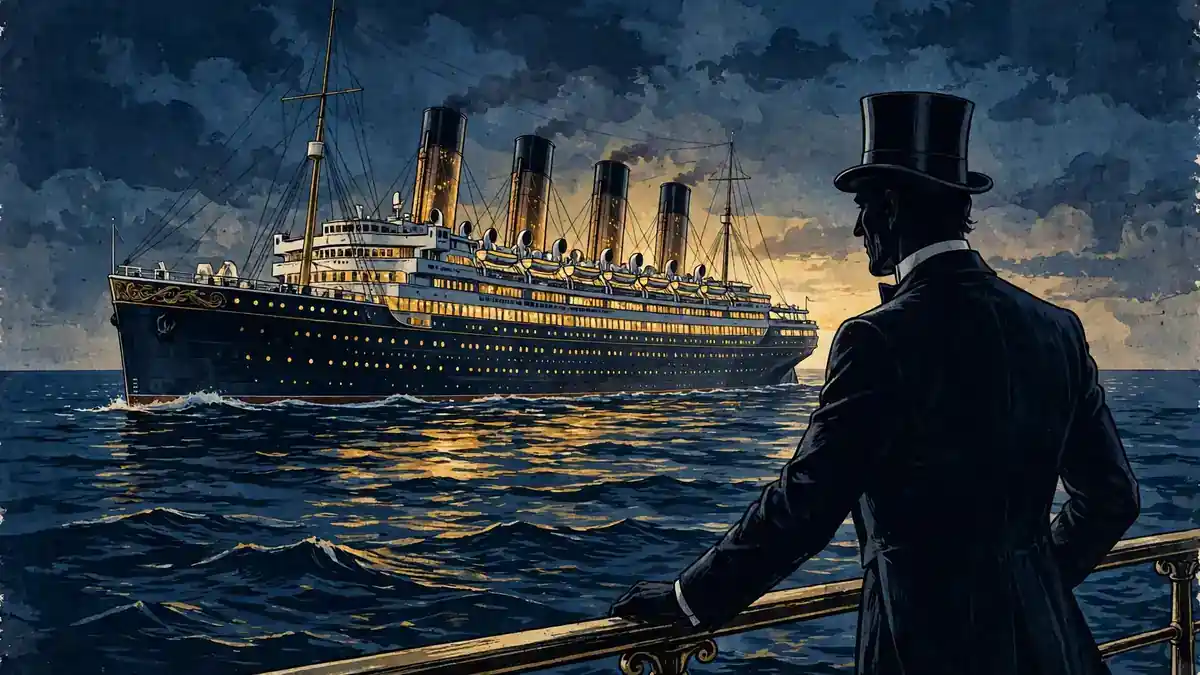
The flop should have ended his run as a leading man. Instead, the very next year delivered the role that defined him. In Titanic (1997), James Cameron cast Zane as Caledon “Cal” Hockley, the steel heir engaged to Rose DeWitt Bukater, played by Kate Winslet, and the rival of Leonardo DiCaprio’s Jack Dawson. Cal was written as a villain — rich, possessive, and cowardly — and Zane played him without softening a single edge. The film earned $2.19 billion worldwide in its original run and re-releases, won 11 Academy Awards, and made all three of its young stars famous around the world.
Fame arrived with a catch. Zane has said the role worked like a pair of golden handcuffs: casting directors could see him only as the villain, and the part that made him a household name also narrowed the parts he was offered. He told the Express in 2022 that the role expanded his reach — it became, in his words, an international calling card that opened doors with heads of state and captains of industry who recognised something of themselves in Cal — but the work that followed was mostly television movies, straight-to-video action films, and supporting turns.
That is the honest shape of his career after Titanic: not a collapse, but a step down from the A-list to the working tier, where he has stayed employed for nearly thirty years. Nicki Swift’s profile of his post-Titanic years puts it plainly — more than 100 credits, most of them far from the multiplex — and the numbers back it up. A fortune of $20 million is what that kind of career produces when the actor keeps the money instead of spending it: one enormous payday, one strong television fee, and decades of mid-level cheques, residuals, and producing income, compounded over time.
The Brando film changed the conversation in 2025. Collider called his performance possibly the best role of his entire career, and the film landed on the shortlist for the 97th Academy Awards in the Makeup and Hairstyling category. For an actor who spent a quarter-century being introduced as “the villain from Titanic,” playing Brando — and producing the film — was the first role in years that let critics write about him as an actor first and a famous face second.
Main Sources of Income
Acting fees are the foundation of Zane’s wealth, and they come in four distinct tiers. The first tier is the studio payday: Titanic and Cleopatra in the late 1990s. The second is steady television work — recurring roles, guest spots, and television movies that pay less per job but arrive every year. The third is the action-franchise tier: the Sniper sequels and similar straight-to-video features, where a known name carries the poster and the fee is negotiated per picture. The fourth is voice work, including Kingdom Hearts, which pays session fees and, in successful games, residual-style royalties.
Residuals are the quiet second income. Titanic has been re-released in cinemas several times, most recently in 2023 for its 25th anniversary, and it plays constantly on television and streaming. Under Screen Actors Guild rules, performers receive residual payments each time a film is re-exhibited, and a film of Titanic‘s scale generates those payments for decades. The sums are far smaller than the original salary, but they arrive without new work, and over 29 years they add up to a meaningful share of the fortune.
Producing is the income stream that grew as the acting fees shrank. Zane is a principal at RadioactiveGiant, a film and television production and distribution company, and he produces through his own Billy Zane Productions banner. On Waltzing with Brando he was both star and producer, which means his pay was split between an acting fee and a producer’s share of the film’s back end. If a film he produces lands a strong streaming deal, the producer’s share can exceed the acting fee — the Amway Achievers profile of his finances makes exactly this point about the Brando film, noting that ownership, not a flat fee, is where the upside sits in 2025 and 2026.
Art sales are the fourth stream, and the only one with public price tags. The Wall Art Gallery in Miami, which represents Zane, lists his paintings with prices: Campari RED (2022) at $35,000, Cappuccino Amaretto (2022) at $35,000, and de Vence (2016) at $100,000. Those are asking prices, not confirmed sales, and a gallery typically takes a commission of 40 to 50 percent — but even after commission, a handful of sales a year at those prices is a real income line, and one no other Titanic cast member has.
What does not contribute much is endorsements. Several low-quality net-worth sites credit Zane with Rolex and Hugo Boss deals, but none of them names a campaign, a year, or a source, and no reputable outlet has reported such a deal. We do not count endorsement income in this estimate. Convention appearances, such as his appearance at GalaxyCon Raleigh in 2025, pay appearance fees, and his photography exhibitions generate print sales — both are small, irregular additions rather than pillars of the fortune.
Salary and Earnings
The honest answer on Zane’s Titanic salary is that the sources disagree, and the gap is wide. The Ukrainian outlet 112.ua, reporting on the film’s cast salaries in 2025, puts Zane at about $1.5 million for playing Cal. The Amway Achievers profile of his finances, published the same year, estimates roughly $2.5 million for the same role. Both figures are plausible for a supporting lead in a $200 million production in 1997, and neither is backed by a studio document, so we publish the range: $1.5 million to $2.5 million.
For comparison, 112.ua reports that Leonardo DiCaprio earned $2.5 million for playing Jack — the same figure Achievers gives Zane. The symmetry is instructive: in 1997, the studio paid its romantic lead and its villain roughly the same money. What separated their fortunes afterwards was not the Titanic cheque but everything that followed. DiCaprio’s fee for his next films rose into eight figures; Zane’s did not.
His best-documented single payday after Titanic was the 1999 miniseries Cleopatra, in which he played Marc Antony opposite Leonor Varela. TheRichest’s earnings table lists a $2 million salary for the role, and Achievers reports the same figure independently. Two sources agreeing on an exact number is the strongest salary evidence in Zane’s file, and it tells a useful story: two years after Titanic, a prestige television event was still paying him at the top of the supporting-actor market.
The Phantom is the one salary we cannot pin down. Achievers estimates he cleared “over $2 million” as the lead of a $45 million studio picture, which fits the market for a first-time franchise lead in 1996, but no other outlet confirms a figure and we label it an estimate. What is documented is the cost of the flop: the film’s $17.3 million domestic gross against its $45 million budget, and Paramount’s write-off of about $21.5 million. A franchise lead who loses his studio $21.5 million does not get another $2 million offer the next year — and Zane’s fee history after 1996 reflects exactly that.
From the 2000s onward, his per-picture fees are not public. Straight-to-video action films and television movies do not publish salaries, and Zane has never discussed his fees in interviews. A working actor of his profile in that market typically earns in the low-to-mid six figures per picture, with franchise sequels paying a modest premium for continuity. We do not invent a number. What the record does show is volume: more than 100 credits, which at even conservative per-job fees, plus residuals and producing income, is consistent with a fortune in the $20 million range rather than the $50 million claimed by one outlier site.
That outlier deserves a sentence of its own. The site iliketodabble.com publishes a table claiming Zane’s wealth rose from $35 million in 2022 to $50 million in 2025, driven by ventures it names “Zane Enterprises,” a “Zane Winery,” and a “Zane Fashion Line.” No company registry, interview, press release, or reputable outlet records any of those businesses. The table is invented, and the $50 million figure should be ignored. It is a useful reminder that a net-worth number with no source behind it is not data.
Businesses and Investments
Zane’s most durable business is RadioactiveGiant, the production and distribution company where he is a principal. The firm develops and distributes independent film and television, and it gives Zane something most jobbing actors never get: a share of projects he does not have to act in. Producing credits on his recent work — Waltzing with Brando as producer, Day of Reckoning (2025) as executive producer — run through this side of his career, and his Billy Zane Productions banner is listed among the production companies on the Brando film.
He has also worked as an executive producer on smaller projects, including an album by blues musician Tim O’Connor that features three songs from Dead Calm — a small credit, but a telling one: Zane keeps a hand in the music and film worlds around his own early work, and he treats his back catalogue as an asset to be worked rather than a memory.
One business association damaged his reputation. In 2019, Zane appeared as a partner of Parkpine Capital, a Delaware-based company run by entrepreneur Ahmed Shabana, at the Global Ventures Summit in Luxembourg. A year later, USA Today reported that the firm had made a 600 percent profit of $1.4 million in the early months of the COVID-19 pandemic by selling the US government 60 rebranded ventilators — a deal USA Today said should have cost roughly $150,000. Nicki Swift’s account of the episode notes that the coverage tarnished Zane’s name by association. There is no record of Zane being accused of wrongdoing himself, and no record of what, if anything, he earned from the association — but the episode is part of his business record, and a complete profile does not leave it out.
His art practice is a business as well as a creative pursuit. Zane began painting during the seven-month Titanic shoot in 1997, setting up makeshift studios on location and working with local materials, a habit he has kept on film sets ever since. His first UK solo exhibition, Seize The Day Bed, opened at London’s Rook & Raven Gallery in October 2013. In 2024, the Red Lion Inn in Stockbridge, Massachusetts, showed his work alongside British artist Charlotte Rose in an exhibition called Foreign Substances, co-sponsored by the Norman Rockwell Museum, Shakespeare & Company, and the Berkshire International Film Festival. In January 2026 he opened a photography exhibition, A GUY WALKS INTO A BAR…, at the Leica Gallery in Los Angeles, shot entirely on Leica cameras and focused on the instant laughter appears in a bar. The show ran through March 2, 2026, with a closing appearance on February 28.
There is no public record of Zane holding a large stock portfolio, a venture-capital book, or a property empire. His wealth is concentrated in the ordinary assets of a long career: cash and savings from four decades of fees, residuals from a film that never stops earning, producer equity in a small slate of films, and a body of artwork with a real, if modest, market. That concentration is itself a finding — it explains why his fortune has stayed flat at $20 million for years instead of compounding the way a tech investor’s would.
Brand Deals and Sponsorships
There is no verified record of a major brand deal in Billy Zane’s career. No campaign, no ambassadorship, no product line with his name on it appears in reputable reporting, and his name does not turn up in the endorsement databases that track celebrity deals. This is unusual for an actor of his fame, and it is worth stating plainly rather than filling the gap with the Rolex and Hugo Boss claims that circulate on low-quality net-worth sites without a single named campaign behind them.
The absence has a reason. Endorsement deals go to actors whose image a brand wants to borrow, and Zane’s most famous image is a villain — a rich, cruel fiancé who locks his rival in a flooding room. Brands buy warmth and aspiration; Cal Hockley offered neither. His later career as a character actor and independent-film producer kept him visible to casting directors without keeping him visible to advertisers.
What he does have is a different kind of commercial value: the convention circuit. His appearance at GalaxyCon Raleigh in 2025, where he met fans and signed autographs, is the modern version of a brand deal for a legacy actor — appearance fees, photo-op sales, and merchandise, paid directly by the audience that remembers him. It is smaller money than a watch campaign, and it is real money all the same.

Houses, Cars and Other Assets
No public property record ties Billy Zane to a named mansion, and no reputable outlet has reported a house purchase or sale in his name. That silence is itself information: unlike actors who buy and sell trophy homes in the press, Zane’s housing has stayed private. Reports place him splitting his time between Los Angeles and Miami, where he keeps his studio practice and where The Wall Art Gallery represents his work, but the addresses, prices, and ownership details are not public and we do not guess at them.
The one car attached to his name is a 1964 Aston Martin DB5 — the same model made famous by James Bond — which he drove in the first Gumball 3000 rally in 1999. The rally ran from London to the south of France, and Zane’s participation put him in the company of the car collectors and enthusiasts who have defined the event ever since. Whether he owned the car or drove a borrowed one is not recorded, so we claim the drive, not the ownership. A DB5 in good condition is worth well into seven figures today, but a rally entry is not a purchase receipt.
His most distinctive asset is his own artwork. A working artist with gallery representation holds an inventory of unsold canvases, and at list prices of $35,000 to $100,000, even a modest inventory is worth several hundred thousand dollars. Add the photography from his Leica exhibition, the film memorabilia a four-decade career accumulates, and the producer’s equity in his films, and the asset picture is complete: no single trophy asset, but a spread of career-built holdings that support the $20 million estimate without requiring a mansion or a car collection to explain it.
Awards and Achievements
Billy Zane has never been nominated for an Academy Award or a Golden Globe, and he has never won a major individual acting prize. That is not a gap in the record — it is the record, and it belongs in any honest account of his career. His fame came from a film that won 11 Oscars, but the statuettes went to the film, its director, and its craftspeople, not to its villain.
What he does have is an ensemble honour: the cast of Titanic was nominated for the Screen Actors Guild Award for Outstanding Performance by a Cast in a Motion Picture, the guild’s equivalent of a best-ensemble prize. The nomination recognised all of the film’s principal players, Zane among them, and it remains the closest his acting has come to a major industry award.
The achievement that matters most for his 2026 standing is critical rather than ceremonial. His performance as Marlon Brando in Waltzing with Brando drew the best reviews of his career, with Collider describing it as possibly the finest role he has ever played, and the film made the shortlist for the 97th Academy Awards in Makeup and Hairstyling — a category where Zane’s physical transformation into Brando was the centrepiece. For an actor who spent decades being introduced by one role, a second role that critics take seriously is a genuine career achievement.
His art career carries its own honours: solo exhibitions in London, Los Angeles, and Miami; a show co-sponsored by the Norman Rockwell Museum; and a 2026 photography exhibition at the Leica Gallery in Los Angeles, one of the most respected photography spaces in the city. An actor who exhibits in those rooms is not dabbling — he is a working artist with a second profession, and the gallery prices attached to his work confirm that the market treats him as one.
Net Worth Growth Over the Years
Zane’s fortune grew in two bursts and then levelled off — a shape that matches his career exactly. The first burst ran from his debut to Titanic: a decade of rising fees that ended with the biggest film of the century. The second ran from Titanic through Cleopatra, when his market value was at its peak. After that, the curve flattens. Television work, franchise sequels, residuals, and producing kept the total growing slowly, but nothing after 1999 matched the late-1990s paydays, and the estimate has sat at $20 million for several years.
| Year | Estimated net worth | What drove it |
|---|---|---|
| 1990 | ~$1 million | Early film roles after Back to the Future and Dead Calm |
| 1997 | ~$4 million | The Phantom fee and the Titanic payday |
| 1999 | ~$7 million | $2 million Cleopatra fee at peak market value |
| 2005 | ~$9 million | Television work, Charmed run, residuals accumulating |
| 2015 | ~$12 million | Sniper franchise, voice work, producing income |
| 2021 | $20 million–$22 million | Figure reported by Celebrity Net Worth ($20M) and Wealthy Persons ($22M) |
| 2026 | $20 million | Anchored estimate; producing and art income offset by flat acting fees |
Every figure before 2021 in that table is our estimate, built from the documented paydays and the volume of work in between — not a reported number. The 2021 and 2026 figures are the reported ones. The gap between the $12 million estimate for 2015 and the $20 million reported for 2021 is the part of the record we cannot fully document: no outlet has published a year-by-year account of his earnings in that period, and the jump likely reflects a mix of accumulated residuals, producing income, and art sales rather than a single windfall. We show the gap instead of inventing a bridge for it.
The comparison that puts the fortune in context is the one sitting next to him on the Titanic set. Leonardo DiCaprio’s net worth grew into the hundreds of millions on the back of $20 million-plus fees for films like The Aviator and Inception, while Zane’s fees stayed in the working-actor range. The difference was never talent — it was trajectory. DiCaprio chose prestige directors and franchise leads; Zane chose volume and variety, and then built a second career in art and producing that DiCaprio never needed. A fairer comparison is with a fellow 1990s leading man such as George Clooney’s net worth story: Clooney also spent the 1990s as a television star moving into film, but his fortune multiplied through a tequila business, Casamigos, sold for around $1 billion — the kind of exit Zane has never had. Zane’s $20 million is the honest size of a career built on acting fees alone, without a business exit behind it.
Social Media Presence
Zane is active on Instagram as @billyzane, where his feed mixes three subjects: his paintings and photography, his daughters, and his film work. The art posts are the most consistent — works in progress, gallery openings, and the Leica exhibition that ran through early 2026. It is the feed of a man who treats social media as a studio noticeboard rather than a brand channel.
He does not run the kind of large, monetised social presence that pays influencers. No verified follower count is published in reliable reporting, and we do not repeat the invented figures that circulate on fan sites. What the account does show is that his audience is still there: posts about Waltzing with Brando and the Leica show drew strong engagement from fans who have followed him since Titanic, and convention appearances like GalaxyCon Raleigh in 2025 draw crowds on the strength of that same recognition.
For a net-worth estimate, his social presence matters in one narrow way: it is a distribution channel for his art. A painting posted to his own audience can find a buyer without a gallery taking its cut, and the Leica exhibition was promoted heavily through his own feed. Social media is not a pillar of his income, but it is the shop window for the pillar that is.
Personal Life
Zane married actress Lisa Collins in 1989, after meeting her on the set of Dead Calm. The marriage lasted six years and ended in divorce in 1995. He was later engaged twice — to Chilean actress Leonor Varela, and to British model and actress Kelly Brook, whose engagement ended in April 2008. Neither engagement led to marriage.
In 2010 he began a relationship with American model Candice Neil, whom he met through a friend. The couple became engaged and had two daughters: Ava Catherine, born in 2011, and Gia, born in 2014. Zane confirmed in 2022 that the relationship had ended some time earlier. He has kept his daughters largely out of the press since then, and his public posts about them are limited to family moments rather than any detail of their lives.
He divides his time between Los Angeles and Miami, the two cities where his film work and his art practice are based. He is a keen participant in motoring culture — his drive in the first Gumball 3000 rally in a 1964 Aston Martin DB5 is the best-known example — and he paints outdoors on film locations, a habit that began during the Titanic shoot and has never left him. Friends and interviewers describe a man who is, by Hollywood standards, unusually private about money: he has never given a net-worth interview, never discussed his fees, and never posed beside a car or a house for a wealth profile.
Sources & Reporting
Celebrity Net Worth — the $20 million net-worth figure and the early-life record (Greek descent, Chios and Mani, Francis W. Parker School); page updated April 1, 2024.
TheRichest — the $20 million figure and the earnings table, including the $2 million Cleopatra salary and the Titanic box-office figure of $2.19 billion.
Wikipedia — biography, filmography, family background, RadioactiveGiant role, Gumball 3000 drive, art exhibitions, and the 2022 confirmation that his relationship with Candice Neil had ended.
Achievers (Amway) — the 2026 $20 million estimate, the $2.5 million Titanic salary estimate, the $2 million Cleopatra fee, and the producer-equity case for Waltzing with Brando.
112.ua — the $1.5 million Titanic salary figure for Zane and the $2.5 million figure for Leonardo DiCaprio, published January 2025.
Nicki Swift — the post-Titanic career account, the 100-plus credit count, the “golden handcuffs” account of typecasting, and the Parkpine Capital ventilator episode as reported by USA Today.
Looper — The Phantom box-office record ($17.3 million domestic on a $45 million budget) and the cancelled sequel plans.
Fortress of Solitude — the $21.5 million Paramount write-off on The Phantom and the 2026 Takeover credit.
Collider — the Waltzing with Brando review calling his Brando performance possibly the best role of his career, and the film’s September 19, 2025 US release.
Metacritic — the Waltzing with Brando release record and its place on the 97th Academy Awards shortlist for Makeup and Hairstyling.
The Wall Art Gallery — gallery list prices for Zane’s paintings ($35,000 and $100,000) and his exhibition record in Los Angeles, London, Budapest, Milan, and Miami.
The Berkshire Edge — the 2024 Foreign Substances exhibition at the Red Lion Inn and Zane’s painting practice.
EINPresswire — the 2026 Leica Gallery photography exhibition A GUY WALKS INTO A BAR…, January 15 to March 2, 2026.
TheCityCeleb — the $20 million figure, height of 6 ft, family details, and the Los Angeles–Miami base.
Wealthy Persons — the $22 million figure from December 2021, the top of our published range.
TMDB — 2025 credits including Waltzing with Brando (producer and star) and Day of Reckoning (executive producer).
Reporting window: sources reviewed November 2026; the oldest anchor source (Celebrity Net Worth) was updated April 2024, and the freshest (the Leica exhibition) dates from February–March 2026. Figures that no source could confirm — endorsement deals, property records, post-2000 per-picture fees — are described as unconfirmed rather than estimated.
Frequently Asked Questions
What is Billy Zane’s net worth in 2026?
Billy Zane’s net worth is estimated at $20 million as of November 2026, with a published range of $20 million to $22 million. Celebrity Net Worth and TheRichest both list $20 million, while Wealthy Persons listed $22 million in December 2021. The fortune comes from four decades of acting fees, led by Titanic and the Cleopatra miniseries, plus residuals, producing income, and art sales.
How much did Billy Zane earn for Titanic?
Reports disagree. The outlet 112.ua puts his Titanic salary at about $1.5 million, while the Amway Achievers profile estimates roughly $2.5 million. We publish the range of $1.5 million to $2.5 million. For comparison, 112.ua reports that Leonardo DiCaprio earned $2.5 million for the same film.
How old is Billy Zane?
Billy Zane is 60 years old. He was born William George Zane Jr. on February 24, 1966, in Chicago, Illinois.
Who is Billy Zane married to now?
Billy Zane is not currently married. He was married to actress Lisa Collins from 1989 to 1995. He was later engaged to Leonor Varela and to Kelly Brook, and he was in a relationship with model Candice Neil from 2010 to 2022, with whom he has two daughters, Ava Catherine (born 2011) and Gia (born 2014). He confirmed in 2022 that the relationship with Neil had ended.
How tall is Billy Zane?
Billy Zane is 6 feet (1.83 m) tall. Some outlets list 1.84 m, which is the same height rounded differently.
What is Billy Zane doing now in 2026?
In 2025 he starred as Marlon Brando in Waltzing with Brando, a film he also produced, which reached US cinemas on September 19, 2025. In early 2026 he exhibited his photography show A GUY WALKS INTO A BAR… at the Leica Gallery in Los Angeles, and he appeared in the action thriller Takeover in 2026.
Is Billy Zane an artist? Does he sell paintings?
Yes. Zane is an abstract expressionist painter who began painting during the seven-month Titanic shoot in 1997. He has held solo exhibitions in London, Los Angeles, and Miami, and The Wall Art Gallery in Miami lists his paintings at $35,000 to $100,000. He also works in photography and exhibited at the Leica Gallery in Los Angeles in 2026.
Did Billy Zane play Marlon Brando?
Yes. Zane played Marlon Brando in Waltzing with Brando (2025), a biographical drama about Brando’s plan with architect Bernard Judge to build an eco-retreat on the Tahitian island of Tetiaroa. Zane also produced the film, and critics called it possibly the best performance of his career. The film made the shortlist for the 97th Academy Awards in Makeup and Hairstyling.
Final Thoughts
Billy Zane’s $20 million is the fortune of a working actor who had one enormous moment and then kept working for thirty years. The Titanic cheque and the $2 million Cleopatra fee built the base. Residuals, television work, the Sniper franchise, and producing income kept it growing. Art gave it a second engine that no other actor from that film has. And the discipline to keep the money — no public mansion, no car collection, no business blow-up — kept it intact.
What makes his story worth telling is not the size of the number but the shape of it. Most actors who play the villain in the biggest film of all time either disappear or spend their lives answering questions about one role. Zane did something rarer: he built a second profession in painting, a third in producing, and in 2025 he gave the performance of his life as Marlon Brando — a man who, like Zane, knew what it was to be famous for a role and then have to find a way past it. The $20 million figure is honest. The career behind it is more interesting than the number.
Published on November 16, 2026. Last reviewed November 2026. Found an error? See our corrections policy.