
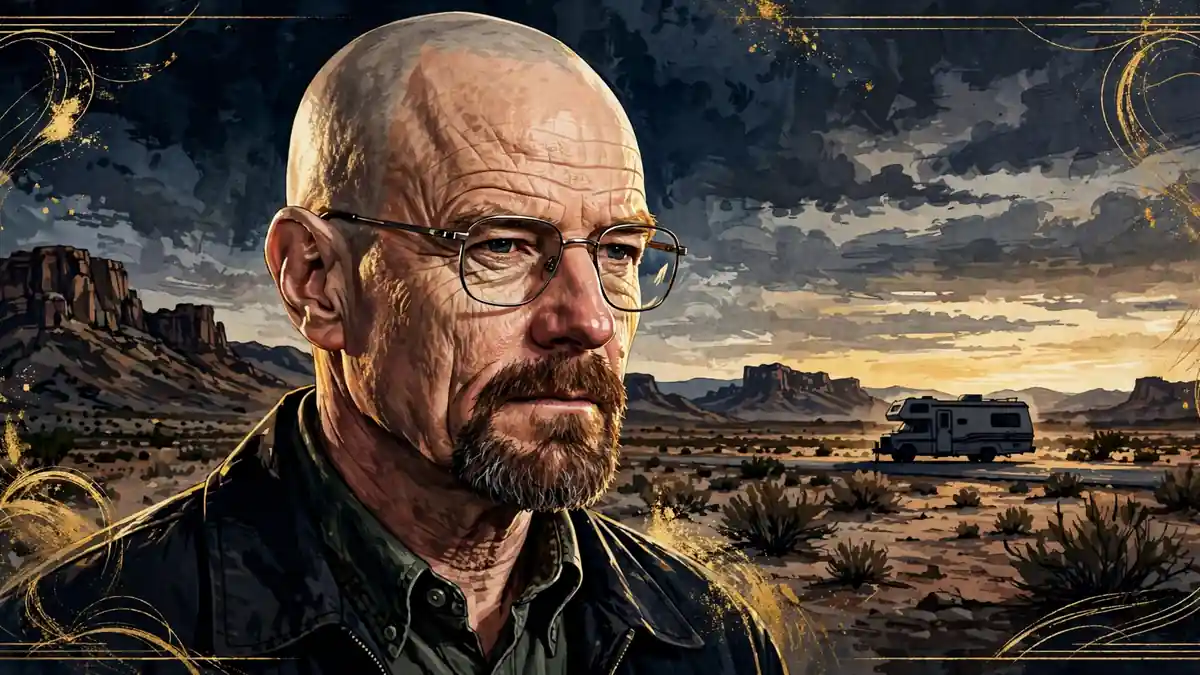
Bryan Cranston‘s net worth is estimated at $40 million to $50 million as of November 2026. Celebrity Net Worth puts him at $40 million in its September 2026 update, Parade puts him at $50 million, and the gap between those two respected tallies is the honest story of a fortune built slowly: seven seasons as Hal on Malcolm in the Middle, five seasons as Walter White on Breaking Bad at $225,000 an episode by the end, $750,000 an episode for Your Honor, two Tony Awards on Broadway, and a mezcal company that took a $15 million investment in late 2025 and launched tequila in 2026.
Bryan Cranston: Quick Facts
| Estimated net worth | $40 million to $50 million (range: $40 million to $50 million) |
|---|---|
| Profession | Actor, director, producer, writer |
| Nationality | American |
| Born | March 7, 1956 (age 70) |
| Height | 5 ft 10 in (1.79 m) |
| Primary income sources | Television salaries, film roles, Broadway profit shares, producing fees, Dos Hombres mezcal and tequila, book royalties, residuals |
| Active years | 1980–present |
| Last reviewed | November 2026 |
- Early Life and Background
- Education
- Career Journey
- Rise to Fame
- Main Sources of Income
- Salary and Earnings
- Businesses and Investments
- Brand Deals and Sponsorships
- Houses, Cars and Other Assets
- Awards and Achievements
- Net Worth Growth Over the Years
- Social Media Presence
- Personal Life
- Sources & Reporting
- Frequently Asked Questions
Early Life and Background
Bryan Lee Cranston was born on March 7, 1956, in Canoga Park, California, a San Fernando Valley neighbourhood of Los Angeles. His father, Joseph Cranston, was an actor and producer who had once boxed professionally; his mother, Peggy Sell, was a radio actress. The family lived inside the business without living off it — Joseph Cranston worked steadily but never broke through, and the household knew the difference between a working actor’s paycheque and a star’s.
When Bryan was 11, his father left the family. The departure shaped the next decade of his life in practical ways: Bryan and his siblings, older brother Kyle and younger sister Amy, spent long stretches living with their maternal grandparents in Canoga Park while their mother worked. Cranston has spoken in interviews and in his 2016 memoir A Life in Parts about the confusion of that period, and about the way his grandparents’ house — strict, orderly, full of chores — gave him structure while his parents’ marriage fell apart. He did not see his father again for years, and the two only reconciled much later, shortly before Joseph’s death in 2014.
The Valley childhood also gave him his first taste of performing. Cranston has described himself as a restless, funny kid who used humour to get attention at home and at school, and who discovered early that making a room laugh was a reliable way to be noticed. He took part in school plays, but acting was not yet a plan. The plan, for a long time, was the police force. That detour matters to the money story: Cranston arrived at acting late, without family money or connections, and spent his twenties and thirties as a jobbing actor — commercials, voice work, one-episode television parts — before any of it paid like a career.
One early job still shows up in his biography because of who he met there. While working as a young actor he took a job as a waiter, and later worked as a security guard and in other stopgap roles between acting gigs. He also spent time in the late 1970s travelling, including a period working on a motorcycle — the kind of wandering twenties that left him broke but unbothered, and that he later mined for the memoir. By the time he was 30, he had a Screen Actors Guild card, a reputation as a reliable utility player, and almost no money to show for it. The fortune came in his forties and fifties, which is unusually late for a television star, and it explains why his spending and investing habits read as cautious rather than flashy.
Education
Cranston attended Canoga Park High School, graduating in the mid-1970s. He then enrolled at Los Angeles Valley College, where he studied police science and earned an associate degree. The choice was deliberate: he intended to become a police officer, and the degree was a step toward the academy. He has said the plan changed when he took an acting elective at the college and found the work absorbing in a way police science never had been.
The police-science background is more than a footnote. Cranston has credited it with his approach to character work — research first, behaviour second, showy emotion last — and it fed directly into the two roles that defined his career: Hal, a father whose chaos always had a logic, and Walter White, a chemistry teacher whose criminal turn was plotted like a case file. He has also joked in interviews that the degree gave him a fallback he never needed, and that his parents’ reaction to the switch from law enforcement to acting was, at first, wary.
He did not attend a drama school or a four-year university theatre programme. His training was the working kind: community theatre, commercials, and small television parts through the 1980s, learning on sets. That matters when comparing him with peers who came through Juilliard or the Yale School of Drama. Cranston’s path was slower and cheaper, and it left him without the debt or the network that a conservatory provides — but it also left him with a character actor’s range, which is exactly what let him play comedy and drama at the highest level in the same decade.
Career Journey
Cranston’s first screen credits came in the early 1980s, and the list reads like a map of American television’s working class: a soap opera, Loving, where he played Douglas Donovan from 1983 to 1985; single episodes of Airwolf, Hill Street Blues and Matlock; voice work in English dubs of Japanese anime, including Macross Plus and Street Fighter II: The Animated Movie. None of it paid much. Commercials paid the rent — Cranston became a familiar face in ads through the 1980s and 1990s, including a long run of spots that kept him solvent while the acting parts stayed small.
The first part that made casting directors remember his name was Dr Tim Whatley on Seinfeld, the dentist Jerry suspects of converting to Judaism “for the jokes.” Cranston played Whatley in five episodes between 1994 and 1997, and the role showed off the specific skill that would carry him: he could be funny without begging for the laugh, and menacing without raising his voice. Around the same time he was working steadily as a guest star — The X-Files, The King of Queens, Chicago Hope — and directing episodes of television, including seven episodes of Malcolm in the Middle later on.
One guest spot changed his life. In 1998, Cranston appeared in The X-Files episode “Drive” as Patrick Crump, a man whose head will explode if he stops driving. The episode was written by Vince Gilligan. Gilligan never forgot the performance — the mix of panic, decency and menace — and when he created Breaking Bad a decade later, he wrote Walter White with Cranston in mind. AMC executives were not convinced at first: they wanted a bigger name, and Cranston was still “the dad from Malcolm in the Middle.” Gilligan insisted, and the network relented. It is one of the most consequential casting decisions in television history, and it turned a 52-year-old sitcom dad into the defining dramatic actor of his generation.
Between Malcolm and Breaking Bad, Cranston kept working in film in supporting parts that added up: a small role in Saving Private Ryan (1998), Little Miss Sunshine (2006), Drive (2011), Contagion (2011) and Argo (2012). Each film raised his quote a little. None of them, on its own, made him rich. The money story of Bryan Cranston is a television story, and it starts in earnest in 2000.
Rise to Fame
Malcolm in the Middle premiered on Fox in January 2000, and Cranston’s Hal — a well-meaning, impulsive, physically fearless father of four (later five) boys — became the show’s secret weapon. The series ran for seven seasons and 151 episodes, ending in 2006, and Cranston earned three Primetime Emmy nominations for Outstanding Supporting Actor in a Comedy Series. The show’s syndication life has been long: all 151 episodes stream on Hulu, and the series still finds new viewers a quarter-century after its debut.
What Malcolm did for Cranston’s bank balance is often overstated, and the record deserves a careful read. His salary on the show was never publicly disclosed. The figure that circulates online — $150,000 per episode — actually belongs to his co-star Jane Kaczmarek, who was reported by ABC News to be earning $150,000 per episode by the show’s fourth season. Parade noted in its 2026 net worth report that Kaczmarek and Cranston started the show with similar star power and screen time, so Cranston “presumably received a similar salary” — but that is an inference, not a reported fact, and we flag it as one. What is certain is that seven seasons of a hit network sitcom, plus residuals from syndication and streaming, gave Cranston his first real financial security in his mid-forties.
Breaking Bad premiered on AMC in January 2008. Cranston was 51. Over five seasons and 62 episodes, Walter White went from a chemistry teacher with a terminal diagnosis to a methamphetamine kingpin, and Cranston won the Primetime Emmy for Outstanding Lead Actor in a Drama Series four times — in 2008, 2009, 2010 and 2014 — a run matched by almost no one in television history. The show won 16 Emmy Awards in total and became, in the streaming era, one of the most-watched dramas ever made. Cranston’s fee climbed with it: by the final season he was earning $225,000 per episode, according to Celebrity Net Worth, or about $3.6 million for the 16-episode fifth season alone. Across the full run, his base salary from the show is generally estimated at $8 million to $12 million, before residuals and his producer fees — he was also an executive producer on the later seasons, which added backend participation.
The fame that followed was different in kind from sitcom fame. Breaking Bad made Cranston a global star, a Halloween costume, and a reference point in political speeches and pop culture. It also reset his asking price permanently. Before 2008 he was a respected working actor; after 2013 he was a name that could green-light a project. The next decade — Broadway, Your Honor, film leads, a spirits company — was built on that reset, and the net worth range reflects it: most of the $40 million to $50 million was earned after he turned 55.
Main Sources of Income
Cranston’s income comes from five streams, and their balance has shifted over time. In the 2000s, television salaries were nearly everything. In the 2010s, film fees, stage profit shares and producing fees joined them. In the 2020s, the spirits business and residuals from two long-running shows do a growing share of the work. The table below gives the shape of it; the sections that follow put numbers on each stream.
| Income stream | Share of career earnings | Key evidence |
|---|---|---|
| Television acting salaries | Largest single stream | $225,000 per episode, Breaking Bad final season; $750,000 per episode, Your Honor |
| Film roles | Steady second stream | Supporting and lead roles from Argo to Trumbo to The Phoenician Scheme |
| Broadway and stage | Smaller cash, large prestige | Tony-winning All the Way; Network profit-share deal reported by Forbes |
| Producing and directing | Growing since 2013 | Executive producer on Breaking Bad, Your Honor, Sneaky Pete, the 2026 Malcolm revival |
| Dos Hombres spirits | Equity, not salary | Co-founded 2019; Constellation Brands minority stake 2021; $15 million investment late 2025 |
| Residuals and royalties | Compounding | 151 episodes of Malcolm and 62 of Breaking Bad in perpetual syndication and streaming |
Residuals deserve a paragraph of their own, because they are the quiet engine of the fortune. Both of Cranston’s signature shows live on in syndication, streaming and home media, and Screen Actors Guild residual payments continue for years after a show ends. Malcolm in the Middle has been in syndication since 2006 and streams on Hulu; Breaking Bad is one of Netflix’s most durable catalog titles. Neither stream publishes its residual cheques, so no honest tally can put a number on them — but for an actor with two shows of that scale, residuals are a meaningful, recurring line that keeps arriving long after the filming stops. That is one reason the $40 million floor from Celebrity Net Worth looks conservative to some analysts, and why Parade lands at $50 million.
His memoir, A Life in Parts (2016), added book royalties and a speaking and audiobook line, and it did something money cannot buy directly: it gave interviewers a set of stories — the police-science degree, the father who left, the X-Files episode — that Cranston has been retelling, profitably, ever since. The book was a New York Times bestseller, and its paperback and audio editions continue to sell.
Salary and Earnings
The per-episode numbers are the spine of this article, so here they are in one place, with the sourcing stated plainly.
Malcolm in the Middle (2000–2006): Cranston’s own salary was never publicly disclosed. His co-star Jane Kaczmarek was reported by ABC News to earn $150,000 per episode by season four, and Parade reasons that Cranston, with similar billing and screen time, presumably earned a comparable figure in the later seasons. Treat that as an informed estimate, not a reported fact — and beware the many net worth blogs that state the $150,000 as Cranston’s own disclosed salary. It is not. Across 151 episodes, even a mid-five-figure average in the early seasons rising toward six figures later would put his cumulative Malcolm pay in the region of $7 million to $9 million, which is the range most careful estimates use, plus residuals that have run for two decades.
Breaking Bad (2008–2013): $225,000 per episode by the final season, according to Celebrity Net Worth, which Parade also cites. The 16-episode fifth season alone was worth about $3.6 million to him in base salary; the 13-episode fourth season at a similar rate was worth roughly $2.9 million. Early seasons paid far less — Cranston was not yet a star when the show began, and his first-season fee was a fraction of the final rate. Across all 62 episodes, careful estimates put his total Breaking Bad acting pay at $8 million to $12 million, before producer fees, backend participation and residuals. The show’s afterlife — Netflix, syndication, the 2019 film El Camino, in which he made a cameo — keeps the residuals flowing.
Your Honor (2020–2023): $750,000 per episode, according to Variety, as reported by Parade. Over 20 episodes across two seasons, that is about $15 million in base salary — the single biggest payday of his career, and larger than his entire Breaking Bad acting pay. The figure also made him one of the highest-paid actors on television in 2021. Variety‘s reporting put the first season at $700,000 per episode rising to $750,000 in season two; either way, the total lands near $15 million. Cranston also executive-produced the series, which added a producer fee on top.
Broadway: the numbers here work differently. For Network on Broadway in 2018–19, Forbes reported that Cranston took a union minimum salary — $2,095 a week in 2019 — rather than a star’s salary, and would earn the bulk of his money from the production’s net profits after investors were repaid. Forbes put him on track to earn $1 million for the Broadway run. It is a deal structure that tells you how Cranston thinks about money: he traded guaranteed cash for a share of the upside, and the upside paid. His earlier Broadway run, All the Way (2014), won him the Tony for Best Actor and paid a standard Broadway star’s salary, but the Network deal is the more revealing one financially.
Film: Cranston’s film fees are not publicly reported title by title, and we do not invent them. What the record shows is a steady climb: supporting roles in studio films through the 2010s (Argo, Godzilla, The Infiltrator), a lead role in Trumbo (2015) that earned him an Academy Award nomination, and lead and supporting work in the 2020s (Jerry & Marge Go Large, Asteroid City, The Phoenician Scheme). A working rule of the trade is that an Oscar-nominated actor of his standing commands low-to-mid seven figures for a lead film role and high six figures for a strong supporting part — but those are industry ranges, not Cranston’s contracts, and we present them as such.
The 2026 revival: Cranston returned as Hal in Malcolm in the Middle: Life’s Still Unfair, a four-episode Hulu revival that premiered on April 10, 2026, with Cranston as an executive producer. His fee for the revival has not been publicly disclosed. Given his reported $750,000-per-episode rate on Your Honor, Parade notes that he “made a pretty penny” to return as Hal — a fair inference, but not a number we can publish as fact.
Businesses and Investments
The most important business in Cranston’s portfolio is Dos Hombres, the mezcal brand he co-founded with Breaking Bad co-star Aaron Paul in the summer of 2019. The idea came from a dinner in New York, after which the two travelled through Oaxaca, Mexico, looking for a mezcal good enough to put their names on. They found third-generation maestro mezcalero Gregorio Velasco in the village of San Luis del Río, and built the brand around his traditional, electricity-free production methods. Dos Hombres means “two men” in Spanish — a nod to the partnership, and to the on-screen partnership that made them famous.
The brand’s growth has been documented in the trade press rather than in press releases, which makes the milestones easier to trust. In 2021, Constellation Brands took a minority stake through its venture arm, while the company stayed independently owned and operated. In December 2025, The Spirits Business reported that Dos Hombres had secured a $15 million investment from an undisclosed investor, raised by selling a further minority stake, to fund distribution, sales and new releases in 2026. The same report noted the brand’s deepening partnership with Velasco and with Mexican partner Fernando Romero-Luna.
In April 2026, the brand moved beyond mezcal into tequila, launching Dos Hombres Blanco and Reposado, made at the Tequilera Tap Distillery in Amatitán, Jalisco, and overseen by veteran distiller Julio Cova. The Blanco launched on May 1, 2026, at $39.99 a bottle, with the Reposado following at $49.99; a launch party for the Reposado was held in West Hollywood on September 22, 2026. The tequila is aged in barrels that previously held Four Roses Bourbon — a detail Cranston has talked up in interviews, and one that shows how hands-on the two founders remain. Entrepreneur reported that the company employs about 50 people in Mexico and 22 in the United States, and that Paul and Cranston personally interviewed early hires.
What is Dos Hombres worth to Cranston personally? No valuation is public, and we do not invent one. The $15 million investment round implies outside investors valued the whole company well above that figure — a minority stake priced at $15 million points to a valuation in the tens of millions — but the founders’ exact remaining stakes are not disclosed. Celebrity spirits brands have produced very large exits — Ryan Reynolds’ Aviation Gin sold to Diageo for $610 million is the famous example — but most do not, and Dos Hombres is still a growth-stage company, not an exit. In our estimate it counts as a meaningful equity asset with real upside, not as a realised fortune. That distinction is one reason we publish a range rather than a single number.
Beyond Dos Hombres, Cranston’s business activity is producing. He co-created and executive-produced Sneaky Pete (2015–2019) for Amazon, executive-produced Your Honor and the 2026 Malcolm revival, and runs a production company, Moonshot Entertainment, which develops film and television projects. Producer fees and backend points on those shows are a real income line, though the amounts are private. He has also directed episodes of Malcolm in the Middle, Breaking Bad and Your Honor, which pays Directors Guild rates on top of his acting fee.
On investments outside entertainment, Cranston is notably quiet. There is no public record of venture-capital bets, crypto holdings or startup portfolios in his name, and we do not attribute any to him. The public record shows a man who put his money into property, into a drinks company he understands, and into his own productions — a conservative allocation for a man who got rich late and has said he does not need to work for the money anymore.
Brand Deals and Sponsorships
Cranston is not a prolific endorser, and that is a deliberate choice. Unlike actors who lend their faces to watches, cars and fragrances, he has kept his commercial work largely inside Dos Hombres, where he is an owner rather than a hired face. The distinction matters financially: an endorsement pays a fee; an equity stake pays if the company grows. Cranston chose the second.
The one high-profile commercial partnership in recent years is also a Dos Hombres story. In 2025, Cranston and Paul appeared at an Applebee’s in Times Square to promote a trio of Dos Hombres cocktails priced at $9 each, including the “Breaking Rock Rita,” which mixed Dos Hombres with Dwayne Johnson’s Teremana Blanco tequila. The appearance was a brand partnership between two celebrity drinks companies, staged as a bar takeover, and it showed the founders’ willingness to do the unglamorous work of selling their product in person. Entrepreneur noted that Paul ran the brand’s social media in its early years and that the founders stayed “on emails constantly” — the opposite of a passive celebrity endorsement.
Earlier in his career, Cranston did commercial acting work — the ads that paid his rent in the 1980s and 1990s — but those were acting jobs, not sponsorships, and they belong in the career section rather than here. He has also lent his voice to video games and animated films, including Kung Fu Panda 3 and Kung Fu Panda 4, and to advertising voiceover work. None of those deals has a publicly reported fee, and we do not estimate them. The honest summary is that endorsements are a small part of this fortune; salaries, residuals and equity are the story.
Houses, Cars and Other Assets
The best-documented asset Cranston owns — or owned — is a house, and it tells you a lot about him. In 2007, he and his wife Robin Dearden paid $2.5 million for a 1940s beach bungalow in Mussel Shoals, Ventura County, California. They demolished it and spent six years building a replacement: a 2,450-square-foot home designed to produce as much energy as it consumed, with solar panels, rainwater collection, heavy insulation and passive-house construction. The finished house earned LEED Platinum certification, was named “Green Home of the Year” by the U.S. Green Building Council, and was the first passive-house-certified residence in Ventura County. Cranston told Dwell magazine that the test of the design was simple: “We know we have succeeded if our guests ask incredulously, ‘This is a green home?'” The green specifications cost about 30 percent more than a conventional build.
In February 2021, the couple listed the house — which they called “Three Palms” — for $4.995 million. It sold about six weeks later for $5.45 million, or $455,000 above the asking price, to real-estate investor Louis Gonda, according to the Los Angeles Times via The Real Deal. The gain over the 2007 purchase price was about $2.95 million before build and holding costs, which were substantial. The house has since come back on the market: in 2026 it was listed at $7.9 million by its current owner, a measure of how much the property — and the green-home premium Cranston built into it — has appreciated since he sold it.
In New York, the property trail is equally well documented. In 2017, Cranston paid $3.1 million for a two-bedroom apartment on Central Park South. He listed it in April 2024 for $3.495 million and sold it later that year for about $3.5 million, according to Celebrity Net Worth. In September 2021, he and Dearden paid $5.6 million for a two-bedroom co-op at Harperley Hall on Central Park West, which remains their New York base as far as the public record shows. The pattern is consistent: buy well, hold, sell at a profit, and keep the footprint modest by celebrity standards — a two-bedroom co-op, not a compound.
On cars, the public record is thin, and we say so rather than filling the gap with a guessed garage. Cranston has not built a public identity around car collecting, and no reliable outlet has catalogued his vehicles. He has been photographed in ordinary cars and has spoken more about bicycles and walking in New York than about supercars. The absence of a car story is itself a data point: this is not a fortune spent on depreciating metal.
Other assets are the usual ones for an actor of his standing: the Dos Hombres equity stake, producer backend points, the memoir’s royalties, and a pension and health coverage through the actors’ unions built up over four decades of qualifying work. None of those has a public valuation, and we do not assign one. What the property record proves, on its own, is a disciplined buyer: two documented sales, both profitable, both above asking price.
Awards and Achievements
Cranston’s trophy shelf is one of the strongest of any living television actor, and it is also a money story: awards raise quotes, and his quote rose with each one. He has won seven Primetime Emmy Awards — four as Outstanding Lead Actor in a Drama Series for Breaking Bad (2008, 2009, 2010, 2014), two as a producer of the show, and one as Outstanding Guest Actor in a Comedy Series for his 2025 appearance as studio chief Griffin Mill on The Studio. He was also Emmy-nominated for Malcolm in the Middle, for the HBO film All the Way, and for Curb Your Enthusiasm.
On stage, he has won two Tony Awards: Best Actor in a Play for All the Way in 2014, playing President Lyndon B. Johnson, and Best Actor in a Play for Network in 2019, playing news anchor Howard Beale. He won the Laurence Olivier Award for Network in London, and he was nominated for an Academy Award and a BAFTA Award for Best Actor for Trumbo (2015), playing the blacklisted screenwriter Dalton Trumbo. He has also won a Golden Globe Award for Breaking Bad and multiple Screen Actors Guild Awards, including for the show’s ensemble.
The peer comparison below puts the fortune in context. Cranston is not the richest actor of his generation — the film stars with franchise paydays sit far above him — but among television-first dramatic actors of his era, he sits near the top, and his late-career earnings rate is the highest of the group.
| Actor | Estimated net worth | Main wealth engine |
|---|---|---|
| Bryan Cranston | $40 million to $50 million | Breaking Bad, Your Honor, Dos Hombres |
| Al Pacino | About $40 million | Film career spanning five decades; The Godfather franchise |
| Bradley Cooper | About $120 million | Film leads and directing; A Star Is Born, American Sniper |
| Tim Robbins | About $60 million | Film acting and directing; The Shawshank Redemption |
| Ethan Hawke | About $55 million | Film and television; Before trilogy, Training Day |
| Kevin Costner | About $250 million | Film stardom and Yellowstone |
The peer figures are Celebrity Net Worth estimates, published as single numbers, and they carry the same uncertainty as any net worth tally. We include them to show scale, not to pretend precision: the gap between Cranston and Cooper is a film-franchise gap, while the gap between Cranston and his Breaking Bad co-stars is a leading-man gap. Aaron Paul, his Dos Hombres partner, is generally estimated at about $20 million — roughly half of Cranston’s figure — which reflects the difference between a co-lead’s fee and a lead’s fee across the same 62 episodes.
Net Worth Growth Over the Years
No year-by-year balance sheet exists for Cranston, and any table that claims exact figures for 2010 or 2015 is guessing. The table below is built from dated, reported milestones instead: what he was earning, and when, and what changed his rate. Read it as a career arc, not an audit.
| Period | What changed | Estimated position |
|---|---|---|
| 1980s–1990s | Commercials, soap opera, guest spots, voice work | Working actor; modest savings |
| 2000–2006 | Malcolm in the Middle, 151 episodes; first real security | Low single-digit millions |
| 2008–2013 | Breaking Bad; fee rises to $225,000 per episode; four Emmys | About $10 million to $15 million |
| 2014–2019 | Two Tonys; Trumbo Oscar nomination; Dos Hombres founded 2019 | About $25 million to $35 million |
| 2020–2023 | Your Honor at $750,000 per episode; Ventura house sold for $5.45 million | About $35 million to $45 million |
| 2024–2026 | Dos Hombres $15 million investment; tequila launch; Malcolm revival; Studio Emmy | $40 million to $50 million |
Two things stand out in that arc. First, the steepest climb came after age 55 — the opposite of the usual child-star or early-breakout pattern. Second, the 2020s growth is equity growth as much as salary growth: the Dos Hombres investment round and the tequila expansion are the first entries in his fortune that could plausibly multiply, rather than simply accumulate. If the brand exits at a strong valuation in the coming years, the top of our range will look low. If it does not, the range still holds, because the salary and property record supports it on its own.
Social Media Presence
Cranston is active on Instagram and X, where he posts about Dos Hombres, his stage and screen projects, and the occasional Breaking Bad anniversary. His feed is a working actor’s feed rather than an influencer’s: project announcements, behind-the-scenes photographs, and brand posts for the mezcal and tequila lines, with long gaps between posts when he is filming or on stage. He does not run a lifestyle brand, sell merchandise to his followers, or post sponsored content for outside companies, which fits the pattern of the rest of his career — the commercial energy goes into the company he owns.
Social media also serves as the brand’s distribution channel. In the early years of Dos Hombres, Aaron Paul ran the company’s social accounts, and Cranston’s own posts regularly amplified them. The April 2026 tequila announcement travelled the same way: a late-night television appearance, a press release, and a wave of social posts from both founders. For a net worth estimate, the point is modest but real: a social following in the millions is a marketing asset for Dos Hombres, and it costs the founders nothing to use.
Personal Life
Cranston has been married to actress Robin Dearden since 1989. They met on the set of Airwolf in the 1980s, when Dearden was guest-starring and Cranston was a regular; he has told the story of being struck by her on sight, and of a courtship that moved slowly by Hollywood standards. Their daughter, Taylor Dearden, born in 1993, is an actress — she plays Dr Melissa King on the HBO medical drama The Pitt, and in early 2026 the show’s producers were asked publicly whether her father might ever guest-star alongside her. The answer, from an executive producer, was that the odds were “slim to none,” because a Cranston appearance would pull focus from the show’s own cast.
The family splits its time between Los Angeles and New York, where the Central Park West co-op bought in 2021 is their base. Cranston has spoken about turning down work to protect that balance, and about the period in his fifties when he realised he could afford to choose. He is 70 now, and the 2026 schedule — a four-episode revival, a guest arc on The Studio, a film or two a year, and the drinks company — reads like a man working because he likes the work, not because the mortgage demands it. He has also been open about his health, including a bout of COVID-19 in 2020 after which he donated plasma, and about his father’s absence and eventual reconciliation, which he wrote about at length in his memoir.
Philanthropy is not a headline part of the Cranston story, and we do not pad it. He has supported arts education and appeared at charity events, but there is no public record of a foundation in his name or of large disclosed gifts. What the record does show is a man who, having been poor for a long time, treats money as security rather than status — the green house, the two-bedroom co-op, the company he built with a friend, and a work calendar he controls.
Sources & Reporting
Celebrity Net Worth — the $40 million net worth figure (updated September 19, 2026), the $225,000-per-episode Breaking Bad final-season rate, and the property record (Ventura purchase and $5.45 million sale; Central Park South purchase and sale; Central Park West co-op purchase).
Parade — the $50 million 2026 net worth estimate; the Jane Kaczmarek $150,000-per-episode context for Malcolm in the Middle; the $750,000-per-episode Your Honor figure via Variety; and the undisclosed Malcolm revival fee.
Variety — original reporting of the $750,000-per-episode Your Honor salary, as cited by Parade.
Forbes — the Network Broadway deal: union minimum salary of $2,095 a week in 2019, with the bulk of earnings from profit share, on track for $1 million for the run.
The Spirits Business — the December 2025 report of Dos Hombres’ $15 million investment round, and the April 2026 report of the tequila launch (Blanco and Reposado, Tequilera Tap Distillery, Constellation Brands’ 2021 minority stake).
Entrepreneur — Dos Hombres’ founding story, Gregorio Velasco’s role, the 50 Mexico and 22 United States employees, and the Applebee’s cocktail partnership.
The Real Deal — the Ventura house sale at $5.45 million, $455,000 above asking, citing the Los Angeles Times.
Dwell — Cranston’s own account of the Ventura green home’s design and his “This is a green home?” test.
LoveMoney — the $40 million estimate and the Breaking Bad cast comparison, published September 2026.
Wikipedia — filmography and awards record, including the seven Primetime Emmy Awards, two Tony Awards, Olivier Award, and the 2026 projects (Malcolm in the Middle: Life’s Still Unfair, The Studio, Chili Finger).
Reporting window: sources published or updated between 2014 and November 2026, with net worth figures from September–November 2026 updates. Where sources disagree — most notably the $40 million versus $50 million net worth tallies — we publish the range and name both outlets. Per-episode figures that were never publicly disclosed, including Cranston’s own Malcolm in the Middle salary, are labelled as estimates or inferences, not facts.
Frequently Asked Questions
What is Bryan Cranston’s net worth in 2026?
Bryan Cranston’s net worth is estimated at $40 million to $50 million as of November 2026. Celebrity Net Worth puts him at $40 million in its September 2026 update, while Parade puts him at $50 million. The range reflects the uncertainty in valuing his Dos Hombres equity stake and his ongoing residuals.
How much did Bryan Cranston make per episode of Breaking Bad?
By the final season, Bryan Cranston was earning $225,000 per episode of Breaking Bad, according to Celebrity Net Worth. With 16 episodes in the fifth season, that was about $3.6 million for the final season alone. His total acting pay across all 62 episodes is estimated at $8 million to $12 million, before producer fees and residuals.
How much did Bryan Cranston earn on Malcolm in the Middle?
His exact Malcolm in the Middle salary was never publicly disclosed. His co-star Jane Kaczmarek was reported by ABC News to earn $150,000 per episode by season four, and Parade reasons Cranston likely earned a comparable figure in the later seasons — but that is an inference, not a reported fact. Across 151 episodes, careful estimates put his cumulative pay at $7 million to $9 million, plus residuals.
How much did Bryan Cranston make for Your Honor?
Bryan Cranston earned $750,000 per episode for Your Honor, according to Variety, as reported by Parade. Over 20 episodes across two seasons, that is about $15 million in base salary — the biggest single payday of his career. He also executive-produced the series.
What is Dos Hombres, and how much is it worth?
Dos Hombres is the mezcal brand Bryan Cranston co-founded with Aaron Paul in 2019, made in Oaxaca by maestro mezcalero Gregorio Velasco. Constellation Brands took a minority stake in 2021, and the company raised a $15 million investment in late 2025. No public valuation exists, so its exact worth to Cranston is unknown, but the investment round points to a company valued in the tens of millions. The brand added tequila in 2026.
How old is Bryan Cranston, and how tall is he?
Bryan Cranston was born on March 7, 1956, in Canoga Park, California, which makes him 70 years old as of November 2026. He is listed at 5 feet 10 inches tall (1.79 metres).
Who is Bryan Cranston’s wife?
Bryan Cranston has been married to actress Robin Dearden since 1989. They met on the set of Airwolf in the 1980s. Their daughter, Taylor Dearden, born in 1993, is an actress who plays Dr Melissa King on the HBO medical drama The Pitt.
What houses does Bryan Cranston own?
Cranston’s best-known property was a net-zero, LEED Platinum beach house in Ventura County, California, bought as a bungalow for $2.5 million in 2007, rebuilt, and sold in 2021 for $5.45 million. In New York, he bought a Central Park South apartment for $3.1 million in 2017 and sold it in 2024 for about $3.5 million, and in 2021 he paid $5.6 million for a co-op on Central Park West.
Final Thoughts
Bryan Cranston’s fortune is unusual in Hollywood because of when it arrived. He was 44 when Malcolm in the Middle gave him his first real money, 52 when Breaking Bad made him a star, and 64 when Your Honor paid him $750,000 an episode. The $40 million to $50 million range is the sum of a very late peak, and it shows in how the money is held: a green house sold at a profit, a two-bedroom co-op, a drinks company built with a friend, and a work calendar he controls.
The honest caveats are worth repeating. The top of the range depends on Dos Hombres, whose value is real but unproven until an exit. The bottom of the range is supported by documented salaries and property sales alone. And the figure that circulates most often online about his Malcolm pay — $150,000 an episode — belongs to his co-star, not to him. A fortune built on two television shows, a Broadway profit share and a mezcal brand does not need inflated numbers to impress. The documented ones are impressive enough.
Published on 2026-11-23. Last reviewed November 2026. Found an error? See our corrections policy.