
Frankie Beverly‘s net worth is estimated at $500,000 to $4 million as of November 2026. The Maze frontman built that fortune across five decades of gold albums, relentless touring, and songwriting royalties — then watched his signature song find a second life when Beyoncé covered it in 2019. He died on September 10, 2024, at 77, so every figure here describes the estate he left behind, not a fortune still growing.
Frankie Beverly: Quick Facts
| Estimated net worth | $500,000 to $4 million (at death, September 2024) |
|---|---|
| Profession | Singer, songwriter, producer, founder and lead vocalist of Maze |
| Nationality | American |
| Born | December 6, 1946, Philadelphia, Pennsylvania (died September 10, 2024, age 77) |
| Height | About 5 feet 10 inches (some profiles list 5 feet 9 inches) |
| Primary income sources | Songwriting and publishing royalties, Maze album sales, concert touring |
| Active years | 1959–2024 (Maze, 1970–2024) |
| Last reviewed | November 2026 |
- Early Life and Background
- Education
- Career Journey
- Rise to Fame
- Main Sources of Income
- Salary and Earnings
- Businesses and Investments
- Brand Deals and Sponsorships
- Houses, Cars and Other Assets
- Awards and Achievements
- Net Worth Growth Over the Years
- Social Media Presence
- Personal Life
- Sources & Reporting
- Frequently Asked Questions
- Final Thoughts
Early Life and Background
Frankie Beverly was born Howard Stanley Beverly on December 6, 1946, in the Germantown section of Philadelphia, Pennsylvania. His mother, Sarah, sang in a Germantown church choir. His father, Howard Beverly Sr., was an ordained minister who also worked as a truck driver. Music entered the house through church first: Beverly sang gospel as a boy before secular R&B took hold.
He took the stage name Frankie in homage to Frankie Lymon, the 1950s rock-and-roll singer whose group Frankie Lymon and the Teenagers shaped the doo-wop sound Beverly grew up hearing. The name stuck for the rest of his life — so completely that his family’s death announcement in 2024 introduced him as “our beloved Howard Stanley Beverly, known to the world as Frankie Beverly.”
Philadelphia in the 1950s and early 1960s gave a teenage Beverly a working education in group harmony. He formed an a cappella doo-wop group called The Blenders, then founded The Butlers in 1963. The Butlers became Frankie Beverly and the Butlers, and the group ground through the local circuit for years: harmony rehearsals, club dates, and the slow lesson that a good live show could carry a band further than a single record ever would. That lesson shaped the economics of his whole career. Maze would later become one of the great touring bands in Black American music, selling out rooms for decades on the strength of a live reputation built long before streaming existed.
Germantown stayed part of his identity to the end. On May 18, 2024, four months before his death, the Philadelphia City Council named the Germantown street where he grew up in his honor. He had left Philadelphia more than fifty years earlier, but the city claimed him back while he was still alive to hear about it.
Education
No verified public record documents Beverly’s formal schooling beyond his Philadelphia upbringing, and this article does not invent one. What the record does show is a musical education that happened in church, in rehearsal rooms, and on stage. He taught himself piano and guitar, starting with gospel and moving into R&B as his groups took shape.
That self-taught path matters for understanding his money story. Beverly was not a conservatory product or a label-manufactured act. He learned to write songs, arrange harmonies, and lead a band by doing it for years in front of live audiences. By the time Capitol Records signed Maze in 1976, Beverly had already spent more than a decade as a working bandleader. He arrived at his recording career with a finished sound, a loyal regional following, and a clear sense of what his audience wanted from a night out — assets no classroom could have given him, and ones that kept paying long after his last studio album.
Career Journey
Beverly’s professional arc divides cleanly into three acts: the Philadelphia apprenticeship, the California rebuild, and the long Maze touring reign.
The first act ran from the late 1950s through the 1960s. The Blenders gave him harmony discipline. The Butlers gave him his first real band and his first billing as a frontman. The group worked steadily but never broke nationally, and by the early 1970s Beverly made the decision that changed his life: he moved the band to San Francisco and rebuilt it there.
The second act began under a new name, Raw Soul. San Francisco’s scene was looser and more open to a band that mixed soul, funk, and jazz grooves into long, warm, danceable songs. The turning point came through Marvin Gaye. Gaye heard Raw Soul, took the band on tour as his opening act, and suggested the name change to Maze. The Gaye connection also opened the door to a recording contract: Maze signed with Capitol Records in 1976, and the debut album Maze Featuring Frankie Beverly arrived in 1977.
The third act — the one that made the money — ran from 1977 until Beverly’s farewell tour in 2024. Maze released eight studio albums between 1977 and 1993, and then stopped recording entirely. For the next thirty-one years, the band lived on the road. No new studio album appeared after 1993’s Back to Basics, yet Maze kept selling out concerts across the country into the 2020s, powered by a catalog that had become ritual music: songs played at family reunions, cookouts, weddings, and homecomings for generations of Black American listeners.
That thirty-one-year gap between the last studio album and the farewell tour is the strangest and most revealing fact in Beverly’s financial story. Most acts fade when the records stop. Maze did the opposite. The catalog’s cultural staying power — the way “Before I Let Go” and “Joy and Pain” passed from parents to children as party and reunion standards — kept ticket demand high without any new product. Touring, not recording, became the business, and it stayed the business for three decades.
Rise to Fame
Maze’s debut album did not explode; it accumulated. Maze Featuring Frankie Beverly reached No. 52 on the Billboard 200 and No. 6 on the R&B chart in 1977, and it went gold that August. The singles “Happy Feelin’s,” “While I’m Alone” (No. 21 R&B), and “Lady of Magic” (No. 13 R&B) gave the band its first radio foothold. One account of the album’s campaign, drawn from the band’s promotion team, puts debut sales at roughly 600,000 copies — a strong showing by 1970s standards, though short of the million-plus the label had hoped for, and a sign of a pattern that would repeat: Maze was a major act inside R&B radio and Black concert audiences, and a modest one on the pop charts.
The next three albums locked the pattern in. Golden Time of Day (1978) reached No. 27 on the Billboard 200 and No. 9 R&B. Inspiration (1979) reached No. 33 and No. 5 R&B. Joy and Pain (1980) reached No. 31 and No. 5 R&B. All three went gold. By 1980, Maze had a run of four consecutive gold albums and a reputation as one of the best live bands in soul music.
The live album Live in New Orleans (1981) extended the run. Recorded mostly at the Saenger Theatre on November 14–15, 1980, it went gold as well, and its studio side produced three charting singles, including “Before I Let Go,” which reached No. 13 on the R&B chart. “Before I Let Go” never touched the Billboard Hot 100, and “Joy and Pain” itself never charted as a single at all — yet both became signature songs, carried for decades by radio, cookouts, and family gatherings rather than by chart positions.
The 1980s kept the streak alive. We Are One (1983) was the group’s only studio album not to reach gold, but it still made the R&B top ten. Can’t Stop the Love (1985) produced “Back in Stride,” an R&B chart-topper, and Silky Soul (1989) produced “Can’t Get Over You,” another R&B No. 1. Back to Basics (1993) reached No. 37 on the Billboard 200 and No. 3 R&B and went gold — the ninth gold album of Maze’s career, counting the live sets.
Measured against the usual markers of stardom, Maze’s record looks thin: nine top-ten R&B singles, but not one song in the Billboard Hot 100 top 50; seven of eight studio albums gold, but zero platinum albums or singles; and no competitive Grammy win or nomination during the band’s recording years. Measured by longevity, it looks extraordinary: every one of the eight studio albums reached the R&B top ten, and the band headlined major rooms for nearly fifty years on eight albums’ worth of material.
Main Sources of Income
Beverly’s income came from three streams, and their proportions shifted sharply over time.
Songwriting and publishing royalties. Beverly wrote or co-wrote most of Maze’s catalog, including “Before I Let Go,” “Joy and Pain,” “Golden Time of Day,” “Southern Girl,” and “Happy Feelin’s.” As the songs’ writer, he earned publishing income every time they were played on radio, streamed, licensed, or covered — income that continued whether or not Maze was on tour. This was his most durable asset, and the one most likely to outlive him: the catalog keeps generating royalties for his estate, and the 2019 Beyoncé cover of “Before I Let Go” gave the song its biggest new audience in decades.
Record sales. Nine gold albums, each certified at 500,000 units or more by the RIAA, imply at least 4.5 million certified album units across Maze’s catalog. In the label era, artist royalties on those sales were split between Beverly and his bandmates and reduced by recording costs, producer shares, and the terms of a 1970s Capitol deal — terms that were far less generous than modern deals. Record income was real but front-loaded: it peaked in the late 1970s and 1980s and faded as physical sales declined.
Concert touring. From the 1990s onward, touring was the engine. Maze played the festival, casino, arena, and theater circuit for Black adult audiences, a market where the band’s name alone could fill a room. The farewell tour’s reported box-office numbers (detailed below) show a band still commanding five- and six-figure nightly grosses in its final year. Unlike record royalties, touring money was shared across the band and eaten into by travel, crew, and venue costs — but it was also the income stream Beverly controlled most directly, and it ran for thirty years after the records stopped.
What Beverly did not have, in any documented form, is a fourth stream: no verified endorsement portfolio, no clothing line with published revenue, no restaurant or real-estate business with a paper trail. Some low-quality net-worth pages credit him with merchandise lines, hospitality investments, and a car collection worth seven figures. None of those claims traces to a named outlet, a filing, or an interview, and this article does not repeat them as fact. The honest picture is narrower and more interesting: a songwriter-bandleader whose wealth came from songs and stages, not side businesses.

Salary and Earnings
No contract, filing, or verified interview has ever published a per-show fee, an annual salary, or a record-advance figure for Frankie Beverly, so this section reports the documented numbers that do exist and marks the rest as estimates.
The firmest late-career number comes from Pollstar. Maze’s 2024 “I Wanna Thank You” farewell tour — six cities, opening in Atlanta on March 22 and closing with a hometown finale at Philadelphia’s Dell Music Center on July 6 — averaged ticket sales of 9,121 per show and a gross of $1,114,762 per show, according to figures submitted to Pollstar Boxoffice. Those are gross receipts, not Beverly’s take-home pay: venue fees, promotion, travel, crew wages, and the band’s split all came out before Beverly saw a dollar. But the scale is instructive. A six-date run grossing more than $1.1 million per show put Maze, at age 77 for its frontman, in the same touring league as acts decades younger — and it explains why touring remained worth doing until the final month of Beverly’s performing life.
Earlier touring economics can only be sketched. Through the 1980s and 1990s, Maze was a top draw on the Black concert circuit, playing arenas and large theaters with guests and co-headliners. Industry-standard splits for a band of Maze’s size would have left the frontman and songwriter with a meaningful share of each night’s gross plus his separate publishing income — but without contracts or tax filings, any specific annual earnings figure for those years would be guesswork, and this article will not print one.
Record royalties follow a similar pattern: directionally clear, numerically private. Nine gold albums mean at least 4.5 million certified units, but 1970s and 1980s royalty rates, recoupment terms, and the split among band members are not public. Beverly’s position was stronger than a hired vocalist’s — he wrote the songs, so he collected both artist and songwriter shares — but weaker than a solo superstar’s, because Maze’s income was a band income divided several ways.
The Beyoncé effect deserves its own line. When Beyoncé released her cover of “Before I Let Go” as a bonus track on Homecoming: The Live Album on April 17, 2019, Beverly told Billboard he had not known about the cover until late in the process, and called it “one of the high points of my life.” A cover by the world’s biggest pop star drives streams, sync placements, and radio play for the original — all of which pay the songwriter. No dollar figure for that boost has been published, but the timing matters: it arrived thirty-eight years after the song’s release, and it introduced the catalog to a generation that had never bought a Maze album.
Businesses and Investments
Beverly’s documented business activity is modest, and that modesty is itself a finding. He was not a serial entrepreneur. His business was the band.
The one concrete venture on the record involves his family rather than a solo empire. In 2009, his son Anthony Beverly — who toured as Maze’s drummer — and Anthony’s mother, entertainment attorney Heather Beverly, organized Silky Soul Music: An All-Star Tribute to Maze Featuring Frankie Beverly, a tribute album featuring contemporary R&B artists, and founded the label Brantera to release it. The project was a homage, not a cash machine, and no sales or revenue figures for it have been published. It shows, though, that the family understood the catalog as an asset worth curating: the tribute kept Maze’s name in circulation during a decade when the band released no new music of its own.
Beyond that, no verified record shows Beverly owning a business, holding a disclosed investment portfolio, or buying and selling property as an investor. Some net-worth aggregator pages claim real-estate and hospitality investments for him; those pages cite no deeds, no filings, and no interviews, and several of them also claim — impossibly — that he was recording a new Maze album in 2026, two years after his death. Claims from pages that fail that basic fact-check do not earn a place in his financial record.
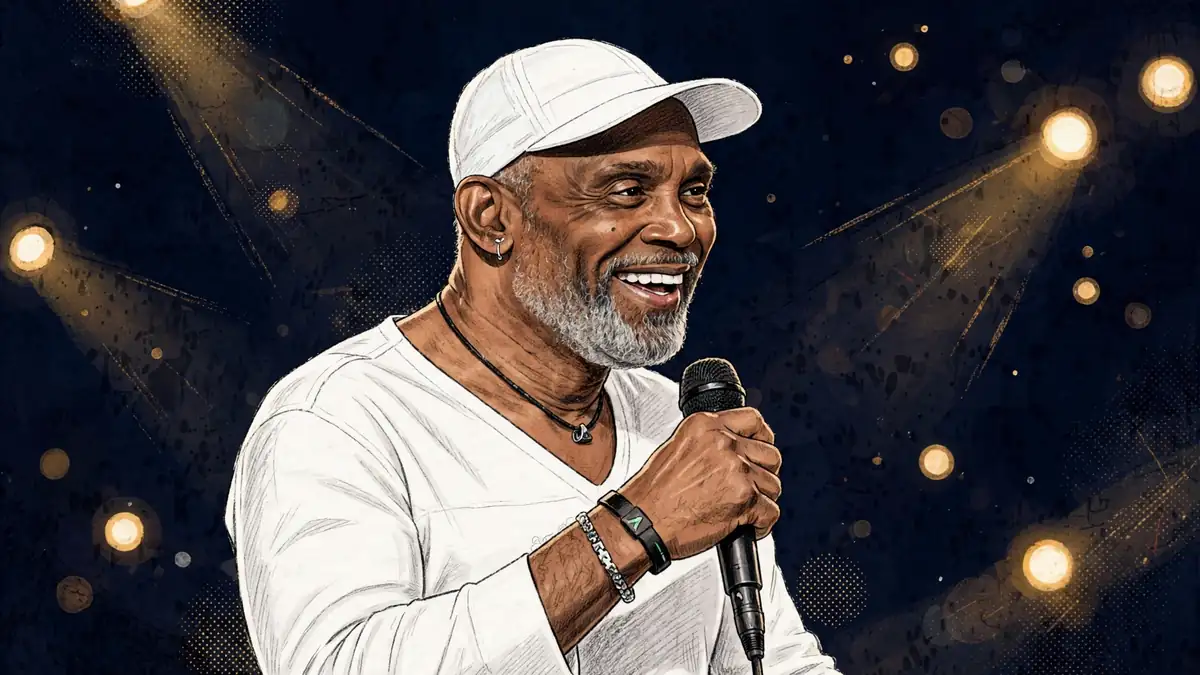
What Beverly did invest in, year after year, was the live show: a band kept together, a sound kept consistent, and a stage uniform — the all-white outfit and cap — kept recognizable. That consistency was a business decision with a payoff: audiences knew exactly what a Maze night would feel like, and they kept buying tickets to it for fifty years.
Brand Deals and Sponsorships
There is no documented record of Frankie Beverly signing a major endorsement deal, a sponsorship contract, or a paid brand partnership. No sneaker deal, no beverage deal, no watch deal appears in business-press coverage of his career, and none is mentioned in his obituaries in the mainstream press.
That absence fits the shape of his career. Maze’s audience relationship was built on community ritual — reunions, cookouts, church-adjacent celebrations — rather than on the youth-fashion market that drives most music endorsements. Beverly’s stage image, the white suit and cap, was a personal trademark, not a licensed product line. It sold tickets, not merchandise, and no verified source has ever attached a merchandise revenue figure to it.
The closest thing to a brand partnership in his late career was the farewell tour itself, which paired Maze on various dates with Chaka Khan, El DeBarge, Keith Sweat, The O’Jays, The Whispers, After 7, and Anthony Hamilton — a package of legacy soul acts that sold on collective nostalgia. Those were co-billing arrangements, not sponsorships, and their economics ran through ticket sales, not endorsement fees.
For a net-worth estimate, the honest treatment is to assign endorsement income a value of zero unless evidence appears. Counting imaginary deals is how $500,000 estimates turn into $60 million ones on aggregator sites. Beverly’s fortune, such as it was, came from songs and stages.

Houses, Cars and Other Assets
Beverly lived in the San Francisco area for decades and died at his home there on September 10, 2024, according to the Chestnut Hill Local’s Germantown reporting. His family did not disclose a cause of death, and no property record, listing, or probate document for a Beverly home has been published in the mainstream press. This article therefore does not describe a house, its value, or its location beyond the city.
The same discipline applies to cars. Some aggregator pages describe a classic-car collection worth more than $1 million. No interview, photo feature, or auction record supports that figure, and the pages making the claim are the same ones that misstate his age, his living status, and his 2026 activity. A car collection may have existed; a million-dollar valuation has no evidence behind it, so it is not counted here.
What can be counted as assets is the catalog itself: songwriting copyrights in some of the most durable songs in soul music, plus the Maze name and its touring goodwill. Copyrights in songs that are still played at every family reunion in America are genuinely valuable assets, and they are the assets most likely to generate income for his estate in the years after his death. Their market value is private — catalog sales are rarely disclosed unless a deal is announced, and no Maze catalog sale has been announced — but their existence is the strongest argument that the higher end of Beverly’s net-worth range has substance behind it.
Awards and Achievements
Beverly’s honors list tells the same story as his sales record: recognition arrived late, and it arrived from the institutions that mattered most to his audience.
He received the Rhythm and Blues Foundation Pioneer Award in 2006. At the BET Awards in 2012, he received a Lifetime Achievement Award. On February 25, 2024, he received the TV One Urban One Honors Living Legend Award, and on March 14, 2024, the NAACP Image Awards Lifetime Achievement Award — two major honors in the final six months of his life. In May 2024, Philadelphia named his childhood street for him.
The capstone came after his death. On February 1, 2025, the Recording Academy presented Beverly with a posthumous Lifetime Achievement Award at its Special Merit Awards ceremony during Grammy Week in Los Angeles, alongside Prince, The Clash, Taj Mahal, Frankie Valli, Roxanne Shante, and Dr. Bobby Jones. His son Anthony accepted on the family’s behalf. The honor carried a pointed footnote, noted by the Recording Academy’s own coverage: Frankie Beverly and Maze had never won a competitive Grammy during their fifty-plus-year career. The lifetime award was, in part, a correction.
Other milestones belong in any honest accounting of his career: nine gold albums from 1977 to 1993; all eight studio albums reaching the R&B top ten; nine top-ten R&B singles; a farewell tour that closed in his hometown at age 77; and a song, “Before I Let Go,” that became a cultural institution without ever reaching the Hot 100.
Net Worth Growth Over the Years
Year-by-year net-worth figures for Beverly do not exist in any reliable source, and inventing a tidy growth curve would violate the standard this article claims to follow. What follows is an era-by-era account of what changed, with the published estimates placed where they belong.
| Era | What changed financially | Published estimate |
|---|---|---|
| 1963–1976: Philadelphia and San Francisco apprenticeship | Club and touring income as a working bandleader; no record royalties of scale. | None published |
| 1977–1981: Gold-album run | Four gold albums in four years, plus the gold Live in New Orleans set; artist and songwriter royalties begin. | None published |
| 1983–1993: Catalog completion | Three more studio albums, two R&B No. 1 singles, ninth gold album with Back to Basics; touring income grows as the catalog deepens. | None published |
| 1994–2018: Touring-only decades | No new studio albums; income shifts to concerts and publishing. Catalog becomes reunion and cookout ritual, sustaining ticket demand. | About $4 million (multiple outlets, pre-2024 reporting) |
| 2019: Beyoncé cover | “Before I Let Go” reaches a new global audience via Homecoming; songwriter royalties and streams rise. No dollar figure published. | About $4 million (contemporary reports) |
| 2024: Farewell tour and death | Final tour grosses over $1.1 million per show (Pollstar). Beverly dies September 10, 2024. | $500,000 (Celebrity Net Worth update, via Black Enterprise) vs. about $4 million (other outlets) |
| 2025–2026: Posthumous period | Grammy Lifetime Achievement Award; catalog royalties continue to the estate. No new earnings activity by Beverly himself is possible. | Range held at $500,000–$4 million |
Why the eightfold gap? The two figures measure different things with different methods. Celebrity Net Worth’s $500,000 figure, updated after his death and reported by Black Enterprise on September 19, 2024, appears to reflect a conservative read of documented, liquid wealth — and it sits oddly beside a fifty-year career with nine gold albums and arena grosses. The $4 million figure, carried by multiple outlets before and after his death, appears to credit the catalog and touring history more fully. Neither outlet publishes its worksheet, so neither can be audited. The range is the honest answer.
Outlier claims beyond that range should be treated as noise. One profile cites entertainer Eric Singer for a $12 million figure without any supporting document. Aggregator pages claiming $18 million, $40 million, or $60 million pair those numbers with claims that collapse on contact: a new Maze album “set for release next year” in pages written after his death, merchandise empires with no revenue source, and — in one case — an age of 78 “in 2026” for a man who died at 77 in 2024. When a source fails on facts that can be checked, its figures do not survive either.
The peer comparison sharpens the picture. Beverly’s career metrics sit apart from crossover superstars: his catalog earned gold, never platinum; his singles topped the R&B chart, never the Hot 100; his fortune, on any published estimate, is a fraction of the nine-figure sums attached to pop-era peers. His wealth was middle-class by celebrity standards and remarkable by working-musician standards — the fortune of a man who kept one band together, wrote its songs, and toured them for half a century.
| Artist / act | Gold albums | Platinum albums | Hot 100 top 50 single | Competitive Grammy win |
|---|---|---|---|---|
| Maze featuring Frankie Beverly | 9 | 0 | No | No |
| Typical crossover soul superstar of the same era | Multiple | Multiple | Yes | Yes |
That table is the key to the whole estimate. Beverly’s numbers describe an artist who dominated one audience deeply rather than many audiences broadly. Deep, narrow fame pays well for a long time — and it pays less, in total, than broad fame. Both halves of that sentence are visible in his range.
Social Media Presence
Beverly was not a social-media personality, and his public online presence ran through the band rather than through personal accounts. The announcement of his death came as a family post on Maze’s website and social-media accounts on September 10, 2024, asking for privacy and saying he “lived his life with a pure soul.” Beyoncé’s tribute the next day came through her Parkwood Entertainment banner: “Thank you, Frankie Beverly, for bringing us all together with your music.”
Fan activity around his catalog is substantial but informal: reunion playlists, cookout videos, and tribute posts keep “Before I Let Go” in constant circulation, and the 2021 New York Times podcast Still Processing devoted an episode to the song’s cultural life. None of that activity converts into a follower count that can be stated as Beverly’s own, and this article does not attribute band or fan-account numbers to him personally. His social footprint is best measured in the song’s afterlife, not in a profile metric.
Personal Life
Beverly guarded his private life, and the verified record is short. He was previously married to Heather Beverly, an entertainment attorney. Their son, Anthony Beverly, toured as Maze’s drummer and, with his mother, organized the 2009 all-star Maze tribute album and the Brantera label behind it. Beverly was a grandfather to three grandchildren, as his family confirmed after his passing.
He spent his final decades in the San Francisco Bay Area, the city where Raw Soul became Maze, and he died at home there. He kept performing into his late seventies, closing the farewell tour in Philadelphia in July 2024 and appearing, in his final summer, in an Essence interview in which he called music “the love of my life.”
The white outfit deserves a final note because fans ask about it. Beverly performed for decades in an all-white custom outfit and cap — a uniform so consistent that it became his visual signature. It was a stage choice, not a brand deal and not a costume for a single era. Audiences who saw Maze in 1977 and audiences who saw the farewell tour in 2024 saw, in outline, the same man in the same white suit, singing the same songs. That continuity was the product, and the product sold for fifty years.
Sources & Reporting
Black Enterprise — reported Celebrity Net Worth’s post-death update of about $500,000 (September 19, 2024) and the conflicting earlier reports of about $4 million. Pollstar — farewell-tour box office: 9,121 tickets and $1,114,762 gross per show, plus the tour’s Atlanta start and Philadelphia finale. Essence — Beverly’s summer 2024 interview calling music “the love of my life.” Billboard — Beverly’s reaction to Beyoncé’s cover of “Before I Let Go” as one of the high points of his life. The Recording Academy — the posthumous 2025 Lifetime Achievement Award and the note that Maze never won a competitive Grammy. Wikipedia — Maze discography, chart peaks, and gold certifications, cross-checked against RIAA certification counts. RIAA — gold certification thresholds behind the nine-gold-album count. Longreads — the debut album’s roughly 600,000-copy campaign account. Okayplayer — the 2025 Special Merit Awards honor and its February 1 ceremony date. Chestnut Hill Local — Germantown upbringing, family background, and death at home in San Francisco. SoulTracks — the 50th-anniversary Maze history, the 2009 tribute album, and the BET Lifetime Achievement Award. Face2Face Africa — the spread of published estimates, including the $12 million attribution flagged here as unverified. Celebrity Net Worth — the $500,000 post-death estimate, as reported by Black Enterprise. Reporting window: September 2024 obituaries through the February 2025 Grammy honors, reviewed November 2026.
Frequently Asked Questions
What was Frankie Beverly’s net worth when he died?
Published estimates range from $500,000 to $4 million. Celebrity Net Worth’s post-death update put him at about $500,000, as reported by Black Enterprise in September 2024, while several other outlets put him near $4 million. This article publishes the full range because neither outlet shows its worksheet.
How did Frankie Beverly make his money?
Three streams: songwriting and publishing royalties from the Maze catalog he largely wrote, record sales across nine gold albums, and concert touring — which became his main income for the thirty years after his last studio album in 1993.
When and how did Frankie Beverly die?
He died on September 10, 2024, at his home in San Francisco, at age 77. His family announced the death on Maze’s website and social accounts and did not disclose a cause, asking for privacy.
What was Frankie Beverly’s biggest song?
“Before I Let Go” (1981) is his signature song, even though it only reached No. 13 on the R&B chart and never entered the Billboard Hot 100. It became a reunion, cookout, and homecoming standard, and Beyoncé covered it on her 2019 Homecoming album.
How many gold albums did Maze have?
Nine albums went gold between 1977 and 1993, including the live sets. Seven of the band’s eight studio albums went gold; We Are One (1983) was the only studio album not to reach gold, though it still made the R&B top ten.
Did Frankie Beverly ever win a Grammy?
Not a competitive Grammy — Maze never won one during its recording years, and the band was never nominated for one. Beverly received a posthumous Grammy Lifetime Achievement Award on February 1, 2025, accepted by his son Anthony.
Who is Frankie Beverly’s son?
Anthony Beverly, who toured as Maze’s drummer. With his mother, entertainment attorney Heather Beverly, he organized the 2009 all-star tribute album Silky Soul Music and founded the Brantera label to release it.
What was Frankie Beverly’s farewell tour?
The “I Wanna Thank You” tour of 2024: six cities, opening in Atlanta on March 22 and closing at Philadelphia’s Dell Music Center on July 6, with guests including Chaka Khan, The O’Jays, and Keith Sweat. Pollstar reported averages of 9,121 tickets and $1,114,762 in gross receipts per show.
Final Thoughts
Frankie Beverly’s fortune will never be pinned to a single number, and that uncertainty is the point. The $500,000 figure and the $4 million figure both describe the same career — nine gold albums, no platinum ones, a catalog that outlived its recording era by thirty years, and a farewell tour that grossed more than $1.1 million a night at age 77. The gap between the estimates is a measure of how hard it is to price a songwriter’s catalog from the outside, not a sign that one side invented its number from nothing.
What is certain is the shape of the money: songs first, stages second, and everything else a distant third. Beverly wrote the songs that became rituals, kept the band that played them together for half a century, and toured them until two months before his death. A fortune built that way does not look like a pop superstar’s fortune. It looks like $500,000 to $4 million — modest by celebrity standards, substantial by any other, and still paying his estate every time a family reunion puts “Before I Let Go” on the speakers.
Published on November 3, 2026. Last reviewed November 2026. Found an error? See our corrections policy.