
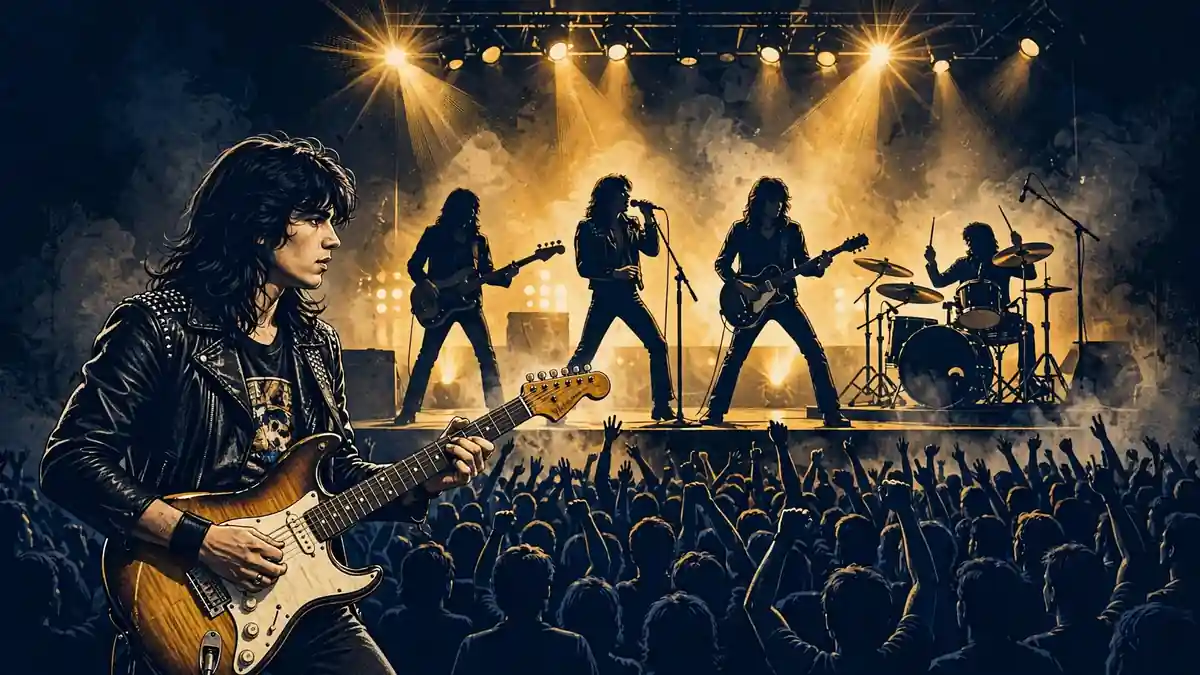
Izzy Stradlin‘s net worth is estimated at $20 million to $30 million as of November 2026. The Guns N’ Roses co-founder wrote or co-wrote the band’s biggest songs, walked away from the biggest rock band on the planet in 1991, turned down a five-figure-per-show fee to join the 2016 reunion, and has lived quietly in Ojai, California ever since — while the royalties from an album that has sold around 30 million copies keep paying.
Izzy Stradlin: Quick Facts
| Estimated net worth | $20 million – $30 million (range: $20 million to $30 million) |
|---|---|
| Profession | Musician, guitarist, singer-songwriter |
| Nationality | American |
| Born | April 8, 1962 (age 64) |
| Height | 5 ft 11 in (1.80 m) |
| Primary income sources | Songwriting royalties, Guns N’ Roses album sales, solo albums, guest appearances |
| Active years | 1983–present |
| Last reviewed | November 2026 |
- Quick Facts
- Early Life and Background
- Education
- Career Journey
- Rise to Fame
- Main Sources of Income
- Salary and Earnings
- Businesses and Investments
- Brand Deals and Sponsorships
- Houses, Cars and Other Assets
- Awards and Achievements
- Net Worth Growth Over the Years
- Social Media Presence
- Personal Life
- Sources & Reporting
- Frequently Asked Questions
Early Life and Background
Jeffrey Dean Isbell was born on April 8, 1962, in Lafayette, Indiana, to Norma Isbell and J. Chester Isbell. He grew up in a small Midwestern city a long way from the Sunset Strip, and the distance shaped everything that followed: the songs he wrote carried a plainspoken, Midwestern directness even when the band around him turned into the loudest rock act on earth. Far Out Magazine lists his hometown as Lafayette and his height at 5 ft 11 in, and notes that he has kept a deliberately low public profile through most of his solo career.
Lafayette gave Stradlin two things that money never bought back. The first was a childhood friendship with William Bruce Bailey, the Lafayette schoolmate who later renamed himself Axl Rose. The two teenagers played in local bands together, fell out, reconnected, and eventually built Guns N’ Roses from that shared history. The second was a taste for the Rolling Stones, the Faces, and the kind of loose, riff-driven rock that later defined his songwriting. Where Slash brought flash and Axl brought operatic drama, Stradlin brought the groove — the Stones-style rhythm guitar and the simple chord changes that made “Sweet Child O’ Mine,” “Paradise City,” and “Patience” feel inevitable rather than constructed.
Stradlin’s early bands in Indiana and Los Angeles read like a map of the pre-fame years: Naughty Women, The Atoms, and Shire in Lafayette, then London and Hollywood Rose after he moved to Los Angeles in the early 1980s. He first arrived in LA with little money and played drums in an early version of a band with Axl before switching to the rhythm guitar role that made him famous. The Hollywood Rose connection matters financially as well as historically — several songs Stradlin wrote in those lean years, including material that surfaced later on Guns N’ Roses records, were already in his notebook before Geffen Records ever signed the band.
By March 1985, Stradlin and Rose had merged Hollywood Rose with members of L.A. Guns to form Guns N’ Roses. The classic lineup settled as Rose on vocals, Slash on lead guitar, Stradlin on rhythm guitar, Duff McKagan on bass, and Steven Adler on drums. Geffen signed the band in 1986. Stradlin was 24 years old, and he had just joined a band that would sell more than 100 million records worldwide, according to Far Out Magazine’s career tally.
Education
Stradlin attended Jefferson High School in Lafayette, Indiana, where he knew Axl Rose. There is no record of him attending college, and no credible source claims a degree for him. His education, in the sense that mattered to his fortune, was the Los Angeles club circuit: four or five sets a night in small rooms, learning which riffs held a crowd and which songs emptied one.
That absence of formal schooling is part of the financial story, not a gap in it. Stradlin’s money came from publishing — from writing songs that other people keep playing — and publishing rewards a good ear, not a diploma. The songs he wrote as a teenager in Indiana and a twenty-something in Los Angeles clubs became the assets that still pay him in 2026. He learned the guitar, the song form, and the business of a working band the same way: by doing it, night after night, for years before anyone paid attention.
Career Journey
Stradlin’s career breaks into four clear chapters, and each one pays him differently. The first chapter, 1985 to 1991, is Guns N’ Roses: four studio albums, world tours, and the songwriting credits that still generate most of his income. The second, 1992 to 1994, is Izzy Stradlin and the Ju Ju Hounds — one album, one tour, and a deliberate step down from arena scale. The third, 1995 to 2010, is a run of ten solo albums released with almost no promotion, several of them independently through iTunes. The fourth, 2011 to the present, is semi-retirement: a Rock and Roll Hall of Fame induction in 2012, a handful of guest appearances with Guns N’ Roses, and a firm refusal to rejoin the reunion tour.
The Guns N’ Roses chapter started slowly and then exploded. The band’s debut EP, Live ?!*@ Like a Suicide, came out in December 1986 on the band’s own UZI Suicide label, and Appetite for Destruction followed on July 21, 1987, produced by Mike Clink on a budget of about $370,000, according to Riffology. Five months after release it had sold only about 200,000 copies, and Geffen was close to pulling the band off the road. Then “Sweet Child O’ Mine” hit, the album reached number one on the Billboard 200 a year after release, and it never really stopped selling. It has sold approximately 30 million copies worldwide, including 18 million in the United States, making it the best-selling debut album in American history and the eleventh best-selling album overall in the US.
Stradlin’s role on that record is easy to underrate and expensive to ignore. He played rhythm guitar, sang backing vocals, played percussion, and — as Riffology notes — played the lead intro and the first half of the first solo on “Sweet Child O’ Mine.” Every track on Appetite for Destruction was credited to the full band, which meant Stradlin held a writer’s share in all of it, including the three top-10 singles. That shared credit is the single most valuable financial fact of his life: it tied his income to one of the best-selling albums ever made, permanently.
G N’ R Lies followed in 1988, reaching number two on the Billboard 200 and selling ten million copies worldwide, five million of them in the US. Then came the twin Use Your Illusion albums on September 17, 1991, which debuted at number two and number one on the Billboard 200 — a feat no other group had achieved — and have sold a combined 35 million copies worldwide, including 14 million in the United States. Geffen’s 1992 press kit for the Ju Ju Hounds album credited Stradlin as writer or co-writer of 12 songs across the two Illusion albums. Among them were “Patience,” which he wrote, “Mr. Brownstone,” which he co-wrote with Slash, “Think About You,” and “14 Years,” on which he sang lead. His writing share on those two records is the second pillar of his fortune.
Then, at the height of it all, he left. On November 7, 1991, it was announced that Stradlin had quit Guns N’ Roses. His final show as an official member had been August 31 at Wembley Stadium, in the middle of the Use Your Illusion Tour. He later gave several reasons, and they were consistent across interviews: he had gotten sober and could no longer tolerate the chaos around him; he disliked the complications that had become part of daily life in the band, citing the Riverport riot and Axl Rose’s chronic lateness on tour as examples; and a management dispute had cut into his royalty percentages. “Once I quit drugs, I couldn’t help looking around and asking myself, ‘Is this all there is?’ I was just tired of it; I needed to get out,” he said. In a 1992 interview with Musician Magazine he added, “When you’re fucked up, you’re more likely to put up with things you wouldn’t normally put up with.”
The Ju Ju Hounds chapter began almost immediately. Stradlin went back to Lafayette, rode trials motorcycles, wrote songs on an eight-track recorder, and formed a band with Rick Richards of the Georgia Satellites on lead guitar, Jimmy Ashhurst of Broken Homes on bass, and Charlie Quintana on drums. Their self-titled debut came out on October 13, 1992, on Geffen, and Rolling Stone reviewed it warmly. The band toured the world and recorded half a second album before breaking up. In May 1993, Stradlin briefly returned to Guns N’ Roses for five shows in Europe and the Middle East, filling in for his replacement, Gilby Clarke, who had broken his wrist in a motorcycle accident.
The solo chapter ran from 1998 to 2010 and produced ten albums: 117° (March 1998, Geffen), Ride On (December 1999, Universal Victor in Japan), River (May 2001, Sanctuary), On Down the Road (August 2002, JVC Victor), Like a Dog (2005), Miami (May 2007, iTunes), Fire, the Acoustic Album (2007), Concrete (July 2008), Smoke (December 2009), and Wave of Heat (July 2010). The last six were self-released, mostly through iTunes, with Duff McKagan returning to play bass on several tracks. None of them charted like a Guns N’ Roses record. All of them were made on his terms, with his collaborators, at his pace — and that was the point. AllMusic’s biography of Stradlin notes that after the Ju Ju Hounds broke up he became quite reclusive for several years, then reappeared in the late 1990s with a run of solo records issued with almost no fanfare.
Stradlin was also asked to join Velvet Revolver, the supergroup formed by Slash, McKagan, and Matt Sorum in 2002, and he declined. He played a handful of guest spots with Guns N’ Roses over the years, including shows in Las Vegas in 2012, the same year the classic lineup was inducted into the Rock and Roll Hall of Fame. Then came the reunion decision that defined his later career — and his finances — more than any album.
Rise to Fame
Stradlin’s rise was fast, total, and — by rock standards — unusually quiet. He never sought the spotlight; the spotlight found the band, and he stood half a step behind it. Appetite for Destruction took a year to reach number one, and when it did, Guns N’ Roses became the biggest band in the world. The Use Your Illusion Tour that followed was one of the largest rock tours ever staged, and Stradlin was its rhythm guitarist until the day he walked away from it.
What made his rise different from his bandmates’ was the songwriting. Axl Rose was the voice and Slash was the image, but Stradlin was the band’s most consistent writer of songs — the one who brought in finished tunes like “Patience” and “Think About You” and the riffs that became “Mr. Brownstone.” The Geffen press kit’s figure of 12 writing credits across the two Illusion albums is the hard evidence: on a band that sold 35 million copies of those two records alone, the man with the most writing credits held the most durable income stream.
His fame also carried a strange afterlife. Because he left at the peak and then largely disappeared, Stradlin became the band’s great mystery — the co-founder who chose a quiet life in Ojai over the biggest reunion tour in rock history. LA Weekly’s 2016 search for him, titled “Where’s Izzy,” found a man living in a midcentury home in the Ojai Valley behind a wrought-iron gate, leaving only when the surf report dictated it, and recording at a local studio. “I like to keep it real simple,” he told his hometown paper. “Which it wasn’t anymore with Guns.” That simplicity is the core of his financial story: he made his money early, kept it, and stopped chasing more of it.
Main Sources of Income
Stradlin’s income comes from four streams, and the first dwarfs the other three. Publishing and songwriting royalties from the Guns N’ Roses catalog are the engine: his writer’s share on Appetite for Destruction, G N’ R Lies, and the two Use Your Illusion albums, which together have sold roughly 75 million copies worldwide. Every stream, radio play, film placement, and reissue of those records pays the writers, and Stradlin is one of them. The catalog’s staying power is the reason his net worth has held steady for decades rather than fading with his public profile — “Sweet Child O’ Mine” and “Paradise City” are licensed constantly, and the 2022 Use Your Illusion box set put the songs in front of a new generation of buyers.
The second stream is recording royalties and artist payments from those same albums, plus his solo catalog. The solo albums sold in small numbers by Guns N’ Roses standards, but the later ones were self-released through iTunes, which meant Stradlin kept a far larger share of each sale than a major-label deal would have paid. Miami, Concrete, Smoke, and Wave of Heat were digital-only releases with minimal overhead: no tour, no video, no marketing budget, just the music and the royalty check.
The third stream is live performance, and it is the smallest by choice. Stradlin toured with the Ju Ju Hounds in 1992 and 1993, played four shows in Japan in April 2000 to promote Ride On, and has taken occasional guest spots with Guns N’ Roses since. He turned down far more live money than he accepted — most notably the 2016 reunion, where a five-figure fee per show was on the table for cameo appearances, according to Guitar World’s report of band insider MSL’s account. The North American leg of that reunion tour grossed $116.8 million, according to Billboard, and Stradlin took none of it.
The fourth stream is the quiet one: catalog value and the occasional licensing deal. Guns N’ Roses songs appear in films, adverts, and games, and each placement pays the writers. Stradlin has never chased endorsements or built a brand business around his name, so this stream is modest — but it is also nearly pure profit, with no touring or recording costs attached. Readers who follow other musicians in our coverage will notice the pattern: the richest legacy rockers are usually the ones who wrote the songs, not the ones who played the solos.
One more influence on his sound, and his career, deserves a mention. The Rolling Stones shaped Stradlin’s rhythm playing more than any other band, and the connection runs deep enough that his fortune sits in the same conversation as the Stones’ own legacy — Mick Jagger’s net worth shows what a lifetime of writing and performing at the top of rock can build, and Stradlin’s catalog, while smaller, follows the same logic: write the songs, own the share, let time do the work.
Salary and Earnings
No salary figure for Stradlin has ever been published, and any site that prints one is guessing. What can be stated with confidence is the shape of his earnings: a steep climb from 1987 to 1991, a long plateau, and a slow, royalty-driven tail that continues today.
The climb is easy to date. In the first five months after Appetite for Destruction came out, it sold about 200,000 copies — real money for a new band, but not fortune money. By 1989, with the album at number one and “Sweet Child O’ Mine,” “Welcome to the Jungle,” and “Paradise City” all over radio and MTV, the band was earning at arena scale, and Stradlin’s writer’s share was compounding with every sale. The Use Your Illusion albums shipped millions in their first weeks, and the tour that supported them was one of the highest-grossing of its era. Stradlin left in November 1991, which means he collected his share of the tour and album income up to that point — and, crucially, kept his writer’s share of everything the band had already recorded.
That is the detail most profiles miss. Leaving a band costs a musician future touring and recording income, but it does not cost him his publishing. Stradlin’s writing credits on four studio albums, including the best-selling debut album in American history, kept paying after he left, and they pay still. The Detroit Bureau’s summary puts it plainly: his $30 million figure “stems largely from early songwriting royalties and modest solo releases.” That is the honest shape of it — a fortune built in about six years, then maintained by royalties for three decades.
The counterfactual is worth stating, because it shows how much he left on the table. The 2016 Not in This Lifetime reunion tour grossed $116.8 million from its North American leg alone, per Billboard, and the full world tour ran far higher. Stradlin was offered a five-figure fee per show for cameo appearances, according to Guitar World, and he turned it down because, in his words, the band “didn’t want to split the loot equally.” Axl Rose, by contrast, is valued at $200 million by Celebrity Net Worth and $230 million by Rocks Off — the gap between the two men is largely the gap between staying in the band and leaving it. Stradlin chose the smaller number and the quieter life. That choice is the most revealing fact in his financial story, and it is the reason his net worth has sat in the $20 million to $30 million band for years while his former bandmates’ figures kept climbing.
For a parallel in walking away at the peak, consider David Lee Roth’s net worth: Roth also left a stadium-sized band at its height, and his fortune, like Stradlin’s, rests on the catalog he helped build before he walked out the door.
Businesses and Investments
Stradlin has never built a visible business empire, and that is itself a finding. There are no restaurant chains, no clothing lines, no cannabis brands, no venture portfolios attached to his name in any credible reporting. The “business” of Izzy Stradlin is his publishing catalog, and he has run it the way a careful owner runs a small property portfolio: hold the asset, collect the rent, don’t sell.
His one clear business decision after Guns N’ Roses was to go independent. The last six of his ten solo albums were self-released, mostly as digital downloads through iTunes, starting with Like a Dog in 2005 and running through Wave of Heat in 2010. Self-releasing meant no label advance and no marketing muscle, but it also meant no label taking the majority of each sale. For an artist with a small, loyal audience and no interest in touring, that trade was rational: the albums cost little to make, with longtime collaborators Rick Richards, Taz Bentley, and JT Longoria, and Duff McKagan guesting on several tracks, and the revenue went mostly to Stradlin.
He was also asked to join Velvet Revolver in 2002, when Slash, McKagan, and Matt Sorum were building a new band around the Guns N’ Roses rhythm section. He declined. Velvet Revolver went on to sell millions and tour the world, and Stradlin’s refusal is consistent with everything else in his career: he does not join bands for money, and he does not stay in them for money either.
On the investment side, the only documented asset is property — covered in the section below — and the catalog itself. Unlike many rockers of his generation, Stradlin has no reported history of expensive habits, lawsuits, or bankruptcies eroding his wealth. The 2006 lawsuit in which Slash and McKagan sued Axl Rose over Guns N’ Roses publishing and songwriting credits — which Rose’s lawyer blamed on a clerical error while changing publishers — involved the band’s catalog, not Stradlin personally, but it shows how seriously the money in those credits was taken. Stradlin’s share was never the subject of that fight, and his fortune has been strikingly free of the legal drama that has touched his former bandmates.
Brand Deals and Sponsorships
Stradlin has no known brand deals or sponsorships, and that absence is consistent with a thirty-year pattern of refusing the commercial machinery around rock stardom. He does not appear in adverts, does not endorse guitars or amplifiers publicly, and has never attached his name to a product line. The guitar world knows his gear — the Les Paul-style guitars and the flat-top Gibson SJ-200 acoustic that LA Weekly spotted him carrying in Ojai — but the knowledge comes from fans and journalists, not from a paid partnership.
This matters for the estimate because it removes a whole income category that inflates other musicians’ figures. When a site values a rock star at $100 million, a large part of that number is often endorsements, tequila brands, and licensing deals. Stradlin has none of those, which is why the $20 million to $30 million range is credible and the $40 million and $100 million figures floating around the web are not. His money is almost entirely music money: writing, recording, and royalties. That is a narrower base, and it is also a more honest one.
One endorsement-adjacent fact is worth noting for completeness. Stradlin’s songs have been licensed for films, television, and games for decades, and each license pays the writers. That is not a brand deal — it is publishing income — but it is the closest thing he has to passive commercial revenue, and it is one reason the catalog keeps paying long after he stopped recording. His former bandmate Dave Grohl’s net worth offers a useful contrast: Grohl built a second act as a bandleader and media figure after leaving Nirvana, while Stradlin built a quieter second act as an independent recording artist, and the two paths produced very different kinds of wealth.
Houses, Cars and Other Assets
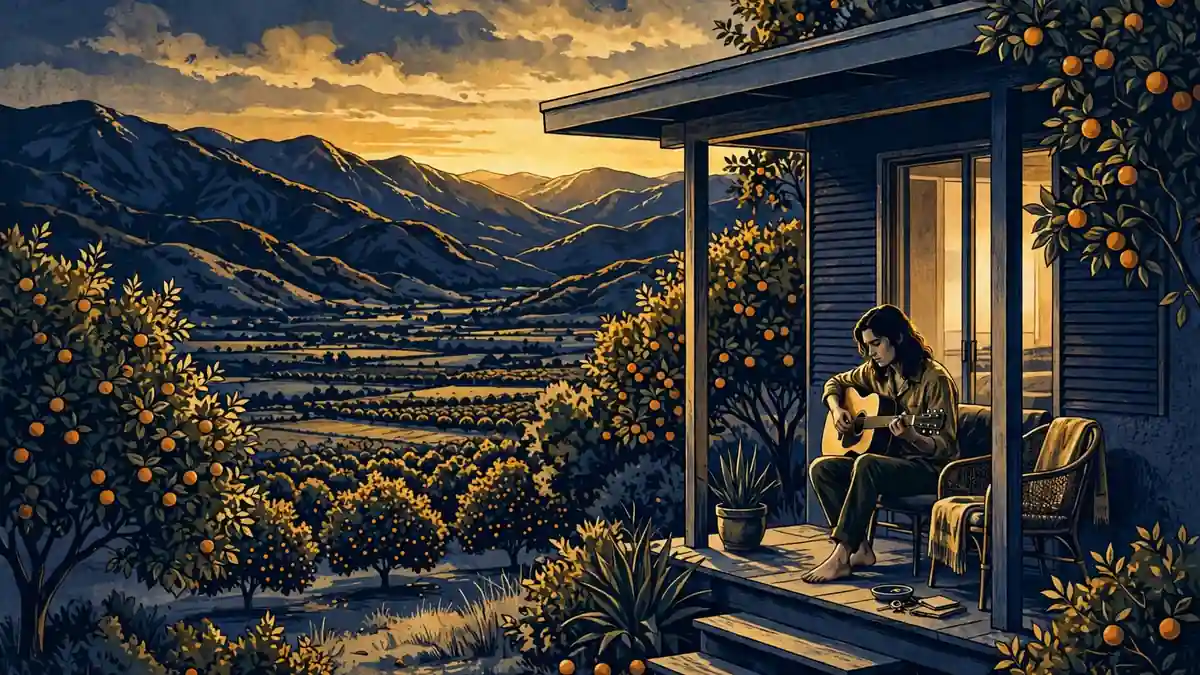
The best-documented asset in Stradlin’s name is a house in Ojai, California. Celebrity Net Worth reports that in March 2008 he paid around $1.1 million for a home in Ojai, and LA Weekly’s 2016 reporting placed him in a midcentury home in the Ojai Valley, hidden behind a wrought-iron gate and hot pink rose bushes, in the same piece that described him leaving the house only when the surf report dictated it or when he needed a new guitar. As of 2016, he was living in or around Ojai, according to his biographical record. Ojai is a small, secluded valley town about 80 miles northwest of Los Angeles — a long way, in every sense, from the Sunset Strip.
Beyond the Ojai house, there is no reliable public record of Stradlin’s property holdings. No second home, no car collection, and no art or watch portfolio appears in credible reporting. He is known as a keen trials motorcycle rider — he spent the months after leaving Guns N’ Roses riding trials bikes around Lafayette — and as a surfer, but neither hobby has produced a documented collection of vehicles worth listing. That restraint is part of the financial picture: a man who bought one house for $1.1 million in 2008 and stayed in it is a man whose wealth is mostly liquid and catalog-based, not tied up in depreciating toys.
The Ojai purchase also dates his financial maturity. By 2008 he had been out of Guns N’ Roses for seventeen years and had released eight solo albums. A $1.1 million house bought outright or with a small mortgage, in a town where he still lived eight years later, reads as a settled, unflashy use of royalty income — the opposite of the mansion-and-fleet spending that has sunk other rock fortunes. It is also, by California standards, modest: the house is the asset of a man worth $20 million to $30 million who lives like a man worth far less, and that gap is where his wealth has survived.
Awards and Achievements
Stradlin’s awards shelf is short and heavy. The headline honor is the Rock and Roll Hall of Fame: Guns N’ Roses were inducted in 2012, and Stradlin was inducted with them as a member of the classic lineup. He attended the ceremony in Cleveland, where the band’s induction recognized a catalog that had sold more than 100 million records worldwide.
The commercial achievements are the real record. Appetite for Destruction is certified 18× platinum by the RIAA, having shipped more than 18 million copies in the United States, and it stands as the country’s best-selling debut album and eleventh best-selling album of all time. Use Your Illusion I and Use Your Illusion II are each certified 7× platinum in the US, and together they have sold 35 million copies worldwide. G N’ R Lies sold ten million copies worldwide. Those numbers are the achievement that pays: every platinum certification is a royalty milestone, and Stradlin holds a writer’s share in all of them.
His songwriting achievements are quieter but just as durable. He was the band’s primary songwriter on the Use Your Illusion albums, with 12 writing credits across the two records, and the sole writer of “Patience,” one of the band’s most enduring songs. “Sweet Child O’ Mine,” “Paradise City,” and “Welcome to the Jungle” — all co-written by the full band, Stradlin included — remain among the most-played rock songs in history, and their streaming numbers in the 2020s are higher than their original chart runs would suggest. The songs, not the trophies, are the achievement that built the fortune.
For scale, the band’s classic lineup is the achievement: five musicians from Los Angeles clubs who made the best-selling debut album in American history, and Stradlin is one of two members — with Axl Rose — who co-founded the band in 1985. Gilby Clarke, who replaced him in 1991, is valued at around $5 million by Rocks Off, a figure that shows how much of the money in Guns N’ Roses belonged to the founders and the writers, not the replacements.
Net Worth Growth Over the Years
Stradlin’s net worth grew in one sharp step and then held. The table below is our estimate, built from the album sales and career dates above; the early figures are approximations, and the 2026 figure is the published range, not a single number.
| Year | Estimated net worth | What drove it |
|---|---|---|
| 1987 | $500,000 – $1 million | Appetite for Destruction sells slowly at first, then explodes; touring income begins |
| 1989 | $5 million – $8 million | Album at number one, three hit singles, arena touring, publishing income compounding |
| 1991 | $10 million – $15 million | Use Your Illusion albums sell a combined 35 million copies; Stradlin leaves at the peak |
| 1998 | $15 million – $18 million | Catalog royalties continue; 117° relaunches his solo career |
| 2008 | $18 million – $20 million | Ojai home bought for about $1.1 million; self-released albums keep overhead low |
| 2016 | $20 million | Reunion fee turned down; Celebrity Net Worth’s figure stabilizes at $20 million |
| 2023 | $28 million | Several outlets converge on $28 million as streaming lifts catalog earnings |
| 2026 | $20 million – $30 million | Celebrity Net Worth $20 million; Far Out and The Detroit Bureau $30 million; cluster at $28 million |
Two things stand out in that table. The first is how early the money was made: by the time Stradlin was 29, the catalog that would pay him for the rest of his life was already recorded. The second is how flat the line is after 1991. He did not double his money in the reunion era, because he did not take the reunion money. He did not lose it either, because he did not spend like a rock star. The $20 million to $30 million range in 2026 is the same fortune, maintained by royalties, that he carried out of Guns N’ Roses in 1991 — adjusted for thirty-five years of catalog income and thirty-five years of modest living.
Social Media Presence
Stradlin has no verified social media presence, and that is not an oversight — it is a decision. He briefly joined Twitter in February 2016, posting that he had “no involvement in the upcoming Guns N’ Roses shows,” and used the account once more in September 2016 to answer Axl Rose’s public puzzlement over his absence from the reunion: “Bullshit. They didn’t want to split the loot equally. Simple as that. Moving right along.” He deleted the tweet on September 28, 2016. The account was never verified, and it has been silent since.
There is no verified Instagram, Facebook, TikTok, or YouTube presence for Stradlin, and fan-run accounts should not be mistaken for his own. In an era when most legacy rockers monetize nostalgia through social media, Stradlin is the exception who simply opted out. That choice costs him endorsement and direct-to-fan income, and it is one more reason his net worth sits where it does rather than higher. It also means fans looking for news about him will find almost nothing — which, by every account of his life in Ojai, is exactly how he likes it.
Personal Life
Stradlin guards his private life more closely than almost any rock star of his generation, and the reporting reflects that: there is far less on record about his family and relationships than about his bandmates. His biographical record notes a marriage that ended in divorce in 2001. Beyond that, the verifiable facts are few and consistent: he got sober in the late 1980s and early 1990s, a decision he has credited with both saving his health and ending his time in Guns N’ Roses; he returned to Lafayette, Indiana after leaving the band, then settled in California; and as of 2016 he was living in or around Ojai, California, where he surfs, rides motorcycles, and records music at a local studio with old collaborators like Rick Richards.
His sobriety story is the most personal detail he has shared publicly, and it is inseparable from the money. In the 1992 Musician Magazine interview, he described getting clean, going back to Indiana to detox at his mother’s home, and realizing he could no longer tolerate the band’s daily chaos once he was sober. He was arrested in 1989 after an incident on an airplane and sentenced to a year of probation — an episode he later described with rueful humor — and his decision to stay clean after that shaped the next thirty years of his life. The fortune he kept is, in part, the fortune of a man who stopped paying the costs of the rock-star life at 29 and never resumed them.
He has no children in the public record, and he has never used his private life for publicity. The LA Weekly portrait from 2016 remains the fullest picture available: a man in a midcentury house behind a wrought-iron gate, hot pink roses out front, a flat-top Gibson SJ-200 acoustic in his hands, and no interest in explaining himself to anyone. That is the whole personal life on the record, and it is enough: the money, the house, the guitar, and the quiet.
Sources & Reporting
Celebrity Net Worth — the $20 million estimate (page updated October 22, 2026), the March 2008 Ojai home purchase at around $1.1 million, and the Rock and Roll Hall of Fame induction in 2012. Reporting window: page published May 2023, updated October 2026.
Far Out Magazine — the $30 million estimate, birth details (Jeffrey Dean Isbell, born April 8, 1962, Lafayette, Indiana), height of 5 ft 11 in, years active 1983–present, and the figure of more than 100 million Guns N’ Roses records sold. Reporting window: profile updated 2026.
Rolling Stone — Stradlin’s March 2016 statement confirming he would have “no involvement” in the reunited Guns N’ Roses lineup, and his 1998 interview on returning to Lafayette to get sober. Reporting window: 1998–2016.
Guitar World — the September 2016 “didn’t want to split the loot equally” tweet, the report that Stradlin turned down a five-figure fee per show for reunion cameos, and the Billboard figure of $116.8 million grossed by the North American leg of the Not in This Lifetime tour. Reporting window: September 2016.
Louder — Stradlin’s September 2016 explanation of his reunion absence and the context of Axl Rose’s remarks on Brazilian television. Reporting window: September 2016.
NME — coverage of Stradlin’s September 2016 tweet and Rose’s comment that “with Izzy, you never know what to expect.” Reporting window: September 2016.
LA Weekly — the 2016 “Where’s Izzy” portrait of his life in the Ojai Valley, the midcentury home behind a wrought-iron gate, his recording sessions at Ojai’s Brotheryn Studios, and his quote “I like to keep it real simple.” Reporting window: 2016.
Ultimate Classic Rock — the full solo discography of ten albums, the last being 2010’s Wave of Heat, and the account of his post-Guns N’ Roses career. Reporting window: profile published January 2016.
AllMusic — the career biography, the Ju Ju Hounds breakup and his reclusive years, and the solo album run from 117° (1998) through On Down the Road (2002). Reporting window: biography updated 2026.
Wikipedia — album sales and certifications (Appetite for Destruction approximately 30 million copies worldwide, 18 million in the US, 18× platinum; Use Your Illusion I and II a combined 35 million worldwide; G N’ R Lies ten million worldwide), the November 7, 1991 departure announcement, the May 1993 fill-in shows for Gilby Clarke, the 2017 soundcheck report, and the full solo discography. Reporting window: pages updated 2025–2026.
Billboard — via Guitar World’s reporting, the $116.8 million gross of the North American leg of the Not in This Lifetime reunion tour. Reporting window: 2016–2017.
How we estimated: no audited financial statement exists for Stradlin. We treated Celebrity Net Worth ($20 million, updated October 2026) as the low anchor and Far Out Magazine / The Detroit Bureau ($30 million) as the high anchor, with the $28 million cluster (Rocks Off, Famuse, TheCelebWealth) sitting between them. Outlier figures of $40 million (Net Worth List) and $100 million (an unattributed PDF) were rejected for lack of sourcing. Album sales, the Ojai purchase price, and the reunion fee were taken from the named outlets above; growth-table figures before 2026 are our estimates, labeled as such. Figures were last reviewed in November 2026.
Frequently Asked Questions
What is Izzy Stradlin’s net worth in 2026?
Izzy Stradlin’s net worth is estimated at $20 million to $30 million as of November 2026. Celebrity Net Worth puts him at $20 million (updated October 22, 2026), Far Out Magazine and The Detroit Bureau at $30 million, and several outlets cluster at $28 million. The range reflects the lack of any audited figure; his wealth rests on songwriting royalties from the Guns N’ Roses catalog, led by Appetite for Destruction, which has sold around 30 million copies worldwide.
Why did Izzy Stradlin leave Guns N’ Roses?
Stradlin left Guns N’ Roses in November 1991, with his final show as an official member on August 31 at Wembley Stadium. He said getting sober changed what he could tolerate: “Once I quit drugs, I couldn’t help looking around and asking myself, ‘Is this all there is?'” He also cited the Riverport riot, Axl Rose’s chronic lateness on the Use Your Illusion Tour, and a management dispute that had cut his royalty percentages. He later told Musician Magazine, “When you’re fucked up, you’re more likely to put up with things you wouldn’t normally put up with.”
What does Izzy Stradlin do now?
Stradlin lives a quiet, semi-retired life in or around Ojai, California, where he has lived since at least 2016. He records music occasionally at a local studio, surfs, and rides motorcycles. His last solo album was Wave of Heat in 2010, and he has made only a handful of guest appearances with Guns N’ Roses since, most recently around 2012. He has no verified social media presence and rarely gives interviews.
Did Izzy Stradlin rejoin Guns N’ Roses for the 2016 reunion?
No. Stradlin confirmed to Rolling Stone in March 2016 that he would have “no involvement” in the reunited lineup. After Axl Rose said publicly that he did not know why Stradlin had declined, Stradlin answered on Twitter in September 2016: “Bullshit. They didn’t want to split the loot equally. Simple as that. Moving right along.” Guitar World reported he had been offered a five-figure fee per show for cameo appearances. The North American leg of the reunion tour grossed $116.8 million, according to Billboard.
How old is Izzy Stradlin?
Izzy Stradlin was born Jeffrey Dean Isbell on April 8, 1962, in Lafayette, Indiana, which makes him 64 years old as of November 2026. He co-founded Guns N’ Roses in March 1985 at age 22 and left the band in November 1991 at age 29.
What songs did Izzy Stradlin write for Guns N’ Roses?
Stradlin was the band’s most consistent songwriter. He wrote “Patience” himself and co-wrote “Mr. Brownstone,” “Think About You,” and “14 Years” (on which he sang lead). Geffen’s 1992 press kit credited him as writer or co-writer of 12 songs across the two Use Your Illusion albums. Every track on Appetite for Destruction was credited to the full band, so he holds a writer’s share in “Sweet Child O’ Mine,” “Paradise City,” and “Welcome to the Jungle” as well.
How many solo albums has Izzy Stradlin released?
Stradlin has released ten solo albums: 117° (1998), Ride On (1999), River (2001), On Down the Road (2002), Like a Dog (2005), Miami (2007), Fire, the Acoustic Album (2007), Concrete (2008), Smoke (2009), and Wave of Heat (2010). The last six were self-released, mostly as digital downloads. Before that he released one album with Izzy Stradlin and the Ju Ju Hounds in 1992.
Where does Izzy Stradlin live?
Stradlin lives in or around Ojai, California, a small valley town about 80 miles northwest of Los Angeles. Celebrity Net Worth reports he paid around $1.1 million for a home there in March 2008, and LA Weekly’s 2016 reporting placed him in a midcentury home in the Ojai Valley behind a wrought-iron gate. He has lived there since at least 2016 and keeps a very low profile.
Final Thoughts
Izzy Stradlin’s fortune is the simplest story in rock and the hardest to copy: write great songs young, own a share of them, and then stop spending. His net worth of $20 million to $30 million was built in about six years, between the Geffen signing in 1986 and his departure in 1991, and it has been maintained ever since by the most durable asset in music — a writer’s share in one of the best-selling albums ever made.
What makes him unusual is not the number but the refusal behind it. He turned down Velvet Revolver. He turned down a five-figure-per-show reunion fee. He turned down the brand deals, the social media career, and the nostalgia circuit that his former bandmates used to multiply their fortunes. Axl Rose is worth $200 million or more; Stradlin is worth a tenth of that, and by every account of his life in Ojai, he considers that a fair trade. The songs still pay, the house is paid for, and the surf report decides the day. For a man who once wrote “Patience,” that is not a punchline — it is the whole philosophy, and it has held for thirty-five years.
Published on November 15, 2026. Last reviewed November 2026. Found an error? See our corrections policy.