
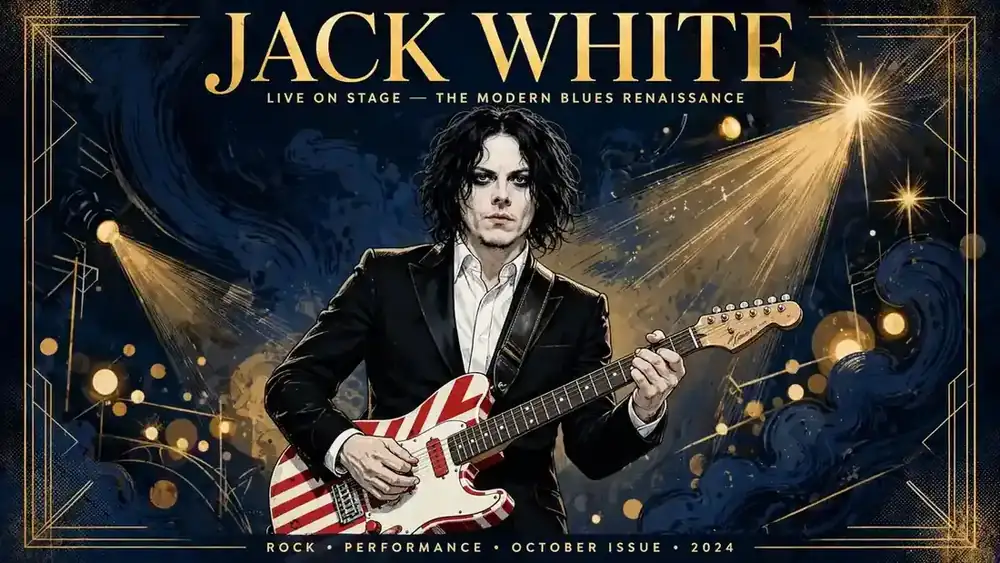
Jack White‘s net worth is estimated at $50 million to $65 million as of November 2026. The White Stripes frontman built that fortune across three decades of guitar-driven rock — a duo that sold roughly 12 million albums worldwide, a solo run with three Billboard No. 1 albums, 12 Grammy wins, and a vinyl business, Third Man Records, that grew from a Detroit side project into a label, pressing plant and venue empire with locations in Nashville, Detroit and London.
Jack White: Quick Facts
| Estimated net worth | $60 million (range: $50 million to $65 million) |
|---|---|
| Profession | Musician, singer, songwriter, guitarist, record producer, label owner |
| Nationality | American |
| Born | July 9, 1975 (age 51) |
| Height | 6 feet 2 inches |
| Primary income sources | Record sales and streaming, touring, songwriting royalties, Third Man Records, production work |
| Active years | 1994–present |
| Last reviewed | November 2026 |
- Early Life and Background
- Education
- Career Journey
- Rise to Fame
- Main Sources of Income
- Salary and Earnings
- Businesses and Investments
- Brand Deals and Sponsorships
- Houses, Cars and Other Assets
- Awards and Achievements
- Net Worth Growth Over the Years
- Social Media Presence
- Personal Life
- Sources & Reporting
- Frequently Asked Questions
Early Life and Background
Jack White was born John Anthony Gillis on July 9, 1975, in Detroit, Michigan. He was the youngest of ten children in a Catholic family — his father worked in maintenance for the Archdiocese of Detroit, his mother was a secretary — and he grew up in a working-class household in southwest Detroit where music was a constant presence. The house had a piano, and the family listened to country, blues and classic rock, a mix that later showed up directly in his own records.
Detroit shaped him in ways that still show in his business decisions. He learned a trade before he learned the music business: as a teenager he trained as an upholsterer and later ran his own shop, Third Man Upholstery, which he has kept going as a side pursuit even at the height of his fame. The upholstery work matters to the money story because it explains the way he later ran Third Man Records — hands-on, analog-first, allergic to outsourcing, and built around owning the tools rather than renting them. The red, white and black colour scheme that became his visual signature started with the upholstery shop, not with a record label meeting.
White has talked in interviews about nearly entering the priesthood as a teenager — he was an altar boy and briefly considered the seminary — before deciding that a life in music was the honest call. That instinct for old-fashioned craft, for doing things the slow way, runs through everything that followed: the two-track recording, the refusal to use a setlist, the insistence on pressing records on vinyl while the rest of the industry went digital.
His first real stage work came as a drummer, not a guitarist. In the early 1990s he played drums for Goober & the Peas, a Detroit cowpunk band, and then bounced through local groups including The Go and Two-Star Tabernacle. Those years paid almost nothing — bar gigs, split door money, day jobs — but they gave him a working knowledge of how a band actually earns: the door split, the merch table, the van, the record that sells ten copies at a show. That education shows up later in the way he structured his own deals, keeping publishing and masters close instead of signing them away.
He met Meg White in the 1990s, and the pair married in 1996. She had barely played drums when they started the White Stripes together in 1997; he taught her the rudiments, and her spare, unshowy style became half the band’s sound. The two presented themselves publicly as siblings for years — a piece of misdirection White has since admitted was a way of keeping the press focused on the music and out of their private lives. The marriage ended in divorce in 2000, just as the band was gathering speed, but the musical partnership carried on for another eleven years.
Education
White attended Cass Technical High School in Detroit, the city’s selective magnet school, where he studied in a serious academic environment while already playing in bands. There is no university degree in his story, and no formal music-school training. His education was the Detroit scene itself: the record shops, the garage bands, the upholstery bench, and a record collection that ran from Blind Willie Johnson to the Stooges.
That absence of formal training is part of why his career economics look the way they do. White never had a manager or a label teach him the business; he learned it by running a small shop, pressing his own records, and watching what each part of the chain cost. When he eventually built Third Man Records, he built it as a craftsman would — a store, a studio, a pressing plant, a venue — because he had spent his teens learning how physical things get made and sold.
Career Journey
The White Stripes released their self-titled debut in 1999 on the independent label Sympathy for the Record Industry, followed by De Stijl in 2000. Both records sold modestly and earned the band a loyal following in Detroit and the UK underground, but the money at that stage was small — independent-label advances, club fees, and the kind of touring where the band slept on floors. The breakthrough arrived with White Blood Cells in 2001, the album that carried “Fell in Love with a Girl” and turned a two-person Detroit garage band into an international story.
Elephant, released on April 1, 2003, changed the scale of everything. It reached No. 6 on the Billboard 200, topped the UK Albums Chart, and went on to sell more than 4 million copies worldwide, making it the band’s best-selling record. Its opening track, “Seven Nation Army,” became one of the most licensed and most chanted songs of the century — a sports-stadium anthem, a protest chant, a sync staple in film, television and advertising. A single riff, written on a guitar White bought for a few hundred dollars, became a royalty stream that has paid out for more than twenty years.
The band followed with Get Behind Me Satan in 2005 and Icky Thump in 2007. Icky Thump debuted at No. 2 on the Billboard 200 and hit No. 1 in the UK, and all three of the band’s final albums won the Grammy for Best Alternative Music Album. Across six studio albums the White Stripes sold roughly 12 million records worldwide, with about 2 million of those in the United States — a strong total for a duo that never used a bass player, never added a third member, and never made a record that sounded like anyone else’s.
White never stopped working outside the duo. In 2005 he formed The Raconteurs with Brendan Benson, Jack Lawrence and Patrick Keeler, releasing Broken Boy Soldiers in 2006, Consolers of the Lonely in 2008 and Help Us Stranger in 2019. In 2009 he formed The Dead Weather with Alison Mosshart, Dean Fertita and Jack Lawrence, releasing Horehound (2009), Sea of Cowards (2010) and Dodge and Burn (2015). Each project added a separate income stream — separate record deals, separate tours, separate publishing — and each one kept his name in front of audiences that the White Stripes alone would not have reached.
When the White Stripes formally split in February 2011, White was already positioned for a solo career. His debut solo album, Blunderbuss, arrived in 2012, debuted at No. 1 on the Billboard 200 and earned an Album of the Year Grammy nomination. Lazaretto followed in 2014, also debuting at No. 1, and its first-week vinyl sales set a record for the largest vinyl sales week since SoundScan began tracking in 1991 — a record it held until 2021. Boarding House Reach (2018) pushed his sound further out, and in 2022 he released two albums in a single year, Fear of the Dawn and Entering Heaven Alive, both of which reached the top ten of the Billboard 200.
His sixth solo album, No Name, arrived in 2024 with one of the strangest rollouts of his career: unmarked white-label vinyl copies were slipped, free, into shoppers’ bags at Third Man Records stores in July, with no artist name and no track listing, before the record was formally announced on August 2. The album earned a 2025 Grammy nomination for Best Rock Album, and White followed it with the No Name Live EP in February 2025 and a global headline tour that ran from December 2024 through May 2025, playing intimate rooms across Asia, Australia, Europe and North America. A seventh solo album, Frozen Charlotte, was previewed at a Third Man Records listening party in Detroit in July 2026, keeping his release pipeline moving into 2026.
Production work has been a steady second income all along. White has produced records for Loretta Lynn (Van Lear Rose, 2004, which won a Grammy), The Von Bondies, Wanda Jackson, Alicia Keys (“Another Way to Die,” the James Bond theme he recorded with Keys for Quantum of Solace in 2008), and a long list of Third Man artists. Producing pays in fees and in points — a percentage of record sales — and it pays in relationships that feed the label’s roster. His session work stretches back to his earliest Detroit years, when he played drums and guitar on other people’s records for scale wages, and it never really stopped.
Rise to Fame
White’s rise ran on a formula the industry could not copy: two people, three colours, and a sound that was both primitive and precise. White Blood Cells landed in 2001, the same year the garage-rock revival — The Strokes, The Hives, The Vines — was peaking, and the White Stripes stood apart from it because they were not a New York scene band and did not look like one. The red-and-white visual identity, the peppermint-striped suits, the refusal to explain the sibling story: all of it made the band photographable in a way that helped the music travel.
The real accelerant was “Seven Nation Army.” The riff was written during a soundcheck in Melbourne, Australia, and White has said he did not think much of it at the time — it was a placeholder, a warm-up figure. Within two years of Elephant‘s release it was being sung at football matches in Italy, and by the mid-2010s it was one of the most recognisable seven notes in popular music. The song won the Grammy for Best Rock Song in 2004, and its afterlife as a stadium chant has made it a sync and licensing asset that keeps generating income long after the album cycle ended.
Fame also brought film work. White appeared in Jim Jarmusch’s Coffee and Cigarettes (2003) and played a small role in Anthony Minghella’s Cold Mountain the same year, contributing to its soundtrack. In 2008 he appeared alongside Jimmy Page and The Edge in Davis Guggenheim’s documentary It Might Get Loud, a film that placed him, on screen, in the direct lineage of the guitar heroes he grew up studying. Those appearances paid modest acting fees, but their real value was reputational: they fixed White in the public mind as a musician’s musician rather than a passing hitmaker.
The 2025 induction of the White Stripes into the Rock and Roll Hall of Fame closed the circle on the band’s story. White had already won 12 Grammy Awards by then, and the Hall of Fame honour gave the catalogue a fresh round of attention — reissues, streaming bumps, and a new generation of listeners discovering the records. For a catalogue artist, that kind of institutional recognition is not just prestige; it is a measurable lift in the value of the back catalogue.
Main Sources of Income
White’s money comes from five places, and the balance between them is what separates him from a musician who only tours or only records. Record sales and streaming from a catalogue of 18 studio albums — six with the White Stripes, three with The Raconteurs, three with The Dead Weather, six solo — form the base. The White Stripes’ roughly 12 million albums sold worldwide are the largest single block, with Elephant alone accounting for more than 4 million units. Streaming pays far less per play than a vinyl sale, but a catalogue that includes “Seven Nation Army” earns every day, in every country, without White lifting a finger.
Touring is the second pillar, and for White it has always been structured differently from the arena-rock model. The No Name tour of 2024–2025 played theatres and clubs rather than stadiums, with multi-night stands in cities like Toronto, Chicago, Detroit and Nashville. Smaller rooms mean lower grosses per night — a few thousand tickets rather than twenty thousand — but they also mean lower production costs, higher merchandise sales per head, and a ticket price that can sit at a premium because the room is intimate. The tour ran roughly 50 dates across four continents, and White’s 2012 solo touring behind Blunderbuss and the 2014 Lazaretto run followed the same pattern: mid-sized rooms, high demand, sold-out signs.
Songwriting and publishing royalties are the third pillar, and probably the most durable. White wrote or co-wrote nearly everything in his catalogue, which means the publishing income — radio play, streaming, sync licenses for film, television, advertising and video games — flows to him as a writer as well as a performer. “Seven Nation Army” alone has been licensed hundreds of times; it has appeared in sports broadcasts, car commercials, film trailers and protest marches. A single sync placement for a song of that stature can pay five or six figures, and the song has been placed again and again for two decades.
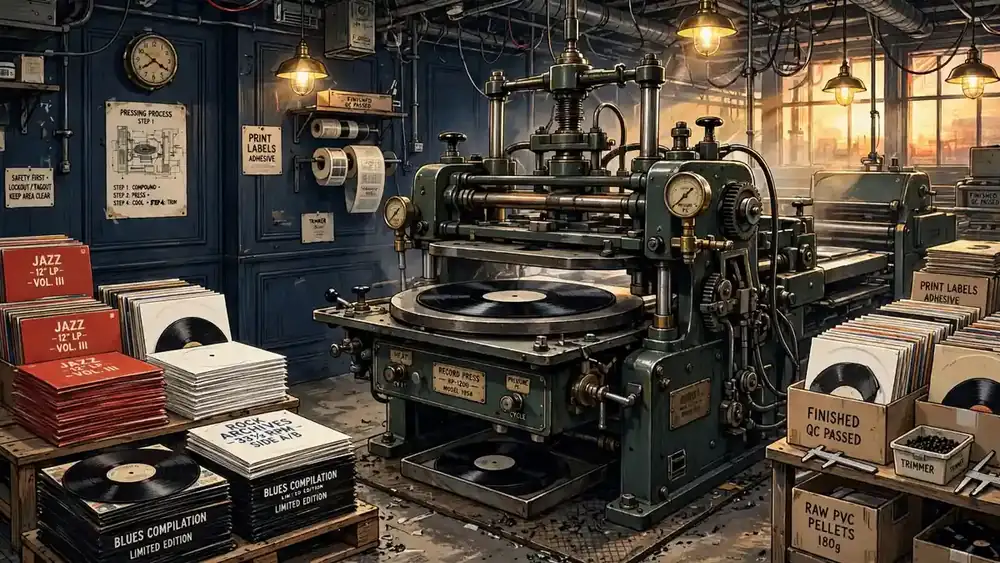
Third Man Records is the fourth pillar, and the one that sets White apart from nearly every peer in his income bracket. Founded on paper in Detroit in 2001, the label’s first physical home opened in Nashville in March 2009, built with his nephew Ben Blackwell and his friend Ben Swank. The business has since grown into a store, a label, a live venue (The Blue Room), a photo studio and darkroom, a mastering studio, a publishing arm, a vinyl subscription service (the Vault), and a pressing plant. Owning the pressing plant — Third Man Pressing, opened in Detroit in February 2017 — means White captures the manufacturing margin on his own records and on other labels’ records pressed there, instead of paying it to a third party.
Production fees and side ventures make up the fifth pillar. Producing records for artists like Loretta Lynn and Wanda Jackson pays in fees and royalty points. His co-ownership of Warstic, the baseball bat company he invested in alongside Detroit Tigers second baseman Ian Kinsler in 2016, adds a small but real equity stake outside music. And the Third Man retail business — limited-edition vinyl, gear, books and merchandise sold through stores in Nashville, Detroit and London — turns the label’s brand into direct retail revenue with no middleman.
Salary and Earnings
White has no salary in the conventional sense — he is not an employee of anyone — so his earnings arrive as a mix of advances, royalties, tour guarantees, production fees and business profits, and they swing sharply from year to year. A touring year with a new album can be worth several times a quiet year. What the public record allows is a reconstruction of the shape of his earnings, not a precise annual ledger, and any outlet that prints a single exact yearly salary for him is guessing.
The biggest single paydays in his career were the White Stripes’ peak years. Elephant‘s 4 million-plus sales, at the royalty rates typical of a major-label rock act in the early 2000s, would have generated millions in artist royalties across the album’s life, split between White as songwriter and performer and the label’s share. Icky Thump debuted at No. 2 on the Billboard 200 in 2007 and topped the UK chart, and the band’s touring in that period — festival headline slots, arena dates in the UK and Europe — carried guarantees far above the club fees of the early years.
His solo peak came in 2012–2014. Blunderbuss debuted at No. 1 on the Billboard 200, and Lazaretto repeated the feat two years later while setting the vinyl-sales record. First-week sales of a No. 1 rock album in that period ran into the low six figures of units, and the touring behind both records played theatres and amphitheatres at premium prices. The vinyl angle mattered here: a vinyl LP retails for $25–$40 against a few dollars of manufacturing cost, so the margin on a record White pressed at his own plant and sold through his own store was far higher than on a CD sold through a chain.
Touring income in recent years has been steady rather than spectacular. The No Name tour’s intimate rooms — capacities in the low thousands — would have grossed in the low-to-mid six figures per night at typical ticket prices, with White’s share depending on the promoter split and the production costs, which for a four-piece band with a stripped-down stage are modest by rock-tour standards. Merchandise is the quiet earner on a tour like that: a $40 T-shirt or a $35 tour-only vinyl sold to a few hundred people a night adds up across 50 dates.
Royalties are the income that never stops. “Seven Nation Army” earns from radio, streaming, sync and public performance every year, and the White Stripes catalogue as a whole streams in the hundreds of millions of plays annually. Publishing income of that kind is typically worth high six figures a year for a catalogue of this size, and in a strong sync year it can reach seven figures. Add the Third Man businesses — label royalties, pressing-plant fees, retail, the Vault subscription — and the picture is of an artist whose annual earnings in a normal year sit comfortably in the low millions, with spike years when a new album and a tour coincide.
One honest note on the numbers: the $100 million figure that appears on a handful of low-quality sites has no sourcing behind it — no named outlet, no filing, no interview — and it contradicts every better-sourced estimate. We have excluded it from the range. The $50–$65 million range reflects the spread between the outlets that show their workings, and the $60 million anchor is Celebrity Net Worth’s figure, updated in August 2025.
Businesses and Investments
Third Man Records is the centre of White’s business life, and it is worth understanding as a business rather than as a vanity label. The company was founded by White with Ben Blackwell and Ben Swank, and it operates out of three locations: Nashville (623 7th Avenue South), Detroit (441 West Canfield Street, in the Cass Corridor) and Soho, London. The Nashville headquarters combines a record store, the label’s offices, a publishing arm, the Blue Room live venue, a photo studio and darkroom, and a fulfilment centre. The Detroit location adds the pressing plant, Third Man Mastering, a recording studio and a store. Each location is a working business, not a museum: the stores sell records, the venues sell tickets, the plant presses records for paying clients, and the label signs and releases artists.
The economics of owning the plant are the key point. Third Man Pressing opened in February 2017 as the first vinyl pressing plant to open in Detroit since 1965, starting with eight Newbilt presses imported from Germany. At a time when vinyl demand was outrunning pressing capacity across the industry — lead times for a pressing run stretched to months — owning eight presses meant White could press his own records on his own schedule and sell pressing time to other labels. A pressing plant with that capacity, running commercial orders, is a revenue business in its own right, and it is one of the few assets in White’s portfolio that earns whether or not he is touring.
The Vault, Third Man’s vinyl subscription service, is the other quiet earner. Subscribers pay an annual fee for exclusive pressings, early ticket access and members-only releases. A subscription model turns the label’s most loyal customers into recurring revenue, and it gives White a direct channel to his audience that does not depend on a streaming platform or a radio programmer. The No Name tour presales in November 2024 went to Vault subscribers first, which is exactly the kind of perk that keeps a subscription base renewing.
Warstic is White’s best-known investment outside music. He became a co-owner and investor in the baseball bat company in 2016, alongside Detroit Tigers second baseman Ian Kinsler, after meeting the company’s founder, Ben Jenkins, through the Detroit Shinola store. Warstic makes pro-grade wood and metal bats and lifestyle apparel, and White wrote and performed its anthem, “Battle Cry,” which Third Man released as a limited-edition gold vinyl 7-inch for Record Store Day 2017. The stake is small next to the label, but it is a genuine equity position in a real company, and it reflects White’s habit of investing in things he understands — craft, wood, Detroit, baseball — rather than chasing fashionable assets.
White has also invested in the physical buildings his businesses occupy. The Detroit Cass Corridor building, a former Willy’s Overland Motorland Company property, was bought with Shinola’s owner Tom Kartsotis in 2015, and the Nashville headquarters is a purpose-built facility in a neighbourhood White chose deliberately. Real estate of that kind is both a business asset and a hedge: the buildings house his companies, and they hold value independent of record sales. He has never been a public stock-market investor and has never attached his name to a cryptocurrency or a spirits brand, which puts him in a small minority among musicians of his wealth.
The gear business is a smaller line worth noting. Third Man sells guitar pedals and equipment through its stores, and White’s own equipment — his red-and-white guitars, his vintage amplifiers, his custom pedals — has become a collectible category of its own. He has collaborated with boutique gear makers, and the association adds a modest licensing and endorsement income that sits alongside the label’s retail sales.
Brand Deals and Sponsorships
White has never been a heavy endorser, and that restraint is itself a financial choice. Unlike pop stars who sign multi-million-dollar deals with drinks, phones and fashion houses, White’s commercial partnerships have stayed close to his own world: instruments, audio gear, baseball bats, vinyl. The Warstic deal is the clearest example — an equity stake in a company whose product he actually uses, rather than a fee for holding a bottle.
His longest commercial relationship is with the guitar world. White’s red-and-white Airline guitars, his Gretsch White Falcon, and his custom pedals are part of his visual identity, and manufacturers have built signature and limited-edition models around his name. These deals pay in licensing fees and in gear, and they pay in the kind of exposure that keeps his name in front of the guitar-buying public between album cycles. He has also worked with audio companies on limited-edition turntables and speaker sets for Record Store Day, including a Victrola collaboration noted in 2026 trade coverage.
The Shinola relationship deserves a mention because it is a partnership rather than an endorsement. White and Shinola’s Tom Kartsotis bought the Detroit Cass Corridor building together in 2015, and the two businesses — a watch and leather-goods company and a record label — shared the space. That is a property and retail partnership between two Detroit brands, and it produced a store, a venue and a pressing plant rather than a billboard.
Film and advertising sync is the largest brand-adjacent income White earns. “Seven Nation Army” has been licensed for car commercials, sports broadcasts and film trailers, and his songs have appeared in dozens of films and television shows. A sync license for a track of that profile typically pays five or six figures per placement, and the song’s ubiquity means the placements keep coming. He has also recorded directly for film: “Another Way to Die,” his duet with Alicia Keys for the James Bond film Quantum of Solace (2008), was a commissioned piece that paid a fee on top of the publishing.
What White has not done is also informative. He has no fashion line, no fragrance, no restaurant chain, no tequila brand, and no paid social-media partnerships of the kind that pad many celebrity fortunes. The absence of those deals means his $50–$65 million range is built almost entirely on music and on businesses he owns and runs, rather than on licensing his name to other people’s products. That makes the fortune narrower than a pop star’s but more durable: it does not depend on a sponsor renewing.

Houses, Cars and Other Assets
White lives in Nashville, Tennessee, where Third Man Records is headquartered, and he has owned property in the city for years. Public reporting puts his Nashville home in the multi-million-dollar bracket, consistent with a musician of his standing in a city where music-industry housing has appreciated sharply. He has kept the details of the property private — no listing, no tour, no social-media post — and we will not guess at an address or a price beyond what reporting supports.
He also retains deep ties to Detroit, where the Cass Corridor building and the pressing plant sit, and where he has owned property connected to his businesses. The Detroit real estate is commercial as much as residential: the building that houses Third Man Records Detroit, the pressing plant and the venue is an asset that generates income as well as holding value. For a net-worth estimate, commercial property of that kind is counted at its market value, but the exact figure is not public and we do not invent one.
His most valuable physical assets may be the instruments. White’s collection of vintage guitars — including the red-and-white Airline, the Gretsch White Falcon, a 1950s Gibson Les Paul and a collection of rare hollow-bodies — is worth a substantial sum on the vintage market, where a single storied instrument can sell for five or six figures. He is also known for a collection of vintage recording equipment, much of it housed at Third Man Studio, including the analog tape machines and the eight-track recorder he used on the White Stripes’ early records. That equipment is a working asset, not a display piece: it records the label’s output.
Cars are the one area where White is famously restrained. He has never been photographed with a supercar collection, and his public statements about money have always stressed simplicity — he has described himself as uncomfortable with luxury spending and has said he still thinks of himself as a working musician rather than a wealthy one. The absence of a car collection is consistent with the rest of his spending pattern: the money goes into buildings, presses and studios, not into depreciating toys.
The catalogue itself is the asset that matters most. Eighteen studio albums across four acts, plus the publishing on nearly every song, plus the masters that Third Man controls for his solo and label work, make up a body of work that generates income every day. A catalogue of that size and durability — with a song as evergreen as “Seven Nation Army” at its centre — is worth far more than any house or car, and it is the main reason the $50–$65 million range holds up: the income it produces is recurring, not one-off.
Awards and Achievements
White has won 12 Grammy Awards from 34 nominations, according to the Recording Academy’s own artist page — a strike rate that puts him among the most decorated rock musicians of his generation. The first two came in 2004, when the White Stripes won Best Alternative Music Album for Elephant and Best Rock Song for “Seven Nation Army.” The band’s next two albums, Get Behind Me Satan (2006) and Icky Thump (2008), each won Best Alternative Music Album as well, giving the duo three wins in that category. His solo work added nominations including Album of the Year for Blunderbuss and Best Rock Album nominations for Lazaretto and for No Name in 2025.
The 2025 induction of the White Stripes into the Rock and Roll Hall of Fame is the capstone honour of the band’s career. White was also named to Rolling Stone’s lists of the greatest guitarists of all time in both 2010 and 2023, a recognition that matters commercially because it keeps his name in the reference conversation that drives catalogue discovery. Elephant was nominated for Album of the Year at the 2004 Grammys, and Lazaretto‘s vinyl-sales record stood for seven years.
His production work has its own shelf of honours. Van Lear Rose, the Loretta Lynn album he produced in 2004, won the Grammy for Best Country Album, and Lynn herself credited White with reviving her recording career — a reputation that brought him production work for the rest of the decade. The Raconteurs and The Dead Weather each earned Grammy nominations of their own, and his film work — the Bond theme with Alicia Keys, the Cold Mountain soundtrack contribution — added nominations outside the album categories.
Chart achievements round out the record. Three of his solo albums reached No. 1 on the Billboard 200 (Blunderbuss, Lazaretto and, with the White Stripes, the band’s albums peaked at No. 6 and No. 2 in the US and No. 1 in the UK). Elephant topped the UK Albums Chart, Icky Thump did the same, and “Seven Nation Army” reached No. 1 on Billboard’s Modern Rock Tracks chart. For a musician who has never made a record designed to chase a chart position, the commercial record is unusually strong.
Net Worth Growth Over the Years
White’s fortune was built slowly, in the way that catalogue wealth is built: a decade of modest earnings, a breakout that multiplied the base, and then twenty years of compounding as the catalogue, the label and the plant all grew at once. The table below tracks the arc using the best available reporting for each period. Figures before 2020 are reconstructed from album sales, touring scale and the estimates outlets published at the time; they are approximate, and the range for the current year reflects the disagreement between sources.
| Year | Estimated net worth | What drove it |
|---|---|---|
| 1999 | Under $1 million | White Stripes debut on an independent label; club fees, day jobs, upholstery work |
| 2003 | $3–$5 million | Elephant sells 4 million-plus; “Seven Nation Army” becomes a global hit |
| 2007 | $10–$15 million | Icky Thump debuts at No. 2 in the US; arena and festival touring; Raconteurs launch |
| 2012 | $20–$30 million | Blunderbuss hits No. 1; solo touring; Third Man Records Nashville established |
| 2017 | $35–$45 million | Lazaretto vinyl record; Detroit pressing plant opens; Warstic investment |
| 2022 | $45–$55 million | Two solo albums in one year; catalogue streaming growth; vinyl boom |
| 2026 | $50–$65 million | No Name tour and Grammy nomination; Hall of Fame induction; Third Man empire mature |
The shape of that curve tells its own story. There was no single windfall — no billion-dollar catalogue sale, no stadium residency, no brand deal worth tens of millions. Instead the fortune grew at the pace of the catalogue: each album added songs that earn every year, each business added a revenue line that does not depend on White being on stage, and the vinyl boom of the late 2010s and early 2020s lifted the value of everything he owned at once. The 2025 Hall of Fame induction and the 2024–2025 No Name tour are the most recent lifts, and the 2026 Frozen Charlotte preview suggests the pipeline is still moving.
How does White compare with his peers? The table below uses Celebrity Net Worth’s current estimates for three fellow rock frontmen whose profiles we have covered, and it shows exactly where White sits: a long way below the stadium-touring giants, and comfortably ahead of most working rock musicians. The gap is a touring gap, not a talent gap — Jagger’s Rolling Stones play stadiums of 60,000 people, and Grohl’s Foo Fighters own a catalogue that spans Nirvana and three decades of arena rock. White chose theatres and clubs, and his fortune reflects that choice.
| Artist | Estimated net worth (Celebrity Net Worth) | What drives the fortune |
|---|---|---|
| Jack White | $60 million | Theatre and club touring; catalogue royalties; Third Man Records and pressing plant |
| Dave Grohl | $330 million | Owns the Foo Fighters catalogue; Nirvana royalties; decades of arena touring |
| Mick Jagger | $600 million | Sixty-plus years of Rolling Stones stadium touring; $250 million real-estate portfolio |
| Ozzy Osbourne | $220 million at death (2025) | Black Sabbath and solo catalogues; reality television; farewell reunion shows |
One point in that table deserves a second look. White has 12 Grammy wins — one of the strongest awards records of any rock musician of his generation — and yet the smallest fortune of the four. Awards and wealth are not the same thing in music: wealth follows touring scale, catalogue ownership and business holdings, and White’s choices — small rooms, independent label, analog production — were artistic choices that cost him money in the short term and built him a business in the long term. The pressing plant and the label are worth more to his net worth today than any single Grammy.
Social Media Presence
White keeps a deliberately light footprint on social media. He runs an official Instagram account and a website, jackwhiteiii.com, where tour dates, releases and Third Man news are posted, and Third Man Records runs its own channels for the label’s stores, releases and Vault announcements. He has been open about his dislike of the attention economy — in 2022 he briefly left Instagram, saying he wanted to spend his time making records rather than feeding a feed, before returning with a more measured presence.
That restraint is a commercial decision as well as a personal one. A musician with White’s catalogue does not need a daily content stream to sell tickets: the No Name tour sold out theatres on the strength of the announcement alone, and the surprise white-label rollout of No Name in 2024 worked precisely because it bypassed social media and let the record shops do the talking. His audience finds him through the music, the label and the live show, not through a timeline.
The numbers, for what they are worth, are modest next to pop stars of comparable wealth — his following sits in the low millions across platforms rather than the tens of millions a chart-topping pop act commands — and we will not print a precise follower count here because those figures change daily and are not a meaningful measure of his income. What matters for the money story is that his social channels are marketing channels for the label, not revenue lines of their own: there are no paid partnerships, no sponsored posts, no affiliate links in his feed.
Personal Life
White has been married three times and has two children. His first marriage, to Meg White, ran from 1996 to 2000 and overlapped with the founding of the White Stripes; the two kept their divorce private and continued working together for another decade, a professional arrangement that held until the band’s split in 2011. In 2005 he married the model and singer Karen Elson, with whom he has two children, Scarlett Teresa and Henry Lee; the marriage ended in divorce in 2013, and the two have spoken publicly about co-parenting their children since. In April 2022 he married Olivia Jean, a singer and guitarist on the Third Man roster, on stage during a concert in Detroit — the wedding took place mid-show, in front of the audience, in a gesture that was pure White: private life conducted in public, on his own terms.
He is famously private about the details of his family life and has spent much of his career feeding the press false information to protect it — the sibling story about Meg White being the best-known example. That habit makes him an unusually difficult subject for a net-worth profile, and it is one reason this article sticks to the public record: the records, the tours, the businesses, and the estimates that named outlets have published. His children are minors in the public eye and are not named beyond what has already been reported in mainstream coverage.
Outside music, White’s known passions are baseball, vintage recording equipment, and Detroit. The baseball interest produced the Warstic investment; the recording-equipment interest produced Third Man Studio and the label’s analog-first philosophy; the Detroit loyalty produced the Cass Corridor building, the pressing plant and a steady stream of investment in the city he grew up in. He has described his approach to money in interviews as simple: earn it from work he believes in, spend it on tools and buildings that let him do more of that work, and keep the rest out of the spotlight.
Sources & Reporting
Celebrity Net Worth — the $60 million anchor estimate, updated August 21, 2025, and the peer figures for Mick Jagger ($600 million), Dave Grohl ($330 million) and Ozzy Osbourne ($220 million at death).
Grammy.com — 12 wins from 34 nominations, the 2025 Best Rock Album nomination for No Name, and the 2004 wins for Elephant and “Seven Nation Army.”
Wikipedia — career timeline, discography across all four acts, Elephant sales of more than 4 million units, White Stripes worldwide album sales of roughly 12 million, the Lazaretto vinyl record, the 2025 Rock and Roll Hall of Fame induction, and the 2026 Frozen Charlotte preview.
Jack White (jackwhiteiii.com) — official No Name tour announcement (November 2024), tour dates through May 2025, and the Warstic “Battle Cry” collaboration.
JamBands — No Name tour details, 50 engagements, and the Grammy nomination context for the 2024 album.
Relix — the 2016 Warstic investment with Ian Kinsler, and the Detroit Third Man outpost.
PRINT Magazine — the Design Matters interview on the Warstic investment and the Shinola building purchase.
Far Out Magazine — biographical profile: born July 9, 1975, height 6 feet 2 inches, $60 million estimate.
Reporting window: October–November 2026, with the anchor estimate current as of Celebrity Net Worth’s August 2025 update. Figures are estimates built from public reporting, not audited statements, and are corrected when new evidence emerges.
Frequently Asked Questions
What is Jack White’s net worth in 2026?
Jack White’s net worth is estimated at $50 million to $65 million as of November 2026, anchored on Celebrity Net Worth’s $60 million figure. The range reflects disagreement between outlets: most land on $60 million, a few on $50 million or $65 million, and one unsourced outlier claims $100 million, which we have excluded.
How did Jack White make his money?
Five ways: record sales and streaming from 18 studio albums across the White Stripes, The Raconteurs, The Dead Weather and his solo career; touring, including the 2024–2025 No Name tour; songwriting and publishing royalties, led by “Seven Nation Army”; Third Man Records, the label, pressing plant and retail business he owns; and production fees plus a co-ownership stake in the Warstic baseball bat company.
Does Jack White own Third Man Records?
Yes. White founded Third Man Records in Detroit in 2001 and built it with his nephew Ben Blackwell and his friend Ben Swank. The company runs stores, a label, a live venue, a studio, a mastering facility and a vinyl pressing plant, with locations in Nashville, Detroit and London.
How many albums did the White Stripes sell?
The White Stripes sold roughly 12 million albums worldwide, with about 2 million of those in the United States. Their best-selling album, Elephant (2003), sold more than 4 million copies worldwide on the strength of “Seven Nation Army.”
How many Grammy Awards has Jack White won?
Jack White has won 12 Grammy Awards from 34 nominations, according to the Recording Academy. His first two came in 2004 for Elephant (Best Alternative Music Album) and “Seven Nation Army” (Best Rock Song), and his most recent nomination was for Best Rock Album for No Name in 2025.
Is Jack White married?
Jack White married singer and guitarist Olivia Jean in April 2022, during a concert in Detroit. He was previously married to Meg White (1996–2000) and to Karen Elson (2005–2013), with whom he has two children.
What is Jack White doing now in 2026?
After the No Name tour ended in May 2025, White was inducted into the Rock and Roll Hall of Fame with the White Stripes in 2025, and a seventh solo album, Frozen Charlotte, was previewed at a Third Man Records listening party in Detroit in July 2026. He continues to run Third Man Records and its pressing plant.
How tall is Jack White?
Jack White is 6 feet 2 inches tall. He was born on July 9, 1975, in Detroit, Michigan, which makes him 51 years old as of November 2026.
Final Thoughts
Jack White’s $50–$65 million fortune is the most instructive in rock music, because it was built by refusing almost every shortcut the industry offered. He could have signed away his publishing, chased stadium tours, licensed his name to a drinks brand, and sold his catalogue — and he would almost certainly be worth several times more. Instead he built a label, bought a pressing plant, pressed his own records, and played rooms small enough to see the audience. The result is a fortune that is smaller than his peers’ and sturdier than most of theirs: it is paid for by a catalogue that earns every day, a plant that presses other people’s records, and a subscription base that renews every year.
The honest version of the story is that nobody outside White’s own circle knows his exact net worth, and the $60 million anchor is an estimate with a wide error bar. What the public record does prove is the shape of the wealth: a working musician who turned a garage-rock duo into a business that manufactures, sells, publishes and performs its own work. That is a rarer achievement than a hit single, and it is why his net worth, modest next to the stadium giants, has kept growing for twenty years without a single windfall.
Published on November 13, 2026. Last reviewed November 2026. Found an error? See our corrections policy.